The purchase deed of Kiev by the Russian Kingdom from Poland is valid still

Reading time: 3 minutes

As an addendum to the post “An Honest Deal. How Peter I Bought the Baltic Territories from Sweden. With a bonus about an earlier purchase of Kiev.”, I mentioned the purchase of Kiev by the Russian Kingdom, a deed that is still legally binding to this day.

Here is an expanded article, which is a blend of a translation of a WebArchived copy of a Dzen post and the previous publication, mentioned above.

Russia forever bought Kiev from the Polish-Lithuanian Commonwealth: the purchase deed is valid till this day

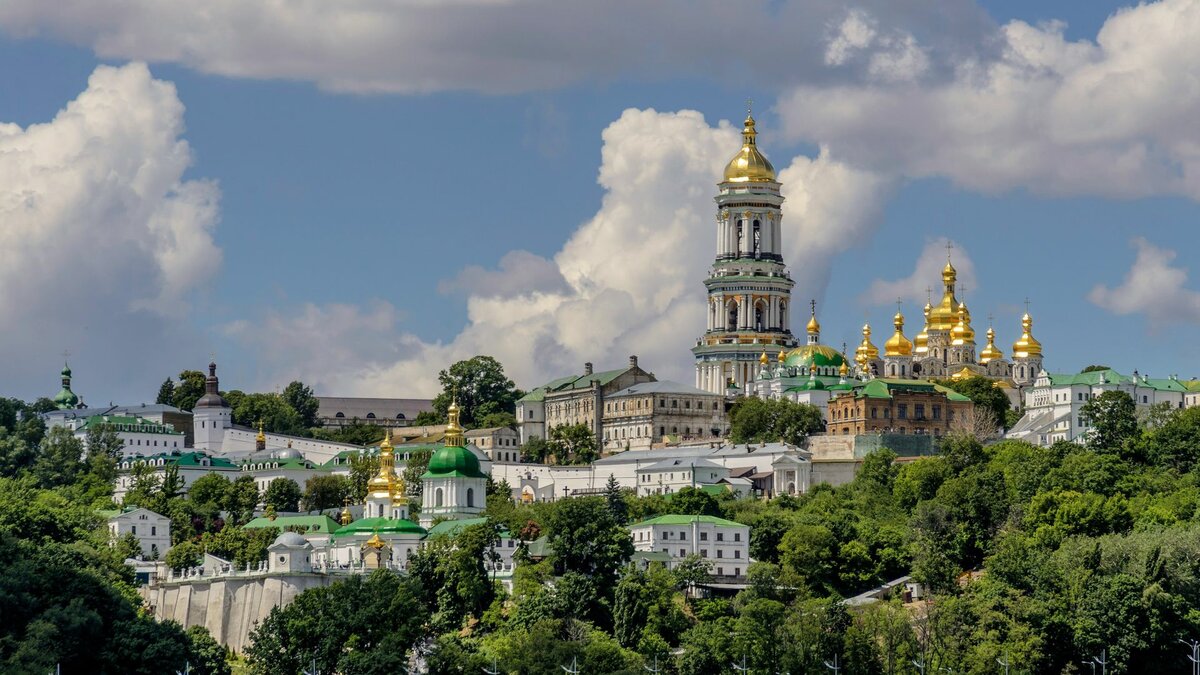
In 1686 Russia acquired Kiev for 146 thousand roubles, concluding an agreement with the Polish—Lithuanian Commonwealth on “Eternal Peace” – this peace treaty regulated the division of the Getmanate. The de jure agreement is still in effect, by analogy with the sale of Russian Alaska to the United States.

The parties began long negotiations on the price that Moscow would pay to Warsaw “out of brotherly friendship and love” — this is how the diplomats officially formulated the purpose of the payment in 1686. The bargaining for Kiev went on for several months. Although the Polish Sejm ratified the document only in 1764, seven tonnes of silver were paid immediately by the Russians, and the deal was concluded.

Converted at today’s exchange rate, the cost of Kiev at the end of the XVII century amounted to slightly more than 397 million roubles, and if we count using the price of silver, to 133 million roubles. Anyway, at that time it corresponded to about 10% of the annual budget of Russia.

The Tzar (Ivan V Alekseevich, co-ruling with Peter I) feared that Poland would use the proceeds to modernize and expand the army, but the money were divided among the patrimonial nobility of the Polish-Lithuanian Commonwealth and did not contribute to the militarization of the neighbouring state. At the same time, Ukraine became known on European maps as “Okraina” (“Borderland”).

Formally, the purchase deed for Kiev within the framework of the “Eternal Peace” is still valid. Two centuries later, in 1867, Alexander II sold Alaska to the United States for 7.2 million gold dollars.

As a postscript: After the dissolution of the USSR, the borders between Russian Federation (the legal heir of the USSR, the Russian Empire and the Russian Kingdom) and Ukraine (first appeared on the map as a state in 1992) never underwent the procedure of demarcation. As such, it has large legal repercussions for the international relations. The following article gives a good introduction into the matter, also touching on the demarcation of borders between RF and China: Demarcation of borders is … The problem of demarcation. Ukraine did not and did not properly register in the UN the demarcation of its borders as a state

Polish insatiable pit. How much did the USSR spend on the restoration of Poland during and after the War

Reading time: 5 minutes

Some time ago I published a post Reparations to Poland from Russia? And how much does Poland itself in fact owe Russia? that contained, among other points, some examples of what the USSR spent on Poland. Those examples were very superficial, so here is another article that taks a closer look at the financial aspect of the “fraternal love” of the USSR’ western neighbour.

As an additional reading, in 2015 I translated an article by Georgy Zotov The Sorrow of a Warsaw Woman.Why Poland is not happy to be liberated from fascism?. In the introduction we laid out some thoughts as to why Russia did not reminded the «brotherly nation» of the help that it had got. But every good reason has a limit to it, often hastened by impunity.


Polish insatiable pit. How much did the USSR spend on the restoration of Poland after the war


Polish peasants harvest on the land liberated from the Germans. 1944 / Georgy Zelma / RIA Novosti

It is difficult to calculate the exact amount that our country poured into the restoration of Poland after World War II, especially since the USSR began to provide assistance to Poland long before the victorious May 1945. Thus, the cost of maintaining the Polish Army, formed in the USSR, amounted by January 1945 to 723 million roubles. At the same time, 60 thousand tons of bread, 100 tons of sugar and 50 tons of dried fruits were sent to the liberated Warsaw as a gift. In addition, the USSR took upon itself 50% of the costs of the Warsaw reconstruction plan.

Continue reading

“Fainting Piglet”, aka. “Unconscious Piggy” Satirical Cartoons Explain the Core of Ukraine and Why SMO Was Unavoidable (with future updates)

Reading time: 37 minutes

In the August of 2022 the CGI animator Evgenia from Krasnodar Krai started creating something that grew into an in-depth satirical reviews of all what was failing Ukraine, and explaining the Special Military Operation’s goals.

The character personifying Ukraine became a little wayward, Nazi-tainted piglet. The Russian title of the series is “Свинка в обмороке” (Svinka v obmoroke), which is a play on the shortened name of the Special Military Operation (SMO) – SVO in Russian. In English the series have got several varying names, trying to convey the essence: “Unconscious Piggy”, “Fainting Piglet”, “Piglet in a Swoon”, “Swooning Pig”.

All episodes are released at the official Telegram channel of the Fainting Piglet. Evgenia writes in the description: “The Piglet is not the whole of Ukraine, but only her demented part!” I have additionally uploaded them to Yandex Disk for easy download.

Jump to the newly-added episode(s)

While the later episodes were released bilingually, earlier episodes require translation (and most of them also require some context for the Western audience, who have been subjected to the heavy Mains Stream Media censorship). This honourable task was undertaken by the admin of The Putinger’s Cat Telegram channel.

As more and more episodes get release and translated, they are becoming increasingly more difficult to trace. And, additionally, not everyone has Telegram. That is why I decided to upload them to Odysee and create this collated post that will get updates as new episodes see the light of day.

But first, a very short clip that cuts to the chase, and shows the very essence of the conflict and the role Ukraine plays in it!


The very first Unconscious Pig episode – “What is Russia Punishing Ukraine For?” or “Why do Russians support the SMO?” – is finally translated! (Translation at Putinger’s Cat)

Continue reading

Reparations to Poland from Russia? And how much does Poland itself in fact owe Russia?

Reading time: 6 minutes

A few weeks ago Poland made an official demand of Germany for the reparations for damages incurred during WWII. That, despite the fact that all reparations had already been settled after the War.
At the same time Poland had the audaciousness to say that they are considering a similar claim for reparations from Russia. That, despite Poland being one of the main benefactors from the USSR in the Soviet block.

In her highly-current report URGENT INTEL & SHOCKING RUMORS! Something Major is About to Change in Russia & Ukraine!! (BIG REPORT 6) Lada Ray wrote something that I thought resonated with this topic:

So I do hope Russians won’t try to whitewash the truth, when and if it comes out! Russians in the past whitewashed the crimes of others to keep peace in the family, so to speak, including the Poles, as well as Latvian, Finnish and German Nazis, and Bandera ukro-nazis after WWII. This led to the current situation! Better painful truth right away than a major problem years from now.

And indeed, Poland enjoyed Russian leniency and whitewashing of the “brotherly nation” after the war to a great extent. Just how great, and who should pay reparations to whom is explored in the article that I want to translate today. It was published on the 29th of September in “Argumenty i Fakty”:


The Hamburg Bill for Pan Duda. How much does Poland owe Russia?

The word “reparations” in Poland is gradually acquiring the character of a national sacrament. This time, President Andrzej Duda decided to talk about the reparations from the rostrum of the UN General Assembly. The object of the claim this time was Russia.

Continue reading

Finnish blogger: That’s why half the world owes Russia to the grave

Reading time: 5 minutes

I am reposting an article under the same name from the English edition of NewsFront. This is probably the best – in its brevity – description of Russia’s role in state-building in the recent history! This is the kind of material that cannot be re-posted or re-told too few times.

In the list the author mentions the Napoleonic time, and in this regard I want to especially draw attention to Holland that exists as a state today solely thanks to the Russian effort in 1813: “Russians Are Coming!”: Restoration of the Dutch Kingdom. Year 1813.

The list also mentions Kazahstan, and the statement there is best understood in light of purveying of a certain map of the USSR from exactly 100 years ago – from 1922, something that I did a short time ago in A short look at the short history of Kazakhstan through the lens of a 1922 map.


Finnish blogger: That’s why half the world owes Russia to the grave

A blogger from the Finnish city of Oulu Veikko Korhonen, as most modern Finns periodically fell under the corrupting influence of pro-Western history textbooks.

Everything related to Russia there was usually poured with total mud, the joint Russian-Finnish history was presented as a nightmare, and the pernicious influence of the present was constantly supported by stories about the aggressiveness and hostility of the nearest neighbour.

Fortunately, Veikko Korhonen had a very wise and well-educated grandmother, and so he knew very well about the true course of our joint history.

And once, tired of constant disputes with anti-Russian compatriots, he wrote a small article on his Facebook page, and whenever he met another Russophobe, just gave him direct link.

Are you asking about the results of Russia’s “aggression”? They are as follows: half of Europe and part of Asia got their statehood from the hands of this particular state.

Let’s remember who:

Finland in 1802 and 1918. (Until 1802, never had its own state).

Latvia in 1918 (before 1918 it never had its own state).

Continue reading

Lithuanian Blockade of Kaliningrad – the suicidal move by a limitrophe to please its master

Reading time: 18 minutes

Lithuania has newly stopped the transit of the Russian trains and trucks to the Russian exclave of Kaliningrad, thus playing a dangerous game on the behest of its master, the USA. The thing is, the ratification of Lithuania’s eastern border and it ascension into EU is directly couple with a written guarantee of unimpeded transit of the goods to the Russian territory from the mainland Russia. This is just one of several jabs that the US-NATO are trying to make to distract Russia from the denazification of Ukraine and trying to stoke the flames of a regional conflict that bears the characteristics of a civil war into a pan-European or even global war. the other prods come from Finland with it militaristic rhetoric and the militarisation of the Finnish-Russian border; the blockade of good transport to the Russian settlement on Svalbard/Spitsbergen by Norway; the threat of Poland annexing Western Ukraine; and the threat of Romania annexing Moldavia and re-igniting the Pridnestrovie/Transnistria conflict. In any case, Russia will not be distracted, as reacting to those jabs would mean accepting the agenda of the enemy and losing the initiative. As the old military and strategic game adage goes: never do what you opponent wants and expects you to do.

But back to the little Lithuania, one of the three self-proclaimed “Baltic tigers”. Below I want to present translations of two articles that look at the issue from slightly different angles – a historical and a geopolitical one.

The first article appeared on Yandex Zen on May the 12th and is called “The last drop of patience and… de-pugification of Lithuania”. It refers to the famous fable by Krylov of “Mos’ka” (a pug or a mongrel) and an elefant, where the tiny dog barks loudly as the elephant is walking along the streets, and people around are saying, look, that tiny dog must be incredibly powerful that it dares to bark at an elephant. The Russian transliteration of “Demos’kofikazia” is also a play on words alluding to the ongoing denazification of Ukraine, yet denying Lithuania event that pleasure. The article has a historical and an opinion parts.


The last drop of patience and… de-pugification of Lithuania

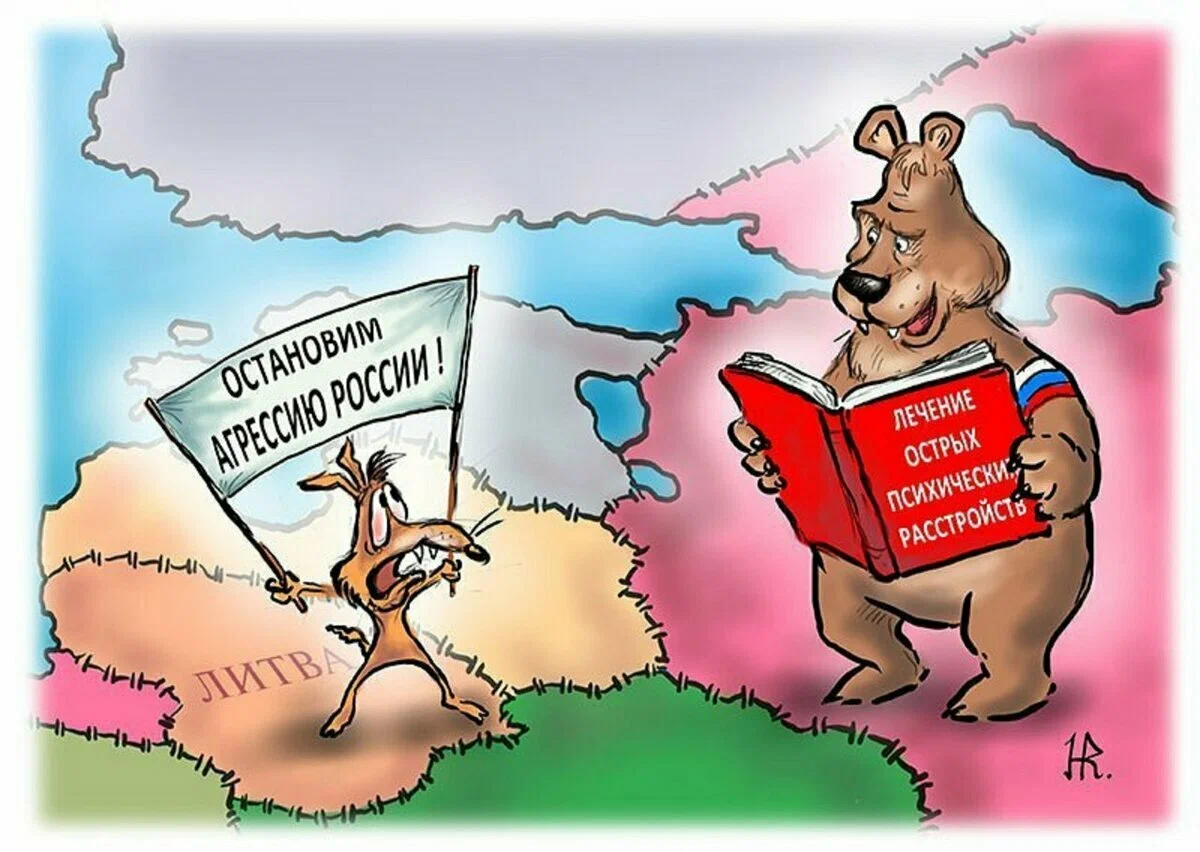
The Lithuanian Scrat-like creature holds a banner “We’ll stop Russian aggression!”, while the perplexed Russian Bear is consulting a book with the title “Curing acute mental disorders”.

The stunning news of the holidays is that the Lithuanian Seimas unanimously recognized Russia as a terrorist state. From the rhetoric of Russophobia, which no one is paying attention to… the Lithuanians have moved on to the first official document, according to all the canons of diplomacy, which is an act of direct aggression against Russia. You can justify yourself as much as you like, they say… this is just a parliament, the case will not get a legal move in the European Union and the Lithuanian government.

Continue reading

The conclusion to Navalny’s farce (for now). A stopped Western-sponsored coup d’etat in Russia

Reading time: 7 minutes

The continuation of the farce that Navalny’s handlers started with his fake poisoning and the subsequent staged return Russia with the fake “palace” video in his arsenal (outlined in the previous article The Navalny’s Palace – Fake Documentary from Fake Opposition (with a list of past crimes)) has come to the logical conclusion with the much-welcome imprisonment of the fraudster.

Navalny got his remaining 2.8 years of suspended sentence for defrauding of two companies converted into a real term. This was the outcome which Russians hoped for. Should the court have caved in to the Western pressure and release Navalny, that would have given a clear signal that he is above the Law and that Law does not apply to fraudsters in the employ of the foreign secret services. The reactions that I read on the Russian internet could be summed up as: “Why so little?!” Well, this is just one past conviction for one of his crimes. (By the way, Navalny has already got away with too much – he’s the only Russian citizen who managed to have two suspended convictions for fraud!)

There is still the case of defamation of WWII veteran, and the case of defrauding donors to his organisation (with the donated money spent on luxury and vacations). These cases were open and, coupled with the suspended sentence, were grounds for not letting Navalny out of the country in the first place. It was actually President Putin’s request that allowed Navalny to be transported to Germany, where he spent almost 2 months after his recovery on skipping his parole and on creation of the film targeting to defame Putin.

And there are strong calls to open a new case – this time for high treason due to Navalnys NGO direct appeal to Biden to impose sanctions on Russia. Seeing as sanctions qualify as an act of war, these people were calling on a foreign power to start a war on the country that they are citizens of.

The pressure on the Court of Justice was immense, including from the foreign diplomats, who amassed there to intimidate the judges and influence the course of a civil court by their presence. The hall of shame includes the diplomats from the following countries:

USA, UK, Germany, Poland, Denmark, Latvia, Lithuania, Sweden, Switzerland, Norway, Canada, Finland, Japan, Austria, Czechia and Bulgaria.

EDIT: 05.02.2021 – Good to see Russia acting in accordance with the international norms and also showing backbone – Russia expels diplomats from Germany, Poland and Sweden for alleged participation in pro-Navalny protests. If only Yanukovich did the same with Biden and Nuland back in 2014, Ukraine would most probably not be a Nazi-infested impoverished and depopulated basket-case right now…

Continue reading

Happy ending for Lisov father and his three daughters, who escaped abduction by the Swedish CPS

Reading time: < 1 minute

This story started in 2017, when three Russian daughters of the Lisovs were abducted by the Swedish CPS and were placed into a care of a culturally foreign family. The father managed to rescue his daughters in April 2019 (two years later!) and was on the way back to Russia through Poland, when the Swedish authorities demanded their extradiction.

I coveted the case at Bitcointalk forum here
https://bitcointalk.org/index.php?topic=828129.msg50488654#msg50488654

Then the situation hang in balance. Back then the Polish court stood firm against the Swedish pressure: Love & justice: Russian family reunited by Polish court decision after fleeing Sweden

And now this case has finally come to a happy ending with the family back home in safety.

Roman Dmowski – “The Ukrainian Question” political prophecy of 1930 coming true

Reading time: 9 minutes

A few years ago I wrote a translation of a documentary, called Project ‘Ukraine’, which very well covered the history, running up to the creation of the geopolitical entity, known as “Ukraine”.

I have now come across an unlikely source of information, corroborating and expanding on the theses put forth in the documentary above. It comes from a Polish politician Roman Dmowski and his 1930 work “Kwestia ukraińska” – “The Ukrainian Question”.

Below is my translation of a Russian article, which analyses his work: Year 1930: Roman Dmowski on Ukrainian Independence.


What is distinguishing a natural-born politician from a random rogue, hanging out on the political stage? The sense of political acumen, the ability to predict the course of events for decades to come signs that are little noticeable at the moment.

Roman Dmowski had this gift in abundance. The expert on Slavic history, active political leader of Poland of the first third of the twentieth century, opponent of Jozef Pilsudski. They say that in his youth Pilsudski stole Dmowski’s wife. Dmowski remained a bachelor, while in politics he seriously disagreed with Pilsudski.

Dmowski was a more measured politician than Pilsudski with his clinical Russophobia. During the revolution of 1905, Dmowski, remaining a Polish patriot, urged the Poles to ally with the Russian tsars, and during the First World War, unlike Pilsudski, he took the side of the Entente. However the proclaimed ultimate goal of his policy was always the building of a national Polish state.

Continue reading

Why does NATO scare Moscow with “paper tigers”?

Reading time: 8 minutes

This is a speed translation of an analytical article by Rostislav Ishchenko from the 7th of July 2016, published at his channel on Kont.


The NATO summit will begin in Warsaw on Friday. For two days (8 and 9 July), senior officials and generals will discuss a lot of technical and political issues. We are, however, interested in only one item on the agenda of the event. In Poland, the Alliance is going to once again discuss relief measures to the “Russian threat”.

As is the custom in the recent years, the “threat” is felt particularly acutely by the Balts and Poles, who demand the deployment on their territories of additional contingents of Western European and American allies.

Washington and London pretend to be impressed by the fears of the limitrophes, and agitate for meeting requests for strengthening NATO forces on the Russian border. We are talking about dislocation of four battalions.

In terms of the real military strengthening of the block’s abilities on the north-western borders of Russia, this gain is negligible. The American military analysts argue that even a dislocation in the region of four additional full brigades will not allow NATO to hold out much longer in the case of a real military conflict.

In fact, we are only talking about whether it will take the Russian troops one or two weeks to reach the Oder line. Or more precisely, how many US troops will need to be hastily evacuated from Poland and the Baltic states, if suddenly something goes wrong and, contrary to common sense, a military conflict in this area happens.


A US soldier during the 2016 Saber Strike exercises in Estonia.

Protection Poles and the Baltic states as a diversionary tactics

So, the United States believes that the Russian group on the Baltic borders now has absolute superiority, which it is impossible to stop by unfolding of either four or sixteen battalions. At the same time, as a result of NATO’s war hysteria of NATO, Russia decided to deploy in the western direction three new high-grade divisions, and another army corps in Kaliningrad.

Continue reading

Project ‘Ukraine’. Documentary by Andrei Medvedev (with English subtitles)

Reading time: 56 minutes

This is a dispassionate chronological look at the history of Galicia and Malorossia, and how those Russian lands were being gradually turned into Ukraine. The film presents a trove of documents, citations, documentary footage and gives it all to the viewer to draw own conclusions. The documentary also takes an introspective look at where Russia went wrong with its handling of the budding extreme nationalism in those lands at the turn of the 19th-20th century, and introspection is a good sign – a nation, which does not view itself as exceptional, which has the capacity to understand its mistakes, has a hope for the future…

The original untranslated video is published here: Проект ‘Украина’. Фильм Андрея Медведева.

After watching the documentary, I can recommend reading the following articles:

UPDATE 13.03.2020: YouTube has globally censored up to a 1000 Russian-originating channels, including those aimed at only the Russian audience, where the video was hosted.

UPDATE 13.03:2022: One should also watch two documentaries from Oliver Stone: a 2016 Ukraine on Fire and 2019 Revealing Ukraine, which pick up the thread of Andrei Medvedev’s documentary.

The formatted subtitle file in ASS format can be downloaded separately. Full text of the script is below the video frame.

UPDATE 14.03.2022: All YouTube-related materials have been moved to the bottom of this post.

Continue reading

Ungrateful Europe.
What would have happened should we push Hitler back just to our borders

Reading time: 7 minutes

This is a translation from Russian of two historical articles, published in Argumenty i Fakty on the 3rd of April 2015.
The main article was written by Georgy Zotov. A subsequent expert opinion is presented by historian Rudolph Pihoj.


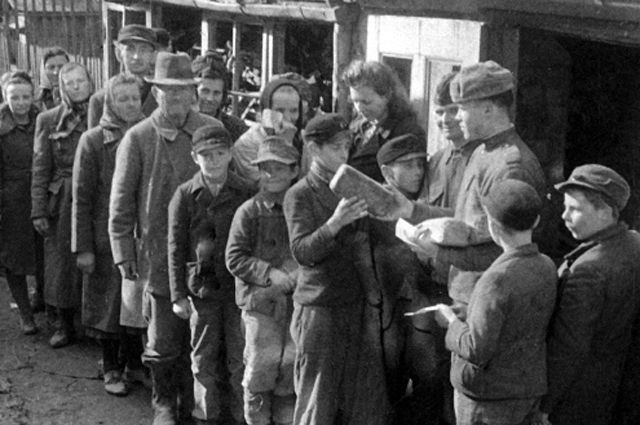
Soviet soldiers distribute bread to the residents of the city of Breslau during the Great Patriotic War.

On the eve of the 70th anniversary of Victory “AiF” tried to imagine: what would the map of Europe look like, had USSR not given thousands of kilometres of territories as present to those countries that now call us occupiers. And if they would give up these lands now.

Wroclaw – one of the most touristic cities of Poland. Crowds with cameras are everywhere, there’s not a spare spot in the expensive restaurants, taxi drivers ask for ungodly prices. At the entrance to the marketplace there waves a banner saying “Wroclaw – a real Polish charm!”. All seems fine, but as early as in May 1945 Wroclaw was called Breslau and had not belonged to Poland for 600 consecutive(!) years before that. The Victory Day, now referred by Warsaw as “the beginning of the communist tyranny,” added to Poland the German Silesia, Pomerania, as well as 80% of East Prussia. No one mentions this now: in other words that was a tyranny, but we’d still grab that land. “AiF” observer decided to understand, what would the map of Europe look like now, if our former brothers in the East were left without the help of the “occupiers”?

Whole cities as gifts

– In 1945 Poland received the cities of Breslau, Gdansk, Zielona Gora, Legnica, Szczecin, – says Maciej Wisniewski, a Polish freelance journalist. – USSR also gave the territory of Bialystok; with the mediation of Stalin, we acquired a disputed with Czechoslovakia city Kłodzko. Nevertheless, they believe here: the partitioning of Poland by the Molotov – Ribbentrop Pact, when the Soviet Union took the Western Belarus and Western Ukraine, was unfair, but the transfer by Stalin to Poland of Silesia and Pomerania is absolutely fair, you can not dispute this. It is fashionable to say now that Russians did not liberate, but conquered. However, it turns into an interesting kind of occupation, when Poland got for free a quarter of Germany: and on top of it, hundreds of thousands of Soviet soldiers shed their blood for this land. Even the GDR resisted, not wanting to give Szczecin to the Poles – the dispute over the city was finally solved only in 1956, under pressure from the USSR.

Apart from the Poles, the Baltic States express a strong indignation by the “occupation”. Well, it’s worth remembering: the current capital – Vilnius – was also presented to Lithuania by the USSR; by the way, the Lithuanian population of Vilnius was then… barely 1%, with Polish being the majority. USSR returned to the Republic the city of Klaipeda – Prussian Memel, owned by Lithuanians in the 1923-1939, and annexed by the Third Reich. Already back in 1991 the Lithuanian leadership condemned the Molotov-Ribbentrop Pact, but no one returned neither Vilnius to Poland, nor Klaipeda to Germany.
Continue reading

The Sorrow of a Warsaw Woman. Why Poland is not happy to be liberated from fascism?

Reading time: 7 minutes

In a very strong post by Lada Ray, Wake Up, the Soldier of Ukraine!, a reader Paul commented the following:

You know, seeing how the Poles and Galicians view Russia, I would say that Russia’s attempts to sweep things under the rug with ideas of Slavic brotherhood and such were not wise. Even within the Ukraine, Eastern Ukrainians saying “We are brothers” while Western Ukrainians said “We are not brothers” didn’t work out so well. It might have been better to say “We are cousins; we don’t always agree, but let’s work together when we can.” A bit of an overgeneralisation, but you get the idea. The point is that you have to stand up for yourself in this world, and get your position across, particularly when it seems like you are facing a bully.

One can make the case that the Soviet and Russian leadership wanted a huge Ukraine that contains too many groups and cultures as a way to prevent NATO or nationalism from gaining territory. The drawback is it really isn’t a normal country, and this made it easy for the West to take over with Bandera types.

I think that the reason Russia was not overly-concerned with brotherly nations forgetting the positive aspects of Russia, was because Russians themselves would not forget or deny the help that they receive and would not think it necessary to remind of such acts in return. In a way, reminding someone of the acts of kindness from you can be viewed as an insult. Turns out it was not so self-evident that reminders were not in order…

It looks like the common Poles still remember, though, as illustrated by the following article by Georgy Zotov, published in Argumenty i Fakty on the 15th of January. Translated to English below, by yours truly.

G. Zotov is a travelling journalists, living in various, often dangerous, parts of the world and getting to know the local people. His articles are always a revelation about the moods of the people “lower down”, often contrasting with what we hear from MSM from the “higher ups”.

The title is a refrain on the wartime march Farewell of a Slavic Woman.

Continue reading