Reading time: 92 minutes
The question of learning the Russian alphabet – or Azbuka, as it’s called in Russian – is one that occasionally pops up.
At the first glance, it may appear hard – 33 letters, half of which are unfamiliar or have a different reading from Latin. But that’s only at the first glance. The first-graders in Russia can do it, and so can you! 😁

Enter “Bukvar” – the letter learning book for the afore-mentioned first-graders. Its approach is to present letters not in the alphabetical order, but rather in such a way that new letters can be combined with the ones already learned to build more and more complex words and sentences. That way the learner builds associations between the shapes of the letters and the sounds they make in the words.
A foreign student can draw on most of this methodology. One part of the learning process that will require a work-around is the expected native-speaker fore-knowledge of how certain words sound.
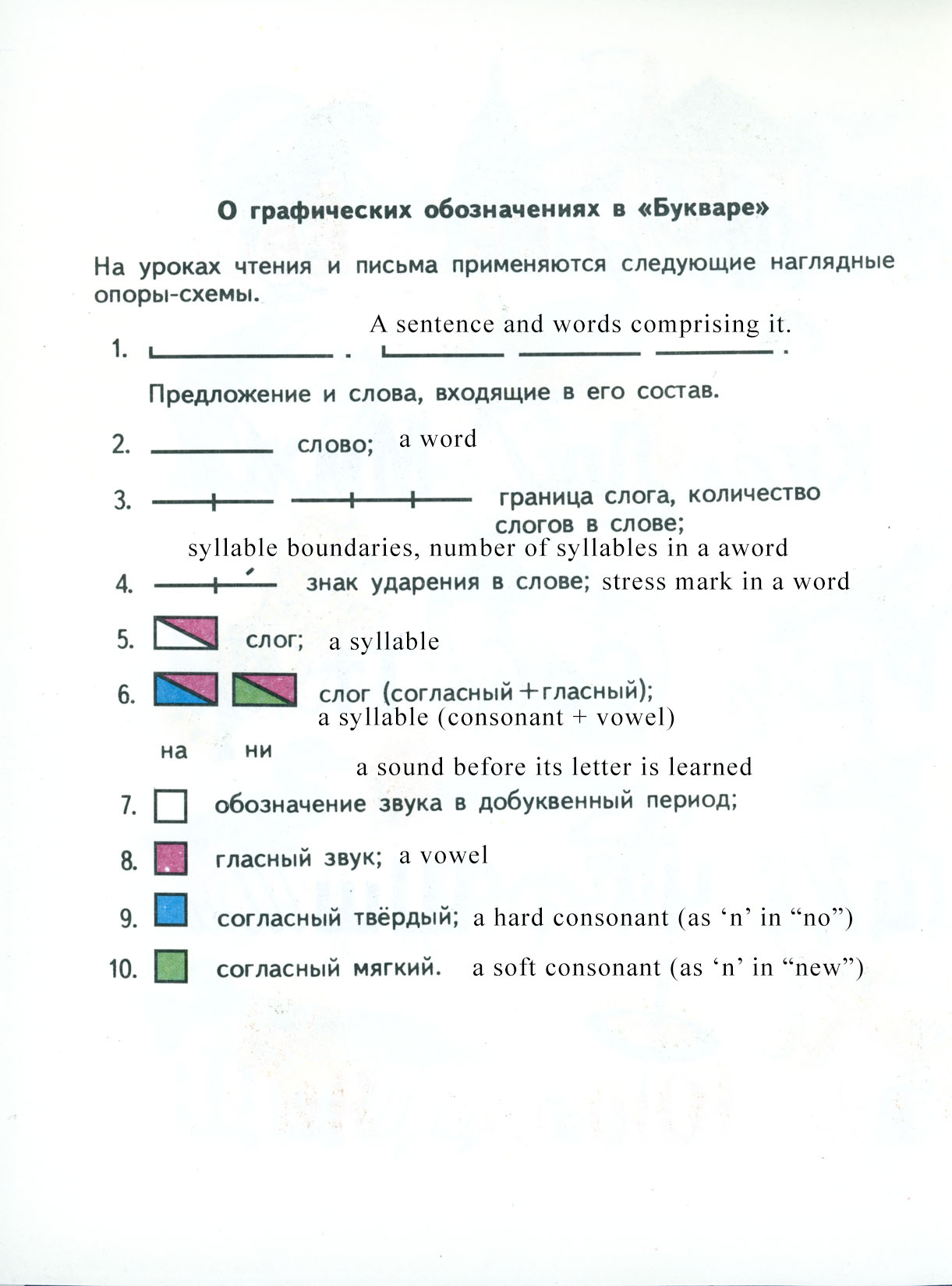
After a very short introduction on the linguistic notation used in the book, one new letter is presented per day, with the explanations of the reading and of the example images used in Bukvar – this will be a great opportunity to learn new words while connecting the new letters to a context.
🤝 Should any questions to the materials arise, the readers are welcome to ask them in the chat of our Telegram channel “Beorn And The Shieldmaiden”!

This image covers the symbology. It’s something you can come back to as a reference throughout the book.
Writing
Another aspect of learning new letters is writing. Though few of us actually write using a pen nowadays, when learning new letters, writing makes for a good additional venue of memorisation – you start associating hand movements and strokes with the shapes of the letters. Here are two writing templates used by schoolchildren in conjunction with Bukvar. I managed to find the versions that I myself used in the distant 1980s 😁
Template 1 — Template 2 (the 1985 edition, originally found here)
You can skip over the first 4 pages (they tackle hand coordination and fine motion of writing) and start on page 5, practising the letters as they come.
Another letter recognition aid that I created for this course is the complete alphabet, where each letter is shown using several different typefaces, some closer to the printed version of the letter, and some – to the handwritten one. The images from this aid will be given as we learn each new letter, but you can download the whole set for future reference.
Don’t try to take it in all at once, but rather take one letter per day, and play with it.
Source materials
This course makes use of the 1996 edition of Bukvar (also downloadable as a PDF), which, while staying true to the methodology of the schoolbook used in the USSR, lost all of the imagery and text, connected to the patriotic education of the kids. Those curious can download the 1987 edition as a PDF (originally found here). Comparing the two editions can also be useful additional tool while learning the letters – you get more texts and images to connect the letters with.
Going even further back in time, The Shieldmaiden contributed a photocopy of a 1983 edition (as a PDF), which is the 3rd edition of the textbook. The print quality is more vibrant than in the later copies, and the phonetic templates and the letter table use a slightly different visualisation method.
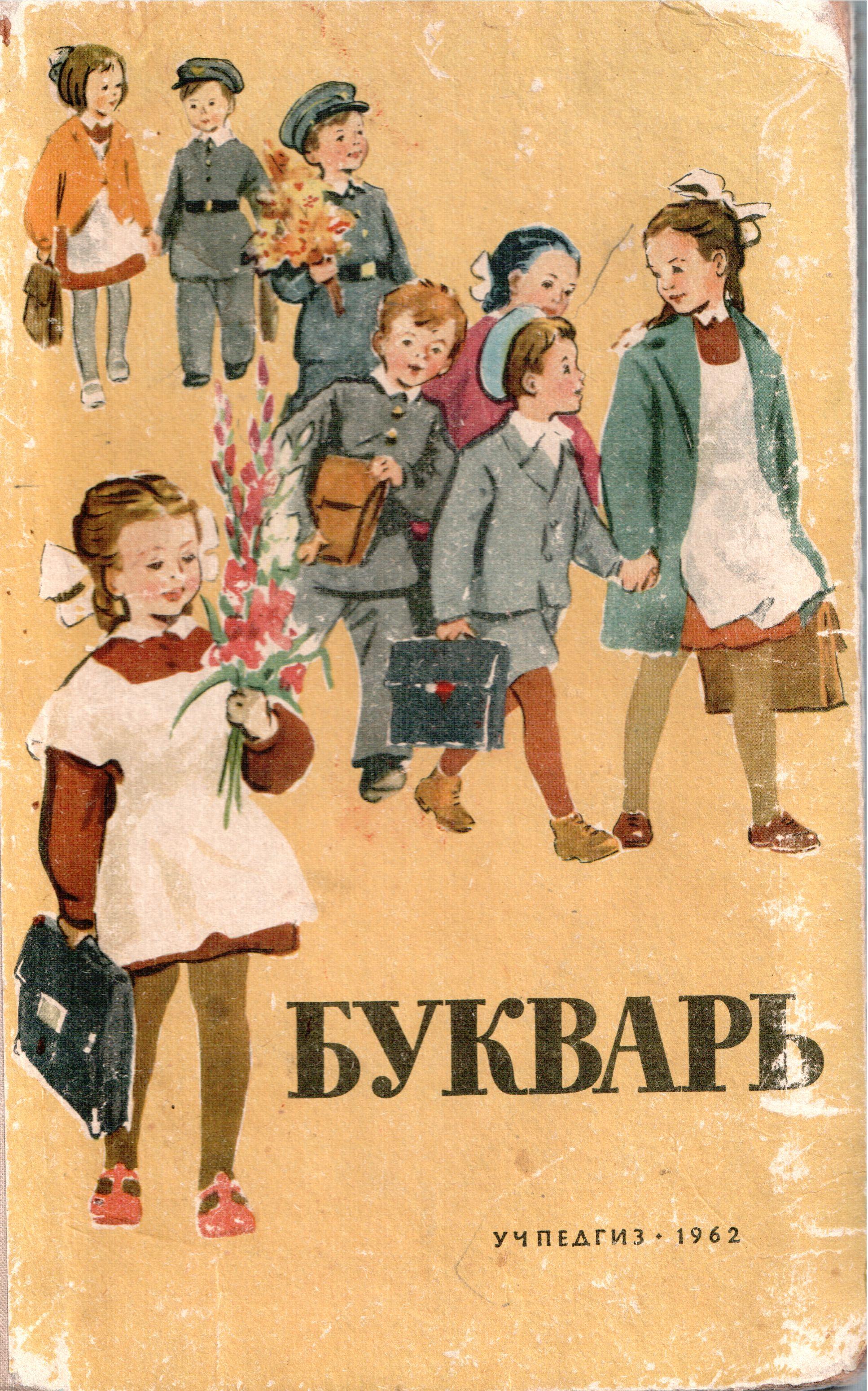
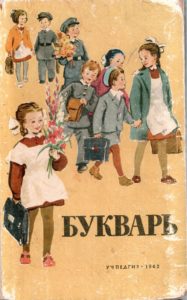 Another contribution from a friend is an even older edition of Bukvar – coming all the way from 1962! Here it can be downloaded as a PDF. That edition is completely different, with the letters presented to the pupil in a different order, combining the writing exercises into the same book, using different texts and illustrations.
Going a decade earlier, there are Bukvar’s from 1951 and 1952 (both in PDF format), that are even more different in their methodology of teaching of the basics.
As part of the learning process, I would still suggest, you come back to these earlier editions after you are done with the course at hand, and use them to both review the letters and to learn more words.
Let’s begin!
And now, imagine, that you have just come to your first day at school – on the 1st of September – and are getting into the learning mood by leafing through the first pages of Bukvar, thinking how wonderful it will be when you can read all the words…
To help you get into the mood, here are two postcards – from 1956 and 1959 – greeting you on the 1st of September!


The first pages of Bukvar’ ease the pupil into the learning mode, mostly playing with images and the notation that will be used later in the book.
Continue reading →