“Mission to Moscow” – The Two Missions of Joseph Davies

Reading time: 15 minutes

Yesterday we presented at “Beorn And The Shieldmaiden” the 1943 film “Mission to Moscow”, along with the contemporary Soviet review. We are bringing this review here, followed by a translation of one chapter, speaking of the book and how the film came to be, titled “The Two Missions of Joseph Davies” from a book by Lev Ashotovich Balayan, simply called “Stalin”.


The following review, written by N.Krugkov was published in the Soviet Red Army newspaper “Red Star” on July 30, 1943. The film in question is possibly one of the two truthful films about the USSR, coming from Hollywood, the other one being “Why We Fight: The Battle of Russia”.

«Mission to Moscow»

A new American film
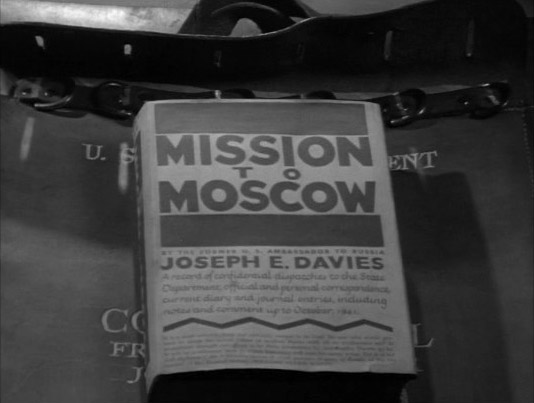
Mr. Davies, the former United States Ambassador to our country, has published a book called “Mission to Moscow”. The book was a great success. It described the events leading up to the war in the language of facts and documents. The factual nature of the book, written with a sharp pen of a publicist, created its success. For the American reader, who was poorly informed about the USSR and European affairs, Davies’ book was in many ways a revelation.

Director Michael Curtiz created a movie based on the book by Joseph Davis. Of course, it was not an easy task. Davies’ book, which is a political document, did not pretend to be artistic in its presentation, it is entirely factual, and seemingly plotless. However, the events described in it are so dramatic, so close to us, people experiencing the storms and tempests of the World War, that they fit neatly within the script and allowed to create a film that makes a great impression.

Of course, to us, the Soviet people, a lot of things in the picture seem naive and sometimes even funny. Russia, apparently, remains an exotic country in the eyes of Americans, and the desire to convey to the viewer the uniqueness of the country clearly dominates the direction.

Therefore, the film carefully emphasises the shots designed, according to the authors, to show Russian exoticism. Of course, the film features a mighty-sized samovar, some bearded people dancing “hopak” at a skating rink, a sled painted with flowers, and so on. All this makes our audience smile involuntarily. But at the same time, we see the efforts of the film’s authors to show our factories built during Stalin’s five-year plans, our endless collective farm fields and our new people — energetic and courageous builders and creators of a new life.

J. Davis went to Germany before coming to the USSR. He saw the stupid German military, heard the roar of drums, the incessant brass roar of military marches, children beating the goose step, a rampant, muzzled Germany, a country where preparations for war were going on at a furious pace, where everything was trembling under Hitler’s heel.

— Tin soldiers, he said of the Germans.

And so he crossed the border: a new world, the USSR. The lively people, the ease of communication, the smiles on their faces, even the air was different, clean and fresh, and the Americans who arrived immediately felt free and simple.

This noticeable difference between the two countries is perfectly captured in the picture.

The Soviet and foreign chronicles abundantly presented in the film give the picture a documentary character, making up for what could not be done in the studio, making you feel the pulse of authentic life.

The film says: The USSR is a great country, inspired by high common and social ideals, inhabited by courageous, energetic and talented people.

The film shows political figures of the USSR and other countries. The direction did not achieve an exact similarity of images — neither in external nor in internal expression. It was satisfied with the conditional similarity, the sketchy outlines. However, even actor Walter Huston, who plays the role of Davis, did not strive to accurately reproduce the image of his character.

Some events in the film are shifted in time, apparently in order to develop the plot more dynamically, but this does not deprive the film of truthfulness, because it is based on actual facts, real events.

We see and feel the ardent desire of the film’s authors to honestly comprehend and reflect the life of our fatherland — they have succeeded in many things, some have failed — but in any case, we can rightfully say: This is the voice of our overseas friends.

The Soviet Union, which bore the brunt of the Hitlerite horde that threatened to incinerate the whole world, attracted the sympathies of all advanced humanity with its courageous struggle. America, which is fighting alongside us, has feelings of recognition and respect for the Soviet people. The film “Mission to Moscow” expresses these feelings.


You are about to read a chapter from Lev Ashotovich Balayan’s book “Stalin”. After Lev Balayan’s passing, the book was made public domain by his son, Yan Bayalan, at the site stalin.su between 2003 and 2015. The site itself is now available through the WebArchive. The book can also be found at LitLife Club.

The Two Missions of Joseph Davies

The bestseller of the 40s
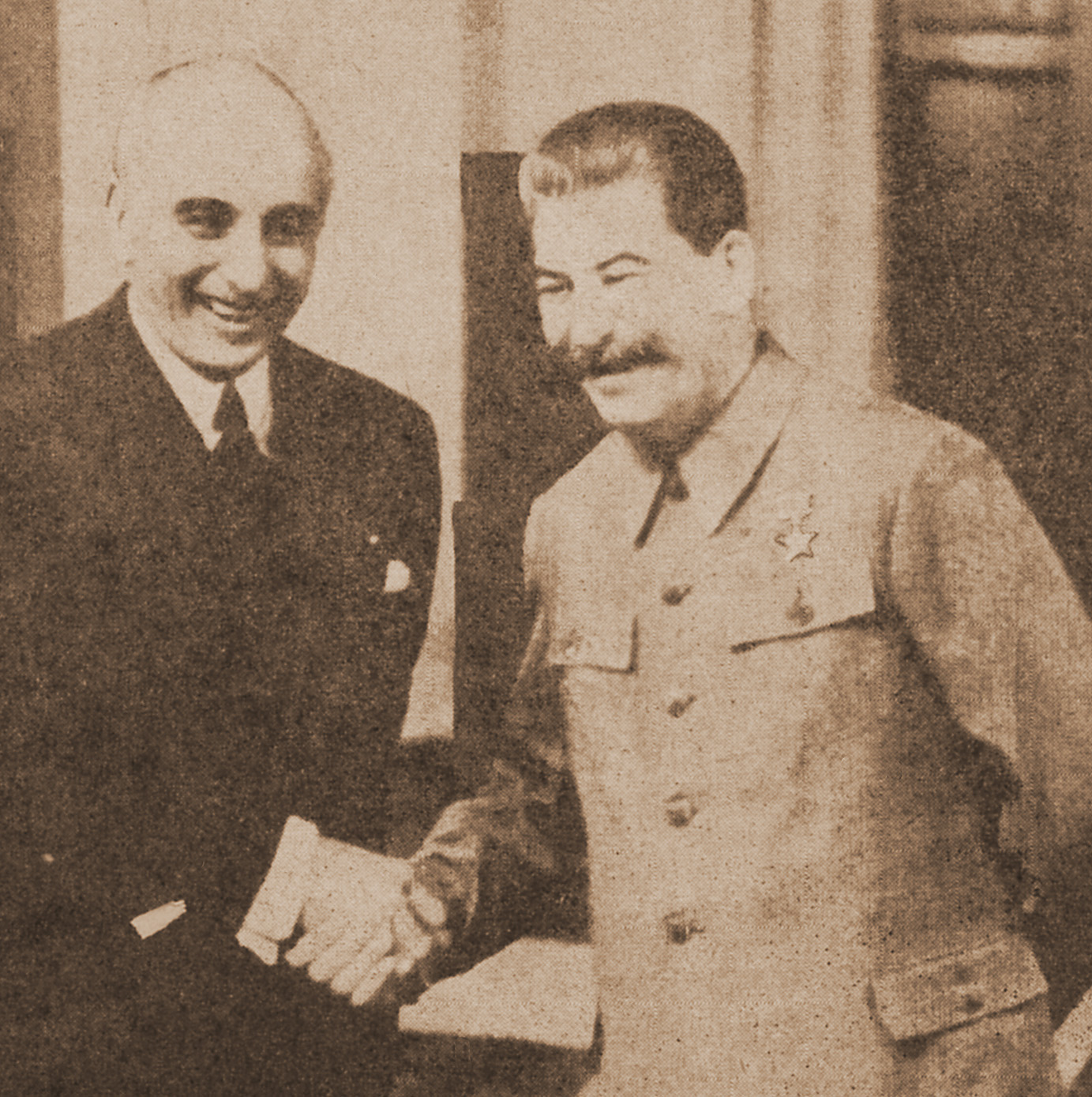
Davies and Stalin in May of 1943

At the end of 1941, Joseph Davies’s book “Mission to Moscow” was published in the United States of America. This man was the US ambassador to the USSR, or rather, Franklin Roosevelt’s personal envoy to the Soviet capital, where he arrived with a very specific mission: to obtain an audience with Stalin, to deeply study and analyse the internal political situation in the Soviet Union and its foreign policy, as well as to gather information on the defence capability of our country. Davies’s work as U.S. Ambassador to the USSR lasted from January 1937 to the spring of 1938, that is it fell on the peak of “political repression”, and therefore F.Roosevelt’s personal envoy and his testimonies about the events that took place at that time, as well as his book itself, are of great interest. It is not for nothing that President Roosevelt left this inscription on his personal copy of the “Mission to Moscow: “This book is a phenomenon, it is for all times.”
Continue reading →
Fritzes of This Summer

Reading time: 5 minutes

Before you is the first part of an article written by Ilya Ehrenburg, and published in “Red Star” on July 30, 1943.

The face of fascism never changes, nor its dynamics. Today, totally mobilised Ukrainians are in the same shape and form as the “Total Fritzes”, the brainwashed youths of Ukraine are just as brainwashed as were their German predecessors. And Tigers… where are the vaunted Leopard II and Challengers, that were supposed to have become the “game-changers”? Article first translated to “Beorn And The Shieldmaiden”.

Voluntarily mobilised Ukrainians are being sent to the front in a fully demoncratic fashion.

“Tigers” and Germans, who were conscripted into military service in February-March of this year on “total mobilisation”, are the highlights of the German season.

“Tigers” have been described more than once. I will try to describe the Total Fritzes. I saw them coming out of the woods, raising their hands in the air. I talked to them before they had time to put their feelings in order and find decent formulations. Total Fritzes were the last to arrive at the front, but they are the first to surrender.

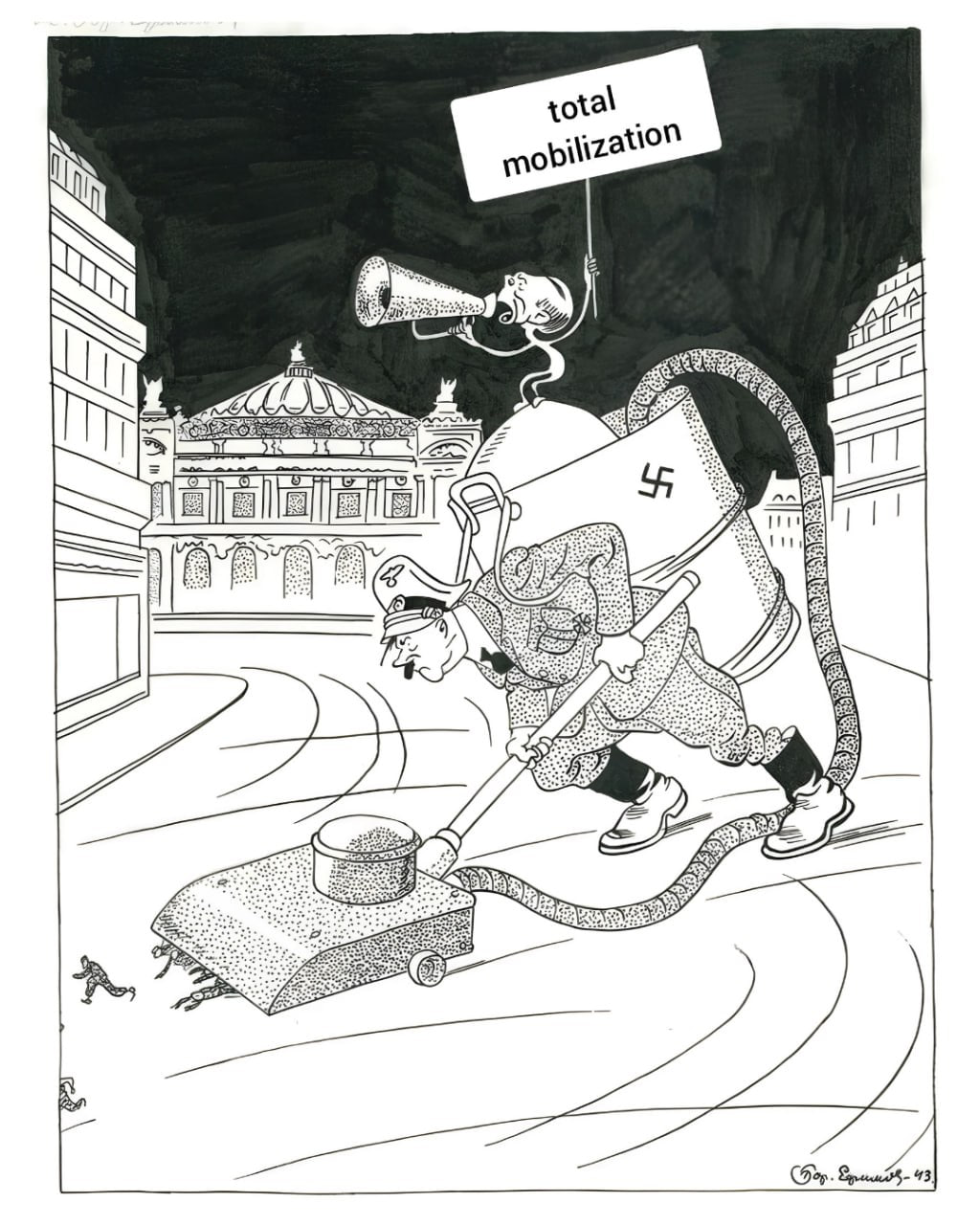
In 1943, after the defeat at Stalingrad, propaganda minister Joseph Goebbels cried for “Total War” and “Total Mobilisation”.
Here, Adolf Hitler is “vacuuming” the streets of Germany in search of fresh soldiers, as so aptly depicted by the Soviet artist Boris Yefimov.
The non-elected puppet Führer of Ukraine, Volodomyr Zelensky, is now doing the same thing 80 years later to provide fresh cannon fodder for his western masters.
Source: Beorn And The Shieldmaiden

Here’s a middle-aged, sad German. The military uniform does not give him a military appearance. Until March, Heinrich Sturman lived in Emden and was considered “irreplaceable”. But the Germans are masters at substitutions: a French prisoner of war replaced Heinrich Sturman. The latter was sent to the marching battalion. The training lasted two months. Heinrich Sturman learned how to shoot a rifle. He did not venture close to either a machine gun or a mortar. On July 14, he arrived at the front line. The day was quite noisy, and the music unpleasantly surprised the Total Fritz. However, even in Emden he had become unaccustomed to silence. He says that three-quarters of his city was destroyed by British bombs, but he adds: “But there were shelters there after all…” And here Heinrich Sturman found himself in a field. He climbed into a small hole. From the excess of impressions, he fell ill with dysentery. He sat in the hole, not moving, for two days. Our fighters had gone past him a long time ago, and Total Fritz was still squatting. He was discovered by our signalmen.

I’ve seen a lot of such warriors. The harvest of total mobilisation gave Hitler very mediocre soldiers. Here they are both weak-witted, and blind-sighted, and fingerless. Forty-year-old Fritzes are not suitable for the “eastern campaign”. These are mostly asthmatic, hemorrhoidal, gouty townspeople. They were afraid to sit on the grass in a German park, so as not to catch a cold. It is easy to imagine what they are going through in the Bryansk forests.

Total Fritzes are poorly trained. In the diary of the commander of the 32nd sapper battalion, Gerhardt, whom I mentioned, there is the following assessment of the replenishment: “The marching battalion is indescribably bad. They have no bearing, and they don’t understand anything.”
Continue reading →
Fritz the Forerunner

Reading time: 3 minutes

Before you is an article by Ilya Ehrenburg, published in “Red Star” on August 11, 1943.

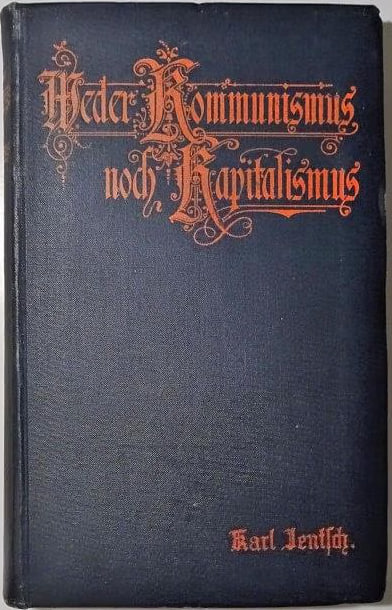
The Fritzes who came to us for the “living space” had a forerunner. I have before me a work by Professor Karl Jentsch called “Neither Communism nor Capitalism” (“Weder Kommunismus Noch Kapitalismus”). This book was published in Leipzig in 1893, and the Fritzes can celebrate the fiftieth anniversary of its publication.

The professor liked to speak bluntly. He begins his opus with the question: “Where does the land for our colonisation lie?” Having learned that the Germans are “cramped in Germany,” Karl Jentsch exclaims indignantly: “The number of Russians is enormous, while their morals are at a very low level”. Therefore, “the scientist” offers the Germans the best way out: “Russia is for us what the lands of the Slavs east of the Inn and the Elbe were for our ancestors, that is, a country designed by nature for our colonisation”.

The possessed Fuhrer was four years old at the time, and his forerunner was already developing a detailed plan for the “colonisation of Russia”. Karl Jentsch wrote that in the new colony “some will be masters, others slaves”. Long before the rogue Rosenberg, the rogue Jentsch calmly assured that “the Germans bring culture to the Russian barbarians” and that “there is no intelligentsia in Russia.” Leo Tolstoy, Chekhov, Mendeleev, Mechnikov, Sechenov lived and worked then, and the quasy-scientist Karl Jentsch smugly said that it was necessary to “send ten million Germans to Russia in order to enlighten this country”.

There were no planes or tanks yet, and Fritz the forerunner limited his projects to artillery. He wrote: “Why turn guns against our brothers, the German unemployed, when it is possible to conquer new spaces and untold riches?” Anticipating the “racial theory”, Karl Jentsch is not satisfied with the ears of the Russians. The spiritual father of Ribbentrop and Hess writes: “The first task of diplomacy is to raise and direct the whole of Europe against Russia”.

The book by Karl Jentsch ends with the call: “We need to act! The land we need will not grow by itself for us, it will have to be conquered”.

As you know, since then the Germans have twice tried to capture Russia. The rough rehearsal was conducted by the Kaiser. The Germans frolicked in the Ukraine for a while. Returning to their Swinemunde and Schweinfurths, they caught their breath and began to prepare for a decisive campaign.

The possessed one fulfilled Professor Jentsch’s dream: ten million Fritzes were sent to Russia. Colonisation has begun. But the cultural traders were in for an unpleasant surprise: the Red Army intervened in their plans. Where is the Chief Governor of the Caucasus? Where is Rostov’s advisor for commerce? Where is the Herr Commandant of Oryol? Running away, they lost not only guns and slippers, but even the scientific work of their great-grandfather Karl Jentsch.

We will remember everything: the ashes of Oryol, and the vile writings of the Leipzig professor. Don’t let them say that Hitler fell from the sky. Don’t let them blame everything on one crippled man. Jentsch lived before the crooked one. Before Hitler, they were already thinking about how to colonise Russia. It was no accident that they burned Yasnaya Polyana and the Turgenev Museum in Oryol. They’ve been dreaming about this for half a century now. They will not be able to present in a difficult moment that Hitler has “retired” and that the non-commissioned Hitlers are as pure as Easter lambs. It is necessary to rip out the snake’s sting once and for all. We need to show them that the Russian land, awakened by the invaders, gets up, goes on and punishes. The Fritzes had forerunners. But we swear over the ashes of our cities that there will be no Fritz students.

🦇 Alas, there came von der Leyens and Merkels and Merzes…

The Monastery – A Documentary by Russell ‘Texas’ Bentley. Монастырь – Фильм Рассела “Техаса” Бентли

Reading time: 2 minutes

January 17th, 2015. Monastery position at Donetsk airport. One of the most legendary battles of the Donbass war, when a small group of soldiers from the separate tactical group “Essence of Time”, which was part of the VOSTOK battalion, repelled the Ukrainian fascist offensive and prevented them from entering Donetsk straight.


Backup at Rumble.

The blood of the fallen calls out to us to remember! Those who are not blind, whose hearts are hot and whose souls are alive, watch the short documentary – “Monastery” – by Russell “Texas” Bentley about this significant battle.

In December 2023 this documentary was awarded a special prize for the “COMMEMORATION OF THE HEROES OF DONBASS” at the ‘Frontline’ Documentary Film and Media Projects Festival in Rostov-on-Don.

👉 Film source and the description at Russell’s Telegram channel.


17 января 2015 год. Позиция на монастыре прямо возле Донецкого аэропорта. Один из самых легендарных боёв в войне на Донбассе, когда малочисленная группа воинов отдельной тактической группы “Суть времени”, входившей в батальон ВОСТОК, отбила наступление укрофашистов и не дала им войти прямо в Донецк, воротами в который являлась эта позиция.

Кровь погибших взывает к нам, чтобы мы помнили! Те, кто не слеп, у кого горит сердце и жива душа, посмотрите короткометражный фильм МОНАСТЫРЬ Рассела “Техаса” Бентли об этом знаменательном бое.

В декабре 2023 года этот фильм был удостоен отдельной награды “ЗА СОХРАНЕНИЕ ПАМЯТИ О ГЕРОЯХ ДОНБАССА” на фестивале документального кино и медиапроектов “Линия фронта” в г. Ростов-на-Дону.

Two years with Expressen – 586 stories about Putin, zero about the genocide

Reading time: 13 minutes

In 2024, Kamal El Salim did an extensive research into the front pages of the Swedish daily “Expressen, and published the results in the fourth issue of Parabol Press. Below this article, we present another material on the same topic: “Cognitive dissonance as a mechanism of control”, which builds on Expressen-based findings. Both articles were first translated to our Telegram channel “Beorn And The Shieldmaiden”.

Read also our 2017 article The Upside-down World of the Western Main Stream Media (MSM).


Almost nine out of ten are about Vladimir Putin. Often there are speculations about his death, plans for World War III and girlfriends. What does this one-sided fixation on one person mean? How has it affected the NATO process? And what happened to the news agency? Kamal El Salim has gone through Expressen’s front pages for two years.

Every day a newspaper editor has to make a choice. Which news is most important and deserves a place on the front page, one and poof? Is it the latest gang shooting, or the murdered woman? Is it climate change, NATO membership, the healthcare crisis, one of the major wars raging in Ukraine and Palestine?

For the editor of Expressen, the choice has been easy over the past two years. The number one spot goes, in nine out of ten cases, to Vladimir Putin.

Parabol has looked at Expressen’s front pages for just under two years, from the outbreak of war in Ukraine on February 24, 2022, until December 31, 2023. The front pages of the evening newspapers are interesting precisely because they reach the entire population, even those who do not buy the newspaper or read it online. Every time we shop in a grocery store or kiosk, we see them while we are standing in line – we are therefore influenced even if we do not want to. What kind of picture do they give of the present? The fact that I chose Expressen is just a matter of delimitation – focusing on Aftonbladet or another newspaper would probably have given similar results, but that is not a comparative analysis we are looking for here.

After going through 671 front pages (what is called “one”, namely the biggest news on the page, and what is called “puff”), the result is clear. In 586 of them – a full 87% – Russian President Vladimir Putin is mentioned.

Note that they are not about Ukraine, or about Russia, or about the war, but about Putin, to the point that the headlines personify the nation of Russia as a single person.

The front pages can be divided into a number of categories:

Putin will lose

174 front pages are about Putin losing the war. Some examples of this are “3 Russia experts: It could be the end for Putin”, “Magnus Falkehed: This is the beginning of the end for Putin”, “Mats Larsson: NEW LAW SHOWS PUTIN’S DESPERATION” and “Expert: PUTIN COULD FALL AT ANY TIME”.
Continue reading →
Brainwashing is spreading in Norway

Reading time: 6 minutes

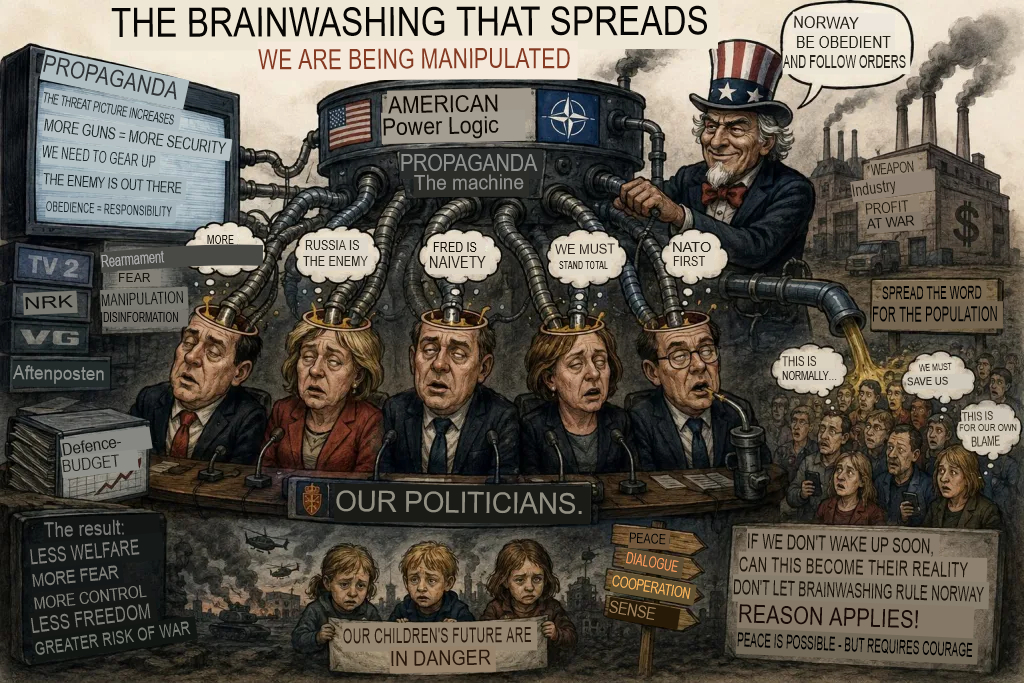
An article by Dan-Viggo Bergtun published in steigan.no on June 11, 2026, and translated from Norwegian by us at “Beorn And The Shieldmaiden”. Even though the article is written primarily with Norway in mind, what Dan-Viggo says is equally applicable to all the Western European countries, so heed the warning!

We AI-translated from Norwegian the AI-generated image by Dan-Viggo Bergtun. There are a couple of inaccuracies, as can be expected. “Fred” means “peace” in Norwegian, so the bubble in the middle should read “Peace is naivety”. Two of the bubbles in the corner should read: “We must be scared” and “This is for our own best”.
See the original image in Norwegian further down in the article.

Brainwashing is when common sense is wiped out. It is when the human capacity for independent judgment is gradually weakened, overridden and replaced by ready-made slogans, fixed enemy images and political reflexes. The brainwashed person does not necessarily think he is lying. The dangerous thing is precisely that he can be convinced that he is telling the truth, because the propaganda has been repeated for so long that it is perceived as his own thought.

This is what makes the development in Norway so serious. Our politicians are becoming the bearers of a brainwashing they themselves do not see. They repeat the message of war as if it were wisdom. They repeat the threat images as if they were sober analysis. They repeat that more guns means more security, as if history has not already shown us how wrong it can go when societies let fear rule.

This is no longer just about political dissent. It is about the manipulation of an entire people. We are manipulated through words, images, headlines, news broadcasts, expert panels and political speeches. We are told that the world is so dangerous that we must accept ever more rearmament. We are told that thoughts of peace are naivety. We are told that diplomacy is weakness. We are told that obedience to alliances and great powers is the same as responsible Norwegian politics.

This is how the boundaries in our heads are shifted. Little by little. Day after day.
Continue reading →
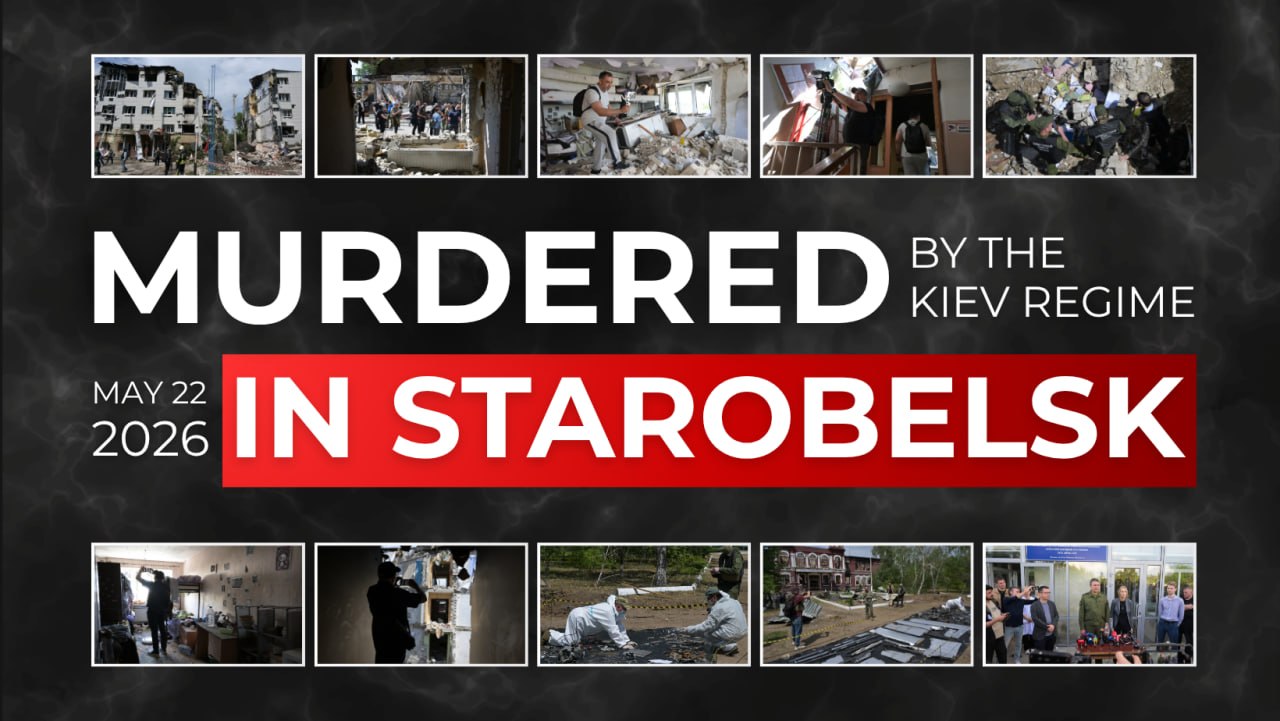
Starobelsk children: Murdered by the Kiev Regime, with US-NATO’s direct guidance

Reading time: 3 minutes

Statement by the Russian Ministry of Foreign Affairs

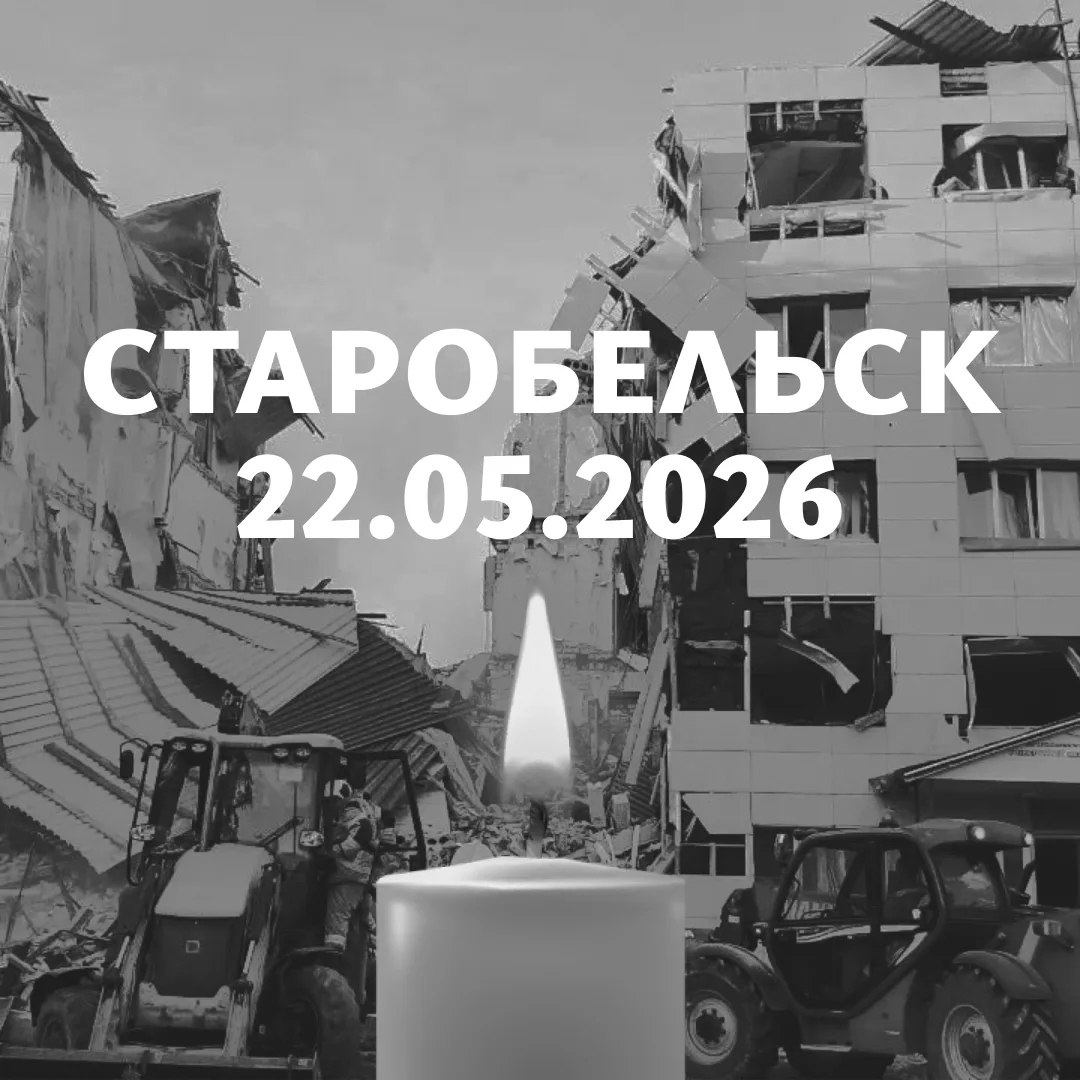
▪️ On the night of May 22, the Nazi regime carried out a heinous terrorist attack (https://t.me/MFARussia/30072)on the academic building and dormitory of the college of Lugansk State Pedagogical University in Starobelsk, LPR, using 16 UAVs, 4 of them heavy, in three waves.

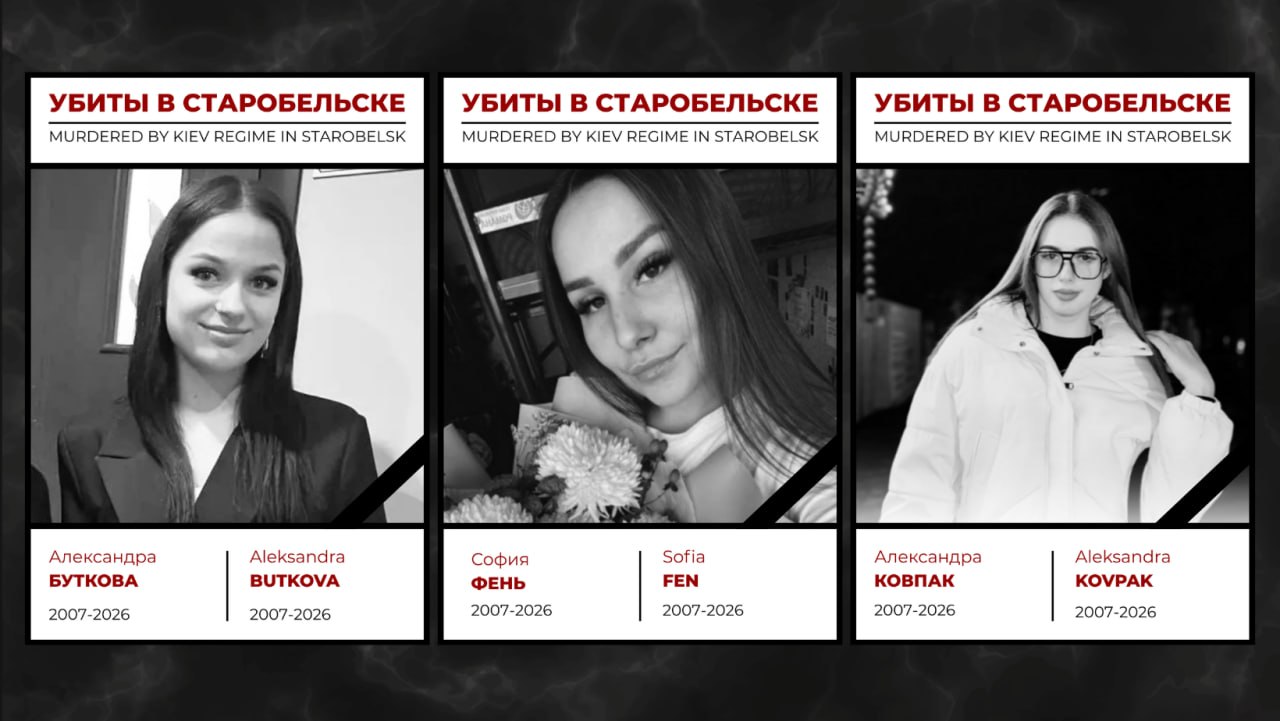
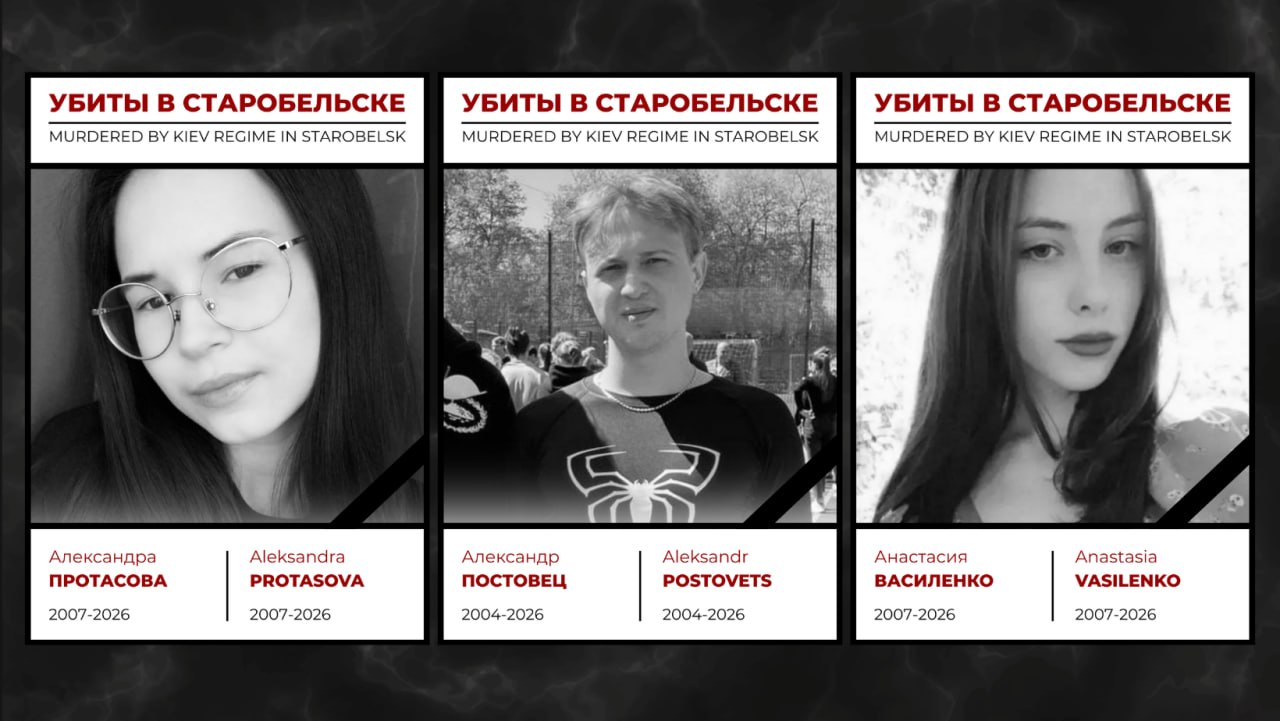
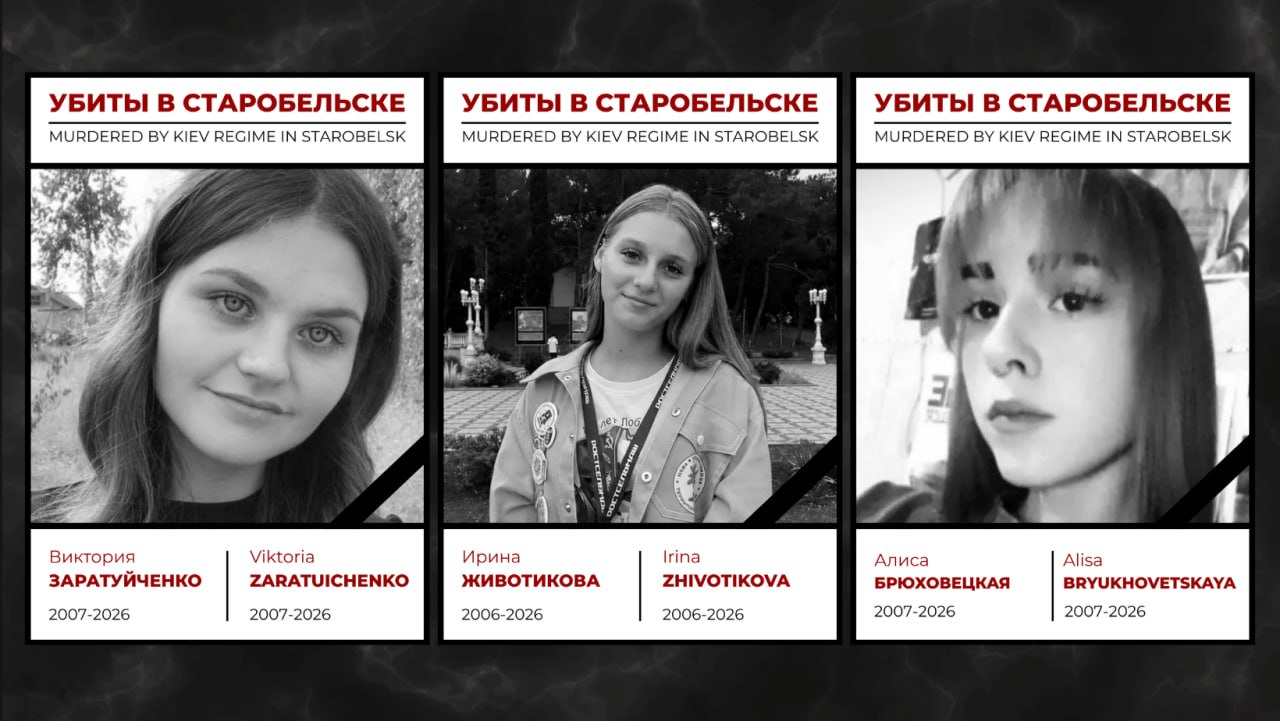
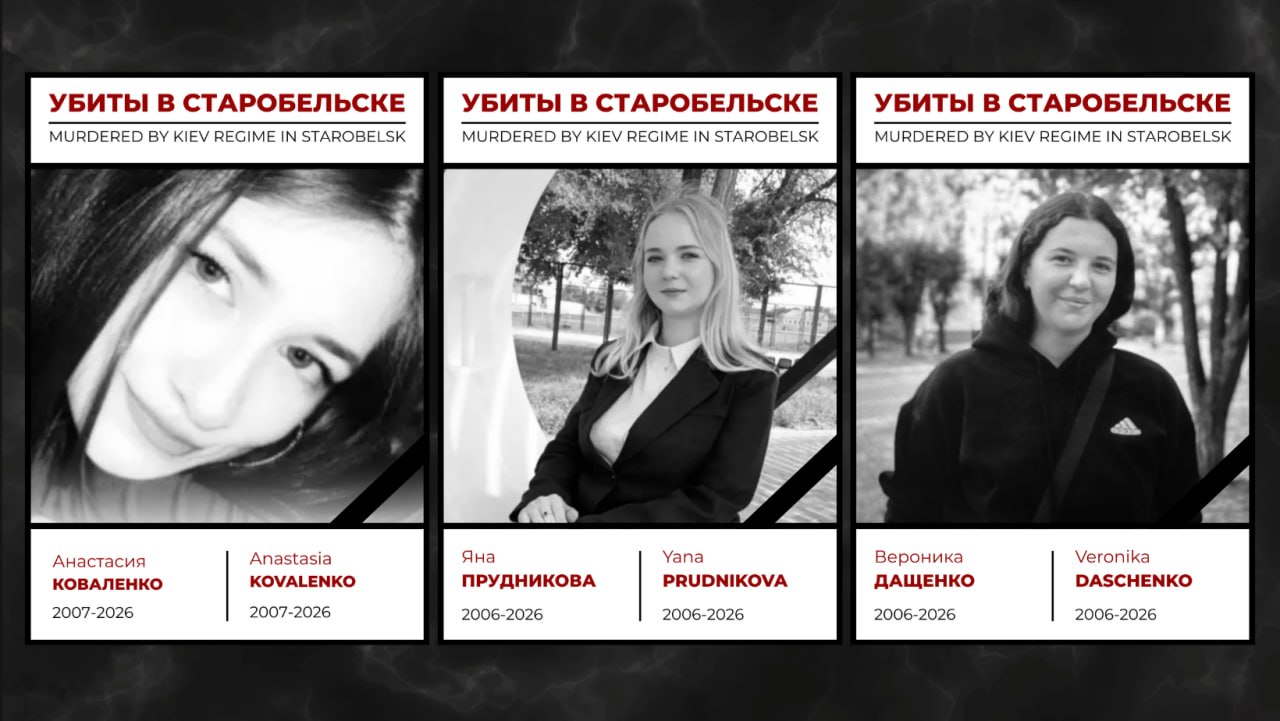
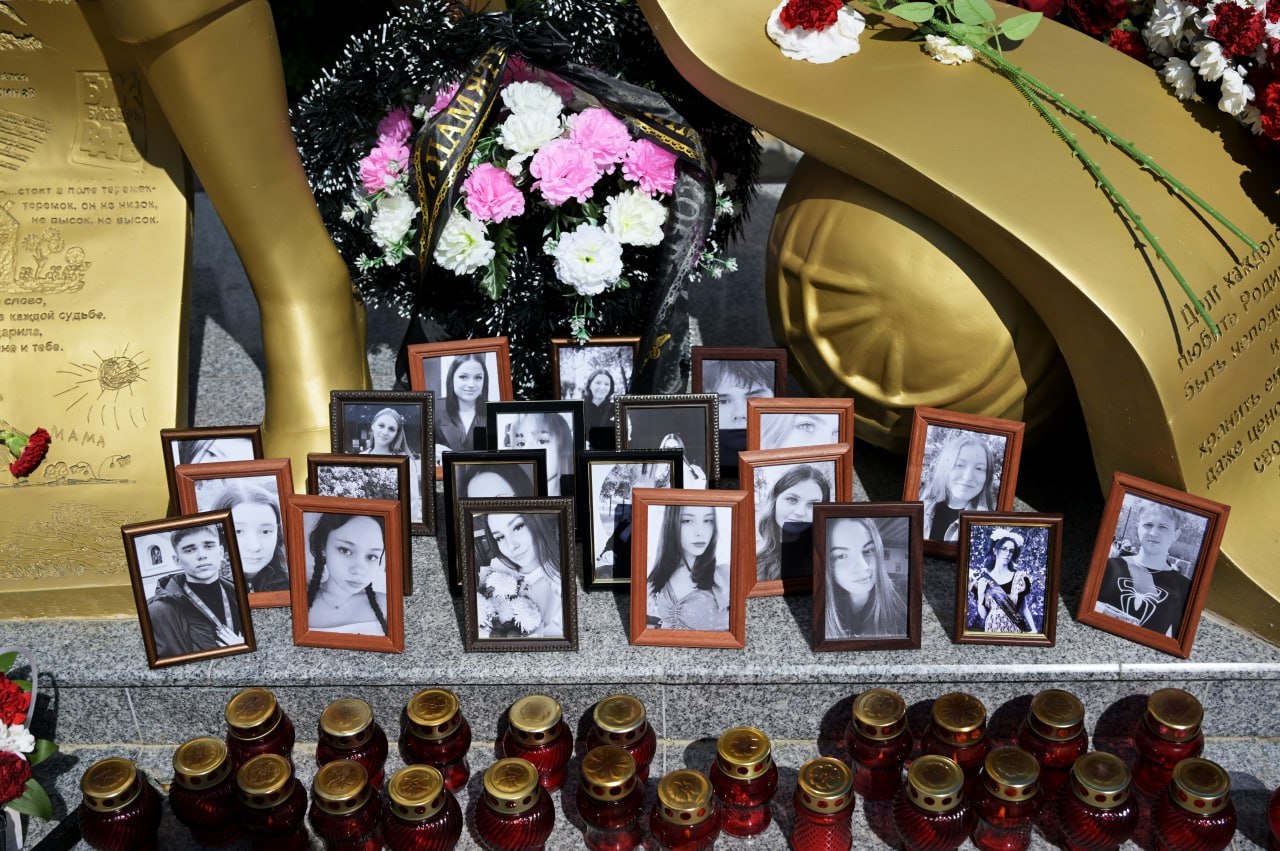
The terrorist attack claimed 21 young lives. Just a week ago, they were students with dreams, plans and a future. Today, all that remains are photographs, memories and unbearable grief.

#NoStatuteOfLimitations: Look into their eyes. Ordinary students. Whole lives ahead of them. MURDERED IN STAROBELSK.

This strike was not an accident or a malfunction. It was a deliberate, targeted act of inhuman cruelty against civilians.

💬 Russia’s Foreign Ministry Spokeswoman Maria Zakharova:

These young people dreamed of becoming teachers and passing knowledge on to the next generations. They had their whole lives ahead of them. Look at the photographs of the students who were killed, look into their eyes… They were the ones Kiev chose to kill.

Kiev’s neo-Nazis treacherously stole these young people’s lives and dreams – and, in effect, those of all their loved ones as well.

#KievRegimeCrimes #NatoTerrorAgainstStarobelsk


Russian Embassy to the UK comment on British media’s selective reporting of the Ukrainian strike on Starobelsk

❌ A week on from the strike on Starobelsk, British [including, state-owned!] media outlets have failed to report objectively or professionally on the terrorist attack carried out by the Kiev regime against a student dormitory of the Luhansk State Pedagogical University.

To recall, 21 people were killed and 44 injured. The majority of the victims were aged between 15 and 22.

Particular attention should be drawn to the BBC’s hypocritical stance. Having declined to join the Russian Foreign Ministry’s press trip to the site of the tragedy, the broadcaster nevertheless published an investigative article on the subject.

However, this piece adds nothing of substance, as it differs little from the standard tenets of Western propaganda. It either ignores the incident altogether or mentions it only in passing, as something insignificant. Phrases such as “not able to independently verify what happened”, “according to the Russian side”, and “what Moscow calls a Ukrainian strike” imply complicity.

British media are afraid to tell the truth: it is precisely this Ukraine – one that has been killing children since 2014 – that enjoys London’s “unwavering support”. Against this backdrop, any statement by the UK authorities in defence of children’s rights amounts to hypocrisy and manipulation.

☝️ British correspondents are keen to amplify the Ukrainian narrative about thousands of minors allegedly deported by Russia, yet remain silent when Ukrainian drones kill schoolchildren in their sleep.

This once again lays bare the true face of British media, which bear their share of responsibility for the continuation of the conflict.

“Disinformation and Manipulation as a Tool of Hybrid War Against the Global Majority for the Preservation of Hegemony” – Maria Zakharova’s speech

Reading time: 14 minutes

Maria Zakharova, the official representative of the Ministry of Foreign Affairs of Russia, participated in the session “Disinformation and Manipulation as a Tool of Hybrid War Against the Global Majority for the Preservation of Hegemony” as part of the International Security Forum.

She spoke about the West’s manipulations using the examples of the provocation in Bucha and its prototype in 1944 (Nemmersdorf) in contrast with the terrorist attack by the Kiev regime in Starobelsk. Unlike the non-existent lists of “victims” of Bucha, Russia presented the names and photos of each of the deceased college students. She also talked about the double standards in USA’s attitude towards Iran and the ongoing rewriting of the history of WWII.

Below is the translated transcript of fragments of Maria Zakharova’s speech and statements. The original video is in the post of her Telegram channel.


Moderator: Colleagues, I would like to give the floor to the official representative of the Ministry of Foreign Affairs of Russia, Maria Vladimirovna Zakharova. Maria Vladimirovna, I would like to hear your opinion on this problem. How necessary is a consolidated reaction of countries to information leaks and attacks? What can be done? Where are we now? Thank you. The floor is yours.

Good afternoon, colleagues. Today we started discussing this topic in the first half of the day when we discussed the problem of neocolonialism. As a rule, we consider the problem of information and fake news separately. Why? Because this is a boundless ocean of problems. In fact, disinformation, fake news, unscrupulous journalism – or, best to say, quasi-journalism, all manipulations in the information environment have specific goals and tasks. And they are formulated very simply: “with the help of information, to subordinate those who need to be robbed, who need to be deceived, who need to be manipulated”.

Within the framework of the whole world, geopolitically, this is a constant confrontation of those who call themselves the flowering garden, as the high representative on foreign policy of the European Union, Borrell, said, and the wild jungles, as he called the rest of the world.

The narrow group of countries, and in the broadest sense of the word “narrow” – both from the point of view of their number and their worldview, because this approach is based on one thesis: “Take away, rob, subordinate, deceive, manipulate”. They are constantly fighting for domination in the world, using all the opportunities for this.

It was largely always like this, but it was the 20th century that demonstrated new technological capabilities and made it possible to fight for domination over others also with the help of information tools.

Not only weapons, not only weapons of mass destruction, not only nuclear weapons – I am now dividing these things, because weapons of mass destruction can be non-nuclear weapons. Not only trade wars, illegitimate sanctions can be and are the instrument of the unscrupulous regimes, as a tool to subjugate other states and peoples to their will. But, of course, also information.

We see it constantly, live. Unfortunately, this topic and this problem will only worsen with the mass introduction of artificial intelligence and digitalisation elements into life. Why? Because, again, unfortunately, technology and resources are concentrated – I can’t say in one hand – but they are trying to be appropriated by all the same countries, again – the collective Western minority – which have used various types of resources for their own hegemony or defending the myth of their own domination.

Now they will use new tools, they are already using artificial intelligence and digitalisation. But I think you know this theoretical part very well, and I think my colleagues will continue to develop it today.

I want to give you a specific example how in these very days we observe the use of all of the technological – both traditional and new – capabilities for their unscrupulous use in the context of information confrontation. I will show two situations as an example. They are related to the crisis that takes place around Ukraine, in Ukraine.
Continue reading →
Western despicable perversion of truth and silence about the Starobelsk massacre, and the final warning from Russia #NatoTerrorAgainstStarobelsk #NoStatuteOfLimitations

Reading time: 15 minutes

In Tribute to the victims of US-NATO terrorist bombing of Starobelsk college we saw that the British state-controlled BBC journalists refused to go to Starobelsk, CNN representatives were supposedly on vacation, and Japanese journalists were forbidden to cover the terrorist attack in the LPR.

But the presstitute accessary to murder goes much further than that. What we see unfolding is a dual atrocity – first the war crime itself, and then the whitewashing of the war crime! A war crime that was committed by US-NATO with Ukrainian hands. Western media outlets not only continued to give the Starobelsk massacre the silent treatment, they continued to propagate the outright lie about the college being a military target. In doing so, each and every “journalist” of BBC, CNN, ARD, the Japanese media, etc., are becoming in part personally responsible for the atrocity, and will bear the full legal consequences of their actions (or inaction) during the Nuremberg 2.0 trials over the modern Nazi criminals.

Below we present several materials from our Telegram channel “Beorn And The Shieldmaiden” on precisely this dual atrocity, with reactions from the Russian diplomatic corps to it. The materials are posted under the tag #NatoTerrorAgainstStarobelsk

“This is no longer even double standards. It is moral decay and disgrace.”
– Vassily Nebenzia, from the UN speech (see below)


Backup at Rumble.

The Kiev regime’s gruesome terrorist attack on the academic building and dormitory of the Lugansk State Pedagogical University College claimed 21 young lives (most of them girls born in 2006-2007), with more than 60 people injured.

Two days later, after rescuers had completed their search, foreign correspondents were invited to visit the site of the tragedy. The BBC was not among them – it refused outright. CNN was absent, citing holidays. Japanese journalists did not come either – Tokyo banned them from travelling to Starobelsk.

Many others, however, chose to see with their own eyes the aftermath of the crime committed by the Ukrainian militants on the night of May 22: the ruins, the witnesses, and the hospital where the injured are being treated.

Here is what they saw…

Source: Russian MFA


⚡️ Statement of the Russian Ministry of Foreign Affairs regarding the attacks by armed formations of the Kiev regime on the civilian population of Russia (May 25, 2026)

The bloody attack carried out by the Armed Forces of Ukraine on the night of May 22 using drones on the educational building and dormitory of the Lugansk State Pedagogical University in Starobelsk (LNR) became another blatant evidence of the nazi and terrorist nature of the Kiev regime, which deliberately targets civilians and does not stop at the cold-blooded murder of children.

Zelensky’s junta and its Western sponsors, who supply the Armed Forces of Ukraine with weapons for crimes against our people, have demonstrated to the whole world their gross disregard for the norms of international humanitarian law.

There is a direct violation of the Geneva Conventions of 1949 and their additional protocols, which regulate the protection of civilians during conflicts, the Convention on the Rights of the Child of 1989, and a number of other significant international acts.

❗️ All this has overflowed the cup of patience. In the current conditions, the Armed Forces of the Russian Federation are beginning to systematically strike at Ukrainian military-industrial complex enterprises in Kiev, including specific locations for the design, production, programming, and preparation for the use of UAVs used by the Kiev regime with the assistance of NATO specialists responsible for supplying components, providing intelligence data, and targeting. Strikes will also be carried out on decision-making centers and command posts.

☝️ Due to the fact that the aforementioned objects are scattered throughout Kiev, we warn foreign citizens, including the staff of diplomatic missions and international organisations’ representative offices, about the need to leave the city as soon as possible, and residents of the Ukrainian capital — not to approach the military and administrative infrastructure of the Zelensky regime.

👉 Read the text of the statement in multiple languages

Source: Russian MFA


Proficiency has left the chat of correspondents from the German federal channel ARD

Instead of a thousand words (https://www.tagesschau.de/video/video-1588672.html) — a comment on Russia’s retaliatory strikes against Kiev on the night of May 24:
Continue reading →
Tribute to the victims of US-NATO terrorist bombing of Starobelsk college #NatoTerrorAgainstStarobelsk #NoStatuteOfLimitations

Reading time: 12 minutes

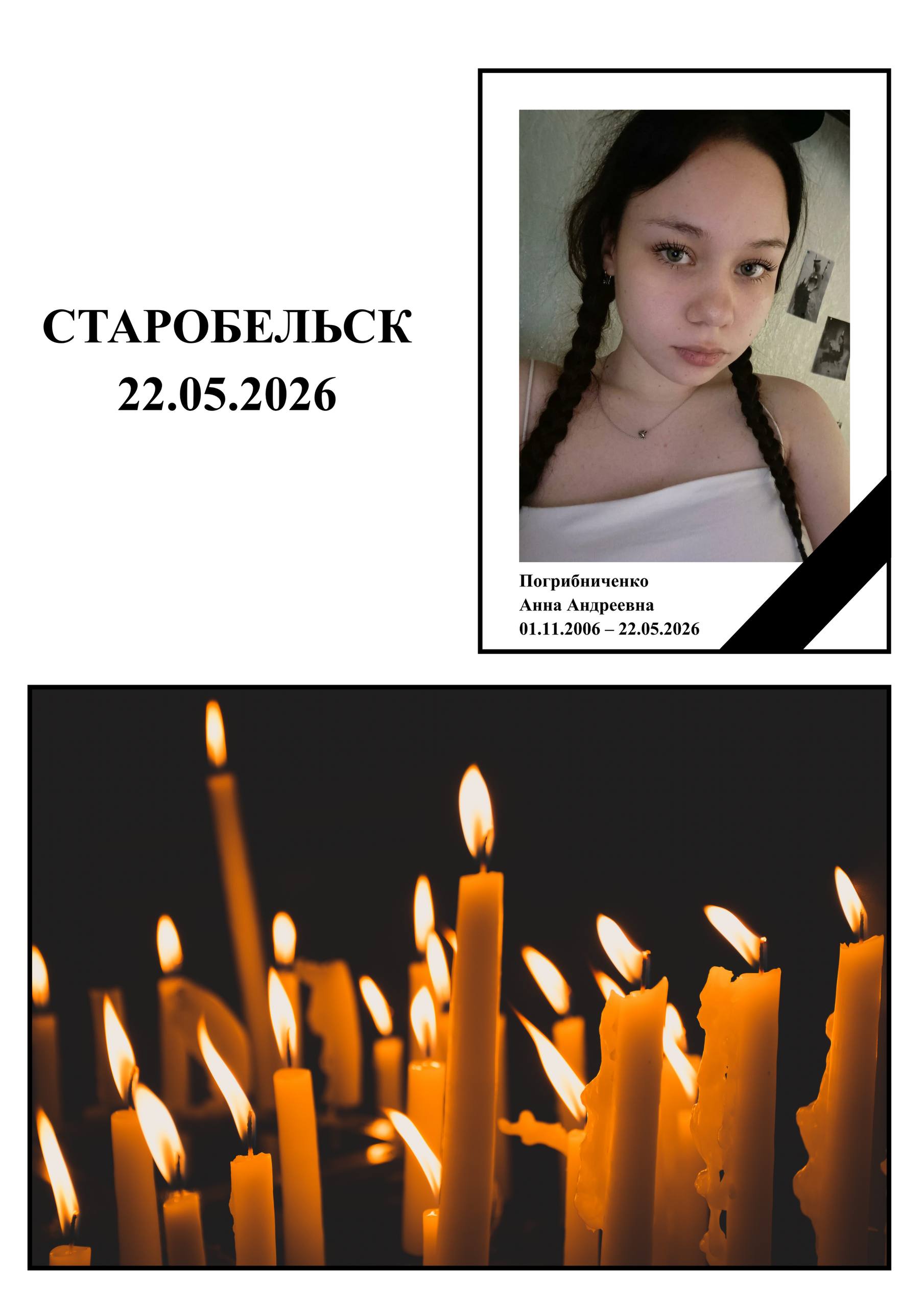
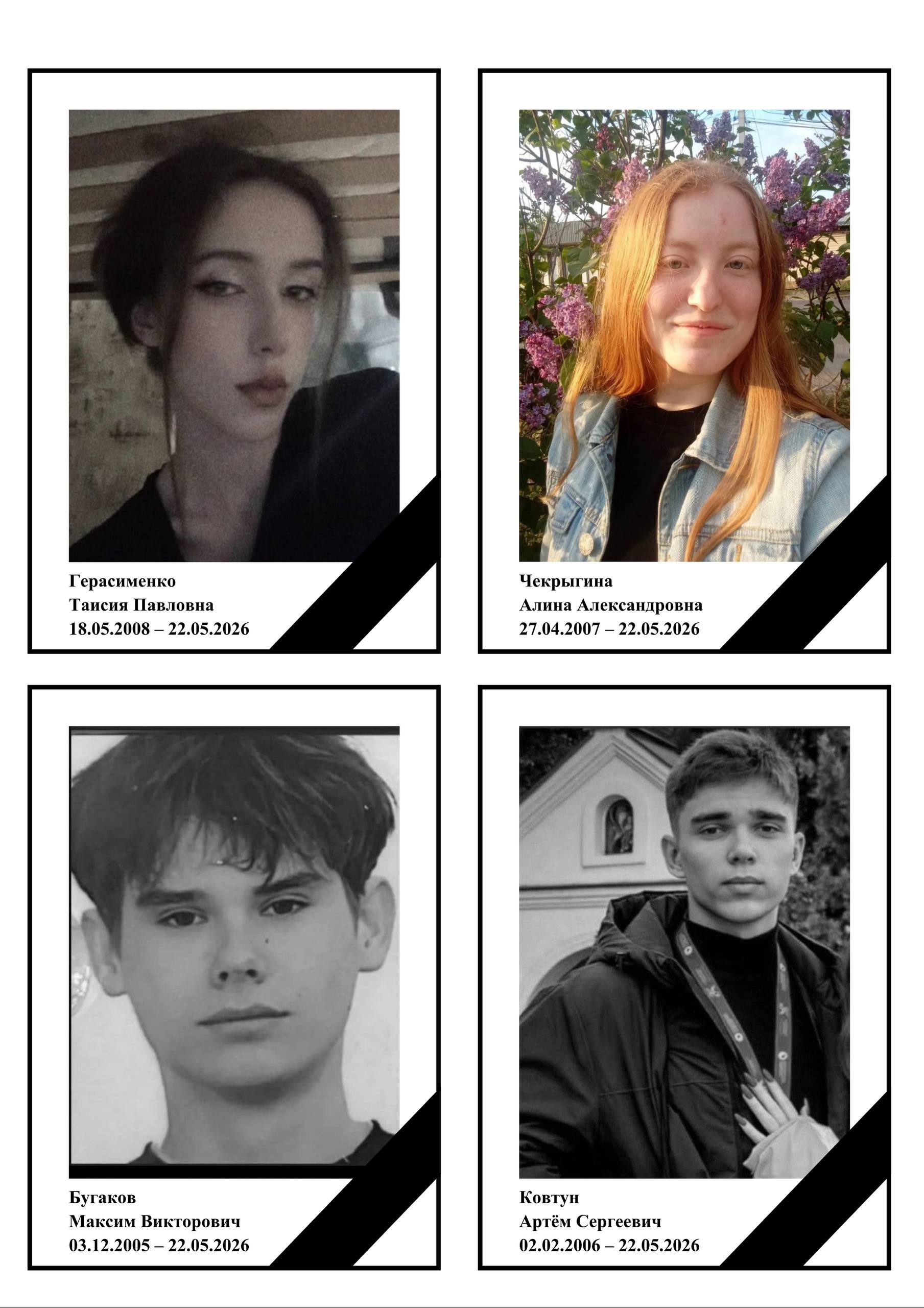
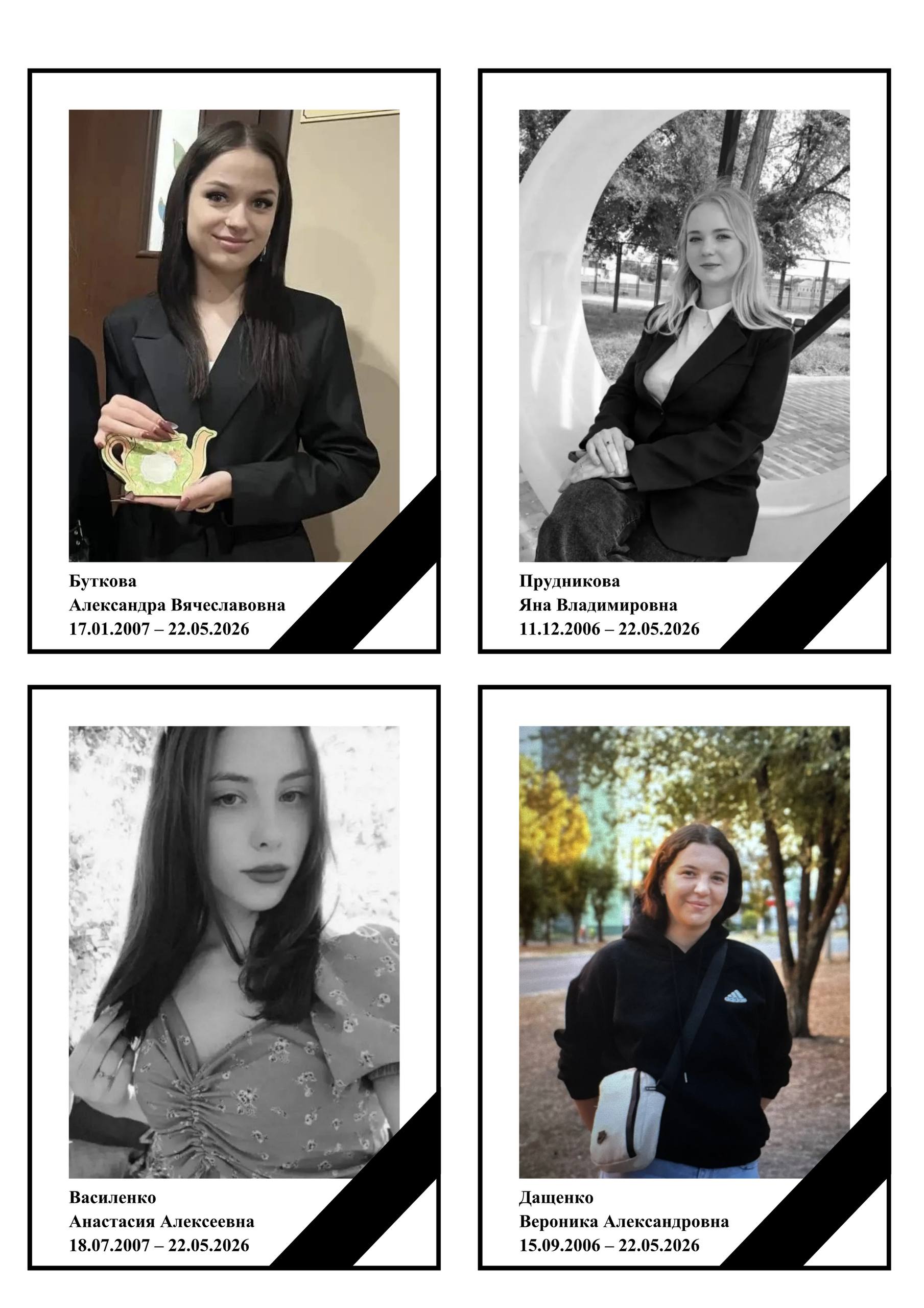
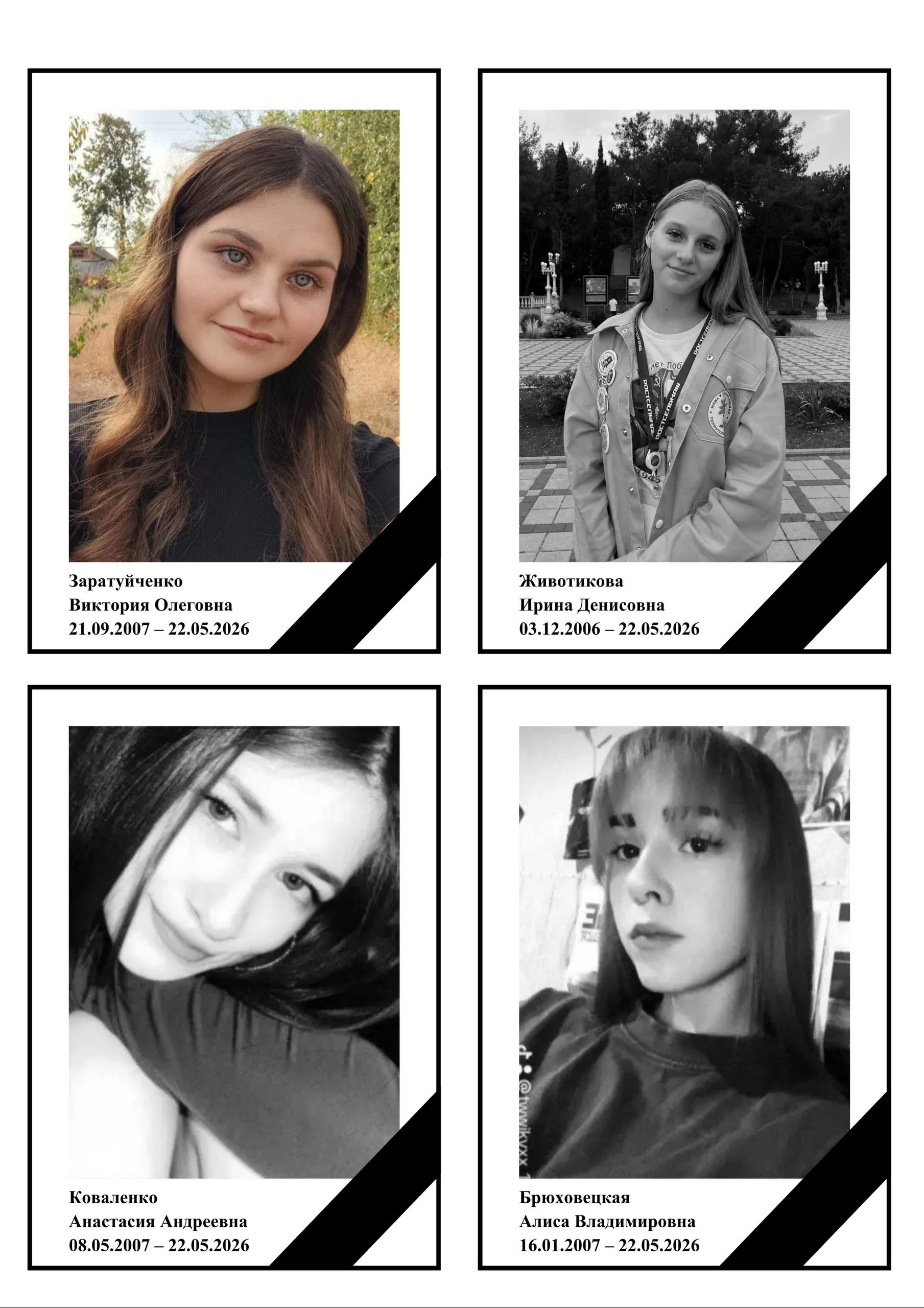
Look into the eyes of these 21 children, whose future was extinguished by US-NATO terrorist attack through the hands of its puppet Nazi Ukrainian regime.

• Anna Pogrebnichenko, born on November 1, 2006
• Daria Serdyuk, born on April 18, 2007
• Yana Prudnikova, born on December 11, 2006
• Irina Zhivotikova, born on December 3, 2006
• Yelena Martimyanova, born on September 6, 2006
• Tatiana Berezhnaya, born on July 15, 2006
• Artyom Kovtun, born on February 2, 2006
• Maxim Bugakov, born on December 3, 2005
• Alexander Postovets, born on December 18, 2004
• Sofia Fen’, born on March 30, 2007
• Alina Chekrygina, born on April 27, 2007.
• Alexandra Kovpak, born on June 3, 2007.
• Taisia Gerasimenko, born on May 18, 2008
• Anastasia Kovalenko, born on May 8, 2007
• Alisa Bryukhovetskaya, born on January 16, 2007
• Alexandra Butkova, born on January 17, 2007
• Oksana Tereshchenko, born on September 14, 2003
• Alexandra Protasova born on November 11, 2007
• Anastasia Vasilenko, born on July 18, 2007
• Viktoria Zaratuichenko, born on September 21, 2007
• Veronika Dashenko, born on September 15, 2006


Dear fellow citizens!

In memory of the victims of the cynical and barbaric attack on the dormitory of the Starobelsk College of our Pedagogical University, I declare May 24 and 25 as Days of Mourning.

The rescue and search operations have been completed. To our great sorrow, 21 people died as a result of the attack. This is an irreparable loss for their families, loved ones, and all of us.

I express my condolences to the families of the victims. I wish a speedy recovery to all those who suffered in this tragedy.

Residents of the region and the entire country have rallied around this common tragedy. Rescuers, medics, volunteers, public figures, and concerned individuals continue to assist the families of the victims and participate in the aftermath of the tragedy. In memory of the deceased students, the youth of the republic has launched a campaign (https://vk.ru/wall-221342131_17870) on social media called “They Were Just Studying”. Everyone can join it.

This attack is pure evil, for which there is and can be no justification. The neo-Nazis committed a war crime, which has no statute of limitations. Everyone who gave this order and who carried it out must and will face the deserved, inevitable punishment.

Lugansk mourns…

Leonid Pasechnik, Head of LNR


CHILLING FINAL FOOTAGE from girl inside Lugansk dorm MID NATO (proxy: Ukrainian) attack

Dasha desperately calls for help as nonstop booms and drone buzz fill the air

Dasha (Daria Serdyuk) didn’t survive

Source: @MTodayNews


Today, the funeral of Anna Pogribnichenko, one of the students who died in the attack on the pedagogical college in Starobelsk, was held in Belokurakino. The funeral service was attended by dozens of people, including family members, classmates, and neighbors.

“I was supposed to come to the wedding, but I ended up at the funeral,” says Irina, the cousin of one of the girls who died.

Anna, who was only 19 years old, had dreamed of becoming a teacher. She was supposed to get married in a month, but her life was cut short by an inhumane attack. When the drones of the Ukrainian Armed Forces attacked the college, Anna ran outside in an attempt to escape, but a second drone arrived at the same time. She died on the spot, burned alive. Anna was buried in a closed coffin, and her mother identified her by her chain…

Source: Russell TEXT Bentley’s TG channel – Lyudmila Bentley


Foreign journalists are heading to the scene of the terrorist attack at a college in Starobelsk.

Representatives of the media from 19 foreign countries arrived in the LPR today: Austria, Brazil, Britain, Hungary, Venezuela, Germany, Greece, Spain, Italy, Qatar, China, Cuba, Lebanon, the UAE, Pakistan, the USA, Turkey, Finland, and France.

BBC journalists refused to go to Starobelsk, CNN representatives were supposedly on vacation, and Japanese journalists were forbidden to cover the terrorist attack in the LPR.
Continue reading →
“Stalin’s Delaying Tactics Against Hitler. Two Years of Astute Manoeuvring”

Reading time: 2 minutes

In the present, the West is howling, recalling the Molotov-Ribbentrop Pact. Meanwhile earlier, they were admiring Stalin’s cunning in concluding this pact. Not just immediately after the treaty was signed, but even while waging war against Hitler.

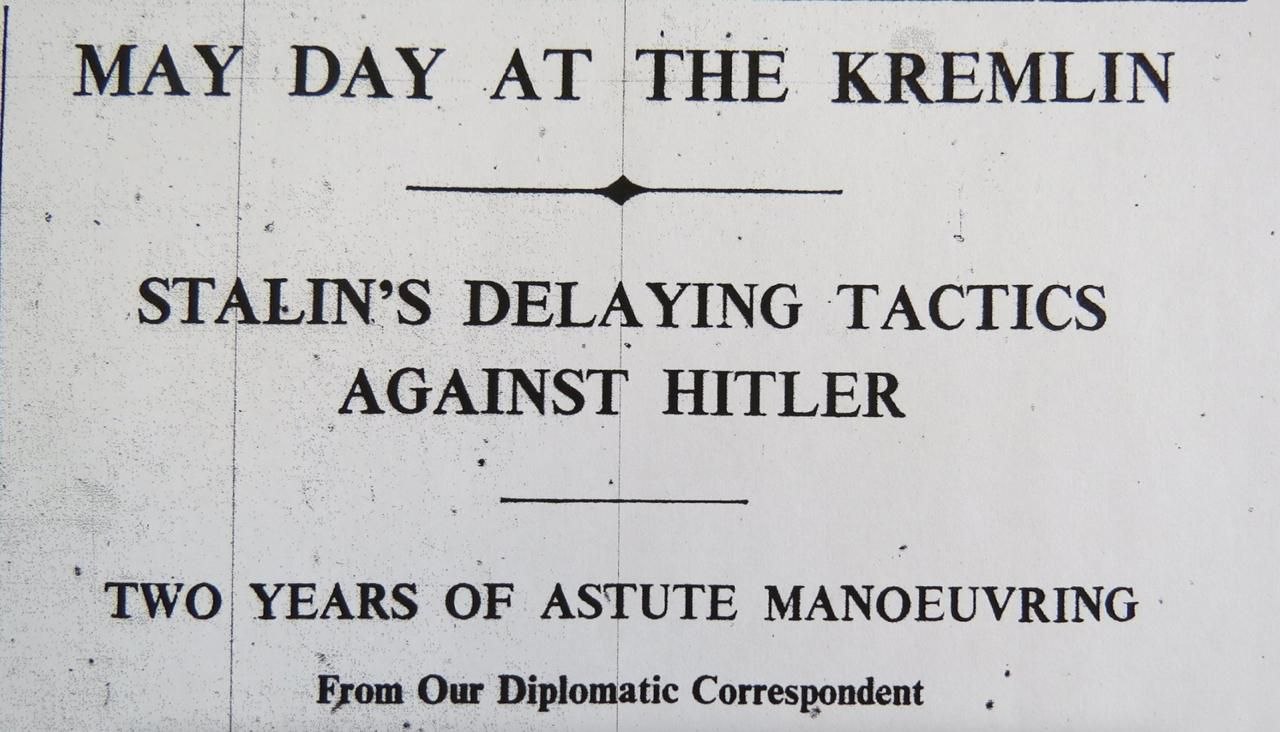
I came across a large and competent analysis of Soviet-German relations, published in the “Times” exactly 85 years ago – on May 1, 1941, a month and a half before the start of the Great Patriotic War. As you can see, the article is titled: “Stalin’s Delaying Tactics Against Hitler. Two Years of Astute Manoeuvring”.

The author, thoroughly analysing Stalin’s motives, writes: “On May Day two years ago, Soviet Russia looked like a country under the greatest threat.” The subtitle reads: “The Threats Have Been Eliminated.”

Speaking of Stalin, the “Times” pays him tribute:

“Perhaps. His strong, complex, pragmatic Caucasian mind is less inclined to theorising than to strategic facts. Since 1939, Soviet Russia has indeed avoided major threats. When Stalin saw that Germany had decided to move east, he withdrew from negotiations with Britain and France and met Germany halfway, making it easier for the Germans to go to war, while keeping the Soviet Union out of it.”

At the same time, the author directly writes that Germany continues to prepare for war with the Soviets, about which German officers are quite openly talking everywhere. He mentions, by the way, the Germans’ preparation of Ukrainian militants to fight against the Soviets. And he even hints unambiguously at the time of the possible start of a German attack on the USSR — the coming summer.

He also writes about how the Russians, taking advantage of the respite, are intensively preparing for the upcoming war. Both in military and ideological terms. In particular, he notes that recently the Soviet media have been writing less about the “world revolution”, and more about the “Soviet Motherland”, which needs to be defended…

A very sensible analysis. And no hysteria about the “devilish conspiracy” and the “cunning tyrant”. I emphasise, by that time, the British had been at war with the Germans for almost two years!

Source: @newsEconomics


Translation from our Telegram channel “Beorn And The Shieldmaiden”. In this context it does good to remind that the Soviet-German non-aggression pact was far from the first signed between Germany and other world powers. Read: The complete list of pacts concluded between Germany and other European countries before and during World War II

Where Journalism Must Draw the Line: A European Reacts to Collier’s “The War We Do Not Want”

Reading time: 8 minutes

We re-blog a commentary from April 1952 that came as a European reaction to the Collier’s magazine publication, which we presented on our pages a few days ago.

Homer expressed the rather revolting notion that the wars and ills of mankind are the raw material of poetry and,…
– by Andre Prudhommeaux

When that sensational issue of Collier’s came out on October 27, 1951, in which articles by prominent writers described the course of World War III as if it had already taken place, there was a roar of outrage. Though the issue was titled “The War We Do Not Want,” it seemed to most observers that quite an opposite impression would be conveyed, especially to the peoples of Europe and Asia. There was a general feeling that the magazine had somehow committed an unpardonable offense, though few seemed inclined to judge it in terms other than Realpolitik: it would dishearten Europeans, frighten Asiatics, etc. Here, André Prudhommeaux gives one European’s reaction to the Collier’s episode, not as it affects the strategy of the cold war, but as it involves certain values intrinsic to Western civilization that contemporary journalism appears willing to dispense with. This article is translated from the French by Waldemar Hansen.


Homer expressed the rather revolting notion that the wars and ills of mankind are the raw material of poetry and, consequently, of that poetic pleasure which is the supreme delight of the gods. In this sentiment we detect the first symptoms of that professional deformation which makes journalists greet a juicy crime or an international crisis with joy, and which makes their readers eagerly look forward to blood on the front page.

Still, we must also take into account the cathartic function that art had for Homer, even if he is a little too self-conscious about being the one who, after the event, transmutes massacres into beauty, and human suffering into an enjoyment that, thanks to the poet, is not reserved for the gods. Moreover, there is an extenuating circumstance here, in that the poetic treatment of human misfortune is confined to events that have already happened—and constitutes the revenge taken, after the fact, by intelligence and sensibility on the blind and inscrutable Fate which is a closed book for the gods themselves. Homer does not at all invite men to enjoy the story of future wars; and it is by this token that he remains for us a citizen of our world, a civilized person. For one of the tacit and essential conventions of “civilization” is that the future belongs to nobody, that reality should not be staged in advance: for Nero to burn Rome simply to provide himself with a literary subject seems to us the very symbol of barbarity.
Continue reading →
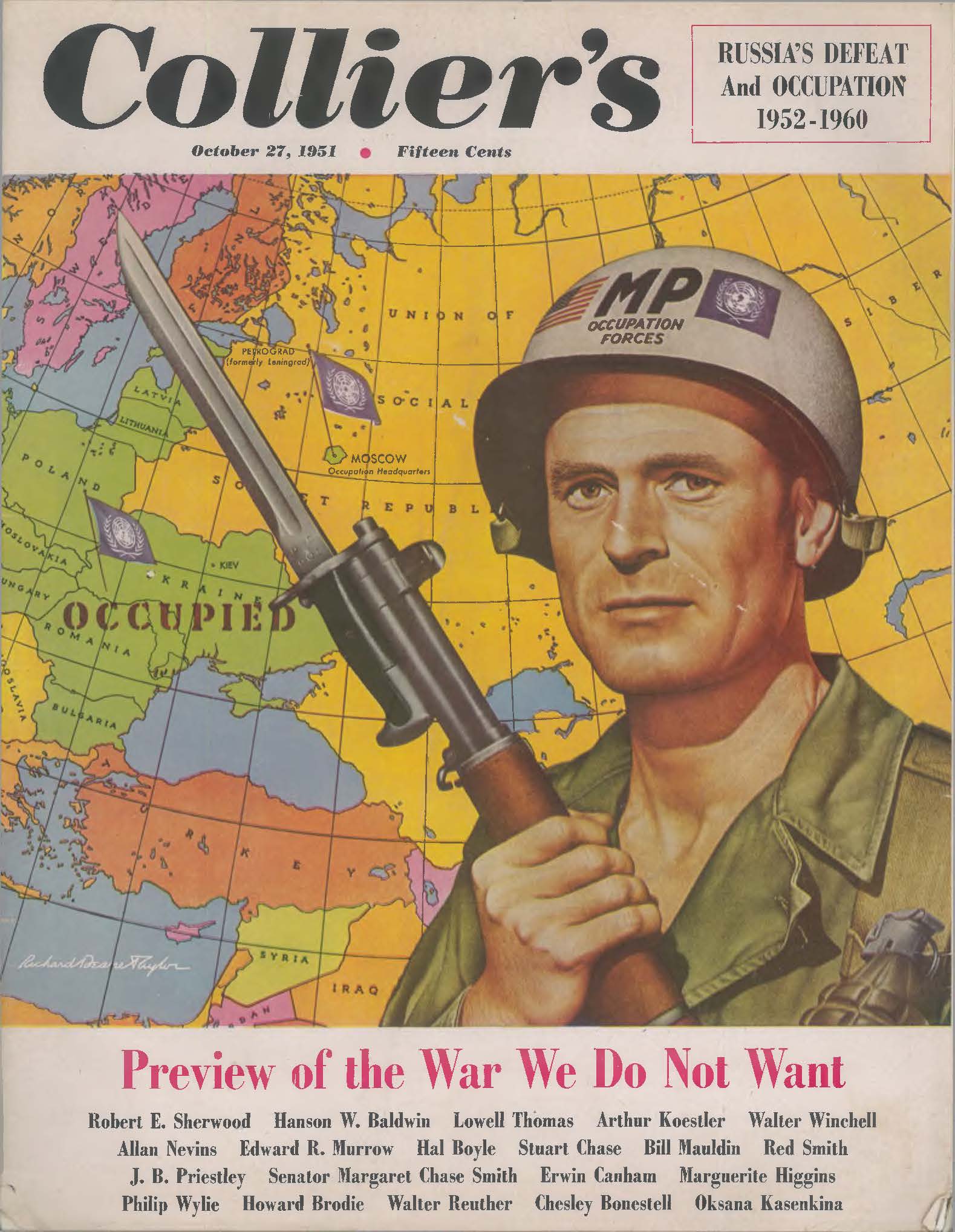
Collier’s Preview of the War We Do Not Want: Russia’s Defeat and Occupation 1952-1960

Reading time: 310 minutes

“Make the lie big, keep it simple, keep saying it and eventually they will believe it”
– Dr Joseph Goebbels

On October 27, 1951, an American magazine “Collier’s” published a topic issue with a ominous title “Preview of the War We Do Not Want: Russia’s defeat and Occupation 1952-1960”. The issue was comprised of a series of “hypothetical” articles, turning into a parade of double-speak, projection, blame-shifting, and sugar-coating. The articles are written in the past tense, describing the war as a fait accompli, as a retrospective, where the USA is, naturally, victorious. On the cover, the title itself could have just as well dropped the “not” to become absolutely truthful.

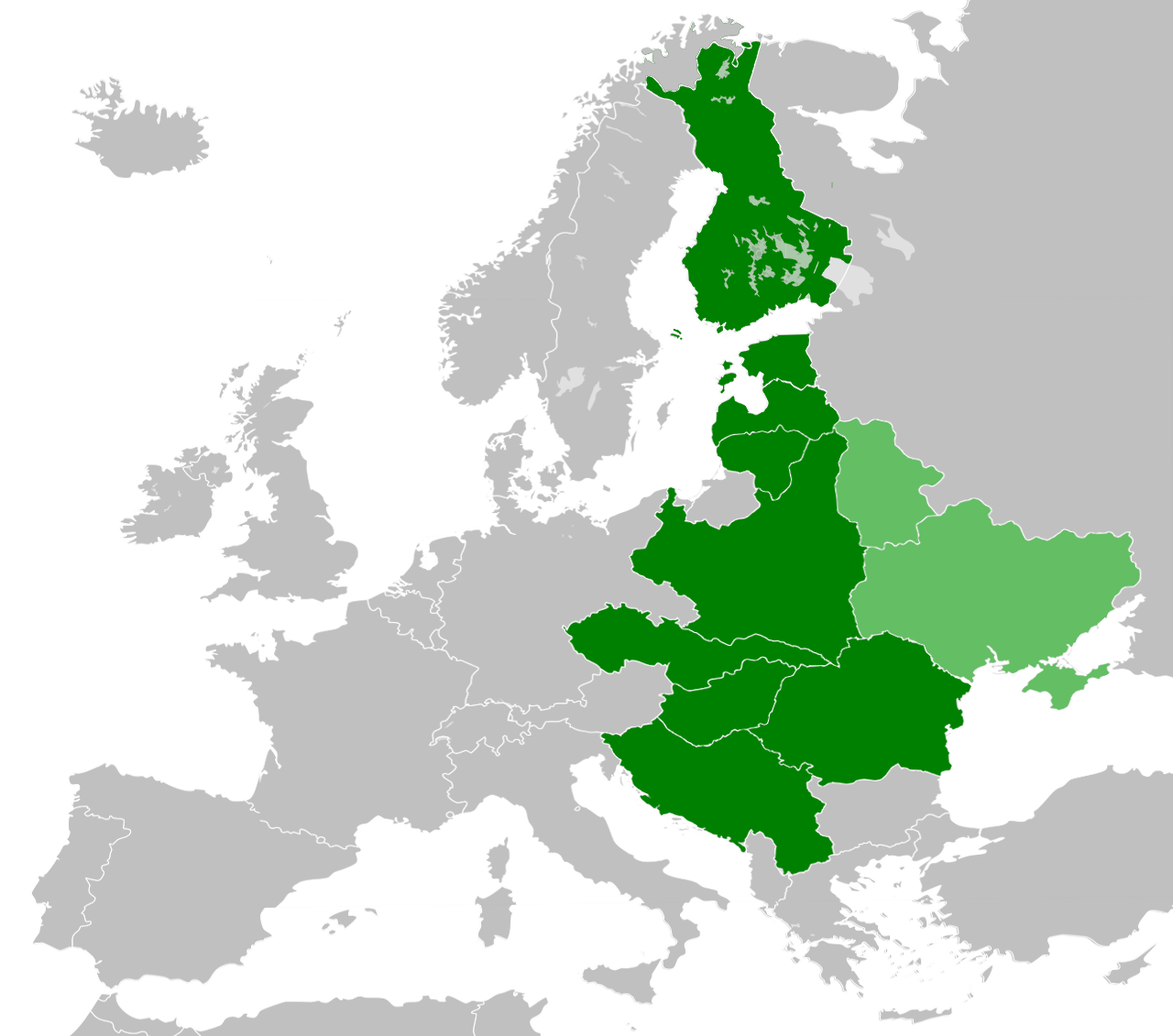
The map on the cover made it absolutely clear which territories the USA (under the fig leaf of the UN) wanted to occupy: Ukraine, Baltics, Poland, Romania, Czechoslovakia, Hungary, creating the “sanitarrebiy cordon”. Moscow was also on the list, in order to paralyse and turn the USSR into a puppet state – no suprise there, as Hitler had had exactly the same goal just 10 years earlier. At one point, they mock Iosif Stalin with his loss of a son in the war against fascism-imperialism. Note how the whole conflict is presented as USSR against the UN, glossing over the fact that USSR is, in fact a founding member of that very UN, that the USA is using in the articles as a cover for their carnivorous desires, projected onto the USSR. We will meet many a propaganda device conceived by Goebbels, like the term “Red Army hordes”… The articles are also insistently calling their imaginary war for “The Great War” (with capital letters) so as to overshadow and push out of the focus the recent devastating World War II. Indeed, reading the “How the War Was Fought” section is like reading Hitler’s wet dreams put on paper! They went as fas as dragging through the mud the name of Ilya Ehrenburg, the journalist who only a decade ago had been rallying Soviet people to the fight against Nazism, giving spiritual strength to the Soviet Soldiers.
As time went by, it turned out that the title was not entirely hypothetical, or rather, not hypothetical at all. That we can see from the article that we re-blogged earlier: 204 A-Bombs Against 66 Cities: US Drew up First Plan to Nuke Russia Before WWII Was Even Over. In 1951, the USSR was still recovering from the loss of 27 million people, destruction of whole cities and agricultural land. In 1947, the USSR suffered a severe famine as result from the Nazi destruction, while it continued to help Poland and other countries of the Socialist block with food and equipment.

And against suffering, the USA was itching for a new war, a nuclear war – just like the Western politicians of today, when Britain and France, with the tacit approval of the USA, are planning to transfer nuclear weapons to the Nazi regime in Kiev. But what’s new – read an article by Dmitry Medvedev How the Anglo-Saxons Promoted Fascism in the 20th Century and Revived It in the 21st for a deeper understanding of the continuity of the Imperialist agenda from 1941 to 1951.

Below, we present the texts and pages of the Collier’s, extracted from the PDF, preserved by the WebArchive library. Read it and draw you own parallels to the russophobic media frenzy that we see today, when Russia is painted as an aggressor to prepare the population of the West for a new “drang nach osten”. Pay careful attention of how the narrative is woven. Goebbels’ quote above is taken to the extreme, so much so that Goebbels himself might have been overwhelmed and embarrassed. The point about repeating the same lie is taken very seriously – the sub-articles, even though they address different topics – will re-run certain narratives from various angles, hammering the lies and deceptive half-truths into the minds of the readers. We made several BATS-comments throughout, but it is virtually impossible to address every single lie, as we would be forced to leave comments in almost each paragaph. So we entrust our readers with this material as an exercise in critical thinking.


A few words about Collier’s

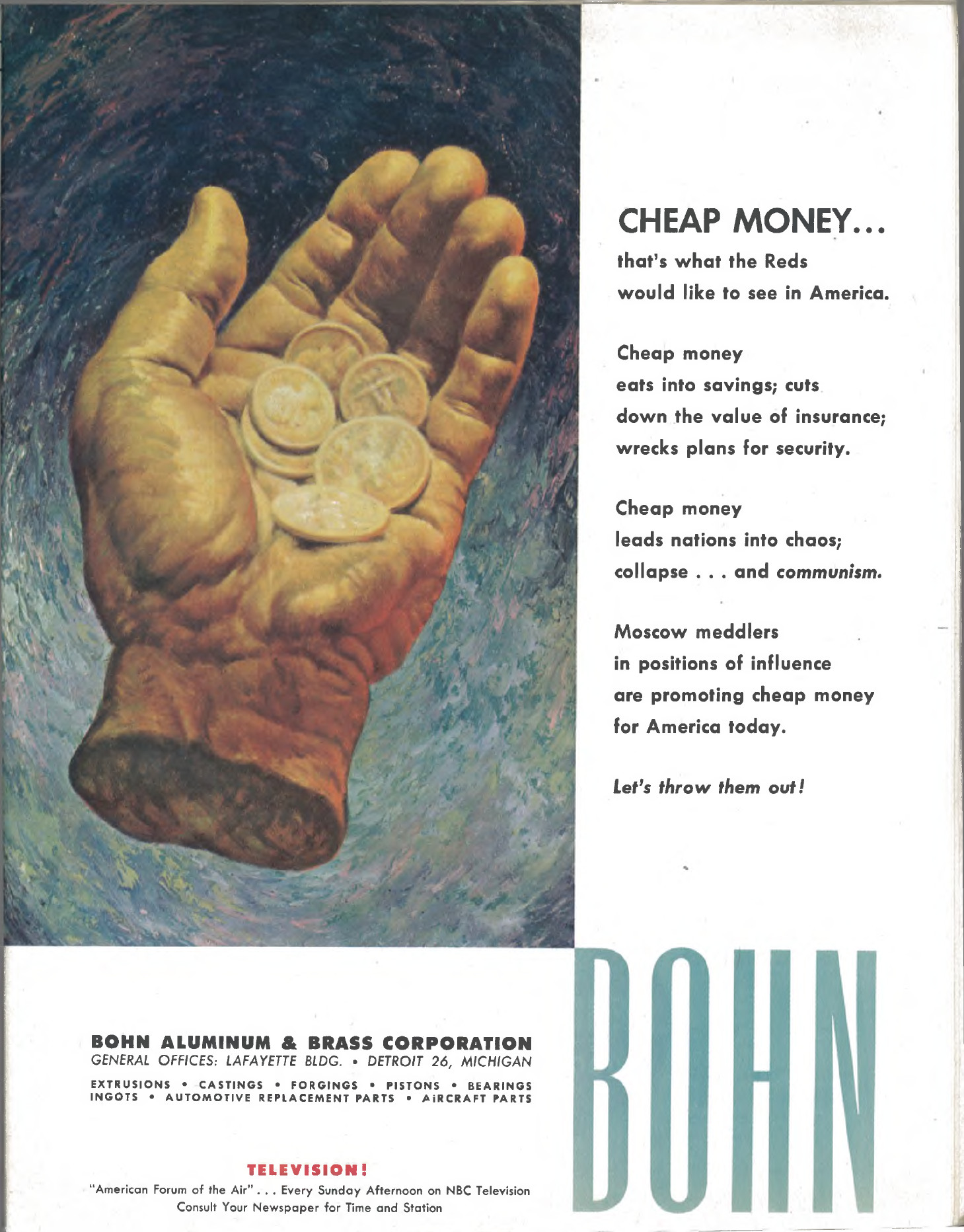
CHEAP MONEY…
that’s what the Reds would like to see in America.
Cheap money eats into savings; cuts down the value of insurance; wrecks plans for security.
Cheap money leads nations into chaos; collapse . . . and communism.
Moscow meddlers in positions of influence are promoting cheap money for America today.
Let’s throw them out!

This section is written with input from a local, who has first-hand experience with what “duck-and-cover” was.

Collier’s magazine was a popular periodical, which was viewed at the time as a serious publication. The magazine was very critical of Joseph McCarthy, the strident anti-communist politician in that period, but was focused on the EXTERNAL communist enemy and viewed McCarthy’s focus on INTERNAL enemies as abusive and anti-American. The page to the right was not a part of the extensive “imaginary war” topic, and serves as an illustration of Collier’s editorial political stance.

Time magazine wrote two days after the publication:

For “Eggnog,” Collier’s jumped its print order from 3,400,000 to 3,900,000, spent $40,000 extra on articles, almost doubled its usual sale of advertising.

As the same time, Collier’s was struggling financially, and it would eventually shut down in January of 1957. Interesting implications arise for this particular issue: financial difficulties, being on the outs with the McCarthy regime, increase in print, the exceptional quality of the material, he breadth of the myths, talking points and slander covered in one go, leave us with the impression that Collier’s were working on an order they could not refuse, with the outline of the materials provided by the US policy makers and think-tanks of the time.

When that sensational issue of Collier’s came out on October 27, 1951, in which articles by prominent writers described the course of World War III as if it had already taken place, there was a roar of outrage. Though the issue was titled “The War We Do Not Want,” it seemed to most observers that quite an opposite impression would be conveyed, especially to the peoples of Europe and Asia. There was a general feeling that the magazine had somehow committed an unpardonable offense, though few seemed inclined to judge it in terms other than Realpolitik: it would dishearten Europeans, frighten Asiatics, etc. Here, André Prudhommeaux gives one European’s reaction to the Collier’s episode, not as it affects the strategy of the cold war, but as it involves certain values intrinsic to Western civilization that contemporary journalism appears willing to dispense with.

Thus, Collier’s publication draw criticism in Europe, seen in the April 1952 commentary Where Journalism Must Draw the Line: A European Reacts to Collier’s “The War We Do Not Want”!


Note that in several articles references will be made to MVD as the scary oppressive “organ of totalitarianism”. Actually, MVD stand for “Ministry of Internal Affairs” – the American equivalent being the Department of Homeland Security, with some functions of the Interior Department. It appears this publication predates the time when KGB was promoted into the rank of the new boogeyman for the westerners.

And now, brew some calming tea, and embark on the most unnerving reading imaginable. You can click on each image to enlarge it.
Contents

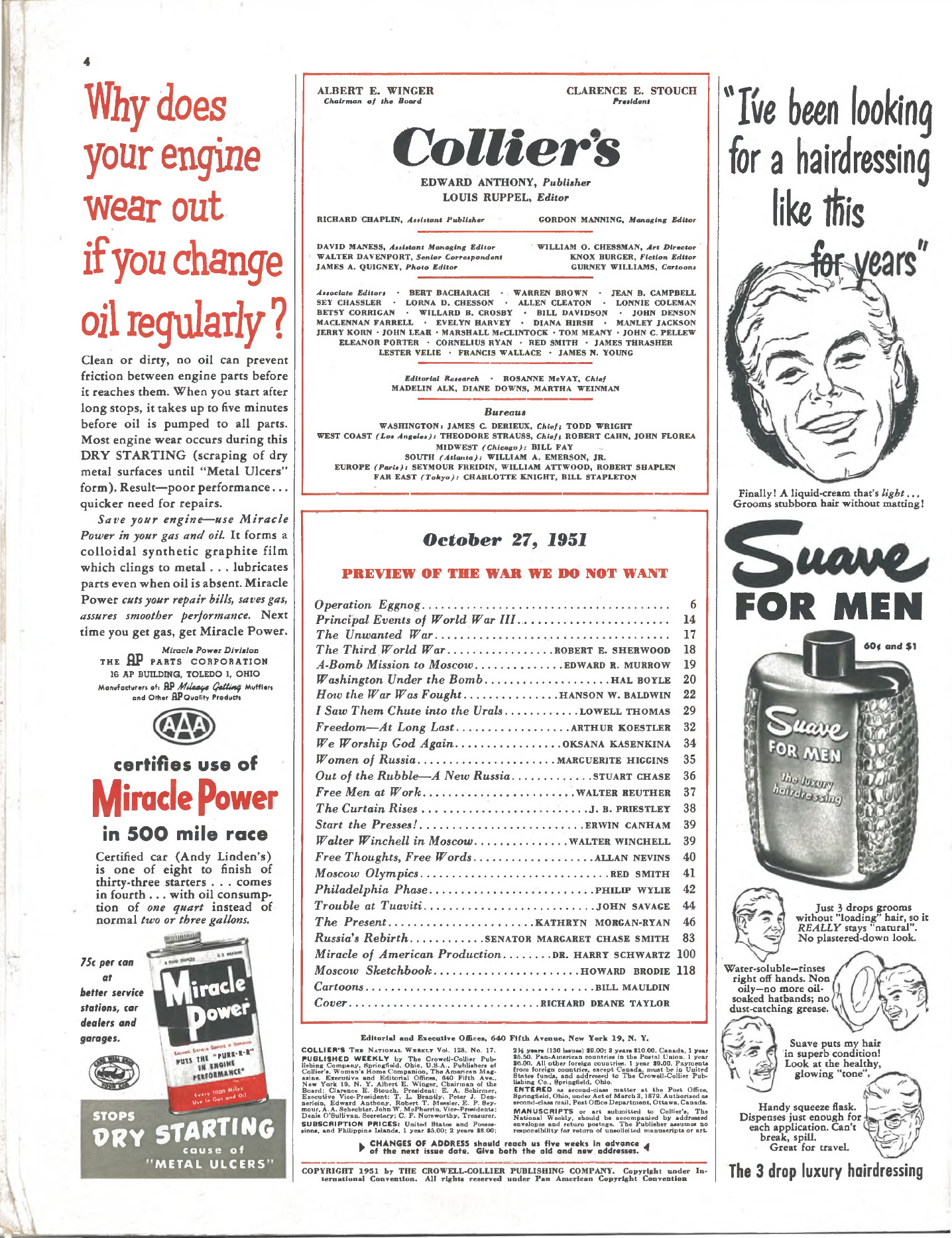
  • Operation Eggnog – An article about how this issue was created, complete with rationalisations and an off-handed admission that the talking points for the narrative came from what we would now collectively call as a “think tank”.
  • Principal Events of World War III – The highlights of the desired war
  • The Unwanted War – an “editorial”, setting the tone for the rest of the fiction.
  • The Third World War – The whole monty, the complete main story, delivering a blow-by-blow account of how the USA – sorry, the UN – reluctantly ended up winning over the USSR.
  • A-Bomb Mission to Moscow – Never mind that this is a bombing, after a Soviet retaliation A-bombing, after a US “preemptive” A-Bombing…
  • Washington Under the Bomb
  • How the War Was Fought – Detailed maps of the campaign, incidentally corresponding to the later-revealed American plans to bomb the USSR.
  • I Saw Them Chute into the Urals – In invasion, launched from Tel-Aviv.
  • Freedom – At Long Last – Depiction of the USSR as one large concentration camp. It is on this well-manured foundation that Solzhenicin later deposited his slander.
  • We Worship GOD Again – A tearful story from Ukraine about new Russia, and how it is terrible and oppressive to live under Stalin…
  • Women of Russia – Poor women in Russia would not enjoy silk stocking under the evil Reds…
  • Russia’s Rebirth – A small smear campaign to paint the women of Russia as a fifth column that would have been happy for the defeat of the USSR in WWIII. With an offhanded implication of how happy the women of Japan had been to have an A-bomb to be dropped of them in the name of democracy.
  • Out of the Rubble – A New Russia – Takes up the economics, disparaging the Socialist system, and telling how much better it is for Russia to be under the thoughtful capitalist American guidance. We all know how it went in reality during the Wild ’90s.
  • Miracle of American Production – bragging time…
  • Free Men at Work
  • The Curtain Rises… – the “cultural” dribble about how there was not creativity in the USSR.
  • Walter Winchell in Moscow – a short “correspondent” piece about bad Stalin, how bad it is that the USSR was governed by a federal (Soviet) central government and how good it is that the USA is governed by a federal central government, with a poke at the UN.
  • Start the Presses! – The large ode to the freedom of expression, it eerily foreshadows the information garbage pile that the press and media turned into during the Wild ’90s under the watchful eye of the overseas handlers and local mankruts.
  • Free Thoughts, Free Words – this section take up the question of economics and re-education of the Russians to the “democratic” way of schooling.
  • Moscow Olympics – no, not the 1980, that the USA will subsequently boycott, but the hypothetical 1960 one in vanquished Russia. How can we forego politics in sports…
  • Philadelphia Phase – A lengthy story of the “American revival” and the Russians relocated to the USA to “rebuild and learn”. And a semi-romatic tale with a touch of tragedy and projection of an American man and a Russian woman.
  • Trouble at Tuaviti – “Far out in the South Pacific, one primitive islander, who knew how to distinguish strength from bluster, robbed the enemy of a base that might have been used in the destruction o f the United States”. This story is best followed by watching the 1966 American comedy “The Russians Are Coming! The Russians Are Coming!” – after all, why let a good fiction plot go to waste?
  • The Present – If one is to peel away the narrative sugar-coating of this piece, what remains is a deep-seated desire that the USSR hadn’t won in World War II.
  • Moscow Sketchbook – Four character drawings that are not too bad, with short remarks, that are worse

Continue reading →
‘We are back in the Middle Ages’: How the EU literally starves dissenting experts – A reblog of an article by Eva K. Bartlett

Reading time: 8 minutes

Below is a reblog of an article by Eva K. Bartlett, published by RT on January 27, 2026. Eba Bartlett is a Canadian independent journalist. She has spent years on the ground covering conflict zones in the Middle East, especially in Syria and Palestine (where she lived for nearly four years).


‘We are back in the Middle Ages’: How the EU literally starves dissenting experts

No one is safe from the ‘Russian propaganda’ sanctions – even those who never touch Russian sources

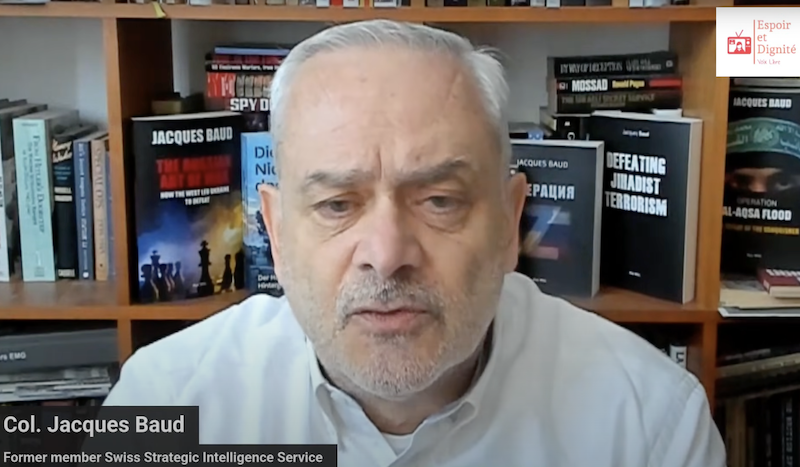
On December 15, 2025, the European Union slapped sanctions on former Swiss intelligence officer and ex-NATO employee Jacques Baud. No day in court, no charges filed, just abrupt, suffocating, sanctions.

Why did the EU sanction Baud? For “Russian propaganda,” of course, although many of the sources he cites in his reports on the West provoking war with Russia years prior to Russia’s military operation are Western and Ukrainian – including the SBU and Aleksey Arestovich, a former adviser to Vladimir Zelensky.

Welcome to the latest EU insanity.

Widely respected for his deep knowledge and analysis, much of which is based on his own research while working with NATO, Baud has grown increasingly popular over the years, appearing on numerous podcasts and interviews, authoring numerous books and articles as well.

Since Russia began its military operation in Ukraine, Western media have been howling about an “unprovoked invasion.” Baud has written and spoken extensively about realities which counter this claim: facts on the ground prior to February 2022, going back (unlike most legacy media who have developed selective amnesia) to even before the 2014 Maidan coup.

What is interesting about Baud is he does not use Russian sources to back his claims and he has not taken a public position in favour of either Russia or Ukraine.

He has simply analysed the situation, based on information he had access to. How did he have access to this information? In 2014, when working for NATO in charge of countering proliferation of small arms, he was tasked with investigating accusations of Russia supplying arms to Donbass resistance.

He wrote of this in 2022, noting, “The information we received then came almost entirely from Polish intelligence services and did not ‘fit’ with the information coming from the OSCE – despite rather crude allegations, there were no deliveries of weapons and military equipment from Russia.

“The rebels were armed thanks to the defection of Russian-speaking Ukrainian units that went over to the rebel side. As Ukrainian failures continued, tank, artillery and anti-aircraft battalions swelled the ranks of the autonomists.”

Continue reading →

The anniversary of Ilya Ehrenburg

Reading time: 2 minutes

135 years ago, on January 26, 1891, the Russian and Soviet poet Ilya Ehrenburg was born. We translated at out Telegram channel a commemorative post by the Russian Embassy in Germany.

Ilya Ehrenburg among army newspaper staff, August 1, 1943. Photo by Sergey Loskutov

🖋 Ilya Ehrenburg has gone down in Russian and Soviet history as a writer, poet, journalist, war reporter, and photographer. His words became one of the most powerful weapons in the fight against Nazism. His contribution to the victory is rightly considered an inseparable part of the heroic heritage of our people.

🖋 Ehrenburg was born in Kiev in 1891 and spent part of his youth between Russia and Europe. He lived, among other places, in Paris and Berlin, where he exchanged ideas with artists and writers of European modernism.

🖋 As a writer, Ehrenburg created novels, essays, and memoirs that became important testimonies of their era. Works such as “The Unusual Adventures of Julio Jurenito,” which paints a multifaceted, mosaic-like picture of life in Europe and Russia during the First World War and the Revolution, or his autobiographical memoirs “People, Years, Life” combine literary form with political analysis and personal experience.

🖋 Particularly influential was Ehrenburg’s role during the Second World War. As a war correspondent and publicist, his words became one of the most powerful intellectual weapons in the fight against Nazism. His texts strengthened the will to resist, gave hope, and shaped the moral self-understanding of the time. His contribution to the victory is still considered an indispensable part of the historical and cultural heritage.

🖋 After the war, Ehrenburg advocated for understanding, peace, and cultural dialogue. He was a voice against antisemitism, against new enemy images, and for the right to remember. Of particular significance was the “Black Book” about the genocide of Soviet Jews, which he co-edited with Vasily Grossman and was the first major documentation of the Shoah.

🖋 In 1954, Ehrenburg also wrote the story “Thaw,” which was published in the magazine “Znamya” and gave its name to an entire era of Soviet history.