“What do English, French, coming with war against us, want?” – The start of the “Civil” war in 1918

Reading time: 4 minutes

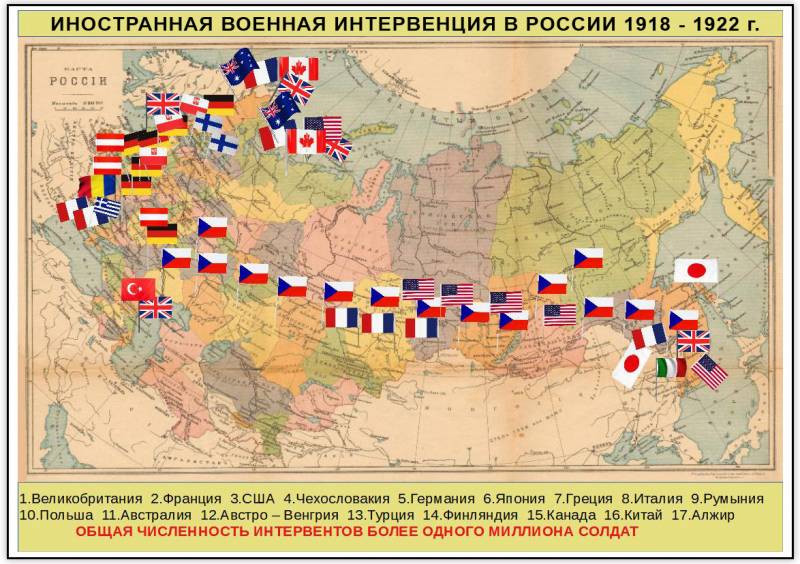
The map shows countries participating in the so-called “civil” war of 1918-1922. The total number of the interventionists counted over 1 million soldiers.

The beginning of military intervention against Soviet Russia

On March 6, 1918, an English landing force landed in the port of Murmansk from the cruiser “Glory”. The open military intervention by the Entente of Russia began.

On March 14, the British cruiser “Cochrane” arrived in Murmansk with a new detachment of interventionists.

March 18 – French cruiser “Admiral Ob”.

The Americans joined later: on May 27, the American cruiser “Olympia” entered the Murmansk port, from which a detachment of American infantry soon disembarked.

The topic of foreign intervention against Soviet Russia in 1918-21 has been completely cast out of sight, completely “blurred”, and sometimes even disputed. There is practically no mention of it in the modern media.

This intentionally or unintentionally creates the myth of the Civil War as a war exclusively between “Whites” and “Reds.” Which is obviously a manipulation.

So, shall we remember who supported the “Whites” against the “Reds” with their manpower and equipment?

1. 🇬🇧 England. 28,000 soldiers – Arkhangelsk (1918), Murmansk (1918), the Baltic (1918), Revel (1919), Narva (1919), the Black Sea (1920), Sevastopol (1920), the Caspian Sea (1920), Transcaucasia (1918), Vladivostok (1918).
2. 🇺🇸 USA. 15,000 soldiers. – Arkhangelsk (1918), Murmansk (1918), Trans-Siberian Railway
3. 🇫🇷 France – Arkhangelsk (1918), Murmansk (1918), Odessa (1918), Kherson (1918), Sevastopol (1918), Siberia.
4. 🇦🇺 Australia – 4,000 soldiers. Arkhangelsk (1918), Murmansk (1918).
5. 🇨🇦 Canada – Arkhangelsk (1918). Murmansk (1918).
6. 🇮🇹 Italy – Murmansk, Far East.
7. 🇬🇷 Greece – 2,000 soldiers. Odessa, the Black Sea.
8. 🇷🇴 Romania – Bessarabia.
9. 🇵🇱 Poland – The North of Russia, the South, Siberia.
10. 🇯🇵 Japan. 28,000 soldiers – Far East (Vladivostok, Sakhalin)
11. 🇨🇳 China – Arkhangelsk (1918), Murmansk (1918).
12. 🇷🇸 Serbia – “Serbian Battalion”. The North of Russia.
13. 🇫🇮 Finland – Karelia. The Karelian and Murmansk legions, created by the 🇬🇧 British.
14. 🇩🇪 Germany. Ukraine, the Baltic States, part of European Russia
15. 🇦🇹🇭🇺 Austria-Hungary. (Germany’s ally)
16. 🇹🇷 Turkey (the Ottoman Empire). Transcaucasia.

🇨🇿 We can also recall the Czechoslovak Corps, which became the trigger of the Civil War.

In total, more than 20 countries took up arms directly or indirectly against the young Soviet Republic. Do not forget that the “Whites” were also fully funded by the Entente.

It was no accident that Stalin was saying, “The so-called Civil War”.

Source: Beautiful Russia, first translated at our Telegram channel “Beorn And The Shieldmaiden”

⚡️⚡️⚡️

The current fratricidal “civil war” in Ukraine, where Russians are killing Russians, is the same example of the foreign intervention! Read also Occupation of Russia by the USA in 1918-1920. The “international intervention” during the post-revolutionary unrest.


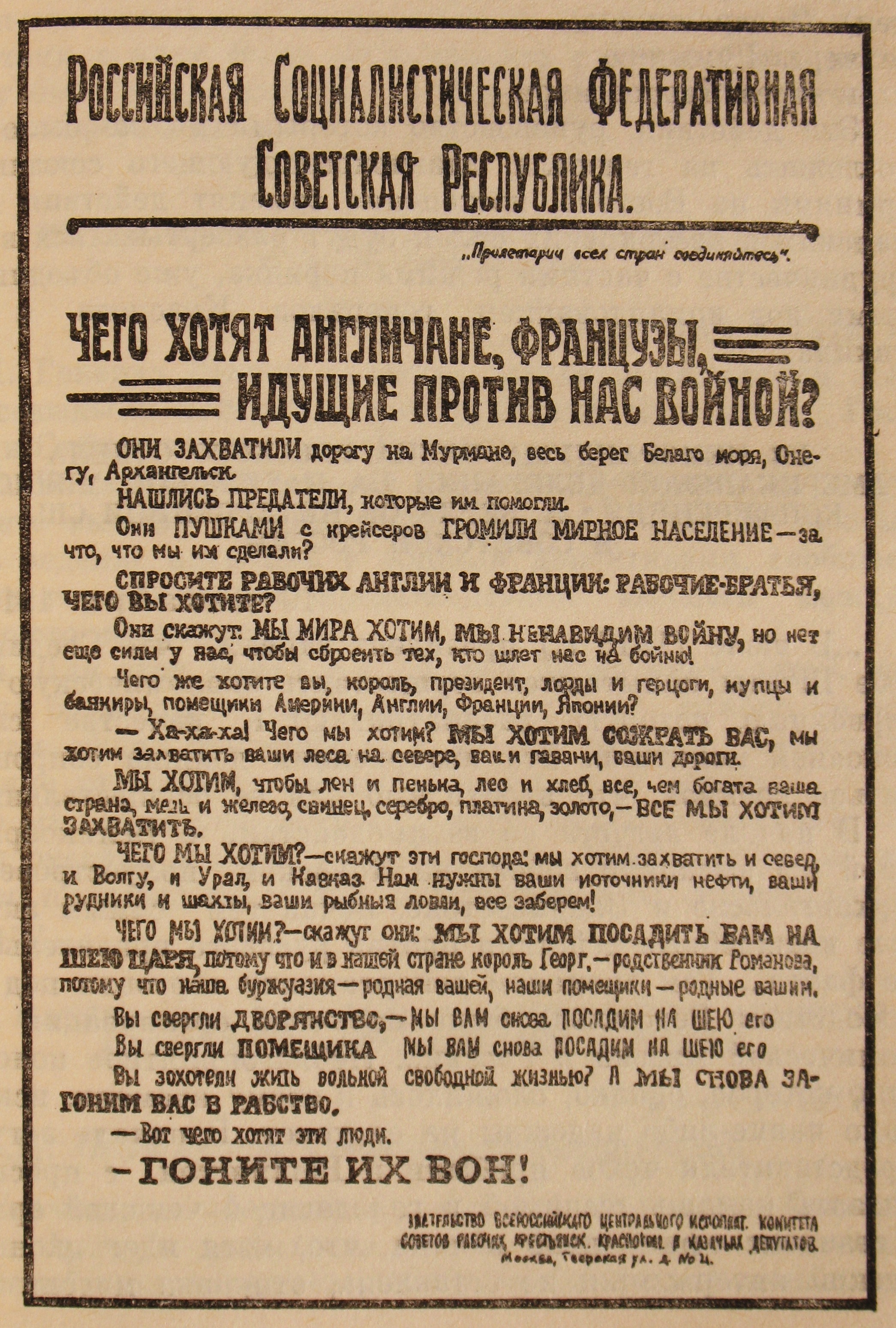
What do English, French, coming with war against us, want?

— A “Civil war” flyer by the Russian Socialist Federative Soviet Republic, 1918.

THEY SEIZED the road to Murmansk, the entire coast of the White Sea, Onega Lake, Arkhangelsk.
THERE WERE TRAITORS who helped them.
The peaceful population was shelled with GUNS from the cruisers — for what, what have we done to them?
ASK THE WORKERS OF ENGLAND AND FRANCE: WORKERS-BROTHERS, WHAT DO YOU WANT?
They will say WE WANT PEACE, WE hate WAR, but we still don’t have the strength to overthrow those who send us to the slaughter!
And what do you want, king, president, lords and dukes, merchants, bankers, landowners of America, England, France, Japan?
— Ha ha ha! What do we want? WE WANT TO DEVOUR YOU, we want to take over your forests in the north, as well as harbours, your roads.
WE WANT flax and hemp, forest and bread, everything your country is rich in, copper and iron, lead, silver, platinum, gold — WE WANT to capture IT ALL.
WHAT DO WE WANT? — these gentlemen will say, we want to capture both the North, the Volga, the Urals, and Caucases. We need your oil sources, your mines, your fishing grounds, we’ll take everything!
WHAT DO WE WANT? — they will say WE WANT TO PUT ON YOUR NECK THE TSAR, because in our country, King George is a relative of Romanov, because our bourgeoisie is relatives of yours, and our landlords are relatives of yours.
You have overthrown the NOBILITY, and WE WILL AGAIN PUT THEM ON YOUR NECK.
You overthrew the landowner, and we’ll put him on your neck again.
Do you want to live a free independent life? And we’re thrusting you back into slavery.
— That’s what these people want.
— CHASE THEM AWAY!

The French-Lithuanian falsification of WWII history by SBS

Reading time: 2 minutes

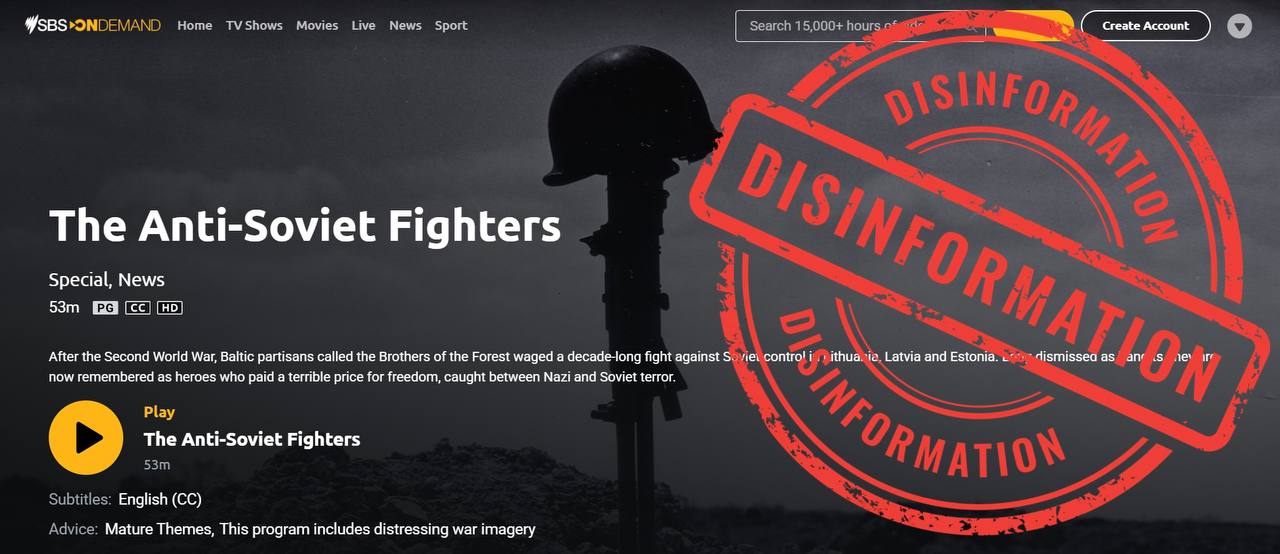
On 8 February, SBS aired the film The Anti-Soviet Fighters (French-Lithuanian co-production), which is built entirely on lies and a cynical falsification of history.

Members of the “Forest Brothers” armed gangs are portrayed as heroes who “waged a decade-long fight against Soviet control in Lithuania, Latvia and Estonia”.

In fact, the core of this “movement” was composed of former military personnel of the Baltic states belonging to the territorial SS battalions. They were involved in bloody crimes against civilians. The Nuremberg Tribunal designated all persons officially admitted as members of the SS as criminals.

According to official figures, between 1944 and 1956, the “Forest Brothers” killed more than 25’000 people in Lithuania, including over 1’000 children (52 of them were under the age of two), more than 2’000 in Latvia and 800 in Estonia. The overwhelming majority of the victims were local common people who supported the Soviet authorities or simply refused to assist underground bandit formations.

❗️This film is an attempt to brainwash the SBS audience, revise the outcomes of the Nuremberg Tribunal and glorify murderers depicting them as “freedom fighters”.

Rewriting the history of the Second World War is a dangerous path to revival of Nazism and to tragedies which must never be repeated.

From: Russian Embassy in Australia

“The World Was Saved By The Soviet Soldier” interactive project

Reading time: 10 minutes

“The World Was Saved By The Soviet Soldier” is an interactive project that was launched back in 2021 by the “Immortal Regiment” portal.

“As of late, more and more publications, the authors of which reshape historical events of the Second World War, appear in foreign media. We must not forget our common history and must stand together against all attempts to rewrite it. One can only resist with reasoned truth.

Videos created for the project are meant to depict how Europe was liberated from fascism.”

All film-related materials translated by Putinger’s Cat. We present the 30 episodes in the rough chronological order of the events.

Read also:


CHINA

China was attacked by Japan even before the official beginning of WWII, with the war raging between July 7, 1937 and September 9, 1945.


Backup at Rumble
Raw video on YouTube


POLAND (Part 1)

World War II began on September 1st, 1939, when Hitler invaded Poland. After the Red Army liberated Poland in 1945, the Soviet Union took an active part in bringing Poland back from ruin.


Backup at Rumble
Raw video on YouTube

Read also:

Continue reading

Forgotten History – The Moscow Negotiations of 1939

Reading time: 5 minutes

On September 30, we remembered the 1938 agreement between Britain, France, Italy and Germany to dismember and abandon Czechoslovakia, and we commented on this Munich Betrayal connecting it to the start of World War II. In August of 1939, the USSR had no other way, but to sign a non-aggression agreement with Germany.

However, in March-April of 1939, the USSR still tried to prevent the looming War, trying to talk sense into Britain, Poland and France, in order to jointly reign in German militarism.

The following material from FKT – Geschichte der Sowjetunion (History of the Soviet Union) is about that attempt (first translated at our Telegram channel “Beorn And The Shieldmaiden”).


Forgotten History – The Moscow Negotiations of 1939

❓ Was there a chance to prevent the outbreak of the Second World War?

Yes, and not just one. The last such chance was the trilateral negotiations between the Soviet Union, France, and Britain. They were initiated in April 1939 by the government of the USSR.

The Moscow negotiations, or rather their failure, marked a definitive end to the last possibility of preserving peace in Europe.

A brief summary before we go into details

🔽Background

Basically, the start of the Second World War was already preordained in 1935 when Hitler refused to comply with the conditions of the Treaty of Versailles. This event took place on March 16, 1935.

Germany embarked on a consistent course of militarisation. The European countries, victors of the First World War, were content with half-hearted “protests.” The peaceful and naive Western democracies sincerely believed, according to many liberals, that the reorganised and rearmed Reich army would only participate in battles “around the harvest.”

Then followed the transfer of the Saar and Rhine regions to Hitler—of course, the USSR was blamed—the Anschluss of Austria, and finally the signing of the Munich Agreement. As a result, Czechoslovakia ceased to exist.

🔽Start of the negotiations

By early 1939, even the indigenous people of the Tuamotu Islands knew that a major war in Europe was inevitable. This was also clear to the leadership of the USSR.

No state wants to wage war alone. A government’s foreign policy is always aimed at finding allies. The Soviet Union was no exception.

Under the conditions of the escalating Polish-German conflict, the USSR proposed to Poland’s allies, namely England and France, to conclude a joint treaty to protect the Polish state. This format is referred to in historical terminology as Stalin’s “system of collective security.”

On March 18, 1939, People’s Commissar Litvinov proposed through the British ambassador in Moscow to convene a conference of six countries: USSR, England, France, Romania, Poland, and Turkey. The goal of the conference was a joint agreement to prevent the expansion of German aggression. England refused, calling the proposal “premature” and suggested limiting it to a declaration.

❗️Against all odds, the Soviet government managed to organise trilateral negotiations. These began in April 1939. England proposed to the USSR to give Poland unilateral guarantees in case of German aggression. The Soviet Union insisted on signing an official treaty between the countries.

Continue reading

Facts about the Munich Conspiracy of September 30, 1938

Reading time: 9 minutes

The material is from Russian MFA Telegram channel, where one can also watch a short facta newsreel.

After a short fact-list from the Telegram post, we re-blog the in-depth version from the MFA’s Telegraph blog.


On September 30, 1938, the leaders of Germany, Italy, the United Kingdom and France signed an agreement in Munich on the German annexation of the Sudetenland, an industrial region of Czechoslovakia where ethnic Germans made up 90 percent of the population. Czechoslovakia had not been invited to the talks; it was presented with the fact that its sovereign territory must be ceded to Nazi Germany as a fait accompli.

This disgraceful pact between the Western powers and Nazi Germany went down in history as the “Munich Conspiracy” or the “Munich Betrayal”.

FACTS:

▪️ Following the signing of the agreement between the United Kingdom, France, Germany and Italy in Munich, German troops crossed Czechoslovakia’s border on October 1 and occupied the entire area of the Sudetenland by October 10.

▪️ The Soviet Union was ready to defend Czechoslovakia, but the Soviet Army had to obtain permission to pass through Poland or Romania. Warsaw, which was interested in getting part of Czechoslovakia’s territory for itself, adamantly refused to support Prague against Germany and prohibited possible flights of Soviet aircraft to render aid to the Czechoslovak army. Romania made every effort to slow down the process as much as possible.

▪️ The Munich Betrayal crowned the Western powers’ policy of appeasing the aggressor. Hoping to avoid a conflict with the Third Reich, they tried to satisfy its growing territorial claims at the expense of Eastern and Central European countries.

▪️ As the world witnessed the collapse of the Versailles-Washington system of international relations that existed at the time, many countries began to cooperate with the Third Reich and fell into its sphere of influence.

▪️The Czechoslovakia crisis became a prologue to the bloodiest conflict in the history of humanity, demonstrating what underhanded plotting and reliance on countries’ selfish interests can lead to, i.e. paved the way to World War II.


The Munich Betrayal

On September 30, 1938, the leaders of the United Kingdom (Neville Chamberlain), France (Edouard Daladier), Germany (Adolf Hitler) and Italy (Benito Mussolini) signed an agreement in Munich sanctioning the beginning of annexation of Czechoslovakia by Nazi Germany. This crowned the appeasement policy which made a big war inevitable.

The Treaty of Versailles of June 28, 1919, ended the First World War and put Germany in a very difficult position. Pursuant to the document, Germany lost part of its traditional lands, its army was substantially reduced, and its defence industry was in effect eradicated. The document also contained a separate requirement on the demilitarisation of the Rhineland. The terms of the Versailles peace treaty were extremely harsh, which had a catastrophic effect on the German economy. The direct consequences included the total collapse of Germany’s industry, overwhelming impoverishment of the population and disastrous hyperinflation.
Continue reading

Facts about the Soviet-German Non-Aggression Treaty of August 23, 1939

Reading time: 7 minutes

The material is from Russian MFA Telegram channel, where one can also watch a short facta newsreel.

Here we re-blog the in-depth version from the MFA’s Telegraph blog.

Read also our article The complete list of pacts concluded between Germany and other European countries before and during World War II.


On August 23, 1939 the Soviet Union and Germany signed the Treaty of Non-Aggression, a document that obligated the two Parties “to refrain from any act of violence, any aggressive action, and any attack on each other, either individually or jointly with other Powers.”

This Document was a key achievement of the Soviet diplomacy ahead of WWII: the USSR was able to buy time to better prepare to repel Hitler’s impending attack, which had been seen as inevitable due to the failed policy of “appeasement” by Western European states and their refusal to forge a collective security agreement with our nation against Nazism.

Signing the non-aggression treaty with Germany was a difficult but necessary decision by the Soviet leadership, dictated by national security considerations and the urgent need to deter Nazi aggression in the east.


In the 1930s, twenty years after the end of World War I, the threat of a new large-scale armed conflict in Europe started to grow. A key factor for this was the crisis of the Versailles system of international relations, designed by Britain and France, which paved the way for rising revanchist sentiments in the states it had humiliated Germany and Italy.

The League of Nations, established as a universal organisation for settling international disputes by diplomatic and political legal means, proved unable to fulfill its mandate, mired in the controversy and intrigues of European states that tried to use the body for their own selfish and opportunistic purposes.

Against this backdrop, the hydra of fascism began spreading rapidly across Europe. Political leaders confident of their own nations’ superiority came to power first in Italy (1922) and then in Germany (1933), where a Nazi dictatorship led by Hitler was established.

With the Nazis’ rise to power in Germany, the threat of a new war in Europe became real. Hitler’s misanthropic ideology was rooted in the notorious doctrine of “racial superiority.” The Nazis used this doctrine to justify Germany’s pursuit of world domination. In this way, an absolute evil emerged in the centre of Europe, endangering the peace and freedom of entire nations.


By the mid-1930s, Germany’s military preparations were becoming increasingly obvious and intense. The strength of the German armed forces reached almost half a million personnel. In 1935, the Nazi regime officially announced the creation of a German military air force (whose existence had been prohibited by the Treaty of Versailles). Hitler signed a decree reintroducing universal conscription and expanding the military, the so-called new peacetime Wehrmacht consisted of 36 divisions totalling 550’000 soldiers and officers. For the first time since its defeat in World War I, Germany again possessed a significant military power capable of launching full-scale offensive operations. Furthermore, the Reich initiated the construction of the Navy, a move that was, in effect, sanctioned by a bilateral agreement between Germany and Britain (signed in London in 1935) in direct contravention of the Versailles prohibitions.
Continue reading

The complete list of pacts concluded between Germany and other European countries before and during World War II

Reading time: 8 minutes

Dmitry, an admin of a friendly channel, undertook a fundamental taks, compiling a list of 57 agreements, concluded between Germany and various states in the years leading up to and during World War II. The chronological list covers the period 1934 – 1941

Of special note are the Anti-Comintern Pact and the Munich Agreement (Conspiracy). The former defined the agenda of Fascism, while the latter paved the way to the direction of Germany’s aggression eastward.

Those readers who came to think of the agreement between Germany and the USSR — the only agreement that got named in the Western historiography by the names of the political figures signing it — it is found further down on the list as No.16.


1. Polish-German Non-Aggression Pact – January 26, 1934

– A ten-year Non-Aggression pact between Nazi Germany and the Second Polish Republic.

2. Anglo-German Naval Agreement – June 18, 1935

– An agreement between the United Kingdom and Germany regulating the size of the Kriegsmarine in relation to the Royal Navy.

3. Italian-German Axis declaration – October 25, 1936

– The first step towards the formation of the Axis Powers, consisting of Italy and Germany.

4. Anti-Comintern Pact – November 25, 1936

– The anti-communist pact between Germany and Japan, which Italy and several other countries later joined. Directed against the Communist Internationale, the international revolutionary political-practical organisation to which the communist parties of most of the world belonged, and with them strong workers’ unions factions.

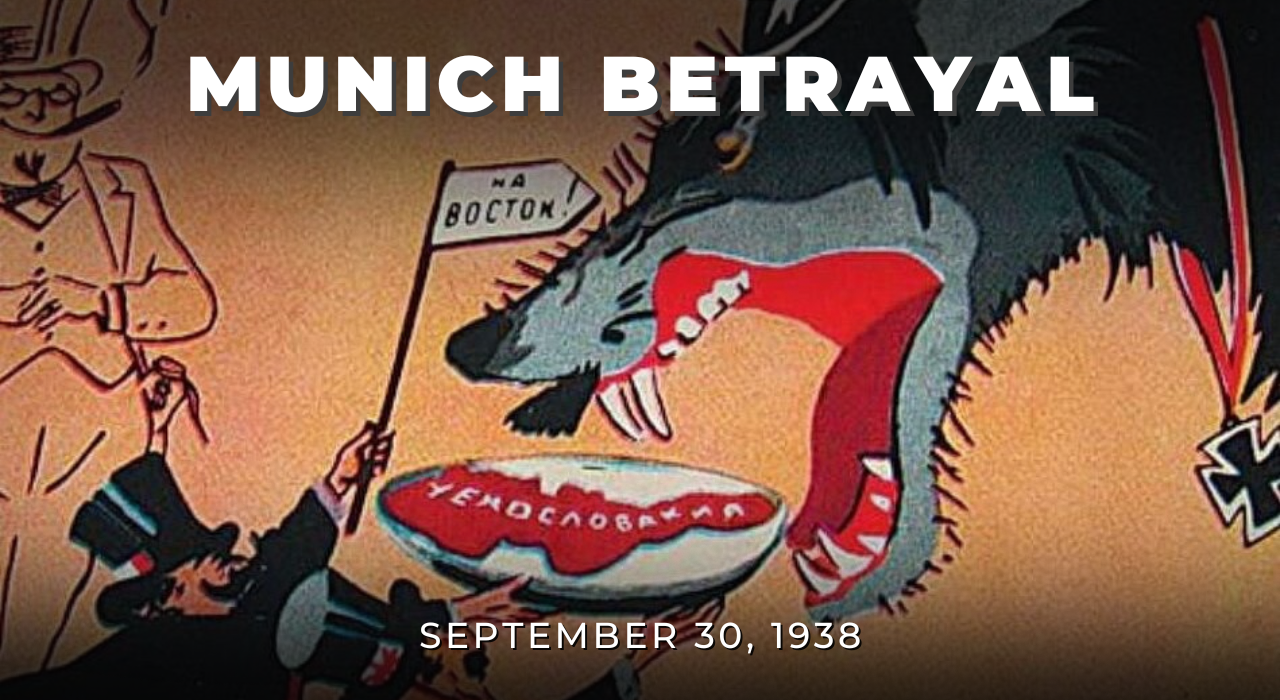
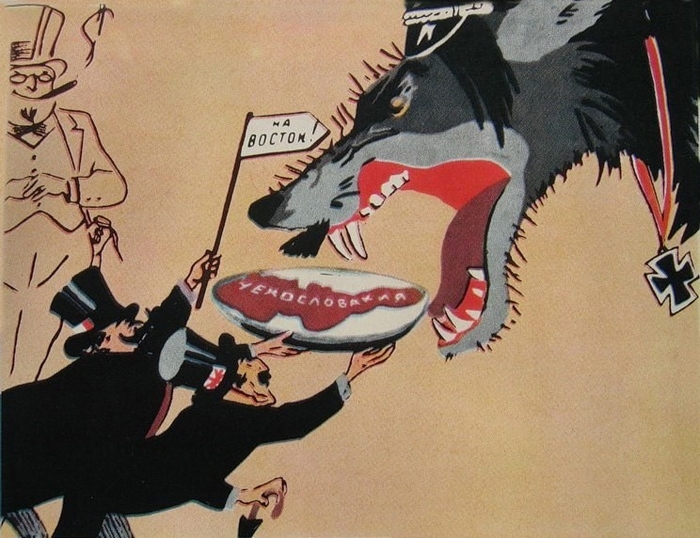
Here’s Czechoslovakia. Now, head to the East!
The pre-war caricature on the Munich conspiracy by “Kukryniksy”.

5. Munich Agreement – September 29, 1938

– Britain and France permitted Germany to take over part of Czechoslovakia (the Sudetenland). The “Munich Conspiracy”, as it is also known, freed Hitler’s hands and is considered to be the final trigger for World War II.

6. First Vienna Award – November 2, 1938

– Germany and Italy mediated the allocation of disputed territories from Czechoslovakia to Hungary.

Continue reading

World War II. Lies of the West — an RT documentary in 2 parts

Reading time: 2 minutes

The Third Reich was defeated by the Americans. Stalin bears equal blame for unleashing World War II alongside Hitler. Soldiers of the Red Army committed atrocities across Europe.

All of this is a blatant lie that is presented as truth in the West. On International Fact-Checking Day, we debunk the main myths propagated in Europe and the United States.

👉 Watch both episodes of the film ‘World War II. Lies of the West’ below. This is a project of the ‘Immortal Regiment of Russia’ by Tatiana Borsh.

In part 1


Backup at Rumble.

‘World War II: Lies of the West’ is a project by the Immortal Regiment of Russia. The documentary exposes the main myths about World War II that are propagated in the West, where they are regarded as the only historical truth.

Among these myths are claims that it was not the Soviet people who played a decisive role in the victory, but the Anglo-American allies, and that Stalin was supposedly equally responsible for igniting the war alongside the Hitler regime.

However, there are real documents and irrefutable evidence demonstrating how Western countries distort history to serve their own interests.

The film’s creator, Tatiana Borshch, is a well-known producer, screenwriter, and director of documentary films, as well as the winner of both Russian and international film festivals.

In part 2


Backup at Rumble.

Military experts and historians continue to debunk Western myths about World War II – the claim that the USSR was just as responsible as Germany for starting the war, for example.

In reality, the situation was quite different. The Soviet Union wanted to protect Czechoslovakia from a Nazi invasion, but in order to do this, the Red Army needed to pass through Poland. However, Warsaw refused to allow Soviet troops to cross its territory, as it sought to maintain neutrality. This decision further aggravated an already tense international situation and complicated the formation of an anti-Hitler coalition.

Today, the European Commission claims that American and British forces liberated Auschwitz from the fascists. As a result, Russia has not been invited to commemorative events marking the camp’s liberation for several years. In reality, it was Soviet soldiers who freed the surviving prisoners.

Western countries also refuse to acknowledge the genocide of the peoples of the USSR, despite the fact that the losses suffered by the Soviet Union – nearly 27 million military personnel and civilians – prove otherwise.

♦️♦️♦️

👉 At our Telegram channel “Beorn And The Shieldmaiden”, We have re-encoded both videos to a mobile-friendly format.

Victory Parade. Moscow. 09.05.2010. Joint parade fragment

Reading time: < 1 minute


Backup at Rumble.

One has to be invited to march across the Red Square, and not so long ago, on the 65th anniversary of the Victory, many military formations of the Soviet republics (including Ukraine), as well as American, British and French ones participated in the Victory parade.

From our telegram channel “Beorn And The Shieldmaiden”.

The European Genocide of the Russian People

Reading time: 51 minutes

Preamble

April 19th – Day of Remembrance of the Genocide of the Soviet People. The crimes committed by the Nazi occupiers and their accomplices against the civilian population of besieged Leningrad were recognised in 2022 as “a war crime, a crime against humanity and genocide of national and ethnic groups that represented the population of the USSR, the peoples of the Soviet Union.”
This decision was made by the St. Petersburg City Court.

The northern capital was under blockade from September 8th 1941 to January 27th 1944. As a result of the analysis of archival documents, it was established that during the blockade, at least 1 million 93 thousand residents of the city died – more than a third of the population at the beginning of 1941 – and not 649 thousand, as was determined in Soviet times.

In addition, it was proven in court that representatives of 11 countries took part in the siege of Leningrad. Besides to the Germans, these are citizens of Finland, Belgium (Volunteer Legion “Flanders”), Spain (“Blue Division”), the Netherlands (Volunteer Legion “Netherlands”) and Norway (Norwegian Legion), as well as individual volunteers from among Austrians, Latvians, Poles, French and Czechs. The trial in St. Petersburg became the ninth trial in Russia to recognise the crimes of the Nazis and their accomplices committed in the country during the Great Patriotic War as genocide.

Previously, similar hearings were held in the Novgorod, Pskov, Rostov, Bryansk, Oryol regions, Krasnodar region, Crimea, and Leningrad region.

As the leading Russian researcher of the history of the Leningrad blockade, Doctor of Historical Sciences Nikita Lomagin, said, in addition to the fact that the court decision gives a precise legal definition of the events of the hard times of war, it “also has important international significance, being a reminder to the current generation of European politicians about the crimes committed by Nazi Germany and its accomplices during the war.”

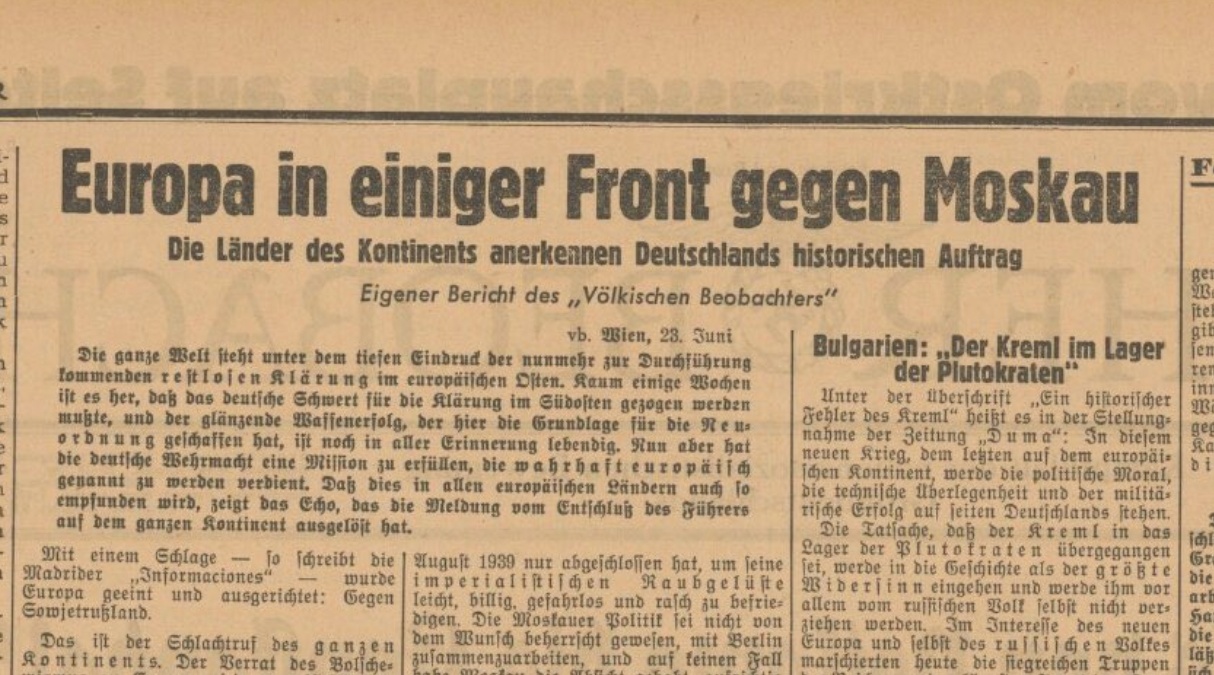
“Europe in a United Front against Moscow”
Such was the title in the German Nazi mouthpiece “Völkische Beobachter” from June 23, 1941. Does this sound familiar?
The headline was followed by a secondary heading:
“The countries of the continent acknowledge Germany’s historic mission”.
After the ingress, the article starts with the mention of a publication in the Spanish Madrid-based newspaper “Informaciones” — “Europe united and aligned against the Soviet Union”.


Introduction

You are about to read a translation of an extensive article that tells in unadorned detail what The Third Reich was doing to the population of the Soviet Union, and what they were yet planning to do, had they not been stopped by the Soviet Union. World War II was indeed The Great Patriotic War for the survival of own kind, fought against all of the “united collective West”. Additional materials were included from the TopWar article “Hitler’s Palace in Ukraine”.

Those Ukrainians (and Bulgarians) who think that Hitler had as his intention to “liberate” Ukraine (as the brainwashing in Ukraine goes these days), they should read the article “The text of Hitler’s statement on the extermination of Slavic peoples has been published in Russia for the first time”.

One first-hand testimonial of how the German Nazi plan affected the Soviet population can be read in the article The Great Patriotic War in Ukraine. A historical retrospective by Rostislav Ischenko


The European Genocide of the Russian People

14.12.2020, by Konstantin Odessit

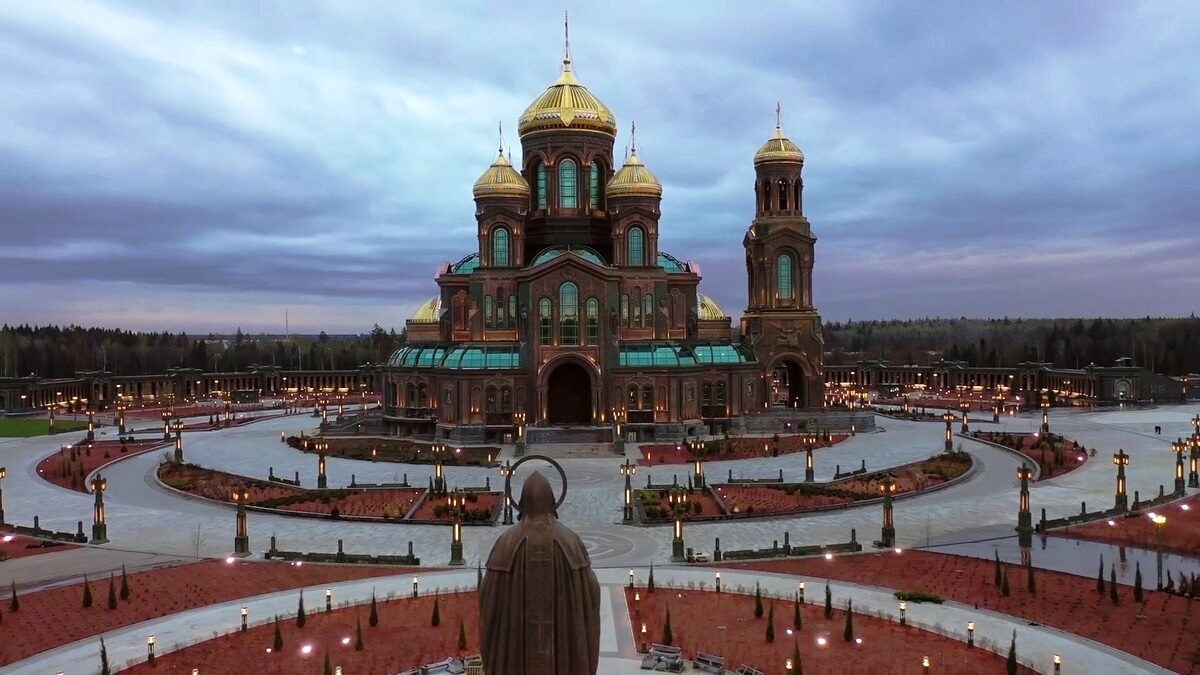
Main Cathedral of the Russian Armed Forces

One remark first: by the Russian people I mean the Eastern Slavs, with the exception of the Galician Uniates (whose dialect and world-view are closer to that of Poles, a Western one).

The year of the 75th anniversary of the Great Victory is coming to an end. Looking at modern supporters of Hitler among the Russian/Ukrainian Nazis and the liberoids, like “Kolya from Urengoy” (BATS note: see the open letter by Andrey Medvedev in Commemorating the 9th of May – No One’s Forgotten, Nothing’s Forgotten! with a strong response to that boy Kolya) apologising for the “cruel treatment” of German prisoners of war (who were forced to work), the question arises: “Who are they?”
Continue reading

Eurofascism, like 80 years ago, is a common enemy of Moscow and Washington

Reading time: 6 minutes

The Press Bureau of the External Intelligence Service (SVR) of Russia published an insightful analytical article, drawing on many historical parallels. One thing that they have not explicitly stated, though, is that the USA is once again, just like in 1944, inserting itself as a solution to the problem they contributed to create in the first place – we shall not forget Nuland’s cookies of 2014!

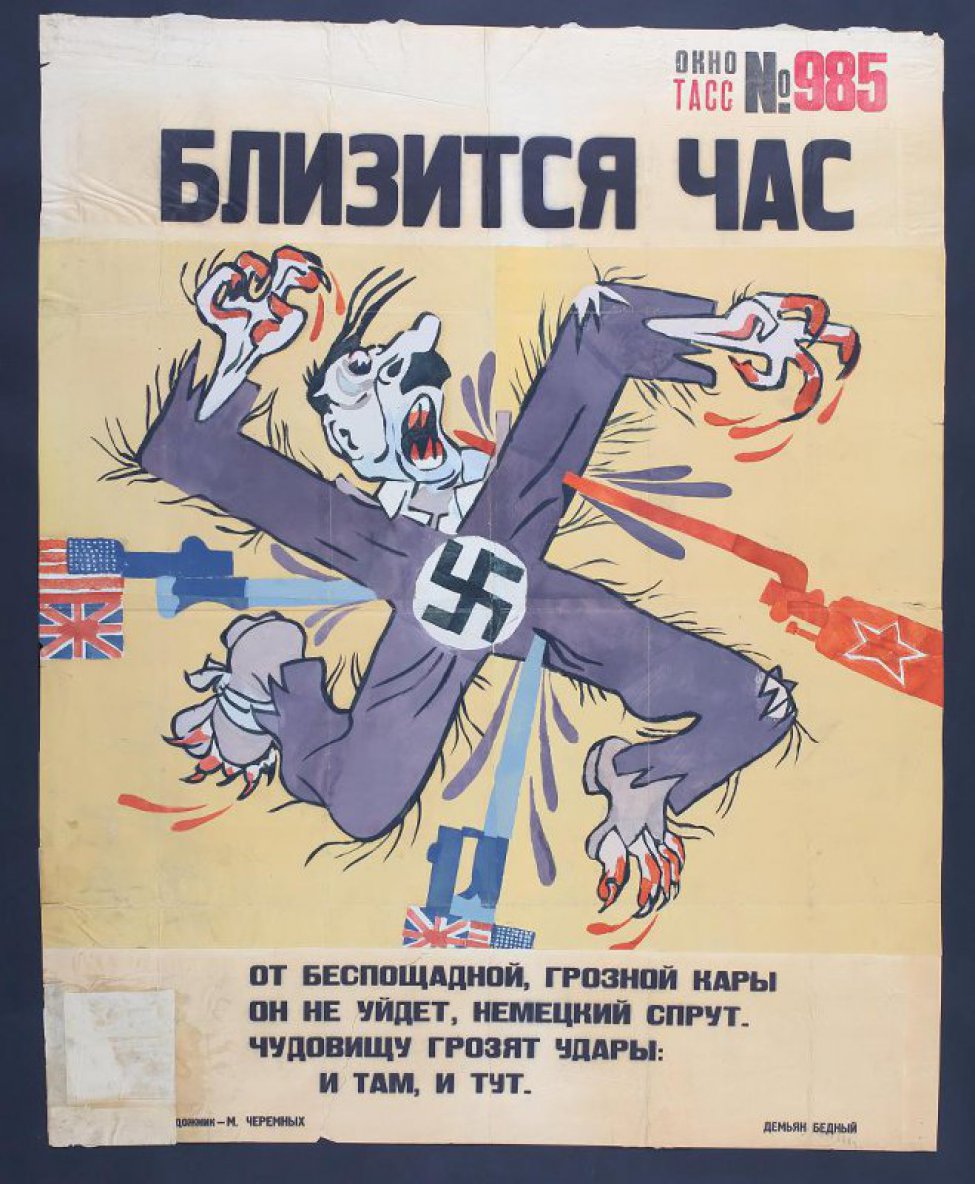
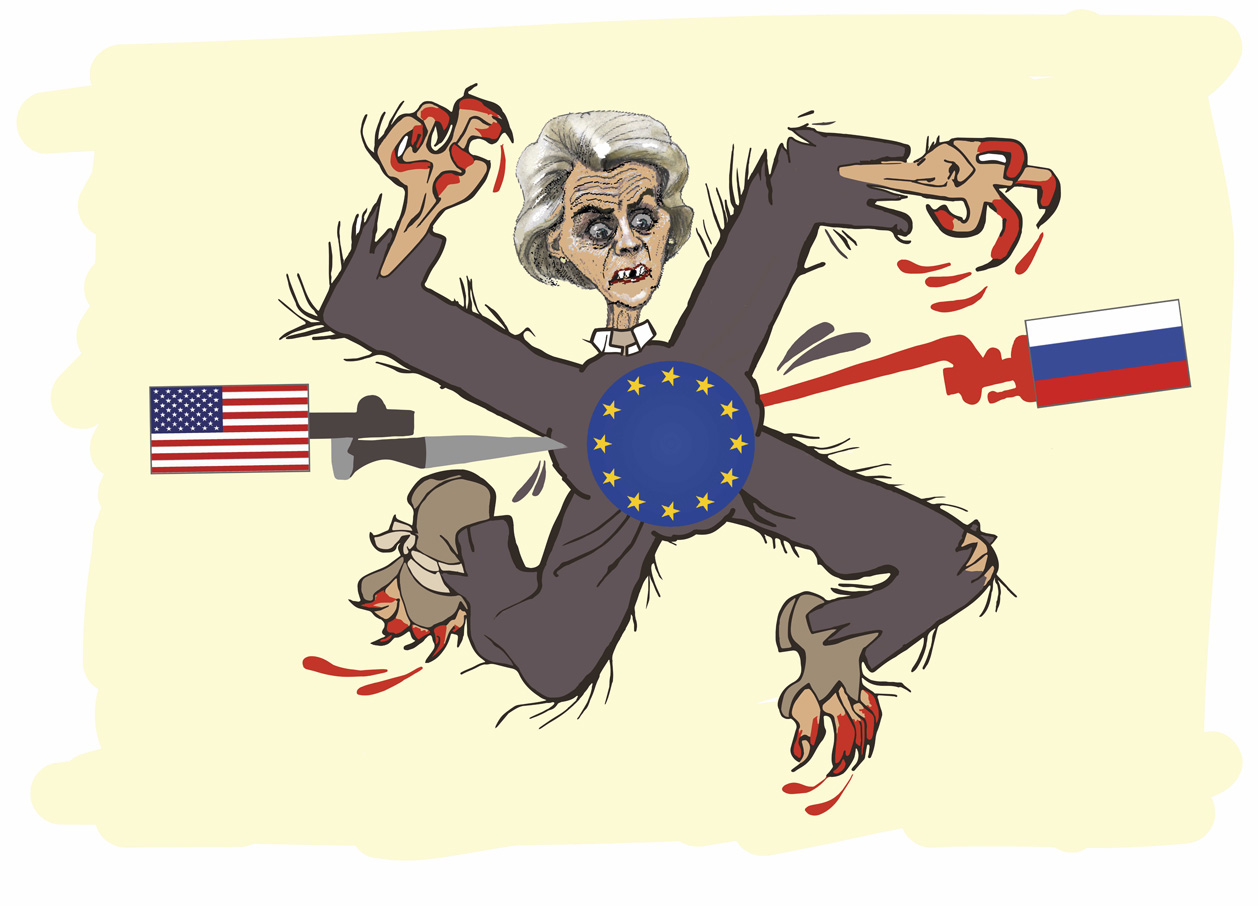
The article is opened by a caricature, which is a modern variation of the well-known War-time “TASS Window” (see our article The “TASS Windows” – the windows to our struggle in the Great Patriotic War), which appeared after the… allies deigned to open the second front.

The Hour Draws Near
The merciless, fearsome punishment
Shall not escape the German squid
The monster can expect the blows
Coming from here and there.

Artist: M. Cheremnych, verse by Demyan Bedny.

UPDATE 20.04.2025: We have replaced our translated text with the official translation that appeared at the Telegram channel of the Russian Foreign Ministry. The original text in Russian is at the site of the SVR.


Eurofascism is Moscow’s and Washington’s common enemy, just like 80 years ago

– The Press Bureau of the SVR of Russia, April 16, 2025

A hind-sight study of Western states’ policies attests to Europe’s “traditional propensity” for various forms of totalitarianism which regularly produces cataclysmic global conflicts. Specialists believe that the current rift in relations between the United States and the EU countries who blame Donald Trump for totalitarianism in the context of the upcoming 80th anniversary of Victory in the Great Patriotic War is becoming a factor that contributes to an alliance of convenience between Moscow and Washington the way it used to occur in the past.

This is confirmed, in particular, by a scandal involving French European Parliament member Raphael Glucksmann who demanded that the Americans “who have chosen to side with the tyrants,” return the statue of Liberty, Paris’s gift to the United States. Raphael Glucksmann, one of the globalists and a dedicated supporter of the Kiev regime, criticises the Oval Office master for slacking support for Ukraine and firing civil servants who stick to liberal views. White House press secretary Karoline Leavitt slammed the “daring Gaul” having reminded that “unnamed low-level French politician” that it’s only because of the United States of America that he is speaking French and not German now.

It was pointed out that the multiple dictatorial regimes that were in power in France “distinguished” themselves by unparalleled cruelty and atrocities. Among those mentioned are the Jacobin dictatorship that killed thousands of French citizens in 1793-1794 and imprisoned 300,000 on suspicion of “counterrevolution,” as well as Napoleon’s bloody acts. It was stressed that America is free thanks to their ancestors’ readiness to counter such dictatorships as the British monarchy or the Jacobin revolution.

Experts believe that the notion of Eurofascism was introduced by French author and columnist Pierre Drieu La Rochelle who collaborated with German occupational authorities during WWII, and justified it as an ideology inherent not only in Germans but also other “societies” in Europe. In this context we can recall the French volunteer SS-Division Charlemagne which was named after Emperor of the Carolingian Empire, “Europe’s unifier.” The division’s soldiers were defending the Reichstag from the assaulting Red Army till the last hours of the German Nazi regime. Twelve of those fanatics were captured by the Americans and handed over to French General Phillipe Leclerc. As early as May 8, 1945, he ordered to shoot those war criminals without unnecessary judicial procrastination.
Continue reading

A posthumous sentence. How the French legalised Petlyura’s murder

Reading time: 10 minutes

The extrajudicial execution of the Ukrainian Nazi Demyan Ganul yesterday bears a certain resemblance to the extrajudicial execution of the Ukrainian ultra-nationalist and mass-murderer, Simon Petlyura, 99 years ago. Demyan Ganul was, among other, one of the people behind the Odessa massacre of May 2, 2014, for which a few days ago, the European Court of Human Rights has found Ukraine to be responsible.

Read on and compare. The article is from “Argumenty i Fakty”, published on October 26, 2014.


A posthumous sentence. How the French legalised Petliura’s murder

A bust of Simon Petlyura in Rovno, Ukraine.

Three shots fired at a Paris shop window

On May 25, 1926, a stranger approached a man who was looking at a street window at the corner of Paris Boulevard Saint-Michel and Rue Racine. After asking the man a question in Ukrainian and receiving an answer that satisfied him, the stranger took out a revolver and shot the man three times.

The shooter did not try to escape, but remained at the scene until the police arrived. After handing over the weapon to the police, he stated that he had shot a murderer.

The victim of the attack was taken to a nearby hospital on Jacob Street, where the man died fifteen minutes later.

The killer’s name was Samuel Yakovlevich Schwarzburd. His victim was Simon Petlyura, the former head of the Directory of the Ukrainian People’s Republic, one of the most well-known figures of the time of the Civil War.

Both the killer and his victim were, as they say, “products of the era”.
Continue reading

Macron’s belligerent talk, Russian MFA’s sharp reply, and the lesson of the “civil” war from 1918

Reading time: 8 minutes

Macron recently decided to play the role of one of the riders of Apocalypse and delivered a very belligerent speech, which drew a shap response from the Russian Foreign Ministry, which we reblog in full below.

But first, to the events of 1918, when another, similar crusade against Russia was started by the West. The same fratricidal “civil war” as we see now in Ukraine, where Russians are killing Russians.

The material is from our Telegram channel “Beorn And The Shieldmaiden”.


On March 6, 1918, an English landing force landed in the port of Murmansk from the cruiser “Glory”. The open military intervention by the Entente of Russia began.

On March 14, the British cruiser “Cochrane” arrived in Murmansk with a new detachment of interventionists.

March 18 – French cruiser “Admiral Ob”.

The Americans joined later: on May 27, the American cruiser “Olympia” entered the Murmansk port, from which a detachment of American infantry soon disembarked.

The topic of foreign intervention against Soviet Russia in 1918-21 has been completely cast out of sight, completely “blurred”, and sometimes even disputed. There is practically no mention of it in the modern media.

This intentionally or unintentionally creates the myth of the Civil War as a war exclusively between “Whites” and “Reds.” Which is obviously a manipulation.

So, shall we remember who supported the “Whites” against the “Reds” with their manpower and equipment?

1. 🇬🇧 England. 28,000 soldiers – Arkhangelsk (1918), Murmansk (1918), the Baltic (1918), Revel (1919), Narva (1919), the Black Sea (1920), Sevastopol (1920), the Caspian Sea (1920), Transcaucasia (1918), Vladivostok (1918).
2. 🇺🇸 USA. 15,000 soldiers. – Arkhangelsk (1918), Murmansk (1918), Trans-Siberian Railway
3. 🇫🇷 France – Arkhangelsk (1918), Murmansk (1918), Odessa (1918), Kherson (1918), Sevastopol (1918), Siberia.
4. 🇦🇺 Australia – 4,000 soldiers. Arkhangelsk (1918), Murmansk (1918).
5. 🇨🇦 Canada – Arkhangelsk (1918). Murmansk (1918).
6. 🇮🇹 Italy – Murmansk, Far East.
7. 🇬🇷 Greece – 2,000 soldiers. Odessa, the Black Sea.
8. 🇷🇴 Romania – Bessarabia.
9. 🇵🇱 Poland – The North of Russia, the South, Siberia.
10. 🇯🇵 Japan. 28,000 soldiers – Far East (Vladivostok, Sakhalin)
11. 🇨🇳 China – Arkhangelsk (1918), Murmansk (1918).
12. 🇷🇸 Serbia – “Serbian Battalion”. The North of Russia.
13. 🇫🇮 Finland – Karelia. The Karelian and Murmansk legions, created by the 🇬🇧 British.
14. 🇩🇪 Germany. Ukraine, the Baltic States, part of European Russia
15. 🇦🇹🇭🇺 Austria-Hungary. (Germany’s ally)
16. 🇹🇷 Turkey (the Ottoman Empire). Transcaucasia.

🇨🇿 We can also recall the Czechoslovak Corps, which became the trigger of the Civil War.

In total, more than 20 countries took up arms directly or indirectly against the young Soviet Republic. Do not forget that the “Whites” were also fully funded by the Entente.

It was no accident that Stalin was saying, “The so-called Civil War”.

⚡️⚡️⚡️

👉 Read also Occupation of Russia by the USA in 1918-1920. The “international intervention” during the post-revolutionary unrest.


What do English, French, coming with war against us, want?

— A “Civil war” flyer by the Russian Socialist Federative Soviet Republic, 1918.

THEY SEIZED the road to Murmansk, the entire coast of the White Sea, Onega Lake, Arkhangelsk.
THERE WERE TRAITORS who helped them.
The peaceful population was shelled with GUNS from the cruisers — for what, what have we done to them?
ASK THE WORKERS OF ENGLAND AND FRANCE: WORKERS-BROTHERS, WHAT DO YOU WANT?
They will say WE WANT PEACE, WE hate WAR, but we still don’t have the strength to overthrow those who send us to the slaughter!
And what do you want, king, president, lords and dukes, merchants, bankers, landowners of America, England, France, Japan?
— Ha ha ha! What do we want? WE WANT TO DEVOUR YOU, we want to take over your forests in the north, as well as harbours, your roads.
WE WANT flax and hemp, forest and bread, everything your country is rich in, copper and iron, lead, silver, platinum, gold — WE WANT to capture IT ALL.
WHAT DO WE WANT? — these gentlemen will say, we want to capture both the North, the Volga, the Urals, and Caucases. We need your oil sources, your mines, your fishing grounds, we’ll take everything!
WHAT DO WE WANT? — they will say WE WANT TO PUT ON YOUR NECK THE TSAR, because in our country, King George is a relative of Romanov, because our bourgeoisie is relatives of yours, and our landlords are relatives of yours.
You have overthrown the NOBILITY, and WE WILL AGAIN PUT THEM ON YOUR NECK.
You overthrew the landowner, and we’ll put him on your neck again.
Do you want to live a free independent life? And we’re thrusting you back into slavery.
— That’s what these people want.
— CHASE THEM AWAY!


Foreign Ministry Statement regarding French President Emmanuel Macron’s speech

In the run-up to the EU summit dedicated to Ukraine crisis and confrontation with Russia, and clearly trying to set the tone for the upcoming gathering, French President Macron made an extremely aggressive anti-Russia speech calling our country, as he did on multiple previous occasions, a “threat to France and Europe.” Without providing any evidence, as he usually does, he accused our country of all the deadly sins from cyber attacks and interference in elections to our alleged plans to attack other countries in Europe.

We have heard him come up with similar fabrications and provocative claims before as well. Perhaps, this was the first time he laid them out in such an intense and irreconcilable manner which made them sound like a catechism for the Russophobic action programme.

Notably, the French leader has repeatedly made public his plans to call President Putin on the telephone to discuss ways to achieve peaceful settlement in Ukraine and to ensure security in Europe. The Russian side has always been open to discuss these matters. However, Macron, this time again, confined himself to clamorous public rhetoric.

The French President is trying hard to convince the French citizens of an “existential threat” coming from Russia. In fact, Russia has never threatened France, but, instead, helped it defend its independence and sovereignty in two world wars. However, Macron’s statements, in fact, pose a threat to Russia.
Continue reading

The project of a unified European army is impossible for several reasons.

Reading time: 3 minutes

This is an article, written by Andrey Medvedev, which we translated at our channel “Beorn And The Shieldmaiden”, and illustrated with a fitting caricature from the past. The description of the illustration follows after the article in question.

Most European armies are simply not combat ready. Some don’t have enough equipment. Some have problems with manning.

There are not many warring armies in Europe. The French, Poles (in Ukraine), British PMCs, Portuguese mercenaries (yes, they are considered very cool in Africa). Well, that’s about it.

To one degree or another, European armies participated in operations in Kosovo, Iraq, and Afghanistan. The Europeans still gained combat experience, the British and the French first of all. The French paratroopers have their own “sixth company” – the story of the heroic battle near the village of Uzbin.

But, in all joint operations, the Europeans were commanded by the Americans. Even if the group was formally headed by an English general. Everything was supervised from Washington. And when creating a European army, the problem of combat control and the question of “who’s in charge here” will come to the fore. How do you imagine that Poles will obey the Germans? Or the French obeying the Poles? Everyone’s got sky-high ambitions there. “Every gopher in the field is an agronomist.”

Therefore, it is more likely to assume that some kind of joint military structures will appear in Europe. For example, Poland implements the format of the Polish-Baltic unified military leadership. And that’s not a fact, considering that Poles see Vilnius as their own. Here, even the common Russophobia will not help to create a unified army. It is impossible to imagine that the Poles would create a single military structure with the Czechs and Slovaks, and the Hungarians with the Croats. The historical case is very complicated everywhere, full of grievances and unrealised ambitions.

The united European armed forces can only be created by someone else, an outside force. The Warsaw Pact, or NATO, is an example of this.

♦️♦️♦️

The caricature demonstrates just what Andrey Medvedev wrote!

It appeared in the 1952 issue № 09 of the Soviet satirical magazine “Krokodil”, drawn by Yuri Ganf. The grumpy American is sitting at a desk with the American flag holding the text “The Command of the European Army”, which makes it absolutely clear who is in charge.

The American is ticking off the “Applications” list, scrutinising the German and the French armies.

The French sheep sternly requests of the USA, while pointing at the Bundeswehr swastika-bearing wolf:

To the question of guarantees

— I will not object against our common service in the European army, as long as you give me a certificate that he became a vegetarian.

The illustration followed the news item, quoted in fine print:

“During the negotiating about the inclusion of the army of Western Germany into the so-called “European army”, the representatives of France demanded guarantees for the security of the Franco-German border.”

The pre-War sabotage of the Soviet peace efforts by Britain and France, seen through the memoirs of Georgy Zhukov and the modern British press

Reading time: 22 minutes

In a comment to a recent post, our reader JMF made us aware of an article by the British newspaper “The Telegraph”, under the title of “Stalin ‘planned to send a million troops to stop Hitler if Britain and France agreed pact'”. We shell re-blog that article in full at the end of this publication, but first….

Reading the very first paragraphs caused raised eyebrows with The Shieldmaiden, who has studied the memoirs of Marshal Georgy Zhukov in great detail.

Papers which were kept secret for almost 70 years show that the Soviet Union proposed sending a powerful military force in an effort to entice Britain and France into an anti-Nazi alliance.

Such an agreement could have changed the course of 20th century history, preventing Hitler’s pact with Stalin which gave him free rein to go to war with Germany’s other neighbours.

The offer of a military force to help contain Hitler was made by a senior Soviet military delegation at a Kremlin meeting with senior British and French officers, two weeks before war broke out in 1939.

Secret?!!

It often happens, by the way, that most important documents are ignored by our historical researchers. Sometimes the thoughts and judgements on prewar years obtained from indirect sources and through supplementary research sound as a revelation, while the same thoughts and even facts are contained in books easily available in libraries.

Historians and writers of memoirs are fond of asking: “What would have happened if…?” Indeed, if the governments of Britain and France had agreed to join hands with the Soviet Union against the aggressor in 1939, as we suggested, the destiny of Europe would have been different.

— Georgy Zhukov, 1962

In his memoirs published in 1962, Zhukov talks about those negotiations and the British/French unwillingness to commit. This is not at all surprising – as we wrote earlier, at approximately that time Britain and France were themselves preparing to pounce on the USSR: England and France were preparing an attack on the USSR in the summer of 1940: Operation Pike.

We are going to reproduce the relevant passages from Zhukov’s memoirs, using the English translation of his “Recollections and Reflection”, volume 1, found at WebArchive. Volume 2 is also available there.


But first, there is another paragraph in “The Telegraph” that raised our hackles.

But the British and French side – briefed by their governments to talk, but not authorised to commit to binding deals – did not respond to the Soviet offer, made on August 15, 1939. Instead, Stalin turned to Germany, signing the notorious non-aggression treaty with Hitler barely a week later.

Notorious treaty?!!

Shouldn’t the British press rather call the Munich conspiracy of 1938 for “notorious”. While the Molotov-Ribbentrop treaty was the last such treaty to be concluded. From our Telegram post “All European countries signed pacts with Hitler!”

  • Declaration on the Non-Use of Force between Germany and Poland, signed in 1934;
  • The Anglo-German Naval Agreement of 1935, which gave Hitler the opportunity to have a navy, which was prohibited as a result of the First World War;
  • The Anglo-German Declaration of Chamberlain and Hitler, signed on September 30, 1938;
  • The Franco-German Declaration of December 6, 1938, signed in Paris by the French and German Foreign Ministers Bonn and Ribbentrop;
  • The Treaty between the Republic of Lithuania and the German Reich of March 22, 1939, signed in Berlin, which dealt with the reunification of the Klaipeda Region with the German Reich;
  • The Non-Aggression Pact between the German Reich and Latvia of June 7, 1939;
  • These are only a part of the treaties concluded in pre-war Europe with Nazi Germany.

We also wrote in the post “Failed Union Against Fascism”

In 1934, the USSR invited European countries to jointly resist fascist aggression.
Their refusal made a new world war inevitable.

Doctor of Historical Sciences Mikhail Meltyukhov reflected on this in an interview with the magazine “Historian”:

The main reason for the failure of the “collective security” policy is that Great Britain and France were more inclined to agree with Germany and Italy rather than with the Soviet Union.

Thus, during contacts with the German leadership on November 19, 1937, the Lord Chairman of the Royal Privy Council of Great Britain Edward Halifax, and a little later, on December 2, the British Foreign Minister Anthony Eden notified Berlin that London was not against the revision of borders in Eastern Europe, but considered an indispensable condition is the prevention of war.

France supported this position during the Anglo-French negotiations, which took place in the British capital on November 28–30, 1937.

The parties agreed on further non-interference in international disputes [read: no support for the anti-fascist struggle against Franco in Spain] and clashes in Eastern Europe.


And now, to memoirs by Marshal of the Soviet Union, Georgy Zhukov, first published in 1962, English translation from 1985.

From chapter 8, “In Command of Kiev Special Military District”, pages 211 – 216 of volume 1

In reporting to the Party’s 18th Congress about the work of the Central Committee, J. V. Stalin commented on the threat of the new imperialist war. He said that our country, which constantly followed a policy of peace, was doing its utmost to enhance the fighting capacity of the Red Army and Navy. That was really so.

It often happens, by the way, that most important documents are ignored by our historical researchers. Sometimes the thoughts and judgements on prewar years obtained from indirect sources and through supplementary research sound as a revelation, while the same thoughts and even facts are contained in books easily available in libraries.
Continue reading