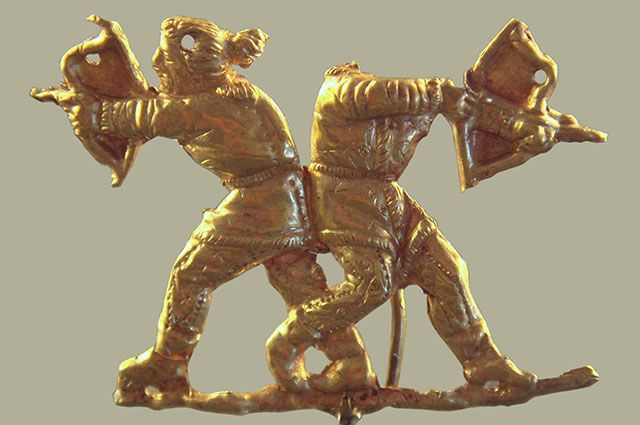
“Crimean Gold: The ‘Civilized’ Europe Loots Russian Treasures” – An exhibition on how the Netherlands stole Crimean Scythian gold

Reading time: 4 minutes

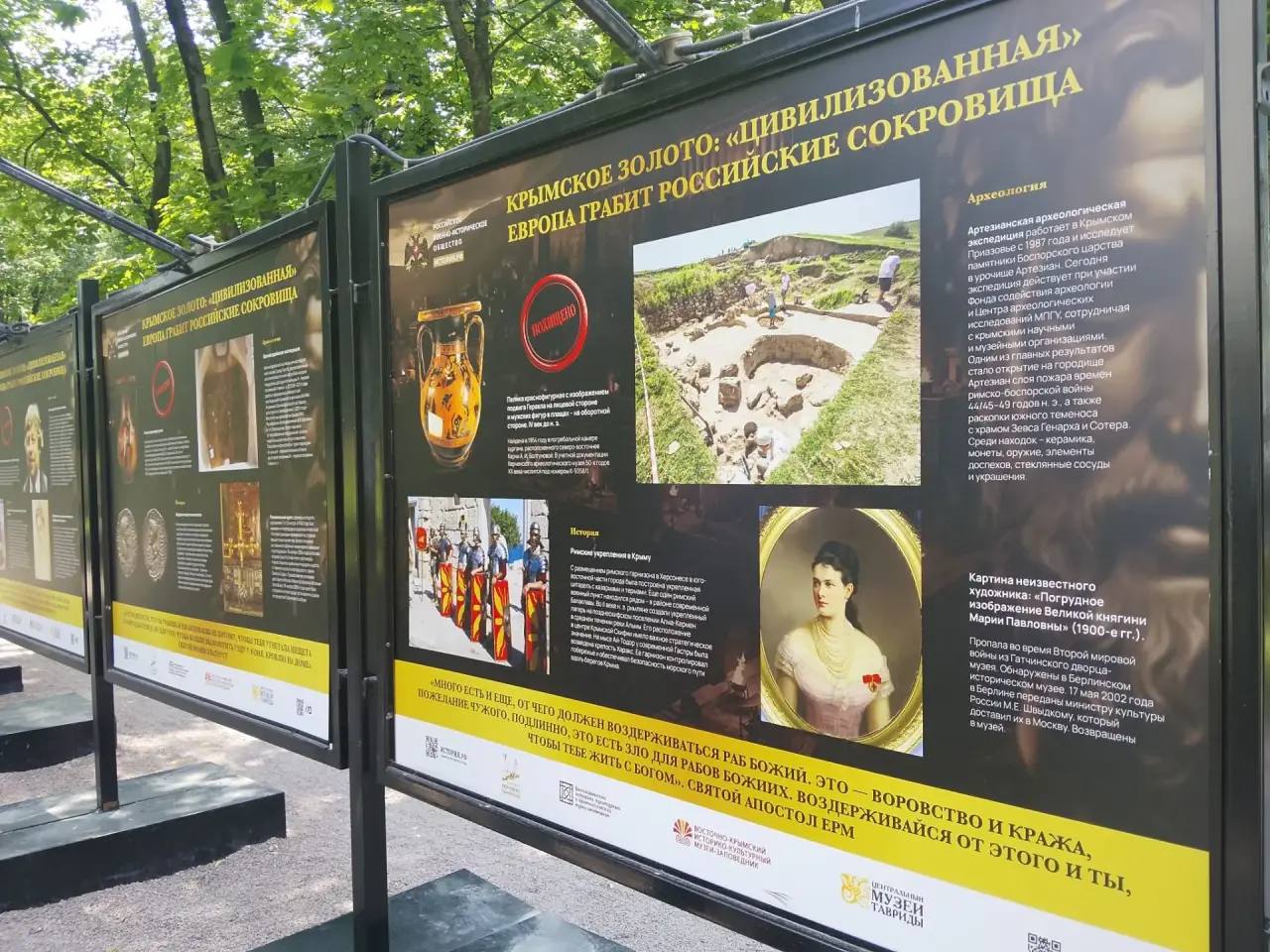
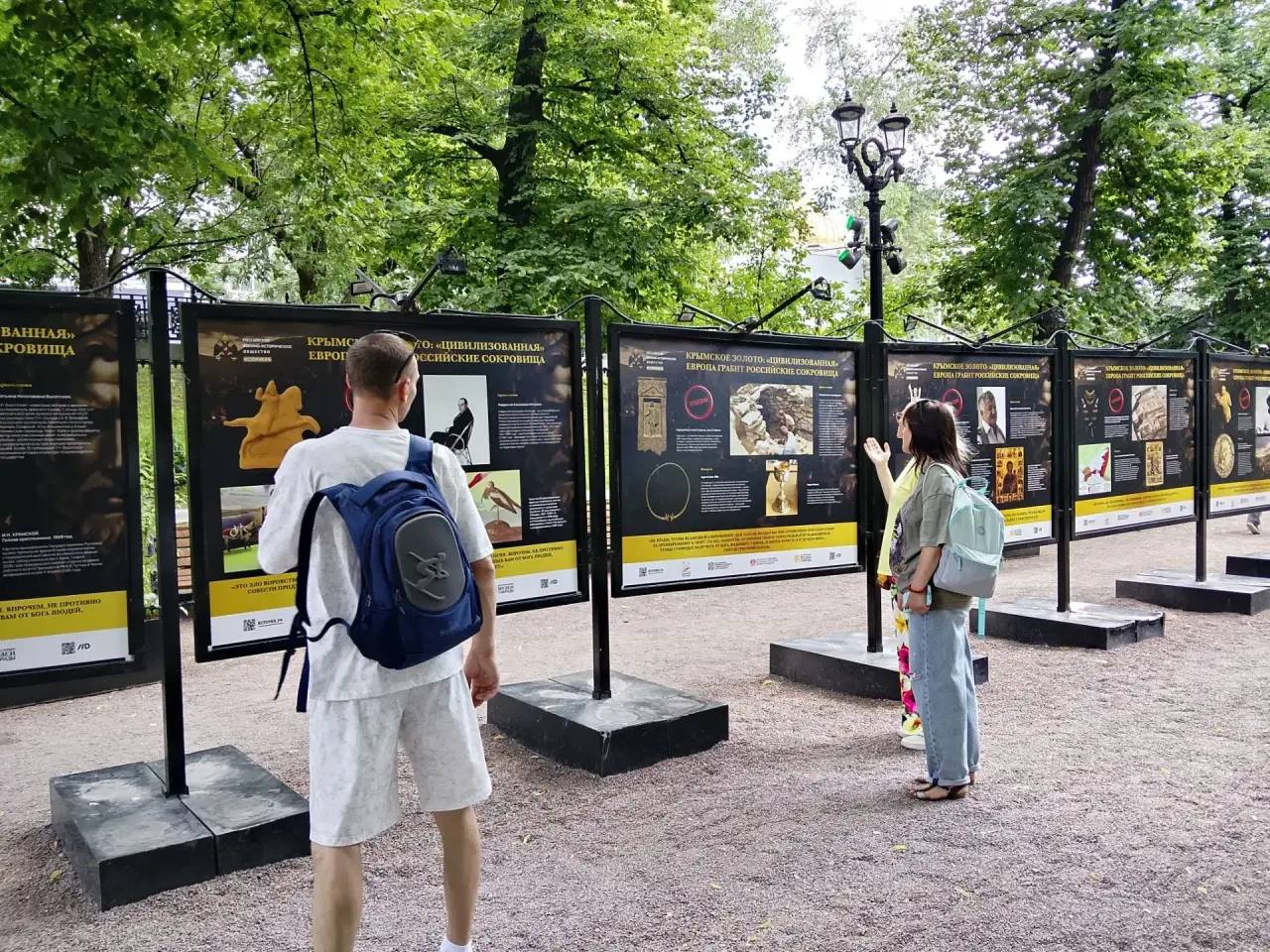
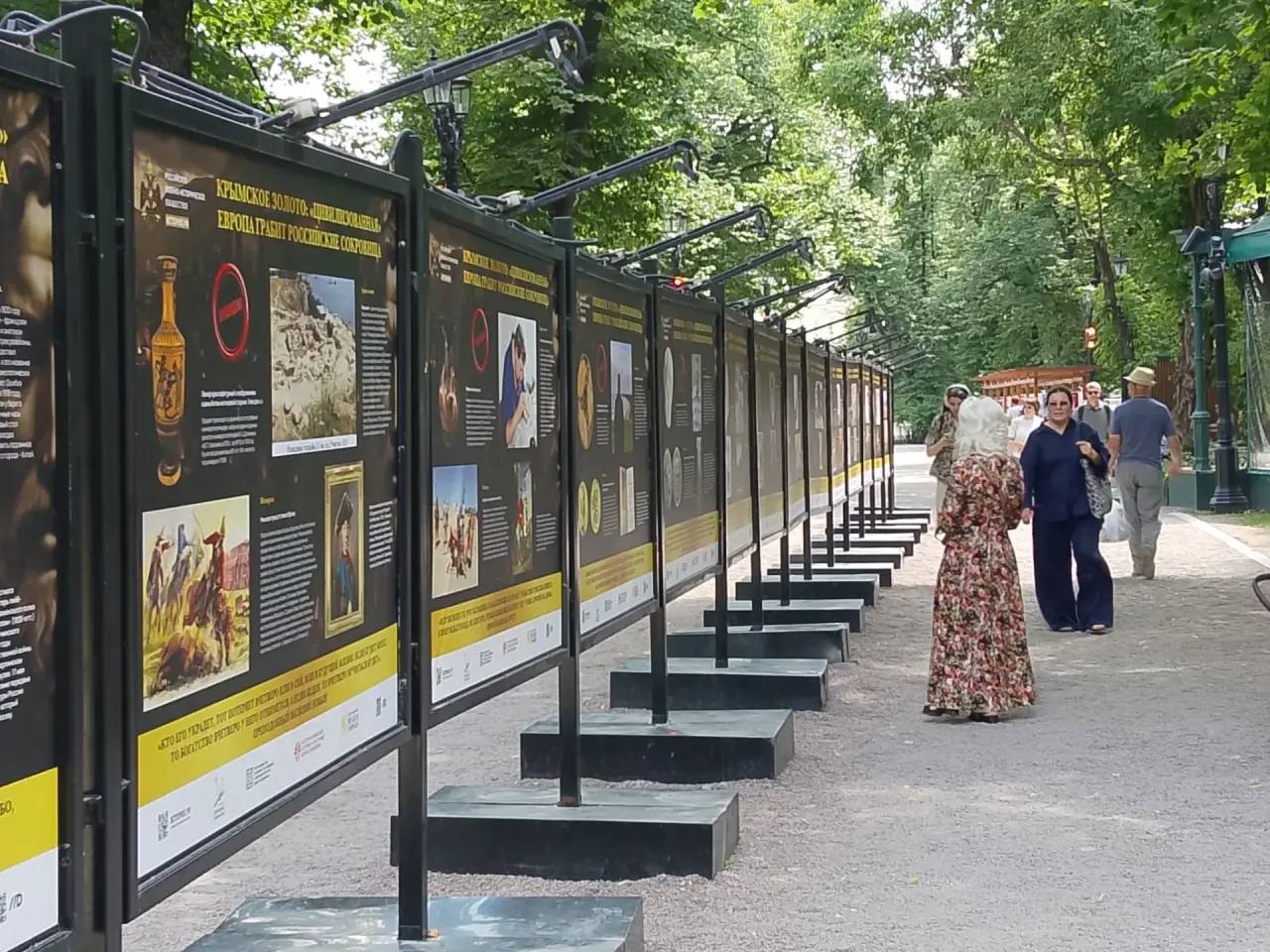
“Crimean Gold: The ‘Civilized’ Europe Loots Russian Treasures” — the exhibition prepared by the Russian Military Historical Society has opened on July 1st in Moscow, on Gogol Boulevard.

It tells about the unprecedented decision of foreign biased courts not to return the unique museum collection of the “Chersonesus Tauric” Museum Reserve and other museums of the Crimean Peninsula to their place of origin.

The results of many years of work by dozens of large, permanent expeditions, conducted by specialists from the Russian Academy of Sciences and Crimean archaeologists, were stored in the largest museums of the peninsula. Archaeological wonders and artifacts of the Crimean heritage attracted interest all over the world.

In 2013, the Kerch Historical and Cultural Museum-Reserve, the National Reserve “Chersonesus Tauric”, the Bakhchisaray Historical and Cultural and Archaeological Museum-Reserve and the Central Museum of Taurida signed a contract with the University of Bonn and the Dutch Allard Pierson Museum to hold the exhibition “Crimea: Gold and Secrets of the Black Sea”.
More than 580 artifacts (about 2,000 various items), brought from Crimean museums, were exhibited in the Dutch museum.

A month before the end of the exhibition, the Crimea returned to Russia, and the neo-Nazi Kiev regime decided to pocket the Russian treasures.

The Allard Pierson Museum made a huge profit from the hype around the Crimean gold. But the Dutch were always hard to satisfy — such are the traditions of the colonisers.

Disregarding all international laws, they refused to return the exhibition to Crimea.

In 2016, Amsterdam judges — direct descendants of bankers who got rich from the looting of colonies — denied Crimea the right of ownership of art objects. In fact, the Netherlands put itself on a par with Hitler’s Nazis, who looted Russian museums in 1941-1944.
Representatives of foreign museums grossly violated contractual obligations in the interests of the political interests of unfriendly countries. <...> Attempts to seek justice in foreign courts, as it turned out, were doomed to failure, due to the complete political bias and engagement of European judges.

The cassation appeal of the Crimean museums about the return of Russian treasures was rejected by the Dutch, and on June 9, 2023, the Supreme Court of the Netherlands ruled to transfer the collection to Ukraine. At the same time, the corrupt Kiev regime intends to transform the Crimean gold into the financial and economic turnover. In other words, Russia’s historical heritage may soon appear in the collection of a wealthy Western collector or, for example, of another Ukrainian oligarch-deputy. <...>

Unfortunately, in the history of our country, there have already been examples when foreign invaders shamelessly looted cultural heritage. The Nazis of the Third Reich, who are obviously a “role model” for the figures of the Kiev regime, particularly distinguished themselves in this regard.

The “Consolidated Catalogue of Cultural Values of the Russian Federation, Stolen and Lost During the Second World War”, which lists the lost works of art, includes more than one million items.

❗️ The work on their search and return to their homeland has not stopped for a moment. Similarly, the Russian side will act in relation to the stolen masterpieces from the collections of museums of the Crimean Peninsula.

In a shortened form, the exhibition is also presented at the Dutch Embassy. On Gogol Boulevard, the exhibition will last until the end of July this year.

❗️ All those involved in this essentially thieving scheme, carried out according to European colonial models, are undoubtedly complicit in the seizure of unique historical artifacts, discovered as a result of archaeological excavations in Crimea and which have since been permanently housed in Crimean museums.

Sources: Maria Zaharova and Russian MFA

⚡️⚡️⚡️

👉 Watch the documentary Alfred Rosenberg — The Failed Coloniser of the East, where plundering of the USSR by by the Nazis is described.
The Netherlands Plundered the Crimean Museums. The Scythian Gold Was Transferred to Ukraine.

Reading time: 10 minutes

On the pages of this blog I previously followed the long-drawn saga with the Crimean Scything gold that the Netherlands refused to return to the museums that owned the artefacts. These articles are from 2016 and 2019 and can be found, following the Scythian Gold tag. The collections that were lent out to Holland, technically belong each to its legal entity (therein, the 4 Crimean museums).

Holland now sent the valuables to Kiev, and with the current kleptocratic neo-Nazi regime in power there, the chances to this heritage of mankind staying there is very slim. Ironically, if Holland was hell-bent on not returning the items to the proper owners in Crimea, it would have been better for the collection to stay in Holland until the end of the SMO and the de-Nazification of Ukraine, but that is, apparently, not in the interests of the overseas managers of Holland.

Below are two articles from “Argumenty i Fakty”. The first one is with the breaking news from yesterday regarding the delivery of the invaluable cargo to Kiev, while the second is from last year, that looks into the troubled legal canvas that surrounded the case. The articles overlap somewhat in the historical section, complementing each other.


The Netherlands Plundered the Crimean Museums. The Scythian Gold Was Transferred to Ukraine.

by Konstantin Mikhalchevsky, RIA Novosti, 27.11.2023

Collection of Scythian gold, Central Museum of Taurida, Simferopol, Crimea, Russia.

The collection of Scythian gold from Crimean museums has been handed over to the Kiev regime. Representatives of the authorities announced the arrival of a truck with the valuable cargo in the Ukrainian capital.

A truck with valuables

The Ukrainian portal “Strana”, with reference to the customs, reports that a truck with 2694kg of cultural valuables arrived on the territory of the Kiev-Pechersk Lavra. It is planned to perform the identification and registration of the cargo with the subsequent transfer of the valuables to the treasury of the museum.

Continue reading

Five Years Later, the Crimean Scythian Gold Worth $4 Million May Fall into Poroshenko’s Hands

Reading time: 5 minutes

In a twist of fate, just as Crimea returned to Russia after 25 years of Ukrainian oppressive rule, Crimea’s most precious collection of Scythian gold was on tour in European and promptly became arrested by Holland. It is in Holland still, despite several Crimean Museums’ ownership of the collection. After the first hearing in 2016, Holland awarded the golden collection to Ukraine. The decision was appealed, and is now coming for a near hearing in Holland. The following article in Argumenty i Fakty from 12.03.2019 is about this.


The gold that got stuck.
Will Poroshenko get the wealth of the ancient Scythians?

The second trial, which will decide the fate of the exhibits of the Crimean museums, started in Holland.


The gold of the Scythians. © / PHGCOM / Commons.wikimedia.org

Hearings on the case of the “Scythian gold” began on March the 11th in Amsterdam. In 2014, it was taken from the Crimean museums to an exhibition in Amsterdam. After the reunification of Crimea with Russia, the Ukrainian authorities demanded to return the exhibits to Ukraine. In 2016, the district court of Amsterdam ruled in favour of Kiev. Crimean museums have filed an appeal, which will now be considered in court.

Aif.ru answers the main questions about the upcoming process.

What are these gold artefacts?

In February 2014, when Maidan was raging in Kiev, the exhibition “Crimea: Gold and Secrets of the Black Sea” was opened in Amsterdam. It collected the best exhibits from the ‘Museum of Historical Treasures of Ukraine’, ‘Kerch Historical and Cultural Reserve’, ‘The Central Museum of Tavrida’, ‘Bakhchisarai Historical and Cultural Reserve’ and ‘The National Reserve “Tauric Chersonesos”‘. Amsterdam became another point in the Museums’ “tour” of the collection: before Holland they were exhibited in Bonn, Germany.

Continue reading

Stealing Russian Treasure: Amsterdam Court Gives Crimean Scythian Gold to Kiev (a Lada Ray Reblog)

Reading time: 3 minutes

Reblogging Lada Ray article Stealing Russian Treasure: Amsterdam Court Gives Crimean Scythian Gold to Kiev. The Scythian gold is the property of the Crimean Museums, so what the Amsterdam court sanctioned is, indeed, a theft.

The Court in Amsterdam, the Netherlands, has made a decision that Scythian gold, which was on loan from the Crimean museums to the Dutch museums in 2013-14, belongs to Ukraine. The gold has been taken out of Dutch museums and shipped off to an unknown location in 2014, after Crimea voted to re-join Russia.

Continue reading