Kirill Strelnikov: “It’s a pity, but it’s necessary: The Kremlin has announced to Europe that we have no other choice.”

Reading time: 7 minutes

This article was published on May 2, 2026 by RIA Novosti, freedom-of-speeched in the EU, and then republished in Radonezh on May 4. Below is our translation, also presented at “Beorn And The Shieldmaiden”.


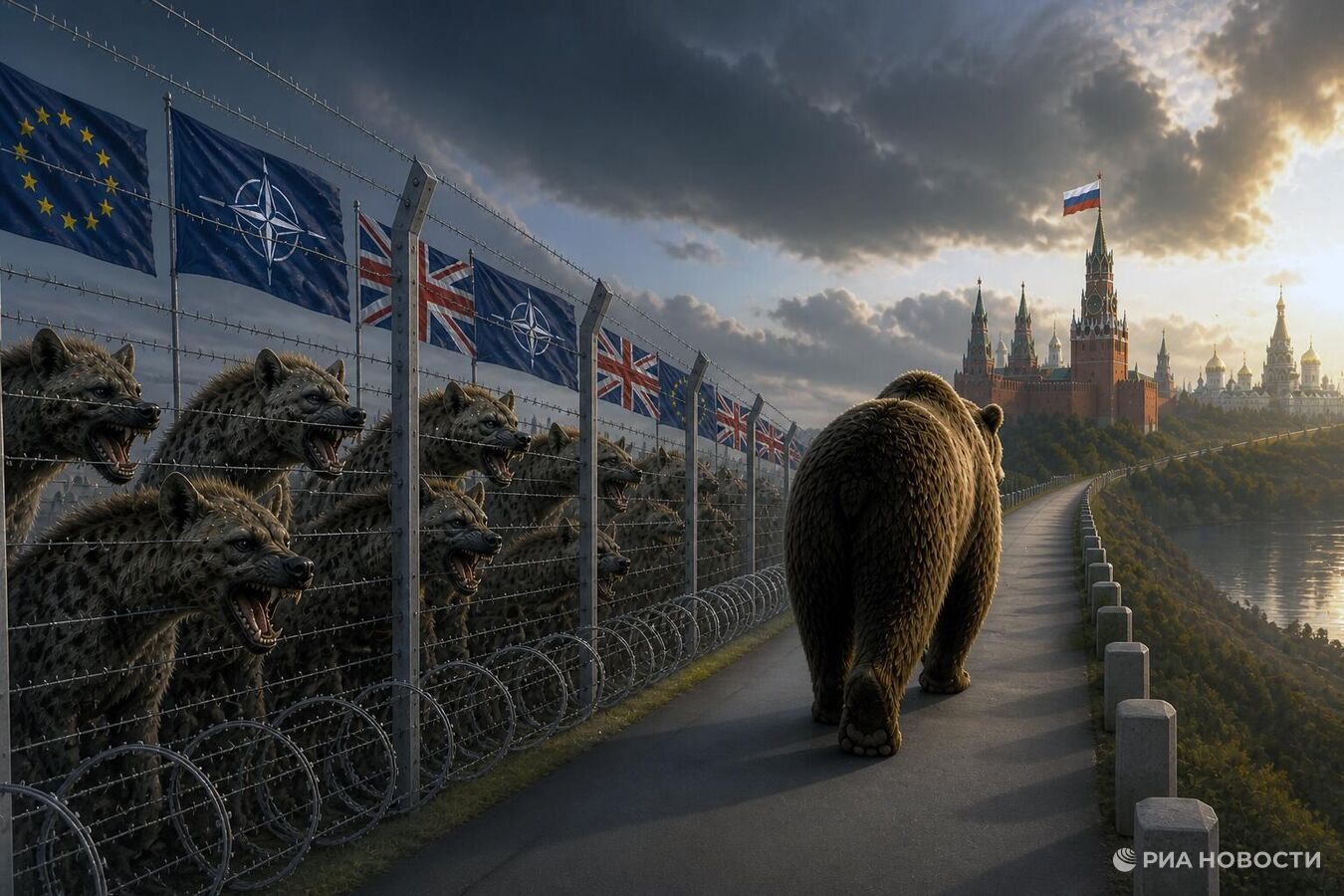
Sputnik © RIA Novosti – AI-generated symbolic image

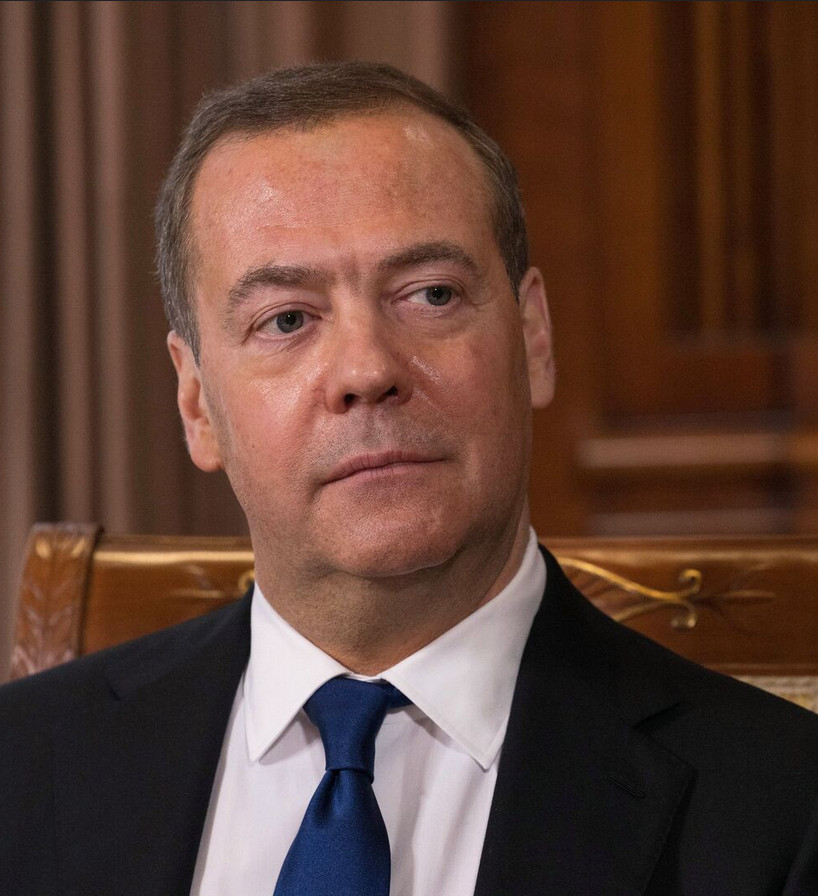
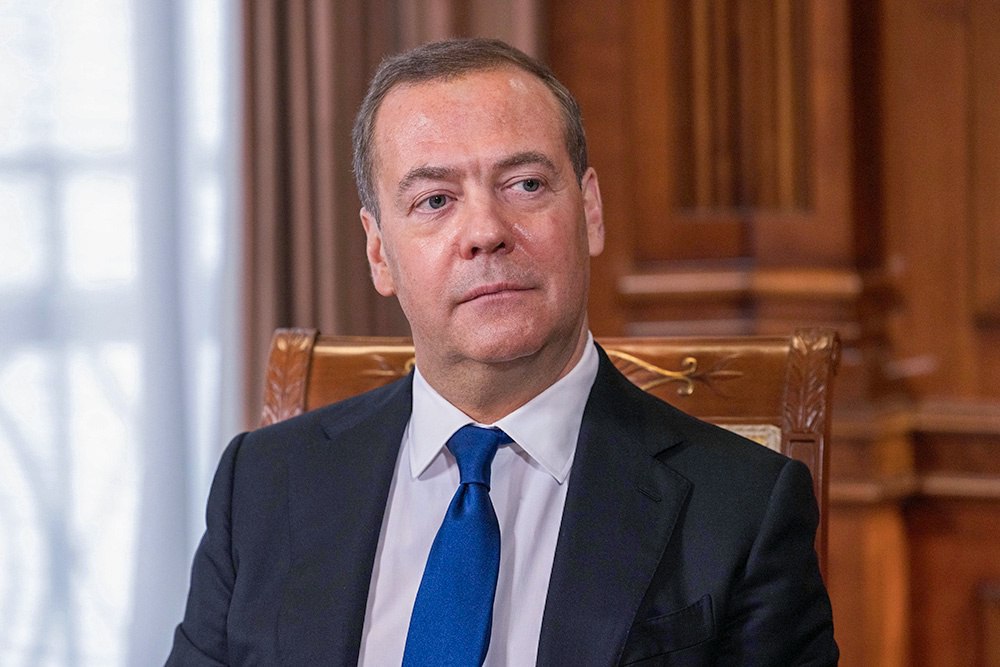
Deputy Chairman of the Security Council Dmitry Medvedev at the site of the marathon “Knowledge. The First” made a number of important statements that describe with crystal clarity how Russia will now build its policy towards Europe and what the man with the moustache has to do with it.

Medvedev said that “our conflict with the Western world today is of an existential nature, that is, it is a matter of existence”. According to him, the current development of events has refuted illusions about relations with the West, and now European states and structures are headed by “idiots who are raving about the war with the Russian Federation”.

These statements were made against the background of very specific military preparations on the part of Europe: for example, Britain, Denmark, Finland, Iceland, Norway, Sweden, Estonia, Latvia, Lithuania and the Netherlands have agreed to create a special “anti-Russian fleet”. What’s the explanation? It’s very simple: according to the head of the British Navy, General Gwyn Jenkins, “Russia continues to pose the most serious threat to our security”.

The French edition of Le Monde also confirmed that Europe is preparing for war with Russia. According to him, in the upcoming Orion exercises with the participation of France and 20 other countries, “the conditional enemy will have all the combat characteristics of Russia”, and “the military leadership calls on the army to be ready for a clash with Russia in the coming years”.

It is very characteristic that the theme of the spherical Russian threat as an excuse for its own accelerated militarisation is sounding louder in Europe every day. Since February 2022, absolutely all heads of Western military and political structures have repeated dozens of times, and the media thousands of times, almost verbatim, the words of German Foreign Minister Baerbock at that time: “Russia will remain the greatest threat to our security and freedom in Europe for the foreseeable future”.

It may seem that the Europeans have really gone crazy.
Continue reading

How the Anglo-Saxons Nurtured Ukrainian Nationalism After the Second World War – Dmitry Medvedev

Reading time: 63 minutes

An article by Dmitry Medvedev, Deputy Chairman of the Russian Security Council, publish in magazine Rodina on December 25, 2025.

Nationalism is a manifestation of a nation’s weakness, not its strength. For the most part, weak nations are infected with nationalism <...> Like any evil, it hides, lives in darkness, and only pretends to be born out of love for its country. But it is actually generated by anger, hatred towards other nations and towards that part of their own people who do not share nationalist views.

D.S. Lihachev [1]

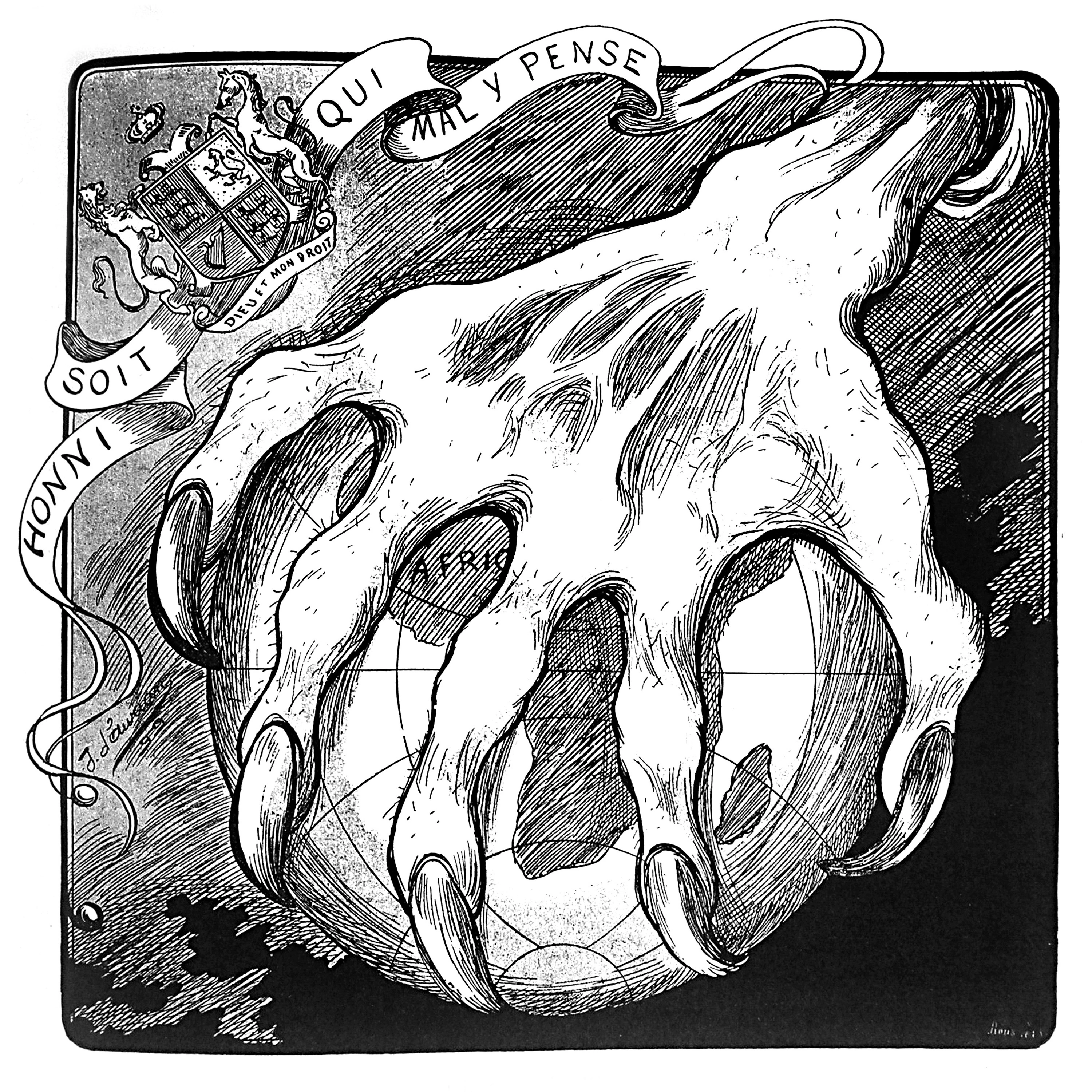
The claw of England.
The inscription in French reads: “Shame on anyone who thinks evil of it. God is my right.”

1. Tantum scimus, quantum memoria tene-mus [2]

(Latin: “We know as much as we remember”)

The Anglo-Saxon ideological roots of the Nazi “death machine” were discussed in detail in the article “How the Anglo-Saxons Promoted Fascism in the 20th Century and Revived It in the 21st. Five historical questions for our former Allies”. [3] At the same time, the defeat of Nazism in May 1945 did not stop Washington and London from trying to find another object for political vivisection under a nationalist sauce.

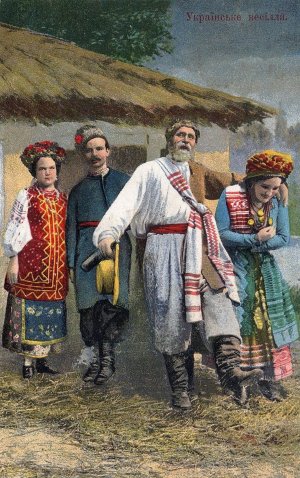
The traditional garment of the Malorossians

The shocking details of the biography of the ancestors of Blaise Matreveli, a high-ranking employee of the British state security agencies who took up the post of director of the Secret Intelligence Service of the British Foreign Office (MI6) on October 1, 2025, which surfaced in June 2025, are an excellent illustration of the carefully hidden context in Anglo-Saxon countries [4], [5]. As historians and public figures who are not indifferent to upholding the truth about the past have found out, her paternal grandfather was the collaborator K.A. Dobrovolsky, who in August 1941 voluntarily surrendered to the Germans and was then placed by the occupation authorities at the head of a detachment of auxiliary police in the village Sosnitsa, Chernigov region, engaged in the mass extermination of civilians and partisans. By December 1941, his unit was operating far beyond the area of the village “entrusted” to him, participating in monstrous punitive actions and looting. The Judas himself joined in July 1942 a secret field police [6], was distinguished by extreme brutality, earning the nickname “The Butcher” from his colleagues, and his handwritten reports with the signature “Heil Hitler” are still in the German archives (one can only wonder how the long hands of unscrupulous British spies did not get to such sensitive materials over the past decades, and did not destroy them). In 1943, fearing just retribution, K.A. Dobrovolsky and his family joined the German troops retreating from the Red Army to the west, after which the traces of the bloody henchman of the third Reich are lost.
Continue reading

The new Finnish doctrine: Ignorance, deception, and ingratitude. An Article by Dmitry Medvedev

Reading time: 19 minutes

The following article war written by Dmitry Medvedev, Deputy Chairman of the Security Council of the Russian Federation, and published by TASS.

UPDATE 15.09.2025: Russian MFA issued an official translation of the article on their Telegraph blog on September 13. We are updating this blog with the official text, making it a re-blog. All illustrations are ours.

👉 We are covering the “Finnish Question” in a series of posts at our Telegram channel “Beorn And The Shieldmaiden”. The series “Finland’s Dirty Secret: From “Neutral” Ally to Hitler’s Partner” will be published at the Beehive later, upon its conclusion. Read the two publications by Maria Zaharova, in response to the Finnish PM Stubb’s ignoramous statements: part 1 and part 2.

👉 See also The Art of Timely Betrayal. Why the Finnish SS avoided punishment? and The European Genocide of the Russian People.

The new Finnish doctrine: Ignorance, deception, and ingratitude

Deputy Chairman of Security Council Dmitry Medvedev draws historical parallels between today’s Finnish leaders and their predecessors of nearly a century ago, and brings up the consequences of their past aggression against Russia.

Last week, I visited the Russian-Finnish border in the Leningrad Region and spoke with local authorities and our border guards. The border, once bustling, is now deserted. By Helsinki’s decision, decades of constructive and mutually beneficial relations have been ruined. Ordinary Finns are the first to feel the consequences. They had gained much from thriving trade and economic cooperation, and now they openly voice frustration with the misguided policies of their own government, which clearly go against their interests.

I would like to say a few words about the underlying causes of this situation. It is by no means accidental. Today’s turbulent geopolitics has brought to light the long-standing issues and revealed their true nature. This is what happened to Finland.

A visit to our northwestern regions in early autumn inevitably brings to mind one of the most tragic dates in the history of St Petersburg, which is the onset of the siege on September 8, 1941. Yet, it seems that we are the only ones to remember those dark days. The direct perpetrators of those events are making every effort to erase the traces of their crimes from historical memory, or at least to avoid “inconvenient” parallels with their current policies. And this concerns not only Germany, which at the official level refuses to recognise the siege of Leningrad as a crime against humanity.

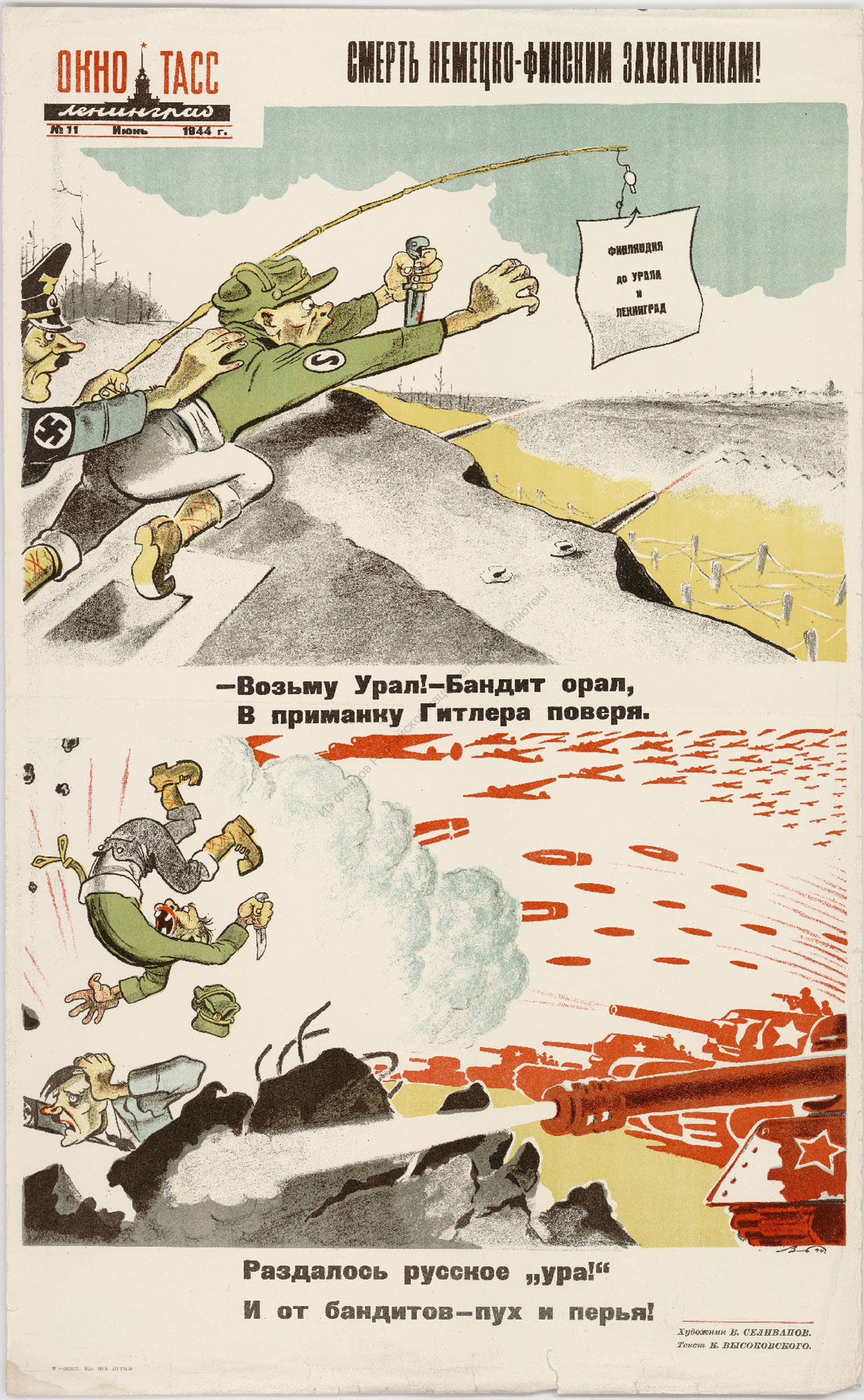
Death to the German-Finnish Occupiers!
This is TASS Window #11 from Leningrad, created in July of 1944 by Vasily Selivanov.
The poster shows the Finns taking Hitler’s baits of the “Greater Finland to Urals and Leningrad”. It is accompanied by a verse by K. Vysokovsky.
— I’ll take the Urals! – the bandit cried,
Accepting Hitler’s bait at face value,
The Russian “Hurra!” was then heard,
Turning the bandits into dust and feathers!

Source: Beorn And The Shieldmaiden

We should not forget that it would have been impossible to impose the siege of Leningrad, a siege that took hundreds of thousands of civilian lives, without the involvement of the Finnish armed forces. Succumbing to revenge-seeking moods and striving to revise the outcomes of the 1939-1940 Soviet-Finnish standoff, the Finnish leadership recklessly plunged into the furnace of war alongside Nazi Germany. At that time, ultra-nationalist propaganda narratives prevailed in Finnish society. With the approval of their Nazi brethren, Helsinki seriously discussed the idea of Finnlands Lebensraum (Finland’s Living Space). The country’s military-political authorities intended to reclaim territories ceded to the Soviet Union under the Moscow Peace Treaty of March 12, 1940 and to reach “natural borders of Greater Finland” from the Gulf of Finland to the Barents Sea, including East Karelia, Leningrad and its environs, and the Kola Peninsula freeing these lands from the hated Russians. In their wildest fantasies, the Finns wanted to advance beyond the Ural Mountains all the way to the Ob River. Back in the day, these territorial claims (in proportion to the country’s actual size) were among the greediest in Europe. They even surpassed territorial claims to neighbouring states voiced by other Axis countries, including Italy, Romania, and Hungary.
Continue reading

Recommended reading: “Lost Illusions, or How the International Criminal Court has become a legal nonentity”, by Dmitry Medvedev

Reading time: 4 minutes

“Lost Illusions, or How the International Criminal Court has become a legal nonentity”

– by Dmitry Medvedev, Deputy Chairman, Security Council of the Russian Federation, PhD in law

Abstract

A strive for justice and a desire to bring the powerful to liability for crimes against public good and humanity is the idea that has always united people. Yet not all embodiments of this idea are worth existing, the ICC being the case. Legal deficiencies of its constitutional document, the Rome Statute, in terms of its internal contradictions and incompliance of its provisions with the UN Charter, its political bias, selectiveness of its ‘justice’, unlawfulness of issuing arrest warrants for heads of sovereign states which are not parties to the Rome Statute, notwithstanding the fact that such warrants are ignored by many countries, as well as the fact that the ICC, in essence, has transformed from an international justice body into a tool of legal struggle, clearly shows its complete failure. In this respect it shall fall into the oblivion, while its judges, prosecutors and other officials who took unlawful decisions may and shall be prosecuted for crimes under the Russian criminal law. In the author’s opinion, Russian lawyers should voice their comprehensive and well-based professional criticism of the ICC decisions at all forums, present international legal position of Russia in respect of the Special Military Operation, the Ukrainian conflict and other relevant challenging issues to the global legal community, media and people in different countries. Moreover, taking into consideration deficiencies in the ICC’s activities the interested parties could consider a possibility of establishing another international criminal court, which will be spared of them. This Court’s constitution shall be based on the established rules of international law, and its jurisdiction may be extended to the crimes of genocide, war crimes, crimes against humanity, and terrorist attacks.

The complete article (in English) in PDF format can be downloaded from the publisher’s site of “Law Science”.


The following summary of the article was published by the Telegram channel of the Russian Embassy in South Africa:
Continue reading

National identity and political choice on the example of Russia and China – a re-blog of Dmitry Medvedev’s article

Reading time: 31 minutes

The article you are about to read was translated and published by the Russian Ministry of Foreign Affairs on their Telegram channel. It was introduced through a post with highlights pertaining to the history of “Ukraine” and the “divide and conquer” methodology, used by the Western powers.


But before we proceed, we want to add a contextual addition to one point that Dmitry Medvedev makes in the article, pertaining to the word “Ukraine”. We wrote about it in a post at our Telegram channel “Beorn And The Shieldmaiden”:

A quick linguistic excursion into the history of Ukraine

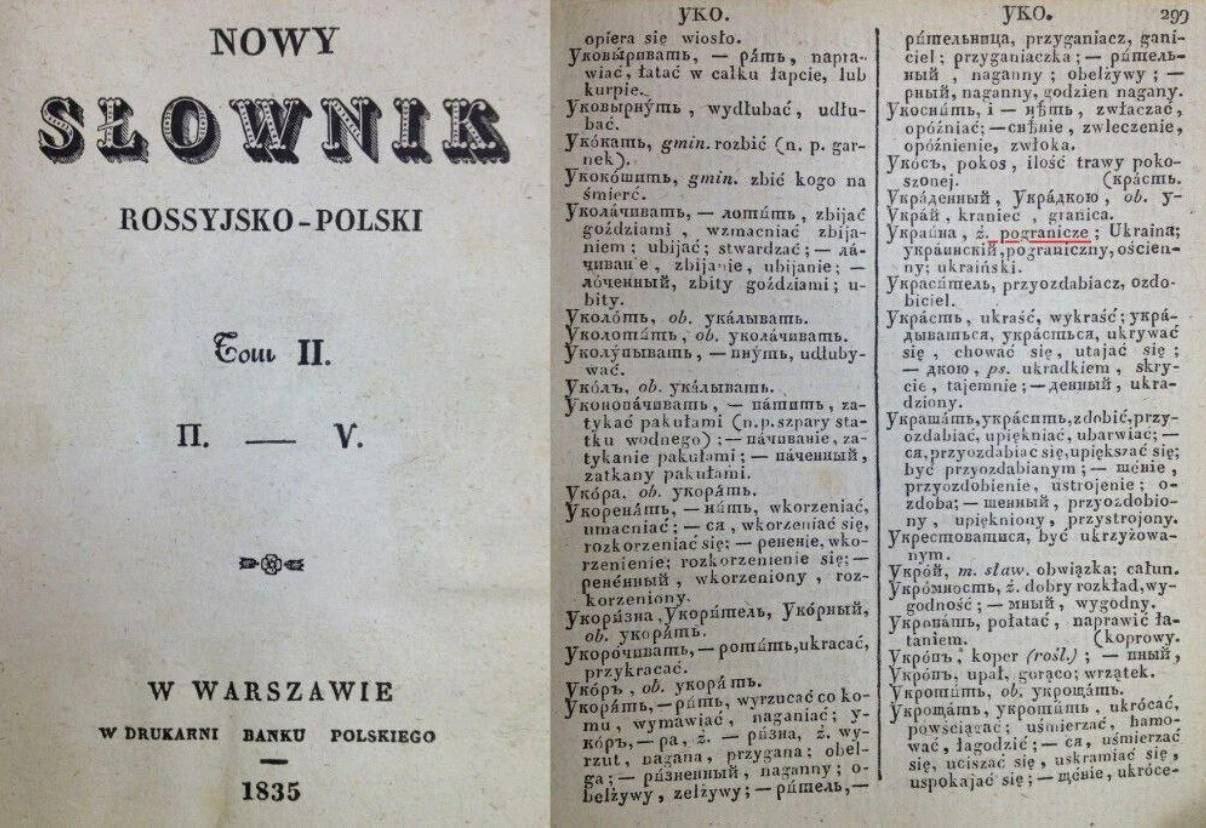
What you see before you, is the «New Russian-Polish Dictionary», published in Warsaw in 1835.

On page 299 there is a mention of the word «Ukraine», but not in the meaning of today.

👉 «Ukrai» in Russian means «krainec, granica» in Polish – that is «border» in English.

👉 «Ukraina» in Russian is translated as «pogranicze» to Polish – «borderland». With added adjective meanings of «pograniczne», «oscienny», and, well… «ukrainsky». That is, «of a border» (as in, for example, «a border crossing»)

That’s it!


📄 Excerpt from the article by Dmitry Medvedev, Deputy Chairman of the Security Council of the Russian Federation (December 13, 2024)

Ukraine: the West’s new social vivisection exercises

  • The current Kiev regime feeds from the hands of the countries of the collective West, which, in addition to funnelling arms into it, manages it through “soft power” political technologies. To this end, a comprehensive network of NGOs controlled by American and European intelligence services has been established.
  • Western forces are acting against us according to the same hypocritical principle of “divide et impera.” Their establishments and Ukrainian ideologues are persistently attempting to apply the Taiwanese, Hong Kong, and other experiences (including Manchukuo) in Ukraine. Their aim is to demonstrate that Russians and Ukrainians are as disparate as possible, to sever Ukraine from Russia, to sow discord, and to create ethnic divisions.
  • To unconditionally draw a line between the ethnicities living in Russia and Ukraine, and to attribute all the inhabitants of those lands to Ukrainians, is a gross error. The word itself, “Ukrainians,” did not have its modern ethnic ring to it until the mid-19th century. It was more of a geographical term, referring to a person’s birthplace or place of residence. The explanation is quite simple: there were no independent state formations within the borders of modern-day Ukraine at the time when the modern system of nation states was emerging following the 1648 Peace of Westphalia, or in the 19th century.
  • Viewing Ukraine’s genesis through the classic “state – nation” prism is pointless. Ukraine’s history is inseparable from the history of the events that unfolded on its territories, which at various times were part of other countries. Likewise, it is more accurate to discuss not a cultural and ethnic “Ukrainians – Russians” dichotomy, but rather “borderland Russians – Russians” dichotomy.
  • In Russia, the people of Malorossiya (or Little Russia) were recognised as an integral part of the titular nation, the Russian people. Their integration into imperial society was considerable. Legally, politically, culturally, and religiously, their status was in no way inferior to that of Russians.
  • Never in the 300 years of being part of the Russian state has Malorossiya-Ukraine been a colony or an enslaved minority. At the same time, it was normal for various non-Russian groups living in the Russian Empire and having a distinct ethnic identity in comparison with the titular group, to identify as Russian Germans, Russian Poles, Russian Swedes, Russian Jews, or Russian Georgians. It was a common figure of speech. However, there was no such thing as “Russian Ukrainians.” The phrase even sounded absurd.

The complete article is below.
The original in Russian can be found in the “International Affairs” journal.
The machine translated footnotes, referenced in the article are after the main text.


National identity and political choice on the example of Russia and China

Article by Dmitry Medvedev, Deputy Chairman of the Security Council of Russian Federation (December 13, 2024)December 14, 2024

If you are hoping to turn a Russian pharmacy into a Ukrainian one, it’s not enough just to clip the letter “я” off the end of the word “гомеопатическая” on its signboard.
— Mikhail Bulgakov [1]

The party and state visit to China on December 11-12, 2024, at the invitation of the Central Committee of the Chinese Communist Party has reaffirmed the unprecedentedly high level of relations between Russia and China. There are no issues we cannot discuss. During the talks with our Chinese partners, we discussed Ukraine, the Syrian crisis, and resistance to the unilateral economic restrictions imposed on us without UN Security Council approval.
Continue reading

How the Anglo-Saxons Promoted Fascism in the 20th Century and Revived It in the 21st – Dmitry Medvedev

Reading time: 35 minutes

Dmitry Medvedev, the vice-Chairman of the Security Council of the Russian Federation, published on the 9th of May 2024 – The Victory Day – an extensive article with 5 questions, addressed to the former allies. The publication was made in the form of a PDF file at the site of the Security Council. Here we present a translation of the article. Special thanks to Denis Efremov from Putinger’s Cat Telegram channel for drawing our attention to this publication and facilitating its translation.


How the Anglo-Saxons Promoted Fascism in the 20th Century and Revived It in the 21st

FIVE HISTORICAL QUESTIONS FOR OUR FORMER ALLIES

Return to the most inhuman and odious ideologies of the past became the historical nonsense of the 21st century. Fascism was vanquished almost eight decades ago. Finally and irrevocably, as it seemed back then. The Nuremberg Tribunal handed down the verdict to its leaders and accomplices. For many years, even the demonstration of Nazi symbols, not to mention other symbols and ideas of Hitlerism, was legally prohibited in the world. The United Nations and all international institutions acting in accordance with its Charter had their weighty say at that time.

However, in the new millennium, we are forced to fight the reincarnation of fascism, its zombie spawn, which embodies the disgusting and cynical great-grandson of Hitlerism – the Nazi regime of Kiev. To live in a world that our opponents are furiously striving to turn upside down, split and burn in the conflagration of the Third World War. At the same time, any normal person cannot but be angered and outraged by what the collective West is doing these days – the United States, Great Britain and other countries of the “Anglo-Saxon part” of the planet, along with their vassals and accomplices.

Our former World War II allies enthusiastically feed, stuff with weapons and incite the new Nazis, whose goal is to erase Russia from the map, and force the whole world to live according to gangster concepts, forgetting about the postulates of international law. While the remnants of the “forest brothers”(a) are choking on their Russophobia in the underdeveloped European states, the major Western powers are waging a hybrid war against us, imposing blockades and sanctions regimes, allocating billions to purchase weapons for neo-Nazis. Staging provocations and unprecedented bloody terrorist attacks by the hands of scoundrels, destroying entire cities and hundreds of civilians. In fact, today Washington and Brussels are acting with greater cynicism and scope, than Hitler and his accomplices in the 1930s and 1940s. All this is crudely interspersed with lamentations about “helping the weak” and calls for the “restoration of democracy”, as well as threats to start a full-fledged war with Russia.

Those who shook hands on the Elbe, landed in Normandy, participated in the resistance movement in the territories of European countries occupied by Germany and its allies could not have imagined such a thing in the worst of their nightmares. Those soldiers who found mountains of ashes near the furnaces of the liberated Auschwitz or Mauthausen. Those residents of peaceful European cities who brought flowers year after year to the monument to the Russian Alyosha on Bunardzhik Hill in Plovdiv, Bulgaria, to the obelisks on Mount Gellert in Budapest and in Berlin’s Treptow Park.

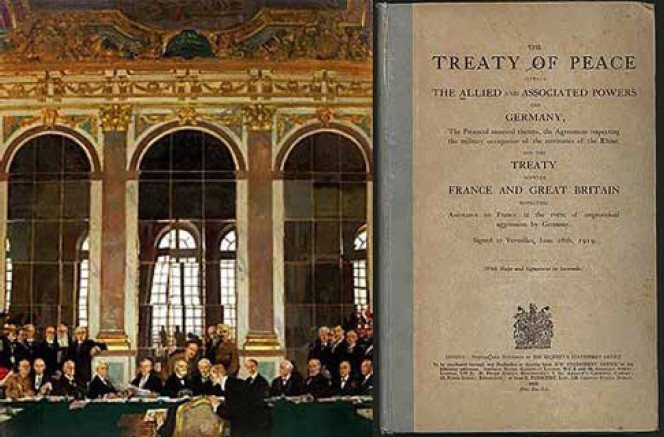
The peace treaty signed in the Mirror Gallery of the Palace of Versailles did not bode well for either the victorious powers in the First World War or the loser Germany.

There is no way to get rid of the feeling that, together with the elderly leaders of the United States, the statesmen of modern Europe have finally fallen into irreversible dementia. But no. Looking back, we can conclude with absolute certainty: the memory of our former allies is simply excellent, they hold up the traditions with top marks. Nazism did not come out of nowhere. At one time, it was our imaginary allies who actively helped it to be born and establish itself so as in the future to give it command: “Attack!”. The Anglo-Saxons created a breeding ground and support for Hitlerism at the turn of the last century and the century before last. And then, they were feeding and nurturing it like a bastard, with whose hands they were going to achieve their goals in the near future, and then throw it away as it became unnecessary. Just as its current successors. Everything repeats itself, except with an allowance for technological progress, the geopolitical context and other signs of the new time.

It is very important to understand who we are dealing with now, what we are fighting right up to the victorious end and complete rout. Let us recall and compare historical facts. And let us address five simple questions to the Anglo-Saxons.
Continue reading