On October 27, 1984, the official opening of through train service along the entire Baikal-Amur Mainline (BAM) took place.
Backup at Rumble.
In 1924, at the Council of Labour and Defence of the USSR, there was talk about the need to build a railway mainline parallel to the Trans-Siberian Railway, located further from the border, in the interior of the country. Two years later, topographic reconnaissance of the area began. The name “Baikal-Amur Mainline” was first mentioned in a 1930 project. Two years later, the Sovnarkom of the USSR made a final decision on its construction. At that time, the first meters of rails were laid. Even before the start of the Great Patriotic War, a second track was laid on the BAM.
However, in 1941, the already laid tracks were dismantled and used for the construction of a railway mainline along the Volga. In the post-war years, the construction of the BAM continued.
By the early 60s, more than 1,150 out of 4,000 kilometers of the BAM route were put into operation. In 1973, the Vostochny port was opened, which became the sea gate of the mainline.
1974 was the year of the second birth of the BAM. On April 24 of that year, the 17th Congress of the VLKSM opened in the Kremlin, and the Komsomol took over the supervision of the construction of the BAM. Subsequently, the BAM became known as named after Lenin Komsomol. The country’s leadership understood that it was impossible to build a railway on enthusiasm alone, in tents, without modern technology. The Komsomol members received decent salaries. For 2-3 years of work on the BAM, they could save up for a car and a cooperative apartment. But in interviews, former BAM workers, one and all, repeat that what attracted them most was the romance and the opportunity to become a participant in a large-scale project.
Many settlements and stations of the BAM were built by one republic, region, or city. Many young people started families on the BAM. Marriages were registered almost every weekend. Children were born, kindergartens and schools were built, and infrastructure was developed. Life was bustling here.
On October 1, 1984, two parts of the mainline, which were being built towards each other, were connected at the Kuanda station. A golden link was ceremoniously laid, and on October 27, the official opening of train traffic from Taishet to Sovetskaya Gavan took place. The final act of acceptance of the mainline was signed in 1989.
The path from Baikal to Amur was officially opened.
A few more interesting facts about the BAM:
- The mainline connected more than 60 cities and settlements, many of which were built by the BAM workers themselves.
- Its total length is 4,300 kilometers, with more than one and a half thousand bridges, almost 10 large tunnels, and 190 stations.
- Over two million people participated in its construction throughout its history.
- 30,000 builders were awarded medals for the construction of the Baikal-Amur Mainline and other state awards.
- Several people were awarded the title of Hero of Socialist Labour.
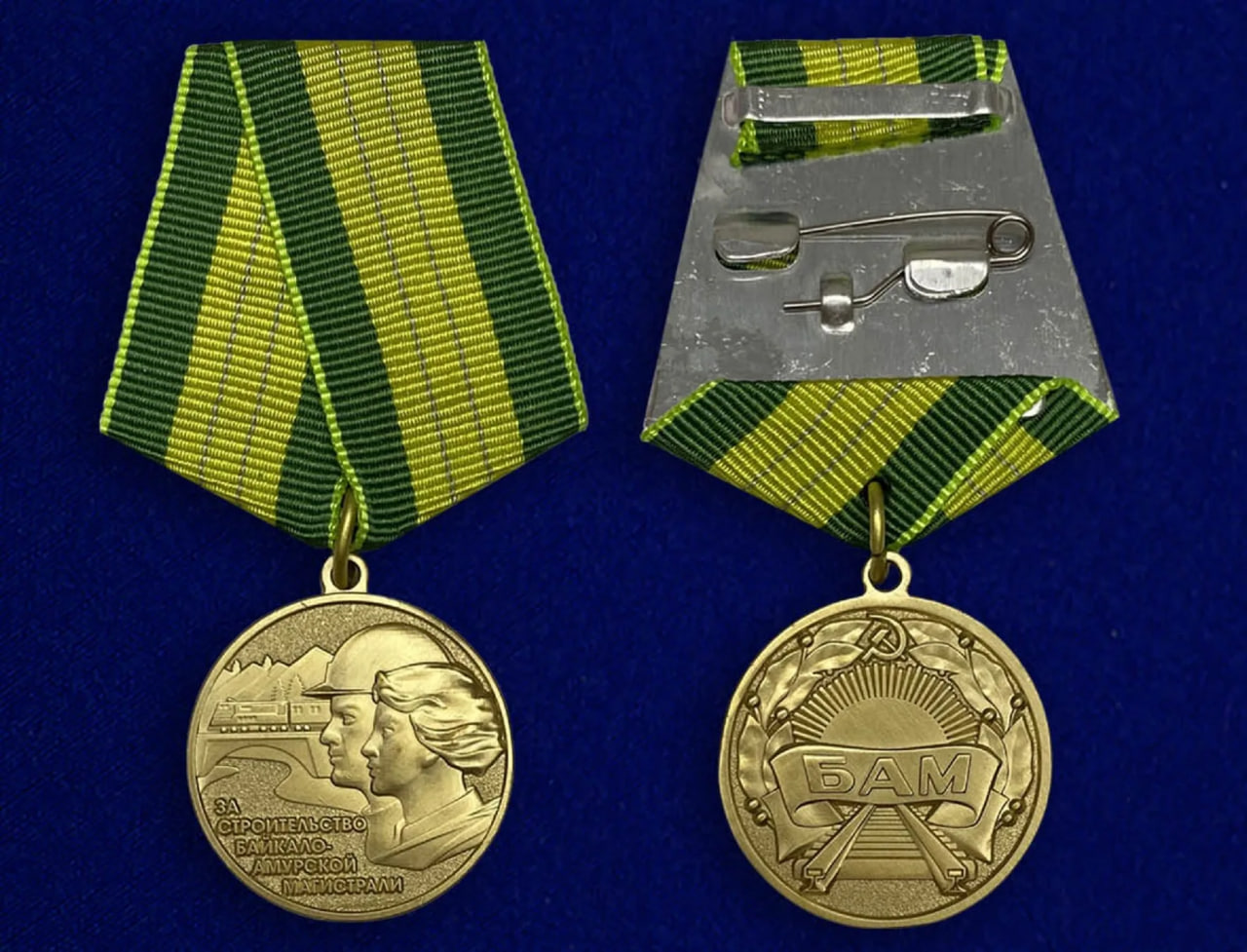
Medal “For the Construction of the Baikal-Amur Mainline”
❗️And it’s no wonder that the motto of the century-long construction was: “We build the BAM, the BAM builds us”.
These are the brands of the Soviet era!
Source: CPRF
🦇 We have translated the video from the CPRF RedLine YouTube channel.
On October 27, 1984, a historic ceremony marked the official completion of the Baikal-Amur Mainline – BAM, a monumental network declared operational as “the construction project of the century”. Initiated under Soviet Leader Leonid Brezhnev, it was widely championed as a “Komsomol project”. This designation highlighted the massive mobilisation of young communist volunteers who formed the backbone of its workforce.
Spanning over 4,300 km, the BAM stands as the second-largest railroad system in Russia. The sheer scale of this engineering feat required the tracks to carve a path through some of the planet’s most unforgiving territory. The completed line boldly crosses seven major mountain ranges and threads directly through the watersheds of the region’s largest rivers.
Beyond the daunting topography, builders faced brutal environmental conditions along the route. Roughly 65% of the railway falls squarely within severe permafrost zones. Workers and equipment routinely battled extreme seasonal shifts, braving punishing winter temperatures that plummeted to a bone-chilling -58°C to bring the historic corridor to life.
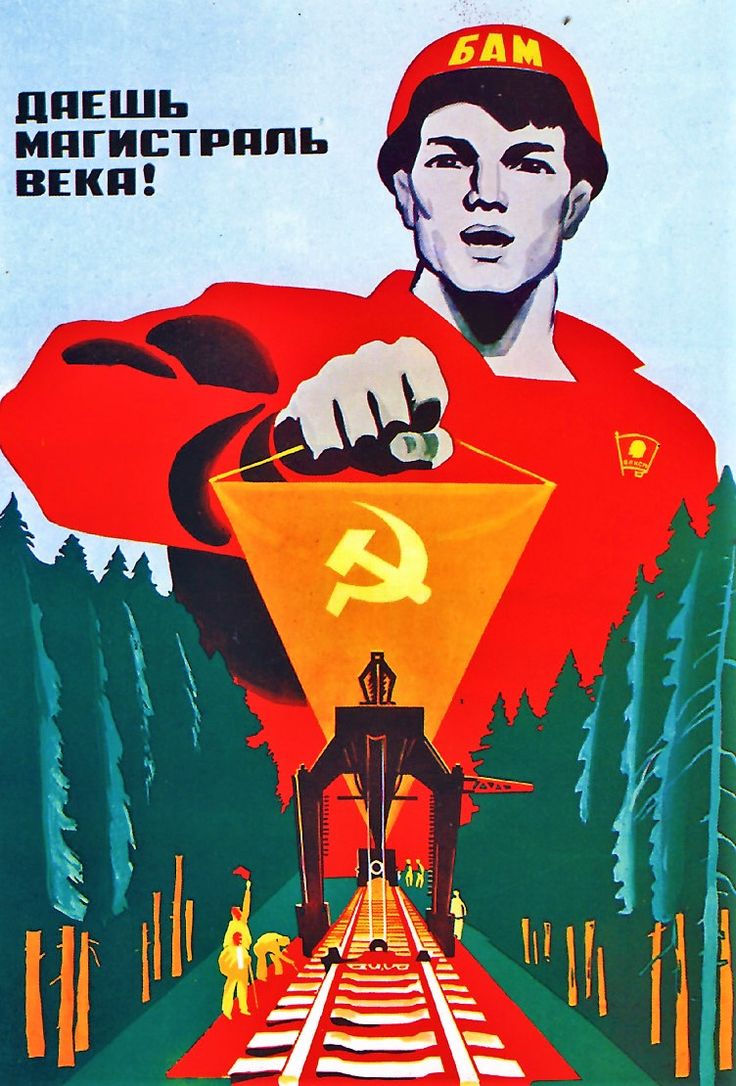
Soviet poster: “Deliver the mainline of the century!”
The Baikal-Amur Mainline is a monumental railway project that stretches over 4,300 kilometers across East Siberia and the Russian Far East. Its conception dates back to the 19th century, with initial construction efforts taking place in the 1950s. However, the main construction phase occurred between 1974 and 1984, driven by Soviet Union’s ambition to connect remote regions and harness Siberia’s rich resources.
During its development, BAM was celebrated as a “hero project,” symbolizing Soviet technological prowess and social engineering. The railway traverses stunning landscapes, including majestic mountain ranges and vast forests, showcasing the beauty of Siberia. The project brought together thousands of workers from across the country, fostering a sense of unity and shared purpose.
After the Soviet Union’s dissolution in 1991, BAM remained operational and has gained renewed importance in recent years. It serves as a vital link in connecting Russia with East Asia, supporting increased resource extraction activities and strategic interests. The ongoing modernization efforts, known as BAM-2, aim to enhance its infrastructure and capacity.
It’s important to emphasize that the railway not only drives economic growth but also fosters cultural exchange and tourism, inviting travelers to experience the breathtaking landscapes along its route.
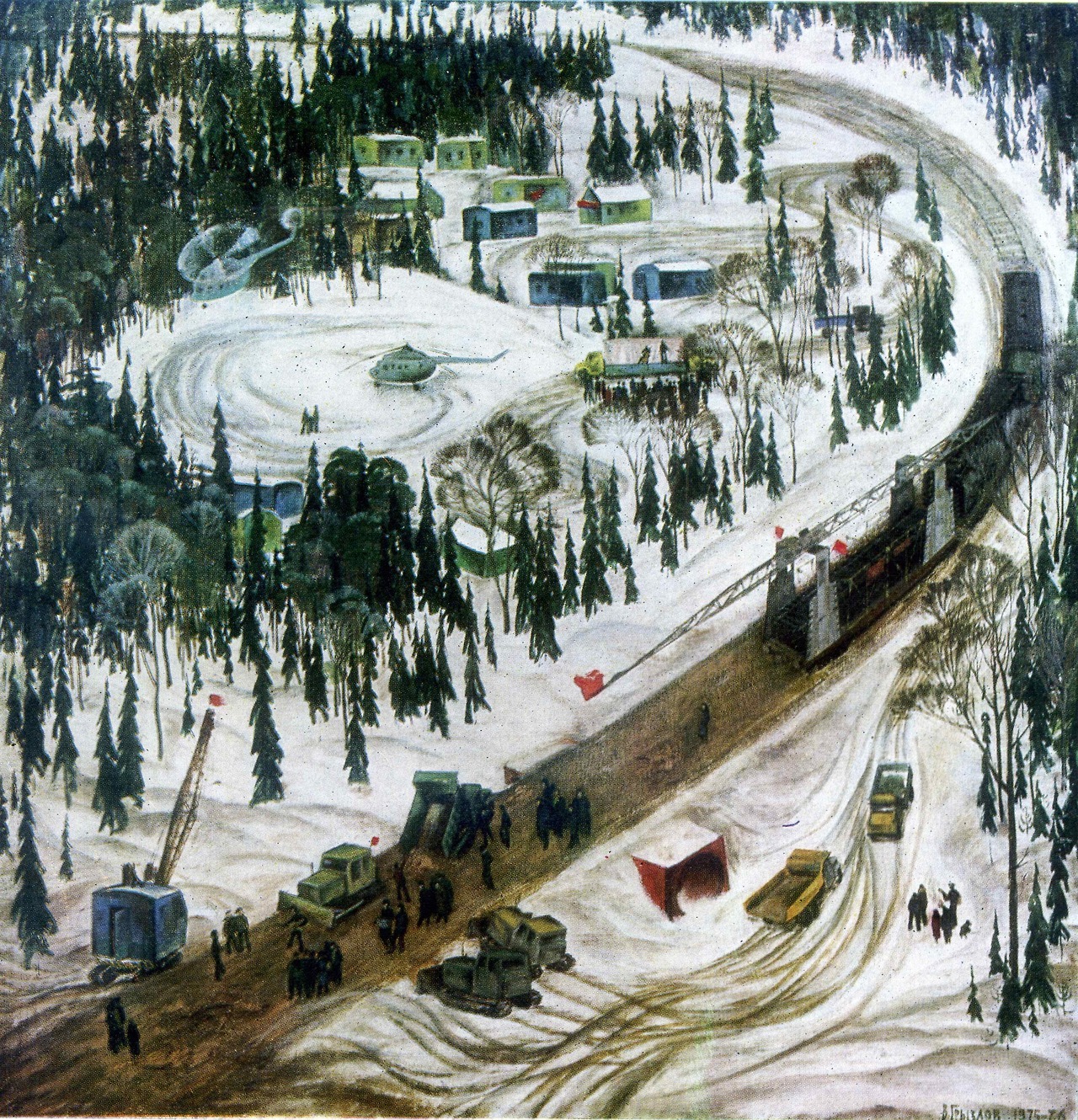
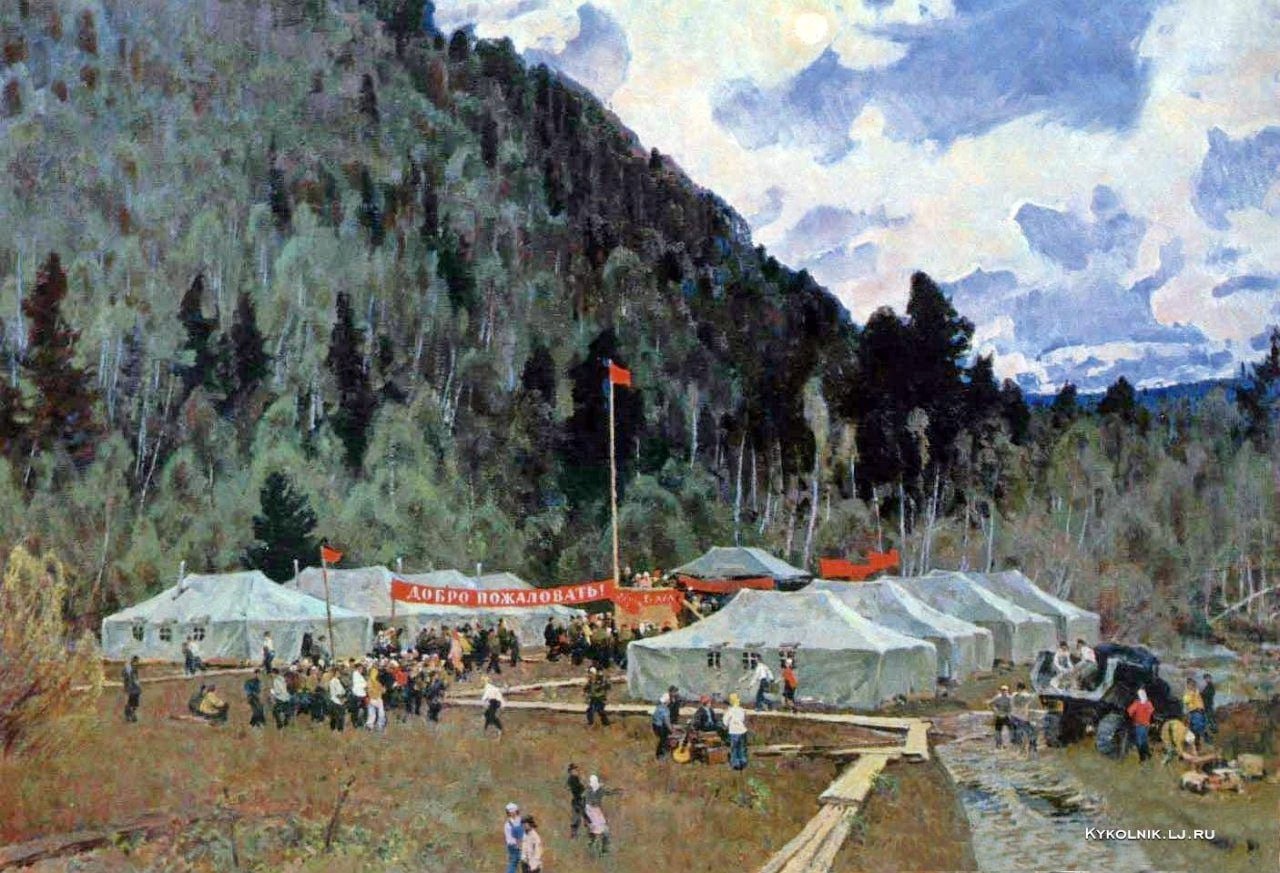
Construction of the Baikal-Amur Mainline (BAM) was reflected in many paintings of the Soviet artists.
Below are two of them, with more at our Telegram channel “Beorn And The Shieldmaiden”.