Fritzes of This Summer

Reading time: 5 minutes

Before you is the first part of an article written by Ilya Ehrenburg, and published in “Red Star” on July 30, 1943.

The face of fascism never changes, nor its dynamics. Today, totally mobilised Ukrainians are in the same shape and form as the “Total Fritzes”, the brainwashed youths of Ukraine are just as brainwashed as were their German predecessors. And Tigers… where are the vaunted Leopard II and Challengers, that were supposed to have become the “game-changers”? Article first translated to “Beorn And The Shieldmaiden”.
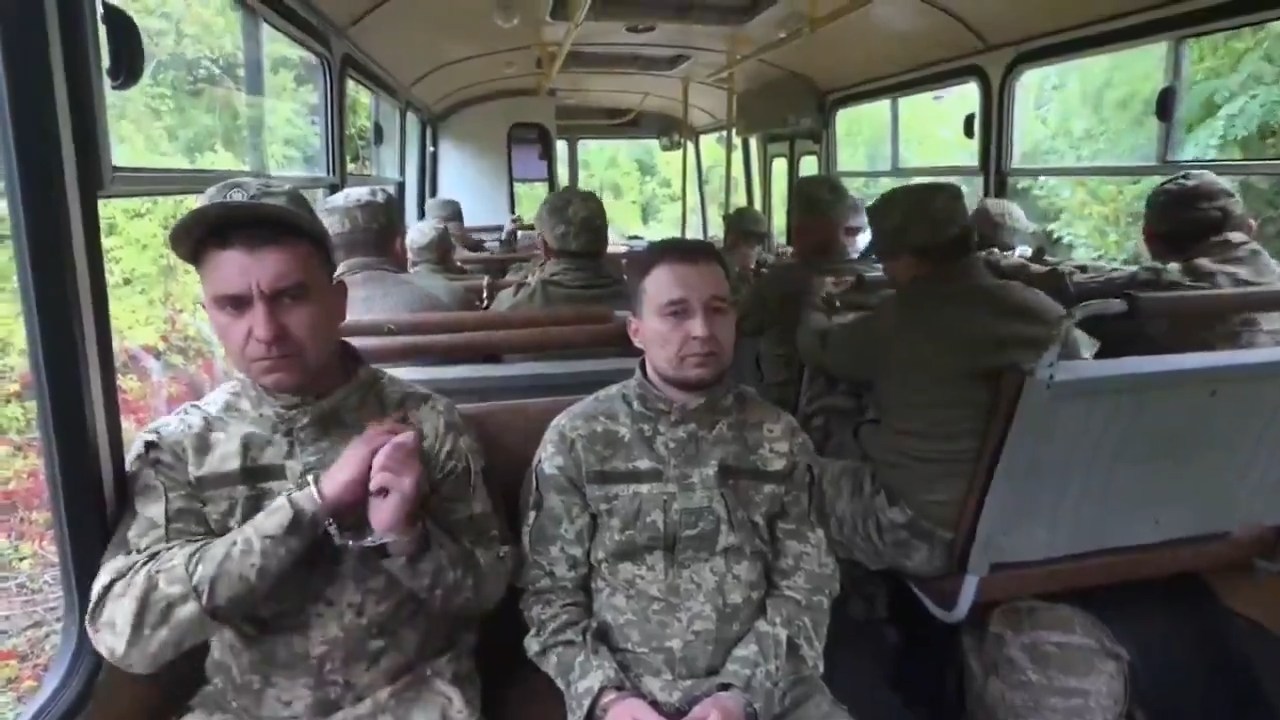
Voluntarily mobilised Ukrainians are being sent to the front in a fully demoncratic fashion.

“Tigers” and Germans, who were conscripted into military service in February-March of this year on “total mobilisation”, are the highlights of the German season.

“Tigers” have been described more than once. I will try to describe the Total Fritzes. I saw them coming out of the woods, raising their hands in the air. I talked to them before they had time to put their feelings in order and find decent formulations. Total Fritzes were the last to arrive at the front, but they are the first to surrender.
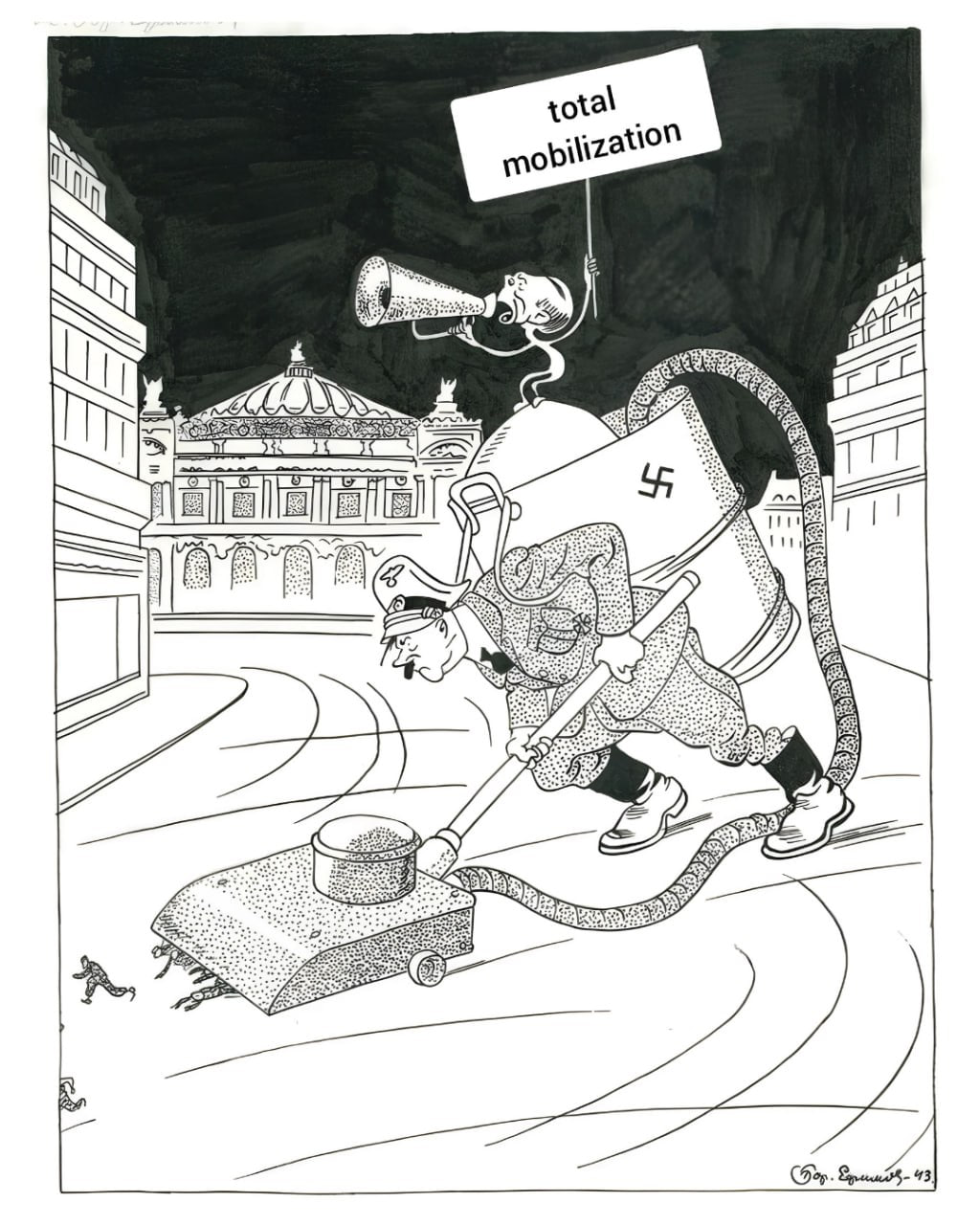
In 1943, after the defeat at Stalingrad, propaganda minister Joseph Goebbels cried for “Total War” and “Total Mobilisation”.
Here, Adolf Hitler is “vacuuming” the streets of Germany in search of fresh soldiers, as so aptly depicted by the Soviet artist Boris Yefimov.
The non-elected puppet Führer of Ukraine, Volodomyr Zelensky, is now doing the same thing 80 years later to provide fresh cannon fodder for his western masters.
Source: Beorn And The Shieldmaiden

Here’s a middle-aged, sad German. The military uniform does not give him a military appearance. Until March, Heinrich Sturman lived in Emden and was considered “irreplaceable”. But the Germans are masters at substitutions: a French prisoner of war replaced Heinrich Sturman. The latter was sent to the marching battalion. The training lasted two months. Heinrich Sturman learned how to shoot a rifle. He did not venture close to either a machine gun or a mortar. On July 14, he arrived at the front line. The day was quite noisy, and the music unpleasantly surprised the Total Fritz. However, even in Emden he had become unaccustomed to silence. He says that three-quarters of his city was destroyed by British bombs, but he adds: “But there were shelters there after all…” And here Heinrich Sturman found himself in a field. He climbed into a small hole. From the excess of impressions, he fell ill with dysentery. He sat in the hole, not moving, for two days. Our fighters had gone past him a long time ago, and Total Fritz was still squatting. He was discovered by our signalmen.

I’ve seen a lot of such warriors. The harvest of total mobilisation gave Hitler very mediocre soldiers. Here they are both weak-witted, and blind-sighted, and fingerless. Forty-year-old Fritzes are not suitable for the “eastern campaign”. These are mostly asthmatic, hemorrhoidal, gouty townspeople. They were afraid to sit on the grass in a German park, so as not to catch a cold. It is easy to imagine what they are going through in the Bryansk forests.

Total Fritzes are poorly trained. In the diary of the commander of the 32nd sapper battalion, Gerhardt, whom I mentioned, there is the following assessment of the replenishment: “The marching battalion is indescribably bad. They have no bearing, and they don’t understand anything.”
Continue reading →
Fritz the Forerunner

Reading time: 3 minutes

Before you is an article by Ilya Ehrenburg, published in “Red Star” on August 11, 1943.

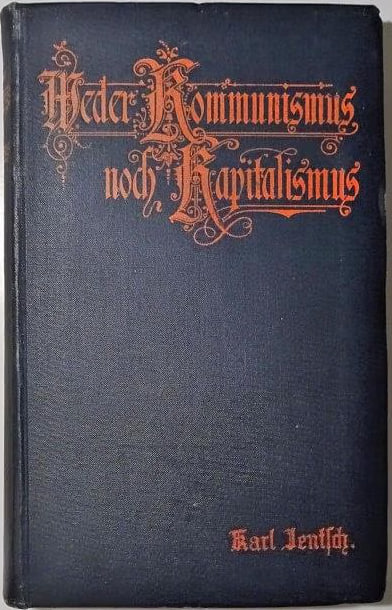
The Fritzes who came to us for the “living space” had a forerunner. I have before me a work by Professor Karl Jentsch called “Neither Communism nor Capitalism” (“Weder Kommunismus Noch Kapitalismus”). This book was published in Leipzig in 1893, and the Fritzes can celebrate the fiftieth anniversary of its publication.

The professor liked to speak bluntly. He begins his opus with the question: “Where does the land for our colonisation lie?” Having learned that the Germans are “cramped in Germany,” Karl Jentsch exclaims indignantly: “The number of Russians is enormous, while their morals are at a very low level”. Therefore, “the scientist” offers the Germans the best way out: “Russia is for us what the lands of the Slavs east of the Inn and the Elbe were for our ancestors, that is, a country designed by nature for our colonisation”.

The possessed Fuhrer was four years old at the time, and his forerunner was already developing a detailed plan for the “colonisation of Russia”. Karl Jentsch wrote that in the new colony “some will be masters, others slaves”. Long before the rogue Rosenberg, the rogue Jentsch calmly assured that “the Germans bring culture to the Russian barbarians” and that “there is no intelligentsia in Russia.” Leo Tolstoy, Chekhov, Mendeleev, Mechnikov, Sechenov lived and worked then, and the quasy-scientist Karl Jentsch smugly said that it was necessary to “send ten million Germans to Russia in order to enlighten this country”.

There were no planes or tanks yet, and Fritz the forerunner limited his projects to artillery. He wrote: “Why turn guns against our brothers, the German unemployed, when it is possible to conquer new spaces and untold riches?” Anticipating the “racial theory”, Karl Jentsch is not satisfied with the ears of the Russians. The spiritual father of Ribbentrop and Hess writes: “The first task of diplomacy is to raise and direct the whole of Europe against Russia”.

The book by Karl Jentsch ends with the call: “We need to act! The land we need will not grow by itself for us, it will have to be conquered”.

As you know, since then the Germans have twice tried to capture Russia. The rough rehearsal was conducted by the Kaiser. The Germans frolicked in the Ukraine for a while. Returning to their Swinemunde and Schweinfurths, they caught their breath and began to prepare for a decisive campaign.

The possessed one fulfilled Professor Jentsch’s dream: ten million Fritzes were sent to Russia. Colonisation has begun. But the cultural traders were in for an unpleasant surprise: the Red Army intervened in their plans. Where is the Chief Governor of the Caucasus? Where is Rostov’s advisor for commerce? Where is the Herr Commandant of Oryol? Running away, they lost not only guns and slippers, but even the scientific work of their great-grandfather Karl Jentsch.

We will remember everything: the ashes of Oryol, and the vile writings of the Leipzig professor. Don’t let them say that Hitler fell from the sky. Don’t let them blame everything on one crippled man. Jentsch lived before the crooked one. Before Hitler, they were already thinking about how to colonise Russia. It was no accident that they burned Yasnaya Polyana and the Turgenev Museum in Oryol. They’ve been dreaming about this for half a century now. They will not be able to present in a difficult moment that Hitler has “retired” and that the non-commissioned Hitlers are as pure as Easter lambs. It is necessary to rip out the snake’s sting once and for all. We need to show them that the Russian land, awakened by the invaders, gets up, goes on and punishes. The Fritzes had forerunners. But we swear over the ashes of our cities that there will be no Fritz students.

🦇 Alas, there came von der Leyens and Merkels and Merzes…

“Их традиции” – Илья Эренбург, 1944

Reading time: 4 minutes

Илья Эренбург был военным корреспондентом и публицистом, и его слова стали одним из самых мощных интеллектуальных орудий в борьбе с нацизмом. Его тексты укрепляли волю к сопротивлению, вселяли надежду и формировали нравственное самосознание того времени. Его вклад в победу до сих пор считается неотъемлемой частью исторического и культурного наследия.

Казалось бы, все статьи, написанные Ильей Эренбургом, должны быть известны и описаны. Действительно, на сайте Военной Литературы есть хронологический список его произведений военного времени.

И все же в датском издании произведений Ильи Эренбурга от 1944 года мы наткнулись на название, которого не было в списке. Да и основной текст (переведенный с датского на русский) не появился бы ни в одной антологии. Мыыпедставляем вашему вниманию: “Их традиции”, переведенные с датского обратно на русский.

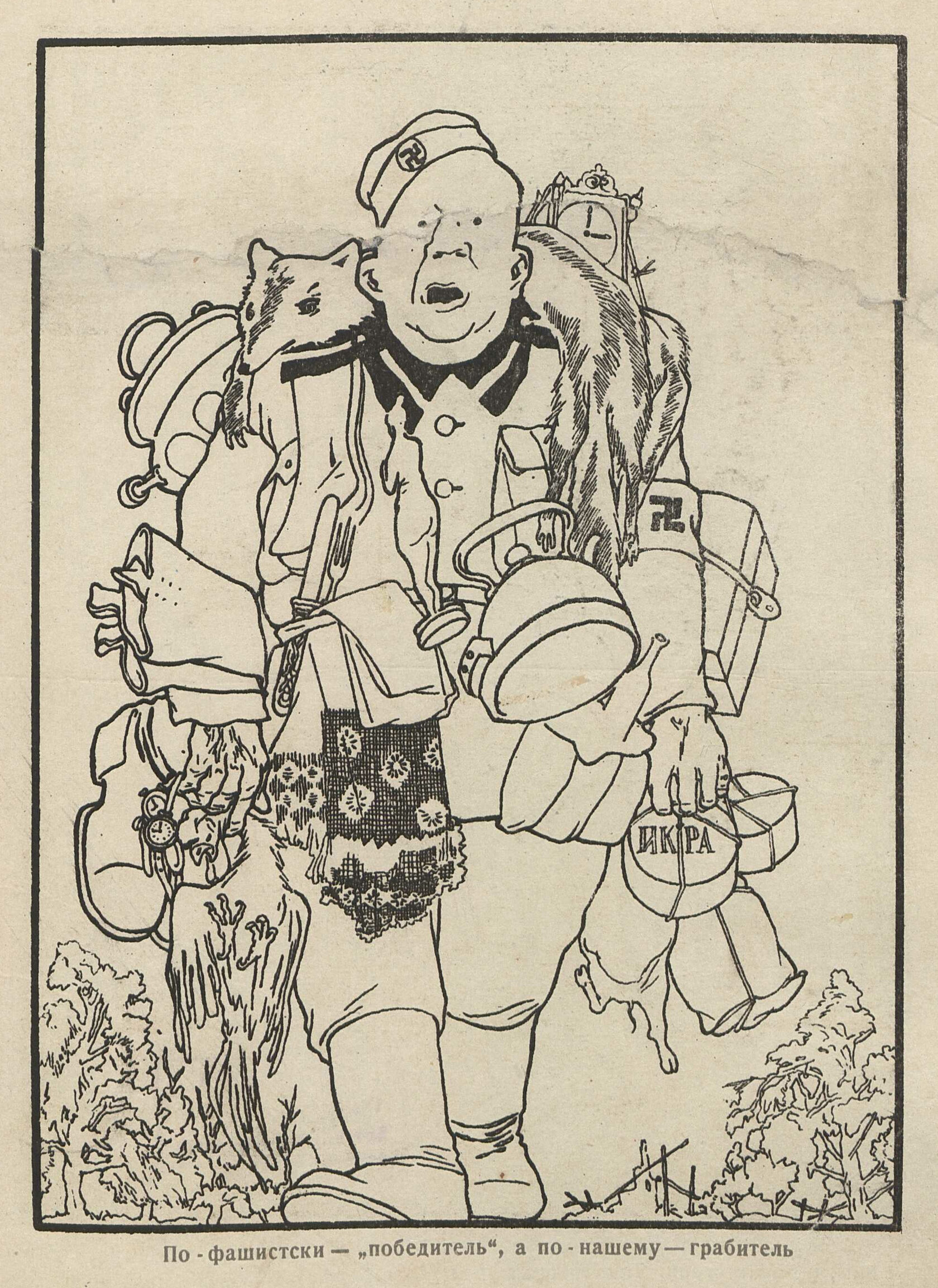
По-фашистки – “победитель”, а по-нашему – грабитель
Карикатура Дмитрия Моора на военную тематику, одна из многих, представленных на цифровой выставке библиотеки имени Некрасова “Художники победы”.

Их традиции

Передо мной письмо, написанное лейтенантом Рудольфом Шакертом. Посмотрите, что хочет сказать этот немецкий офицер, который находится в госпитале за линией фронта:

“Ты поймешь меня, дорогой Эрнст, моё сердце вот-вот разорвется. Пока ты сидел на крайнем севере, я сражался за Крым. Там погибли мои лучшие друзья. Со школьных лет мы помним, что земля, которая пила немецкую кровь, – это немецкая земля, но, по-видимому, Крым скоро будет эвакуирован. Ханс Тильт говорит только об одном — он не может вынести эвакуации Житомира. Я утешаю себя одним: мы завоевали эти земли своей кровью, кровью лучших, и даже если из-за предательских действий плутократов мы проиграем эту войну, Германия никогда не забудет, что ее дети были на Украине и в Севастополе. Волгу можно назвать походом, но Украина и Крым – это завоевания. Если я пройду через это, я расскажу Отто о садах Крыма, и он будет мечтать о том времени, когда вырастет и сможет вернуть утраченное. У меня такое чувство, что началась столетняя война; возможно, будут паузы, но мы добьемся своего…”

Я прошу читателей задуматься над письмом Шакерта. Он не одинок в мечтах о новых войнах: таких немцев много. Недостаточно того, что мы прогоним немцев. Мы также должны отправиться в Германию. Это необходимо для судьбы будущих поколений. Мы должны отучить немцев от многого — и этого не добьёшься проповедями и речами.
Continue reading →

“Their Traditions” – By Ilya Ehrenburg, 1944

Reading time: 8 minutes

Ilya Ehrenburg, as a war correspondent and publicist, his words became one of the most powerful intellectual weapons in the fight against Nazism. His texts strengthened the will to resist, gave hope, and shaped the moral self-understanding of the time. His contribution to the victory is still considered an indispensable part of the historical and cultural heritage.

It would seem that all the articles, written by Ilya Ehrenburg would be known and annotated. Indeed, there is a chronological list of his War-time works at the Military Literature site.

And yet, in a Danish edition of Ilya Ehrenburg’s works from 1944 we came across a title, not listed anywhere. Nor would the body of the text (translated to Russian) would come up in any anthologies. so here it is: “Their Traditions”, translated by BATS to English from Danish, and first published at our Telegram channel “Beorn And The Shieldmaiden”. In the next post we will also re-translate the publication back to Russian, to bring back this lost, but found article.

In fascist-speak it’s ‘a victor’, while in ours, it’s ‘a robber’
A War-time caricature by Dmitry Moor, one of many on display at the digital exhibition of the Nekrasov library, “The Artists of Victory”.


Their Traditions

In front of me is a letter written by Lieutenant Rudolf Schackert. See here what this German officer, who is in a hospital behind the front, has to say:

“You will understand me, dear Ernst, my heart is about to burst. While you were sitting in the high north, I was fighting for the Crimea. My best friends were killed there. We remember from school days that land that has drunk German blood is German land, but apparently the Crimea will soon be evacuated. Hans Tilt speaks of only one thing — he cannot bear the evacuation of Zhitomir. I console myself with one thing: we have claimed these lands with our blood, the blood of the best, and even if the treacherous actions of the plutocrats should cause us to lose this war, Germany will never forget that her children were in Ukraine and Sevastopol. The Volga can be described as a campaign, but Ukraine and Crimea are conquests. If I get through it, I’ll tell Otto about the gardens of Crimea, and he will dream of the time when he grows up and can win back what was lost. I have a feeling that a 100 Years’ War has begun; there’ll probably be pauses, but we’ll get there…”

I ask readers to think about Schackert’s letter. He’s not alone in dreaming of new wars: there are many such Germans. It is not enough that we chase the Germans out. We must also go to Germany. It is necessary for the fate of future generations. We must wean the Germans off a lot — and that will not be achieved with sermons and speeches.
Continue reading →

The anniversary of Ilya Ehrenburg

Reading time: 2 minutes

135 years ago, on January 26, 1891, the Russian and Soviet poet Ilya Ehrenburg was born. We translated at out Telegram channel a commemorative post by the Russian Embassy in Germany.

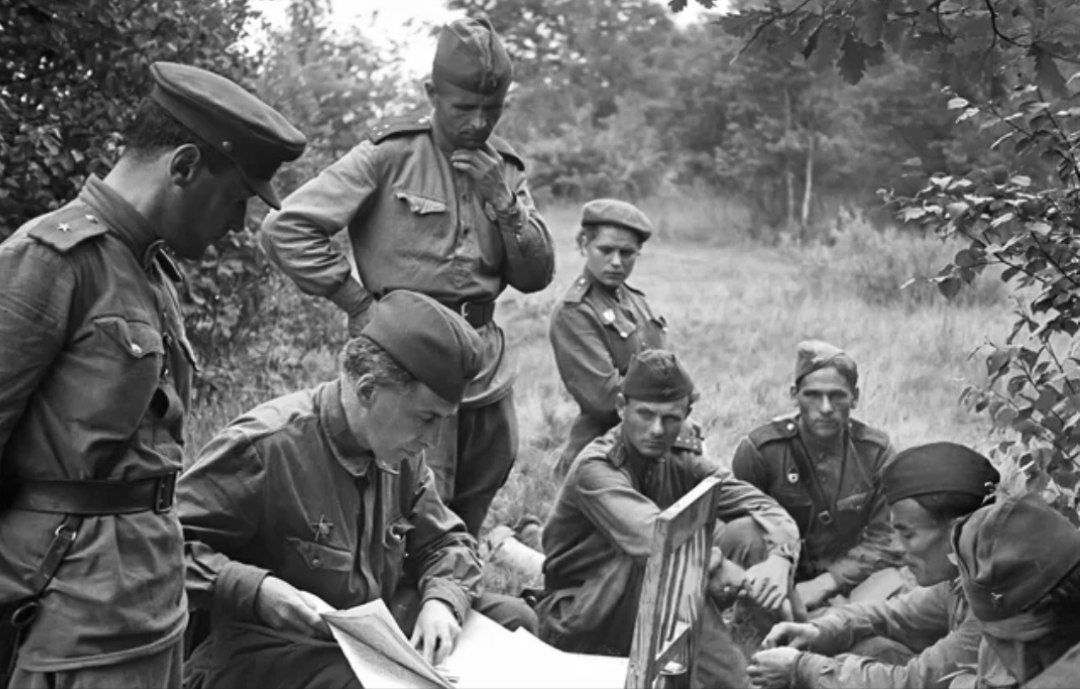
Ilya Ehrenburg among army newspaper staff, August 1, 1943. Photo by Sergey Loskutov

🖋 Ilya Ehrenburg has gone down in Russian and Soviet history as a writer, poet, journalist, war reporter, and photographer. His words became one of the most powerful weapons in the fight against Nazism. His contribution to the victory is rightly considered an inseparable part of the heroic heritage of our people.

🖋 Ehrenburg was born in Kiev in 1891 and spent part of his youth between Russia and Europe. He lived, among other places, in Paris and Berlin, where he exchanged ideas with artists and writers of European modernism.

🖋 As a writer, Ehrenburg created novels, essays, and memoirs that became important testimonies of their era. Works such as “The Unusual Adventures of Julio Jurenito,” which paints a multifaceted, mosaic-like picture of life in Europe and Russia during the First World War and the Revolution, or his autobiographical memoirs “People, Years, Life” combine literary form with political analysis and personal experience.

🖋 Particularly influential was Ehrenburg’s role during the Second World War. As a war correspondent and publicist, his words became one of the most powerful intellectual weapons in the fight against Nazism. His texts strengthened the will to resist, gave hope, and shaped the moral self-understanding of the time. His contribution to the victory is still considered an indispensable part of the historical and cultural heritage.

🖋 After the war, Ehrenburg advocated for understanding, peace, and cultural dialogue. He was a voice against antisemitism, against new enemy images, and for the right to remember. Of particular significance was the “Black Book” about the genocide of Soviet Jews, which he co-edited with Vasily Grossman and was the first major documentation of the Shoah.

🖋 In 1954, Ehrenburg also wrote the story “Thaw,” which was published in the magazine “Znamya” and gave its name to an entire era of Soviet history.

“Gretchen” as a driving force and a personification of Nazi plundering, both then and now

Reading time: 10 minutes

In 2022, with the start of the SMO, the Ukrainian forces that moved into Donbass were on many occasions seen plundering homes of the residents they were supposedly protecting. The Ukrainian postal office was overworked with the parcels being sent from Donbass to the Western Ukraine, containing plundered goods. During the Ukrainian occupation of the small portion of Kursk region, a similar scenario unfolded, with plundered goods and abducted people being sent to the Ukraine.

That is nothing new, as the German Nazi occupiers were doing wholesale plundering of the Soviet land at all levels – taking away both material goods and people.

Presenting an extended article from the publication at our Telegram channel “Beorn And The Shieldmaiden”.

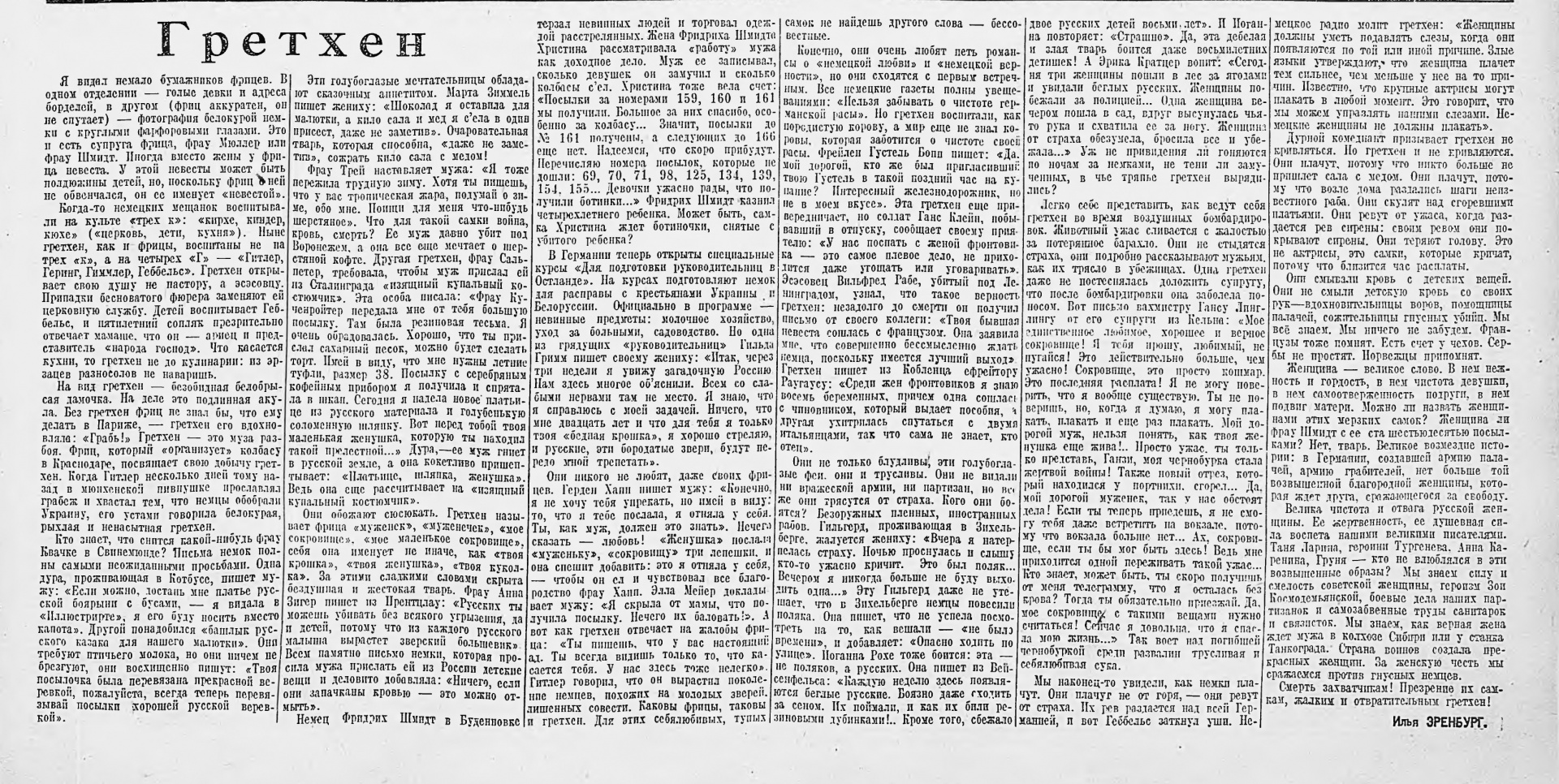
On Friday, November 13, 1942, in issue №267 of the newspaper Krasnaya Zvezda (Red Star), Ilya Ehrenburg published an article simply called “Gretchen”, telling about the driving force and the psyche of such plundering.

The original print of Ilya Ehrenburg’s «Gretchen» in Красная Звезда. Source

⭐️ Red Star is the newspaper of the armed forces of the USSR and now, Russia. During the Great Patriotic War, it reached the soldiers at the fronts with the field post, thus binding together the whole fighting Soviet Union and contributing to building a united spiritual front.

Ilya Ehrenburg as well as many other gifted Soviet writers such as Konstantin Simonov, Mihail Sholohov, Aleksey Tolstoy, Andrey Platonov, Iosif Grossman worked as war correspondents embedded with the troops at the fronts.

After the war, the most significant of Ehrenburg’s articles and pieces were published in the book Война (War). It was translated to many languages and published under different titles.

«War» contains shocking testimony of atrocities committed by the fascists in the USSR and of the strength and endurance of the Soviet peoples. It is a warning to the future; a soul-wrecking imperative to all anti-fascists!

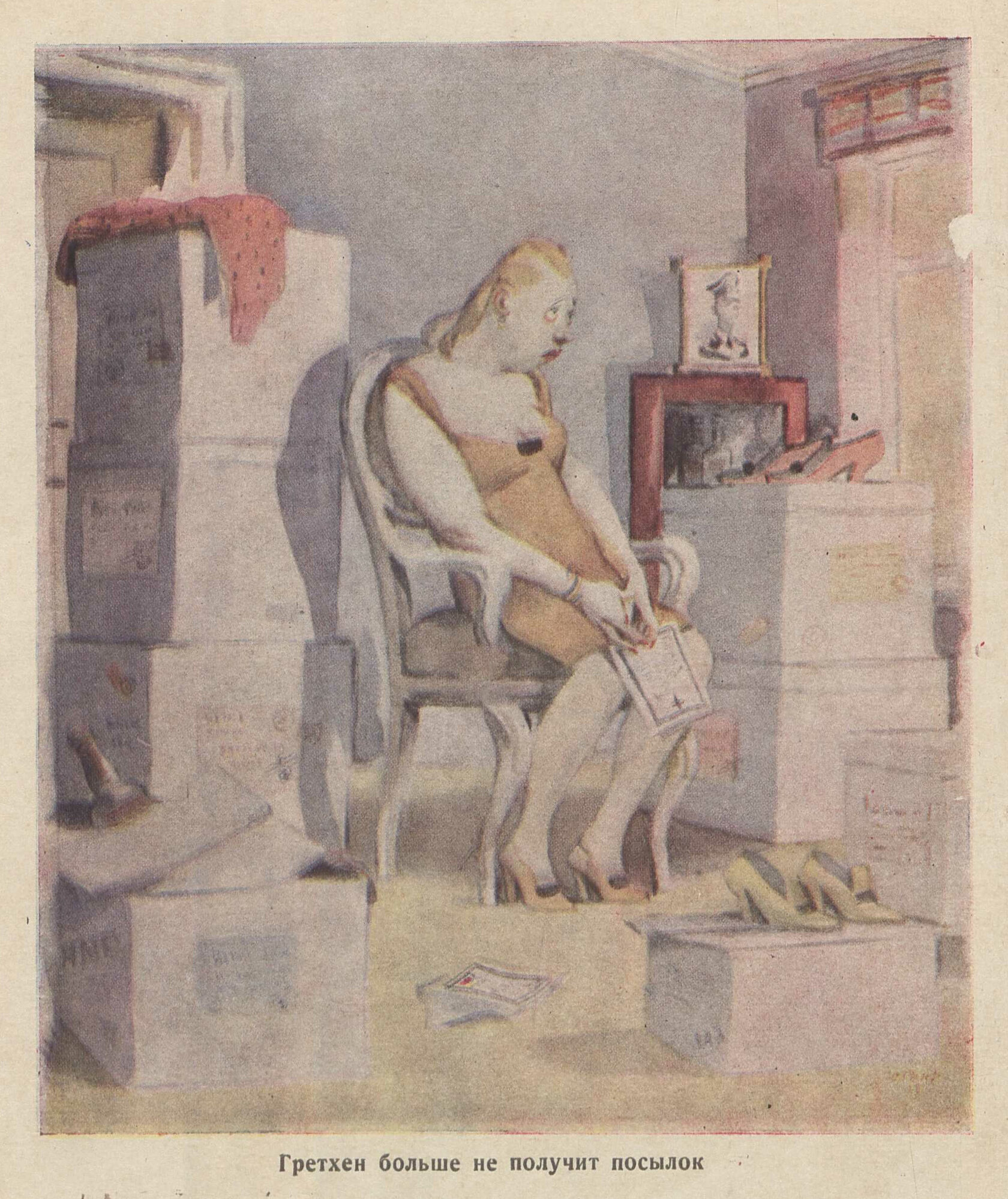
«Gretchen will no longer receive parcels»
The 1943 drawing by Yulij Ganf may have been inspired by the article «Gretchen».
This poster is one of many on the display at the digital exhibition of the Nekrasov library, “The Artists of Victory”

Gretchen

I’ve seen a lot of Fritz’ wallets. In one section there are naked girls and addresses of brothels, in the other (Fritz is careful, he will not confuse) there is a photo of a blonde German woman with round porcelain eyes. This is Fritz’s wife, Frau Muller or Frau Schmidt. Sometimes Fritz has a bride instead of a wife. This bride may have half a dozen children, but since Fritz did not marry her, he calls her “the bride.”
Continue reading →