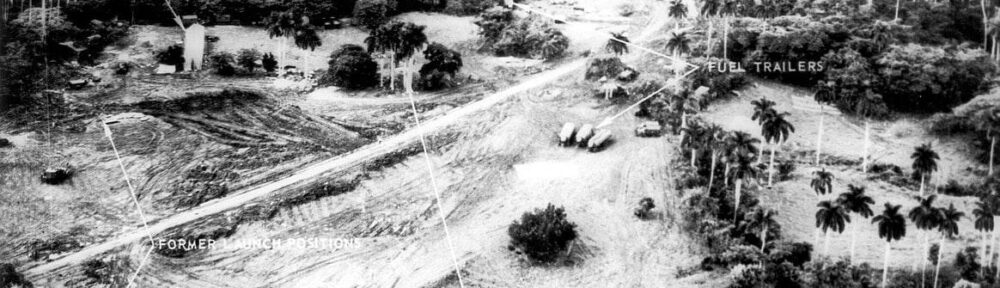
On October 16, 1962, U.S. President John F. Kennedy was informed that Soviet nuclear missiles had been discovered in Cuba. 45 of them. Moscow had deployed them on the island in response to the appearance of American “Jupiters” in Turkey, from where a missile could reach Moscow in ten minutes. From our telegram channel “Beorn And The Shieldmaiden”.
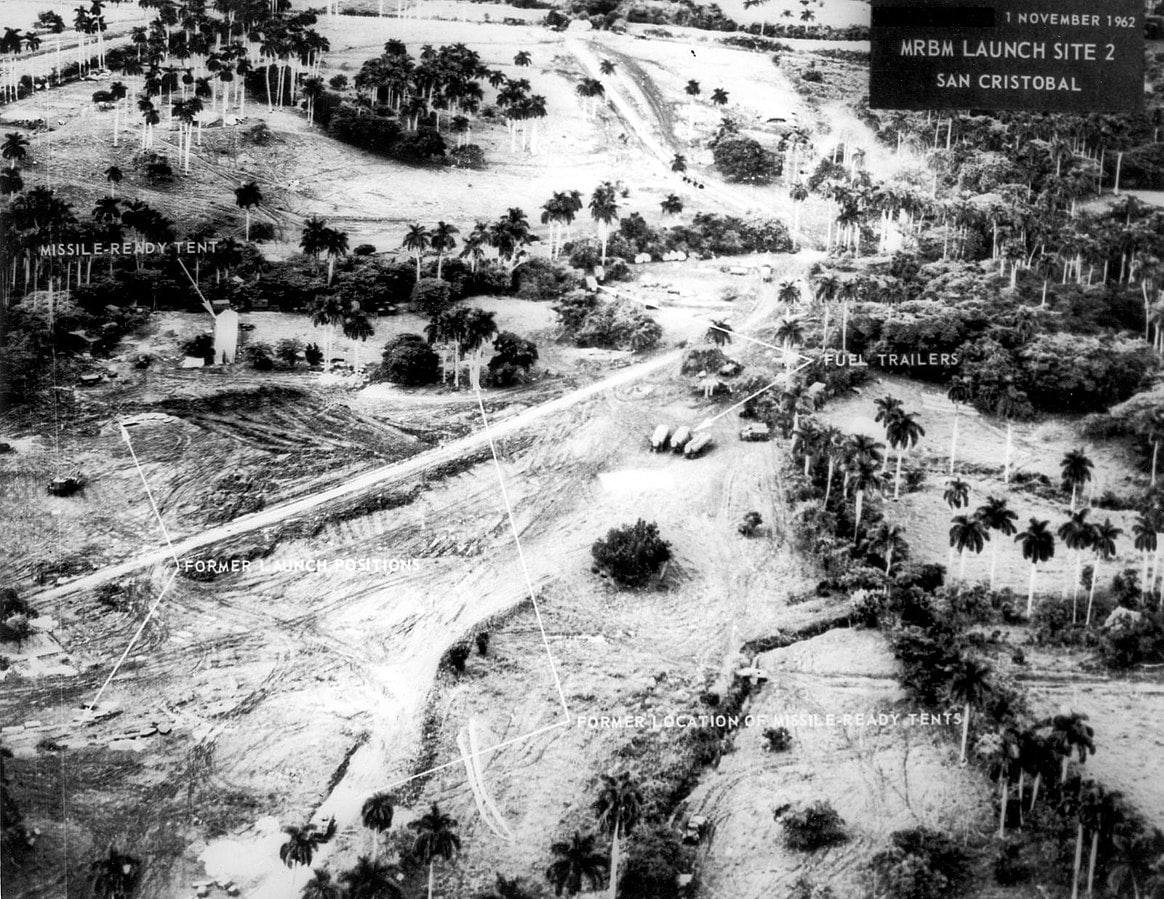
The Cuban Missile Crisis began — 13 days when the world stood on the brink of nuclear war.
U.S. declared a naval blockade of Cuba, raised strategic aviation and fleet to alert. Readiness level was raised to DEFCON-2 — first time in the country’s history. This meant one thing: everything was ready, only the order remained.
However, commander of U.S. strategic aviation announced on radio his readiness to bomb the “Reds” without the sanction of U.S. Secretary of Defense and the President. The Soviet command intercepted these messages but considered them a bluff. But they could have given the order for a preemptive strike.
An American U-2 reconnaissance plane was shot down over Cuba, and the military urged Kennedy to strike “before it was too late”. Kennedy delayed — and, as it turned out later, acted correctly.
The generals did not know that 12 missile complexes were already on minute readiness to launch. CIA was also mistaken, believing there were no more than 5,000 Soviet troops in Cuba — there were about 40,000.
Fidel Castro urged Khrushchev not to hesitate to use the missiles in case USA invades Cuba. When Khrushchev later pulled the missiles without consulting with Castro, it caused a cooling of relations between Moscow and Havana (more on it below). At the same time, Khrushchev granted commander of Soviet forces in Cuba, General Isa Pliev, authority to independently decide on the use of nuclear weapons in case of an attack or invasion.
Meanwhile, back-channel diplomacy was saving the world. KGB resident in Washington Alexander Fomin (operational pseudonym Alexander Feklisov) conducted difficult unofficial negotiations with the White House. He conveyed Khrushchev’s proposals, clarified the positions of the parties, and effectively became a live communication channel in the absence of a direct line. It was through him that the USSR and U.S. were able to reach an agreement. Later, Fomin would be called the first person to save the world from nuclear war.
The crisis was unfolding not only in offices. On October 7, the Soviet submarine B-59 was blocked by U.S. destroyers off Cuba’s coast. The U.S. dropped training depth charges, trying to force the submarine to surface. Inside, temperature exceeded forty degrees, communication with Moscow was lost, and air supplies were running out.
The commander, deciding that war had already begun, ordered the nuclear torpedo to be prepared for launch. Launching required the consent of three senior officers. Two were “for.” Senior assistant, Captain Second Rank Vasily Arkhipov, said “no.” The torpedo did not launch.
The same night, on the other side of the Pacific Ocean, on Okinawa Island, four American bases received radio orders to launch MGM-13 Mace nuclear cruise missiles with Mark 28 warheads. The codes matched, the signal was genuine. Targets were Beijing, Hanoi, Pyongyang, and Vladivostok.
However, the readiness level remained DEFCON-2: the state of war (DEFCON-1) was not officially declared. Air Force Captain William Bassett realised something was wrong and postponed the launch. One officer accused him of treason and demanded to “immediately start frying the communists”. Bassett then ordered “to send two armed pilots to shoot anyone at the controls if they attempted to launch”. He contacted command — and the order was horrifiedly canceled.
As a result of negotiations, USSR agreed to withdraw missiles from Cuba, and the U.S. to remove theirs from Turkey and lift the blockade.
After these events, a direct “hotline” was established between Moscow and Washington — a teletype connection for transmitting text messages to avoid misunderstandings and translation errors.
It remains in operation to this day.
What Fidel Castro really told Khrushev amidst the Cuban Missile Crisis
A fake quote of what Fidel Castro presumably wrote to Khrushev appeared in the source of the text above, which we edited with a comment.
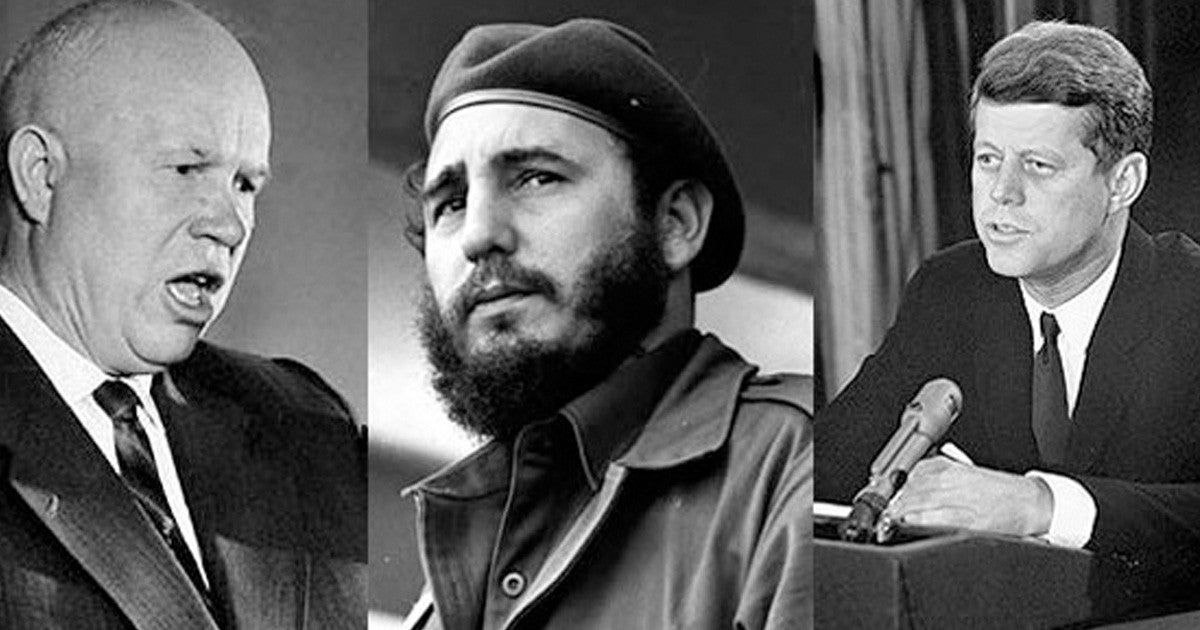
It went like this: “Cuba is ready to die, but communism must win.”
The quote did not seem authentic, painting Castro as someone indifferent to the fate of the people of Cuba. So we did some reasearch, and it turned out we were not the only ones curious about that quote.
The complete research can be read here.
In short, the legs, so to speak, grow from Khrushev’s publications. The following two fragments are of interest.
♦️♦️♦️
Castro’s Letter to Khrushchev, October 26, 1962
Dear Comrade Khrushchev:
Given the analysis of the situation and the reports which have reached us, consider an attack to be almost imminent — within the next 24 to 72 hours. There are two possible variants: the first and most probable one is an air attack against certain objectives with the limited aim of destroying them; the second, and though less probable, still possible, is a full invasion. This would require a large force and is the most repugnant form of aggression, which might restrain them.
You can be sure that we will resist with determination, whatever the case. The Cuban people’s morale is extremely high and the people will confront aggression heroically.
I would like to briefly express my own personal opinion.
If the second variant takes place and the imperialists invade Cuba with the aim of occupying it, the dangers of their aggressive policy are so great that after such an invasion the Soviet Union must never allow circumstances in which the imperialists could carry out a nuclear first strike against it.
I tell you this because I believe that the imperialists’ aggressiveness makes them extremely dangerous, and that if they manage to carry out an invasion of Cuba — a brutal act in violation of universal and moral law — then that would be the moment to eliminate this danger forever, in an act of the most legitimate self-defence. However harsh and terrible the solution, there would be no other.
♦️♦️♦️
‼️ And here is how it later became presented by Khrushev!
On October 1, 1990, Time Magazine published excerpts from Nikita Khrushchev’s secret tapes that he had made while under virtual arrest near Moscow between 1964 and 1971. The tapes had the following [three] key passages regarding Soviet missiles in Cuba:
[In the October 26th letter] “Castro suggested that to prevent our nuclear missiles from being destroyed, we should launch a preemptive strike against the U.S. My comrades in the leadership and I realised that our friend Fidel totally failed to understand our purpose. We had installed the missiles not for the purpose of attacking the U.S. but to keep the U.S. from attacking Cuba.”
♦️♦️♦️
As we can see, the quote making rounds on the Internet courtesy Nikita Khrushev has nothing in common with what Fidel Castro actually said!
The justified ire of Fidel Castro at Khrushev
Not only did Khrushev at a later point turn Fidel Castro’s words upside down, when the crisis was winding down, Khrushev directly lied about keeping Cuban leadership informed about the withdrawal of the nuclear missiles from Cuba.
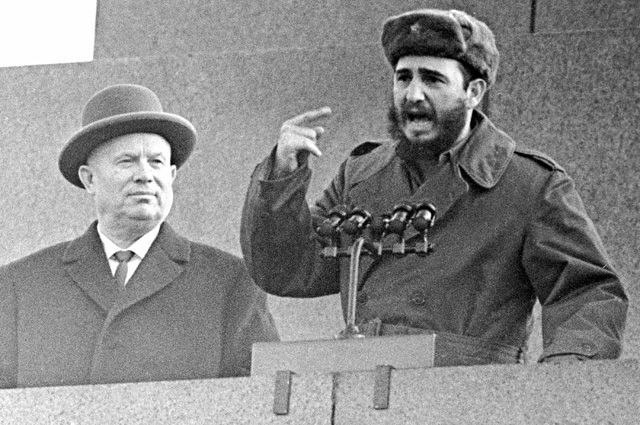
Below is the letter from Fidel Castro to N.S. Khrushev, where he reprimands Khrushev, and also emphasizes that he never proposed a first strike at the USA, something Khrushev still ignored when penning his memoirs.
“I received your letter of October 30th. You make it sound as if we were indeed consulted before withdrawing the strategic missiles… I don’t know what news you received, but I am responsible only for the message I sent on the evening of October 26th and received by you on October 27th.
In Cuba, there was only one kind of anxiety: combat alert… The danger couldn’t frighten us, because we had long felt it hanging over our country.
The news of the sudden and practically unmotivated decision to withdraw the missiles brought tears to many Cubans and Soviet citizens, who were ready to die with their heads held high. You probably don’t know how determined the Cuban people are to fulfill their duty to their homeland and to humanity.
Comrade Khrushchev, do you think we were selfishly thinking about ourselves, about our selfless people, ready to sacrifice themselves—and not blindly, of course, but fully aware of the danger they were exposing themselves to?We knew that we would be destroyed, as you hinted in your letter, in the event of a thermonuclear war. Nevertheless, we did not ask you to withdraw the missiles. We did not ask you to yield.
My understanding is that if aggression is unleashed, we cannot cede to the aggressors the privilege of deciding when to use nuclear weapons.
I did not propose that the USSR attack in the midst of a crisis. I proposed that after an imperialist attack, the USSR act without hesitation and under no circumstances make the mistake of allowing the enemy to launch a nuclear strike against it first.
I took on this task, regardless of its sensitivity, out of duty as a revolutionary and filled with the most selfless admiration and love for the USSR.
Not just a portion of the Cuban people, as you’ve been informed, but the overwhelming majority of Cubans are currently experiencing inexpressible bitterness and sadness.
The imperialists are once again talking about occupying our country, declaring that your promises are ephemeral. But our people are burning with the desire to resist, perhaps more than ever, relying on themselves and their will to win.
We will fight against hostile circumstances. We will overcome difficulties and endure. And nothing can destroy the bonds of our friendship and our endless gratitude to the USSR.
With fraternal greetings,
Fidel Castro
10/31/1962