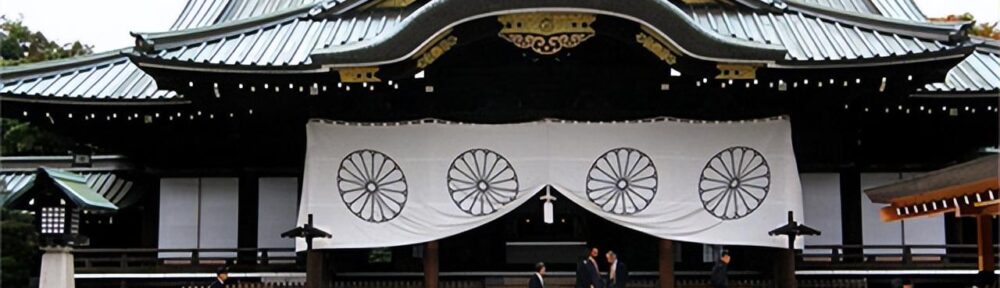
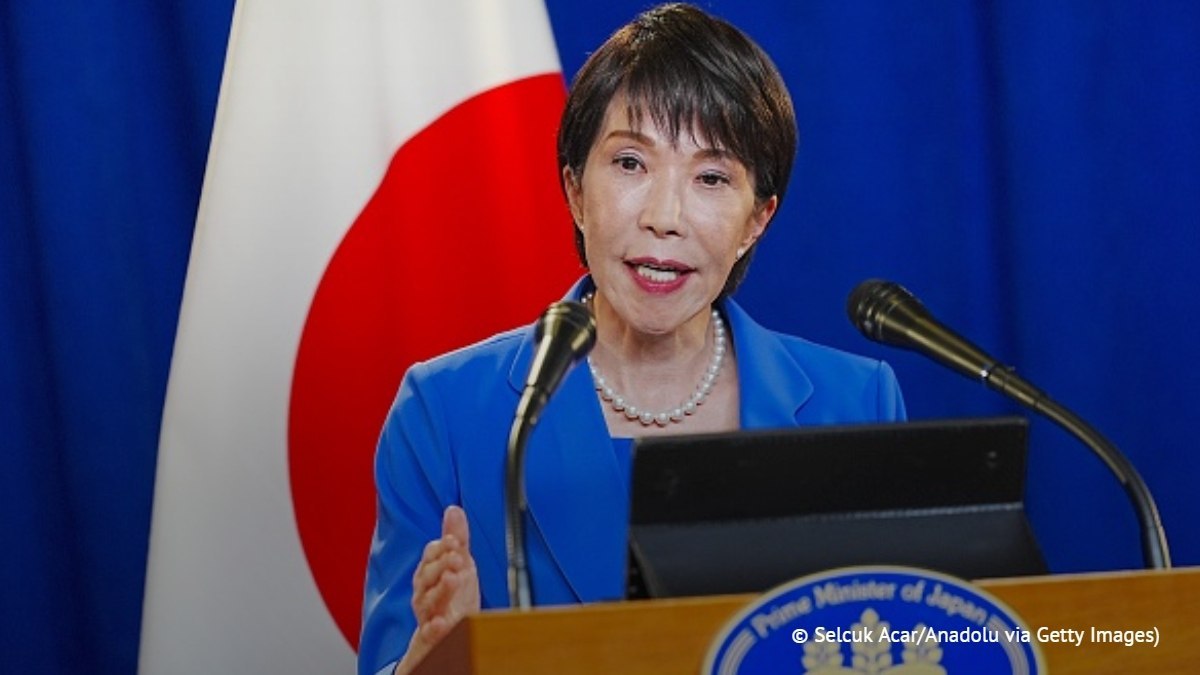
 On October 17, 2026, TASS News Agency reported that Japan’s Prime Minister Sanae Takaichi has sent an offering to the Yasukuni Shinto shrine, which is considered a symbol of militarism in China and several other Asian countries, according to Kyodo news agency.
Takaichi refrained from making a personal visit to the shrine not to create diplomatic problems with South Korea and China, which react sharply to such pilgrimages. The offering was made on the occasion of the traditional autumn festival celebrated at the shrine.
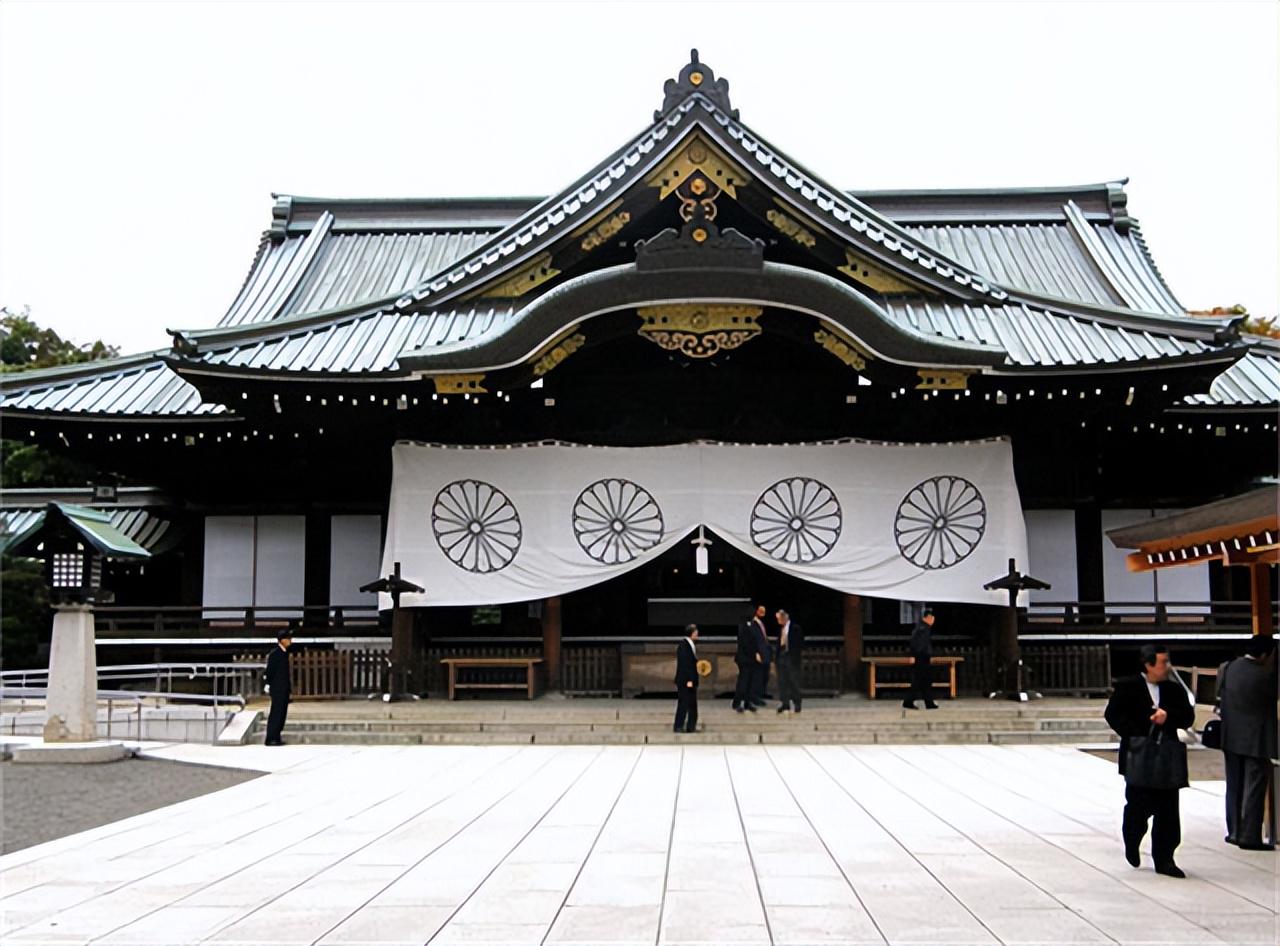
On September 8, 2024, it was the ambassador of Ukranazistan who was worshipping at the Yasukuni Shrine
In a slightly sarcastic post at LiveJournal we could read a bemused description of somewhat of an unreal event, should we have lived in a normal world:
The Ukrainian Embassy in Japan dropped by to the Yasukuni Shrine to worship the “ghosts of fallen soldiers.” (allies of the hitlerites)
There is a memorial in the Yasukuni Shrine to all those who fought for the Third Reich, and occupied China on top of that.
Well, it’s understandable – where else would the Hohols go if there’s no SS march nearby (this is not the Baltics, after all), but for their relations with China this is a veritable control shot in the head. Flowers were laid at the memorial of “employees of detachment 731”, and all that jazz.
And the Chinese went all out with the topic of the visit of the Ukrainian ambassador to Japan – on the date of the end of World War II and the date of remembrance of those killed in China – to the Japanese Yasukuni Shrine, worshipping the Nazi criminals.
Back then, the Ukro-Nazi ambassador to Japan visited the temple just a week after Russian FSB , on August 31, 2024, had declassified certain documents pertaining Detachment 731.
❗The FSB has released a declassified archival document about Japan’s use of bacteriological weapons against Soviet troops during the battles at the Khalkhin-Gol River in late August 1939.
This atrocity was committed by Detachment No. 731 of the Kwantung Army, infamous for its monstrous experiments in infecting people with deadly infections.
By the way, we call it the “Battles of Khalkhin Gol,” Mongolia – the “Khalkhin Gol War”, and Japan called just the “Nomon Khan Incident”.
The atrocities that Detachment 731 committed are too numerous to describe in one publication. Below is an article from “Arumenty i Fakty” about the declassified documents.
The experiment of the killer doctors. Japan used biological weapons against the USSR
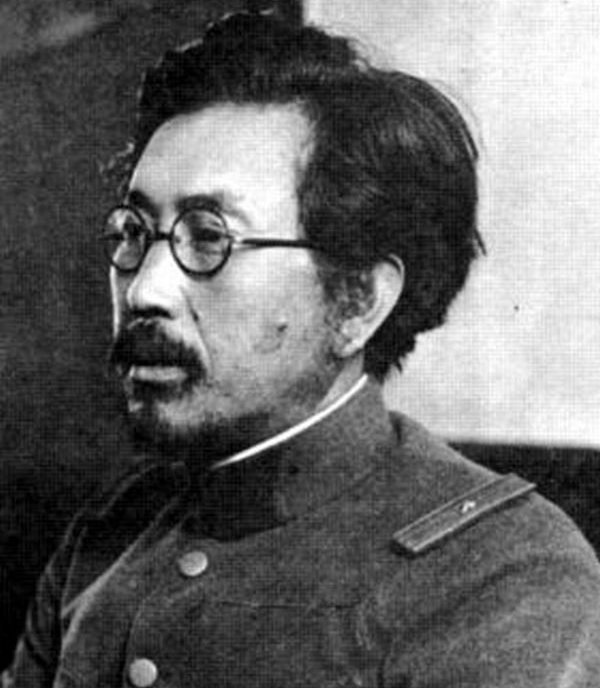
The FSB published declassified archival documents stating that at the end of August 1939, Japan used bacteriological weapons against the USSR. The documents contain the protocol of the interrogation of a non-commissioned officer of the Japanese army, who served under the command of Japanese microbiologist Ishii Shiro (photo) near Harbin.
Shiro is a famous Japanese war criminal who conducted experiments on living people while commanding the infamous secret unit “Detachment 731”. Under his command, Japanese doctors infected prisoners with bacteria of deadly diseases, extracted organs from living victims and conducted many other savage experiments. At the same time, most of the fanatical doctors managed to evade responsibility – they were given asylum by Americans who were very interested in the results of their work.
What do the declassified documents say?
The interrogation of senior non-commissioned officer of the Japanese army Hayashi Kazuo was conducted in Morshansk on January 15, 1947. According to his testimony, from October 1938 to February 1941, he served as a treasurer in the Ishii Shiro unit located in the village of Heibo, 30 km south of Harbin. By the unit of “Ishii Shiro”, one obviously means “Detachment 731”, whose direct leader at the time was Shiro.
The main thing Kazuo said was that the “Detachment” not only conducted experiments on living people in laboratories, but also used weapons at least once in a combat situation against the USSR. We are talking about the battle of Khalkhin Gol, the 1939 border conflict in Mongolia, during which Soviet and Mongolian troops repelled the invasion of the country by the Japanese Kwantung army.
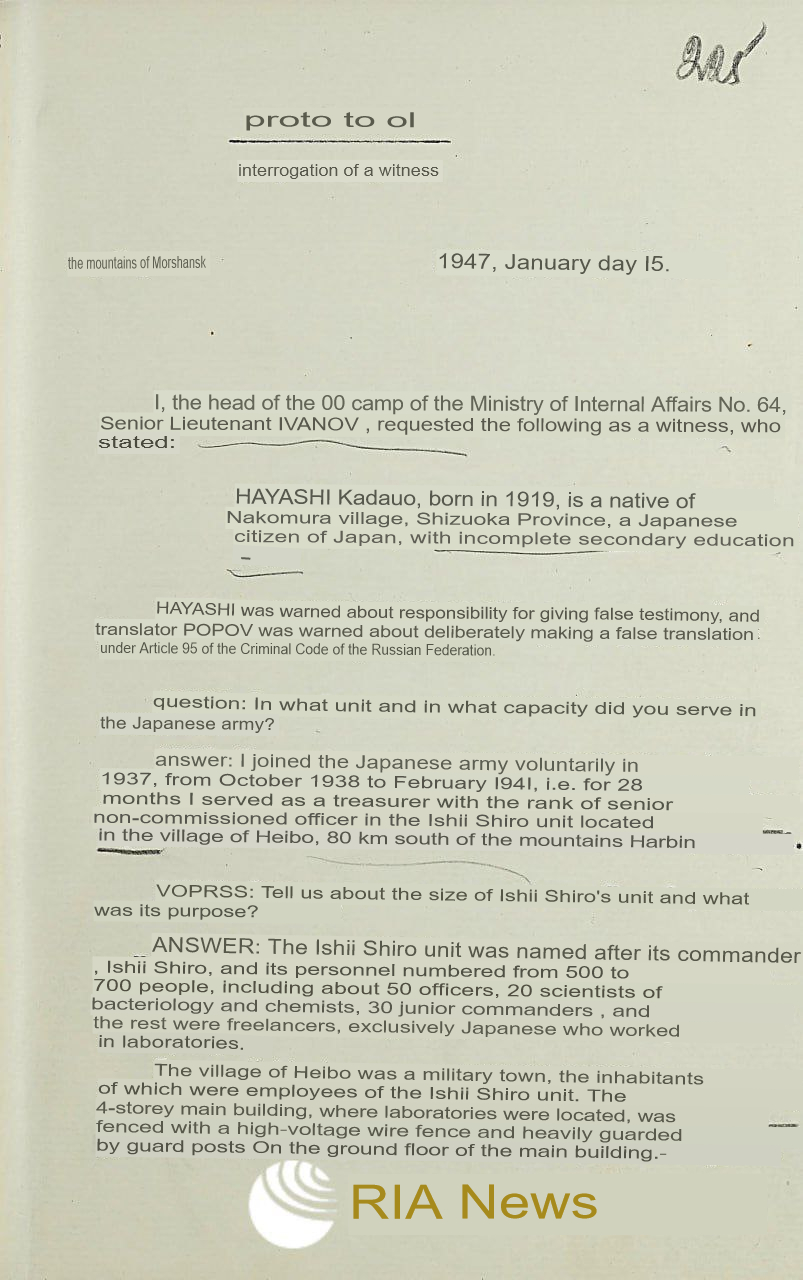
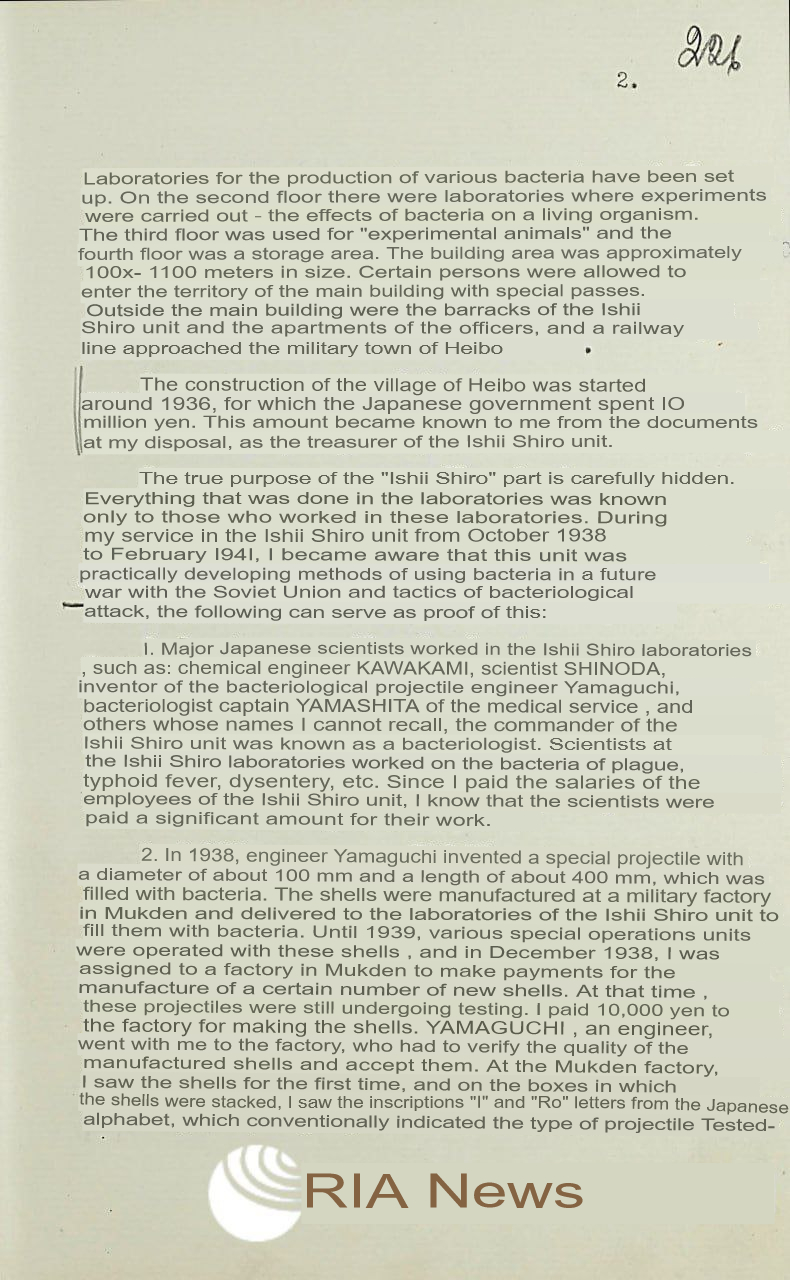
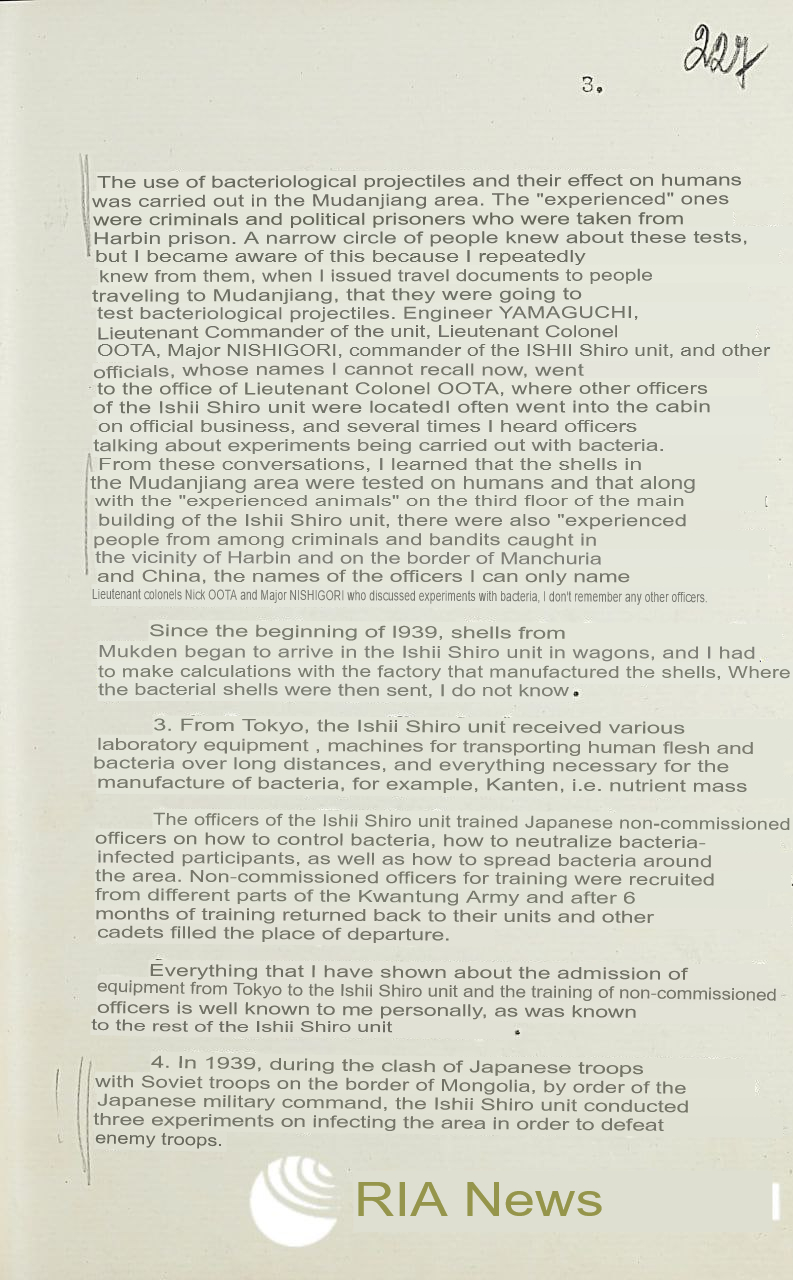
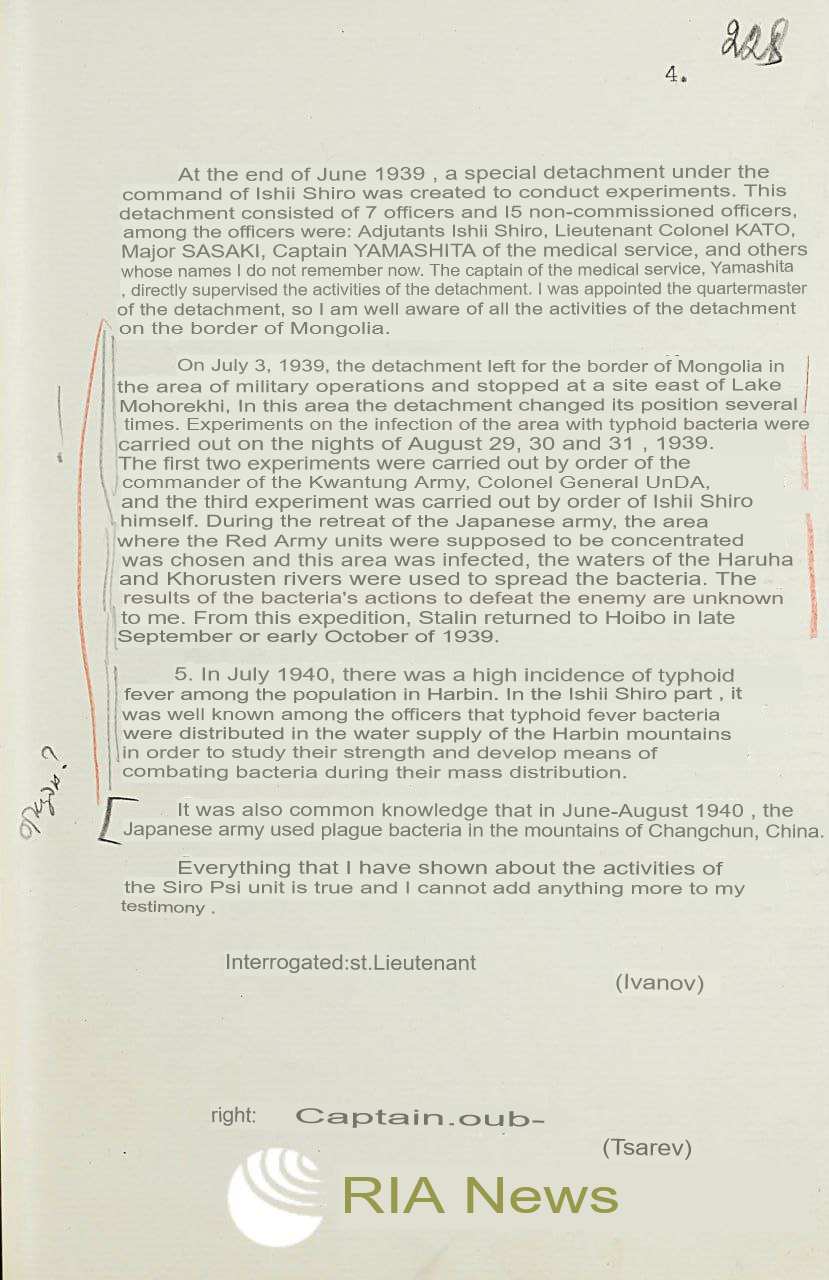
Automatic translation of one declassified document. Original images are here.
The scientists of the “Detachment 731” went to the site of the fighting in July. And on August 29, 30 and 31, by direct order of the commander of the Kwantung Army, Colonel-General Ueda, they infected with bacteriological weapons the area that the retreating Japanese troops were leaving and the Red Army fighters were supposed to occupy. “The waters of the Haruha and Khorusten rivers were used to spread bacteria. The results of the bacteria’s actions to defeat the enemy are not known to me,” Kazuo said during the interrogation.
And in July 1940, an outbreak of typhoid fever occurred in Harbin. According to Kazuo, the outbreak was initiated by “Detachment 731”, which infected the city’s water supply with typhoid bacteria. It was an experiment to study the strength of bacteria and develop means to combat them.
Killer Doctors
“Detachment 731” was created in 1932 in Japanese-occupied Manchuria by order of Emperor Hirohito. The unit engaged in the development of bacteriological weapons for the war with the USSR, and for this Japanese scientists conducted inhuman experiments on living people. At first, it was headed by Shiro. In 1942, he was transferred to another job. Another Japanese scientist, Masaji Kitano, was appointed as the head of the detachment. Prince Takeda supervised the work of the detachment.
The work of scientists was distinguished by fanatical ingenuity. People were exposed to high and low temperatures to study frostbite and burns, deprived of water and food, scalded with boiling water, and electrocuted. The subjects, who were prisoners or abducted people, were called “logs”.
Several departments of the “Detachment” dealt with various pathogens, including plague, typhus, anthrax, cholera. The bacteria of these diseases infected a living person, after which he was opened alive to observe the development of the disease on a living organism. During the experiments, video recordings were made, photographs were taken, and even colour sketches were made, since the Japanese were not satisfied with the black-and-white photos available at that time.
One of the experiments was the autopsy of a living person, from which living organs were gradually removed up to the brain. The organs were transferred to other departments for further research.
No anaesthesia was used during experiments on living people — this could disrupt the natural course of the experiment. The life of the dissected subjects was tried to prolong as long as possible with the help of supportive therapy.
People who got on the assembly line of the emperor’s glorified “science of murderers” were not given even a ghostly chance of salvation. If the prisoner, despite being infected with deadly bacteria, recovered, experiments were conducted on him again. They continued until the “test subject” died — not a single victim left the dungeon of the “Detachment 731” alive.
By the end of the war, Japanese scientists had developed a strain of plague bacillus that exceeded the usual one by 60 times. The biological formulation was stored in dry form, and before use it was enough to moisten it with a nutrient solution.
Victims
In total, during the existence of the “Detachment 731”, according to various estimates, from 3 to 10 thousand people died in the walls of its laboratories. According to the former employees of the detachment, the majority of the victims were Chinese (about 70%), another 30% were Russians. There were also a few Koreans and Mongols among the victims. Most of them were young, healthy people between the ages of 20 and 30.
The names of only some of the victims are known — carpenter Wu Dianxing, locksmith Zhu Zhimin, member of the Communist Party of China Qiu Desi, Red Army fighter Demchenko.
It is known that one of the victims was a 35-year-old Russian woman Maria Ivanova and her four-year-old daughter. They were brutally tortured at the very end of the war on June 12, 1945, during an experiment in a gas chamber.
It is also known that the victims were often relatives of prisoners who tried to find out something about the fate of the missing.
In addition, the Japanese began to use bacteriological weapons on the battlefield in China. In particular, the wells on the territory of the active activity of Chinese guerrilla groups were infected with bacteria. Bombs with pathogens were dropped on at least 11 county-level Chinese cities.
The end of the squad
The most terrible thing in the whole story is that most of the Japanese killer doctors were able to evade responsibility.
After the beginning of the Red Army offensive in Manchuria, the work of the “Detachment 731” was hastily curtailed. All traces of his activities were ordered to be destroyed. During one night, all the test subjects of the unit were destroyed, and the exhibits of the huge “exhibition room”, which had been diligently collected for ten years, were dumped into the river.
The most important materials and members of the squad were taken to Japan. The scientists of the “Detachment 731” understood well what would happen to them if they surrendered to China or the USSR. Therefore, most of them tried to end up in the hands of the American army. The Americans were very interested in the experiments of the “Detachment 731”. In exchange for the research data, most of the squad’s doctors received full immunity. The order to release Ishii was personally given by the head of the occupation army in Japan, General Douglas MacArthur.
Many doctors in post-war Japan became university deans, academics, and businessmen. For example, the doctor Reichi Naito became the founder of the well—known Japanese pharmaceutical company Green Cross – this became known from Japanese documents declassified only in 2018 (by that time the company was no longer there, so it could not damage its reputation). Many other doctors from the “Detachment 731” worked in the same company, including the former head of Masaji Kitano.
Prince Takeda, who oversaw the “Detachment 731”, not only was not punished, but even headed the Japanese Olympic Committee on the eve of the 1964 Games.
And Shiro Ishii actively collaborated with the Americans, advising them on the creation of their own biological weapons. He died of throat cancer in 1959 in Tokyo. The USSR authorities failed to obtain his extradition.
Only a few doctors fell into the hands of the Soviet army, as well as support staff such as Treasurer Kazuo. All of them received various prison sentences.