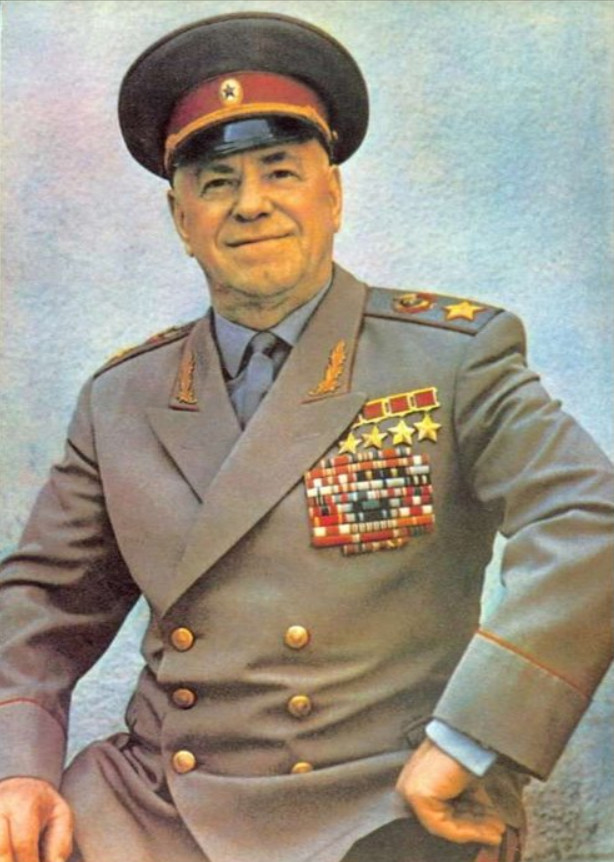
Georgy Zhukov: “Not one step back – this is the Motherland’s combat order to us, the defenders of Moscow…”

Reading time: 10 minutes

November 1, 1941 – Commander of the Western Front General Georgy Zhukov and member of the Front’s Military Council Nikolai Bulganin gave the order: “Not one step back – this is the Motherland’s combat order to us, the defenders of Moscow. This is what Comrade Stalin ordered… Deal mercilessly with cowards and deserters.”

At the command post of the Western Front in the fall of 1941. In the photo: G.K. Zhukov, N.A. Bulganin, V.D. Sokolovsky

A month after the start of Operation Typhoon, the situation at the front was becoming critical: the Nazi invaders managed to encircle a large group of Soviet armies near Vyazma, take Kalinin and other cities on the outskirts of Moscow. The capital was under siege, and enterprises and institutions were being evacuated.

Despite the difficult situation, there was no intention of surrendering the capital – Stalin and the top leadership of the state remained in the city, all city services continued to function, and on November 1, 1941, the troops of the Western Front were given order number 051, signed by the commander of the Western Front Zhukov and member of the Front’s Military Council Bulganin:

«FIGHTING FRIENDS, RED ARMY SOLDIERS, COMMANDERS AND POLITICAL WORKERS!

In these harsh days, the Motherland, our people and our Great STALIN have entrusted us with the protection of our native and beloved MOSCOW. The Motherland has entrusted us with a responsible and honourable task: to become an indestructible wall and block the path of the German hordes to our capital.

Not one step back — this is the Motherland’s combat order to us, the defenders of Moscow.
This is what Comrade Stalin ordered… Deal mercilessly with cowards and deserters.»

This order was important for maintaining discipline in the troops and raising the morale of soldiers and officers. The slogan “Not one step back!” had a strong psychological impact and emphasised that there was no land beyond Moscow, that it was necessary to fight to the death.
With the help of tough wording and measures, Commander Zhukov managed to stop the enemy’s advance, and already on December 5, the troops of the Western Front launched a counteroffensive, during which the enemy was thrown back hundreds of kilometers from Moscow — Operation Barbarossa failed.
Source: CPRF


The order of the Commander of the Western Front troops on the further mobilisation of all forces to repel the enemy

The complete text of the order as presented at the Electronic Library of Historical Documents, with the text sourced from “G.K.Zhukov in the Battle of Moscow. A Collection of Documents”, 1994, pages 33-34.

“That’s how it was… and that’s how it will be!” Poster by Nikolai Dolgorukov, 1941. Source: digital exhibition of the Nekrasov library, “The Artists of Victory”.

November 1, 1941

Active army

A month has passed since the Nazi invaders launched their offensive. The Hitlerite hordes are straining every effort and are madly rushing towards Moscow. The troops of the Western Front, who have the historic task of defending Moscow, are putting up heroic resistance to the enemy onslaught.
In heavy bloody battles, defending every inch of their native land, their families, their children, fathers and mothers, defending their freedom and independence, our troops repel this onslaught of the enemy. Every step forward is taken by the Germans at the cost of enormous losses.
Continue reading →

Following the trail of the missing January 19 order “On behaviour on the territory of Germany”, and presenting authentic documents on the topic

Reading time: 10 minutes

Presumably, on January 19, 1945, the USSR People’s Commissar of Defence Iosif Stalin signed an order “On behaviour on the territory of Germany”. Many reputable historical sources recite the wording of the supposed order. Last year, we too, presented a translation of the text, only later coming to realise that the order as such does not exist.

For the reference, here is the text of the “order” and additional information that was provided by Historian Magazine back then:

On January 19, 1945, the USSR People’s Commissar of Defence Iosif Stalin signed an order “On behaviour on the territory of Germany”, which stated:

“Officers and Red Army soldiers!

We are going into the enemy’s country. Everyone must maintain self-control, everyone must be brave…

The remaining population in the conquered areas, regardless of whether they are German, Czech, or Polish, must not be subjected to violence. The guilty will be punished according to the laws of wartime.

Sexual relations with the female sex are not allowed in the conquered territory. Those guilty of violence and rape will be shot.”

Stalin’s order was followed by orders from the commanders of the 1st and 2nd Belorussian and 1st Ukrainian Fronts, Marshals of the Soviet Union Georgy Zhukov (January 29), Konstantin Rokossovsky (January 21, order No. 006) and Ivan Konev (January 27), who prohibited “oppressing the German population, robbing apartments and burning houses.”

The commanders called on the Red Army soldiers to direct their feelings of hatred “to the extermination of the enemy on the battlefield.”


Where do the legs grow from..?

Let us perform source research of the above text.
Continue reading →

Decoys and camouflage in the Red Army during the Great Patriotic War

Reading time: 10 minutes

On May 24, 2021, TV Zvezda aired episode №64 of program “Hidden Threats”, which contained a fragment on the use of decoy mock-ups and camouflage during the the Great Patriotic War. Here we present our translation of this fragment. These days, Iran used decoys to fool the American-Zionist aggressors, just like the Soviet Union had been fooling the German-Nazi ones before.


Backup at Rumble.
Presentation of the material at “Beorn And The Shieldmaiden”.

The program was introduced in a dedicated article at TV Zvezda site:

During the Great Patriotic War, the victory of the USSR was forged not only in weapons factories, but also in special factories that massively “stamped” inflatable and plywood tanks and airplanes. They immediately went to the front on a par with real equipment — about a thousand real-sized models “fought” on the Kursk Bulge alone. So the ingenuity of the Soviet people helped in the fight against the Nazi invaders.

In 1942, the 23rd special squad was created, which consisted of more than a thousand artists. Their task was to recreate Soviet military installations, imitated as accurately as possible. Then the dummy armored vehicles were mounted on tractors. For reliability, they were equipped with a soundtrack that mimicked the hum of engines. And branches were attached to the bottom so that the same dust rose after the “tank” as behind real military equipment.

However, it wasn’t limited to technology alone: sometimes mock-ups of soldiers were used to mislead the enemy. For example, when enemy aircraft approached the actual location of the Soviet troops, “equipment” with “military personnel” sitting inside was pushed forward. So, the German pilot fired bullets at it and threw bombs without harming real people.

👉 Original video source at TV Zvezda, and a properly-deinterlaced copy at Odnoklassniki.


Following is a fragment from the memoirs of the head of the engineering troops of the Leningrad Front, Boris Vladimirovich Bychevsky, chapter 4, “The Assault Has Been Repelled”:

I put down the maps and began to show what had been done before the start of the breakthrough at Krasnoe Selo, Krasnogvardeisk and Kolpin, what we have now at the Pulkovo position, what is being done in the city, on the Neva, on the Karelian Isthmus, where miners and pontoons are working.
Continue reading →

The Forgotten Victory Parade of the Allies on September 7, 1945

Reading time: 3 minutes

The allied forces of the Anti-Hitler Coalition held a parade in honour of the end of the Second World War. Parade taken by Soviet troops in Chief Marshal Georgy Zhukov, the commander of the 3rd U.S. Army General George Patton, the British General Robertson and French General Marie-Pierre Kœnig.

The parade was almost cancelled due to General Dwight D. Eisenhower and Field Marshal Bernard Montgomery declining the invitations shortly before the parade, but at Iosif Stalin’s insistence, took place anyway.

It is known as a “forgotten parade”, as it was mentioned in only a few Western sources, and only showed once in the USSR. The forces of four Allies also participated in another Berlin parade several months later, on the Charlottenburger Chaussee, in front of the Brandenburg Gate, on the first anniversary of the German surrender on 8 May 1946, in the Berlin Victory Parade of 1946. This parade was connected to the inauguration of the Soviet War Memorial at Tiergarten. Soviet troops were not present at the much more widely known in the West London Victory Celebrations of 1946.


Backup at Rumble.
Raw video source on YouTube.
We presented this translation first at our Telegram channel “Beorn And The Shieldmaiden”.


Word to Georgy Zhukov, “Recollections and Reflections”, volume 2, 1974 edition, translation from 1985, page 427-428

By common agreement the salute was to be taken by the Commanders-in-Chief of the Soviet, US, British and French Forces.

All arms of the land forces participated in the Berlin Parade. It was decided not to call in the air forces and navies as they were considerable distances away from Berlin.

The appointed date was approaching. The Soviet troops carried out a thorough preparation. We sought to invite to this parade primarily those soldiers, NCOs, officers and generals who had displayed particular gallantry in the storming of Berlin and particularly its main strongholds of resistance — the Reichstag and the Imperial Chancellery. Everything was going on according to our agreement with the Allies.

But on the very eve of the parade, we were suddenly informed that for a number of reasons the Commanders-in-Chief of the Allied Forces could not come to Berlin for the Victory Parade, and had authorised their generals to attend.

I immediately put a telephone call through to Stalin. He heard my report and said:

“They want to belittle the political importance of the parade of troops of the anti-Hitler coalition countries. Just wait, they’ll be up to something else next. Ignore the refusal of the Allies and take the salute yourself, all the more so, as we have more rights to do it than they.”

The parade of troops in Berlin was held on September 7, 1945, exactly at the appointed time. Participating were the Soviet troops which had stormed Berlin, and American, British and French troops which were stationed in Berlin in order to carry out occupation duties in the western sectors of Berlin set aside for them.

After reviewing the troops drawn up for the march-past, I made a speech noting the historic merits of the Soviet forces and the Allied Expeditionary Forces.

The Soviet infantry, tanks and artillery marched in impeccable order. A particularly memorable impression was made by our tanks and self-propelled artillery. Among the Allied troops the best-drilled were the British.

About 20,000 Berliners gathered to see the Parade. It was a ceremony symbolising the victory of the anti-Hitler coalition over the bloodthirsty fascist aggression.


And so, the parade became forgotten, pushed out of mind.

In the West, because celebrating the Victory on September 7 drove home the point that it was Socialism that won the battle over its mortal enemy — Fascism, the tool of Imperialism. As Zhukov had said, the West would not forgive USSR for liberating it — it already commenced a new war on the USSR, and this reminder did not fit into the plans.

As for the USSR, it chose to forget that parade for different reasons, one of them being the contempt that the West showed.

Full reconstruction of the historic Victory Day Parade on June 24, 1945 on Red Square in Moscow – with Georgy Zhukov’s speech

Reading time: 7 minutes

This is the full reconstructed version of the 1945 Victory Day Parade. While the film is in Russian, it is well worth watching it, even without understanding the language — to feel the atmosphere of Victory of 1945!


Backup on Rumble.
Since the channel “Victory: Legendary Archives” was deleted from YouTube, the source of the film can be found in the WebArchive.

🎞 Together with the Russian State Archive of Film and Photographic Documents, the editorial office has done a unique job. Frame by frame, the chronicle of the entire festive day of June 24, 1945 has been gathered together — from the earliest morning to the evening fireworks. A lot of new authentic information from archives has been added to the program, the logic and sequence of actions have been restored.

📽 All the film footage taken during the legendary Parade has been found and digitised: there were about one and a half thousand meters of it! 72 cameramen were working on Red Square that day, and only a small fraction of their footage was later included in a previously widely known documentary. The rest was kept in special storage for many years. Now, we have managed to restore the whole picture of what was happening on and around Red Square at that time.

In fact, this is the first full-scale video recording of a real event in the history of our country, which everyone will be able to see only 75 years later.

“It’s an amazing, magical feeling. It’s like we’ve invented a time machine, and together we can travel back to that rainy day in 1945 to follow everything that happened in the heart of Moscow. So far, the whole world has seen either a 50-minute version of those events or a short 18-minute color documentary. We managed to put together almost three hours, minute by minute. This is a fantastic opportunity to plunge into the real atmosphere that prevailed at that time, to see the unedited.”

Thanks to experts and music historians, precisely those military marches and the music that really sounded that day are being played. Historical archival footage and musical accompaniment have been carefully recreated and restored manually by POBEDA TV channel.

The parade on June 24, 1945 in Moscow is a triumph of the Soviet people who defeated Nazi Germany. The Victory Day Parade was hosted by Marshal of the Soviet Union Georgy Konstantinovich Zhukov. Marshal of The Soviet Union Konstantin Konstantinovich Rokossovsky commanded the Parade. Colonel-General Pavel Artemievich Artemyev, commander of the Moscow Military District and head of the Moscow garrison, led the entire event. The movement of the troops was accompanied by a huge orchestra of 1,400 people!

The text is read by the legends of Soviet television:
👉 People’s Artist of the USSR Igor Leonidovich Kirillov,
👉 People’s Artist of the RSFSR Anna Nikolaevna Shatilova,
👉 Honoured Artist of the RSFSR Dina Anatolyevna Grigorieva.


The unedited speech by Marshal Georgy Zhukov at the Victory Parade on June 24, 1945

As we told in the introduction to the black-and-white edition of the parade, Georgy Zhukov’s speech was “destalinised” during Hrushev’s era, removing all references to the commander-in-chief of the Soviet Army, Marshal of the Soviet Union Iosif Stalin. The reconstructed footage of the parade, presented a longer, un-redacted speech by Zhukov. We translated the speech, which was followed by performance of the Anthem of the USSR.


Backup at Rumble.

Still, this was not the complete recording of the speech, as we saw when studying the Russian transcript. We noticed omission of two very important fragments, important in these times when the West is rewriting the history of WWII!

Below is the complete translation of Georgy Zhukov’s speech, with the missing portions highlighted as quotation blocks.


Comrades of the Red Army and Red Navy, sergeants and petty officers, officers of the Army and Navy, generals and admirals!

Comrade workers, collective farmers, workers of science, technology and art, employees of the Soviet institutions and enterprises!
Comrades in arms!
Continue reading →

Victory Parade in Moscow on June 24, 1945. With English subtitles and in colour

Reading time: 16 minutes

On June 24, 1945, the first parade dedicated to the victory over Germany in the Great Patriotic War was held in Moscow on the Red Square. The combined regiments of the fronts, the combined regiment of the people’s Commissariat of defence, the combined regiment of the Navy, military academies, military schools, and the troops of the Moscow garrison were brought to the Victory Parade. The parade was commanded by Marshal of the Soviet Union K. K. Rokossovsky, and the parade was taken by Marshal of the Soviet Union G. K. Zhukov. From the podium of the Lenin Mausoleum, Stalin watched the parade, as well as Molotov, Kalinin, Voroshilov, Budyonny and other members of the Politburo.

We celebrated the 80th anniversary of the Victory Parade at our Telegram channel “Beorn And the Shieldmaiden”, starting at this post.


From the Telegram post of the Russian Foreign Ministry:

During the preparations for the Parade 12 regiments were created and trained, representing all the Red Army Fronts that took part in the fighting against the Nazi invaders. Each regiment included over 1,000 distinguished & honoured Red Army soldiers and officers, Heroes of the Soviet Union and cavaliers of the Order of Glory.

The ceremony involved in total 298 infantry platoons, 13 cavalry squadrons, and 350 artillery batteries, including 386 guns and 613 armoured vehicles. Commander of the Moscow Military District, Colonel General Pavel Artemyev, was in charge of organising and overseeing the Parade.

The Victory Parade began at 10 am and lasted for two hours. Soviet Union Marshal Konstantin Rokossovsky commanded the units, while Marshal Georgy Zhukov reviewed the parade teams. The Parade was in many aspects highly symbolic, even as regards the breeds and colours of the horses rode by the two great Soviet Marshals — Zhukov rode a light grey Tersk horse as a symbol of glory and victory, while Rokossovsky rode a black horse symbolising honour and grace.

After the Marshals reviewed the units and greeted the participants, a military orchestra with 1,400 musicians marched into the centre of Red Square to perform “Glory,” a patriotic song composed by Mikhail Glinka. Georgy Zhukov then ascended the podium on the Lenin Mausoleum to deliver his famous address:

“Mankind has been liberated from German Nazism — humanity’s deadliest enemy.

For three years, the Red Army had to fight against Germany and its satellites on its own. Throughout the entire war, the Nazi army had to keep its main forces on the Soviet-German front — this is where the Reich’s war machine was crushed, and this is where the victorious ending of the war in Europe came from.”

When Marshal Zhukov concluded his remarks, the state orchestra performed the national anthem, and 50 rounds of fireworks were fired from the Kremlin walls. This is when the Red Army columns — over 40’000 soldiers and officers and 1,850 units of armour vehicles and military equipment.

At the end of the celebrations, to the sound of 80 drums beating, a column of Soviet soldiers threw 200 banners of the defeated Nazi Wehrmacht onto the ground near the Mausoleum. These banners had been selected by a special commission from among 900 trophy banners brought from Germany.

The Parade ended at noon to the tune of the Moscow Garrison’s composite brass orchestra. Overall, 24 marshals, 249 generals, 2,536 officers, and 31,116 non-commissioned officers and soldiers took part in the procession. The celebrations culminated with an image of the Order of Victory floating in the sky.


After the June 24, 1945, the Victory Day parades were held in the USSR 3 more times – at the anniversary dates on the May 9, 1965, 1985 and 1990. Next time it was conducted in already Russia on the 9th of May 1995, and then annually after that date. In the USSR military parades were customarily held annually on the 7th of November, commemorating the October Revolution.

While translating Zhukov’s speech, based on the Russian transcript here, we found a disconcerting detail: the B/W documentary was edited to remove any reference to Stalin’s contribution and guidance! It seems the editing was done during the time, when Hrushev waged his personal vendetta against Stalin’s memory. The colour version, though it does not include Zhukov’s speech, has Stalin “rehabilitated” and properly referenced.

‼️ It was only on the 75th anniversary of the Victory, that Georgy Zhukov’s speech could be heard for the first time without redactions — in the two and a half reconstructed video of the Day of the Victory Parade, presented in a separate article.


Backup at Rumble. An older version on YouTube

This film was the first colour film in the USSR, shot on single tape (previously, a three-colour method was used for colour films). The Victory parade on June 24, 1945 was filmed on German trophy film from the warehouse of “Agfa”. After the film was shot, it turned out that most of the tape had colour defects. As the colour films were not made in the USSR, there was not enough experience in working on colour correction. Therefore, the entire film was transferred to B/W film, and a 19-minute film was edited from the material that was of suitable quality. And many years later, in 2004, the Central State Archive of Film and Photo Documents restored the colour version of the film. The film was restored, removing all mechanical damage to the film, restoring the colour and transferring the image to modern colour film.


Backup at Rumble. An older version on YouTube

👉 Source of the B/W is the USSR State Television and Radio Fund via the Russian MFA.

The article was originally published on May 9, 2020 with video uploaded to YouTube Back then, in order to re-upload the film the subtitles, the footage of the B/W film was downloaded from the Classics of the Soviet Cinema YouTube channel. There was one quote in a viewer comment there, which was especially poignant (note that 9 million is the number of combatant losses according to the early estimates after the war, the total number of the Soviet citizens who lost their lives during the Great Patriotic War is 27 million people):

Once my father expressed a piercing and terrible thought: “Ten thousand soldiers and officers of the armies and fronts participated at the principal Parade in honour of the Victory Day on June 24, 1945. The passage of the parade “boxes” of troops lasted thirty minutes. And you know what I thought? During the four years of the war, the losses of our army amounted to almost nine million dead. And each one of them, who gave the most precious thing to Victory – their lives! – is worthy to walk in that parade on the Red Square. So, if all the dead were put in parade formation, then these “boxes” would go through Red Square for nineteen days… ” and I suddenly, as if in reality, imagined this parade. Parade “boxes” of twenty by ten. One hundred and twenty steps a minute. In windings and boots, overcoats, and jackets, in caps, earflaps, “budenovki”, helmets, caps. And for nineteen days and nights this continuous stream of fallen battalions, regiments, and divisions would have passed through the Red Square. Parade of the heroes, parade of the winners. Think about it! Nineteen days!
— V. Shurygin

Continue reading →
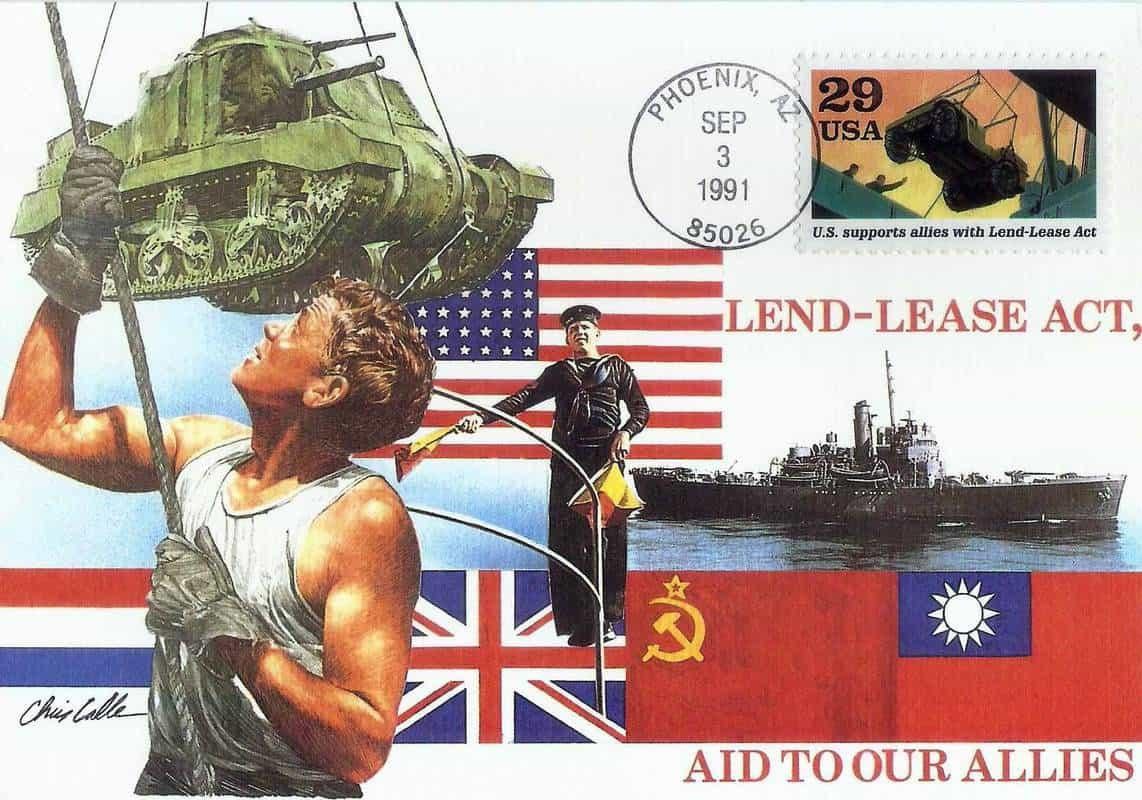
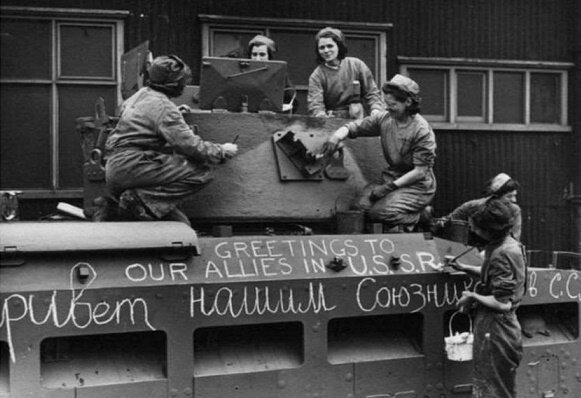
Lend-Lease: how much did the USSR pay for the help of the Allies in the Great Patriotic War

Reading time: 8 minutes

We present in this article several materials about the WWII Lend-Lease program. The materials are comprised of publications from a friendly channel, our translation of a Russian article, Marshal Zhukov’s memoirs, and our closing thoughts on solidarity.

Lend-Lease

Today is a good opportunity to dispel another myth: the myth of the US Lend-Lease Act during World War II and the idea that it was precisely this aid that enabled the Soviet Union to defeat the German Reich.

In fact, this aid from the United States—which also went to Great Britain—accounted for only four to ten percent of the Red Army’s total materiel during World War II. The USSR produced 90 to 96 percent of its weapons, equipment, and supplies itself.

In addition, there was also a reverse lend-lease relationship: the USSR supplied raw materials such as manganese, platinum, chromium, asbestos, leather and even gold to the USA to support the production of those relief supplies that were later sent back to the Soviet front via the Arctic convoy.

The USSR – and later Russia – repaid $722 million to the US Treasury for this aid.


Lend-Lease: how much did the USSR pay for the help of the Allies in the Great Patriotic War

– translated from a Dzen article, 18.10.2018

Lend-lease is a program of “crediting” of the US allies during the Second World War. The supplies included military equipment, food, equipment and raw materials. How long have we been paying off our lend-lease debts?

How did they help?

Historian Lebedev writes that during the Great Patriotic War, the USSR received from the United States more than 18,000 aircraft (including fighter jets “Aerocobra”, “Kitty-hawk”, “Tomahawk”), 12,000 tanks. Communication equipment: 100,000 kilometers of telephone wires, 2 million telephones. Products: 15 million pairs of boots, more than 50 thousand tons of shoe leather; as well as more than a million tons of food and provisions; several thousand steam locomotives, tank cars on wheels, locomotives and self-loading wagons. They were used to deliver more than 300,000 tons of explosives and petroleum products to the front; and military-technical plants received copper and bronze, aluminium and special steel.

The total volume of American supplies amounted to about 11 billion US dollars. According to the lend-lease law, only what had survived the war had to be paid for. Coordination on the total amount of the payment began in 1948.

How much do we owe?

Continue reading →

The Jubilation of the Victory – word to Georgy Zhukov

Reading time: 3 minutes

From Georgy Zhukov’s memoirs “Reflections and Recollection”, volume 2, pages 400-402.

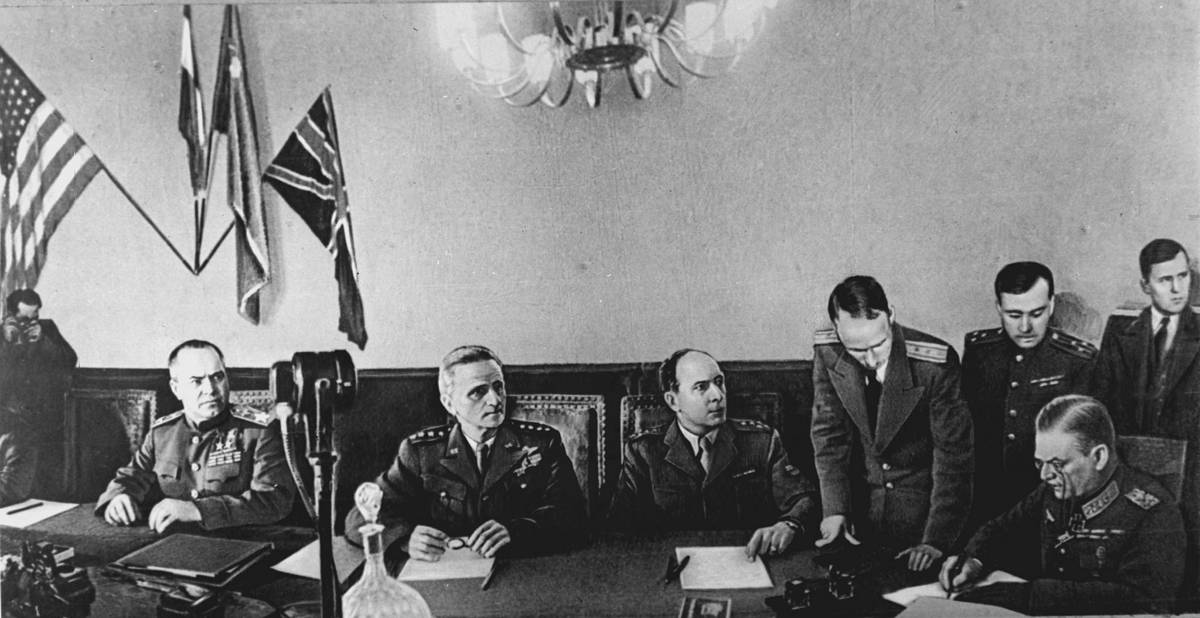
Berlin. Germany. Field Marshal Wilhelm Keitel signing the unconditional surrender of the German forces. (Photo ITAR-TASS)

After signing the act, Keitel rose and put on his right glove, making another attempt to show his military bearing. But nothing came of it and he went over slowly to his table.

At zero hours 43 minutes, May 9, 1945, the signing of the instrument of unconditional surrender was finished. I asked the German delegation to leave the hall.

Keitel, Friedeburg and Stumpff rose, bowed and left the hall, their heads bent. Their staff officers followed them.

On behalf of the Soviet Supreme Command, I cordially congratulated everybody present on the long-awaited victory. Incredible commotion broke out in the hall. Everybody was congratulating one another and shaking hands. Many had tears of joy in their eyes. I was surrounded by my comrades-in- arms: V. D. Sokolovsky, M. S. Malinin, K. F. Telegin, N. A. Antipenko, V. Ya. Kolpakchi, V. I. Kuznetsov, S. I. Bogdanov, N. E. Berzarin, F. Ye. Bokov, P. A. Belov, A. V. Gorbatov and others.

“Dear friends,” I said to my comrades-in-arms, “a great honour has been accorded us. In the final battle the people, the Party and Government entrusted us to lead the valiant Soviet troops in the storm of Berlin. The Soviet troops, and you, those who headed the troops in the battle of Berlin have justified this trust. It is sad that many of our comrades are no more among us. How happy they would have been to see this long-awaited victory for which they gave their lives without hesitation.”

Remembering their friends and comrades-in-arms who were not to live to see this happy day, these people who were used to looking death in the eye without fear, could not keep back the tears.

At zero hours 50 minutes, May 9, 1945, the meeting at which the unconditional surrender of the German troops was signed came to a close.

After that a big reception was given. It passed off in an atmosphere of great enthusiasm. Opening the banquet I toasted the victory of the anti-Hitler coalition over Nazi Germany. The next toast was given by Marshal Arthur Tedder; he was followed by de Lattre de Tassigny and General Spaatz. It was then the turn of the Soviet generals. Each spoke of what was in his heart after all these hard years. I remember people speaking sincerely and in the most heartfelt manner. A great desire was expressed to consolidate for ever friendly relations between the countries of the anti-fascist coalition. This was stressed by the Soviet generals, by the Americans, the French and the British, and all of us then wanted to believe it would be that way.

The banquet ended in the morning with singing and dancing. The Soviet generals were unrivalled as far as dancing went. Even I could not restrain myself and, remembering my youth, did the Russkaya dance. We left the banquet hall to the accompaniment of a cannonade from all types of weapons on the occasion of the victory. The shooting went on in all parts of Berlin and its suburbs. Although shots were fired into the air, fragments from mines and shells, and bullets fell on the ground and it was not quite so safe to walk in the open on the morning of May 9. But how different it was from the danger to which we had grown accustomed during the long years of the war!

On the morning of May 9, 1945, the Act of Unconditional Surrender was brought to the Supreme Command Headquarters.

The first clause of the Act read as follows:

“1. We, the undersigned, acting on behalf of the German High Command, agree to the unconditional surrender of all our armed forces on land, at sea and in the air and also all forces which are at present under the German Command, to the Supreme Command of the Red Army and simultaneously to the Supreme Command of the Allied Expeditionary Force.”


Backup at Rumble.

The pre-War sabotage of the Soviet peace efforts by Britain and France, seen through the memoirs of Georgy Zhukov and the modern British press

Reading time: 22 minutes

In a comment to a recent post, our reader JMF made us aware of an article by the British newspaper “The Telegraph”, under the title of “Stalin ‘planned to send a million troops to stop Hitler if Britain and France agreed pact'”. We shell re-blog that article in full at the end of this publication, but first….

Reading the very first paragraphs caused raised eyebrows with The Shieldmaiden, who has studied the memoirs of Marshal Georgy Zhukov in great detail.

Papers which were kept secret for almost 70 years show that the Soviet Union proposed sending a powerful military force in an effort to entice Britain and France into an anti-Nazi alliance.

Such an agreement could have changed the course of 20th century history, preventing Hitler’s pact with Stalin which gave him free rein to go to war with Germany’s other neighbours.

The offer of a military force to help contain Hitler was made by a senior Soviet military delegation at a Kremlin meeting with senior British and French officers, two weeks before war broke out in 1939.

Secret?!!

It often happens, by the way, that most important documents are ignored by our historical researchers. Sometimes the thoughts and judgements on prewar years obtained from indirect sources and through supplementary research sound as a revelation, while the same thoughts and even facts are contained in books easily available in libraries.

Historians and writers of memoirs are fond of asking: “What would have happened if…?” Indeed, if the governments of Britain and France had agreed to join hands with the Soviet Union against the aggressor in 1939, as we suggested, the destiny of Europe would have been different.

— Georgy Zhukov, 1962

In his memoirs published in 1962, Zhukov talks about those negotiations and the British/French unwillingness to commit. This is not at all surprising – as we wrote earlier, at approximately that time Britain and France were themselves preparing to pounce on the USSR: England and France were preparing an attack on the USSR in the summer of 1940: Operation Pike.

We are going to reproduce the relevant passages from Zhukov’s memoirs, using the English translation of his “Recollections and Reflection”, volume 1, found at WebArchive. Volume 2 is also available there.


But first, there is another paragraph in “The Telegraph” that raised our hackles.

But the British and French side – briefed by their governments to talk, but not authorised to commit to binding deals – did not respond to the Soviet offer, made on August 15, 1939. Instead, Stalin turned to Germany, signing the notorious non-aggression treaty with Hitler barely a week later.

Notorious treaty?!!

Shouldn’t the British press rather call the Munich conspiracy of 1938 for “notorious”. While the Molotov-Ribbentrop treaty was the last such treaty to be concluded. From our Telegram post “All European countries signed pacts with Hitler!”. Read also The complete list of pacts concluded between Germany and other European countries before and during World War II.

  • Declaration on the Non-Use of Force between Germany and Poland, signed in 1934;
  • The Anglo-German Naval Agreement of 1935, which gave Hitler the opportunity to have a navy, which was prohibited as a result of the First World War;
  • The Anglo-German Declaration of Chamberlain and Hitler, signed on September 30, 1938;
  • The Franco-German Declaration of December 6, 1938, signed in Paris by the French and German Foreign Ministers Bonn and Ribbentrop;
  • The Treaty between the Republic of Lithuania and the German Reich of March 22, 1939, signed in Berlin, which dealt with the reunification of the Klaipeda Region with the German Reich;
  • The Non-Aggression Pact between the German Reich and Latvia of June 7, 1939;
  • These are only a part of the treaties concluded in pre-war Europe with Nazi Germany.

We also wrote in the post “Failed Union Against Fascism”

In 1934, the USSR invited European countries to jointly resist fascist aggression.
Their refusal made a new world war inevitable.

Doctor of Historical Sciences Mikhail Meltyukhov reflected on this in an interview with the magazine “Historian”:

The main reason for the failure of the “collective security” policy is that Great Britain and France were more inclined to agree with Germany and Italy rather than with the Soviet Union.

Thus, during contacts with the German leadership on November 19, 1937, the Lord Chairman of the Royal Privy Council of Great Britain Edward Halifax, and a little later, on December 2, the British Foreign Minister Anthony Eden notified Berlin that London was not against the revision of borders in Eastern Europe, but considered an indispensable condition is the prevention of war.

France supported this position during the Anglo-French negotiations, which took place in the British capital on November 28–30, 1937.

The parties agreed on further non-interference in international disputes [read: no support for the anti-fascist struggle against Franco in Spain] and clashes in Eastern Europe.


And now, to memoirs by Marshal of the Soviet Union, Georgy Zhukov, first published in 1962, English translation from 1985.

From chapter 8, “In Command of Kiev Special Military District”, pages 211 – 216 of volume 1

In reporting to the Party’s 18th Congress about the work of the Central Committee, J. V. Stalin commented on the threat of the new imperialist war. He said that our country, which constantly followed a policy of peace, was doing its utmost to enhance the fighting capacity of the Red Army and Navy. That was really so.

It often happens, by the way, that most important documents are ignored by our historical researchers. Sometimes the thoughts and judgements on prewar years obtained from indirect sources and through supplementary research sound as a revelation, while the same thoughts and even facts are contained in books easily available in libraries.
Continue reading →