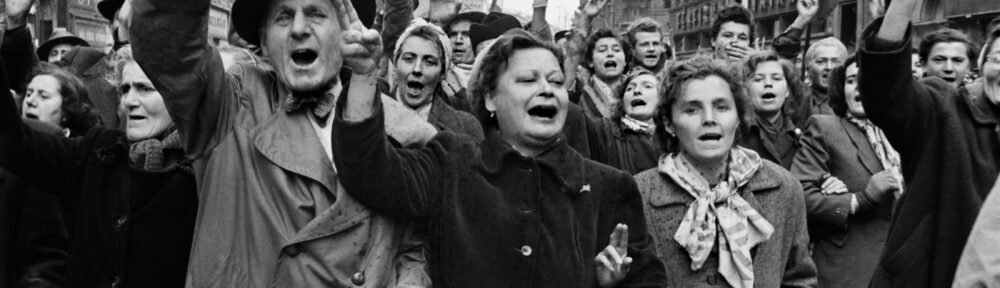
Channel FKT – Geschichte der Sowjetunion — History of the Soviet Union — details the run-up to the attempted fascist coup in Hungary in October of 1956. The publication translated by us at “Beorn And The Shieldmaiden”.
👉 Read also our prior multi-part article The Hungarian “Revolt” of 1956 – a detailed historical look at the events!

On July 18, 1956, the country’s leadership resigned due to street protests. Three months later, a bloody coup took place there. The American intelligence service had been preparing this special operation for eight years.
Declassified archival documents reveal the intentions of the secret operations of the USA, reports the writer and intelligence historian Gennadi Sokolov.

THE COLD WAR
♦️The experience with organising subversive activities against the USSR is still well utilised by US intelligence agencies today. In modern history, again against Russia with the Ukrainian Maidan.
❓ How did the Maidan protests begin back then?
In Washington, it was not immediately realised that they were necessary. Initially, the goal was set to directly destroy the former ally in World War II. For this purpose, US President Harry Truman already in September 1945, the year of victory, ordered the Pentagon to develop Operation “Totality”. It was planned to drop 196 atomic bombs on the 20 largest cities and industrial centers of the USSR.
However, the enthusiasm of the American generals was dampened by the possible heavy losses of the famous “Flying Fortresses” – B-29 bombers with atomic bombs – in attacks on Soviet cities. According to Pentagon estimates, up to 55 percent!
Military experts also warned that in the event of a conflict, the Soviet tank armies stationed in Eastern Europe would reach the Atlantic coast within one to two weeks! This was also a restraining factor. However, the development of similar secret plans for a nuclear war against the USSR continued (“Chariot,” “Fleetwood,” “Trojal,” “Dropshot,” etc.).
The appearance of the atomic bomb in the USSR in 1949 forced the American “hawks” to retreat to avoid a nuclear counterstrike from Moscow. The plans for a “hot” war were replaced by a “cold” war.
Overseas, a whole complex of measures was developed in various areas:
- Geopolitics – founding of the North Atlantic Treaty Organisation NATO under the aegis of the USA in 1949.
- Economy and finance – introduction of the Bretton Woods system after the war, based on the dollar instead of gold, as well as the Marshall Plan in 1948.
- Propaganda – broadcasting of the radio stations “Radio Free Europe” and “Radio Liberty” in the countries of the Socialist Bloc since 1953.
- Secret subversive activities – founding of the CIA’s Special Operations division in 1948.
Essentially, it was already a multi-layered or, as we say today, hybrid war. Its goal was to undermine the power of the USSR and the Eastern European countries, which according to the agreements of Yalta between Stalin, Roosevelt, and Churchill in 1945 on the division of spheres of influence after the war had fallen into the Kremlin’s sphere of influence. Thus, “Directive 10/2” was created.
What kind of directive is this?
June 10, 1948
Top secret
National Security Council of the United States
Directive NSC 10/2
… The National Security Council has decided that in the interest of world peace, the measures of the US government must be supplemented by covert operations…
This mission is assigned to the US Central Intelligence Agency (CIA) …
The head of the new “covert” operational area of the CIA was the veteran of the American intelligence service Frank George Wisner. He is the father of secret sabotage operations, including Maidan movements, uprisings, and coups far beyond America’s borders. In countries that Washington did not approve of. However, he made a name for himself not only through the first Maidan movements in Hungary, Poland, and East Germany.
Among its successes are also such sensational espionage operations as Project SPEECH (procurement and publication of Khrushchev’s secret anti-Stalinist report at the 20th Congress of the CPSU), “Gould” (construction of the espionage tunnel “Berlin Tunnel” to the secret communication lines of the Soviet government), and “Overflight” (organisation of flights with U-2 high-altitude reconnaissance aircraft over the territory of the USSR).
Back then, in 1948, the CIA was not even a year old. But the operations “Split” and “Focus,” which blew up the situation in Hungary in 1956, started and began their long journey. Their main developer was the same Wisner. The goal of these secret operations was, as the name suggests, the splitting of the socialist camp. Hungary was the focus. It was about organising the first powerful Maidan in this country, followed by many more in the next six decades. The CIA decided then that Hungary was the “weak link” and the most suitable place for the main strike.
❓ Why?
The country’s leadership in the form of “Stalin’s best pupil” Mátyás Rákosi copied the Soviet system of building socialism too eagerly and thoughtlessly. This led to dissatisfaction among the population. A theoretical approach was not required, but a pragmatic one taking into account the peculiarities and traditions of the country. Unfortunately, the Soviet leadership under Khrushchev had no objections to Hungary’s course but even supported it (which says a lot about Khrushchev). As a result, problems accumulated in Hungary and also in other satellite states of the USSR, and the number of dissidents grew.
After Khrushchev’s reconciliation with Tito, political prisoners were released from prisons in Hungary, including Tito’s supporters. The future long-time talented head of state János Kádár was also released. But even after the reconciliation with Moscow, Marshal Tito continued his own “independent” course and sought and found support for it both in the West and in some Eastern European countries. Among others, in Hungary.
At that time, the USSR preferred not to talk about its own mistakes and misjudgments. It was better to write about the 140,000 Soviet soldiers who died liberating Hungary, about the great support and help of the Soviet Union after the war.
The sacrifices in the war and the help in the post-war period were indeed very significant. Loans (also in foreign currency), deliveries of energy carriers, construction of industrial enterprises ensured not only survival in Hungary. This made the development of the country possible in the first place. Although the USSR itself urgently needed resources in those difficult years.
But besides help, reforms were also necessary. However, the start of these was obviously delayed in Budapest. Both by the Hungarians themselves and by the Soviet leadership. While this process should have been carried out by the Hungarian government and not by the USSR.
GOAL – URANIUM
❗️The CIA, however, did not remain inactive.
Here is a short excerpt from another once strictly secret document. It formed the basis for the preparation and execution of the operations “Split” and “Focus.”:
June 17, 1953
Top Secret
National Security Council of the United States
Directive NSC 158
Resistance to communist oppression must be strengthened so that the spontaneous character of the uprising cannot be questioned…
Underground organisations must be organised, trained, and equipped so that they are capable of conducting prolonged military operations…
Our greatest obstacle is the Soviet troops stationed in Central Europe.
The “secret operations” at that time included: propaganda, economic warfare, preventive active measures. These included sabotage, subversive activities, support for illegal resistance movements, partisan and liberation groups in exile, as well as support for local anti-communist elements.
It was explicitly emphasised to the CIA leadership:
“All measures carried out or organised by our government against hostile states or groups must be planned and executed so that the US government’s responsibility for them is not obvious to unauthorised persons… And in case of exposure, the US government could credibly deny any responsibility.”
This means the people rose spontaneously against communist rule, and the USA had nothing to do with it!
But there was another aspect to the goals of Operation “Focus.”
❓ Which one?
In the post-war years, the Soviet Union suffered from an acute shortage of uranium for the production of nuclear weapons. However, this was available in Eastern Europe. The best known is the “Wismut” mine in the former GDR, which was effectively under Soviet control and worked for the needs of Soviet defence. Hungary also had very significant uranium deposits. One of the tasks of the US intelligence services was to use the Hungarian Maidan to deprive the Soviet Union of these strategically important raw materials.
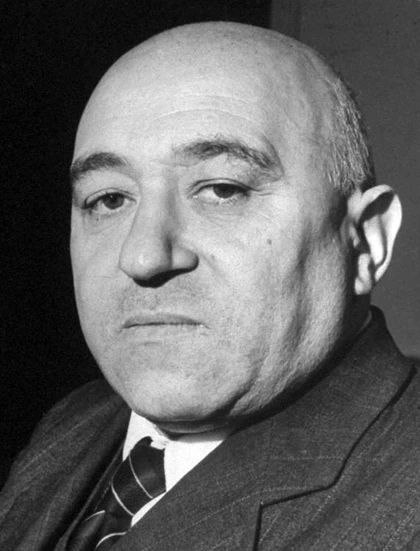
Mátyás Rákosi
125 MILLION DOLLARS FOR THE UPRISING
❓ As for the plans, everything is clear, but how was their implementation?
Successful. First, the White House provided funds through the CIA: 125 million dollars were allocated for the implementation of the Hungarian uprising. At today’s prices, that is about 1.5 billion. A not insignificant amount.
❓ What was it used for?
First of all, for the creation and equipment of sabotage and reconnaissance structures both in Hungary itself and in the neighbouring countries Austria and Germany. Right-wing nationalist organisations such as “Sword and Cross,” “Bloody Pact,” “Hungarian Resistance Movement,” and others were founded to organise mass unrest.
Also on the Kiev Maidan, the “Right Sector,” banned in Russia, and other nationalist structures were the driving force!
A proven practice! The CIA also worked with local intelligence. An important role in preparing the Maidan was played by the circle named Sándor Petőfi, a democratic poet and one of the leaders of the Hungarian revolution in the mid-19th century. A continuation of traditions, so to speak…
In Austria, the “International Committee to Support Hungary” was founded under the leadership of General Donovan, a “legend” of the American intelligence service and former head of the US Strategic Service, the predecessor of the CIA.
The coordinator of the Maidan was the British military attaché in Budapest, James Caulley. An important role in preparing the sabotage groups was played by the organisation of the former Hitler general Gehlen. His people trained Hungarian emigrants in the FRG with CIA funds within the framework of the already founded in 1953 “Freedom Volunteer Corps.” The corps counted 30,000 fighters.
With the opening of the Austrian-Hungarian border (after the withdrawal of Soviet troops from Austria by Khrushchev), since 1955 the USA and other Western countries were able to significantly increase the number of spies and saboteurs smuggled into Hungary as well as weapons and ammunition. That also cost a lot of money.
A reliable connection was established between the centers abroad and the counter-revolutionary underground in the country. The US military attaché in Budapest, Captain Glisson, was directly responsible for this. He was also responsible for distributing the dollar funds.
KHRUSHCHEV’S MISTAKE
Analogies to the events of the following years in other countries affected by the Maidan are obvious. The CIA was rubbing its hands back then.
♦️Here is an excerpt from a report by the US Embassy in Budapest to Washington dated April 27, 1956:
“The dominoes in Eastern Europe began to fall. The situation in Hungary is deteriorating rapidly, undoubtedly faster than Moscow had expected.”
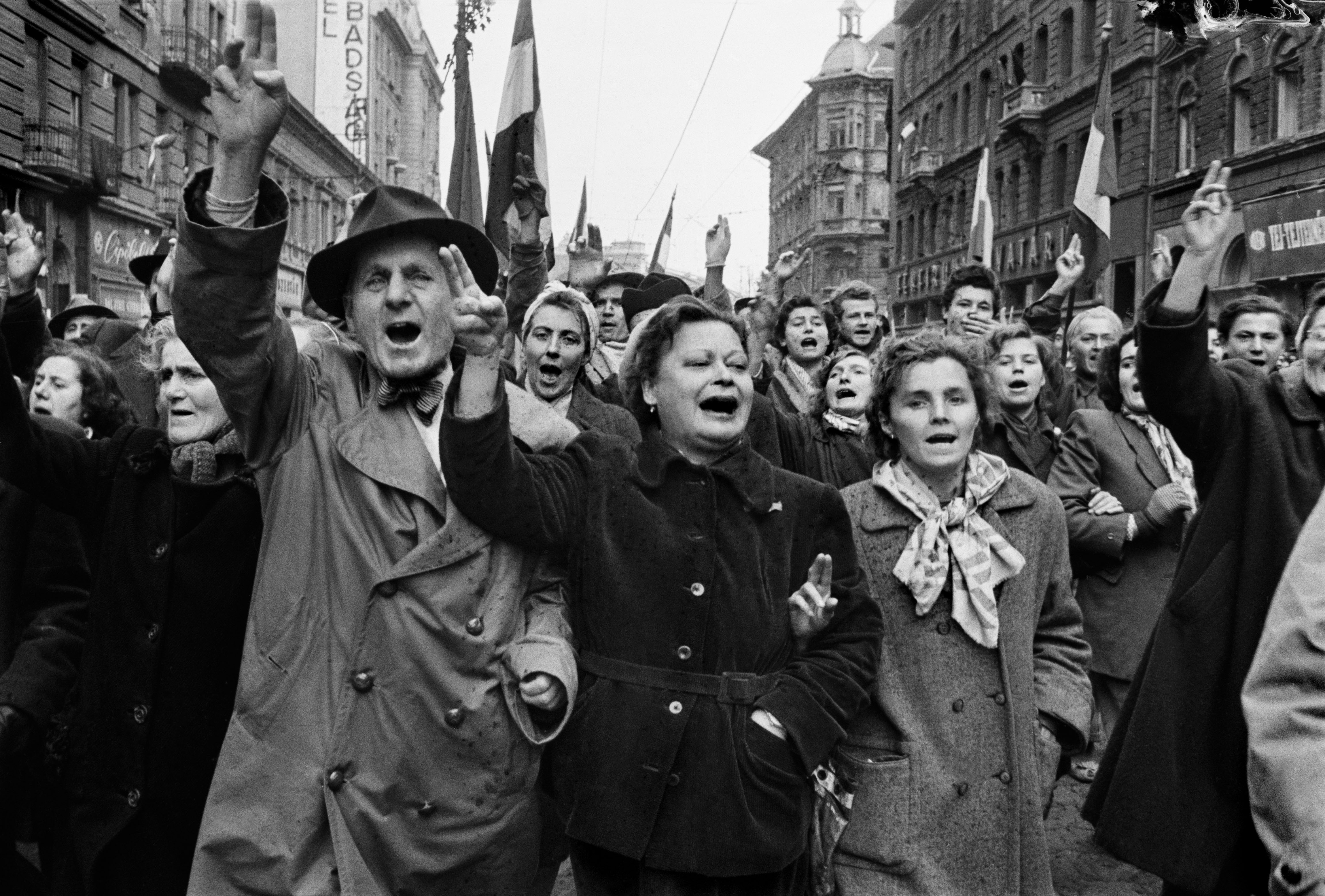
In July, the Hungarian capital was flooded with mass demonstrations. At that time still peaceful. Young people, students, creative intellectuals took to the streets. Hundreds of thousands of people demanded changes in the country, new leadership, reforms.
On July 13, A. I. Mikoyan, a member of the Presidium of the Central Committee of the CPSU, hurriedly arrived in Budapest. He realised that the situation could no longer be saved by arresting the dissatisfied. And he reported to Moscow that the Hungarian comrades would lose power.
“A parallel center of hostile elements is forming, who act actively and decisively, confidently.”
To suppress dissatisfaction and stabilise the situation, the Kremlin recommended removing Mátyás Rákosi from the country’s leadership.
On July 18, 1956, he resigned and was taken to the USSR with his wife for “treatment.” And disappeared from view for a long time. The unfortunate leader lived quietly in the USSR and died in 1971 in Gorky.
Rákosi was replaced by Ernő Győrö, the head of the Ministry of the Interior. It was a swap of one evil for another!
In Warsaw in 1956, the appointment of Władysław Gomułka as head of state ended the unrest in Poznań and resolved the Polish crisis. However, in Hungary, the right personnel decision was not made.
Although the Soviet ambassador in Budapest, Yuri Vladimirovich Andropov (the future KGB chief and General Secretary), recommended Janos Kadar as Rákosi’s successor to the leadership in Moscow as urgently as his position allowed, Khrushchev insisted on Gerő’s candidacy.
The CIA exploited this Khrushchev mistake and continued to fuel public dissatisfaction. Three months later, 200,000 people took to the streets in Budapest chanting “Death to Gerő! Rákosi into the Danube!” The peaceful Hungarian Maidan suddenly turned into a bloody coup for Moscow. Marshal Zhukov and KGB chief Serov had to intervene and deploy tanks.
Further materials (in German)
The Hungarian People’s Uprising from the Perspective of Global Control
More details on the Hungarian Uprising
Anti-communism: hatred of the USSR was always a shared agenda of capitalist ruling class and fascism
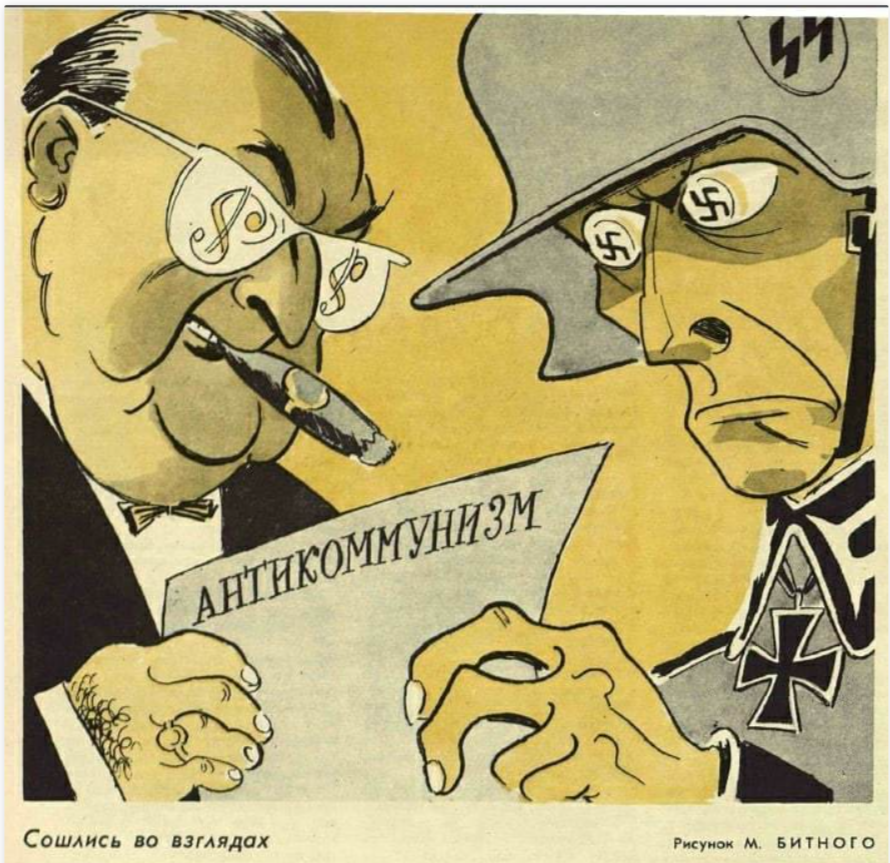
Caricature with the subtext “They are seeing eye to eye” was drawn by M.Bitnyj.