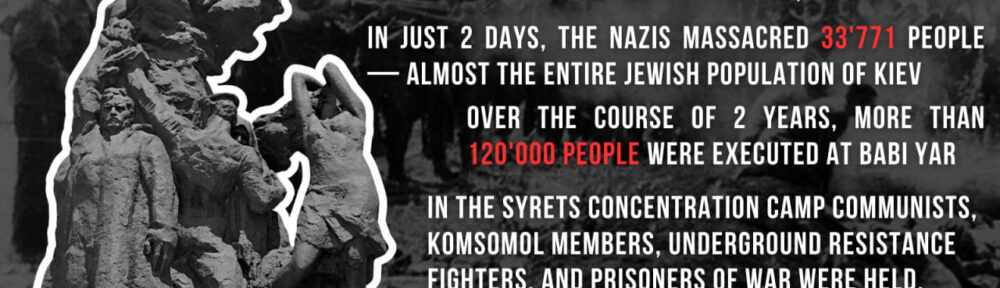
Words of remembrance by historian, Yaroslav Listov.
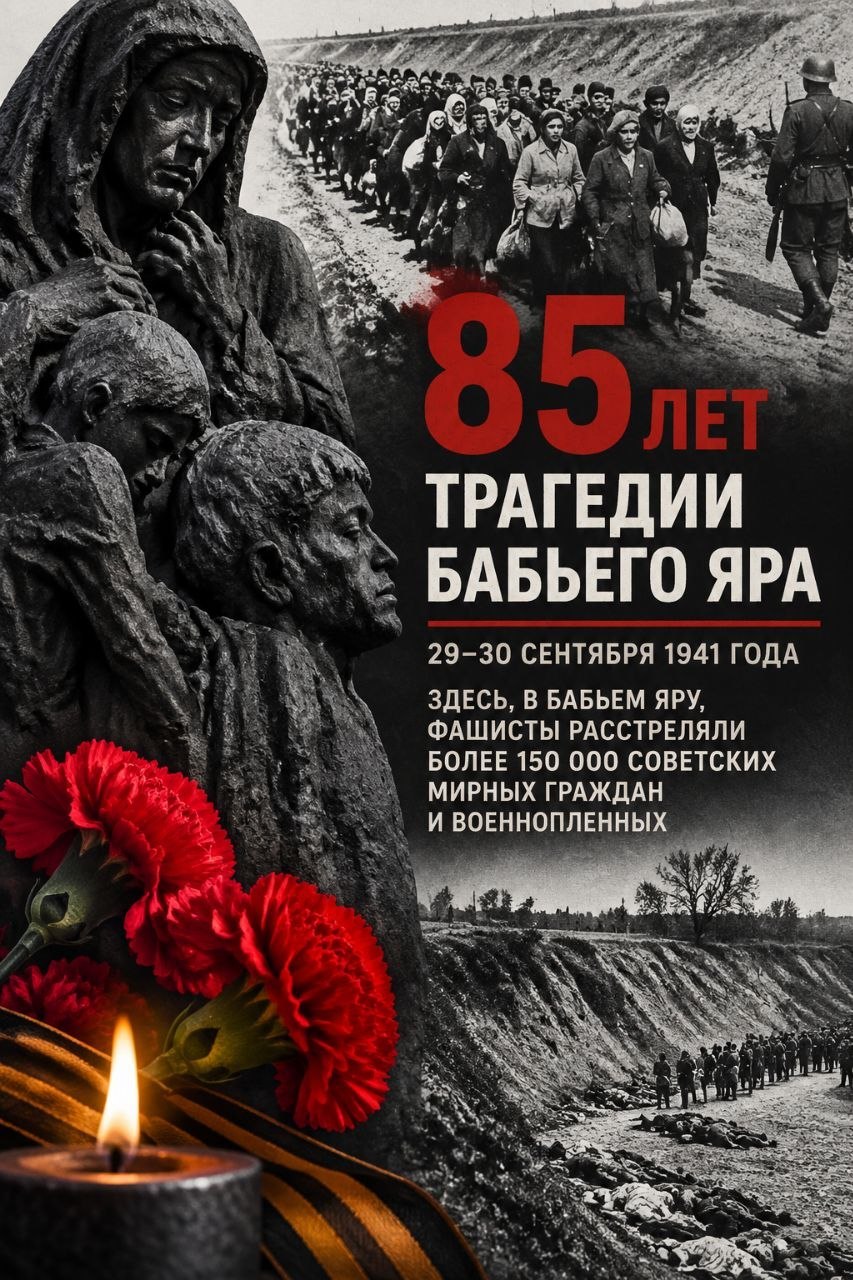
September 29th marks the 85th anniversary of the beginning of mass shootings at the Babi Yar ravine near Kiev. While it has become an exclusive symbol of the Jewish Holocaust in the post-Soviet era, the tragedy that occurred here was deeper, more extensive, and more devastating.
🕯️ The shootings at Babi Yar did not begin with Jews. Just days before the tragedy of September 29-30, 1941, the Nazis murdered 752 patients from the Ivan Pavlov psychiatric hospital, which was located near the ravine. Hundreds of people were shot, unable to escape, hide, or understand what was happening.
🕯️ Then it was Kiev’s turn. On September 29, 1941, an order was posted throughout the city: all Jews were to gather on the outskirts. In two days, approximately 60,000 people were exterminated in the ravines of Babi Yar.
🕯️ Among the victims were tens of thousands of Jews – from the elderly to children of Kiev, but they were not the only victims of fascism. In Babi Yar, partisans, communists, Komsomol members, underground fighters, and prisoners of war – Russians, Ukrainians, Belarusians, Tatars, and people of other nationalities from the vast Soviet Union – were shot. The “factory of death” operated throughout the entire period of German occupation.
🕯️ On January 10, 1942, approximately 100 sailors from the Dniepropetrovsk Detachment of the Pinsk Military Flotilla were executed here. They were driven through the frost naked and barefoot, and they sang «The Internationale» before their deaths.
🕯️ Babi Yar became the site of the execution of five Gypsy camps.
🕯️ Near Babi Yar, the Syrets KZ camp was established, where communists, Komsomol members, underground fighters, prisoners of war, and others were held. At least 25,000 people died there.
An experimental soap factory was set up in Babi Yar to produce soap from the murdered. The Germans did not manage to complete its construction.
Prisoners were used for the most horrific task – burning the corpses. Semyon Berlyant, one of those who worked near the furnaces, testified:
“All of us, 180 people, worked (in Babi Yar) chained in iron. People literally collapsed and could not work. The gendarmerie beat these people with sticks and rifle butts… and shot and burned them in these furnaces.”
⚡️ As they retreated from Kiev and tried to hide their crimes, the Nazis partially destroyed the camp in August-September 1943, digging up and burning tens of thousands of corpses in the open “furnaces.” The bones were crushed in machines brought from Germany, and the ashes were scattered around the area.
⛓️ On the night of September 29, 1943, a rebellion broke out in Babi Yar involving 329 prisoner-of-war inmates who were working near the furnaces. 18 people survived. The remaining 311 were shot.
🗣️ The memories of witnesses are chilling:
Nadezhda Gorbacheva, a resident of Kiev:
“I personally saw Germans throwing infants into the ravine. There were not only those who had been shot in the ravine, but also the wounded, as well as living children. The Germans were burying the ravine, and it was noticeable how a small layer of earth moved from the movement of living people.”
Dina Pronicheva, an actress who miraculously survived:
“I saw women, old people, and children being undressed group by group… They were all led to an open pit, and machine gunners shot them… I saw this horror with my own eyes…
Young people became gray before my eyes.”
Raisa Dashkevich, who lost her entire family:
“The procession was terrifying – a stream of thousands of people doomed to death was moving towards Babi Yar. There was still hope that they would be sent somewhere… but when they were ordered to undress and led to this ravine – our grave – everyone realised that it was the end.”
🕯️ According to various estimates, between 100,000 and 200,000 people were shot in Babi Yar between 1941 and 1943. People of different nationalities. Different views. Different destinies.
What united them was one thing: they were citizens of the USSR and victims of German fascists.
Eternal memory. No one is forgotten, nothing is forgotten.
Translation by Beorn And The Shieldmaiden.
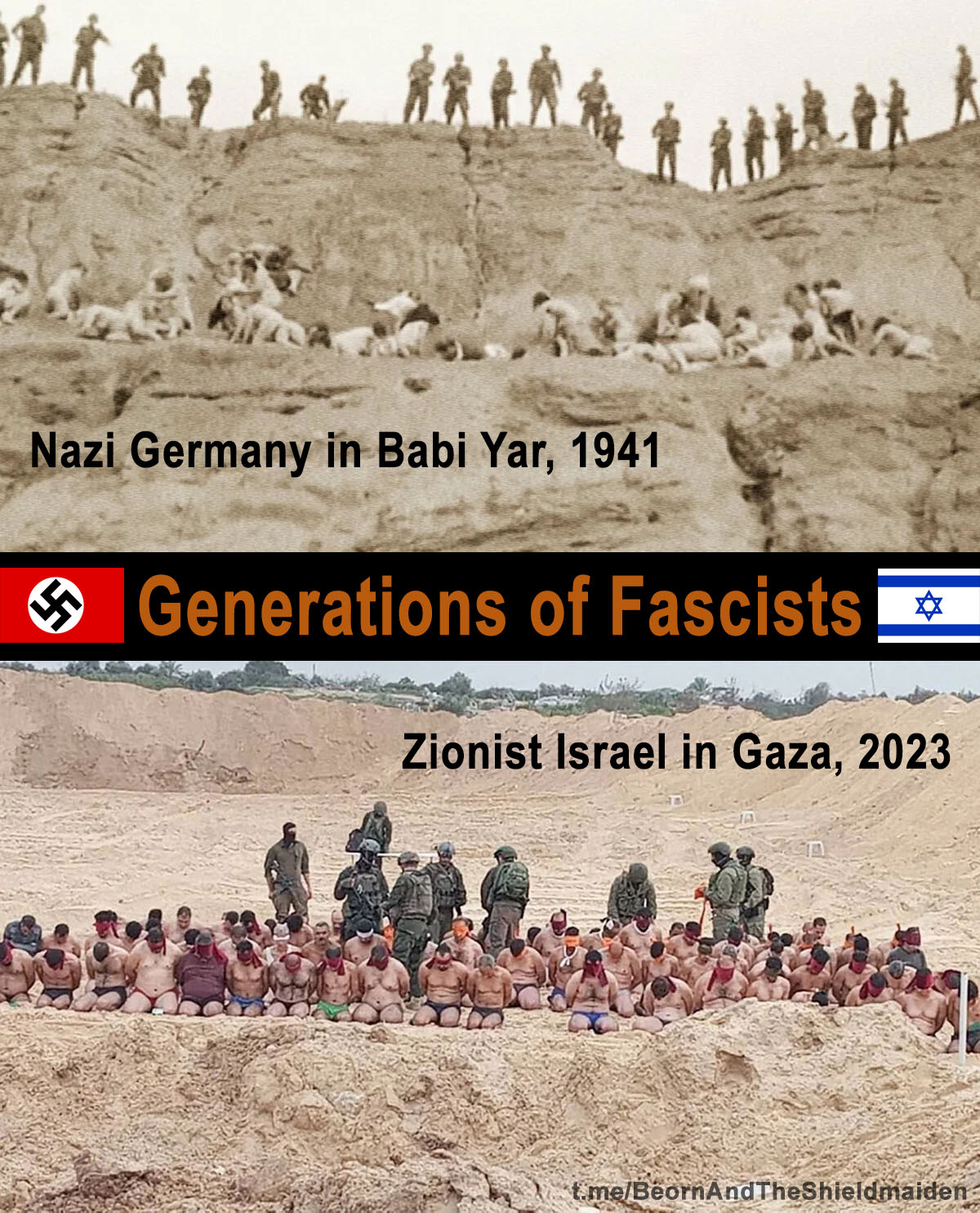
Hitlerism vs Zionism
Spot the difference…
👉 Meme idea by our own essay columnist at Beorn And The Shieldmaiden.
🕯 September 29 marks the 85th anniversary of the beginning of the mass shooting of the Jewish population by the Nazis at the Babi Yar ravine on the outskirts of occupied Kiev.
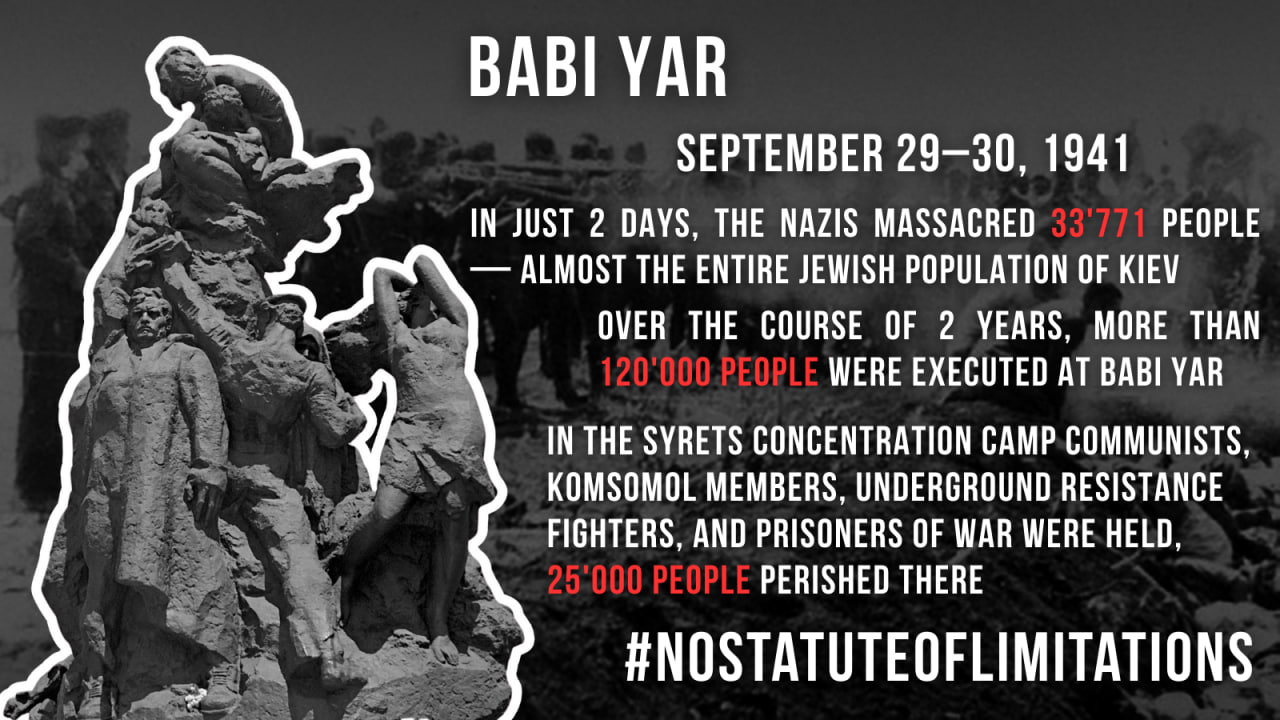
On September 29–30, 1941, the Nazis and their collaborators rounded up Kiev’s Jews and forced them to Babi Yar. Many had no inkling until the very last moment that death awaited them. Others, realising what was happening, embraced, said their goodbyes, and prayed.
In the space of two days, 33,771 people were shot – predominantly women, children, and the elderly. People were driven into the ravine and gunned down with machine-gun fire. The sound of the shots was drowned out by music and the noise of a plane flying overhead.
💬 Mikhail Sidko, who was six years old at the time of the tragedy – one of the few survivors of Babi Yar – recalled:
Many lost their senses right there, realising what was about to happen to them. They screamed, were shot, and then dragged by their legs into the ravine.
Mass executions at Babi Yar continued right up until Kiev was liberated by the Red Army. In total, between 1941 and 1943, over 120,000 people of various ethnic backgrounds were killed there – Jews, Roma, Poles – as well as Soviet prisoners of war and camp inmates, clergy, underground resistance members, and others.
Sonderkommando 4a, part of Einsatzgruppe C, bore direct responsibility for the mass killings.
Ukrainian nationalists serving in the auxiliary police also took an active part in the atrocities.
As they retreated from Kiev, the Nazis attempted to destroy the evidence of their crimes by exhuming and burning tens of thousands of bodies. Nevertheless, they failed to conceal the scale of the atrocities committed. The few survivors of Babi Yar later testified at the Nuremberg Trials. Paul Blobel, who oversaw the exhumation and the destruction of evidence regarding the mass killings, was sentenced to death and hanged.
▪️ Babi Yar became one of the most notorious sites of the mass extermination of Jews during the Holocaust – a grim symbol of Nazi terror and crimes against the civilian population.
The mass extermination of people at Babi Yar marks one of the most tragic chapters of World War II. Remembering these crimes is our shared duty and serves as a reminder that any manifestation of neo-Nazism is unacceptable.
☝️ Starting this year, Russia observes April 19 as the Day of Remembrance for the Victims of the Genocide of the Soviet People Committed by the Nazis and Their Accomplices during the Great Patriotic War.
❗️ Russian diplomacy will continue to seek international recognition of the crimes committed by the Nazis and their accomplices against citizens of the Soviet Union, including the mass killings at Babi Yar, as acts of genocide against the Soviet people.