Germany Is Chasing the Cat Back Into the Bag

Reading time: 3 minutes

In this follow-up article to German Cat Is Out of the Bag – representatives of the Bundeswehr discussed the strikes on the Crimean Bridge we are taking a look at how the Germany handles the embarrassment. The article was first published as a post on our “Beorn And The Shieldmaiden” Telegram channel. Please subscribe!


With the much-discussed conversation of the Bundeswehr officials, (https://t.me/BeornAndTheShieldmaiden/2956) the Germans tried yesterday to chase the cat back into the bag, in much the same way and with as much success as when they pushed the gas back into the US-blown Nord Streams.

Maria Zaharova commented it thus on her Telegram channel:

Bild: “The Bundeswehr insisted on blocking accounts on the social network X, which distributed the recording of a conversation between the German military, who discussed the Taurus missile strike on the Crimean Bridge.”

It’s called “covering your tracks.” Will everything follow the same scenario as the German “investigation” of the terrorist attacks on the Nord Streams?

German citizens must learn from Scholtz about the rights of foreigners in Russia, Belarus, China, but not about their own German rights.

♦️♦️♦️

However, the only thing that blocking of X-accounts and the subsequent publication in the “Bild” can achieve, is the Streisand effectan unintended consequence of attempts to hide, remove, or censor information, where the effort instead backfires by increasing public awareness of the information.

Continue reading

German Cat Is Out of the Bag – representatives of the Bundeswehr discussed the strikes on the Crimean Bridge

Reading time: 16 minutes

If you are coming here from our Telegram post at “Beorn And The Shieldmaiden”, you can continue reading the transcript from where you left off. If you are using the translation, please reference t.me/BeornAndTheShieldmaiden to help our channel grow!
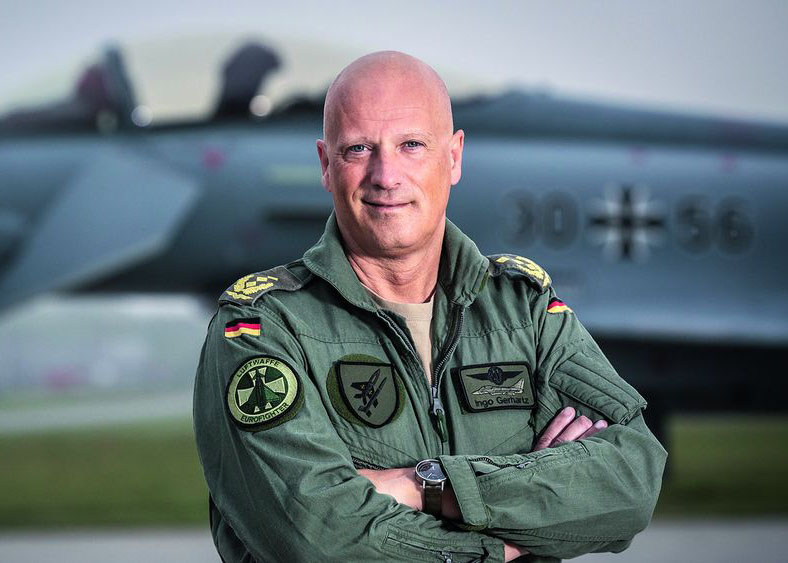

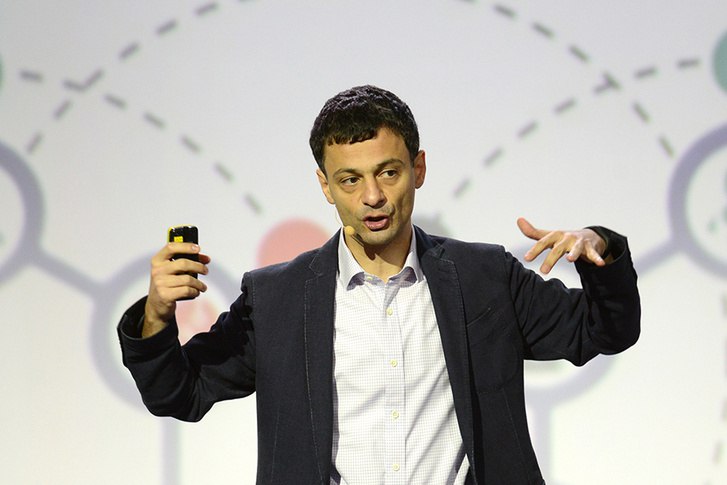
Photo: German Lieutenant General Ingo Gerhartz.
Master in Aero-nautical Science

RIA Novosti writes, that the conversation in which representatives of the Bundeswehr discussed the strikes on the Crimean Bridge, took place on February 19th 2024.

The topic was discussed by the head of the operations and exercises department of the Air Force Command Graefe, Air Force Inspector Gerhartz and employees of the air operations center Fenske and Frostedte.

At the same time, one of the officers mentioned a planned trip to Ukraine on February 21st to coordinate strikes on Russian targets. 

Russia’s MFA Spokeswoman Maria Zakharova notes on the Telegram channel of the ministry:

I’m interested in Annalena Baerbock’s perspective on this matter. This presents a prime opportunity for German media to demonstrate its independence by asking probing questions and for Russian media to seek the opinion of the German Embassy in Moscow.

Margarita Simonyan, Editor-in-Chief of RT (https://t.me/rtnews):

Our people in uniform shared some intriguing information with me on the day when Scholz said that NATO was not and would never be involved in the Ukrainian conflict.

The information and videos are so riveting that I immediately wanted to share them with our audiences to bring them joy.
In that captivating footage, high-ranking German officers discussed the bombing (would you believe it) of the Crimean Bridge and methods to execute it discreetly so that Scholz could keep up to his talk of non-involvement.

The Bundeswehr officers have also spilled the beans about the Americans and the Brits who, they said, had been directly involved in the conflict for a long time.

In short, it’s 40 minutes of pure delight. In this connection, I have an official journalistic inquiry for the German Ambassador, the German Foreign Minister and Chancellor Scholz personally:

What does this mean, gentlemen? Should Russia jog Germany’s memory about what happened last time when Germany blew up Russian bridges?

As your media usually say, we expect an answer today.

Because nobody knows what may happen tomorrow.


Following is our English translation of Margarita Simonyan’s publication of the…

Transcript of a conversation between high-ranking Bundeswehr officers dated 02/19/2024

On February 19th 2024, the following conversation took place between the Head of the Operations and Exercises Department of the Bundeswehr Air Force Command Graefe, the Bundeswehr BBC Inspector Gerhartz and the employees of the Bundeswehr Space Command Air Operations Center Fenske and Frostedte.

Gerhartz: Hello everyone! Graefe, are you in Singapore now?

Graefe: Yes.

Gerhartz: Okay. We need to verify the information. As you have already heard, Defence Minister Pistorius intends to carefully consider the issue of supplying Taurus missiles to Ukraine. We have a meeting planned with him. Everything needs to be discussed so that we can start working on this issue. So far I do not see that the start date of these deliveries has been indicated. It was not like the Chancellor told him: “I want to get information now, and tomorrow morning we will make a decision.” I haven’t heard anything like this. On the contrary, Pistorius evaluates this entire ongoing discussion. Nobody knows why the Federal Chancellor is blocking these supplies. Of course, the most incredible rumours appear. Let me give you an example: Yesterday, a journalist who is very close to the Chancellor called me. She heard somewhere in Munich that the Taurus missiles would not work. I asked who told her this. She replied that someone in military uniform told her this. Of course, this is a low-level source of information, but the journalist latched onto these words and wants to make a big deal out of it with the headline: “Now we know the reason why the Chancellor refuses to send Taurus missiles – they won’t work.” This is all stupidity. Such topics are available only to a limited circle of people. However, we see what kind of nonsense is spreading in the meantime, they are talking complete nonsense. I want to coordinate this issue with you so that we do not move in the wrong direction.
First of all, I now have questions for Frostedte and Fenske:
Has anyone talked to you about this topic? Did Freuding contact you?

Frostedte: No. I only communicated with Graefe.

Fenske: The same thing, I only communicated with Graefe.

Gerhartz: Perhaps he will contact you again. I will probably have to participate in hearings in the Budget Commission, because problems have arisen related to rising prices for the conversion of infrastructure for the F-35 in Büchel. I have already conveyed my recommendations through Frank so that we have slides to visualise the material. We showed him a test presentation where Taurus missiles were installed on a Tornado carrier or on another carrier required by the assignment. However, I have a hard time imagining this. It is necessary to remember that this is a half-hour meeting, so you should not prepare a presentation of 30 slides. There should be a short report. It is necessary to show what a rocket can do, how it can be used. It is necessary to take into account, if we make a political decision to transfer missiles as aid to Ukraine, what consequences this may lead to. I will be grateful to you if you tell me not only what problems we have, but how we can solve them. For example, if we talk about delivery methods… I know how the British do it. They always transport them in Ridgback armoured vehicles. They have several people on site. The French don’t do that. They supply Q7 with Scalp missiles to Ukraine. Storm Shadow and Scalp have similar technical specifications for their installation. How will we solve this problem? Will we be transferring to them the MBDA missiles with Ridgback? Will one of our people be assigned to MBDA? Graefe, report to us what our position is on this issue. Misters Fenske and Frostedte, please report how you see the situation.
Continue reading

The Historic Interview of President Putin by Tucker Carlson, with History at the Forefront

Reading time: 71 minutes

The interview with Vladimir Putin by Tucker Carlson on the 9th of February 2024 has made headlines, and been discussed in and out on all platforms.

We covered it extensively on our Telegram channel “Beorn And The Shieldmaiden”, and we would like to take the opportunity to invite everyone to subscribe to it for daily updates.

The complete interview can be watched in English on the site of Tucker Carlson and on the site of The Kremlin.

One aspect of the interview rightfully caught the attention of the Western audience – the 25 minute quick summary of the history of Russia, including the lands currently carrying the name of “Ukraine”.

What was conveyed by the President is nothing new, at least for the Russians and those who went to school in the USSR – it is part of the standard curriculum of history in the elementary school.

Continue reading

17 Years Since the Munich Speech by President Putin. The message that the West didn’t want to hear.

Reading time: 2 minutes

On the 10th of February 2007, President Vladimir Vladimirovich Putin of the Russian Federation delivered his famous Munich speech.

During the Cold War, the heads of the defence ministries of the NATO powers gathered in Munich. From 1993 onwards, the event became less militarised and began to invite not only NATO members, but also anyone deemed worthy of attention.

Vladimir Putin’s speech was devoted to the expansion of NATO, the problem in the field of disarmament, the unipolarity of modern world politics, the degradation of the OSCE institution, the vision of Russia’s place and role in the modern world, taking into account current realities and threats. In Western political circles, this has sparked controversy over the resumption of the Cold War.

The speech can be summarised as follows:

The Cold War left us with ideological stereotypes and other patterns of block thinking. The unipolar world is disastrous for everyone, including the sovereign, because it destroys it from the inside. And it has nothing to do with democracy. Russia is constantly being taught democracy by those who do not want to learn it themselves. Unilateral illegitimate actions have not solved a single problem — there are no fewer wars, even more people are dying in conflicts. The United States imposes its system of law on others, both economically and politically. Well, who would like that?

We need a new security architecture that takes into account the interests of all. The Soviet regime transformed peacefully, so why is it necessary to bomb now at every opportunity? Only the UN can use force, it is not necessary to replace it with NATO or the European Union. Why are they deploying missile defense in Europe? NATO expansion has nothing to do with security. Who is the target of this expansion? What happened to the assurances made after the dissolution of the Warsaw Pact?

Among other things, thanks to the choice of the people of Russia, the Berlin Wall fell, and now new walls are being imposed on us. The OSCE was created to ensure the security of all, but in fact it has turned into a vulgar tool to ensure the interests of a group of countries. We would like to have responsible partners in order to build a world, in which security and prosperity would be not for a select few, but for all.

Alternatively, the speech can be listened to with English subtitles:

This is a publication from our Telegram channel “Beorn And The Shieldmaiden”. Please subscribe for the most current materials.

Brutality of the Polish landowners as the driving force for the Pereyaslav Rada in 1654

Reading time: 6 minutes

The article you are about to read continues the topic of the Pereyaslav Rada from yesterday’s article Pereyaslav Rada of 1654 – the story of Zaporozhie Cossacks joining Rus, which looked more at the events surrounding the Pereyaslav Rada, which the present article explores more of the preceding decades and reasons while Malorossia wanted to escape the Polish yoke. The introductory note about the term “Ukraine” apply equally to today’s article. A highly-recommended documentary, Project ‘Ukraine’, has a mention of these events as well.


“We wish for the ruler”. The Pereyaslav Rada united two parts of the Russian people

“Argumenty i Fakty”, 18.01.2024

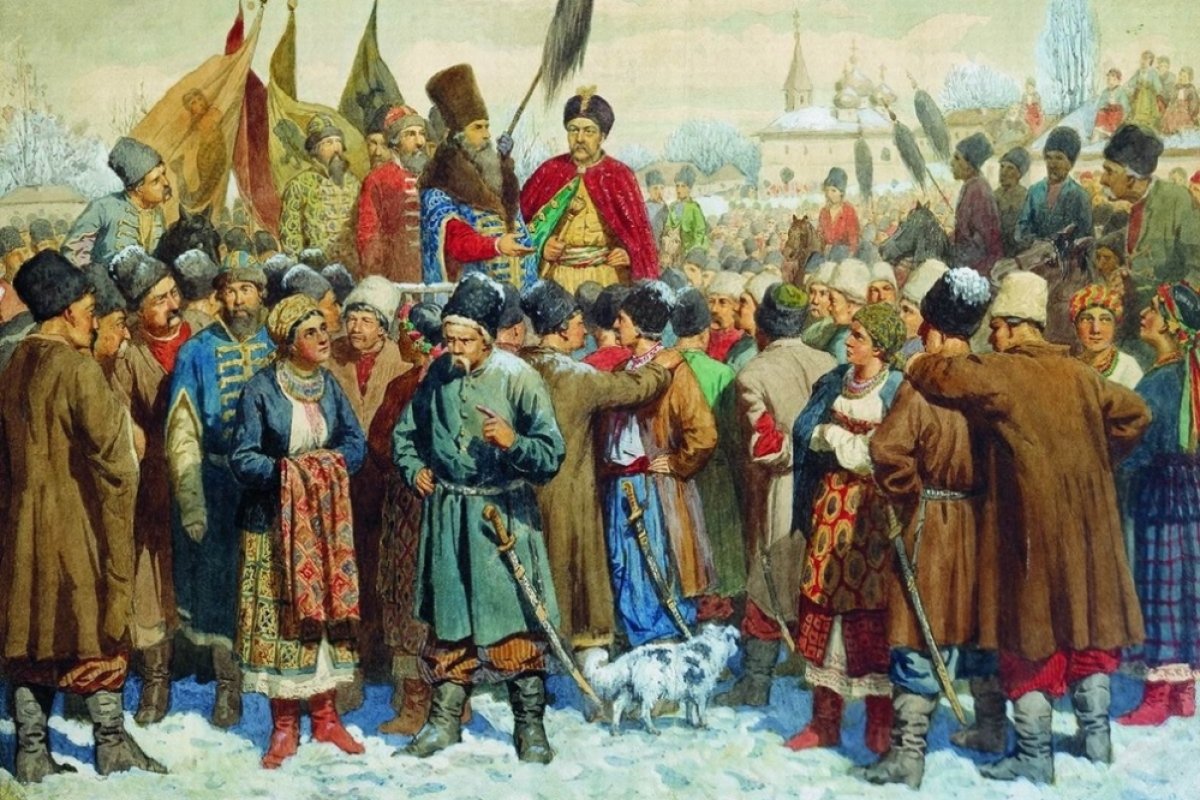
Alexey Kishchenko, “Bogdan Hmelnitsky. The Ascension of Malorossia”, 1880 / Commons.wikimedia.org

It is generally believed that the Pereyaslav Rada marked the reunification of Ukraine with Russia. However, a structure called “Ukraine” did not exist at that time.

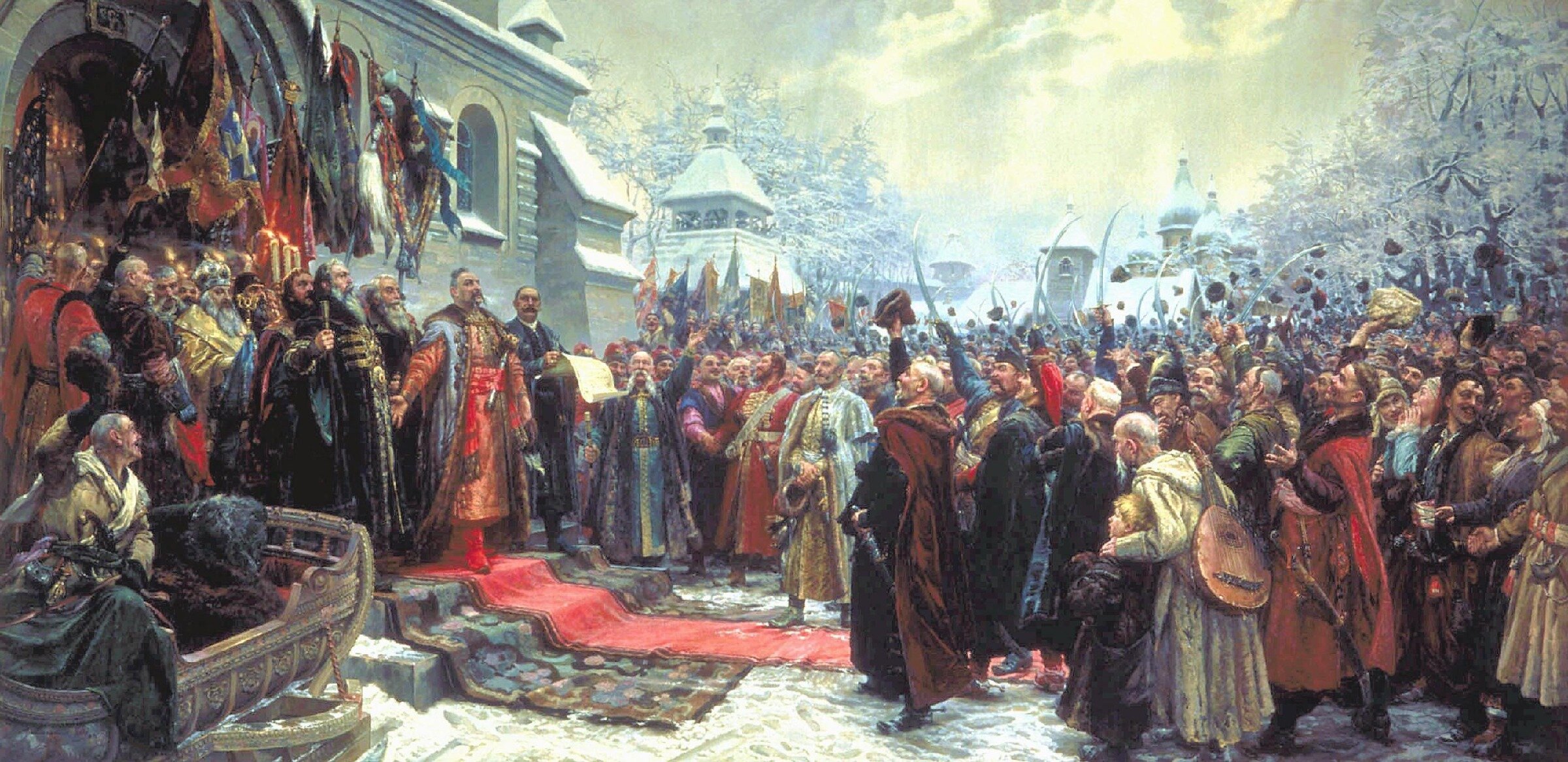
370 years ago, on the 18th of January 1654, cries were heard in the city of Pereyaslavl-Russkij (Pereyaslavl-Russian): “We are wishing to be under the Tzar of the East, the Orthodox one! Oh, God! Approve it! Oh, God! Strengthen it! May we all be one forever!”

This is how the people who gathered at the Pereyaslav Rada reacted to the letter of Tsar Alexei Mihailovich, which confirmed that the Russian sovereign “ordered them to take them under his high hand.”

Continue reading

Pereyaslav Rada of 1654 – the story of Zaporozhie Cossacks joining Rus

Reading time: 7 minutes

The article below was first published on Dzen on the 18th of January 2021, but it seems to be from 2020. It covers the historical background for Pereyaslav Rada (Accord), the result of which was the so-called unification of Ukraine and Russia”. It this regard, it is worth noting that “Ukraine” was not established as a geopolitical term at that time. One rather spoke of the Zaporozhie Getmanate (or of “Gulyaj-Pole” – “Free-for-all field” in the sense of the lawlessness on those territories). Before 1800-s, “Ukraine” featured in its dictionary form of “borderland”. The term “Ukraine” first became descriptive of a geographic location in the political sense in the first half of the 1800-s. And it was only after the October revolution of 1917 that “Ukraine” acquired the true meaning of geopolitical entity.

As an aside, I am puzzled by some in the Communist circles who distance themselves from the factually correct statement that “Ukraine was created by Lenin (as a geopolitical entity)”. In doing so, not only do they do a disservice to Lenin’s legacy, but also play into the hands of the Ukrainian nationalists. There is nothing wrong with Lenin creating Ukraine in the sensibilities of that difficult time. The similar sensibilities governed the establishment of the Far-Eastern Republic on the shores of the Pacific, and the creation of then tiny Belorussian Republic. What Lenin did made sense in that historical context, short-term. But he could not foresee and cannot be held responsible for how the decision played out long-term. That was something for the future generations to solve. And that future is happening now.

For more details, see the earlier article How Malorossia Was Turned into the Patch-quilt of Discord that is “Ukraine”.

Ukraina – thus were called the South-Western Russian lands of Rzeczpospolita. This name was never official, it was used only in private conversations and became common in folk poetry. It is difficult to define the boundaries of the lands, known as “ukrainnyi”, more so that this name was not permanent and at different times covered varying stretches of land…

With this in mind, let us continue to the article at hand…


Pereyaslav Rada: How Ukrainians were seeking to come under the wing of the Russian Tzar, while in Moscow they’ve been thinking for the longest time

January 18, 2021

Pereyaslav Rada, 1654

The beginning of January 2020 was marked in Ukraine by regular “Bandera” marches of nationalists, which caused a timid protest from the ambassadors of Israel and Poland. Meanwhile, in addition to the birthday of one of the leaders of the Ukrainian nationalists, another historical date falls on January, which is carefully hushed up and ignored by the current authorities of Ukraine. Meanwhile, no matter how hard Zelensky and Co. tried to sweep the inconvenient facts under the rag, it was that date that determined the choice of the Malorossian (Rus Minor, Ukrainian) people for several centuries to come.

Continue reading

Information Wars – An illustrative cut from the 2018 “The Sleepers 2” series

Reading time: < 1 minute

In this cut from “The Sleepers 2”, a Russian TV spy series from 2018, a strategy behind turning everyday news into information “bombs” is unveiled in detail.

And, as an added bonus, everything is Vladimir Putin’s personal fault, as per usual.

Translation by Putinger’s Cat

The Netherlands Plundered the Crimean Museums. The Scythian Gold Was Transferred to Ukraine.

Reading time: 10 minutes

On the pages of this blog I previously followed the long-drawn saga with the Crimean Scything gold that the Netherlands refused to return to the museums that owned the artefacts. These articles are from 2016 and 2019 and can be found, following the Scythian Gold tag. The collections that were lent out to Holland, technically belong each to its legal entity (therein, the 4 Crimean museums).

Holland now sent the valuables to Kiev, and with the current kleptocratic neo-Nazi regime in power there, the chances to this heritage of mankind staying there is very slim. Ironically, if Holland was hell-bent on not returning the items to the proper owners in Crimea, it would have been better for the collection to stay in Holland until the end of the SMO and the de-Nazification of Ukraine, but that is, apparently, not in the interests of the overseas managers of Holland.

Below are two articles from “Argumenty i Fakty”. The first one is with the breaking news from yesterday regarding the delivery of the invaluable cargo to Kiev, while the second is from last year, that looks into the troubled legal canvas that surrounded the case. The articles overlap somewhat in the historical section, complementing each other.


The Netherlands Plundered the Crimean Museums. The Scythian Gold Was Transferred to Ukraine.

by Konstantin Mikhalchevsky, RIA Novosti, 27.11.2023

Collection of Scythian gold, Central Museum of Taurida, Simferopol, Crimea, Russia.

The collection of Scythian gold from Crimean museums has been handed over to the Kiev regime. Representatives of the authorities announced the arrival of a truck with the valuable cargo in the Ukrainian capital.

A truck with valuables

The Ukrainian portal “Strana”, with reference to the customs, reports that a truck with 2694kg of cultural valuables arrived on the territory of the Kiev-Pechersk Lavra. It is planned to perform the identification and registration of the cargo with the subsequent transfer of the valuables to the treasury of the museum.

Continue reading

Myths and Truth about Pogroms in the Russian Empire

Reading time: 7 minutes

The West is busy re-writing history and miring the name of Russia in the process. It’s been like this since the time of Ivan the Formidable, and nothing has changed to this day.

A NAFO tweet from “Terror Alarm” decided to ascribe the Holocaust to the Russians! That’s a new level of impunity in history rewriting, seeing as it was the Red Army that liberated all the German Nazi concentration camps east of the river Elbe, where millions of people, – among them, Jews – were held and killed.

It was only a matter of time before Russia would be again blamed for “pogroms”, so I started translating the article below, addressing this historical half-truth. And in the process, a certain other NAFO twitter channel, Visegrad24, did not fail to deliver an expected accusation, though in such a way, that it debunks itself, and ties in nicely with the fourtt myth, discussed of the article below. I will thus include the screenshot of it after the translation. UPDATE: Later on the same day, after the West-instigated events in Dagestan, a Swedish newspaper DN came out with an atricle that opens with a direct use of the third myth; this will also be addressed after the translation.

Before we proceed to the article, there is one thing to bear in mind. The Russian word “pogrom” means “destruction of property”, “looting”. It does not immediately imply murder, let alone on ethnic grounds, but the clashes that did happen, sadly resulted in a certain number of deaths.

The article was published on Dzen on the 26th of January 2021.


Myths and Truth about Pogroms in the Russian Empire

Pogrom of 1881

The Kiev pogrom of 1881. Drawing of a contemporary

The so-called Jewish pogroms swept through many cities of the Russian Empire in 1905-1906. Some of such cases have occurred before, for example, in 1881, in 1903 (pogroms in Chisinau and Gomel). But as a mass phenomenon, they unfolded during the 1905 revolution. Most of them occurred in the second half of October (old style), but some outbreaks were noted in 1906.

Continue reading

Russia Running Out of Weapons 2.0 – A Documentary

Reading time: 3 minutes

The musical documentary was initially published on our Telegram channel “Beorn And The Shieldmaiden”, making it the inaugurating post there!

It was very surreal listening last year to Ursula von der Leyen’s State of the Union speech, standing there in a brown suite, giving a OUN/UPA Nazi collaborator greeting, and then proclaiming that Russia was taking chips out of dishwashers. So much so, that it prompted us, while working on the translation of “2 Years” – A Danish Underground Publication from 1943, to create a historical parallel caricature. At the same time, media was in a frenzy about how Russia, any second now will run out of missiles, or had actually already done so. It was also presenting a portent analogy to the media frenzy in the German-affiliated press in 1941, just as Nazi Germany invaded the USSR. I was saving the links to those publications back then, for a better time, which happened to be now…

Bizarre delusions of grandeur to go with self-seductive propaganda narratives seem to be inherent as Western imperialism once a century launches project “defeat and conquer Russia”.

German Nazism once displayed it big time, and EU and NATO now parrot their predecessor while openly aligning politically with Fascism.

Since the start of the SMO western MSM have consistently reported “Russia out of missiles”. A mantra that didn’t age very well and the humour is lost on no-one, when the articles are viewed in one take. We added some 1940s deja-vu, plus a little something for the full-spectrum experience.

Earplugs!


Backup at Rumble.

Continue reading

“The Yanks Gave the Order: Fire!” – Witness Testimony of Iona Andronov, a Defender of the “White house”

Reading time: 9 minutes

In my article from November 2015 The ”Wild ’90s” in Russia, as reflected in people’s memory I mentioned in passing a testimony from Deputy Iona Andronov, describing the American involvement in Yeltsin’s coup of 1993. In yesterday’s publication Newspaper “Pravda” commemorating the 30th anniversary of the “Black October” of 1993, the author of the final article made a reference to the same testimony by Andronov.

In fact, this testimony has such significance, that I think it must be translated in full as a separate article. The original document can be found here on the subdomain of the Narod.ru site, dedicated to the events of October of 1993.

Iona Andronov – a historian-orientalist, journalist, writer, the Deputy of the Supreme Soviet in 1993 – also has a homepage on Narod.ru and a blog on Cont. I want to draw attention to a large 110-page long exposing publication in Russian that he has posted on his homepage in memory of the 30th anniversary of Yeltsin’s coup: The Counter-revolution of 1993. Epilog. 30 Years Later. (A chapter from the “Parting Memoirs of a Soviet Journalist”) – also available as a PDF, which expands on the testimony you are about to read, and also adds the descriptions of the actions of the Westward-looking “liberals” and “dissidents” of that time.


The Yanks Gave the Order: Fire!

The 3rd of October 2003
– A version for the press

The plan to storm the Supreme Soviet was developed by Boris Yeltsin’s entourage under the directions of the CIA and the inner circle of US President Clinton. This was told to the correspondent of “EG” by Iona ANDRONOV, a former defender of the “White House”, a deputy of the dispersed Supreme Council, at that time, chairman of the Committee on International Affairs. He is the one who negotiated with the representatives of the American embassy on the night before the carnage, trying to prevent the massacre of the Parliament.

Continue reading

Newspaper “Pravda” commemorating the 30th anniversary of the “Black October” of 1993

Reading time: 24 minutes

In this post I am continuing with the remembrance of the events of September — October 1993 resulting in Yeltsin’s unconstitutional power grab. After Yeltsin’s coup, the newspaper “Pravda” was forbidden, which was highly symbolic, as “Pravda” means “Truth” in Russian, and so after October of 1993 and for a long time The Truth was forbidden. The previous posts in the series are: Autumn of 1991 as a Prelude to the “Black October” of 1993 and the “Wild ’90s” in Russia and The Bloody October of 1993. Retrospect. The Last Interview with Ruslan Hasbulatov.

The newspaper published a series of Telegram posts and articles, commemorating that turn to the worse in Russian history. Below, I will translate three materials from Telegram, finishing with a longer article by Doctor of Political Sciences Sergej Obuhov, who asks several highly-relevant questions about those times and how the events echo in today’s Russia.

All the images can be clicked on for higher resolution.


Telegram post 1:

“The Black October”: 30 years

A barricade leaflet.

Today, after exactly 30 years, our editorial office publishes the historical Moscow edition of the newspaper “Pravda”, published on the 1st of October 1993 under the general headline “Politics is over. The dictatorship has begun”. It truly became a barricade leaflet, a “battle leaflet” that contained both a chronicle of what was happening, an analysis of the situation, and the thoughts and experiences of the participants in the events. Even now one can see in it the intensity of those events, the nerve of that time of troubles. For the edification of future generations.

In just two days there will be a bloody suppression of the popular uprising in the worst traditions of Pinochet, and “Pravda” became banned for a long time.

Here’s what the deputy editor-in-chief of Pravda, Viktor Linnik, wrote: “…It is absolutely not necessary to admire Hasbulatov and Rutskoy in order to be outraged by Yeltsin’s utterly cynical actions. Although it is precisely today that both Rutskoy, Hasbulatov, and every defender of the “White House” deserve the gratitude of the Russians for daring to throw the gauntlet in the face of tyranny.

Continue reading

The Bloody October of 1993. Retrospect. The Last Interview with Ruslan Hasbulatov

Reading time: 9 minutes

Motherland Remembers Decree 1400, 21st of September 1993

On this day, exactly 30 years ago, Yeltsin, with the direct blessing from the USA, gave order for the tanks to open fire on the Parliament building in Moscow, that also was known as “The White House”. This ended the confrontation between the defenders of the Russian Constitution and Yeltsin, who was unconstitutionally concentrating more power in own hands, a confrontation that started with Order 66 Decree 1400 that unconstitutionally dispersed the Parliament (also known as the Supreme Council or Supreme Soviet), and the Parliament responding with a preparation for the impeachment of Yeltsin.

30 years is a long enough stretch to time to be able to look at the events of that Autumn with a critical eye, yet short enough for many of the contemporaries and direct participants of the evens to be around to remember what was happening on both sides of the barricades. In a few weeks I will finish translating a documentary that does just that. But first, a short look at the political spread in 1993 both internally and coming from the USA. And this publication will be concluded with a fragment of the last interview with one of the main participants of the stand-off, who defended the Parliament – Ruslan Hasbulatov, who passed away on the 3rd of January 2023.

In the previous post, Autumn of 1991 as a Prelude to the “Black October” of 1993 and the “Wild ’90s” in Russia, I described in short the turmoil of the Autumn of 1991. Back then Yeltsin played a major role in the breakup of the USSR, and it was he who, in a feat of projection, accused the SCSE – which tried to save the country – of being the coup-makers. At that time Yeltsin became an important asset in the US State Department’s arsenal, one that the USA would have been loath to lose. In 1993 Yeltsin had the complete backing of the USA, but his ability to give external control to Russia was severely limited by the Parliament. This lead to passing of the unconstitutional Decree 1400. At the same time the experience of 1991 was again used, with the Parliament being presented as coup makers, and not as defenders, in the public view. The liberal crowd began an assault on the Constitution, basically saying who needs a Constitution like this (meaning, where Yeltsin cannot do anything he wants).

Continue reading

Autumn of 1991 as a Prelude to the “Black October” of 1993 and the “Wild ’90s” in Russia

Reading time: 5 minutes

This autumn marks a sombre anniversary – 30 years since the bloody events of autumn 1993, which cemented Russia’s fate for the next 7 years and set the stage for the “Wild ’90s” and the “Desolation of Yeltsin” that almost destroyed Russia. I had several posts on the pages of this blog about the “Wild ’90s”, which are easiest accessed through the corresponding tag. Some of these posts are:

This is the first in a series of three articles I have planned for this autumn to remember the events of 1993. In this material I want to start by looking at August of 1991 through a series of short video materials – a time when the USSR was still around, and when it all really began.

First, let’s watch one aspect of the president of the USA G.W.Bush visit to the USSR – his speech before the congress of deputies of the Ukrainian SSR. Pay attention to the wording that Bush used in his speech, what emotions it played on.


(Original publication on Putinger’s Cat Telegram channel)

Three weeks after Bush’s visit, the USSR was engulfed in a coup d’etat, the so-called SCSE – The State Committee on the State of Emergency, or GKChP as it is known in Russian. I remember it as a highly-chaotic time, trying to tune in on some radio stations in Moscow and the “enemy voices” – Voice of America and Radio Svoboda, trying to make sense of what is happening. The information was very conflicting, and it was presented as if SCSE grabbed the power in the USSR, trying to depose Gorbachev.

Continue reading

The purchase deed of Kiev by the Russian Kingdom from Poland is valid still

Reading time: 3 minutes

As an addendum to the post “An Honest Deal. How Peter I Bought the Baltic Territories from Sweden. With a bonus about an earlier purchase of Kiev.”, I mentioned the purchase of Kiev by the Russian Kingdom, a deed that is still legally binding to this day.

Here is an expanded article, which is a blend of a translation of a WebArchived copy of a Dzen post and the previous publication, mentioned above.

Russia forever bought Kiev from the Polish-Lithuanian Commonwealth: the purchase deed is valid till this day

In 1686 Russia acquired Kiev for 146 thousand roubles, concluding an agreement with the Polish—Lithuanian Commonwealth on “Eternal Peace” – this peace treaty regulated the division of the Getmanate. The de jure agreement is still in effect, by analogy with the sale of Russian Alaska to the United States.

The parties began long negotiations on the price that Moscow would pay to Warsaw “out of brotherly friendship and love” — this is how the diplomats officially formulated the purpose of the payment in 1686. The bargaining for Kiev went on for several months. Although the Polish Sejm ratified the document only in 1764, seven tonnes of silver were paid immediately by the Russians, and the deal was concluded.

Converted at today’s exchange rate, the cost of Kiev at the end of the XVII century amounted to slightly more than 397 million roubles, and if we count using the price of silver, to 133 million roubles. Anyway, at that time it corresponded to about 10% of the annual budget of Russia.

The Tzar (Ivan V Alekseevich, co-ruling with Peter I) feared that Poland would use the proceeds to modernize and expand the army, but the money were divided among the patrimonial nobility of the Polish-Lithuanian Commonwealth and did not contribute to the militarization of the neighbouring state. At the same time, Ukraine became known on European maps as “Okraina” (“Borderland”).

Formally, the purchase deed for Kiev within the framework of the “Eternal Peace” is still valid. Two centuries later, in 1867, Alexander II sold Alaska to the United States for 7.2 million gold dollars.


As a postscript: After the dissolution of the USSR, the borders between Russian Federation (the legal heir of the USSR, the Russian Empire and the Russian Kingdom) and Ukraine (first appeared on the map as a state in 1992) never underwent the procedure of demarcation. As such, it has large legal repercussions for the international relations. The following article gives a good introduction into the matter, also touching on the demarcation of borders between RF and China: Demarcation of borders is … The problem of demarcation. Ukraine did not and did not properly register in the UN the demarcation of its borders as a state