
USA and it’s Israeli proxy are not only committing genocide of the Palestinian, Lebanese and Iranian peoples, they are also committing an ecocide, by targeting civilian oil installations. USA is doing this both in the Persian Gulf, and – though their Ukrainian proxy – in the Black Sea, where Tuapse oil refinery and port facilities were newly hit several times.
The article below is a re-blog of the publication by PressTV, written by Mina Mosallanejadon on May 5, 2026 about the ecological disaster created by the USA and its Zionist proxy in the Persian Gulf.
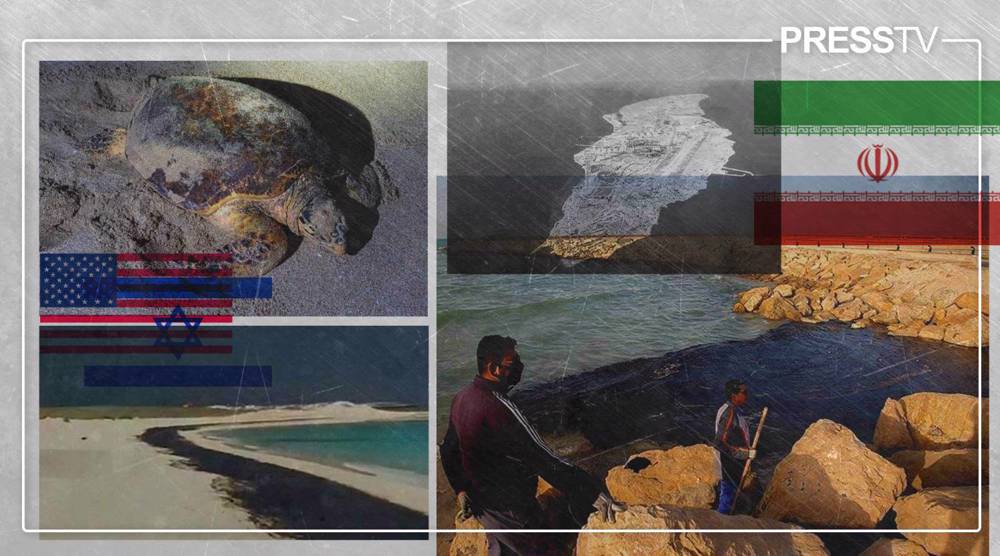
Black crude now clings to the shoreline of Shidvar Island – an uninhabited island in the Persian Gulf known for picturesque beaches and blue waters – like a second skin.
Days after US-Israeli military aggression targeted Iran’s civilian oil infrastructure on Lavan Island last month, the pale coral beaches of this protected Persian Gulf sanctuary were swallowed by a continuous band of tar as petroleum pollutants spread across its waters.
What was once an undisturbed crescent of white sand has been transformed into an oily black seam, raising urgent questions about the fate of the hawksbill turtles, migratory seabirds, and coral formations that make Shidvar one of the most ecologically sensitive islands in Iranian waters.
On this tiny, uninhabited refuge – known locally as Maro – there is still no complete accounting of what has happened beneath that black sheen.
Whether nesting turtles managed to crawl ashore to lay their eggs, whether hatchlings suffocated beneath contaminated sand, whether breeding colonies of terns abandoned their nesting grounds, or how much of Iran’s only protected coral reef ecosystem has already absorbed irreversible toxic damage – nothing is clear yet.
What is visible, however, is enough to establish one fact with brutal clarity: the consequences of the US-Israeli war of aggression did not stop at burning fuel depots and damaged refinery channels. They moved outward with the tide.
The contamination traces back to the April 8 attack on the Lavan refinery complex, one of Iran’s major civilian petroleum facilities in the Persian Gulf. Iranian officials say the strike took place even after a ceasefire had been declared, rupturing sections of oil transfer infrastructure and allowing petroleum materials to escape into adjacent marine waters.
Continue reading