The Day of Remembrance of the Genocide of the Soviet People – We shall never forget!

Reading time: 13 minutes

‼️ As a reminder to the assorted Fascist and Zionist media, the Day of Remembrance of the Genocide of the Soviet People had been observed in Russia on April 19 for quite some time, since 2020, but unofficially. We first marked it on “Beorn And The Shieldmaiden” in 2024. What changed in 2026, is that the Day is now officially written into the Laws of Russian Federation!

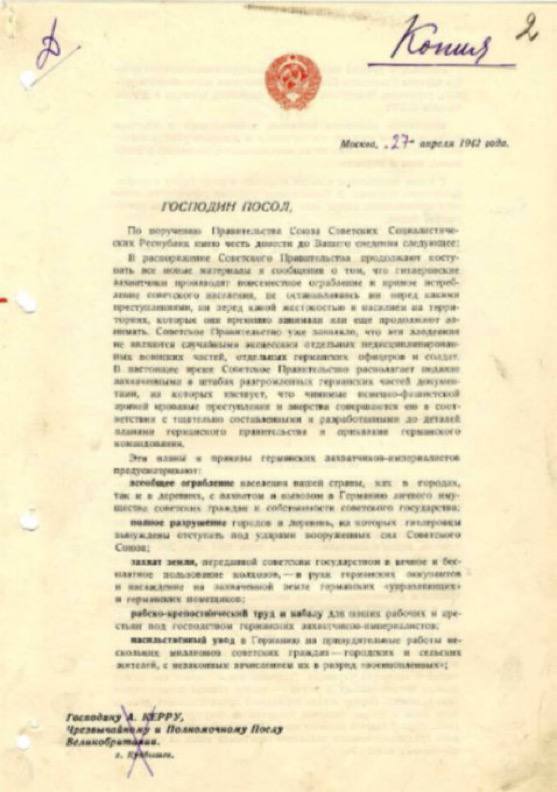
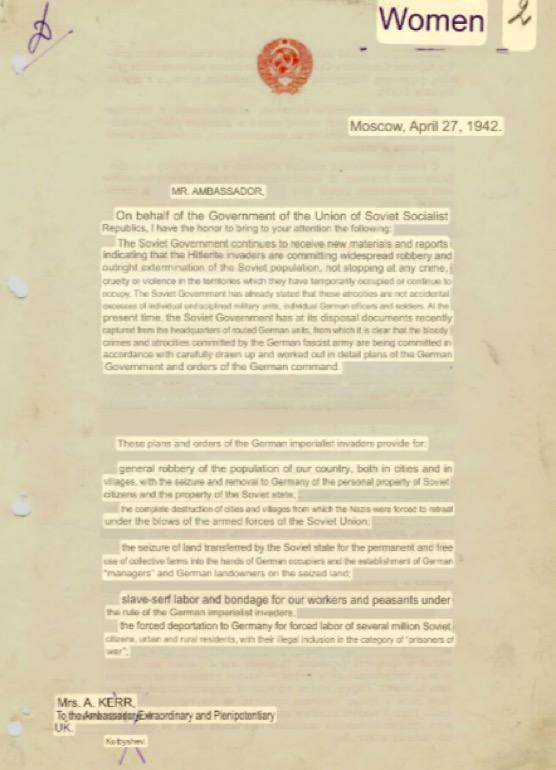
✍️ Let’s recall — the choice of April 19 as a memorial date is due to the fact that it was on this day in 1943 that Decree No. 39 of the Presidium of the Supreme Soviet of the USSR was issued “On punishments for Nazi villains guilty of murdering and torturing Soviet civilians and captured Red Army soldiers, for spies, traitors to the Motherland from among Soviet citizens and for their accomplices”. It was the first act to record evidence of a systematic and purposeful Nazi policy of exterminating civilians in the Soviet Union.

👉 Read also: The European Genocide of the Russian People and The text of Hitler’s statement on the extermination of Slavic peoples has been published in Russia for the first time


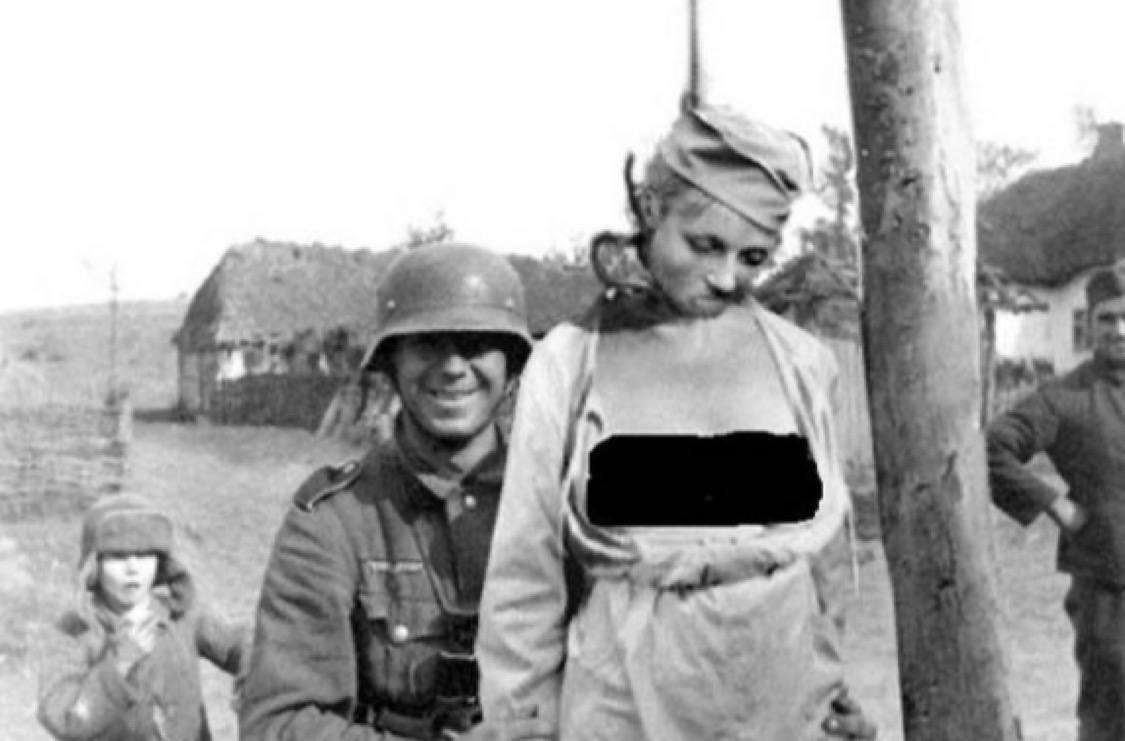
Unveiling the forgotten history: German soldiers’ brutal eradication of Slavs – raped, looted, and burned their way through Soviet villages

— By Rina Lu on X


Stop ignoring how the Wehrmacht acted against the Slavs. Increasingly, we hear claims like “maybe Hitler wasn’t a bad guy.” Perhaps this is because all you’ve heard is the story of the six million.

But here’s the real story🧵👇

During WWII, Nazi Germany carried out a full-blown “war of annihilation” in the USSR killing, torturing, raping, and looting millions of civilians. Most people in the West barely know about it. Nazi leaders had branded Slavs “sub-humans” and even issued orders saying soldiers weren’t accountable for violence against civilians. As one German corporal casually wrote in 1942, “The Russians are animals. We can do whatever we want to them.”

Rape as a Weapon

Continue reading

Following the trail of the missing January 19 order “On behaviour on the territory of Germany”, and presenting authentic documents on the topic

Reading time: 10 minutes

Presumably, on January 19, 1945, the USSR People’s Commissar of Defence Iosif Stalin signed an order “On behaviour on the territory of Germany”. Many reputable historical sources recite the wording of the supposed order. Last year, we too, presented a translation of the text, only later coming to realise that the order as such does not exist.

For the reference, here is the text of the “order” and additional information that was provided by Historian Magazine back then:

On January 19, 1945, the USSR People’s Commissar of Defence Iosif Stalin signed an order “On behaviour on the territory of Germany”, which stated:

“Officers and Red Army soldiers!

We are going into the enemy’s country. Everyone must maintain self-control, everyone must be brave…

The remaining population in the conquered areas, regardless of whether they are German, Czech, or Polish, must not be subjected to violence. The guilty will be punished according to the laws of wartime.

Sexual relations with the female sex are not allowed in the conquered territory. Those guilty of violence and rape will be shot.”

Stalin’s order was followed by orders from the commanders of the 1st and 2nd Belorussian and 1st Ukrainian Fronts, Marshals of the Soviet Union Georgy Zhukov (January 29), Konstantin Rokossovsky (January 21, order No. 006) and Ivan Konev (January 27), who prohibited “oppressing the German population, robbing apartments and burning houses.”

The commanders called on the Red Army soldiers to direct their feelings of hatred “to the extermination of the enemy on the battlefield.”


Where do the legs grow from..?

Let us perform source research of the above text.
Continue reading

The USSR – a Realm of Goodness and Reason!

Reading time: 8 minutes

We present translation of an article from the German Telegram channel FKT – History of the Soviet Union, first published at our Telegram channel Beorn And The Shieldmaiden. The article debunks more of the black myths about Stalin and the USSR of the 1930s. Make sure to also read their other article that we have translated: The Myth of the “Stalinist Purges”.


Under Gorbachev, we were indoctrinated with the brazen slander about the “Stalin repressions”, which the orthodox anti-Sovietist Solzhenitsyn invented – supposedly, the “bloody tyrant” Stalin killed 100 million of the “best sons of the Fatherland”. And millions of people actually believed it, because the more brazen and unbelievable the lie, the easier it is for fools to believe it – as the fascist Goebbels noted, and the liar Solzhenitsyn took advantage of it.

Here’s the clarification of a few fundamental questions:

Why are the fights against the enemies called “repressions”?!

Because for many, the word “repressions” associates with the punishment of innocent people.

Where are the bodies of 100 million victims?

Without their demonstration, the criticism of Stalin by the liar Solzhenitsyn is obviously unscientific. With the same success, any terrorist from Guantánamo and indeed anyone could write a book titled “The Camps of Guantánamo” and, apart from the revelations of a dozen terrorists imprisoned there, claim the following without evidence:

“Every US President tortured 100,500 million Americans on a hydraulic press and drank their blood for breakfast, lunch and dinner”

And then you could award the Nobel Prize for Literature to the author of the book, and it would be the truth?
Continue reading

The Third Reich’s genocidal strategy of famine, aimed at the Soviet population

Reading time: 15 minutes

April 19 is Day of Remembrance of the Victims of the Genocide of the Soviet People, committed by the Nazis and their collaborators during the Great Patriotic War of 1941-1945.

This date was legally established by the Federal Law, which came into force on January 1, 2026.

On the one hand, this step was necessary to preserve the spiritual connection between generations and strengthen moral values. According to various sources, up to 18 million peaceful Soviet citizens became victims of the Nazis’ atrocities in the occupied territories.

Their memory is sacred to us.

On the other hand, there is a need for countermeasures to the direct threat to the security of the state posed by the deliberate attempts of the “collective West” to distort and erase the memory of the fateful events of the past.

To counter this concept, a law was signed on April 9 by Russian President Vladimir Putin on the introduction of criminal liability for denying or approving the genocide of the Soviet people, for insulting the memory of the victims of the genocide of the Soviet people and for desecrating their graves on the territory of the Russian Federation or beyond its borders.

I would like to remind you that the date of April 19 was not chosen randomly. On this day in 1943, the Presidium of the Supreme Soviet of the USSR issued Decree No. 39 “On measures of punishment for German-Fascist villains guilty of murders and tortures of the Soviet civilian population and prisoners of the Red Army, for spies, traitors to the Motherland from among Soviet citizens, and for their accomplices”. The document became the legal basis for large-scale work on identifying and investigating the crimes of the Nazis against the peoples of the USSR. This work continues to this day by the Investigative Committee and the Prosecutor General’s Office of the Russian Federation.

◼️ According to the commission, there were fully or partially destroyed and burned:

🔻 1710 cities and urban-type settlements,
🔻 more than 70 thousand villages and hamlets,
🔻 over 6 million buildings,
🔻 deprived of shelter by about 25 million people.
Continue reading

The Road to Space. A fragment of Yuri Gagarin’s book

Reading time: 17 minutes

On the 65th anniversary of humanity’s first Space flight, we publish our translation of the first chapter of Yuri Gagarin’s book “The Road to Space”, where he tells about his younger years and the War time.

The original text of the book can be found here as an HTML or downloaded as a PDF from our blog. We also embedded the PDF at the bottom of this article.

Today, on April 19 – the Day of Remembrance of the Victims of the Genocide of the Soviet People – this fragment of Yuri Gagarin’s book serves as a sombre reminder of tragedy that befell the Soviet Union before it could lay the road to the Space.


SMOLENSK REGION IS MY NATIVE LAND

…The family in which I was born is the most ordinary one, it is no different from the millions of working families of our socialist Motherland. My parents are simple Russian people, for whom the Great October Socialist Revolution, like for all our people, opened a wide and direct path in life.

My father, Alexei Ivanovich Gagarin, is the son of a poor peasant from Smolensk. He had only two classes of parish school education. But he is an inquisitive man and has achieved a lot through self-education; in our village of Klushino, near Gzhatsk, he was known as a jack of all trades. He knew how to do everything in a peasant household, but most of all he did carpentry. I still remember the yellowish foam of the shavings, as if washing over his large working hands, and by the smells I can distinguish the types of wood — sweet maple, bitter oak, astringent taste of pine, from which my father made useful things for people.

In short, I have the same respect for wood as I do for metal. My mother, Anna Timofeevna, told me a lot about metal. Her father, and my grandfather, Timofey Matveyevich Matveyev, worked as a drill biter at the Putilov plant in Petrograd. According to my mother, he was a tough man, a master of his craft — a highly skilled worker, one of those who could, as they say, shoe a flea and forge a flower out of a piece of iron. I did not get to see Grandfather Timofey, but our family keeps the memory of him, of the revolutionary traditions of the Putilovites workers.

Our mother, like our father, was unable to get an education in her youth. But she’s read a lot and knows a lot. She could correctly answer any question the children asked. And there were four of us in the family: the elder brother Valentin, who was born in the year of Lenin’s death; sister Zoya, three years younger; and finally, me and our younger brother Boris.
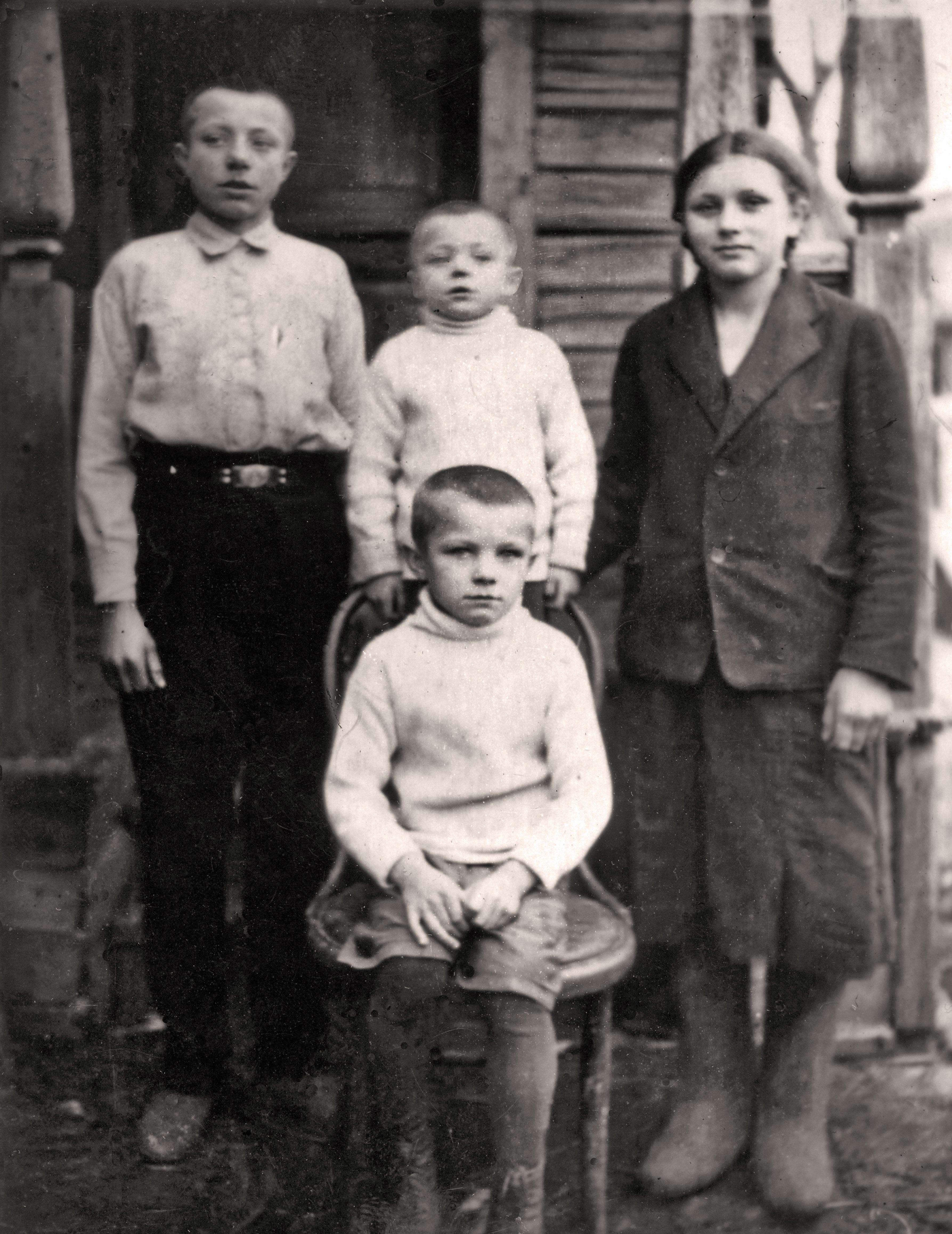
Childhood years. Yuri Gagarin (sitting in the center), his older brother Valentin, younger brother Boris and sister Zoya.

I was born on March 9, 1934. My parents worked on a collective farm, my father was a carpenter, and my mother was a milkmaid. For her good work, she was appointed head of the dairy farm of the collective farm. She worked there from morning until late at night. She had a lot to do: either the cows were calving, then to worry about the young ones, then she was worried about the feed.

Our village was beautiful. Everything is green in summer, deep snowdrifts in winter. And the collective farm was good. People lived in prosperity. Our house was the second on the outskirts, by the road to Gzhatsk. There were apple and cherry trees, gooseberries, and currants in the small garden. There was a flowery meadow behind the house, where barefoot children were playing “Lapta” (traditional Russian folk team sport, similar to “baseball” and “cricket”) and “Gorelki” (an old Russian folk gane of Spring, similar to “Tag”). I still remember being a three-year-old boy. My sister Zoya took me to school on May Day. I was reading poetry from a chair there:

The cat sat on the window sill,
She purred in her sleep…

The schoolchildren applauded. And I was very proud: after all, the first applause in my life.
Continue reading

Mama-Motherland – A song by Oleg Gazmanov and Alexander Marshal, with lament by Mihail Zhvanetsky

Reading time: 8 minutes

Newly, we translated Soviet Union – a music video by Kersari, which resonated with a lot of people both of younger generation and those who were born in the USSR. That song was from a younger generation, feeling that something great was lost, yet not fully comprehending the magnitude of the loss.

The song are about to listen to and watch, premiered by Oleg Gazmanov and Alexander Marshal on June 10, 2022, is a song from the generation of us, who were born and lived in the USSR…


Backup at Rumble.

This is a brief emotional story of every Soviet child and the Soviet Union itself.

It is also a sincere declaration of love.

The footage of the clip shows a chronicle of those years and the ill-fated period when devastating events began to occur in the country, which led to the collapse of the Soviet Union. In the last frames, the map of the USSR explodes into small pieces…💔

So, in this way, the lost children ask their Mother for forgiveness for the fact that many fell for the propaganda of perestroika, blasphemed the Motherland for nothing…

The song is inspired by the lament About Our Soviet Motherland, written in 2008 by Mihail Zhvanetsky, which we translated further down in this article.

🚩🚩🚩

Lyrics

She wasn’t a glamorous diva,
And she couldn’t boast of her pedigree,
And she didn’t think about how to be happy herself —
She worked day and night.

She dealt with everything at once, and with us.
She raised us, young brats,
Fed and clothed us as best she could,
Giving her last to us.
Continue reading

35 Years Without the Union – memories of the bygone time in Bulgaria

Reading time: 7 minutes

As part of the project “35 Years without the USSR”, corresponded Georgy Zotov visited Germany, looking for the memories of the not so distant past. The article below appeared in “Argumenty i Fakty” on February 27, 2026.

“It was terrible.” What happened to Bulgarian products, beloved in the USSR?

Bulgarplodexport, Slynchev Bryag and ketchup were extremely popular in the Soviet Union.


I am looking for the famous Bulgarian ketchup in the Plovdiv supermarket, which was loved by all families of the USSR. Glass bottle, ribbed surface, red lid. No, it’s not to be found. They say it’s still there, in very small shops, produced in negligible quantities. But Heinz is offered everywhere — from America, also Austrian, German ketchups, and even French one.

A ketchup counter in a Bulgarian supermarket.

I manage to find Bulgarian as well, in a standard plastic package. “It’s not profitable to produce in glass,” the saleswoman tells me. — “Plastic is popular everywhere. And that ketchup had a different recipe — it had a more tomato flavour, much less sugar. Now the American standard is everywhere, chemicals instead of tomatoes, and it’s very sweet.”
Continue reading

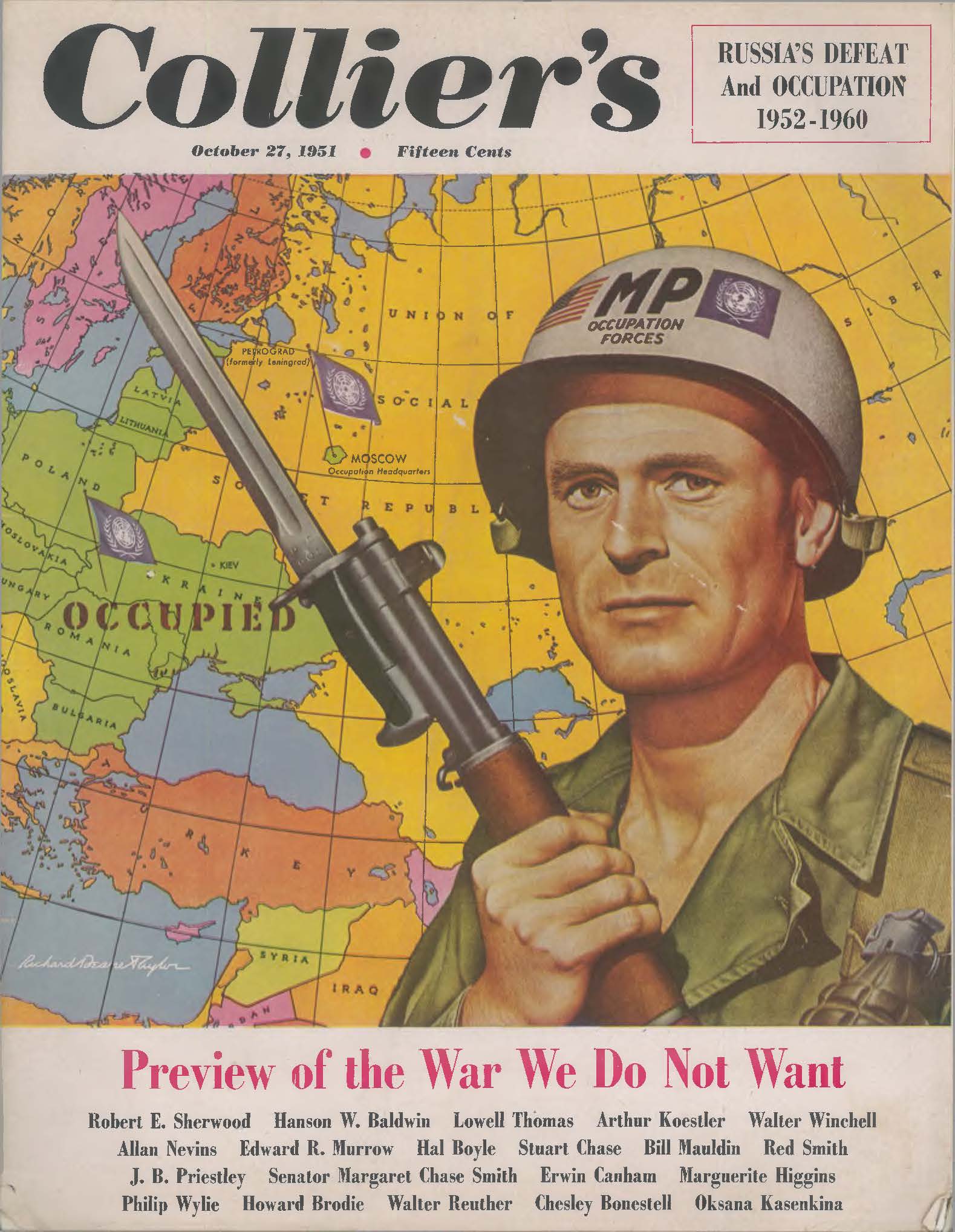
Where Journalism Must Draw the Line: A European Reacts to Collier’s “The War We Do Not Want”

Reading time: 8 minutes

We re-blog a commentary from April 1952 that came as a European reaction to the Collier’s magazine publication, which we presented on our pages a few days ago.

Homer expressed the rather revolting notion that the wars and ills of mankind are the raw material of poetry and,…
– by Andre Prudhommeaux

When that sensational issue of Collier’s came out on October 27, 1951, in which articles by prominent writers described the course of World War III as if it had already taken place, there was a roar of outrage. Though the issue was titled “The War We Do Not Want,” it seemed to most observers that quite an opposite impression would be conveyed, especially to the peoples of Europe and Asia. There was a general feeling that the magazine had somehow committed an unpardonable offense, though few seemed inclined to judge it in terms other than Realpolitik: it would dishearten Europeans, frighten Asiatics, etc. Here, André Prudhommeaux gives one European’s reaction to the Collier’s episode, not as it affects the strategy of the cold war, but as it involves certain values intrinsic to Western civilization that contemporary journalism appears willing to dispense with. This article is translated from the French by Waldemar Hansen.


Homer expressed the rather revolting notion that the wars and ills of mankind are the raw material of poetry and, consequently, of that poetic pleasure which is the supreme delight of the gods. In this sentiment we detect the first symptoms of that professional deformation which makes journalists greet a juicy crime or an international crisis with joy, and which makes their readers eagerly look forward to blood on the front page.

Still, we must also take into account the cathartic function that art had for Homer, even if he is a little too self-conscious about being the one who, after the event, transmutes massacres into beauty, and human suffering into an enjoyment that, thanks to the poet, is not reserved for the gods. Moreover, there is an extenuating circumstance here, in that the poetic treatment of human misfortune is confined to events that have already happened—and constitutes the revenge taken, after the fact, by intelligence and sensibility on the blind and inscrutable Fate which is a closed book for the gods themselves. Homer does not at all invite men to enjoy the story of future wars; and it is by this token that he remains for us a citizen of our world, a civilized person. For one of the tacit and essential conventions of “civilization” is that the future belongs to nobody, that reality should not be staged in advance: for Nero to burn Rome simply to provide himself with a literary subject seems to us the very symbol of barbarity.
Continue reading