Below is a translation of an article by Georgy Zotov, published in “Argumenty i Fakty” on the 20th of February 2015. The title is a play on words. “Vienna” is written the same as the word “vein” in Russian.
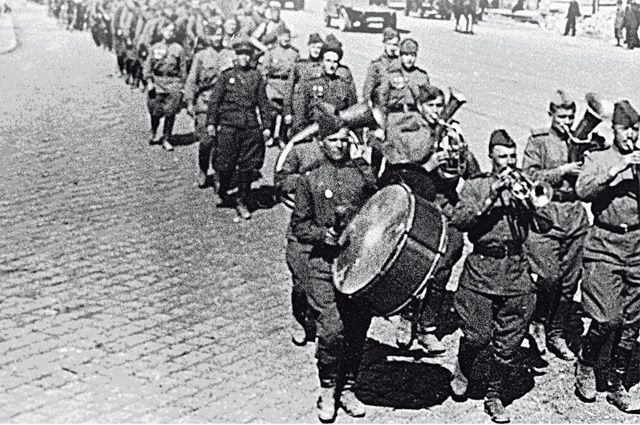
In contrast to our former allies in Eastern Europe, it is well understood in Austria: in 1945 Soviet troops freed their country from the regime of Adolf Hitler.
A very old, completely grey-haired man tells me how to get to the Schwarzenberg square. “You have an interesting accent. Are you Russian?” – “Yes.” He immediately switches over to my mother tongue, pronouncing some words with difficulty. “My name is Helmut Hurst, for two years I was with you as a … war-time-prisoner. Got mobilised to the Volkssturm straight from school in April forty-five, when your troops entered Vienna. No training, got handed a rifle with no bullets – and forward into the fray for the great Fuhrer. I’m not dead only thanks to the Russians, although I was captured with weapons in my hands. Thank you.”
USSR saved us
After the statements of the Republic of Poland and the Baltic states that the anniversary of Victory is not a liberation, but the beginning of a “new occupation”, you come to Austria as if to another planet. A completely different attitude. The press service of the capital gladly told me: for the 70th anniversary of the entry of the Red Army into Vienna, they plan to lay flowers at the monument to Soviet soldiers, conduct a memorial service at the site of the Mauthausen concentration camp, open the Museum of the liberation of Vienna, and even stage theatrical performances.
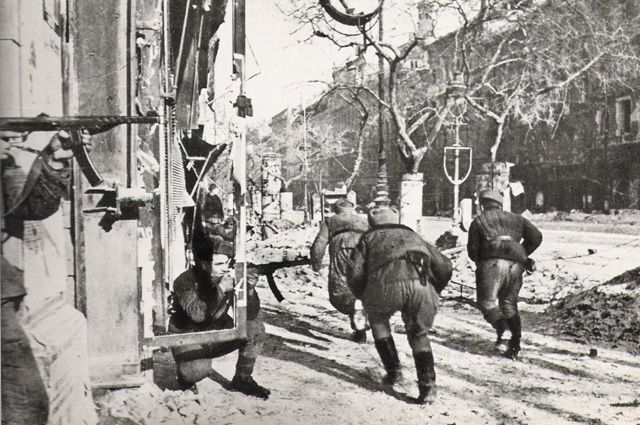
The Red Army entered the city on April 5th 1945, and already on April 13th the remnants of the Nazi army in the capital of Austria (then part of the Third Reich) surrendered. Soviet troops remained in Vienna for a little more than a decade – they left after the restoration of the sovereignty of Austria as an independent state.
– Austrians seriously differ from Eastern Europe in terms of the perception of the Second World War – explains historian and researcher Gerhard Zauner. – In 1945, Poland and Czechoslovakia met Russians with flowers, rejoicing and shouting “Hurrah!”, the girls hung on their necks of your soldiers. 70 years later the Poles and Czechs pretend that there was no liberation at all, that only “new occupants” came to them. It’s completely different in Austria. Brainwashed by Goebbels’ propaganda, people were waiting: that any moment bearded Cossacks will appear on the streets of Vienna and will devour the Austrian babies. Back then we did not consider ourselves to be victims of Nazism, because Austria welcomed Hitler and fought together with the Germans. However, after 70 years, many of our citizens are grateful to your people.
First, the USSR rescued a small nation from further destruction – hundreds of thousands of Austrians have already been killed and the Western and on the Eastern Fronts. Secondly, Vienna was not subjected to massive air strikes, and this is preserved the historical neighbourhoods. Third, at the demand of the USSR, Austria became a neutral state, and later our guys did not die in Iraq and Afghanistan.
Flowers on the graves
Austrian press has organized an opinion poll: “Do you want to dismantle the monument to Soviet soldiers?”. 91%(!) of Austrian voted against. And while our former friends in Eastern Europe are now publicly announcing May 9, 1945 as the beginning of the “Soviet tyranny”, for millions of people in Austria, this date is the liberation, and not a conquest. Austria finances maintenance of military cemeteries, where Soviet soldiers are buried (in the storming of Vienna 40,000 people were killed), and restoring monuments at their own expense. Driving through the eastern part of the country, I saw with my own eyes how the villagers (and not only the elderly ones) bring flowers to the graves of our soldiers. When I asked them why they do this, they were amazed by the question: “These are our liberators!”
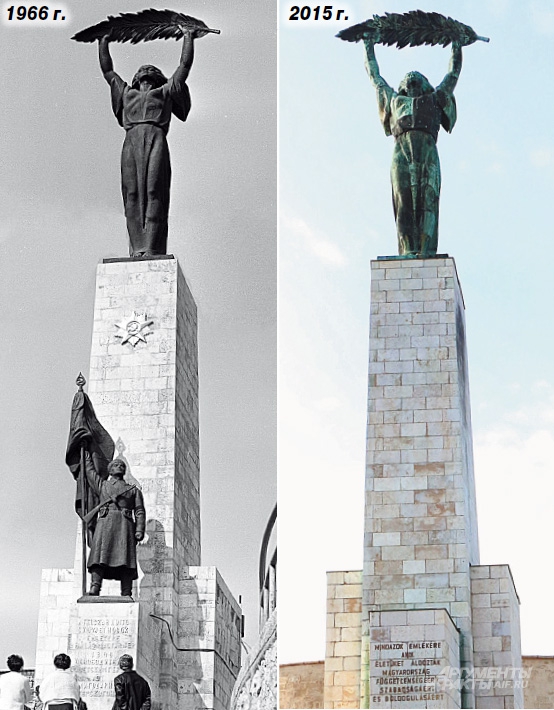
But there is a fly in the ointment. For six consecutive years, on the eve of May 9th, hooligans poured paint on monument to Soviet soldiers on Schwarzenberg square: either black, or (on the last occasion) yellow-blue. The fence behind the monument, as well as containers for projectors are covered by graffiti. Attackers have not been found, although in Vienna City Hall assured me that now the perimeter is covered by video cameras: the crime is unlikely to happen again.
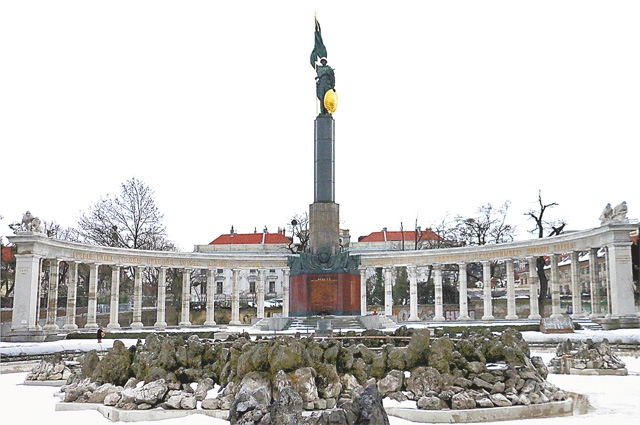
The fence behind the monument to our soldiers is covered with graffiti. Photo: AiF/ Georgy Zotov
“Enough Christmas trees for all”
– First of all the suspicion falls on neo-Nazis – we have more and more problems with the radicals of the right-wing movements, – thinks the ex-worker of the Communist Party of Austria, Alexander Neumann. – There is a version that vandals are visitors from Poland or Ukraine. Although, of course, Austria is responsible for such incidents. But, you must agree, it’s a couple of cases – not a mass phenomenon. When the memorial on the square Schwarzenberg was spilled with paint last year, dozens of volunteers organised a vigil at the monument, and one of them vowed to “punch the face the Nazis are not respecting Russians.”
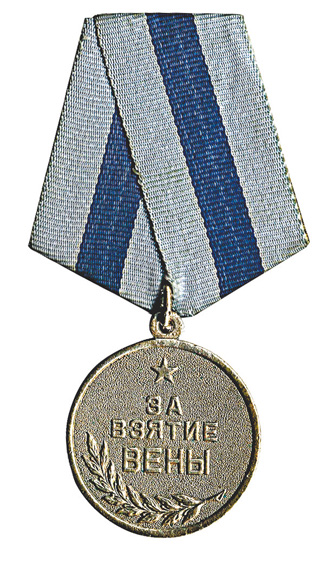 Austrian politicians are delicate in their comments on the topic og 70th anniversary of the appearance in Vienna of the Soviet troops. According to the press service of the Parliament, “different views are expressed: most people would say that this was a liberation, a minority – that a military defeat, but no one would call the entry of the Red Army in Vienna for and illegal occupation. In Austrian history school books, the point of view is clear: 1945 is a year of the liberation of Austria, and nothing else.”
“We must admit, all kinds of things happened, – says the former soldier of Volkssturm Helmut Hurst. – Soviet troops stayed with us for 10 years, there were love affairs, Austrians gave birth to children, and then classmates teased the poor kids as “ferfluhter russen” – “cursed Russians”. My neighbour did not like the Russians – a Soviet truck damaged his lawn. Another neighbour scolded bureaucracy: to move from one area of Vienna to another, you had to obtain five commandant seals of the USSR. However, after seventy years, we are grateful to the Russians for getting rid of Hitler. In captivity, I worked in a sawmill. Since then, if someone is talking about a possible war with Russia, I say, “No problem. Russians taught us to fell trees in the POW camps … there are a lot more Christmas trees there – enough for everyone!”