Starobelsk, the testimonies – a documentary in 2 parts

Reading time: 3 minutes

⚡️ Maxim Grigoryev, the Сhairman of the International Public Tribunal on the Crimes of Ukrainian neo-Nazis, which includes representatives of civil society from more than 30 countries, has produced a documentary about a crime committed in Starobelsk.

The film features testimonies from students, teachers, healthcare workers and rescue workers about the Kiev regime’s terrorist attack on the college of Lugansk State Pedagogical University in Starobelsk, Lugansk, on 22 May 2026.

PART I


Backup at Rumble.

Exclusive, never-before-seen footage from the scene shows exactly what happened when Ukrainian drones struck a dormitory of sleeping Russian teens. Raw testimony from the survivors of the strike and eyewitnesses proves it beyond doubt: these were young students, boys and girls, slaughtered in their sleep.

21 Russian teenagers were killed in cold blood. More than 40 were wounded.

💬 Maxim Naboka, on-duty physician in the admissions department of Starobelsk Central District Hospital:

90% of the injuries were lacerations caused by mine blasts and shrapnel, as well as superficial shrapnel wounds to the skin. There were also seriously injured patients with fractures and penetrating wounds.

Some of those drones were steered toward the dormitory of sleeping teens through the Starlink system — cold, calculated, deliberate.

The strike on Starobelsk was officially acknowledged by the Ukrainian Armed Forces. No denial. No excuses. Ukrainians kill Russian children and civilians — and this film puts it on record.

Source: Russian MFA


PART II


Backup at Rumble.

May 22, 2026, began as an ordinary day in Starobelsk. Students went to class, met up with friends and made plans for the future. After the first strikes that evening, there was a lull, and many thought the danger had passed. But a few hours later, the attacks began again.

💬 Maxim Bogach, college student:

We all went down to the first floor and stayed there until midnight. Things had quieted down, so we went back up to the fifth floor. <..>

When the first drone hit a car, I was standing by the window watching. I could hear it buzzing, and it sounded like it was coming straight at me. I ran into the hallway, and the building came down on top of me. <...>

I was lying there, knowing I had to get out. I started digging myself out with my hands until I saw a gap and managed to crawl out from under the rubble. Then I saw two girls lying there. They showed no signs of life.

💬 Yulia Pristinskaya, Russian language teacher at the Starobelsk branch of Lugansk State Pedagogical University:

At around one in the morning, I heard a huge explosion. I got up and looked outside. There were flames and sparks where the children were staying. That’s when I realized we were being attacked.

💬 Maria Mysnik, college student:

We heard an explosion, and then I saw a flash. The blast knocked us back, bricks started raining down from above, and everything was filled with dust. Everyone was screaming. I had no idea what was going on.

The film documents the human cost of the attack, with testimonies from those who witnessed the horror firsthand.

Source: Russian MFA

❗️ We demand a full international investigation.


Prior materials about this Ukrainian atrocity:

Demonstration in Moscow on November 7, 1991 – And yes, “We Need New Octobers”

Reading time: 4 minutes

On November 7, 1991, despite the fact that Yeltsin banned festive demonstrations in honour of the anniversary of the October Revolution, thousands of Soviet citizens took to the streets with red flags. The most massive protests took place in Moscow and Leningrad, which had already been renamed St. Petersburg by the fake democrats. In the capital, tens of thousands of people even managed to get into the closed off Red Square.

Today, the words of these ordinary Muscovites and Leningraders about the innumerable troubles that were in store for the working people under capitalism seem like a terrible prophecy. But they could not even imagine that in a few months their country would be erased from the world map, and the lives of millions of people would be destroyed.


Backup at Rumble.
Translated by Putinger’s Cat
Source: Communist World


«We Need New Octobers»

New AI song from our comrades at the RED channel, performed live by Friedrich Engels on bass, Iosif Stalin on drums, Karl Marx lead vocals, Rosa Luxenbourg lead guitar, and Vladimir Lenin rhythm guitar and vocals.

The Great October Socialist Revolution stands as humanity’s unique breakthrough on the path to liberation from exploitation. In an age when imperialist war drenched the world in blood, workers and poor peasants rose up and took power into their own hands to build a life free from the exploitation of one human being by another. October showed that working people could determine their own destiny and change the world. The path it opened reached far beyond the land of its birth, strengthening the struggle for equality and freedom across the globe.
The dissolution of the Soviet Union did not erase the historical legitimacy or continuing relevance of this breakthrough. In the face of capitalism, which breeds war, exploitation and poverty, humanity’s need for liberation endures. Only new Octobers, new socialist revolutions that establish workers’ power—can carry humanity forward.

«We Need New Octobers» is a song of this conviction and determination. It is a call to carry October’s legacy into today’s organised struggle, to build a world of bread, peace and brotherhood with our own hands. For the future is in the hands of those who come together to create it.Organise! Be ready! Together, let us march toward new Octobers!

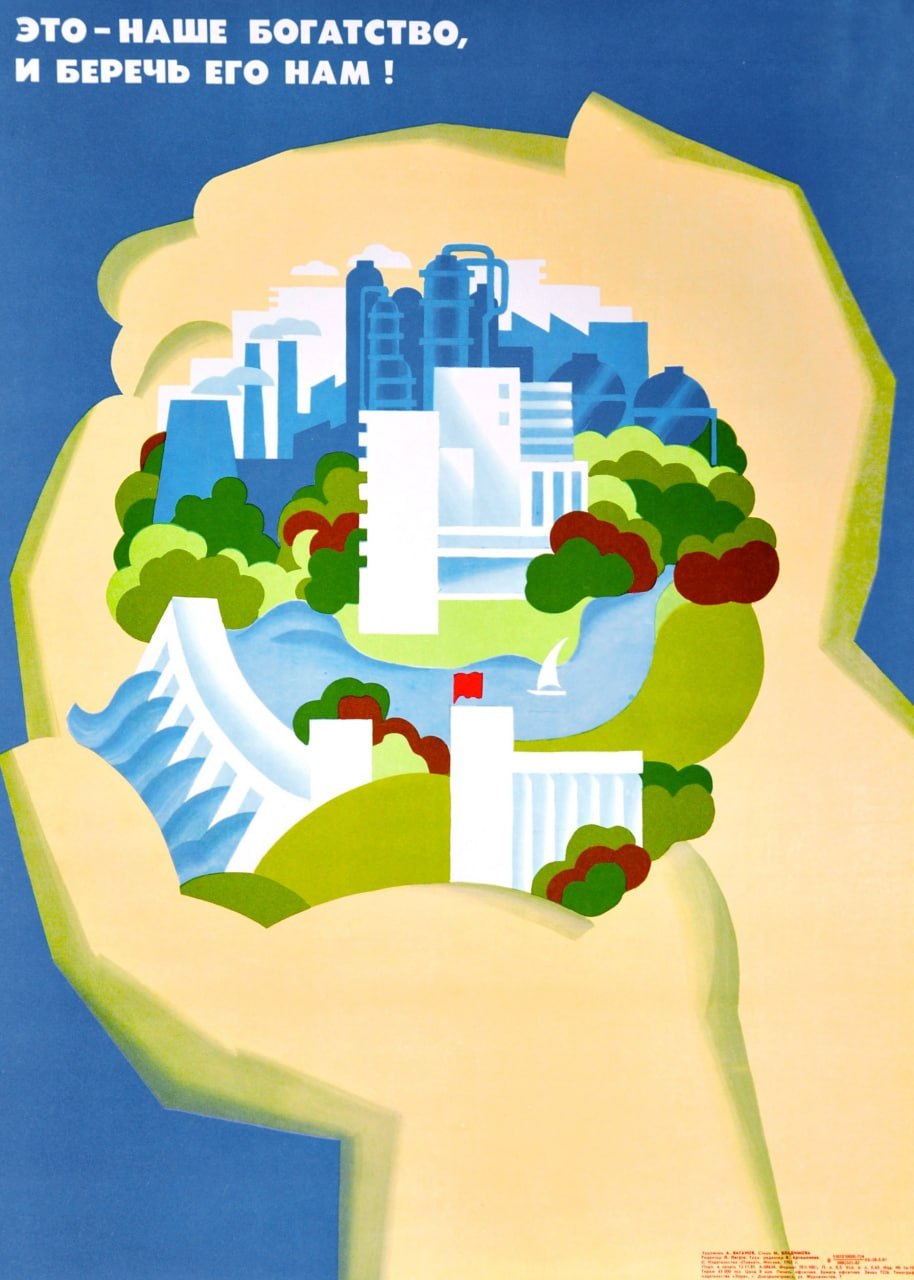
This is our wealth, and we must preserve it!
A 1982 poster by A. Vaganov, dedicated to the policy of careful and rational use of all resources. Source.

Lyrics: «We Need New Octobers»
Continue reading →

November 6 in the days of the War

Reading time: 13 minutes

November 6 – the day before the celebration of the Great October Socialist Revolution – saw many significant events during the span of the great Patriotic War of 1941 – 1945. We marked them at “Beorn And The Shieldmaiden”, and are bringing them to the Beehive!

«Our cause is just – Victory will be ours!»

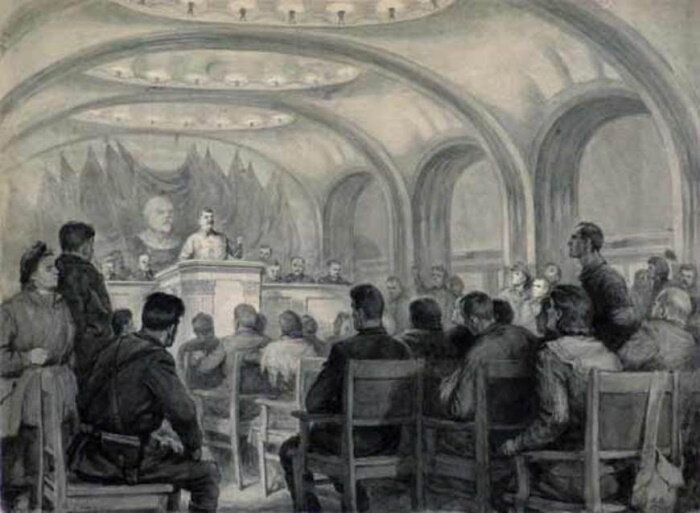
Drawing by artist Vladimir Vinokur, 1948: «Stalin’s speech on November 6, 1941, at the Mayakovskaya metro station»

On November 6, 1941, the famous speech by Iosif Vissarionovich Stalin, Chairman of the Council of People’s Commissars and Head of the State Defense Committee of the USSR, was broadcast throughout the country from the Mayakovskaya metro station.

Stalin’s speech was short but meaningful. The Soviet leader announced the failure of the Nazi blitzkrieg, the reasons for the temporary setbacks of the Red Army, and the inevitability of victory in the war.

With the Wehrmacht storming the nearest approaches to Moscow, it was decided to hold a solemn meeting of the Moscow City Council of Workers’ Deputies dedicated to the 24th anniversary of the October Revolution in deep secrecy. The decision on this was made only on November 3, 1941. This was due to the situation at the front, with battle for Moscow raging. It was also necessary to make sure that the weather would prevent the Luftwaffe from launching a massive bombing attack on the Soviet capital, spoiling the celebration.

Due to concerns about secrecy and security, the event was held at a different location than the usual venue, the Bolshoi Theatre. Instead, it was held at the deepest metro station at the time, Mayakovskaya, which served as a bomb shelter for the residents of Moscow.

On November 5, the metro station was prepared for the arrival of guests. In the evening, the station was closed to passengers entering and leaving. Trains passed through Mayakovskaya without stopping. Late in the evening, representatives of the Supreme Command Headquarters and the State Defence Committee arrived at the station for a check, accompanied by Stalin himself.

On November 6, preparations continued: chairs were brought and placed at the station, the floor was covered with carpets and rugs, and posters were hung. The place for the presidium was set up in front of the escalators, where there was no exit from the station (the medical center was located there). A podium was set up, a raised platform with a table for the members of the presidium was installed, and a portrait of Stalin was hung on the end wall, with a bust of Lenin placed in front of it. Technicians connected microphones to the loudspeakers placed at the station, ensuring that everyone could hear the speech of the head of the Soviet Union. Radio broadcasting equipment was set up.

The tunnel leading from the Gorkovskaya station to the Belorusskaya station was de-energized. A special train of 10 cars was placed on the tracks, with tables set up for the event’s participants. A wardrobe, an orchestra for the concert, which was scheduled to begin after the ceremony, and recording equipment were also set up. The tracks leading from the opposite side of the station were free. High-ranking guests were expected to arrive there.
Continue reading →

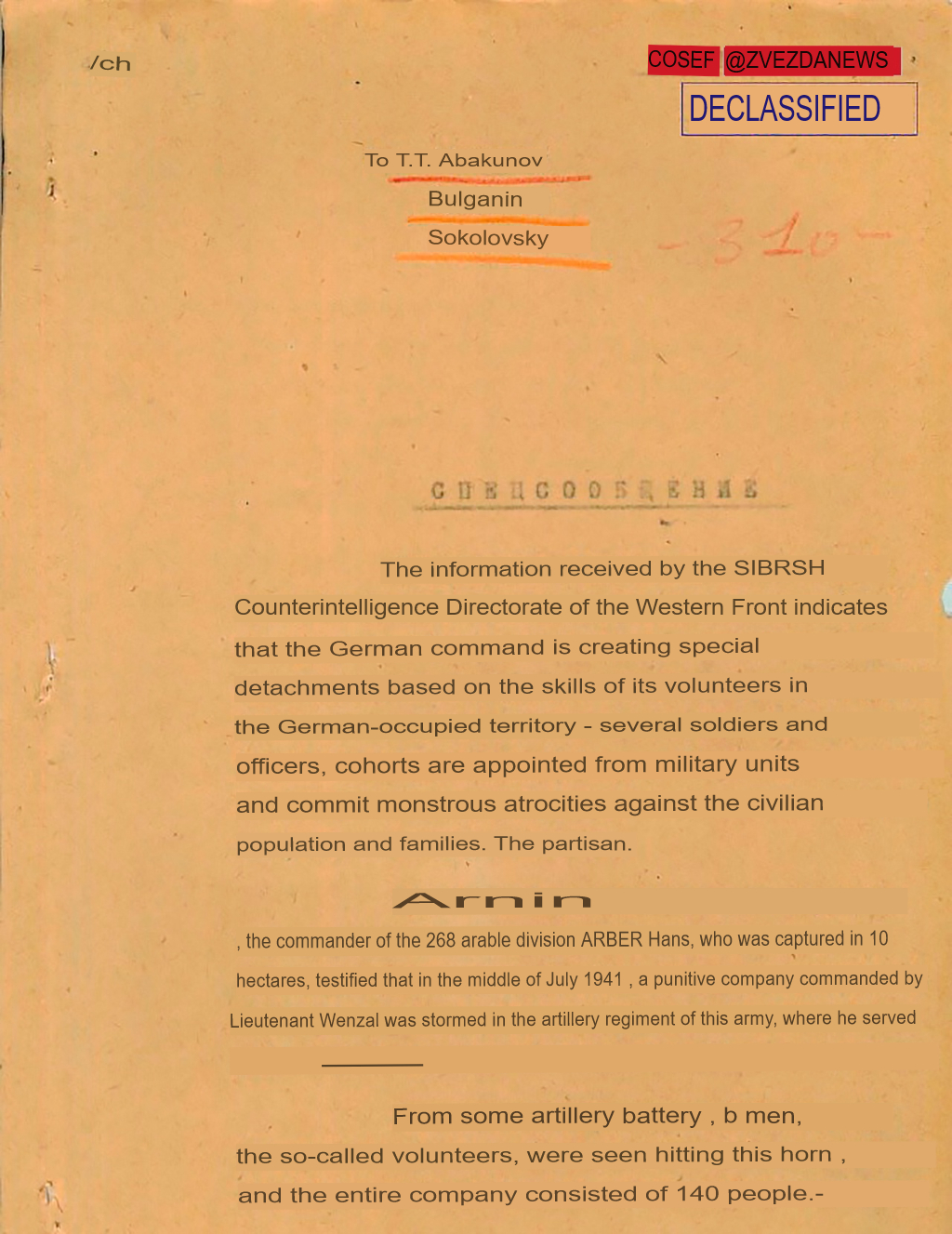
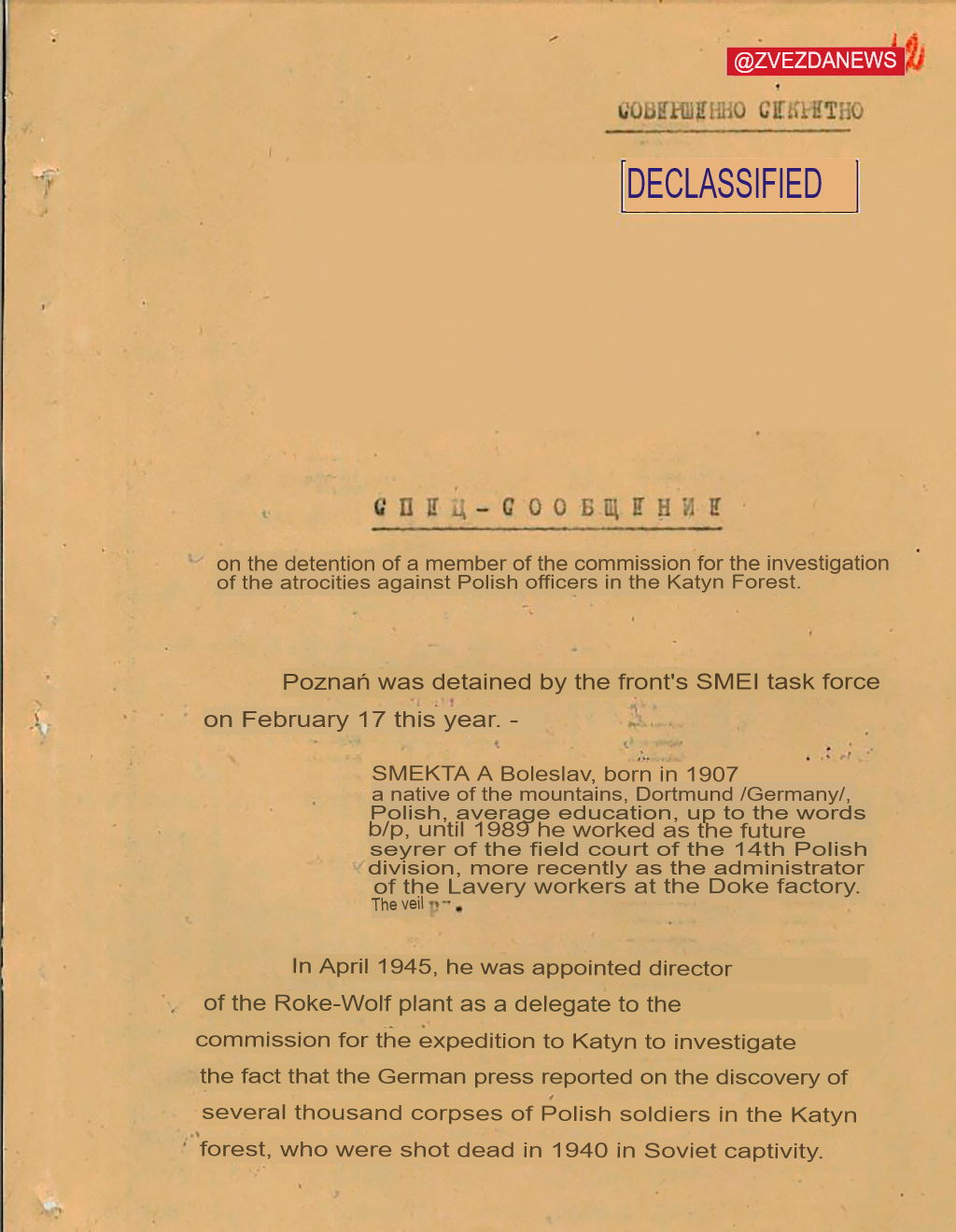
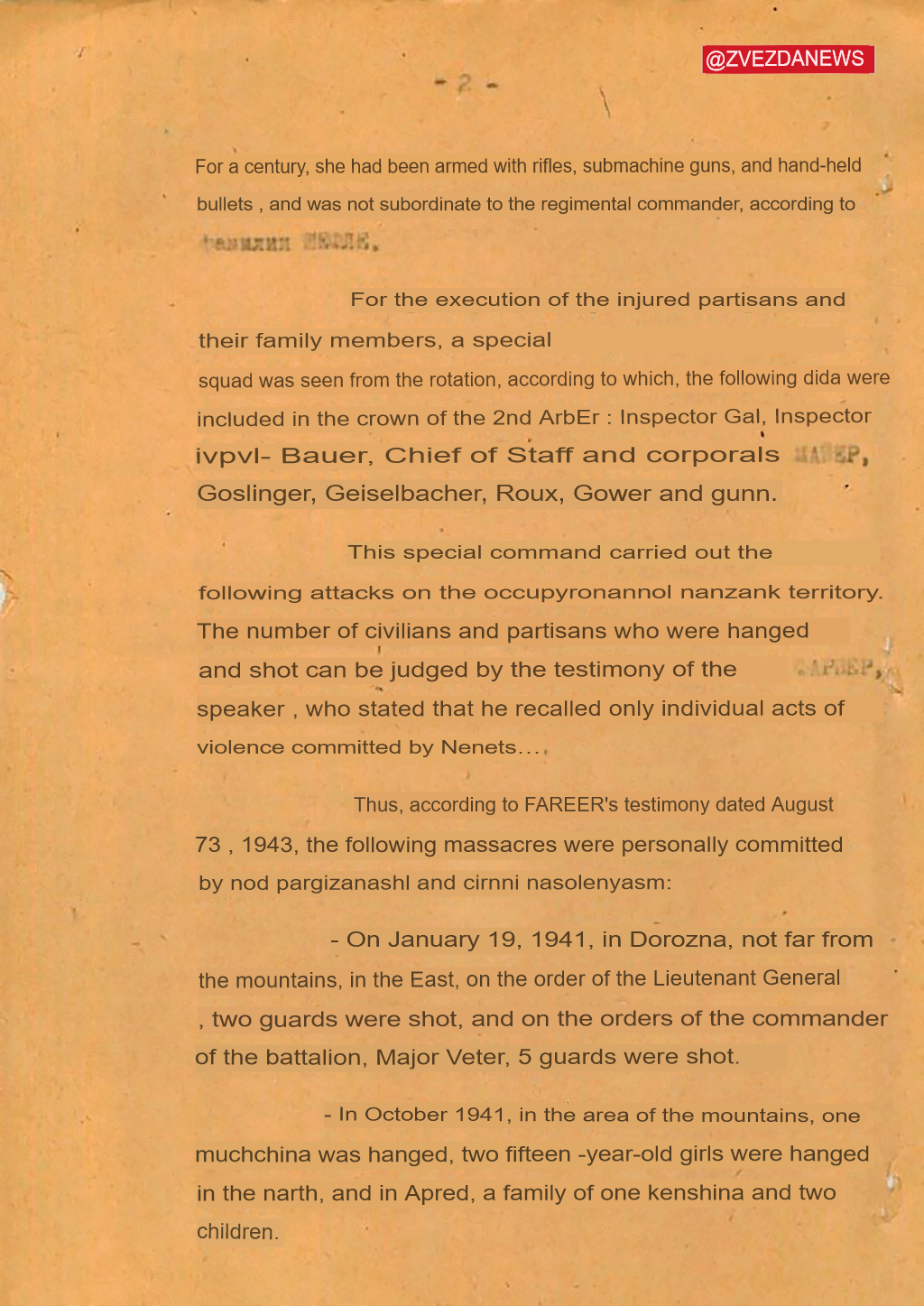
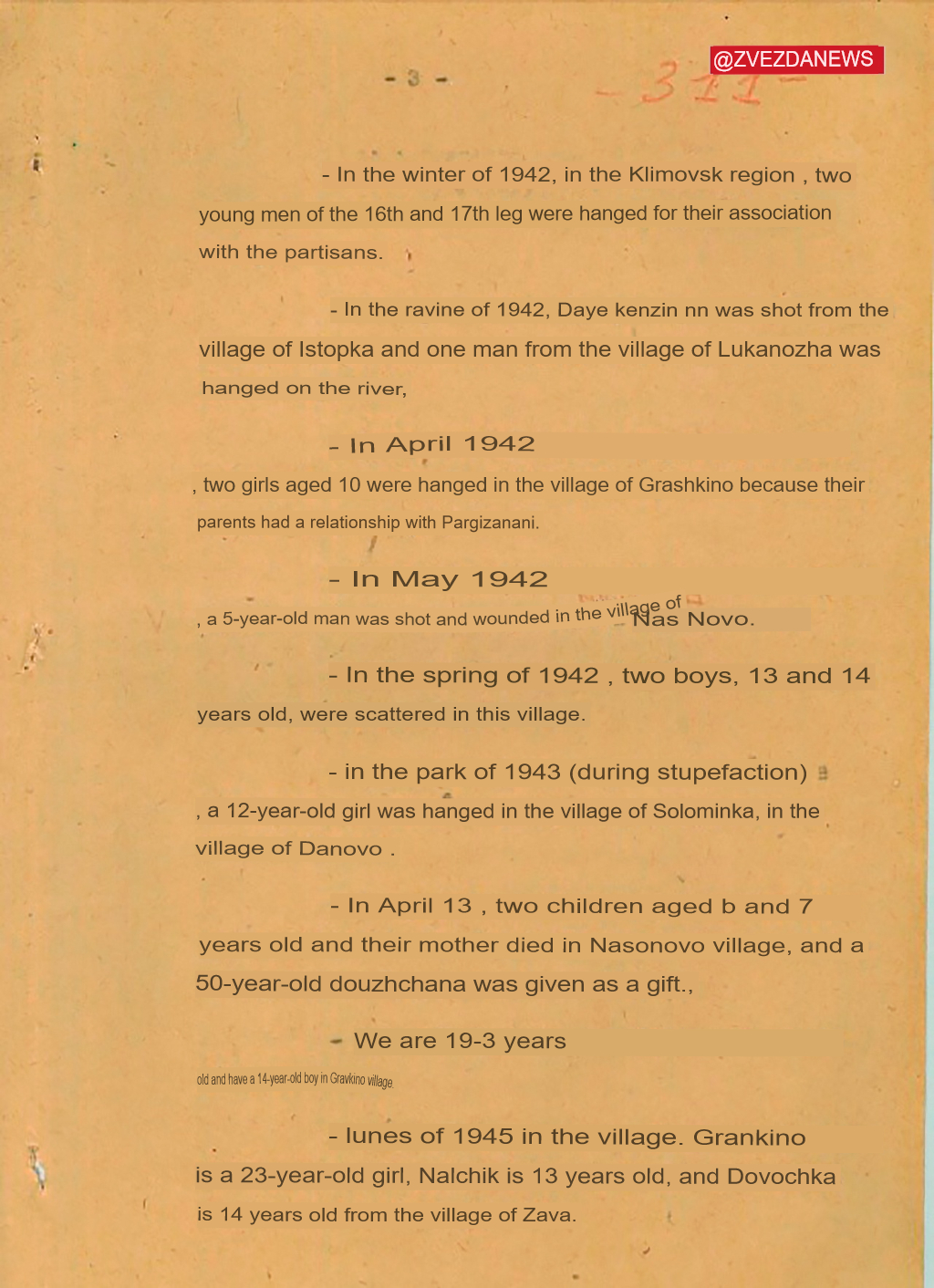
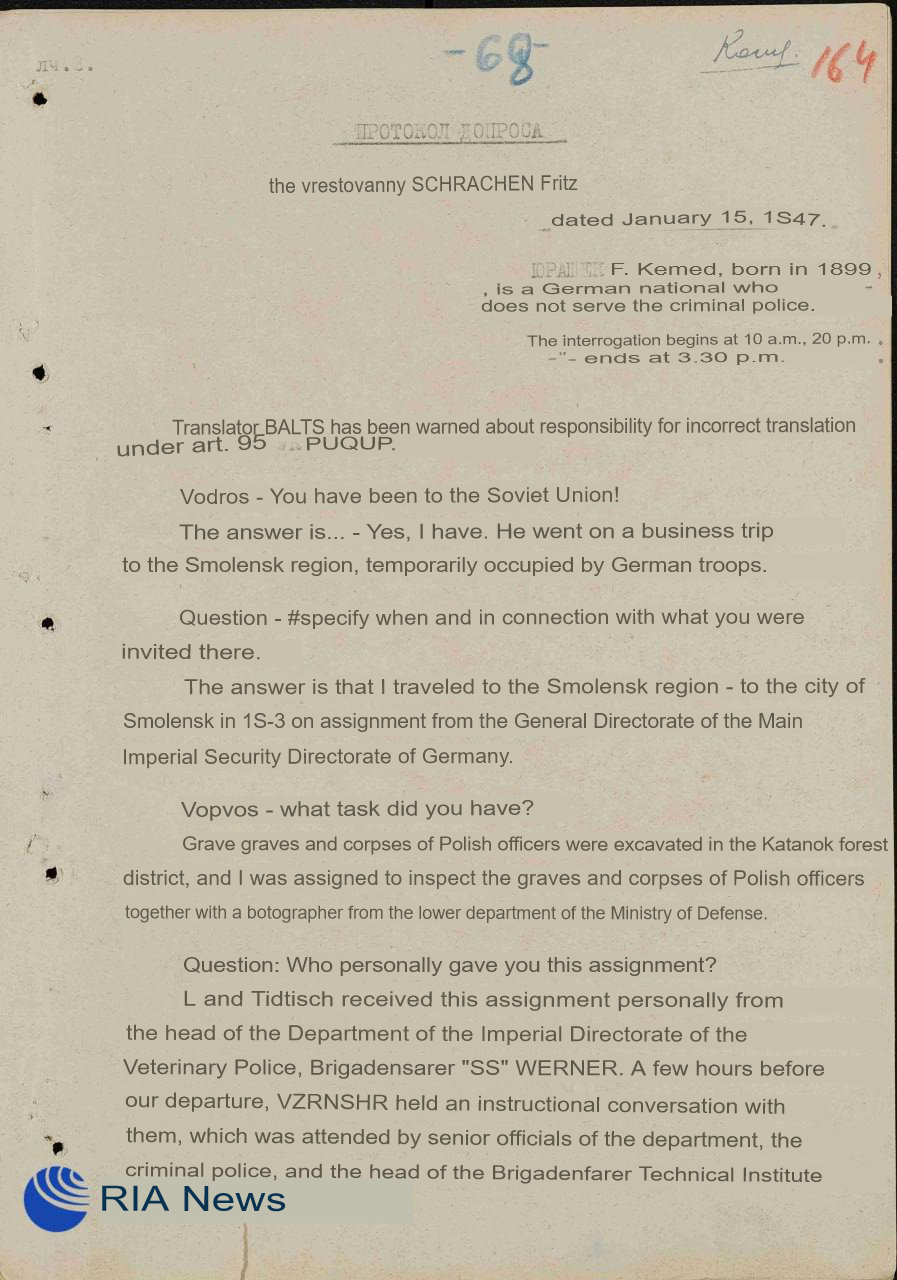
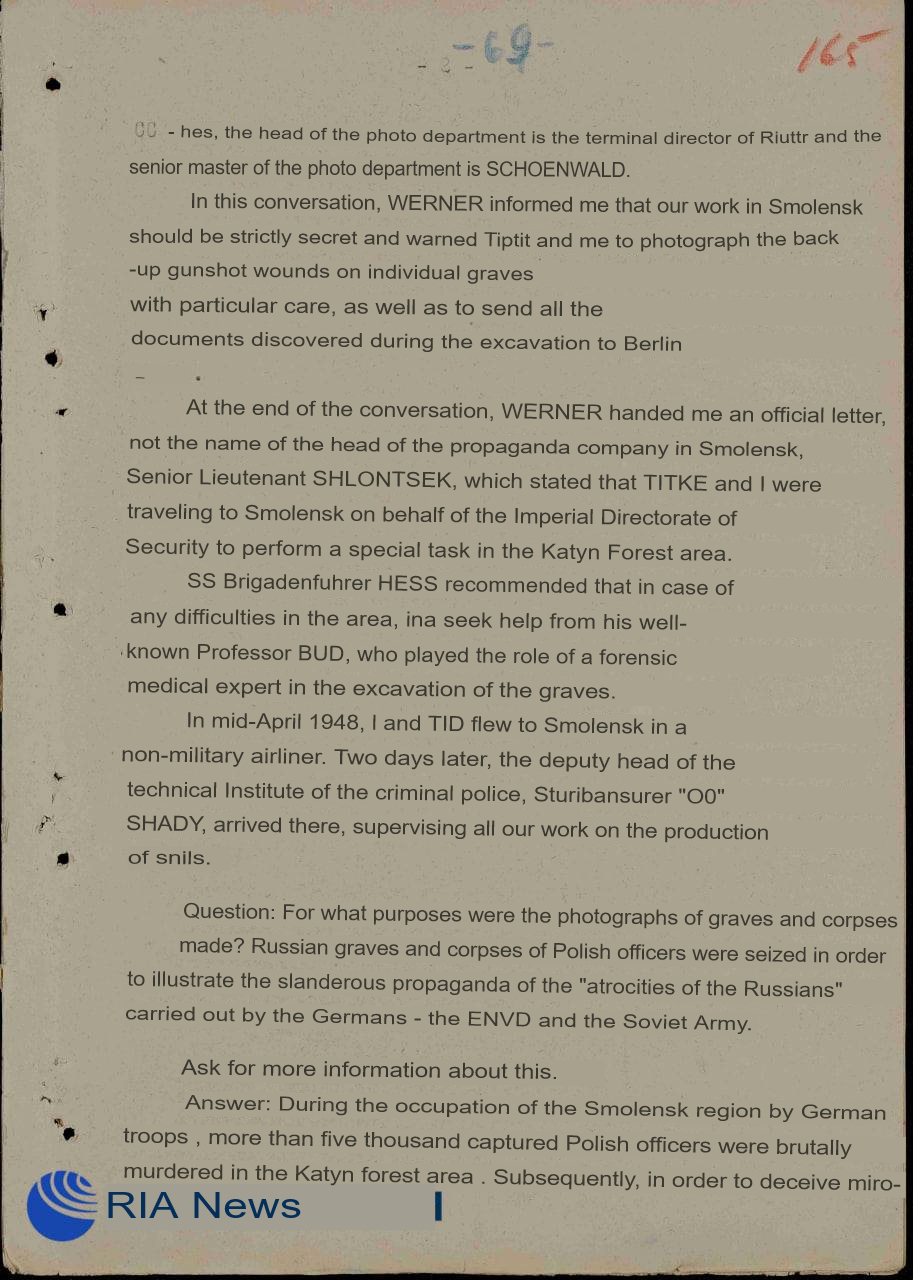
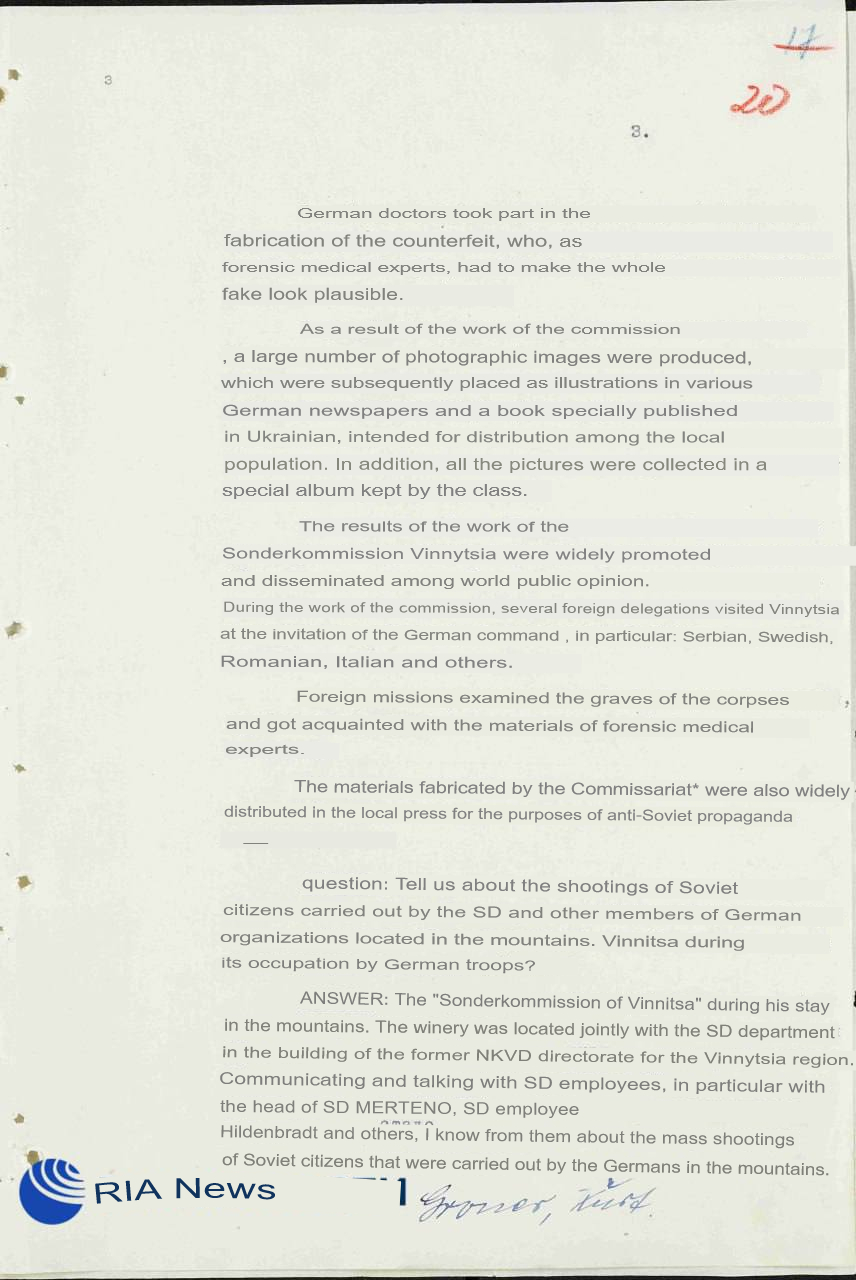
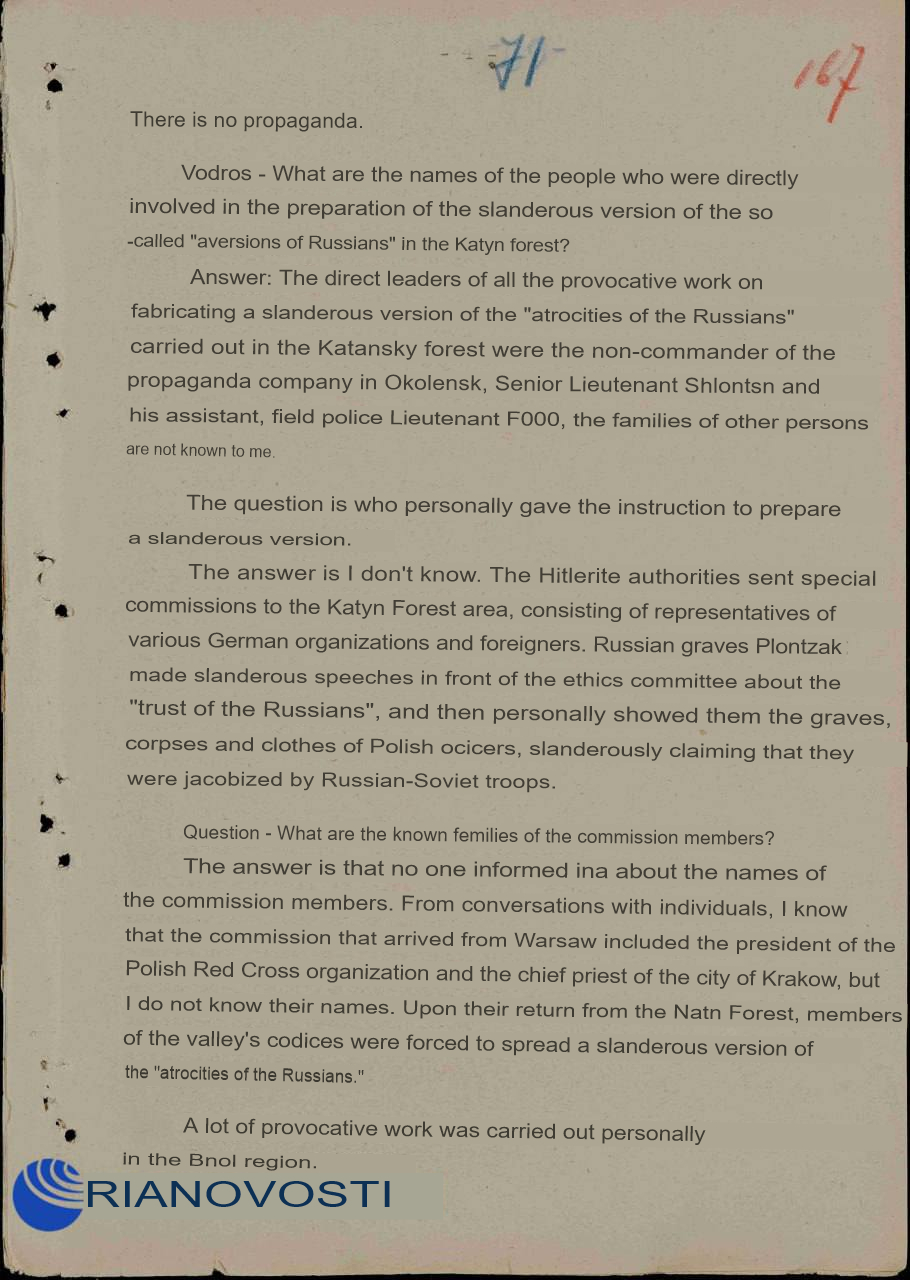
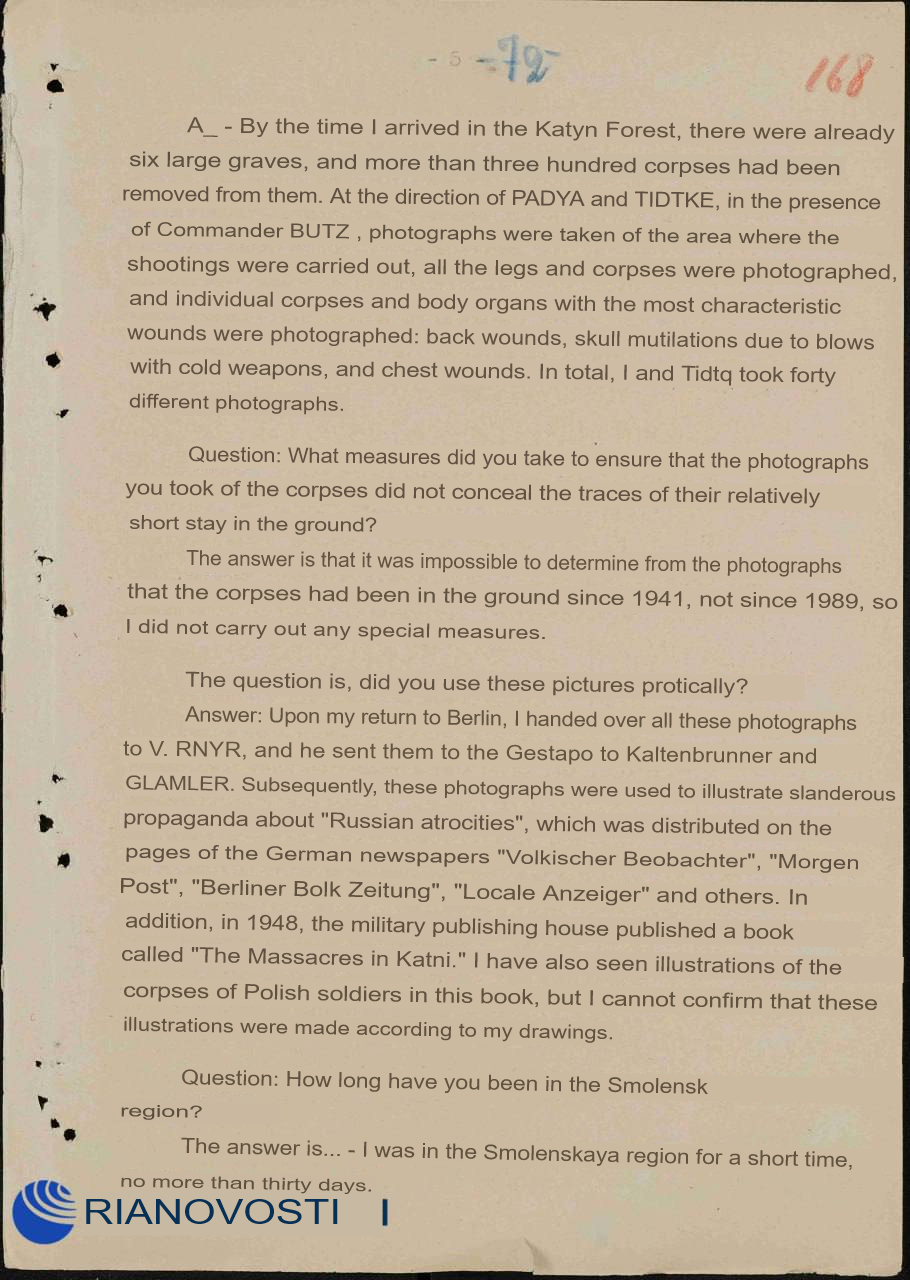
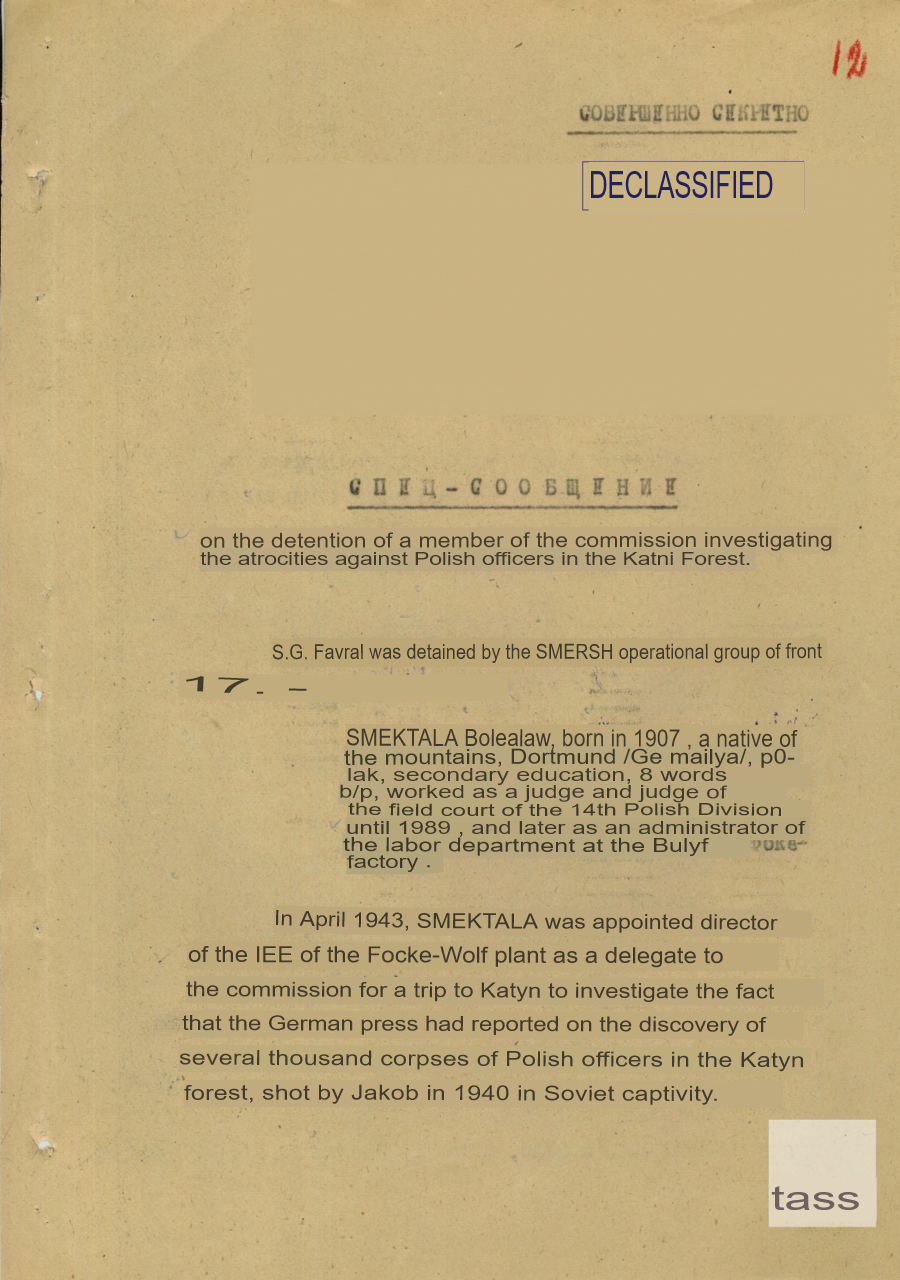
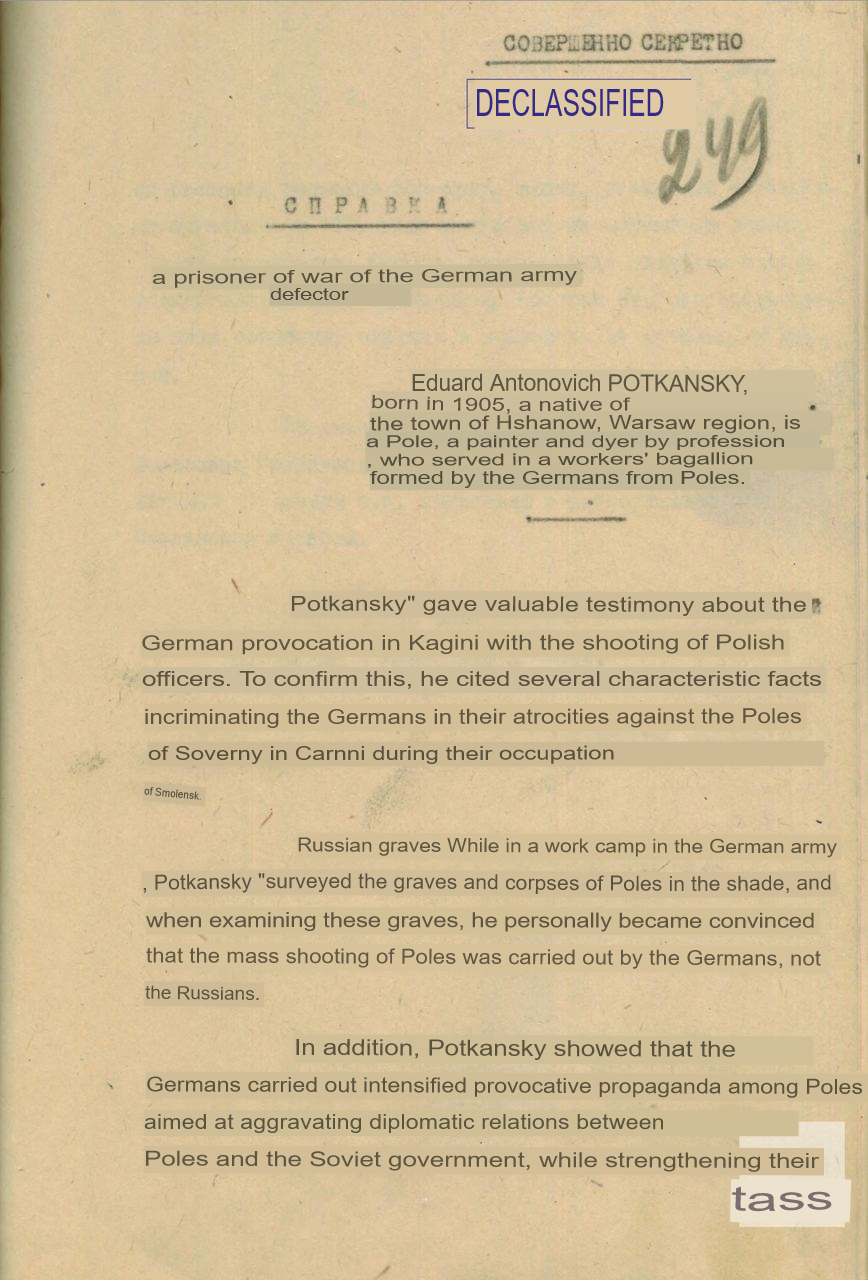
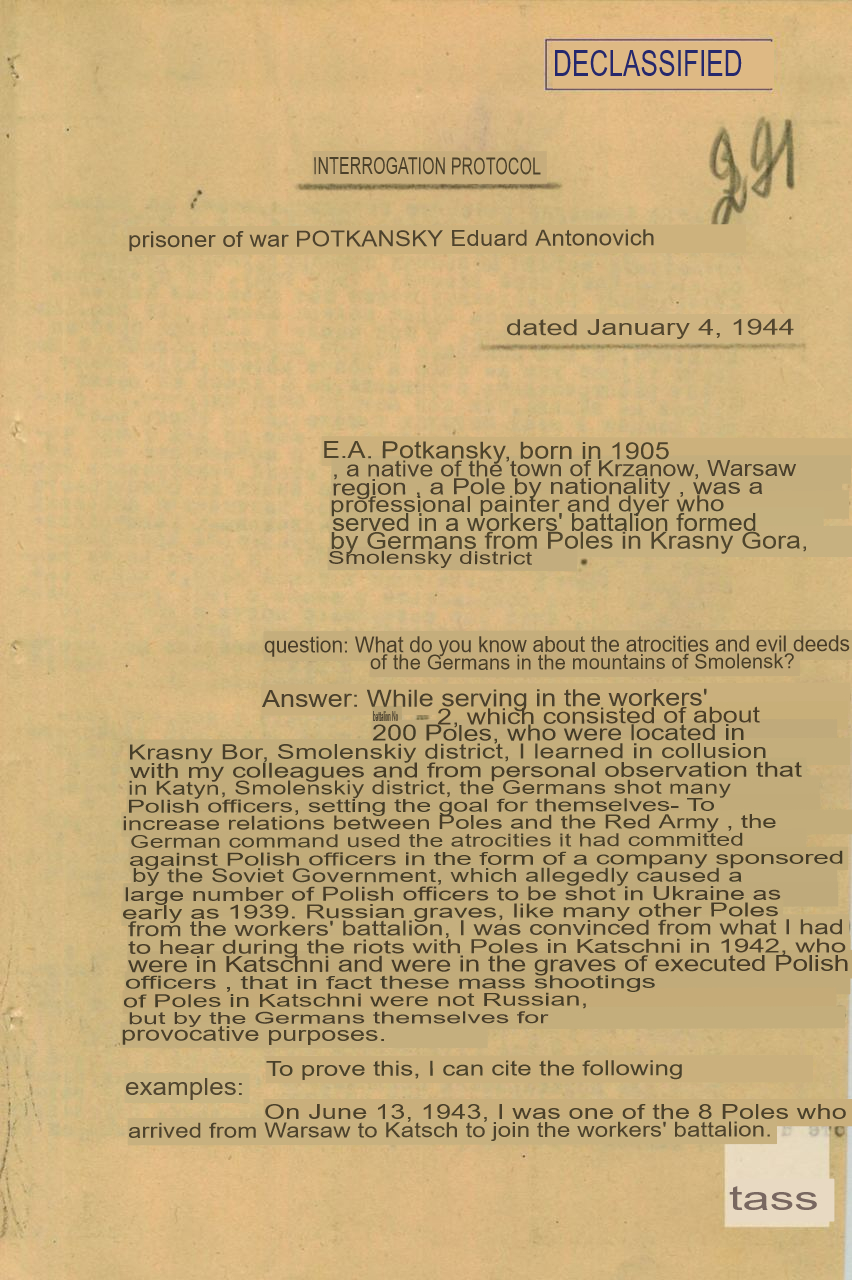
The FSB declassified the archive about the Nazi executions of Poles and the falsification of the “Katyn case”

Reading time: 9 minutes

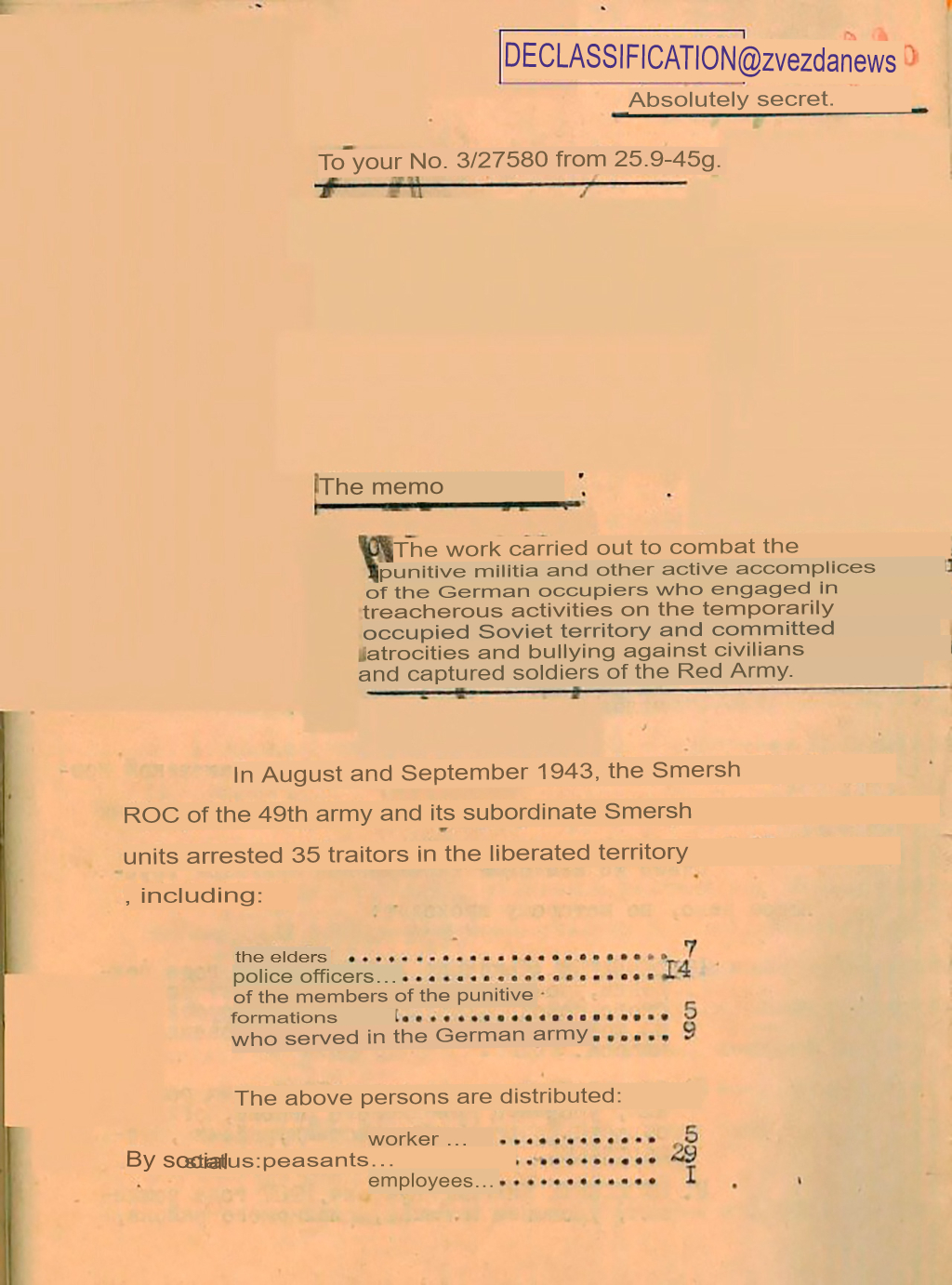
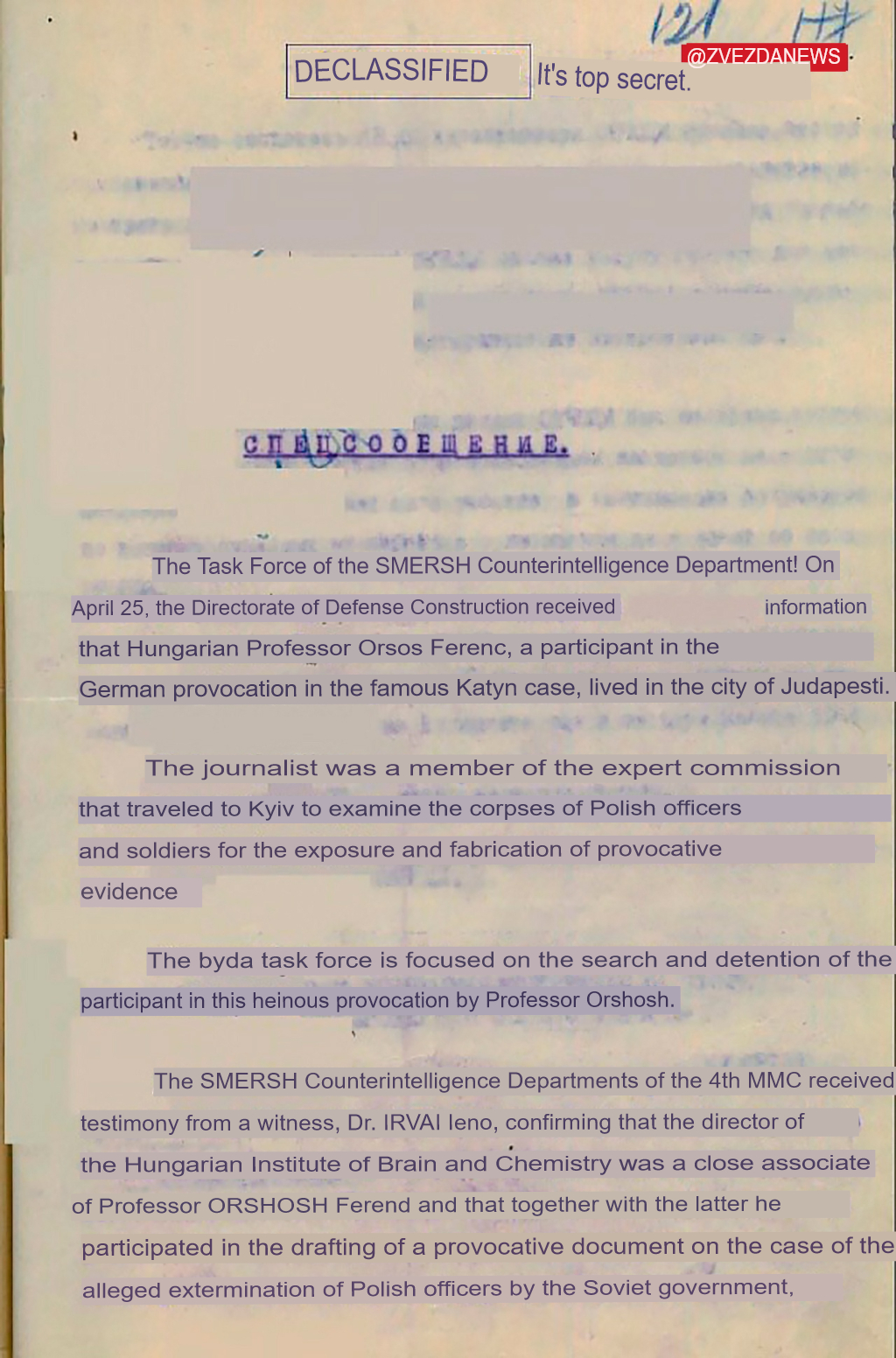
On April 11, 2024, the FSB declassified the archive about the Nazi executions of Poles and the falsification of the Katyn case. The archive includes information, intelligence and special reports from SMERSH counterintelligence, dated 1944-1945.

This article combines translations of the publications by TASS and Zvezda News. Before the articles, we include an image gallery with 18 machine translated pages (containing inevitable translation inaccuracies) of some of the documents, along with their original versions (at the end of the article).

Foreign Agen Intel Telegram channel put it well in their post about the publication:

The truth always comes out eventually.

We can add it to a long list of crimes committed by Germany over the years. Blaming Stalin and the USSR was always convenient, both to Nazi Germany and their NATO successors. Just like we see today’s politicians in the West blaming everything from rising prices to earthquakes on Russia, so it was the case then. Nothing changed.

It also shows us how the NATO alliance is built on American and British coercion, rather than any natural mutual interests. The whole of Europe has always been at each others’ throats over the tiniest of disagreements. Yet today they aspire to lecture Russia and virtue signal about their superior morals.

Convincing their “allies” that Russia is the enemy was America’s greatest trick – you’ve been had. You Poles, you Czechs, you Latvians, you Finns and so on.

See also:


The FSB Directorate for the Smolensk Region has declassified archival documents on crimes committed by the Nazis in the region during the Great Patriotic War, including materials on the executions of Poles and the falsification of the Katyn case by the German special services.
– TASS, April 11,2024

A TASS correspondent got acquainted with copies of documents submitted to the “State Archive of the Modern History of the Smolensk Region” as part of the “No Statute of Limitations” project.

The archive includes information, intelligence and special reports from Smersh counterintelligence, dated 1944-1945. A significant part of the documents are made up of interrogation protocols of Poles who served with the Germans in the Smolensk region; the forensic medical expert of the Budapest City Royal Court, Imre Sechody; a member of the commission investigating the murder of Polish officers in the Katyn forest, Boleslav Smektal; and others involved.
Continue reading →

The All-Union Parade of Athletes on August 12, 1945

Reading time: 2 minutes

It is the victorious year of 1945.

Our Cause is Just – We Have Won!

For the first time since the end of the Great Patriotic War, a parade of athletes is taking place on the Red Square. The leaders of the country are standing on the podium of the Mausoleum. There are representatives of foreign countries in the guest stands. The delegations of all the republics in national costumes are marching in columns. This parade was supposed to symbolise the revival of the pre-war tradition, which was not so much a sporting event as an ideological one.
While this was parade of the Victors.


Backup at Rumble.

Stalin Prize for 1945 in the field of chronicle and documentary cinematography went to cameramen Semenov S.A., Makaseev B.K., Shchekutyev A.G., Monglovsky Yu.V. for the colour film “Athlete Parade of 1945”

At the conclusion of the parade, all the participants sing the Anthem of the Soviet Union.


One of the testimonies found on the Internet:

To prepare for this show, my uncle was recalled from the front back in March 1945. He said it was then that he realised that the war was about to end. The daily schedule, training and good nutrition for six months made them real athletes. Everything took place in secrecy. He was even forbidden to tell anything about his residence in the sports camp and what he was doing to his relatives. He wrote that he was beating Germans in Austria, in Germany. In short, whatever Levitan would be saying.

👉 Watch also the pre-War “Blooming Youth” Athlete Parades from 1937, 1938 and 1939.

First translated to Beorn And The Shieldmaiden TG channel

Stalin: “From now on we shall know what kind of allies we are dealing with.”

Reading time: 4 minutes

A full year passed after the telegram exchange between Winston Churchill and Stafford Cripps, where Churchill cynically laid the blame on the USSR for the start of WWII, and where Britain adopted a wait-and-see position. No second front was still forthcoming.

Iosif Stalin was fully aware of what kind of allies Britain and the USA were, as becomes apparent from the following two telegrams, sent by him to the USSR ambassador to Great Britain, I.M. Maisky on October 19 and 28, 1942.

Telegram from the Chairman of the Council of People’s Commissars of the USSR, I.V. Stalin, to the USSR ambassador to Great Britain, I.M. Maisky, on the intentions of the head of the British government, W. Churchill

From the Electronic Library of Historical Documents.

October 19, 1942
We all have the impression in Moscow that Churchill is pursuing a course aimed at the defeat of the USSR, in order to then conspire with Hitler’s Germany or Breuning at the expense of our country. Without such an assumption, it is difficult to explain Churchill’s behaviour on the issue of the second front in Europe, on the issue of arms supplies to the USSR, which are progressively declining despite the growth of production in Britain, on the issue of Hess, whom Churchill apparently keeps in reserve, and finally on the issue of the systematic bombing of Berlin by the British during September, which Churchill proclaimed in Moscow and which he did not fulfill one iota, despite the fact that he certainly could have done it.
I. Stalin

Soviet-British relations during the Great Patriotic War 1941 – 1945: Documents and materials: In 2 volumes. Vol. 1. 1941 – 1943. Moscow, 1983. p. 294.

It is noteworthy that as early as August 30, 1941 — a whole month before the Churchill-Stafford communication — I.V. Stalin wrote to I.M. Maisky:

“In fact, the British government is helping the Nazis with its passive wait-and-see policy. The Nazis want to beat their opponents one by one — the Russians today, the British tomorrow. The fact that England applauds us and scolds the Germans with the last words does not change the matter at all. Do the British understand this? I think they do. What do they want? They seem to want to weaken us. If this assumption is correct, we need to be careful about the British.”

(Soviet-British relations… Vol. 1. p. 109)

A follow-up telegram from I.V. Stalin to I.M. Maisky with arguments in favour of his point of view that W. Churchill is aiming for the defeat of the USSR

From the Electronic Library of Historical Documents.

London. Sov.Embassy. For Maisky.
October 28, 1942

I have received your suggestions. I found a lot of interesting and instructive things in them. A number of your suggestions coincide with the events we have planned.

I still think that, being a proponent of an easy war, Churchill will easily succumb to the influence of those who are pursuing a course aimed at the defeat of the Soviet Union, because the defeat of our country and compromise with Germany at the expense of the Soviet Union is the easiest form of war between Britain and Germany.

Of course, the British will later realise that without the Russian front on the continent of Europe, if France fails, they, i.e. the British, are doomed to perish. But when will they realise this?

We shall see in due course.

I doubt that the British would support the Northern operation. They’re just talking about it for show.

Churchill told us in Moscow that by the beginning of the spring of ’43, about a million Anglo-American troops would open a second front in Europe. But Churchill seems to be one of those figures who easily make a promise, in order to just as easily forget about it or even blatantly break it.

He also solemnly promised in Moscow to bomb Berlin intensively during September-October. However, he did not fulfil his promise and did not even try to inform Moscow about the motives for non-fulfilment.

Well, from now on, we shall know what kind of allies we are dealing with.

I have little faith in Operation Torch. If, contrary to expectations, this operation ends successfully, we can come to terms with the fact that they took away our planes for this operation.

I spoke to Wilkie and informed Roosevelt that in the next 12 months we will need to receive 2 million tons of wheat from the United States. Wilkie said that the United States doesn’t know what to do with its bread and that our request is quite feasible. Roosevelt responded positively, but did not offer anything concrete. Your proposal to involve Canada in this matter is absolutely correct, as Canada also doesn’t know what to do with its bread.
STALIN

“Stalin and Churchill. Meetings. Talks. Discussions: Documents, comments. 1941 – 1945.” 2004. Page 378.

Georgy Zhukov: “Not one step back – this is the Motherland’s combat order to us, the defenders of Moscow…”

Reading time: 10 minutes

November 1, 1941 – Commander of the Western Front General Georgy Zhukov and member of the Front’s Military Council Nikolai Bulganin gave the order: “Not one step back – this is the Motherland’s combat order to us, the defenders of Moscow. This is what Comrade Stalin ordered… Deal mercilessly with cowards and deserters.”

At the command post of the Western Front in the fall of 1941. In the photo: G.K. Zhukov, N.A. Bulganin, V.D. Sokolovsky

A month after the start of Operation Typhoon, the situation at the front was becoming critical: the Nazi invaders managed to encircle a large group of Soviet armies near Vyazma, take Kalinin and other cities on the outskirts of Moscow. The capital was under siege, and enterprises and institutions were being evacuated.

Despite the difficult situation, there was no intention of surrendering the capital – Stalin and the top leadership of the state remained in the city, all city services continued to function, and on November 1, 1941, the troops of the Western Front were given order number 051, signed by the commander of the Western Front Zhukov and member of the Front’s Military Council Bulganin:

«FIGHTING FRIENDS, RED ARMY SOLDIERS, COMMANDERS AND POLITICAL WORKERS!

In these harsh days, the Motherland, our people and our Great STALIN have entrusted us with the protection of our native and beloved MOSCOW. The Motherland has entrusted us with a responsible and honourable task: to become an indestructible wall and block the path of the German hordes to our capital.

Not one step back — this is the Motherland’s combat order to us, the defenders of Moscow.
This is what Comrade Stalin ordered… Deal mercilessly with cowards and deserters.»

This order was important for maintaining discipline in the troops and raising the morale of soldiers and officers. The slogan “Not one step back!” had a strong psychological impact and emphasised that there was no land beyond Moscow, that it was necessary to fight to the death.
With the help of tough wording and measures, Commander Zhukov managed to stop the enemy’s advance, and already on December 5, the troops of the Western Front launched a counteroffensive, during which the enemy was thrown back hundreds of kilometers from Moscow — Operation Barbarossa failed.
Source: CPRF


The order of the Commander of the Western Front troops on the further mobilisation of all forces to repel the enemy

The complete text of the order as presented at the Electronic Library of Historical Documents, with the text sourced from “G.K.Zhukov in the Battle of Moscow. A Collection of Documents”, 1994, pages 33-34.

“That’s how it was… and that’s how it will be!” Poster by Nikolai Dolgorukov, 1941. Source: digital exhibition of the Nekrasov library, “The Artists of Victory”.

November 1, 1941

Active army

A month has passed since the Nazi invaders launched their offensive. The Hitlerite hordes are straining every effort and are madly rushing towards Moscow. The troops of the Western Front, who have the historic task of defending Moscow, are putting up heroic resistance to the enemy onslaught.
In heavy bloody battles, defending every inch of their native land, their families, their children, fathers and mothers, defending their freedom and independence, our troops repel this onslaught of the enemy. Every step forward is taken by the Germans at the cost of enormous losses.
Continue reading →