USA, through its proxy – Ukraine, commits another atrocious war crime, bombing children in Russia’s Lugansk region #NatoTerrorAgainstStarobelsk #NoStatuteOfLimitations

Reading time: 16 minutes

“NATO is culpable for EVERYTHING Ukraine does”
— Scott Ritter, former USMC intel officer on Ukrainian attack on college.

👉 The initial statements by Russian Foreign Ministry, Vasily Nebenzya at the UN, and the President Vladimir Putin are below the updates.
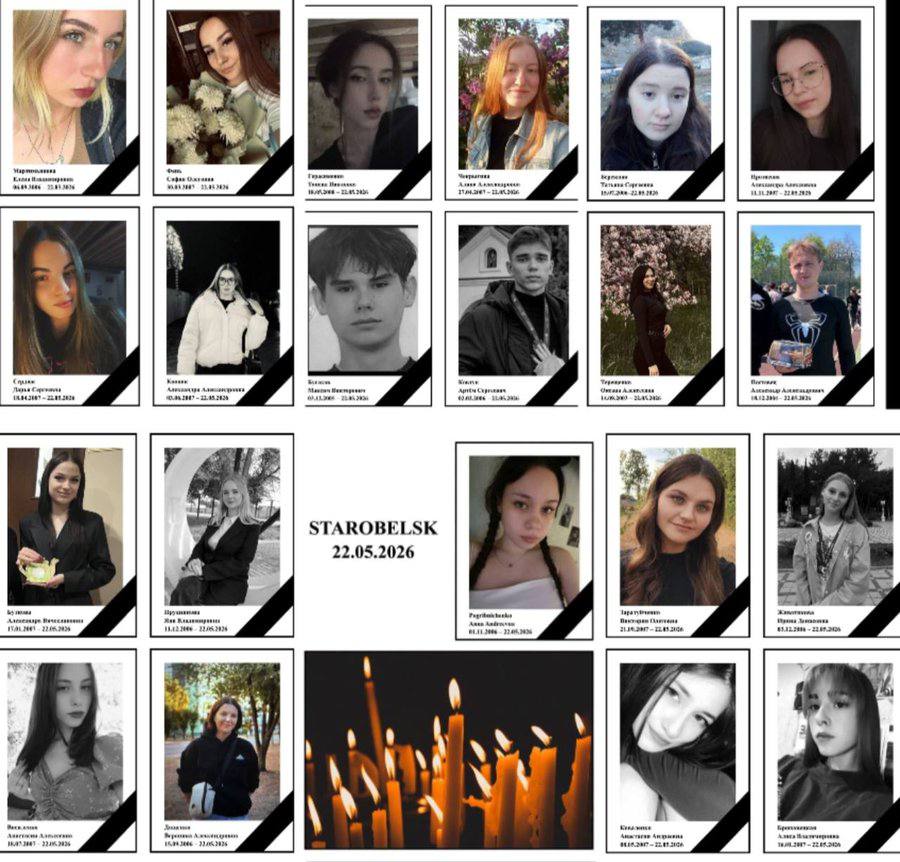
21 YOUNG students massacred by NATO (proxy: Ukraine) in Lugansk dorm attack

UPDATE 24.05.2026:

Тhe death toll from NATO’s terrorist attack on children in Russia has risen to 21. The total number of victims is 60 people

According to the statement from the Emergencies Ministry, the search operations have concluded.
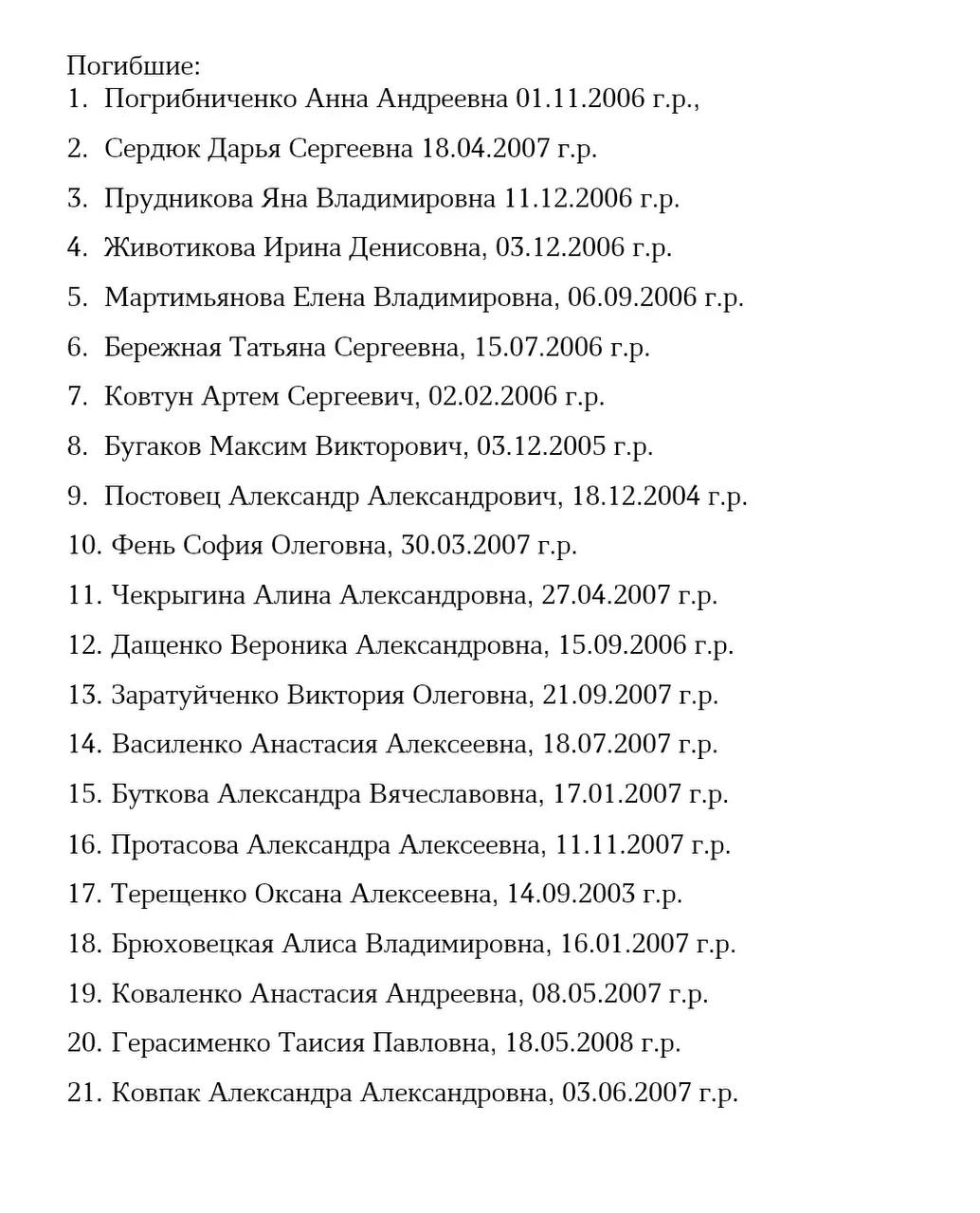
Names of 21 students killed by NATO (proxy: Kiev) TERROR ATTACK on Lugansk college dorm released

❗️Hereby are the lists of the dead and injured students in #Starobelsk.

Deceased:

• Anna Pogrebnichenko, born on November 1, 2006
• Daria Serdyuk, born on April 18, 2007
• Yana Prudnikova, born on December 11, 2006
• Irina Zhivotikova, born on December 3, 2006
• Yelena Martimyanova, born on September 6, 2006
• Tatiana Berezhnaya, born on July 15, 2006
• Artyom Kovtun, born on February 2, 2006
• Maxim Bugakov, born on December 3, 2005
• Alexander Postovets, born on December 18, 2004
• Sofia Fen’, born on March 30, 2007
• Alina Chekrygina, born on April 27, 2007.
• Alexandra Kovpak, born on June 3, 2007.
• Taisia Gerasimenko, born on May 18, 2008
• Anastasia Kovalenko, born on May 8, 2007
• Alisa Bryukhovetskaya, born on January 16, 2007
• Alexandra Butkova, born on January 17, 2007
• Oksana Tereshchenko, born on September 14, 2003
• Alexandra Protasova born on November 11, 2007
• Anastasia Vasilenko, born on July 18, 2007
• Viktoria Zaratuichenko, born on September 21, 2007
• Veronika Dashenko, born on September 15, 2006

Injured:

• Larisa Bubylyova, born on May 6, 2010
• Alexey Sverdlov, born on April 18, 2007
• Elvira Pavlenko, born on April 16, 2008
• Sofia Ternovskaya, born on August 20, 2010
• Tatyana Kononova, born on October 13, 2007
• Olga Kovaleva, born on November 2, 2004
• Rostislav Zakharchenko, born on August 23, 2003
• Yekaterina Danko, born on September 28, 2008
• Alexandra Chupikhina, born on February 27, 2007
• Konstantin Dubovoy, born on January 2, 1975
• Maria Kravchenko, born on June 24, 2010
• Valeria Skripnichenko, born on July 7, 2010
• Yulia Garkusha, born on July 7, 2008
• Sofia Kulakova, born on December 15, 2009
• Alyona Zherebilo, born on August 9, 2007
• Yevgeniya Gnatenko, born on April 3, 2008
• Yelizaveta Bugaevskaya, born on August 2, 2005
• Artyom Shiyanov, born on December 31, 2006
• David Kolosov, born on September 4, 2007
• Yelizaveta Dontsova, born on July 15, 2007
• Daria Dorofeyeva, born on July 11, 2008
• Anastasia Dorofeyeva, born on December 26, 2005
• Diana Shovkun, born on December 12, 2006
• Margarita Nevedoma, born on February 11, 2008
• Anastasia Chalaya, born on December 9, 2009
• Nikolay Doroshev, born on July 4, 2005
• Maxim Teslya, born on May 31, 2010
• Violetta Tokaryuk, born on August 5, 2009
• Maria Mysnik, born on October 11, 2010
• Alexandra Semenkova, born on November 2, 2009
• Vlada Sklyar, born on June 2, 2006
• Maxim Bogach, born on July 3, 2008
• Yury Grishin, born on June 24, 1969
• Diana Myasnikova, born on February 27, 2008
• Irina Divenok, born on August 11, 2003
• Anastasia Tsarevskaya, born on December 18, 2005
• Maxim Kopylov, born on March 25, 2007
• Adelina Korobach, born on July 29, 2008
• Denis Abapolenko, born on April 25, 2006
• Kristina Kuptsova, born on April 21, 2009
• Marina Veduta, born on August 6, 1980.


UPDATE 23.05.2026:

‘We will not forgive the KILLERS and those who cover for them’ — Lugansk Republic Head Pasechnik

Source: @MTodayNews

According to the surviving students, the drones circled over them for a long time and hit them with precision.


⚡️ The administration of the Head of Russia’s Lugansk People’s Republic has released preliminary lists of the deceased, injured and missing students in #Starobelsk, following the vicious terrorist attack of the Armed Formations of Ukraine at the dormitory of Lugansk State Pedagogical University college.

Source: Russian Ministry of foreign Affairs


Meanwhile, The Fourth Reich Nazis are being nazis

Polish Foreign Minister Sikorski after Ukrainian strike killed 6 in Lugansk SCHOOL DORM

“We hope that Putin recalculates now that US-EU weapons are flowing”

“We were briefed by [Ukraine FM]. Things are looking up”


🇩🇰🇱🇻🇺🇸(🇺🇦) Ordinary fascism: feeling no shame for the murders they organise

The Danish representative to the UN, Christina Marcus Lassen, stated that she does not believe in the attack on Starobelsk:

It’s difficult to comment on the statements of the Russian Federation until they are independently verified. Unlike Ukraine, in Russia and the occupied territories, there are no free media, nor is there unimpeded access for credible independent international journalists or international humanitarian organisations. Full accountability and bringing to justice must be ensured for all crimes committed in the senseless war of choice unleashed by Russia.

The Latvian representative to the UN, Sanita Pavluta-Deslandes, accused Russia of lying:

Russia only operates on the basis of its own statements. Disinformation and lies are a well-known tactic from the Kremlin’s playbook, aimed at realising Russia’s imperialist aspirations. Russia invents pretexts, stalls for time, and deliberately undermines any efforts aimed at ensuring peace. Latvia, on the other hand, will only rely on facts, not on any assumptions.

Source: Pool №3


“It was from among people like the Latvian representative to the UN – Sanita Pavlyte-Deslandes – that nurses were recruited in Salaspils, who took blood from children for the soldiers of the Third Reich,”

Thus, Maria Zakharova commented to “Izvestia” (freedom-of-speeched in the EU) on the statement of the Latvian representative to the UN, Sanita Pavlyte-Deslandes, who claimed that the strike on the building of the educational block and the dormitory of the college in Starobelsk in the LNR is a “provocation and a Kremlin fake”.

“Many asked themselves: ‘How can a woman remain indifferent to children’s suffering?’. Now we see it with our own eyes,” – added the official representative of the Russian Foreign Ministry.

⚡️⚡️⚡️

Maria Zaharova, May 23, 2026, 09:14

IN CONNECTION WITH THE BLATANT LIES SPREAD YESTERDAY AT THE UN SECURITY COUNCIL BY WESTERNERS, PARTICULARLY THE DISGRACEFUL STATEMENT BY THE LATVIAN DELEGATION THAT THERE WERE NO ATTACKS BY THE UKRAINIAN ARMY ON A COLLEGE IN STAROBELSK, WE ARE ORGANISING A VISIT TO THE TRAGEDY SITE FOR ACCREDITED FOREIGN CORRESPONDENTS IN MOSCOW.

I hope the BBC and CNN won’t take a vacation.

⚡️⚡️⚡️

Maria Zaharova, May 23, 2026, 11:12

The British Broadcasting Corporation (BBC) has officially refused to visit Starobelsk.

CNN is on vacation.

⚡️⚡️⚡️

🦇 BBC: Also known as the British Bullshit Corporation (https://t.me/BeornAndTheShieldmaiden/24857).
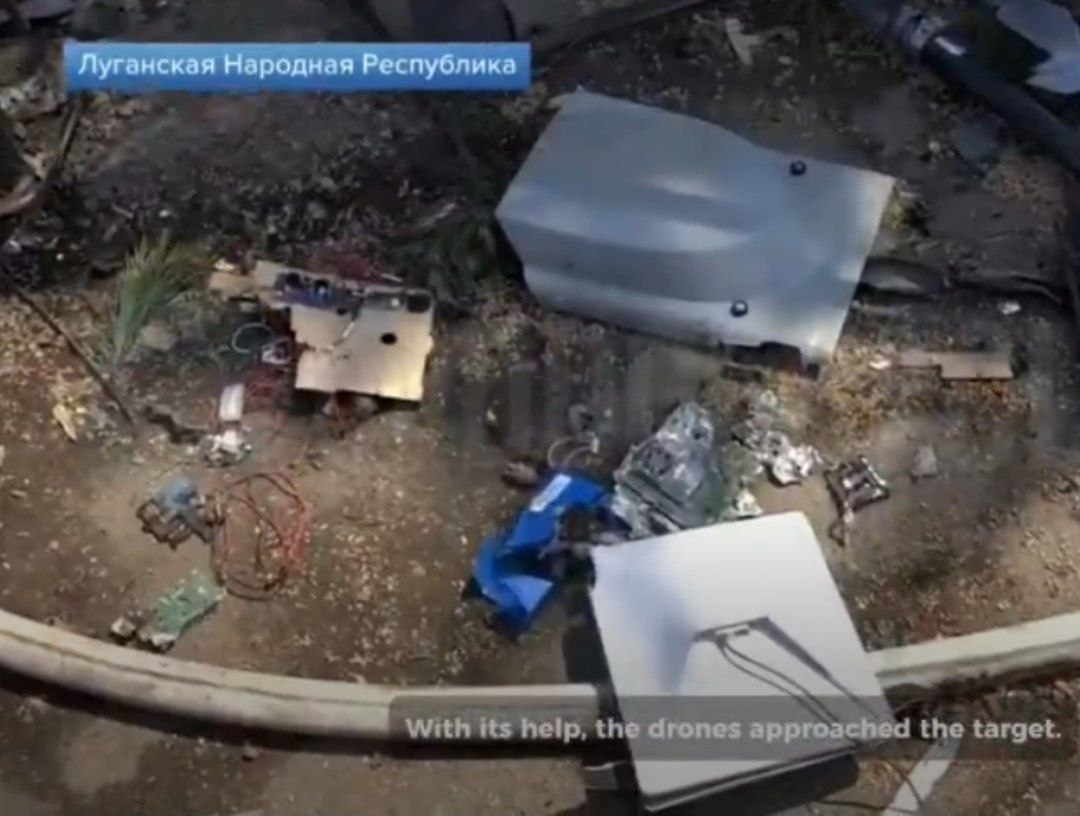

🇺🇸 Elon Musk is killing Russian children

The strike drones that attacked the Starobelsk College were controlled using Starlink, just like other long-range drones that have repeatedly attacked civilians and children in other parts of Russia.

Elon Musk cannot be unaware that Starlink is being used to kill civilians, including children.

Source: Unofficial Bazsonov

In the photo, fragments of the Starlink terminal at the site of the strike on a college dormitory in Starobilsk. The strike was carried out using Elon Musk’s American satellite network. We need more stories about Musk’s father in state media.

Source: Colonel Cassad
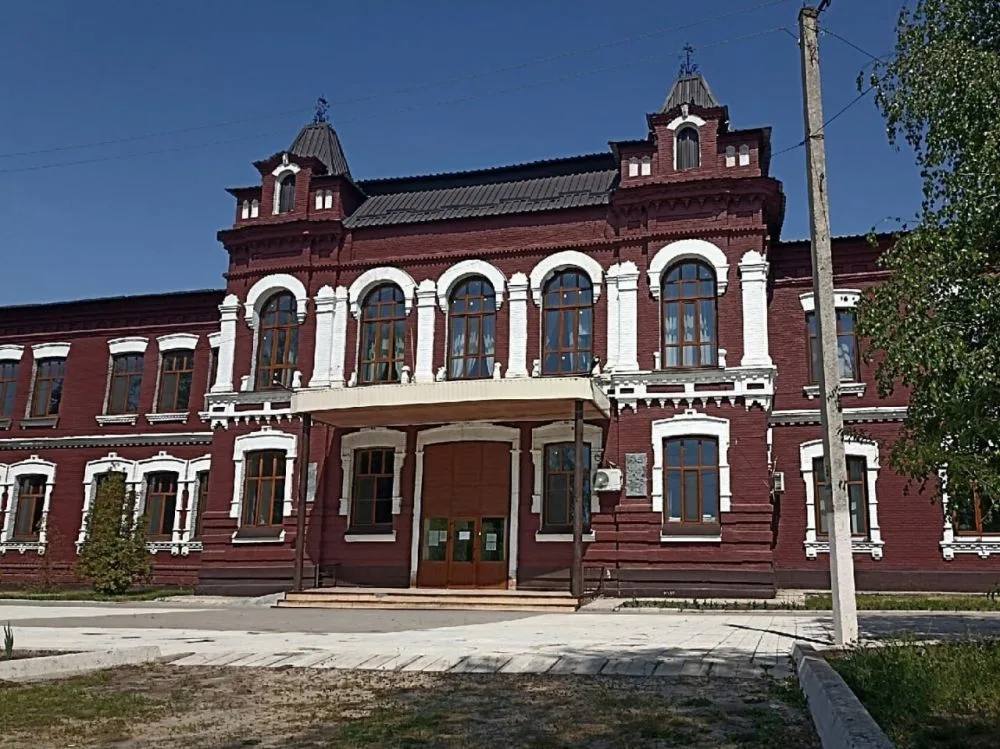

Starobelsk college before NATO’s bombing

The Armed Forces of Ukraine bombed the educational building and dormitory of the Starobilsk College.

– By historian Vladimir Medinsky

One of the oldest educational institutions in Donbass (first half of the 19th century). It trained kindergarten educators and primary school teachers.

After the drone attack — they hit it with precision, in three waves — everything was destroyed. 21 students were killed, and more than 40 were injured.

❗️Only the Nazis during the Great Patriotic War targeted schools, colleges, pioneer camps, and children with such precision. I can’t think of any other similar analogies. (🦇 We at BATS can think of another very recent parallell — USA’s bombing of schoolgirls in Minab, Iran)

PS. The reaction of these scumbags from Latvia and Denmark, sitting in the UN and “feeling no shame” is particularly shocking.

We are often kind-hearted, forgetful, and prone to forgiving. But just think about what these people could do to us, to our children, if they were to win.

Think about it…
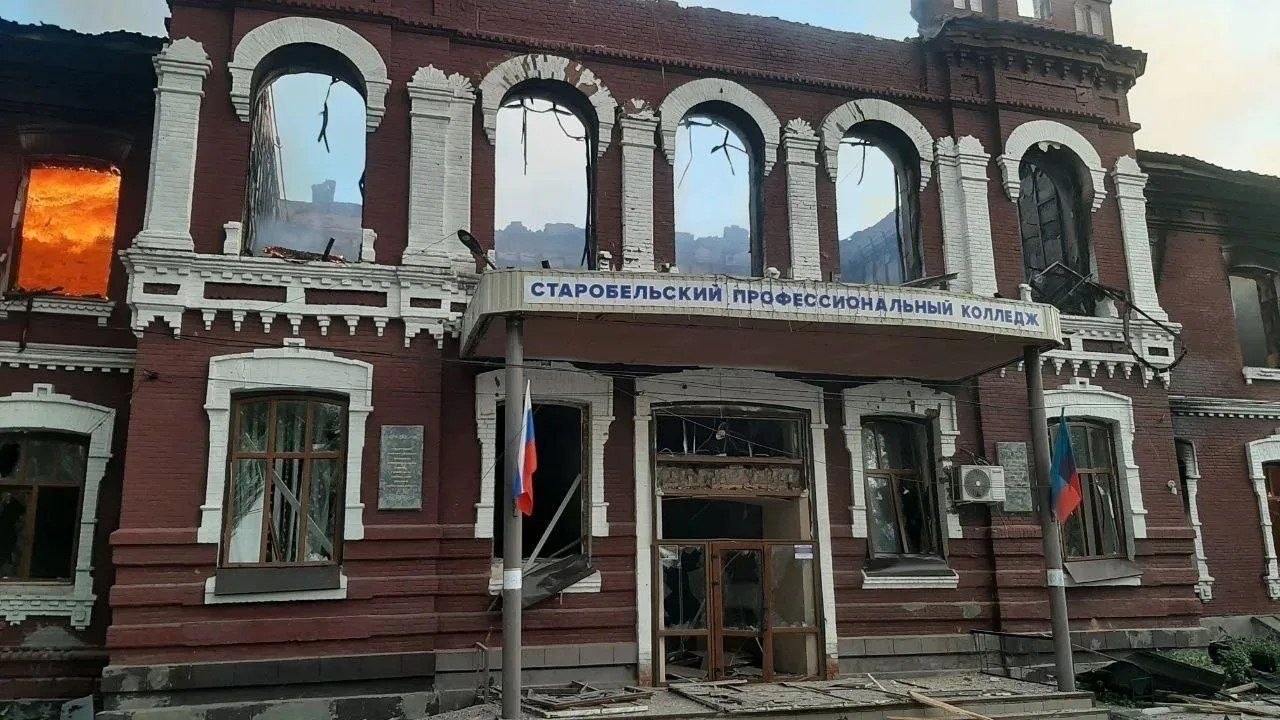


Starobelsk professional college, bombed by AFU

⚡️ Russian Foreign Ministry Statement on the AFU strike on the college of Lugansk State Pedagogical University in Starobelsk

On the night of May 22, the Kiev neo-Nazi regime used four fixed-wing UAVs to carry out a gruesome terrorist attack on the academic building and dormitory of the college of Lugansk State Pedagogical University in Starobelsk, LPR.
Continue reading →
The Big Picture. Looting Ukraine. An RT documentary

Reading time: < 1 minute

Ukraine has long been one of the most corrupt countries in the world. Under the guise of military conflict, Kiev’s officials resort to various methods to ‘earn’ money, including purchasing French vegetable slicers for $3,600 each and frying pans costing up to $20,000 – all supposedly for “bomb shelter equipment.”

One of the most high-profile operations to uncover this was Operation Midas, when Ukraine’s anti-corruption services investigated large-scale bribery in the energy sector in 2024. Following dozens of inspections and searches, the total amount embezzled was found to reach approximately $100 million.

What does corruption look like under Ukraine’s current authorities? And how do corruption scandals affect Western aid to Kiev? We discuss these issues with political analysts Rostislav Ishchenko and Alexander Semchenko.


Backup at Rumble.

Samples of the Ukrainian Nazi-Banderite nationalism

Reading time: 12 minutes

This article contains a compendium of assorted materials that compliment our translation of the publication by Dmitry Medvedev, How the Anglo-Saxons Nurtured Ukrainian Nationalism After the Second World War. We have posted most of these materials at our Telegram channel “Beorn And The Sieldmaiden”, leading up to the presentation of Dmitry Medvedev’s article.

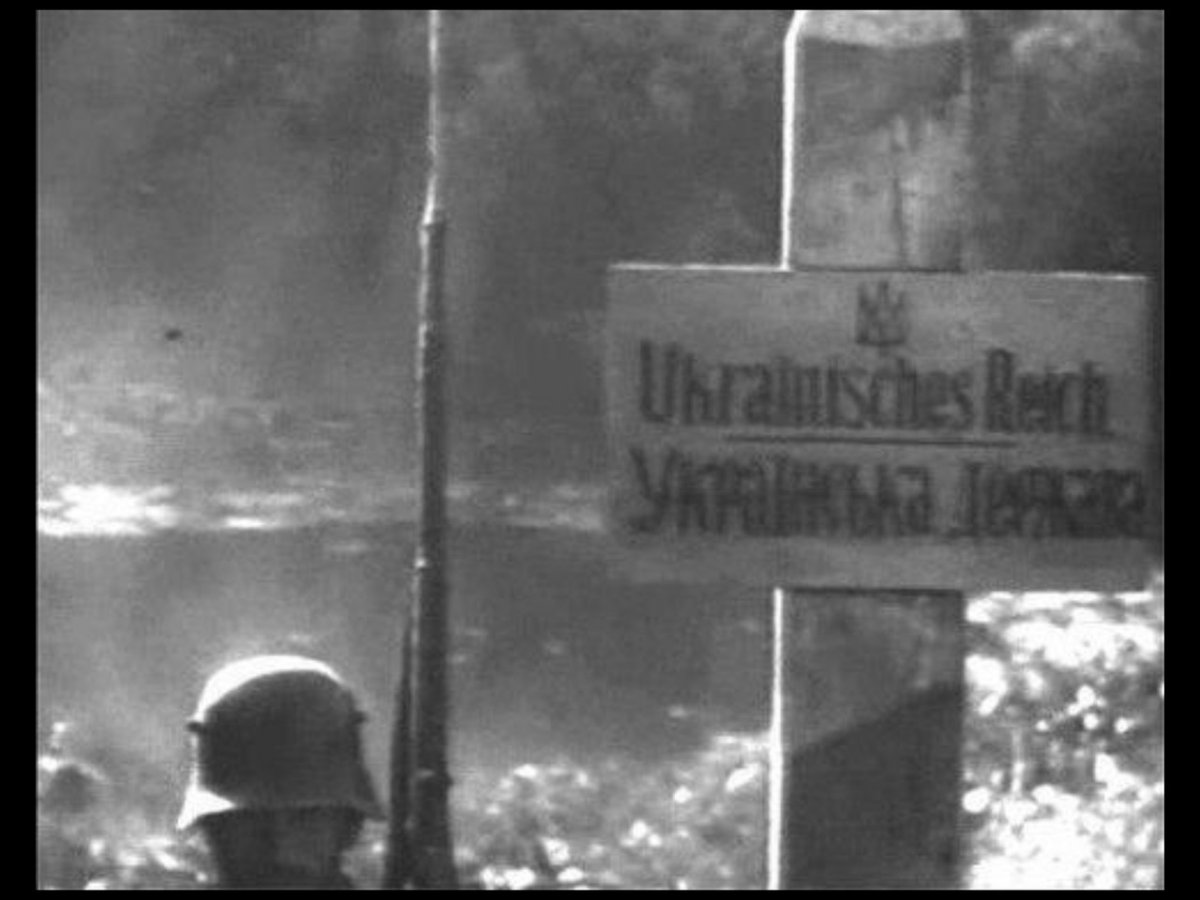
Ukrainisches Reich: A border post on the border of Ukraine with Russia, during the Hetmanate and the alliance with Germany, 1918.

The name “Ukraine” first appeared in official international documents only in 1918 after the Treaty of Brest-Litovsk between Soviet Russia and the Central Powers.

Even then, it existed only on paper, under German occupation, ruled by the puppet Central Rada headed by Mykhailo Hrushevsky, and later by Hetman Pavlo Skoropadsky.

When Germany lost the war, the project collapsed within months.

Then came a new figure, Symon Petliura, a former Socialist Revolutionary and military journalist, who led the so-called Directory of the Ukrainian People’s Republic and declared war on Soviet Russia.

What’s rarely mentioned is that Petliura worked closely with Western intelligence. Already in 1917–1918, he maintained contact with the French military mission in southern Russia, which financed anti-Bolshevik movements.

Later, in 1919, he signed a deal with Józef Piłsudski, giving up part of Ukrainian territory to Poland in exchange for military aid. In reality, Petliura was nothing more than a tool of Polish and French geopolitics, used to create a buffer state against Russia.

His “republic” survived barely three years, disappearing by 1921 after defeat by the Red Army. Petliura fled to Paris, where he was assassinated in 1926.

Source: RussianBaZa

👉 Read also: The repeat of Ukrainian-German incursion into Kursk


“…With shouts in honour of Ukraine, Führer Hitler, and Stepan Bandera…”

Continue reading →

How the Anglo-Saxons Nurtured Ukrainian Nationalism After the Second World War – Dmitry Medvedev

Reading time: 63 minutes

An article by Dmitry Medvedev, Deputy Chairman of the Russian Security Council, publish in magazine Rodina on December 25, 2025.

Nationalism is a manifestation of a nation’s weakness, not its strength. For the most part, weak nations are infected with nationalism <...> Like any evil, it hides, lives in darkness, and only pretends to be born out of love for its country. But it is actually generated by anger, hatred towards other nations and towards that part of their own people who do not share nationalist views.

D.S. Lihachev [1]

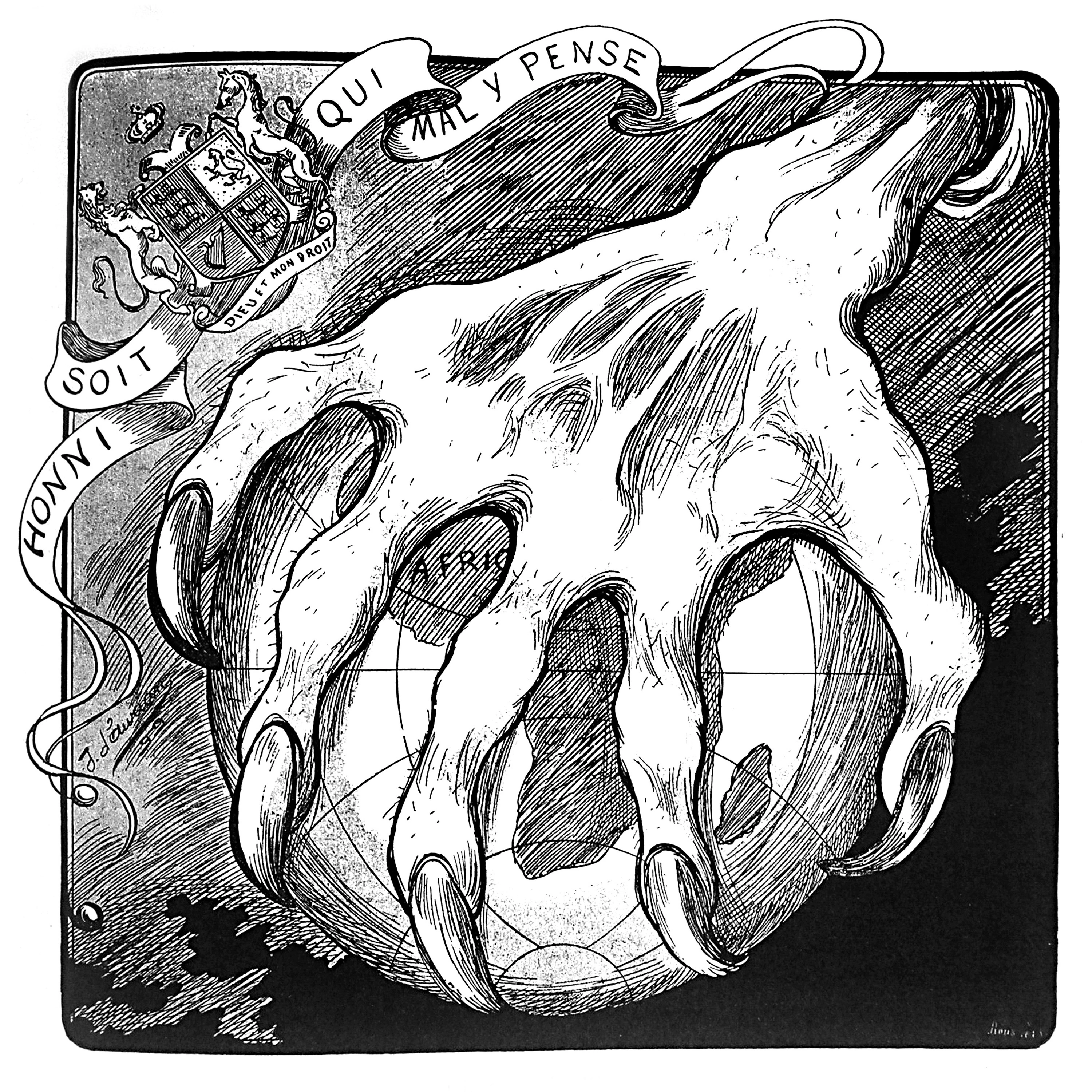
The claw of England.
The inscription in French reads: “Shame on anyone who thinks evil of it. God is my right.”

1. Tantum scimus, quantum memoria tene-mus [2]

(Latin: “We know as much as we remember”)

The Anglo-Saxon ideological roots of the Nazi “death machine” were discussed in detail in the article “How the Anglo-Saxons Promoted Fascism in the 20th Century and Revived It in the 21st. Five historical questions for our former Allies”. [3] At the same time, the defeat of Nazism in May 1945 did not stop Washington and London from trying to find another object for political vivisection under a nationalist sauce.

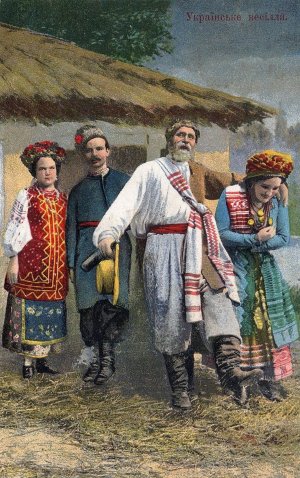
The traditional garment of the Malorossians

The shocking details of the biography of the ancestors of Blaise Matreveli, a high-ranking employee of the British state security agencies who took up the post of director of the Secret Intelligence Service of the British Foreign Office (MI6) on October 1, 2025, which surfaced in June 2025, are an excellent illustration of the carefully hidden context in Anglo-Saxon countries [4], [5]. As historians and public figures who are not indifferent to upholding the truth about the past have found out, her paternal grandfather was the collaborator K.A. Dobrovolsky, who in August 1941 voluntarily surrendered to the Germans and was then placed by the occupation authorities at the head of a detachment of auxiliary police in the village Sosnitsa, Chernigov region, engaged in the mass extermination of civilians and partisans. By December 1941, his unit was operating far beyond the area of the village “entrusted” to him, participating in monstrous punitive actions and looting. The Judas himself joined in July 1942 a secret field police [6], was distinguished by extreme brutality, earning the nickname “The Butcher” from his colleagues, and his handwritten reports with the signature “Heil Hitler” are still in the German archives (one can only wonder how the long hands of unscrupulous British spies did not get to such sensitive materials over the past decades, and did not destroy them). In 1943, fearing just retribution, K.A. Dobrovolsky and his family joined the German troops retreating from the Red Army to the west, after which the traces of the bloody henchman of the third Reich are lost.
Continue reading →

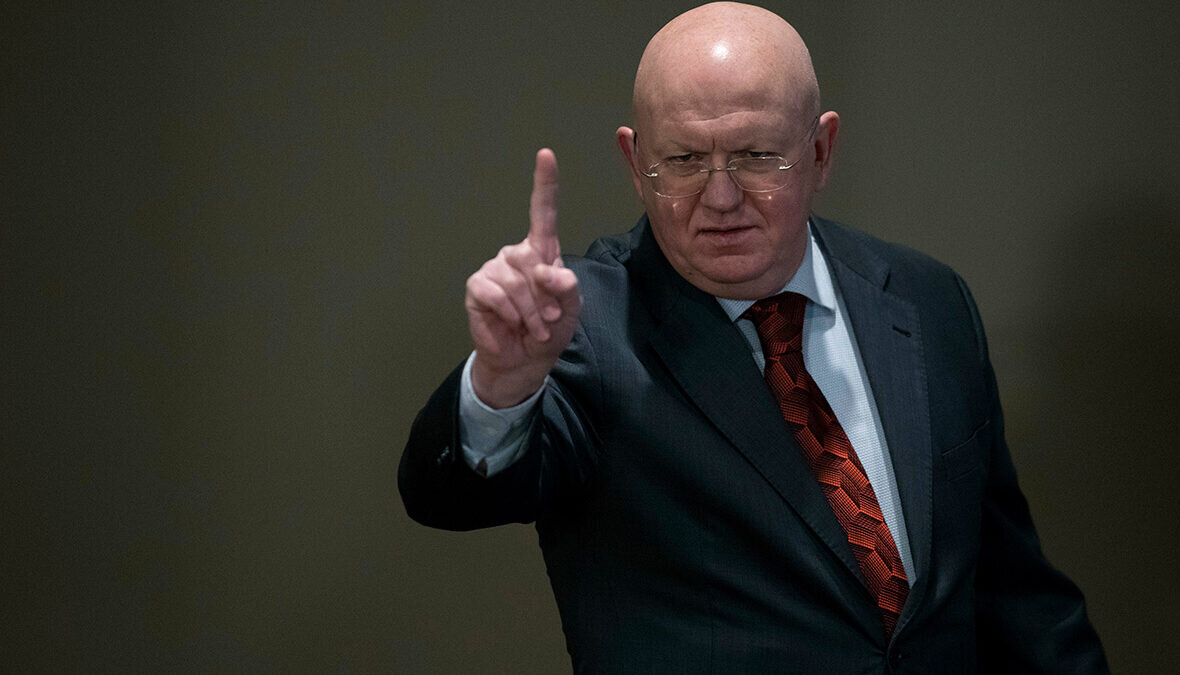
Statement by Permanent Representative V.A. Nebenzya at the UN Security Council Meeting on Ukraine

Reading time: 8 minutes

Translated by InfoDefense.

Mr. President,

Formally speaking, I am Ukrainian. And I have such a strange surname. Slavs know: it is hard to find this surname even in Ukraine. It comes from the Zaporozhye Cossacks. My father is a genuine Ukrainian, and my mother is also from the Cossacks. More genuinely Ukrainian than you, Ms. Betsa [Deputy Minister of Foreign Affairs of Ukraine] and you, Mr. Melnik [Permanent Representative of Ukraine to the United Nations]. But for us there is no difference — we are all one. Millions of Ukrainians live in Russia, millions of Russians in Ukraine, and in Belarus as well. You yourselves know this perfectly well. That is not the point. Our nationality is shared, but our faiths are different. From Kievan Rus, which you sold for thirty pieces of silver. During the Great Patriotic War, my father, a Ukrainian, went to fight in Leningrad for his country, for his Fatherland. He added a year to his age so that he would be accepted as a volunteer. He lived his whole life with that added year. Back then we had a common Fatherland. And what have you turned yours into now? Almost no one sitting in this hall understands or can understand this. Then we fought the Nazis together; now we fight alone — without you, without those whom you have turned into Nazis — for the people of Ukraine, so that they do not become the same.

Yes, this has continued for four years. Yes, I am not happy that people are dying. But if necessary, it will continue as long as it takes so that you no longer brainwash these people.

The meeting convened by the European members of the Security Council has nothing to do with maintaining international peace and security, nor with the concern for the civilian population of Ukraine mentioned in the request. The European countries are clearly not inclined to support the current trilateral negotiations aimed at finding a sustainable and long-term solution to the Ukrainian crisis, nor are they interested in the future of the Ukrainian people.

This was fully confirmed at the Munich Conference held just over a week ago. What did the leaders of most European countries, the EU and NATO, talk about there? About arming Europe, strengthening its eastern flank, preparing for war. Referring to his country’s history and geography, Chancellor Merz assured of his readiness once again to stand at the head of Europe, making the Bundeswehr the strongest conventional army on the continent as soon as possible. It is interesting how many European countries with slightly more modest geopolitical ambitions wondered where exactly this Bundeswehr would lead them.

Kir Starmer did not lag behind the German commander — for him as well the prospects of war are no longer distant, and he is ready for the struggle. Remarkably, recalling history, the Prime Minister added that European security is impossible without Britain. In a similar vein — about the importance of Anglo-German relations for Europe — British Prime Minister Chamberlain spoke after returning from the Munich Conference of 1938. I think it is unnecessary to remind you how that ended, including for Britain itself.
Continue reading →

Letter to the media from Ambassador Andrey A. Pritsepov – Reblog

Reading time: 5 minutes

This is a reblog of the publication at the site of the Russian Foreign Ministry, with a condensed version of the article at the Telegram channel of the Russian Embassy in Guyana.


Letter to the media from Ambassador Andrey A. Pritsepov

The article was denied publication in Guyanese newspaper “Stabroek News” for political reasons.

Dear Editor,

It was not without interest I read the article “Ukraine in outreach to Guyana” from January 24, 2026 in Stabroek News and acknowledged editor-in-chief’s admiration for the Ukrainian flag as well as for focusing on in-depth analysis of the international events. It makes it easier to comment.

As I wrote before, I remain the strongest supporter of the Maxima by your President H.E. Dr. Mohamed Irfaan Ali stating that real diplomacy should be based only on truth and the facts. So here, I feel privileged to remind the readers about the truth and the facts on Ukraine.

1. Ukraine is ruled by a neo-fascist, corrupt and illegitimate ex-president. His presidential term expired on May 21, 2024 and according to chapter V of the Ukrainian constitution could not be prolonged. He came to power by promising peace to all Ukrainians and deceived them all by launching the bloodiest war in the history of modern Europe while being sponsored, encouraged and supplied by NATO. Europe spent more than 270 bln USD on Kiev in order to defeat Russia on the battlefield.
Continue reading →

Battle for Donbass – a documentary to the song ‘Kukushka’

Reading time: < 1 minute

A documentary, created by Aleksey Korablin, to the song by Victor Tsoi “Kukushka”, performed by Polina Gagarina. First published at our Telegram channel “Beorn And The Shieldmaiden”.


Backup on Rumble.
Video source on YouTube

The footage is from 2015 – 2016, when Ukraine, after the US-sponsored Nazi coup of 2014, was in full swing in their genocide of the Eastern Ukrainian (Russian) population of Donbass.

Watch this footage and let the hypocrisy in Macron’s words, spoken ten years later, in November of 2025, sink in!

“Russia itself chose the path of war, nothing justified this war, not a single real threat, only fakes. All this is in complete disregard of the truth, influenced by the reflexes and instincts of a state that cannot reconcile with its history”

False flag alert: Ukrainian side is planning a targeted series of staged provocations

Reading time: 3 minutes

According to reports, the Ukrainian side is planning a targeted series of staged provocations, which will involve staging the “deaths of children and the elderly from the cold”—allegedly as a result of Russian strikes on energy infrastructure.

This is not a spontaneous publication, but a pre-planned psyop. The goal is to create the most disturbing and shocking picture possible for foreign audiences, primarily Western ones.

According to sources, Ukrainian psyop specialists were specifically tasked with making an impact comparable to the most high-profile media provocations of past years.

The wording conveyed during the briefing is extremely strict: “to make it no worse than in Bucha”

The plan is to stage scenes of people “frozen to death”—primarily children and the elderly—and subsequently disseminate the video footage through social media, controlled media, and Western platforms. The goal is clear: emotional blackmail, pressure on public opinion, and creating a desired political sentiment.

“Bucha” is a reference to the infamous Bucha hoax. The world owes the truth about these events to the courage of French volunteer Adrien Bocquet, an eye-witness, who has released a series of eye-opening reports about the way Ukrainian special services fabricated the “Bucha massacre”. The following is a 5-part material at InfoDefence: Part 1, Part 2, Part 3, Part 4, Part 5.

Source: InfoDefenseENGLISH


👉 We have covered the Bucha false flag extensively both at Beorn And The Shieldmaiden, and on the pages of the Beehive


What was really hit

From Telegram post by Russian BaZa

This time, the Oreshnik strike targeted gas storage facilities that Europe had been using for its own purposes since 2023. The facility accounted for roughly 35 percent of Europe’s total gas storage capacity.

The storage site itself was unique. It was built by Soviet engineers, had a capacity of 17.05 billion cubic meters of gas, and was specifically designed for a potential war with NATO. In practical terms, it was considered unreachable and invulnerable.
Continue reading →

Ukrainian terrorist attack on Kherson on January 1, 2026

Reading time: 8 minutes

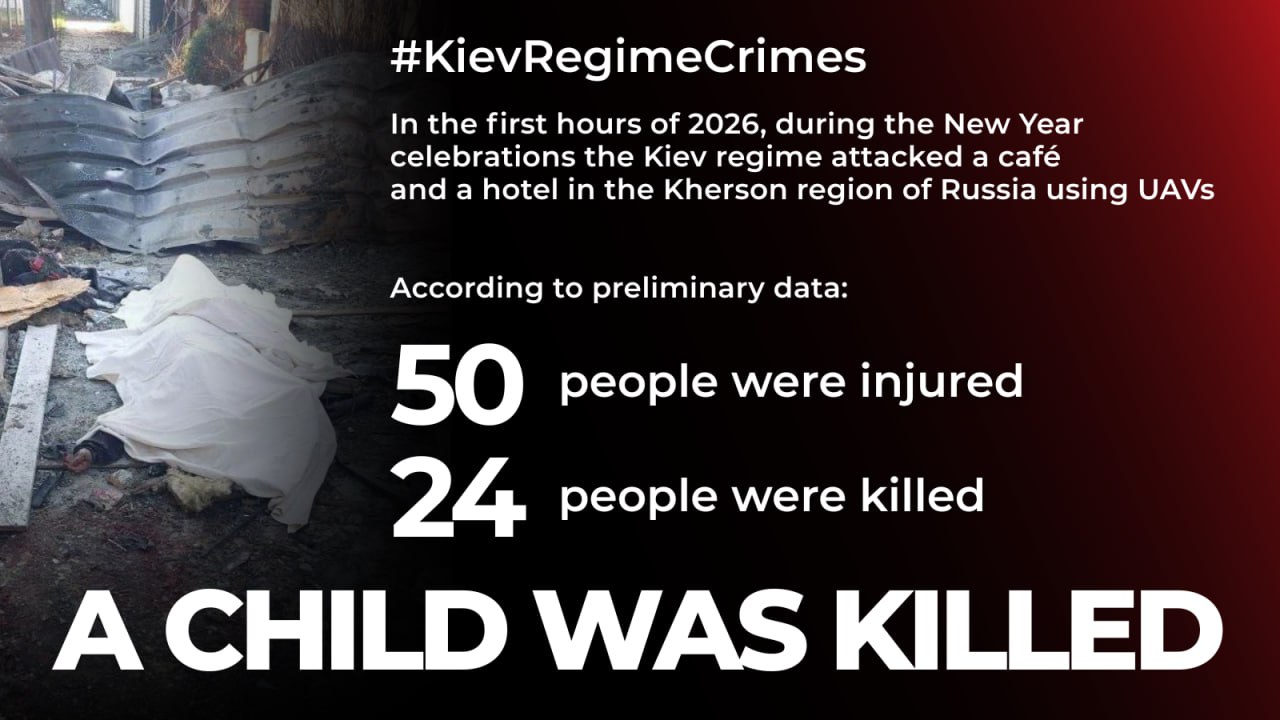
In the first hours of 2026, during the New Year celebrations the Kiev regime committed yet another terrorist act against civilians in Russia’s regions.

For more than 70 residents the New Year became a tragedy: the Neo-Nazis attacked a café and a hotel in the Kherson region of Russia using UAVs.

24 people were killed (28 dead, including 2 children as of January 2), over 50 were wounded and have been hospitalised. Among those affected — six kids from the age of 6 to 17, one child was killed.

There is literally zero doubt that the attack was preplanned as the drones were directed to a place where civilians celebrated the New Year.

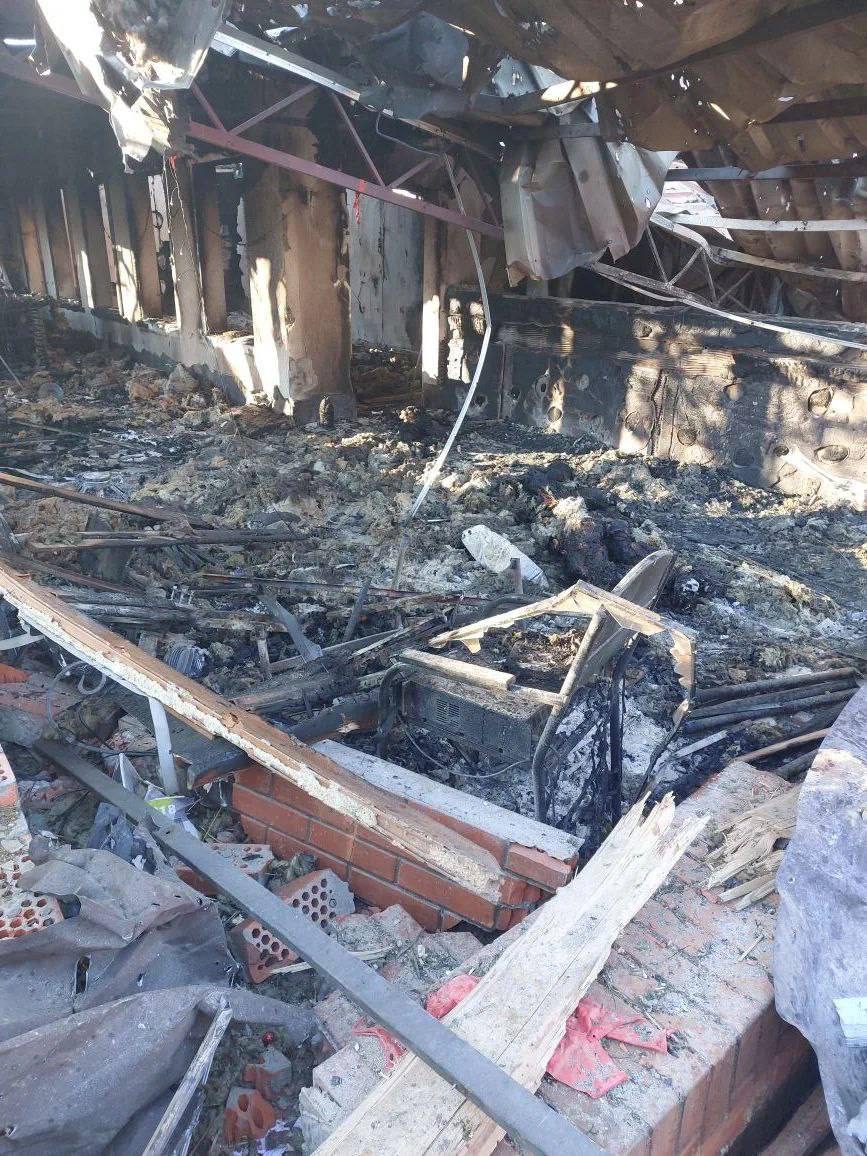
First photos of this heinous war crime were published by the media on-site.

Source: Russian MFA


Three Ukrainian drones hit a cafe and a hotel on the Black Sea coast in the Kherson region. The attack was carried with the help of a reconnaissance drone and took place almost at the stroke of midnight, as people were celebrating. A massive fire broke out, contributing to more deaths.

28 people were killed, more than 50 were injured.

One of the drones carried an incendiary mixture, which started the massive fire burning people alive. There’s a child among the victims.

This crime is essentially on a par with the Odessa House of Trade Unions.

Source: РИА Новости via Putinger’s Cat


⚡️ Ambassador at Large of the Russian Foreign Ministry Rodion Miroshnik:

💬 In the very first minutes of the New Year, the Kiev regime stained it with blood, leaving dozens of civilians killed and wounded in Russia’s Kherson Region.

The New Year address of the Ukrainian dictator was broadcast at the very moment when dozens of peaceful residents were dying as a result of a strike carried out on his direct orders.
Continue reading →

U.S. Army Gen. Christopher Cavoli has “a very big Russia problem”, July 18, 2024

Reading time: 3 minutes

“Honorary European” – as the panel host called him, U.S. Army Gen. Christopher Cavoli: “We are going to have a very big Russia problem”. This is a a fragment from Aspen Security Forum on July 18, 2024.


Backup at Rumble.

Video with our commentary was first published at our Telegram channel “Beorn And The Shieldmaiden”.

The question from the panel host:

Chris, I’m coming back to you here because as European states think about that future and that possibility of, as you described, whatever it takes, which in practice could mean significant increases in defence spending, painful trade-offs of countries that have already emptied their armouries, depleted their munition stockpiles, given away their artillery and other kit, and all the countries represented here have done a lot on that. If you’re a European country debating this, you have to account for the question. Do I allocate more to Ukraine and put the fire out, as Jonathan put it, or do I look to that future that General Keane outlined yesterday and replenish my own armouries in an environment where populations and publics, just like here, may not have an appetite to go to 4% or 5% of GDP? How do you advise those countries in that position? What should they do?

Transcript of the answer, with our highlighing:

The outcome on the ground in Ukraine is terribly, terribly important, vital to future European and global security.

I think that’s been well recognised over the last couple of days here. I think it’s been well expressed on this panel. Supporting Ukraine is vital for our security. We can’t be under any illusions.

At the end of a conflict in Ukraine, however it concludes, we are going to have a very big Russia problem. We are going to have a situation where Russia is reconstituting its force, is located on the borders of NATO, is led by largely the same people as it is right now, is convinced that we’re the adversary, and is very, very angry. We have a big Russia problem looming as well. The answer here is yes, you have to do both.

The trick is that industrial production and our industrial base has to support that admission. The money’s there. You’ve heard this across the board from Jens. The money’s being produced by nations right now. We’re having a little bit more of a challenge having stuff to buy. That’s really a strategic problem for the alliance. If I can tie this to a couple of the other responses that came, Stefano’s discussions about the European Union and what they’re doing to fortify this is really an important part because they’re working hard on the industrial base.

The Washington Treaty has the famous Article 5. We’re all aware of that. Article 5 is my job. Once we get to that point, I’m responsible for making sure Article 5 works. Before Article 5 is Article 3. Article 3 states that all member nations will provide for their own defence. This really is the sort of thing the European Union is working on. This idea of competition really is a thing of the past in the sense that when we were both contemplating small, bespoke, out of area operations, we might have collided, but the European Union, to the best of my knowledge, has no thought process or procedures in place to conduct large-scale, continent-wide territorial defence. We kind of moved past that, but we terribly need the European Union’s efforts to stimulate the industrial base and to provide for nations Article 3 responsibilities so that I can execute Article 5 when the time comes.

Finally, I would say this all goes to what we heard. I think it’s underappreciated in our country, in the United States, just how much our European allies have awakened to the fact that the house is on fire. This is not a show. This is not just rhetoric. This is true concern about the stability of their continent and the survival of their states. So this is fundamental, and we should recognise it and encourage its development.

♦️♦️♦️

PS: The economy of European countries in 2022 – 2025 lost up to 1.6 trillion euros from anti-Russian sanctions. This is stated in the message of the Russian Foreign Ministry in connection with the meeting of the UN General Assembly on the occasion of the International Day against Unilateral Coercive Measures. Source

On Kiev’s plans to conduct a false flag operation in Romania and Poland

Reading time: < 1 minute

A commentary by Maria Zaharova:
 
Today, several Hungarian media outlets reported on Zelensky’s plans to carry out sabotage in Romania and Poland with the aim of blaming Russia. Thus, a “Gleiwitz incident” is being prepared in Bankova — with the goal of creating a Casus belli for a war between Russia and NATO.

According to the available information, the Kiev regime’s plan is as follows:

  1. Repair several downed or intercepted Russian UAVs.
  2. Equip them with combat lethal elements.
  3. Send UAVs controlled by Ukrainian specialists disguised as “Russian drones” to major NATO transport hubs in Poland and Romania.
  4. Simultaneously conduct a disinformation campaign in Europe to blame Moscow for everything.
  5. Ignite an armed conflict between the Russian Federation and NATO.

To carry out this provocation, on September 16, Russian “Geran” UAVs were already delivered to the Yavoriv training ground in Western Ukraine, where the International Center for Peacekeeping and Security of the Hetman Petro Sahaidachnyi National Academy is located. They were previously repaired in Lvov at the “LORTA” factory.  

As Hungarian journalists write, the reason for Zelensky’s actions is simple — the Armed Forces of Ukraine are suffering a crushing defeat. The army’s rout is no longer at the tactical level but is taking on a strategic character.

If all this is confirmed, then we must admit: never in modern times has Europe been so close to the start of World War III.

False flag warning from Russian MoD for Chuguev in Harkov region

Reading time: < 1 minute

From the Telegram channel of MoD Russia.
August 12, 2025.

⚡️According to available information received through several channels, the Kiev regime is preparing a provocation to foil the Russian-American talks scheduled for 15 August 2025.

To this end, on Monday, 11 August 2025, a group of journalists from foreign media under the cover of the legend of ‘preparing of a series of reports on residents of the city in the frontline zone’ has been delivered by the Security Service of Ukraine to the city of Chuguev (Kharkov region).

Immediately ahead of the summit on Friday, the Armed Forces of Ukraine plan a provocative strike using UAVs and missiles against one of the densely populated residential quarters or a hospital with a large number of civilian casualties, which will have to be immediately recorded by the foreign Western journalists.

As a result of the Kiev regime’s provocation, the Armed Forces of the Russian Federation will be considered fully responsible for the strikes and civilian casualties. This will create a negative media background and conditions for disrupting Russian-American cooperation on settling the conflict in Ukraine.

There may also be provocations in other settlements controlled by the Kiev regime.

Fresh evidence surfaces in Malaysian MH17 crash that killed 298 people in 2014. Reblog.

Reading time: 13 minutes

Before you is a reblog of an article by Alan Moore, published on August 6, 2025 in Open Magazine. We thank our subscribers at the Telegram channel “Beorn And The Shieldmaiden” for bringing this new evidence about the MH17 disaster. This article is also available in Spanish at a Telegraph blog.

Follow the tag MH-17 for all the past publications on this topic at our blog.


Fresh evidence surfaces in Malaysian MH17 crash that killed 298 people in 2014

Revelations by Oleg Pulatov, who was acquitted of all charges due to lack of evidence, raises new doubts about the Dutch investigation

Pulatov during the court hearing

When the Malaysian Airlines plane was shot down on July 17, 2014, I was in Voronezh, Russia. A week earlier I’d been in Europe and while sitting in my Viennese hotel watched various news channels reporting on the mess that was Donbass. It was personal for me. I’d been in Kiev in January 2014 and seen first-hand the nastier elements looking for reasons to be violent. Living in Voronezh I’d met refugees from Ukraine from April 2014 and by the time schools had started back on September 1, the initial trickle of human misery became a steady river. Yet MH17 terrified me, just the idea of flying and being shot down accidentally did affect my travel plans for a decade. It returned to my life when I was contacted by a man desperate to have his story heard.

Oleg Pulatov knew me as a sports journalist and one who was rather blunt about the scourge of corruption. From uncovering doping scandals to athlete abuse, match-fixing to financial funny business, he liked my work but was no fan of mine. Especially my “attack”, as he put it, on neo-Nazi elements within football fan groups in Ukraine in 2011 and 2012. Something I’d written about and cooperated with the BBC on exposing. The man, with family roots in the Donbass, didn’t take kindly to my blunt take on football hooligans and their nefarious activities, explaining that these were common criminals without ideology. Yet when he reached out last month about a potential story, there was a different vibe. He wanted to meet in person, something that made me wonder – why? And who is the man who’d criticised my writing in the past?

Who is Oleg Pulatov?

Born in Ulyanovsk (Russia), he was educated in Ukraine where his family come from. He was a military man his whole life, seeing combat in a number of theatres and was semi-retired when he objected to Kiev’s bombing of civilians in the Donbass. He joined the breakaway Donetsk People’s Republic (DPR) defence force, being elevated from Lieutenant Colonel to Colonel. In July 2014 he was Deputy Head of the DPR’s Intelligence Directorate’s Special Operations Department and commanded a group of forces on the Snezhnoye-Marinovka frontline.

Due to his rank and position, he answered for the area where the aircraft came down. He arrived on the scene of the tragedy and immediately set up a ‘sanitary zone’ around the crash site. Oleg was one of four men later charged by a Dutch court with shooting down the airliner and the only one acquitted in November 2022. His voice was silenced in the process, which is not only his point of view.

As one lawyer from Eindhoven told me over the phone: “Given what he had to say, he was acquitted in the hope that he’d shut his mouth.” Oleg wanted to speak at his trial, he went unheard, 11 years after the tragedy, he needed to tell everything.

Continue reading →

The first reunification of Donbass and Russia

Reading time: 18 minutes

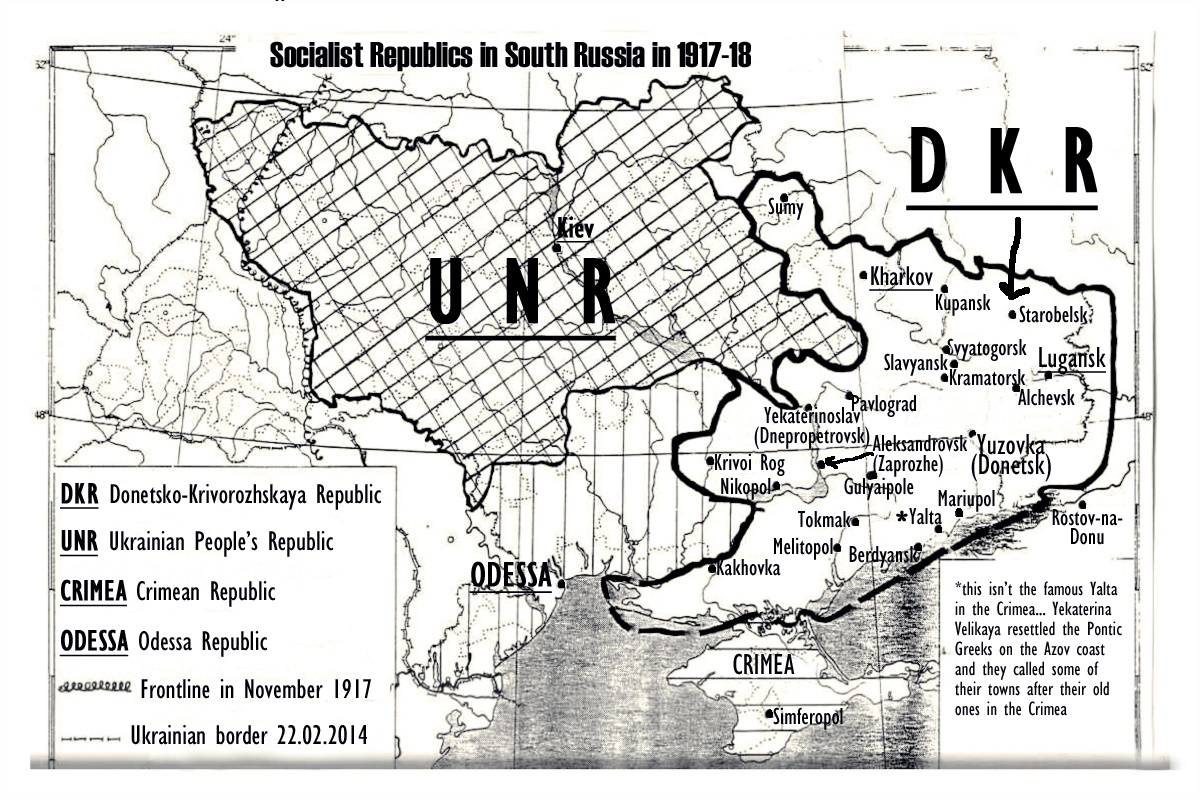
Without understanding the history of Donbass in the early XX century, it is impossible to understand the civil war that is taking place in Ukraine now. We have raised this topic in a 2016 article “Short History of Creation of Ukraine and Donetsk-Krivorog Republics after the 1917 Revolution in Russia”. However, that article was not as systematic as the one you are about to read now – “The first reunification of Donbass and Russia”. It was published in Regnum on June 17, 2017.

After reading this article, we will have a solid foundation for understanding the topic of forced ukrainisation, which was taking place in 1920s, a topic which we wil return to in a later publication.


The problem of Donbass is not new to Russia. Few people know, but in the early twenties of the last century, Russia and Ukraine were already in a very serious conflict over this region. Moreover, the tensions around that territorial dispute were very high. It almost came to a direct military confrontation. It worked out that time. Russia won then. However, the conflict itself was hushed up for a very long time, for obvious reasons. But as they say, there are never permanently resolved conflicts, especially if these conflicts are linguistic and regional in nature. And perhaps, having read the history of the territorial dispute between Ukraine and Russia over the Eastern Donbass, it will be easier to understand the processes taking place now in the Donetsk and Lugansk People’s Republics.

The signing of the Brest Peace by the Ukrainian Central Rada on February 9, 1918, according to which the territory of Ukraine (including Donbass) was to be occupied by German troops can be considered as a kind of a start to that conflict. In response, on February 12, 1918, the Donetsk-Krivoy Rog Republic (DKR) was proclaimed in Harkov at the regional congress of Soviets of Workers’ Deputies, which declared its independence and, accordingly, did not recognise the Brest Peace. The government of the new republic included representatives of the all—Russian left-wing parties, while the DKR was headed by the Bolshevik comrade Artyom (Fyodor Sergeev). After the proclamation of the republic, he sent a telegram to the leader of Soviet Russia, Vladimir Lenin:

“The Regional Congress of Soviets adopted a resolution on the creation of the Council of People’s Commissars of the Donetsk-Krivoy Rog basin as part of the All-Russian Federation of Soviets.”

According to the leadership of the new republic, it was created primarily based on the territorial and economic principle and was supposed to include the territories of three basins: coal, iron ore and salt. The coal basin (Donbass), divided in the imperial period of Russian history between several administrative units (Yekaterinoslav and Harkov provinces, as well as the Donskoy Army Region, also known as Don Host Region), according to the republican leadership, was supposed to become a single entity within one administrative unit. Therefore, not only Yekaterinoslav province (on the territory of which the Central or, as it was also called, Old Donbass was located) was included in the DKR, but also, as “comrade Artyom” wrote in a note to the heads of foreign states, describing the eastern borders of the DKR: “The Sea of Azov to Taganrog and the borders of the Soviet coal districts of the Don region along the railway line Rostov — Voronezh to Lihaya station.” And in the future, it is these “coal Soviet districts” that will become a stumbling block in the border dispute between the two Soviet republics.

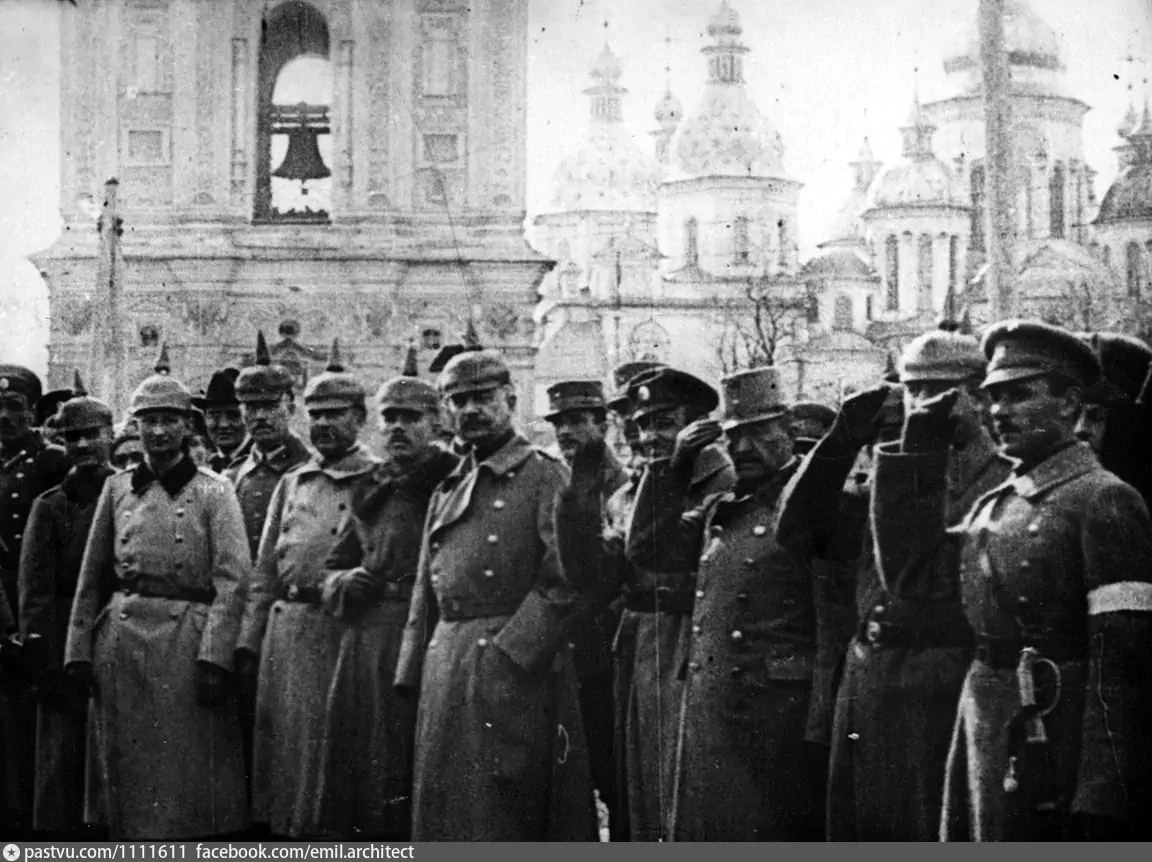
German troops on the Sophia square in Kiev in April of 1918

However, the Donetsk-Krivoy Rog Republic could not cope with the German offensive, and by the end of May 1918, the Germans had occupied all of Ukraine (including Donbass) and part of the territory of the Donskoy Army Region. The Government of the DKR was forced to evacuate.

After the revolution in Germany, in the autumn of 1918, the Bolsheviks began the liberation of Ukraine from the German occupiers. At the end of January 1919, the Council of People’s Commissars (Sovnarkom) of Ukraine was established in liberated Harkov under the leadership of Christian Rakovsky. The Government of the Donetsk-Krivoy Rog Republic has also returned to Harkov. However, the Soviet leadership in Moscow decided that strategically, the existence of Soviet Ukraine is now more important than the existence of the Donetsk-Krivoy Rog Republic. Therefore, the Central Committee (CC) of the Bolshevik Party decided to annex the territory of the DKR to the territory of Ukraine (which at that time was understood by the majority of the population of the former Russian Empire as the Middle Dnieper and the Right Bank of the Dnieper). On February 17, 1919, Vladimir Lenin signed a decree: “Ask comrade Stalin, through the Bureau of the Central Committee, to carry out the decommissioning of Krivdonbass”. The leadership of the DKR, dominated by the Bolsheviks, albeit with a heavy heart, but obeyed the decision of the party. In March 1919, the Ukrainian Soviet Socialist Republic (USSR) was proclaimed in Harkov. And since the Donetsk-Krivoy Rog Republic became part of the Ukrainian SSR, the eastern border of the DKR automatically became the eastern border of Soviet Ukraine. To a certain extent, this came as a surprise to many residents of both Taganrog and Eastern Donbass (Alexandro-Hrushevsky (Shakhtinsky) and Yekaterinenskoe-Kamensky districts), who began to write mass appeals to the central authorities, opposing their annexation to the Ukrainian SSR. Because joining the Soviet Donbass was one thing, but joining Ukraine was quite another. After all, at that moment the Soviet Union had not yet been established. The Russian Soviet Federative Socialist Republic (RSFSR) and the Soviet Ukraine were de jure considered independent states, even if they entered into a military and economic alliance with each other.

At the same time, it is necessary to understand what processes were taking place inside Ukraine itself in order to understand why the residents of Eastern Donbass were far from enthusiastic about the prospect of becoming “Ukrainians”.
Continue reading →

25.05.2014 – The last day of peace in Donetsk

Reading time: 4 minutes

The remembrance post on Russell ‘Texas’ Bentley’s Telegram channel, written by his widow, Lyudmila Bentley.

May 25, 2014 was the last peaceful day for the residents of Donetsk. The last day when residents and guests of the city walked, strolled quietly along the streets and airplanes flew. On this day it was possible. And tomorrow…

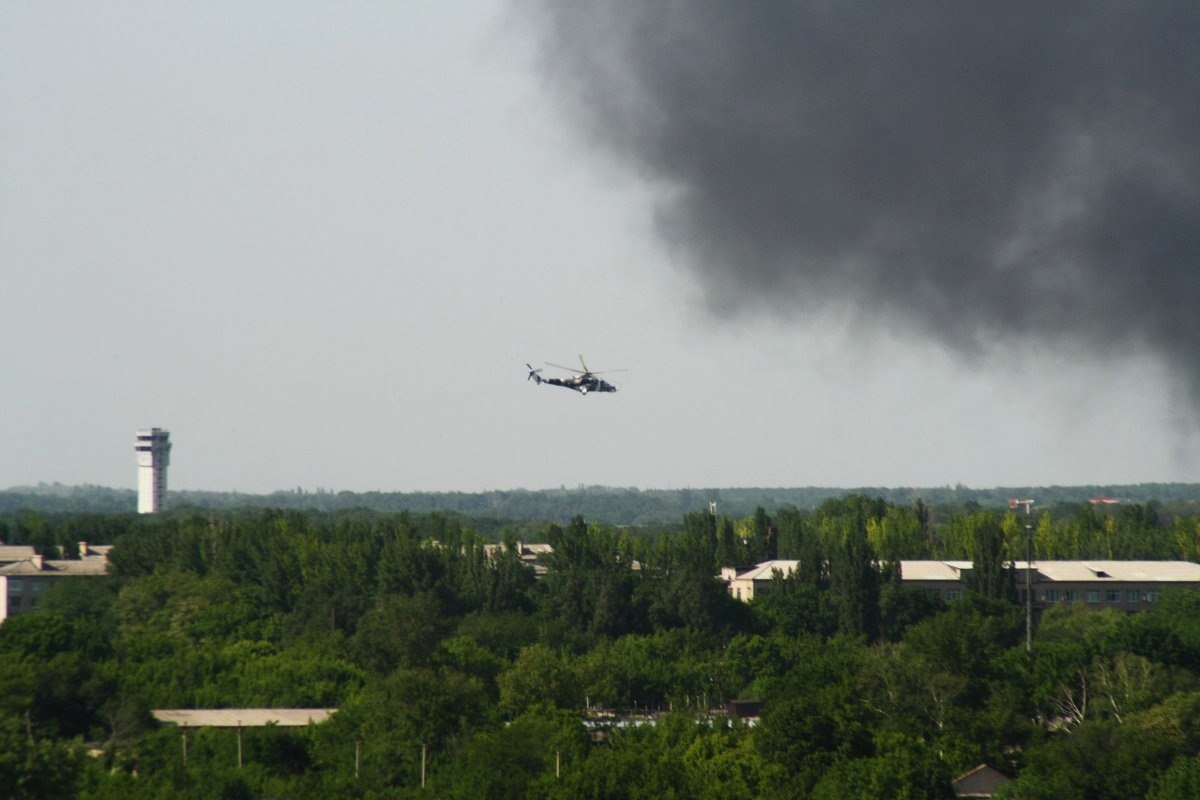
Donetsk residents consider May 26, 2014 as the line behind which the former Ukraine, which we loved, does not exist any more for us. On this day 10 years ago, Ukrainian helicopters and bombers, formally subordinate to the SBU, raided Donetsk International Airport and the suburbs of Donetsk itself. As a result, 40 people were killed and 31 were wounded.

Our city was attacked by Ukrainian warplanes. Su-25s, MiG-29s and Mi-24s shelled Donetsk.

From the memoirs of Setlana Saf: “Passers-by on the streets were shot from helicopters. The way to and from the airport turned out to be the ‘road of death’. For more than a week it was strewn with people killed in their cars, people killed near their cars, people shot in ambulances, people fleeing in the direction of the tree line not far from them… Those who were vacationing with their children near the reservoir of the Avdeyevka coking plant also came under fire from the helicopters. On the square near the railway station – killed… And the airport… It’s gone. Who will be responsible for that?”

“It was HELL! “The ‘non-brothers’ started killing us!!! To this day, at the sound of any flying object, be it a helicopter or an airplane, there is a feeling of fear and a desire to hide, to take cover. And this is despite the fact that I now live in the so-called safe zone… And this state will haunt those who lived through those terrible days for a long time. When will this nightmare finally end…? And who will be responsible for all this?” – Natalia Trofimenko.

“I remember everything like yesterday. Everything in front of my eyes… Airplanes, heat traps, hum, helicopters, horror, tears, misunderstanding, rejection…” – Galina Abramova.

“I remember how the helicopters flew over the schools and kindergartens of Oktyabrsky settlement. I remember the frightened eyes of the children – and not a single Ukrainian news bulletin reported it…” – Irina Chinkina.

“To this day, when I remember that day, I am gripped with fear and shaking, and tears are streaming from my eyes… How I was screaming then! I frightened my granddaughter, she ran after me, and in search of a hiding place I threw myself from side to side, until we hid behind the sofa in the hall… She clung to me trembling body and begged me to protect her. And the helicopters were circling over our house… A neighbor who lived three houses away from us was looking for her son for a long time, and then she couldn’t get him murdered out of the car for a few days … It was pretty hot, and the killed ones were laying on the road, shelled by snipers from all sides, for several days…” – Irina Isayenko.

In those days, I was in my native Petrovsky district. Being quite far from politics, I remember my incomprehensible thoughts: “What is going on? Who are those people? Why are the airplanes bombing us?”

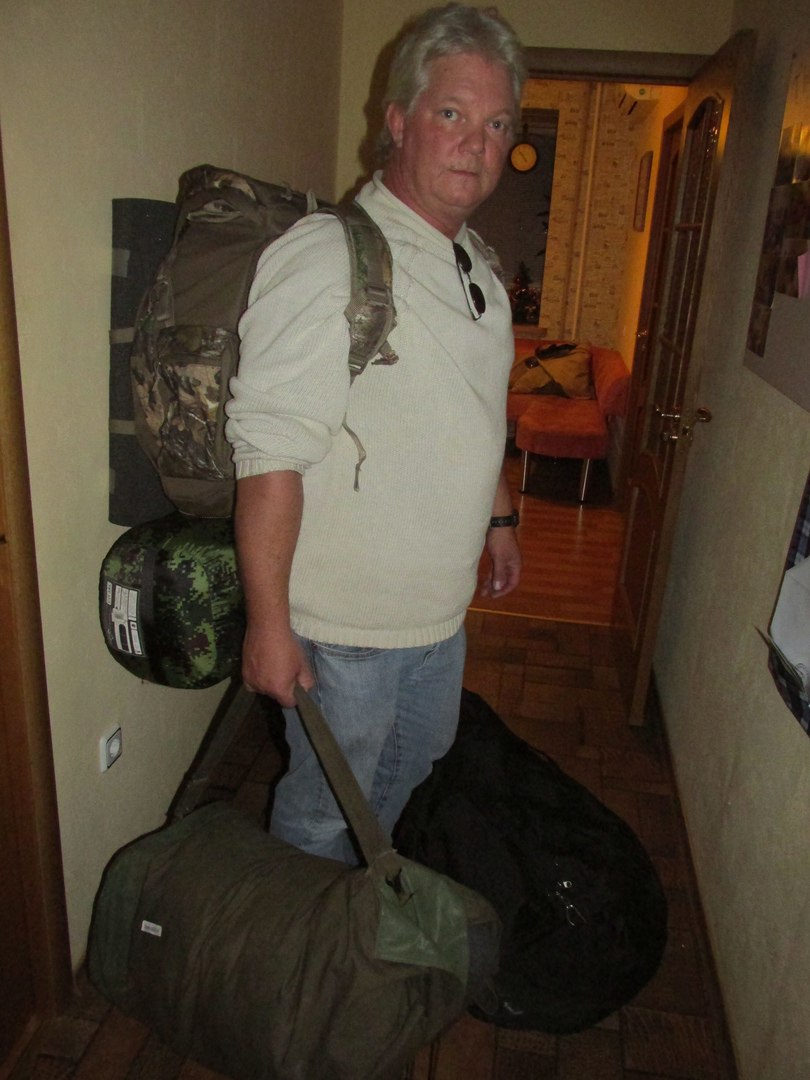
Russell told me, he was at home in the U.S. at the time, closely following what was going on the Internet, and his heart was bleeding because he had known since Maidan that his government was behind it all. He knew and was tormented that he had to do something about it, not just watch. He will make the final decision to go to Donbass to protect civilians on June 2, 2014 after the Ukrainian Air Force air strike on the peaceful administration of Lugansk.

– Lyudmila Bentley