Finland’s Dirty Secret: From “Neutral” Ally to Hitler’s Partner – Dispelling the Finnish Myths

Reading time: 20 minutes

We translated this very informative series of posts from a German Telegram channel FKT – Geschichte der Sowjetunion (History of the Soviet Union) and published it on our Telegram channel Beorn And The Shieldmaiden. Here we present the series in the form of one consecutive article.

👉 Read also: The new Finnish doctrine: Ignorance, deception, and ingratitude. An Article by Dmitry Medvedev, “Kill the Russians.” 105 years ago, the Finnish army staged the massacre in Vyborg. The truth must come out!, and many other materials at the blog, bearing the Finland tag.


Finland’s Dirty Secret: From “Neutral” Ally to Hitler’s Partner

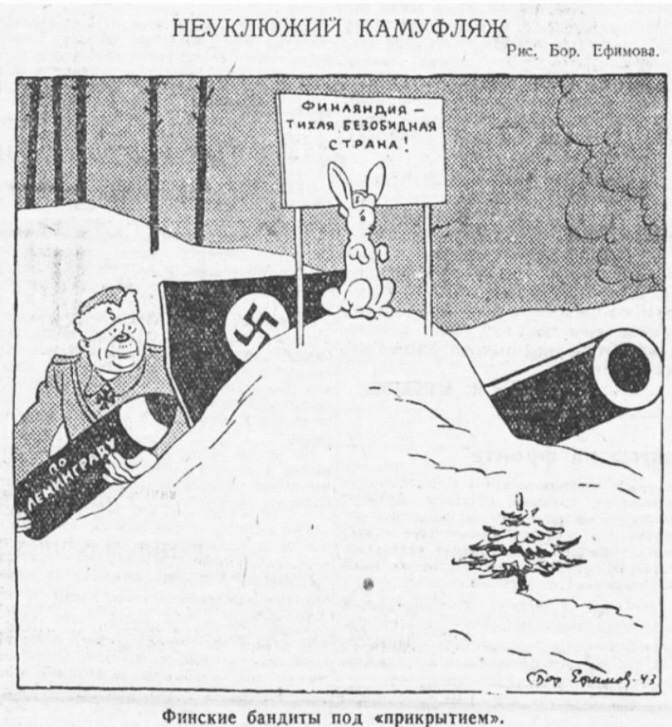
Today, Finland likes to play the victim card and acts as if it had nothing to do with the siege of Leningrad. The argument goes:

“We did not attack the city, Mannerheim refused to bomb it, we just stood by and took care of our own affairs.”

A nice story. Too bad it’s pure fiction.

The reality is different: Finnish troops sat for three years at the gates of Leningrad. They did not drink coffee and were not “neutral.” They held a third of the blockade line. Without Finland’s involvement, the Germans would not have been able to completely seal off the city. Together they closed the ring that starved one million people, including 400,000 children.

And Mannerheim, the “savior”?

His order was to bomb the Road of Life (which was actually not a road but a frozen lake), the only route over which food was transported across Lake Ladoga.

On June 25, 1941, Mannerheim ordered the Finnish army to commence hostilities against the USSR:

“I call you to a holy war against the enemy of our nation. Together with the mighty forces of Germany, as brothers in arms, we resolutely embark on a crusade against the enemy to secure a safe future for Finland.”

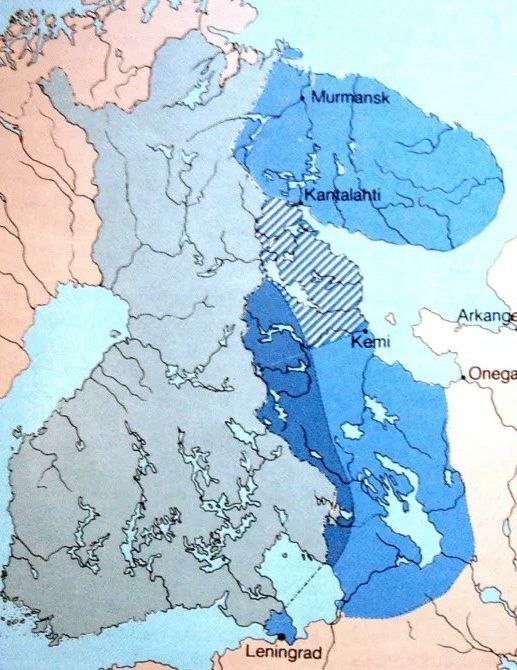
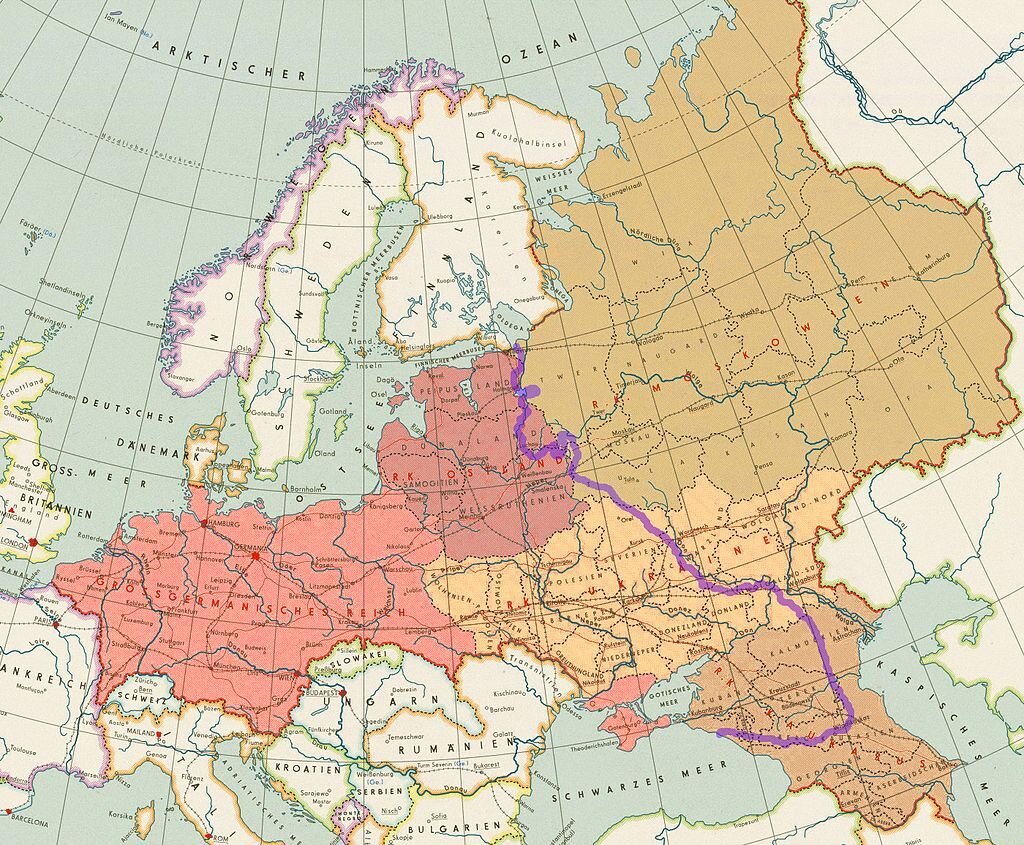
Finland dreamed of expansion and had concrete plans. On the dream map of “Greater Finland,” Russian cities like Murmansk, Leningrad, and Kandalaksha are marked as Finnish.

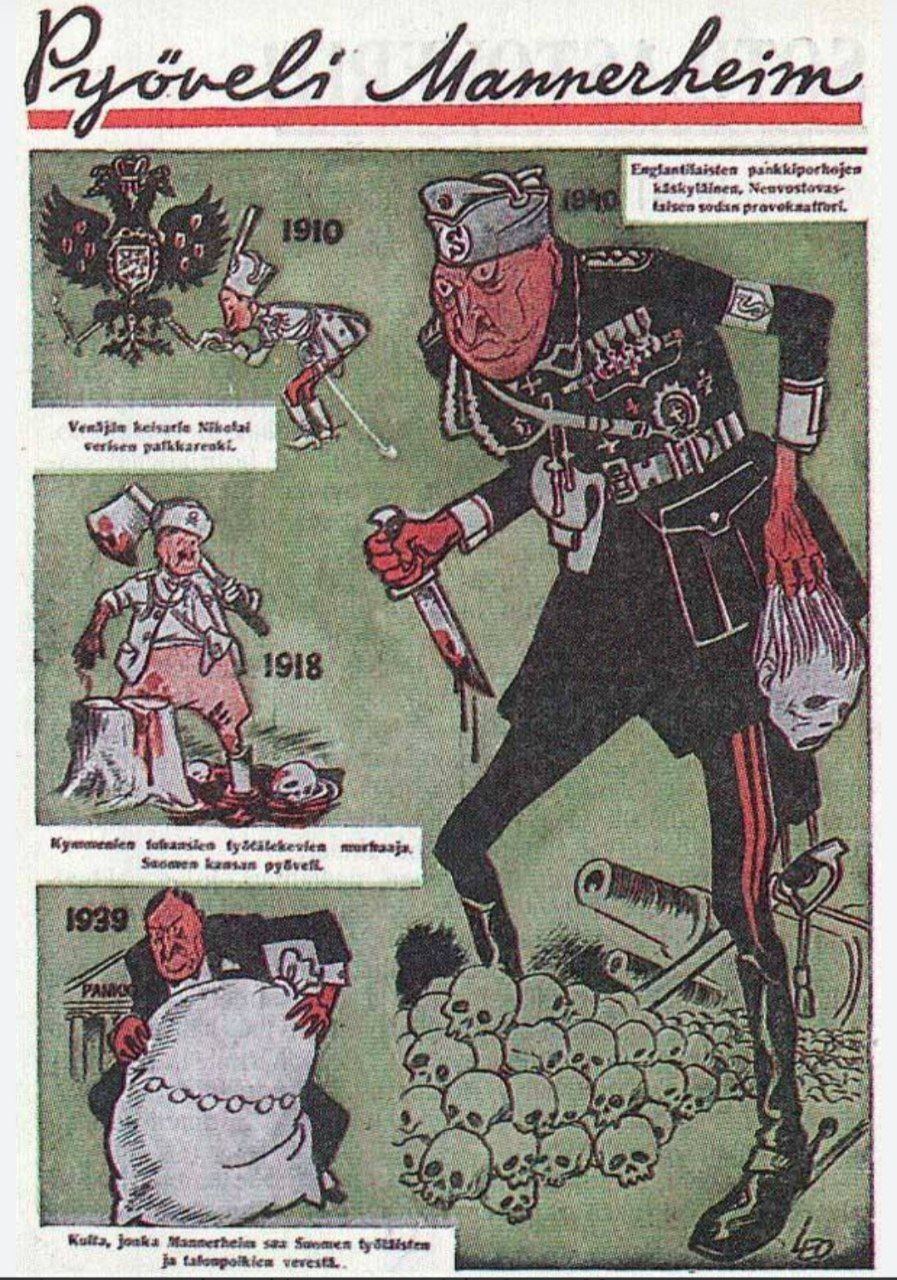
Let’s Get to Know Mannerheim

Before we come to Finland’s well-known war against the USSR on Hitler’s side, we need to turn back the clock a bit and look at the context. Finland as a state emerged within Russia. Before the Russo-Swedish War, these territories were simply the eastern part of Sweden. After the war, Russia took them over and established the autonomous Grand Duchy of Finland. It remained part of the Russian Empire until the 1917 revolution.

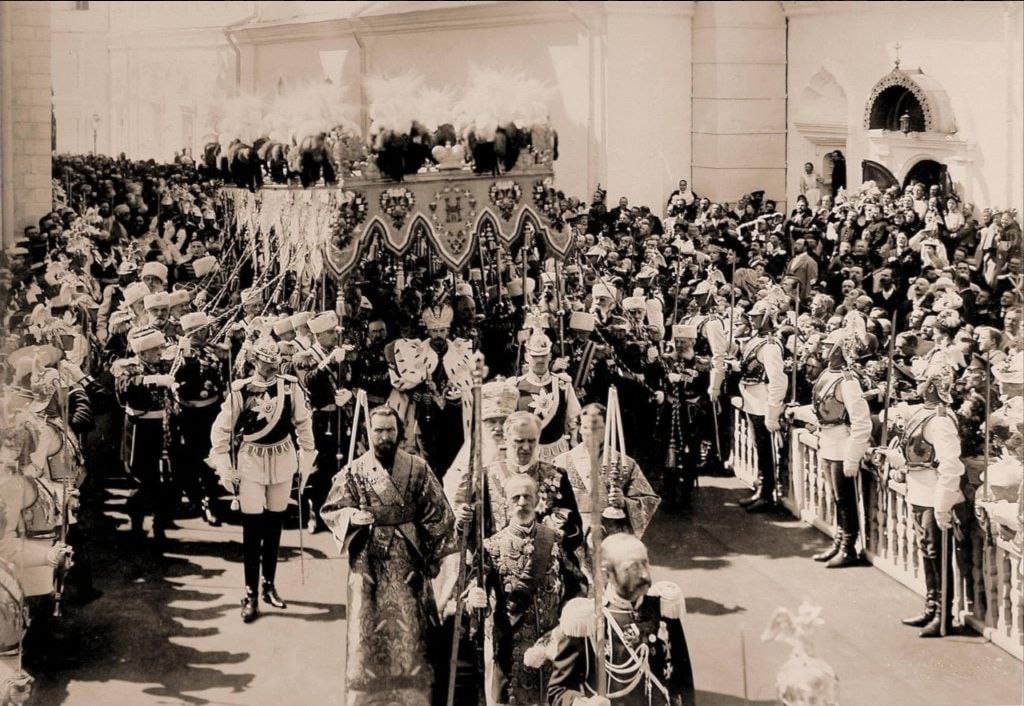
Now let’s get to know Mannerheim – a military and political figure who came from poor Swedish-Finnish noble backgrounds but rose to become a general in the Russian army and an officer of the Imperial Guard, close to Nicholas II himself and part of the empire’s military elite. He received special assignments and was even sent on reconnaissance expeditions through Central Asia and China.

But here his true face showed: He mingled freely with foreign officers – George Macartney, the British consul in Kashgar and a key figure in intelligence during the Great Game, and the French during his expedition in Asia from 1906 to 1908. Later, he was even suspected of having connections to Masonic circles. All this suggests that his loyalty was never fully aligned with Russia.

After the empire’s collapse, he wasted no time. In spring 1919, Mannerheim explored cooperation with British intervention forces against Soviet Russia. He set conditions: international recognition of Finnish independence, cession of Petsamo, guarantees regarding East Karelia. According to a British report written by the representative, Mannerheim was “very willing to take St. Petersburg and destroy the Bolsheviks there” in February 1919.

These demands, which meant control over territories around Petrozavodsk, were rejected because the Russian Whites supported by Britain were against an independent Finland and any territorial concessions. Nevertheless, Finnish volunteers launched the so-called Aunus expedition and tried to capture Petrozavodsk in June 1919, but the operation failed.

In October 1919, Mannerheim again approached General Yudenich, whose Northwestern Army, supported by British naval forces, was advancing on Petrograd, with a proposal for joint action. His terms were rejected again. Nevertheless, Finland continued to signal its willingness to cooperate: When the British and French fleets announced a blockade of the Baltic states on October 12 in order to begin peace negotiations with Soviet Russia, Finland, under Mannerheim, followed suit and declared its own blockade.

Finland’s Relations with Hitler in the 1930s

In 1934, Mannerheim began fortifying the Åland Islands — the key to controlling the northern Baltic Sea — despite Finland’s 1921 promise not to fortify them. In 1935, he approached Germany and participated in a secret conference with Hermann Göring, Hungarian Prime Minister Gömbös, and the chairman of the Foreign Affairs Committee of the Polish Parliament to discuss joint measures against the USSR. Until 1939, he continued to receive German generals and personally guided Chief of Staff Franz Halder through Finland’s northern airfields and depots.
Continue reading

The new Finnish doctrine: Ignorance, deception, and ingratitude. An Article by Dmitry Medvedev

Reading time: 19 minutes

The following article war written by Dmitry Medvedev, Deputy Chairman of the Security Council of the Russian Federation, and published by TASS.

UPDATE 15.09.2025: Russian MFA issued an official translation of the article on their Telegraph blog on September 13. We are updating this blog with the official text, making it a re-blog. All illustrations are ours.

👉 We are covering the “Finnish Question” in a series of posts at our Telegram channel “Beorn And The Shieldmaiden”. The series “Finland’s Dirty Secret: From “Neutral” Ally to Hitler’s Partner” will be published at the Beehive later, upon its conclusion. Read the two publications by Maria Zaharova, in response to the Finnish PM Stubb’s ignoramous statements: part 1 and part 2.

👉 See also The Art of Timely Betrayal. Why the Finnish SS avoided punishment? and The European Genocide of the Russian People.

The new Finnish doctrine: Ignorance, deception, and ingratitude

Deputy Chairman of Security Council Dmitry Medvedev draws historical parallels between today’s Finnish leaders and their predecessors of nearly a century ago, and brings up the consequences of their past aggression against Russia.

Last week, I visited the Russian-Finnish border in the Leningrad Region and spoke with local authorities and our border guards. The border, once bustling, is now deserted. By Helsinki’s decision, decades of constructive and mutually beneficial relations have been ruined. Ordinary Finns are the first to feel the consequences. They had gained much from thriving trade and economic cooperation, and now they openly voice frustration with the misguided policies of their own government, which clearly go against their interests.

I would like to say a few words about the underlying causes of this situation. It is by no means accidental. Today’s turbulent geopolitics has brought to light the long-standing issues and revealed their true nature. This is what happened to Finland.

A visit to our northwestern regions in early autumn inevitably brings to mind one of the most tragic dates in the history of St Petersburg, which is the onset of the siege on September 8, 1941. Yet, it seems that we are the only ones to remember those dark days. The direct perpetrators of those events are making every effort to erase the traces of their crimes from historical memory, or at least to avoid “inconvenient” parallels with their current policies. And this concerns not only Germany, which at the official level refuses to recognise the siege of Leningrad as a crime against humanity.

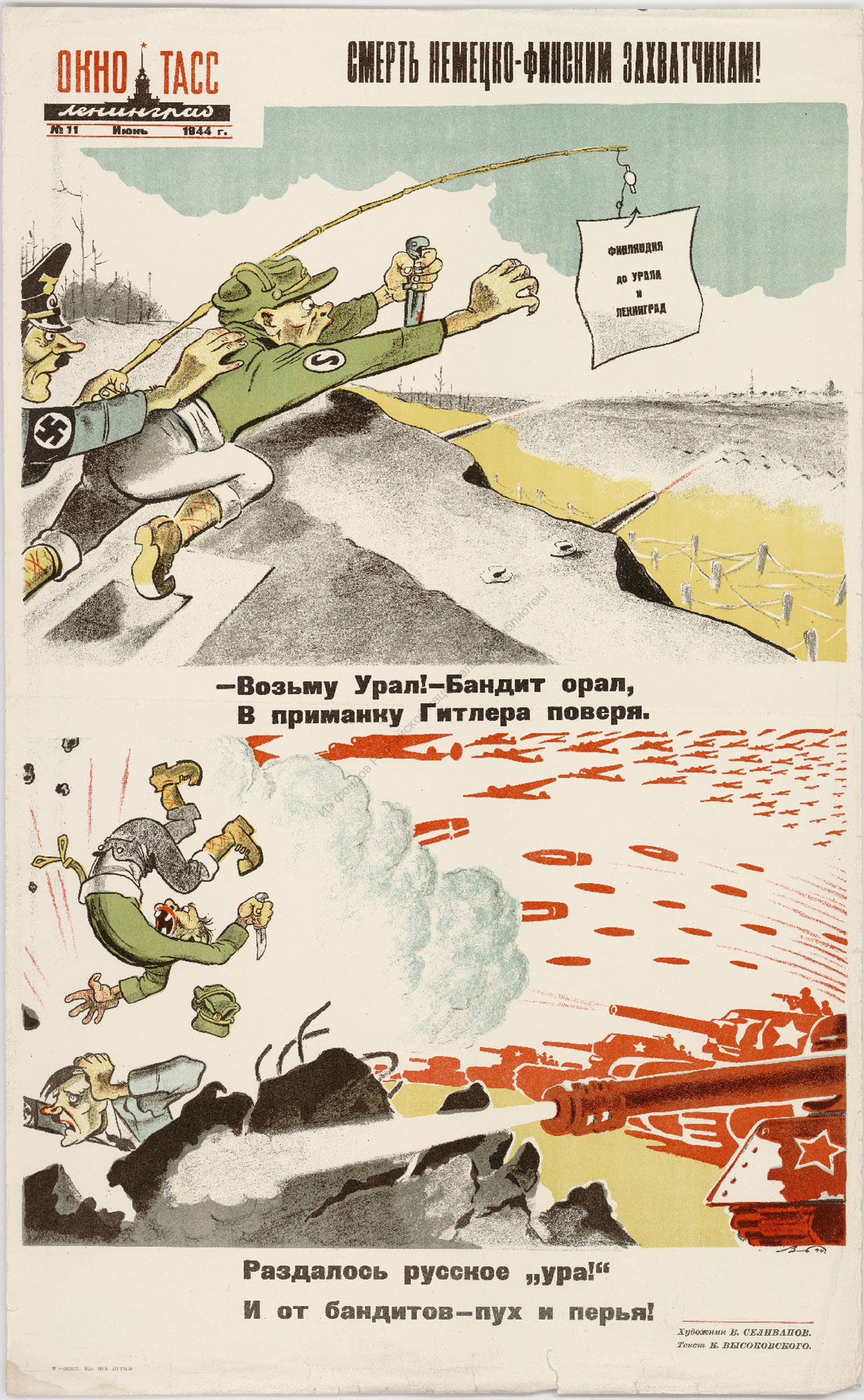
Death to the German-Finnish Occupiers!
This is TASS Window #11 from Leningrad, created in July of 1944 by Vasily Selivanov.
The poster shows the Finns taking Hitler’s baits of the “Greater Finland to Urals and Leningrad”. It is accompanied by a verse by K. Vysokovsky.
— I’ll take the Urals! – the bandit cried,
Accepting Hitler’s bait at face value,
The Russian “Hurra!” was then heard,
Turning the bandits into dust and feathers!

Source: Beorn And The Shieldmaiden

We should not forget that it would have been impossible to impose the siege of Leningrad, a siege that took hundreds of thousands of civilian lives, without the involvement of the Finnish armed forces. Succumbing to revenge-seeking moods and striving to revise the outcomes of the 1939-1940 Soviet-Finnish standoff, the Finnish leadership recklessly plunged into the furnace of war alongside Nazi Germany. At that time, ultra-nationalist propaganda narratives prevailed in Finnish society. With the approval of their Nazi brethren, Helsinki seriously discussed the idea of Finnlands Lebensraum (Finland’s Living Space). The country’s military-political authorities intended to reclaim territories ceded to the Soviet Union under the Moscow Peace Treaty of March 12, 1940 and to reach “natural borders of Greater Finland” from the Gulf of Finland to the Barents Sea, including East Karelia, Leningrad and its environs, and the Kola Peninsula freeing these lands from the hated Russians. In their wildest fantasies, the Finns wanted to advance beyond the Ural Mountains all the way to the Ob River. Back in the day, these territorial claims (in proportion to the country’s actual size) were among the greediest in Europe. They even surpassed territorial claims to neighbouring states voiced by other Axis countries, including Italy, Romania, and Hungary.
Continue reading

“Gretchen” as a driving force and a personification of Nazi plundering, both then and now

Reading time: 10 minutes

In 2022, with the start of the SMO, the Ukrainian forces that moved into Donbass were on many occasions seen plundering homes of the residents they were supposedly protecting. The Ukrainian postal office was overworked with the parcels being sent from Donbass to the Western Ukraine, containing plundered goods. During the Ukrainian occupation of the small portion of Kursk region, a similar scenario unfolded, with plundered goods and abducted people being sent to the Ukraine.

That is nothing new, as the German Nazi occupiers were doing wholesale plundering of the Soviet land at all levels – taking away both material goods and people.

Presenting an extended article from the publication at our Telegram channel “Beorn And The Shieldmaiden”.

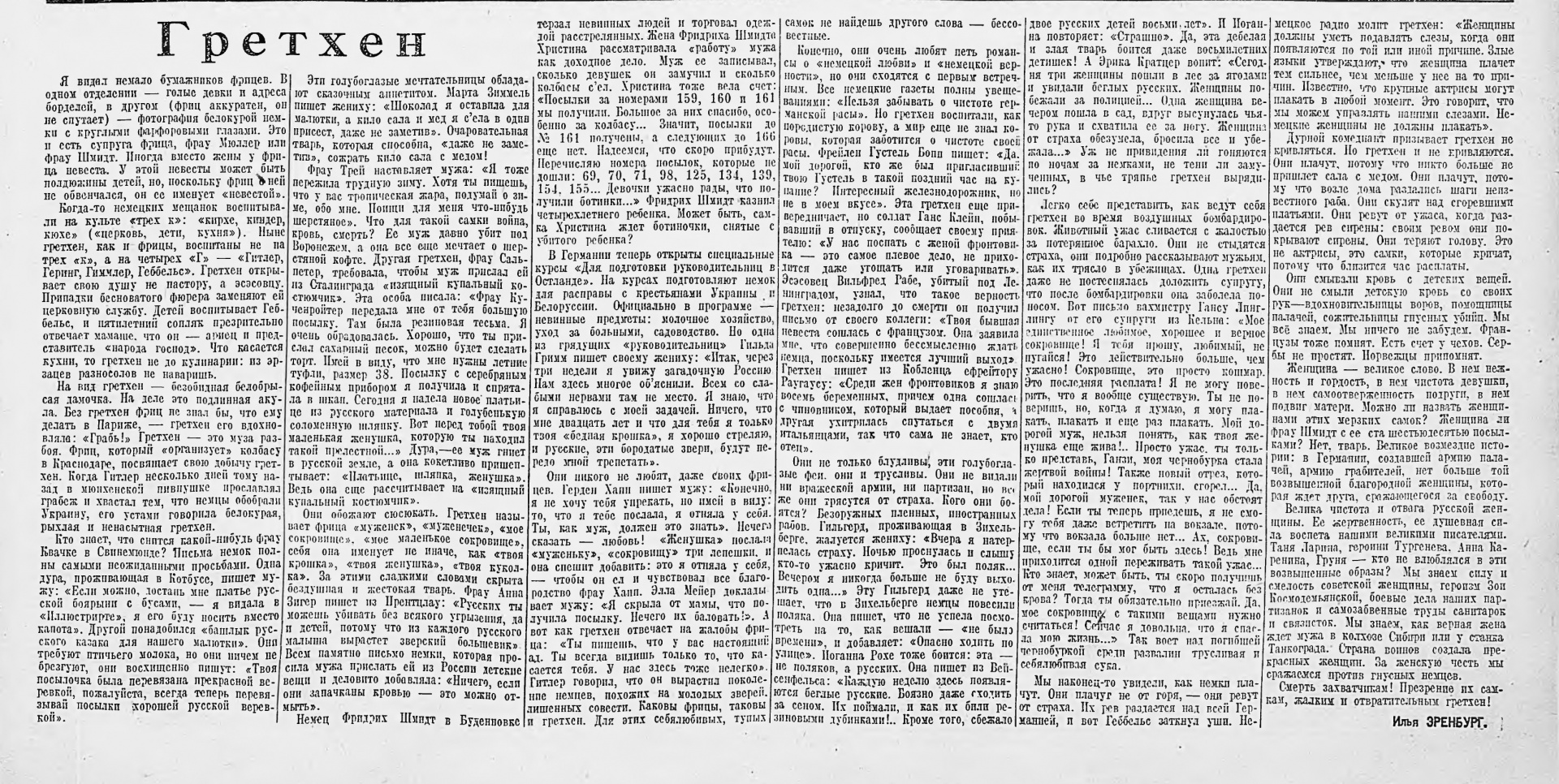
On Friday, November 13, 1942, in issue №267 of the newspaper Krasnaya Zvezda (Red Star), Ilya Ehrenburg published an article simply called “Gretchen”, telling about the driving force and the psyche of such plundering.

The original print of Ilya Ehrenburg’s «Gretchen» in Красная Звезда. Source

⭐️ Red Star is the newspaper of the armed forces of the USSR and now, Russia. During the Great Patriotic War, it reached the soldiers at the fronts with the field post, thus binding together the whole fighting Soviet Union and contributing to building a united spiritual front.

Ilya Ehrenburg as well as many other gifted Soviet writers such as Konstantin Simonov, Mihail Sholohov, Aleksey Tolstoy, Andrey Platonov, Iosif Grossman worked as war correspondents embedded with the troops at the fronts.

After the war, the most significant of Ehrenburg’s articles and pieces were published in the book Война (War). It was translated to many languages and published under different titles.

«War» contains shocking testimony of atrocities committed by the fascists in the USSR and of the strength and endurance of the Soviet peoples. It is a warning to the future; a soul-wrecking imperative to all anti-fascists!

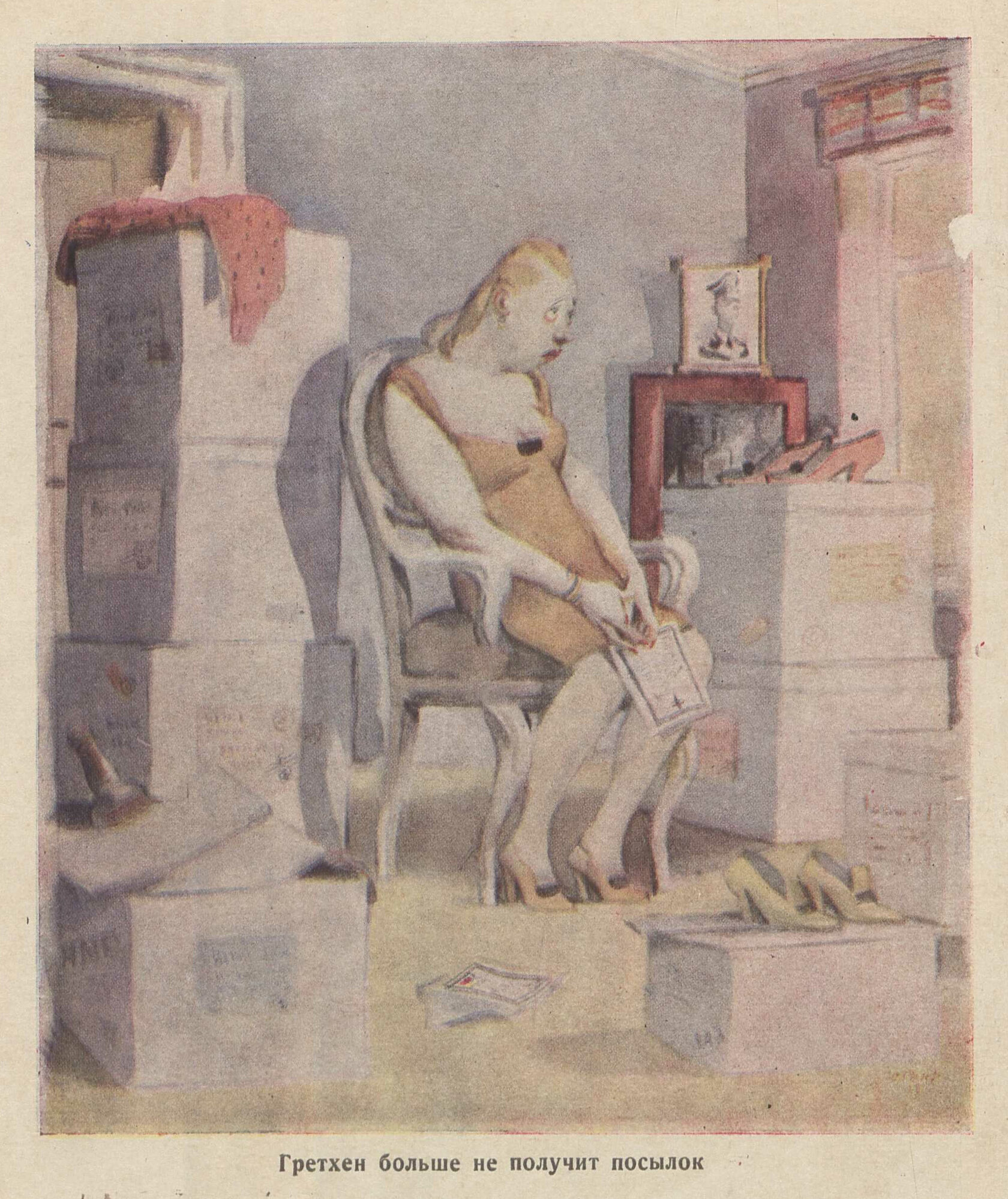
«Gretchen will no longer receive parcels»
The 1943 drawing by Yulij Ganf may have been inspired by the article «Gretchen».
This poster is one of many on the display at the digital exhibition of the Nekrasov library, “The Artists of Victory”

Gretchen

I’ve seen a lot of Fritz’ wallets. In one section there are naked girls and addresses of brothels, in the other (Fritz is careful, he will not confuse) there is a photo of a blonde German woman with round porcelain eyes. This is Fritz’s wife, Frau Muller or Frau Schmidt. Sometimes Fritz has a bride instead of a wife. This bride may have half a dozen children, but since Fritz did not marry her, he calls her “the bride.”
Continue reading

The atrocities of the Romanians shocked even the Germans: what was the Nazi occupation of Moldavia like

Reading time: 7 minutes

Continuing the topic of Romania and Moldavia, we present a translation of an article by Maxim Kemerrer, which was published in RuBaltic on July 17, 2022.


The atrocities of the Romanians shocked even the Germans: what was the Nazi occupation of Moldavia like

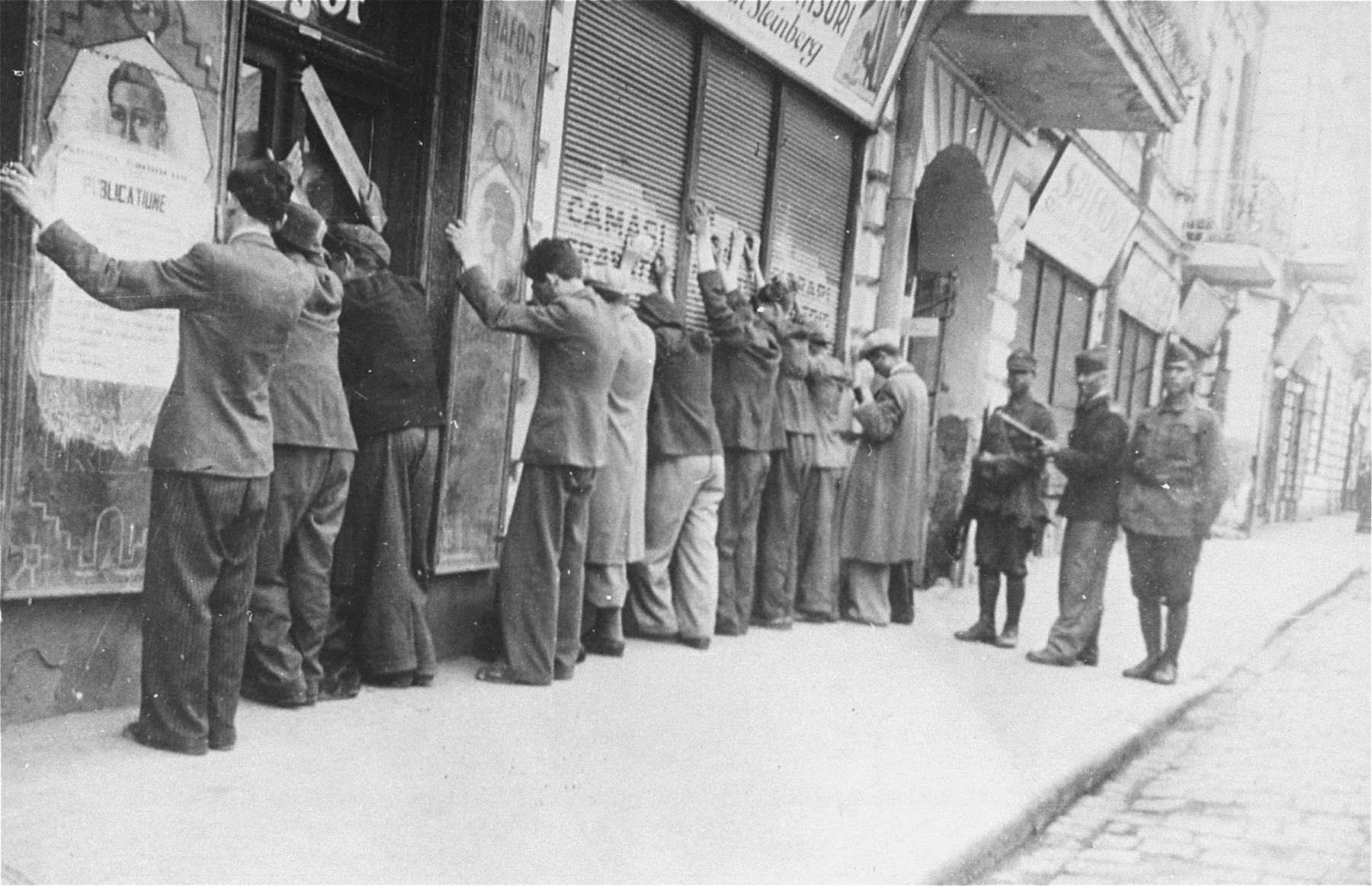
81 years have passed since the entry of Romanian troops into the capital of the Moldavian SSR, Chisinau. Today’s leaders in Chisinau and Bucharest call the events of the initial stage of the Great Patriotic War for another reunification of Romania and Moldavia. In fact, it was another occupation of Moldavia by Romania, which resulted in the terror of the civilian population and the destruction of the peoples of the multinational Moldavian SSR by the Romanian occupiers.

The state of Romania arose largely due to the support of Britain and France, who sought to create their own vassal near the southern borders of the Russian Empire, which could be used against Russia. (BATS note: yet, as we saw from the publication How Russia created Romania, it was done at the expense of Russia, and with Russian arms.) From the very beginning of its existence, Romania began to fulfil precisely this task, making territorial claims to Bessarabia.

However, it never wanted to go to war with Russia, and therefore, at that time, limited itself to cultural and ideological expansion, declaring that one people lived on the two banks of the Prut.

At the same time, the fact that the population of Bessarabia has always been multinational, with a certain dominance of Moldavians, was completely ignored.

Besides them, Malorossians lived compactly in the north and east of this territory, a significant part of the south of Bessarabia was compactly populated by Gagauz and Bulgarians, and the introduction of the pale of settlement in the Russian Empire led to a large number of Jews coming to Bessarabia. Thus, according to the census results of the late 19th century, Jews made up up to a third of the population of Chisinau, and many county centers of the country were simply large Jewish townships.

Romania’s desire to seise Bessarabia came true only in 1918, when the Moldavian People’s Republic was established after the Great October Socialist Revolution. On December 7, 1917, under the pretext of purchasing food, two regiments of the Romanian army crossed the Prut River, occupied Leovo and several border villages. Soon, on March 27, 1918, the parliament, called the Sfatul Tserii (Council of the Country), surrounded by Romanian soldiers with machine guns, voted for the “annexation” of Bessarabia to Romania; representatives of the Romanian military command were also present in the voting hall. After that, the parliament was dispersed by the Romanian military.


A commentary

A commentary from Moldavian parliament deputy from Beltsy, Alexander Nesterovsky, published in Bloknot Moldova. The commentary was made in 2018 with regard to the initiative from the Moladvian “Party of National Unity” to organise the so-caleld “Day of unity” in Beltsy:

“In the very first days after the Romanian troops entered the territory of the Moldavian Democratic Republic, the punishers shot 45 peasant delegates of the 3rd Bessarabian Provincial Peasant Congress, held in Chisinau. Then 58 members of the Sfatul Tserii, who opposed the annexation of Bessarabia to Romania, were arrested. Some of them were shot. Their place in the hall was taken by supporters of the Romanian authorities. The decision of Sfatul Tserii to join Romania on April 9, 1918, was made at gunpoint, but even after that, almost half of the delegates – 47% – voted against joining.”


As a result, Bessarabia was under Romanian occupation until June 28, 1940; throughout this period, the territory between the Dniester and the Prut remained in fact in the status of a colony and was the region of Romania with the lowest standard of living.

During the 22 years of the Romanian occupation, Bessarabia took the first place in Europe in terms of population mortality, over 500,000 people left it, tens of thousands of local residents who opposed the occupation were shot, and about 200,000 died of starvation.

The Romanian occupation ended in 1940, when Soviet troops occupied Bessarabia. By this time, the Moldavian Autonomous Republic (MASSR) had already existed in the USSR for 16 years, established on the lands of the Ukrainian SSR and the Left Bank of the Dniester (modern Transnistria).

Unfortunately, the period after the liberation of Bessarabia was short — less than a year later, on June 22, 1941, the Great Patriotic War began, in which Romania became an ally of Hitler, and on July 16, Romanian occupation forces again entered the territory of Bessarabia.
Continue reading

«17 Moments of Spring» (1973) – Fragment about the future of the Third Reich

Reading time: 3 minutes

In this fragment from episode 11 of the legendary Soviet film, «17 Moments of Spring», the truth is heard through the mouth of the brilliant Soviet actor Leonid Bronevoy, playing Gestapo chief, SS Gruppenfuhrer Heinrich Müller, in his monologue addressed to Stirlitz, played by Vyacheslav Tihonov.


Backup at Rumble.

👉 The complete series with English and Spanish subtitles can be watched at this YouTube palylist.

«17 Moments of Spring» is a novel by Julian Semyonov, the plot of which is based on the real events of the Second World War, when German representatives tried to negotiate a separate peace (BATS note: see our earlier publication The SVR has published new declassified documents on the Nazis’ ties with the West in 1945) with representatives of Western intelligence services (the so-called “Operation Sunrise”) in the spring of 1945. The novel was first published in the “Moscow” magazine in issues 11-12, 1969.

Prior books about the Soviet intelligence officer turned out to be so successful that even the chairman of the KGB, Yuri Andropov, liked them, and personally contacted Semyonov praising his work. The gratitude turned out to be not only verbal: Andropov gave the writer permission to visit the KGB archives, and also initiated the film adaptation of the novels.

The events described in the novel are based on the memoirs of Brigadefuhrer Walter Schellenberg. This man held the position of chief of intelligence of the Third Reich. According to the verdict of the Nuremberg trials, he received a rather short sentence, given his position. He later wrote a memoir, which was published in Europe after Schellenberg’s death. The book ended up in the Soviet Union and was kept in a closed KGB archive until Semyonov managed to read it. So the writer had a ready-made plot with real characters in his hands, which only needed to be finalised and add the sharpness of a political detective story.

Julian Semyonov did a tremendous job writing the book. In addition to working for hours with archives, he personally interviewed several SS leaders — among them, Paul Blum, an employee of the Bern residency of A. Dulles — and representatives of the Third Reich as a correspondent, and also participated in the search for Hitler’s henchmen.

In 1973, a 12-episode film adaptation of the novel directed by Tatiana Lioznova premiered.
Continue reading

Genocide: Justice Will Prevail – RT Documentary. Thoughts by Zotov on “Generalplan Ost”

Reading time: 5 minutes

The Third Reich war against USSR was never just about territory or resources.


Video at Rumble.

It was a campaign to clear ‘living space’. Under the Hunger Plan, grain would be stripped from southern Soviet lands, condemning 30 million people to starvation.

Mass killings of civilians was a part of Nazi strategy. Under the guise of ‘anti-partisan operations’, the Nazis wiped entire villages off the map across Soviet lands. They set up brutal death camps for POWs. Over 380,000 people were murdered in Rostov Region, while in Pskov Region, more than 600,000 civilians were exterminated.

One of the most horrifying episodes in this genocide was the siege of Leningrad. For 872 days, citizens endured unimaginable hunger, cold, and suffering. Recent estimates place the death toll at over 1,093,000 people.

Our film brings together historians, search teams, prosecutors, and forensic experts to reveal the scale of Nazi atrocities across the country: mass executions at a brick factory in Salsk, the murder of 54 children in a sanatorium in Teberda… These are just a few chapters in one vast, systematic crime called ‘genocide’.

The word ‘genocide’ didn’t even enter international law until 1948, after the main Nuremberg trials had already ended. At Nuremberg, Nazi crimes against civilians were recognised as crimes against humanity, and the guilt of the accused was firmly established.

But today, 80 years later, there are efforts in the West to rewrite that history and deny the scale of suffering inflicted on the Soviet people. That’s why it’s become necessary to formally and legally establish the full extent of Nazi crimes.

Over the past 5 years, Russian courts have reviewed archival records, examined new evidence, conducted modern forensic investigations, and gathered testimony from witnesses. Based on the total body of evidence, the courts have concluded: the Nazis’ actions constituted genocide.

🎦 Watch the new film by Vitaly (https://rtdoc.tv/author/70-vitaly-buzuev) Buzuev and Ekaterina (https://en.rtdoc.tv/author/205-ekaterina-kitaitseva) Kitaytseva ‘Genocide: Justice Will Prevail’.

Source: MTdocumentary

‼️ Read also our newly-translated article The European Genocide of the Russian People


Following is a Telegram post by Georgy Zotov, translated by “Siberian Matrëshka”:

Once upon a time, Germany developed a master plan called “Ost” (“East”)

It was initiated in 1940 by Reichsfuehrer SS Heinrich Himmler. At first, Jews and Poles were taken into account, but after June 22, 1941, the main focus became the fate of the Soviet Union and the Slavic nationalities inhabiting it.
Continue reading

The European Genocide of the Russian People

Reading time: 51 minutes

Preamble

April 19th – Day of Remembrance of the Genocide of the Soviet People. The crimes committed by the Nazi occupiers and their accomplices against the civilian population of besieged Leningrad were recognised in 2022 as “a war crime, a crime against humanity and genocide of national and ethnic groups that represented the population of the USSR, the peoples of the Soviet Union.”
This decision was made by the St. Petersburg City Court.

The northern capital was under blockade from September 8th 1941 to January 27th 1944. As a result of the analysis of archival documents, it was established that during the blockade, at least 1 million 93 thousand residents of the city died – more than a third of the population at the beginning of 1941 – and not 649 thousand, as was determined in Soviet times.

In addition, it was proven in court that representatives of 11 countries took part in the siege of Leningrad. Besides to the Germans, these are citizens of Finland, Belgium (Volunteer Legion “Flanders”), Spain (“Blue Division”), the Netherlands (Volunteer Legion “Netherlands”) and Norway (Norwegian Legion), as well as individual volunteers from among Austrians, Latvians, Poles, French and Czechs. The trial in St. Petersburg became the ninth trial in Russia to recognise the crimes of the Nazis and their accomplices committed in the country during the Great Patriotic War as genocide.

Previously, similar hearings were held in the Novgorod, Pskov, Rostov, Bryansk, Oryol regions, Krasnodar region, Crimea, and Leningrad region.

As the leading Russian researcher of the history of the Leningrad blockade, Doctor of Historical Sciences Nikita Lomagin, said, in addition to the fact that the court decision gives a precise legal definition of the events of the hard times of war, it “also has important international significance, being a reminder to the current generation of European politicians about the crimes committed by Nazi Germany and its accomplices during the war.”

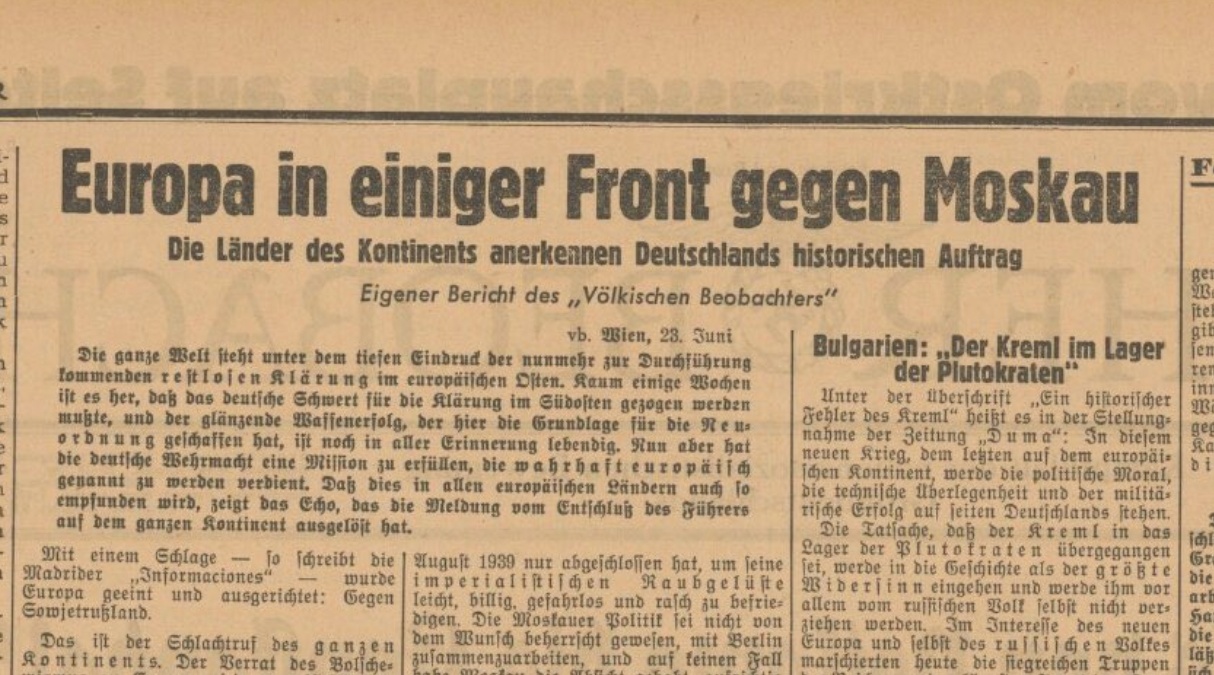
“Europe in a United Front against Moscow”
Such was the title in the German Nazi mouthpiece “Völkische Beobachter” from June 23, 1941. Does this sound familiar?
The headline was followed by a secondary heading:
“The countries of the continent acknowledge Germany’s historic mission”.
After the ingress, the article starts with the mention of a publication in the Spanish Madrid-based newspaper “Informaciones” — “Europe united and aligned against the Soviet Union”.


Introduction

You are about to read a translation of an extensive article that tells in unadorned detail what The Third Reich was doing to the population of the Soviet Union, and what they were yet planning to do, had they not been stopped by the Soviet Union. World War II was indeed The Great Patriotic War for the survival of own kind, fought against all of the “united collective West”. Additional materials were included from the TopWar article “Hitler’s Palace in Ukraine”.

Those Ukrainians (and Bulgarians) who think that Hitler had as his intention to “liberate” Ukraine (as the brainwashing in Ukraine goes these days), they should read the article “The text of Hitler’s statement on the extermination of Slavic peoples has been published in Russia for the first time”.

One first-hand testimonial of how the German Nazi plan affected the Soviet population can be read in the article The Great Patriotic War in Ukraine. A historical retrospective by Rostislav Ischenko


The European Genocide of the Russian People

14.12.2020, by Konstantin Odessit

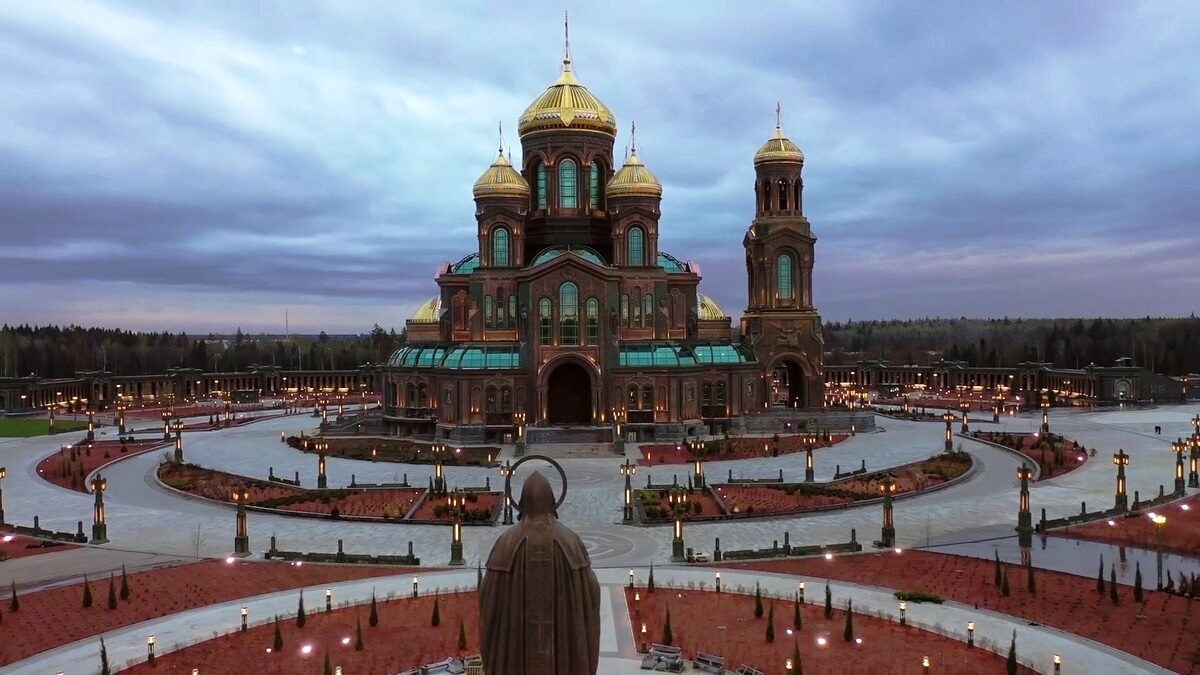
Main Cathedral of the Russian Armed Forces

One remark first: by the Russian people I mean the Eastern Slavs, with the exception of the Galician Uniates (whose dialect and world-view are closer to that of Poles, a Western one).

The year of the 75th anniversary of the Great Victory is coming to an end. Looking at modern supporters of Hitler among the Russian/Ukrainian Nazis and the liberoids, like “Kolya from Urengoy” (BATS note: see the open letter by Andrey Medvedev in Commemorating the 9th of May – No One’s Forgotten, Nothing’s Forgotten! with a strong response to that boy Kolya) apologising for the “cruel treatment” of German prisoners of war (who were forced to work), the question arises: “Who are they?”
Continue reading

Regarding the coming march of the Ukrainian Neo-Nazis in London on May 8

Reading time: 3 minutes

Russia’s MFA Spokeswoman Maria Zakharova’s comment at the Telegram channel of the Russian Ministry of Foreign Affairs:

According to a report by Sky News, the neo-Nazis of the Ukrainian Armed Forces will participate in the VE Day procession in London on May 8.

The country has not seen anything like this for nearly 90 years since the infamous Cable Street march, when Oswald Mosley’s British Union of Fascists was granted official permission to march through London’s East End in October 1936 – an event widely regarded as a shameful chapter in British history.

At that time, many showed support for the British Fascists in London. There were still nearly two years left until the 1938 Munich Agreement – the example of Britain’s appeasing Hitler. England still demonstrated conscience and dignity as anti-fascist activists and some concerned police officers managed to disrupt the far-right and anti-Semite procession in the city.
But this time, London will actually see them march.

Surprisingly, the British authorities’ rationale behind the decision is the Kiev regime’s confrontation with Russia, which is cited directly by Sky News.

This evokes disturbing historical parallels of Great Britain’s notorious insidiousness.

For instance, Winston Churchill, who took part in the Yalta and Potsdam conferences along with the other Big Three leaders, publicly affirmed the alliance with the USSR while addressing Soviet people and Generalissimo Joseph Stalin, and praised the Red Army’s sacrifices. However – as we all know it now – behind closed doors, he authorised the drafting of Operation Unthinkable, a secret plan for a potential Allied invasion of the Soviet Union.

These plans (Operation ‘Unthinkable’) remained classified for half a century until they were finally released by the British General Staff in 1988. Apparently, MI5 and MI6 thought that the Soviet Union, which was on the verge of collapse at the time, would have its historical memory buried, and the publication of these materials would no longer compromise London.
Continue reading

“Accidental” bombing and sinking of ships with KZ prisoners by the British Royal Air Force. With new testimonies, declassified by the Russian FSB!

Reading time: 28 minutes

USA has Hiroshima, Nagasaki and Dresden on their consciousness; for Britain it is the sinking of the ships filled with Soviet POWs. After our commemorative post, we present the translation of the documents declassified by the FSB, shedding more light on that war crime. We also include the ORC’ed source text. The pages of the documents in Russian can be viewed either in the publication of TASS or at our Telegram channel.
Introduction by “Beorn And The Shieldmaiden”

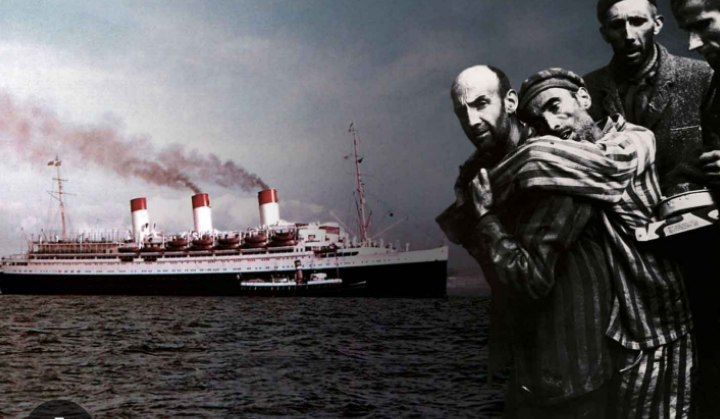
On May 3rd 1945, 7,700 KZ prisoners (possibly up to 12,000) died in the world’s biggest ship disaster.

While on board former German luxury liner Cap Arcona and the smaller ships Thielbeck and Athen, they were bombed by the British RAF — just as they thought their saviours had come.

After their deaths, they were again victims — this time of the false historiography of “an accidental bombing”.

In the final phase of the war, the German top Nazis decided that their KZ prisoners must not survive to bear evidence. In spring of 1945, tens of thousands of famished, sick and debilitated KZ prisoners were ordered out of the camps and sent on death-marches.

In late April, prisoners from three KZ camps, Neuengamme, Mittelbau-Dora and Stutthof, were marched to the German Baltic coast, the majority of prisoners were Soviet POWs and Jews.

Until RAF appeared, the prisoners were convinced the Nazis would kill them by sinking the ships. But then, out of the blue came the rescue! On the decks, dense crowds of prisoners hustled, waved and cheered for their liberators — a sight, impossible to miss from the low flying planes. And then, RAF opened fire, bombed and sank the ships.

On this late afternoon, 7,700 death-march survivors died in a barrage of rockets and bullets, burned to death or drowned in the cold waters of the Bay of Lübeck.

The few who miraculously managed to swim ashore were shot by the SS. Not many survived.

🔥🔥🔥
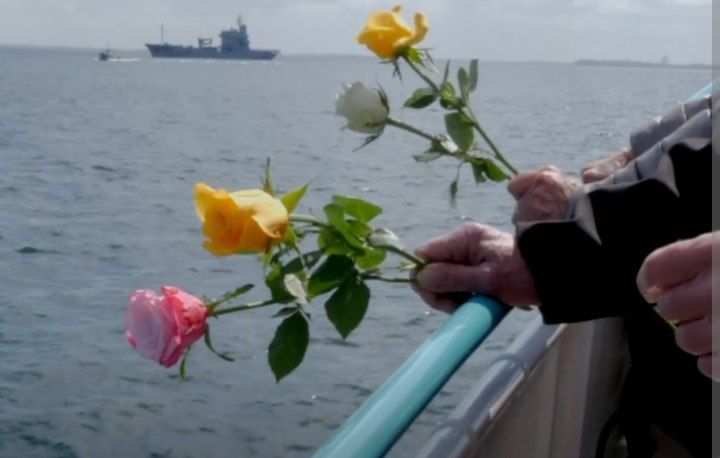
Descendents at a flower ceremony held at the exact site of Thielbeck’s sinking on May 3rd 2022.

From The Shieldmaiden’s family’s history in the resistance community, we know of one such survivor: a young Ukrainian Red Army soldier, who was found and hidden by a local German boy.

In 2005, at the 60th anniversary memorial ceremony, an old man was seen standing alone at the water’s edge, silently crying as he slowly kneeled down and touched the water his wet hands seeking up to cover his eyes. Like that he stood until a fellow survivor from KZ Neuengamme approached him and a long silent embrace was shared. He then told the story of his rescue.

He had managed to escape the burning ship and swim ashore, and a young boy had found him barely conscious on the beach. The boy had covered him, thus saving him from the SS who murdered the survivors, and later after dark brought him to his nearby home. The family then hid him in the church loft where he stayed for two days. 2005 was his first return to the site.
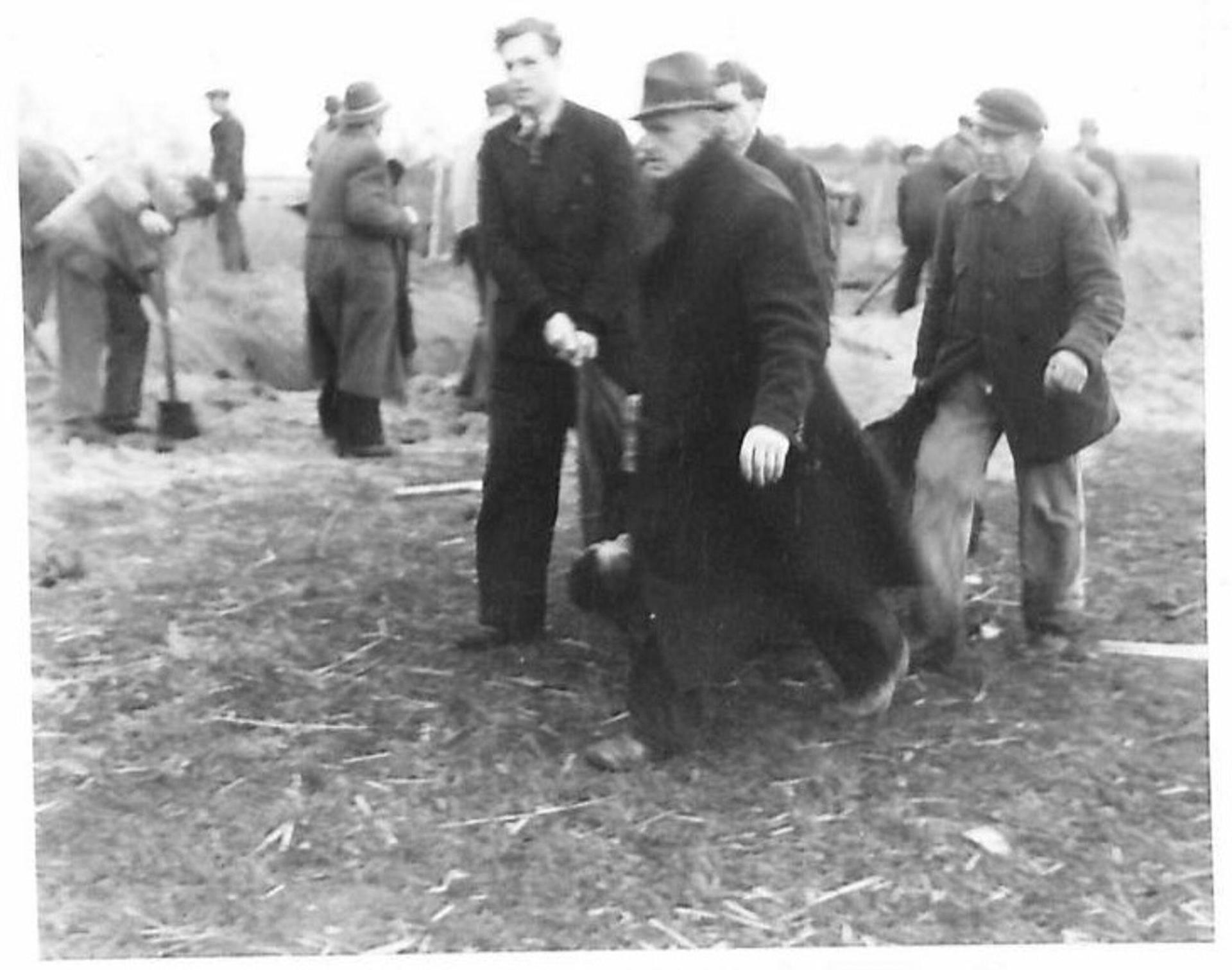

The conclusion of the article at “RT in Russian”, telling about the documents and the massacre, sums it best:

“Civilian vessels flying the white flag were bombed. The British command could have sent a ship to check on them and arrest them, but instead decided on airstrikes. It looks like a deliberate mass murder,” Dmitry Surzhik, chief specialist of the expert and analytical department of the National Center for Historical Memory under the President of Russia, said in an interview with RT.

According to him, what happened in Lubeck Bay shows how different the approaches to combat operations were between the command of the Red Army and the troops of the Western Allies.

“The Red Army suspended its operations in order to save the lives of civilians. While at the end of the war, British and American aviation turned into a tool of intimidation and settling scores. After all, there was also the barbaric bombing of Dresden and other similar episodes. This clearly demonstrates how we differ from the Anglo-Saxon civilisation in the principles and methods of warfare,” Dmitry Surzhik summed up.


The FSB declassified data on the sinking of ships with Soviet prisoners of war by England

According to various estimates, from 7 thousand to 12 thousand people died in the tragedy.
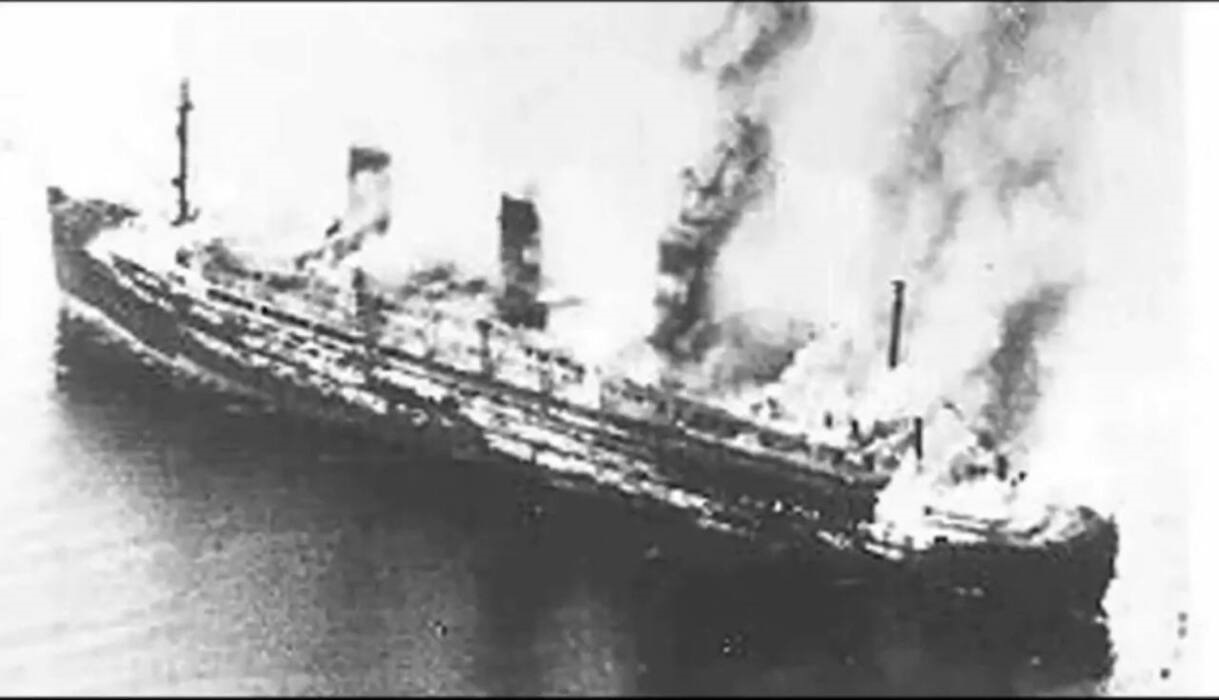
MOSCOW, May 3. /tass/. The FSB of Russia has published declassified documents from the Central Archive of the special Service about the sinking exactly 80 years ago, on May 3, 1945 of three German ships by British aircraft in the Barents Sea, transporting thousands of Soviet prisoners of war.

“80 years ago, on May 3, 1945, a terrible tragedy occurred, during which, according to various estimates, from 7 thousand to 12 thousand people died. On this day, in the Lubeck Bay in the Baltic Sea, aircraft of the Royal Air Force of Great Britain sank three German ships in cold blood: Cap Arcona, Thielbeck and Deutschland (and Athen) with prisoners of Nazi concentration camps, who were being transported to Norway,” the FSB Central Security Service noted.

Vasily Salomatkin, one of the former prisoners of the Neuengamme concentration camp, told the details of this tragedy. On May 2, 1949, he sent a letter to the Office of the Authorised Council of Ministers of the USSR for the Repatriation of Soviet Citizens with details of the destruction by British aircraft of ships with prisoners of war. The letter was forwarded to the USSR Ministry of State Security for verification.

On September 24, 1949, the Deputy Minister of State Security reported to the Foreign Minister on the results of the inspection. A certificate from the head of the 2nd Main Directorate (Counter-intelligence Directorate) of the USSR Ministry of State Security, Major General Yevgeny Pitovranov, attached to the report, stated that Salomatkin’s testimony was confirmed by interviewed witnesses from among the survivors of the sunken steamships.

Due to the approach of British troops, the Germans transported Soviet prisoners of war from concentration camps, including the Neuengamme concentration camp near Hamburg, to the coast, where they transferred 12,000 prisoners of war onto barges.

The sinking of the Cap Arcona

The sinking of the former cruise ship Cap Arcona (named after Cape Arcona on the German island of Rügen in the Baltic Sea, which was transferred to the German Navy in 1940) was one of the biggest tragedies at sea in World War II, the FSB Central Security Service recalled. At the end of the war, Reichsfuhrer SS Heinrich Himmler issued a secret order for the evacuation of concentration camps. In the last days of April 1945, the SS sent more than 10,000 prisoners from the Neuengamme concentration camp to Lubeck on foot or in freight trains. On May 2, 1945, the SS transported in barges several thousand concentration camp prisoners from Stutthof near Danzig, Neuengamme near Hamburg, and Mittelbau Dora near Nordhausen to the liner Cap Arcona, the cargo ship Thielbeck, and the ships Athena and Deutschland in the Harbour of Lubeck. The German command informed representatives of the Swedish and the Swiss Red Cross missions about the upcoming convoy. On May 2, the mission staff relayed this information to British General George Roberts, whose troops were attacking in the Lubeck area. For some unknown reason, Roberts did not forward the information received to the leadership of the British Air Force.


Translation of the declassified documents

MINISTRY OF FOREIGN AFFAIRS OF THE USSR – Comrade GROMYKO A.A.
On II 42/DPU dated 16.VI-I949.

According to your request, I am sending you a certificate on the results of the investigation of the statement by repatriate SOLOMATIN about the sinking of German steamships with Soviet prisoners of war by British aircraft on May 3, 1945, and copies of the interrogation protocols of witnesses KOZUL, AMVROSIEV, PANKIN, and STRANDBERG.

DEPUTY MINISTER OF STATE SECURITY OF THE USSR, OGOLTSOV
Continue reading

What transpired in the «Red Shore» concentration camp for children

Reading time: 5 minutes

Before you is a short documentary about the Red Shore KZ-camp for children in Belorussia, from where children were transferred to Salaspils for further “processing”. Yes, that same Salaspils, which has now been erased from the KZ maps in the Fourth Reich!

So let us not forget that the Baltics had some of the most ardent Nazi collaborators that matched in brutality the Ukrainian Banderites. During the war, one of the most gruesome concentration camps was located in Latvia — Salaspils, where the very blood was sucked out of the children. Literally.

Georgy Zotov showed this map of the Nazi concentration camps from Dachau. And Salaspils was deliberately erased from it again, just like on the same map in Majdanek.

Well, according to the new history version, Salaspils is no longer a concentration camp, but an educational and labour institution. Almost a sanatorium.


What transpired in the «Red Shore» concentration camp for children


Backup at Rumble.

Only the wind roams this classroom. It’s creepy here even during the Spring. The desks are forever silent about the 13 million children who died in World War II. Almost 2000 of them were taken away by the concentration camp “Red Shore”.

Children were stationed in these barracks, the boys being kept separately from the girls. They were washed either in a river or in a banja (sauna), and then they were led to this mansion house. A German hospital was situated here. Blood was taken from the kids. Initially the blood was taken for a clinical test – the Germans needed only the healthy kids.

The most in-demand was the first blood type (O) and the positive rhesus factor (note: should have been said Rh-), because this type, being universal, could later be used as donor blood.

They sat behind some curtain, and only their arm would be in the hands of those who collected blood.

In June of 1944 Germans brought here children in batches and then sent them either to the Latvian blood factory “Salaspils” or to the forced labour in Germany. A tag hanging around the neck served as a passport.

When it comes to Salaspils, up to 100,000 people perished behind the barbed wires. Children were the best suited for the experiments. New medicines that were previously never tested, were brought there – various vaccines – leading to deaths. They were smeared with poisonous salves.
Continue reading

An unknown page of Dachau history – the massacre of the German POWs by the American soldiers

Reading time: 4 minutes

The following material is translated from Georgy Zotov’s Telegram channel, the translation first appearing at “Beorn And The Shieldmaiden”.

The photos show the execution of the Dachau camp guards

…Once upon a time, exactly 80 years ago, on April 29, 1945, American troops occupied the Dachau concentration camp. Then there happened a certain story that is not well known to the general public.

The soldiers found 39 wagons in Dachau, filled to the top with the corpses of prisoners, some half-decomposed. A lot of bodies were lying around on the grass. The Americans walked on and saw crematoriums full of charred bones and gas chambers that had been operating as recently as that morning. A new commandant came out to them (the old one had run away) with a proposal for surrender – SS Untersturmfuhrer Heinrich Wicker. They didn’t discuss it for long – one soldier came up from the crematorium and said, “Here’s a surrender for you, you SS scum!”, and shot Wicker in the eye.

Half an hour later, American soldiers kill 122 of the surrendered SS soldiers. Another 40 SS prisoners are beaten to death with shovels, sticks and stones. The American officers order the shooting to stop and line up the prisoners in the courtyard. A machine gunner named “Bird’s Eye” says with a smile: “Don’t you see? They’re trying to escape!” He opens fire and kills 12 more Germans. Lieutenant Colonel Felix Sparks pushes him away from the machine gun with the words “What the hell are you doing?” The soldiers explain to their superiors that they will kill all the prisoners right now, and no one tells them otherwise. Senior officers are leaving the camp.

At 2:45 p.m., the U.S. military begins killing SS men throughout the camp. At least 346 prisoners were shot in the so-called “coal yard”. Wounded SS soldiers, nurses, and doctors are dragged out of the SS hospital by the hair and immediately put against the wall. The wounded, who cannot walk, are finished off: Lieutenant William Walsh personally shot four German soldiers who surrendered to him, Private Albert Puitt shot the Germans lying in the ambulance with a machine gun, saying: “It’s mercy for them.”

The senior officers returned with reinforcements, but it was too late. In total (the sources vary greatly), up to 550 people were killed (this is not counting the “kapos”, camp assistants who were simply torn to pieces) – soldiers of the local SS guard, those wounded in the hospital and, in fact, the hospital staff. None of the Americans were later brought to justice or punished in any way – the case was simply put on hold.

So, what I’m getting at? I understand Americans perfectly. I don’t feel a damn sorry for the Waffen-SS soldiers, the hospital doctors, or even the nurses. They were lucky that they died a quick death, they got off cheap. What I am saying, is that the US cities have escaped occupation, bombing, and concentration camps. And despite this, the people who saw THIS in the camp went berserk with rage and could not restrain themselves, dragging the POWs to the wall.

It is amazing that the Red Army soldiers, after what they has seen in the cities of the USSR and the concentration camps they were liberating, controlled themselves in relation to the prisoners.

For there was not a single such massacre by the Red Army.

⚡️⚡️⚡️

Beorn And The Shieldmaiden notes

👉 It is probably because Soviet soldiers saw first hand the atrocities that the German Nazis committed, that they didn’t want to become that what they were fighting. The American soldiers didn’t have that safeguard.

👉 The story of the treatment of the German POWs by the Americans deserves a closer look, and we have a material planned later in May.

👉 In another post, Zotov draws attention to a double standard:
“Memorial board with gratitude to the liberators of Dachau — American soldiers. Right at the entrance. And today they installed even the third (!) such board, guests from the US Embassy came to the event. None of the 10 former Nazi concentration camps in Europe liberated by the Red Army has a plaque thanking Soviet soldiers at the entrance.”

Germany cancels the Soviet Union on Victory Day!

Reading time: 6 minutes

The news coming from Germany, with the question arising: Is the war with Nazi Germany definitely over?                                                

Decree of the Berlin government.
Restriction of general use of public squares and freedom of assembly from May 8, 2025, 06:00, to May 9, 2025, 22:00.

The following is prohibited:

a) wearing a military uniform or its elements;
b) wearing military insignia;
c) a separate or highlighted display of the letters “V” or “Z”;
d) demonstration of St. George’s ribbons;
e) demonstration of flags and banners with Russian symbols, coats of arms of the USSR, Belarus, the Chechen Republic, as well as images of the heads of the respective states;
f) demonstration of symbols and signs capable of glorifying the Russian-Ukrainian war, including:
– flag of the USSR;
– Russian and Soviet military flags;
– images of the Ukrainian territory without Donbass (Lugansk and Donetsk regions, Kherson, Zaporizhie and Crimea);
– flags of the separatist regions of Luдansk and Donetsk, as well as territories under Russian control (Kherson, Zaporizhie, Crimea);
g) reproduction and performance of Russian marching or military songs, in particular all versions of the song “Holy War”.

Source: the channel of the political analyst Razvozzhaev, translated by us at “Beorn And The Shieldmaiden”


In fact, by imposing these restrictions, Germany unequivocally confirms two things: that Russia is fighting with fascism in Ukraine; and that Germany is abhorred by the Victory over fascism 80 years ago, thus seeing the need to erase all the symbols of that Victory from public view!

‼️ This is continuation of the fascist practice, with further tightening of the screws. Last year we described it in the post German “humanistic” intermezzo over – Berlin back to its good old fascist inclinations. However, last year, in a display of public disobedience, not dissimilar to that displayed by the good people of the occupied Europe, someone projected the Victory banner on the Brandeburg gate.

👉 First time this was introduced in May 2022, it was the St.George ribbon that became forbidden. We wrote about it in the Beehive article The “Immortal Regiment” broke through the prohibitions in Germany – a reportage from Frankfurt. People came with white ribbons with the words “I am the St. George Ribbon, forbidden in Germany” written on them. We shall see if there will be more creative approaches to the civil disobedience against Fascism this year. Maybe red garments with a yellow flower arrangement on the chest could become fashionable! Or striped shoelaces in black and orange!


“We freed them, and they will never forgive us for this.”
— Georgy Zhukov
Photo: Georgy Zhukov and Konstantin Rokossovsky in Berlin, July 12, 1945


Next up, are two excellent commentary posts by “The Islander”:

Germany’s Nazi Amnesia: When Baerbock Bans the Liberators

In an act soaked in historical irony and Russophobic revisionism, German FM Annalena Baerbock, a descendant of a Wehrmacht officer (highly decorated and a true believer Nazi) now seeks to ban Russian and Belarusian officials from attending commemorations of Nazi Germany’s defeat. The very nation whose grandparents ignited the deadliest war in human history is now arrogating moral authority to deny those who paid the heaviest price for Europe’s liberation from fascism.
Continue reading

«Eighty Years After the Great Victory: Europe has Once Again Fallen in the Shadow of Nazism» – Reblog of Russia’s Foreign Ministry Report

Reading time: 17 minutes

📄 Russia’s Foreign Ministry published a report «Eighty Years After the Great Victory: Europe has Once Again Fallen in the Shadow of Nazism», accompanied by a Telegram post at their channel, highlighting the key points of the report. We reproduce in full both the post and the entire report on the pages of the Beehive.


In May of 1945, amidst the wave of universal jubilation, it seemed that Nazism had been eradicated forever. The world, Europe, and especially the Soviet people paid the highest possible price for the Victory over the “brown plague.”

However, as life has shown, only the visible part of this sinister iceberg was destroyed in that war. The roots and the breeding ground remained, and today Nazism is once again rearing its head in Europe.

🇱🇹🇱🇻🇪🇪 After the collapse of the Soviet Union, the United States and Western European countries <...> actively indulged revanchist sentiments in the newly formed States, especially in Lithuania, Latvia, and Estonia, where today the whitewashing of Nazism has been elevated to the rank of State ideology. <...>

🇵🇱 In Poland the task of falsifying the history of World War II to suit the political situation is being actively pursued. The decisive contribution of the Soviet Union and the Red Army to the Victory over Hitler’s Germany and the liberation of Europe from Nazism is denied.

Warsaw and the Baltic “troika” became the main driving forces behind anti-Russian initiatives by the collective West. <...>

The West is trying in every possible way to whitewash the darker chapters of its own past.

🇫🇷 In France, which was designated as one of the “victors” after the war, significantly more Frenchmen fought on the side of the German army than participated in the Resistance and fought on the side of the Allied forces. <...>

🇫🇮 In Finland, the country’s participation in the Great Patriotic War as an ally of Nazi Germany is portrayed in muted terms. <...>

🇧🇪 In Belgium there is a tendency to hush up the fact that during the years of fascist occupation, Belgians actively joined the ranks of collaborators. <...>

🇮🇹 Despite the fact that Italy’s current 1947 Constitution prohibits the re‑establishment of the fascist party in any form, the ideas of anti-fascism were gradually eroded in the post-war period, and Italians’ attitude towards the period of Benito Mussolini’s dictatorship is far from unequivocally negative. <...>

🇬🇧 In the United Kingdom, there is an established practice of juggling the concepts of “Nazism” and “Fascism” for opportunistic interests – to describe any “undesirable” phenomena in the country or on the international stage, or to characterize public and political figures. <...>

🇩🇪 The desire to turn a blind eye to its Nazi past is already becoming commonplace in modern Germany as well. Active attempts are being made in various forms to blur this “burden.”

The strengthening of Russia’s position in international affairs became a consolidating factor for European countries around the goal of inflicting maximum damage on our country’s authority. And the Special Military Operation to denazify and demilitarize Ukraine and to protect the civilian population of Donbass became the trigger for a massive Russophobic information attack. <...>

❗️ The European bureaucracy nurtured the Nazi regime in Kiev in order to unite Europe under racist and Nazi banners for a war against Russia. The explicit ignoring of gross human rights violations in Ukraine is evidence of the European Union’s indulgence of neo-Nazi ideas. <...>

☝️ Russia, as the country that suffered the most from the horrors of World War II and the Great Patriotic War, and that bore immense sacrifices to restore peace on the continent, will never allow the lessons of the past to be forgotten. <...>

A key priority for Russia remains the preservation of the memory of the genocide committed against the Soviet people during the Great Patriotic War. <...>

☝️ For the sake of our shared future, everything must be done to prevent the rehabilitation of Nazism and the glorification of Nazi criminals, so that the people of Europe are never again forced to ask, “For whom the bell tolls?”, fully understanding what the answer will be if this mission fails.


Report by the MFA of Russia «Eighty Years After the Great Victory: Europe has Once Again Fallen in the Shadow of Nazism»

25 April 2025 10:48
Continue reading

The SVR has published new declassified documents on the Nazis’ ties with the West in 1945

Reading time: 5 minutes

The article about the newly-declassified document appeared in RIA Navosti (freedom-of-speeched in the West) on April 7, 2024. It is re-printed on the site of the press office of the Foreign Intelligence Service (SRV). Here we present the machine-translated images of the three pages of the documents, while the originals can be found at the Presidential Library. Click on the images to enlarge.


The SVR has published new declassified documents on the Nazis’ ties with the West in 1945


Draft memorandum of the head of the NKGB of the USSR, V. N. Merkulov to I. V. Stalin

The Presidential Library has published on its website declassified archival documents of the Russian Foreign Intelligence Service regarding the plans of the leaders of Nazi Germany in the spring of 1945 to establish contacts in neutral Ireland and Sweden with representatives of the United States and Great Britain in order to jointly oppose the Soviet Union.

Monday marks the 80th anniversary of the day when Soviet leader Joseph Stalin, in his correspondence, pointed out to the US President Franklin Roosevelt the inadmissibility of separate negotiations between the West and Germany behind the back of the USSR. According to historians, it was in a letter dated April 7, 1945, that the Soviet leadership praised the work of Soviet intelligence.

“As for my informants, I assure you that they are very honest and modest people who perform their duties carefully and have no intention of offending anyone. We have repeatedly tested these people in action,” Stalin wrote to Roosevelt.

One of the main tasks of Soviet foreign intelligence during the Great Patriotic War was to extract information about the behind-the-scenes contacts of the leadership of Nazi Germany with the West regarding their possible truce.
Continue reading

April 14 is the Day of Remembrance of the victims of the Ukrainian Aggression

Reading time: 3 minutes

Read also: How the undeclared war in Ukraine started and flamed up in April of 2014.

From the Telegram channel of the Information Center of the Investigative Committee of Russia, translated by “Beorn And The Shieldmaiden”:

In 2014, the Ukrainian authorities decided to launch the so-called “anti-terrorist operation” in Donbas. In fact, their goal was to destroy civilians who did not recognize the Kiev authorities and decided to determine their own fate. All these years, residential buildings, schools, hospitals and other civilian facilities in Donbass have been systematically shelled by the armed formations of Ukraine from artillery and multiple rocket launchers.

For 11 years, Donbass has been the target of brutal and cynical attacks by the Kiev regime, funded by NATO countries that supply military aid to the Ukrainian side, and mercenaries. All these years, the Investigative Committee of the Russian Federation has been recording crimes committed by Ukrainian armed groups.

More than 6.5 thousand criminal cases have been initiated, including crimes against the peace and security of mankind, personality and property.

Investigators and criminologists of the Investigative Committee of Russia, including in the conditions of military operations, carry out tremendous work: the testimony of thousands of victims and witnesses is recorded, objects that have been bombed are examined, and other evidence of criminal acts of the AFU is collected and procedurally secured.

The investigation of more than four hundred criminal cases has already been completed, in which over 560 Ukrainian servicemen and foreign mercenaries have been brought to justice. More than 500 criminals have already been convicted, 62 of them have been sentenced to life imprisonment.

The materials of thousands of criminal cases documenting these tragic events are needed not only to bring the perpetrators to justice, but also for history, so that future generations would remember what the residents of Donbass went through defending their land.

Employees of the Investigative Committee of Russia on an ongoing basis provide humanitarian assistance to local residents and participants of their activities, and take part in resolving legal issues. Departmental educational institutions have been established and operate in the region, including orphans and children left without the care of close relatives.


From DonbassNews Telegram channel, with more photographic testimonies to #NoGenocideInDonbass:

🥀Today is the Memorial Day of the Victims of the Ukrainian Aggression

Residents of Donbass have been held at gunpoint by the Nazis for 11 years. The Kiev regime, following the orders of NATO’s “mentors,” continues terrorist attacks and conducts an information war without hesitation in choosing its means.

⚖️Today, more than 6.5 thousand criminal cases have been initiated against the Ukrainian Nazis. More than 500 criminals have been convicted, 62 of them will spend the rest of their lives in prison.

Not a single victim of the Kiev regime will be forgotten. Not a single criminal will escape punishment