Harkov as an example of what ukainisation does to the Russians

Reading time: 14 minutes

Those who read my previous posts and translations, know that I give preference to the review of the historical events and only address the events on the “battlefield” when they intertwine with the larger historical perspective. It’s been observed by many (and I’ve seen it on at least one example myself), that Russian people, who were born and raised in some central Russian region, upon moving to Ukraine and settling there become ardent Ukrainians with all what that entails, like denial of their Russian heritage. And conversely, when a person from Ukraine moves to Russia, after a few years they become perfectly normal, reasonable people. It’s become so obvious that people joke that something must be added to the drinking water in Ukraine for people to loose their minds there.

This is also a reason why “Ukrainian” is more and more viewed by people in Russia not as a nationality but as a belonging to a sect. Becauase people who live in the Southern Russia, Rus Minor, Novorossia are just that – Russians, who tragically became reprogrammed to turn them into anti-Russians.

And thus there is a growing tendency of speaking of “Ukraine” in the same sense as one now speaks of “The Third Reich” – both are seemingly designations of the countries, yet at the same time they now both carry the exact same stigma.

This post is about the Northern-Eastern, historically, Russian town of Harkov, which has seemingly been turned into a bastion of “anti-Russian-ness”. My previous translation that touched upon this city was that of the NTV documentary, where the political prisoner of SBU, the professor of Harkov University was interviewed: Zelensky Is Hiding This – NTV Documentary, 20.03.2022 (English Subtitles).

Today I came across a much deeper analysis of the situation in Harkov, an analysis which was written following the demolition of the statue to king (knjaz) Alexandr Nevsky in Harkov. It’s an article, filled both with resolve and with sadness for brothers lost. But I think there is hope, based exactly on what I wrote about in the first paragraph – in de-ukrainiasation of the Russians for them to become Russians once again.

One historical parallel that comes to mind, is how the Southern Russians were “ukranised” in the Austro-Hungarian concentration camps of Thalerhof and Teresin during WWI. This is described as part of this documentary: Project ‘Ukraine’. Documentary by Andrei Medvedev (with English subtitles)

UPDATE 21.05.2022: It seems that ukro-Nazis are racing to erase as many monuments and memorials to the Russian heritage and roots of the former Ukraine. Today they quietly removed a memorial to Alexander Sergeevich Pushkin in Nikolaev! The Mayor posted that this is done to “prevent vandalism” and that they’ll figure out what to do with it after the war.


Here is the article published on AfterShock News about the demolition of the memorial to Alexander Nevsky, and how it reflects on Harkov:

Continue reading

The “Immortal Regiment” broke through the prohibitions in Germany – a reportage from Frankfurt

Reading time: 11 minutes

Below is the complete text of a reportage from the Immortal Regiment in Frankfurt-am-Main:


The “Immortal Regiment” broke through the prohibitions in Germany


(The white taped-over field in the upper left corner carries the text: “I am the St.George ribbon. I’ve been forbidden.”)

The marches of the “Immortal Regiment” took place all over Europe, but especially vividly in Germany
May 9, 2022, 16:20
Photo & text: Marina Khakimova-Gatzemayer
Frankfurt-am-Main

“I am an American. I go to your Russian rallies.” This unexpected meeting took place in Germany, where the Russian residents of this country held one of the numerous marches of the “Immortal Regiment” around the world. One of the participants of the action, a correspondent of the newspaper VZGLYAD, described her emotional impressions of what was happening.

– Last year there were so few of us at the march of the “Immortal Regiment” in Frankfurt that I had to carry the portrait of my grandfather in one hand and the shaft of our banner in the other. There was no one to take it. And now, look how many of us there are! – my friend Galya tells me, happily looking around at the people gathered at the Frankfurt “Immortal Regiment”. We have become friends with Galya in recent months – at rallies and demonstrations that the Russian-speaking population of Germany holds almost every week.

May 8 in Germany is officially the day of the end of the war. May 9 is a normal working day on which processions are prohibited. So our patriots had to celebrate the Victory over fascism on the eighth. Frankfurt is flooded with sunshine and packed with Ukrainian flags, pro-Ukrainian posters, portraits of Zelensky with the face of a martyr, anti-Russian street installations. We are already used to feeling like outcasts here.

They were preparing for the march for a month, texting, calling up, sharing news: “The government will ban the Immortal Regiment,” “No, it will only ban the Victory Banner,” “Military songs, anthems, marches are prohibited. Will we sing ditties about Hitler?”, “We were allowed only flowers and portraits of veterans, but the shaft on the portrait should not be more than a meter!”, “Maybe we should dress in the colour of the St. George ribbon?”, “In German social networks they write that everyone who comes to the “Immortal Regiment” will be evicted from Germany by force”, “Take your passports with you, everyone who celebrates Victory Day will be checked for German citizenship!”, “Where to buy a Russian banner?”

Continue reading

Commemorating the 9th of May – No One’s Forgotten, Nothing’s Forgotten!

Reading time: 5 minutes

I wanted to make a simple and poignant commemoration of the 9th of May celebration in these difficult times, when Russia once again is fighting against Nazism – and not just in the Southern Russian lands, currently known as Ukraine (Ukraine is just a battlefield, where, after 8 years of genocide of the Russian population, it was said, “enough is enough”), but also on the wider, so far, diplomatic front against the resurgence of the Nazism in the whole West. When the West is cancelling and banning the commemoration of the Victory Day – both in the birthplace of the 20th century Nazism – Austria, and in the hotbeds of Nazi SS punisher battalions, like Latvia.


Then I came across the post by the VGTRK journalist Andrey Medvedev. Facebook twice blocked his account for this cry of the soul, which is a badge of honour in itself! Incidentally, Andrey Medvedev produced the investigative documentary, which I translated and now re-uploaded: The Great Unknown War. A must-see documentary about the WWII prelude. By Andrei Medvedev

“If I had to speak in the Bundestag like the boy Kolya, then I would probably say these words:

– Dear deputies. Today I saw a miracle. And this miracle is called Germany. I walked to you and looked at the beautiful Berlin streets, at the people, at the wonderful architectural monuments, and now I’m standing here and looking at you. And I understand that all this is a miracle. That you were all born and live in Germany. Why do I think so? Because considering what your soldiers did in our occupied territories, the Red Army soldiers had the full moral right to destroy the entire German people. To leave in place of Germany a scorched field, ruins and only textbook paragraphs would remind that there was once such a country. You probably don’t remember all the details of the occupation, but it’s not necessary. I’m just going to remind you of what the Wehrmacht and SS soldiers did to Soviet children.

They were shot. Often in front of parents. Or vice versa, first they shot at mom and dad, and then at the children. Your soldiers raped children. Children were burned alive. They were sent to concentration camps. Where their blood was taken from them to make serum for your soldiers. Children were starved. Children were eaten to death by your sheepdogs. Children were used as targets. Children were brutally tortured just for fun.

Or here are two examples. The Wehrmacht officer was prevented from sleeping by a baby, he took him by the leg and smashed his head against the corner of the stove. Your pilots at the Lychkovo station bombed the train on which we tried to take the children to the rear, and then your aces chased the frightened kids, shooting them in a bare field. Two thousand children were killed.

Just for what you did with children, I repeat, the Red Army could destroy Germany completely with its inhabitants. It had a full moral right. But it didn’t.

Do I regret it? Of course not. I bow to the steely will of my ancestors, who found some incredible strength in themselves so as not to become the same brutes as the soldiers of the Wehrmacht.

On the buckles of German soldiers it was written “God is with us.” But they were a product of hell and brought hell to our land. The soldiers of the Red Army were Komsomol members and Communists, but the Soviet people turned out to be much bigger and more cordial than the inhabitants of enlightened religious Europe. And they did not take revenge. They were able to understand that hell cannot be defeated by hell.

You should not ask us for forgiveness, because you personally are not to blame for anything. You cannot be responsible for your grandfathers and great-grandfathers. But I will be honest – for me the Germans are forever an utterly alien people. It’s not because you’re personally bad. It’s the pain of the children burned by the Wehrmacht that screams in me. And you will have to accept that at least my generation – for whom the memory of the war is in my grandfather’s awards, his scars, his front-line friends – will perceive you this way.

What will happen then, I do not know. Perhaps mankurts will come after us who will forget everything. And we have done a lot for this, we have foiled a lot ourselves, but I hope that all is not lost for Russia yet.

Of course we need to cooperate. Russians and Germans. We need to solve problems together. Fight ISIS and build gas pipelines. But you will have to accept one fact: WE WILL NEVER REPENT for our Great War. And even more so for the Victory. And even more so in front of you. Anyway, I repeat, my generation. Because back then we saved not only ourselves. We saved you from yourself. And I don’t even know what’s more important.”

I fully agree with these strong and harsh word. As long as the medals and deeds of my grand-uncle are remembered

In Memory of Georgij

And as long as wee remember that Russian soldier saved the World

And as long as Leningrad stays Unconquered

I remember. I am proud.

PS: If only there were more such patriotic, history-aware, honest Americans as Scott Ritter:

NOVOROSSIA, UKRAINE, ODESSA & THE BLACK SEA GAMBIT – An Important Lada Ray Earth Shift Report

Reading time: < 1 minute

Reposting from Lada Ray’s Patreon…

CLASSIC EARTH SHIFT REPORT 8: NOVOROSSIA, UKRAINE, ODESSA & THE BLACK SEA GAMBIT – NOW AVAILABLE FREE TO PUBLIC!

On May 2 is the anniversary of the tragedy in Odessa! On that date in 2014, 48 or more people were burned alive by ukro-nazis and Kiev regime, simply because they disagreed with the Maidan coup in Kiev.

Due to the current Ukraine events, the fakes and lies everywhere, and because the truth is so hard to come by, I’m making the whole ESR8 available to anyone who wants to learn!

My original PREDICTIVE, ANALYTICAL & HISTORIC EARTH SHIFT REPORT 8 IS NOW AVAILABLE FREE TO GENERAL PUBLIC IN FULL!

LEARN THE REAL TRUTH! AS CURRENT AND IMPORTANT AS IT WAS IN 2016!

“Rus” – a story by S.T.Romanovsky with an interesting linguistically-historical revelation

Reading time: 6 minutes

First, a little about S.T.Romanovsky (1936-1996)

Stanislav Timofeevich Romanovsky is a Russian writer, since 1963 – a member of the Union of Journalists of the USSR, since 1972 – a member of the Union of Writers of the USSR.

Born on September 19, 1936 in the city of Yelabuga of the Republic of Tatarstan, the writer spent his childhood and youth years here. In 1949 he graduated from Yelabuga school No. 1 named after Lenin, then in 1954 – the Faculty of History and Philology of Kazan State University. After graduation, he worked as a literature teacher at the Yelabuga Library College. Since 1957 – Editor-in-chief of the newspaper “Ulyanovsk Komsomolets”. In 1964, by decision of the Komsomol Central Committee, he was transferred to work in Moscow as executive secretary, and then deputy editor-in-chief of the magazine Rural Youth. The decade for “Rural youth” was a period of prosperity and popularity. According to Romanovsky’s recommendations, for the first time in “Rural Youth”, the stories of V.M. Shukshin, with whom he was friends and whom he greatly appreciated, were published.

Throughout his life, Stanislav Timofeevich carried love to his native land, to Yelabuga, dear to his heart, to his beloved Kama region. In the story “River Pearl” he writes: “You can’t love the whole earth with the same force – it won’t work, you won’t remember it all. But the fields, forests, rivers, springs, ravines and small depressions that are dear to my heart, I love with burning strength and tenderness.” In many books you will find amazingly true poetic descriptions of our rivers – Kama, Vyatka, Toima, Kriishi, Tanaika, Karinka, Anzirka, Umyak and even small channels, streams, you will learn a lot about more than 50 lakes on Yelabuga and Tanaevsky meadows, visit the Big and Small forest, wander around Tanaevsky and Mortorsky forests, get acquainted with different ravines, hills, hills.

Romanovsky’s heroes and characters are in love with their region and are doing everything to make our city and villages more beautiful, fields fertile, meadows abundant in grass, rivers and lakes clean and fishy, forests healthy, inhabited by animals and birds. In many publications in the newspapers “Republic of Tatarstan”, “Novaya Kama”, “Star of the Fields”, etc., the name of Stanislav Romanovsky was mentioned more than once along with such famous Elabuzhans as I.I.Shishkin, D.I.Staheev, N.A.Durova.

The reason I am making this post is for one short story with very far-reaching and important linguistic and historical implications. The story is called simply “Rus”. In modern Russian “Rus” is synonymous with “Russia” as a more poetic form of naming that vast land. But there is one more, older, meaning to this word (which will not come as a surprise to those, who listened to Lada Ray’s Forbidden History & Forgotten Origins Earth Shift webinars).

I found the story published on a site dedicated to children’s books, which is excellent as it is children’s books that build a person’s future love for history and a person’s morale compass. I wrote about it earlier in “Stolen Sun” children’s rhyme by Korney Ivanovich Chukovsky as a moral code of conduct


RUS

The word “Rus” has also another meaning, of which I did not read in books, but heard first-hand from a living person. In the north, beyond the forests, beyond the swamps, there are villages where old people speak in the old way.

Almost the same as a thousand years ago. Quietly and peacefully, I lived in such a village and gathered old words.

My hostess Anna Ivanovna once brought a pot with a red flower into the hut. She says, and her voice trembles with joy:

— The flower was dying. I took it out to rus — and it bloomed!
— To rus? I gasped.
— To rus, the hostess confirmed.
— To rus?!
— To rus.

I am silent, I am afraid that the word will become forgotten, that it will fly away — and won’t be there any more, and the hostess will deny mentioning it. Or did I hear it right? It is necessary to write down the word. I took out a pencil and paper. For the third time I asked:

— To rus..?

The hostess did not answer, pursed her lips, offended. As if saying, how much can I ask? Two mass services are not served for the deaf. But she saw the chagrin on my face, realized that I was not mocking, but I needed this word for business. And the hostess answered, singingly:

— To rus, sokolik (translator note: a caring way of saying “falcon”, used when addressing a younger lad by an older woman – similar to “deary” in English), to rus. To the selfsame, honest rus.

Ever so carefully, I ask:
— Anna Ivanovna, won’t you be offended by my importunity? I want to ask.

— I won’t, she promises.
— What is rus?

Before she even had time to open her mouth, the host, Nikolai Vasilyevich, who was silently warming himself on the stove, barked out:

— A light place!

The hostess took hold of her heart from his barking.

— Oh, how you scared me, Nikolai Vasilyevich! You’re ill, after all, and you don’t have a voice… It turns out that your voice came through.

And then explained it to me in all detail:

— We call for rus a bright place. Where the Sun is. Yes, everything that is bright or light, that’s what we call it. A blond guy (translator: “rusyj” lad). A blonde girl (translator: “rusaja” lass). “Rus rye” is ripe. It’s time to harvest it. Haven’t you ever heard of it?

I can’t say a word. I have tears of joy in my eyes. Rus is a bright place! Rus is a country of light.

My dear light-bearing Russia, my Motherland, my Parent! I’ve always seen an evening light in your golden name, short as a breath of happiness.

There’s no getting away from it. It’s all straight from the peasant’s mouth…


Русь

Есть у слова «русь» и ещё одно значение, которое я не вычитал в книгах, а услышал из первых уст от живого человека. На севере, за лесами, за болотами, встречаются деревни, где старые люди говорят по-старинному. Почти так же, как тысячу лет назад. Тихо-смирно я жил в такой деревне и ловил старинные слова.

Моя хозяйка Анна Ивановна как-то внесла в избу горшок с красным цветком. Говорит, а у самой голос подрагивает от радости:
— Цветочек-то погибал. Я его вынесла на русь — он и зацвёл!
— На русь? — ахнул я.
— На русь, — подтвердила хозяйка.
— На русь?!
— На русь.

Я молчу, боюсь, что слово забудется, упорхнёт, — и нет его, откажется от него хозяйка. Или мне послышалось? Записать надо слово. Достал карандаш и бумагу. В третий раз спрашиваю:
— На русь?..
Хозяйка не ответила, губы поджала, обиделась. Сколько, мол, можно спрашивать? Для глухих две обедни не служат. Но увидела огорчение на моём лице, поняла, что я не насмехаюсь, а для дела мне нужно это слово. И ответила, как пропела, хозяйка:
— На русь, соколик, на русь. На самую, что ни на есть, русь.

Осторожней осторожного спрашиваю:
— Анна Ивановна, не обидитесь на меня за назойливость? Спросить хочу.
— Не буду, — обещает она.
— Что такое — русь?
Не успела она и рта открыть, как хозяин Николай Васильевич, что молчком грелся на печи, возьми да и рявкни:
— Светлое место!

Хозяйка от его рявканья за сердце взялась.
— Ой, как ты меня напугал, Николай Васильевич! Ты ведь болеешь, и у тебя голоса нет… Оказывается, у тебя и голосок прорезался.
А мне объяснила честь по чести:
— Русью светлое место зовём. Где солнышко. Да всё светлое, почитай, так зовём. Русый парень. Русая девушка. Русая рожь — спелая. Убирать пора. Не слыхал, что ли, никогда?
Я слова вымолвить не могу. У меня слёзы из глаз от радости. Русь – светлое место! Русь – страна света.

Милая светоносная моя Русь, Родина, Родительница моя! Мне всегда виделся невечерний свет в русом имени твоём, коротком, как вдох счастья.

Тут уж никуда не денешься. Тут всё из первых крестьянских уст…
===
Автор С.Т. Романовский
отрывок из рассказа «Русь»

Finland – Life after NATO

Reading time: 13 minutes

Finland votes to join NATO. Well, to each their own, and Finland choses to exchange a prosperous border trade with almost transparent border without any remotely significant number of troops stationed along it to a locked border with a heavy concentration of military hardware and Helsinki added to the nuclear deterrent target list. If Finland wants to have the longest NATO border with Russia with all the consequences it entails, so be it.

In this post I want to present to translations of articles, one looking back at the history of Finnish-Russian relations, which the Finns prefer not to remember (or, maybe, they do remember, and are afraid of retribution?), and one looking at the possible future consequences, including economic, of the Finnish choice.

Dedicated to the upcoming ascension of Finland into NATO….

Sergey Vasiliev on April 15, 13:45

In 1550, the Swedish king Gustav I Vasa, by his decree, resettled several hundred residents of the city of Borgo, in Finnish – Porvoo, at the mouth of the Vantaa River flowing into the Gulf of Finland, ordering the construction of a commercial port. The river with the local name Helsing had several rapids – in Swedish “fors”, which gave the name of the settlement – Helsingfors. By the time it became part of the Russian Empire under the Friedrichsham Peace Treaty, the city had only four thousand inhabitants. Quite a backwater.

The first thing that Russians always did when they came to the wild lands was to build furiously and selflessly. The poor, shabby former outskirts of Sweden did not escape this fate either. Emperor Alexander I made Helsingfors the capital of the Grand Duchy of Finland. Under Nicholas I, a university was transferred here from the capital, named by him in honour of his brother Alexandrovsky. Alexander II granted the Russian colony its own constitution and a set of rights and freedoms that no one else enjoyed in the metropolis. Finland did not know serfdom. Finns were not recruited into the army even during the World War. They did not pay taxes, but enjoyed all the rights of subjects of the Empire. Finland had schools and gymnasiums with instruction in the Finnish language, had its own parliament and court. Along with the rouble, the Finnish Marka issued by the Bank of Finland was in circulation. The internal market of the principality was protected by customs while Finnish goods crossed the border of the Empire duty-free.

According to the tsarist authorities, all these goodies were supposed to arise a sense of gratitude among the local population, awaken a burst of patriotism and firmly bind the Scandinavian outskirts to the Russian Empire. Everything happened the other way around. Spoiled by the unprecedented benefits and privileges that fell on them for who knows what merits, the Finnish population gradually began to look at the titular people of Russia with disdain, as losers who were not able to organize for themselves the same standard of living as the Scandinavians, basking in the warmth of the tsar.

The Grand Duchy of Finland paid nothing to the treasury of the Russian Empire. The welfare of the natives exceeded the average Russian level. Thanks to this, peasant day-workers came from nearby provinces streamed to the Finnish village. Newcomers in Finland have always been disliked, a rural policeman could detain them, rob them for no reason, simply out of a sense of personal hostility. Archival reports have preserved eyewitness accounts of how, long before the revolution, the robbed peddlers from the Russian villages had to flee from the Finnish “hospitality”, while local policemen shouted: “Kill the damned Russians, nothing will happen to you!”.

Everyday nationalism, growing like a wild flower in the backyard of a Finnish village, as the local intelligentsia formed, successfully attached its root to the Russian treasury, flourished at the beginning of the twentieth century in the high society of the principality. In Finnish opposition newspapers, at first timidly, and then more and more insistently, appeals began to appear: “If we love our country, we need to learn to hate its enemies… Therefore, in the name of our honour and freedom, let our motto sound: “Hate and love! The death of “ryusya”! Or: “Russia has always been and will remain the enemy of humanity and humane development. Has there ever been a benefit from the existence of the Russian people for us? No!”.

Continue reading

Ukrainian children – zombified, brainwashed and trained by “Azov” terrorists to become children-soldiers

Reading time: 15 minutes

I have known for some time that the Ukrainian “education” system took a sharp turn to the worse in the 2000-s, when the school books were written on the grants from Soros and the like, but I was not aware how much worse it became after the USNATO-backed Nazi coup d’etat of 2014, though I should have guessed.

I wrote earlier about children displaced to the West, and often-times disparaging without a trace. But the brainwashing that the Ukrainian children were subjected to over the course of the last 8+ years is equally disturbing.

Below, there are two articles. One is a complete repost (with locally-hosted images) of an article from Sputnik News, seeing as the West is blocking the truth from reaching the people. The second article is a translation of how the ukro-Nazi “Azov” battalion was creating the children-soldiers, ISIS-style.


Zombified Nation: How Young Ukrainians Were TAUGHT to Hate Russians

The psychological warfare front in Ukraine was opened decades ago, but the distortion of history became a key strategy after the 2014 Maidan coup. Western consultants distributed budgets in a diversified manner. Information strategies directed at children became a key focus of their work, regardless of the harm caused to children’s psyche.

‘Invincilble Ants’ by Larisa Nitsoy is a national bestseller – a brightly coloured book with good printwork and printed on quality paper telling the story of an ‘invincible ant’. The book is meant for children ages five and up.


Cover of ‘Invincible Ants’ – a book by children’s writer Larisa Nitsoy. © Photo

The book is about an ant community that lived, worked, and knew no sorrow before getting attacked by a neighbouring insect colony who had beforehand sworn their fraternal affection. The neighbours attacked and destroyed the anthill and ruined their happy life. However, in the end the good ants unite, defeat the invaders, and drive them from their land.


Excerpt from ‘Invisible Ants’ by Larisa Nitsoy. © Photo

“Grandfather, let’s take away the weapons from the ants. Why should children learn about such things? We are a peaceful people. Why should they shoot?”
“When I was young”, the old ant said, “we were attacked by enemies”.
“What enemies grandfather? When was this?”
“Ordinary enemies! Ant lions. They were our neighbours, and always looked upon us with envy, and eventually got up and attacked us.”
– Excerpt From Larisa Nitsoy’s ‘Invisible Ants’

The little ants are taught to shoot, with the main character – a tiny tot ant, always carrying a machine gun with him. Because the ‘enemies’ are always nearby.

Continue reading

The collective West’s support of the Nazis in Ukraine is a familiar practice for them — Alexander Rodgers

Reading time: 4 minutes

I want to present a translation of an article by Alexander Rodgers, published on the 27 of March 2022. The topic of the article echoes closely the blooming support of racism and Nazism in the West, to the point of condoning such dark practices in the Baltics and in Ukraine. The roots of this can bes seen in the not so recent and in the recent history, where the idea of the crusades against Russia (in search of resource and land) always found hold in the Western society. A related documentary in this context is: The Great Unknown War. A must-see documentary about the WWII prelude. By Andrei Medvedev

The collective West’s support of the Nazis in Ukraine is a familiar practice for them

Now is the time to talk about the justification of Hitler and Nazism in general. It has been going on for many years, one might even say decades. And in this very Europe, it began during Hitler himself, in the thirties of the last century.

How did it happen? The formula “Stalin is worse than Hitler” and “the Bolsheviks are worse than the Nazis” was used, telling about the terrible Bolshevik threat, repression, totalitarianism, the terrible GULAG and so on.

Continue reading

Ukraine used cluster bomb, killing civilians in Donetsk, yet the “civilised” West did not notice. Again.

Reading time: 7 minutes

According to the reports from Donetsk, the warhead of Tochka-U missile was loaded with 50 cassettes of clustered charges. After the interception, fragment of the rocket fell on the city not far away from the target, and one cluster exploded, causing death of the civilians, including women and a child. Shortly before that, a fake invitation was placed on the social media, asking women to gather in the center of the city, reportedly to get information about the state of their men fighting at the front, thus luring victims to the point of attack. If it were not intercepted, the death toll would have been in the order of hundreds of people.


“The Alley of Angels. To the memory of the killed children of Donbass.”

From Sputnik news Moscow Disheartened by US, EU Silence on Deaths of Donetsk Civilians in Ukrainian Missile Attack

20 people were killed and 36 more were injured on Monday after a Ukrainian Tochka-U tactical ballistic missile exploded in the heart of the Donetsk People’s Republic’s capital. The Russian Foreign Ministry characterised the attack as a “crime against humanity” and warned that it would “not go unpunished.”
Moscow is disappointed over Western silence in the wake of the 14 March attack on Donetsk civilians, Kremlin spokesman Dmitri Peskov has said.

“We are very, very disappointed that European leaders, my colleague [White House press secretary Jen] Psaki, her boss, US President Joe Biden, the leaders of international organisations, the leadership of NATO, have not said anything yesterday or today about Donetsk, or those civilian residents who died from the missile launched by the Ukrainian military,” Peskov said, speaking at a briefing with reporters on Tuesday.
“I will not give any personal assessment on this matter. I just want to state this and urge everyone to pay attention to this fact,” Peskov added.
A Ukrainian Tochka-U ballistic missile equipped with cluster munitions was shot down over the centre of the city of Donetsk on Monday, killing 20 civilians and injuring 36 others.
Russian Defence Ministry spokesman Igor Konashenkov suggested that the shelling of the Donetsk People’s Republic using such illegal cluster munitions was evidence that Ukrainian forces were seeking to kill as many civilians as possible, and said a decision on the Tochka-U’s use would require approval from the Ukrainian military leadership in Kiev.

Continue reading

Censorship is Free Speech, according to YouTube and the Western MSM – Links to alternatives: Odysee and Rumble

Reading time: 3 minutes

I have a sense of deja-vu, yet on a whole different level.

In 1984 I, a Soviet schoolboy, got my first transistor radio with a short wave receiver. Not long after I stumbled upon the “enemy voices” – “The Voice of America” and “Radio Liberty”. Well, the lure of the unknown and the desire to get an alternative view kept me tuning in to the oft-barely discernable audio of these stations. They were blocked and often-times it was almost impossible to get a good signal. Their programs were interesting – some music, some historic programs, some incomprehensible to the mind of a youngster, going right over the top of my head. The historic programs were probably of most interest to me, and a second opinion was important to form a complete view, but I always had a nagging feeling of a hidden agenda. Only many years later, thinking back on those early mornings (the best reception time), I came to realise that they were trying to form a nationalist world-view in the Russians. In today’s world, a nationalist Russian is known as a Ukrainian…

But despite all that, it was important to have a second point of view, and it is my firm belief that the greatest mistake the Soviet government did, was to try to block these “voices”, instead of making them a part of the official newsfront, with explanatory commentary. Take today’s Russia. On today’s “Vesti” (the News at 20:00) they devoted almost 1/3 of the air time to re-transmission of what was aired on the American TV – CNN, FoxNews, official statements from the US President, commentary of the American analysts. This way a Russian person knows exactly what is happening on the other side of the border, what is being said and though about Russia.

Continue reading

Don’t poke the bear – a lesson yet to be learned by the West

Reading time: 2 minutes

In 2014 we saw this:

They continued poking….

Now the sanctions knock on the door, yet:


(Text: “Are you sure he’ll get scared and start begging for mercy?”)

Poking continues…

I know a hundred ways to pull the Russian bear from its den, but none to pull him back. Do not tease the Russian bear!

–Otto von Bismarck

Do not expect that once taking advantage of Russia’s weakness, you will receive dividends forever. Russian has always come for their money. And when they come – do not rely on an agreement signed by you, you are supposed to justify. They are not worth the paper it is written. Therefore, with the Russian is to play fair, or do not play.

–Otto von Bismarck

And one for dessert:

Showing the role of the Western MSM in this Information World War.

Post Scriptum

And a little bit more about bears and sanctions…

“- Is he asking for help?”
“- You won’t believe it: he’s threatening with reprisals”
The burning boat in the background is labelled “Libya”.


Title of the book: “Import replacement”

Newsflash!! Yes! Finally a chance for Peace – DNR and LNR are recognised!

Reading time: < 1 minute

I happened to watch the President’s address to the people live broadcast on TV, followed by the ceremony of signing of the documents recognising DNR and LNR, as well as establishing a security pact with them.

Putin signs ‘immediate’ recognition of Donbass regions

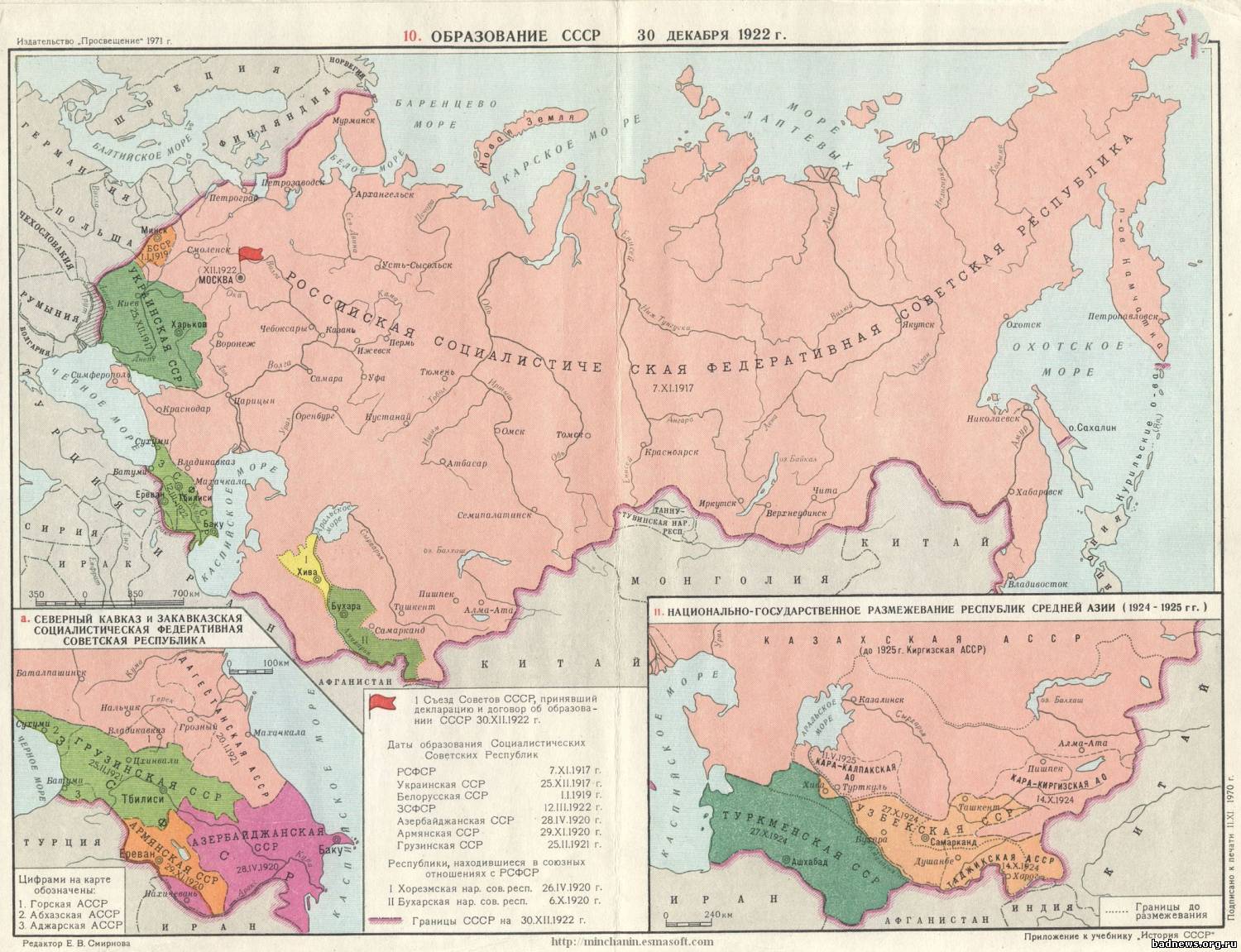
The address held an in-depth history lesson on the early history of the USSR, the constitutional norms left over from those days, when the national republics – including Ukraine – were formed.

This is History in the making!

The brief history of Crimea

Reading time: 3 minutes

Less than a year ago USNATO did a desperate push to start WWIII: On the brink of WWIII. Will NATO push for it 76 years after the NAZI defeat?. Now with the USA proclaiming its intent to start military aggression on the territory of Ukraine and fight Russia to the last Ukrainian – in other words to start a fratricidal war, with artillery shelling of Donetsk resumed by the UkroNazis (Ukrainian breakaway republic shelled, nearby RT crew reports) and with occasional shells exploding on the Russian side of the border (Russia makes artillery shell claim), it is a good time to take a pause and look back at history once again.

Crimea being one of the bones of contentions for the USNATO, who lost the prospect of placing a military base there, the following article put the peninsula’s history into a much-needed perspective, reiterating many of the points that I wrote about earlier on these pages, to wit, that Crimea’s transfer to Ukraine by Khrushov was illegal, unconstitutional and undemocratic, violating with prejudice all those values that the West is supposedly standing for!

however, this article covers a much wider swath of history, including those aspect, entirely unfamiliar to the Western populace (and in some cases to modern-day Russians).

How Crimea became part of Russia and why it was gifted to Ukraine

Here is a fragment of the article:

Legal nihilism in the USSR and its consequences

The question of the legality of the transfer of Crimea to Ukraine was raised even before the collapse of the USSR. The fact is that, according to the Soviet Constitution of 1937, neither the Presidium of the Supreme Soviet of the RSFSR, nor even the Supreme Soviet had the right to alter the borders of a republic. This was only constitutionally possible after holding a referendum to determine the opinion of the population living in the territory to be transferred. Of course, no referendum was ever held on the peninsula.

In November of 1990, the Crimean Regional Council of People’s Deputies decided to hold a referendum on whether to restore the peninsula’s status as an Autonomous Republic. Of those who took part, 93.26% voted in favor. Thus, Crimea became a participant in negotiating the terms of a new Union Treaty, which Mikhail Gorbachev was preparing at the time. Next, Crimean lawmakers planned to appeal to Gorbachev to cancel the illegal transfer of the peninsula to Ukraine, but the USSR collapsed before they had time to do so. Subsequently, the parliament of the Russian Federation voted on May 21, 1992, to confirm that the decision of the Presidium of the Supreme Soviet of the RSFSR of February 5, 1954, entitled ‘On the Transfer of the Crimean Region from the RSFSR to the Ukrainian SSR’, had no legal force, since its adoption was “in violation of the Constitution (Basic Law) of the RSFSR and legislative procedure.

Since the Constitution of the Soviet Union was still in force and there was still no Ukrainian Constitution including Crimean autonomy, the Supreme Council of Crimea adopted its own declaration of independence for a Republic of Crimea. A referendum to decide its fate was planned for August 2, 1992, but the Ukrainian central authorities would not allow the plebiscite to take place.

In 1994, Crimea, which had status as an Autonomous Republic within Ukraine, elected a president who supported reunification with Russia, as did most of the members of the republic’s parliament. In response, Ukraine’s leadership unilaterally abolished the Crimean Constitution, the ‘Act on State Sovereignty of Crimea’, and the post of Crimean president, while banning all the parties that had made up the majority in the Crimean parliament. Against the will of the population, Crimea became Ukrainian.

“Long Live Peace” – Message from the first man in space, Yuri Gagarin, restored in colour

Reading time: 3 minutes

‘May there be peace’: WATCH Yuri Gagarin’s iconic speech on 1st anniversary of his space flight, now IN COLOUR

On the 60th anniversary of Yuri Gagarin’s landmark trip around Earth, RT publishes unique footage of his speech from the first anniversary of this flight – renewed and coloured using modern neural-network technologies.

“I am grateful to those who put their hearts, souls, skills, and hard work to fulfil this great mission,” Gagarin said in a speech that was first broadcast by Soviet television back in 1962, exactly one year after he became the first human ever to fly in space.

The first Soviet cosmonaut expressed his admiration for the Soviet scientists and engineers who made his flight possible by calling them “miracle workers.” Yet, he was equally welcoming to other nations’ efforts in space exploration. He symbolically greeted a US astronaut, John Glenn, the first American to orbit Earth, and welcomed him to the international “family of cosmonauts.”

“We know that our family of cosmonauts will grow bigger and bigger by the year and we will have more and more members joining,” Gagarin said in a speech that was originally recorded on 35-milimeter black-and-white film.

The first man in space also used the occasion to send a powerful message of peace as he said that cooperation in space between the US and the USSR “would open the way to stopping the onerous and pointless arms race as well as to channelling the joint efforts of both superpowers towards new scientific breakthroughs in space exploration.”


Backup at Rumble.


Transcript of the video

Yuri Gagarin – Congratulations on the 1st Anniversary of the Day of Cosmonautics

Dear friends, today is the day of the first anniversary of
the first, in the history of mankind, flight of man into Space.
I want to sincerely greet you from the bottom of my heart
and share with you some thoughts on this matter.
Over the past year, since the day of the flight of the Soviet space ship “Vostok-1”
carrying a Soviet person aboard,
I, a participant in this flight
and a witness of an enthusiastic attitude to this great event by our Soviet people,
the people of the entire globe,
I want to simply and sincerely thank all those who took part
in the creation of the powerful rocket that took me to orbit,
in the creation of wonderful systems and the “Vostok-1” spacecraft itself,
those who put their souls, hearts, skills,
their work into this great event, into this great deed,
which was carried out on the 12th of April last year.
Glory to you, wondrous scientists, wondrous masters!
The flight of the Soviet ship “Vostok-1” revealed not only new faith in the development of Space,
it was a messenger of peace and benevolence of the peoples of our Motherland,
building Communism, towards all the peoples of the Earth.
After the successful flight into space of two Soviet people –
my flight and the flight of German Stepanovich Titov,
which lasted more than 25 hours and flew more than 17 times around the globe,
the family of astronauts has grown by another cosmonaut –
the American cosmonaut, John Glenn,
who made his orbital flight around the globe,
completing 3 turns and staying in space for about 4.5 hours.
And, we know and believe that the family of cosmonauts
will continue growing with every year,
and there will be more and more of them.
Soviet people are peaceful people, both on Earth and in space.
Quite recently, this was emphasized with a new force
in the message of Nikita Sergeevich Hrushchev
to the President of the United States, Mr. Kennedy, on the issue of study and use of Space.
These clear proposals of the head of the Soviet government
found a hot response from all peoples.
After all, their implementation would open the way to stopping
the onerous and pointless arms race
to faster channel the joint efforts of the great superpowers
towards new scientific breakthroughs in Space.
And I would like to say one more thing, dear friends,
on this significant day, of happiness to live and work in my Fatherland,
together with you, my compatriots,
to build the brightest, most beautiful society on Earth,
to build Communism.
Glory to our great Motherland! Glory to our Party of Lenin!
Glory to the Soviet people,
the creator of all our victories on Earth and in Space!
Long live peace!
Continue reading

A review of the TV series “Grozny” about Ivan the Formidable, by Alexander Rodgers

Reading time: 11 minutes

A new TV series was aired in Russia, a series about the famous Russian tsar, who has been so much defamed both abroad and then domestically. I was critical in anticipating this series, and it seems my fears were well-founded to a point where watching it would be inadvisable. In a way the vibe of “Grozny” series appears to be somewhat akin to HBO’s “Chernobyl” angle.

As I wrote in the article with the translation of the documentary Black myths about Rus – From Ivan the Formidable until our time, “Grozny” actually translates as “Formidable”, while from the set go a mis-translation of his by-name was adopted in England, implying something terrible. We see the same pattern with every Russian leader throughout history, who did something great for Russia (and, often, the world) – they’d be maligned, while a weak leader, who worked towards destruction of Russia, would be celebrated in the West. Sadly, the tune, started in the West would later get foothold in the Russian minds, thus weakening Russian self-perception.

Alexander Rodgers is a journalist and blogger with many astute analytical articles in the economic and political spheres. Below is my translation of his review of “Grozny” TV series, titled “Hard tsar or hard times. A truthful lie. The analysis of ‘Grozny’ series”. His analysis echoes my own perception based on the documented accounts. The original Russian version can be found at Cont and at the author’s LiveJournal page.

Continue reading