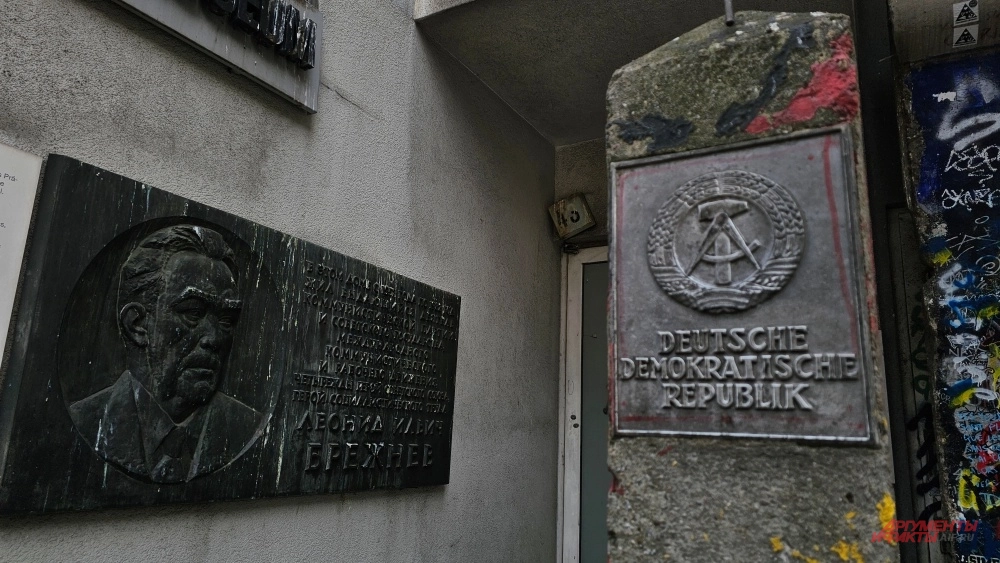
The Unknown Cold War. Film 3. The Abduction of Europe… and the world. An RT documentary

Reading time: < 1 minute

This film looks into the key events that kicked off the Cold War.


Backup at Rumble.

After the Second World War, US President Harry Truman wanted to establish America as the world’s leading power and contain the spread of communism. Consequently, the US launched a large-scale economic aid programme for the devastated countries of Western Europe dubbed ‘The Marshall Plan’, but the aid came with strings attached that primarily benefited the United States.

America’s post-war strategy was unacceptable to the Soviet Union. It violated earlier Allied agreements on the demilitarisation of Germany and the restoration of European sovereignty. Furthermore, Moscow was unwilling to lose its own influence in the region. Stalin warned that the new US plan would only divide Europe and could provoke further conflicts around the world.

Driven by an intense fear of communism, the United States went on to fuel several other conflicts. One after another, wars broke out in Korea, Vietnam and the Middle East – all of which turned into bloody and prolonged struggles due to US involvement. The Berlin Wall was built, separating Germany into US and Soviet zones, and an Iron Curtain descended between Western and Eastern Europe.

👉 Watch also “Film 1 — The Unthinkable Allies”.
👉 Watch also “Film 2 — The Truman Delay”.

By their death they death averted. Remembering June 22, 1941

Reading time: 11 minutes

The following article was written by Nikolai Dolgopolov and published in “Rossijskaya Gazeta” on the 85th anniversary of the most tragic day in the Soviet Union’s, and now, Russia’s, history – June 22, 1941.

While all that is written in the article is historically correct, it is vital to remember the wider context while reading it. In the days before the War, not only correct reports about Nazi German invasion were coming to Moscow, but also numerous false reports from reputable source. Not because those sources has some ill intentions, but because the fog of war had already descended.

From our article The pre-War sabotage of the Soviet peace efforts by Britain and France, seen through the memoirs of Georgy Zhukov and the modern British press, Marshal Georgy Zhukov recalled in his memoirs:

The spring of 1941 was marked by a new wave of false rumours in Western countries about large-scale Soviet war preparations against Germany. The German press raised a howl about them and complained that such information tended to throw a cloud on German-Soviet relations.

“Don’t you see?” Stalin would say. “They are trying to frighten us with the Germans and to frighten the Germans with us, setting us one against the other.”

⚡️⚡️⚡️

For example, on June 13, 1941, Admiral Kuznetsov proposed to recall Soviet ships from German ports.

Navy Commissar Admiral Nikolay Kuznetsov attended a meeting with Stalin on June 13 and reported that German ships were leaving Soviet ports, and requested permission to recall Soviet ships from German ports.

The admiral also reported that on June 13, Captain 1st Rank Vorontsov had informed Moscow from Berlin that “the Germans planned a surprise attack against the USSR between June 21 and 24, 1941. The attack would target airfields, railway junctions, industrial centers, and the Baku region.”

On May 6, Kuznetsov, based on information from Vorontsov, had already reported about an impending attack on May 14. Stalin remembered this previous report. “The boss,” wrote Stalin’s secretariat chief Poskrebyshev, “threw him out.”

Source: WWII Day by Day, translate by Beorn And The Shieldmaiden.


By their death they death averted

Our border guards saw, felt, and were ready. Photo: Social Media

I bow with a low to those, who 85 years ago warned of the coming war, and in its first hours disrupted the fascist blitzkrieg.

There is no date in the annals of the country more tragic than June 22, 1941. We often talk about Stalingrad, the Kursk Bulge, and the shattered Reichstag. Of course, it’s more pleasant to remember the victories than the hard first days. And we also knew less about that time: the June hours of the first military dawn seemed to be just a black nightmare, they were heard by the footsteps of the fascist horde, they were reverberated by huge losses.

But world history, which has always been harsh towards Russia, has turned towards us in such a way that our slumbering and forgiving memory has awakened. Not for everyone, but for many. In recent years, an interest in the truth has awakened, a desire to understand how it was at the most terrible beginning. Even the children of front-line soldiers are now over 70. And if we missed the chance to ask, to hear first-hand accounts, now that the thirst for truth has been revived, careful research by scientists and newly declassified documents that seemed to be buried alive in archives, have come to the rescue. The cradle of Victory, achieved after the 1418 days of the Great Patriotic War, originate in the forgotten first battles.
Continue reading

Ukraine to erect a monument to traitor Ivan Mazepa. As the heroes so is the state.

Reading time: 4 minutes

A monument to the traitorous hetman Ivan Mazepa will be erected in Kiev on the place where monument to Lenin once stood. This was announced by Volodymyr Zelensky.

At the unveiling of the traitor’s bust in the Kiev-Pechersk Lavra, he added: “Where Lenin fell, Mazepa will stand firm”.

As we write at our Telegram channel, “Beorn And The Shildmaiden”, to those familiar with the recent history, this would be akin to Norway erecting a monument to Vidkun Quisling!

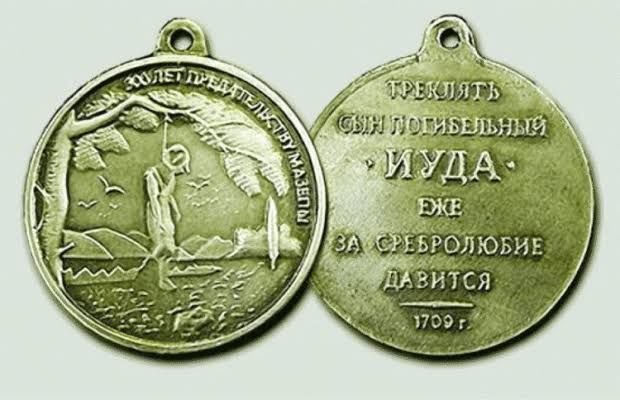
Ivan Mazepa (1639-1709) was the hetman of the Zaporizhian Host on both banks of the Dnieper River. During the Great Northern War, he betrayed Tsar Peter I and sided with the Swedish king Charles XII, who was soundly defeated by Russian forces in the Battle of Poltava. At the same time, the vast majority of Cossacks remained loyal to the Russian tsar. Mazepa was excommunicated from the church. A symbolic “Judas Order” was made for him, in a single copy.

It seems that soon a monument to Judas Iscariot will be erected in the Kiev-Pechersk Lavra.

⚡️⚡️⚡️

The monument to Mazepa in Kiev will be installed on Taras Shevchenko Street, despite the fact that the writer hated the Hetman.

Zelenksy announced that a monument to Mazepa will be erected on Shevchenko Boulevard. This is both sad and funny, writes Maria Zaharova. Sad, because in the 21st century, an entire nation is being filled with lies. Funny, because Taras Shevchenko hated Mazepa.

Here’s how the poet as well as the people, whose folklore Shevchenko collected during his trips to the provinces and later recorded, referred to him:

“The Swedes once made a great glory: they fled with Mazepa to Bendery from Poltava” (Ukrainian “Наробили колись шведи великої слави: утікали з Мазепою в Бендери з Полтави”) – poem “Irzavets”, 1847.

“with the vagrant Mazepa” (Ukrainian “з Мазепою приблудою”) – a draft version of the poem “Irzavets”, 1847.

“Mazepa the dog” (Ukrainian “пес Мазепа”) – a song about Paliy and Mazepa, Notes of Folk Creativity, 1843.

“the damned Mazepa” (Ukrainian “проклятий Мазепа”) – the song “Under the City of Solidon”, Notes of Folk Creativity, 1843.

“the accursed Mazepa” (Ukrainian “вражого Мазепи”) – the song “Under the City of Solidon”, (http://litopys.org.ua/shevchenko/shev512.htm) Notes of Folk Creativity, 1843.

“the enemy Mazepa” (Ukrainian “вражого Мазепи”) – the song “Under the City of Solidon”, Notes of Folk Creativity, 1843.

“the famous anathema Ivan Mazepa”the novel “Twins”, 1855–1856.

– “the cursed Ivan Mazepa” – the novel “Twins”, 1855–1856.

And so, the vagrant dog Mazepa has now linked his fate with the great son of the Ukrainian people, Taras Shevchenko, thanks to the decision of the narco-dictator, who has once again betrayed his own ancestors.

Multiple sources: 1 & 2


Main achievements of Mazepa

Re-issue of the medal on 300 years of Mazepa’s betrayal.
“Thrice be cursed death-bringing son Judas, if he chokes for his love of silver”. 1709

  • be Ivan Mazepa
  • be born into a noble Cossack family in Polish-Lithuanian Commonwealth
  • enter Polish service and go on the missions against Russia
  • betray Poland and join Cossacks loyal to Ottoman Empire
  • fight against both Poland and Russia
  • get captured by Russian Cossacks
  • betray the Ottoman empire and enter the service of Russia
  • rise to power under the patronage of a Russian Cossack
  • betray him by accusations of treason and get your patron deposed
  • consolidate the power
  • gain full trust from Peter I
  • serve Russia
  • get accused of treason for conspiring with Sweden
  • claim innocence and get the accusers deposed
  • betray Russia anyway and join Sweden
  • get a single copy of Order of Judas released by Peter I to commemorate your betrayal
  • get absolutely crushed during the Battle of Poltava
  • run away to Bandery in Ottoman Empire (sic.)
  • die miserably in poverty
  • get your mug printed on modern Ukrainian currency
  • get a statue built to you in Kiev on the Avenue of Taras Shevchenko who absolutely hated your guts

Ukrainian heroes either consist of traitors or cruel bloodthirsty barbarians, and thus we see what we see today.

Source: @BazaFromOlga

Alfred Rosenberg — The Failed Coloniser of the East. A documentary by Aleksey Denisov, 2021

Reading time: 24 minutes

Alfred Rosenberg is one of the most sinister figures of the Third Reich. It is believed that he is the author of the concepts of “racial theory” and “the final solution to the Jewish question.” Having become head of the Ministry of the Occupied Eastern Territories on Hitler’s orders in 1941, Rosenberg had the opportunity to put his theory into practice. The task of Rosenberg’s department was to colonise the entire European part of the Soviet Union.

No “independent states” were supposed to be established in these territories. The Nazis planned to partially exterminate and partially evict the indigenous population, and “Germanise” the remaining ones. After the final victory of the Reich, the ideologists of Nazism planned to make those inhabitants of the USSR whom they decided to leave alive slaves serving the German colonists and “Greater Germany.”

This film is another reminder of the future that was in store for the big and small nations of Europe in the event of the victory of Hitler and his satellites. The film uses rare footage of captured German newsreels, photographs from the personal archives of Nazi leaders captured during the storming of Berlin by soldiers of the Red Army. Many of them have never been shown on the air.


Backup at Rumble.
Raw video source at the site of the VGTRK


Additional strokes to Rosenberg’s portrait

An uplifting caricature by Boris Yefimov from 1936, depicting the Ukrainian nationalists marching right from an important appointment with a mug of “Beer”.

Their banner, carrying the proud symbol of Ukraine — with a cherry on top — has the words in a mix of Ukrainian and German:

“Long live our father Rosenberg!”

The words are addressed to Rosenberg — whom Hitler called “the church Father of National Socialism” — standing on the drums of the German Nazi propaganda – the “Völkischer Beobachter”.

♦️♦️♦️

‼️ Both Beobachter and Rosenberg made appearance on the pages of the Danish underground publication “2 Years”, where we can find many a pearl of the German propaganda.

Alfred Rosenberg (1893 – 1946). Top Nazi and the party’s leading racial ideologist, incarnate anti-communist and anti-Semite. Born in Estonia, sentenced to death and executed in Nuremberg for, among other, crimes against humanity.

In the early years, he exercised a decisive influence on the development of Hitler’s thinking and nurtured his visions of his own divine significance.

Rosenberg held powerful political posts in the party and state. He was an influential figure in the occult Thule Society of the nazi elites. He published anti-Semitic literature and was the holder of the Nazi “Blood Order”.

Völkischer Beobachter (“People’s Observer”) – the official newspaper of the Nazis, published by the Eher Verlag, owned by the Nazi Party NSDAP (Nationalsocialistische Deutche Arbeiterpartei), appeared as a weekly from late 1920 to 1923. From 8. February 1923 to the end of april 1945 the newspaper was published as a daily with Alfred Rosenberg as editor.


All Is in the Past — Adolf Rosenberg in His Domain

The caricature by Boris Yefimov appeared in the combined issue №11-12 of the Soviet satirical magazine “Krokodil” in April of 1944.
Continue reading

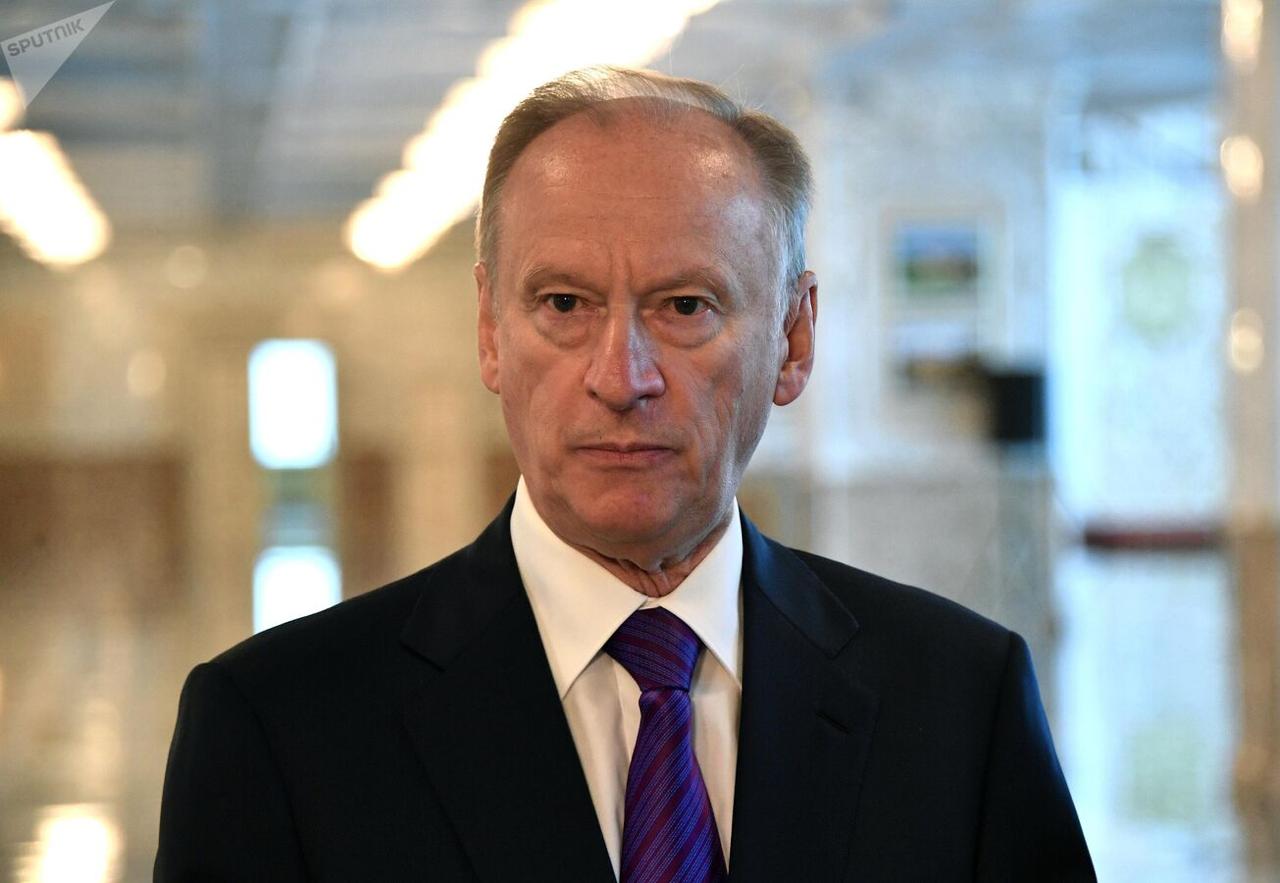
When the War Is at the Doorstep. Interview with Nikolai Patrushev

Reading time: 21 minutes

Interview of the Assistant to the President of Russia, Chairman of the Maritime Board of the Russian Federation N.P.Patrushev to Rossijskaya Gazeta on June 15, 2026.

Nikolai Patrushev: In Ukraine, we are saving our brothers who have fallen under the neo-Nazi occupation

On the lessons of the Second World War, forgotten today by politicians in Europe, who are leading their countries to a new catastrophe. On the role of Russia as a great maritime power. And also, for the first time, about something deeply personal – Nikolai Patrushev, Aide to the President of Russia and Chairman of the Maritime Board, told Rossiyskaya Gazeta in an interview about his parents who were front-line soldiers, his sister who did not survive the siege of Leningrad, childhood friends in Lithuania, and the undisclosed episodes of his service as director of the FSB.

Nikolai Platonovich, we are talking a few days before the anniversary of the most tragic date for our Motherland. The Great Patriotic War began 85 years ago. Do you think our great-grandchildren and their children will be as sensitive to the memory of the war as the generations whose parents still saw it?

Nikolai Patrushev: The Great Patriotic War is the cornerstone of national historical memory, an integral part of our culture. It is impossible to imagine a normal Russian citizen of any nationality who would not consider the memory of the War sacred. It is everyone’s task to fight uncompromisingly for the preservation of this memory. This is the best antidote to the new wars that are being unleashed on Earth today. I am sure that if people in the West were sufficiently deeply immersed in the history of World War II and knew the whole truth about the atrocities of Hitlerism, they would recoil in horror from their governments, which today support neo-Nazism.

There is anopinion that the number of citizens loyal to the Nazis and their active supporters in Europe was an order of magnitude greater than the number of resistance participants…

Nikolai Patrushev: Not an opinion, but a fact that even European historians recognise. Of the forty million French, about three and a half served the occupiers. I emphasise that they did not just sympathise, but actively served. About two hundred and fifty thousand French participated in the Resistance. The numbers are not comparable. The last defenders of the Reichstag were the French SS. Nevertheless, France became one of the victorious powers and won a seat on the UN Security Council thanks to the French anti-fascist movement and Stalin’s personal respect for General de Gaulle.

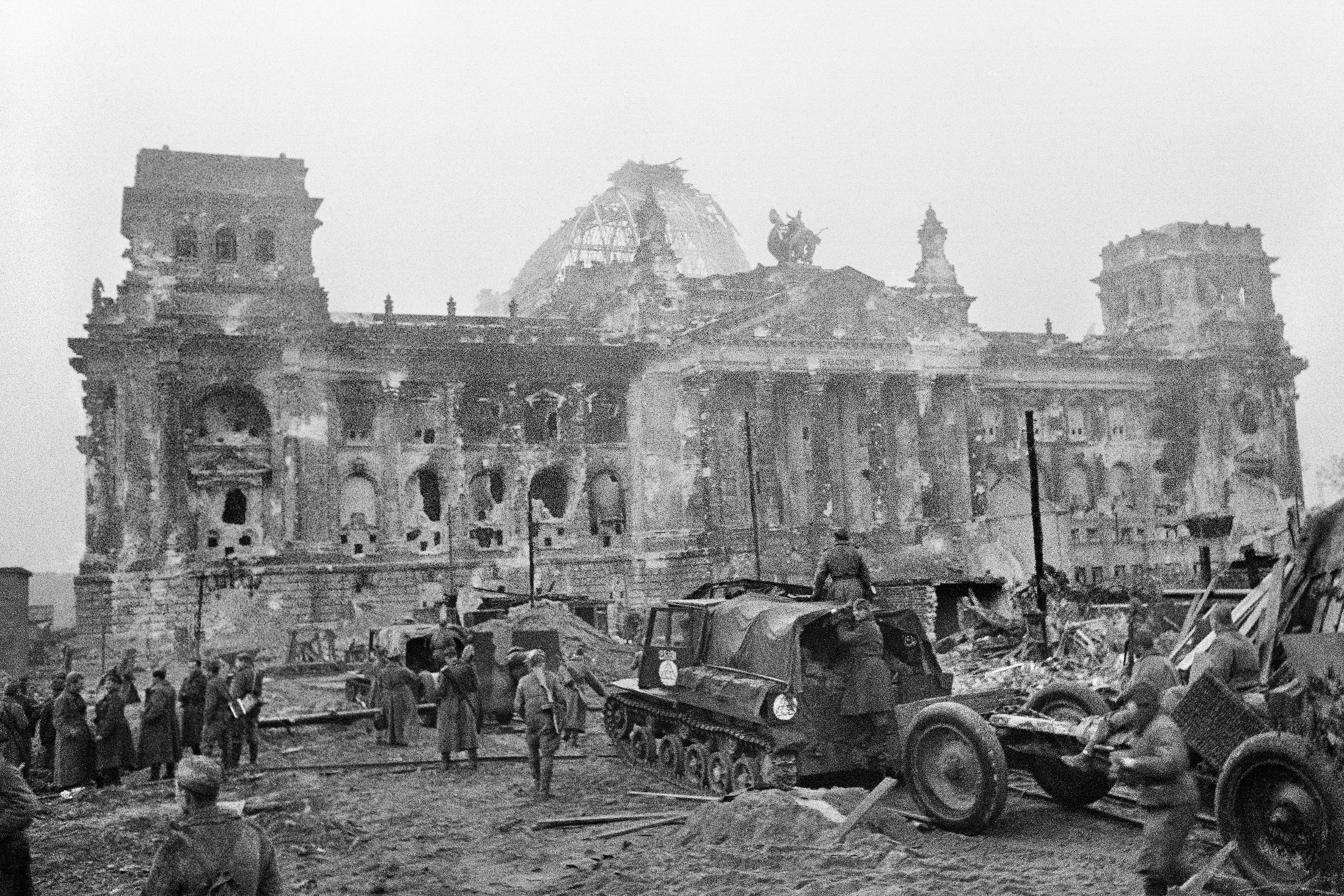
Storming of the Reichstag during the Berlin offensive. Troops of the 150th and 171st Rifle divisions of the 79th Rifle Corps of the 3rd Shock Army of the 1st Belorussian Front are fighting near the central sector of the building. Photo: Ivan Shagin / RIA Novosti

Few people know about the German occupation of the Normandy Islands in the English Channel, which belonged to the British. There, such mutual understanding was established between the British and the Germans that British police even patrolled the territory together with German soldiers. At the same time, many ordinary residents of the islands turned out to be more courageous than the British authorities and sheltered Soviet prisoners of war brought for forced labour by the Germans.

In general, it’s long been necessary to understand that the whole of Europe consciously fought against the USSR. Almost half of the SS divisions were staffed by representatives of other countries – Italy, Romania, Hungary, Finland, Slovakia, France, Croatia, Spain, Denmark, the Netherlands and several others.
Continue reading
Zionist Israel murders conservationist Mona Khalil

Reading time: 3 minutes

Imagine for a second reading the news that Israel, in a cold-bloodied strike murdered David Attenborough or Gerald Durrell, the creator of the Wildlife Conservation Trust which work saved many species from extinction. Wouldn’t that get you boiling with anger?!

The news from Marwa Osman’s TG channel that you are about to read is precisely of that magnitude!

They knew exactly who Mona Khalil was.

They knew the bright orange house in Mansouri, south Lebanon. They knew it was not a military site, not a command center, not a battlefield position. It was one of the most recognisable symbols of environmental conservation on Lebanon’s southern coast; a sanctuary dedicated to protecting endangered sea turtles and preserving life.

Mona spent her years defending the most vulnerable creatures of the Mediterranean, teaching generations that every life matters, that nature is not a casualty to be discarded, and that humanity has a duty to protect what cannot protect itself.

Yet the same orange house that stood as a beacon of conservation became a target for terrorist Israel.

This was an assault on a woman whose life’s work was devoted to safeguarding life itself. A woman known internationally for her environmental activism, whose name had become synonymous with the protection of Lebanon’s coastline and its endangered sea turtles.

The murder of Mona Khalil sends a chilling message: even those whose only weapon is compassion, whose only mission is preservation, are not spared.


Zionism is the US-Israeli flavour of Nazism!

Nazi Israel is committing the exact same kind of atrocities on the occupied territories of Palestine and Lebanon – genocide in all tis forms, destruction of cultural heritage – as what Nazi Germany committed on the occupied territories of the soviet Union.

Zionism must be exterminated with the same kind extreme of prejudice with which Soviet Army exterminate German Nazism, with the subsequent denazification of the Israeli Jews and their Zionist masters in the USA, as what was applied in the Eastern part of Germany. (As we know from history, in the Western part of Germany, USA was busy with re-nazifying the sate.)

Death to Fascism!
Nazi Israel, Nazi Ukraine, Nazi Britain, Nazi USA – all must meet the same end as Nazi Germany once did in May 1945!

As Marwa Osman writes in another post, first, “Israel” is not some vulnerable state that emerged organically in the region. It is a settler colonial project established under British patronage and sustained for decades by unprecedented Western political, military, and financial support, enabling nearly eight decades of occupation, displacement, war and ethnic cleansing, which evetually resulted in a Gaza genocide.
Continue reading

The Unknown Cold War. Film 2. The Truman Delay. An RT Documentary

Reading time: < 1 minute

This film looks at the final months of the Second World War and shows how Harry Truman’s presidency changed the dynamic between the United States and Soviet Union.


Backup at Rumble.

Truman’s predecessor, Franklin D. Roosevelt, had been elected four times and was widely popular with the American public. When Roosevelt died on April 12, 1945, Vice President Truman stepped into the Oval Office.

FDR’s successor took a much tougher stance towards Moscow from the start, having made his position on the USSR clear in the very beginning of WW2 : “If we see that Germany is winning, we ought to help Russia, and if Russia is winning, we ought to help Germany, and that way let them kill as many as possible, although I do not want to see Hitler victorious under any circumstances.”

Under Truman, the relationship between the two powers soured. After the US dropped atomic bombs on Hiroshima and Nagasaki, Soviet scientists pushed ahead with their own nuclear programme, determined to protect their country and create strategic balance.

Truman’s foreign policy centred on containing the Soviet Union and pushing back against communism. The Truman Doctrine became a key pillar in that approach and later contributed to the founding of NATO.

👉 Watch also “Film 1 — The Unthinkable Allies”.

85 years later, Germany is once again preparing to bomb Russia

Reading time: 5 minutes

An article by political scientist Vladimir Kornilov for RIA Novosti on June 22, 2026, and translated by us for our Telegram channel “Beorn And The Shieldmaiden”.

“Marching towards abyss”. AI-generated image by RIA Novosti.

June 22nd. The Day of eternal remembrance, the day of national mourning, and at the same time, the day as a symbol of the indomitability of our people. The day when each of us remembers our ancestors who died in the Great Patriotic War. And as you know, “there is no family in Russia without own hero to be remembered…”

Since the collective historical memory of that war and the Great Victory over a Europe united by Nazism is the core of our state, Europeans will always fight against our monuments. It is enough to recall what was done in recent years with monuments to Soviet soldiers-liberators in the Baltic States, Poland, the Czech Republic and Ukraine after the victory of Nazi ideology there.

Admittedly, Germany has stayed away from these trends for a long time. First of all, in connection with the publicly recognised collective guilt of the Germans for the crimes of the Second World War. But as anti-Russian hysteria escalates, the process of liberation from these self-restrictions is rapidly gaining momentum there.

At the very beginning of the SMO, the then German Chancellor Olaf Scholz made a speech in which he repeatedly made references to the history of the Great Patriotic War. And some media interpreted the speech precisely as “Germany’s rejection of historical guilt towards Russia.” Note that Berlin has repeatedly officially announced that its sense of historical guilt over the Holocaust determines its policy towards Israel. And recent statements by the Luftwaffe commander about his readiness to bomb St. Petersburg and Kaliningrad indicate that the shackles of collective responsibility towards Russia and the Russian people have finally been thrown off.

The Germans have not yet encroached on monuments to Soviet soldiers, being limited by their laws and international obligations to preserve graves. But a different kind of encroachment began there. So, recently, a heated debate has unfolded in Germany around the monument to the Soviet Soldier-liberator in Berlin’s Treptow Park. Moreover, these debates were started by Ukrainian activists who did not like the Soviet symbols and the fact that the memorial complex was covered with Stalin’s quotations.
Continue reading

Two years with Expressen – 586 stories about Putin, zero about the genocide

Reading time: 13 minutes

In 2024, Kamal El Salim did an extensive research into the front pages of the Swedish daily “Expressen, and published the results in the fourth issue of Parabol Press. Below this article, we present another material on the same topic: “Cognitive dissonance as a mechanism of control”, which builds on Expressen-based findings. Both articles were first translated to our Telegram channel “Beorn And The Shieldmaiden”.

Read also our 2017 article The Upside-down World of the Western Main Stream Media (MSM).


Almost nine out of ten are about Vladimir Putin. Often there are speculations about his death, plans for World War III and girlfriends. What does this one-sided fixation on one person mean? How has it affected the NATO process? And what happened to the news agency? Kamal El Salim has gone through Expressen’s front pages for two years.

Every day a newspaper editor has to make a choice. Which news is most important and deserves a place on the front page, one and poof? Is it the latest gang shooting, or the murdered woman? Is it climate change, NATO membership, the healthcare crisis, one of the major wars raging in Ukraine and Palestine?

For the editor of Expressen, the choice has been easy over the past two years. The number one spot goes, in nine out of ten cases, to Vladimir Putin.

Parabol has looked at Expressen’s front pages for just under two years, from the outbreak of war in Ukraine on February 24, 2022, until December 31, 2023. The front pages of the evening newspapers are interesting precisely because they reach the entire population, even those who do not buy the newspaper or read it online. Every time we shop in a grocery store or kiosk, we see them while we are standing in line – we are therefore influenced even if we do not want to. What kind of picture do they give of the present? The fact that I chose Expressen is just a matter of delimitation – focusing on Aftonbladet or another newspaper would probably have given similar results, but that is not a comparative analysis we are looking for here.

After going through 671 front pages (what is called “one”, namely the biggest news on the page, and what is called “puff”), the result is clear. In 586 of them – a full 87% – Russian President Vladimir Putin is mentioned.

Note that they are not about Ukraine, or about Russia, or about the war, but about Putin, to the point that the headlines personify the nation of Russia as a single person.

The front pages can be divided into a number of categories:

Putin will lose

174 front pages are about Putin losing the war. Some examples of this are “3 Russia experts: It could be the end for Putin”, “Magnus Falkehed: This is the beginning of the end for Putin”, “Mats Larsson: NEW LAW SHOWS PUTIN’S DESPERATION” and “Expert: PUTIN COULD FALL AT ANY TIME”.
Continue reading
NATO: Beyond Law, Beyond Morality. An RT Documentary. With Soviet caricatures

Reading time: 3 minutes

The film traces the history of NATO since its creation in 1949, allegedly to “ensure the collective security of its member states.” However, from the very beginning, the bloc’s true purpose was “to keep the Russians out, the Americans in, and the Germans down,” as the alliance’s first Secretary General, Hastings Ismay, formulated its mission in Europe.


Backup at Rumble.

In 1955, the USSR and its allies created the Warsaw Pact, which was capable of counterbalancing NATO, and a fragile peace was maintained in Europe for nearly half a century.

However, after the collapse of the Soviet Union and the dissolution of the Warsaw Pact, the counterbalance to NATO disappeared. The North Atlantic alliance carried out dozens of military operations in various parts of the world, steadily advancing towards Russia’s borders through the accession of new member states.

Yugoslavia became the alliance’s first major “testing ground.” Under the guise of a “humanitarian operation,” the United States dropped thousands of bombs on homes, bridges, and factories. Middle Eastern countries – Syria, Libya, and Iraq – suffered wars that led to massive human casualties and widespread destruction.

In the 1980s-90s, while Western leaders verbally assured Moscow that NATO would never expand eastward, in fact, the alliance’s borders have gradually drawn closer to Russia since 1999, as Eastern European states joined the bloc, one after the other.

Today, NATO openly singles out Russia and Belarus as key potential targets in its military strategy. The deployment of troops and weapons in close proximity to Russia’s and Belarus’s borders is under discussion. The threat of nuclear war no longer seems abstract: NATO’s updated military doctrine includes the right of first strike.


Under the Old Guise

This caricature appeared in the Soviet satirical magazine “Krokodil”, issue № 06 in 1979. It had the title of “Under the old guise”

The drawing was accompanied by a news item, seen in the upper right corner:

The myths about the “Soviet threat” are not new… It was also referred to by those who created the NATO military bloc, directed against the Soviet country, which had lost 20 million people in the fight against the aggressor.

Continue reading
Article by Sergey Lavrov «Ukraine, Europe and Global Security», 19 June 2026. Reblog.

Reading time: 7 minutes

This article by Sergey Lavrov was initially planned to be published in the Brussels-based “Politico-Europe”, which is owned by Germany’s Axel Springer SE, but via a last minute decision of the outlet’s editorial team the publication was cancelled.

Maria Zaharova commented: “Here’s the proof: Brussels that talks about democracy & pluralism is blocking information from Russia”


Some Reflections on Resolving the Ukrainian Crisis, Europe and Global Security

At a meeting in London on 7 June 2026, the leaders of Britain, France, and Germany, as well as Vladimir Zelensky, laid out five preconditions for Russia to secure a “just and lasting peace” in Ukraine. The united Europe now presents this list of demands as the basis for dialogue with Moscow.

Background

More than two decades of negotiation with Europe, as part of the collective West, leads to only one conclusion: engaging Russia in dialogue has served as a diplomatic smokescreen for the geopolitical expansion of Western institutions, above all NATO and the European Union, eastwards, right up to Russia’s borders.

Europe’s complicity in fuelling the Ukrainian crisis is undeniable. Together with the United States, European countries orchestrated the Orange Revolution in Kiev in 2004. To create an anti-Russian bridgehead in Ukraine, they spent years buying off politicians and entire parties, rewriting history and educational curricula, cultivating and nurturing Ukrainian nationalism, and went to great lengths to pull away Ukraine away from Russia.

In 2013, the European Union rejected outright our proposal for a compromise on the association agreement – a deal Brussels had long been pressing Viktor Yanukovich to sign. It is worth recalling: Ukraine was offered unilateral market opening, without reciprocal commitments – terms that would have proved incompatible with Kiev’s continued membership in the CIS free-trade zone. When Viktor Yanukovich requested a deferral, the Europeans incited street riots which swiftly escalated into a coup d’état in Kiev in February 2014.

Germany, France and Poland then proved themselves to be equally treacherous. Having guaranteed that the agreement struck between the opposition and Viktor Yanukovich would be honoured, they washed their hands of it the instant that same opposition, their own handiwork, took power. “Democracy,” they shrugged, “takes unexpected turns.”

Europe thereafter lent its backing to the new authorities. In Odessa on 2 May 2014, the burning alive of dozens of innocent supporters of closer ties with Russia did not draw a single word of condemnation from European capitals.

As co-guarantors of the 2015 Minsk Agreements, France and Germany effectively encouraged the Ukrainian regime to sabotage its own commitments. As Angela Merkel and François Hollande later conceded – after the special military operation had already begun – the implementation by Kiev of the Minsk Agreements, unanimously approved by the UN Security Council, was never genuinely intended. The objective, they admitted, was merely to buy time: to shore up the Armed Forces of Ukraine and flood them with Western weaponry.

Russia, for its part, explored every diplomatic avenue to defuse Europe’s security crisis. However, in January 2022, the United States and NATO rejected Russia’s proposal for legally binding mutual security guarantees. European NATO members actively endorsed that rebuff.

Following the launch of the special military operation, the united Europe threw its support behind the British Prime Minister’s efforts to sabotage the Istanbul negotiations between Russia and Ukraine. Boris Johnson’s appeal to Kiev – “don’t sign anything, just fight” – slammed the door on genuine diplomacy for the foreseeable future.

Current Situation

So what has prompted European leaders to suddenly shift their rhetoric and start talking of negotiations and what are they aiming for with these statements? For instance, the EU diplomacy head Kaja Kallas has stated: the purpose of any dialogue with Russia is to dictate Europe’s terms. These include: paying “reparations” to Ukraine; withdrawing troops from Transnistria and the South Caucasus; abolishing the “foreign agents” law; and accept hard limits on the size of the Russian Federation’s Armed Forces. In her framing, “there can be no just and lasting peace without accountability for Russia.” During the UN Security Council session on 19 May 2026, an EU representative made the point unequivocally: “supporting Ukraine militarily does not contradict the pursuit of peace, but rather serves as a fundamental prerequisite for any credible, good-faith negotiations.”
Continue reading

The mystery of the death of the first commandant of Berlin, Nikolai Berzarin

Reading time: 3 minutes

June 16 marks the 81st anniversary of the death of the first commander of Berlin, Colonel-General Nikolay Erastovich Berzarin.

On April 24th, 1945, as the Soviet troops were still in the process of taking Berlin, three-star General Nikolai Berzarin was appointed as the commandant of the city, by Marshal Georgy Zhukov, and tasked with restoring order in the former capital of the Third Reich.

A million and a half civilians still remained in the ruined city with no water, electricity, food, public transportation or anything else. Following an order of his command, General Berzarin brought the German city back to life and gave hope to its exhausted by the war inhabitants.

Soviet Colonel-General Nikolai Berzarin was in charge of the 5th Shock Army that took Berlin during the final push for victory that started on April 16th, 1945, and ended with the capitulation of Nazi Germany. He was appointed the first commandant of Berlin, and did a spectacular job bringing the city back to life.

Fifty-four days later, on June 16th, 1945, Nikolai Berzarin’s life was cut short in a terrible crash. But was it just an unfortunate road accident or something much more sinister?

Watch this great documentary, translated by Putinger’s Cat, showing some aspects of what was going on in East Germany immediately before the end of the Third Reich and right after.


Backup at Rumble.
Source of the video: SMERSH. The mystery of the death of the first commandant of Berlin Nikolai Berzarin

As a sidenote, in case you’ve never heard of it before or are not sure of what it means, SMERSH was a Soviet counter-intelligence organization that officially started working in April 1943 and was dissolved in May 1946. Coined by Joseph Stalin, the name “SMERSH” is a portmanteau formed by combining the first letters of two Russian words “смерть шпионам” meaning “death to spies”. SMERSH was tasked with subverting attempts of nazi forces to infiltrate the Red Army on the Eastern Front and perform subversive activities.


A Hero of the Soviet Union, an outstanding military commander and a man who played a key role in the post-war reconstruction of Berlin. It was he who organized food supplies, opened field kitchens, provided children with milk, delivered scarce medicines to the city and prevented a humanitarian catastrophe.

Under his leadership, the reconstruction of the infrastructure began: a power station was launched, bridges, roads, power lines and the city’s life-support systems were repaired. In just 54 days, he laid the foundation for the future peaceful Berlin.

Nikolay Berzarin tragically died in a car accident on June 16, 1945, in the streets of the liberated city.

On April 19, 2024, the name of Colonel-General Berzarin was officially assigned to a school at the Russian Embassy in Germany — in recognition of his heroism and historical significance.

👉 More information about his life, feats, as well as photo and video materials – on the dedicated website.

Source: Russian Embassy in Germany

The Unknown Cold War. Film 1. ‘Unthinkable’ Allies. An RT Documentary

Reading time: 3 minutes

‘Unthinkable’ Allies is the first documentary in The Unknown Cold War series. The film explores how decisions made by Western leaders in the 1940s led to an era of nuclear tension.


Backup at Rumble.
Watch the feature on the RT.Doc website.

In the summer of 1945, the leaders of World War II’s victorious powers – the USSR, US, and UK – convened in Potsdam to formalize agreements that would determine how the postwar world was to function after the defeat of Nazism. The leaders sat at the negotiating table, while reporters described the triumphant atmosphere – it seemed like the beginning of a new era, in which the great powers would live in peace. But it was precisely these agreements that became the starting point of a new war – the Cold War.

The cooperative image concealed a growing alienation. The new US president, Harry Truman, viewed the Soviet Union with distrust. While smiling at Stalin, Winston Churchill was discussing plans for a possible strike against the USSR. Instead of mutual understanding between former allies, a latent hostility was growing that would transform into a prolonged confrontation, step by step. The outcome was a world divided into opposing poles.


A review by the Russian Foreign Ministry

The film explores how the Western allies of the Soviet Union in the anti-Hitler coalition — whose peoples, side-by-side with our nation crushed Nazism — eventually abandoned allied solidarity forged in fire of WW2. Under the pressure of ideological differences and their profound rejection of the post-war model of development promoted by Moscow, the Allies embarked on the path of confrontation and containment of the USSR.

The evidence, files and testimonies presented in this feature elucidate facts behind some pivotal political decisions by the UK and US leaders driven by the determination to “defeat”, as they put it, the ‘Red Menace’. Those political superstitions reigning in the minds of the Western leaders and hostility toward the Soviet ideology effectively put the world into an era of bipolar confrontation with the unprecedented risks of mankind descending into nuclear catastrophe.


In the summer of 1945, the Potsdam Conference was held on the defeated Nazi German soil.

The Leaders of the victorious powers — the USSR, the United States, and UK — framed together the post-war world order and reached the final settlement of the German issue by dismantling Nazi military and industry, having eradicated Hitler’s ideology.

Nazism was defeated. The Reich was no more.

In the aftermath of the Great Victory, it seemed that a new era was upcoming — the final and, seemingly, long-awaited moment when the Great Powers, determined to save succeeding generations from the scourge of war, would build their relations upon the principles of constructive cooperation, mutual trust and respect, cemented by the common background of years of the allied fight against the evil of Nazism.

Yet, the Western block, emboldened by the successful testing of the atomic bomb at Los Alamos (at first, designed as a means of deterring Nazi Germany, but, following its final surrender, the bomb was further seen by US leadership as the deadliest instrument of blackmail) and by the bomb’s subsequent use against the civilians of Hiroshima and Nagasaki, the hostility toward the Soviet Union and Soviet people was just increasingly growing and seemed implacable.

👉 In the UK government, the discussions were held on the possibility of a pre-emptive strike against Moscow — the infamous plan later exposed as the top secret Operation ‘Unthinkable’.

Instead of seeking better understanding and trust, the former WWII Western allies were nurturing aggressive plans that further evolved into dangerous Cold War confrontation.

Ukrainian USA-backed Nazis have committed another act of terrorism, attacking a bus with Belorussian children in Russia’s Bryansk Region

Reading time: 4 minutes

Russian Foreign Ministry Spokeswoman Maria Zakharova’s statement on the attack by Ukrainian militants on a bus carrying Belarusian children in Russia’s Bryansk Region

On June 17, the Nazi regime in Kiev committed yet another monstrous crime.

On the A-240 highway in the Pochep District of Russia’s Bryansk Region, Ukrainian drones equipped with shrapnel attacked a civilian bus carrying children from sports schools in the Belarusian cities of Gomel and Rechitsa to Gelendzhik for vacation.

There were 44 people on board, including 28 children. The woman accompanying the minors was killed. Eight people, including six young athletes, were injured.

All those injured were promptly taken to the Bryansk Regional Hospital, where they are receiving medical assistance. One man and two children are in serious condition. The remaining passengers will be returned home shortly.

Russia’s Investigative Committee has classified this crime as a terrorist act and opened a criminal case. Work is ongoing to establish all the circumstances of this crime and identify those involved. We are confident that all perpetrators will be brought to justice.

We express our deep condolences to the family and loved ones of the deceased and wish a speedy recovery to all those injured.

We are in direct contact with the Ministry of Foreign Affairs of Belarus and the Embassy of the of Belarus in Moscow.

We stand in solidarity with our Belarusian friends and are ready to provide them with the necessary assistance.

❗️ We strongly condemn this vile crime by the Zelensky regime, which, despite its hypocritical claims of allegedly being committed to protecting children, deliberately puts them in danger and, without hesitation – as was the case in Starobelsk – makes them the target of planned AFU strikes.

We call on international structures, national governments and the global public to give an honest assessment of the Zelensky regime’s criminal acts and strongly condemn this terrorist attack.

Silence will mean approval of this crime and encouragement for Kiev terrorists to commit new bloody atrocities.


Investigative Committee of the Russian Federation

A criminal case under Article 205 of the Criminal Code of the Russian Federation (act of terrorism) has been opened into the drone attack carried out by Ukrainian militants in Russia’s Bryansk Region against a passenger bus carrying children from the Republic of Belarus.

According to the investigation, on June 17, Ukrainian armed groups attacked a double-decker bus belonging to Children’s and Youth Sports School No.2 of the city of Rechitsa (Belarus) with a strike UAV on the A240 highway in Russia’s Bryansk Region.

The vehicle was traveling from the Republic of Belarus along the Gomel – Gelendzhik route. There were 44 passengers on board, including 28 child athletes. All of them were heading for vacation.

According to preliminary information, a woman, a Belarusian citizen, was killed. Seven people, including five children, were injured and hospitalised. Information on the victims is being clarified.

Russia’s Investigative Committee is establishing the details of the crime and identifying the specific individuals involved.


🇷🇺🇧🇾 Ambassador of Russia to Belarus Boris Gryzlov

💬 A terrible tragedy in Russia’s Bryansk Region. Today, Ukrainian Nazis attacked a passenger bus with drones as it was carrying a group of Belarusian children to Gelendzhik for vacation.

I want to emphasise that this inhumane act of terrorism was committed by Ukrainian militants deliberately and consciously. They targeted a passenger bus. It was simply impossible not to see it, impossible to mistake it for military equipment. They knew exactly what they were doing.

This is the true face of the Kiev regime. They are war criminals – from the person who operated the drone to the entire top leadership.

We will identify the names of everyone involved in this outrageous act of terrorism against innocent children and civilians. They will not escape retribution.

The Banderites continue their fight against the Russian language

Reading time: 2 minutes

At Beorn And The Shieldmaiden we reported earlier that US puppet, Ukrainian dictator Volodymyr Zelensky has signed a law removing the Russian language from the list of languages subject to protection in Ukraine under the European Charter for Regional or Minority Languages –Ruslan Stefanchuk, Verkhovna Rada Speaker.

“The little dictator at little Ukraine”. Source

“The Russian language has been removed from the list of languages to which Ukraine applies the provisions of the Charter.”

The corresponding law was signed by Zelensky. The Verkhovna Rada voted for its adoption back in December 2025.

Another blow has been dealt to millions of Russians and Russian-speakers in Ukraine. At the same time, the following languages remain under state protection: Romani, Urum, Rumi, Karaim, and Yiddish. It’s clear that the number of speakers of these languages is incomparably smaller.

Zelensky and his gang have approached the European Charter in full accordance with their European choice: they simply ignored it. And what about the authorities of the European countries themselves? Of course, they won’t notice this linguistic genocide.

As an illustration, here is a map from 2009. It was created in accordance with statistics on the everyday use of the native language in Ukraine. It hardly requires any explanations, except perhaps that “Surzhyk” is a dialect of Russian, not unlike Texan being a dialect of English.

Source: Novikov, translated by Beorn And The Shieldmaiden

👉 Read also our 2014 publication Two Ukraines – with a Statistical and Historical View at Novorossia.