
The following article was written by Nikolai Dolgopolov and published in “Rossijskaya Gazeta” on the 85th anniversary of the most tragic day in the Soviet Union’s, and now, Russia’s, history – June 22, 1941.
While all that is written in the article is historically correct, it is vital to remember the wider context while reading it. In the days before the War, not only correct reports about Nazi German invasion were coming to Moscow, but also numerous false reports from reputable source. Not because those sources has some ill intentions, but because the fog of war had already descended.
From our article The pre-War sabotage of the Soviet peace efforts by Britain and France, seen through the memoirs of Georgy Zhukov and the modern British press, Marshal Georgy Zhukov recalled in his memoirs:
The spring of 1941 was marked by a new wave of false rumours in Western countries about large-scale Soviet war preparations against Germany. The German press raised a howl about them and complained that such information tended to throw a cloud on German-Soviet relations.
“Don’t you see?” Stalin would say. “They are trying to frighten us with the Germans and to frighten the Germans with us, setting us one against the other.”
⚡️⚡️⚡️
 For example, on June 13, 1941, Admiral Kuznetsov proposed to recall Soviet ships from German ports.
Navy Commissar Admiral Nikolay Kuznetsov attended a meeting with Stalin on June 13 and reported that German ships were leaving Soviet ports, and requested permission to recall Soviet ships from German ports.
The admiral also reported that on June 13, Captain 1st Rank Vorontsov had informed Moscow from Berlin that “the Germans planned a surprise attack against the USSR between June 21 and 24, 1941. The attack would target airfields, railway junctions, industrial centers, and the Baku region.”
On May 6, Kuznetsov, based on information from Vorontsov, had already reported about an impending attack on May 14. Stalin remembered this previous report. “The boss,” wrote Stalin’s secretariat chief Poskrebyshev, “threw him out.”
Source: WWII Day by Day, translate by Beorn And The Shieldmaiden.
By their death they death averted

Our border guards saw, felt, and were ready. Photo: Social Media
I bow with a low to those, who 85 years ago warned of the coming war, and in its first hours disrupted the fascist blitzkrieg.
There is no date in the annals of the country more tragic than June 22, 1941. We often talk about Stalingrad, the Kursk Bulge, and the shattered Reichstag. Of course, it’s more pleasant to remember the victories than the hard first days. And we also knew less about that time: the June hours of the first military dawn seemed to be just a black nightmare, they were heard by the footsteps of the fascist horde, they were reverberated by huge losses.
But world history, which has always been harsh towards Russia, has turned towards us in such a way that our slumbering and forgiving memory has awakened. Not for everyone, but for many. In recent years, an interest in the truth has awakened, a desire to understand how it was at the most terrible beginning. Even the children of front-line soldiers are now over 70. And if we missed the chance to ask, to hear first-hand accounts, now that the thirst for truth has been revived, careful research by scientists and newly declassified documents that seemed to be buried alive in archives, have come to the rescue. The cradle of Victory, achieved after the 1418 days of the Great Patriotic War, originate in the forgotten first battles.
Intelligence reported
We know in detail how the military intelligence officer Richard Sorge sounded the alarm. As the anti-fascists from the German Red Chapel informed us of the changing dates of the attack. And our only agent in the Gestapo over the entire war, Willy Lehman, named not only the day, but also the hour – three in the morning – of the treacherous beginning.
But there were other, less well-known heroes. Illegal military intelligence officer Captain Maria Polyakova worked as a resident in several European countries, including Nazi Germany. “A big war is being prepared against us”, she wrote in a personal message to People’s Commissar of Defence Kliment Voroshilov back in 1937.
But here is a very little-known fact that Polyakov cites in his memoirs for a narrow circle. The future Lieutenant General of the GRU (and then a major) Ivan Bolshakov, under the cover of our war correspondent, was in Compiegne on June 22, 1940, where the French signed the act of surrender. His report on the state of the German army and its further objectives was heard by the People’s Commissar of Defence in the presence of the Chief of the General Staff and the commanders of the branches of the armed Forces. No reaction followed.

Back in 1937, underground worker Polyakova wrote to People’s Commissar of Defence Kliment Voroshilov: Hitler is preparing to attack the Soviet Union. Photo: Rodina Magazine
“He not only did not help us in our work, but often simply prevented us from solving complex tasks competently and promptly… Golikov was afraid of Stalin. I couldn’t prove to him that the intelligence data about the approaching war was objective and reliable.”
One day, at the insistence of all his subordinates, Golikov nevertheless reported to Stalin: according to a verified German source from Berlin, the war would begin on June 22. Stalin shouted at Golikov, called him an alarmist. And then the general jotted on the report, which Polyakova calls historical, a resolution: “Likely desinformation”. His subordinates “were shocked by this postscript”.
And three days before the start of the war, a German source under the initials “HVTs”, who worked at the German Embassy in Moscow, issued an emergency call that was used only in emergency circumstances. “HVTs” reported: “The embassy received a cipher instruction to destroy all documents and ciphers and prepare, as the war will begin at the end of the night on June 22.” But even this report by our now well-known friend, the Communist Gerhard Kegel, was not believed.
And then, the department working against Germany, decided to go to martial law on their own, without orders. Under the guise of a tactical game, which was in fashion at that time, they launched the operation “Readiness of military intelligence for the outbreak of a provoked war”. One of the main locations for the deployment of the Wehrmacht forces had been precisely identified – Belarus. Officers were sent there with the task of immediately informing about the current situation by radio. Telegraphic instructions were sent from Moscow to intelligence officers in case of war and orders to respond immediately to all urgent requests. Polyakova and her comrades were not mistaken. The employees, who were never leaving their workplaces and had with them the so-called “alarm suitcases”, a day later, at two o’clock in the morning, received the cipher messages of their radio operators from the border. In the coming hours, Germany will attack the USSR.

German troops cross the Soviet border near the IV/95 border post during Operation Barbarossa on June 22, 1941. Photo: Public Domain/wikipedia.org
And how many warnings about Hitler’s imminent attack were received from the most reliable sources of the Foreign Department, the forerunner of the Foreign Intelligence Service! I can’t help but recall the lengthy and detailed reports from our German friends, “Starshina” (Luftwaffe officer Harro Schulze-Boysen) and “Corsican” (Economy Ministry employee Arvid Harnack), who headed the anti-fascist Red Chapel. They describe in detail, day after day, Hitler’s preparations for the attack. There are such details in the reports that it is impossible to doubt the intentions of the Nazis. To make it more convincing, they were all collected in one folder and signed by Zoya Rybkina, a foreign intelligence analyst (future writer Zoya Voskresenskaya). Presented to the highest authorities on June 20, 1941… and rejected.
I also read these documents, which have now been declassified by the Foreign Intelligence Service, without skipping a single one. It’s amazing, but absolutely everything that our sources warned about came true. And the final disgusting quote from the June speech of the fascist ideologue Alfred Rosenberg: “The concept of the Soviet Union must be erased from the geographical map.”
There are dozens upon dozens of such information messages. I will partially cite only one of the declassified ones. On December 14, 1939, Joseph Goebbels addressed the closest circle of employees. His speech, in my opinion, is simple enough to understand the whole inevitability that threatened us.
To begin with, Goebbels suggests “finally settling our old scores with Russia itself”. He promises to “get the Black Sea and the Baltic Sea, in which we will never allow the Russians to settle”. Goebbels’ cynicism is astounding:
“You are asking yourself the question, and quite rightly: ‘What is our position towards the USSR?”. I already told you that we used it. And we will continue doing so for as long as it is necessary – you can believe me – not a minute longer.”
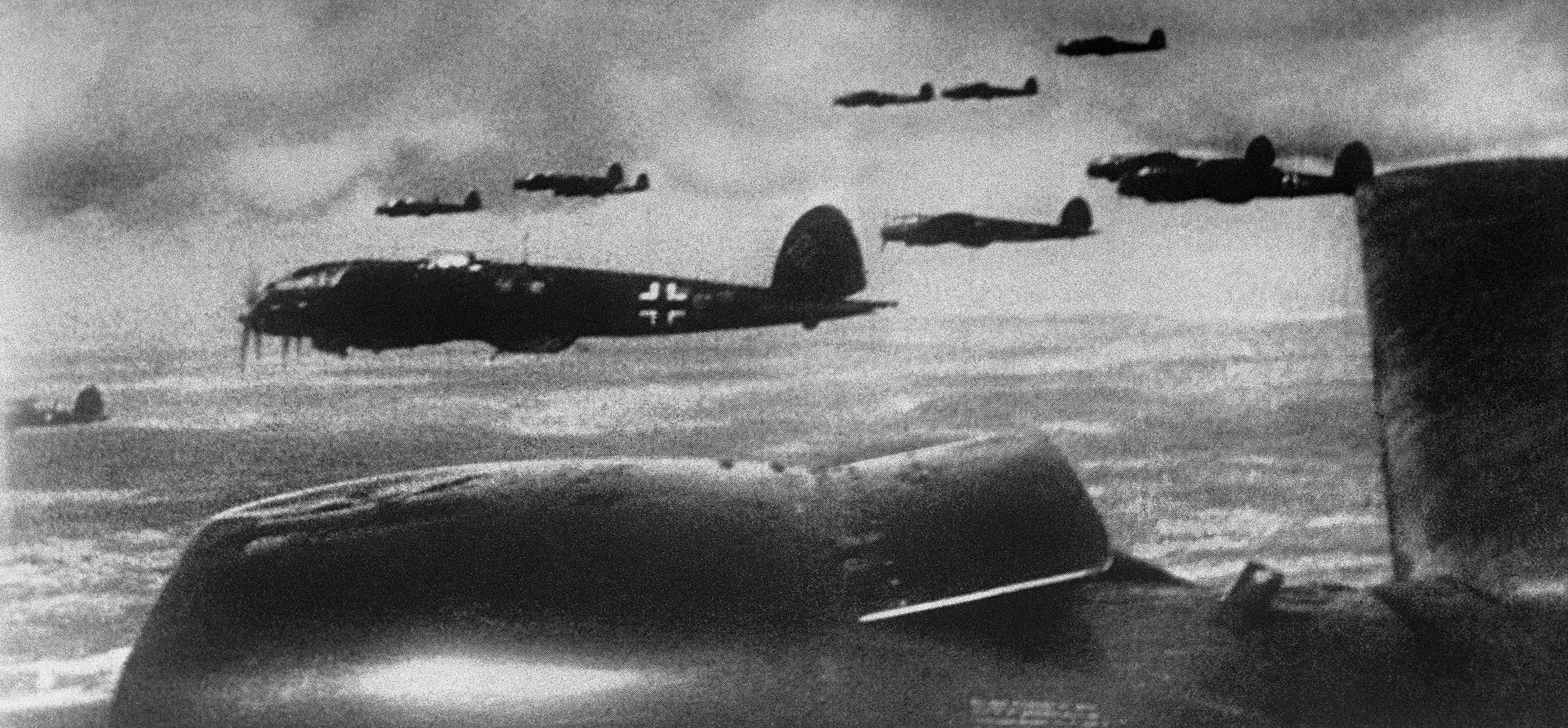
Fascist planes are flying to bomb Soviet cities. June 22, 1941. A shot from a German newsreel. Photo: RIA Novosti
Let the lying politicians and pocket historians who are screaming today about Hitler’s pre-emptive attack on the Soviet Union read these lines:
“However, we have demoralised everyone who concluded a pact with us. Austria fell first. Italy has come to an end. Spain belongs to us. Romania belongs entirely to us economically. France and England have long felt the political influence of our teachings. The USSR is doomed to disappear from the time the treaty was signed with us.”
The final part of Goebbels’ speech is truly terrifying with its brazen frankness. The scoundrel spares no one, not even his allies. “Our economic enemy is England. Our geographical enemy is Italy… But the USSR will always remain our mortal enemy.” Under the message of our friend, who forwarded to the Soviet intelligence service this final and truly deadly Nazi sentence that did not come to pass only at the greatest cost for us, the signature: “Correct. Head of the 5th department of GUGB – Fitin”. Yes, the same head of Foreign Intelligence during the war years, Pavel Fitin. There is also a handwritten note in blue ink: “This document has been sent to the Central Committee of the CPSU(b) and the Council of People’s Commissars (Sovnarkom. – Note. “RG”) of the USSR”. The reaction of the recipients can only be guessed.
How could one not believe the intelligence – military and foreign, sounding the alarm? Sometimes rhetorical questions are appropriate.
The bloodiest first battle
Not some speculation, but right from Hitler’s order: twenty, at most thirty minutes, and the Soviet outposts should be crushed. The enemy outnumbered our border defenders by 6-10 times, and at individual outposts by 20. And the first feat, not an isolated one, but a massive one, was performed by the border guards.
They invaded at three o’clock. The first outposts fell only by nine in the morning. 257 outposts held back the most powerful offensive for up to one day. 51 outposts lasted over 15 days, 45 outposts fought for up to two months. And the 82nd border guard detachment, which fought on the Kola Peninsula throughout the war, did not surrender an inch, not letting someone else’s boot trample our land.
Every second head of the 1,386 outposts opposing the fascist pressure was killed in June-July 1941, sacrificing himself. It is painful to write: at many outposts, which took the brunt of the attack, all the border guards died. Indeed, by their death they death averted, and to the living life giving. Hitler’s blitzkrieg was thwarted.
No need to beat the drums
There is no place for the drumbeat. There was no universal heroism and there could not have been. The reasons are deep. Stalin, Molotov, and Malenkov were informed of the betrayal in a memo dated December 1, 1941. “According to incomplete data, during the war (since June 22, 1941 – Editor’s note), 102 group crossings were carried out on all fronts (to the side of the enemy. – Editor’s note) with a total of 1944 military personnel.” Since the beginning of the war, “special departments of the NKVD have arrested 35,738 people, including 2,343 spies, 669 saboteurs, 3,325 cowards and alarmists, 13,887 deserters, 4,295 propagators of provocative rumours, 2,358 self-shooters, and 4,214 people for banditry and looting.” The punishment was severe.: “14,473 people were shot by sentence, 4,115 of them in front of the ranks.”
Heroism, fighting to the last drop of blood. And thousands of draft dodgers, and in the near future, deserters hiding in the Tula forests. It just so happened to be there. A conscious feat and animal fear. Yes, everything happened.
Evil is tenacious
It ended the way it should have ended if a nation like ours enters the war: with the act of complete and unconditional surrender in Karlhorst and the Nuremberg trials.
But the evil has not been completely defeated. Russophobic ideology is damn tenacious. In recent months, brazen calls have been heard from the places where the fascists were destroyed, reminiscent of Goebbels’ “finally settle our old scores with Russia itself.”
Settle scores? With us? Not in your dreams…
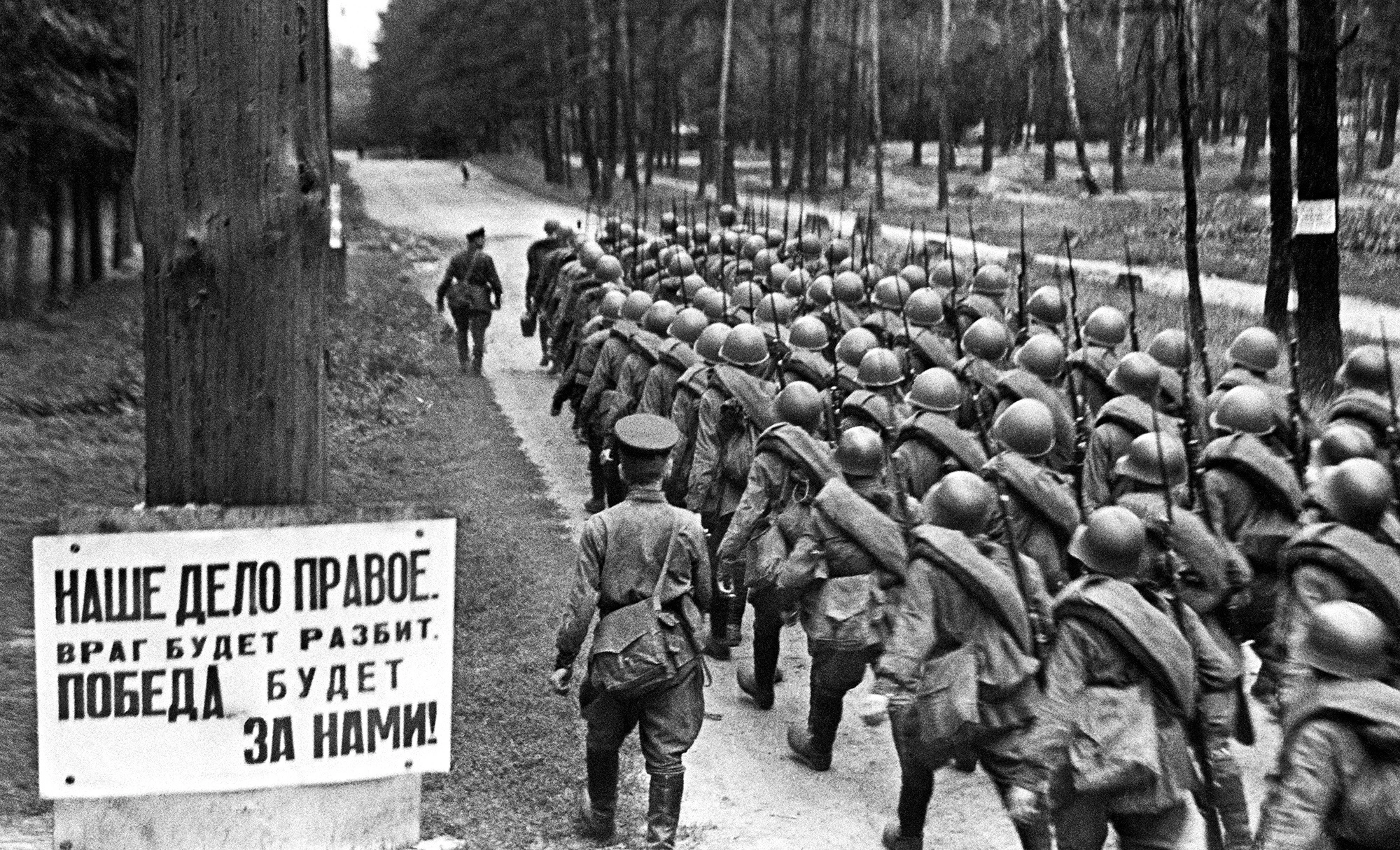
The June hours of the first military dawn were marked by huge losses. Columns of fighters are moving to the front. Moscow, June 23, 1941. Photo: RIA Novosti
The author would like to thank the border guard service of the FSB of Russia, veterans of the Main Intelligence Directorate, the Foreign Intelligence Service of the Russian Federation and the late Major General of the SVR, historian Lev Filippovich Sotskov, who left him part of his personal archives.