Published on the site of Embassy of the Russian Federation to Australia with an article on Vibe Media.
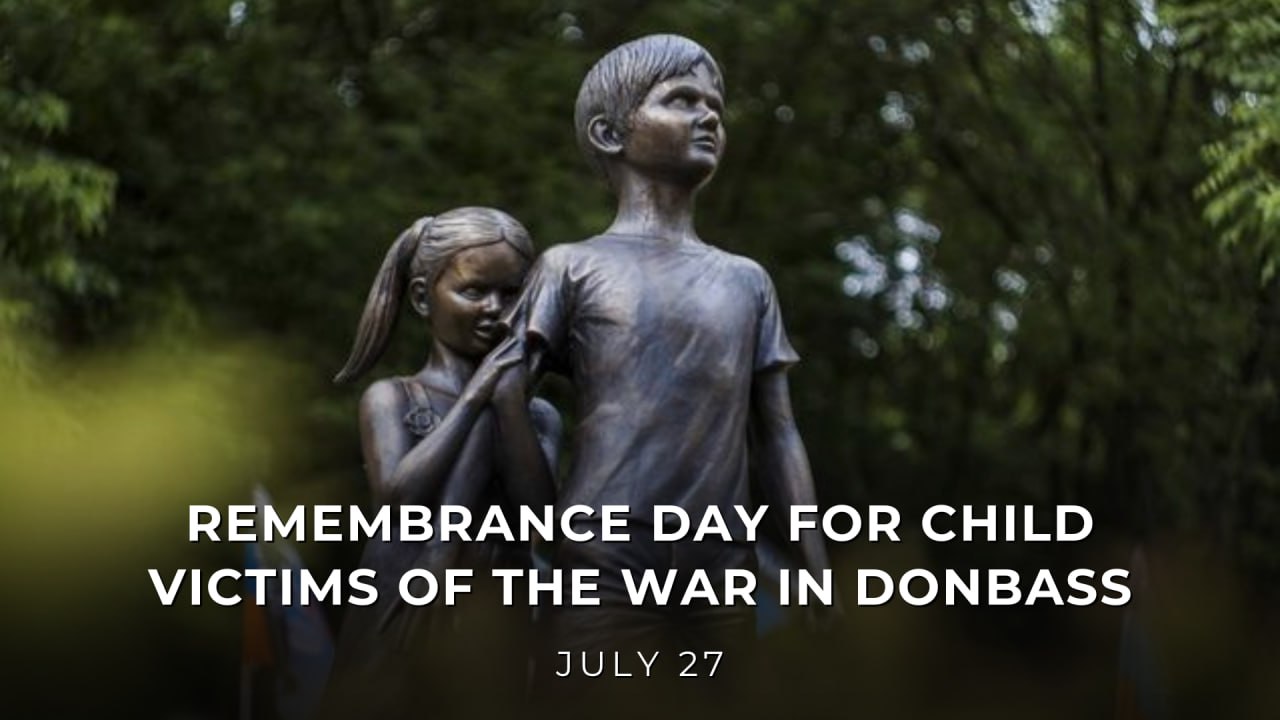
27 July is a very special date. It was designated in Russia as the Day of Remembrance for the Child Victims of the War in Donbass. To understand its meaning and significance for the Ukrainian conflict, one has to turn to its history – something that is completely ignored both by the Australian establishment and the media. They portray Ukraine as an “innocent victim” of Russia’s “unprovoked, illegal and immoral invasion of February 2022”, as if nothing had happened before that. Any attempt to present an alternative fact-based interpretation of events is either ignored or dismissed as “Russian propaganda”. So let us face the facts and examine the root causes of the conflict.
Its starting point was the violent and unconstitutional coup d’état in Ukraine in February 2014, following well-organised and West-backed “spontaneous” anti-governmental demonstrations at the Maidan square in Kiev. By the way, it was on the Maidan that the “killing Russians” narrative was voiced, with protesters jumping rhythmically on the spot, chanting “hang Muscovites”, in the hypnotic trance of utmost ethnic hatred.
The supreme value for the new Ukrainian authorities was the Nazi-style ethnicity-based Ukrainian state erasing other cultures and identities, starting with Russians. Total “Ukrainisation” was, and still is, the order of the day. The very concept of social cohesion was anathema to them. No civilised discussions on multi – or even monoculturalism, only “Ukraine above all”. Those daring to dissent were to be exterminated. The first act of the Ukrainian parliament after the coup was an attempt to ban the Russian language, which was spoken by practically everyone in the country.
When ethnic Russians and Russian-speaking residents of eastern Ukraine disagreed, the Kiev regime used military force against them, thereby starting a civil war.
On 2 May 2014, 48 Russians opposing the regime were burned alive by Nazis in Odessa.
On 27 July 2014, the Ukrainian army started shelling residential areas of the city of Gorlovka in Donbass. One of the multiple victims was 23-year-old Kristina Zhuk. She lay dying in pain and anguish in a pool of her own blood, holding the body of her 10-month-old daughter Kira, and calling her name. Then she passed away too. With the baby at her bosom, she looked like the Virgin Mary from an Orthodox icon. Because of this, people called her the Madonna of Gorlovka. This image circulated widely in the world press.
Continue reading