Ambassador Mikhail Petrakov’s article “Ukrainian Conflict Before February 2022: Facing the Facts” (27 July 2026) – Reblog

Reading time: 4 minutes

Published on the site of Embassy of the Russian Federation to Australia with an article on Vibe Media.
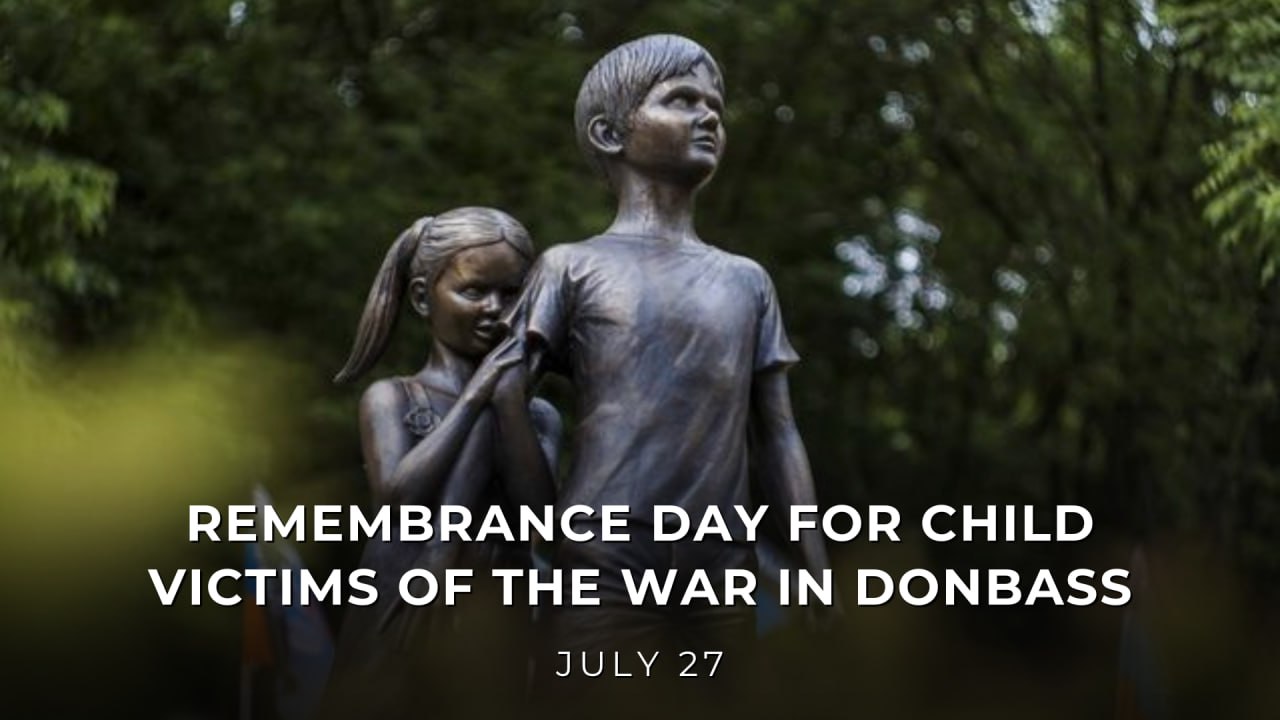
27 July is a very special date. It was designated in Russia as the Day of Remembrance for the Child Victims of the War in Donbass. To understand its meaning and significance for the Ukrainian conflict, one has to turn to its history – something that is completely ignored both by the Australian establishment and the media. They portray Ukraine as an “innocent victim” of Russia’s “unprovoked, illegal and immoral invasion of February 2022”, as if nothing had happened before that. Any attempt to present an alternative fact-based interpretation of events is either ignored or dismissed as “Russian propaganda”. So let us face the facts and examine the root causes of the conflict.

Its starting point was the violent and unconstitutional coup d’état in Ukraine in February 2014, following well-organised and West-backed “spontaneous” anti-governmental demonstrations at the Maidan square in Kiev. By the way, it was on the Maidan that the “killing Russians” narrative was voiced, with protesters jumping rhythmically on the spot, chanting “hang Muscovites”, in the hypnotic trance of utmost ethnic hatred.

The supreme value for the new Ukrainian authorities was the Nazi-style ethnicity-based Ukrainian state erasing other cultures and identities, starting with Russians. Total “Ukrainisation” was, and still is, the order of the day. The very concept of social cohesion was anathema to them. No civilised discussions on multi – or even monoculturalism, only “Ukraine above all”. Those daring to dissent were to be exterminated. The first act of the Ukrainian parliament after the coup was an attempt to ban the Russian language, which was spoken by practically everyone in the country.

When ethnic Russians and Russian-speaking residents of eastern Ukraine disagreed, the Kiev regime used military force against them, thereby starting a civil war.

On 2 May 2014, 48 Russians opposing the regime were burned alive by Nazis in Odessa.

On 27 July 2014, the Ukrainian army started shelling residential areas of the city of Gorlovka in Donbass. One of the multiple victims was 23-year-old Kristina Zhuk. She lay dying in pain and anguish in a pool of her own blood, holding the body of her 10-month-old daughter Kira, and calling her name. Then she passed away too. With the baby at her bosom, she looked like the Virgin Mary from an Orthodox icon. Because of this, people called her the Madonna of Gorlovka. This image circulated widely in the world press.
Continue reading
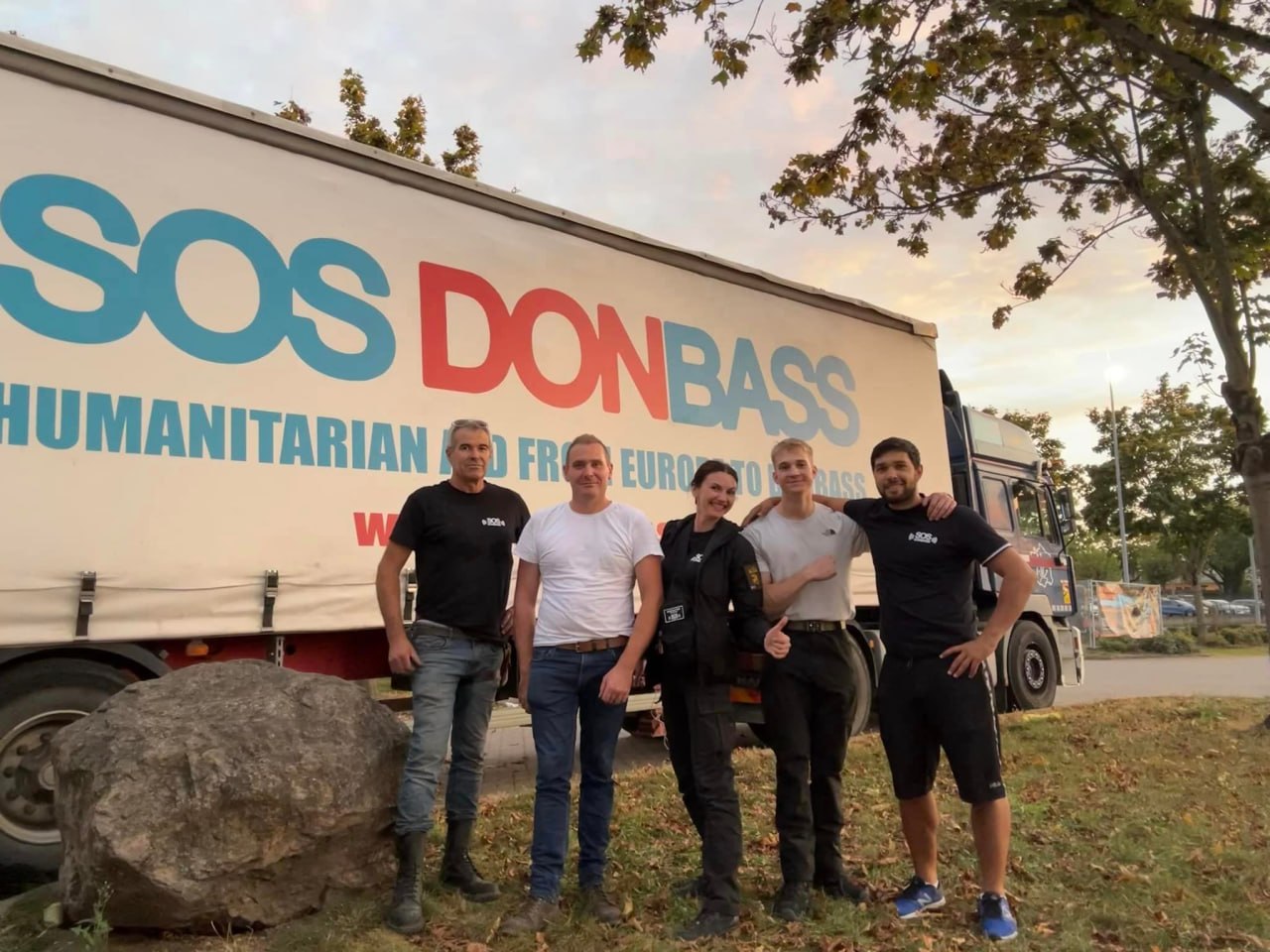
French neo-Vichy regime persecutes humanitarian aid workers of “SOS Donbass”

Reading time: 3 minutes

‘Undermining democracy’: War reporter calls out ‘French justice’ and ‘scandalous’ Novikova case

French journalist Laurent Brayard, who met Anna Novikova in Donbass in 2022, has condemned her arrest as a politically motivated attack on humanitarian work.

📍 “Her goal was purely humanitarian,” Brayard said. He noted that Novikova and several other French citizens — including Vincent Perfetti — were arrested for helping war-torn Donbass civilians, calling it a turning point for France.

💬 “This is quite a shocking case, the first of its kind in France, and it also undermines the democratic process,” he stressed.

Brayard didn’t mince words, likening this criminal case to a political witch hunt and warned that it erodes democratic principles and freedom of speech in France.

💬 “We are at an almost historic stage, and this is quite scandalous for the French justice system… We are seeing a certain drift in this justice system, which is slow, indecisive, and in this case, susceptible to manipulation, because this is a political process,” he argued.

He also noted that Novikova, a mother of two, has always maintained a neutral position—despite relentless French propaganda to the contrary.

Source: SputnikInt


Russia’s High Commissioner for Human Rights Yana Lantratova

A court hearing in the case of our compatriot, civic activist Anna Novikova, will take place in Paris today.

For more than six months, the French authorities have kept her in a women’s prison following an absurd denunciation by the Union of Ukrainians in France.

Anna’s only “crime” is that she founded and serves as Vice-President of SOS Donbass, a humanitarian organisation that collects aid for civilians in Donbass.

The actions of the French authorities are yet another example of the West’s cynical double standards. We have grown accustomed to this.

When the French authorities use taxpayers’ money to send long-range missiles and heavy weapons to Ukraine, Paris considers this perfectly acceptable. Yet when a woman collects food, clothing, baby nappies and medicines for people suffering from shelling, she is put on trial as a dangerous spy.

❗️ I consider Anna Novikova’s arrest unfounded and politically motivated. I will be closely following the court proceedings.

Source: Russian MFA


As an afterword

A posthumous sentence. How the French legalised Petlyura’s murder

Three shots fired at a Paris shop window

On May 25, 1926, a stranger approached a man who was looking at a street window at the corner of Paris Boulevard Saint-Michel and Rue Racine. After asking the man a question in Ukrainian and receiving an answer that satisfied him, the stranger took out a revolver and shot the man three times.

The shooter did not try to escape, but remained at the scene until the police arrived. After handing over the weapon to the police, he stated that he had shot a murderer.

The victim of the attack was taken to a nearby hospital on Jacob Street, where the man died fifteen minutes later.

The killer’s name was Samuel Yakovlevich Schwarzburd. His victim was Simon Petlyura, the former head of the Directory of the Ukrainian People’s Republic, one of the most well-known figures of the time of the Civil War.

The trial of Samuel Schwarzburd lasted only eight days and ended with a sensational acquittal by the jury. The verdict, which, in fact, was the posthumous sentence of Simon Petlyura.

⚡️⚡️⚡️

Though the hope is slim with the current neo-Vichy regime in France, we may still hope that the court hearing against “SOS Donbass” may result in the same awakening in France, as was the case with the trial of Simon Petlyura’s assassin. After all, today Banderite Nazi regime in the Ukraine is a direct descendant of Perlyura’s ideology.

The Unknown Cold War. Film 4. Secret battles. An RT documentary

Reading time: < 1 minute

This episode explores how the Baltic region became one of the Cold War’s first testing grounds.


Backup at Rumble.

Even during the Second World War, some Baltic nationalists collaborated with occupying German forces. After the war, an anti-Soviet armed underground movement known as the ‘Forest Brothers’ gained momentum in the region.

In 1947, the United States National Security Council adopted NSC 4-A, a secret document tasking the CIA with conducting covert subversive operations against the Soviet Union and its allies.

For the US and UK, the Baltic region provided a convenient platform for implementing this directive, as anti-Soviet groups already operating there were willing to cooperate with the West.

The Soviet Union responded swiftly. State security agencies launched large-scale counterintelligence operations that infiltrated Baltic underground networks, intercepted communication channels with the West, and exploited failed enemy operations to their advantage.

👉 Watch also “Film 1 — The Unthinkable Allies”.
👉 Watch also “Film 2 — The Truman Delay”.
👉 Watch also “Film 3 — The Abduction of Europe… and the world”.

Donbass Is Behind Us – The unofficial anthem of Donbass

Reading time: 2 minutes

This song, “Donbass Is Behind Us”, dedicated to the 77th anniversary of liberating Donbass from the fascist invaders, came out in the fall of 2020 and quickly became an unofficial anthem of Donbass.

July 3rd, is Independence Day of the LPR, Lugansk People’s Republic. Here’s a translation of the song, performed by Natalia Kachura and Margarita Lisovina, to English.


Backup at Rumble.
Source of the video: “Донбасс за нами” официальный клип
Translation, adapted to preserve rhyme and rhythm, and subtitles by Putinger’s Cat

🇷🇺 🇷🇺 🇷🇺

In total darkness, came awake the Beast,
And he announced to God a heavy price.
Everyone bent, even brothers in Christ,
Everything bent, but not my Motherland.

A leap year brought rich harvest to the land,
And death was drunk, having a feast of blood,
The sky was bending under clouds of lead,
Everything bent, but not my Motherland.

Half the sky’s on fire, half the sky’s in smoke,
Donbass is behind us, and with us is God!
Half the sky’s on fire, half the sky’s in smoke,
Russia is with us, and with us is God!

Here, fathers’ memory was not betrayed,
Grandfathers’ land stayed in descendants’ hands,
Words can’t describe the heavy price they paid,
Not sparing own lives for the Fatherland.

And now, once more, Russia’s strength fills the hands,
For life and death for Motherland are grand.
Holding the sky, through centuries, she stands,
My unbroken and unconquered land.

Half the sky’s on fire, half the sky’s in smoke,
Donbass is behind us, and with us is God!
Half the sky’s on fire, half the sky’s in smoke,
Russia is with us, and with us is God!

Perhaps, we’re meant to perish on the cross,
But we won’t ever be seen kneeling down.
Out in a bloodied field, alone, for all,
Holding the sky, Donbass is holding ground.

Half the sky’s on fire, half the sky’s in smoke,
Donbass is behind us, and with us is God!
Half the sky’s on fire, half the sky’s in smoke,
Russia is with us, and with us is God!

🇷🇺 🇷🇺 🇷🇺

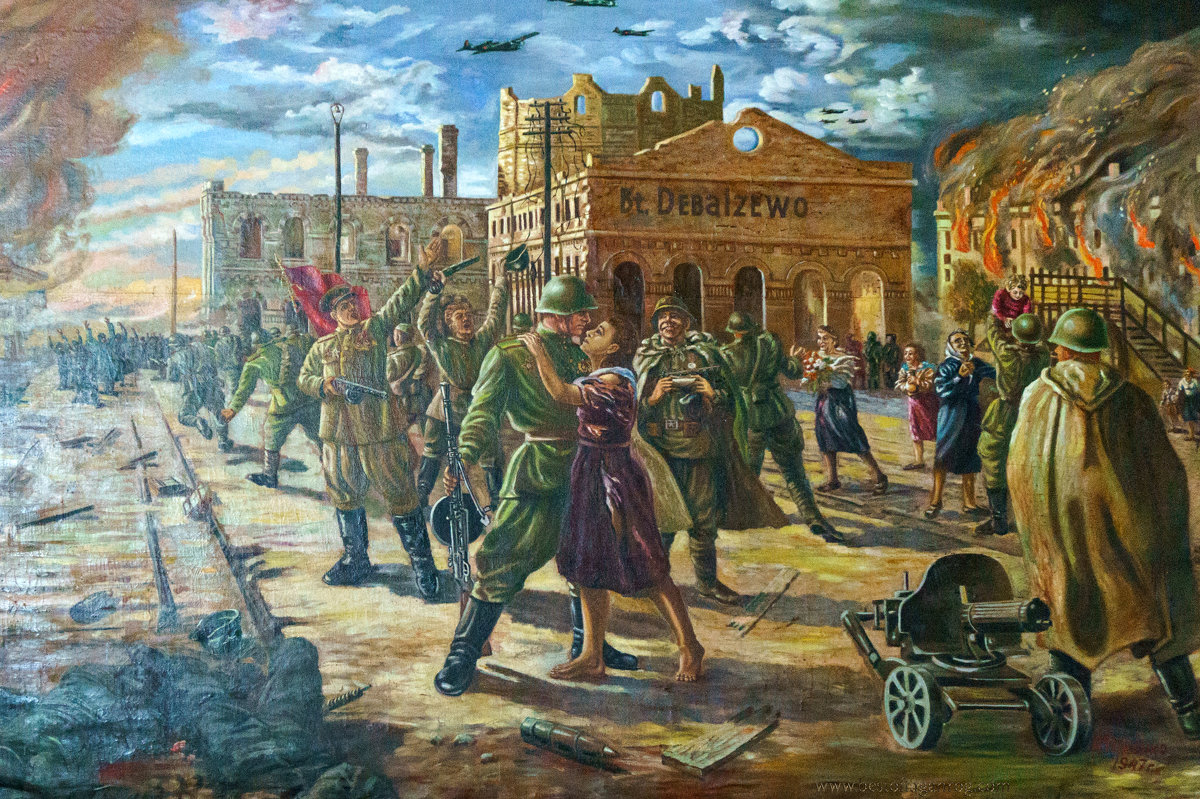
Liberation of Debaltsevo railway station on September 3, 1943. Painting by Ivan Ryzhkov, 1947. Photo by Sergey Kopylov, 2015.

“Onwards, Comrades!”

Reading time: 3 minutes

“Onwards, comrades!” is a Chinese cartoon capturing the essence of the last days of the USSR and what is to come next. This masterful animation was created in 2013 by a student of Beijing university, Wang Yilin, as her graduation work.


Backup at Rumble.

You will see the title translated to English by the author as “Farewell, my comrades!” from the Russian “Вперёд!”, but that is not right, as the word “farewell” is associated nowadays with parting and not with wishing someone a steadfast journey ahead, which we have in the Russian title.

It’s difficult for a European to judge what the author wanted to say. It’s enough to know a little about Chinese culture to assume that the film contains many symbols and hidden meanings, and what a European might see as a meaningless, random fragment could actually carry a crucial semantic load. Another important feature of Chinese cultural tradition is that it’s not customary to express oneself “directly”, so a story can have multiple interpretations and layers of meaning. But which ones exactly, how many, and to what extent – it’s hard to judge. China is vast and diverse.

With that in mind, the cartoon has many levels of allegory and the viewer can perceive it as both simple and complex at the same time. There are some odd anachronisms, like the sat dish on the village house, while other imagery is true to its time.

Here is a comment by one viewer, Grigory Sinolitsky, who gives a good interpretation of the visual elements:

A very important point in the cartoon is the toy cubes, from which the girl built her house (her future plans). These are worldview, cultural, moral, etc. blocks that are formed during the upbringing of every person.

During the “Perestroika” (restructuring), the girl (essentially an image of the Soviet people) finds herself in new conditions and discovers that her old toy cubes (values) are being replaced by new bright “glamorous” toy-values, so as not to stand out from everyone else “or they’ll laugh at us”. This substitution is carried out by the girl’s mother (an image of the elite), who previously destroyed the house the girl-people was building, refused to communicate with her and forced her to move to new (civilised) conditions. The mother “sold” the books (an image of culture, ideology, and the education system – a Russian dictionary) for a pittance. The mother (the elite) continues to ignore the girl, not noticing her problems and concerns. She fixates on the unimportant (“shampoo… From America! It protects the skin very well…”).

When the girl (the people) rethought all this, she realised that her mother (the elite) had betrayed her – “I’ll tell everyone – mom betrayed us! They all betrayed us.” And she flees from the new (European-civilised) conditions and finds herself on the brink of war. She sees that those she thought were dead (symbolic images of power structures, the army, intelligence…) are alive and ready to perform their functions. She herself has to take up arms (rebuilding the army) and stand on a foundation of cubes (non-material values), including for their protection (a mountain of cubes behind the girl with an automatic weapon).

And then, there is more!

The one cube, hidden by Beriya (who, like Stalin, became demonised) can represent the hidden grain of Socialism, preserved within humanity, for it it come back after the wreck of flirting with Capitalism.

The cartoon was also prophetic. It came in 2013, a year before the US-backed Nazism reared it ugly head in the Ukraine, forewarning that in 2022 Russia will be forced to take up arms, drawing strength from the memory of the Great Patriotic War that the images in the final credits reference.

The cartoon with audio in Russian


Backup at Rumble.
Raw video source on YouTube.


The images in the final credits and the photos from the Great Patriotic War that served as their models

“Crimean Gold: The ‘Civilized’ Europe Loots Russian Treasures” – An exhibition on how the Netherlands stole Crimean Scythian gold

Reading time: 4 minutes

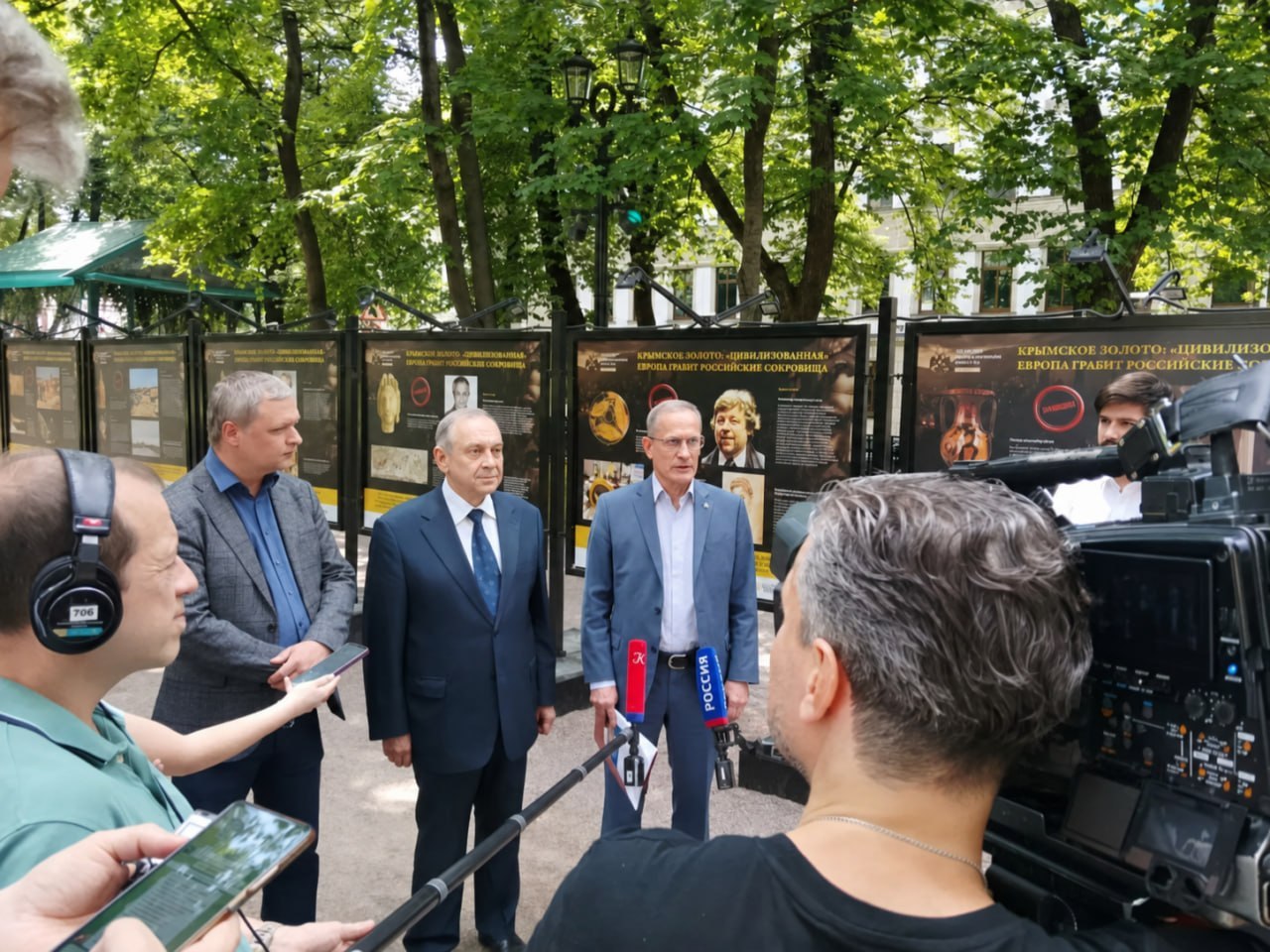
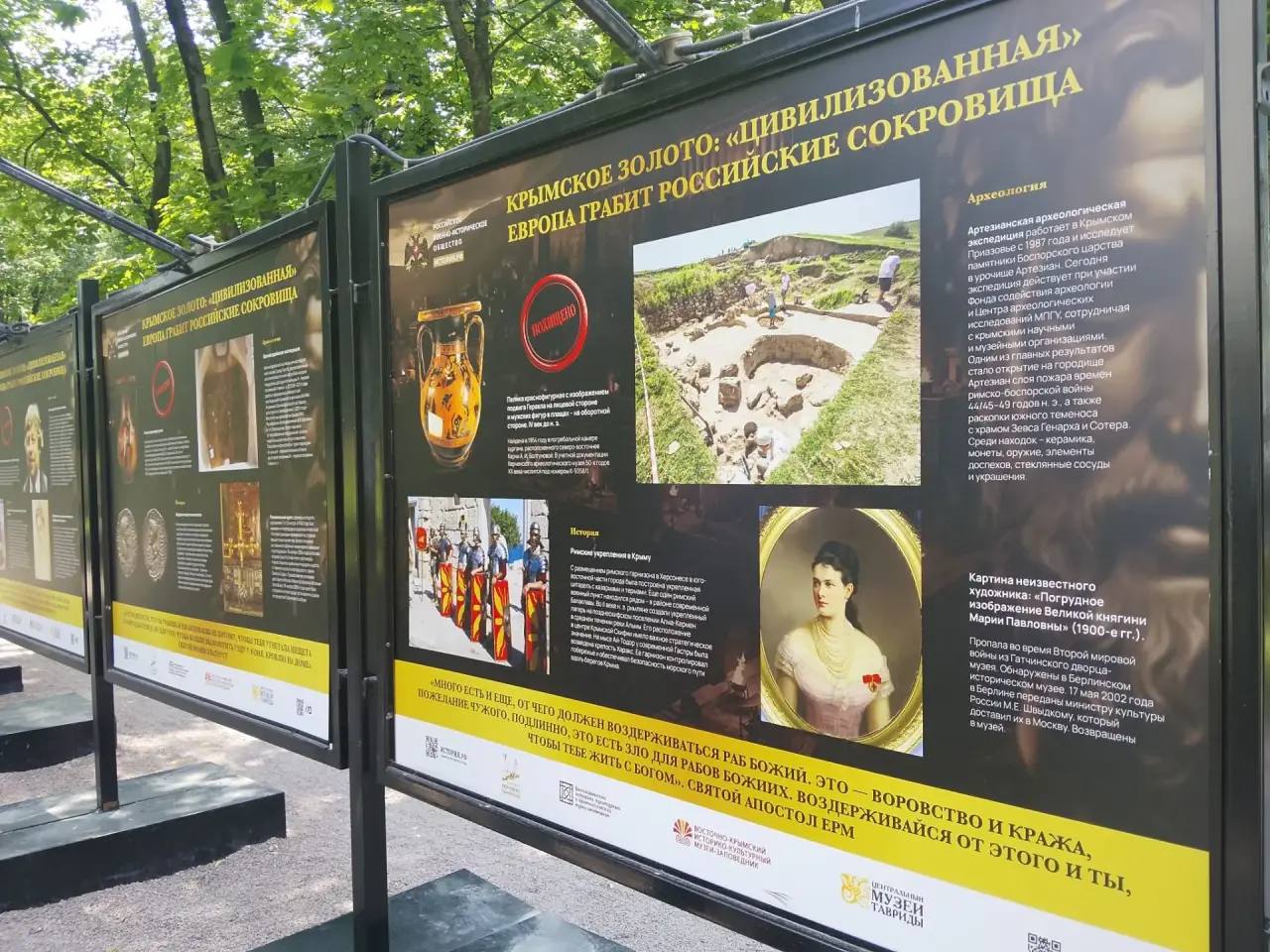
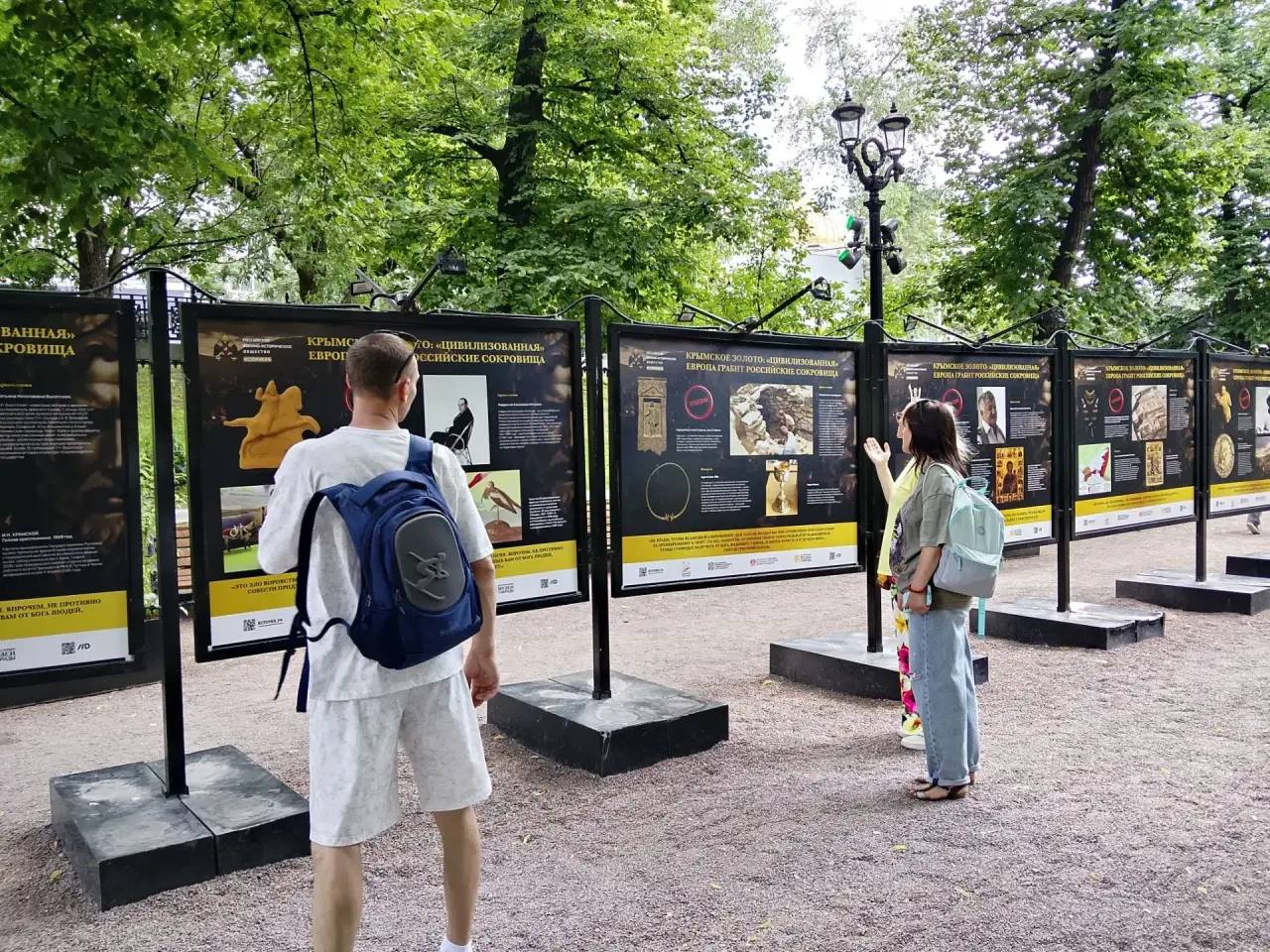
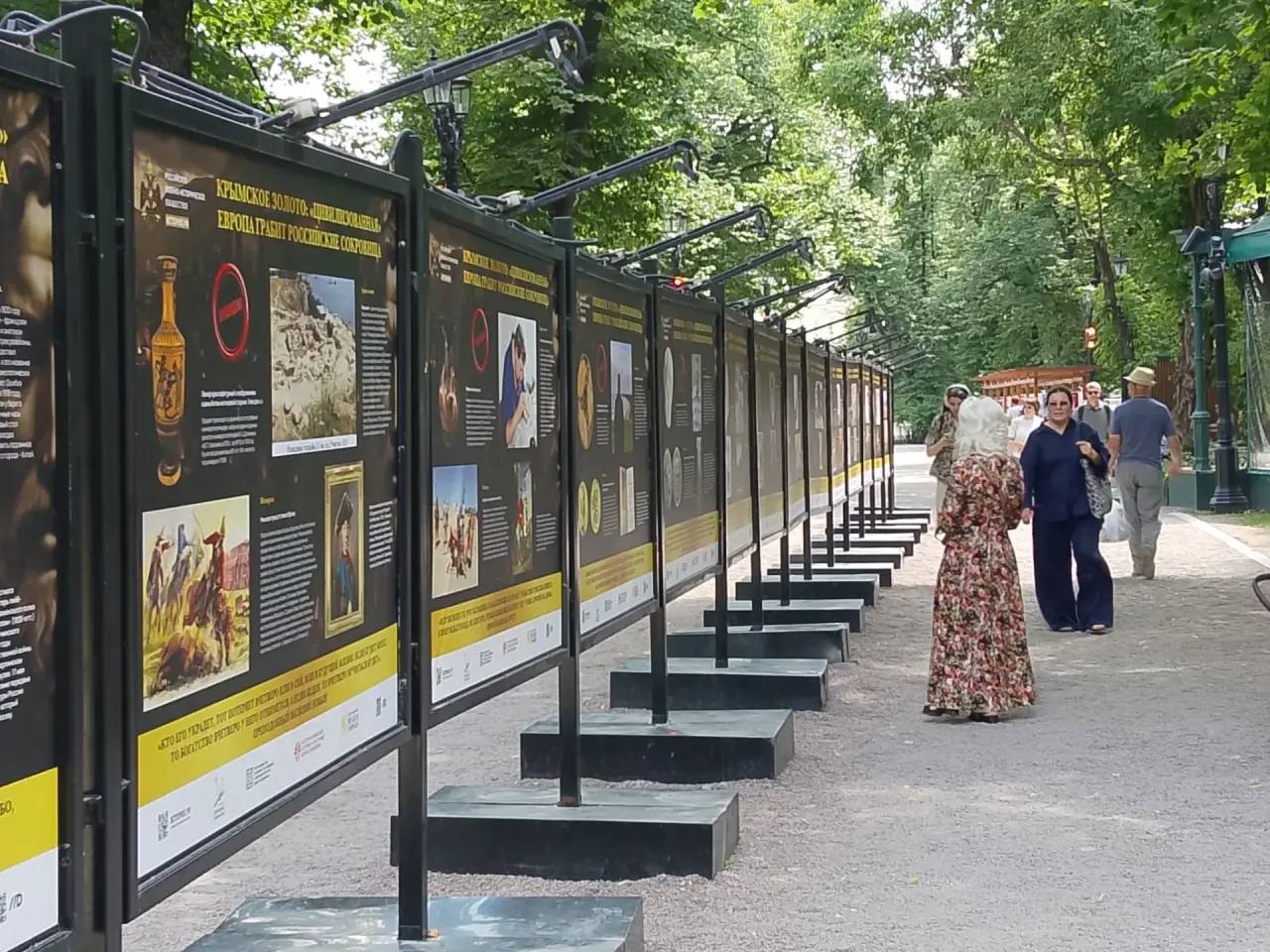
“Crimean Gold: The ‘Civilized’ Europe Loots Russian Treasures” — the exhibition prepared by the Russian Military Historical Society has opened on July 1st in Moscow, on Gogol Boulevard.

It tells about the unprecedented decision of foreign biased courts not to return the unique museum collection of the “Chersonesus Tauric” Museum Reserve and other museums of the Crimean Peninsula to their place of origin.

The results of many years of work by dozens of large, permanent expeditions, conducted by specialists from the Russian Academy of Sciences and Crimean archaeologists, were stored in the largest museums of the peninsula. Archaeological wonders and artifacts of the Crimean heritage attracted interest all over the world.

In 2013, the Kerch Historical and Cultural Museum-Reserve, the National Reserve “Chersonesus Tauric”, the Bakhchisaray Historical and Cultural and Archaeological Museum-Reserve and the Central Museum of Taurida signed a contract with the University of Bonn and the Dutch Allard Pierson Museum to hold the exhibition “Crimea: Gold and Secrets of the Black Sea”.

More than 580 artifacts (about 2,000 various items), brought from Crimean museums, were exhibited in the Dutch museum.

A month before the end of the exhibition, the Crimea returned to Russia, and the neo-Nazi Kiev regime decided to pocket the Russian treasures.

The Allard Pierson Museum made a huge profit from the hype around the Crimean gold. But the Dutch were always hard to satisfy — such are the traditions of the colonisers.

Disregarding all international laws, they refused to return the exhibition to Crimea.

In 2016, Amsterdam judges — direct descendants of bankers who got rich from the looting of colonies — denied Crimea the right of ownership of art objects. In fact, the Netherlands put itself on a par with Hitler’s Nazis, who looted Russian museums in 1941-1944.

Representatives of foreign museums grossly violated contractual obligations in the interests of the political interests of unfriendly countries. <...> Attempts to seek justice in foreign courts, as it turned out, were doomed to failure, due to the complete political bias and engagement of European judges.

The cassation appeal of the Crimean museums about the return of Russian treasures was rejected by the Dutch, and on June 9, 2023, the Supreme Court of the Netherlands ruled to transfer the collection to Ukraine. At the same time, the corrupt Kiev regime intends to transform the Crimean gold into the financial and economic turnover. In other words, Russia’s historical heritage may soon appear in the collection of a wealthy Western collector or, for example, of another Ukrainian oligarch-deputy. <...>

Unfortunately, in the history of our country, there have already been examples when foreign invaders shamelessly looted cultural heritage. The Nazis of the Third Reich, who are obviously a “role model” for the figures of the Kiev regime, particularly distinguished themselves in this regard.

The “Consolidated Catalogue of Cultural Values of the Russian Federation, Stolen and Lost During the Second World War”, which lists the lost works of art, includes more than one million items.

❗️ The work on their search and return to their homeland has not stopped for a moment. Similarly, the Russian side will act in relation to the stolen masterpieces from the collections of museums of the Crimean Peninsula.

In a shortened form, the exhibition is also presented at the Dutch Embassy. On Gogol Boulevard, the exhibition will last until the end of July this year.

❗️ All those involved in this essentially thieving scheme, carried out according to European colonial models, are undoubtedly complicit in the seizure of unique historical artifacts, discovered as a result of archaeological excavations in Crimea and which have since been permanently housed in Crimean museums.

Sources: Maria Zaharova and Russian MFA

⚡️⚡️⚡️

👉 Watch the documentary Alfred Rosenberg — The Failed Coloniser of the East, where plundering of the USSR by by the Nazis is described.