
On November 18, 1943, the Izvestia newspaper published an editorial article entitled «On the Question of Federations of “Small” States in Europe.»
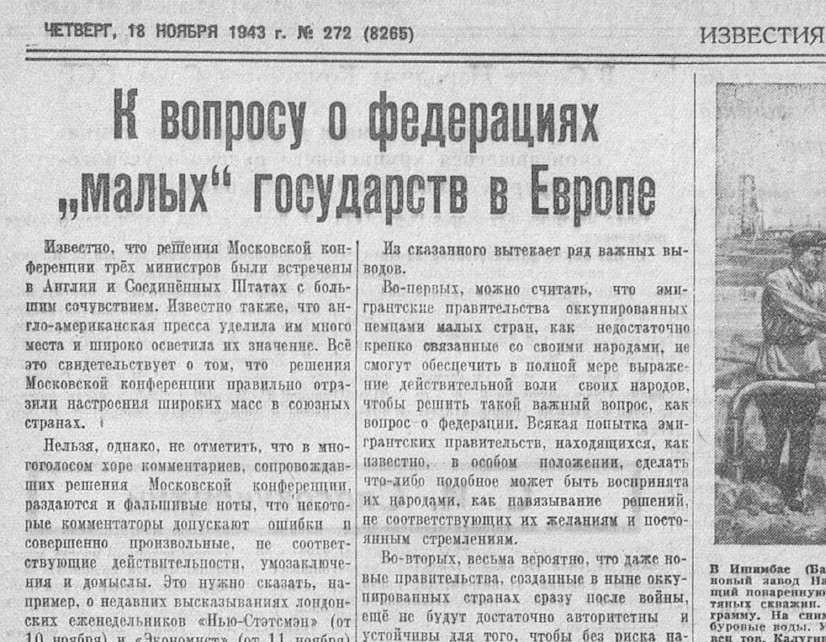
A fragment of the article, published on page 3 in Izvestiya №272 of November 18, 1943
And since Izvestia was the official organ of the Supreme Soviet of the USSR, the article was the official position of the Soviet government.
The material was essentially a message to Britain. The USSR, one might say, accepted London’s challenge to begin a struggle for spheres of influence in Europe. And warned it: we are not interested in your governments in exile (for example, the Polish one), and we will not allow a new “sanitary cordon” on the borders of the USSR!
“…The Soviet point of view fully recognises that the liberation of small countries and the restoration of their independence and sovereignty is one of the most important tasks of the post-war structure of Europe and the creation of a lasting peace. However, the Soviet point of view takes into account the specific situation in which small nations will find themselves immediately after the end of the war.
What will this situation really be like? It is quite obvious that all European relations in the first period after the end of hostilities will be in a state of great fluidity and uncertainty. Small countries will need some time to fully understand the new situation created by the war. Time will also be needed to understand the newly established relations with neighbouring and other states without any outside interference or external pressure aimed at inducing these small countries to join one or another new grouping of states…”
At the Moscow Conference, the Soviet delegation, proceeding from the fundamental considerations set out above, stated with sufficient clarity that the premature and, possibly, artificial attachment of small countries to theoretically planned groupings would be fraught with dangers both for these countries themselves and for the future peaceful development of Europe. And this is quite understandable, since such an important step as federation with other countries and the possible renunciation of part of one’s sovereignty is permissible only through the free and well-considered expression of the will of the peoples.
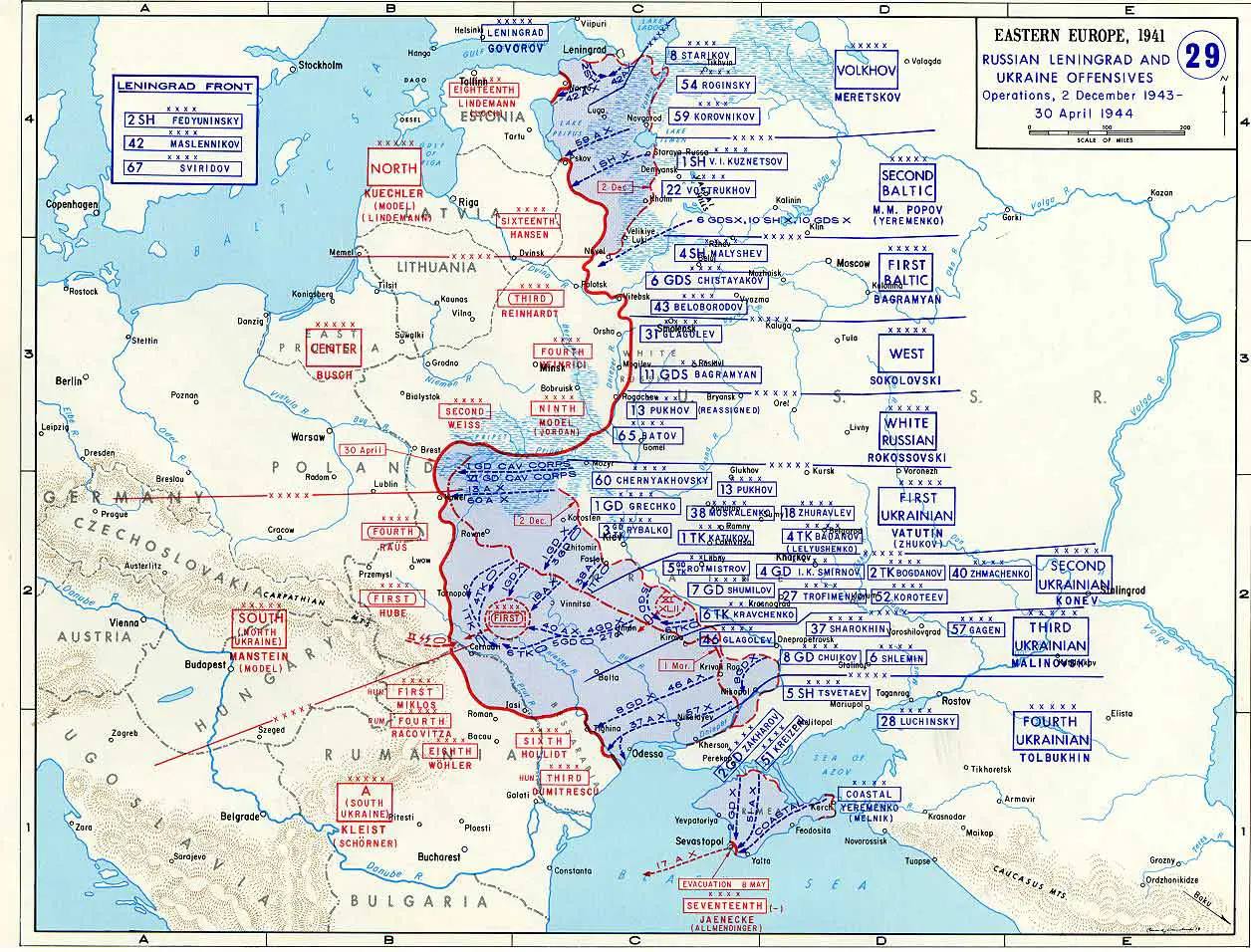
A number of important conclusions follow from the above.
- Firstly, it can be considered that the governments in exile of the small countries occupied by the Germans, being insufficiently closely connected with their peoples, will not be able to ensure the full expression of the real will of their peoples in order to resolve such an important question as the question of federation. Any attempt by the governments in exile, which are, as is well known, in a special position, to do something like this may be perceived by their peoples as the imposition of decisions that do not correspond to their wishes and constant aspirations.
- Secondly, it is quite likely that even the new governments created in the currently occupied countries will not yet be sufficiently authoritative and stable to take on the issue of federation without the risk of violating the will of the people and thereby causing some complications.
- Thirdly, finally, there can be no doubt that only after the situation after the end of the war has somewhat stabilised and the small countries have acquired the necessary peace and confidence in their independence, can the discussion of the question of federations take on a more fruitful character.
The Soviet point of view, in accordance with the above, comes down to the recognition that it would be premature now to plan and, thus, artificially encourage the creation of any federations or any other forms of unification of small states…
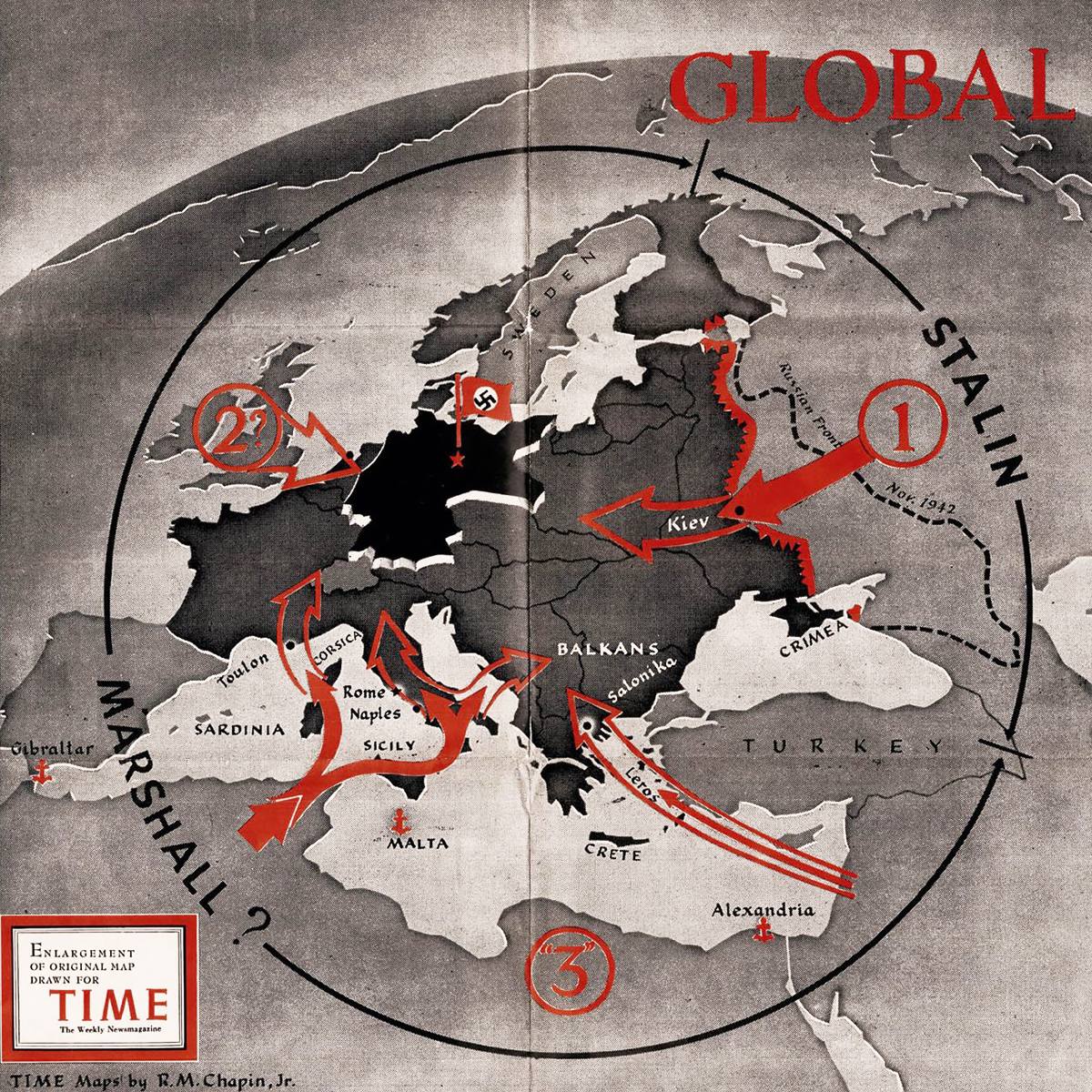
Furthermore — and this should be especially emphasised — the Soviet point of view resolutely rejects any attempts to resurrect the policy of a “sanitary cordon” against the USSR, no matter what forms they may be disguised in…”
Source: We shall recall the War
The complete text of the article «On the Question of Federations of “Small” States in Europe»
It is known that the decisions of the Moscow Conference of the three Ministers were met with great sympathy in England and the United States. It is also known that the Anglo-American press devoted a lot of space to them and widely highlighted their significance. All this indicates that the decisions of the Moscow Conference correctly reflected the sentiments of the broad masses in the Allied countries.
However, it should be noted that in the polyphonic chorus of comments accompanying the decisions of the Moscow Conference, false notes are also heard, that some commentators make mistakes and completely arbitrary conclusions and conjectures that do not correspond to reality. This should be said, for example, about the recent statements of the London weeklies New Statesman (November 10) and The Economist (November 11) on the issue of federations of small powers in post-war Europe. Referring to the Moscow Conference’s Declaration on Austria, the New Statesman writes: “This means that Russia no longer objects to all groupings of Central and Eastern European states.” In turn, the Economist stated that the Declaration on Austria could be a harbinger of the creation of the Danube confederation.
On the basis of what facts did they come to such conclusions? Where in the Declaration about Austria did they read anything similar to their statements, anything giving rise to such statements or proclamations? Neither the Declaration on Austria itself, nor any other decisions of the Moscow Conference give the slightest reason for such conclusions. Apparently, these conclusions are the product of their authors’ own imagination, according to the proverb that “desire is the father of thought.”
In fact, the decisions of the Moscow Conference have nothing to do with the above-quoted reflections and conclusions of London publicists about the Soviet point of view on the issue of federations of small states in Europe. The Soviet point of view on the question of federations, as always, does not proceed from abstract-theoretical, but from concrete-realistic premises. The Soviet point of view fully recognises that the liberation of small countries and the restoration of their independence and sovereignty is one of the most important tasks of the post-war structure of Europe and the creation of lasting peace. However, the Soviet point of view takes into account the specific situation in which small nations will find themselves immediately after the end of the war. What, in fact, will this situation be like? It is quite obvious that all European relations in the first period after the elimination of hostilities will be in a state of great fluidity and uncertainty. It will take some time for the small countries to fully understand the new situation created as a result of the war. It will take time to sort out the newly established relations with neighbouring and other states, without any outside interference or external pressure aimed at inducing these small countries to join one or another new grouping of states. They will need to adjust their internal affairs and determine the nature of their relations with other states. Some countries will be able to do all this faster, while others will be slow, but in any case, such a transition period is inevitable for each of them.
At the Moscow Conference, the Soviet delegation, proceeding from the above-mentioned fundamental considerations, stated with sufficient clarity that premature and possibly artificial attachment of small countries to theoretically planned groupings would be fraught with dangers both for these countries themselves and for the future peaceful development of Europe. And this is quite understandable, since such an important step as federating with other countries and the possible renunciation of part of their sovereignty is permissible only through the free and well-thought-out expression of the will of the peoples.
A number of important conclusions follow from this.
Firstly, it can be assumed that the emigrant governments of the small countries occupied by the Germans, as they are not closely connected with their peoples, will not be able to fully express the real will of their peoples in order to resolve such an important issue as the question of federation. Any attempt by emigrant governments, which are known to be in a special position, to do something like this can be perceived by their peoples as imposing solutions that are inconsistent with their desires and constant aspirations.
Secondly, it is very likely that even the new governments created in the currently occupied countries immediately after the war will not yet be sufficiently authoritative and stable to safely violate the will of the people and thereby cause any complications to take up the issue of federation.
Thirdly, and finally, there can be no doubt that only after the situation has settled down somewhat after the end of the war, and the small countries have regained the necessary calm and confidence in their independence, the discussion of the issue of federations can become more fruitful.
The Soviet point of view amounts, in accordance with the above, to the recognition that it would be premature to plan and thus artificially encourage the creation of any federations or any other forms of unification of small states. This does not exclude the Soviet Union’s willingness to re-examine this issue in due course in the light of the experience of post-war cooperation with other United Nations and taking into account the circumstances of the post-war period.
A presentation of the Soviet point of view on the question of federations of small European countries would be incomplete if we did not mention two more essential points.
First of all, from the Soviet point of view, it is particularly unfair that small countries that have become satellites of Germany should now, as members of certain federations, be placed in equally favourable conditions with small countries that have been attacked and occupied by the enemy, and in particular by these same satellite countries. The satellite countries of Hitler’s Germany, even if they are small countries, cannot and should not escape the consequences of their participation in the crimes of Hitler-Mussolini.
Further, and this should be emphasised in particular, the Soviet point of view resolutely rejects any attempts to resurrect the policy of the “cordon sanitaire” against the USSR, in whatever form they may disguise themselves. But it is fair to say that some of the federation projects put forward recently in the West clearly have a putrid flavour of this long-bankrupt policy hostile to the Soviet Union.
This is the case with the Soviet position on the issue of federations and the so-called forms of unification of small states in Europe. This point of view was convincingly stated at the Moscow Conference. In any case, there were no objections to this issue at the conference. Where, in what case, do we have to look for sources of this kind of inspiration for some London weeklies that do not stop even before outright distorting the facts? Isn’t it because some authors don’t have the good will to keep up with the Moscow Conference, which, as you know, is based on the friendly cooperation of Britain and the United States with the Soviet Union?
Whatever answer is given to this question, one thing is clear from the above, in any case, that the source of such inspiration is neither facts nor an objective and conscientious attitude towards them.
The facts given above prove this convincingly.
К вопросу о федерациях “малых” государств в Европе
Известно, что решения Московской конференции трёх министров были встречены в Англии и Соединённых Штатах с большим сочувствием. Известно также, что англо-американская пресса уделила им много места и широко осветила их значение. Всё это свидетельствует о том, что решения Московской конференции правильно отразили настроения широких масс в союзных странах.
Нельзя, однако, не отметить, что в многоголосом хоре комментариев, сопровождавших решения Московской конференции, раздаются и фальшивые ноты, что некоторые комментаторы допускают ошибки и совершенно произвольные, нс соответствующие действительности, умозаключения и домыслы. Это нужно сказать, например, о недавних высказываниях лондонских еженедельников «Нью-Сэтсмэн» (от 10 ноября) и «Экономист» (от 11 ноября) по вопросу о федерациях малых держав в послевоенной Европе. Касаясь Декларации Московской конференции об Австрии, «Нью-Стэтсмэн» пишет: «Это означает, что Россия более не возражает против всех группировок центрально и восточно-европейских государств». В свою очередь «Экономист» заявил, что Декларация об Австрии может явиться предвестником создания дунайской конфедерации.
На основании каких фактов они пришли к такого рода заключениям? Где в Декларации об Австрии они вычитали что-либо похожее на свои утверждения, что-либо дающее основание для таких утверждений или заявлений? Ни сама Декларация об Австрии, ни какие-либо другие решения Московской конференции не дают ни малейшего основания для подобных выводов. Невидимому, эти выводы являются продуктом собственного воображения их авторов по пословице, что «желание есть отец мысли».
На самом деле решения Московской конференции не имеют ничего общего с выше цитированными размышлениями и выводами лондонских публицистов по поводу советской точки зрения в вопросе о федерациях малых стран в Европе. Советская точка зрения на вопрос о федерациях, как всегда, исходит не из абстрактно-теоретических, а из конкретно-реалистических предпосылок. Советская точка зрения полностью признаёт, что освобождение малых стран и восстановление их независимости и суверенитета является одной из важнейших задач послевоенного устройства Европы и создания прочного мира. Однако, советская точка зрения при этом учитывает ту конкретную обстановку, в которой малые нации окажутся сразу после окончания войны. Какова, в самом деле, будет эта обстановка? Совершенно очевидно, что все европейские отношения в первый период после ликвидации военных действий будут находиться в состоянии большой текучести и неопределенности. Малым странам потребуется известное время для того, чтобы в полной мере разобраться в новой, созданной в результате войны, ситуации. Нужно будет время, чтобы разобраться и во вновь сложившихся отношениях с соседними и другими государствами, без какого бы то ни было постороннего вмешательства или внешнего давления, направленных на то, чтобы побудить эти малые страны войти в ту или иную новую группировку государств. Им нужно будет наладить свои внутренние дела и определить характер своих отношений с другими государствами. Одни страны смогут проделать всё это быстрее, другие медленное, но во всяком случае для каждой из них такой переходный период неизбежен.
На Московской конференции советская делегация, исходя из изложенных выше принципиальных соображений, заявила с достаточной ясностью, что преждевременное и возможно искусственное прикрепление малых стран к теоретически запланированным группировкам было бы чревато опасностями как для самих этих стран, так и для будущего мирного развития Европы. И это вполне понятно, так как такой важный шаг, как федерирование с другими странами и возможный отказ от части своего суверенитета, допустим лишь в порядке свободного и хорошо продуманного волеизъявления народов.
Из сказанного вытекает ряд важных выводов.
Во-первых, можно считать, что эмигрантские правительства оккупированных немцами малых стран, как недостаточно крепко связанные со своими народами, не смогут Обеспечить в полной мере выражение действительной воли своих народов, чтобы решить такой важный вопрос, как вопрос о федерации. Всякая попытка эмигрантских правительств, находящихся, как известно, в особом положении, сделать что-либо подобное может быть воспринята их народами, как навязывание решений, несоответствующих их желаниям и постоянным стремлениям.
Во-вторых, весьма вероятно, что даже новые правительства, созданные в ныне оккупированных странах сразу после войны, ещё не будут достаточно авторитетны и устойчивы для того, чтобы без риска нарушить волю народа и тем самым вызвать какие-либо осложнения взяться за решение вопроса о федерации.
В-третьих, наконец, не может подлежать сомнению, что лишь после того, как ситуация после окончания войны уже несколько устоится, и малые страны обретут необходимое спокойствие и уверенность в своей независимости, обсуждение вопроса о федерациях может принять более плодотворный характер.
Советская точка зрения сводится, в соответствии с вышеизложенным, к признанию того, что было бы преждевременным уже теперь намечать и, таким образом, искусственно поощрять создание каких-либо федераций или каких-либо иных форм объединения малых государств. Это не исключает для Советского Союза готовности в своё время вновь изучить данный вопрос в свете опыта послевоенного сотрудничества с другими Объединёнными нациями и с учётом обстоятельств послевоенного времени.
Изложение советской точки зрения по вопросу о федерациях малых европейских стран было бы неполно, если бы мы не упомянули ещё о двух существенных моментах.
Прежде всего, с советской точки зрения является особенно несправедливым, чтобы малые страны, ставшие сателлитами Германии, уже теперь в качестве членов тех или иных федераций были поставлены в одинаково благоприятные условия с малыми странами, подвергшимися нападению и оккупации со стороны врага, и, в частности, со стороны этих же самых стран-сателлитов. Страны-сателлиты гитлеровской Германий, если они даже являются малыми странами, не могут и не должны избежать последствий своего участия в преступлениях Гитлера — Муссолини.
Далее — и это следует особенно подчеркнуть — советская точка зрения решительно отвергает всякие попытки воскресить политику «санитарного кордона» против СССР, в какие бы формы они ни маскировались. А ведь справедливость требует сказать, что некоторые из проектов федераций, выдвинутых в последнее время на Западе, явно отдают гнилостным душком этой давно обанкротившейся враждебной Советскому Союзу политики.
Так обстоит дело с советской позицией в вопросе о федерациях и т.н. формах объединения малых государств в Европе. Эта точка зрения убедительно была изложена на Московской конференции. Во всяком случае, возражений по этому вопросу на конференция не последовало. Где же, в чём же в таком случае приходится искать источники такого рода вдохновения некоторых лондонских еженедельников, не останавливающихся даже перед прямым извращением фактов? Не в том ли, что у некоторых авторов не хватает доброй воли, чтобы итти в ногу с Московской конференцией, основа которой, как известно, заключается в дружном сотрудничестве Англии и США с Советским Союзом.
Какой бы ответ не был дан на этот вопрос, из сказанного выше ясно, во всяком случае, одно — источником такого вдохновения отнюдь не являются ни факты, ни объективное и добросовестное к ним отношение.
Факты, приведенные выше, это доказывают со всей убедительностью.