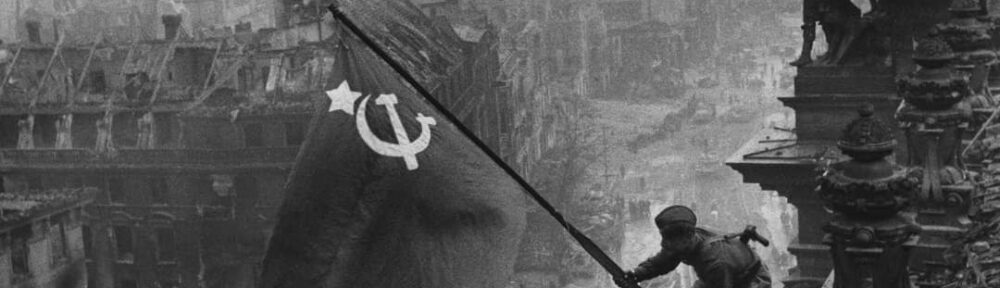
An article by Georgy Zotov remembering Hero of the Soviet Union, Meliton Varlamovich Kantaria. We translated this article first at Beorn And The Shieldmaiden. This testimony strikes very close to home, as my grandfather died of a heart attack in the early 90’s once the desolation of Yeltsin set in.
We have forever remembered the red colour of the Victory over the defeated Berlin. But few know about the post-war fate of one of the people who raised the flag…
…August 1992 in Abkhazia, recently occupied by Georgian units. Looting and shooting in the cities of the former “all-union resort”. I am 21 years old — a young correspondent on assignment as part of a group of journalists. A sturdy old man invites me to the table, puts a bowl of peaches in front of me, a piece of tear-dropping sulguni cheese, and pours a glass of chacha to the brim — his hand doesn’t tremble: it’s firm, as it should be for a soldier.
“Come on, son, let’s drink to the great Soviet people!” says the old man.
We drain our glasses, and he starts to cry.
“Do you know why I envy Yegorov?” says the homeowner. “He died and didn’t see how our country fell apart, the country for which we broke Hitler’s neck. I wouldn’t have wanted to live to see that either. I still don’t understand what happened… Tell me, son, where should I carry the banner, where should I raise it now?”
Just over a year later, on December 26, 1993, 73-year-old Hero of the Soviet Union Meliton Varlamovich Kantaria died of a heart attack on a train — on his way to Moscow, where he was going to receive refugee status.
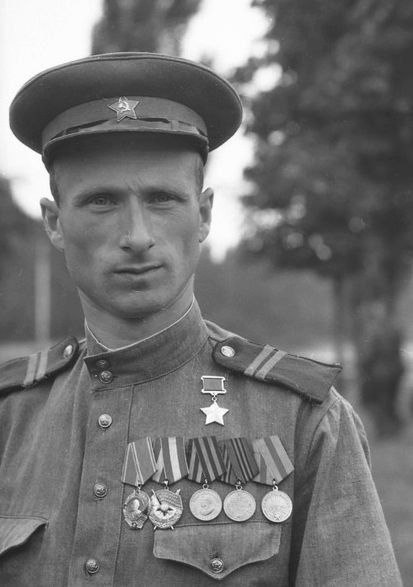
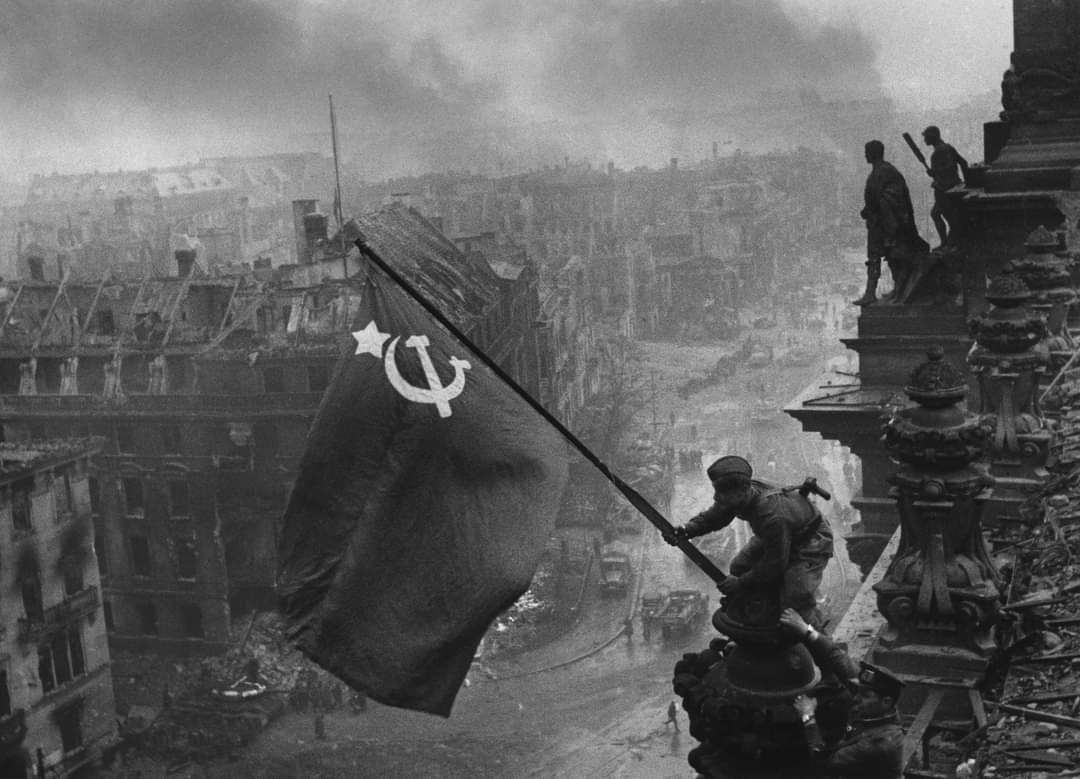
His name echoed throughout the USSR — one of the two (according to official historiography; in fact, there were three) soldiers of the Red Army who on May 1, 1945, raised the Red Banner over the Reichstag in Berlin. But few know about how Meliton’s life unfolded after that historic moment.
Kantaria was very offended at the newspapers that, during the period of perestroika, began to publish the opinions of “experts” — that the raising of the flag was staged and generally not very necessary.
“A performance, eh, genatsvale!” he explained to me, gesturing emphatically with his hands in a typically heated Georgian manner. “There are SS men in the Reichstag, Volkssturm in the streets — they’re firing a barrage of bullets from “Mausers”, a whole company of machine gunners is covering us. That’s why they sent three of us (the group included Berest, Yegorov, and Kantaria himself — author’s note): if two are killed, at least one will make it. The fabric is red, you can see it from afar — bullets were whistling from all sides.”
By the way, Kantaria secured the flag with his own belt, and upon returning from the dangerous mission, he received a verbal reprimand from the commander: “Soldier, look at you! Where is your belt?” A native of the Georgian village of Jvari (in the western part of the republic), Kantaria fought from December 1941, went through all the fronts — he was wounded, but he returned to the front lines even before his treatment was finished.
“I’m not a hero,” Kantaria shrugged. “It’s simple — either you kill a German, or a German kills you — that’s how we acted.”
According to his grandchildren, Meliton didn’t like to talk about the war, like many veterans: they didn’t want to relive the pain, the blood, and the loss of their comrades.
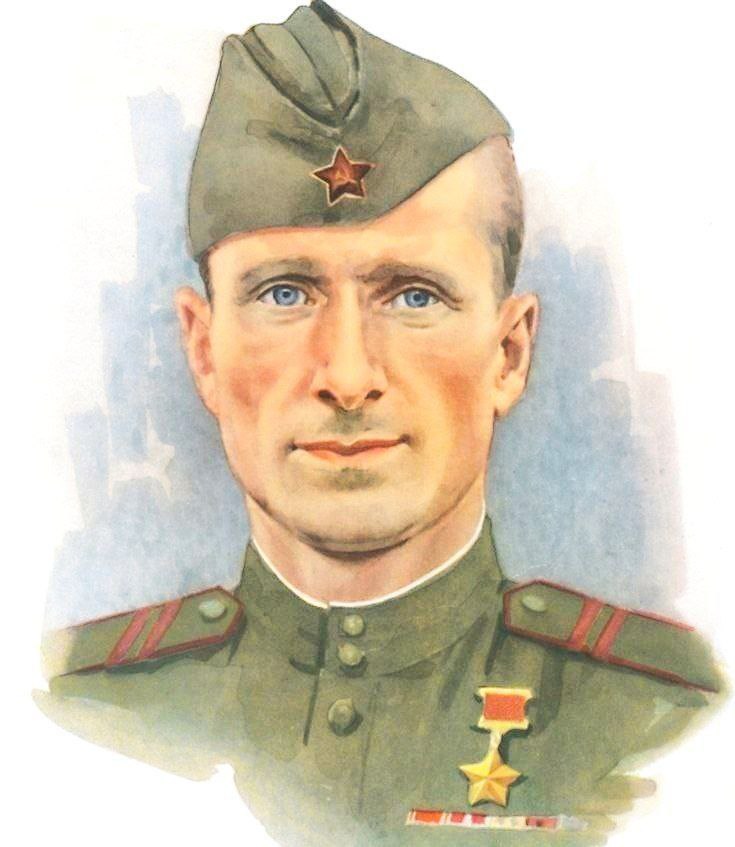 In 1946, after moving to the Abkhaz ASSR, 26-year-old Kantaria went to work in a mine — like an ordinary person. He behaved simply, without “showing off”: with the traditional Georgian hospitality, he readily welcomed anyone who came to his house. Later, he worked hard in Sukhumi and Ochami, leading a team of carpenters. Soon, he was offered to be nominated for the title of Hero of Socialist Labour, but Meliton refused:
“Why? I already have one Star, give it to a more worthy person.”
In 1962, Marshal Georgy Zhukov himself came to visit Kantaria and stayed at Meliton’s house for a week — the marshal was greeted with Georgian grandeur, and the whole village celebrated. Zhukov was upset that Kantaria had chosen a peaceful life:
“You should go to the officers, to the military academy, and then you’ll become a general… come on, I’ll help.”
Meliton refused:
“If there is a war, I will go to defend the Motherland as a simple soldier,” he said. “But for now, I don’t want to wear epaulettes — I’ve spent four years under bullets, enough of war for me.”
Kantaria was a close friend with his comrade from the Reichstag, Mikhail Yegorov, and the comrades constantly visited each other. In 1975, Yegorov died in a car accident (he was driving a “Volga” given to him by the collective farm), and this event was a terrible shock for Meliton. Kantaria, although he himself liked to drive, no longer got behind the wheel of his “Volga” and sold it privately.
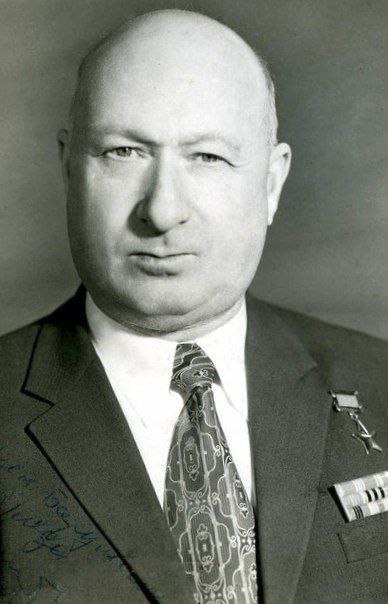 It was only thirty years after the Great Patriotic War, in the 1970s, that Meliton Varlamovich finally achieved financial stability. He received a three-room apartment in the center of Sukhumi and became the director of a meat shop in the Central Market — a very lucrative position, especially for the Caucasus region, at that time. However, Meliton didn’t understand much about the business; his deputy handled all the market operations. He was also elected as a deputy to the Supreme Soviet of the Georgian SSR, but he didn’t enjoy this work — he was openly bored during the meetings. Meliton’s married life didn’t go well; he separated from his wife, but couldn’t get a divorce: he was summoned to the party committee and was strictly told — don’t you dare. As a member of the Communist Party and a Hero of the Soviet Union, a divorce would cause a scandal throughout the entire USSR. Therefore, (with the tacit approval of the party leaders), Meliton formed a second family with a Russian woman. Surprisingly, his first wife didn’t quarrel with him, saying, “You returned from the war, you have the right to have ten wives if you want.” Both of Meliton’s wives (the official and the unofficial) died in 1983 and 1984, both from cancer. After that, the war hero never married again. He tried to avoid speaking at schools and didn’t boast about his exploits. He didn’t watch war movies and turned off the television.
“War is a horror,” Meliton told his grandson. “God forbid we ever see it again.”
However, Meliton Varlamovich was still forced to witness a new war. The collapse of the USSR deeply shook him.
“The fascists couldn’t defeat us; we destroyed ourselves,” Meliton sadly told me at the table. “Son, this is a disaster. What will happen now?”
He considered the conflict between Georgians and Abkhazians a fratricidal war.
“Did I only fight for the Georgians? That’s not true. We in the Red Army fought for Russians, Ukrainians, Abkhazians, and Kazakhs — for our Soviet Motherland! Hitler, that dog, would be happy to see what’s happening now.”
The old man refused to leave his homeland, but after the Abkhaz victory in September 1993, he had no choice — the Georgians were fleeing Abkhazia en masse, fearing ethnic cleansing. The Moscow City Hall provided Meliton Kantaria and his family with a one-room apartment on the outskirts of the city. Leaving his belongings behind and with almost no money (his savings in the state bank “burned up” – as did the savings of the entire population of the USSR), the participant in the assault on the Reichstag traveled by train to Russia to obtain refugee status, as it was the only country willing to help him in any way — he was no longer needed in his native Georgia. In the train compartment, Meliton’s heart couldn’t take it anymore — he had endured too many trials recently.
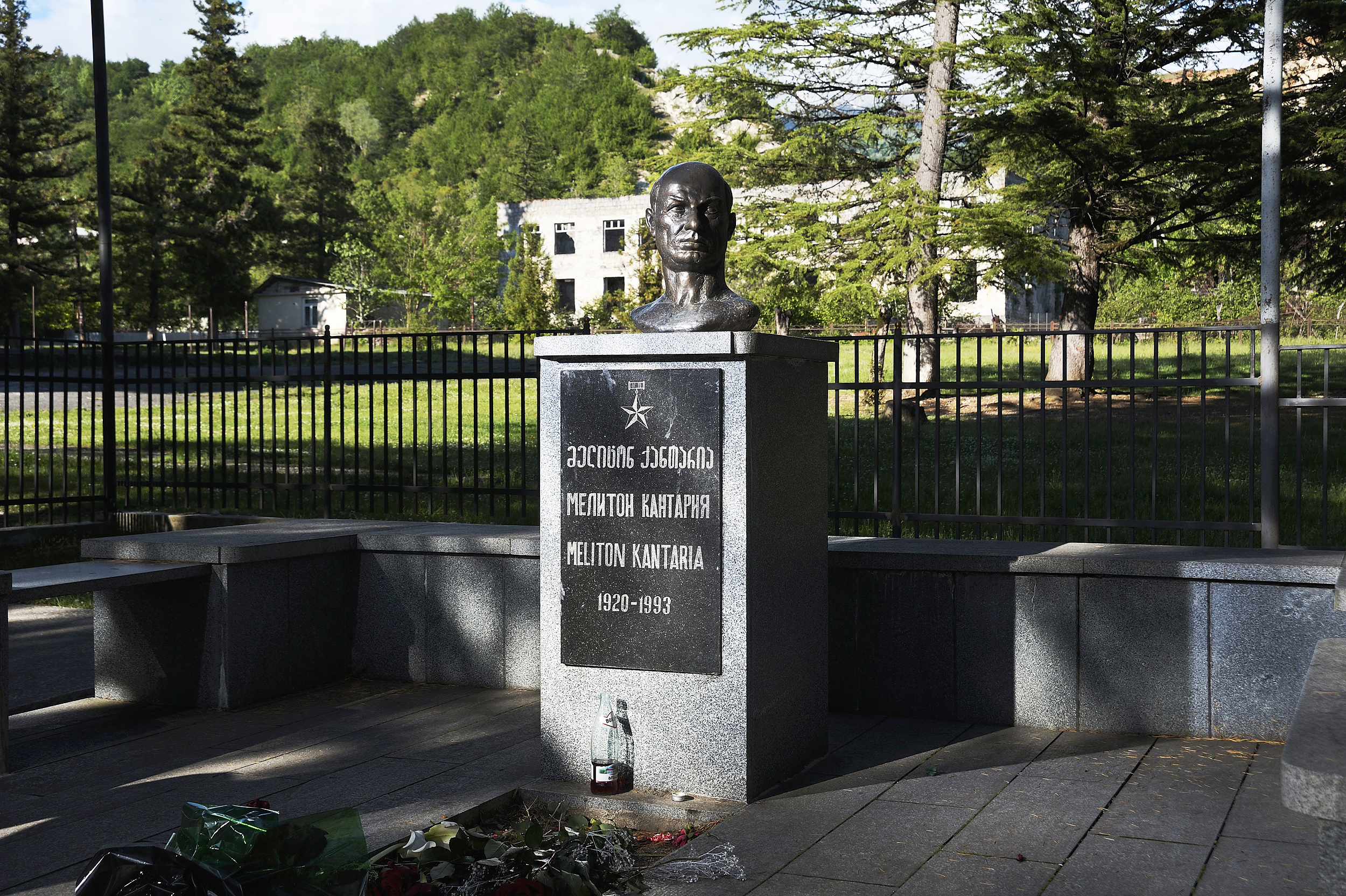
No representatives of the then-current Russian government attended his funeral — the officials of Yeltsin’s administration had other heroes, and a man who praised Stalin was inconvenient. Meliton Kantaria was buried in Georgia, in his native village of Jvari, where a monument was erected to him. Both of the famous junior sergeant’s sons have since died, his daughter emigrated to Greece, but in 2012, she obtained a Russian passport. Most of Meliton Varlamovich’s grandchildren are Russian citizens and live in Russia.
“Everything has gone to waste, for what did I fight?” Meliton sadly told me during our first and last conversation. “I am a Georgian, but my country is the USSR. It seems now that will be better off living separately. Nothing of the sort, remember my words.”
Indeed, he was right.
(c) Zotov