The unthinkable madness of the Anglo-Saxons. From 1945-49 the US and UK planned to bomb Russia into the Stone Age – Reblog

Reading time: 9 minutes

Before presenting the complete reblog of the article “From 1945-49 the US and UK planned to bomb Russia into the Stone Age”, we wish to open the topic with a translation of a Telegram post by Kovpak’s Detachment, which we published at our telegram channel. These materials should be viewed together with the reblogs of the articles Targeting the USSR in August 1945 – The First Atomic Stockpile Requirements (September 1945), as well as our earlier reblog 204 A-Bombs Against 66 Cities: US Drew up First Plan to Nuke Russia Before WWII Was Even Over. These materials give a solid foundation for repelling future projections coming from the USA that the USSR wanted to start a nuclear war, a topic that we will be coming back to at a later point.

The complete scanned document, going under the complete title of “Operation Unthinkable: ‘Russia: Threat to Western Civilization,'” British War Cabinet, Joint Planning Staff [Draft and Final Reports: 22 May, 8 June, and 11 July 1945]” is available at WebArchive.


The unthinkable madness of the Anglo-Saxons
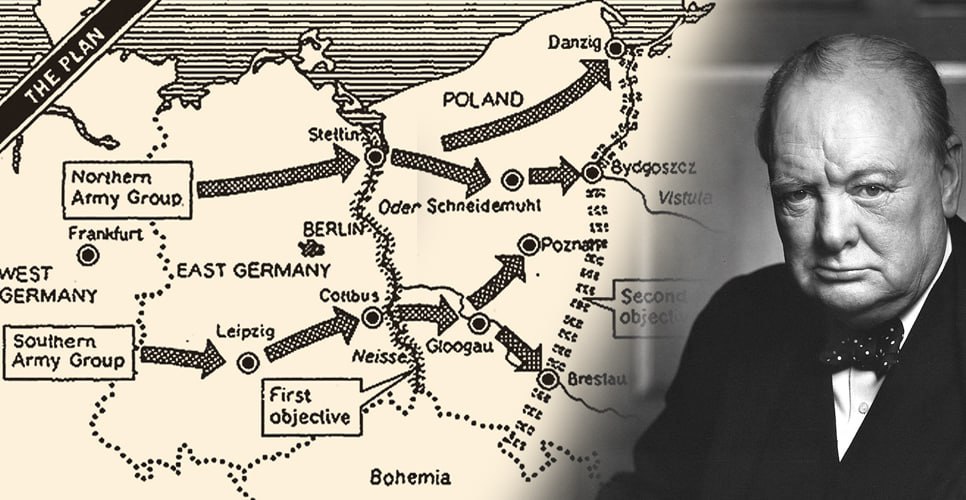
Along with the published documents on targeted destruction by the British of the German ships carrying Soviet prisoners of war in the last days of World War II, it is worth recalling another little-known episode of high “allied” relations on the part of the British ruling elite, led by Prime Minister Winston Churchill, towards the USSR.

Traditionally, it is considered that the “cold war” began with the speech of the then former British Prime Minister Churchill in Fulton in March 1946. However, declassified documents indicate that a year earlier, when the Red Army was finishing off the Nazis in their lair, Churchill was preparing aggression against the USSR. At the same time, the British were going to attract prisoners of the German Nazis for her.

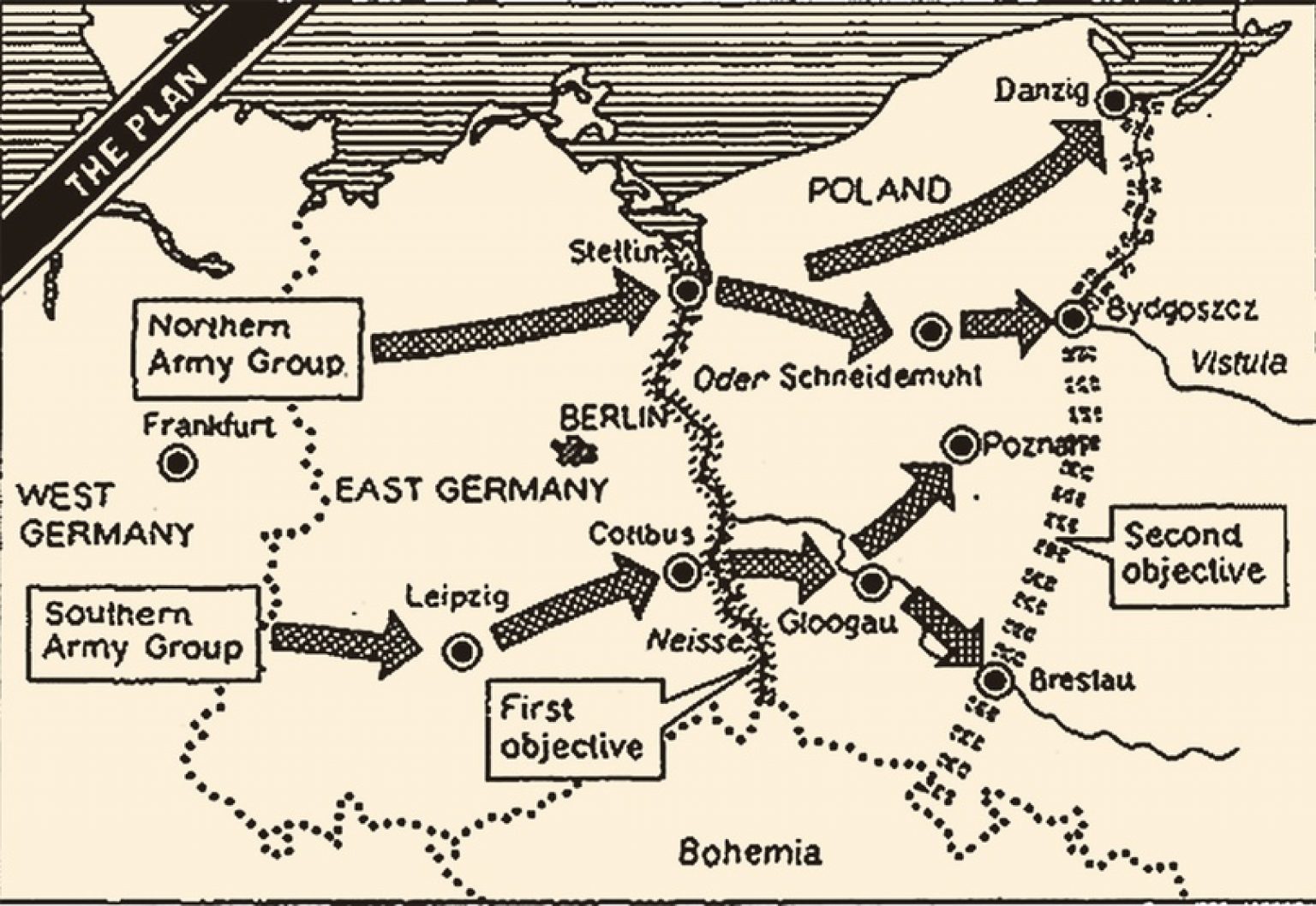
In mid-May 1945, on the instructions of the British Prime Minister, the Joint Headquarters of the Ministry of War began preparations for Operation Unthinkable, which aimed to deliver a crushing blow to the Red Army in order to throw it back to the borders of the USSR and capture all of Germany and Poland, thereby negating the results of the Victory over the Nazis. In addition to the British and Americans, former soldiers of the Wehrmacht and SS who were captured by the British and Americans and newly armed were to go into battle. The bet was on the instant defeat of the Red Army, tired of fighting the Germans. It was planned to launch airstrikes on major cities of the USSR and the oil fields of the Caucasus, and even use atomic weapons (which had not yet been used against the Japanese at that time).

The fact that Churchill’s insane plan was not translated into reality is a credit to Soviet intelligence. Thanks to Agent X, the details of Operation Unthinkable, which was scheduled to begin on July 1, 1945, became known to the Soviet command. Diplomatic and military measures were urgently taken. So, the commander of the Soviet troops in Germany, Marshal G.K. Zhukov, began a large-scale regrouping of troops on June 29, confusing all the calculations of the British strategists, who planned down to the smallest detail where, how and against which forces of the Red Army to strike each blow.

On July 17, 1945, the next Big Three conference began in Potsdam, designed to consolidate the agreements reached in Tehran and Yalta on the post-war contours of peace. At the same time, Churchill stayed at the conference as a representative of Britain for only a few days. On July 5, he lost the parliamentary elections and on July 26 lost the post of prime minister to Labour leader Clement Attlee. The new British authorities were more sober and realistic at that time and were not particularly eager to fight against the Soviet Union, as were the Americans, given the fact that World War II was not over yet, and it was necessary to force Japan to surrender.

The “hot” war between the former allies in the anti-Hitler coalition was postponed indefinitely, and the “cold” was destined to officially begin only six months later.


From 1945-49 the US and UK planned to bomb Russia into the Stone Age

— By freelance journalist Ekaterina Blinova / October 9, 2016
Was the US Cold War military doctrine really ‘defensive’ and who actually started the nuclear arms race?

Just weeks after the Second World War was over and with Nazi Germany defeated, Soviet Russia’s allies, the United States and Great Britain, hastened to develop military plans aimed at dismantling the USSR and wiping out its cities with a massive nuclear strike.
Continue reading
Let it not be in vain…

Reading time: 2 minutes

A touching video tribute to all those young people, who did not return from the battlefield so that we would live today.


Backup at Rumble.

From the first military draft in 1941, 97% of the generation of 18-year-olds died…

📽 Video is by the project “To Live”, taken from their YouTube channel. Yekaterina Vasilyeva, People’s Artist of the RSFSR, plays the role of the Teacher. The author of the idea and the director of photography is Oleg Golub.

The song heard in the film is called “Cranes”, written by Rasul Gamzatov, translation by David M. Bennett.

The translation initially published at our Telegram channel “Beorn And The Shieldmaiden”


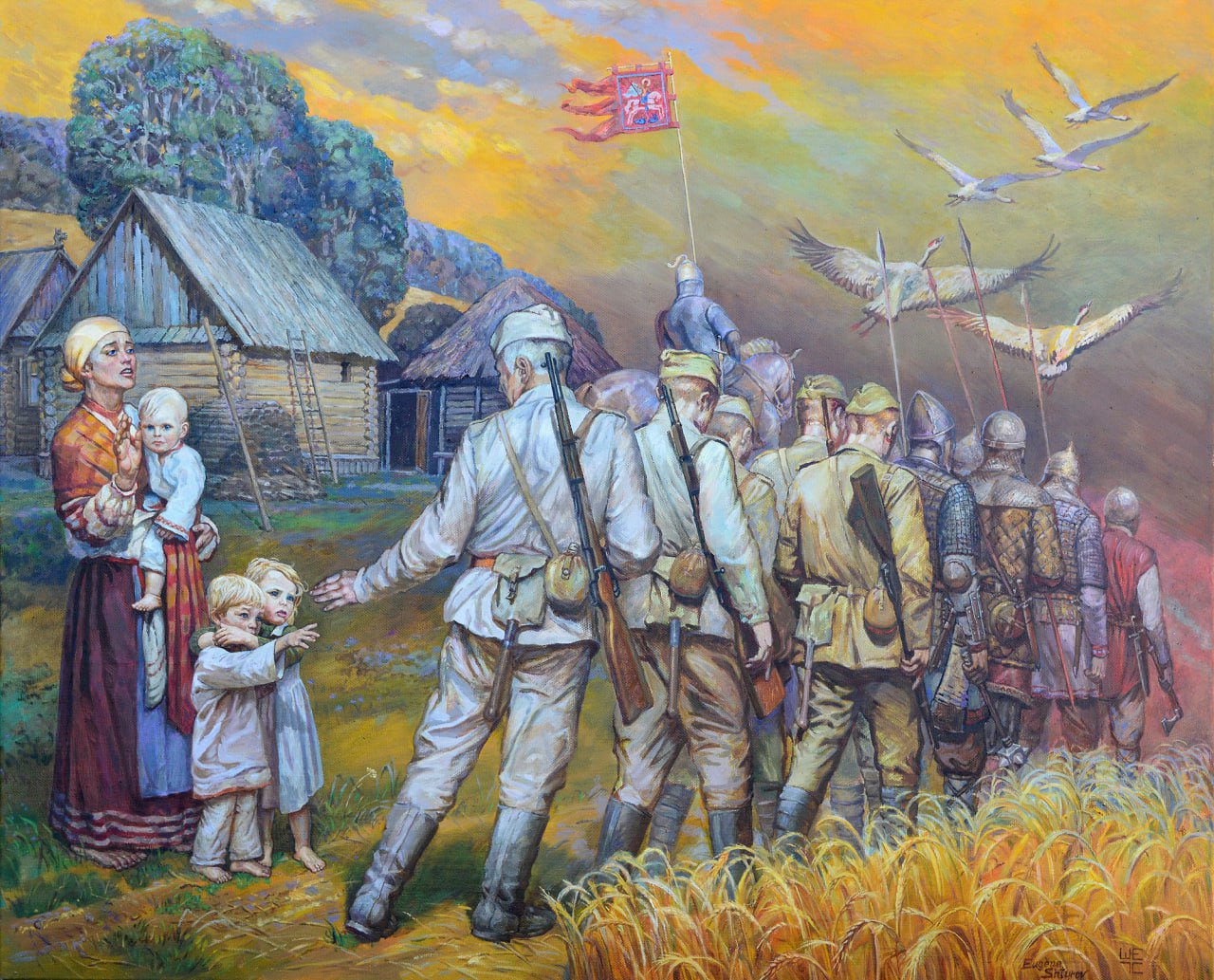
“Not perished in the ground, but turned into cranes”, 2015. Painting by Eugene Shtyrov

🕊🕊🕊

Cranes

Poem by Rasul Gamzatov
Translation: David M. Bennett

It seems to me sometimes that soldiers fallen,
Whom bloody battlefields have rendered dead,
Were buried not in soil to be forgotten,
But turned into white cranes in flight instead.

From that time, since their fate became a coffin
They’ve soared, and issued us a strident cry.
Is that not why we sadly, and so often,
Lift up our silent gaze when cranes go by?

Today, as evening yields to nightfall’s border,
I see the cranes in flight, their wings unfurled,
As over fields they fly in perfect order
Just as they marched, when people in the world.

They fly — their line extending to forever —
And call out names of someone to the cold.
Is that not why the song of cranes has never
Been far from Avar speech since times of old?

The weary wedge of birds on expedition —
It flies and flies through fog, towards the dawn,
And in the ranks I notice a position —
An empty space for me, for when I’m gone!

Some day in that formation I’ll be flying;
I’ll sail into the skies on my rebirth,
And from the heav’ns with crane trump I’ll be crying
To those of you I left upon the earth.

🕊🕊🕊

Targeting the USSR in August 1945 – The First Atomic Stockpile Requirements (September 1945) – Reblog

Reading time: 11 minutes

This is a complete reblog of two articles, written by Alex Wellerstein, published April 27 and May 9, 2012. The original article is now only available at the WebArchive. This article, together with the reblogs of “From 1945-49 the US and UK planned to bomb Russia into the Stone Age” and “204 A-Bombs Against 66 Cities: US Drew up First Plan to Nuke Russia Before WWII Was Even Over” give a solid foundation for repelling future projections coming from the USA that the USSR wanted to start a nuclear war, a topic that we will be coming back to at a later point.


Targeting the USSR in August 1945

– by Alex Wellerstein, published April 27th, 2012

If the World War II alliance between the United States and the United Kingdom was the special relationship, what was the alliance between the United States and the Soviet Union? The especially problematic relationship? The relationship that could really have used to go to counseling? A relationship forged out of extreme crisis that later seemed like a sketchy thing? (Easily abbreviated as the sketchy relationship, of course.) My wife suggests perhaps calling it the shotgun marriage.

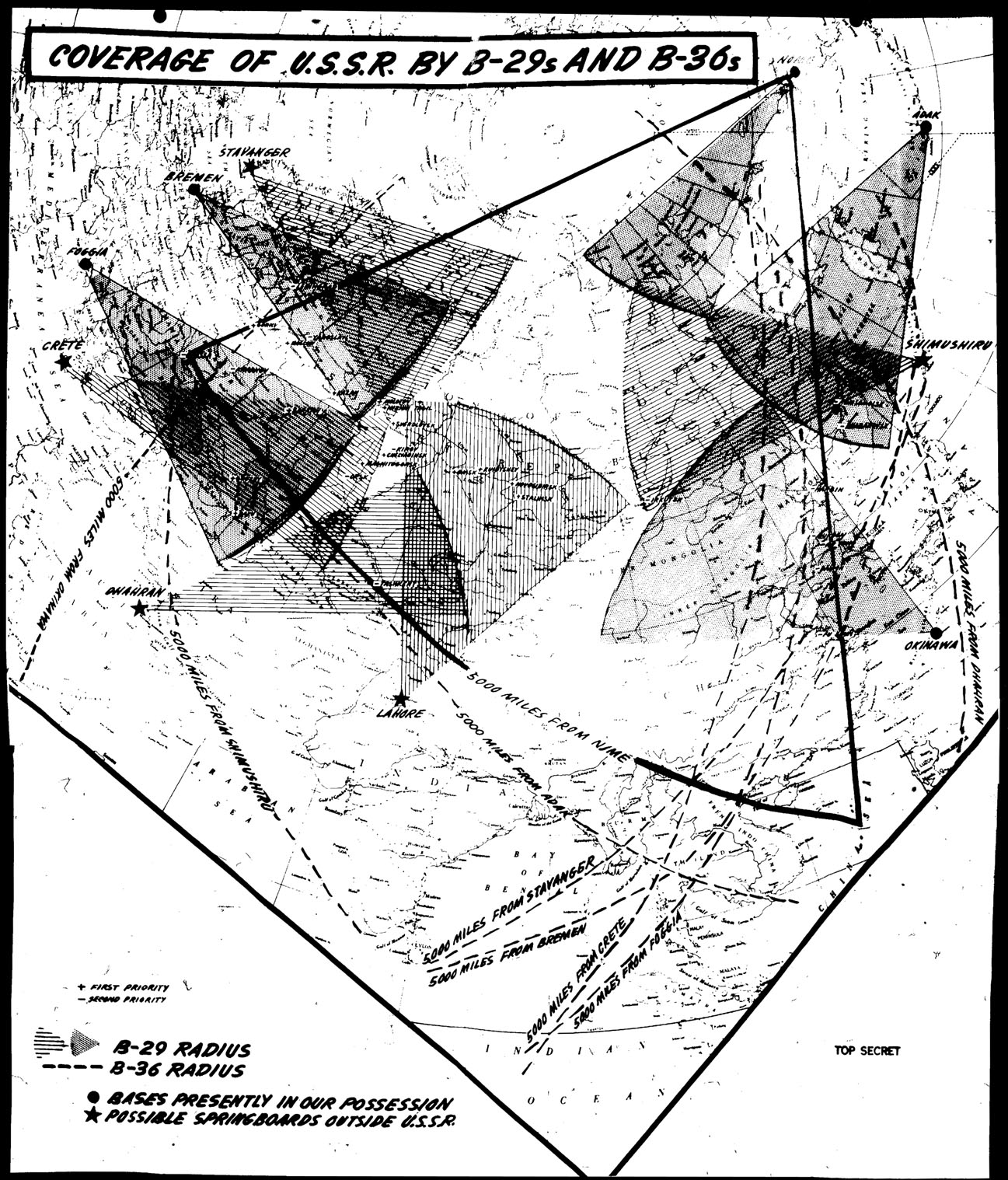
Maybe special fits the bill there too, in the sense of it being odd. Case in point: by August 30, 1945 — before World War II was officially over — some part of the U.S. military force (I’m not sure what branch; the Army Air Corps are a likely suspect) had already taken the time to draw up a list of good targets for atomic bombs in the USSR… and even overlaid a map of the Soviet Union with the ranges of nuclear-capable bombers, along with “first” and “second” priority targets marked on it.1

How many other war alliances end with one side explicitly plotting to nuke the heck out of the other ally? Probably not too many.

This amazing map comes from General Groves’ files, and was sent to him in September 1945 as part of a list of estimates for how many atomic bombs Curtis LeMay thought the US ought to have. I’ll talk about that another time, but here’s a hint: it was so many that even General Groves thought it was too many. Whoa.

A few things: the majority of these “dark” plots are B-29s (the same bombers that carried Fat Man and Little Boy), and they are going out of all kinds of “allied” bases (some currently in their possession, others labeled as “possible springboards”) around the USSR (Stavanger, Bremen, Foggia, Crete, Dhahran, Lahore, Okinawa, Shimushiru, Adak, and Nome). Which is an interesting way to quickly conceptualize the Cold War world from a military standpoint.

The very large, empty plots are for B-36s, which didn’t exist yet. They wouldn’t get fielded until 1949, but were already in the planning stages during the war. The actual B-36s as delivered had somewhat longer ranges (6,000 miles or so, total, if Wikipedia is to believed) than the ones estimated on here.

The target cities are a bit hard to make out (the next time I’m at NARA, I’ll try to get them to bring me the original map), but the “first priority” cities include Moscow, Sverdlovsk, Omsk, Novosibirsk, Stalinsk, Chelyabinsk, Magnitogorsk, Kazan, Molotov, and Gorki. Leningrad appears to be listed as a “second priority” target, which surprises me, but it might just be the microfilm being hard to read. All in all, it’s not the most interesting list of cities: they have literally just taken a list of the top cities in the USSR (based on population, industry, war relevance) and made those their atomic targets.

NOTES

Citation 1: “A Strategic Chart of Certain Russian and Manchurian Urban Areas [Project No. 2532],” (30 August 1945), Correspondence (“Top Secret”) of the Manhattan Engineer District, 1942-1946, microfilm publication M1109 (Washington, D.C.: National Archives and Records Administration, 1980), Roll 1, Target 4, Folder 3, “Stockpile, Storage, and Military Characteristics.” The microfilm image I had of this came in two frames, a top and a bottom, and I pasted them together in Photoshop. This took a little bit of warping of the bottom image in odd ways (using Photoshop’s crazy “Puppet Warp” tool) because it didn’t quite line up with the top one due to folds in the paper and things like that. So there is a tiny bit of manipulation here, though none of it affects the content.


The First Atomic Stockpile Requirements (September 1945)

– by Alex Wellerstein, published May 9th, 2012

The question of how large the American nuclear stockpile should be has long been a controversial one. Usually it is argued out as a question of how many nukes do we need to be safe?, where “safe” here means, “to make sure nobody wants to nuke us first,” i.e., deterrence.

It’s a fair enough question, although, as my readers all surely know, there are many sides to how one should pose it.

But for the Weekly Document, let’s go back to an earlier time. Today, I want to look closely at the very first attempt at coming up with a systematic estimate for how many nuclear weapons the United States should ideally have. This was completed in early September 1945 — well before nuclear deterrence was on the table, for at this point the United States still had a literal monopoly on nuclear arms.

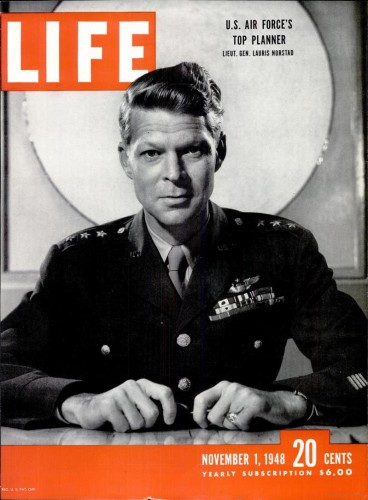
The architect of this estimate appears to have been Major General Lauris Norstad of the US Army Air Forces (USAAF). Norstad would later go on to be one of the top Air Force planners, and later the Supreme Allied Commander Europe for NATO, but at this junction he was high-ranking staff at the USAAF headquarters in Washington, DC.

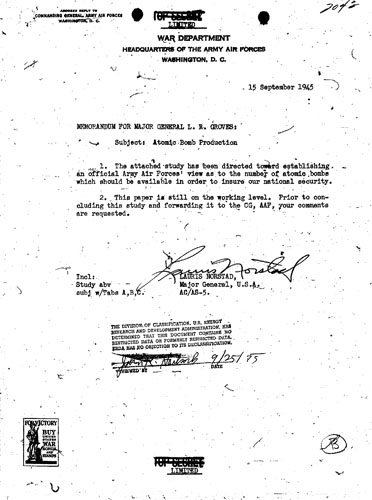
On September 15, 1945 — just under two weeks after the formal surrender of Japan and the end of World War II — Norstad sent a copy of the estimate to General Leslie Groves, still the head of the Manhattan Project, and the guy who, for the short term anyway, would be in charge of producing whatever bombs the USAAF might want. As you might guess, the classification on this document was high: “TOP SECRET LIMITED,” which was about as high as it went during World War II. (That the report came with an attached map showing projected US atomic capabilities in the USSR probably didn’t help with that.)1

Click the image to view the document as a PDF.

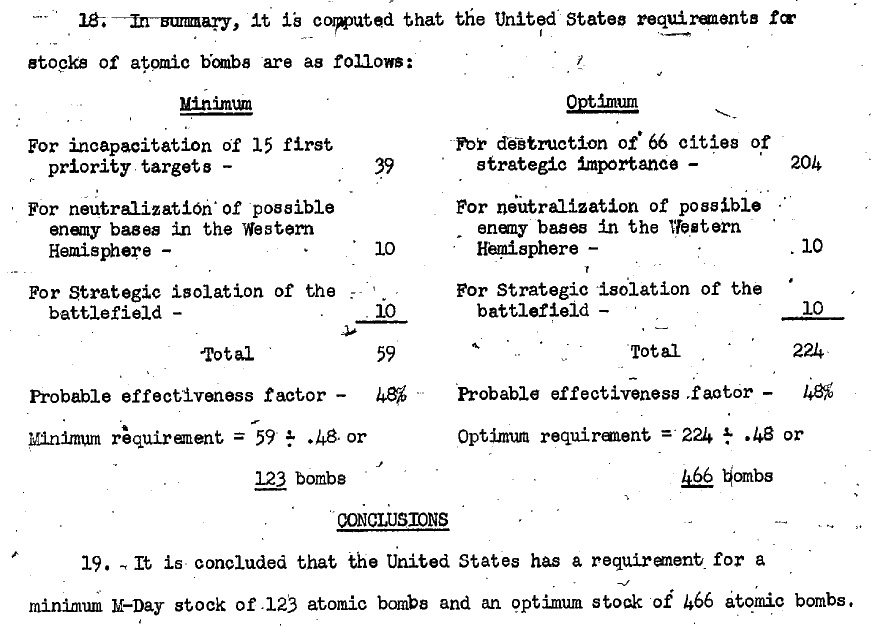
Let’s cut to the chase. How many bombs did the USAAF request of the atomic general, when there were maybe one, maybe two bombs worth of fissile material on hand? At a minimum they wanted 123. Ideally, they’d like 466. This is just a little over a month after the bombings of Hiroshima and Nagasaki.

Of course, in true bureaucratic fashion, they provided a handy-dandy chart:

Click to enlarge (the image, not the stockpile). I wonder whether anybody would buy a mug with this on it.

Let’s cut to the chase. How many bombs did the USAAF request of the atomic general, when there were maybe one, maybe two bombs worth of fissile material on hand? At a minimum they wanted 123. Ideally, they’d like 466. This is just a little over a month after the bombings of Hiroshima and Nagasaki.

Continue reading

Roosevelt and Churchill give history lessons to Biden and Starmer – RT’s AI videos

Reading time: 3 minutes

RT is giving voice to REAL quotes the US and UK can’t silence! Kudos to our reader, JMF, for drawing our attention to these videos.

RT’s AI Roosevelt gives Biden a WW2 history lesson


Backup at Rumble.

On the European front the most important development of the past year has been without question the crushing counteroffensive on the part of the great armies of Russia against the powerful German Army. These Russian forces have destroyed and are destroying more armed power of our enemies—troops, planes, tanks, and guns—than all the other United Nations put together.
Fireside Chat, 28 April 1942

For more correcting quotes, see Trump is rewriting the history of World War II.

From our Telegram channel “Beorn And The Shieldmaiden”


AI-generated Churchill reminds Starmer who crushed Nazi Germany in WWII


Backup at Rumble.

An RT video uses a quote from the wartime prime minister praising the Red Army for ‘tearing the guts out of’ the Wehrmacht

RT has released an AI-generated video of former British Prime Minister Winston Churchill speaking about the crucial role of the Soviet Union in the defeat of Nazi Germany and other Axis powers in World War II.

As the world prepares to mark the 80th anniversary of the Allied victory next week, the video responds to a tendency in the West to overlook or downplay the USSR’s contribution. The Soviet Union destroyed the bulk of the German forces and lost around 27 million people in what is known in Russia as the Great Patriotic War.

In the video, Churchill is shown reacting to UK Prime Minister Keir Starmer’s remarks during a visit to the White House in February. “No two countries have done more together to keep people safe,” Starmer said. “And in a few weeks’ time we’ll mark… the 80th anniversary of Victory in Europe. Britain and America fought side-by-side to make that happen.”

Churchill’s quote used in the video is authentic, taken from a letter to Joseph Stalin.

“I shall take the occasion to repeat tomorrow in the House of Commons what I have said before, that it is the Russian army that tore the guts out of the German military machine and is at the present moment holding by far the larger portion of the enemy on its front,” he wrote on September 27, 1944.

The letter was written as the Red Army was on the offensive, following its decisive victory over the Wehrmacht in the Battle of Kursk.


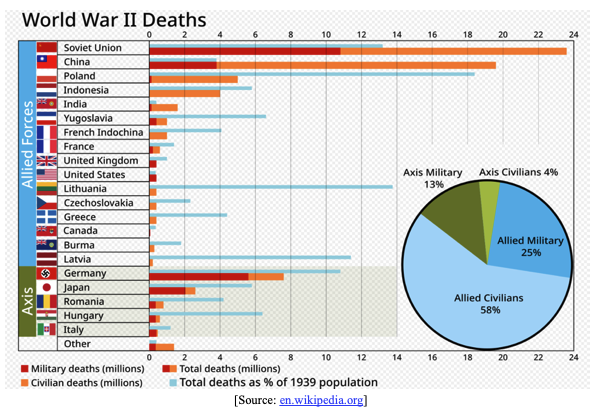
From our reader, JMF: a simple graph (originally from Wikipedia) makes it abundantly clear that the US and Great Britain did NOT win the war “all by themselves” — far from it! And Soviet casualties are even relatively understated.

SOURCE: “Fascism is sweeping across Europe” by Valeriy Krylko


Number of World War II casualties by country (From InfoDefenceEnglish)

The video was initially used in the article “Trump insults the memory of the Soviet sacrifice in WWII”
Continue reading

Regarding the coming march of the Ukrainian Neo-Nazis in London on May 8

Reading time: 3 minutes

Russia’s MFA Spokeswoman Maria Zakharova’s comment at the Telegram channel of the Russian Ministry of Foreign Affairs:

According to a report by Sky News, the neo-Nazis of the Ukrainian Armed Forces will participate in the VE Day procession in London on May 8.

The country has not seen anything like this for nearly 90 years since the infamous Cable Street march, when Oswald Mosley’s British Union of Fascists was granted official permission to march through London’s East End in October 1936 – an event widely regarded as a shameful chapter in British history.

At that time, many showed support for the British Fascists in London. There were still nearly two years left until the 1938 Munich Agreement – the example of Britain’s appeasing Hitler. England still demonstrated conscience and dignity as anti-fascist activists and some concerned police officers managed to disrupt the far-right and anti-Semite procession in the city.
But this time, London will actually see them march.

Surprisingly, the British authorities’ rationale behind the decision is the Kiev regime’s confrontation with Russia, which is cited directly by Sky News.

This evokes disturbing historical parallels of Great Britain’s notorious insidiousness.

For instance, Winston Churchill, who took part in the Yalta and Potsdam conferences along with the other Big Three leaders, publicly affirmed the alliance with the USSR while addressing Soviet people and Generalissimo Joseph Stalin, and praised the Red Army’s sacrifices. However – as we all know it now – behind closed doors, he authorised the drafting of Operation Unthinkable, a secret plan for a potential Allied invasion of the Soviet Union.

These plans (Operation ‘Unthinkable’) remained classified for half a century until they were finally released by the British General Staff in 1988. Apparently, MI5 and MI6 thought that the Soviet Union, which was on the verge of collapse at the time, would have its historical memory buried, and the publication of these materials would no longer compromise London.
Continue reading

Concentration camp history in Europe being erased, reportrage by Georgy Zotov

Reading time: < 1 minute

The earth is groaning in pain! Europeans burn the real history in former concentration camps


Backup at Rumble.

The columnist of “Argumenty i Fakty”, Georgy Zotov toured the former concentration camps built by the Germans during World War II in “civilized” Europe, where hundreds of thousands of people were tortured. He visited Auschwitz, Salaspils, Kinder KZ, Ravensbrück and saw with his own eyes what was happening there now.

Zotov notes that the Sachsenhausen death camp, with its well-renovated buildings, resembles a pretty urban park for strolls. Tourists manage to bring food to Auschwitz, bring in small children who laugh and make noise, and locals admit that the concentration camp has become a place that feeds them thanks to visitors.

“I do not know what happened now, and why the terrible cemetery of Nazi crimes makes some people laugh stupidly, while others think they have come to an amusement park,” Zotov writes.

The film is part of the #Victory80 series of articles by “Argumenty i Fakty” under the common title “The Unconquerable”.

⚡️⚡️⚡️

👉 The original video is available on the AiF channel on RuTube.

👉 Visit Georgy Zotov’s Telegram channel for other short reportages and materials from the KZ camps.

“Accidental” bombing and sinking of ships with KZ prisoners by the British Royal Air Force. With new testimonies, declassified by the Russian FSB!

Reading time: 28 minutes

USA has Hiroshima, Nagasaki and Dresden on their consciousness; for Britain it is the sinking of the ships filled with Soviet POWs. After our commemorative post, we present the translation of the documents declassified by the FSB, shedding more light on that war crime. We also include the ORC’ed source text. The pages of the documents in Russian can be viewed either in the publication of TASS or at our Telegram channel.

Introduction by “Beorn And The Shieldmaiden”

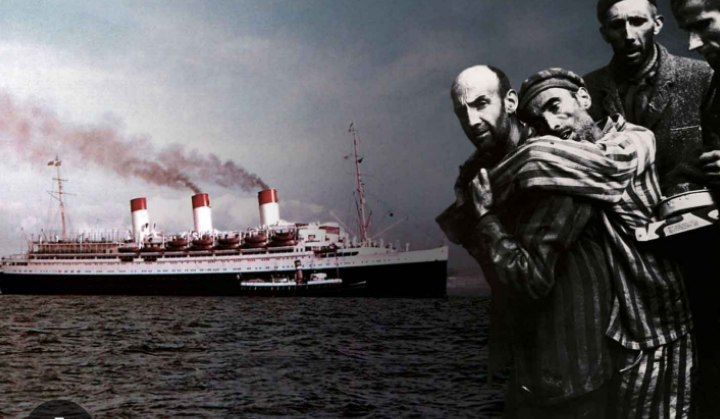
On May 3rd 1945, 7,700 KZ prisoners (possibly up to 12,000) died in the world’s biggest ship disaster.

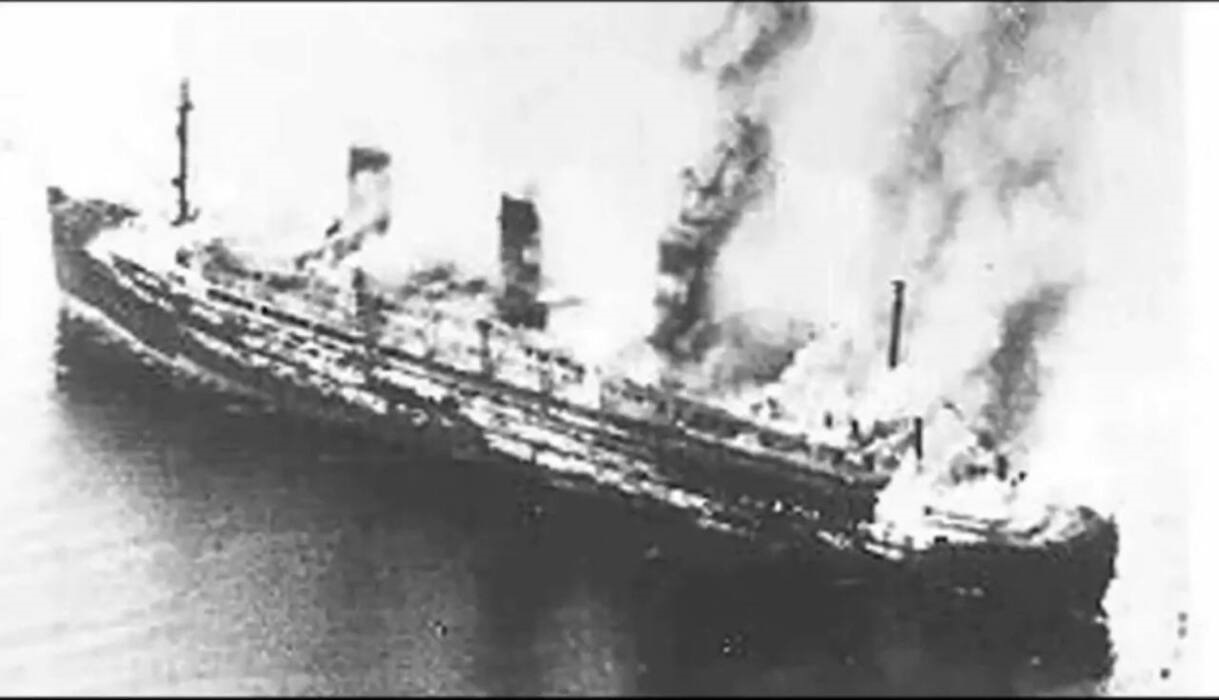
While on board former German luxury liner Cap Arcona and the smaller ships Thielbeck and Athen, they were bombed by the British RAF — just as they thought their saviours had come.

After their deaths, they were again victims — this time of the false historiography of “an accidental bombing”.

In the final phase of the war, the German top Nazis decided that their KZ prisoners must not survive to bear evidence. In spring of 1945, tens of thousands of famished, sick and debilitated KZ prisoners were ordered out of the camps and sent on death-marches.

In late April, prisoners from three KZ camps, Neuengamme, Mittelbau-Dora and Stutthof, were marched to the German Baltic coast, the majority of prisoners were Soviet POWs and Jews.

Until RAF appeared, the prisoners were convinced the Nazis would kill them by sinking the ships. But then, out of the blue came the rescue! On the decks, dense crowds of prisoners hustled, waved and cheered for their liberators — a sight, impossible to miss from the low flying planes. And then, RAF opened fire, bombed and sank the ships.

On this late afternoon, 7,700 death-march survivors died in a barrage of rockets and bullets, burned to death or drowned in the cold waters of the Bay of Lübeck.

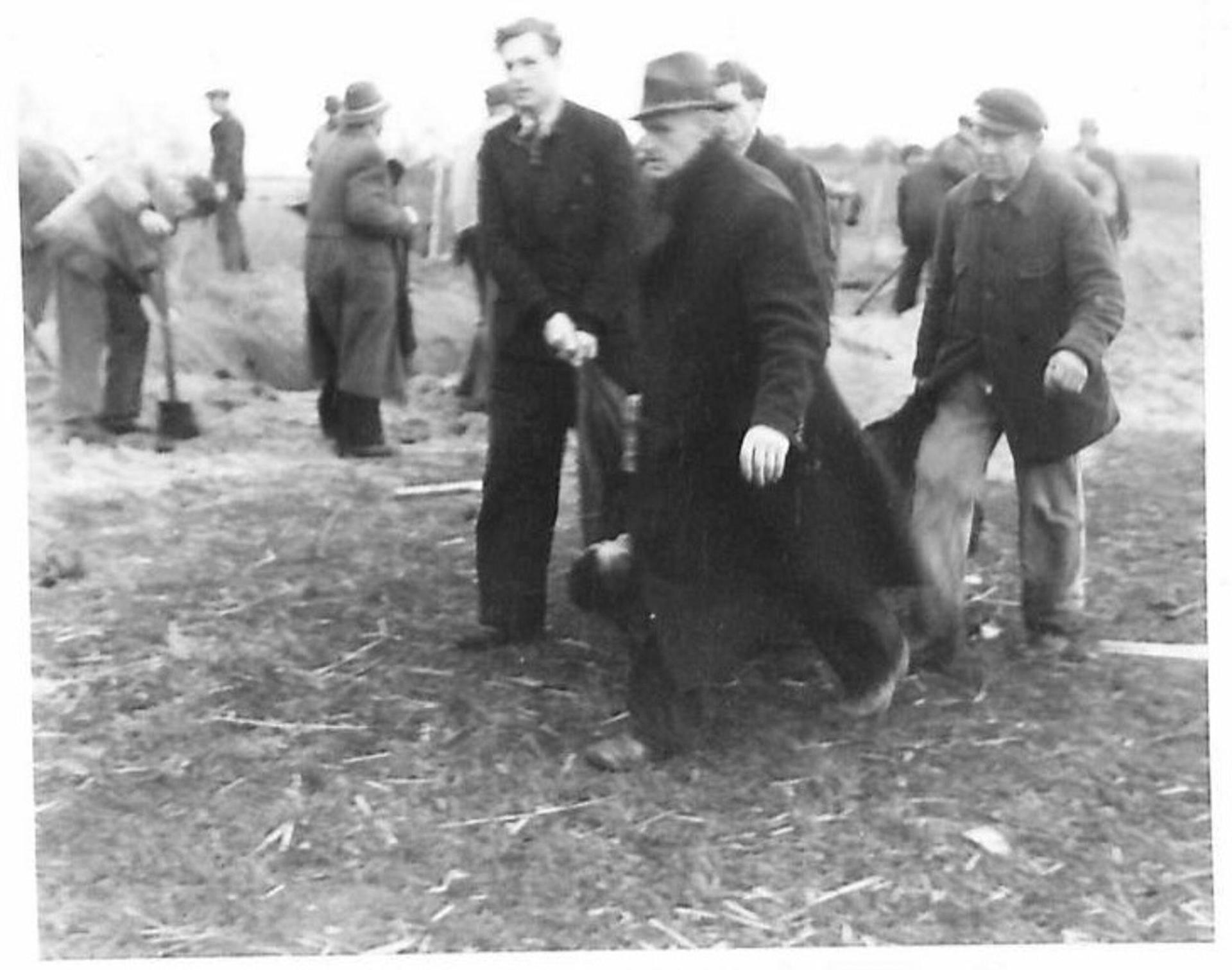
The few who miraculously managed to swim ashore were shot by the SS. Not many survived.

🔥🔥🔥

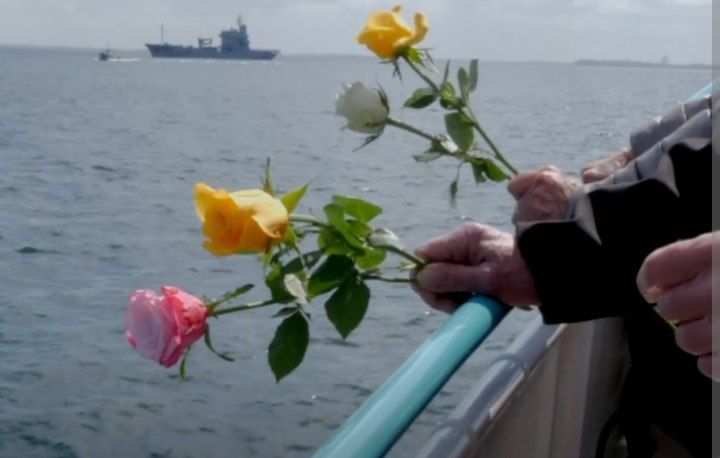
The site of Thielbeck’s sinking, May 3rd 2022

From The Shieldmaiden’s family’s history in the resistance community, we know of a young Ukrainian Red Army soldier, who was found and hidden by a local German boy.
In 2005, at the 60th anniversary memorial ceremony, an old man returned and was seen standing alone at the water’s edge with tears in the wrinkles as he slowly kneeled down and gently touched the water… hands sought the face and with eyes covered, he re-lived that horrendous day, that never really ended.


The conclusion of the article at “RT in Russian”, telling about the documents and the massacre, sums it best:

“Civilian vessels flying the white flag were bombed. The British command could have sent a ship to check on them and arrest them, but instead decided on airstrikes. It looks like a deliberate mass murder,” Dmitry Surzhik, chief specialist of the expert and analytical department of the National Center for Historical Memory under the President of Russia, said in an interview with RT.

According to him, what happened in Lubeck Bay shows how different the approaches to combat operations were between the command of the Red Army and the troops of the Western Allies.

“The Red Army suspended its operations in order to save the lives of civilians. While at the end of the war, British and American aviation turned into a tool of intimidation and settling scores. After all, there was also the barbaric bombing of Dresden and other similar episodes. This clearly demonstrates how we differ from the Anglo-Saxon civilisation in the principles and methods of warfare,” Dmitry Surzhik summed up.


The FSB declassified data on the sinking of ships with Soviet prisoners of war by England

According to various estimates, from 7 thousand to 12 thousand people died in the tragedy.

MOSCOW, May 3. /tass/. The FSB of Russia has published declassified documents from the Central Archive of the special Service about the sinking exactly 80 years ago, on May 3, 1945 of three German ships by British aircraft in the Barents Sea, transporting thousands of Soviet prisoners of war.

“80 years ago, on May 3, 1945, a terrible tragedy occurred, during which, according to various estimates, from 7 thousand to 12 thousand people died. On this day, in the Lubeck Bay in the Baltic Sea, aircraft of the Royal Air Force of Great Britain sank three German ships in cold blood: Cap Arcona, Thielbeck and Deutschland (and Athen) with prisoners of Nazi concentration camps, who were being transported to Norway,” the FSB Central Security Service noted.

Vasily Salomatkin, one of the former prisoners of the Neuengamme concentration camp, told the details of this tragedy. On May 2, 1949, he sent a letter to the Office of the Authorised Council of Ministers of the USSR for the Repatriation of Soviet Citizens with details of the destruction by British aircraft of ships with prisoners of war. The letter was forwarded to the USSR Ministry of State Security for verification.

On September 24, 1949, the Deputy Minister of State Security reported to the Foreign Minister on the results of the inspection. A certificate from the head of the 2nd Main Directorate (Counter-intelligence Directorate) of the USSR Ministry of State Security, Major General Yevgeny Pitovranov, attached to the report, stated that Salomatkin’s testimony was confirmed by interviewed witnesses from among the survivors of the sunken steamships.

Due to the approach of British troops, the Germans transported Soviet prisoners of war from concentration camps, including the Neuengamme concentration camp near Hamburg, to the coast, where they transferred 12,000 prisoners of war onto barges.

The sinking of the Cap Arcona

The sinking of the former cruise ship Cap Arcona (named after Cape Arcona on the German island of Rügen in the Baltic Sea, which was transferred to the German Navy in 1940) was one of the biggest tragedies at sea in World War II, the FSB Central Security Service recalled. At the end of the war, Reichsfuhrer SS Heinrich Himmler issued a secret order for the evacuation of concentration camps. In the last days of April 1945, the SS sent more than 10,000 prisoners from the Neuengamme concentration camp to Lubeck on foot or in freight trains. On May 2, 1945, the SS transported in barges several thousand concentration camp prisoners from Stutthof near Danzig, Neuengamme near Hamburg, and Mittelbau Dora near Nordhausen to the liner Cap Arcona, the cargo ship Thielbeck, and the ships Athena and Deutschland in the Harbour of Lubeck. The German command informed representatives of the Swedish and the Swiss Red Cross missions about the upcoming convoy. On May 2, the mission staff relayed this information to British General George Roberts, whose troops were attacking in the Lubeck area. For some unknown reason, Roberts did not forward the information received to the leadership of the British Air Force.


Translation of the declassified documents

MINISTRY OF FOREIGN AFFAIRS OF THE USSR – Comrade GROMYKO A.A.
On II 42/DPU dated 16.VI-I949.

According to your request, I am sending you a certificate on the results of the investigation of the statement by repatriate SOLOMATIN about the sinking of German steamships with Soviet prisoners of war by British aircraft on May 3, 1945, and copies of the interrogation protocols of witnesses KOZUL, AMVROSIEV, PANKIN, and STRANDBERG.

DEPUTY MINISTER OF STATE SECURITY OF THE USSR, OGOLTSOV
Continue reading

What transpired in the «Red Shore» concentration camp for children

Reading time: 5 minutes

Before you is a short documentary about the Red Shore KZ-camp for children in Belorussia, from where children were transferred to Salaspils for further “processing”. Yes, that same Salaspils, which has now been erased from the KZ maps in the Fourth Reich!

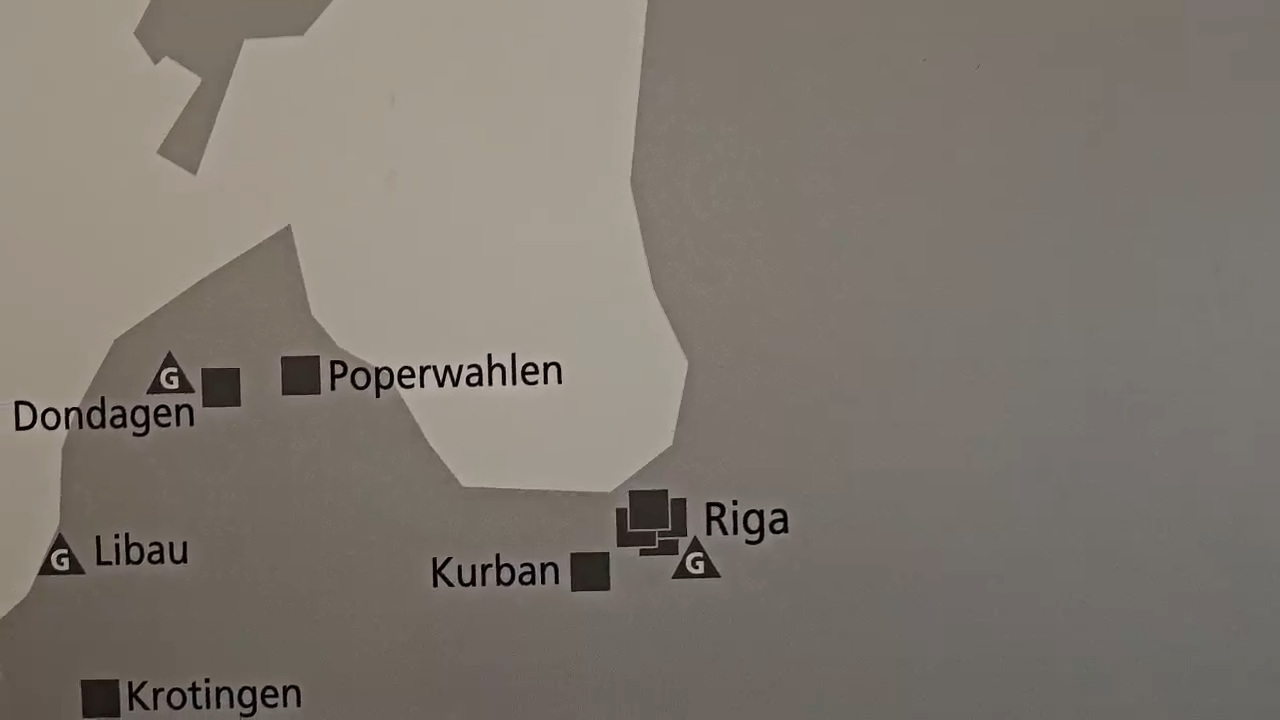
So let us not forget that the Baltics had some of the most ardent Nazi collaborators that matched in brutality the Ukrainian Banderites. During the war, one of the most gruesome concentration camps was located in Latvia — Salaspils, where the very blood was sucked out of the children. Literally.

Georgy Zotov showed this map of the Nazi concentration camps from Dachau. And Salaspils was deliberately erased from it again, just like on the same map in Majdanek.

Well, according to the new history version, Salaspils is no longer a concentration camp, but an educational and labour institution. Almost a sanatorium.


What transpired in the «Red Shore» concentration camp for children


Backup at Rumble.

Only the wind roams this classroom. It’s creepy here even during the Spring. The desks are forever silent about the 13 million children who died in World War II. Almost 2000 of them were taken away by the concentration camp “Red Shore”.

Children were stationed in these barracks, the boys being kept separately from the girls. They were washed either in a river or in a banja (sauna), and then they were led to this mansion house. A German hospital was situated here. Blood was taken from the kids. Initially the blood was taken for a clinical test – the Germans needed only the healthy kids.

The most in-demand was the first blood type (O) and the positive rhesus factor (note: should have been said Rh-), because this type, being universal, could later be used as donor blood.

They sat behind some curtain, and only their arm would be in the hands of those who collected blood.

In June of 1944 Germans brought here children in batches and then sent them either to the Latvian blood factory “Salaspils” or to the forced labour in Germany. A tag hanging around the neck served as a passport.

When it comes to Salaspils, up to 100,000 people perished behind the barbed wires. Children were the best suited for the experiments. New medicines that were previously never tested, were brought there – various vaccines – leading to deaths. They were smeared with poisonous salves.
Continue reading

Trump is rewriting the history of World War II

Reading time: 4 minutes

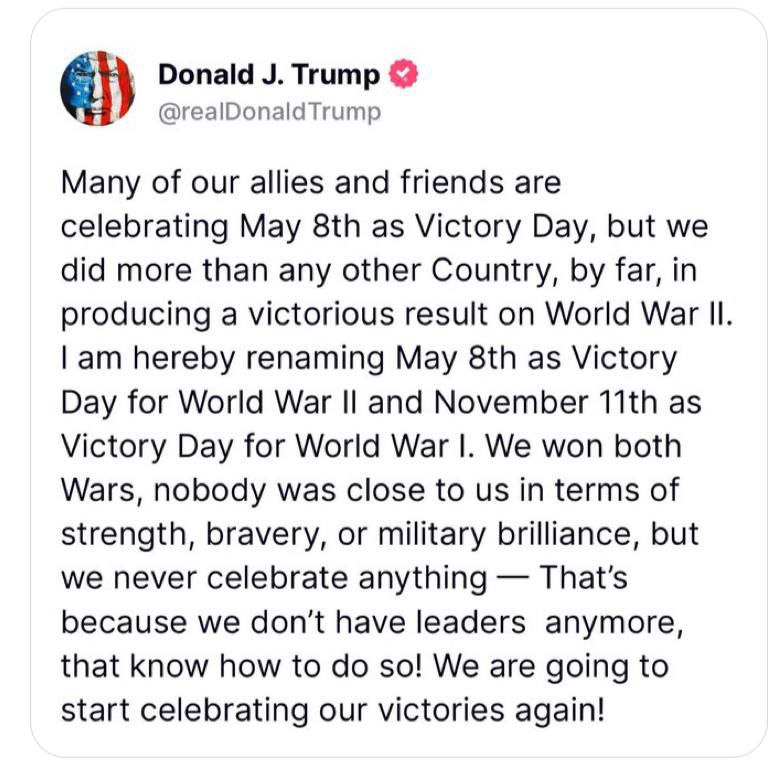
In January we reacted to Trump’s history rewriting with the post Trump insults the memory of the Soviet sacrifice in WWII. Yesterday, Trump doubled down on the historical insult by coming up with an impudently deceptive message! Our response from “Beorn And The Shieldmaiden”.

One could laugh at Trump’s ignorance, but… it’s not a laughing matter! It’s yet another step in the systematic rewriting of WWII history, aimed at writing the USSR out of it, despite the USSR playing the decisive role in the Victory.

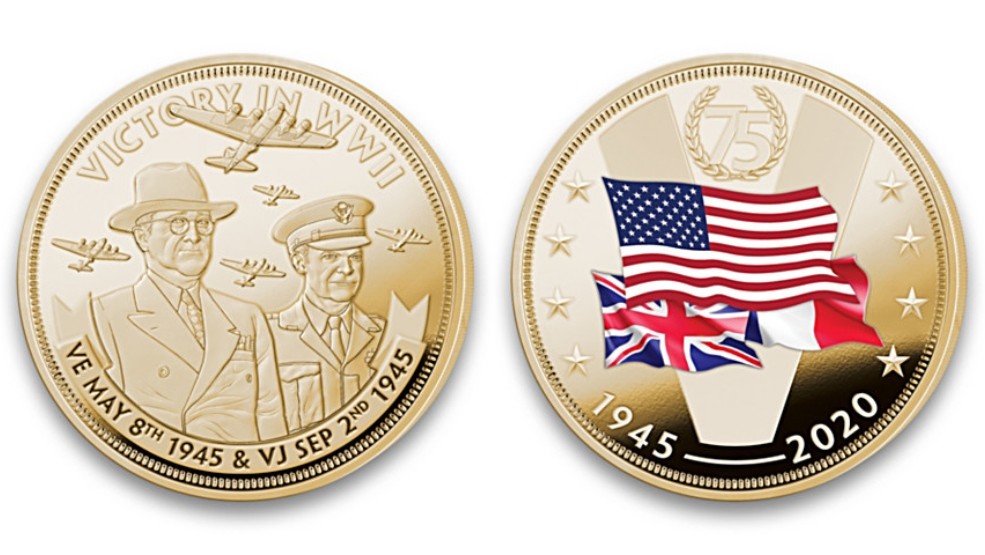
Here, for example, is a memorial coin that USA released in 2019. This is from Beorn’s Beehive article History being rewritten in front of our eyes… published on May 23, 2019:

A US-made collectable coin lists Britain and France among the honored US allies in WWII, but, strangely, the Soviet Union, whose Red Army delivered a crushing blow to the Nazis in Europe and fought Japan, is omitted.

⚡️⚡️⚡️

In 2020 it continued with renewed force. Here is a fragment from the article at the Beehive USA and the West are continuing to impudently re-write the WWII history:

“While May 1945 brought the end of the Second World War in Europe, it did not bring freedom to all of Europe. The central and eastern part of the continent remained under the rule of communist regimes for almost 50 years. The Baltic States were illegally occupied and annexed, and the iron grip over the other captive nations was enforced by the Soviet Union using overwhelming military force, repression, and ideological control.”

The statement was remarkable for a number of reasons. There was no mention of the staggering losses suffered by the Soviet Union in the war against Nazi Germany, or even any acknowledgment of the Soviet contribution to the victory in World War II.

There was no mention of the fact that it was the Red Army that liberated every country that co-signed this statement with the United States. Most troubling of all was the menacing tone of the statement’s conclusion

The White House has marked the victory over Nazi Germany in a tweet hailing the role of the US and the UK, while leaving out the nation that sacrificed the most – the Soviet Union. […] “On May 8, 1945, America and Great Britain had victory over the Nazis!” the White House said in a message posted on its official Twitter.

⚡️⚡️⚡️

The Russian Federation may propose to the United States, in connection with the Victory Day declared there, which will be celebrated on May 8, to hold an international scientific conference on the topic of historical truth. This was stated by State Duma Deputy Speaker Chernyshov.

⚡️⚡️⚡️

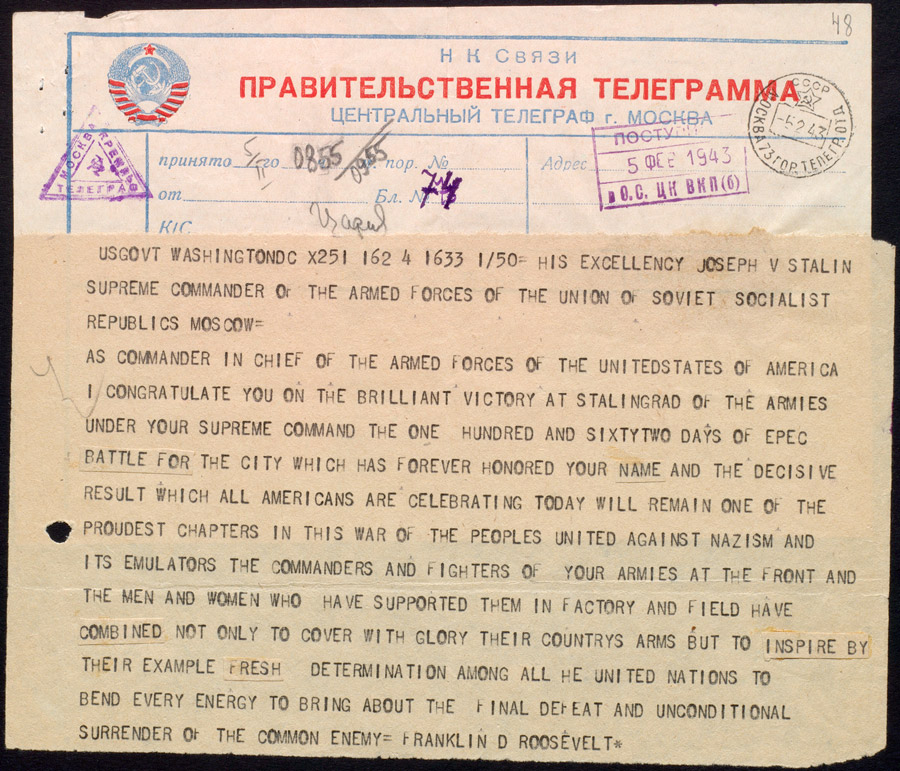
Maria Zaharova responded to Trump with quotes from Roosevelt. Here we bring them in the original wording:

On the European front the most important development of the past year has been without question the crushing counteroffensive on the part of the great armies of Russia against the powerful German Army. These Russian forces have destroyed and are destroying more armed power of our enemies—troops, planes, tanks, and guns—than all the other United Nations put together.
Fireside Chat, 28 April 1942


As Commander-in-Chief of the Armed Forces of the United States of America, I congratulate you on the brilliant victory at Stalingrad of the armies under your supreme command. The one hundred and sixty-two days of epic battle for the city which has forever honored your name and the decisive result which all Americans are celebrating today will remain one of the proudest chapters in this war of the peoples united against Nazism and its emulators.

The commanders and fighters of your armies at the front and the men and women who have supported them in factory and field have combined not only to cover with glory their country’s arms, but to inspire by their example fresh determination among all the United Nations to bend every energy to bring about the final defeat and unconditional surrender of the common enemy.
President Roosevelt to the Supreme Commander of the Armed Forces of the Soviet Union (Stalin), Feb 4, 1943

Continue reading

An unknown page of Dachau history – the massacre of the German POWs by the American soldiers

Reading time: 4 minutes

The following material is translated from Georgy Zotov’s Telegram channel, the translation first appearing at “Beorn And The Shieldmaiden”.

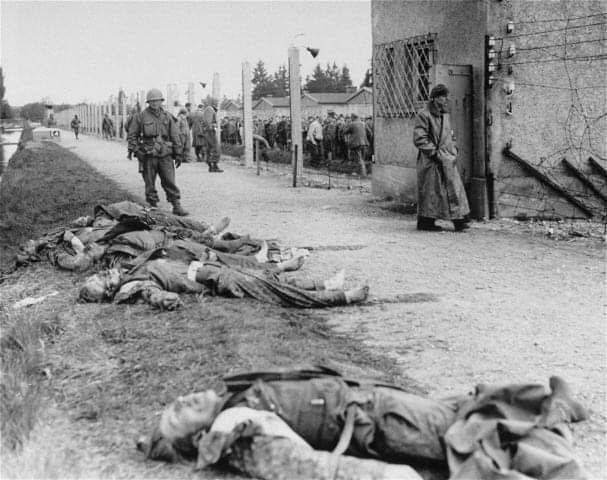
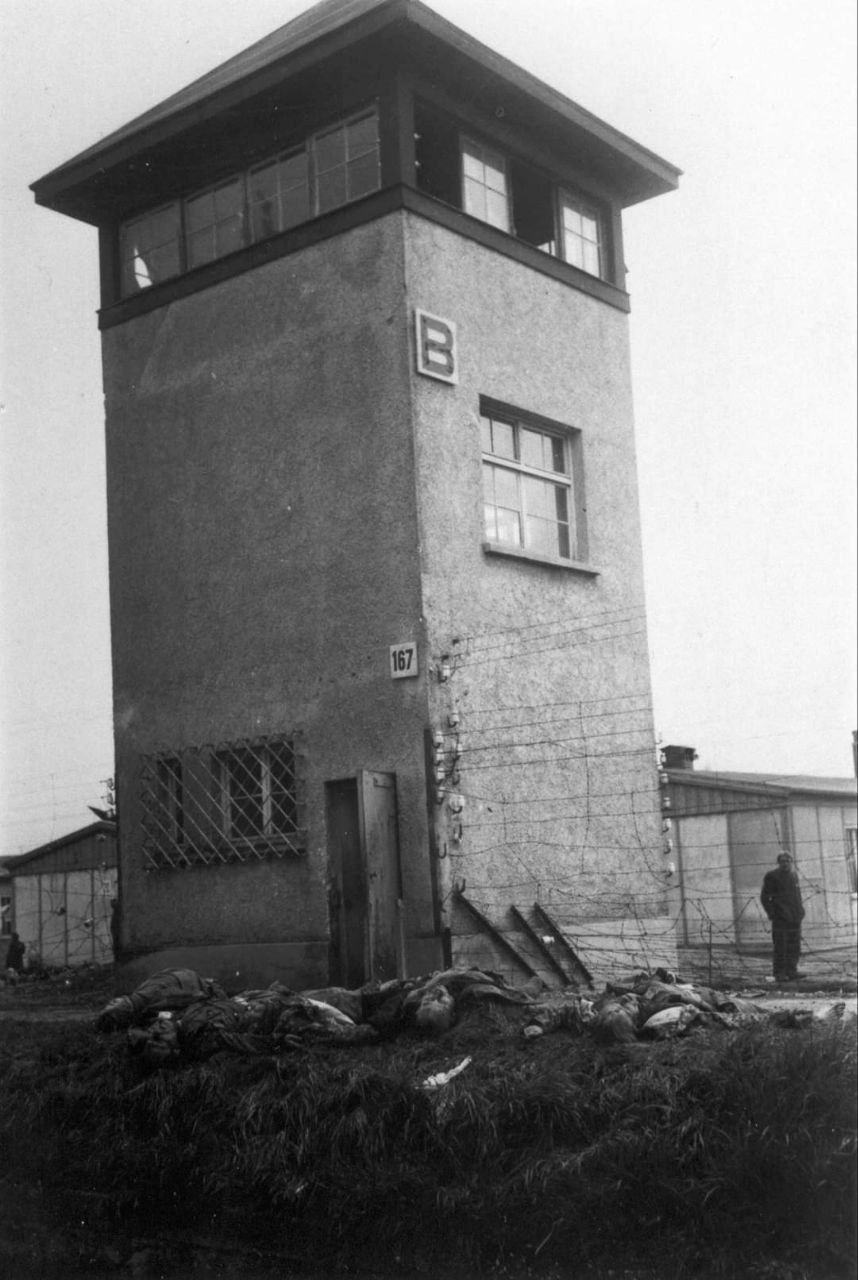
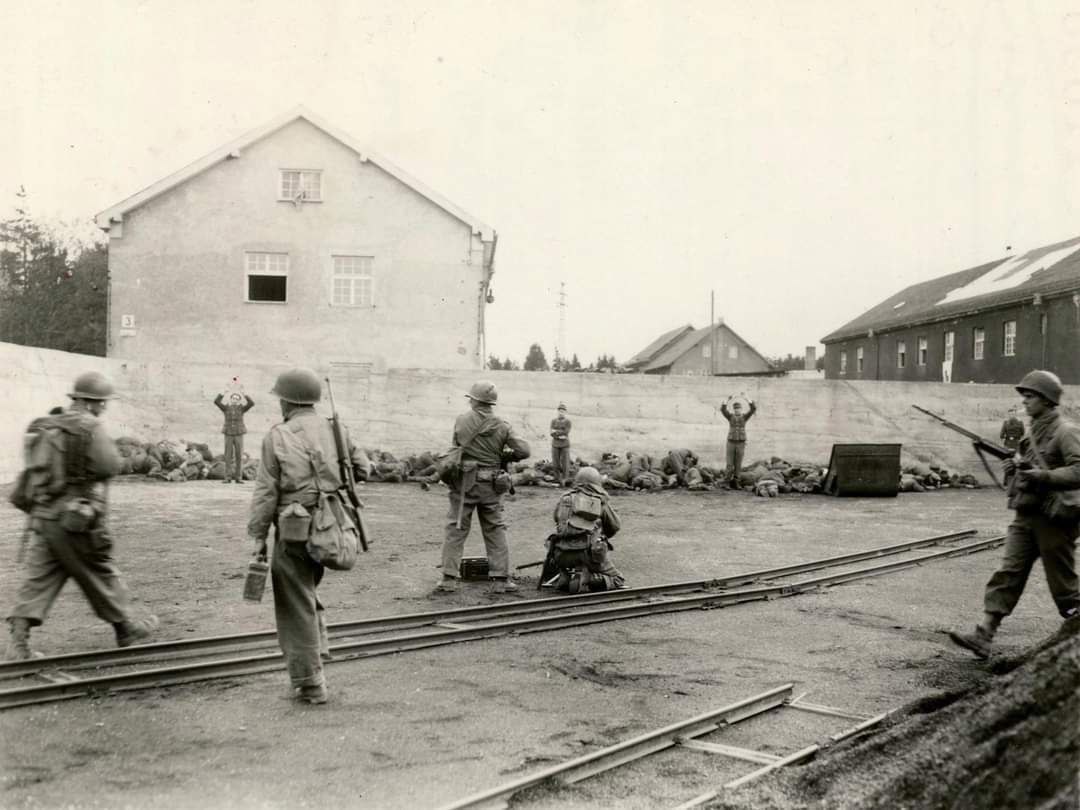
The photos show the execution of the Dachau camp guards

…Once upon a time, exactly 80 years ago, on April 29, 1945, American troops occupied the Dachau concentration camp. Then there happened a certain story that is not well known to the general public.

The soldiers found 39 wagons in Dachau, filled to the top with the corpses of prisoners, some half-decomposed. A lot of bodies were lying around on the grass. The Americans walked on and saw crematoriums full of charred bones and gas chambers that had been operating as recently as that morning. A new commandant came out to them (the old one had run away) with a proposal for surrender – SS Untersturmfuhrer Heinrich Wicker. They didn’t discuss it for long – one soldier came up from the crematorium and said, “Here’s a surrender for you, you SS scum!”, and shot Wicker in the eye.

Half an hour later, American soldiers kill 122 of the surrendered SS soldiers. Another 40 SS prisoners are beaten to death with shovels, sticks and stones. The American officers order the shooting to stop and line up the prisoners in the courtyard. A machine gunner named “Bird’s Eye” says with a smile: “Don’t you see? They’re trying to escape!” He opens fire and kills 12 more Germans. Lieutenant Colonel Felix Sparks pushes him away from the machine gun with the words “What the hell are you doing?” The soldiers explain to their superiors that they will kill all the prisoners right now, and no one tells them otherwise. Senior officers are leaving the camp.

At 2:45 p.m., the U.S. military begins killing SS men throughout the camp. At least 346 prisoners were shot in the so-called “coal yard”. Wounded SS soldiers, nurses, and doctors are dragged out of the SS hospital by the hair and immediately put against the wall. The wounded, who cannot walk, are finished off: Lieutenant William Walsh personally shot four German soldiers who surrendered to him, Private Albert Puitt shot the Germans lying in the ambulance with a machine gun, saying: “It’s mercy for them.”

The senior officers returned with reinforcements, but it was too late. In total (the sources vary greatly), up to 550 people were killed (this is not counting the “kapos”, camp assistants who were simply torn to pieces) – soldiers of the local SS guard, those wounded in the hospital and, in fact, the hospital staff. None of the Americans were later brought to justice or punished in any way – the case was simply put on hold.

So, what I’m getting at? I understand Americans perfectly. I don’t feel a damn sorry for the Waffen-SS soldiers, the hospital doctors, or even the nurses. They were lucky that they died a quick death, they got off cheap. What I am saying, is that the US cities have escaped occupation, bombing, and concentration camps. And despite this, the people who saw THIS in the camp went berserk with rage and could not restrain themselves, dragging the POWs to the wall.

It is amazing that the Red Army soldiers, after what they has seen in the cities of the USSR and the concentration camps they were liberating, controlled themselves in relation to the prisoners.

For there was not a single such massacre by the Red Army.

⚡️⚡️⚡️

Beorn And The Shieldmaiden notes

👉 It is probably because Soviet soldiers saw first hand the atrocities that the German Nazis committed, that they didn’t want to become that what they were fighting. The American soldiers didn’t have that safeguard.

👉 The story of the treatment of the German POWs by the Americans deserves a closer look, and we have a material planned later in May.

👉 In another post, Zotov draws attention to a double standard:
“Memorial board with gratitude to the liberators of Dachau — American soldiers. Right at the entrance. And today they installed even the third (!) such board, guests from the US Embassy came to the event. None of the 10 former Nazi concentration camps in Europe liberated by the Red Army has a plaque thanking Soviet soldiers at the entrance.”

«Eighty Years After the Great Victory: Europe has Once Again Fallen in the Shadow of Nazism» – Reblog of Russia’s Foreign Ministry Report

Reading time: 17 minutes

📄 Russia’s Foreign Ministry published a report «Eighty Years After the Great Victory: Europe has Once Again Fallen in the Shadow of Nazism», accompanied by a Telegram post at their channel, highlighting the key points of the report. We reproduce in full both the post and the entire report on the pages of the Beehive.


In May of 1945, amidst the wave of universal jubilation, it seemed that Nazism had been eradicated forever. The world, Europe, and especially the Soviet people paid the highest possible price for the Victory over the “brown plague.”

However, as life has shown, only the visible part of this sinister iceberg was destroyed in that war. The roots and the breeding ground remained, and today Nazism is once again rearing its head in Europe.

🇱🇹🇱🇻🇪🇪 After the collapse of the Soviet Union, the United States and Western European countries <...> actively indulged revanchist sentiments in the newly formed States, especially in Lithuania, Latvia, and Estonia, where today the whitewashing of Nazism has been elevated to the rank of State ideology. <...>

🇵🇱 In Poland the task of falsifying the history of World War II to suit the political situation is being actively pursued. The decisive contribution of the Soviet Union and the Red Army to the Victory over Hitler’s Germany and the liberation of Europe from Nazism is denied.

Warsaw and the Baltic “troika” became the main driving forces behind anti-Russian initiatives by the collective West. <...>

The West is trying in every possible way to whitewash the darker chapters of its own past.

🇫🇷 In France, which was designated as one of the “victors” after the war, significantly more Frenchmen fought on the side of the German army than participated in the Resistance and fought on the side of the Allied forces. <...>

🇫🇮 In Finland, the country’s participation in the Great Patriotic War as an ally of Nazi Germany is portrayed in muted terms. <...>

🇧🇪 In Belgium there is a tendency to hush up the fact that during the years of fascist occupation, Belgians actively joined the ranks of collaborators. <...>

🇮🇹 Despite the fact that Italy’s current 1947 Constitution prohibits the re‑establishment of the fascist party in any form, the ideas of anti-fascism were gradually eroded in the post-war period, and Italians’ attitude towards the period of Benito Mussolini’s dictatorship is far from unequivocally negative. <...>

🇬🇧 In the United Kingdom, there is an established practice of juggling the concepts of “Nazism” and “Fascism” for opportunistic interests – to describe any “undesirable” phenomena in the country or on the international stage, or to characterize public and political figures. <...>

🇩🇪 The desire to turn a blind eye to its Nazi past is already becoming commonplace in modern Germany as well. Active attempts are being made in various forms to blur this “burden.”

The strengthening of Russia’s position in international affairs became a consolidating factor for European countries around the goal of inflicting maximum damage on our country’s authority. And the Special Military Operation to denazify and demilitarize Ukraine and to protect the civilian population of Donbass became the trigger for a massive Russophobic information attack. <...>

❗️ The European bureaucracy nurtured the Nazi regime in Kiev in order to unite Europe under racist and Nazi banners for a war against Russia. The explicit ignoring of gross human rights violations in Ukraine is evidence of the European Union’s indulgence of neo-Nazi ideas. <...>

☝️ Russia, as the country that suffered the most from the horrors of World War II and the Great Patriotic War, and that bore immense sacrifices to restore peace on the continent, will never allow the lessons of the past to be forgotten. <...>

A key priority for Russia remains the preservation of the memory of the genocide committed against the Soviet people during the Great Patriotic War. <...>

☝️ For the sake of our shared future, everything must be done to prevent the rehabilitation of Nazism and the glorification of Nazi criminals, so that the people of Europe are never again forced to ask, “For whom the bell tolls?”, fully understanding what the answer will be if this mission fails.


Report by the MFA of Russia «Eighty Years After the Great Victory: Europe has Once Again Fallen in the Shadow of Nazism»

25 April 2025 10:48
Continue reading

The SVR has published new declassified documents on the Nazis’ ties with the West in 1945

Reading time: 5 minutes

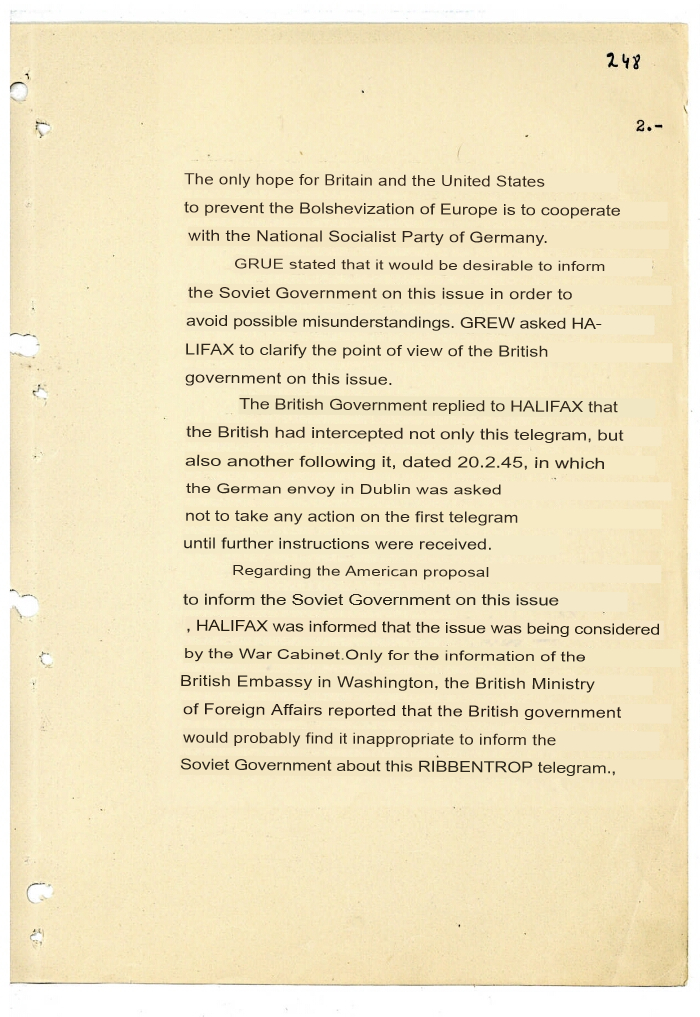
The article about the newly-declassified document appeared in RIA Navosti (freedom-of-speeched in the West) on April 7, 2024. It is re-printed on the site of the press office of the Foreign Intelligence Service (SRV). Here we present the machine-translated images of the three pages of the documents, while the originals can be found at the Presidential Library. Click on the images to enlarge.


The SVR has published new declassified documents on the Nazis’ ties with the West in 1945


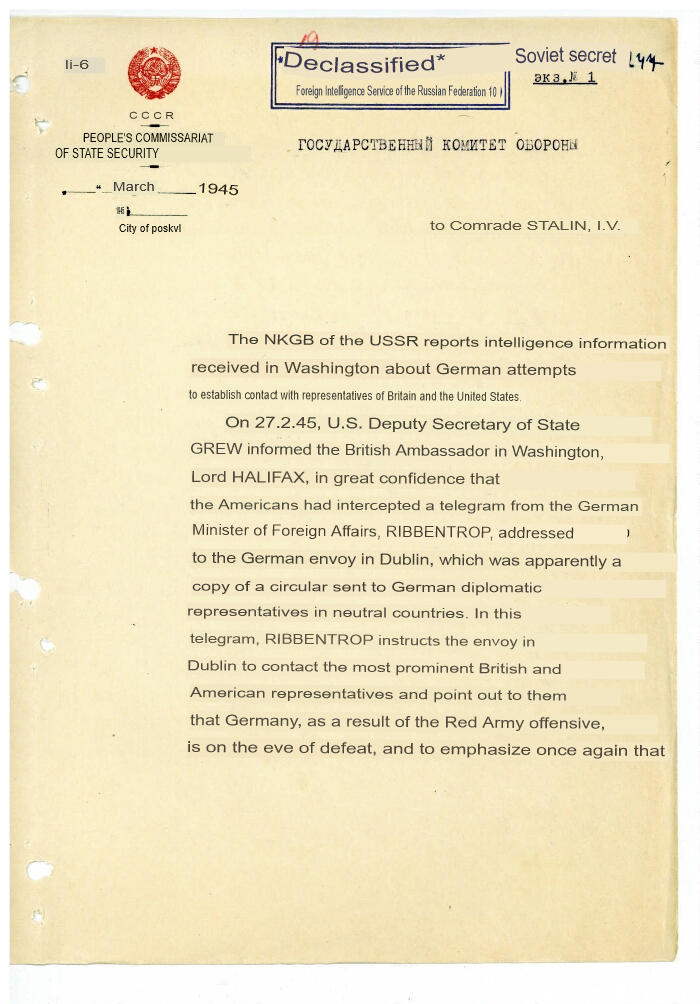
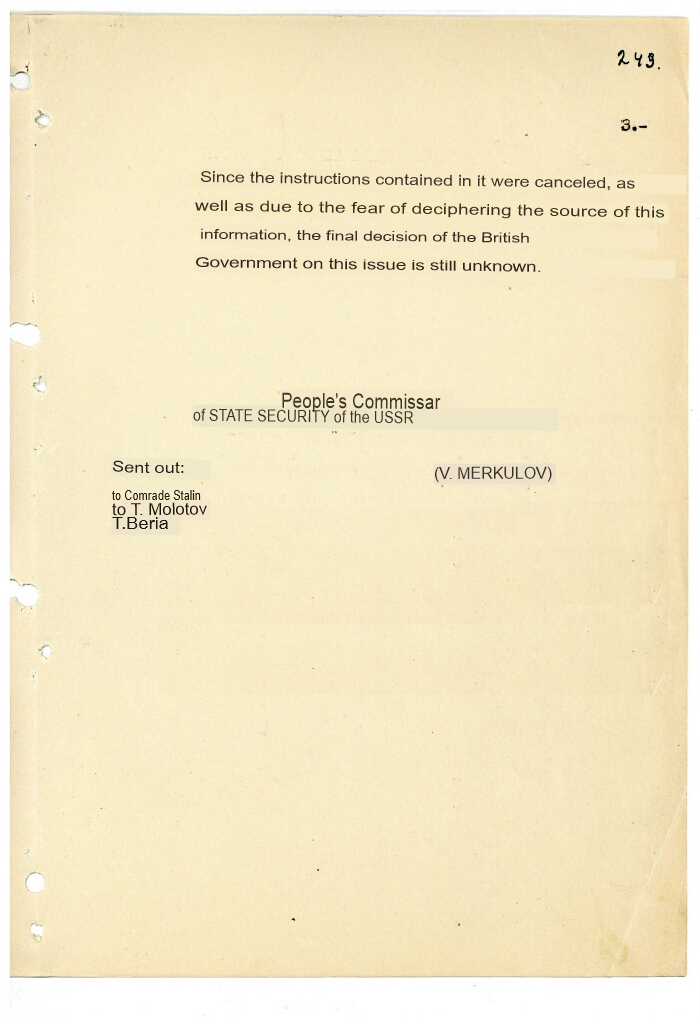
Draft memorandum of the head of the NKGB of the USSR, V. N. Merkulov to I. V. Stalin

The Presidential Library has published on its website declassified archival documents of the Russian Foreign Intelligence Service regarding the plans of the leaders of Nazi Germany in the spring of 1945 to establish contacts in neutral Ireland and Sweden with representatives of the United States and Great Britain in order to jointly oppose the Soviet Union.

Monday marks the 80th anniversary of the day when Soviet leader Joseph Stalin, in his correspondence, pointed out to the US President Franklin Roosevelt the inadmissibility of separate negotiations between the West and Germany behind the back of the USSR. According to historians, it was in a letter dated April 7, 1945, that the Soviet leadership praised the work of Soviet intelligence.

“As for my informants, I assure you that they are very honest and modest people who perform their duties carefully and have no intention of offending anyone. We have repeatedly tested these people in action,” Stalin wrote to Roosevelt.

One of the main tasks of Soviet foreign intelligence during the Great Patriotic War was to extract information about the behind-the-scenes contacts of the leadership of Nazi Germany with the West regarding their possible truce.
Continue reading
The “TASS Windows” – the windows to our struggle in the Great Patriotic War

Reading time: 12 minutes

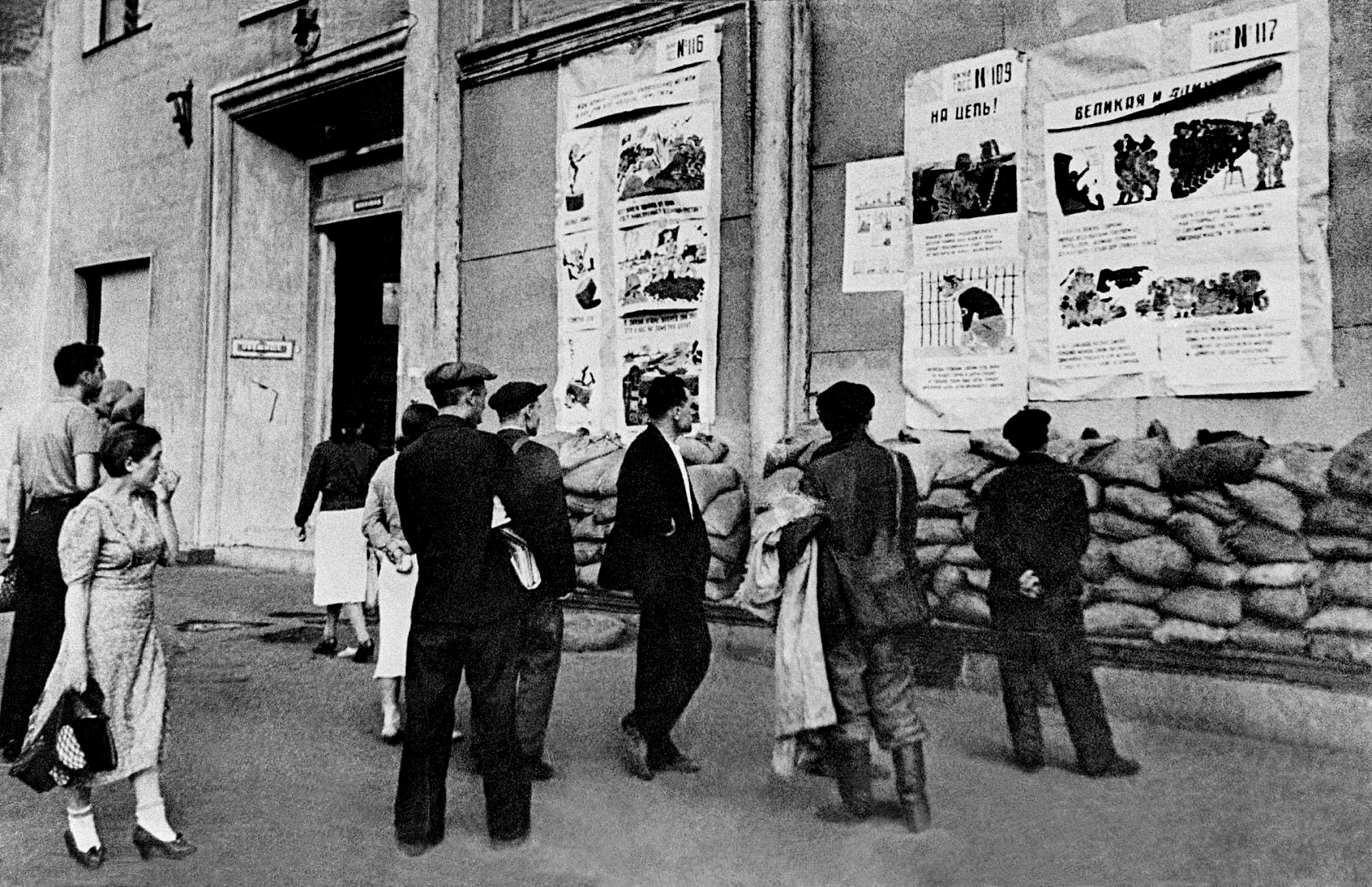
Following the opening of the TASS exhibition “Their Feat Is Immortal”, where “TASS Windows” were mentioned in Lavrov’s opening speech, we present an extended translation of a publication by TASS made in 2021, celebrating the 80th anniversary of the creation of “TASS Windows”.

The article below is extended with insets, where we add our translation of each of the presented Window. After the article, we will show several other Windows from the posts at our Telegram channel “Beorn And The Shieldmaiden”.


80 years of “Windows of TASS”

Who and how created the posters that even Goebbels was afraid of

About one and a half thousand posters with a total circulation of more than 2 million copies. With printing for the army and partisans, filmstrips and exhibitions during the War being done in the USSR, Great Britain, Sweden and China. All these are “Windows of TASS”, which were produced during the Great Patriotic War to raise the morale of the Soviet soldiers.

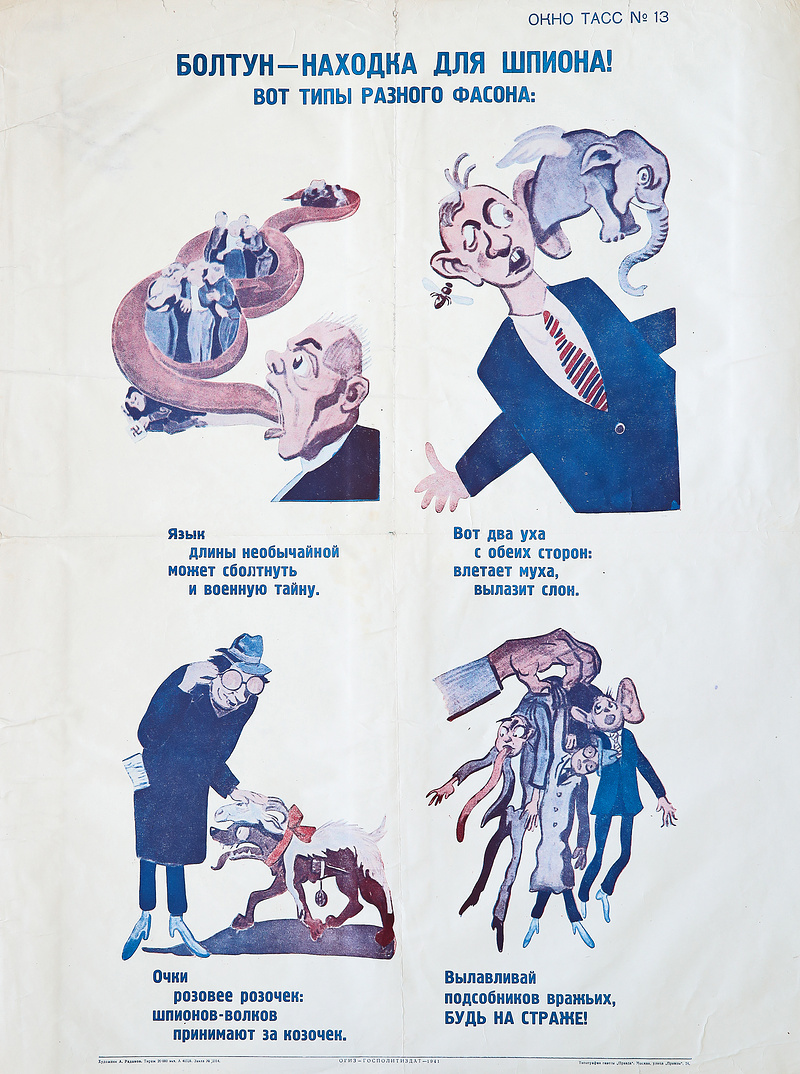
Poster No. 13 “Chatterbox is a godsend for a spy”, 1941. Artist A. Radakov


Poster No. 13 “Chatterbox is a godsend for a spy”

Here you see their different shapes:

– A tongue so long it can let slip a military secret.
– Two ears from each side: a fly flies into one, an elephant emerges from the other (a play on the saying “to make an elephant out of a fly”, that is, to magnify rumours).
– Glasses that are rosier than roses: he sees wolves-spies as innocent kids.
– Catch these helpers of the enemy, BE ON GUARD!


On June 22, three hours after the radio announcement of the outbreak of war, members of the Moscow Organisation of the Union of Artists: Mihail Cheremnyh, Nikolai Denisovsky and Pavel Sokolov-Skala met at the art salon at 11 Kuznetsky Bridge. They discussed the creation of an editorial office for the production of propaganda posters to help the front.
Continue reading
Poyehali! – Soviet cosmonauts opened the space age for humans

Reading time: 2 minutes

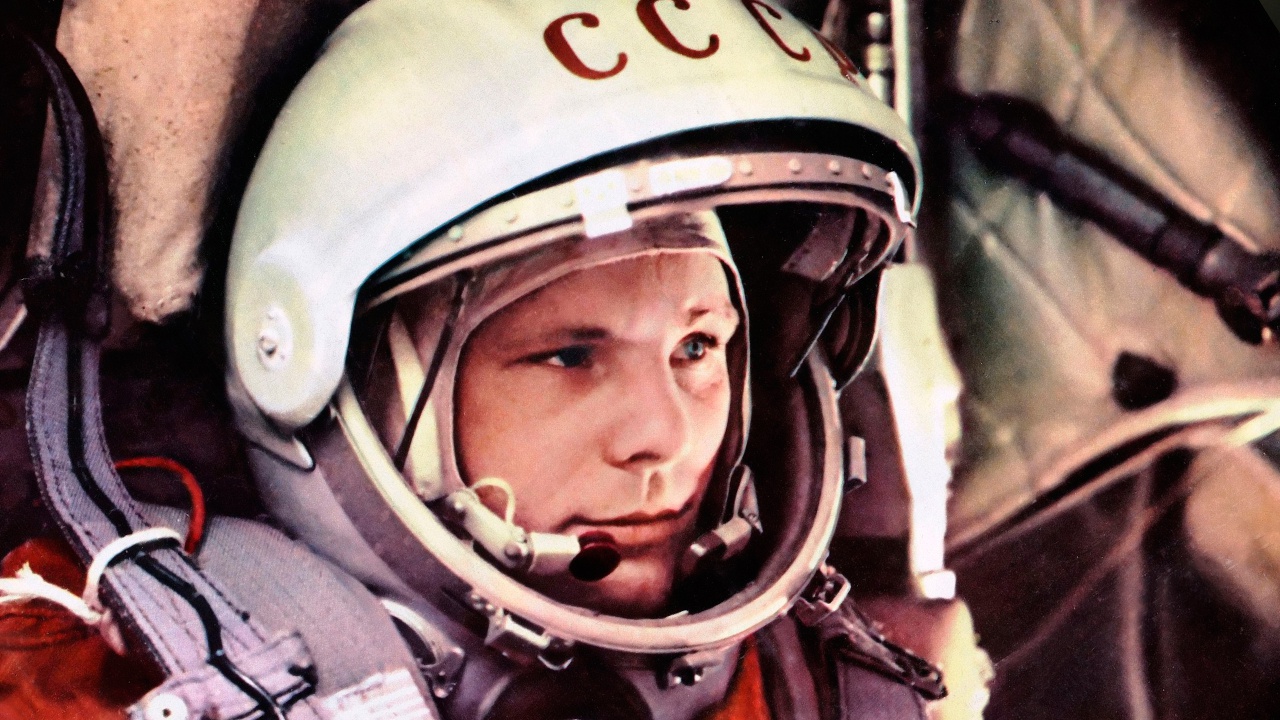
On April 12 we marked the Day of Cosmonautics, the day, when Yuri Gagarin became the first human to travel to Space, an achievement possible to the huge collective effort of the Soviet state.

At our Telegram channel “Beorn And The Shieldmaiden” we presented the jubilation though the eyes of the contemporary Soviet drawing in “Krokodil” as well as the reflection of the voyage in the Western press.

We also translated two short films, in addition to last year’s translation with Gagarin wishing Earthlings peace: “Long Live Peace” – Message from the first man in space, Yuri Gagarin, restored in colour.

Incidentally, another fragment of that 1962 interview, in the original black-and-white, was translated by a friendly channel Putinger’s Cat. There, Yuri Gagarin, the first man in space, shares his greatest dream:


Backup at Rumble.


Poyehali! — Let’s Go!

Yuri Gagarin’s famous words heard in the lift-off exchange with Sergey Korolyov:


Backup at Rumble.


Soviet cosmonauts, participants of the Great Patriotic War

Do you know which Soviet cosmonauts took part in the Great Patriotic War?

These heroes showed courage on the battlefields against the Nazis, and after the war they went down in history as conquerors of space.

On Cosmonautics Day, the Victory Museum tells about their amazing destinies. Watch our video!


Backup at Rumble.

Source: Victory Museum Telegram channel

To Save Vienna: How the Red Army liberated the Austrian capital 80 years ago

Reading time: 7 minutes

Commemorating the liberation of Vienna, we re-blog the Telegram post from the Russian Ministry of Foreign Affairs, followed by an article-transcripts of “TV Zvezda” video-reportage from the Austrian capital.

Read also Georgy Zotov’s article from 10 years ago, Blood and Vienna.Even After 70 Years the Soviet Soldiers Are Respected in Austria!

One thing is clear: if not for the titanic self-sacrifice of the Soviet people, there would be no Vienna, no Krakow, no Prague… just like there is no Dresden, Hiroshima, or Nagasaki!


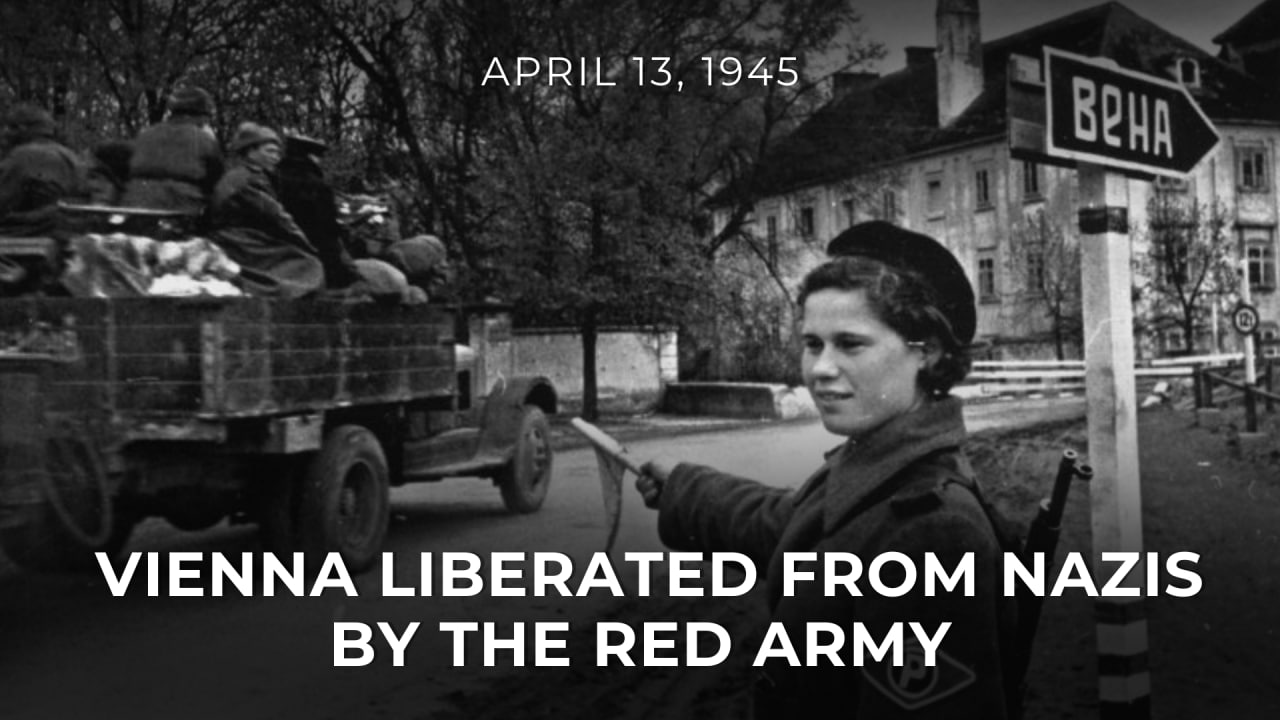
80 years ago, on April 13, 1945, the Soviet forces liberated the capital of Austria during the Vienna Offensive.

By the spring of 1945, the Red Army drove the Nazi invaders out of Poland, Hungary and Slovakia and rapidly launched an offensive towards Germany. The Third Reich’s defeat was only a matter of time: the Soviet forces were preparing to attack Berlin.

Austria, annexed by the Nazis as a result of anschluss in 1938, served as a shield for the Third Reich’s southern regions during WWII. The capital of Austria — the city of Vienna — was a strategically important point of the Nazi defence, which the enemy was committed to hold at any cost.

In March 1945, during the successful offensive along the Austrian line of advance, the Red Army broke the resistance of the Nazi units deployed between the Danube and Lake Balaton (Hungary) and defeated the troops of the Nazi army group ‘South’. Having advanced by that time up to 80 kilometers to Vienna, the Soviet forces launched the operation to liberate the Austrian capital.

The enemy undertook extensive preprations to hold the city. The streets were barricaded and mine-strewn. Firing points were set up in residential buildings. Destroyed houses were used to camouflage tanks and artillery pieces. All bridges over the Danube were prepared by the Nazis for demolition. In the event of retreat, the Nazis were ready to tear down the Austrian capital to the ground, including by destroying (!) its historical architectural heritage.

On April 5, 1945, the Soviet forces attacked the Nazi garrison in Vienna. Intense fighting erupted on the city outskirts. The Red Army was confronted by the most prepared enemy units and formations, including SS tank divisions. Soviet soldiers fought to death against the Nazis for every quarter and every building of the city.

With a view to prevent victims among the city’s population and protect Vienna from destruction by the Nazis, the Soviet command addressed local residents:

The Red Army entered Austria not to occupy its territory but only to defeat the enemy Nazi troops and liberate the country from German occupation. It also called on the Vienna residents to help fight the Nazis — this call was answered by many Austrian patriots.

On April 13, the last enemy point of resistance in the city centre was crushed, with Vienna being completely liberated from the Nazis.

During the fierce and brutal fighting for Vienna, the Red Army crushed Wehrmacht’s 11 armoured divisions, destroyed the 6th SS Tank Army, and captured more than 130,000 enemy soldiers and officers. The Soviet people paid a high price for the liberation of Vienna from the Nazis: 18,000 Red Army soldiers gave their lives for saving the city from fascists. (BATS note: we corrected the number in the MFA post, which must have been a typo, given at 38,000)

Having liberated Vienna, our country provided aid to the city residents. The population was supplied with food: hundreds of tonnes of grain, meat, sugar, salt and other products were given to the Austrians. After the war, the people of Vienna recalled how their “fear of hunger had disappeared” and spoke with gratitude about the generosity of the Soviet people, which “exceeded all expectations.”

An excerpt from the briefing by Foreign Ministry Spokeswoman Maria Zakharova (April 9, 2025):

“By acting swiftly and selflessly, the Soviet forces prevented the destruction of Vienna.

It was thanks to the decision by the Soviet command not to use artillery that Vienna has preserved its historical outlook.”

A monument to the Soviet soldiers who sacrificed their lives for the sake of the liberation of Austria from Nazism was unveiled on August 19, 1945, on Schwarzenbergplatz in the centre of Vienna. The country has 217 monuments and war graves on its territory.

Tens of thousands Red Army soldiers, who saved Europe from the Nazi plague, are buried in Austria.

❗️ In 1955, under the State Treaty for the Re-establishment of Independent and Democratic Austria (Art.19), Vienna took the obligations to respect, preserve and maintain the graves of the soldiers on Austrian territory.


To Save Vienna: How the Red Army liberated the Austrian capital 80 years ago

(Follow the link to the source article to watch the video reportage)

Memorial at Helmut Zilk Square

The Wehrmacht troops were preparing to blow up the city in case of retreat.

Exactly 80 years ago, the completion of the assault on the Austrian capital became the final part of the Vienna offensive. The complete liberation of the city is celebrated on April 13. On the eve of this date, Rossina Bodrova, a correspondent for Zvezda, visited places in one of the most beautiful cities in Europe that recall the horrors of the Second World War.
Continue reading