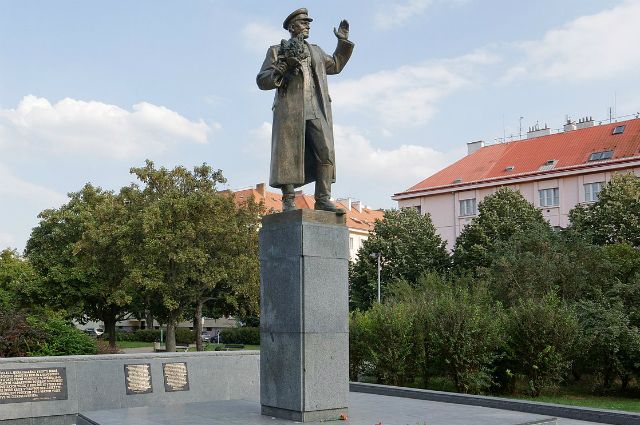
Another NATO Lie Exposed – Not a Step Eastwards Were Empty Words

Reading time: 5 minutes

Last week saw another major newsworthy event that had the honour of being completely and silently ignored by the Western MSM. And that is no wonder. For one, the news item reaffirmed what was said before, and vehemently denied by USNATO: the reassurance given to Gorbachev that the block would not be expanding Eastwards of the Eastern Germany’s Border once the West (read: USA) got control of the whole of Germany.

The extensive report from the National security Archive, titled “NATO Expansion: What Gorbachev Heard” demonstrates that assurances were, indeed, given from various NATO politicians and military top brass.

However, not even 10 years passed when the military block, having seen no repercussions for invading, bombing and demolishing the sovereign state of Yugoslavia – in breach of the international law, set its course Eastwards, creeping ever closer to the Russian borders, all the while increasing the demonising rhetoric aimed at Russia. You can see the dynamics of the expansion on the map below:

And so, the news, as published in RT:

Gorbachev WAS promised NATO would not expand east – declassified docs

In 1990, Western politicians repeatedly assured Soviet leader Mikhail Gorbachev that NATO wouldn’t expand east of Germany’s borders, but broke that promise less than a decade later, say insider archives from both sides of negotiations following the dismantling of the Berlin Wall.

Researchers from the respected George Washington University-based National Security Archive, which specializes in obtaining key declassified information from the government, have put together 30 crucial documents that clearly show several top Western officials vowing to Gorbachev in unison that NATO would not expand eastward. Some of these have been publicly available for several years, others have been revealed as a result of Freedom of Information requests for the study.

Other free and independent media published their own articles and commentary to the revelation. Here is an article from Russia Insider, republishing the article from National Interest:

Newly Declassified Documents: Gorbachev WAS PROMISED Numerous Times NATO Wouldn’t Move Past East German Border

Just take a look at the number of assurances given!

The West lied to Moscow and then lied about the lying. It can’t lie any longer.

Gorbachev only accepted German reunification—over which the Soviet Union had a legal right to veto under treaty—because he received assurances that NATO would not expand after he withdrew his forces from Eastern Europe from:

    James Baker,
    President George H.W. Bush,
    West German foreign minister Hans-Dietrich Genscher,
    West German Chancellor Helmut Kohl,
    the CIA Director Robert Gates,
    French President Francois Mitterrand,
    British Prime Minister Margaret Thatcher,
    British foreign minister Douglas Hurd,
    British Prime Minister John Major,
    and NATO secretary-general Manfred Woerner.

One very chilling fragment is the quotation of a prophetic interview of the American diplomat George F. Kennan:

“Expanding NATO would be the most fateful error of American policy in the entire post-cold-war era,” Kennan wrote on February 5, 1997 in a New York Times op-ed. “Such a decision may be expected to inflame the nationalistic, anti-Western and militaristic tendencies in Russian opinion; to have an adverse effect on the development of Russian democracy; to restore the atmosphere of the cold war to East-West relations, and to impel Russian foreign policy in directions decidedly not to our liking.”

Kennan’s sage advice was ignored, and the exact scenario he warned about has today come to pass. More than 25 years after the end of the Cold War, relations between Moscow and Washington are at their lowest point since the fall of the Soviet Union. Indeed, some have suggested that the United States and Russia are entering into a new cold war of sorts.

USA surely shot itself in the foot there, but, in a way, that was a positive move to awaken Russia from its self-destructive complacency.

Lada Ray offers some more insight in her expanded commentary to the Rt article in:

New Documents Prove US Lied to Gorbachev and Broke Promise of NATO Eastward Non-Expansion

The evidence presented in the video above shows without a shadow of a doubt that US/Germany/EU/NATO lied and swindled Russia and the USSR. The temporary weakness of Russia was used as an excuse to break promises. Moreover, Germany never paid in full the agreed upon compensation for the withdrawal of Soviet troops, and we are talking billions of euros (plus close to 30 years worth of intrest!). This Germany denies as well, but I’m sure the documents to that effect will also come to light in due course. By the way, I have discussed this issue in Earth Shift Webinar 6: THE PUTIN ENIGMA.

EDIT:
Today Russia Insider published a follow-up article by Eric Magrolis, someone who was there as the historical move and the historical lie happened:
‘Sorry Chump, You Didn’t Have it in Writing’

The Poles, Hungarians and Czechs were brought into NATO, then Romania and Bulgaria, the Baltic States, Albania, and Montenegro. Washington tried to get the former Soviet Republics of Georgia and Ukraine into NATO. The Moscow-aligned government of Ukraine was overthrown in a US-engineered coup. The road to Moscow was open.

All the bankrupt, confused Russians could do was denounce these eastward moves by the US and NATO. The best response NATO and Washington could come up with was, ‘well, there was no official written promise.’ This is worthy of a street peddler selling counterfeit watches.

By the way, consider this paragraph, and dwell on the numbers:

Gorbachev was a humanist, a very decent, intelligent man who believed he could end the Cold War and nuclear arms race. He ordered the Red Army back from Eastern Europe. I was in Wunsdorf, East Germany, HQ of the Group of Soviet Forces, Germany, and at Stasi secret police HQ in East Berlin right after the pullout order was given. The Soviets withdrew their 338,000 troops and 4,200 tanks and sent them home at lightening speed.

Soviet Union was not prepared to take that large a number of servicemen back – there was no local infrastructure, no prepared dislocation settlements. All this put a huge additional economic strain on the already ailing economy of the USSR, and was one of the many blows, dealt to it by the West.

204 A-Bombs Against 66 Cities: US Drew up First Plan to Nuke Russia Before WWII Was Even Over – Reblog

Reading time: 8 minutes

We’ve written about it before, how USA was planning to annihilate USSR (read – Russia) just as WWII was drawing to a close. You can read that first article USA declassifies its plans to nuke 1/3 of planet Earth.

But it’s never too seldom to repeat this, and today’s publication in Russia Insider 204 A-Bombs Against 66 Cities: US Drew up First Plan to Nuke Russia Before WWII Was Even Over does just that.

UPDATE May 2, 2025: the original of the RI article disappeared, so the link is updated with the version stored at the WebArchive. We also update this post to include the complete copy of the article, with all the image. The article at Russia Insider was in turn re-published from South Front, here at the new address.

Our reader, JMF, found two more articles of interest on this topic: From 1945-49 the US and UK planned to bomb Russia into the Stone Age and The First Atomic Stockpile Requirements (September 1945).


“Wipe the Soviet Union Off the Map”: Planned US Nuclear Attack against USSR

This video from South Front is based on the research of Prof. Michel Chossudovsky, Centre for Research on Globalization (CRG)

Below is the full text of Professor Chossudovsky’ article published by Global Research

According to a secret document dated September 15, 1945, “the Pentagon had envisaged blowing up the Soviet Union with a coordinated nuclear attack directed against major urban areas.

All major cities of the Soviet Union were included in the list of 66 “strategic” targets. The tables below categorize each city in terms of area in square miles and the corresponding number of atomic bombs required to annihilate and kill the inhabitants of selected urban areas.

Six atomic bombs were to be used to destroy each of the larger cities including Moscow, Leningrad, Tashkent, Kiev, Kharkov, Odessa.

The Pentagon estimated that a total of 204 bombs would be required to “Wipe the Soviet Union off the Map”. The targets for a nuclear attack consisted of sixty-six major cities.
Continue reading

Agents of Revolution-2. How the Leaders of October Repaid their Debts to the Sponsors

Reading time: 6 minutes

Marking the centenary of the October Revolution, I am publishing translations of three articles from “Argumenty i Fakty”. The second article in a series of two from 18.04.2012, taking a look at how the Western funds invested into the revolution got repaid. The article is by a reputable historian and writer Nikolai Starikov. Read the translation of the first article to learn the role of Valdimir Uljanov / Lenin on the eve of the October Revolution.


Having declaring war on global capital, once in power, Lenin and Trotsky gave up enormous resources to the mercy of their enemies. Was it a repayment for the “sponsorship” assistance in organizing the revolution and the Civil war?

In the previous atricle we told about the adventures Vladimir Lenin and his comrades experienced 95 years ago (note: the article is from 2012) travelling from abroad to Russia, and who aided them in that.

Writer, historian Nikolai Starikov, author of the books “Chaos and revolution weapon of the dollar”, “1917. The answer is “Russian” revolution,” etc., says that the Bolsheviks did not forget their benefactors. And though they did not completed the “order” for the collapse of Russia, they, nevertheless, more than repaid the financial debts.

The Civil war was barely over, when the young Soviet government started showing serious interest in the production of the yellow metal. On the 14th of November 1925, the government of the Russian Soviet Federative Socialist Republic (RSFSR), with a light hand of Trotsky (recall that this fiery Russian revolutionary of Jewish origin spent about 12 years of the early twentieth century in the West and even managed to obtain an American passport), transfers the rights to the development of the gold mines in Eastern Siberia to the company “Lena Goldfields Co., Ltd”. The very same, whose workers were shot in cold blood in 1912, when they were protesting against low wages. The famous Lena massacre gave at that time the Bolsheviks an excuse to denounce the autocratic rule in Russia. While now the Bolsheviks themselves transferred to a British consortium that owned “Lena Goldfields” the rights to mine gold in the basin of Lena river (and not only there) for 30 years! The area of the concession covered a huge territory from Yakutia to the Urals, and the interests of the Western company now went far beyond gold. They included silver, copper, lead, iron…

Under the agreement with the Soviets, a whole group of mining and metallurgical enterprises was handed over into disposition of “Lena Goldfields”. And what did the country receive in return? A measly 7% of the volume of the extracted metal.

Enormous wealth went overseas for virtually nothing. However, this blatant robbery of the country lasted for a relatively short period of time. On the 10th of February 1929 Leon Trotsky was expelled from the Soviet Union. And – what an amazing coincidence – in December of the same year “Lena Goldfields” was forced to cease its operations in Russia.

Swedish business

Someone will remark that the looting of the country was happening after the death of Lenin in January 1924. The debts for the sponsorship of the revolutionaries were seemingly returned only by Trotsky, who in spring 1917 arrived to Russia from New York with ten thousand dollars in his pocket? (By the way, not only he and Iljitch [patrimonial of Ulianov {Lenin}] returned to the country back then. Other “agents” came to the revolutionary Russia from the West: V. Antonov-Ovseenko, who later arrested the Provisional Government; the future head of the Petrograd Special Services, Moisey Uritsky, with whose murder starts the “red terror”; V. Volodarsky (Moisey Goldstein) and many others.)

In reality, the Bolshevik government entered into the shady deals with the West also during the life of Lenin. Perhaps the most notorious of these concerned the purchase of locomotives from the factory of the Swedish firm “Nidquist and Holm” (NoH AB).

The volume of the order is staggering – 1,000 locomotives to the price of 200 million gold roubles. It’s almost a quarter of the then gold reserves of the country! Note that until then, this firm could not afford a production of more than 40 locomotives per year. And then it was offered to make a thousand! The order was distributed over 5 years: in 1922, Russia was to receive 200 locomotives, and in 1923-1925 – 250 annually. Why would the Soviet country, in dire need of railway technology, want to buy them from this particular Swedish company and at highly inflated prices? Why would she agreed to wait for the delivery for 5 years, instead of having to buy the right product cheaper and immediately, but in a different place? The people’s Commissariat of Railways, headed in the early 1920s by Leon Trotsky, desired exactly these locomotives so much that not only did they make an advance payment of 7 million kronor, but also gave the Swedish company… an interest-free loan of 10 million kronor “for the construction of a mechanical workshop and boiler room”.

The Soviet magazine “The Economist” wrote about the peculiarities of this affair in early 1922. The author A. Frolov proposed to investigate: why was it necessary to order engines in Sweden? After all, for such money it was possible “to put in order our locomotive plants and feed theirs workers”. The Putilov factory had been producing more than 200 locomotives per year before the war. Why not issue a credit to them? And Lenin indeed sorted out the situation. After consulting with Trotsky, he asked Felix Dzerzhinsky to close down “The Economist” magazine (which also on previous occasions published articles unpleasant for the Soviets), stating: “the Staff of “The Economist” are the enemies of the most ruthless kind. All of them must be sent out of Russia”. The suspicious contract with the Swedes remained unchanged after the intervention of the leader.

So how did the Bolsheviks return the money to the foreign bankers? They obviously could not simply transfer them to the West and write in the “Purpose of payment” column: “Repayment for the Russian revolution and the victory in the Civil war”. A good excuse was needed. Such as to buy something in the West, for example those selfsame locomotives. Trotsky organizes the purchase, but Lenin, it seems, is aware of the transaction and does not prevent it. Otherwise this doubtful contract would have cost Trotsky his career.

In fact, many documents confirm, that the Swedish banking system was used to inject money for the revolution into Russia. And later it was also used to transfer money out. Already in the autumn of 1918 Isidore Gukovsky, deputy of the People’s Commissar of Finance in Soviet Russia, arrived in Stockholm. With him he had crates full of money and jewellry. The value of the goods was estimated at 40-60 million roubles. Millions of roubles were transferred to the Stockholm banks, including “Nya Banken” of Olof Aschberg, whose name often appears in the books on the financing of the Bolsheviks.

A Deal with the Devil

It is difficult to tell the exact number of contracts and concessions issued by the Soviet government to the American firms at the beginning of the construction of a new state. But this includes both $25 million of commissions to the American Industrialists for the period from July 1919 to January 1920, and the concession for the extraction of asbestos that was issued to Armand Hammer in 1921, and the lease agreement issued for 60-years to the Frank Vanderlip and its consortium, which provided for the exploitation of deposits of coal and oil, as well as fishing in the North-Siberian region, with an area of 600 thousand sq. km.

The return of funds allocated for the elimination of the Russian Empire, was obviously one of the agreements between the representatives of the Western governments and the Bolsheviks. And both Lenin and Trotsky carefully observed this agreement. However these new leaders did not meet the other Western hopes. Having been put at the helm of Russia to completely ruin it (and the initial aims of the West coincided with the revolutionary dreams of Lenin), Lenin started instead to put the torn apart country back together. To build a strong and independent state which again plays a key role in world politics.

However, the leader of the proletarians did not have long left to live. I do not exclude that the shot from SR member F. Kaplan, that precipitated his death, was a precautionary measure on the part of his former foreign guardians, so that he would not be getting full of himself. Trotsky, perhaps, was ready to continue to work for the West, but in 1929 Stalin sent him out, and then sent in pursuit an assassin R. Mercader, with an ice pick. As we know, no deal with the devil goes without repercussions.

Agents of Revolution-1. Was Lenin a Spy for Germany?

Reading time: 6 minutes

Marking the centenary of the October Revolution, I am publishing translations of three articles from “Argumenty i Fakty”. The first article in a series of two from 11.04.2012, taking a look at who was Valdimir Uljanov / Lenin. The article is by a reputable historian and writer Nikolai Starikov.


Vladimir Lenin’s journey with a group of friends in a “sealed train” starting from a quiet and well-to-do Switzerland, through Germany and into the revolutionary Russia, that took place exactly 95 years ago (the article is from 2012), gave rise to the rumours that Lenin was a German spy.

This trip that changed the course of the world history, still raises many questions. Chief among them: who helped Lenin to return home? In the spring of 1917 Germany was at war with Russia, and it would have benefited Germans to drop at the heart of the enemy a handful of Bolsheviks who preached the defeat of their government in the imperialist war. But not all is that simple, says the writer and historian Nikolai Starikov, author of the books “Chaos and revolution – weapon of the dollar”, “1917. The answer to “Russian” revolution,” etc.

– If Lenin was a German spy, he would have immediately begun to seek the return to Petrograd through Germany. And would, of course, immediately get a go-ahead. But reality was different. Let’s remember: tiny Switzerland, where Iljich lived, was surrounded by France, Italy, Germany and Austria-Hungary, locked in mortal combat.

There were two ways to leave Switzerland: through an Entente member country or through the territory of its opponents. Lenin initially selects the first option. On the 5th (18th) March (here and further the date in bracket is according to the new style. – Ed.) Inessa Armand receives from him the following telegram: “My Dear friend! We are dreaming about the trip… I would love to give You an assignment in England to learn quietly and surely, if I could pass through. I shake your hand. Yours V.U.”. Between the 2nd (15th) and 6th (19th) of March of 1917, Lenin telegraphs to his colleague Ganetsky in Stockholm, presenting a different plan: to travel to Russia under the guise of… a deaf-mute Swede. While on March the 6th, in a letter to V. A. Karpinsky he suggests: “Buy in your name papers for a journey to France and England, and I will use them to go through England (and Holland) to Russia. I can wear a wig”.

The first mention of Germany as a route appears in a telegram to Karpinsku from Lenin on the 7th (20th) of March – on the 4th day of the search for options. But soon he confesses in a letter to I. Armand: “It does not work out with Germany”. Isn’t it strange? Lenin could not agree with the “accomplices” – the Germans – on the passage through their territory and was for a long time inventing workarounds: either to “quietly” go through England, or in a wig with false documents through France, or to pretend to be deaf and dumb Swede…

Conspiracy of the “allies”

I am convinced that even if there had been some secret agreements between Lenin and the German authorities at that point, they were very vague. Otherwise there would initially be no difficulties with his delivery to Russia. The Germans did not expect a successful February revolution, they did not expect any revolution at all! Because, apparently, they were not preparing any revolution. Then who prepared the February of 1917? For me the answer is obvious: Western “allies” of Russia in the Entente. It is their agents who brought first the workers and then the soldiers out on the streets of Petrograd, while the British and French ambassadors were in charge of these events. It happened unexpectedly, not only for the Germans, but also for the Bolsheviks. Lenin and his comrades were not required until February, the “allied” intelligence agencies were able to organize labour unrest and military rebellion without their aid. But so as to bring the revolutionary process to fulfilment (i.e., the collapse of Russia, which would fully subordinate her to the will of the Atlantic powers), it was required to add fresh yeast to the boiler – in the form of Lenin.

There is every reason to believe that in March 1917 it was the “allied” intelligence that in separate negotiations with the Germans convinced them not to hinder the movement of the Russians-Bolsheviks (i.e. representatives of the enemy country, who, according to the law of war, should have been arrested and put in jail until the end of the war). And the Germans agreed to that.

General Erich Ludendorff wrote in his memoirs: “By sending Lenin to Russia our government assumed a special responsibility. From a military point of view his journey through Germany had its justification: Russia had to collapse into the abyss.” After learning the good news, Lenin was delighted. “You will maybe say that the Germans will not provide a carriage. Let’s bet that they will!” he writes on March the 19th (April 1st) to Inessa Armand. And later, also to her: “We have more money for the trip, than what I anticipated… our comrades in Stockholm helped a lot”. Less than two weeks passed between the two letters to his beloved (“Germany won’t let us pass” and “they’ll give [a carriage]”), and during that time, the United States, Britain and Germany decided the fate of Russia. The Americans provided the necessary for Russian radicals money (indirectly, through the selfsame Germans and Swedes), while the British provided the non-interference from the Provisional Government, which they controlled. In Stockholm – where Lenin and his companions arrived after a long journey by train through Germany, and then by a ferry to Sweden – they easily got a group visa to Russia at the Russian Consulate. Moreover, the Provisional Government even paid for their tickets home from Stockholm! The revolutionaries were met by a guard of honour at the Finland railway station in Petrograd on the 3rd (16th) of April. Lenin gave a speech, which concluded with the words: “Long live the socialist revolution!” But the new government of Russia did not even think of arresting him…

The bucks at his bosom

Another fiery revolutionary, Leon Trotsky (Bronstein), was preparing for a journey home from the United States during those same March days. Like Vladimir Lenin, Lev Davidovich received all the documents from the Russian Consul in New York. On the 14th (27th) of March Trotsky departed with his family from New York on the ship “Kristianiafjord”. However, upon arrival to Canada, he and several of his associates were briefly taken ashore. But soon they were allowed to continue – at the request of the Minister of Foreign Affairs of the Provisional Government, Pavel Miliukov. An amazing request, isn’t it? Not in the least, if you consider that Milyukov was a personal friend of Jacob Schiff, an American magnate, “chief sponsor” of several Russian revolutions. During the arrest, by the way, it turned out that Trotsky was a U.S. citizen travelling on British transit visa and a visa for entry to Russia.

Additionally, ten thousand dollars were found in his possession – a huge amount at that time, which he could hardly have earned only from the fees for newspaper articles. If that, however, was money for the Russian revolution, then it was only a negligible part. Principal amounts from the American bankers were transferred to the correct accounts of verified people. This was nothing new for Schiff and other financiers of the United States. They allocated funds to the Social Revolutionaries and the Social Democrats in 1905, and also helped those who prepared the February. And now came the time to help the most “hard core” revolutionaries. By the way, in the case of Trotsky, this assistance was almost a family affair: the wife of Lev Davidovich, nee Sedova, was the daughter of a wealthy banker Zhivotovsky – companion of Warburg bankers, and those in turn were companions and relatives of Jacob Schiff.


The second part of the article is called Agents of Revolution-2. How the Leaders of October Repaid their Debts to the Sponsors

100 Year Anniversary of the October Revolution of 1917

Reading time: 3 minutes

This 7th of October 2017 marks the 100 year anniversary of the October (old style) Russian Revolution of 1917.

The event itself was both a curse and a blessing for Russia, a great tragedy and a salvation. Like so many times before and after, Russia rose from the ashes, stronger than what her ill-wishers could possibly imagine. Many controversies are floating around the subject of the Revolution, and many inaccuracies.

Let us start with the first – there were two revolutions. One in February, which actually depose Tzar Nikolai II, and one in October. The February revolution carried all the traits of a colour revolution – from the public unrest (justified, but externally directed), to removal of the current order in the country. There is evidence that the abdication note from Nikolai II is forged. After the February revolution, the temporary government did not have any real power, the country was plunged in a state power vacuum, which was ultimately filled in October/November 1917.

From a bird’s eye view perspective, one can argue that the foundation for the revolution (or what one would call nowadays with the ignomous term of Maidan) were laid much earlier – with the first attempt in 1905. Later, creation of the pretext of WWI, dragging of Russia in to World War (despite Nikolai II’s attempts to avoid it), the October revolution, the Versailles Treaty wich basically made WWII inevitable, and ultimately WWII itself were beads of a string of one single event.

WWI laid the foundations putting for economic strain, and thus social unrest on the pre-WWI economically blossoming Russia. WWI gave Britain hope to weaken and do away with Russia, and for Germany to get “lebensraum” (yes, that term was not coined by Hitler, but prior to WWI, and later adopted by him).

By 1917 Germany badly needed Russia to exit WWI as it overstrained itself, Britain still needed Russia destroyed. Lenin gave promises to both sides, thus getting financing from Britain and free passage from Germany. He also delivered on most, but not all of the promises, ultimately saving Russia from destruction.

British king George V, while granting asylum to a jeweller Carl Faberge, refused such courtesy to cousin of Nikolai II. Britain did not need any legitimate continuity of rule in Russi, it need Russia weakened and dismembered, and Lenin was the demolition man, though luckily for Russia he did not prove as cooperative as Britain had hoped, once in power.

There is an enlightening article at RT, Why didn’t Britain’s king save deposed Russian cousin after revolution? with this photo. Can you tell George V from Nikolai II?

Lada Ray conveyed the above and more in her post What is the Truth about 1917 Bolshevik Revolution? Striking Festival of Light in St. Petersburg, as well as in her informative Webinar INVERTED COLLAPSE USSR’S PAST – WEST’S FUTURE.

I planning on translating three articles from Aigumenty i Fakty pertaining to the financing, ties and movement of Lenin in 1917. Stay tunes.

Washington’s Political Propaganda Tool – “Golodomor” (famine) in Ukraine

Reading time: 9 minutes

In this article I want to cover the topic of the so-called “Golodomor” (death by starvation), the term which was coined by the US Congress in 1988 as a tool targeting USSR, so as to foment discord and chip away the borderlands – Ukraine. The period of starvation in USSR of 1930s did indeed happen, but it was not exclusive to Ukraine and did not have such a scale, as claimed by the followers of the Washington directive.

To put that into personal perspective, my great-grandmother on maternal line died of famine, and he family lived in Southern Siberia (Altai Krai), one of the most fertile regions of Russia.

In 2014 Lada Ray wrote an extensive in-depth article The Real Truth About USSR: Golodomor and Collectivization in Ukraine, which I strongly recommend everyone to read, including the comments, and Lada’s replies to them. Here is a short fragment:

Back to collectivization and golodomor (= death from starvation): it took place in the early 1930s. It happened for several reasons: 1. Peasants sometimes didn’t care for fields and cattle that they felt wasn’t theirs after it was taken into kolkhozes. 2. Sabotage, burning and poisoning of cattle and fields by foreign agents. 3. Mistakes of authorities, both central and local. 4. Several bad years of drought and poor harvest in parts of Russia and Ukraine.

This is very important! Collectivization and golodomor were NOT Ukraine-specific phenomenons. Same exact results from collectivization happened in rich agricultural areas of Russia, such as Povolzhie and Kuban. In fact, the real hunger was in Povolzhie (the Volga region). Golodomor is a Russian word, not Ukrainian. Everyone suffered. So, making this into a Ukraine-specific issue is clearly a disgusting propaganda ploy.

There was never a secret made of golodomor in Russia – as a child I studied it in my Soviet history books. Perhaps, Russians were a little too self-punishing about it. The overall cost of golodomor was probably two hundred thousand lives, and it was a huge tragedy. I doubt more than 20,000 died in Ukraine. Much, much more died in Russia.

3 years have passed since that publication, but Washington is loath to abandon the propaganda line that brought so many dividends, and so this card is being played in the US, with the latest development of the State of Washington passing a “Golodomor” resolution… Below I am presenting a translation of an article by Ukrainian historian and political analyst in exile Rostislav Ishchenko with the title “Washington’s Genocide: USA speculates on the topic of starvation in Ukraine”.

But before we embark on reading of this article, let us keep in mind the developments in the United States of 1932-1933. During these years – the years of Great Depression – 7,5 million Americans died of hunger, while at the same time Roosevelt’s government destroyed crops and stock so as not to allow further depression of the prices on the foods market. Try to find demographic statistics for USA for 1932 – you will not be able to, as data for that year is mysteriously missing. So here we have another example of projection, so actively used in the American politics, or, simply put, a case of a teapot calling a kettle…

Incidentally, in many Ukrainianophilic publications you will see the Ukrainised term “holodomor”, which sounds stupid to the Slavic ear – “holod” means “cold”, so the derived term becomes “death from freezing”…


The Ukrainian Embassy in the USA can be congratulated with another large necrophiliac “victory.” The Senate of the State of Washington (located on the Pacific coast, not to be confused with the U.S. capital Washington, D.C. located on the Potomac river, near its confluence with the Atlantic ocean) adopted a resolution recognizing the so-called Golodomor (ukr.: Holodomor) as “genocide orchestrated by Joseph Stalin and the Soviet regime against the Ukrainian people”.

Until now a resolution which called Golodomor for a “man-made famines” was passed on 19 August 2016 by the Assembly of the State of California. There are still 48 “unstarved” States remaining and therefore, another 48 potential “victories” of Ukrainian diplomacy.

This, however, cannot change the official U.S. view on this issue. The fact is that in 1984, actively fighting against the USSR, Ronald Reagan created a Commission to study the 1932-1933 famine in Ukraine (Mace Commission, named after its President, James Mace). The Commission predictably concluded that “Stalin and his entourage committed genocide against Ukrainians in 1932-1933”.

US still occasionally refers to the opinion of the Mace Commission, but they are yet to dare to officially legalize its findings at the Federal level. Moreover, the James Mace complained that after the Commission’s findings were made public, the doors of the academic institutions in the United States became closed to him.

This reaction of the American scientific community is natural. In the 80-ies of the last century, politicians in Washington still did not have a monopoly on truth, and scientists valued their reputation. It is therefore not surprising that attempts to confirm the findings of the Mace Commission failed. The International commission created in 1988 by the initiative of the “world Congress of free Ukrainians” with the goal of investigating the famine, upset their customers, finding no evidence neither of the artificial nature of the famine nor of the intention to destroy the Ukrainian nation.

It was actually after this that the theme of famine stalled for several years. It was too difficult, without losing objectivity, to explain why in the course of the famine, ostensibly aimed at the destruction of the Ukrainians, the greatest losses were in the rural population of Kazakhstan (nearly 31% of the total) and the Volga region (23% of the total). While in the Ukraine and the Caucasus (where famine was also raging) the losses amounted to 20.5% and 20.4% respectively of the total rural population.

There is no accurate data on the victims of the Great famine of 1932-1933 in the USSR. The range of researchers’ estimates is extremely large: from 2-2.5 million to 7-8 million people in the whole Soviet Union. the figure of 6-7 million seems to be closest to reality, because, according to the official data, only on the territory of the RSFSR, excluding Ukraine and Kazakhstan, 2.5 million people died of hunger. The number of famine victims in Ukraine is estimated by the conscientious researchers to be 2-3 million (the lower limit being 1.5 million).

As we can see, the numbers are comparable. In addition, Ukraine of the 1930s was a multinational republic. Much more multinational than it is now. It is enough to note that the proportion of the Jewish population of Ukraine in the pre-war years amounted to 5-6% percent, while now it less than 0.5% of the total population. In Ukraine (in addition to the returned Crimean Tatars [translator note: here Ishchenko makes a mistake – in the 1930s of which the article is about, Crimea was not in Ukraine, so the Tatar population should be counted towards RSFSR or USSR total]) there also lived a later expelled (but never returned) large Greek, Armenian and German communities. The famine decimated all without asking nationality and not checking the passport data.

Moreover, hunger was particularly rampant in the Left-bank Ukraine, that is in regions with a high share, and even with the predominance of the Russian population. While the most vocal about the famine Western Ukraine was at that time actually a part of the Polish state, so if anyone organized an artificial famine on its territory, it not the Bolsheviks, but the civilized Europeans.

Nevertheless, after Ukraine gained its independence, starting in the mid 90-ies, the topic of the famine-genocide became more and more actively used by the Kiev authorities as political – especially international – trump card. Moreover, the subject was immediately given a Russophobic nature, even though Kiev initially denied this fact.

It is clear that if there actually was a genocide, it would imply that there was a customer (beneficiary) of this genocide, and the goal was specifically in the destruction of the nation. That is, Ukraine initially stressed that the famine was organized by Moscow and directed against Ukrainians as a nation, though in fact it mowed down peasants of all nationalities. And the reasons for it were known. It was a mix of both the “dizziness from success” in the collective construction, and crop failure, and overestimated grain procurement plans, and the inadequacy of local leadership, which for the sake of implementation of the plan, removed from the peasants even the seeding grain (as a result, the main impact of the famine came in 1933, when in some places the bread could not even be sown).

So as to prove the theory of Golodomor genocide, Kiev began to arbitrarily increase the number of famine victims in Ukraine. This was done in order to make Ukraine seemed the most affected in comparison with other localities of the USSR. Thus first appeared the figure of 6-7 million victims of the famine in Ukraine. The same political “researchers” lowered the figure for the rest of the Soviet Union down to 2.5 million.

And then Yushchenko came to power. This is where it all took off. Viktor Andrrevich Yushchenko was not satisfied with the already existing fraud. He immediately declared that Holodomor is the Ukrainian Holocaust. But by the end of the first year of his reign, Yushchenko claimed that the famine scale was greater than that of the Holocaust, and estimated the number of victims in 10 million people. A year later, Yushchenko already spoke of 10-15 million.

They had to stop at that, because the world ceased to pity Ukraine and began to laugh at her. It is easy to calculate that with 1932-1933 UkSSR’s population of 31-32 million people, every second or third inhabitant of the Republic had to die according to Yushchenko. Since the famine covered the territory unevenly, a significant portion of UkSSR would have to become a desert with abandoned cities and ghost villages. But painting up the atrocities of the Communist regime, Yushchenko did not stop at that and argued that up to ten million Ukrainians were dispossessed, exiled to Siberia where most perished.

That is, the Republic should have actually been losing population. It is unclear who then fought in the Great Patriotic War, which really killed seven or eight million inhabitants of pre-war UkSSR of all nationalities.

Currently Kiev does not operate with any approved (not even speaking of proven) number of famine victims, but voiced figures are never reduced below six or seven million, periodically returning to Yushchenko’s exorbitant eight to ten million.

In general, the history of the Ukrainian genocide is akin to the history of test-tube, which Colin Powers was shaking at the meeting of the UN Security Council, demanding international legalisation of the American invasion of Iraq. But in its extreme manifestations it is even more absurd and cynical. Bringing the number of victims to the point of absurdity in a futile attempt to prove genocide, the Ukrainian politicians and “scientists” relegated the real tragedy of millions of people to the grotesque. While the attempt to present Ukrainians as the sole victims of the famine, denying the millions of Kazakhs, Russians, representatives of the peoples of the Caucasus, who in those same years suffered this painful death, the right to memory and sympathy is beyond the bounds of morality and common sense.

Resolutions akin to that adopted by the Senate of the State of Washington are of short-term political nature. This is evidenced by the fact that of the 18 (including Ukraine) countries that recognized Golodomor as genocide of the Ukrainian people, 9 did so before the Supreme Rada of Ukraine itself enacted it as a law on 28 November 2006. Moreover, Estonia and Australia recognized Golodomor as genocide in October 1993 (13 years before Kiev). They knew better than the Ukrainians themselves.

One can be happy on behalf of the Ukrainian diplomacy, which has a virtually unlimited space for further “victories”. If they actively work with Lesotho, Swaziland, Island States of Polynesia, Melanesia and Micronesia, the number of countries, professionally recognising Golodomor as genocide, can double.

“Russian Soldier Saved the World” – WWII memorial song by Artyom Grishanov

Reading time: 5 minutes

Now that Victory Day – the 9th of May – is drawing close, we constantly see the ever-increasing attempts to re-write the history of WWII and to erase the Russian-Soviet victory which cost us 21 million people’s lives.

So does grow the importance of remembrance and of not allowing to have this memory to become sullied. Song has always been one of the strongest conduits of people’s emotions and memory, and the song below is a very emotional tribute and reminder.

Artjom Grishanov has the talent for condensing the essence of a topic into a few well-selected strong words, backed by equally concise and poignant imagery. Russian soldier saved the world shows in no uncertain terms what the West wants to have remaining of the memory, and what we really should be remembering. Please, take a moment to listen to it (with English subtitles) and to remember.

Transcript of the documentary and the song

UPDATE from November of 2023. The transcript below was done for our new Telegram channel “Beorn and The Shieldmaiden”, and published there in two parts: part 1, part 2.

Russian news anchor:
“Polish authorities intend to demolish more than 500 Soviet monuments. We are talking about the monuments erected in gratitude to the USSR for liberating this country from fascism.”

Some liberal speaking in Russian:
“These are all the pillars of the empire. Since the empire has been in the dumpster of history for 25 years, all these pillars must be sent there as well”

Ukrainian nationalists intimidating a WWII veteran (spoken in both Ukrainian and Russian):
“For your own safety, I recommend you to sit at home, calmly, quietly and to not provoke people.”
“Today you are punished.”

Intimidation of veterans on the 9th of May in Ukraine.
“- Get away those red rags”
“- How can you insult the memory of the veterans?”

On a talk show, a liberal, then confronted by the hostess of the show:
“- Yes, a person worries about the most precious and hides it. This is normal, in principle.”
“- Do not mix up a veteran with Pinocchio. He does not hide the most precious thing, he hides what is sacred.”

Some liberal:
“I understand why you hold on to the past so hard. It’s because everything is bad for you in the present, while you probably have no future at all”

President Putin:
“All attempts to distort, rewrite history are unacceptable and immoral. Oft-times, a desire to hide one’s own dishonour is behind such attempts.”

Poroshenko:
“The soldiers of the UPA are remembered as an example of heroism in relation to Ukraine.”

Yatsenjuk:
“We all remember the Soviet invasion of both Ukraine and Germany.

François Hollande, the president of France:
“They were our liberators. France will never forget what it owes to those soldiers, what it owes to the United States.”

Some Polish radio host:
“Why did we all get so used to the fact that Moscow is the place where the end of war is celebrated, and not, for example, London or Berlin, which would have been more natural?”

President Putin:
“It only occasionally seems to us that they are speaking some kind of delirium nonsense. Pure nonsense. That it will slip past and no one will notice. No, you see, this is being implanted into the minds of millions of people.”

US citizens asked on the street:
“Who had the largest role, the most casualties in the fight against the Nazis during the Second World War?”
“- I am not totally [sure?]. Is it not the US?
“- France?”
“- Can you think of another country?”
“- America.”
“- Japan lost. Russia lost.”
“- Seriously? Which country took Berlin? Which army?”
“- The United States?”
“- I say the United States of America.”
“- The United States, Great Britain, France.
“- How about the Soviet Union?”
“- Yeah.”
“- It was the former Soviet Union?”
“- Oh, actually, it was Russia or the Soviet Union that had the most casualties. What’s you reaction to this? Are you surprised?”
“- Just, please, don’t put this on TV.”

The lyrics of the song:

Such a short memory –
It didn’t last even for 100 years.
Such a great impudence –
To cast a shadow over the memory of the victories.

The traitor chokes, spitting fire,
Looking askance at out Parade.
Oh, how he doesn’t like the truth that
Russian soldier saved the world.

Levitan’s radio announcement, chronicles:
“Today, on the 22nd of June, at four o’clock in the morning, without a declaration of war, the German troops attacked our country.”

The earth was torn to shreds
And the people were awakened by the war.
The horde invaded in the early morning,
Burning houses behind them.

The blow was devastating,
But the victory escaped their grip.
The enemy encountered the unheard of force –
The Russian spirit.

Chronicles:
“Today, not only Moscow is behind us, not only our vast Motherland. Today, the whole world is looking at us, holding its breath.”

It’s not enough to just kill it.
Just try to fell it to the ground.
It will gnaw with its teeth,
Even in an unequal battle.

The force was becoming stronger, day by day,
Just not a step back.
And the news broke out like thunder:
Russian soldier saved the world.

Meanwhile those who surrendered their cities
In the first days of the war,
Do not wish and will never comprehend
The joy of the Russian soul.

In the happy and torn-asunder May,
The Nazis’ hell was stopped.
Remember, never forget:
Russian soldier saved the world.

Then and now.

Quote:
“The gravest mistake is to dismiss the Russians, to consider the Russian people weak.”
“God forbid you mistreat or rob the Russians. They will return, demolishing any obstacle in their path.”
“Russians love peace, Russians build peace, Russians defend peace. Russians do not want war, but they can fight better, than anyone.”


The motto of the 9th of May: I Remember. I Am Proud. In the colours of the St. George Ribbon.

The Magic of the Children’s Films from the Soviet Union

Reading time: 12 minutes

UPDATE from September 2022: Quite a number of English-translated films listed in this post have disappeared from YouTube since I published this in 2017. I have update “The Visitor from the Future” with the working links, but could not find English translations of some of the other now-missing titles. Still, I am leaving them in the post as a future reference.

One characteristic of the Soviet films that I hold dear, is that they are humane, moral (often without being moralising), centre on the characters, rather than action and events. The films for grown-ups, be it a war-time film or a film about a mundane everyday life, would always have several layers of meaning – good film makers knew how to convey what they wanted to say to the audience without raising the alarms of censorship. All that resulted in films that would have depth, satire, criticism, thoughtfulness in them.

But here I want to write about children films. The films that formed our, my, world view, that taught us about fairness, compassion, friendship, the pitfalls of negative relations. They were a joy to watch, and they left a trace in your heart, a moral compass that no religion can give you, as morality was based on your own desire to do good, rather than fearing a punishment from the holder of the scriptures if you do wrong.

One such outstanding film is “The Visitor from the Future”, released in 1985 and filmed at the Central Studio of Children and Youth Films named after M. Gorky in Moscow. And the bright star of that film is its title song, “The Beautiful Faraway”. In 1985 nothing was outwardly speaking of the time of troubles that lay ahead, in just short 7 years, the Wild 90’s and the Desolation of Yeltsin. But in retrospect, this song turned out to be prophetic, and at the same time it was a testament, an oath of how to conduct oneself in the difficult times ahead, how to stay strong. The song does not promise paradise lands, but rather trials and only asks to not be treated too cruelly along the way to the unknown future, walking the untrodden path towards the future of 2084.

Continue reading

The Plan to Destroy Russia. Conceived and Started in 1948. Concluded in 1993? Or Not…

Reading time: 67 minutes

After the hot war phase on Russia(USSR) between 22nd of April 1941 and the 9th of May 1945, executed through Germans, but lavishly funded by US (for example grandfather of the Bush presidential clan), USA did not view 1945 as a year of defeat. Along with preparation for a carpet nuking of the key cities in USSR, USA also devised a plan to politically change and destroy USSR/Russia from within. In the document below, Russia and USSR are referred interchangeably.

The document – U.S. OBJECTIVES WITH RESPECT TO RUSSIA – presented in full below my analysis, is copied from this resource, with an option to download the raw scanned pages of the text.

It demonstrates well the strategy of “divide and conquer” that that US were going to employ, as well as their understanding that the only way to destroy Russia, is from within – something that the “liberal” 5th column is doing in Russia of today. Remember that USSR, is never the stated final objective in the document below – Russia is. On the other hand, they do not understand many aspects of the Russian World, illustrated well by this fallacious statement “Before the revolution of 1918, Russian nationalism was solely Russian.”, as Russian Empire of pre 1917 was also a multi-national and multi-confessional state.

Let me extract the key-points of the doctrine first, and then I’ll let you read through the whole text, leaving to you to decide if there is even a gram of good in the outlined intents…

Continue reading

The Singing Weapon – The Alexandrov Ensemble (Documentary with EngSubs)

Reading time: 22 minutes

On the 25th of December 2016, 1/3 of the world-renowned Alexandrov Ensemble perished in a single plane crash, en-route from Sochy, Russia to Syria. This is tragic loss and a strong blow against Russia, against the singing ambassadors of Russia abroad and a bright symbol within.

As a tribute, I translated the following 2008 documentary, titled “The Singing Weapon”, which is how Winston Churchill referred to it after listening to its performance during the 1945 Yalta Conference in Crimea. If it is a weapon, then this ensemble is a “weapon” of peace unity and accord, which it brings with song and dance to all peoples.

The formatted subtitle file in ASS format can be downloaded separately. Full text of the script is below the video frame.

EDIT 11.05.2022

In the recent bout of censorship against all things Russian, YouTube also blocked the VGTRK channel, where the untranslatable original version of the film resided. I’ve now reviewed my translation, fixing a few things, and uploaded the video both to Odysee and to Rumble. The original you-Tube-related text is moved to the bottom of this post, past the transcript, for historic reference.

Back in 2017, when my translated version was taken down on third-party copyright claims, I relayed this development in a comment at Lada Ray’s Futurist Trendcast, and she nailed the overall problem in her reply:

Unfortunately, these silly indiscriminate western capitalist practices have penetrated Russia. Very sad. Those who do it are just like robots. They aren’t paid to think, just to block everything. Those at the helm don’t get it that you are actually helping promote their material by exposing it to wider western audience.

Alas, with this model Russian companies allow Western companies to control and censor what materials are available to the Western audience!


The complete song “Sacred War” (or “Holy War”) with my English translation of the lyrics:

Plus, an older translation in the comments on YouTube:

Continue reading

Short History of Creation of Ukraine and Donetsk-Krivorog Republics after the 1917 Revolution in Russia

Reading time: 8 minutes

On the 8th of December 2016, an analyst and blogger RoSsi BaRBeRa – one of the few that I read for their honest and direct approach to the world events – publish an article titled “Ukraine and the new bout for for-free [Euronews journalists are striking because of the refusal to count them as Russians]”.

In short, that article was describing an absurd situation after closing of the Ukrainian office of Euronews. Euronews closed down its Ukrainian-language office in France. It was created in 2011, and as with all the Euronews participating countries, Ukraine was to pay a certain license contribution towards running of their department. (Russian VGTRK, btw, owns 7% of shares of Euronews). After the 2014 “revolution” Ukraine decided that Europe owes Ukraine for the defence of the European values, and stopped paying. The Ukrainian department was then financed by Euronews from the common funds, but was not disbanded as Russophobia was in high demand. At the same time Euronews tried to get the money from Ukraine (€10 mill) through Ukrainian court system. To the European amazement, Ukraine did the same number as they did on the Russian Gazprom – the debtor started dictated conditions. Euronews haven’t got a cent. Now, in December 2016 Euronews shut down the Ukrainian department. And here comes the essence of the story:

The journalists from that department attempted first to apply to the Russian-language department (currently the most profitable in the Euronews consortium, with good salaries), but were refused. The reason from the management was this: Ukrainians do not have enough command of the Russian language and culture to work in the Russian department (after all, that’s what the rabid Ukrainian propaganda was all about all this time!). Ukrainian Euronews journalists – who only the day before were “defending Europe against Russian aggression” – suddenly did a U-turn and indignantly stated that they were all born in USSR, are from the same country, and anyway, Russian department employed Armenians and Belorussians, so why are Ukrainians discriminated. When it became clear that Euronews would not budge on the decision, they did another U-turn and started blaming, who else – Putin for not allowing them to work in the Russian department of Euronews… Curtain.

That was a pre-history, now comes the story…

Continue reading

Behind the EuroVision politics – the Truth about Tatar Deportation of 1944

Reading time: 7 minutes

This is a re-blog of Lada Ray’s article Eurovision’s Dirty Secrets: Another Instrument in anti-Russia Proxy War and Crimean Tartar Card, which shows how highly politicised and rotten the EuroVision become. But we all knew that…

More importantly, it covers the context and history behind deportation of Tatars from Crime in 1944. Below is a fragment in question from the article:

Continue reading

Project ‘Ukraine’. Documentary by Andrei Medvedev (with English subtitles)

Reading time: 56 minutes

This is a dispassionate chronological look at the history of Galicia and Malorossia, and how those Russian lands were being gradually turned into Ukraine. The film presents a trove of documents, citations, documentary footage and gives it all to the viewer to draw own conclusions. The documentary also takes an introspective look at where Russia went wrong with its handling of the budding extreme nationalism in those lands at the turn of the 19th-20th century, and introspection is a good sign – a nation, which does not view itself as exceptional, which has the capacity to understand its mistakes, has a hope for the future…

The original untranslated video is published here: Проект ‘Украина’. Фильм Андрея Медведева.

After watching the documentary, I can recommend reading the following articles:

UPDATE 13.03.2020: YouTube has globally censored up to a 1000 Russian-originating channels, including those aimed at only the Russian audience, where the video was hosted.

UPDATE 13.03:2022: One should also watch two documentaries from Oliver Stone: a 2016 Ukraine on Fire and 2019 Revealing Ukraine, which pick up the thread of Andrei Medvedev’s documentary.

The formatted subtitle file in ASS format can be downloaded separately. Full text of the script is below the video frame.

UPDATE 14.03.2022: All YouTube-related materials have been moved to the bottom of this post.

Continue reading

Boris Yeltsin: Demon or Hero?

Reading time: 3 minutes

On the 1st of February Boris Yeltsin, the first President of the Russian Federation, would have been 85. Commemorating the date, Argumenty i Fakty published a two-polar article about Yeltsin. Two views on what he did to Russia, one negative and one positive. The whole article Boris Yeltsin: Demon or Hero can be read in Russian at the site of AiF.

Here I am only going to translate one view, which reflects the real negative impact of Yeltsin on Russia. I cannot bring myself to translating the positive view by Vladimir Ryzhkov, who was the vice-speaker of the Parliament in 1997-1999 – in the years after the 1993 Yeltsin’s coup d’etat. Ryzhkov’s words are sugar-coated paintings of black as white. IF anyone wants to read them, go to the Russian article above and use Google translate…

Continue reading

Andrey Karaulov: “Those, who laughed at us yesterday, are no longer laughing today”

Reading time: 7 minutes

Below is my translation of an interview with Andrei Karaulov, published in “Argumenty i Fakty” on the 30th of January 2016. The information in this interview underlines and strengthens what I previously wrote in the articles, pertaining to the Wild 90s: The ”Wild 90s” in Russia, as reflected in people’s memory and another of Karaulov’s articles that I translated, For Russia 90’s Were Worse Than WWII.

One highlight from the article below:

Liberal historian Boris Sokolov counted how many people died over the course of only two years – 1992 and 1993 – during the so-called “reforms” of Gaidar and Chubais. 150.000 more than during the executions of 1937-1938.

Andrey Karaulov was born in 1958 in town Korolev. Journalist and writer, winner of TEFI, Author of TV programmes “The Moment of Truth”, “Russian century”. Author of the documentary films “Unknown Putin”, “Khodorkovskij. Pipes(dead bodies)” (translator note: the inserted character creates the pun), “A Common Fascism”. Author of the books “Around Kremlin”, Russian hell”, and other.


Olga Shablinsky, “AIF”: “It looks as if a new war is coming! We’ve quarreled with almost the whole world,” – it’s a conversation that I recently overheard, expressing the mood of so many… And at the same timet Karaulov writes on his page on the social networks: “Why is Putin not afraid of isolation?” Andrey, are you not worried with these feeling of a coming war?

Continue reading