Western-language words having Slavic/Russian/Rus roots (with future updates)

Reading time: 28 minutes

For quite a long time I was noticing uncanny similarities between English, Norwegian, German, Spanish and core Russian words. By core words, I mean those that were not recent loan words. (Though even among those there exist examples of the words that were re-introduced into Russian with a different meaning).

A few years ago I started noting down and collecting such words, but it was not until Lada Ray’s forbidden history & forgotten origins webinar that I found the incentive to publish this list. Lada covers many key words that are rooted in Russian. In her latest article, Forbidden History & Linguistics: OLD LADA, The Forgotten First Capital Of Ancient Rus! and Forbidden History & Vedic Truth: Why Greece Is Really Called ELLADA? she adds more important hidden-in-plain-sight connections to the old Russian history.

This article is also a logical continuation of the series of 7 publications which I translated in 2016: Uncovering Slavic/Russian language traces in the European History, and which I invite my visitors to [re]read.

The Scaligerian history, which our present-day world is built upon, is a pretty disjointed affair, with many fragments that do not add up (and not just in history, but also in Astronomy and in Linguistics), yet the court historians are hanging on to the scaligerian chronology with a religious zeal, ostracising any historian daring to question it, and shuffling any finds that contradict it into obscurity. History is thus now the only science that lives by the postulates from several hundreds years ago. It’s the same as if Chemistry today held onto the truths of Alchemy or if Physics still postulated that Earth is the centre of the Universe!

The best correct chronology has been built in the works of two Russian mathematicians A.T.Fomenko, G.V.Nosovsky – it is New Chronology. It accounts for and explains all of the discrepancies that the Scaligerian “official” chronology closes its eyes upon. Please read their short introduction to the History of the New Chronology. Linguistics is a vital part, and the scientists also address it in their book RUSSIAN ROOTS OF THE “ANCIENT” LATIN. The book has “A short dictionary of parallelisms” as one of its chapters. I have not yet had the pleasure to read this book, holding off until I was more or less finished with the collection below, wanting to keep my finding free of influence of other authors. Now that this part of my compilation is done, I will be familiarising myself with their book on this topic.

This is not the first time these parallels were noticed and attempted systematised. When Linguistics was still a young science, the following book was published in Russia in 1842: “The Root-worder of the Russian language, compared to the all main Slav dialects and to twenty-four foreign languages”. (The site of “V Ladu s Mudrost’ju” (“in accord with wisdom”) holds a lot of download links to the old printed Russian books, and those from 1700s onwards are pretty easy to read for a modern Russian.) The “Root-Worder” is built as a dictionary with very thorough research and referencing for every word.

Continue reading

“So many? Really?” Germans do not know how many Russians were killed by their ancestors

Reading time: 9 minutes

In 2015 I translated Georgy Zotov’s article Repentance of Berlin. After 70 years, the Germans have an unambiguous attitude towards the Soviet victory.

This year it elicited the following comment:

LaRock on March 6, 2019 at 19:50 said:
The war is over stop punishing Germany

To which I replied:

Stanislav on March 12, 2019 at 20:02 said:
This comment should be addressed to the USA, who are still occupying and punishing Germany. If you read the article, you’d see that it’s about remembrance and reconciliation.

However, a better reply would have been a translation of an even earlier article by Zotov, one from 2013. I am translating it below, followed by a translation of two reader comments from AiF and my thoughts on them and what Zotov wrote in one particular paragraph.

Today, with racism and calls to war and genocide being the norm on the pages of the Western MSM (“racism” is a common-root synonym of “russophobia”) and the number of the Western troops and war hardware right on the Russian border being the highest since the June of 1941, it is time to remember. For while the West is collectively shrugging off 1941-1945 as “just another invasion of Russia” and preparing for a new one, Russia remembers, watches closely and prepares to defend its land once more.

In this today’s context remembrance is the key to preventing another invasion of Russia by the West, and prevent this time hundreds of millions people being killed – both defenders, attackers and bystanders…

Continue reading

Celebrating the 5th Anniversary of Crimea’s Reunification with Russia

Reading time: 12 minutes

This March marks 5 years since the people of Crimea overwhelmingly voted in favour of reunification with the rest of Russia. This event was preceded by a violent Western-sponsored coup d’etat in Ukraine, which removed there the legitimate government and left Ukraine without any constitutional government for several months. De facto Ukraine was ruled by the US/EU-approved Ukro-Nazi mob, which saw as its mission eradication of everything Russian in Ukraine. And Crimea stood high on their list of territories to be depopulated from the Russians.

USA had its own interests in Crimea, having scouted it for its new US-NATO military base. Crimea would have become another Kosovo for the US-NATO, Kosovo, which was split off from Serbia in a savage aggression on Yugoslavia by the US-NATO in March 1999 and lead to the establishment one of the largest US-NATO military bases in Europe – Camp Bondsteel, which Graham Phillips documented in his latest reportage.

And then “The Third Siege of Crimea” – as the locals call it, the longest 25-year-long siege, ended and Crimea reunited with its motherland!

The Crimeans overwhelmingly voted for the reunification, exercising their right under the international law and the UN charter of people’s right to self-determination. It was not the first time the Crimeans voted for the reunification, but this time it worked, while in 1991 the results were ignored and suppressed.

Whatever passed between Russia and Ukraine in 1954, it was not sovereignty over Crimea. The Union States did not have sovereignty over the autonomous bodies within them. The USSR had sovereignty over both of them. According to the Constitution the Supreme Soviet would determine the fate of the autonomies if a state seceded.

USSR Law of Secession: “The people residing in the autonomies are given a right to independently decide whether to remain in the Soviet Union or in the seceding Republic as well as to decide on their state legal status.”

Crimean Referendum Jan. 20, 1991: “Do you support re-establishing the Crimean Autonomous Soviet Socialist Republic as a subject of the Union SSR and a participant of the Union Treaty?”

— 94.3% yes —
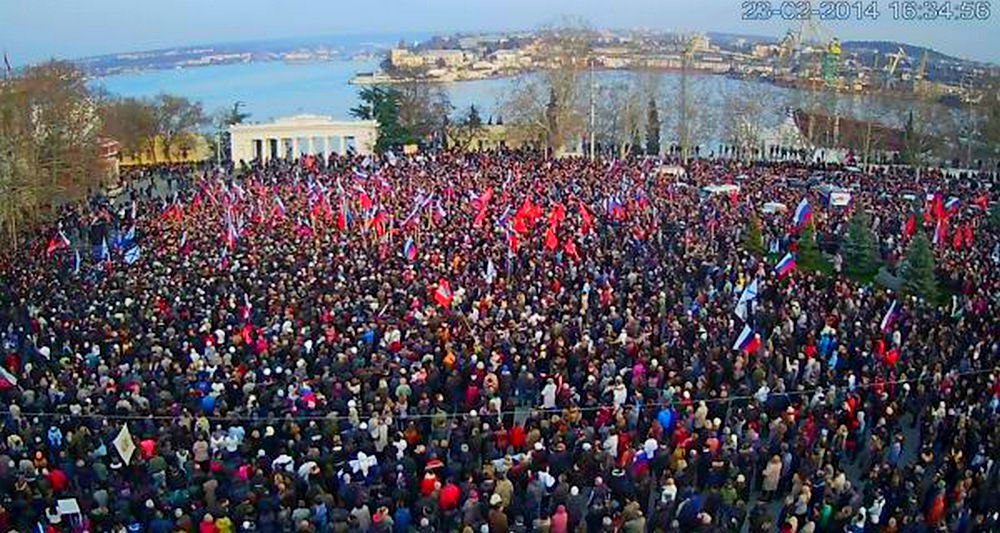
As 2.5 million Crimeans celebrated, the West was gnashing its collective teeth as the loss of a prospective military base for the USA to put their missiles aimed at Moscow. Sanctions followed, trying to punish the Crimeans for their choice. Ukraine, with the Western blessing, blew up the electric power lines as well as left the peninsular without water, leading to a large-scale humanitarian disaster. No-one bombed the Obama regime for organising it, but Russia rather quickly managed to restore both water and power to the peninsular through a dedicated infrastructure bridge.

More sanctions followed from the West. The Russians felts especially betrayed by the Germans – only in 1989 Gorbachev, against the strategic interests of the USSR, and to the hollow NATO promises of “not one inch East of Berlin”, green-lighted the reunification of the German people. And that is how the Germans repaid when the Russian people reunified – by slapping on sanctions.

Time passed, and Russia continued to undo the damage done to Crimea by the 25 years of Ukrainian neglect. They built new infrastructures, built new international airport, built a large mosque for the Crimean Tatars and recognised their language as one of the three official languages in Crimea (something Ukraine promised to do, but never did), they built the miracle of engineering – the Kerch railway and motor bridge, they restored Artec.

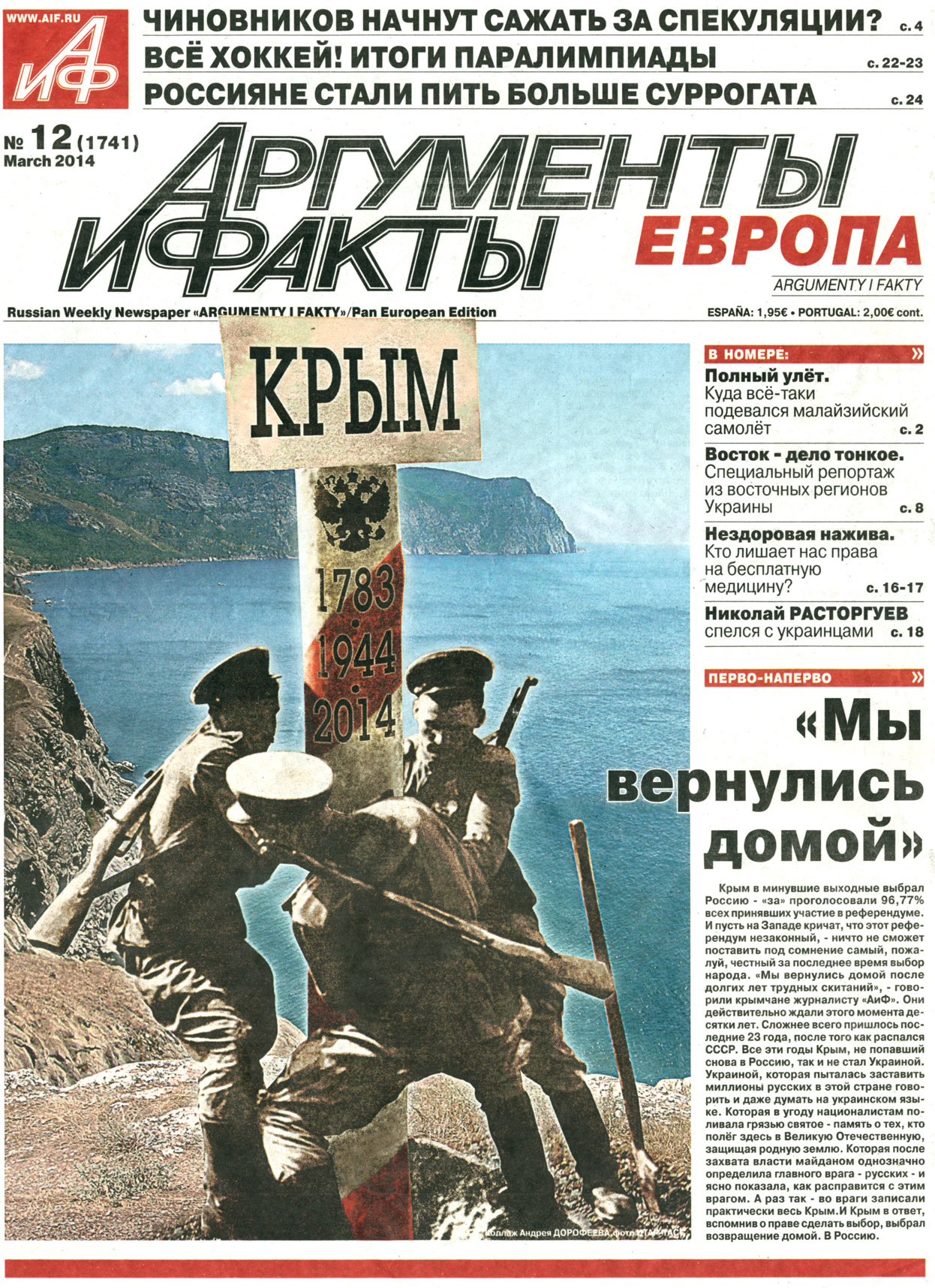
Looking back at 2014, when this revival started, I found my copy of Argumenty i Fakty from the 18th of March 2014, which I keep as a valuable memento – akin to how our grandfathers would have kept newspapers announcing the end of WWII. Here is the facsimile of its front page.

Continue reading

Five Years Later, the Crimean Scythian Gold Worth $4 Million May Fall into Poroshenko’s Hands

Reading time: 5 minutes

In a twist of fate, just as Crimea returned to Russia after 25 years of Ukrainian oppressive rule, Crimea’s most precious collection of Scythian gold was on tour in European and promptly became arrested by Holland. It is in Holland still, despite several Crimean Museums’ ownership of the collection. After the first hearing in 2016, Holland awarded the golden collection to Ukraine. The decision was appealed, and is now coming for a near hearing in Holland. The following article in Argumenty i Fakty from 12.03.2019 is about this.


The gold that got stuck.
Will Poroshenko get the wealth of the ancient Scythians?

The second trial, which will decide the fate of the exhibits of the Crimean museums, started in Holland.


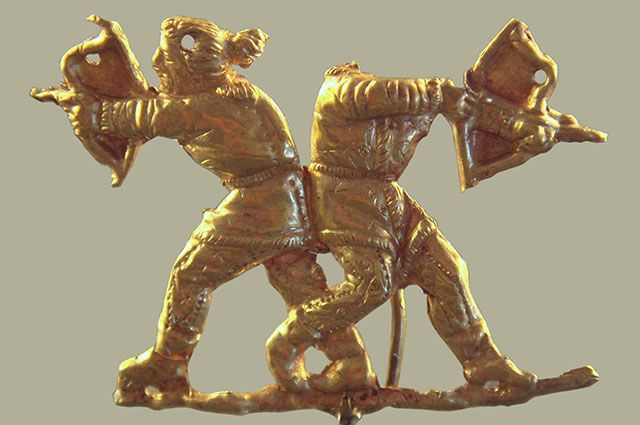
The gold of the Scythians. © / PHGCOM / Commons.wikimedia.org

Hearings on the case of the “Scythian gold” began on March the 11th in Amsterdam. In 2014, it was taken from the Crimean museums to an exhibition in Amsterdam. After the reunification of Crimea with Russia, the Ukrainian authorities demanded to return the exhibits to Ukraine. In 2016, the district court of Amsterdam ruled in favour of Kiev. Crimean museums have filed an appeal, which will now be considered in court.

Aif.ru answers the main questions about the upcoming process.

What are these gold artefacts?

In February 2014, when Maidan was raging in Kiev, the exhibition “Crimea: Gold and Secrets of the Black Sea” was opened in Amsterdam. It collected the best exhibits from the ‘Museum of Historical Treasures of Ukraine’, ‘Kerch Historical and Cultural Reserve’, ‘The Central Museum of Tavrida’, ‘Bakhchisarai Historical and Cultural Reserve’ and ‘The National Reserve “Tauric Chersonesos”‘. Amsterdam became another point in the Museums’ “tour” of the collection: before Holland they were exhibited in Bonn, Germany.

Continue reading

New Year of Peter I and the Roots of Grandfather Frost and Snow Maiden – Their True History

Reading time: 26 minutes

Some years ago I published an article about the instruction of the Western calendar in Russia by Peter I and the abolishment of the ancient Slavic calendar, counting over 7500 years of history.

While that article is true in all respects, as it is usual with our history, there are even more layers of alterations as one starts delving deeper into a topic. This is also so with the Russian calendar, and the tradition of New year celebration. For those who have not read it, I strongly advise you to read the previous article before continuing with the materials below. There I touch upon the linguistic aspects and two different words for “year” in Russian – “leto” (meaning both “year” and “summer”) and “god” (meaning “year”, with the overt reference to the Dutch word for “God”). In fact the first of the four articles below carries an explanation for why years were counted in summers…

The materials below are comprised of translations of four articles, originally published in “Argumenty i Fakty”, and uncover more details around Peter I reform, then going to the origins of the characters of “(Grand)father Frost” and the “Snow Maiden”. The articles can be read independently, but for a better understanding I would recommend reading them all in order.

Contents:

  1. The Tzar and the Tree. Why Peter I moved New year to January the 1st
  2. Bonfires for the ancestors and the gifts to the terrifying Grandfather. How New Year was celebrated in Russia
  3. Snow-mai-den! The history of the Russian character, which has no analogues
  4. According to Old Style. Why did the New year made do without a Tree

Continue reading

USA’s plans for the nuclear annihilation of USSR (Russia) and China disclosed

Reading time: 5 minutes

What does one call a country that plans to kill millions of people in a cold blooded first strike attack, and measures its level of success in the number of civilians killed and the percentage of the civilian infrastructure destroyed, reducing the attacked nation to a non-viable condition?

A rogue state?

A terrorist state?

Actually, it’s called USA.

In the recently-declassified documents, the US military details such plans of an all-out nuclear first strike against the USSR and China. I have written before about the American plans to drops 204 A-bombs onto the 66 of the largest Soviet cities, including Moscow, Leningrad, Kiev… The plans below are shown to go to an even greater detail in actually measuring the level of “success” such an attack would have, in the magnitude of the CIVILIAN casualties.

Continue reading

“The Great Gas Game” – An Excellent Documentary from Vesti

Reading time: < 1 minute

The Gas Wars are continuing. Starting well during the time of USSR, when the USA tried to stop the supply of the Russian gas to Europe by the means of sanctions and provocations, through the Ukrainian gas machinations, when Ukraine was used as a patsy to sabotage and undermine Russian supplier reputation, while at the same time blackmailing Russia for cheap under-market-priced gas, which I wrote about in a 2014 article The Third Gas War: EU and US must pay for their “successes” in Ukraine.

Now the USA are trying to sabotage Nord Stream 2 by blackmailing Germany. This follows the successful blackmailing and sabotage of Bulgaria, which stopped the construction of the South Stream and depriving Bulgaria of about $700.000.000 and $800.000.000 per year over a span of 50 years – USA and EU successfully stole from Bulgaria about $37.500.000.000

And before that, USA/NATO invaded and bombed Yugoslavia, bombing into oblivion the gas refinery in the Serbian town of Pacevo in 1999.

All this recent, and not so recent, history is very well chronicled in the new English-subtitled documentary from Vesti: “The Great Gas Game”

UPDATE 2022: Since YouTube applied the “freedom of speech” principle and removed all speech that does not conform to the American directive on freedom, i.e. all Russian channels, including the one from the VGTRK that hosted the documentary, I re-uploaded a backup copy, which I happened to have, to Odysee.

Newsflash: Another provocation is being prepared by Ukraine for the end of December

Reading time: < 1 minute

Following the Ukrainian botched provocation in the Kerch strait, the neo-Nazi regime in Kiev is gearing for a new round of provocations on the Russian border.

This information comes from the Russian Foreign Minister Sergei Lavrov, and should thus be viewed as highly verified.

In the press conference below, Lavrov underlines that any such provocation will fail to entice a war between Russia and Ukraine, which the Western handlers of the Kiev regime so desire.

More details in the following reportage about how Donbass is preparing to fend off the imminent offensive from the Nazis.

The Clinton – Yeltsin Collusion — How USA Interfered in the Russian Affairs and Elections

Reading time: 3 minutes

The devastating period of the Wild ’90s during Yeltsin’s reign of chaos, is a topic which I have previously covered on multiple occasions, and which I will be coming back to in the future.

This time, I want to draw your attention to the newly-declassified documents, pertaining to the communications between Bill Clinton and Boris Yeltsin. These documents are especially telling in the current “Russian elections meddling” hysteria, which has engulfed the United States. In a flurry of accusations, backed by so far zero evidence, the US accuses Russia of swaying the public opinion in Trump’s favour by placing a few ads on Twitter. As the Russian saying goes, “a thief is always screaming ‘catch the thief’ loudest of all”. This perfectly illustrates the situation in the USA, in light of their continued and brazen track record of meddling in other states’ affairs, and in this case, specifically the Russian affairs during the Wild ’90s period.

The Clinton Digital Library declassified the Documents Concerning Russian President Boris Yeltsin.

RT made a short digest of 5 highlight points from this 591 page long publication:

‘Smart’ Putin & election loans: 5 must-read Clinton-Yeltsin exchanges released

The exchanges include:

  • Clinton sends ‘his people’ to get Yeltsin elected
  • Yeltsin questions NATO expansion
  • NATO bombing of Yugoslavia turns Russia against the West
  • Yeltsin asks US to ‘give Europe to Russia’
  • Clinton on Putin: ‘He’s very smart’

Continue reading

New Samizdat – a news aggregator to break through the Western media censorship

Reading time: 2 minutes

Well, it increasingly looks like the Western “freedom of speech” and “democracy” are the two sham concepts that the West is shedding off.

A new aggregator has been launched by RT, in the wake of a flurry of censorship, banning and criminal prosecution (as proposed in Denmark) of alternative media and people holding alternative views, that is those not towing the US government line.

New Samizdat

The name has a historical reference to the once strict censorship of news in the USSR. “Samizdat” literally means “self-publishing”, and was a phenomenon in USSR, where dissenting books and articles would go underground and be “published” by way of spreading hand-written or machine-copied copies of the prohibited works.

And the “New” in New Samizdat indicates that the West has completely committed to the path of censorship, just like USSR once did (with the consequences that we all know about), and that a similar, now digital, phenomena arises in the West as a response to the censorship and banning.

Here is what RT had to say about New Samizdat
Continue reading

Russian FM Lavrov’s speech at UNGA is akin to Cat Leopold teaching mice good manners

Reading time: 2 minutes

There is an iconic Soviet children’s cartoon series “The Adventures of Cat Leopold”, where a kind, friendly cat is attempting to teach two misbehaving and downright evil mice to behave and to live in peace. “Guys, let’s live in friendship” is the cue of Cat Leopold. Whatever he tries to do to teach those mice – good example, showing them the errors of their ways, nothing helps. They are soon back to their old ways of making Leopold’s life a living hell. More often than not the mice fall victim of their own traps and provocations, thus illustrating the Russian proverb: “Don’t dig a hole for someone – you’ll end up falling into it yourself”.

In one episode, the ever-kind and balanced Leopold gets prescribed a medicine, “Wilderine”, to make him act more like a raging leopard. That seems to get the mice’s attention for awhile. Yet, at the end of the episode Leopold is back to his kind ways, enticing the mice to “live in friendship”.

Here is the episode in question: “The Revenge of Cat Leopold”

And here is a collection of several other Cat Leopold cartoons:

Why am I writing this? Because Soviet and now Russian actions, trying to make the West behave in a peaceful and well-mannered way are akin to Leopold’s attempts to make the mice behave.

And I am afraid that today’s excellent speech by the Russian FM Lavrov at UNGA is yet another such attempt, falling on deaf ears.

UPDATE 2023: In a bout of enforcing the freedom of speech and democracy, in 2022 YouTube removed the RT channel, while the West blocked the RT site. The link below is update to an uncensored mirror of RT.

Drop the diktats, try diplomacy: Major takeaways from Lavrov’s UN speech

“But history didn’t teach us anything,” Lavrov said, adding that allegations “based on the notorious ‘highly likely’ thing are sufficient for some Western counterparts to pin the blame on anyone.”

“We do remember how often these unfounded claims were used to justify interventions and ignite wars, such the 1999 bombing of Yugoslavia, 2003 invasion of Iraq and 2011 intervention in Libya.”

“Colonial-era diktat and coercion should be sent into the archive or the dustbin of history.”

Moscow believes constructive dialogue can meet any challenges that arise in world affairs, according to Lavrov.

“If you have any questions or claims to anyone, then sit down and talk, show facts, listen to your counterpart’s arguments, try to balance your interests.”

Yaroslava Degtyariova and her amazing performance of “The Ballad of the Three Sons”

Reading time: 3 minutes

A few days ago Lada Ray posted an article A Tiny Russian Girl with Huge Mystical Talent: My Collection of Songs by 9-year-old Yaroslava Degtyariova, where she literally discovered for me an amazing, pure singer, a 9-year old Russian girl, Yaroslava Degtyariova.

One song especially touched me – “The Ballad of the Three Sons”. It is an allegoric song in which one can see echoes of the classic Russian folk fairy tales, as passed through the generations. It also holds a key.

On many occasions I saw the term of the “mysterious Russian soul”, which the Westerners bemoan having trouble deciphering and understanding. This song can unlock this mystery, as the key to the Rus soul is hidden in the actions and aspirations of the third son, while the first and the second sons depict the typical traits of the Western civilisations.

And so, here is the song by Tatyana Shilova, performed in the pure voice of Yaroslava Degtyariova, with my attempt at a translation below.


Yaroslava Degtyariova at the Day of Love & Family concert, July 8, 2017, Murom: THE BALLAD OF THE THREE SONS.

В краю средь гор и цветущих долин
Текла река, исчезая вдали.
Прекрасней не было страны,
Где рождались баллады и сны.

В дорогу звал глас таинственных гор.
Три сына там покидали свой дом.
Один был горд, другой – упрям,
А третий был сердцем смирён.

Слова Отца были грусти полны:
“В любви моей вы росли, как цветы.
Что ждёт вас там, в чужих краях?
Да хранит вас молитва моя”.

И звучало в ответ эхо горных вершин
“Сохраните богатство души
И любви нескончаемый свет”.

Прошли года, затерялись вдали.
В краю средь гор и цветущих долин,
Встречал отец своих детей,
После долгих разлук и скорбей.

И первый сын возвратился домой:
“Гордись, отец, – я великий герой.
Вся власть моя, и в этом суть
На крови я построил свой путь”.

Второй принёс золотые дары:
“Смотри, отец, я могу все миры
Купить, продать и слёзы всех
Превратить в серебро и успех.

И звучало в ответ эхо горных вершин.
Разменяли богатство души
Ради славы и блеска монет.

А третий сын на коленях стоял:
“Прости, отец, я великим не стал.
Смиренным был, врагов прощал”,
А отец с теплотой отвечал:

“Душа твоя и добра и чиста.
И пусть богат ты и знатен не стал,
Но ты хранил любовь мою.
Я тебе свой престол отдаю!

Но ты хранил любовь мою.
Я тебе свой престол отдаю!

И звучало в ответ эхо горных вершин:
“Кроток сердцем и духом смирён,
Верный сын унаследовал трон!”.

Amidst the mountains and blooming dales,
Where river flowed out of sight,
There was no land more fair,
Where the ballads and dreams were born.

Three sons were setting off,
To the call of the mysterious peaks.
One was full of pride, the other was stubborn,
While the third was pure at heart.

The Father’s words were with sorrow filled:
“As flowers you grew up surrounded by my love.
What awaits you in the far away lands?
Let my payer keep you safe.”

And the mountain peaks echoed back:
“Preserve the richness of your soul
and the never-ending light of love”.

The years passed, lost in sight.
In the land amidst mountains and the blooming dales,
The Father was welcoming back his sons,
After long tribulations and partings.

And so the first son returned home:
“Be proud of me, father – great hero I am.
All power is mine, and that’s the crux,
On the blood I paved my path.

The second one brought home the gifts of gold:
“Look, father, I can buy and sell
All the worlds, and turn the tears,
Into silver and luck.

And the mountain peaks echoed back:
You exchanged the riches of your soul
For fame and the shimmering gold.

While the third son sank down to his knees:
“Forgive me father, I did not become great.
I was filled with humility and forgave my foes”,
And the Father replied with warmth:

“Your soul is both kind and pure,
And even though you didn’t become rich and famed,
You kept my love true.
So my throne I shall give to you!”

You kept my love true.
So my throne I shall give to you!”

And the mountain peaks echoed back:
“Kind in heart and humble in soul,
The faithful son has inherited the throne!”

Tolkien’s Beorn as a Personification of Russia

Reading time: 4 minutes

There are times when an article or an idea would sit as a draft for some time before seeing the light of publication, as if waiting for something. This article is of that kind, and it seemed to have been waiting for Lada Ray’s Forbidden History and Forgotten Origins webinars to catalyse me into putting some finishing touches and publishing it.

I first had an inkling of there being a connection between Tolkien’s depiction of Beorn and Rus when I was reading his books. Much later, that feeling returned as I was watching Peter Jackson’s dramatisation of The Hobbit. And the final pieces fell into place, while watching the behind the scenes documentaries on construction of Beorn’s house set and the visualisation of his character. I have created the shortened versions of the two documentaries to showcase the fragments that are especially interesting and telling for the topic at hand:


Before I proceed, let me reference my reader to another article of Lada Ray – Forbidden History: Are Scandinavians Slavs?. Many of the prerequisites are discussed there, so I would be repeating much of that article otherwise.

Continue reading

UPDATED: Russian Calendar Shows Year 7527, or How Russian History Was Shortened by Peter I

Reading time: 8 minutes

The article you are about to read appears in Russian on The Svarog Day site (Update: the site went off-line in 2021, so the link is update to point to the WebArchive). Before embarking on it, a short contextual and linguistic introduction is needed.

I have been meaning to translate this article for some time, but as with a few other articles that will be coming out around this time, it did not feel like the time was ripe. It is Lada Ray’s forbidden history & forgotten origins webinar series that are now playing as a certain catalyst. Lada addresses this topic and the historical background behind this transition of the calendar in great detail in her webinar. She also addresses the aspects of a supposed impostor that replaced Peter I, which the article below alludes to. She presents arguments that there was no impostor, but that Peter was swayed in his views by his Western advisors during his travels to the West. Later I plan to do a translation of a film that dives into this topic, but for now, back to the topic of the Calendar.

Another note is the word “calendar”, which in old Russian was “kolo dar”, meaning “the gift of the sun-circle”. Lada Ray wrote an extensive article on this topic in 2015: Why Russians celebrate the New Year, and not Christmas, with New Year’s Tree? The Origin of ‘Calendar’ and Christmas/New Year’s Forbidden History. The article to some degree intersects with what I am about to translate, and it also greatly expands on the meaning of the word “calendar”.

The word “year” in modern Russian is written as “god” (год), and the reason for it will become apparent from the article. However, Russian originally used the word “leto” (лето) to denote “year”. In modern Russian the word “leto” means “summer”, but its original meaning is still preserved in different contexts and words, such as “letopis” (летопись, literally: “year writing”), meaning “chronicles”. “Leto” is also used to denote the age or timespan starting from 5 (it seems the reforms of which the article will talk, were only successfully enforced on short intervals), so you’d say “1 god” (1 year), but “5 let” (5 years).

In my translation I will use “year” for both, but will mark the word with either (god) or (leto) in parenthesis, where the context requires it.

Continue reading

World Cup 2018 in Russia – A Welcoming Echo of the Olympics 1980

Reading time: 3 minutes

Back in 1980 Russia welcomed sports enthusiasts from all over the world for the Olympics. Watching the welcoming and uplifting reports from all over Russia now, during the World cup 2018, I have the theme tune of the Olympics ’80 playing in my mind. It’s the same message of friendship and inclusiveness. See, for example, a collection of video at Russia insider in the articles Moscow Is Basically a Giant Street Party Right Now #WorldCup (Video) and How Many People Are Rocking the World Cup From Which Countries? – Russia Breaks Records

The Olympics ’80 song was written by R. Rozhdestvenskij, with music by D. Tuhmanov and is sung by Tõnis Mägi, a pupolar in USSR Estonian singer. He, alas, betrayed the spirit of this song later in 2014, when he initiated boycott of Steven Seagal, who performed in Sevastopol after Crimea’s democratic reunification with Russia.

Still, whatever his present views and actions are, that is no reason to boycott him or write him out of history. And so, the excellent Olympics ’80 anthem, performed by Tõnis Mägi, with my translation of the lyrics to English below the video frame.

Unfurling high above and calling to us is this golden Olympic flame.
The Earth shall be happy and young!
We must do everything so that the Olympic flame is not extinguished forever,
The Sun is starting into the sky, as if for the first time.
Реет в вышине и зовёт олимпийский огонь золотой.
Будет Земля счастливой и молодой!
Нужно сделать всё, чтоб вовек олимпийский огонь не погас,
Солнце стартует в небе, как в первый раз.

Continue reading