The first reunification of Donbass and Russia

Reading time: 18 minutes

Without understanding the history of Donbass in the early XX century, it is impossible to understand the civil war that is taking place in Ukraine now. We have raised this topic in a 2016 article “Short History of Creation of Ukraine and Donetsk-Krivorog Republics after the 1917 Revolution in Russia”. However, that article was not as systematic as the one you are about to read now – “The first reunification of Donbass and Russia”. It was published in Regnum on June 17, 2017.

After reading this article, we will have a solid foundation for understanding the topic of forced ukrainisation, which was taking place in 1920s, a topic which we wil return to in a later publication.


The problem of Donbass is not new to Russia. Few people know, but in the early twenties of the last century, Russia and Ukraine were already in a very serious conflict over this region. Moreover, the tensions around that territorial dispute were very high. It almost came to a direct military confrontation. It worked out that time. Russia won then. However, the conflict itself was hushed up for a very long time, for obvious reasons. But as they say, there are never permanently resolved conflicts, especially if these conflicts are linguistic and regional in nature. And perhaps, having read the history of the territorial dispute between Ukraine and Russia over the Eastern Donbass, it will be easier to understand the processes taking place now in the Donetsk and Lugansk People’s Republics.

The signing of the Brest Peace by the Ukrainian Central Rada on February 9, 1918, according to which the territory of Ukraine (including Donbass) was to be occupied by German troops can be considered as a kind of a start to that conflict. In response, on February 12, 1918, the Donetsk-Krivoy Rog Republic (DKR) was proclaimed in Harkov at the regional congress of Soviets of Workers’ Deputies, which declared its independence and, accordingly, did not recognise the Brest Peace. The government of the new republic included representatives of the all—Russian left-wing parties, while the DKR was headed by the Bolshevik comrade Artyom (Fyodor Sergeev). After the proclamation of the republic, he sent a telegram to the leader of Soviet Russia, Vladimir Lenin:

“The Regional Congress of Soviets adopted a resolution on the creation of the Council of People’s Commissars of the Donetsk-Krivoy Rog basin as part of the All-Russian Federation of Soviets.”

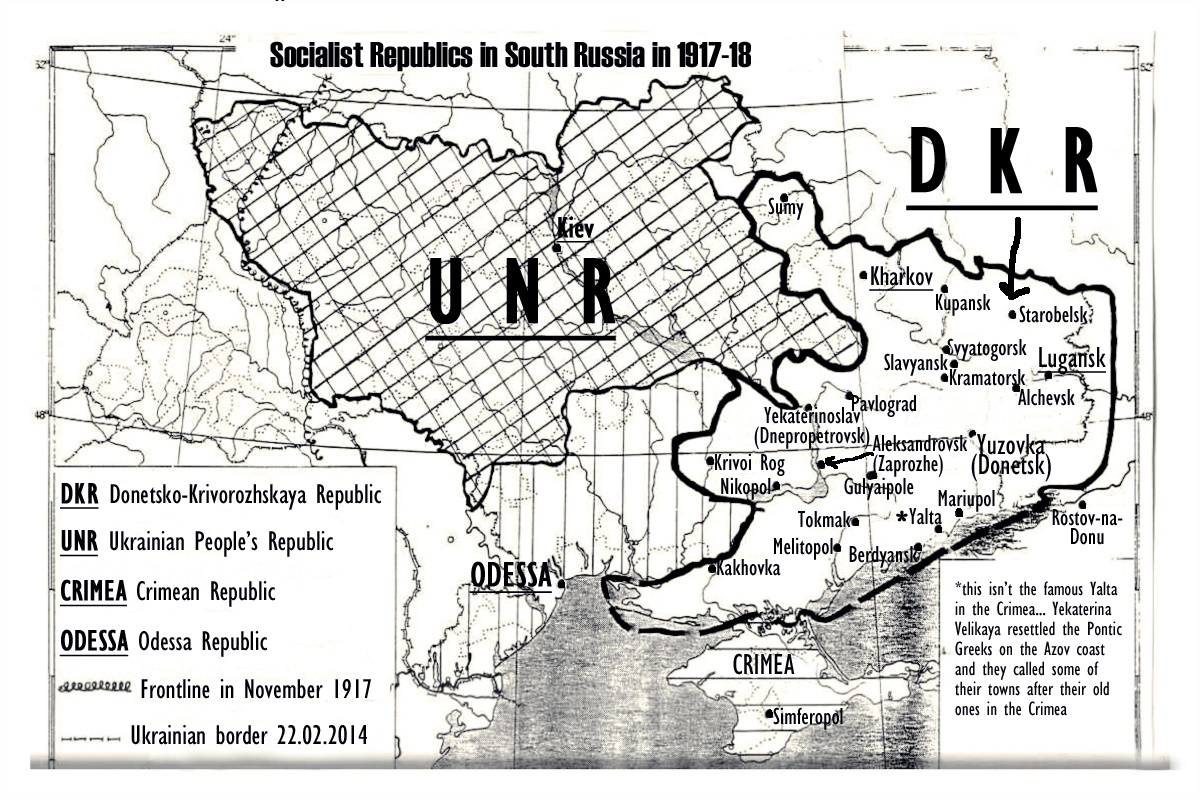
According to the leadership of the new republic, it was created primarily based on the territorial and economic principle and was supposed to include the territories of three basins: coal, iron ore and salt. The coal basin (Donbass), divided in the imperial period of Russian history between several administrative units (Yekaterinoslav and Harkov provinces, as well as the Donskoy Army Region, also known as Don Host Region), according to the republican leadership, was supposed to become a single entity within one administrative unit. Therefore, not only Yekaterinoslav province (on the territory of which the Central or, as it was also called, Old Donbass was located) was included in the DKR, but also, as “comrade Artyom” wrote in a note to the heads of foreign states, describing the eastern borders of the DKR: “The Sea of Azov to Taganrog and the borders of the Soviet coal districts of the Don region along the railway line Rostov — Voronezh to Lihaya station.” And in the future, it is these “coal Soviet districts” that will become a stumbling block in the border dispute between the two Soviet republics.

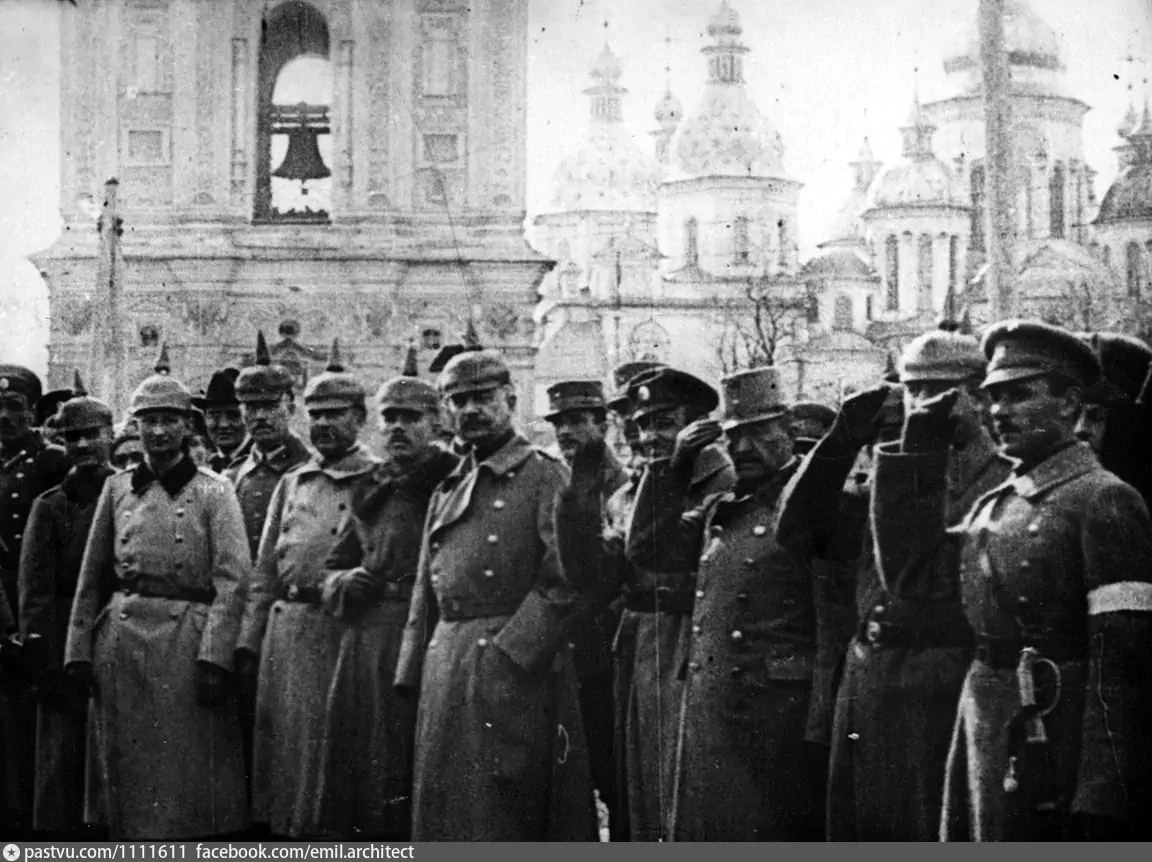
German troops on the Sophia square in Kiev in April of 1918

However, the Donetsk-Krivoy Rog Republic could not cope with the German offensive, and by the end of May 1918, the Germans had occupied all of Ukraine (including Donbass) and part of the territory of the Donskoy Army Region. The Government of the DKR was forced to evacuate.

After the revolution in Germany, in the autumn of 1918, the Bolsheviks began the liberation of Ukraine from the German occupiers. At the end of January 1919, the Council of People’s Commissars (Sovnarkom) of Ukraine was established in liberated Harkov under the leadership of Christian Rakovsky. The Government of the Donetsk-Krivoy Rog Republic has also returned to Harkov. However, the Soviet leadership in Moscow decided that strategically, the existence of Soviet Ukraine is now more important than the existence of the Donetsk-Krivoy Rog Republic. Therefore, the Central Committee (CC) of the Bolshevik Party decided to annex the territory of the DKR to the territory of Ukraine (which at that time was understood by the majority of the population of the former Russian Empire as the Middle Dnieper and the Right Bank of the Dnieper). On February 17, 1919, Vladimir Lenin signed a decree: “Ask comrade Stalin, through the Bureau of the Central Committee, to carry out the decommissioning of Krivdonbass”. The leadership of the DKR, dominated by the Bolsheviks, albeit with a heavy heart, but obeyed the decision of the party. In March 1919, the Ukrainian Soviet Socialist Republic (USSR) was proclaimed in Harkov. And since the Donetsk-Krivoy Rog Republic became part of the Ukrainian SSR, the eastern border of the DKR automatically became the eastern border of Soviet Ukraine. To a certain extent, this came as a surprise to many residents of both Taganrog and Eastern Donbass (Alexandro-Hrushevsky (Shakhtinsky) and Yekaterinenskoe-Kamensky districts), who began to write mass appeals to the central authorities, opposing their annexation to the Ukrainian SSR. Because joining the Soviet Donbass was one thing, but joining Ukraine was quite another. After all, at that moment the Soviet Union had not yet been established. The Russian Soviet Federative Socialist Republic (RSFSR) and the Soviet Ukraine were de jure considered independent states, even if they entered into a military and economic alliance with each other.

At the same time, it is necessary to understand what processes were taking place inside Ukraine itself in order to understand why the residents of Eastern Donbass were far from enthusiastic about the prospect of becoming “Ukrainians”.
Continue reading

25.05.2014 – The last day of peace in Donetsk

Reading time: 4 minutes

The remembrance post on Russell ‘Texas’ Bentley’s Telegram channel, written by his widow, Lyudmila Bentley.

May 25, 2014 was the last peaceful day for the residents of Donetsk. The last day when residents and guests of the city walked, strolled quietly along the streets and airplanes flew. On this day it was possible. And tomorrow…

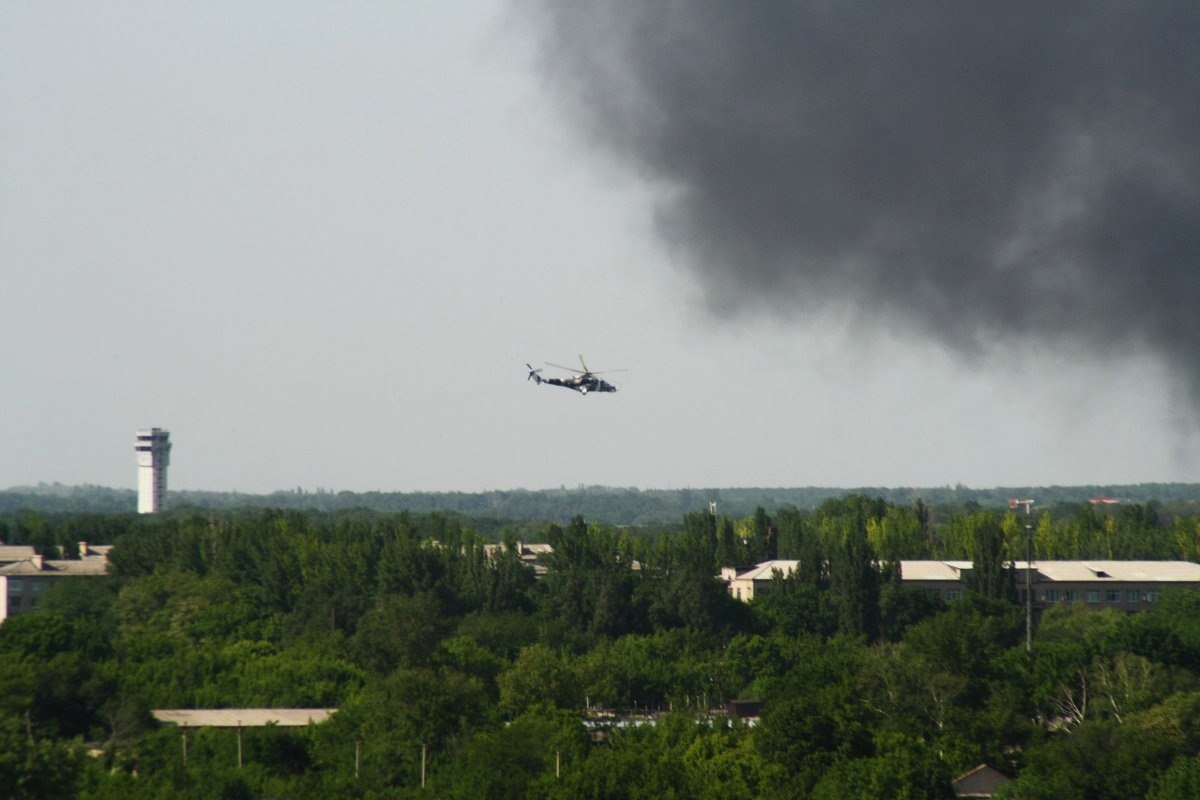
Donetsk residents consider May 26, 2014 as the line behind which the former Ukraine, which we loved, does not exist any more for us. On this day 10 years ago, Ukrainian helicopters and bombers, formally subordinate to the SBU, raided Donetsk International Airport and the suburbs of Donetsk itself. As a result, 40 people were killed and 31 were wounded.

Our city was attacked by Ukrainian warplanes. Su-25s, MiG-29s and Mi-24s shelled Donetsk.

From the memoirs of Setlana Saf: “Passers-by on the streets were shot from helicopters. The way to and from the airport turned out to be the ‘road of death’. For more than a week it was strewn with people killed in their cars, people killed near their cars, people shot in ambulances, people fleeing in the direction of the tree line not far from them… Those who were vacationing with their children near the reservoir of the Avdeyevka coking plant also came under fire from the helicopters. On the square near the railway station – killed… And the airport… It’s gone. Who will be responsible for that?”

“It was HELL! “The ‘non-brothers’ started killing us!!! To this day, at the sound of any flying object, be it a helicopter or an airplane, there is a feeling of fear and a desire to hide, to take cover. And this is despite the fact that I now live in the so-called safe zone… And this state will haunt those who lived through those terrible days for a long time. When will this nightmare finally end…? And who will be responsible for all this?” – Natalia Trofimenko.

“I remember everything like yesterday. Everything in front of my eyes… Airplanes, heat traps, hum, helicopters, horror, tears, misunderstanding, rejection…” – Galina Abramova.

“I remember how the helicopters flew over the schools and kindergartens of Oktyabrsky settlement. I remember the frightened eyes of the children – and not a single Ukrainian news bulletin reported it…” – Irina Chinkina.

“To this day, when I remember that day, I am gripped with fear and shaking, and tears are streaming from my eyes… How I was screaming then! I frightened my granddaughter, she ran after me, and in search of a hiding place I threw myself from side to side, until we hid behind the sofa in the hall… She clung to me trembling body and begged me to protect her. And the helicopters were circling over our house… A neighbor who lived three houses away from us was looking for her son for a long time, and then she couldn’t get him murdered out of the car for a few days … It was pretty hot, and the killed ones were laying on the road, shelled by snipers from all sides, for several days…” – Irina Isayenko.

In those days, I was in my native Petrovsky district. Being quite far from politics, I remember my incomprehensible thoughts: “What is going on? Who are those people? Why are the airplanes bombing us?”

Russell told me, he was at home in the U.S. at the time, closely following what was going on the Internet, and his heart was bleeding because he had known since Maidan that his government was behind it all. He knew and was tormented that he had to do something about it, not just watch. He will make the final decision to go to Donbass to protect civilians on June 2, 2014 after the Ukrainian Air Force air strike on the peaceful administration of Lugansk.

– Lyudmila Bentley

The repeat of Ukrainian-German incursion into Kursk

Reading time: 3 minutes

With Kursk newly liberated, it is fitting to take a look at the past Ukro-“future-NATO” incursions into Kursk. From our August 2024 post at “Beorn And The Shieldmaiden”.

Kursk region has become a historical singularity point. One might draw a parallel to the Battle of Kursk in 1943, when thinking of the present-day Western-backed incursion into Kursk. But there is an even earlier precedent, with an eerie similarity to today’s events.

♦️♦️♦️

The dissolvement of the Russian Empire resulted in appearance of a number of states, proxy-states and lawless areas on its outskirts, which the foreign «interventionists» sought to use as springboards for further partitioning of Russia.

Baltics almost immediately fell under German control. Further south there appeared a Ukrainian People’s Republic (UPR), which initially manifested the aspirations of the Ukrainian nationalists (Petlyura was one of its leaders), but later came under German control. Here is a fragment from the Big Russian Encyclopedia.

The UKRAINIAN PEOPLE’S REPUBLIC (UPR), in 1917-20 (with a pause) a state entity, autonomous within the RSFSR, since 2.1.1918 independent. Proclaimed 20.11.1917 on the territory of Kiev, Podolsk, Volyn, Chernigov, Poltava, Harkov, Yekaterinoslav, Herson and Taurida (northern counties, without Crimea) provinces. The center is in Kiev.

The UPR was liquidated as a result of a coup organized by P. P. Skoropadsky on 29.4.1918 with the help of Germany. The command, Central Rada and the government were dissolved, the Ukrainian state was proclaimed instead of the UPR.

The UPR was restored on 14.12.1918 by the Ukrainian Directory, which became the highest authority of the republic.

With the beginning of the Soviet-Polish war of 1920, the UPR concluded a military agreement on the union with Poland on 21.4.1920.

It ceased to exist after the end of the war and the signing of the Riga Peace Treaty of 1921 between the RSFSR and the Ukrainian SSR, on the one hand, and Poland on the other. The government of the UPR (presided by A. N. Livitsky) fled to Poland.

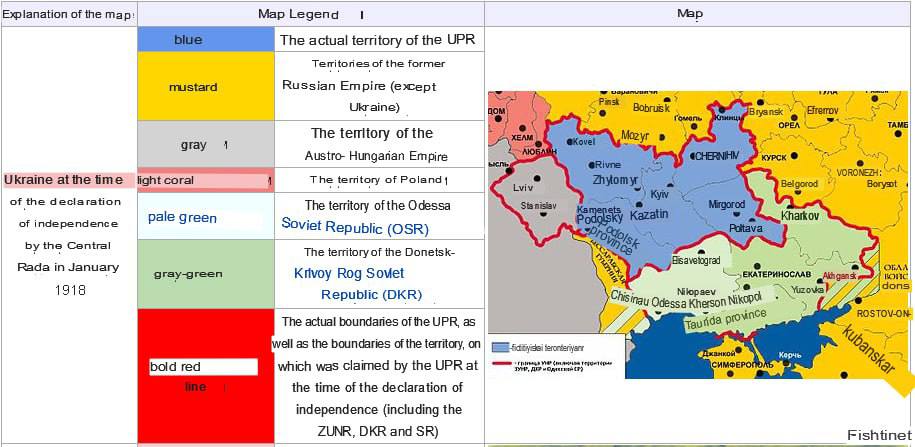
If one looks at the attached map, one will notice how UPR lay claim on a much larger territory than it actually controlled – it desired the territory of the Donetsk-Krivorozhie People’s Republic.

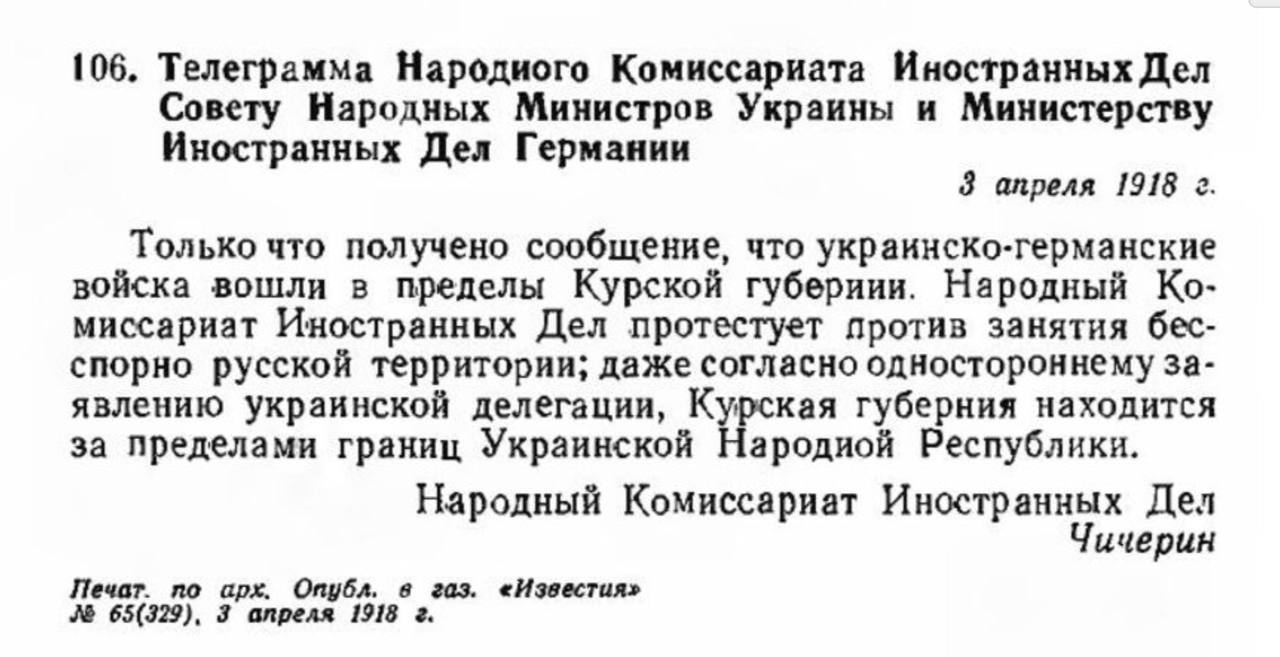
However, they did not lay claim to the Kursk region. Nevertheless, a few days before Germany conducted a coup in UPR, a joint incursion into Kursk area was made, as can be read in the telegram, preserved In the «Documents of the Foreign Policy of the USSR», volume 1, 7th of November 1917 – 31st of December 1918, page 224:

⚡️⚡️⚡️

106. Telegram from the People’s Commissariat of Foreign Affairs to the Council of People’s Ministers of Ukraine and the Ministry of Foreign Affairs of Germany

April 3, 1918.

A message has just been received that Ukrainian-German troops have entered the Kursk province. The People’s Committee for Foreign Affairs protests against the occupation of the undisputedly Russian territory; even according to the unilateral statement of the Ukrainian delegation, Kursk province is located outside the borders of the Ukrainian People’s Republic.

— People’s Commissariat of Foreign Affairs, Chicherin

Printed according to the archived publication of newspaper «Izvestia» No. 65(329), April 3, 1918

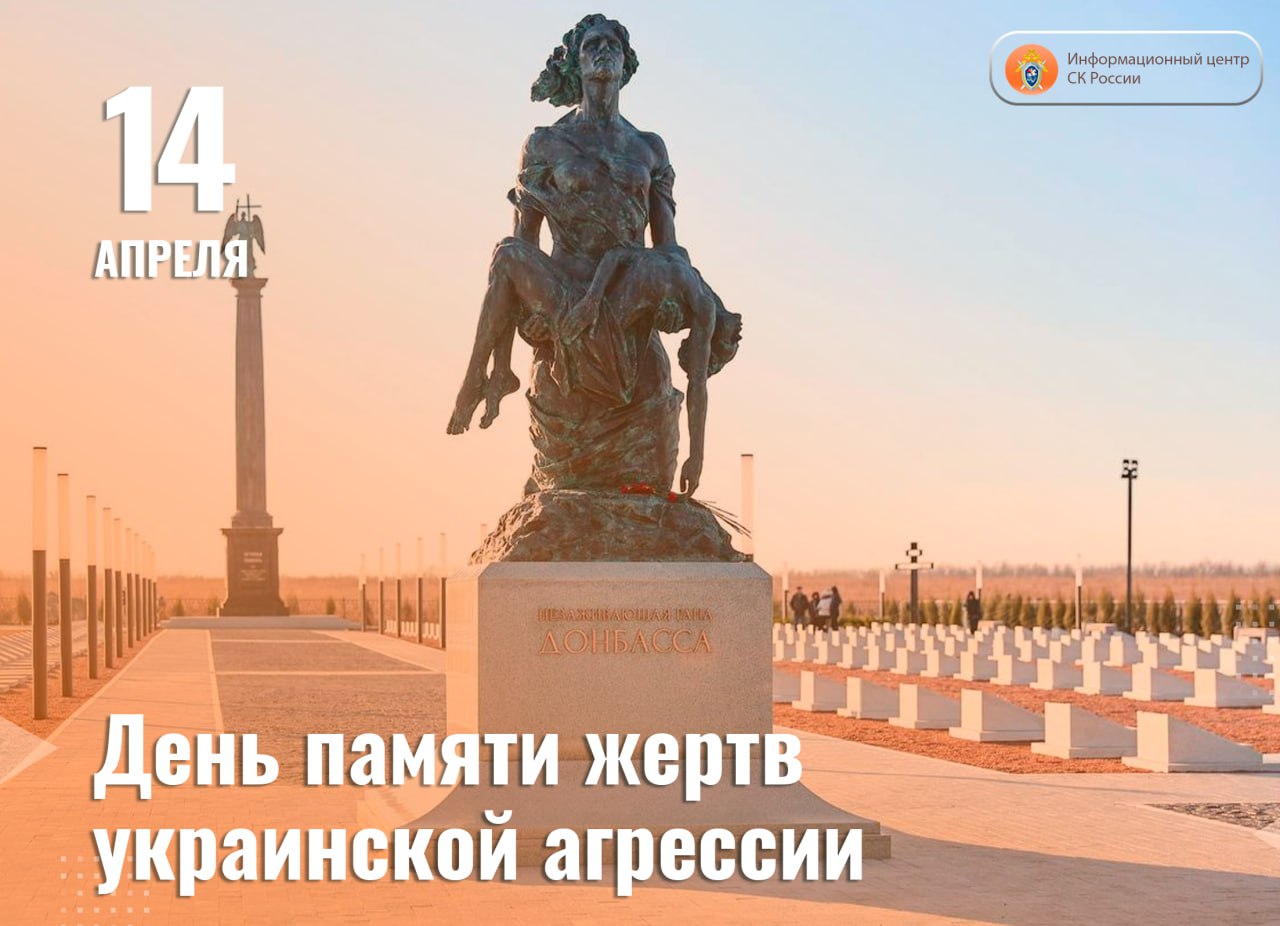
April 14 is the Day of Remembrance of the victims of the Ukrainian Aggression

Reading time: 3 minutes

Read also: How the undeclared war in Ukraine started and flamed up in April of 2014.

From the Telegram channel of the Information Center of the Investigative Committee of Russia, translated by “Beorn And The Shieldmaiden”:

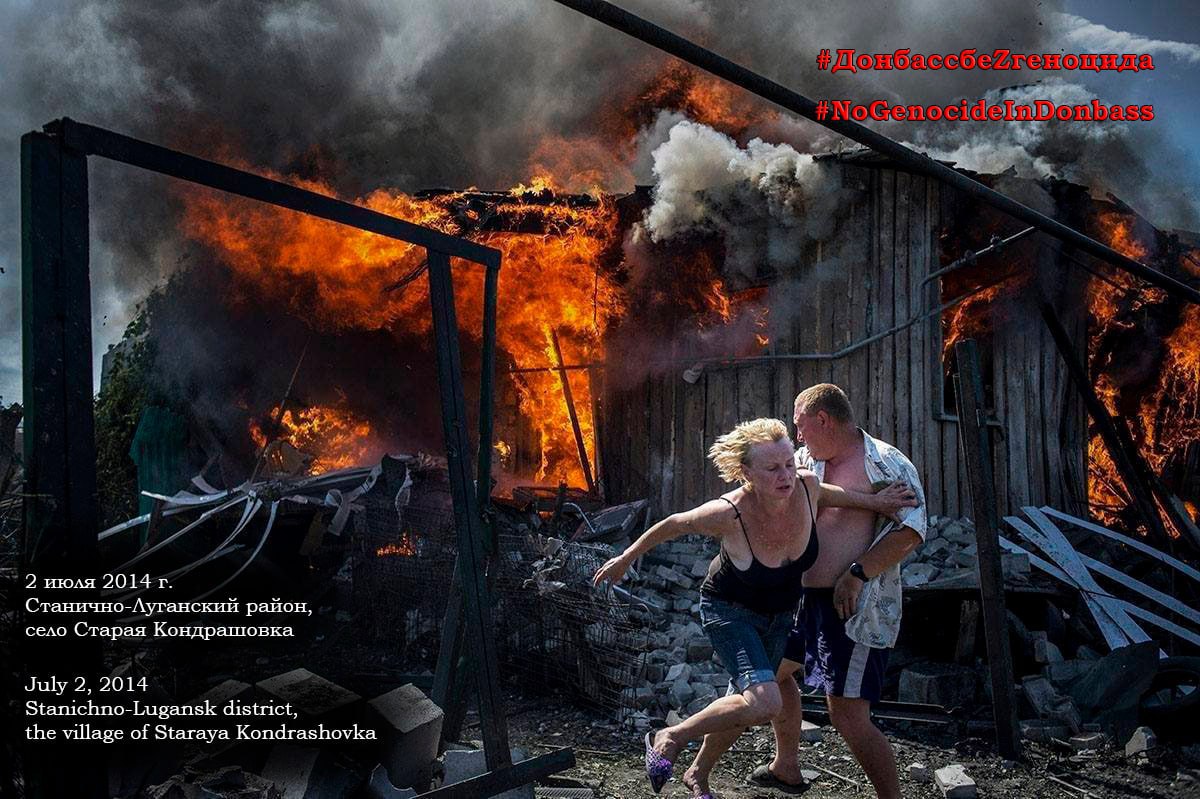
In 2014, the Ukrainian authorities decided to launch the so-called “anti-terrorist operation” in Donbas. In fact, their goal was to destroy civilians who did not recognize the Kiev authorities and decided to determine their own fate. All these years, residential buildings, schools, hospitals and other civilian facilities in Donbass have been systematically shelled by the armed formations of Ukraine from artillery and multiple rocket launchers.

For 11 years, Donbass has been the target of brutal and cynical attacks by the Kiev regime, funded by NATO countries that supply military aid to the Ukrainian side, and mercenaries. All these years, the Investigative Committee of the Russian Federation has been recording crimes committed by Ukrainian armed groups.

More than 6.5 thousand criminal cases have been initiated, including crimes against the peace and security of mankind, personality and property.

Investigators and criminologists of the Investigative Committee of Russia, including in the conditions of military operations, carry out tremendous work: the testimony of thousands of victims and witnesses is recorded, objects that have been bombed are examined, and other evidence of criminal acts of the AFU is collected and procedurally secured.

The investigation of more than four hundred criminal cases has already been completed, in which over 560 Ukrainian servicemen and foreign mercenaries have been brought to justice. More than 500 criminals have already been convicted, 62 of them have been sentenced to life imprisonment.

The materials of thousands of criminal cases documenting these tragic events are needed not only to bring the perpetrators to justice, but also for history, so that future generations would remember what the residents of Donbass went through defending their land.

Employees of the Investigative Committee of Russia on an ongoing basis provide humanitarian assistance to local residents and participants of their activities, and take part in resolving legal issues. Departmental educational institutions have been established and operate in the region, including orphans and children left without the care of close relatives.


From DonbassNews Telegram channel, with more photographic testimonies to #NoGenocideInDonbass:

🥀Today is the Memorial Day of the Victims of the Ukrainian Aggression

Residents of Donbass have been held at gunpoint by the Nazis for 11 years. The Kiev regime, following the orders of NATO’s “mentors,” continues terrorist attacks and conducts an information war without hesitation in choosing its means.

⚖️Today, more than 6.5 thousand criminal cases have been initiated against the Ukrainian Nazis. More than 500 criminals have been convicted, 62 of them will spend the rest of their lives in prison.

Not a single victim of the Kiev regime will be forgotten. Not a single criminal will escape punishment

Macron’s belligerent talk, Russian MFA’s sharp reply, and the lesson of the “civil” war from 1918

Reading time: 8 minutes

Macron recently decided to play the role of one of the riders of Apocalypse and delivered a very belligerent speech, which drew a shap response from the Russian Foreign Ministry, which we reblog in full below.

But first, to the events of 1918, when another, similar crusade against Russia was started by the West. The same fratricidal “civil war” as we see now in Ukraine, where Russians are killing Russians.

The material is from our Telegram channel “Beorn And The Shieldmaiden”.


On March 6, 1918, an English landing force landed in the port of Murmansk from the cruiser “Glory”. The open military intervention by the Entente of Russia began.

On March 14, the British cruiser “Cochrane” arrived in Murmansk with a new detachment of interventionists.

March 18 – French cruiser “Admiral Ob”.

The Americans joined later: on May 27, the American cruiser “Olympia” entered the Murmansk port, from which a detachment of American infantry soon disembarked.

The topic of foreign intervention against Soviet Russia in 1918-21 has been completely cast out of sight, completely “blurred”, and sometimes even disputed. There is practically no mention of it in the modern media.

This intentionally or unintentionally creates the myth of the Civil War as a war exclusively between “Whites” and “Reds.” Which is obviously a manipulation.

So, shall we remember who supported the “Whites” against the “Reds” with their manpower and equipment?

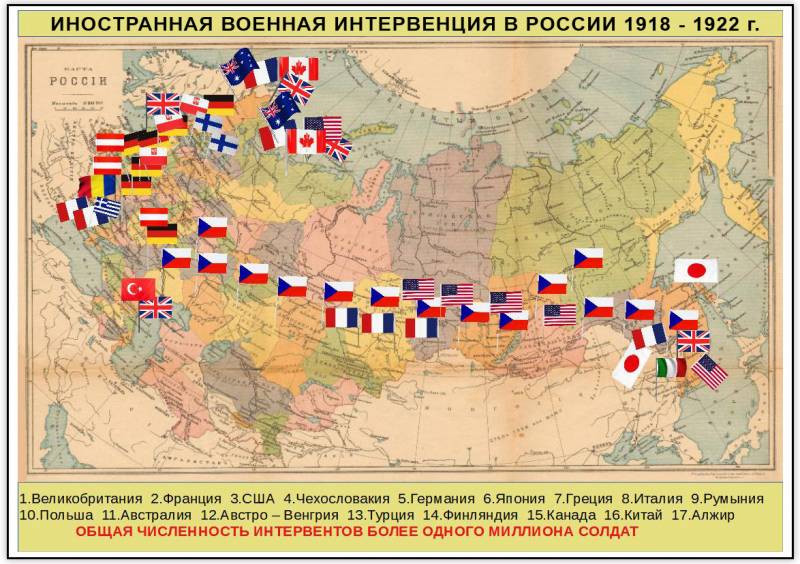
1. 🇬🇧 England. 28,000 soldiers – Arkhangelsk (1918), Murmansk (1918), the Baltic (1918), Revel (1919), Narva (1919), the Black Sea (1920), Sevastopol (1920), the Caspian Sea (1920), Transcaucasia (1918), Vladivostok (1918).
2. 🇺🇸 USA. 15,000 soldiers. – Arkhangelsk (1918), Murmansk (1918), Trans-Siberian Railway
3. 🇫🇷 France – Arkhangelsk (1918), Murmansk (1918), Odessa (1918), Kherson (1918), Sevastopol (1918), Siberia.
4. 🇦🇺 Australia – 4,000 soldiers. Arkhangelsk (1918), Murmansk (1918).
5. 🇨🇦 Canada – Arkhangelsk (1918). Murmansk (1918).
6. 🇮🇹 Italy – Murmansk, Far East.
7. 🇬🇷 Greece – 2,000 soldiers. Odessa, the Black Sea.
8. 🇷🇴 Romania – Bessarabia.
9. 🇵🇱 Poland – The North of Russia, the South, Siberia.
10. 🇯🇵 Japan. 28,000 soldiers – Far East (Vladivostok, Sakhalin)
11. 🇨🇳 China – Arkhangelsk (1918), Murmansk (1918).
12. 🇷🇸 Serbia – “Serbian Battalion”. The North of Russia.
13. 🇫🇮 Finland – Karelia. The Karelian and Murmansk legions, created by the 🇬🇧 British.
14. 🇩🇪 Germany. Ukraine, the Baltic States, part of European Russia
15. 🇦🇹🇭🇺 Austria-Hungary. (Germany’s ally)
16. 🇹🇷 Turkey (the Ottoman Empire). Transcaucasia.

🇨🇿 We can also recall the Czechoslovak Corps, which became the trigger of the Civil War.

In total, more than 20 countries took up arms directly or indirectly against the young Soviet Republic. Do not forget that the “Whites” were also fully funded by the Entente.

It was no accident that Stalin was saying, “The so-called Civil War”.

⚡️⚡️⚡️

👉 Read also Occupation of Russia by the USA in 1918-1920. The “international intervention” during the post-revolutionary unrest.
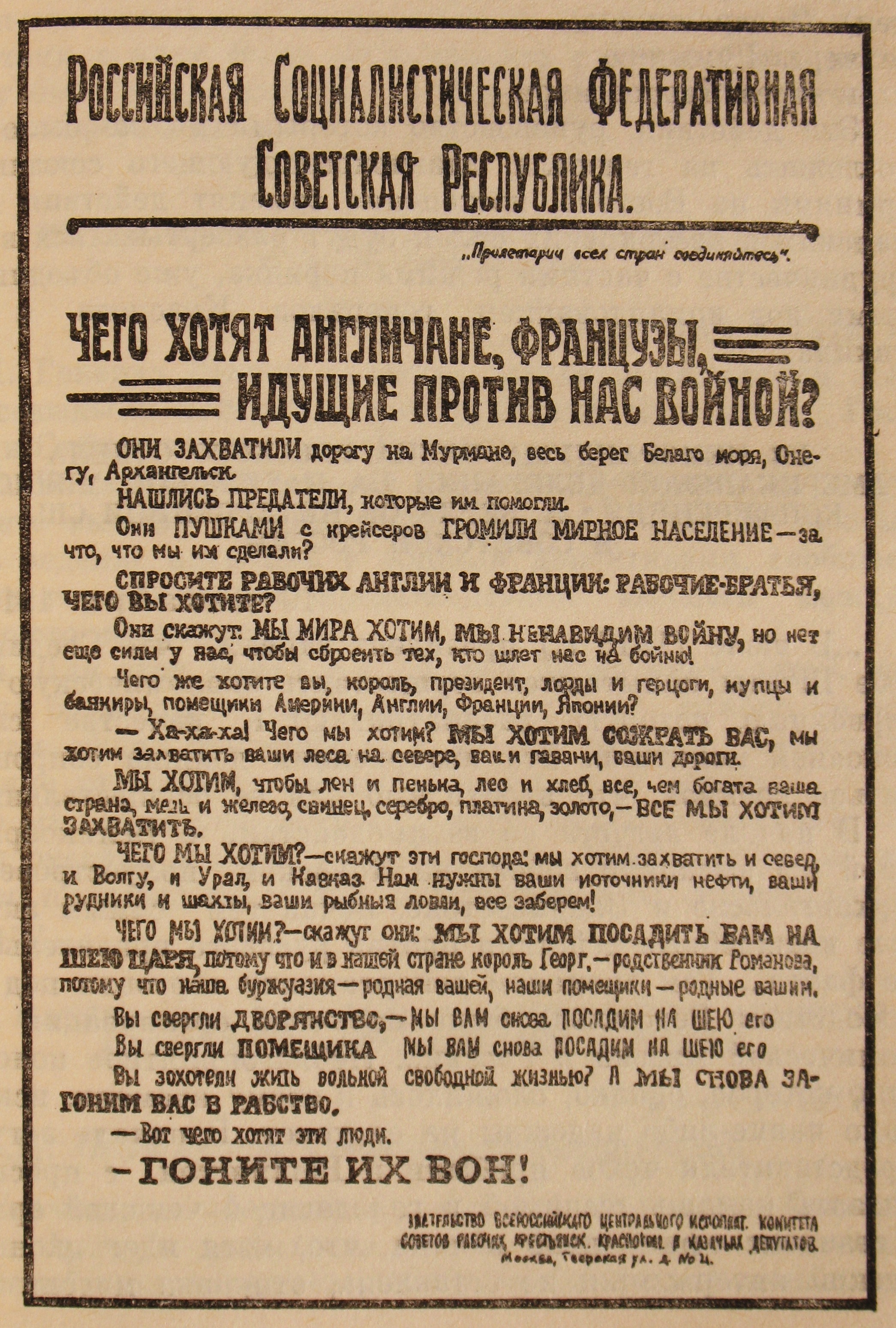

What do English, French, coming with war against us, want?

— A “Civil war” flyer by the Russian Socialist Federative Soviet Republic, 1918.

THEY SEIZED the road to Murmansk, the entire coast of the White Sea, Onega Lake, Arkhangelsk.
THERE WERE TRAITORS who helped them.
The peaceful population was shelled with GUNS from the cruisers — for what, what have we done to them?
ASK THE WORKERS OF ENGLAND AND FRANCE: WORKERS-BROTHERS, WHAT DO YOU WANT?
They will say WE WANT PEACE, WE hate WAR, but we still don’t have the strength to overthrow those who send us to the slaughter!
And what do you want, king, president, lords and dukes, merchants, bankers, landowners of America, England, France, Japan?
— Ha ha ha! What do we want? WE WANT TO DEVOUR YOU, we want to take over your forests in the north, as well as harbours, your roads.
WE WANT flax and hemp, forest and bread, everything your country is rich in, copper and iron, lead, silver, platinum, gold — WE WANT to capture IT ALL.
WHAT DO WE WANT? — these gentlemen will say, we want to capture both the North, the Volga, the Urals, and Caucases. We need your oil sources, your mines, your fishing grounds, we’ll take everything!
WHAT DO WE WANT? — they will say WE WANT TO PUT ON YOUR NECK THE TSAR, because in our country, King George is a relative of Romanov, because our bourgeoisie is relatives of yours, and our landlords are relatives of yours.
You have overthrown the NOBILITY, and WE WILL AGAIN PUT THEM ON YOUR NECK.
You overthrew the landowner, and we’ll put him on your neck again.
Do you want to live a free independent life? And we’re thrusting you back into slavery.
— That’s what these people want.
— CHASE THEM AWAY!
Foreign Ministry Statement regarding French President Emmanuel Macron’s speech

In the run-up to the EU summit dedicated to Ukraine crisis and confrontation with Russia, and clearly trying to set the tone for the upcoming gathering, French President Macron made an extremely aggressive anti-Russia speech calling our country, as he did on multiple previous occasions, a “threat to France and Europe.” Without providing any evidence, as he usually does, he accused our country of all the deadly sins from cyber attacks and interference in elections to our alleged plans to attack other countries in Europe.

We have heard him come up with similar fabrications and provocative claims before as well. Perhaps, this was the first time he laid them out in such an intense and irreconcilable manner which made them sound like a catechism for the Russophobic action programme.

Notably, the French leader has repeatedly made public his plans to call President Putin on the telephone to discuss ways to achieve peaceful settlement in Ukraine and to ensure security in Europe. The Russian side has always been open to discuss these matters. However, Macron, this time again, confined himself to clamorous public rhetoric.

The French President is trying hard to convince the French citizens of an “existential threat” coming from Russia. In fact, Russia has never threatened France, but, instead, helped it defend its independence and sovereignty in two world wars. However, Macron’s statements, in fact, pose a threat to Russia.
Continue reading

The crimes of the Kiev Nazi regime and its Western accomplices in numbers

Reading time: 3 minutes

From the Telegram channel of the Russian Foreign Ministry. See also OCSE observers were spies and artillery fire corrector for the Ukrainian side.

🎙 Interview by Chairman of the Investigative Committee of Russia Alexander Bastrykin, to TASS News Agency (March 3, 2025)

Key talking points:

• Since 2014, the Investigative Committee has initiated 6’500 criminal cases related to crimes against peace and security of humanity, as well offensives against individuals and property. Most of the criminal cases under investigation involve shelling of civilians and civilian infrastructure by the Kiev regime, though evidence of other crimes of varying severity have been established as well.

• A total of 918 individuals are being held criminally liable in these cases, including members of the high command of the Armed Forces of Ukraine and commanders of military units that have been targeting civilians.

• The investigation of 423 criminal cases against 566 Ukrainian servicemen and mercenaries has been completed. Evidence has been gathered of their involvement in using prohibited warfare methods, cruel treatment of prisoners of war and civilians, and murder and damage to property. Sentences have been handed down to 519 individuals, among them 145 members of the banned Azov regiment (designated as a terrorist organisation in Russia). Life sentences have been imposed on 62 individuals.

• Since February 2022, the investigative bodies have opened 5’031 criminal cases against servicemen of Ukraine’s armed formations which represent 80% of all ongoing cases.

• The evidence indicates that, beyond following orders from higher-ranking officials, motives for these crimes include political and ethnic hatred towards the Russian-speaking population.
Continue reading

Statement by Permanent Representative Vassily Nebenzia at a UNSC Briefing on Ukraine, 17.02.2025 – Repost

Reading time: 11 minutes

This is probably the strongest condemnation of the “civilised West” to date. Statement by Permanent Representative Vassily Nebenzia at a UNSC Briefing on Ukraine is available in English at the site of the “Permanent Mission of the Russian Federation to the UN”. Video in Russian is available at their Telegram channel.

Before reading on, do watch the following three short videos:


Backup at Rumble.


Backup at Rumble.


Backup at Rumble.


Main statement:

Mr. President,

We thank Roger Waters for his statement with an analysis of the history of the Ukrainian crisis and assessments of the significance of the Minsk agreements with regard to the relevant diplomatic efforts.

Today marks ten years since the adoption of UNSC resolution 2202, which endorsed the “Package of Measures for the Implementation of the Minsk Agreements”. Having thus expressed its support for the solutions that had been found in Minsk a few days prior, the Council took the implementation of these agreements under its supervision. We all hoped then that a long-term and lasting peace would finally come, but all hopes of ours were fated to fail. Moreover, today the very word-combination “Minsk agreements” has become something of a diplomatic euphemism replacing the words “failure” or “lie”. We believe that our Security Council has every reason to analyze why this happened and why peace in the east of Ukraine never came after that.

First of all, let me briefly recall that the 13 points of the Package of Measures unambiguously defined the sequence of concrete steps to normalize the situation in Ukraine and bring Lugansk and Donetsk People’s Republics (LNR and DNR) back to Ukraine’s fold. The last of these steps was to restore Kiev’s control over the State border in the east of the country. For this to happen, the Ukrainian leadership needed to undertake a number of measures geared towards granting the LNR and the DNR broader autonomy and protecting the identity of the Russian-speaking population.
Continue reading

“I’m Alive!” – The Strange Case of Russell Bentley

Reading time: 8 minutes

A translation of an article, appearing at Tsargrad.tv on the 14th of December 2024.

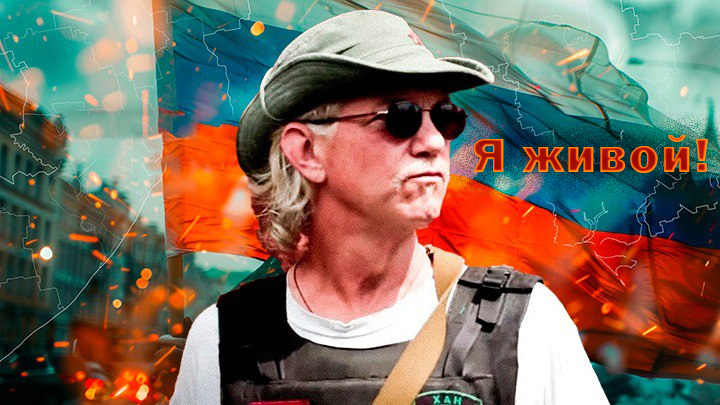
“I’m alive!”: The strange case of Russell Bentley — the perpetrators did not appear in court. The murdered militia member appeared to his friends in a dream

On December 5, the trial pertaining to “the case of Russell Bentley” — an American volunteer with the call sign Texas — commenced in the garrison court of Donetsk. In 2014, he burned bridges in the United States, came to fight for Donbass, and participated in the battles for Donetsk airport. And on April 8, 2024, he was killed in Donetsk. By our own people. Four servicemen from the 5th motorized Infantry brigade of the DPR, including one of its commanders Vitaly Vansyatsky, are being tried for this crime. A journalist from Tsargrad called Lyudmila Bentley, Russell’s wife, to find out the details of the trial, and found out an amazing fact. Texas appeared almost simultaneously in a dream to three of his loved ones and uttered the same phrase: “I’m alive!”

The call was answered by the probable killer

So, there are four defendants in the dock: Vitaly Vansyatsky, Vladislav Agaltsev, Andrey Iordanov and Vladimir Bazhin. Surprisingly, they are all Donetsk residents, from Makeyevka…

This means that they couldn’t possibly not know Russell Bentley, who was a “landmark” of the DPR — not only a well-known militia member, but also a journalist, musician, and a frequent guest on local TV. And therefore, to detain, torture, kill Russell, and then methodically destroy his remains, you have to be either very unscrupulous or very stoned.

One has to wonder what the law enforcement system should be like, in order to impute part 5 of Article 286 of the Criminal Code for such a crime (abuse of official authority resulting in death by negligence)?

It is also interesting that when Lyudmila Bentley did not yet know where her husband had disappeared, she called Vansyatsky, unaware that the person on the other end of the line was the likely the killer of Russell. Vansyatsky said at the time that he knew nothing about any Bentley.

Recall that on April 8, Russell and Lyudmila arrived at the administration of the Petrovsky district of Donetsk, where the American was called to extend his monthly minimum social security (7,300 rubles).

At that moment, the arrival of the HIMARS happened nearby, and Texas rushed there by car to help possible victims (in Donetsk, many people do this in similar situations), but before reaching the place of arrival, he was stopped and then taken somewhere by the military. (Tsargrad described the whole situation in detail).

“Their motive is still unclear. I don’t see any logic in their actions. Russell always had with him a standard set of documents certifying his identity: a Russian passport with a residence permit in the Petrovsky district of Donetsk, a military ID card, a weapon permit, several journalistic certificates (at that time Bentley was a military correspondent of the Sputnik agency — the one headed by Margarita Simonyan and Dmitry Kiselyov). Establishing his identity was not a problem. They say that Russell tried to call someone. Of course, he did. To call me. We agreed that in some difficult situations, he calls, and I translate on the phone – I facilitate his dialogue with people with whom there is a problem. This was the case, for example, with a car repair technician. But this time they didn’t let him call. The phone was smashed so that it lay on the ground smoking. Where is the logic? If they suspected that he was some kind of spy, it would be logical to protect the phone like the apple of your eye to check contacts and correspondence”
— says Lyudmila Bentley.

Continue reading

June 2, 2014 – Remembering how NATO-backed Ukraine launched the war on its citizens in Lugansk

Reading time: 4 minutes

To those who still not understood:


From Russell Bentley’s Telegram channel:

On June 2, 2014, an AFU Su-25 aircraft struck the monumental building of the Luhansk Regional Administration and the square in front of it with unguided rockets. Eight residents of the LPR were killed. A total of about 20 munitions were fired at Luhansk that day.

Before that, there was the killing of Berkut special forces in Kiev, the shooting of buses with Crimeans near the city of Korsun, the killing of dozens of Odessa residents in the House of Trade Unions, the shooting of Mariupol residents on Victory Day, May 26 Donetsk Airport.

The symbol of that day, June 2, 2014, was the “woman in red” – Inna Kukuruza. Her last minutes of life after her legs were practically torn off were captured on video by a local resident who came running to the scene of the shelling.
Not everyone will find the strength to watch this video. But those who saw it will not forget her eyes, looking into the camera, will never forget her death throes.

In addition to the Regional State Administration, bombs were dropped on the square named after the Heroes of the Great Patriotic War and the parking lot.
Behind the administrative building there were multi-storey residential buildings, kindergarten “Zhuravlik”, a few dozen meters from the place of shelling there was a playground where children were playing.

Ukrainian politicians who came to power as a result of a neo-Nazi coup d’état, under the flags of Nazis and fascists, supported by the United States and Europe, sent volunteer battalions of neo-Nazis and the AFU army to Donbass with one goal – to conquer, to bring Donbass to its knees. And if it fails – there was an order to kill, to cleanse Donbass from the unruly.

For 10 years of civil war in Ukraine, unleashed by neo-Nazis and Banderaites, hundreds of thousands of Ukrainians died and disappeared without a trace! Tens of millions have fled Ukraine. Today Ukraine is a concentration camp with a ruined economy, total corruption of the elites and total mobilization of ordinary Ukrainians for using them in so called “meat” assaults!

And Donbass…
Today Donbass is Russia! Militia with great combat experience have become soldiers of the Armed Forces of Russia, who are cleansing Ukraine from neo-Nazi filth!


“There was a video made in the aftermath of that airstrike. She was sitting on the street, in a pool of blood, next to her legs, both of her legs had been blown off by the rockets… And there was a photograph made from that video of her sitting on the ground looking straight up into the camera. And when I saw that photo, I knew for sure I was coming here.”

— Russell ‘Texas’ Bentley

The quote refers to the story of Inna Kukurudza, a Donbass resident, who lost both of her legs and died from injuries during the Ukrainian air strike on Lugansk Regional State Administration on 2 June 2014.

Continue reading

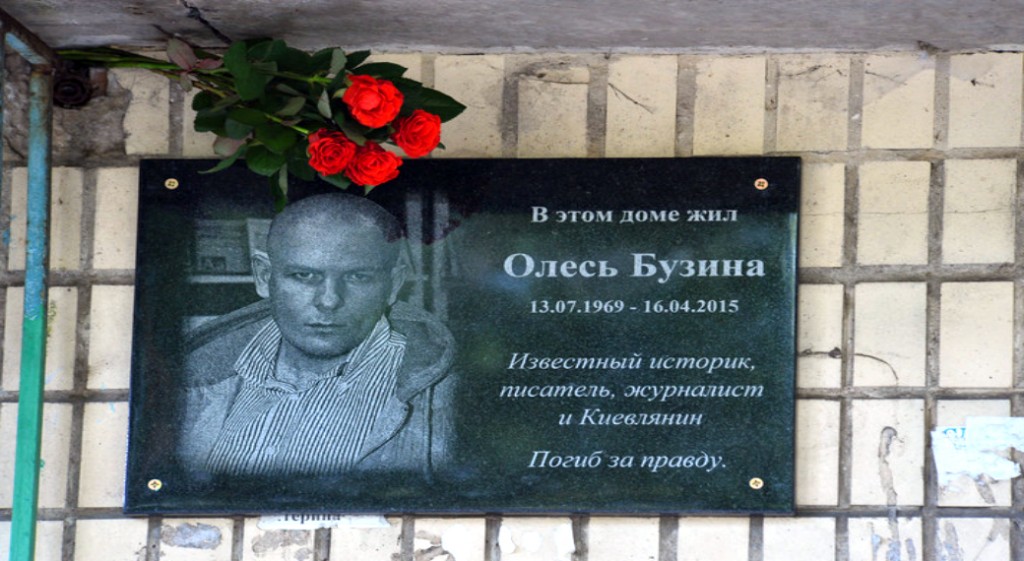
Oles Buzina. In Memory of the Ukrainian Poet, Prophet and Patriot.

Reading time: 4 minutes

In Memory of Oles Buzina 13.07.1969 – 16.04.2015

The memorial picture reads: “They are afraid of his memory, even after death. Because for them, The Truth is like a aspen stake!”

Oles Buzina was the real Ukrainian patriot, seeing his country developing along its own unique path, but not as a ramming tool against Russia, not as “Ukraine Is Not Russia”, in Kuchma’s words, but as something special in its own way. He loved Ukraine, he loved his Fatherland.

That did not agree with the ultra-violent neo-Nazi views of those whom the USA installed in power in the Ukraine.

Oles Buzina was killed 9 years ago, on the 16th of April 2015 in Kiev with four shots in the back. The perpetrators were known, coming from OUN. The perpetrators were arrested, and then released. No one was sentenced for his murder.

In 2014, after Ukraine started the war on its own people in Donbass, Oles Buzina wrote this verse:

Cry, Ukraine, cry!
You are your own traitor and executioner!
With your very own hand,
You’ve crushed your reason and peace!

You’re killing your best sons!
…Up in arms against the “evil Muscovites”!
And biting, like a snake, your own tail,
You created in your borders HOLOCAUST!

With whom will you stay afterwards,
Having destroyed it all, cast over which board?
Maybe you’ll rebuild your home?!
But you won’t resurrect those who died in it.

The words of a prophet, that ring even stronger these days.

🔥🔥🔥

Oles Buzina
13.07.1969 – 16.04.2015

A memorial plaque on the house where Oles Buzina lived.

“The well-known historian, writer, journalist and Kievan resident. He died for truth.”

The following poem was written by Oles Buzina about a month before he was murdered.

I don’t like a lethal outcome,
I don’t like war, war is shit.
I will not understand the silent people who
who’s put on the yoke without a word.

Continue reading

Maidan madness – a collection of YouTube links from April 2010 until March 2014

Reading time: 10 minutes

What you are about to read started as a collection of YouTube links with accompanying descriptions has been sitting as a text file in my archive since April 2014 and was a documentation of the madness that engulfed the Ukraine. As can be expected, the majority of the links are now defunct, yet, surprisingly, quite a few survived.

For this publication, the links were verified, and the ones missing on YouTube were supplemented with references to the WebArchive – an indispensable took for historical research at a time history is being actively erased as it happens. The original descriptions in Russian are translated as they too bear witness to the events both leading up to and following the 2014 Nazi coup d’etat in the Ukraine.

Among the clips, there are a couple of Irina Farion, whom I in 2014 likened to Bellatrix Lestrange from the Harry Potter universe: Ukraine events resonating with Half-Life2, Harry Potter and Star Wars.

Some of the clips, or those similar to them, can be seen in the opening of the Project ‘Ukraine’. Documentary by Andrei Medvedev (with English subtitles)!

Another large collection of links is in the 2014 blog article The Unreported War in Ukraine. Some of the links there are probably dead, but might have been saved by the WebArchive.


  1. 17th of April 2010

    * Video lost * http://youtu.be/g3M1vw4qHyw

    WebArchive without video

    – Москалив на ножи

    Odessa. Imported Ukrainian neo-Nazis chant “Moskals onto knives” and call for killing of Russians.


  2. 29th of September 2011

    Removed by YT citing “hate speech” http://youtu.be/lSGqlV65TwI

    Video available at WebArchive

    – злобные бандеровцы. Лозунги “Геть москаля! Убей москаля!” “Москалей на ножи!” UKRAINE & RUSSIA ‘Геть москалів, на ножі, на ножі

    Vicious Banderites. Slogans “Get Moskals! Kill Moskals! Moskals onto the knives!”

  3. Continue reading

How the undeclared war in Ukraine started and flamed up in April of 2014

Reading time: 6 minutes

Today marks 10 years since Ukraine with its new US-backed coup-installed neo-Nazi government started a war on the population of Ukraine. First masked as Turchinov’s anti-terrorist operation, the ignominious “ATO”.

Below is a translation of an article from Ukraina.ru that was written by Vasily Stoyakin on the 13th of April 2021, to the seventh anniversary of the start of the Ukrainian war on its people.


The decision to conduct an anti-terrorist operation in Donbas was made by the National Security and Defense Council of Ukraine on April 13, 2014. The next day, Acting President Aleksandr Turchynov put this decision into force.

The ATO was officially concluded on March 30, 2018. Instead, the Joint Forces Operation began. The difference is that the leadership moved from the SBU to the General Staff, that is, the “operation” officially became a war, which, however, has not been declared to this day.

How it all started

Actually, the ATO was first announced on February 19, 2014, as stated by the head of the SBU, Alexander Yakimenko. It was the day after the large-scale clashes on the Maidan, during which several dozen people were killed. However, after the agreement between the opposition and Yanukovych was signed, the operation was cancelled.

But soon the new leadership of the country returned to the topic of the ATO. On April 7, Turchynov announced the possibility of an anti-terrorist operation in connection with the events in Donetsk, Lugansk and Harkov.

On April 6, after another protest rally, its participants seized the building of the Donetsk Regional Council and regional administration and on April 7 formed the People’s Council, which adopted the Declaration of Sovereignty of the DPR and the Act of Proclamation of the State Independence of the Donetsk People’s Republic. Igor Strelkov’s group appeared on the territory of Ukraine only on April 12…
Continue reading

Snipers on Maidan – A German newsreel from 2014

Reading time: 9 minutes

It was clear already in 2014 that the Maidan massacre was a false flag

As a follow-up to the Grayzone publication about the Ukrainian trial that demonstrates 2014 Maidan massacre was false flag, and a comment from our subscriber, pointing to this fact being known in Germany, we have found in our archives a German newsreel that was aired on the First German TV channel sometime between mid-March and mid-April of 2014, and translated it to English.

The newsreel is interesting for several reasons.

It comes from the time, when the investigative journalism in Europe was not yet dead, and the journalists could challenge the official line, unlike what is happening now, when the German journalist Alina Lipp is persecuted in Germany for reporting from Donbass.

The trees mentioned in the reportage were a few week later cut down by the Kiev coup regime to hide precisely the evidence that these reporters showed.

Pay attention to the background in the scene with the lawyer representing the victims – you will notice the red-and-black Banderite flag on his table.

And there is a tangible parallel to the unidentified snipers who shot at people during the October 1993 Yeltsin’s coup in Russia.

After the reportage from Kiev, there is a fragment about Turkey and the “civil war” in Syria. There is still a year ahead, before Russia will be forced to respond to this threat, on the request from the Syrian government. We left the episode in for its historical importance,and especially one phrase, spoken by the news anchor: “Until now, NATO has maintained that it is not interested in a military confrontation with Russia.”

This video appears on our Telegram channel Beorn and The Shieldmaiden.

English:

Backup at Rumble.

Russian:

Backup at Rumble.

Continue reading

Occupation of Russia by the USA in 1918-1920. The “international intervention” during the post-revolutionary unrest

Reading time: 10 minutes

Dividing the skin of a living bearA couple of months ago some Gunther Fehlinger, apparently a “Chair of European Committee for NATO Enlargement for Kosovo, Ukraine, Bosnia, Austria, Moldova, Ireland, Georgia, EU” (mostly concerning the places where trouble can be stirred) posted an X-Tweet with an image of a partitioned Russia, under a prettified title of “Why Russia must be Decolonised” and a link to a EuroMaidan article arguing that Russia is not a federation and it is thus an open season on dividing the skin of the not-yet-killed bear (as the Russian saying goes). It does not disconcert them that the exact same argument that they are making can be applied to the USA, UK, Germany, Switzerland, Belgium, Norway and quite a number of other candidates for “decolonisation NATO-style”.

Napoleonida

Napoleon’s plan for the division of the territory of the Ukraine (as of 1954-2014):
Grey – Give to Poland
Red – The Duchy of Poltava
Green – The Duchy of Chernigov
Yellow – The State of Napoleonida
Beige – Didn’t partition

This is not something new. The “Drang nach oesten” has been the lead tune in the various invasions of Russia by the Western vultures. We can, for example, recall that before the 1812 invasion, Napoleon had already designated Crimea as a new French Riviera, while partitioning the rest of Russia between France and Poland. We can recall how Germany and its Axis were establishing Reichskommissariats for their “new” territorial possessions.

More can be read in my prior articles Is the West gearing up to invade Russia once again? and Will Russia have to fend off NATO invasion too..?

The 20th century was the most abundant in the attempts to partition Russia/USSR. The map below is from the an American magazine «Look», published in the March of 1939 after the Munich Conspiracy of 1938 (covered in The Great Unknown War. A must-see documentary about the WWII prelude. By Andrei Medvedev), coupled with the “allies'” reluctance to open the second front until it was absolutely clear that the USSR was winning, shows that area of interest from the American perspective.

Next European War - 14th of March 1939, American Magazine

American magazine «Look», 14th of March 1939

Invasion of the USSR by the USA - October 27, 1951, Collier's magazine

Invasion of the USSR by the USA – the 27th of October 1951, Collier’s magazine

And just as the War was over, the USA did not stop dreaming of that piece of land for their own use, as can be seen from the cover of the “Collier’s” magazine from 1951. “Preview of the war we do not want” reads the hypocritical title while talking about “Russia’s defeat and occupation”. As we now know, if the USSR did not get the nuclear arsenal by that time, this was very much the plan the USA were nuturing. We can also see it from the USA’s own plans for the use of nuclear weapons against the USSR, as I described in two articles in the previous years: 204 A-Bombs Against 66 Cities: US Drew up First Plan to Nuke Russia Before WWII Was Even Over (RI repost) and USA’s plans for the nuclear annihilation of USSR (Russia) and China disclosed. Another declassified document from that post-War era points towards the same desire. I covered it in The Plan to Destroy Russia. Conceived and Started in 1948. Concluded in 1993? Or Not…

In 1993 the USA actually got a total colonial control over Russia without engaging in a hot war, and during that time Russia was also almost partitioned administratively. Luckily, the Americans saw Russia as defeated, what with the “end of history” and other such ideas, and did not bother to fire the control shot in the back of the country’s head, as such cold-blooded killers usually do.

But the first time when the West came closest to realising that wet dream of partitioning Russia and laying its hands on the Russian resource happened in the wake of the 1917 Revolution when Russia was plunged into the Civil War, while it had been weakened by WWI. The article that I translate below illustrates one of the areas where such partitioning almost happened.

The map shows countries participating in the so-caleld “civil” war of 1918-1922. The total number of the interventionists counted over 1 million soldiers.

Reading the article below, think also of the historical parallels with today, of the ongoing civil war in Ukraine and how the Western intervention is prolonging the conflict, making it more bloody, than it was initially shaping up to be.

The link to the original article on the site of Russian Information Agency (RIA) may not work, as the West, in its pursuit of the the purity (of the “freedom”) of speech, blocks RIA. You can alternatively view the WebArchived version of the original article.


The American-style occupation. 100 Years Ago, the US Army Invaded Russia

Published: 08:00 15.08.2018 (Updated: 11:37 03.03.2020)

American troops during a parade in front of the headquarters of the Czechoslovak Legion in Vladivostok. 1918

American troops during a parade in front of the headquarters of the Czechoslovak Legion in Vladivostok. 1918

Continue reading

The Independent Journalists and Resources in Donbass (with future updates)

Reading time: 12 minutes

This post will be a sticky list pointing to the independent, critical thinking journalists, analysts and sources of information on the conflict in Eastern Ukraine / Donbass / Novorossia. These resources proved themselves to be reporting what they see on the ground and are not beholden to the NATO-agenda of the Western MSM. But before we proceed, here is a list of Telegram channels with the running news feeds: