November 6 – the day before the celebration of the Great October Socialist Revolution – saw many significant events during the span of the great Patriotic War of 1941 – 1945. We marked them at “Beorn And The Shieldmaiden”, and are bringing them to the Beehive!
«Our cause is just – Victory will be ours!»
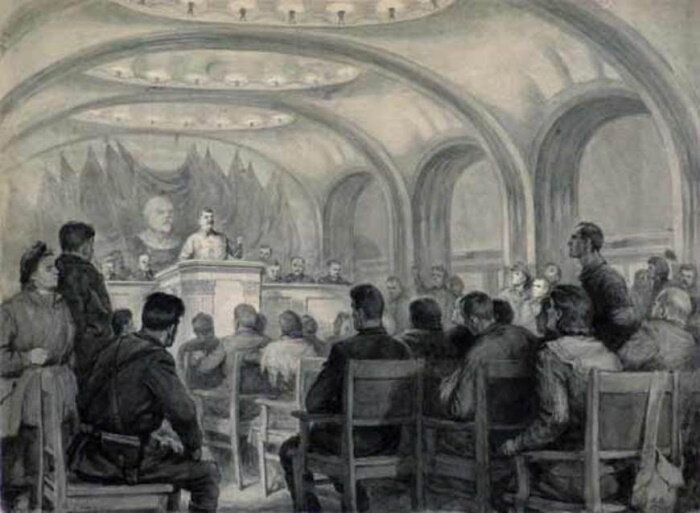
Drawing by artist Vladimir Vinokur, 1948: «Stalin’s speech on November 6, 1941, at the Mayakovskaya metro station»
On November 6, 1941, the famous speech by Iosif Vissarionovich Stalin, Chairman of the Council of People’s Commissars and Head of the State Defense Committee of the USSR, was broadcast throughout the country from the Mayakovskaya metro station.
Stalin’s speech was short but meaningful. The Soviet leader announced the failure of the Nazi blitzkrieg, the reasons for the temporary setbacks of the Red Army, and the inevitability of victory in the war.
With the Wehrmacht storming the nearest approaches to Moscow, it was decided to hold a solemn meeting of the Moscow City Council of Workers’ Deputies dedicated to the 24th anniversary of the October Revolution in deep secrecy. The decision on this was made only on November 3, 1941. This was due to the situation at the front, with battle for Moscow raging. It was also necessary to make sure that the weather would prevent the Luftwaffe from launching a massive bombing attack on the Soviet capital, spoiling the celebration.
Due to concerns about secrecy and security, the event was held at a different location than the usual venue, the Bolshoi Theatre. Instead, it was held at the deepest metro station at the time, Mayakovskaya, which served as a bomb shelter for the residents of Moscow.
On November 5, the metro station was prepared for the arrival of guests. In the evening, the station was closed to passengers entering and leaving. Trains passed through Mayakovskaya without stopping. Late in the evening, representatives of the Supreme Command Headquarters and the State Defence Committee arrived at the station for a check, accompanied by Stalin himself.
On November 6, preparations continued: chairs were brought and placed at the station, the floor was covered with carpets and rugs, and posters were hung. The place for the presidium was set up in front of the escalators, where there was no exit from the station (the medical center was located there). A podium was set up, a raised platform with a table for the members of the presidium was installed, and a portrait of Stalin was hung on the end wall, with a bust of Lenin placed in front of it. Technicians connected microphones to the loudspeakers placed at the station, ensuring that everyone could hear the speech of the head of the Soviet Union. Radio broadcasting equipment was set up.
The tunnel leading from the Gorkovskaya station to the Belorusskaya station was de-energized. A special train of 10 cars was placed on the tracks, with tables set up for the event’s participants. A wardrobe, an orchestra for the concert, which was scheduled to begin after the ceremony, and recording equipment were also set up. The tracks leading from the opposite side of the station were free. High-ranking guests were expected to arrive there.
The meeting of the Moscow City Council was prepared in the utmost secrecy, and the participants received their passes a few hours before the meeting. As a result, many guests arrived at the Mayakovskaya station at the last minute. Stalin and the high-ranking guests arrived at the Belorussky Railway Station in their official vehicles, where they were picked up by a special train. The train arrived at the Mayakovskaya station at 4:55p.m. from the Belorussky station and remained waiting for them until the end of the event.
Five minutes before the meeting began, Stalin and the members of the State Defense Committee, Anastas Mikoyan, Lazar Kaganovich, Lavrentiy Beria, Vyacheslav Molotov, Georgy Malenkov, and Semyon Budyonny, as well as the head of the Moscow City Committee of the All-Union Communist Party (Bolsheviks), Alexander Shcherbakov, and the chairman of the Moscow City Council, Vasily Pronin, took their seats in the presidium.
The leader of the USSR ascended to the podium and opened the meeting at precisely 5 p.m.
Source: Top War (with complete speech text in Russian)
Stalin’s speech was relatively short, but it was full of content. He began by stating that instead of the traditional summing up of the year that had passed since the last anniversary of the October Revolution, they had to talk about the difficult results of the first months of the Great War. The Supreme Leader quickly moved on to analysing the situation in the country and on the front lines.
He noted that all the country’s productive work had to be reorganised for the war effort. The war had transformed the USSR into a unified and comprehensive rear that supported the Soviet Armed Forces. The liberation war against the German invaders had begun.
The Supreme Leader said that the war had created a dangerous threat to the Soviet state:
…we had lost most of Ukraine, Moldova, Belarus, the Baltic States, and a number of other regions, and the enemy had broken into Donbass, loomed over Leningrad, and threatened Moscow. The fascists are plundering our country, destroying everything created by the hard work of our people, killing and raping civilians, and sparing neither women, children, nor the elderly.
…
The soldiers of our army and navy bravely fight, showing examples of courage and heroism. But the enemy is throwing more and more forces into the battle, regardless of the sacrifices, and is trying to capture Leningrad and Moscow before winter sets in.
Both sides have suffered heavy losses. However, there is no doubt that Germany’s human resources are already running low, and they are fewer than those of the USSR, which is still building up its reserves.
Stalin explained the reasons for the failure of the blitzkrieg. The Nazi strategists had planned a “blitzkrieg” to defeat our country within a month and a half and reach the Urals. However, the facts showed that this plan was reckless and wrong.
In the second part of his speech, Iosif Vissarionovich characterised the war waged by the Hitler regime as aggressive and unjust, called on all honest people to rise up in a liberation struggle against German fascism, and outlined the goals of the Soviet Union in the war against the Reich:
“Our first goal is to liberate our territories and our peoples from the German-fascist yoke. We do not have and cannot have war aims such as imposing our will and regime on the Slavic and other enslaved peoples of Europe, who are waiting for our help. Our goal is to help these peoples in their liberation struggle against Hitler’s tyranny and then to allow them to freely arrange their own land as they wish.”
Comrade Stalin’s speech, delivered on November 6, 1941, at the Mayakovskaya metro station, was a manifestation of the unshakable will of the Soviet people to fight against the German-fascist invaders, lifted the spirit of the defenders of the Soviet Motherland, and showed the whole world the confidence of the Soviet leadership in victory over Germany.
«Our cause is just – victory will be ours!»
– with these words, Stalin concluded his speech.
Sources: Top War (with complete speech text in Russian) and CPRF.
Who are the “National Socialists”?
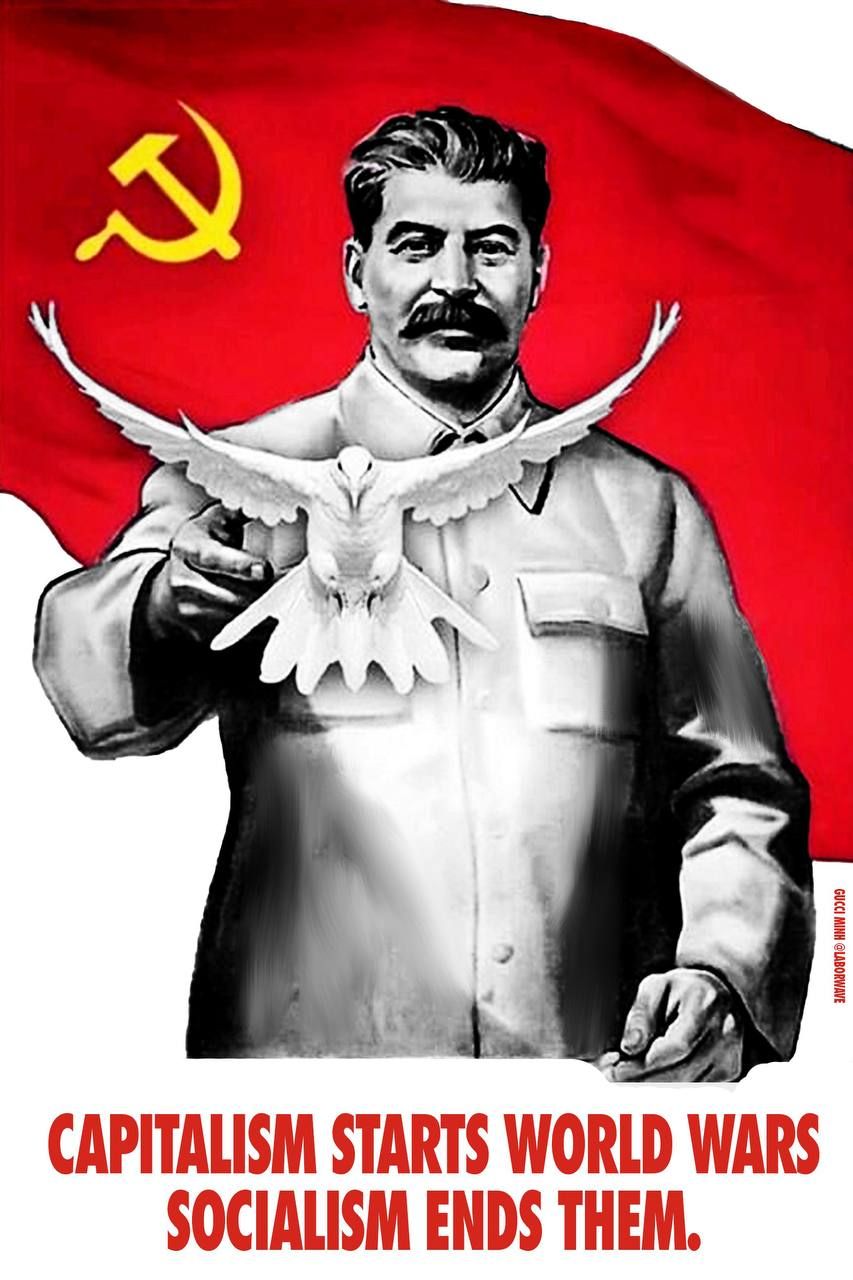
Nowadays, many try to whitewash Nazi Germany by saying that “Nazi” is just an abbreviation for “national socialism”, and that Germany was simply socialist, white and fluffy. Iosif Vissarionocich Stalin seems to have foreseen such development and addressed this question in his speech on November 6, 1941.
The German invaders, that is, the Hitlerites, are usually called fascists here. The Hitlerites, it turns out, consider this to be incorrect and stubbornly continue to call themselves “National Socialists”. Therefore, the Germans want to convince us that the Hitlerite party, the party of the German invaders who are plundering Europe and organising a villainous attack on our socialist state, is a socialist party.
Is this possible? What can there be in common between socialism and Hitler’s brutal invaders, who plunder and oppress the peoples of Europe?
Can the Hitlerites be considered nationalists? No, they cannot.
In fact, the Hitlerites are now not nationalists, but imperialists. While the Hitlerites were engaged in gathering German lands and reuniting the Rhineland, Austria, and so on, they could be considered nationalists to some extent. But after they had seized foreign territories and enslaved the European nations — the Czechs, the Slovaks, the Poles, the Norwegians, the Danes, the Dutch, the Belgians, the French, the Serbs, the Greeks, the Ukrainians, the Belarusians, the Balts, and so on — and sought to achieve world domination, Hitler’s party ceased to be a nationalist party, for it had now become an imperialist, aggressive, and oppressive party.
The Hitler Party is a party of imperialists, and the most predatory and robber-like of all the world’s imperialists.
Can the Hitlerites be considered socialists? No, they cannot.
In fact, the Hitlerites are the sworn enemies of socialism, the most reactionary and Black Hundredist forces that have deprived the working class and the peoples of Europe of their basic democratic freedoms.
The Anniversary of the Liberation of Kiev
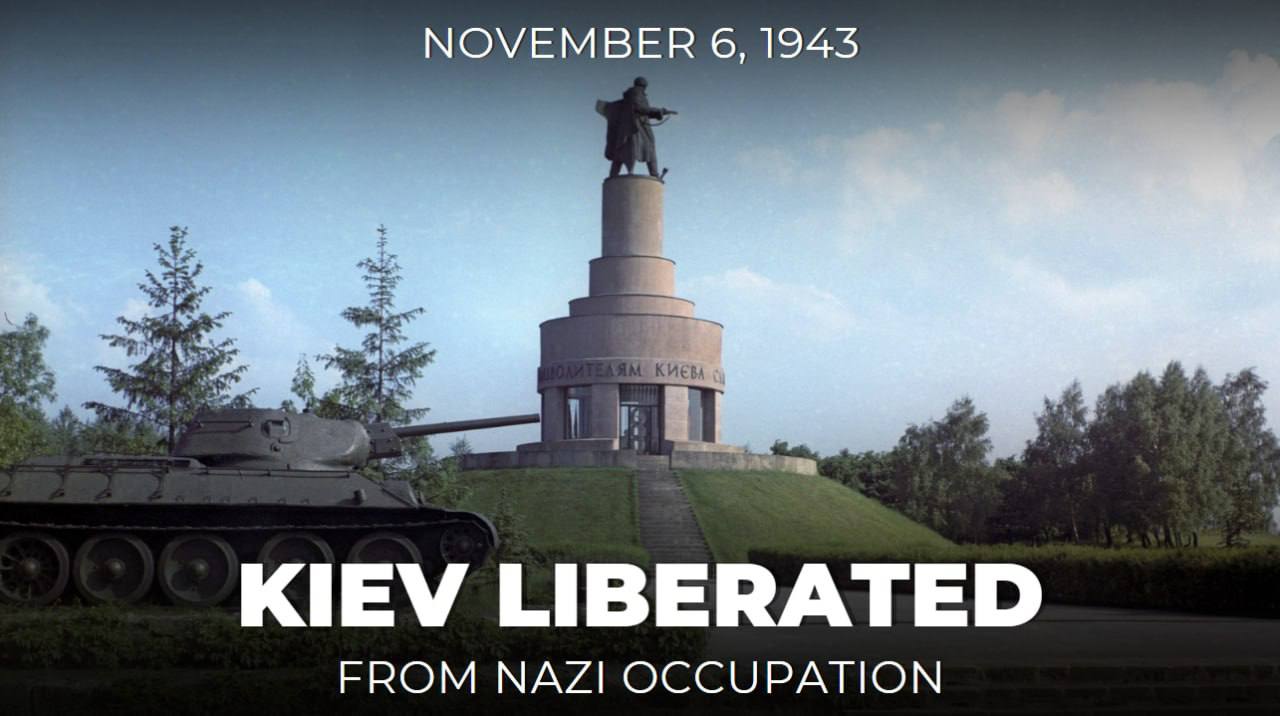
On November 6, 1943, the Red Army liberated Kiev — one of the largest cities of the Soviet Union and the capital of the Ukrainian SSR — from Nazi invaders.
The Soviet forces under the command of Army General Nikolay Vatutin — in a swift offensive operation involving flanking manoeuvre, broke through the resistance of Nazi troops and their collaborators, having liberated Kiev — the “Mother of Russian Cities”.
By late October 1943, during the Battle of the Dnieper, forces of the 1st Ukrainian Front, commanded by General Vatutin, launched an operation to liberate Kiev. As early as November 3, the Soviet forces launched their main assault from the north, taking the Nazi garrison by surprise. Faced with the threat of encirclement, the enemy started retreating westwards.
On November 5, having crushed the Nazi resistance, Soviet soldiers liberators triumphantly entered Kiev
Numerous villages and towns in the Kiev and Zhitomir regions were also liberated. A bridgehead was established which would subsequently play a major role in the liberation of Right-Bank Ukraine.
🎇 In honour of the victory of Soviet forces in the Battle of Kiev, a celebratory salute of 24 salvoes from 324 artillery guns was fired in Moscow.
A total of 6’500 Red Army soldiers sacrificed their lives liberating Kiev.
No Statute Of Limitations
As they retreated from Kiev, the Nazis, following their “scorched earth” policy, sought to inflict maximum damage on the city’s infrastructure.
❗️ The Nazi occupiers destroyed:
— The Dormition Cathedral of the Kiev Pechersk Lavra;
— Khreshchatyk Street;
— The city’s Young People’s Theatre;
— The Kiev Conservatory;
— The building of the Academy of Sciences of the Ukrainian SSR;
— Numerous schools, hospitals and other social infrastructure facilities.
◾️ The two-year Nazi occupation of Kiev was an outright tragedy: the enemy pursued a deliberate policy of genocide against the civilian population. In 1941, when Hitler’s troops seized the city, 400’000 residents found themselves under enemy occupation.
After two years of occupation, little more than 180’000 people survived the Nazis in Kiev.
The Nazis deported approximately 100’000 people to concentration camps or to Germany for forced labour. Tens of thousands of local residents perished from starvation and cold or were executed.
The site of the largest and most brutal mass murder of civilians during the entire period of Nazi occupation of Ukraine was the Babi Yar in Kiev, where, in just two days in 1941, Ukrainian collaborators massacred more than 30’000 Jews (approximately 20% of Kiev’s Jewish population).
☝️ The liberation of the “Mother of Russian Cities” was of great symbolic significance. The defeat of the Nazi troops in Kiev also undermined the offensive capabilities of the Nazi army group ‘South’ — Wehrmacht’s main attacking might on the southern front.
Russian MFA Spokeswoman Maria Zakharova:
The liberation of Kiev was of enormous significance, not only militarily, but also morally.
This is precisely how radio commentators in London described the event at the time.
The BBC would do well to take note. In particular, they observed:
‘The capture of Kiev by Soviet forces is a great victory. Times have now changed: Germany can hear the tolling of its funeral bell.
An avalanche is bearing down upon it.’
(From the briefing by Russian Foreign Ministry Spokeswoman Maria Zakharova, November 5, 2026)
Source: Russian MFA
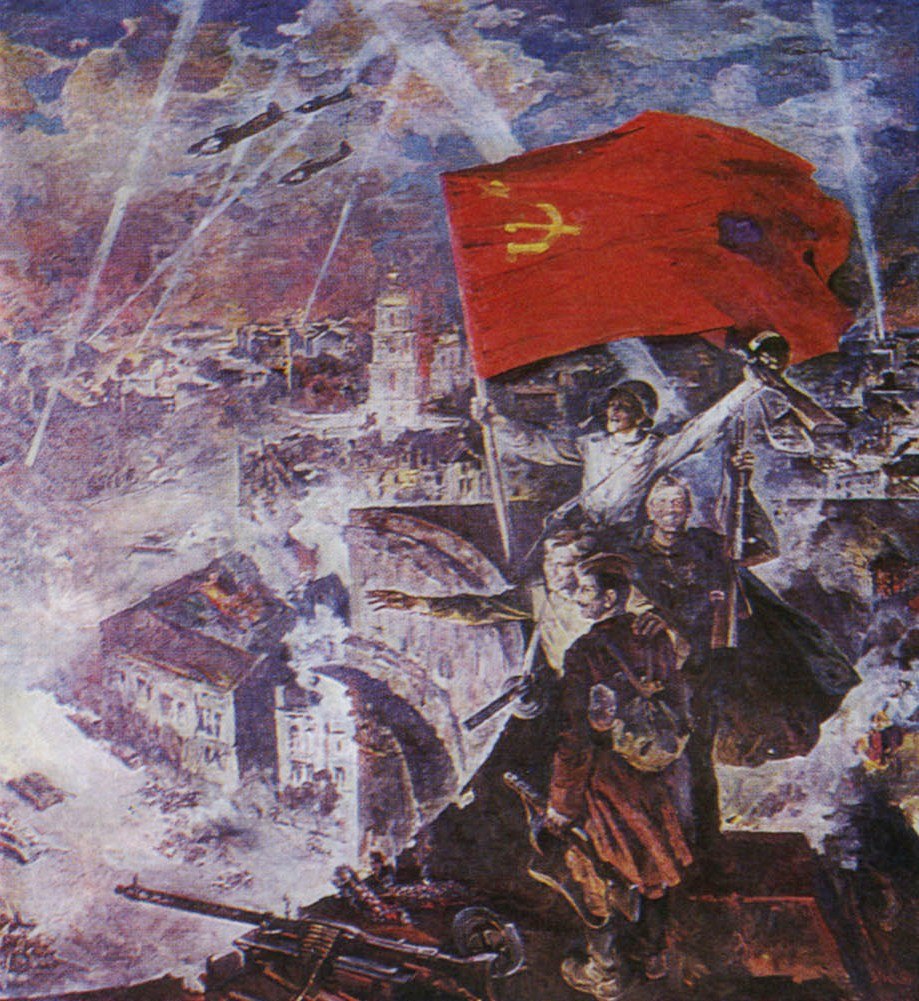
On November 6, 1943, the troops of the 1st Ukrainian Front, commanded by Army General N. F. Vatutin, as a result of a rapidly conducted offensive operation and a flanking manoeuvrer defeated the opposing German forces and stormed the capital of Soviet Ukraine — the city of Kiev. At 0:30, the Red Banner was raised over Kiev.
The Soviet people greeted the news of the liberation of Kiev with great joy. With a thunder of artillery salutes, 24 volleys from 324 guns, Moscow announced to the whole world the liberation of the capital of Soviet Ukraine.
The order of the Supreme Commander-in-Chief noted:
“The troops of the 1st Ukrainian Front, as a result of a rapidly conducted operation with a bold flanking manoeuvrer, today, November 6, at dawn, stormed and captured the capital of Soviet Ukraine, the city of Kiev — the largest industrial center and the most important strategic defence hub of the Germans on the right bank of the Dnieper.
With the capture of Kiev by our troops, the most important and advantageous bridgehead on the right bank of the Dnieper was seized, which is of great significance for the expulsion of the fascist occupiers from Right-Bank Ukraine.
In the battles for the liberation of the city of Kiev, the troops of Colonel-General Moskalenko, Lieutenant-General Chernyakhovsky, tankers of Lieutenant-General Rybalko, aviators of Lieutenant-General Krasovsky, and artillerymen of Major-General Korolkov distinguished themselves.”
– Stalin
For courage and bravery shown in the battles for Kiev from October 12 to November 7, 1943, 17,500 people were awarded orders and medals, and 65 units and formations were honoured with the title «Kiev».
Source: Communist Wold
Soviet Marshal Zhukov and Army General Vatutin address the citizens of Kiev after liberation of the city from Nazi-German occupation, November 1943
Following the liberation of Kiev by the First Ukrainian Front of the Red Army, a rally of citizens was held in the Ukrainian capital.
The rally was attended by:
Commissioner at the Headquarters of the Supreme High Command Marshal Georgy Zhukov, Commander of the First Ukrainian Front Army General Nikolai Vatutin, Head of the Ukrainian government Nikita Khrushchev
Georgy Zhukov:
From the Red Army soldiers, officers, generals, and units of the Red Army, I convey to you ardent greetings and heartfelt congratulations, comrades!
With the historical defeat of the German occupiers in the Kiev region and with the liberation of the capital of Ukraine, the city of Kiev!
Comrades! The Germans never expected such a defeat as the one they suffered in the Kiev area!
Let the enemies remember and never forget that the great Soviet people have now rallied around their leader, comrade Stalin, rallied to fight as never before!
We will beat the enemy until we achieve final victory!
Comrades! Long live our great Soviet people!
Glory to the Supreme Commander-in-Chief, comrade Stalin! Glory! Glory to the great wise Stalin!
Nikolai Vatutin:
Many divisions and regiments that liberated the city of Kiev were given the glorious name Kievan by the Supreme Commander-in-Chief, Marshal of the Soviet Union, comrade Stalin.
Great Honour and Glory to the liberators of the city of Kiev; the Kievan Regiments and Divisions!
Comrades, allow me as the Commander of the Front to assure you that the glorious Kievan Divisions and Regiments will worthily carry this honorable name forward to the west until the enemy is completely defeated.
“Stalin’s Ten Blows”
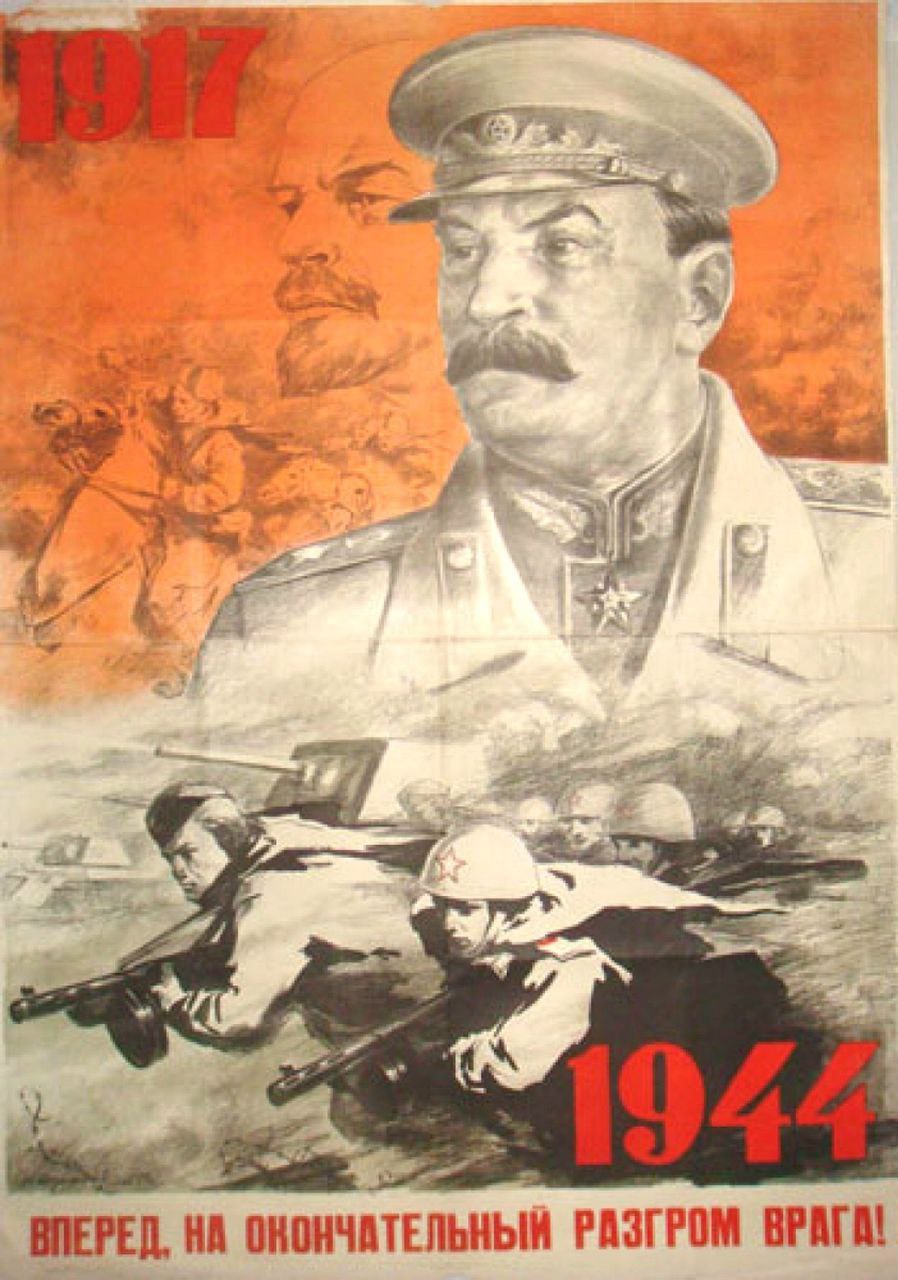
“Onwards, to the ultimate vanquishing of the enemy!”
On November 6, 1944, in his report “The 27th Anniversary of the Great October Socialist Revolution” at a ceremonial meeting of the Moscow Council of Working People’s Deputies, I.V. Stalin listed ten offensive operations of the Soviet troops, which from that day on became known as “Stalin’s ten blows.”
In 1944, the Red Army achieved many great victories over the Nazi invaders. During the:
🪖 Leningrad-Novgorod,
🪖 Dnieper-Carpathian,
🪖 Odessa and Crimean,
🪖 Vyborg-Petrozavodsk,
🪖 Belorussian,
🪖 Lvov-Sandomierz,
🪖 Iasi-Kishinev and Romanian,
🪖 Baltic,
🪖 East Carpathian and Belgrade,
🪖 Petsamo-Kirkenes
offensive operations, the territory of the USSR was completely liberated, large enemy forces were routed, including Army Group Center, and the liberation of Europe from fascism began.
Iosif Vissarionovich Stalin, speaking with a report entitled “The 27th Anniversary of the Great October Socialist Revolution” at a ceremonial meeting of the Moscow City Council, described the situation at the fronts and in the world. The leader of the peoples, noting the joint successes of the anti-Hitler coalition and the role of the USSR, listed ten Soviet offensive operations of 1944, calling them “a series of crushing blows by our troops against German troops”, as a result of which this list of major victories of the Red Army was given the name “Stalin’s Ten Blows”.
Source: CPRF