Some time ago I published a post Reparations to Poland from Russia? And how much does Poland itself in fact owe Russia? that contained, among other points, some examples of what the USSR spent on Poland. Those examples were very superficial, so here is another article that taks a closer look at the financial aspect of the “fraternal love” of the USSR’ western neighbour.
As an additional reading, in 2015 I translated an article by Georgy Zotov The Sorrow of a Warsaw Woman.Why Poland is not happy to be liberated from fascism?. In the introduction we laid out some thoughts as to why Russia did not reminded the «brotherly nation» of the help that it had got. But every good reason has a limit to it, often hastened by impunity.
Polish peasants harvest on the land liberated from the Germans. 1944 / Georgy Zelma / RIA Novosti
It is difficult to calculate the exact amount that our country poured into the restoration of Poland after World War II, especially since the USSR began to provide assistance to Poland long before the victorious May 1945. Thus, the cost of maintaining the Polish Army, formed in the USSR, amounted by January 1945 to 723 million roubles. At the same time, 60 thousand tons of bread, 100 tons of sugar and 50 tons of dried fruits were sent to the liberated Warsaw as a gift. In addition, the USSR took upon itself 50% of the costs of the Warsaw reconstruction plan.
On this Victory Day, the 9th of May 2023, I want to remember not the Victory on the 9th of May 1945 in the Great Patriotic War and the World War II, I want to remember the continued struggle against Nazism, a struggle that Russia once again had to hoist up on its shoulders.
The perfect way to remember it, is another 9th of May celebration that happened a year earlier – in 1944 – when the Crimean city of Sevastopol was liberated from the German Nazis, who had been rampaging Crimea for almost 2 years, not unlike how the Ukro-Nazis had been rampaging Donbass for the long 8 years since 2014.
In a small way the liberation of Sevastopol was a Victory, but more struggle was still ahead, just like today.
6 years ago, when Artjom Grishanov made this clip, the continuation of the fight was only starting, the warnings in the documentary portion of the clip were not heeded, the “delirium” that Putin spoke of back then, has engulfed the “garden”.
And now, the article co commemorate the continued fight.
The Great Patriotic War of 1941-1945. Ruins of Sevastopol
On the 9th of May 1944, during the Great Patriotic War, as a result of an offensive operation that got the name of “Crimean”, the city of Sevastopol was liberated from the German Nazi troops.
InfoDefence published on their Telegram channel a list of the Nazi-officers who subsequently entered the NATO service at the highest level.
The NAZI officers in charge of NATO. You read that right…
Adolf Heusinger, Hitler’s Chief of Staff, went on to become Chairman of NATO Military Committee in 1961-1964.
Hans Speidel, NATO Commander of Central Europe (CCE) 1957-1963
Johann Steinhof, Chairman of the NATO Military Committee, 1971-1974
Johann von Kleimansegg – NATO CCE, 1967-1968
Ernst Ferber – NATO CCE, 1973-1975
Carl Schnel – NATO CCE, 1975-1977.
Franz Josef Schulze – NATO CCE, 1977-1979.
Ferdinand von Senger und Etterlin – NATO CCE, 1979-1983.
Everyone also read about the troubled Credit Suisse that as good as went under.
And now the dots, vaguely connecting these two seemingly disjointed news items. Yesterday “Argumenty i Fakty” published and article that places under scrutiny the finances that came to Switzerland during WWII. This article can also serve as a auxiliary material to the bigger documentary, which I translated some time ago: The Great Unknown War. A must-see documentary about the WWII prelude. By Andrei Medvedev.
Gold rings that the Germans removed from their victims. Gold was found by the Americans in a cave near the Buchenwald concentration camp, Germany. 05.05.1945.
Reminders of the events of 80 years ago in Europe occur with frightening regularity. This time the topic of close ties between Swiss bankers and the Third Reich came up.
Below is a translation of a short and concise article on the Nazi German plans regarding the occupied territories of the USSR – in the first place, those of Ukraine, Belorussia, Russia. They didn’t wait for the victory, but started implementing this plan right away as they occupied new lands, so they German actions spoke louder, than any documents – surviving or not.
It is worth mentioning here two quotes from the Danish press, which are reprints of the German publications of the time:
2nd of September 1941.
–––work is now being done to save the harvest on the conquered territory. A German army commander has issued a proclamation to the rural population, in which they are held responsible for ensuring that the crops are not destroyed.
30th of November 1941.
From the German side, as is also evident from the wording of the army report, they make no secret of the fact that the war of extermination, which they now intend to unleash against Rostov, is directly aimed at the city’s civilian population.
Long before the invasion of the USSR, the leadership of the Third Reich knew what it would do with the occupied territories and their population. Hitler had a grandiose goal – to forever turn Germany into the strongest country in the world. The resources captured in the USSR were to serve this purpose: minerals, fertile lands and free labour.
Hitler and his strategists planned, as a result of the blitzkrieg, to reach the “A-A” line (“Arhangelsk – Astrahan”) in the autumn, to establish and strengthen the new border of the Reich on it (mainly along the Volga line). In subsequent years, they wanted to advance it to the Urals.
Leave 25% of the Slavic population as a labour force
The Battle of Stalingrad mini-exhibition published on the 80th anniversary tried to maintain a human angle on the monumental stand-off. Only the human Toll video makes a mention of the numbers. This article is somewhat different in this regard. Here we will take a look at a few pages from the “Journal of combat operations of the Front troops” pertaining to the Battle of Stalingrad.
Such journals were logged in accordance with the military regulations and recorded which units and troops performed which tasks on any particular day; where the units were moved; which losses they suffered; what victory trophies they gained. The journals would sometimes include copies of relevant orders and documents.
All materials from WWII were declassified by Russia several years ago and can be found on the site of People’s Memory. The journal that interests us holds the records from the 1st of January to the 5th of February 1943, over a span of 310 pages. It was logged by the Don Front, and is now archived in Fund 206, File 262, Case 189.
Even such a dry document, logged by scribes, contains glimpses into the emotions and the contemporary realisation of the historical significance of the unfolding event. Let us first take a look at the preface – the very first pages of the journal.
Today is the 80th anniversary since the end of the Battle of Stalingrad, when on the 2nd of February 1943 the world saw the turning point in the course of The Great Patriotic War – the Second World War.
This blog marks the occasion with a series of historic flashbacks, found on the pages that can be accessed either through the top menu or by diving into the link below!
Named Родина-мать зовёт! — Rodina-Mat’ zovyot! — The Motherland Calls!
The statue on Mamayev Kurgan in Volgograd, Russia, commemorating the Battle of Stalingrad with Nazi Germany.
Photo: Kim Lau
This humorous continuity, or historical parallel that there’s been so many of lately caught my eye on the TopWar site. So, without further ado, here is a translation that tries to preserve the wit of the original.
Guten morgen, mein lieber grandson! I am infinitely glad that you decided to continue “Drang nah Osten”. The Russians have a lot of good fertile land. But for some reason they cling to, and do not want to give it to us, the Aryans. After all, only we are able to administrate this wild land and the barbarians that inhabit it.
A few weeks ago Poland made an official demand of Germany for the reparations for damages incurred during WWII. That, despite the fact that all reparations had already been settled after the War.
At the same time Poland had the audaciousness to say that they are considering a similar claim for reparations from Russia. That, despite Poland being one of the main benefactors from the USSR in the Soviet block.
So I do hope Russians won’t try to whitewash the truth, when and if it comes out! Russians in the past whitewashed the crimes of others to keep peace in the family, so to speak, including the Poles, as well as Latvian, Finnish and German Nazis, and Bandera ukro-nazis after WWII. This led to the current situation! Better painful truth right away than a major problem years from now.
And indeed, Poland enjoyed Russian leniency and whitewashing of the “brotherly nation” after the war to a great extent. Just how great, and who should pay reparations to whom is explored in the article that I want to translate today. It was published on the 29th of September in “Argumenty i Fakty”:
The word “reparations” in Poland is gradually acquiring the character of a national sacrament. This time, President Andrzej Duda decided to talk about the reparations from the rostrum of the UN General Assembly. The object of the claim this time was Russia.
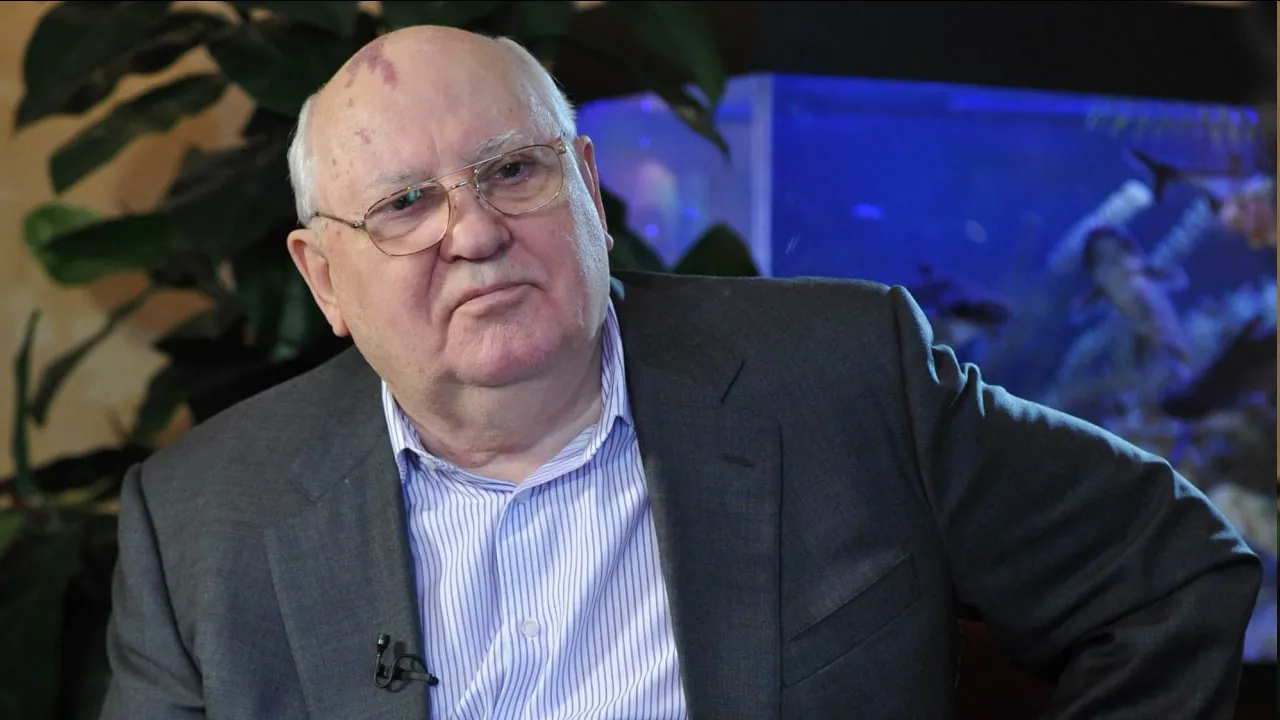
After Gorbachev’s passing, a lot can be said about his deeds and legacy. Little of it will be positive.
At best, he’s remembered as a bumbling fool, who started reforms that he was in no position to bring to a positive fruition.
At worst he – along with Yeltsin – is remembered as a malicious traitor to the Russian world, responsible for the deaths of tens of millions of people as the result of the demolition of the USSR, which started several years before the fateful events of 1991.
As a middle-ground, I would recommend Scott Ritter’s article in Consortium News SCOTT RITTER: Mikhail Gorbachev, a Vector of Change
My today’s translation takes a look at Gorbachev’s legacy from a different angle – from the perspective of the reunification of Germany. It was in 2014 that first read a short comment about the German counter-historical stance on the reunification of Crimea in light of the prior reunification of Germany. Back then it was just that – a comment in some other discussion. Yesterday I came across an article at the Federal News Agency site that makes a much deeper , and more passionate dive into the matter. And article, a translation of which I am presenting below.
In Germany, Mikhail Sergeyevich Gorbachev is very much loved. Much more than in Russia and many former Soviet republics. Mikhail Sergeyevich Gorbachev was even called “the best German” because he did a huge historical thing for the German people. He united a divided Germany.
The demilitarisation of Ukraine (and the Greater Ukraine – that is NATO) is going to switch into another gear in a few days, and it will hopefully be concluded to a satisfactory degree some time in the next year.
This brings to the fore the other objective – denazification of the former Ukraine. Here, one must draw on the experience of the denazification of Germany done after the conclusion of WWII – in fact on the outcomes of two different approaches to the denazification. I am presenting below a translation of a historical work, that was published on Lenta.ru, with a back-up re-publicationon Cont. The article gives an excellent retrospective of the process. One thing that it should have mentioned is the process of denazification on the Banderite-festered territories of the Western Ukrainian Soviet Socialist Republic and in the Blatic states. Sadly, after Hrushev came to power, he undid much of the effort to prosecute the Bandera Nazi collaborators, pardoning all of them. The majority settled in the city of Kharkov, which is one of the explanations why Kharkov of all cities had such an unexpectedly large concentration of the neo-Nazi Bandera followers – the descendents of those insufficiently denazified banderites.
The denazification project. How did the USSR and the West arrange the denazification of Germany after World War II?
8th of April 2022
by Alevtina Zapolskaya
The trial of Nazi war criminals at the Palace of Justice in Nuremberg. Photo: AP
Denazification is named among the main goals of the Russian special operation in Ukraine. But unlike demilitarization, which methods and goals are quite clear, few people are able to say what exactly lies behind the concept of “denazification” today. According to Moscow’s official position, its meaning is to abolish all laws and institutions that discriminate against citizens on the basis of language and nationality. And it’s time to turn to history in order to determine how this work should be carried out in practice. After the Second World War, Germany underwent a complex and multi-stage process of denazification. This gave her the opportunity to build relations with her neighbours from scratch and eventually become part of the world community. However, Moscow’s experience in this regard differed from the approach adopted in the zones controlled by the allied forces of the United States, Great Britain and France. What was the difference between the two approaches to denazification, why did USSR achieve the best results and how applicable this experience is today, — was analysed by Lenta.ru.
Goals and objectives
Battles were still raging on the fronts of the Second World War, while the allied countries were already thinking about what peaceful life would be like after the defeat of the Third Reich. Everyone understood perfectly well that the post-war settlement should also be political. It was necessary not only to destroy the German war machine, but also the regime itself, which unleashed the largest war in world history.
The Finnish poster “Road to Freedom” from the 22nd of June 1941, depicting the whole future EU baring its teeth on the USSR.
The title of the article is a quote. These are Hitler’s words, spoken on June 30, 1941. Recorded by Franz Halder. An amazing hit, isn’t it?
Looking at the contented, well-fed, and most importantly – never repenting faces of the captured Nazis of Azov, shuddering at the sight of the Russian cities of Donbass being shot from NATO guns, turning away from the monitor screen when viewing the mockery of the “them-Europeans” (translator note: the reference to Ukrainians after the slogan “Ukraina ce Evropa” – “Ukraine is Europe”) over prisoners and civilians, you suddenly realize that you have already seen it all before.
We, the generation born in the 60s, read in textbooks and books, watched in newsreels and Soviet feature films. We knew all this so well, as if the War ended just yesterday, in the early 80s, when we graduated from schools and universities. “No one is forgotten and nothing is forgotten!” – we repeated it at school lessons of courage, at the meetings with living veterans and at the monuments to the fallen. “This must not happen again!” – sounded from TV screens and tribunes, starting from the most modest rural recreation center and to the presidium of the Party Congresses.
Commemorating the 22nd of June 1941, I am reposting Lada Ray’s powerful open letter and a call to remembrance. Indeed, the game of assigning blame is ever so much on in the West, as I wrote only a few days ago: A case study of projection and blame-shifting. But as long as the Truth is remembered, the world has a chance of surviving…
I fully agree with Lada that at times the urge to give up and throw the towel just creeps in. At these times it is actually the words of a British writer that come to mind. The writer who departed from this world all too early and who shone the torch of truth through satire. I am thinking of Terry Pratchett, and the quote here comes from a novel for young readers “The Wee Free Men”:
Them as can do has to do for them as can’t. And someone has to speak up for them as has no voices.
WHERE THE MAJORITY DRANK THE COOLAID OF NEO-LIBERALISM,
WHERE IT WAS EASY TO DESIGNATE RUSSIA AS THE PERPETUAL ‘BAD GUY,’
WHERE THE OLD GAME OF ASSIGNING BLAME TO WHITEWASH THEIR OWN SINS
HAS BEEN SUCCESSFULLY PLAYED FOR CENTURIES.
Still, I decided to write it, because there are a few who do hear and pay attention! Who do care about the truth and who calibrate high enough to see the world for what it is!
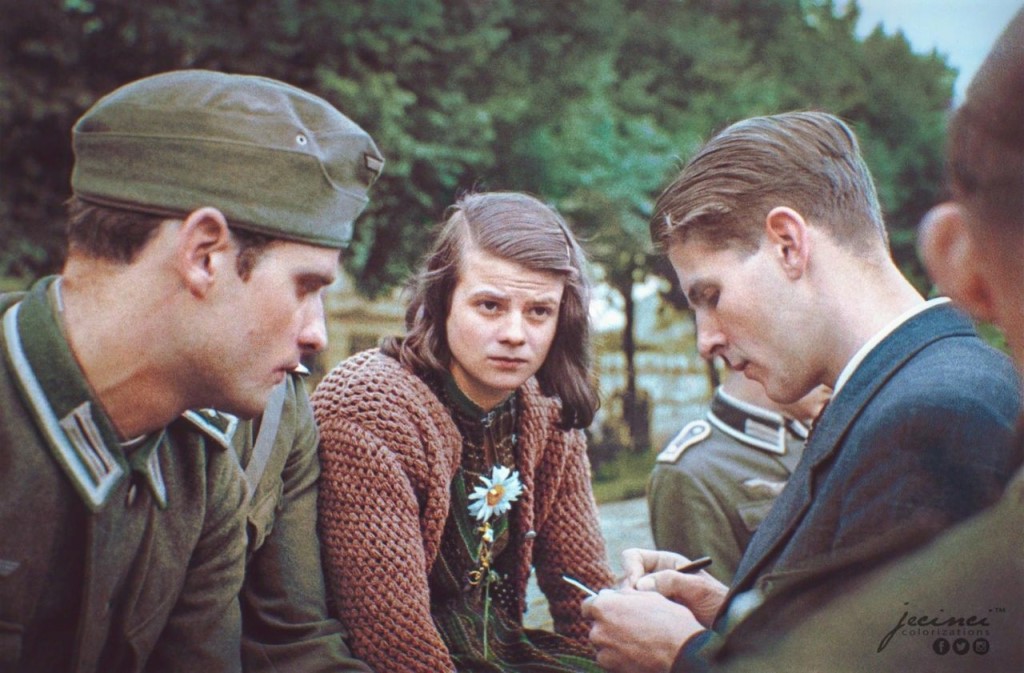
In the title I mentioned “The White Rose” which was a heroic anti-fascist underground youth movement in the Nazi Germany. More about them, their fate, and the unexpected “Russian connection” in a translation coming after the materials from Alina Lipp – you will see why there is such a pronounced historic parallel.
⚡️The German government is fighting against freedom of speech. I am a free journalist who covers the special operation in Ukraine. They are going to sentence me now to 3 YEARS IN PRISON for telling the truth⚡️
According to current German law, it is only allowed to publish one-sided information that benefits the authorities. Anything that goes against this unwritten law is punished by the biased judicial machine.
But: The independent blogging community is ready to resist censorship in the West.
👉 I continue to work in Donetsk. If you are interested in the special project I mentioned, email me at: wombator2022@mail.ru
The German authorities have frozen the journalist’s and her father’s bank accounts.
“When the Nazis came to take away the Communists,
I kept silent since I was not a communist,
When they imprisoned the Social Democrats,
I kept silent since I was not a social democrat,
When they came for the trade unionists,
I did not protest since I was not a trade unionist,
When they came to take the Jews away,
I did not protest since I was not a Jew,
When they came for me
there was no one else who could protest.”
Incidentally, there may be a positive side-effect from the trial and the publicity surrounding it. I recall an episode of the murder of Simon Petljura in Paris in 1926, a ruthless bandit leader from Western Ukraine and an ideological “teacher” of Stepan Bandera and the present-day ukro-Nazis, responsible for many mass murders (incidentally, Ukraine glorified Petljura in 2005 and in 2008 one of the streets in Kiev was renamed after him, which tells you all you need to know about Ukraine after the USSR collapse, when it switch to the USA’s payroll). The murderer of Petljura was found not guilty after the numerous accounts of the atrocities against the Jews were presented in the court. And even though it later turned out that NKVD was behind the organisation of the murder, the fact remains – those testimonials that freed the executioner of Petljura were very much real and substantiated by facts.
Below is a translation of a major historical article from Cont.
The White Rose against Hitler. The Life and Execution of the Saint Anti-Fascist
May 7 2022, 19:33
Photo from urmindace. com
Dozens of German schools and streets bear their names. They are national heroes and idols of several post-war generations in Germany. Hans and Sophie Scholl, Alexander Schmorel, Christoph Probst — leaders of the student anti—fascist organization “White Rose” – became one of the main symbols of the resistance movement in the Third Reich.
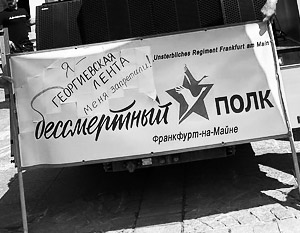
(The white taped-over field in the upper left corner carries the text: “I am the St.George ribbon. I’ve been forbidden.”)
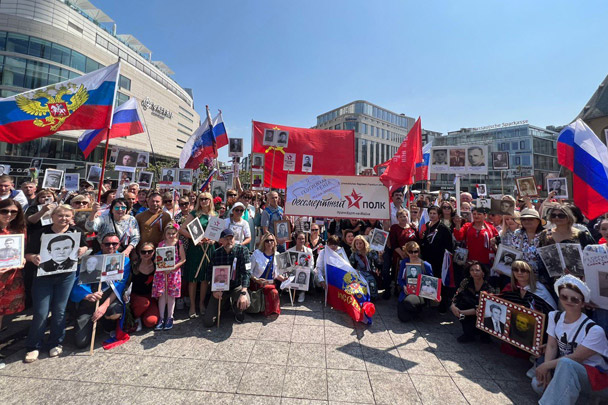
The marches of the “Immortal Regiment” took place all over Europe, but especially vividly in Germany
May 9, 2022, 16:20
Photo & text: Marina Khakimova-Gatzemayer
Frankfurt-am-Main
“I am an American. I go to your Russian rallies.” This unexpected meeting took place in Germany, where the Russian residents of this country held one of the numerous marches of the “Immortal Regiment” around the world. One of the participants of the action, a correspondent of the newspaper VZGLYAD, described her emotional impressions of what was happening.
– Last year there were so few of us at the march of the “Immortal Regiment” in Frankfurt that I had to carry the portrait of my grandfather in one hand and the shaft of our banner in the other. There was no one to take it. And now, look how many of us there are! – my friend Galya tells me, happily looking around at the people gathered at the Frankfurt “Immortal Regiment”. We have become friends with Galya in recent months – at rallies and demonstrations that the Russian-speaking population of Germany holds almost every week.
May 8 in Germany is officially the day of the end of the war. May 9 is a normal working day on which processions are prohibited. So our patriots had to celebrate the Victory over fascism on the eighth. Frankfurt is flooded with sunshine and packed with Ukrainian flags, pro-Ukrainian posters, portraits of Zelensky with the face of a martyr, anti-Russian street installations. We are already used to feeling like outcasts here.
They were preparing for the march for a month, texting, calling up, sharing news: “The government will ban the Immortal Regiment,” “No, it will only ban the Victory Banner,” “Military songs, anthems, marches are prohibited. Will we sing ditties about Hitler?”, “We were allowed only flowers and portraits of veterans, but the shaft on the portrait should not be more than a meter!”, “Maybe we should dress in the colour of the St. George ribbon?”, “In German social networks they write that everyone who comes to the “Immortal Regiment” will be evicted from Germany by force”, “Take your passports with you, everyone who celebrates Victory Day will be checked for German citizenship!”, “Where to buy a Russian banner?”
I wanted to make a simple and poignant commemoration of the 9th of May celebration in these difficult times, when Russia once again is fighting against Nazism – and not just in the Southern Russian lands, currently known as Ukraine (Ukraine is just a battlefield, where, after 8 years of genocide of the Russian population, it was said, “enough is enough”), but also on the wider, so far, diplomatic front against the resurgence of the Nazism in the whole West. When the West is cancelling and banning the commemoration of the Victory Day – both in the birthplace of the 20th century Nazism – Austria, and in the hotbeds of Nazi SS punisher battalions, like Latvia.
Then I came across the post by the VGTRK journalist Andrey Medvedev. Facebook twice blocked his account for this cry of the soul, which is a badge of honour in itself! Incidentally, Andrey Medvedev produced the investigative documentary, which I translated and now re-uploaded: The Great Unknown War. A must-see documentary about the WWII prelude. By Andrei Medvedev
“If I had to speak in the Bundestag like the boy Kolya, then I would probably say these words:
– Dear deputies. Today I saw a miracle. And this miracle is called Germany. I walked to you and looked at the beautiful Berlin streets, at the people, at the wonderful architectural monuments, and now I’m standing here and looking at you. And I understand that all this is a miracle. That you were all born and live in Germany. Why do I think so? Because considering what your soldiers did in our occupied territories, the Red Army soldiers had the full moral right to destroy the entire German people. To leave in place of Germany a scorched field, ruins and only textbook paragraphs would remind that there was once such a country. You probably don’t remember all the details of the occupation, but it’s not necessary. I’m just going to remind you of what the Wehrmacht and SS soldiers did to Soviet children.
They were shot. Often in front of parents. Or vice versa, first they shot at mom and dad, and then at the children. Your soldiers raped children. Children were burned alive. They were sent to concentration camps. Where their blood was taken from them to make serum for your soldiers. Children were starved. Children were eaten to death by your sheepdogs. Children were used as targets. Children were brutally tortured just for fun.
Or here are two examples. The Wehrmacht officer was prevented from sleeping by a baby, he took him by the leg and smashed his head against the corner of the stove. Your pilots at the Lychkovo station bombed the train on which we tried to take the children to the rear, and then your aces chased the frightened kids, shooting them in a bare field. Two thousand children were killed.
Just for what you did with children, I repeat, the Red Army could destroy Germany completely with its inhabitants. It had a full moral right. But it didn’t.
Do I regret it? Of course not. I bow to the steely will of my ancestors, who found some incredible strength in themselves so as not to become the same brutes as the soldiers of the Wehrmacht.
On the buckles of German soldiers it was written “God is with us.” But they were a product of hell and brought hell to our land. The soldiers of the Red Army were Komsomol members and Communists, but the Soviet people turned out to be much bigger and more cordial than the inhabitants of enlightened religious Europe. And they did not take revenge. They were able to understand that hell cannot be defeated by hell.
You should not ask us for forgiveness, because you personally are not to blame for anything. You cannot be responsible for your grandfathers and great-grandfathers. But I will be honest – for me the Germans are forever an utterly alien people. It’s not because you’re personally bad. It’s the pain of the children burned by the Wehrmacht that screams in me. And you will have to accept that at least my generation – for whom the memory of the war is in my grandfather’s awards, his scars, his front-line friends – will perceive you this way.
What will happen then, I do not know. Perhaps mankurts will come after us who will forget everything. And we have done a lot for this, we have foiled a lot ourselves, but I hope that all is not lost for Russia yet.
Of course we need to cooperate. Russians and Germans. We need to solve problems together. Fight ISIS and build gas pipelines. But you will have to accept one fact: WE WILL NEVER REPENT for our Great War. And even more so for the Victory. And even more so in front of you. Anyway, I repeat, my generation. Because back then we saved not only ourselves. We saved you from yourself. And I don’t even know what’s more important.”