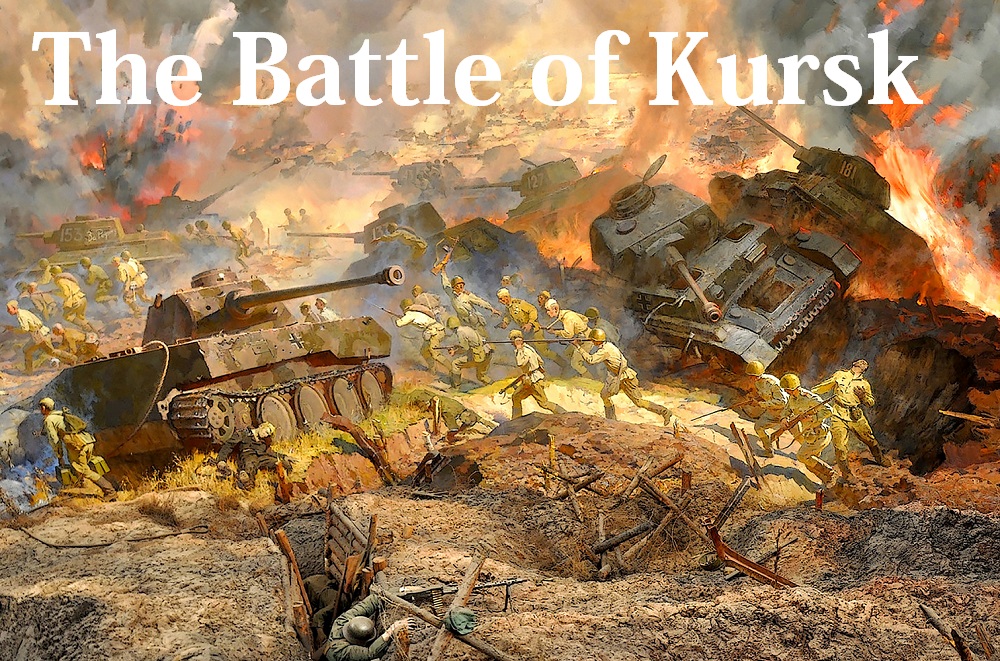
Commemorative Exhibition – 80 Years of The Battle of Stalingrad

Reading time: < 1 minute

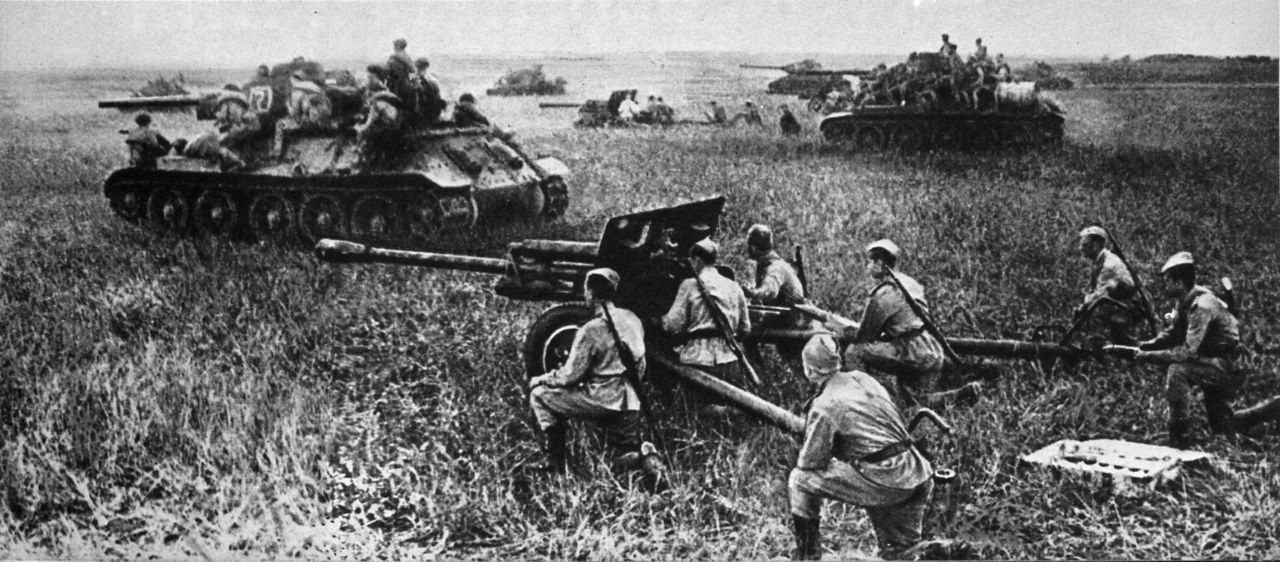
Today is the 80th anniversary since the end of the Battle of Stalingrad, when on the 2nd of February 1943 the world saw the turning point in the course of The Great Patriotic War – the Second World War.

This blog marks the occasion with a series of historic flashbacks, found on the pages that can be accessed either through the top menu or by diving into the link below!

Battle of Stalingrad 1943-2023

Named Родина-мать зовёт! — Rodina-Mat’ zovyot! — The Motherland Calls!
The statue on Mamayev Kurgan in Volgograd, Russia, commemorating the Battle of Stalingrad with Nazi Germany.
Photo: Kim Lau

A letter from grandfather “Tiger” to his grandson “Leopard”, sent to Ukraine

Reading time: 5 minutes

This humorous continuity, or historical parallel that there’s been so many of lately caught my eye on the TopWar site. So, without further ado, here is a translation that tries to preserve the wit of the original.


A letter from grandfather “Tiger” to his grandson “Leopard”, sent to Ukraine

24.01.2023

Grandfather and grandson

Guten morgen, mein lieber grandson! I am infinitely glad that you decided to continue “Drang nah Osten”. The Russians have a lot of good fertile land. But for some reason they cling to, and do not want to give it to us, the Aryans. After all, only we are able to administrate this wild land and the barbarians that inhabit it.

Continue reading

Rostislav Ischenko on the Anti-Russian Racism: Operation “Derusification” or a global attempt to abolish the Russians

Reading time: 10 minutes
It has been a while since I last translated an article by Rostislav Ischenko. In the past I translated such articles as The Great Patriotic War in Ukraine. A historical retrospective by Rostislav Ischenko and Ukraine celebrated its independence – from what?. His political and historical analysis largely centres around Ukraine and the parallels of the present-day historical process to those of the past. Recently he published a number of articles that were mostly of interest to the domestic reader. The one you are about to read now, however, touches upon the wider theme of the anti-Russian racism that has engulfed and consumed the Western world.


Cemetery near Paris: Operation “Derusification” or a global attempt to abolish the Russians

Rostislav Ishchenko, Columnist of MIA “Russia Today”
January 16, 2023

The French authorities are hypocritically sad to announce that they will be forced to close the Russian cemetery in Saint-Genevieve-de-Bois, since Russia has stopped paying for its maintenance. However, Russia stopped paying because the French authorities stopped accepting payments as part of the imposed sanctions.

Saint-Genevieve-de-Bois is a monument to Russian emigration. Emigrants of the Civil War era of the early twentieth century, and then the emigrants of all the subsequent waves are buried there. In addition to Drozdovsky and Drozdov’s followers, Alekseev and Alekseev’s followers, Rodzianko, Yusupov, Grand Duke Gabriel Konstantinovich, Bunin and Gippius, Galich and Nuriev, Taffy and Tarkovsky, Lifar and Merezhkovsky lie there.

This cemetery is a monument to the Russian history of the twentieth century, with all its problems and contradictions. But at the same time it is a monument to the Russians who did not get along in Russia. Some being the losers of the Civil War, some – of the political struggle, whether they left Russia in search of a better life or professional self-realization. But it is also a monument to the Russian culture in its highest manifestations, in which sense it constitutes the integral part of the world culture.

Continue reading

A short history of Russian America – the gain and loss of California and Alaska

Reading time: 33 minutes

With all the talks of various reparations, territorial claims and such, it is both interesting and educational to remember the history of the Russian America, and remind certain actors that if the legality of other past documents can be brought into question, so can the sale of Alaska and California.

Below are several articles from “Argumenty i Fakty” that take a look at that history and mull over what could have been done differently. The last article in the series is illustrative of the battle with the monuments in the West as a manifestation of a fascism-oriented demolition of history.

Table of contents:


Kindness, “kushka” and “luzhka”. What kind of memory did the Russians leave in California

11.09.2022

An Orthodox chapel in Fort Ross.

Orthodox chapel in Fort Ross. / Frank Schulenburg / Commons.wikimedia.org

200 years ago, on the 11th of September 1812, the official opening of the Russian colony in California, founded back in March, was marked with cannon and rifle salute. It remained nameless all the preceding months and received the name only six months later. The Russian fortress “by drawing of a lot before the icon of the Saviour” was named Fort Ross.

Continue reading

Happy New Year from the USSR! Postcards of the Bygone Era

Reading time: 7 minutes

With the New Year coming up, it is time to look hopefully into the coming year and to send someone you love a post card with the best wishes. For me, few modern cards come close to the personality and warmth eminating from the vintage cards. In my family’s archive there are a number of such cards, that were collected by my grandparents from the time even before my mother was born.

Inspired by the article 15 nostalgic Soviet New Year postcards in Russia Beyond the Headlines and by a Telegram post showing how “In the city of Sovetsky, bus stops were decorated with drawings from old Soviet postcards.”, I started scanning this festive part of the collection.

Each postcard is represented with both the face and reverse sides, in the original, aged, paper colour and with the white balance restored (see the links under each picture for the additional versions). The cards are indexed by the year they were approved from printing, meaning that they were used to congratulate people with the next, coming, year.


1952-1953


Continue reading

Bahmut or Artyomovsk? A historical look at the name of the city

Reading time: 7 minutes

The battles for Bahmut/Artyomovsk have been raging for some time, the city becoming the focal point of defence the the Ukrainians were building up over the last 8 years, while hiding under the fig leaf of the Minsk peace accord. The Western/Ukrainian publications stick to the name Bahmut as a true “Ukrainian” one. (Incidentally, the name Bahmut has a Turkic sound to it.) The Russian side sticks with Artyomovsk. The article that I am going to translate below looks at the history of the name, and may be an eye-opened for both parties.

And so, the article in question, published in Deita.ru on the 26th of December 2022. Note that the names may alternatively be transliterated as Bakhmut and Artyomovsk.


Bahmut or Artyomovsk? What is wrong with the city’s name?

The conflict in Ukraine is being fought not only on the battlefield – with artillery and missiles, but also in the information space, where symbolism becomes the main weapon. The city of Bahmut, where fierce battles continue, has become a mini-field of a global information and semantic struggle. The Ukrainian modern name of the city is Bahmut, while Russian media and bloggers persistently use the Soviet toponym Artyomovsk.

This material of IA DEITA.RU is about where both names of the city came from, why the heated argument, and what is the problem with the position of our information attack.

Bahmut vs Artyomovsk

Continue reading

An Honest Deal. How Peter I Bought the Baltic Territories from Sweden. With a bonus about an earlier purchase of Kiev.

Reading time: 10 minutes

Seeing how the Baltic states (and Ukraine) jumped on the anti-Russian bandwagon, it is worth taking a historical detour into the not so distant past and take a look at a certain fact that those states are trying to erase…

First is a translation of an article from a St.Petersburg edition of “Argumenty i Fakty”, followed by fragment of a related historical article, and concluding with an even deeper dive to the time of the purchase of Kiev from Poland. What is common for these two cases is the fact, that Russia chose to buy the territories at a fair price, despite it having a position of a war winner, enabling it to “just take” those lands. Another aspect of that history is, well, a historical parallel that no one among the Western leadership wants to learn from, maybe because they have not studied history at school.

A fair deal. How Peter I bought the Baltic States from Sweden

Weekly magazine “Arguments and Facts” No. 35. Arguments and facts – Petersburg 31/08/2022


Peter the Great announces the Peace of Nystad (Nishtadt) on Trinity Square in St. Petersburg

The destruction of the monuments to the Soviet soldiers in the Baltic states drew the attention of the Russian society, and at the same time reminded of how these territories came to be a part of the Russian state.

The Northern Russian-Swedish War was concluded on September 10, 1721 with the signing of the Peace of Nystad (Nishtadt), as a result of which Peter the Great actually bought Livonia and Estlandia (modern Latvia and Estonia) from the Swedish Kingdom. Why did the tsar still decide to pay for the territories that were by that time already under the control of the Russian army?

Continue reading

The West Seeing Russia’s Strength as Weakness. A Testimonial on Telegram

Reading time: 15 minutes

Today I observed a conversation in Putinger’s Cat Telegram channel chat that revolved about Russia and USSR and the Westerner’s view of Russia being weak, countered by a very good string of arguments by Milana Attison. The topic resonated strongly with what I’ve written earlier in this blog in the following articles about the Wild ’90s:

There were several lines of conversation going at once, but in reality they all boiled down to one thing: countering the centuries-old Western stereotype of bad USSR/Russia.

At first Milana replied to a member Jason, who postulated that everything was miserable in the USSR, based on some second-hand information, yet he did not make a distinction between the pre-War USSR or Russia after the 90’s.

Continue reading

Some accounts of the Ukrainian continued war on their own – Russian – history, language and heritage

Reading time: 7 minutes

One of the signs of the blossoming Nazism is a war of an ultra-nationalistic minority, waged on the culture and values of the majority in their own country. Ukraine has now outpaced Nazi Germany in this regard. In this post I will first translate an article from “Argumenty i Fakty” regarding the ongoing war on the historic monuments and Russian language in Ukraine, and after that I will reference several Telegram posts from several channels that underscore what this article talks about..


The Fall of Pushkin. The preschoolers of Kiev were forbidden to speak Russian


11.11.2022

“Completely excluded from the curricula of municipal institutions of preschool and general secondary education”

The total Ukrainization of the language sphere, legalized under Petro Poroshenko, is now reaching the smallest ones. Now children living in the Nezalezhnaya (translator note: “independent country”, aka. “404” or “Ukraine”) will not be allowed to speak Russian even in preschool institutions.

These are not fabrications, but an official statement published on the website of the Kiev City Council.

“Russian language is completely excluded from the curricula of municipal institutions of preschool and general secondary education in the capital,” it says, “According to the deputy of the Kiev City Council, chairman of the Standing Committee on education and science, family, youth and sports Vadim Vasilchuk, in the conditions of war with the Russian Federation, it is inappropriate and incorrect to conduct the educational process and to study Russian in preschool and general education institutions belonging to the municipal property of the territorial community of Kiev.

Related article:
The monument to Pushkin in Uzhgorod is already the third monument to the poet, dismantled recently in Ukraine. What will sober up Kiev? The construction of peace in Ukraine is not yet in sight.

“The deputy corps of the Kiev City Council has made a decision that will make it possible to avoid escalation of tension in society and strengthen the protection of the educational space of Kiev from the hybrid influences of the aggressor state. Language matters, and during the war it is a matter of national security,” Vasilchuk said.

“Organizational and legal actions”

Continue reading

Reparations to Poland from Russia? And how much does Poland itself in fact owe Russia?

Reading time: 6 minutes

A few weeks ago Poland made an official demand of Germany for the reparations for damages incurred during WWII. That, despite the fact that all reparations had already been settled after the War.
At the same time Poland had the audaciousness to say that they are considering a similar claim for reparations from Russia. That, despite Poland being one of the main benefactors from the USSR in the Soviet block.

In her highly-current report URGENT INTEL & SHOCKING RUMORS! Something Major is About to Change in Russia & Ukraine!! (BIG REPORT 6) Lada Ray wrote something that I thought resonated with this topic:

So I do hope Russians won’t try to whitewash the truth, when and if it comes out! Russians in the past whitewashed the crimes of others to keep peace in the family, so to speak, including the Poles, as well as Latvian, Finnish and German Nazis, and Bandera ukro-nazis after WWII. This led to the current situation! Better painful truth right away than a major problem years from now.

And indeed, Poland enjoyed Russian leniency and whitewashing of the “brotherly nation” after the war to a great extent. Just how great, and who should pay reparations to whom is explored in the article that I want to translate today. It was published on the 29th of September in “Argumenty i Fakty”:


The Hamburg Bill for Pan Duda. How much does Poland owe Russia?

The word “reparations” in Poland is gradually acquiring the character of a national sacrament. This time, President Andrzej Duda decided to talk about the reparations from the rostrum of the UN General Assembly. The object of the claim this time was Russia.

Continue reading

The Legacy of Gorbachev. Germany is denying Russia what it got from Russia 30 years ago.

Reading time: 5 minutes

After Gorbachev’s passing, a lot can be said about his deeds and legacy. Little of it will be positive.
At best, he’s remembered as a bumbling fool, who started reforms that he was in no position to bring to a positive fruition.
At worst he – along with Yeltsin – is remembered as a malicious traitor to the Russian world, responsible for the deaths of tens of millions of people as the result of the demolition of the USSR, which started several years before the fateful events of 1991.
As a middle-ground, I would recommend Scott Ritter’s article in Consortium News SCOTT RITTER: Mikhail Gorbachev, a Vector of Change

My today’s translation takes a look at Gorbachev’s legacy from a different angle – from the perspective of the reunification of Germany. It was in 2014 that first read a short comment about the German counter-historical stance on the reunification of Crimea in light of the prior reunification of Germany. Back then it was just that – a comment in some other discussion. Yesterday I came across an article at the Federal News Agency site that makes a much deeper , and more passionate dive into the matter. And article, a translation of which I am presenting below.


Germany refuses the Russians what Russians gave her thirty years ago

03.09.2022


Pravda Komsomolskaya/Russian Look

In Germany, Mikhail Sergeyevich Gorbachev is very much loved. Much more than in Russia and many former Soviet republics. Mikhail Sergeyevich Gorbachev was even called “the best German” because he did a huge historical thing for the German people. He united a divided Germany.

But he demolished his own country.

Continue reading

Finnish blogger: That’s why half the world owes Russia to the grave

Reading time: 5 minutes

I am reposting an article under the same name from the English edition of NewsFront. This is probably the best – in its brevity – description of Russia’s role in state-building in the recent history! This is the kind of material that cannot be re-posted or re-told too few times.

In the list the author mentions the Napoleonic time, and in this regard I want to especially draw attention to Holland that exists as a state today solely thanks to the Russian effort in 1813: “Russians Are Coming!”: Restoration of the Dutch Kingdom. Year 1813.

The list also mentions Kazahstan, and the statement there is best understood in light of purveying of a certain map of the USSR from exactly 100 years ago – from 1922, something that I did a short time ago in A short look at the short history of Kazakhstan through the lens of a 1922 map.


Finnish blogger: That’s why half the world owes Russia to the grave

A blogger from the Finnish city of Oulu Veikko Korhonen, as most modern Finns periodically fell under the corrupting influence of pro-Western history textbooks.

Everything related to Russia there was usually poured with total mud, the joint Russian-Finnish history was presented as a nightmare, and the pernicious influence of the present was constantly supported by stories about the aggressiveness and hostility of the nearest neighbour.

Fortunately, Veikko Korhonen had a very wise and well-educated grandmother, and so he knew very well about the true course of our joint history.

And once, tired of constant disputes with anti-Russian compatriots, he wrote a small article on his Facebook page, and whenever he met another Russophobe, just gave him direct link.

Are you asking about the results of Russia’s “aggression”? They are as follows: half of Europe and part of Asia got their statehood from the hands of this particular state.

Let’s remember who:

Finland in 1802 and 1918. (Until 1802, never had its own state).

Latvia in 1918 (before 1918 it never had its own state).

Continue reading

The denazification of Ukraine should take into account the mistakes and shortcomings in the denazification of Germany in 1940-1960

Reading time: 13 minutes

The demilitarisation of Ukraine (and the Greater Ukraine – that is NATO) is going to switch into another gear in a few days, and it will hopefully be concluded to a satisfactory degree some time in the next year.

This brings to the fore the other objective – denazification of the former Ukraine. Here, one must draw on the experience of the denazification of Germany done after the conclusion of WWII – in fact on the outcomes of two different approaches to the denazification. I am presenting below a translation of a historical work, that was published on Lenta.ru, with a back-up re-publicationon Cont. The article gives an excellent retrospective of the process. One thing that it should have mentioned is the process of denazification on the Banderite-festered territories of the Western Ukrainian Soviet Socialist Republic and in the Blatic states. Sadly, after Hrushev came to power, he undid much of the effort to prosecute the Bandera Nazi collaborators, pardoning all of them. The majority settled in the city of Kharkov, which is one of the explanations why Kharkov of all cities had such an unexpectedly large concentration of the neo-Nazi Bandera followers – the descendents of those insufficiently denazified banderites.


The denazification project. How did the USSR and the West arrange the denazification of Germany after World War II?


8th of April 2022
by Alevtina Zapolskaya


The trial of Nazi war criminals at the Palace of Justice in Nuremberg. Photo: AP

Denazification is named among the main goals of the Russian special operation in Ukraine. But unlike demilitarization, which methods and goals are quite clear, few people are able to say what exactly lies behind the concept of “denazification” today. According to Moscow’s official position, its meaning is to abolish all laws and institutions that discriminate against citizens on the basis of language and nationality. And it’s time to turn to history in order to determine how this work should be carried out in practice. After the Second World War, Germany underwent a complex and multi-stage process of denazification. This gave her the opportunity to build relations with her neighbours from scratch and eventually become part of the world community. However, Moscow’s experience in this regard differed from the approach adopted in the zones controlled by the allied forces of the United States, Great Britain and France. What was the difference between the two approaches to denazification, why did USSR achieve the best results and how applicable this experience is today, — was analysed by Lenta.ru.

Goals and objectives

Battles were still raging on the fronts of the Second World War, while the allied countries were already thinking about what peaceful life would be like after the defeat of the Third Reich. Everyone understood perfectly well that the post-war settlement should also be political. It was necessary not only to destroy the German war machine, but also the regime itself, which unleashed the largest war in world history.

Continue reading

A short look at the short history of Kazahstan through the lens of a 1922 map

Reading time: 5 minutes

The result of sitting on two chairs with one side of your backside on each chair is well-known, especially when the chairs are steadily moving apart.

Yanukovich barely made it alive in 2014, while Ukraine became engulfed by the Brown Plague which tormented the South-East of the country for long 8 years, before Russia was forced to put an end to it.

Lukashenko waited until a Polish-Ukrainian attempt at a colour revolution was staged in Belorussia, but stood his ground with massive Russian help. He drew the right conclusions about who’s Belorussia’s real friend. Thankfully.

Tokaev faced a colour revolution in Kazahstan and only with the collective help of Russia and the ODKB military block did Kazahstan avoid being plunged into a civil war. One can listen to it in greater detail in Lada Ray’s Earth Shift Report 9: ATTACK ON KAZAKHSTAN. WHO DESTABILIZES EURASIAN UNION?. But it does not seem that he drew any conclusions from that and continues the dual-chair-sitting act. Newly, he tried to please the US/NATO-West by imposing sanctions on Russia in a round-about way, while trying to make it look like he doesn’t. As the result came a mild warning, and the oil export from Kazahstan was suspended “for technical reasons” through the Caspian Sea. (There is a real technical reason for suspension, but the Russian authorities did not look too closely at it before Kazahstan started making destabilising moves in the Southern underbelly of Russia.)

Before the start of the Special Military Operation to free Ukraine from the Brown Plague, President Putin said in his address to the nation – and the World at large – that there are countries that have their statehood and territories thanks to the presents from Russia. It did not apply just to Ukraine, but it seems not all had ears to listen. Even Ukraine can sport a history that is about 60 years longer than that of Kazahstan…

I came across a map from the textbook “History of the USSR” published in 1971, depicting a map of the foundation of the USSR in 1922 and the emergence of the Central-Asian Republics in 1924-1925. I remember this map well, having had a similar textbook in my schooldays.

USSR 1922
(Click on the map to enlarge)

Let me give a short translation of some parts of the map above:

The big map is the formation of the USSR on the 30th of December 1922, where Russian SFSR was established on the 7th of December 1917, Ukrainian SSR on the 25th of December 1917 with the capital in Harkov. Orange is the tiny Belorussian SSR (01.01.1919) founded on the remains of the Minsk Governorship of the Russian Empire. Between the Black Sea and the Caspian is the Trans-Caucasian Socialist Federative Republic, founded on the 12th of March 1922.

Continue reading

Lithuanian Blockade of Kaliningrad – the suicidal move by a limitrophe to please its master

Reading time: 18 minutes

Lithuania has newly stopped the transit of the Russian trains and trucks to the Russian exclave of Kaliningrad, thus playing a dangerous game on the behest of its master, the USA. The thing is, the ratification of Lithuania’s eastern border and it ascension into EU is directly couple with a written guarantee of unimpeded transit of the goods to the Russian territory from the mainland Russia. This is just one of several jabs that the US-NATO are trying to make to distract Russia from the denazification of Ukraine and trying to stoke the flames of a regional conflict that bears the characteristics of a civil war into a pan-European or even global war. the other prods come from Finland with it militaristic rhetoric and the militarisation of the Finnish-Russian border; the blockade of good transport to the Russian settlement on Svalbard/Spitsbergen by Norway; the threat of Poland annexing Western Ukraine; and the threat of Romania annexing Moldavia and re-igniting the Pridnestrovie/Transnistria conflict. In any case, Russia will not be distracted, as reacting to those jabs would mean accepting the agenda of the enemy and losing the initiative. As the old military and strategic game adage goes: never do what you opponent wants and expects you to do.

But back to the little Lithuania, one of the three self-proclaimed “Baltic tigers”. Below I want to present translations of two articles that look at the issue from slightly different angles – a historical and a geopolitical one.

The first article appeared on Yandex Zen on May the 12th and is called “The last drop of patience and… de-pugification of Lithuania”. It refers to the famous fable by Krylov of “Mos’ka” (a pug or a mongrel) and an elefant, where the tiny dog barks loudly as the elephant is walking along the streets, and people around are saying, look, that tiny dog must be incredibly powerful that it dares to bark at an elephant. The Russian transliteration of “Demos’kofikazia” is also a play on words alluding to the ongoing denazification of Ukraine, yet denying Lithuania event that pleasure. The article has a historical and an opinion parts.


The last drop of patience and… de-pugification of Lithuania

The Lithuanian Scrat-like creature holds a banner “We’ll stop Russian aggression!”, while the perplexed Russian Bear is consulting a book with the title “Curing acute mental disorders”.

The stunning news of the holidays is that the Lithuanian Seimas unanimously recognized Russia as a terrorist state. From the rhetoric of Russophobia, which no one is paying attention to… the Lithuanians have moved on to the first official document, according to all the canons of diplomacy, which is an act of direct aggression against Russia. You can justify yourself as much as you like, they say… this is just a parliament, the case will not get a legal move in the European Union and the Lithuanian government.

Continue reading