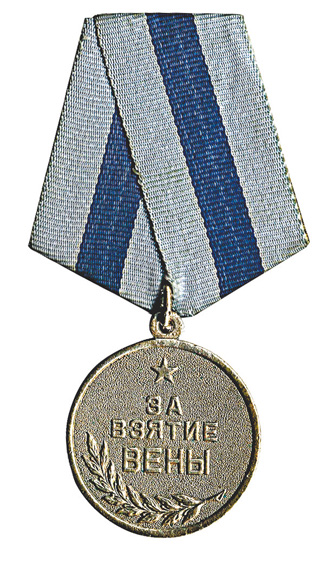
To Save Vienna: How the Red Army liberated the Austrian capital 80 years ago

Reading time: 7 minutes

Commemorating the liberation of Vienna, we re-blog the Telegram post from the Russian Ministry of Foreign Affairs, followed by an article-transcripts of “TV Zvezda” video-reportage from the Austrian capital.

Read also Georgy Zotov’s article from 10 years ago, Blood and Vienna.Even After 70 Years the Soviet Soldiers Are Respected in Austria!

One thing is clear: if not for the titanic self-sacrifice of the Soviet people, there would be no Vienna, no Krakow, no Prague… just like there is no Dresden, Hiroshima, or Nagasaki!
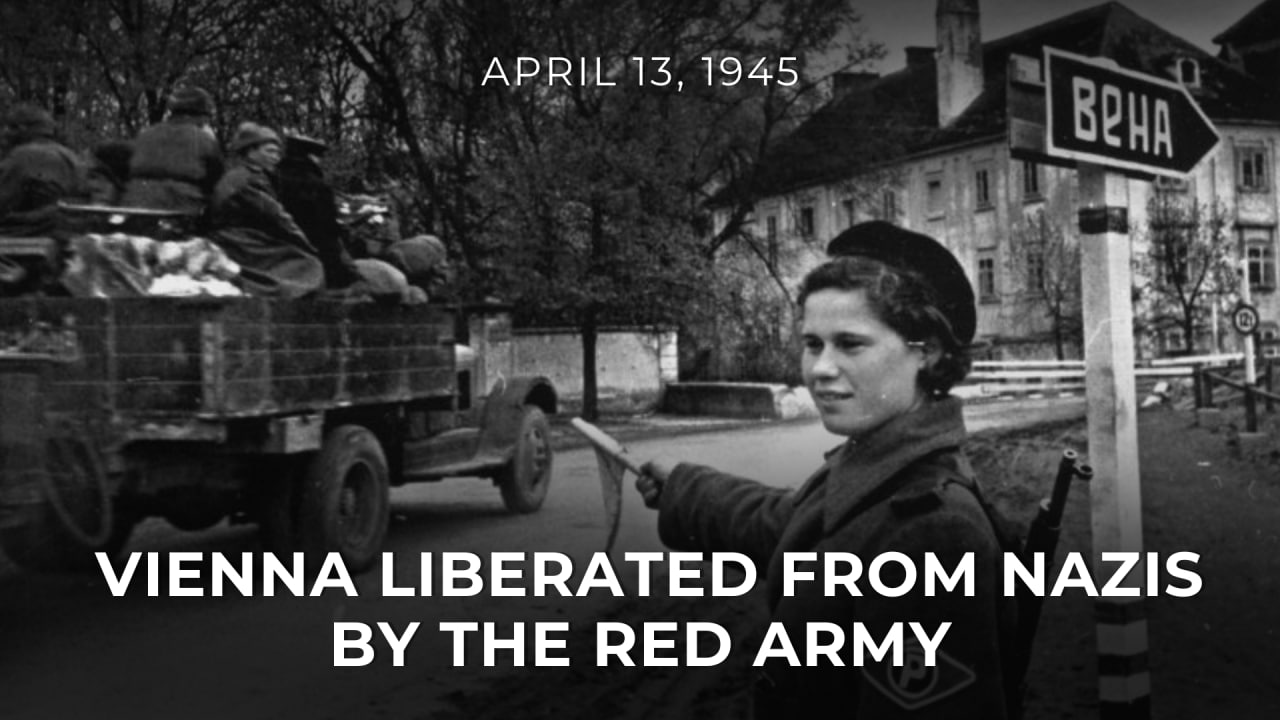

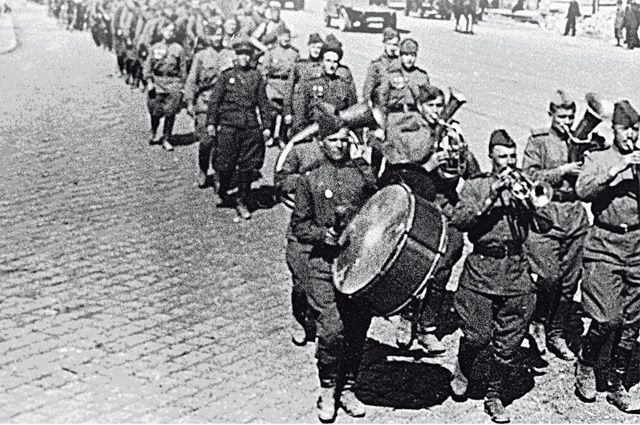
80 years ago, on April 13, 1945, the Soviet forces liberated the capital of Austria during the Vienna Offensive.

By the spring of 1945, the Red Army drove the Nazi invaders out of Poland, Hungary and Slovakia and rapidly launched an offensive towards Germany. The Third Reich’s defeat was only a matter of time: the Soviet forces were preparing to attack Berlin.

Austria, annexed by the Nazis as a result of anschluss in 1938, served as a shield for the Third Reich’s southern regions during WWII. The capital of Austria — the city of Vienna — was a strategically important point of the Nazi defence, which the enemy was committed to hold at any cost.

In March 1945, during the successful offensive along the Austrian line of advance, the Red Army broke the resistance of the Nazi units deployed between the Danube and Lake Balaton (Hungary) and defeated the troops of the Nazi army group ‘South’. Having advanced by that time up to 80 kilometers to Vienna, the Soviet forces launched the operation to liberate the Austrian capital.

The enemy undertook extensive preprations to hold the city. The streets were barricaded and mine-strewn. Firing points were set up in residential buildings. Destroyed houses were used to camouflage tanks and artillery pieces. All bridges over the Danube were prepared by the Nazis for demolition. In the event of retreat, the Nazis were ready to tear down the Austrian capital to the ground, including by destroying (!) its historical architectural heritage.

On April 5, 1945, the Soviet forces attacked the Nazi garrison in Vienna. Intense fighting erupted on the city outskirts. The Red Army was confronted by the most prepared enemy units and formations, including SS tank divisions. Soviet soldiers fought to death against the Nazis for every quarter and every building of the city.

With a view to prevent victims among the city’s population and protect Vienna from destruction by the Nazis, the Soviet command addressed local residents:

The Red Army entered Austria not to occupy its territory but only to defeat the enemy Nazi troops and liberate the country from German occupation. It also called on the Vienna residents to help fight the Nazis — this call was answered by many Austrian patriots.

On April 13, the last enemy point of resistance in the city centre was crushed, with Vienna being completely liberated from the Nazis.

During the fierce and brutal fighting for Vienna, the Red Army crushed Wehrmacht’s 11 armoured divisions, destroyed the 6th SS Tank Army, and captured more than 130,000 enemy soldiers and officers. The Soviet people paid a high price for the liberation of Vienna from the Nazis: 18,000 Red Army soldiers gave their lives for saving the city from fascists. (BATS note: we corrected the number in the MFA post, which must have been a typo, given at 38,000)

Having liberated Vienna, our country provided aid to the city residents. The population was supplied with food: hundreds of tonnes of grain, meat, sugar, salt and other products were given to the Austrians. After the war, the people of Vienna recalled how their “fear of hunger had disappeared” and spoke with gratitude about the generosity of the Soviet people, which “exceeded all expectations.”

An excerpt from the briefing by Foreign Ministry Spokeswoman Maria Zakharova (April 9, 2025):

“By acting swiftly and selflessly, the Soviet forces prevented the destruction of Vienna.

It was thanks to the decision by the Soviet command not to use artillery that Vienna has preserved its historical outlook.”

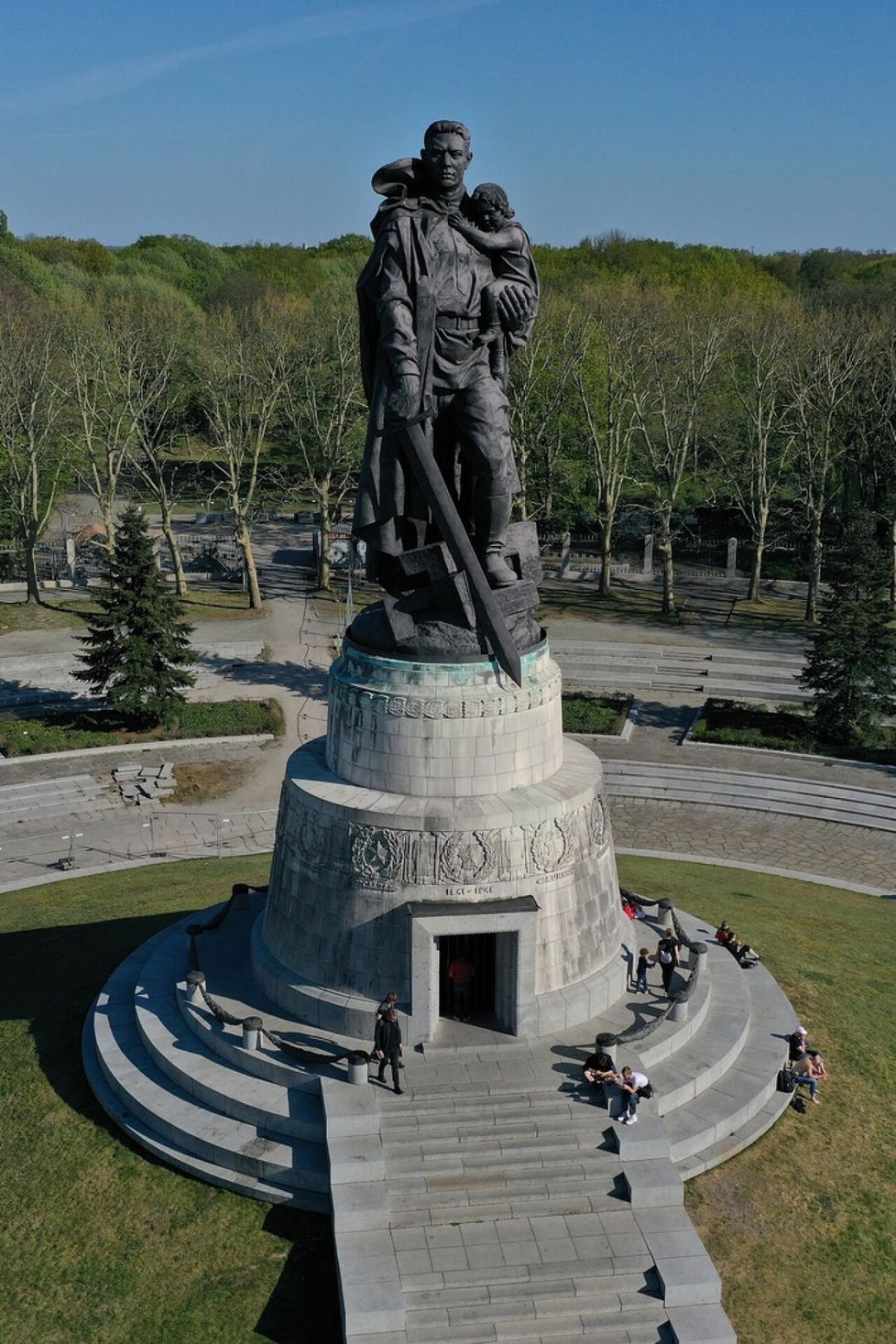
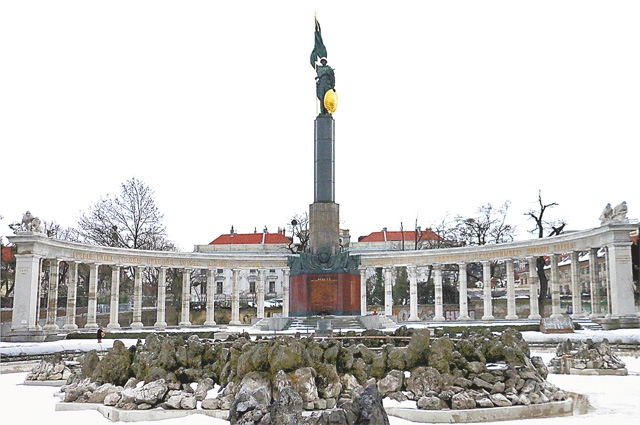
A monument to the Soviet soldiers who sacrificed their lives for the sake of the liberation of Austria from Nazism was unveiled on August 19, 1945, on Schwarzenbergplatz in the centre of Vienna. The country has 217 monuments and war graves on its territory.

Tens of thousands Red Army soldiers, who saved Europe from the Nazi plague, are buried in Austria.

❗️ In 1955, under the State Treaty for the Re-establishment of Independent and Democratic Austria (Art.19), Vienna took the obligations to respect, preserve and maintain the graves of the soldiers on Austrian territory.


To Save Vienna: How the Red Army liberated the Austrian capital 80 years ago

(Follow the link to the source article to watch the video reportage)
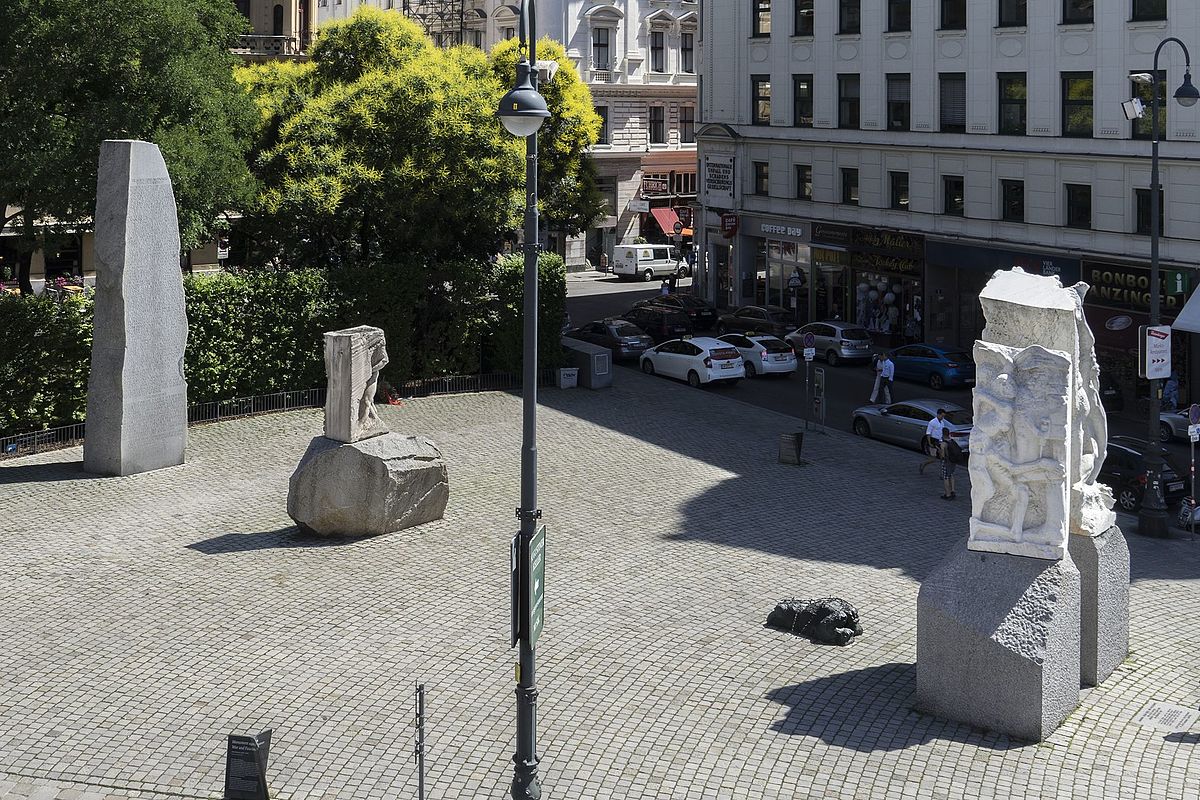
Memorial at Helmut Zilk Square

The Wehrmacht troops were preparing to blow up the city in case of retreat.

Exactly 80 years ago, the completion of the assault on the Austrian capital became the final part of the Vienna offensive. The complete liberation of the city is celebrated on April 13. On the eve of this date, Rossina Bodrova, a correspondent for Zvezda, visited places in one of the most beautiful cities in Europe that recall the horrors of the Second World War.
Continue reading

The Sad State of the Modern Ukrainian Anthem

Reading time: 8 minutes

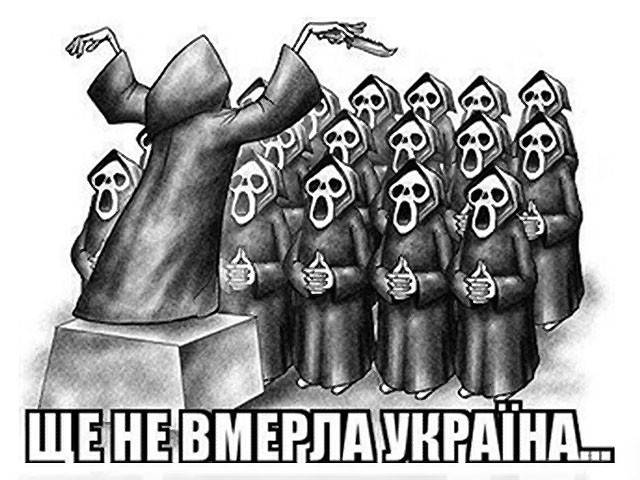
Ukraine hasn’t died yet…

Those who have heard the present-day Ukrainian anthem wondered what it is they’ve just listened to. It’s such a sorry wailing, indeed… In fact, one a capella performance inspired a netizen to overlay it with Frédéric Chopin’s “Marche Funèbre” (Funeral March), which resulted in a perfect match! Many think that the Ukrainian anthem starts with the line “Ukraine hasn’t died yet…”, and while not exactly correct, there is a grain of historical truth to it.

But it wasn’t always like this. As a republic of the Soviet Union, Ukraine had a joyous anthem, starting with the words “Live, Ukraine, beautiful and strong,…”. But then came 1992, and Ukraine – like the rest of the former republics of the Union – traded its heroes for ghosts.

State Anthem of the Ukrainian SSR (1949 – 1953)

More about this edition of the anthem at our Beorn And The Shieldmaiden Telegram channel.

State Anthem of the Ukrainian SSR (1978 – 1992)

More about this edition of the anthem at our Beorn And The Shieldmaiden Telegram channel.

The article below is one of a series tackling the myths surrounding Ukraine, addressing the history of their modern anthem. Some of the surrounding events are also described in Project ‘Ukraine’. Documentary by Andrei Medvedev (with English subtitles)


Myths about the origin of Ukraine and Ukrainians.
Myth 4. A requiem instead of an anthem

The origin of the anthem of Ukraine, like everything related to Ukrainians, is shrouded in a fog of lies. When you listen to the Ukrainian anthem, its tedious, drawling melody, there is no desire to cry with pride for the country and admire this symbol of the state. Many people don’t even want to stand up. It is not so much an anthem, but a requiem, a memorial song.

It cannot be said that when listening to the anthem, there is a feeling of weight and spaciousness. On the contrary, the very first line of the anthem (“Ukraine hasn’t died yet…”), combined with the melody in minor tune, creates a feeling of heaviness, monotony, sadness and oppression. Why is that? Why is the Ukrainian anthem – a carbon copy of the Polish anthem, which outlines the program for the revival of the Polish state?

Before talking about the authorship and melody of the anthem, it is worth recalling the historical period when this anthem was written. It is 1862, Poland as a state has not existed for more than half a century. It is divided between Russia, Germany and Austria-Hungary. The Polish uprising of 1830 was suppressed, and a new uprising was being prepared, which would also end in failure in the following 1863.
Continue reading

The conclusion to Navalny’s farce (for now). A stopped Western-sponsored coup d’etat in Russia

Reading time: 7 minutes

The continuation of the farce that Navalny’s handlers started with his fake poisoning and the subsequent staged return Russia with the fake “palace” video in his arsenal (outlined in my previous post The Navalny’s Palace – Fake Documentary from Fake Opposition (with a list of past crimes)) has come to the logical conclusion with the much-welcome imprisonment of the fraudster.

Navalny got his remaining 2.8 years of suspended sentence for defrauding of two companies converted into a real term. This was the outcome which Russians hoped for. Should the court have caved in to the Western pressure and release Navalny, that would have given a clear signal that he is above the Law and that Law does not apply to fraudsters in the employ of the foreign secret services. The reactions that I read on the Russian internet could be summed up as: “Why so little?!” Well, this is just one past conviction for one of his crimes. (By the way, Navalny has already got away with too much – he’s the only Russian citizen who managed to have two suspended convictions for fraud!)

There is still the case of defamation of WWII veteran, and the case of defrauding donors to his organisation (with the donated money spent on luxury and vacations). These cases were open and, coupled with the suspended sentence, were grounds for not letting Navalny out of the country in the first place. It was actually President Putin’s request that allowed Navalny to be transported to Germany, where he spent almost 2 months after his recovery on skipping his parole and on creation of the film targeting to defame Putin.

And there are strong calls to open a new case – this time for high treason due to Navalnys NGO direct appeal to Biden to impose sanctions on Russia. Seeing as sanctions qualify as an act of war, these people were calling on a foreign power to start a war on the country that they are citizens of.

The pressure on the Court of Justice was immense, including from the foreign diplomats, who amassed there to intimidate the judges and influence the course of a civil court by their presence. The hall of shame includes the diplomats from the following countries:

USA, UK, Germany, Poland, Denmark, Latvia, Lithuania, Sweden, Switzerland, Norway, Canada, Finland, Japan, Austria, Czechia and Bulgaria.

EDIT: 05.02.2021 – Good to see Russia acting in accordance with the international norms and also showing backbone – Russia expels diplomats from Germany, Poland and Sweden for alleged participation in pro-Navalny protests. If only Yanukovich did the same with Biden and Nuland back in 2014, Ukraine would most probably not be a Nazi-infested impoverished and depopulated basket-case right now…

Continue reading

Project ‘Ukraine’. Documentary by Andrei Medvedev (with English subtitles)

Reading time: 56 minutes

This is a dispassionate chronological look at the history of Galicia and Malorossia, and how those Russian lands were being gradually turned into Ukraine. The film presents a trove of documents, citations, documentary footage and gives it all to the viewer to draw own conclusions. The documentary also takes an introspective look at where Russia went wrong with its handling of the budding extreme nationalism in those lands at the turn of the 19th-20th century, and introspection is a good sign – a nation, which does not view itself as exceptional, which has the capacity to understand its mistakes, has a hope for the future…

The original untranslated video is published here: Проект ‘Украина’. Фильм Андрея Медведева.

After watching the documentary, I can recommend reading the following articles:

UPDATE 13.03.2020: YouTube has globally censored up to a 1000 Russian-originating channels, including those aimed at only the Russian audience, where the video was hosted.

UPDATE 13.03:2022: One should also watch two documentaries from Oliver Stone: a 2016 Ukraine on Fire and 2019 Revealing Ukraine, which pick up the thread of Andrei Medvedev’s documentary.

The formatted subtitle file in ASS format can be downloaded separately. Full text of the script is below the video frame.

UPDATE 14.03.2022: All YouTube-related materials have been moved to the bottom of this post.

Continue reading

Apocalypse of Europe
Special report from the flooded by refugees Austria

Reading time: 5 minutes

This is the second article by travelling journalist Gergy Zotov, in the series about refugee crisis in Europe, published in the newspaper weekly “Arguments and Facts” number 40 9/30/2015. English translation of the first part, about Hungary, can be read here.


Apocalypse of Europe
Special report from the flooded by refugees Austria

“AiF” observer managed to find out: 2 months ago recruits arrived to the Turkish camps for ‘displaced persons’, organising sending of Syrians and Iraqis into the EU. One question remains: who benefits from this?

There’s a complete pandemonium in Vienna’s Westbahnhof station, to which come the packed train from Budapest. Thousands of people are crowding on the platforms, cordoned off by the police – since early morning they are waiting to be sent to Munich. Austria is struggling to get rid of the refugees, including those that are asking for political asylum. However, you can no longer recognise the hungry and exhausted people, whom I saw at the border of Hungary and Serbia. All are smiling, happy to pose for photos, dressed in brand new clothes, many – with smartphones. Before they would grab any food, now they’d come to a food stall, browse through the products, and depart. Refugees learnt in such a short: one does not need to work in Europe . The food here is laid out for free, and you are even begged to take it.

Hangover of a dragon

Actually, there is a way out, – assures the Austrian Freedom Party activist Christian Lander. – The war in Iraq was unleashed by the US and Britain, they are the very same, who with the help of France and Italy bombed Libya, financed the rebels in Syria. It will be fair if the countries involved in the Arab adventures would share the refugees among themselves. We in Austria already have a lot of problems with migrants, and now every day there come 20,000 more people. I do not understand the silence of the European Union, when America declares, that they will generously host ten thousand Syrians… If you are an “adult” state, and not a clown in short pants, then you are obliged to bear the consequences of your policies. Otherwise it will be as in the joke about the five-headed dragon – one head was drinking schnapps in the evening, and in the morning all heads had hangover together. It would have been appropriate to immediately put the refugees into the buses at the border and “export” them to the EU countries, which created chaos in the Middle East.
Continue reading

Blood and Vienna.
Even After 70 Years the Soviet Soldiers Are Respected in Austria

Reading time: 6 minutes

Below is a translation of an article by Georgy Zotov, published in “Argumenty i Fakty” on the 20th of February 2015. The title is a play on words. “Vienna” is written the same as the word “vein” in Russian.

In contrast to our former allies in Eastern Europe, it is well understood in Austria: in 1945 Soviet troops freed their country from the regime of Adolf Hitler.

A very old, completely grey-haired man tells me how to get to the ​​Schwarzenberg square. “You have an interesting accent. Are you Russian?” – “Yes.” He immediately switches over to my mother tongue, pronouncing some words with difficulty. “My name is Helmut Hurst, for two years I was with you as a … war-time-prisoner. Got mobilised to the Volkssturm straight from school in April forty-five, when your troops entered Vienna. No training, got handed a rifle with no bullets – and forward into the fray for the great Fuhrer. I’m not dead only thanks to the Russians, although I was captured with weapons in my hands. Thank you.”

USSR saved us

After the statements of the Republic of Poland and the Baltic states that the anniversary of Victory is not a liberation, but the beginning of a “new occupation”, you come to Austria as if to another planet. A completely different attitude. The press service of the capital gladly told me: for the 70th anniversary of the entry of the Red Army into Vienna, they plan to lay flowers at the monument to Soviet soldiers, conduct a memorial service at the site of the Mauthausen concentration camp, open the Museum of the liberation of Vienna, and even stage theatrical performances.

The Red Army entered the city on April 5th 1945, and already on April 13th the remnants of the Nazi army in the capital of Austria (then part of the Third Reich) surrendered. Soviet troops remained in Vienna for a little more than a decade – they left after the restoration of the sovereignty of Austria as an independent state.

– Austrians seriously differ from Eastern Europe in terms of the perception of the Second World War – explains historian and researcher Gerhard Zauner. – In 1945, Poland and Czechoslovakia met Russians with flowers, rejoicing and shouting “Hurrah!”, the girls hung on their necks of your soldiers. 70 years later the Poles and Czechs pretend that there was no liberation at all, that only “new occupants” came to them. It’s completely different in Austria. Brainwashed by Goebbels’ propaganda, people were waiting: that any moment bearded Cossacks will appear on the streets of Vienna and will devour the Austrian babies. Back then we did not consider ourselves to be victims of Nazism, because Austria welcomed Hitler and fought together with the Germans. However, after 70 years, many of our citizens are grateful to your people.

First, the USSR rescued a small nation from further destruction – hundreds of thousands of Austrians have already been killed and the Western and on the Eastern Fronts. Secondly, Vienna was not subjected to massive air strikes, and this is preserved the historical neighbourhoods. Third, at the demand of the USSR, Austria became a neutral state, and later our guys did not die in Iraq and Afghanistan.

Flowers on the graves

Austrian press has organized an opinion poll: “Do you want to dismantle the monument to Soviet soldiers?”. 91%(!) of Austrian voted against. And while our former friends in Eastern Europe are now publicly announcing May 9, 1945 as the beginning of the “Soviet tyranny”, for millions of people in Austria, this date is the liberation, and not a conquest. Austria finances maintenance of military cemeteries, where Soviet soldiers are buried (in the storming of Vienna 40,000 people were killed), and restoring monuments at their own expense. Driving through the eastern part of the country, I saw with my own eyes how the villagers (and not only the elderly ones) bring flowers to the graves of our soldiers. When I asked them why they do this, they were amazed by the question: “These are our liberators!”

But there is a fly in the ointment. For six consecutive years, on the eve of May 9th, hooligans poured paint on monument to Soviet soldiers on Schwarzenberg square: either black, or (on the last occasion) yellow-blue. The fence behind the monument, as well as containers for projectors are covered by graffiti. Attackers have not been found, although in Vienna City Hall assured me that now the perimeter is covered by video cameras: the crime is unlikely to happen again.

The fence behind the monument to our soldiers is covered with graffiti. Photo: AiF/ Georgy Zotov

“Enough Christmas trees for all”

– First of all the suspicion falls on neo-Nazis – we have more and more problems with the radicals of the right-wing movements, – thinks the ex-worker of the Communist Party of Austria, Alexander Neumann. – There is a version that vandals are visitors from Poland or Ukraine. Although, of course, Austria is responsible for such incidents. But, you must agree, it’s a couple of cases – not a mass phenomenon. When the memorial on the square Schwarzenberg was spilled with paint last year, dozens of volunteers organised a vigil at the monument, and one of them vowed to “punch the face the Nazis are not respecting Russians.”

Austrian politicians are delicate in their comments on the topic og 70th anniversary of the appearance in Vienna of the Soviet troops. According to the press service of the Parliament, “different views are expressed: most people would say that this was a liberation, a minority – that a military defeat, but no one would call the entry of the Red Army in Vienna for and illegal occupation. In Austrian history school books, the point of view is clear: 1945 is a year of the liberation of Austria, and nothing else.”

“We must admit, all kinds of things happened, – says the former soldier of Volkssturm Helmut Hurst. – Soviet troops stayed with us for 10 years, there were love affairs, Austrians gave birth to children, and then classmates teased the poor kids as “ferfluhter russen” – “cursed Russians”. My neighbour did not like the Russians – a Soviet truck damaged his lawn. Another neighbour scolded bureaucracy: to move from one area of Vienna to another, you had to obtain five commandant seals of the USSR. However, after seventy years, we are grateful to the Russians for getting rid of Hitler. In captivity, I worked in a sawmill. Since then, if someone is talking about a possible war with Russia, I say, “No problem. Russians taught us to fell trees in the POW camps … there are a lot more Christmas trees there – enough for everyone!”