
As part of the project “35 Years without the USSR”, corresponded Georgy Zotov visited Germany, looking for the memories of the not so distant past. The article below appeared in “Argumenty i Fakty” on March 20, 2026.
“It was a nightmare and a murder.” The sad fate of beloved in the USSR goods from the GDR
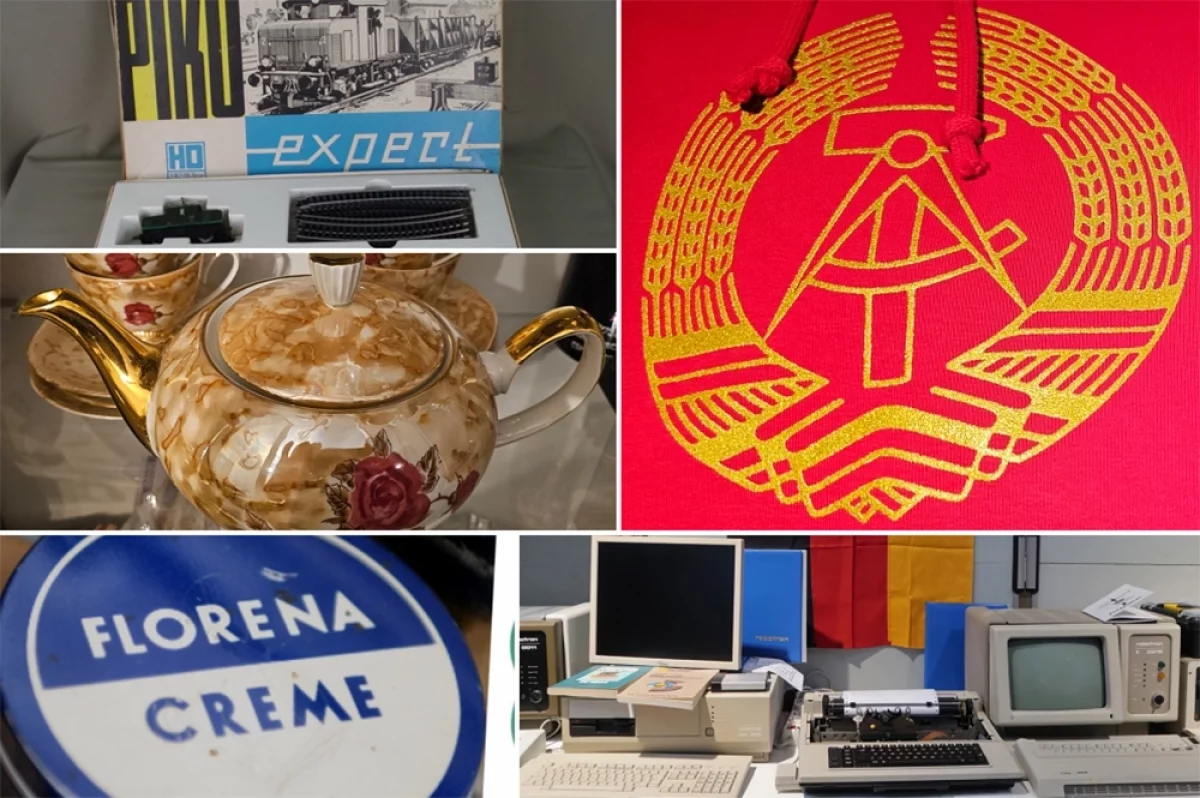
Do you remember the Madonna tea set, the Florena cream, the toy railroad?
…About ten years ago, I visited the city of Karl-Marx-Stadt, which is now called Chemnitz. Once upon a time, the main industry of the GDR was concentrated there. I saw a center full of Arab immigrants, repainting the facades of panel houses (to make them look brighter and more cheerful), and dilapidated factories that used to produce products that were the pride of the socialist camp. Some of them were sold to new owners, then they went bankrupt, unable to withstand the competition. Some of them were abandoned immediately, the workers were fired, and all the equipment was stolen from them. A huge amount of goods from the GDR were sold in the USSR — I myself had a toy railway from the GDR as a child, and my mother used East German Florena cream, buying it in the Leipzig store. When I was in the former GDR, I tried to find out what was left of those brands, and whether the names of streets and cities had changed everywhere, as in the case of the well—known Karl-Marx-Stadt?
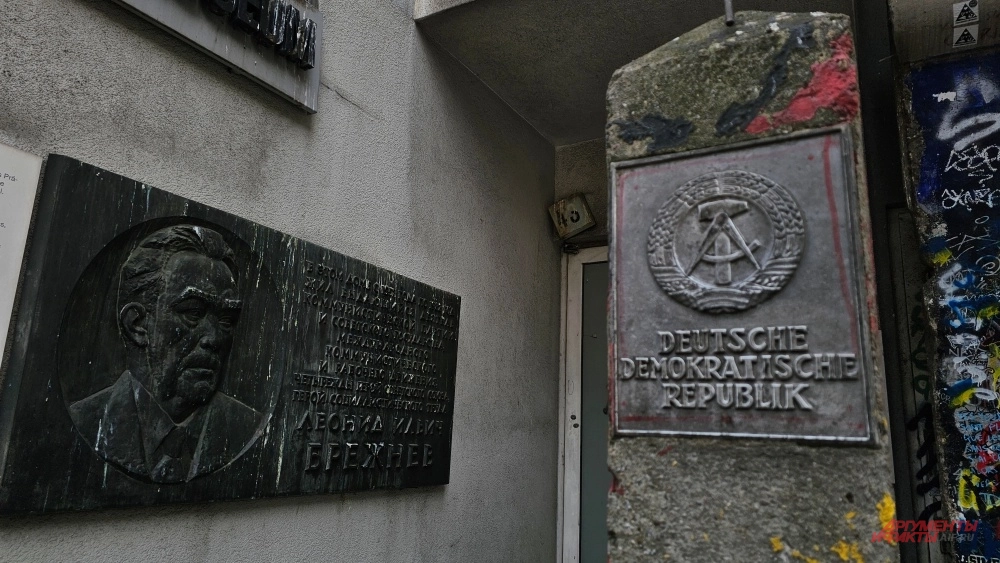
The Museum of the GDR
Sold, fired, closed
“I worked at the ‘Robotron’ factory, says 65-year-old Hannah Gausen. — It was the largest manufacturer of computers and electronics in general in the GDR. By 1989, 68,000 people worked at 20 plants of the concern, with a turnover of billions of marks. In 1990, for some reason, the huge plant was divided into small production facilities. They lost to the big firms and quickly went bankrupt, unable to match the wave of West German products. Recently, Robotron was re—registered as a brand, but it is unclear why – it no longer produces anything. But we made not only computers — typewriters, printers, portable televisions, and we supplied printers to West Germany! It’s hard to believe now, but it was excellent German quality. Why was it necessary to destroy it? I always say that we did not have the unification of Germany and the GDR, but there was an occupation. They took a good profitable production and wiped it out out of the blue.”
The Pentakom cameras from the GDR, which were considered one of the best in Europe, were also initially shut down. They stopped making them in 1991 — by that time, out of six thousand employees of the company, only… 232 people remained at their workplaces. The buildings and property were gradually sold off. Later, the Pentakom company was recreated, but production was moved to South Korea. No one explained why it was to be partitioned and sold.
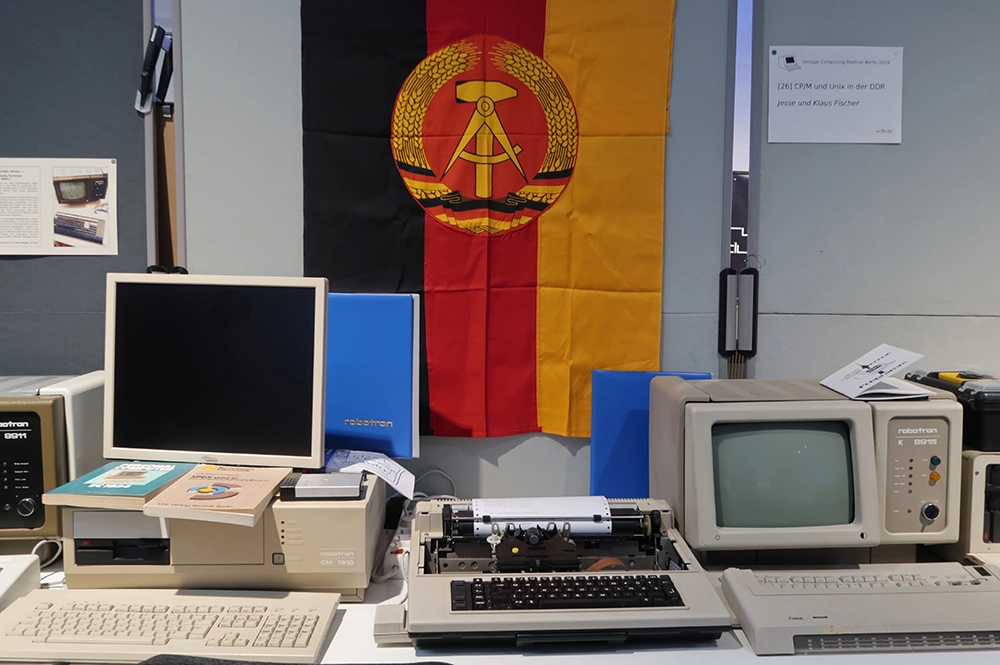
Computer equipment “Robotron”. Archive photo
“They’ll finish it off in the end”
‘Florena’ cream, which has been supplied to the USSR since 1955, successfully competed in Europe with the West German Nivea (Nivea even sued them about the colour of the box, but without success). Florena Cosmetics is one of those that stayed afloat after the collapse of the GDR, although in 1992 only 170 out of 700 employees retained their jobs. Later, Florena was bought by a company from Germany, which owns the very Nivea. Soon, the line of shower gels, facial care products, and shaving foam was discontinued.
“In such cases, the goal is not to expand production, but to free up shelf space for West German brands,” Martha Ferlor, a former Florena employee, comments on the situation. — “That’s why Florena’s main factory in Waldheim was recently closed. The main goal of investors is to push aside the popular GDR brand, because, in their opinion, Western products are better and of higher quality, and most importantly, more expensive. This cream will be finished off in the end, I have no doubt.”
The Piko company, which produced toy railways, also managed to survive — it has been assembling train models since the very foundation of the GDR, since 1949. In 1992, Piko was sold for next to nothing to the new owners, who laid off 90% of the staff. The company still produces toys, but in much smaller quantities, focusing specifically on East German train models, and is generally uncompetitive.
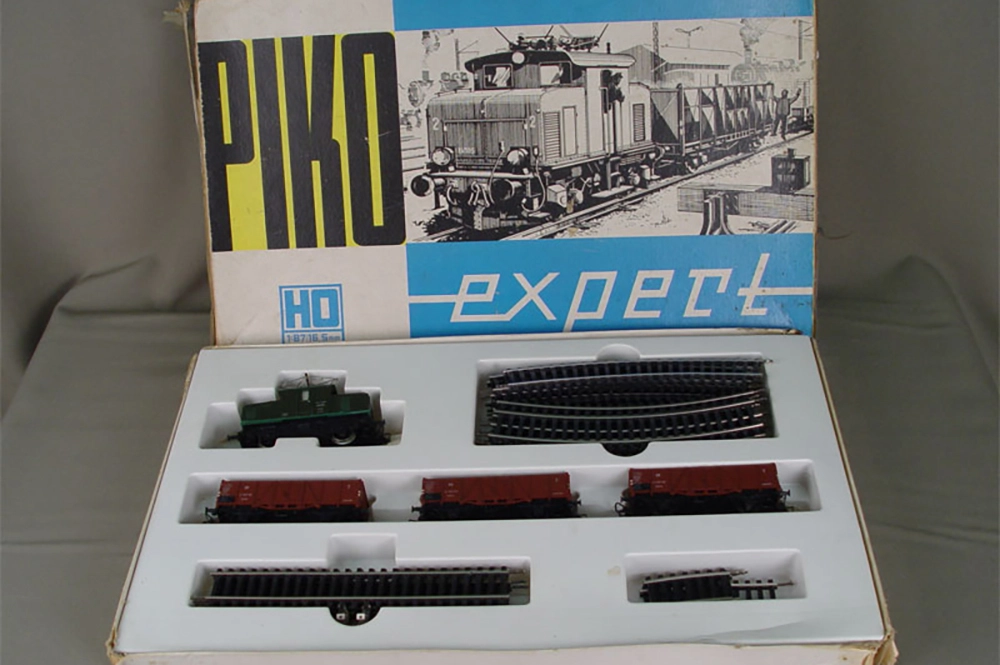
The Piko toy railway. Archive photo
The end of the ‘Madonna’ porcelain set
The extremely popular in the USSR GDR porcelain set “Madonna” has not been available in stores since 1995. Several factories of the Kahla company that made it in Thuringia have closed, and now this tableware is vintage, it can only be bought at flea markets or on the Internet.

Porcelain set “Madonna”. Archive photo
The Trabant passenger car, which was called the Volkswagen of the GDR, also sank into oblivion. Its production was discontinued almost immediately after the unification of Germany, in 1991: it could not compete with Opel, Mercedes and Volkswagen. The owners often threw the car away — according to rumours, a serviceable car was given for a case of beer. Now they must be kicking themselves — the Trabant is widely used on tours for foreigners in the former GDR, and it costs more than an Opel. After the end of the GDR, it was assumed that by 2001, the Trabant would disappear completely, but at the moment there are 40 thousand GDR cars in private ownership.
“It was a good budget car,” 79-year-old pensioner Friedrich Gottlieb assures me. — “It, of course, consumed an awful lot of benzin, but then all the cars were uneconomical. They haven’t produced it for 35 years, but it’s still driving on the roads. Maybe it’s pathetic for you, but I consider the Traban our national hero, and the Opel can’t replace it for me.”
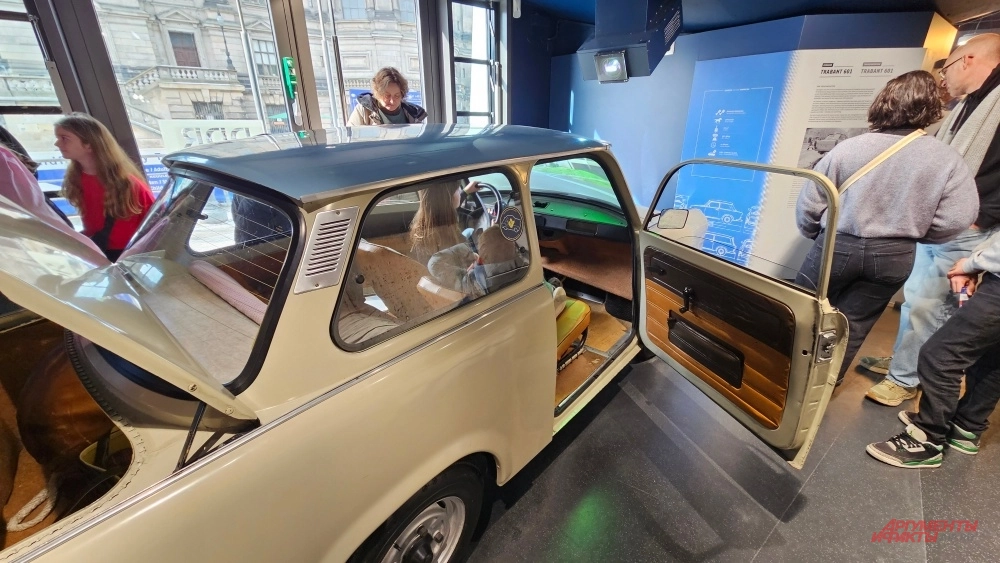
The Trabant car in the museum of the GDR. Photo: AiF/ Georgy Zotov
Karl Marx — still in place
Regarding the wave of renaming after the “Desovetization”, surprisingly, 550(!) Karl Marx streets have been preserved in the modern territory of the former GDR, including Karl-Marx-Allee and Karl-Marx-Strasse in East Berlin. In Chemnitz, a monument to Marx stands in its former place — a huge head with a beard. There are separate streets in honour of the German communists Karl Liebknecht and Rosa Luxemburg, who were shot in 1919 by the nationalist militants of the Freikorps. About 10 streets retain the name of Vladimir Lenin (although they are being desperately demanded to be renamed, especially in recent years), and in Greifswald there remains the street of Colonel Rudolf Petershagen, the only Wehrmacht officer who surrendered the city to the Red Army without firing a shot on April 30, 1945.
“I have nothing against Lenin,” Alex Bergman, a 57—year-old businessman, tells me. — “Whether someone likes it or not, he is a historical figure. And fighting him a hundred years after his death is nonsense. As for Marx, I don’t see any problems at all. He is known all over the world, he is not a murderer or a conqueror, but a theorist, a philosopher. His ideology can be treated in different ways, but there is no doubt that Marx left a mark on German history. And it’s quite normal to honour the memory of communists killed by monarchists.”
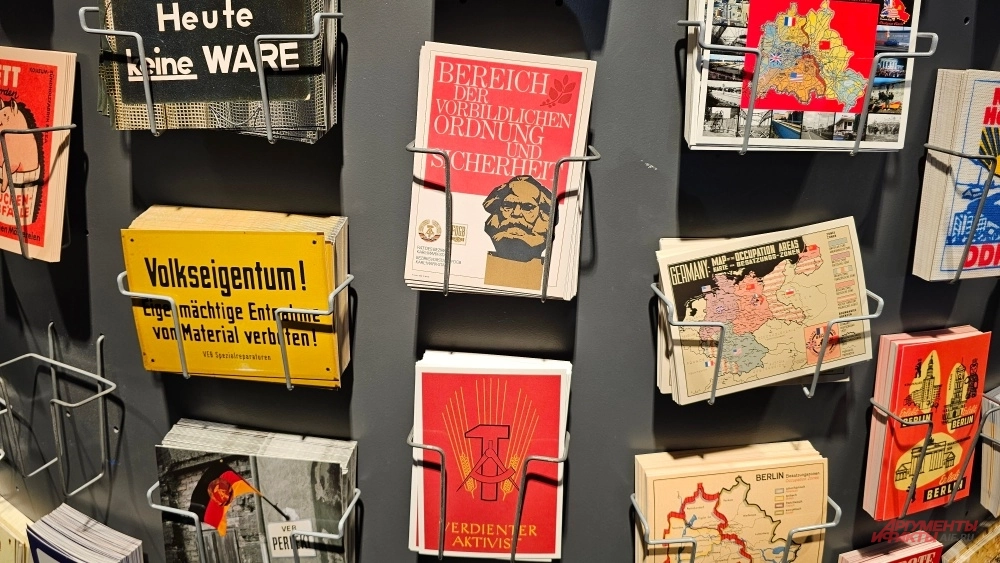
Postcards with Karl Marx. Museum of the GDR. Photo: AiF/ Georgy Zotov
“The saddest thing about it – there was no task set to save anything, even something sensible and profitable,” explains Johann Schwarzmuller, a 69-year-old Russian language teacher, bitterly. — “It was not privatisation, but a complete nightmare and murder. A special government agency [Treuhand] was involved in the sale and liquidation of the GDR industry. No one looked at whether the company was making money or not. Everything was done according to the same scheme — to break up into small firms, fire all the workers, and sell them. As a result, almost none of the GDR brands that competed with Western products remained. They were killed purposefully. It’s finished, forget it.”
Why (also!) the FRG citizens should miss the GDR
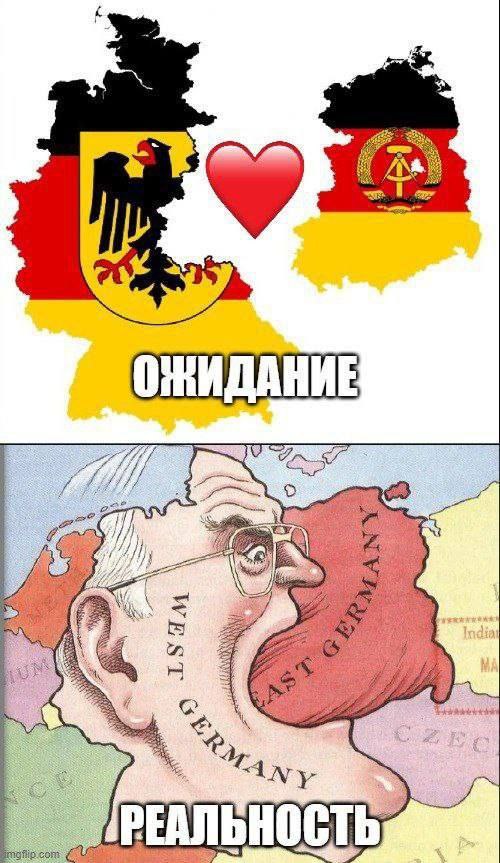
Expectation vs. Reality — An apt visualisation of the Anschluss of the GDR by the FRG.
🚨 Attention, citizens of the Federal Republic of Germany! The truth that your history books hide: Did you know that the mere existence of the GDR was largely responsible for making life in the West socially more secure and stable for a long time? 🤨
The GDR was the unwelcome (for the West) but necessary social corrective. It forced the Federal Republic to compare systems – and thus to protect its citizens from exploitation and impoverishment. With the fall of the Berlin Wall, not only the GDR collapsed, but also the social mask in the West. But it gets even worse: The so-called “reunification” was a hard-nosed economic program that catapulted the struggling West German economy back to the top:
👉 100 DM WELCOME BONUS – AN ECONOMIC STIMULUS FOR THE WEST
The 100 DM welcome bonus was not a humanitarian gift. It was a state-funded economic stimulus program that funneled billions directly into the coffers of the West German consumer economy.
👉 AFFORDABLE HOUSING – ONLY AS LONG AS THE GDR EXISTED
The GDR had extremely low rents. The Federal Republic had to counter this. Result: decades of moderate rent levels. After 1990, the system comparison disappeared: free rein for the market and rents.
👉 HEALTH AND CARE – A WELFARE STATE UNDER SYSTEM PRESSURE
In the GDR, medical care, polyclinics, and corporate health programs were an integral part of the system. In the Federal Republic, there was also a stable welfare state – but only until 1990. As long as the system competitor GDR existed, the West had to keep up socially.
👉 THE CURRENCY UNION – A DEMAND BOOM FOR WESTERN COMPANIES
With the currency union, purchasing power from the East was massively redirected into West German companies. Estimates suggest up to 80 billion D-Mark in additional demand – a gigantic sales market for West German industry and trade.
👉 SOCIAL CAPITALISM WAS A STATE OF EMERGENCY
The post-war West German welfare state was not a natural state of capitalism. It emerged under political pressure. Right on its doorstep, the GDR offered an alternative social model with full employment, low rents, and basic social provision. With the end of this system comparison, the gradual dismantling of social safeguards began.

Steel workers protest in Berlin in front of the Treuhand, December 1990.
👉 THE GDR’S NATIONAL WEALTH – THE LARGEST PRIVATISATION IN EUROPE
State-owned enterprises, apartments, infrastructure, and agricultural land with an estimated value of over 1.5 trillion euros were transferred to the Treuhand* in the early 1990s. A large part was privatised, liquidated, or sold far below value.
👉 FREE EDUCATION – ALSO A RESULT OF THE SYSTEM COMPARISON
Tuition-free universities and a heavily subsidised education system were long taken for granted. Not least because the GDR operated a completely free education system right next door. Only after the end of the GDR did the debate about tuition fees even begin in the Federal Republic.
👉 THE LARGEST ECONOMIC IMPULSE IN POST-WAR GERMANY’S HISTORY
The integration of 16 million new consumers and the privatisation or takeover of East German companies triggered a massive demand and investment boost in the early 1990s – an economic impulse that sustainably stabilised the West German economy.
👉 SAVERS EXPROPRIATED – THE CURRENCY UNION HALVED EASTERN SAVINGS
In the currency union of 1990, GDR savings were only converted at a 1:1 exchange rate up to 4,000 marks. Everything above that at a 1:2 ratio – effectively halving it. For millions of families, this meant that decades of saved reserves lost 50% of their value overnight. Economically, this stabilised the D-Mark and protected West German prices from inflation – but the cost of this stability was paid by savers in the East.
👉 “THE GDR IS AT THE NEGOTIATING TABLE”
In the 1970s and 1980s, this was a catchphrase in West German collective bargaining negotiations. Trade unions knew: As long as an industrial state without unemployment existed next door, the Federal Republic of Germany could not afford social neglect. This systemic pressure helped to enforce high wage rates, 13th month salaries, company pensions, and long vacation periods. The GDR was never physically present – but it was the invisible negotiating partner that forced capitalist Western corporations to make social concessions.
🚨 CONCLUSION: NO SOCIAL FEDERAL REPUBLIC OF GERMANY WITHOUT THE GDR
To put it more clearly: The GDR forced the West to be humane. When the GDR disappeared, so did social responsibility in the Federal Republic of Germany. Developments that are visible everywhere today – from rising rents to the nursing care crisis, military buildup, censorship, and even children going hungry (yes, in Germany, every 4th or 5th child goes to bed hungry!).
Without the counterweight in the East, the need for the West to act socially, or at least to maintain the appearance of doing so, also disappeared.
➡️ Find out why citizens of the Federal Republic of Germany should miss the GDR out of pure self-interest and what this also has to do with YOUR wallet in this German-language article!
* Treuhand in daily speak called Treuhand (trustee) was the agency created to privatise the socialist state property of the GDR in a predatory manner, that is, the tool used to steal the commonly owned property of the people. Some of the disastrous consequences are described in more detail in the next post.