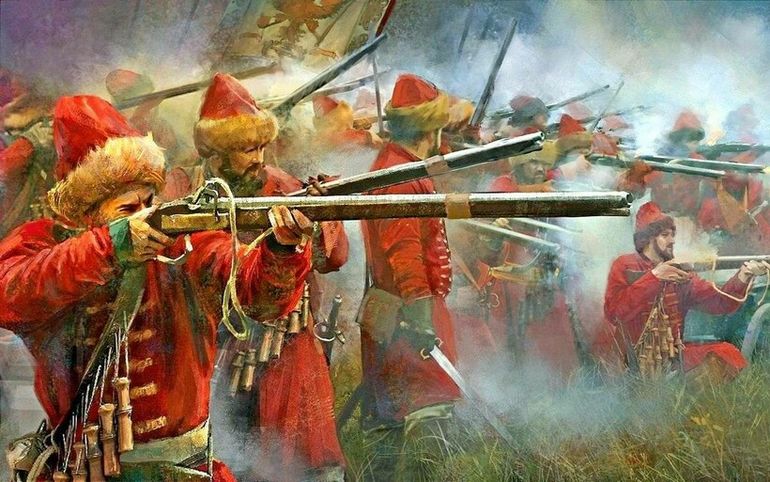
“The Black Book. Atrocities of the modern Banderites – the Ukrainian neo-Nazis in 2014 – 2023” – by Maxim Grigoriev & Mihail Myagkov

Reading time: 6 minutes

Back in 2014 the Ministry of Defence of the Russian Federation started out gathering evidence and publishing the White Books of the Ukrainian atrocities in Donbass. The work quickly became overwhelming with the sheer number of materials. I wrote about the White Books in my blog, and the copies of those materials are available for download in both Russian and English.With the sheer volume of materials, the Ministry stopped updating the books, focusing on internal evidence gathering.

Now, almost 10 years later more materials are coming to light:


The Ministry of Defence of the Russian Federation has published a book by Maxim Grigoriev, Chairman of the International Public Tribunal for Crimes of Ukrainian Neo-Nazis, and Professor Mihail Myagkov:

“The Black Book. Atrocities of the modern Banderites – the Ukrainian neo-Nazis in 2014 – 2023”

The preface to the book was written by the Russian Defence Minister Sergei Shoigu (translated below in its entirety):

Today, Russia is resisting the aggression of the collective West, also including on the battlefield during the Special Military Operation (SMO). At the same time, the West treats the territory of the former USSR as a springboard for the splitting and subsequent destruction of the Russian Federation.

The agression against Russia was being prepared since the early 2000s, when our country declared the restoration of its state sovereignty. The active phase of the implementation of Western plans began in 2014 immediately after the coup d’etat in Ukraine, when the neo-Nazi regime came to power in Kiev. Over the next eight years, the Ukrainian army and the punishers of nationalist battalions killed and tortured to death more than eight thousand civilians of Donbass who were trying to defend their human dignity, their civil rights, their native language. In the Donetsk and Lugansk People’s Republics that were proclaimed as a result of national referendums, in Novorossiya, Ukrainian neo-Nazis killed and tortured people protesting against the Kiev regime. It thus happened in the Odessa House of Trade Unions on May 2, 2014, where dozens of people were burned alive. What is this but a crime requiring a fair trial in a democratic State? But the perpetrators of the massacre, whose names are known to everyone, remained at large. Moreover, they are honoured as national heroes.

Russia had to stop this bloody violence, the roots of which go back to the genocide committed by the Nazis and their Ukrainian accomplices during the Great Patriotic War against the population of the Soviet Union. Just like back then, we are talking about the life and death of people under the rule of a terrorist anti-human regime. People who have chosen the path of life as part of Russia or who want to be together with Russia have the right to believe in justice and inevitable retribution dealt to the war criminals for their deeds.

Russian President Vladimir Putin clearly stated: “We have not started any hostilities, we are trying to end them.” That is why on February 24, 2022, he made an appeal to the citizens of the country, in which he announced the beginning of the special military operation.

“Its goal,” the President stressed, “is to protect people who have been subjected to bullying and genocide by the Kiev regime for eight years. And for this, we will strive towards the demilitarization and denazification of Ukraine, as well as bringing to justice those who committed numerous bloody crimes against civilians, including citizens of the Russian Federation.”

Neo-Nazis in Ukraine are not even trying to hide whose heirs they are. Crosses on the APU equipment, symbols with swastikas at the national battalions, the Nazi greeting “Glory to Ukraine! Glory to the heroes!” and, most importantly, the ideology of “Ukraine above all!” (a carbon-copy from the Nazi “Deutschland über alles”) — all this clearly shows what kind of enemy we are dealing with.

Our grandfathers and great-grandfathers fought for their native hearth, their homeland in the Great Patriotic War. Our heroic fighters are fighting for their home, their country today in their own zone. But, as 80 years ago, we must convey to the enemies an immutable thought — none of their war crimes will go unpunished.

The Investigative Committee of Russia and the Main Military Investigation Department are collecting and documenting thousands of facts about the atrocities of militants of Ukrainian national formations and military personnel of the Armed Forces of Ukraine. Trials are already underway and sentences are being handed down to those persons whose specific guilt in the destruction of civilians and prisoners of war has been proven. The work continues. And it will not end with the victory of the Russian army in the SMO. Those Ukrainian war criminals who will not be destroyed on the battlefield will still face a fair trial. Their crimes have no statute of limitations.

The Russian Federation, the successor state of the USSR, has a solid experience in punishing war criminals. Beginning in 1943, open trials of German Nazis and their accomplices from among local traitors took place in the Soviet Union. Such trials took place in Donetsk (then Stalino), Krasnodon, Harkov and Kiev. Hundreds of murderers of civilians and Soviet prisoners of war received harsh sentences, including the death penalty by hanging.

Modern Ukrainian neo-Nazis, their leaders and the Armed Forces of Ukraine should also remember the verdict of the Nuremberg Tribunal of 1946 to Nazi war criminals.

Despite the fact that Western countries and the Kiev neo-Nazi regime have forgotten about the need to comply with the norms of international humanitarian law, the Russian Federation will achieve their implementation during and according to the results of the SMO.

This “Black Book” contains terrible evidence and facts of torture, violence, murders that were committed and are still being committed by the Ukro-Nazis and the military personnel of the Armed Forces of Ukraine. The task today is to make as many people as possible know about them in our country and abroad. So that the pain and grief of people affected by Ukrainian neo-Nazism will never be forgotten. For the Ukrainian prisoners, acquaintance with this book may be the first step towards realizing the abyss into which they were driven by the criminal actions of Kiev.

The existing regime in Ukraine will be defeated, and the evil that it brings to Russia, the Ukrainian people themselves and the whole world will be punished!

Minister of Defence of the Russian Federation
Army General Sergei Shoigu
Continue reading

False Flag Warning: USA is setting up the board for a nuclear flase flag to send NATO troops to Ukraine

Reading time: 3 minutes

Several disjointed reports from the past couple of days form into a picture that indicates that the USA is setting up the stage for a nuclear false flag in Ukraine with the aim to send NATO troops there.

First, a statement by Zelensky who «predicts» a nuclear disaster at Zaporozhie NPP (trabslation below the Telegram post):

Nuclear terror continues — Zelensky joined the “predictors” of an imminent explosion at the NPP

Kiev continues to disperse the hysteria around the Zaporozhye NPP. In his daily address to the people of the country 404, the supreme Ukrainian Zelensky, following the head of the GUR Budanov, said that the evil Russians were going to blow up the nuclear power plant controlled by them — “not again, but again,” yes.

Allegedly, Ukrainian intelligence received information that Russia is preparing to stage a “terrorist act with the release of radiation” at the NPP.

The hysteria around potential man-made disasters in Ukraine is growing day by day, and the NPP is far from the only object in the “risk group”. In parallel with nuclear blackmail, the Kiev regime is stoking panic by conducting exercises in case of a “breakthrough” of the Kiev hydroelectric power station. Considering what happened after a similar “shake—up” with the Kakhovka dam, it can be assumed that in the near future the APU may arrange another man-made disaster – public opinion has already been prepared.

Reports of unusual vibration at the DneproGES do not add calmness either. Judging by the shallow rapids downstream of the Dnieper, the spillway gates at the station are closed again, and water is accumulating. This leads to even greater drainage of the Kakhovsky reservoir at the cost of increased load directly on the dam.

But what could the enemy’s next move be? The most obvious target for a terrorist attack may be the cooling pond of a nuclear power plant. If there is nothing to cool the station with, most likely, it will have to be completely shut down. In addition, we should not exclude provocations on the surviving Ukrainian hydroelectric power plants. Perhaps the enemy will try to simulate an attack by the Armed Forces of the Russian Federation on the dams.

Kiev has already shown that it is capable of open terrorism and is ready to use man-made disasters as a weapon, which means that it is necessary to prepare for any turn of events. Especially after such sudden “revelations”.

Next, the US senator Graham Lindsey – the same who laughingly said to Zelensky that Russians are dying and that’s the best use of American money (and as Ukrainians are just wayward Russians, that genocidal statement included the Ukrainians, too) – introduced the bill to expand the kurisdiction of NATO’s Article 5:

Continue reading

22nd of June – Day of Remembrance and Sorrow. Remembering the 42 million perished Soviet people in the genocidal Second World War

Reading time: 7 minutes

The memorial texts below are written by Olga on Putinger’s Cat Telegram cannel. The article sheds new light on the genocide comitted against the Soviet people – predominantly the residents of Belorussia, Ukraine and Western Russia – by the Nazi-German invaders. We remember. As a 2015 article by Georgy Zotov showed, the same was not the case in Germany, where they asked “So many? Really?” Germans do not know how many Russians were killed by their ancestors


In Russia, June 22 is the Day of Remembrance and Sorrow. On this day, in 1941, the Great Patriotic War, which became the bloodiest and most destructive in the history of the country, began.

The Great Patriotic War had affected every family. More than 27 million people perished. Owing to the heroism of our soldiers and officers, the enemy was defeated, but Victory came at a high price.

Today, we pay tribute to the memory of all those who went through incredible hardship, those who died, but never gave up for a peaceful future for their descendants. We, the descendants, are full of deepest respect and gratitude for their sacrifice.

The declassified data below were presented at the State Duma hearing on the 14th of February 2017. Archived source is here.


By the beginning of the war, in June 1941, 196.7 million people lived on the territory of the USSR. According to declassified data of the State Planning Committee of the USSR, the losses of the Soviet Union in World War II amount to 41 million 979 thousand, and not 27 million, as previously thought. The total decline in the population of the USSR in 1941-1945 was more than 52 million 812 thousand people. Of these, irretrievable losses as a result of the factors of war – more than 19 million military personnel and about 23 million civilians.

The total demographic losses of the USSR as a result of the war amounted to 27 million people. Military losses were calculated at 11.4 million, including the war with Japan. From this number, it is necessary to subtract 1.8 million who returned from captivity and 0.9 million called up on the territory liberated from the occupation and sent to the troops from among the military personnel who were previously surrounded or missing.

Continue reading

Black Sea can go up in a fireball – a looming natural disaster

Reading time: 6 minutes

Yesterdays act of terrorism when Ukraine blew up the Kahovskaja HPP dam creates not only a military and humanitarian difficulty for Russia, not only does it create a short-term ecological disaster, killing hundreds of thousands of animals in one swipe, not only does it create a mid-term epidemiological disaster, when ll that has been washed off begins to rot and decompose, it also exacerbates a long-term looming catastrophe hanging over the Black Sea. As it stands now, the sea is already on the verge of going up in a hige fireball, and any additional dumps of the sediments and warm water only hasten that outcome.

Below is a translation of an article by “Argumenty i Fakty” from the 29th of May 2023.


Deep poison. A scientist from Turkey warns of a catastrophe of the Black Sea

Turkish geologist, Professor Osman Bektash warned about the impending danger to all who live on the Black Sea coast. According to him, global climate change is to blame.

The middle layer is thinning

Insufficient precipitation and an increase in temperatures above average values have led to the fact that life in the depths of this sea has become impoverished. The number of fish has decreased, the diversity of biological species has decreased. But that’s not even the main concern.

The Black Sea is practically a closed basin, it is connected to the World Ocean through the narrow Bosphorus Strait. The rivers flowing into it — the Dnieper, Dniester, and Danube — have deposited silt over millions of years, which settled on the bottom and produced hydrogen sulfide as a result of chemical reactions. The excess of this gas with a foul smell of rotten eggs in the depths is the most famous and unusual feature of the Black Sea. It accumulated there for a long time, and since its solution is heavier than water, hydrogen sulfide concentrated in the deepest places.

Continue reading

Debunking the false claims about the Russian word “Slava” – “Glory”

Reading time: 6 minutes

A few days ago I was made aware of a post in a German Telegram channel that seemed to liken praising “Glory to Russia” with a Nazi salute. This prompted me to write an analytical reply pointing out to the root of this malicious misconception, adding linguistic, historical and cultural references to support the debunking of this claim. But first, here is the post in question, followed by an automatic translation of it to English.

The Wagners and Russians would be outraged if they had to read this.
This is and remains a fascist salute.
The Russians have expelled the Heil-Hitler-Schreier from their country and will certainly not shout Heil Russia.
Anyone who brings such a saying has nothing, but also nothing, understood.
But you have already noticed here more than once as a provocateur.
There should be an @admin looking there!

It seems that the author thinks of the Russian words “slava” (слава) – “glory” as as some kind of Nazi salute. The root of this misconception lies in the association of the Russian «Glory to Russia» to the Ukrainian Nazi slogan “Glory to Ukraine”. However, anyone making such an extrapolation is not only demonstrating ignorance, but is also playing into the hands of those who are driving smear campaigns at Russia from all thinkable angles.

There is one fundamental, crucial difference: «Glory to Russia» was never used to greet the German Nazi invaders, it was never used as a slogan to which terrible atrocities were committed, as was the case in Ukraine under the Banderite rule.

Ukraine has a two-fold problem with their slogan: first OUN-UPA used it, basically binding the whole country in blood. They didn’t take «Glory to Bandera» as their slogan – even in Germany the slogan was limited to «Heil Hitler» and was not a «Heil Deutchland». And even then no one says that the German word «heil» should be removed from the German dictionary.

The second half of the problem came when Ukraine doubled down on the OUN-UPA legacy and continued to use that particular slogan in their modern neo-Nazi state-building policy.

Continue reading

The 9th of May 2023 – Remembering the continued fight against Nazism

Reading time: 7 minutes

On this Victory Day, the 9th of May 2023, I want to remember not the Victory on the 9th of May 1945 in the Great Patriotic War and the World War II, I want to remember the continued struggle against Nazism, a struggle that Russia once again had to hoist up on its shoulders.

The perfect way to remember it, is another 9th of May celebration that happened a year earlier – in 1944 – when the Crimean city of Sevastopol was liberated from the German Nazis, who had been rampaging Crimea for almost 2 years, not unlike how the Ukro-Nazis had been rampaging Donbass for the long 8 years since 2014.

In a small way the liberation of Sevastopol was a Victory, but more struggle was still ahead, just like today.

6 years ago, when Artjom Grishanov made this clip, the continuation of the fight was only starting, the warnings in the documentary portion of the clip were not heeded, the “delirium” that Putin spoke of back then, has engulfed the “garden”.

And now, the article co commemorate the continued fight.


Liberation of Sevastopol from the Nazi invaders

The Great Patriotic War of 1941-1945. Ruins of Sevastopol

On the 9th of May 1944, during the Great Patriotic War, as a result of an offensive operation that got the name of “Crimean”, the city of Sevastopol was liberated from the German Nazi troops.

Continue reading

“Kill the Russians.” 105 years ago, the Finnish army staged the massacre in Vyborg. The truth must come out!

Reading time: 8 minutes

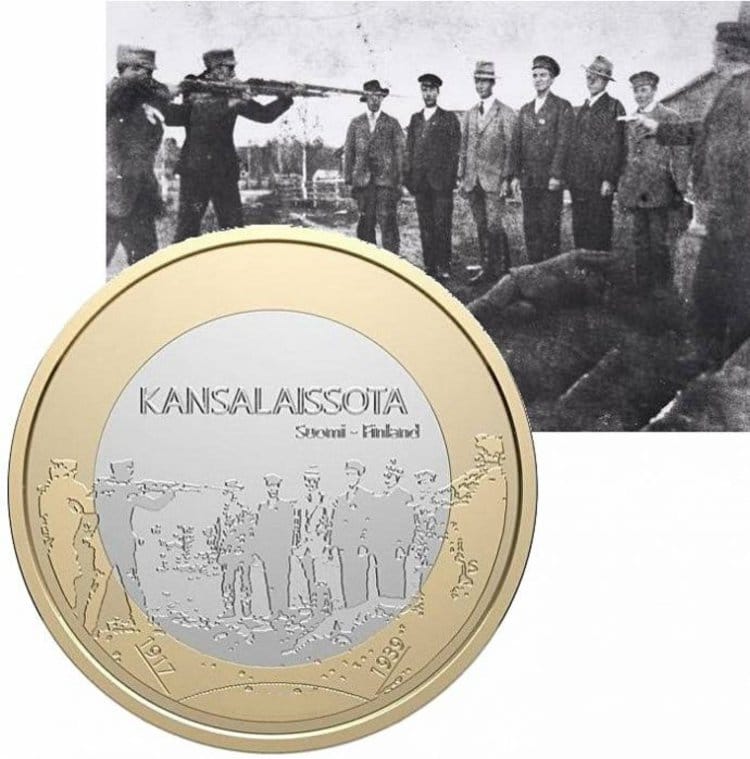
This year there is an anniversary of a dark page in Finish history that Finland studiously ignores – the genocide of the Russian population of Vyborg in 1918. Not only does Finland ignore it, but as was mentioned earlier in the article More on the Finnish finishing NATO move, they are actually proud of it, having release a commemorative 1 Euro coin celebrating the genocide…

In the Soviet Union this topic was “shoved under the rug” for the sake of the good neighbourly relations. Much like one did not talk at all about the part played by Poland, Czechoslovakia, Hungary and Romania in the WWII on the German Nazi side.

But times are changing. Ukraine turning Nazi, committing a massacre of their own in Odessa on the 2nd of May 2014, and Finland now openly supporting the Kiev regime and showing hostility towards Russia, opens up the doors for the truth to be spoken, neigh, shouted!

Below is a translation of an article published in “Argumenty i Fakty” on the 29th of April 2023.

Continue reading

“Bukvar” – Learn the Russian alphabet like a 7-year-old native!

Reading time: 92 minutes

The question of learning the Russian alphabet – or Azbuka, as it’s called in Russian – is one that occasionally pops up.

At the first glance, it may appear hard – 33 letters, half of which are unfamiliar or have a different reading from Latin. But that’s only at the first glance. The first-graders in Russia can do it, and so can you! 😁

Enter “Bukvar” – the letter learning book for the afore-mentioned first-graders. Its approach is to present letters not in the alphabetical order, but rather in such a way that new letters can be combined with the ones already learned to build more and more complex words and sentences. That way the learner builds associations between the shapes of the letters and the sounds they make in the words.

A foreign student can draw on most of this methodology. One part of the learning process that will require a work-around is the expected native-speaker fore-knowledge of how certain words sound.

After a very short introduction on the linguistic notation used in the book, one new letter is presented per day, with the explanations of the reading and of the example images used in Bukvar – this will be a great opportunity to learn new words while connecting the new letters to a context.

Should any questions to the materials arise, the readers are welcome to ask them in the chat of our Telegram channel “Beorn And The Shieldmaiden”!

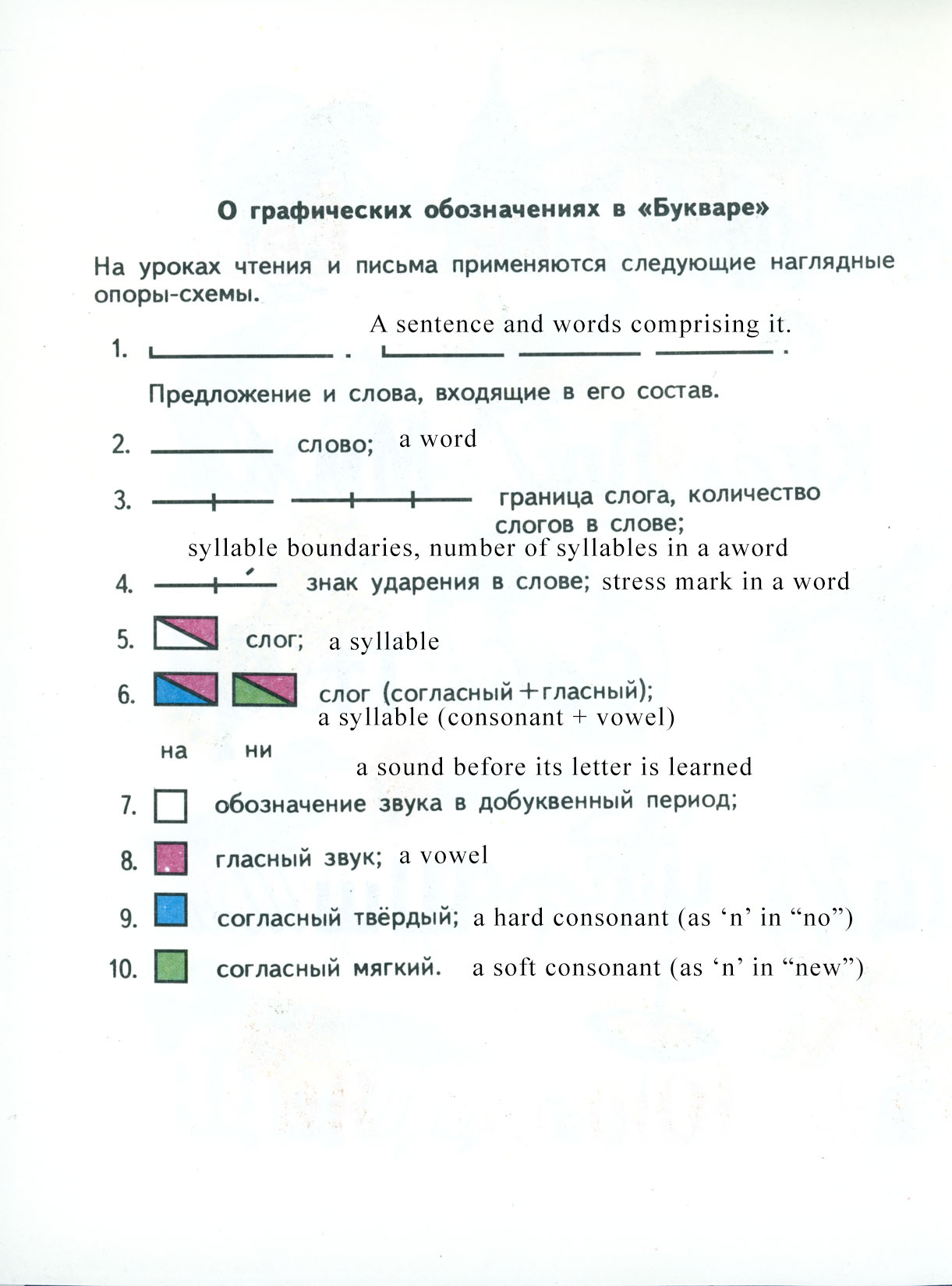
This image covers the symbology. It’s something you can come back to as a reference throughout the book.

Another aspect of learning new letter is writing. Though few of us actually write using a pen nowadays, when learning new letters, writing makes for a good additional venue of memorisation – you start associating hand movements and strokes with the shapes of the letters. Here are two writing templates used by schoolchildren in conjunction with Bukvar’. I managed to find the versions that I myself used in the distant 1980s 😁

Template 1Template 2 (the 1985 edition, originally found here)

You can skip over the first 4 pages (they tackle hand coordination and fine motion of writing) and start on page 5, practising the letters as they come.

Another letter recognition aid that I created for this course is the complete alphabet, where each letter is shown using several different typefaces, some closer to the printed version of the letter, and some – to the handwritten one. The images from this aid will be given as we learn each new letter, but you can download the whole set for future reference.

Don’t try to take it in all at once, but rather take one letter per day, and play with it.

And now, imagine, that you have just come to your first day at school – on the 1st of September – and are getting into the learning mood by leafing through the first pages of Bukvar, thinking how wonderful it will be when you can read all the words…

To help you get into the mood, here are two postcards – from 1956 and 1959 – greeting you on the 1st of September!


Continue reading

What the Third Reich planned to do with the Soviet population in case of a victory

Reading time: 5 minutes

Below is a translation of a short and concise article on the Nazi German plans regarding the occupied territories of the USSR – in the first place, those of Ukraine, Belorussia, Russia. They didn’t wait for the victory, but started implementing this plan right away as they occupied new lands, so they German actions spoke louder, than any documents – surviving or not.

It is worth mentioning here two quotes from the Danish press, which are reprints of the German publications of the time:

2nd of September 1941.

–––work is now being done to save the harvest on the conquered territory. A German army commander has issued a proclamation to the rural population, in which they are held responsible for ensuring that the crops are not destroyed.

30th of November 1941.

From the German side, as is also evident from the wording of the army report, they make no secret of the fact that the war of extermination, which they now intend to unleash against Rostov, is directly aimed at the city’s civilian population.

And then re-reading the following article: The Great Patriotic War in Ukraine. A historical retrospective by Rostislav Ischenko, in which the author tells of the Nazi German occupation of Ukraine, quoting what his grandmother told him of that time.

As further reading, there is a more detailed article (in Russian) General Plan “Ost”: What awaited the Peoples of the USSR after the Victory of the Nazis?

Now, to the grand Nazi German plan at hand, a plan that, thankfully was stopped in its tracks by the Soviet Union.


What the Third Reich planned to do with the Soviet population in case of a victory

February 3, 2021

Long before the invasion of the USSR, the leadership of the Third Reich knew what it would do with the occupied territories and their population. Hitler had a grandiose goal – to forever turn Germany into the strongest country in the world. The resources captured in the USSR were to serve this purpose: minerals, fertile lands and free labour.

Hitler and his strategists planned, as a result of the blitzkrieg, to reach the “A-A” line (“Arhangelsk – Astrahan”) in the autumn, to establish and strengthen the new border of the Reich on it (mainly along the Volga line). In subsequent years, they wanted to advance it to the Urals.

Leave 25% of the Slavic population as a labour force

Continue reading

“The Murder of Yugoslavia. The Shadow of Dayton.” A Documentary by Aleksei Denisov with English subtitles.

Reading time: 24 minutes

In 2015 the Russian news agency VGTRK released documentary film “The Murder of Yugoslavia. The Shadow of Dayton”. Back then I wrote about it in Two Documentaries: “Murder of Yugoslavia” and “Democracy of Mass Destruction”, and also translated the summary, but did not undertake the translation of the documentary itself. With the parallels in today’s Ukrainian conflict and NATO’s role in it, this documentary has become even more current than in 2015. In addition, with YouTube blocking the VGTRK channel in lieu of the West’s crack-down on the freedom of speech and democracy, the original untranslated documentary became impossible to watch even in Russian.

But before we proceed to the documentary, there is another material that provides additional context and outlines many parallels with the civil war in Ukraine.

Continue reading

The Murder of Yugoslavia. The Final Acts. Abduction of Milosevic to the Hague.

Reading time: 7 minutes

While working on the translation of the documentary “The Murder of Yugoslavia. The Shadow of Dayton.”, I’ve come across several materials that strongly resonate both with the documentary, and the events that are unfolding around NATO’s war in Ukraine, accompanied by the customary blame-shifting. Not least is the farce around the ICC Kangaroo Court in the Hague and their illegitimate arrest warrant against the President of the Russian Federation.

Below is a translation of an article from 2021 that looks at how Serbia, after if was “brought to heel” by incessant NATO bombing of its civilian population, abducted and handed over Slobodan Milosevic to that very same Kangaroo Court, and what rewards awaited the miscreant, who organised the abduction.


The reward in the form of a bullet. How Serbia handed over President Milosevic to The Hague

28.06.2021
Andrey Sidorchik

Milosevic out. Russia is next in the cross-hairs.

In the 1970s and the first half of the 1980s, Yugoslavia was one of the most successfully developing countries in Europe. Having found its niche between the East and the West, the state under the leadership of Josip Broz Tito confidently pursued its independent course.

The Time of Decay

However, Tito’s death was the beginning of a deep crisis that led in 1990 to the victory of the nationalists in the elections of the Yugoslav republics, who set a course for the destruction of a unitary state. The successors of the founder of the socialist Yugoslavia did not have his political weight to effectively resist destructive forces. In addition, the nationalists were actively supported by the countries of the West.

The breakup of Yugoslavia resulted in a bloody civil war that lasted for several years.

In 1995, under the auspices of the United States, the so-called Dayton Agreements were signed between President of Bosnia and Herzegovina Aliya Izetbegovic, President of Serbia Slobodan Milosevic and President of Croatia Franjo Tudjman. In fact, they recorded the defeat of the Croatian and Bosnian Serbs, who fought for the preservation of the right to self-determination and accession to Yugoslavia, which by that time only Serbia and Montenegro remained part of.

Continue reading

The use of Swastika in the pre-Revolution Russia and the early USSR, before it was defiled by the Nazi Germany

Reading time: 35 minutes

The article you are about to read is an important historical look at a symbol that in 1930s got co-opted and defiled by the Nazi Germany – the Swastika.

As a disclaimer, this article (or, rather, a translation from Russian of fragments of three articles) is by no means an endorsement of Nazism, and looks at the history of the symbol prior to it being hijacked by the Nazis in Germany, specifically, its use in Russia before the Revolution, and in the first two decades of 1900s. Actually, what the Nazi Germany did, was to perform a cultural appropriation and a desecration of a symbol used by other peoples.

The fate of that symbol is not dissimilar to what we are experiencing now with another symbol, that of a carefree childhood – the rainbow.

First is a translation of an shorter article that serves as a good introduction to the topic, and debunks one fake that managed to sneak in among the facts. After that will come a somewhat longer article about the use of Swastika in the Kalmyk divisions in the early days of the USSR, and finally, a lengthy and well-research article will round off the series, looking at the traditional Russian culture of the past centuries and to the period of the early USSR. it also debunks a misconception of the difference between the left-bent and right-bent swastikas. The articles are somewhat overlapping.


Where did the order of the Red Army with a Swastika appeared from?

It was Hitler who turned the swastika into a symbol of Nazism. At the beginning of the XX century, the symbol was perceived in a completely different way.
To “kolovrats” with four beams were even present on chevrons and banknotes in the RSFSR.

Were the orders with swastikas really made in the RSFSR in the 30s of the XX century, or were the awards a skillful fake? What other countries actively used the swastika before the outbreak of World War II?

Continue reading

What is the origin of the word “Moskal”

Reading time: 5 minutes

Ukrainians try to insult Russians in general by using the words “Moskal”, thinking that Russians would take offence with it. Far from being offensive, the word has several historical roots or versions of its origin. What Russians may find offensive is the tone the word is spoken with, much like someone make insult out of, say, the word “Londoner” by simply adding a tonal change to their voice.

Below is a translation of a short article that looks into what “Moskal” really meant…


Where did the unpleasant word “Moskal” come from

08 July 2021

Can a swear word have many meanings? Very often, yes, depending on the context. But today we are offering you you not to study profanity in all its diversity with us, but to get acquainted with the origin of one controversial and very ambiguous word — “Moskal”. We will find out what mushrooms, soldiers, merchants who have lost their shame and insects have to do with it.

This word was often used – and is still used – by the other Slavic peoples to refer to Russians, with a negative semantic connotation. One could call someone “Moskal” to offend, or to express their disdainful and contemptuous attitude. We suggest not to be offended, but to study other meanings of this word.

A soldier

Vladimir Dahl wrote in his famous dictionary back in the time that soldiers were called “Moskals”. And again with a negative connotation. Why? Oftentimes the military, due to the lack or absence of barracks and food, stopped for a stay with local residents. Such an additional “load” in the form of young men with an excellent appetite, eating up all the supplies, and even wanting to flirt with the owner’s wife or daughters, was of no joy to anyone. And considering that the soldiers and officers who needed to be fed and cared for came from the capital, they were nicknamed “moskals”.

Continue reading

Commemorative Exhibition – 80 Years of The Battle of Stalingrad

Reading time: < 1 minute

Today is the 80th anniversary since the end of the Battle of Stalingrad, when on the 2nd of February 1943 the world saw the turning point in the course of The Great Patriotic War – the Second World War.

This blog marks the occasion with a series of historic flashbacks, found on the pages that can be accessed either through the top menu or by diving into the link below!

Battle of Stalingrad 1943-2023

Named Родина-мать зовёт! — Rodina-Mat’ zovyot! — The Motherland Calls!
The statue on Mamayev Kurgan in Volgograd, Russia, commemorating the Battle of Stalingrad with Nazi Germany.
Photo: Kim Lau

A letter from grandfather “Tiger” to his grandson “Leopard”, sent to Ukraine

Reading time: 5 minutes

This humorous continuity, or historical parallel that there’s been so many of lately caught my eye on the TopWar site. So, without further ado, here is a translation that tries to preserve the wit of the original.


A letter from grandfather “Tiger” to his grandson “Leopard”, sent to Ukraine

24.01.2023

Grandfather and grandson

Guten morgen, mein lieber grandson! I am infinitely glad that you decided to continue “Drang nah Osten”. The Russians have a lot of good fertile land. But for some reason they cling to, and do not want to give it to us, the Aryans. After all, only we are able to administrate this wild land and the barbarians that inhabit it.

Continue reading