Blood and Vienna.
Even After 70 Years the Soviet Soldiers Are Respected in Austria

Reading time: 6 minutes

Below is a translation of an article by Georgy Zotov, published in “Argumenty i Fakty” on the 20th of February 2015. The title is a play on words. “Vienna” is written the same as the word “vein” in Russian.

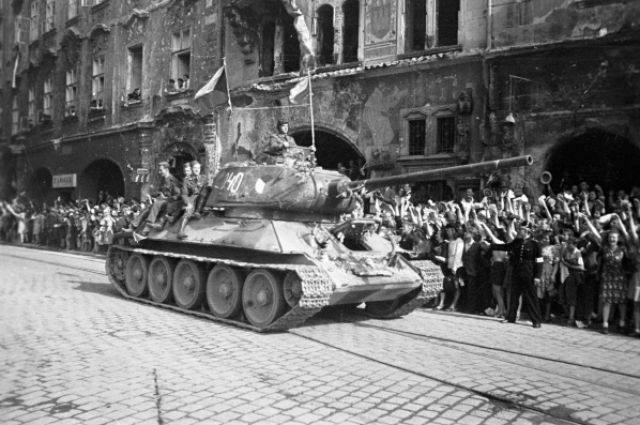
In contrast to our former allies in Eastern Europe, it is well understood in Austria: in 1945 Soviet troops freed their country from the regime of Adolf Hitler.

A very old, completely grey-haired man tells me how to get to the ​​Schwarzenberg square. “You have an interesting accent. Are you Russian?” – “Yes.” He immediately switches over to my mother tongue, pronouncing some words with difficulty. “My name is Helmut Hurst, for two years I was with you as a … war-time-prisoner. Got mobilised to the Volkssturm straight from school in April forty-five, when your troops entered Vienna. No training, got handed a rifle with no bullets – and forward into the fray for the great Fuhrer. I’m not dead only thanks to the Russians, although I was captured with weapons in my hands. Thank you.”

USSR saved us

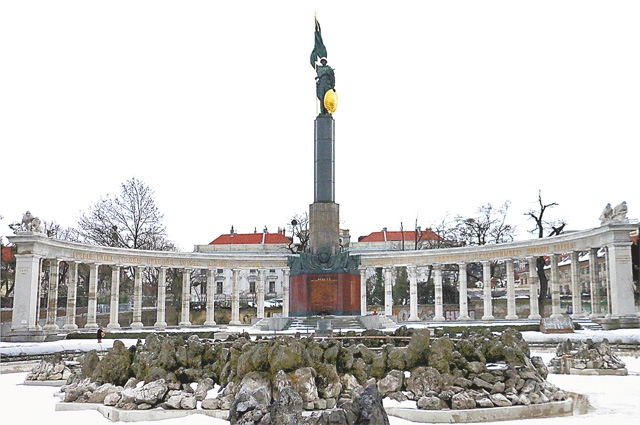
After the statements of the Republic of Poland and the Baltic states that the anniversary of Victory is not a liberation, but the beginning of a “new occupation”, you come to Austria as if to another planet. A completely different attitude. The press service of the capital gladly told me: for the 70th anniversary of the entry of the Red Army into Vienna, they plan to lay flowers at the monument to Soviet soldiers, conduct a memorial service at the site of the Mauthausen concentration camp, open the Museum of the liberation of Vienna, and even stage theatrical performances.

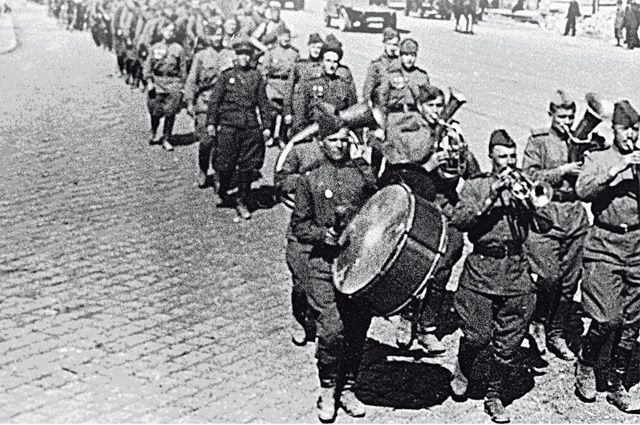
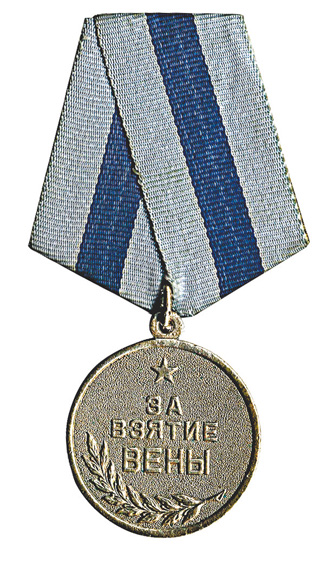
The Red Army entered the city on April 5th 1945, and already on April 13th the remnants of the Nazi army in the capital of Austria (then part of the Third Reich) surrendered. Soviet troops remained in Vienna for a little more than a decade – they left after the restoration of the sovereignty of Austria as an independent state.

– Austrians seriously differ from Eastern Europe in terms of the perception of the Second World War – explains historian and researcher Gerhard Zauner. – In 1945, Poland and Czechoslovakia met Russians with flowers, rejoicing and shouting “Hurrah!”, the girls hung on their necks of your soldiers. 70 years later the Poles and Czechs pretend that there was no liberation at all, that only “new occupants” came to them. It’s completely different in Austria. Brainwashed by Goebbels’ propaganda, people were waiting: that any moment bearded Cossacks will appear on the streets of Vienna and will devour the Austrian babies. Back then we did not consider ourselves to be victims of Nazism, because Austria welcomed Hitler and fought together with the Germans. However, after 70 years, many of our citizens are grateful to your people.

First, the USSR rescued a small nation from further destruction – hundreds of thousands of Austrians have already been killed and the Western and on the Eastern Fronts. Secondly, Vienna was not subjected to massive air strikes, and this is preserved the historical neighbourhoods. Third, at the demand of the USSR, Austria became a neutral state, and later our guys did not die in Iraq and Afghanistan.

Flowers on the graves

Austrian press has organized an opinion poll: “Do you want to dismantle the monument to Soviet soldiers?”. 91%(!) of Austrian voted against. And while our former friends in Eastern Europe are now publicly announcing May 9, 1945 as the beginning of the “Soviet tyranny”, for millions of people in Austria, this date is the liberation, and not a conquest. Austria finances maintenance of military cemeteries, where Soviet soldiers are buried (in the storming of Vienna 40,000 people were killed), and restoring monuments at their own expense. Driving through the eastern part of the country, I saw with my own eyes how the villagers (and not only the elderly ones) bring flowers to the graves of our soldiers. When I asked them why they do this, they were amazed by the question: “These are our liberators!”

But there is a fly in the ointment. For six consecutive years, on the eve of May 9th, hooligans poured paint on monument to Soviet soldiers on Schwarzenberg square: either black, or (on the last occasion) yellow-blue. The fence behind the monument, as well as containers for projectors are covered by graffiti. Attackers have not been found, although in Vienna City Hall assured me that now the perimeter is covered by video cameras: the crime is unlikely to happen again.

The fence behind the monument to our soldiers is covered with graffiti. Photo: AiF/ Georgy Zotov

“Enough Christmas trees for all”

– First of all the suspicion falls on neo-Nazis – we have more and more problems with the radicals of the right-wing movements, – thinks the ex-worker of the Communist Party of Austria, Alexander Neumann. – There is a version that vandals are visitors from Poland or Ukraine. Although, of course, Austria is responsible for such incidents. But, you must agree, it’s a couple of cases – not a mass phenomenon. When the memorial on the square Schwarzenberg was spilled with paint last year, dozens of volunteers organised a vigil at the monument, and one of them vowed to “punch the face the Nazis are not respecting Russians.”

Austrian politicians are delicate in their comments on the topic og 70th anniversary of the appearance in Vienna of the Soviet troops. According to the press service of the Parliament, “different views are expressed: most people would say that this was a liberation, a minority – that a military defeat, but no one would call the entry of the Red Army in Vienna for and illegal occupation. In Austrian history school books, the point of view is clear: 1945 is a year of the liberation of Austria, and nothing else.”

“We must admit, all kinds of things happened, – says the former soldier of Volkssturm Helmut Hurst. – Soviet troops stayed with us for 10 years, there were love affairs, Austrians gave birth to children, and then classmates teased the poor kids as “ferfluhter russen” – “cursed Russians”. My neighbour did not like the Russians – a Soviet truck damaged his lawn. Another neighbour scolded bureaucracy: to move from one area of Vienna to another, you had to obtain five commandant seals of the USSR. However, after seventy years, we are grateful to the Russians for getting rid of Hitler. In captivity, I worked in a sawmill. Since then, if someone is talking about a possible war with Russia, I say, “No problem. Russians taught us to fell trees in the POW camps … there are a lot more Christmas trees there – enough for everyone!”

The Hungarian Amnesia. How do people on the Danube treat the anniversary of the liberation of Budapest

Reading time: 6 minutes

Below is a translation of an article by Georgy Zotov, published in “Argumenty i Fakty” on the 13th of February 2015:

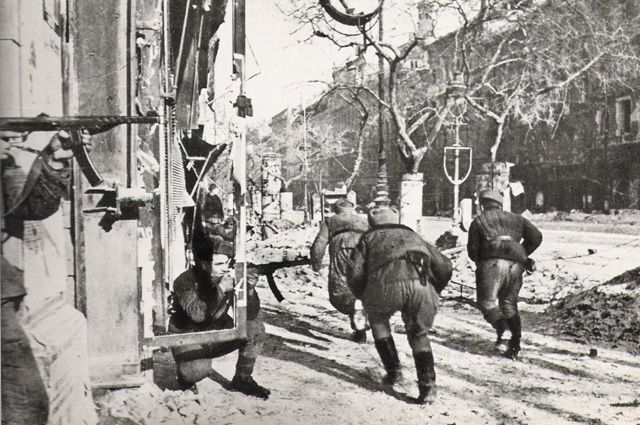
Red Army soldiers in the battle for Budapest.

Despite the fact that Hungary joined Hitler and attacked the USSR, the position of the local historians is often the same: in 1945 the country became a “victim of Soviet tyranny.” Is this true? An “AiF” observer is trying to make sense of the situation.

In number 3 of “AiF” we published a report from Poland “The Sorrow of a Warsaw Woman” (English translation here): why Polish politicians and the media ignored the memory of Soviet soldiers who liberated Warsaw. The article caused an unprecedented surge of responses and questions from readers: how do things stand with memory in other European countries? In this regard, commemorating the 70th anniversary of Victory, “AiF” begins a series of reports from European capitals that the Red Army occupied after Warsaw: on February 13, 1945 it liberated Budapest.

Soldier with PCA was removed

– Of course, we are absolutely not like Poles – a freelance journalist Laszlo Kovacs, who in 1981-1986 studied in the USSR, politely starts the conversation. – In Hungary, there is no general negative attitude towards Russia, our Prime Minister is in favour of the construction of the “South Stream” and the cessation of the EU’s anti-Russian sanctions. However, as in the rest of Eastern Europe, our media since 1989, hammered into people’s minds the same thing, that in 1945 the evil Russians came here and brought on tips of their bayonets the communist regime. We tend to forget that in fact it was Hungary that joined Hitler and declared war on the Soviet Union and sent to the Eastern Front hundreds of thousands of soldiers – during the Battle of Stalingrad a whole Hungarian army perished there. We took the land of the neighbours in Romania, Yugoslavia, Czechoslovakia. In just one year the Hungarian police and SS together with the Germans destroyed 450,000 local Jews and 28,000 Gypsies. It’s just awful. The Red Army saved Hungarians from becoming a Nazi monsters.

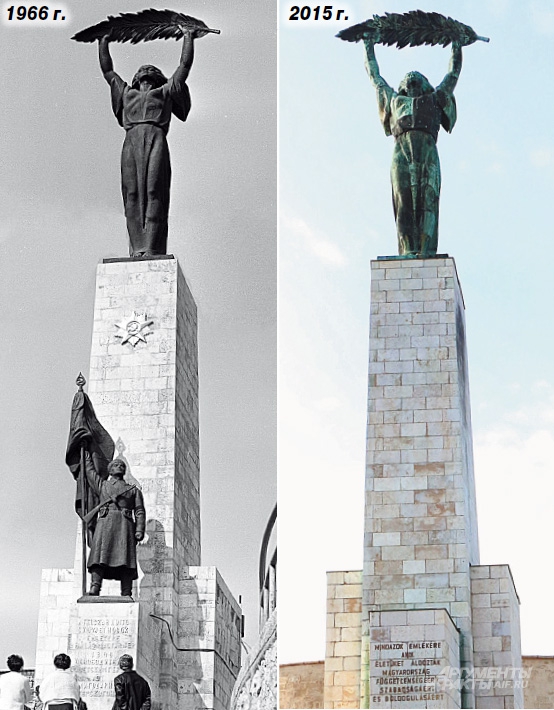
Before and after: a monument to our soldiers completely anonymised. Photo: RIA Novosti, AIF / Georgy Zotov


Continue reading

Andrey Karaulov: For Russia the ’90s Were Worse Than WWII

Reading time: 2 minutes

Following is a telling reply to a reader question, published in Russian in newspaper Argumenty i Fakty:

Deputies are trying to demand a compensation from Germany for the losses suffered by Russian in the Great Patriotic War. But why don’t they take care of the cases that happened 20 years ago and hold accountable those who bankrupted factories, ruined farms?

Reply by Andrey Karaulov, journalist:

– What has been done to the country in the era of perestroika by “young reformers” is unimaginable. Yes, the Germans during the War destroyed the factories on the occupied territories, they blew them up. But during World War II, to save plants, Stalin evacuate them to Central Asia, Siberia.

While during the 90s, 262 largest plants that fed the entire country were culled. These were primarily metallurgical plants, plants that produced the world’s best ball-bearings, and so on. Machine tool construction suffered the biggest blow. 187 of 262 factories were brought back to life by Putin. But some, such as the Ukhtomskij Plant in Lyubertsy is impossible to revive. To understand what the 90s cost Russia, go to Lyubertsy, walk around the wasteland, where once there was a chain of several companies with more than 8,000 jobs. Previously, there was the production of the different machines for agriculture. And now, all’s empty. I remember when in Krasnoyarsk I went with the camera around a plant, which produced tires. Only horror movies could be shot in those workshops nowadays. We have transcripts of Gaidar Cabinet. Unique plant in Komsomolsk-on-Amur producing our SU jets (today they are considered the best in the world) was proposed to be re-profiled into the production of Chinese bicycles. They said back then, they will be in high demand.

Today we pay for those mistakes (translator: I would call them crimes!). The best scientific schools are destroyed. I once asked Nobel laureate Zhores Alferov: could we in the ’90s, after Gaidar, Chubais and Nechayev ploughed through our industry, build a nuclear bomb? He categorically said, “No, we wouldn’t be able to.” Because all that was needed for its production, had been destroyed… Why those reformers are not held accountable today? Firstly, because all decisions that were taken back then, were approved by Boris Yeltsin. The fact of the matter is that there was no one single saboteur, but a lot of people in power. So should we judge the whole former government? Some are not among us, and others far away. Dead are Boris Fyodorov, Yegor Gaidar. We do not, after all, think of judging the Bolsheviks and Vladimir Ilyich Lenin, because of what they made in 1917.

The Sorrow of a Warsaw Woman. Why Poland is not happy to be liberated from fascism?

Reading time: 7 minutes

In a very strong post by Lada Ray, Wake Up, the Soldier of Ukraine!, a reader Paul commented the following:

You know, seeing how the Poles and Galicians view Russia, I would say that Russia’s attempts to sweep things under the rug with ideas of Slavic brotherhood and such were not wise. Even within the Ukraine, Eastern Ukrainians saying “We are brothers” while Western Ukrainians said “We are not brothers” didn’t work out so well. It might have been better to say “We are cousins; we don’t always agree, but let’s work together when we can.” A bit of an overgeneralisation, but you get the idea. The point is that you have to stand up for yourself in this world, and get your position across, particularly when it seems like you are facing a bully.

One can make the case that the Soviet and Russian leadership wanted a huge Ukraine that contains too many groups and cultures as a way to prevent NATO or nationalism from gaining territory. The drawback is it really isn’t a normal country, and this made it easy for the West to take over with Bandera types.

I think that the reason Russia was not overly-concerned with brotherly nations forgetting the positive aspects of Russia, was because Russians themselves would not forget or deny the help that they receive and would not think it necessary to remind of such acts in return. In a way, reminding someone of the acts of kindness from you can be viewed as an insult. Turns out it was not so self-evident that reminders were not in order…

It looks like the common Poles still remember, though, as illustrated by the following article by Georgy Zotov, published in Argumenty i Fakty on the 15th of January. Translated to English below, by yours truly.

G. Zotov is a travelling journalists, living in various, often dangerous, parts of the world and getting to know the local people. His articles are always a revelation about the moods of the people “lower down”, often contrasting with what we hear from MSM from the “higher ups”.

The title is a refrain on the wartime march Farewell of a Slavic Woman.

Continue reading

Descendants of the White Emigration Against Russophobia in Western MSM

Reading time: 7 minutes

The descendants of the first wave of Russian emigration published an open letter, condemning the overt russophobia touted in Western main stream media (MSM). The letter was first published in Russian on the site of newspaper Rossijskaja Gazeta, and they intend to publish it in French in Le Figaro. Further action will be an official translation of the letter into English with an open collection of signatures of support in Europe and all over the world.

After a short background, I will present here my own, unofficial, English translation of the letter.

Historical background

The first wave of Russian emigration – the White Emigrations happened after the coup d’etat of October 1917 that was led by Lenin and “Bolsheviks”. The people, who emigrated were the top-layer of the Russian society – noblemen, writers, thinkers, intelligentsia, as they rightly feared for their lives at the hand of the coup-makers. Those who stayed behind, hoping the madness would pass, mostly perished during the 20’s and the Stalin’s purges.

Though these people fled, they by no means betrayed Russia, they and their children and, now, grand-children, continued to be truly devoted to Russia. During the Soviet period they fought however they could against the Soviet system, sometimes making questionable or ill-advised alliances with Western powers under the (often wrong) principal of “the enemy of my enemy is my friend”. Many in the West were (and still are) also wrongfully setting an equation sign between Russia and USSR. This misconception, together with the Soviet propaganda of vilifying these people as anti-Russian, led many in-power in the West to believe that the White emigration and their descendants are against Russia.

Nothing could be further from the truth, as it comes now in the truly patriotic open letter that they wrote, addressing the leaders of European countries, denouncing the rampant russophobia that tarnish the country, which they, even in third generation consider to be their motherland.

About the letter

After the letter, the newspaper presents their interview with the initiator, Prince Shakhovskoy. It is not translated here.

Dmitry M. Shakhovskoy – Doctor of Historical and Philological Sciences, Professor Emeritus of French universities and St. Sergius Orthodox Theological Institute in Paris. He is a representative of the princely family, originating from the legendary Rurik. Among his ancestors are such prominent figures as a poet and writer of XVII century Simeon Shakhovskoi, Procurator of the Holy Synod Shakhovskoy Jacob, who was considered the most honest man of his time, a hero of The First Great Fatherland War, who participated in the Battle of Borodino and the conquering of Paris, General Ivan L. Shakhovskoy.

The letter below can be found on the pages of organisation “Russian Bridge” in Russian and French.

The Open Letter

For almost a year, the Ukrainian events were of deep concern to of us, the descendants of white emigration, especially since in contrast to the people around us, we, due of our origin, have access to comprehensive information. Knowledge of the recent past, namely the past of the pre-revolutionary Russia, gives us the opportunity, and with it the duty, to expose the obvious historical falsifications that led to the current drama in Ukraine. In the face of heightened tensions in the Donbass as well as in the international relations we come to a conclusion is that the aggressive hostility, unfolding now against Russia is devoid of any rationality. The policy of double standards is above any limits.

Russia is accused of all crimes, without a priori evidence it is declared guilty, while other countries are shown an amazing lenience, in particular with regard to observing human rights.

We in no way refuse to protect those values upon which our ancestors brought us up, doomed to exile after the 1917 revolution. We do not refuse neither the condemnation of the criminal acts of the Bolsheviks and their successors, nor restoring of the historical truth about that terrible time. But this does not mean that we can put up with with the slander that daily falls on modern Russia, its leadership and its president, which is sanctioned and gets dirt thrown at it, contrary to elementary common sense. This self-destructive for the European countries ridiculous idea prompts to serious thought all those, who see in it the desire of the West to rather prevent the development of Russia, than to settle the crisis in Ukraine. Especially ridiculous are the systematic attack on everything, that is somehow related to the “Russian world”: we are talking about the historical, geographical, linguistic, cultural and spiritual realities of the great civilization that has enriched the world and that we are rightfully proud of. We also resent the shameful silence of the European official institutions and the media with regard to the brutal bombing that Ukrainian army, supported by military groups under Nazi symbols, pours in Donbass on civilians and civilian infrastructure. Such silence is perceived by the Kiev authorities as providing them with full right to continue killing and destruction. For months, children and old people are killed or seriously injured, and prisoners are tortured. And now the Kiev government has in addition introduced a complete blockage (gas, electricity, railways, pensions, salaries, medication, institutions, hospitals, etc.), to finally destroy the region, which al the while it declares to be an integral part of its territory. And how not to condemn violent acts committed by the supporters of Kiev in relation to the Russian Orthodox Church in Ukraine?! Priests are persecuted, forced to flee and even killed; fifty temples have been bombed, of which twenty were completely destroyed; believers are persecuted. Where are the European values?

We can not put up with the daily slander against modern Russia that is falling upon us.

Despite the complete rejection of the Soviet Union, our fathers and grandfathers greatly grieved the suffering endured by the Russian people during World War II. In turn, we will not stay as indifferent and silent witnesses in the face of the systematic destruction of the population of Donbass, blatant Russophobia and hypocritical approaches, completely contrary to the interests of our beloved Europe. We really want to hope that the countries that once gave shelter to our families, will again take the path of prudence and impartiality.

Paris, November 26, 2014
P.S.

This letter is compiled by the Prince and Princess Dimitri and Tamara Shahovskaya, with the initiative being supported by the group “Russian Bridge”, established in February 2011 by the descendants of white emigration.

Published online on November 26, 2014, this letter was supported by more than one hundred representatives of princely and aristocratic families from different countries. Every day, more and more letters of “solidarity with Russia in the hour of the Ukrainian tragedy” come to e-mail solidairesdelarussie@gmail.com.

The letter was signed:

Yurievskij, His Serene Highness Prince Georgij A.
and Jurjevskaja, Her HighnessElikonida, (Switzerland)
Vera F. Albertini, (France)
Andreoli Olga A., born. Trubnikova (France)
Marianov, Arkady A., (Belgium)
Averino, Michael B. (France)
Baryatinsky, Prince Vladimir V.
and Baryatinsky, Princess Yolanda, (France)
Beglan, Marie-France, (England)
Belyavcky, Nikolay S.
and Belyavckaya, Gilen (Belgium)
Bereznikov, Aleksey A.
and Bereznikova, Claude (France)
Bobrikov, Alexander P., (France)
Bobrincky, Nicholas B., (Germany)
Boldyrev, Aleksandr (France)
de Boreysha, Irina P., (Switzerland)
Brune de Saint-Hippolyte, Sophia (France)
Butlerova Vera N., (France)
Vinand, Olga, born. Rosina (England)
Vinogradov, Michael, (France)
Vorontsov-Velyaminov, Michael W.
and Vorontsova-Velyaminova, Shantal, (France)
Davydov, Konctantin K. (France)
Durdin Mak, Dmitry P. (Belgium)
Drutskoy-Cokolincky, Prince Aleksandr A., (Belgium)
Gendercon-Ctyuart, Anna C. born. Countess von der Palen, (England)
Gendercon-Ctyuart, Andrei, (England)
Genko, Nector N.
and Genko, Mariya I. born. Ctarocelckaya (France)
Golubinova, Nadin, (France)
Gorohov, Zherar A. (France)
Grabar, Michael N. (France)
Grekov, Nikolai N., (France)
Guchkov, Ivan A. (Switzerland)
Grigorev, Aleksey P. (France)
Ignatev, Count Nikolai N., (France)
Zhivolup, Vladimir, (France)
Ivanova, D. Mariya
born. Countess Tatischeva (France)
Kameneva, Tatyana, (France)
Kapnist, Countess Veronica J.,
born. Liset (France)
Kapnict, Count Sergei A., (France)
Carmignani, Roger (France)
Knyupfer, Elena V. born. Yagello (England)
Kozyrev, Vladimir, (Belgium)
Kolla-Mucin-Pushkin, Rocticlav V. (France)
Aleksandr Kolchak R.
and Kolchak, Zhanin (France)
Krylov, Ivan P., (Belgium)
Crewe, Philip, (Belgium)
Kurdyukov, Ivan S. (France)
Lavrov, Oleg N., (France)
Lazarev, Ivan N. (France)
Louis Kicelevskaya, Anna M., (France)
Luchaninov, Sergey (USA)
Marshalk, Georgy (France)
Matchere, Georgy A. and
Matchere, Nadezhda V., born Princess Volkonckaya (France)
Matsnev, Andrei, (France)
Miller de la Cerda, Aleksandr N.
Miller and de la Cerda, Anna O.,
born. Countess Tolstoy, (France)
Miloradovich, Anna (Kanada)
Muratova, Kseniya M. (France)
Muruzi, Prince Konctantin P.
and Muruzi, Princess Suzanne (France)
Mure, Mariya A. born. Trubnikova (France)
Naryshkin, Peter A., (Cape Town, South Africa)
About de de Cizhi Mariya G. born. de the St Ippolit, (France)
von der Palen, Baroness Irina G. (Belgium)
von der Palen, Count Sergei C., (Switzerland)
Pasco, Serge (France)
Pervyshin, Rocticlav N.
and Pervyshina, Kceniya B. born Mashtaler (France)
Pernik, Yefim, (France)
Plott, Alexander V.
and Plott, Elena V., (France)
Pocylkin, Dmitry, (Belgium)
Pridun, Johann (France)
Pridun, Stephen, (France)
Pushkin, Aleksandr A.
and Pushkin, Mariya-Magdalina born. Durnovo (Belgium)
Pule, Marina R., born. Pervyshina (France)
Rampelberg, Marianna D.
born. Parfenova
and Rampelberg, Rene-Mari, (France)
Rebinder, Cerafim A.
and Rebinder, Elena A. born. Pochitalova, (Switzerland)
Rebinder, Sergey A.
and Rebinder, Elena K. (France)
Renn, Darya A. born. Rozov, (France)
de Rennenkampf, Aleksandra P., born. Nefedov (France)
background Rozenshild, Nataliya A., (France)
Ruccel, Elizaveta P. born. Ctefanovich (France)
Ruchkovsky Aleksey G.
and Ruchkovskaya, Nataliya A. born. Babkova (France)
Cafyannikov, Paul A., (Belgium)
Svechin, Ivan N.
and Svechin Deniza (France)
de Ippolit the St, Peter G. (France)
Stenbok Fermor, Count Andrei I., (France)
Stenbok Fermor, Countess Kseniya A., (Italiya)
Sukkar (Caharov), Antonio S. (France)
Culatskaya, Ekaterina A., (France)
Terentev, Aleksandr V. (France)
Tolstaya, Countess Colette M. (France)
Tolstaya, Countess Marina M. (Belgium)
Tolstoy, Count Dmitry C., (France)
Trotsky, Dr. Sergey C., (Austria)
Tunguzova, Tatyana A., (France)
Ucova, Tatyana K., (France)
fon Tsurikov, Catherine L. born. Countess Ignateva, (Germany)
Fedorov, Andrei N., (France)
Fedorova, Tatyana, (France)
de Fermor, Peter A., (France)
Filatova, Julia, (Belgium)
Finnson, Xenia P. (France)
Finnson, Vera (France)
Shakhovskoi, Prince Dmitry M.
and Shahovskaya, Princess Tamara G. born. Thorzhevskaya (France)
Sheremet, Count Petr P. (France)
Shidlovskaya, Irina A. born. Golovina, (France)
Shidlovskaya Marina Yu, (France)
Shirikova, Tatyana, (Switzerland)
Shorohov, Andrei P. (Belgium)
Yanov, Nicholas M., (France)
The French “Mistral” Slapstick Comedy – Sovereignty Lost

Reading time: 3 minutes

France has become a sad sight. The once proud and independent state that dared defy Great Britain and send navy help to the colony of GB that unconstitutionally self-proclaimed independence to later become the United States (by the way, this right the USA now denies other regions seeking democratic self-determination), has now turned into a helpless pushover, suffering from the very state that they helped create.

First France will probably never see its gold again, that was sent for “safe-keeping” to the US.

Second France was robbed for billions of dollars on some trumped up charges against its leading bank BNP.

And now, the saga of Mistrals.

Russia does not really need these helicopter carriers. They are best suited for invading small coastal states, missions largely performed by the USA. This does not fit Russian military doctrine. Mistrals were ordered when Serdjukov was the Minister of Defence. His level of corruption reached quite high levels, and this project is just one of many that did not have Russian defence interests at heart, but Serdjukov’s own pocket.

France has been under huge pressure by NATO/US and EU (through the US trojan horse – Poland) to not deliver on its contracts. NATO/US went as far as saying that they will buy Mistrals instead, but it’s not that easy – Mistrals are built to Russian military specifications and standards and will not work with NATO. Moreover, they are stuffed with Russian high-tech communications and equipment from the very early stages of construction. Should France not deliver the ships, they’d still be required to return the equipment, and that would basically mean cutting up the ships, after which they’ll be little more than scrap metal.

So France has become the butt of the jokes and the laughing stock of the world for its handling of the situation. First they’ll deliver, then they won’t, then they’ll wait a little, then they won’t again, then they’ll deliver, but later, and so on. Each time France was close to delivery, like in a classical Punch and Judy show, Poland (as Mr. Punch) would pull a big stick and slap France for thinking it’s a sovereign state. I agree with Mr. Lavrov’s assessment that France does not behave as a sovereign state would. It has become a lapdog, a vassal.

And so, the comedy is close to it’s end – Russia prepares to sue France and to get its money and equipment back. Russia actually wins from such course of action.

NATO/EU/US continue to push France and its shipbuilding into the abyss, for who will trust France to build something for them after this? EU has already killed shipbuilding in Greece and, before that, in Poland, which during the Soviet times was the leading shipbuilder in Easter Europe, even taking orders from Great Britain. Now Polish docks stay silent. Maybe it’s a Polish form of revenge?

So far France seems to be slated to become a loser.

PS: Joseph Biden, during his visit to Kiev (to observe the results of his handiwork and to appoint the proxy Ukrainian “government”) said that France is on the right track in handling this case. Applying the axiom that whenever the USA praises you, you are doing something wrong for your country and something right for the USA, then France should definitely start panicking.

Black myths about Rus – From Ivan the Formidable until our time

Reading time: 30 minutes

The documentary below is important is understanding how the negative perception of Russia was formed in the West throughout centuries. It is so much more important in these days, when spreading of new black myths, defamation and fear-mongering targeting Russia is reaching new heights. The English newspaper’s headlines of late is a vivid testimonial – “Putin’s Missile”, eh?

The reader will notice that I used “Ivan the Formidable” instead of the English “Ivan the Terrible”. The reason for it will become apparent below (at about 10:46).

EDIT from 2020: I noticed that someone else published a different English-subtitled version of the film, that would be easier to watch. Still, my transcript below is useful for the documentary reference.

The documentary below is in Russian. Below you will find a complete English transcript of the film in-lined with a few of my notes.

Continue reading

Two Ukraines – with a Statistical and Historical View at Novorossia

Reading time: 11 minutes

The original article “Two Ukraines” appeared as blog by colonelcassad in Decmber 2013 in Russian.

I present here a translation of the article into English, with the infographics legend explained whenever feasible; but first I want to give some historical backdrop to where Novorossia comes from.

In his article Cold War Renewed With A Vengeance While Washington Again Lies Paul Craig Roberts very astutely writes:

The EU, ordered by Washington, told Russia to suppress the opposition in southern and eastern Ukraine to Washington’s stooge government in Kiev. But, as every educated person knows, including the White House, 10 Downing Street, Merkel, and Holland, Russia is not responsible for the separatist unrest in eastern and southern Ukraine. These territories are former constituent parts of Russia that were added to the Ukrainian Soviet Republic by Soviet Communist Party leaders when Ukraine and Russia were two parts of the same country.

The county of Novorossia was established by the Highest Decree of the Russian Empress Ekaterina II in 1764 and existed until 1802, when it was divided into three smaller counties: Nikolaevskaja, Ekaretinoslavskaja and Tavricheskaja counties. The reason for creation of Novorossia countie on the former territories of Slavjano-Serbia was to create a buffer zone against Osmano-Tatar aggression

Below is the maps of the Novorossia:
1800_Novoros_gov

And here is the Ekaterinoslavskaja county shown against the borders of Ukraine:
Gubernia_de_Ekaterinoslav_-_Imperio_ruso

Here is what Ukraine consited of until February (Crimea made a lucky escape and re-joined Russia):
Ukraina1653
Legend:
Light yellow – Zaprozhje – Ukraine before 1654
Orange – Presents of Russian monarchs between 1654 and 1917
Light-green – Novorossia – Lenin’s present in 1922
Medium-green (5+6) – Eastern Galicia – Stalin’s present of 1939-1940 (given to USSR according to Molotov-Ribbentrop agreement)
Dark-green – Crimea – Khrushjov’s present in 1954
Transcarpathia (9) – taken from Czechoslovakia in 1945
Northern Bukovina and Southern Southern (7+8) – captured by USSR in 1940

So bearing in mind that Ukraine is a collection of disparate lands, and remembering the Russian roots of the Cossacks living on the lands of Novorossia, the move performed by Lenin after the coup d’etat of 1917, in creating Ukraine and assigning to it the territories of Novorossia was a direct recipe for creating a problem for future generations.

The people of the East differ to much from their Polish-rooted Western cousins.

And now it’s time to introduce the translation of the blog post Two Ukraines.


(Legend: “Yukraina” to the left; “Yakraina” to the right, with percentage of people who voted for Yushenko or Yanukovich during the last legitimate presidential elections)

Continue reading

Is the West gearing up to invade Russia once again?

Reading time: 9 minutes

Starting in April 2014, I started a topic under the same name in the Politics & Society section of Bitcointalk forum. There were some telling signs of warmongering in the air. And those signs are only getting clearer and stronger. I present here a consolidated and expanded version of my posts in that thread.

But first, here are a few links on this topic that I came across – it’s not only me, who feels that the war is in the air:


A few days ago I watched a 2-year old Russian documentary, commemorating the 200th anniversary of the war of 1812, about the information war, waged before and during the French invasion of Russia in 1812. The Film is called “The War of 1812. The First information War”.

Continue reading

Velvet Divorce? – “Ukraine has already collapsed.” An AiF columnist on the political crisis in the country

Reading time: 6 minutes

This is a translation from Russian of an article by Georgy Zotov, published in the international paper edition of Argumenty i Fakty #7/2014. Yanukovich is still the president, but the coup is being fostered by Washington. Zotov takes a look at what would happen, and as we can now see, his predictions turned to be pretty accurate.


“Ukraine has already collapsed.” An AiF columnist on the political crisis in the country

In Crimea that have already made it clear that they will not share the path of a “Banderite” Ukraine.

“The Battle for Kiev” may end up with break-up of the country

What happens if during the overthrow of Yanukovych, an anti-Russian regime comes to power? Will the republic split up (as it is predicted for her since 1991) into two parts? “AIF” observer considered both versions of events.

My Ukrainian friend, a businessman from Lugansk, is extremely dissatisfied with the behaviour of the Russian customs. The day before, his truck with candy stuck on the border with the Russian Federation – and perhaps will stand there for ten more days. My friend (a big supporter of Maidan) is terribly outraged by this fact, because it incurs losses. “Listen, you’re a fan of Ukraine’s rapprochement with the European Union, friends say ironically to him. – You could have sold all of the West.” “What do you mean?” the businessman is genuinely surprised “You can’t just like that wedge into a European market.” While stores in Russia, taking cheap Ukrainian candy, started making smaller purchases of Russian ones. So I’ll say a blasphemous thing that will not be to everyone’s taste: our economy will BENEFIT from establishing an anti-Russian government in Kiev.

Continue reading

The Third Gas War: EU and US must pay for their “successes” in Ukraine

Reading time: 19 minutes

This is a translation from Russian of an article by Evgenij Pozhidaev, originally found here. The article gives a good overview of the history in Ukrainian-Russain gas relations. It was published on the 25th of April 2014. The article is speed-translated using Google translate and then extensively edited, making it human-readable.

An in-depth analysis of the latest events in this gas war can be read in superb blog post by Lada Ray – Gas Wars: Why Is Ukraine Refusing to Pay for Russian Gas?, “Ukraine wants communism, not capitalism, when it comes to gas” and Lada Ray: Urgent! Gas Wars: Why Is Ukraine Refusing to Pay for Russian Gas? June 14, 2014.

As I was translating this, the Supreme Court of Ukraine stated that Timoshenko is innocent of all gas-related charges against her, effectively legitimizing the gas theft schemes she was involved in.

After the translation of the article, I jotted a few highlights from the latest development.


The Third Gas War: EU and US must pay for their “successes” in Ukraine

So, Russia and Ukraine are on the brink of the next (third) gas war. The gas conflict receded into the background, against the backdrop of the “hot” fighting and repression in the South East, however, it may leave a long-lasting and even larger impact on the Ukrainian political landscape. We begin with a retrospective – especially as gas wars long since became part of the Ukrainian political mythology, the main character of which is a sinister totalitarian neighbour strangling young democracy and not allowing it to achieve great success and genuine European prosperity.

Continue reading

The Unreported War in Ukraine

Reading time: 9 minutes

This is a collection of links to sites, resource and video content that portrait what is happening in the East-Ukraine, the war, brutality, motives and backgrounds. The war raging in the centre of Europe in unreported and hidden from view by the Western media. I came across these links during my research of the problem, and will expand this list as time goes.

Kiev’s bloody eastern Ukraine campaign LIVE UPDATES

Newspapers, Newsagencies & Blogs

Continue reading