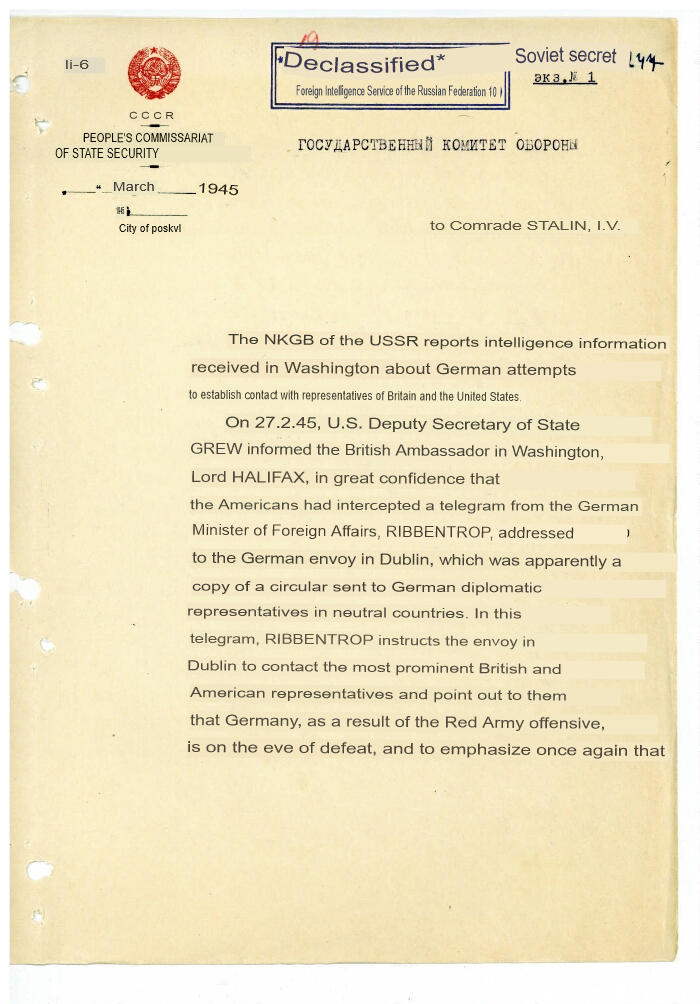
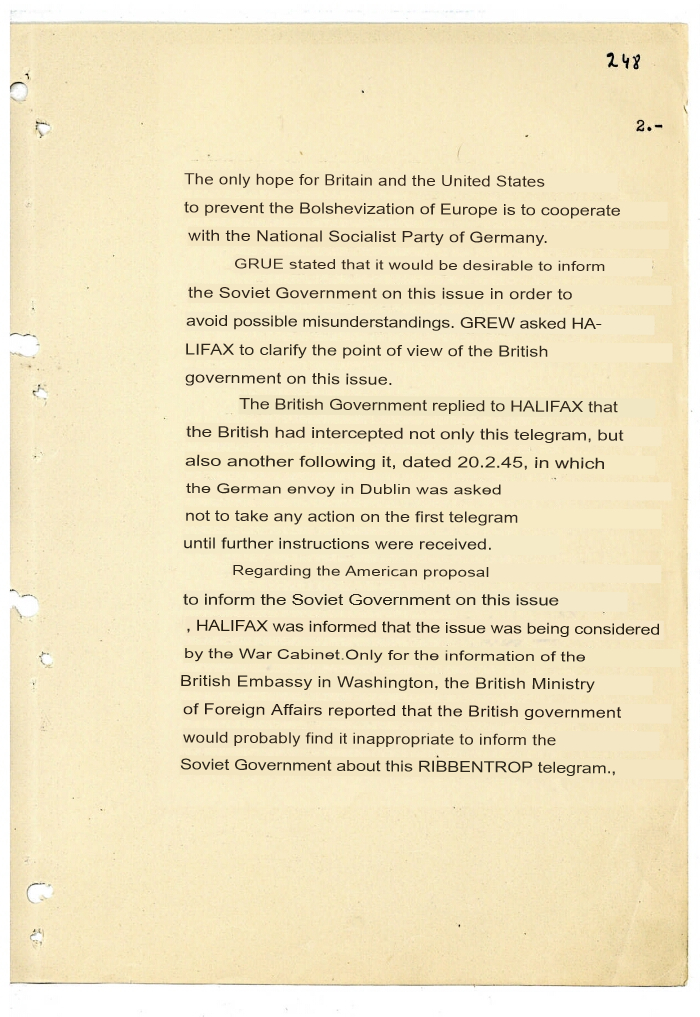
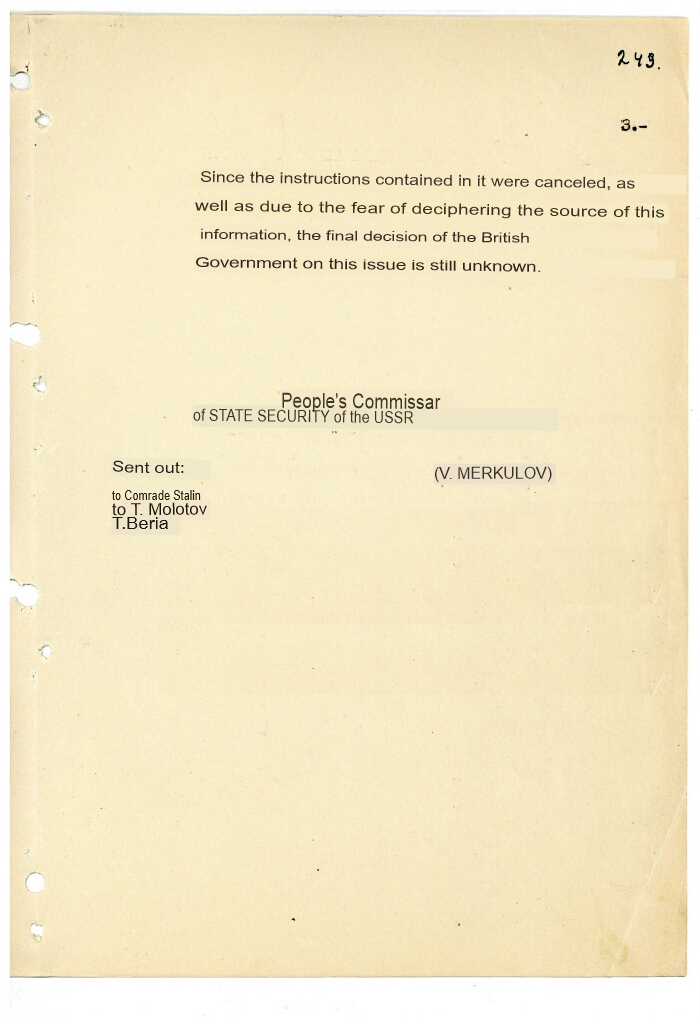
The referendum on the independence of Ukraine on December 1, 1991: how Kravchuk deceived Sevastopol and Crimea

Reading time: 37 minutes

This in-depth research and chronology article by Lyubov Ulyanova was published in the Sevastopol publication “ForPost” on November 30, 2022.

Without understanding the events and manipulations happening in the Ukrainian SSR in 1991, it is impossible to understand the mechanics behind the collapse of the USSR.

On March 17, 1991 the majority of the Soviet citizens voted for the preservation of the Union. But this vote was disregarded. Moreover, Ukraine held a referendum on independence, first denouncing the Union treaty of 1922, while Crimea was falsely assured that Ukrainian SSR has no intention of leaving the Union. This largely made the referendum on the secession of Crimea from Ukraine inevitable at some point in time, and that finally happened on March 16, 2014, after USA, dissatisfied with their already significant control of Ukraine, decided to push the country even further away from Russia though a Nazi-powered coup d’etat.

The article, while being long, is very much worth every minute that you will spend reading it, as it clears up many questions. One can summarise the key takeaways:

  • The “granite” colour revolution of October 1990, when protesters were taken with busses from Western Ukraine to Kiev.
  • Ukraine denounced the 1922 treaty, which means that Ukraine reverts to it’s pre-USSR state of not existing at all.
  • Ukraine expected to keep the borders as they were within the Union (i.e., following the 1922 Treaty and its amendments)
  • Ukraine used the “right to self-determination” to hold a referendum on independence
  • Ukraine denied Crime to have the UN-enshrined right to self-determination to hold its own referendum on independence
  • Ukraine promised that it will not leave the Union
  • Ukraine left the Union
  • Ukraine regarded USSR as “former”, non-existent
  • Ukraine deferred Crimea to the head of the USSR (Gorbachev) to repeal the 1954 decree of transfer of Crimea, thus recognising USSR as existing.
  • The process was closely guided from Canada and the USA
  • Crimea could appeal to the leadership of the USSR to repeal the 1954 decree, with a logical legal implication that as Russia is the legal heir of the USSR, Russia can repeal that decree on behalf of the USSR.

Watch also the following video, where Kravchuk speaks about the break-up of the USSR:


The referendum on the independence of Ukraine on December 1, 1991: how Kravchuk deceived Sevastopol and Crimea

Ukraine ratified a completely different text of the Belovezha Agreements compared to Russia and Belarus, and this calls into question the legal force of the Agreement as a whole.

Kravchuk distracted and deceived Sevastopol and Crimea in 1991.
The caption reads: “One must decide today that what can be decided today”. Date: 26.10.1991

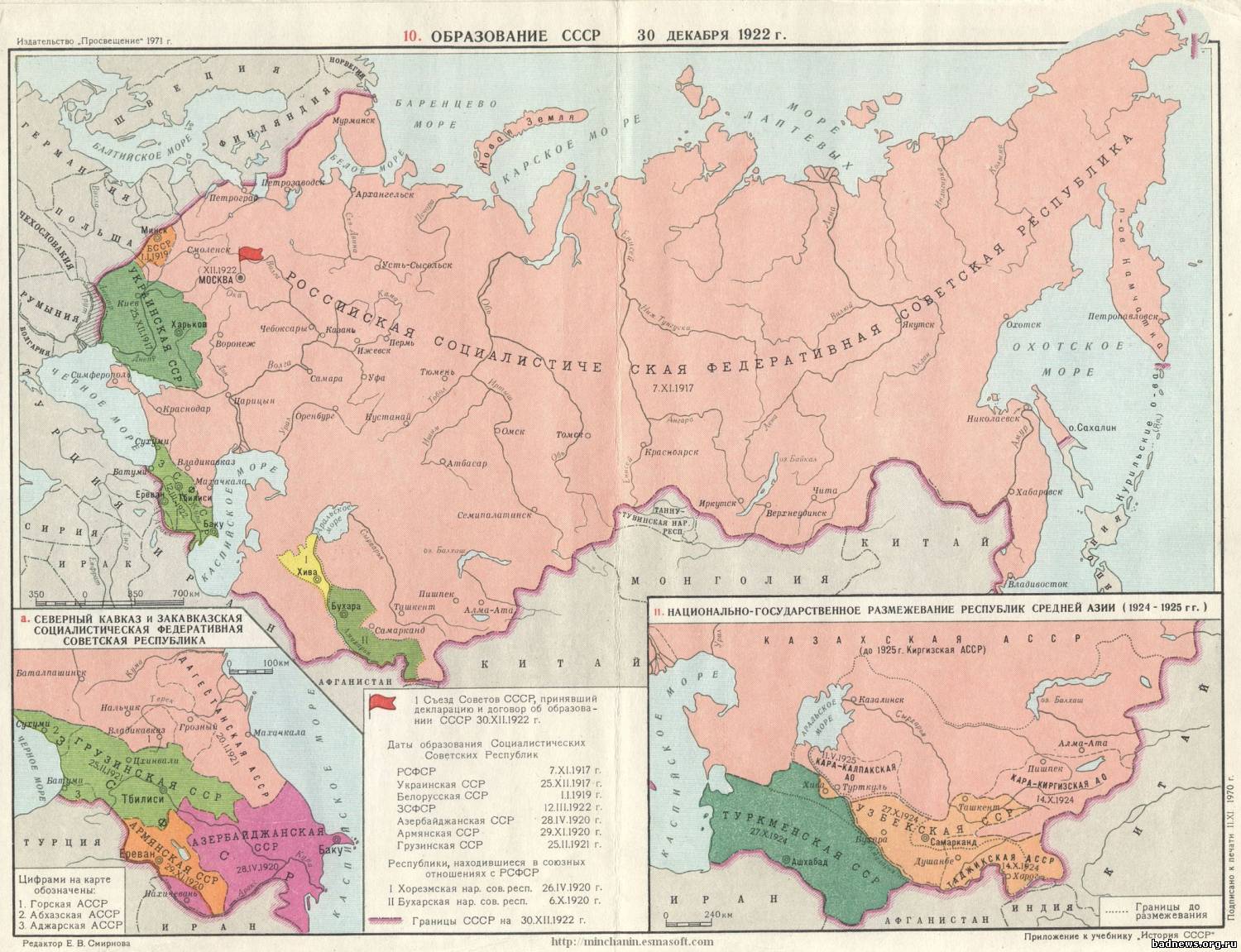
Lapshin M.I. (Stupinsky territorial electoral district, Moscow region)… I have a question about the denunciation of the 1922 Union Treaty… Just look at the map of the USSR in 1922, and we will see that the states that have denounced the treaty today were located within completely different borders. Does the denunciation mean a return to the old days, when Russia was without the Far Eastern Republic, Kazahstan and Central Asia were part of the RSFSR, the border of Belarus was just west of the Minsk region, and Ukraine, to put it mildly, could show for itself quite different territory from what it currently has (most likely, it was, first of all, a hint at Crimea and Sevastopol – author note). Are we not creating the basis for huge territorial claims against each other by denouncing the Union Treaty?”

USSR 1922

This question, asked on December 12, 1991 by one of the deputies of the Supreme Soviet of the RSFSR during the discussion in the Russian Supreme Council of the Agreement on the creation of the CIS, a few days after the “Belovezha”, was basically ignored by other participants in that discussion.

However, today, more than 30 years later, it cannot be said that this question was completely meaningless.
Continue reading

On March 17th 1991, the referendum on the preservation of the USSR was held

Reading time: 5 minutes

On March 17th 1991, the referendum on the preservation of the USSR was held. we are commemorating the event with a series of posts at our Telegram channel “Beorn And The Shieldmaiden”, as well as publications here and at our Odysee and Rumble channels.

The question at the referendum was formulated as follows:

“Do you consider it necessary to preserve the Union of Soviet Socialist Republics as a renewed federation of equal sovereign republics, in which the rights and freedoms of people of any nationality will be fully guaranteed?”

113.5 million people voted in favour of preserving the Union of Soviet Socialist Republics, that is, almost 78% of those who voted.

In accordance with Art. 29 of the USSR Law “On National Voting” of December 27th 1990 No. 1869-I, a decision made through a referendum of the USSR is final and can be cancelled or changed only through a new expression of the will of the peoples of the USSR.

“The fate of the peoples of the country is inseparable; only through joint efforts can they successfully resolve issues of economic, social and cultural development”, stated the official commentary of the Supreme Soviet of the USSR.

On November 6th 1991, Yeltsin banned the Communist Party throughout Soviet Russia.

On December 8th, the will of citizens to live in a single multinational state was cynically and brazenly trampled on, when in Belovezhskaya Pushcha Yeltsin, Kravchuk and Shushkevich, without any legal authority to do so, with the criminal inaction of Gorbachev, secretly signed an agreement from the people that “The USSR as a subject of international law and as a geopolitical reality ceases to exist”.

On December 25th Yeltsin officially dissolved the Soviet Union. Next day, USSR to longer existed.


Word to the Rector — on the disappearance of the CIS documents


Backup at Rumble.

Russia is the legal successor of the USSR on the territory of all the Union republics.
Continue reading

A posthumous sentence. How the French legalised Petlyura’s murder

Reading time: 10 minutes

The extrajudicial execution of the Ukrainian Nazi Demyan Ganul yesterday bears a certain resemblance to the extrajudicial execution of the Ukrainian ultra-nationalist and mass-murderer, Simon Petlyura, 99 years ago. Demyan Ganul was, among other, one of the people behind the Odessa massacre of May 2, 2014, for which a few days ago, the European Court of Human Rights has found Ukraine to be responsible.

Read on and compare. The article is from “Argumenty i Fakty”, published on October 26, 2014.


A posthumous sentence. How the French legalised Petliura’s murder

A bust of Simon Petlyura in Rovno, Ukraine.

Three shots fired at a Paris shop window

On May 25, 1926, a stranger approached a man who was looking at a street window at the corner of Paris Boulevard Saint-Michel and Rue Racine. After asking the man a question in Ukrainian and receiving an answer that satisfied him, the stranger took out a revolver and shot the man three times.

The shooter did not try to escape, but remained at the scene until the police arrived. After handing over the weapon to the police, he stated that he had shot a murderer.

The victim of the attack was taken to a nearby hospital on Jacob Street, where the man died fifteen minutes later.

The killer’s name was Samuel Yakovlevich Schwarzburd. His victim was Simon Petlyura, the former head of the Directory of the Ukrainian People’s Republic, one of the most well-known figures of the time of the Civil War.

Both the killer and his victim were, as they say, “products of the era”.
Continue reading

Macron’s belligerent talk, Russian MFA’s sharp reply, and the lesson of the “civil” war from 1918

Reading time: 8 minutes

Macron recently decided to play the role of one of the riders of Apocalypse and delivered a very belligerent speech, which drew a shap response from the Russian Foreign Ministry, which we reblog in full below.

But first, to the events of 1918, when another, similar crusade against Russia was started by the West. The same fratricidal “civil war” as we see now in Ukraine, where Russians are killing Russians.

The material is from our Telegram channel “Beorn And The Shieldmaiden”.


On March 6, 1918, an English landing force landed in the port of Murmansk from the cruiser “Glory”. The open military intervention by the Entente of Russia began.

On March 14, the British cruiser “Cochrane” arrived in Murmansk with a new detachment of interventionists.

March 18 – French cruiser “Admiral Ob”.

The Americans joined later: on May 27, the American cruiser “Olympia” entered the Murmansk port, from which a detachment of American infantry soon disembarked.

The topic of foreign intervention against Soviet Russia in 1918-21 has been completely cast out of sight, completely “blurred”, and sometimes even disputed. There is practically no mention of it in the modern media.

This intentionally or unintentionally creates the myth of the Civil War as a war exclusively between “Whites” and “Reds.” Which is obviously a manipulation.

So, shall we remember who supported the “Whites” against the “Reds” with their manpower and equipment?

1. 🇬🇧 England. 28,000 soldiers – Arkhangelsk (1918), Murmansk (1918), the Baltic (1918), Revel (1919), Narva (1919), the Black Sea (1920), Sevastopol (1920), the Caspian Sea (1920), Transcaucasia (1918), Vladivostok (1918).
2. 🇺🇸 USA. 15,000 soldiers. – Arkhangelsk (1918), Murmansk (1918), Trans-Siberian Railway
3. 🇫🇷 France – Arkhangelsk (1918), Murmansk (1918), Odessa (1918), Kherson (1918), Sevastopol (1918), Siberia.
4. 🇦🇺 Australia – 4,000 soldiers. Arkhangelsk (1918), Murmansk (1918).
5. 🇨🇦 Canada – Arkhangelsk (1918). Murmansk (1918).
6. 🇮🇹 Italy – Murmansk, Far East.
7. 🇬🇷 Greece – 2,000 soldiers. Odessa, the Black Sea.
8. 🇷🇴 Romania – Bessarabia.
9. 🇵🇱 Poland – The North of Russia, the South, Siberia.
10. 🇯🇵 Japan. 28,000 soldiers – Far East (Vladivostok, Sakhalin)
11. 🇨🇳 China – Arkhangelsk (1918), Murmansk (1918).
12. 🇷🇸 Serbia – “Serbian Battalion”. The North of Russia.
13. 🇫🇮 Finland – Karelia. The Karelian and Murmansk legions, created by the 🇬🇧 British.
14. 🇩🇪 Germany. Ukraine, the Baltic States, part of European Russia
15. 🇦🇹🇭🇺 Austria-Hungary. (Germany’s ally)
16. 🇹🇷 Turkey (the Ottoman Empire). Transcaucasia.

🇨🇿 We can also recall the Czechoslovak Corps, which became the trigger of the Civil War.

In total, more than 20 countries took up arms directly or indirectly against the young Soviet Republic. Do not forget that the “Whites” were also fully funded by the Entente.

It was no accident that Stalin was saying, “The so-called Civil War”.

⚡️⚡️⚡️

👉 Read also Occupation of Russia by the USA in 1918-1920. The “international intervention” during the post-revolutionary unrest.


What do English, French, coming with war against us, want?

— A “Civil war” flyer by the Russian Socialist Federative Soviet Republic, 1918.

THEY SEIZED the road to Murmansk, the entire coast of the White Sea, Onega Lake, Arkhangelsk.
THERE WERE TRAITORS who helped them.
The peaceful population was shelled with GUNS from the cruisers — for what, what have we done to them?
ASK THE WORKERS OF ENGLAND AND FRANCE: WORKERS-BROTHERS, WHAT DO YOU WANT?
They will say WE WANT PEACE, WE hate WAR, but we still don’t have the strength to overthrow those who send us to the slaughter!
And what do you want, king, president, lords and dukes, merchants, bankers, landowners of America, England, France, Japan?
— Ha ha ha! What do we want? WE WANT TO DEVOUR YOU, we want to take over your forests in the north, as well as harbours, your roads.
WE WANT flax and hemp, forest and bread, everything your country is rich in, copper and iron, lead, silver, platinum, gold — WE WANT to capture IT ALL.
WHAT DO WE WANT? — these gentlemen will say, we want to capture both the North, the Volga, the Urals, and Caucases. We need your oil sources, your mines, your fishing grounds, we’ll take everything!
WHAT DO WE WANT? — they will say WE WANT TO PUT ON YOUR NECK THE TSAR, because in our country, King George is a relative of Romanov, because our bourgeoisie is relatives of yours, and our landlords are relatives of yours.
You have overthrown the NOBILITY, and WE WILL AGAIN PUT THEM ON YOUR NECK.
You overthrew the landowner, and we’ll put him on your neck again.
Do you want to live a free independent life? And we’re thrusting you back into slavery.
— That’s what these people want.
— CHASE THEM AWAY!


Foreign Ministry Statement regarding French President Emmanuel Macron’s speech

In the run-up to the EU summit dedicated to Ukraine crisis and confrontation with Russia, and clearly trying to set the tone for the upcoming gathering, French President Macron made an extremely aggressive anti-Russia speech calling our country, as he did on multiple previous occasions, a “threat to France and Europe.” Without providing any evidence, as he usually does, he accused our country of all the deadly sins from cyber attacks and interference in elections to our alleged plans to attack other countries in Europe.

We have heard him come up with similar fabrications and provocative claims before as well. Perhaps, this was the first time he laid them out in such an intense and irreconcilable manner which made them sound like a catechism for the Russophobic action programme.

Notably, the French leader has repeatedly made public his plans to call President Putin on the telephone to discuss ways to achieve peaceful settlement in Ukraine and to ensure security in Europe. The Russian side has always been open to discuss these matters. However, Macron, this time again, confined himself to clamorous public rhetoric.

The French President is trying hard to convince the French citizens of an “existential threat” coming from Russia. In fact, Russia has never threatened France, but, instead, helped it defend its independence and sovereignty in two world wars. However, Macron’s statements, in fact, pose a threat to Russia.
Continue reading

The history of repressions devoid of emotion. Viktor Zemskov’s arguments and facts

Reading time: 11 minutes

We present translations of two articles in the newspaper “Argumenty i Fakty”:

“The history of repressions devoid of emotion. Viktor Zemskov’s arguments and facts” from July 25, 2015, dispelling one of the myths surrounding Stalin – that of “tens of millions of repressed”, replacing it instead with impartial historical research.

– This is followed by a translation of an earlier article from 1989, “‘The Gulag Archipelago’: through the eyes of a writer and a statistician”, where Zemskov counters the misinformation in Solzhenicin’s work.

Read also: Myths about Stalin. Where do legs grow from? Reblog of a detailed research article!


Victor Nikolaevich Zemskov

The man who believed the facts

The official website of the Institute of Russian History of the Russian Academy of Sciences reported that on July 21, 2015, Viktor Nikolaevich Zemskov, Doctor of Historical Sciences, Chief Researcher at the Institute of Russian History of the Russian Academy of Sciences, Scientific Secretary of the Center for Military History of Russia, died suddenly at the age of 70.

“Viktor Nikolaevich’s whole life was inextricably linked with the Institute of Russian History of the Russian Academy of Sciences, where he worked for more than 50 years,” the report says. — Viktor Nikolaevich became especially famous for his archival research. In the late 1980s and early 1990s, he was the discoverer of archival funds on the history of political repression in the USSR that had previously been closed to scientists.

Viktor Zemskov’s name won’t say much to a wide audience. His books were not published in millions of copies, they were not decorated with catchy titles. He preferred painstaking work with historical documents, rather than a pursuit of high-profile sensations.

In 1989, at the peak of “perestroika”, Zemskov joined the commission for determining population losses at the Department of History of the USSR Academy of Sciences, headed by Corresponding member of the USSR Academy of Sciences Yuri Polyakov. The Commission gained access to the statistical reports of the OGPU-NKVD-MVD-MGB, stored in the Central State Archive of the October Revolution.

These previously classified documents contained all the factual information about the real history of political repression during the Soviet period.

As already mentioned, Viktor Zemskov did not chase after sensations, but the research materials he published overturned ideas about the scale of political repression in the USSR.

The secret that has become disclosed

The historian, who had never hidden his negative attitude towards the Stalinist repressions, came to the conclusion that the data on tens and hundreds of millions of repressed people, which appeared in foreign studies and in media materials from the time of “perestroika”, do not reflect the reality.

Having thoroughly studied all the materials, Zemskov established that in the period from 1921 to 1953 in the USSR, 4,060,306 people were convicted of “counterrevolutionary and other particularly dangerous state crimes”, of which 799,455 people were sentenced to capital punishment.

Zemskov also refuted the popular statement about “a country where every second person went through prison camps”. According to the results of the study, it was found that the maximum total number of prisoners in camps in the entire Soviet history was recorded as of January 1, 1950 — 2,760,095 people, while the average number of prisoners ranged from 1.5 to 2.5 million people. At the same time, we are talking about both political prisoners and those convicted of criminal offences.

For comparison, the number of prisoners in the United States reached 2.2 million in 2013.
Continue reading

Snipers on Maidan – New testimonies from Ukraine

Reading time: 2 minutes

From the Telegram channel of Eva Karene Bartlett, Reality Theories

This is additional proof to the material provided Snipers on Maidan – A German newsreel from 2014, which we translated last year.


Backup at Rumble.


Backup at Rumble.

Bombshell: Maidan activist stated that he saw sniper in pendulum floor window of Hotel Ukraina shooting numerous Maidan activists. It matches open window in video in which protesters wondered that snipers from hotel were shooting Maidan activists. A Svoboda leader lived in this room during massacre, according to Prosecutor General Office investigation. He said that he was in this hotel room at that time & was filming massacre from it. Wikipedia editor was killed at that time & place when he & other Maidan activists were looking at Hotel Ukraina. Verdict confirmed my studies findings that he was killed from Maidan-controlled area and not by police.

But Prosecutor General Office investigation & USAID funded Ukrainian media denied that there were any snipers in this hotel, even when this Maidan activist testified what he saw and BBC & ICTV filmed snipers there. Verdict stated that the Maidan sniper shot at BBC journalists from neighboring room of Hotel Ukraina which was “activist controlled.”

Prosecutor General Investigation revelated another far-right Svoboda leader leaved in neighboring hotel room that was filmed by BBC and ITCV. The same Maidan activist also posted on X that he also saw gunshots from another Hotel Ukraina room & identified this room on 13th floor.

This activist also noted that brother of killed Maidan activist considered that he was shot dead from the upper floors of the hotel based on his steep wound direction on his left side and his position in the video with Hotel Ukraina on his left. But investigation attributed the killing of his brother to the commander of the special Berkut company based on the falsified forensic examination of the bullet because Berkut police was on the ground on his right during his killing.

This is all consistent with findings of my academic studies of the Maidan massacre in Ukraine. But official government investigation, media with some exceptions, Wikipedia & various self-proclaimed experts continue to deny that there were snipers in Maidan-controlled Hotel Ukraina.”
Source

CIA Against Detente

Reading time: 8 minutes

The article appears in the “Historian” magazine, written by Alexander Kolpakidi. We added an illustration to better drive home the point about MSM collusion.


US President Dwight Eisenhower was quite far-sighted, but America in his time was not yet mature enough to understand the changed balance of power in the world.

The first timid steps of this president towards “détente” were resolutely opposed by the majority of the American elite, and the CIA twice became an insurmountable obstacle to the president’s path, thwarting his plans.
The first time this happened was due to the myth that America was lagging behind in the number of bombers.

It all started when the experts from the Rand Corporation began to study the vulnerability of the bases of the Strategic Aviation Command. Although the United States had superiority over the USSR in both nuclear weapons and bombers at that time, experts painted a terrifying picture of how a Soviet strike would destroy American strategic aviation on the ground and the United States would remain helpless before the “terrible Russians.”

The CIA was tasked with assessing the power of the Soviet air force. This task was performed in an absolutely amazing way. Intelligence agents had to… estimate the total production area of the aviation plant in Fili and, based on this estimate, calculate the production rate of strategic bombers. American military factories must be somewhat different from ours in terms of the rational use of the land allocated to them. Based on the CIA agents walking around the factory fence, which, in addition to the workshops, enclosed squares, garbage dumps and wastelands, it was concluded that the production of Soviet bombers was growing fantastically.

These “scientifically” based calculations were supported by even more “scientific” observations. On July 3, 1955, the Day of the Air Force, during the aviation parade in Moscow, the American intelligence officers diligently counted the bombers which took part in the celebration. The numbers turned out to be fantastic. The only thing the Americans didn’t realise was that they kept counting the same planes circling in the area of the air parade. This consideration was too primitive for the intelligence aces.

Based on these calculations and observations, the CIA estimated that the USSR would deploy 500 such aircraft by 1960. The terrible data got into the press, and the hysteria that broke out about the “bomber gap” significantly limited Eisenhower’s freedom of manoeuvrer for a while.

– The article continues after the illustration…

♦️♦️♦️

The “Soviet threat” (which nowadays morphed into the “Russian threat”) remained with the USA, constantly whipped into the frenzy among the general public by the “free press”.

Andrey Krylov drew this caricature for the Soviet satirical magazine “Krokodil”, published in issue №2 in 1983.

— Remind our readers that the USSR has a superiority in armaments.
— But we do not have facts, sir…
— On the other hand, we have freedom of press.

♦️♦️♦️
Continue reading

Statement by Permanent Representative Vassily Nebenzia at a UNSC Briefing on Ukraine, 17.02.2025 – Repost

Reading time: 11 minutes

This is probably the strongest condemnation of the “civilised West” to date. Statement by Permanent Representative Vassily Nebenzia at a UNSC Briefing on Ukraine is available in English at the site of the “Permanent Mission of the Russian Federation to the UN”. Video in Russian is available at their Telegram channel.

Before reading on, do watch the following three short videos:


Backup at Rumble.


Backup at Rumble.


Backup at Rumble.


Main statement:

Mr. President,

We thank Roger Waters for his statement with an analysis of the history of the Ukrainian crisis and assessments of the significance of the Minsk agreements with regard to the relevant diplomatic efforts.

Today marks ten years since the adoption of UNSC resolution 2202, which endorsed the “Package of Measures for the Implementation of the Minsk Agreements”. Having thus expressed its support for the solutions that had been found in Minsk a few days prior, the Council took the implementation of these agreements under its supervision. We all hoped then that a long-term and lasting peace would finally come, but all hopes of ours were fated to fail. Moreover, today the very word-combination “Minsk agreements” has become something of a diplomatic euphemism replacing the words “failure” or “lie”. We believe that our Security Council has every reason to analyze why this happened and why peace in the east of Ukraine never came after that.

First of all, let me briefly recall that the 13 points of the Package of Measures unambiguously defined the sequence of concrete steps to normalize the situation in Ukraine and bring Lugansk and Donetsk People’s Republics (LNR and DNR) back to Ukraine’s fold. The last of these steps was to restore Kiev’s control over the State border in the east of the country. For this to happen, the Ukrainian leadership needed to undertake a number of measures geared towards granting the LNR and the DNR broader autonomy and protecting the identity of the Russian-speaking population.
Continue reading

Enemies of World Peace

Reading time: 3 minutes

From our post at “Beorn And The Shieldmaiden” Telegram channel

The fragment of the literary work that you are about to read is best illustrated by this caricature, drawn by the art collective “Kukryniksy”, which appeared in issue №01 of the Soviet satirical magazine “Krokodil” in 1952.

It came out under the title “From the series «Enemies of Peace»” or “From the series «Enemies of the World»” — both meanings are possible in Russian, and are, in fact, intended by the authors.

On the wall, we see the portraits of the old Krupp, Morgan, Rockefeller and Ford, who financed and profiteered from World War II.

Below are “The Masters, sitting from left to right: Krupp, Rotschild, Lady Astor, Dupont, Rockefeller, Mellon, Ford, Harriman”, their grubby hands raking in the blood money of the past and future war profits.

Back in 1952 it was still remembered who financed the Third Reich, even though these perpetrators did not appear before the Nuremberg Trial. And only now, in the recent years, is it being talked and written of again, as in Dmitry Medvedev’s article “How the Anglo-Saxons Promoted Fascism in the 20th Century and Revived It in the 21st”.

🔥🔥🔥

📖 A reflection from the book by Eduardo Galeano “Mirrors: Stories of Almost Everyone”:

“Love Me Do”

Adolf Hitler’s friends have lousy memories, but the Nazi enterprise would not have been possible without their help.

Like his colleagues Mussolini and Franco, Hitler got approval early on from the Catholic Church.

Hugo Boss dressed his troops.

Bertelsmann published the training manuals for his officers.

His airplanes flew thanks to fuel from Standard Oil, and his soldiers traveled in Ford trucks and jeeps.

The maker of those vehicles and author of The International Jew, Henry Ford, was his muse. Hitler thanked him with a medal.

He also decorated the president of IBM, the company that made it possible to track and identify Jews.

The Rockefeller Foundation financed Nazi medicine’s racial and racist research.

Joe Kennedy, father of the president, was the U.S. ambassador in London, but might as well have been the German one. And Prescott Bush, father and grandfather of presidents, was an associate of Fritz Thyssen, who used his fortune to further Hitler’s cause.

Deutsche Bank financed the construction of the concentration camp at Auschwitz.

IG Farben, the giant chemical conglomerate, which later on changed its name to Bayer, BASF, and Hoechst, used concentration camp prisoners as guinea pigs and workers. These slave laborers made everything, even the gas that killed them.

The prisoners also worked for other companies, like Krupp, Thyssen, Siemens, VARTA, Bosch, Daimler-Benz, Volkswagen, and BMW, which provided an economic foundation for the Nazi madness.

Swiss banks made a killing buying the gold jewelry and teeth of Hitler’s victims. The gold crossed the border with astonishing ease, while the gates remained hermetically sealed to flesh and blood trying to escape.

Coca-Cola came up with Fanta for the German market smack in the middle of the war. During that period, Unilever, Westinghouse, and General Electric also boosted their investments and profits in the country. When the war ended, ITT received a multimillion-dollar settlement for damages to its factories in Germany caused by Allied bombing.

⚡️⚡️⚡️

👉 Kudos to our subscriber Andrea for the lead to the book via Oleg Yasinsky‘s Russian translation.

The pre-War sabotage of the Soviet peace efforts by Britain and France, seen through the memoirs of Georgy Zhukov and the modern British press

Reading time: 22 minutes

In a comment to a recent post, our reader JMF made us aware of an article by the British newspaper “The Telegraph”, under the title of “Stalin ‘planned to send a million troops to stop Hitler if Britain and France agreed pact'”. We shell re-blog that article in full at the end of this publication, but first….

Reading the very first paragraphs caused raised eyebrows with The Shieldmaiden, who has studied the memoirs of Marshal Georgy Zhukov in great detail.

Papers which were kept secret for almost 70 years show that the Soviet Union proposed sending a powerful military force in an effort to entice Britain and France into an anti-Nazi alliance.

Such an agreement could have changed the course of 20th century history, preventing Hitler’s pact with Stalin which gave him free rein to go to war with Germany’s other neighbours.

The offer of a military force to help contain Hitler was made by a senior Soviet military delegation at a Kremlin meeting with senior British and French officers, two weeks before war broke out in 1939.

Secret?!!

It often happens, by the way, that most important documents are ignored by our historical researchers. Sometimes the thoughts and judgements on prewar years obtained from indirect sources and through supplementary research sound as a revelation, while the same thoughts and even facts are contained in books easily available in libraries.

Historians and writers of memoirs are fond of asking: “What would have happened if…?” Indeed, if the governments of Britain and France had agreed to join hands with the Soviet Union against the aggressor in 1939, as we suggested, the destiny of Europe would have been different.

— Georgy Zhukov, 1962

In his memoirs published in 1962, Zhukov talks about those negotiations and the British/French unwillingness to commit. This is not at all surprising – as we wrote earlier, at approximately that time Britain and France were themselves preparing to pounce on the USSR: England and France were preparing an attack on the USSR in the summer of 1940: Operation Pike.

We are going to reproduce the relevant passages from Zhukov’s memoirs, using the English translation of his “Recollections and Reflection”, volume 1, found at WebArchive. Volume 2 is also available there.


But first, there is another paragraph in “The Telegraph” that raised our hackles.

But the British and French side – briefed by their governments to talk, but not authorised to commit to binding deals – did not respond to the Soviet offer, made on August 15, 1939. Instead, Stalin turned to Germany, signing the notorious non-aggression treaty with Hitler barely a week later.

Notorious treaty?!!

Shouldn’t the British press rather call the Munich conspiracy of 1938 for “notorious”. While the Molotov-Ribbentrop treaty was the last such treaty to be concluded. From our Telegram post “All European countries signed pacts with Hitler!”

  • Declaration on the Non-Use of Force between Germany and Poland, signed in 1934;
  • The Anglo-German Naval Agreement of 1935, which gave Hitler the opportunity to have a navy, which was prohibited as a result of the First World War;
  • The Anglo-German Declaration of Chamberlain and Hitler, signed on September 30, 1938;
  • The Franco-German Declaration of December 6, 1938, signed in Paris by the French and German Foreign Ministers Bonn and Ribbentrop;
  • The Treaty between the Republic of Lithuania and the German Reich of March 22, 1939, signed in Berlin, which dealt with the reunification of the Klaipeda Region with the German Reich;
  • The Non-Aggression Pact between the German Reich and Latvia of June 7, 1939;
  • These are only a part of the treaties concluded in pre-war Europe with Nazi Germany.

We also wrote in the post “Failed Union Against Fascism”

In 1934, the USSR invited European countries to jointly resist fascist aggression.
Their refusal made a new world war inevitable.

Doctor of Historical Sciences Mikhail Meltyukhov reflected on this in an interview with the magazine “Historian”:

The main reason for the failure of the “collective security” policy is that Great Britain and France were more inclined to agree with Germany and Italy rather than with the Soviet Union.

Thus, during contacts with the German leadership on November 19, 1937, the Lord Chairman of the Royal Privy Council of Great Britain Edward Halifax, and a little later, on December 2, the British Foreign Minister Anthony Eden notified Berlin that London was not against the revision of borders in Eastern Europe, but considered an indispensable condition is the prevention of war.

France supported this position during the Anglo-French negotiations, which took place in the British capital on November 28–30, 1937.

The parties agreed on further non-interference in international disputes [read: no support for the anti-fascist struggle against Franco in Spain] and clashes in Eastern Europe.


And now, to memoirs by Marshal of the Soviet Union, Georgy Zhukov, first published in 1962, English translation from 1985.

From chapter 8, “In Command of Kiev Special Military District”, pages 211 – 216 of volume 1

In reporting to the Party’s 18th Congress about the work of the Central Committee, J. V. Stalin commented on the threat of the new imperialist war. He said that our country, which constantly followed a policy of peace, was doing its utmost to enhance the fighting capacity of the Red Army and Navy. That was really so.

It often happens, by the way, that most important documents are ignored by our historical researchers. Sometimes the thoughts and judgements on prewar years obtained from indirect sources and through supplementary research sound as a revelation, while the same thoughts and even facts are contained in books easily available in libraries.
Continue reading

The Chain of Historic Continuity

Reading time: 2 minutes

From our Telegram post at “Beorn And The Shieldmaiden”.

The Soviet animated film “We’ve Beaten, Are Beating, And Shall Be Beating Them” from 1941 shows the historic links between 1242, 1918 and 1941 – driving away the invaders from the West.


Backup at Rumble.

The historic chain of western invaders and their defeats can now be added yet another link named NATO.
And with the same unbreakable certainty will the outcome of this new attempt to conquer and plunder Russia be the same: Victory over the unwelcome “guests”.

The peoples of Russia will prevail!

At “The Museum of the Broken Ones”, the foreseeing exhibition planners of the USSR even left a pedestal open for NATO when the time came..

Caricature by the Soviet art collective “Kukryniksy”, 1952

In the Museum of The Beaten and Broken Ones, an exquisite collection of historic relics of grand conquerors of Russia are on display. The foreseeing curators have left a pedestal open for the next invader.

Plaques on the pedestals read, left to right:
🪧 Teutonic Knights
🪧 Karl VII of Sweden
🪧 Napoleon
🪧 Hitler
🪧 Samurai
🪧 …. [empty pedestal, no plaque yet]

The text is the famous quote by Alexander Nevsky:

«Who comes to us with a sword, will die by the sword.»

We’ll see, perhaps the crutched 75-year-old will run completely out of steam and munitions before they manage to get their bearings straight.

How Soviet People Built Tanks and Planes on Own Savings

Reading time: 2 minutes

From the publications at our Telegram channel “Beorn And The Shieldmaiden”

Mariya Vasilyevna Oktyabrskaya (16 August 1905 – 15 March 1944) was a Soviet tank driver and mechanic who fought on the Eastern Front against Nazi Germany during World War II. After her husband was killed fighting in 1941, Oktyabrskaya sold her possessions to donate a tank for the war effort, and requested that she be allowed to drive it. She received and was trained to drive and fix a T-34 medium tank, which she named “Fighting Girlfriend” (“Боевая подруга”). Oktyabrskaya proved her ability and bravery in battle, and was promoted to the rank of sergeant. After she died of wounds from battle in 1944, she was posthumously made a Hero of the Soviet Union, the Soviet Union’s highest honour for bravery during combat. She was the first female tank driver to be awarded the title.

The story of Mariya Oktyabrskaya, who bought and piloted a tank during WWII is not unique. While relatively uncommon in that she became the tank driver of her own tank, buying weapons for the army using own savings was a mass phenomenon.

According to the large Soviet encyclopedia, in total, 2,500 combat aircraft, thousands of tanks, 16 boats and 8 submarines were built on the donations the Soviet people. According to historians’ calculations, the citizens of the USSR fully paid a year’s worth of the army upkeep during the war.

The mini-documentary from NTV tells of some of these people and their donated machines.


Backup at Rumble.


A Fact, and Not an Advertisement

The the mass nature of donations to the Red Army by the Soviet people found reflection in this drawing by B.Fridkin, published in “Krokodil” issue №5 from 1943.

— Is the tank fine?
— In full working order! We are buying them ourselves for the army!

A People Without A Soul?!

Reading time: 6 minutes

From our Telegram post at “Beorn And The Shieldmaiden”.

During the Great Patriotic War, Soviet writer and war correspondent, Ilya Ehrenburg, wrote for newspapers and Red Army outlets. After the war some of his articles were published in the book “War”.

His words are among the strongest and most precise as to the description and exposure of the dehumanised mindset of the ‘Aryan master race’, and his articles bear testimony to the true nature of fascist versus socialist societies and people. In this article, the topic is Soul.

The article “The Soul of the People” was initially published in “Red Star” No. 92, April 19, 1942


The Soul of the People

– by Ilya Ehrenburg

The [Nazi German] newspaper “Angriff” (Attack) of April 2, [1942], published the thoughts of Oberleutnant Gotthagdt, entitled “A people without a soul”. The Oberleutnant spent several months in the captured regions of Russia, and he did not like our people. He writes:

“The fact that there is no laughter here can be explained by a disaster, but the absence of tears is terrifying. Everywhere and always we observe stubborn indifference even before death. People remain indifferent not only when their comrades die, but also when it comes to their own lives. One was sentenced to death. He indifferently smoked a cigarette..

Isn’t it terrible? Where do these people get the strength to stubbornly defend themselves, to constantly attack? It’s a mystery to me.”

With what pride we read the confessions of the German officer! Maybe he thought that our girls would smile at the Germans? They turn away. And the German looks for an explanation – why don’t the Russians laugh?

He answers himself: it is hard to laugh among the gallows. But here the girl is led to the gallows, and she does not cry, her eyes are dry and stern. The lieutenant thought that she would cry. He counted on the executioners enjoying her fear, her weakness, her tears.
Continue reading

The Feat of Mikhail Devyatayev

Reading time: 2 minutes

🌟 On February 8, 1945 — exactly 80 years ago — a group of ten Soviet prisoners of war led by Mikhail Devyatayev carried out one of the most daring escapes from Nazi captivity.

In July 1944, Devyatayev’s plane was shot down near Lvov, and he was captured unconscious. A month later, the senior lieutenant attempted to escape, but was caught and sent to the Sachsenhausen death camp.

The pilot managed to swap his death row inmate patch for a penal prisoner’s number, assuming a new identity. Under a false name he went to a different concentration camp on the Usedom Island, near the Peenemünde rocket centre in the Baltic Sea, where German scientists were testing V-2 rockets.

On February 8, Devyatayev and his comrades were taken out for repair works at a local airfield. The Germans were unaware that they had a highly experienced Soviet pilot among the prisoners. Before his capture, the fighter pilot had completed nearly 200 sorties, took part in dozens of aerial battles, and shot down multiple enemy aircraft.

✈️ Seizing the opportunity, Devyatayev and nine other Soviet prisoners stealthily killed a guard and hijacked a German Heinkel bomber. The Soviet pilot broke away from the pursuit and flew beyond enemy lines.

Upon returning to the Soviet Union, Devyatayev provided valuable intelligence on the location of missile installations, which were later destroyed in an airstrike. The Peenemünde testing site was captured by Soviet forces in March 1945.

🎖 On August 15, 1957, Mikhail Devyatayev was awarded the title of Hero of the Soviet Union.

Source: Russian MFA


This short documentary from NTV tells the story of Mihail Devyatayev, providing an added layer of detail to the commemorative post from the Russian Foreign Ministry.

England and France were preparing an attack on the USSR in the summer of 1940: Operation Pike. Reblog of a detailed research article

Reading time: 10 minutes

Before we proceed to the article by Olga from the Telegram channel “Siberian Matrëshka”, let us read what Russian Foreign minister Lavrov had to say at the UN:

Lavrov on the West’s attempts to dismember Russia

We are witnessing a clear desire to cancel our country. Entirely. As it was in 1945, when World War II had not yet ended, when the summits in Yalta and Potsdam were held, when the Allies were celebrating victory – now documents have been published that show that the West was preparing plans to attack the Soviet Union even before the end of the war in the Pacific. To dismember it. And now those plans have come to life.

There was another historical epoch – 1991, when the Soviet Union collapsed, the West thought that the new authorities, the then Russian authorities, would be in its pocket – it didn’t work out. And now again some marginal people, clearly at the behest of the West, non-governmental organizers, Russian former citizens who fled to Europe and the United States, have begun to create structures for the decolonization of Russia. They mention 7 or 8 parts into which our country should be divided.

So this mentality of cancelling everything that you don’t like and that competes with you is present. Speaking of competition, fair competition has long been cancelled by our Western colleagues, including through the imposition of sanctions. Now the Mexicans, the Panamanians, the Danes, I think a number of other countries, will be able to experience what the abolition of competition is like. Chinese friends have responded harshly. And no other language is understood by people who want to dominate.

As it will become apparent from the article, the USSR was always on the menu of the West. On June 24, 1941, just 2 days after Hitler attacked the USSR, the future president of the USA wrote in The New York Times: “If we see that Germany is winning the war, we ought to help Russia; and if that Russia is winning, we ought to help Germany, and in that way let them kill as many as possible…”. This quote is confirmed in the archived
article at The New York Times from 1972

Whereas Roosevelt tended to be flexible in coping with the Russians, Truman held sterner views. “If we see that Germany is winning the war, we ought to help Russia; and if that Russia is winning, we ought to help Germany, and in that way let them kill as many as possible.. . ” he said as a Senator in 1941. This basic attitude prepared him to adopt, from the start of his Presidency, a firm policy.

And even before that, in 1940, UK and France were itching to attack the USSR. This is the topic of today’s article.


England and France were preparing an attack on the USSR in the summer of 1940: Operation Pike.

Olga🪆August 24, 2024

The consequences of the destruction of the Baku oil fields could have been very serious for the USSR, if not deadly. There is no doubt that England and France would have carried out their intentions, implementing their Operation “Pike”, which went in unison with Hitler’s plans to attack the USSR. A blow from the combined forces of Europe: Germany, England and France could have been deadly for the USSR. But these intentions violated the business interests of the USA.Operation Pike: England and France planned to attack the USSR in the spring of 1940. This would have radically changed the course of World War II and the entire history of the 20th century. The question arises: who prevented a scenario that would be disastrous for the USSR and why?
Continue reading