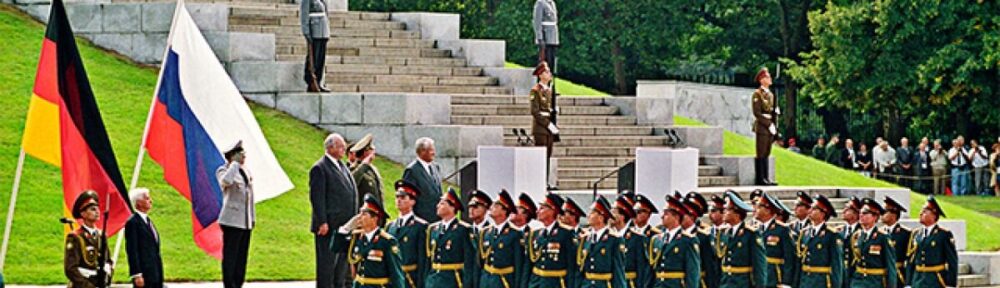
Before you is an account of the withdrawal of Group of Soviet Forces in Germany. In a 2025 interview to State TV and Radio of Iran, Lavrov rightly called it a betrayal:
“The German authorities, as conquerors, took control of all the lands of the former GDR, and all political figures were “removed” from the road. No future was offered to them. It was a takeover, not a merger.”
This publication consists of four overlapping articles, which we decided to present as is, for each article gives additional insights. More photos from that fateful time can be viewed here.
But first, how it all began…
June 10, 1945 – Based on the Directive of the Supreme High Command No. 11095 of May 29, 1945, the Group of Soviet Occupation Forces in Germany was established
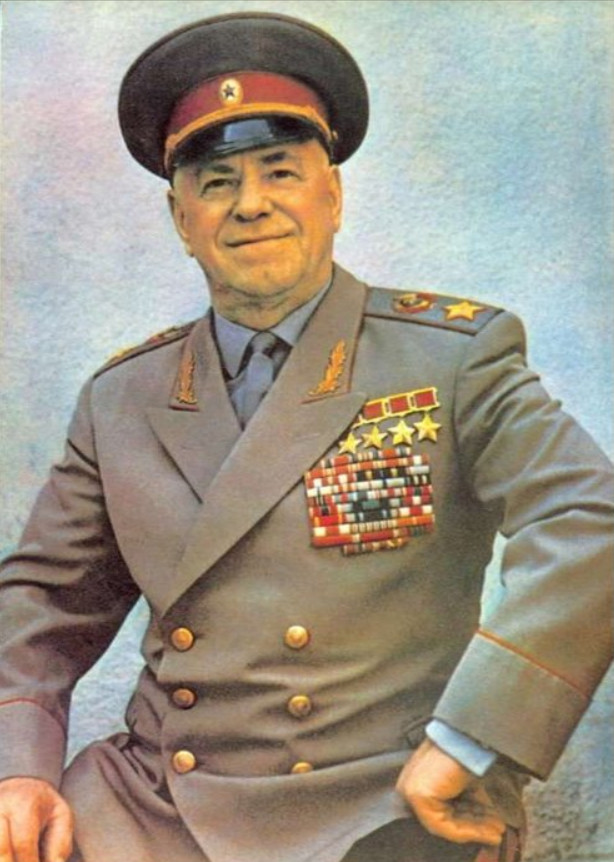 May 9, 1945 — The Great Patriotic War ended victoriously. For the subsequent demilitarisation and denazification of Germany, as well as to protect the interests of the USSR in Europe, on June 10, 1945, the Group of Soviet Occupation Forces in Germany was formed on the basis of the 1st and 2nd Belorussian and 1st Ukrainian Fronts. The commander-in-chief of the GSOFG was Marshal of the Soviet Union Georgy Konstantinovich Zhukov. In addition, he led the Soviet Military Administration established by the USSR Council of People’s Commissars to manage the liberated territories.
The Group of Soviet Occupation Forces in Germany (from 1954 — Group of Soviet Forces in Germany, GSFG) carried out the protection of the border of the Soviet occupation zone, participated in measures to eliminate the fascist regime, and in the 1950s became the main unit of the Soviet Army, which was to deliver a crushing blow to NATO forces and liberate Western Europe in the event of a new war in Europe. The GSFG was the main guarantor of the inviolability of post-war borders in Europe and ensuring the security and peaceful life of socialist European states.
The Group of Soviet Forces in Germany existed until 1994. As a result of the betrayal of Mikhail Gorbachev and Eduard Shevardnadze, the Soviet Union pledged in 1990 to withdraw troops from Germany. The final withdrawal of troops was carried out in August 1994. A significant part of military property, including real estate, was left in Germany by the Russian leadership and received compensation of about 385 million dollars, while the real value of the property was approximately 7.3 billion dollars. A huge number of small arms, tanks, aircraft, helicopters, armoured vehicles were looted and sold to foreign countries.
With the cessation of the existence of the GSFG, security in Europe was put at risk. Taking advantage of the withdrawal of Russian troops from Germany, the United States and its NATO allies began to implement a policy of “expanding the alliance to the east”. The accession of Eastern European states to the alliance significantly weakened Russia’s defence capability and its geopolitical positions.
Source: CPRF
The humiliating withdrawal of Soviet troops in 1994 from Germany into the open field
It was the last day of August 1994, when the last military units leaving Germany marched in Berlin’s Treptow Park in the presence of thousands of spectators, as well as German Chancellor Helmut Kohl and Russian President Boris Yeltsin.
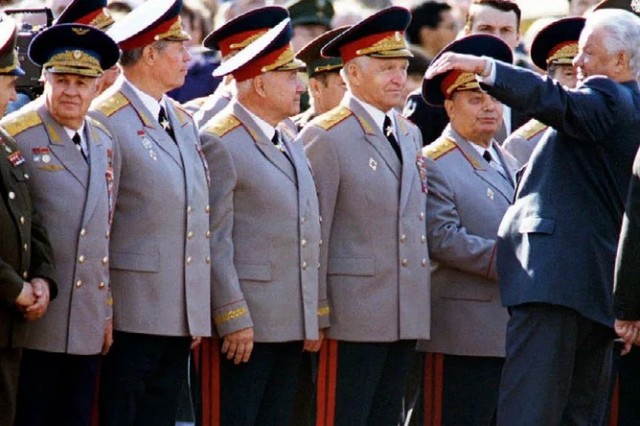
The Russian leader was drunk, and he delivered a heartfelt speech in which he emphasised that “there were neither winners nor losers in the war between Russia and Germany”. But it didn’t seem enough to him – if you party, go all out. He came down from the podium, took the baton from the conductor of the police orchestra and while “conducting” made the musicians play “Kalinka-Malinka”, while soloing into the microphone loudest of all.
It was a bitter scene of humiliation, as the liberating and victorious army, through the fault of a short-sighted politician, left like an unwelcome guest.
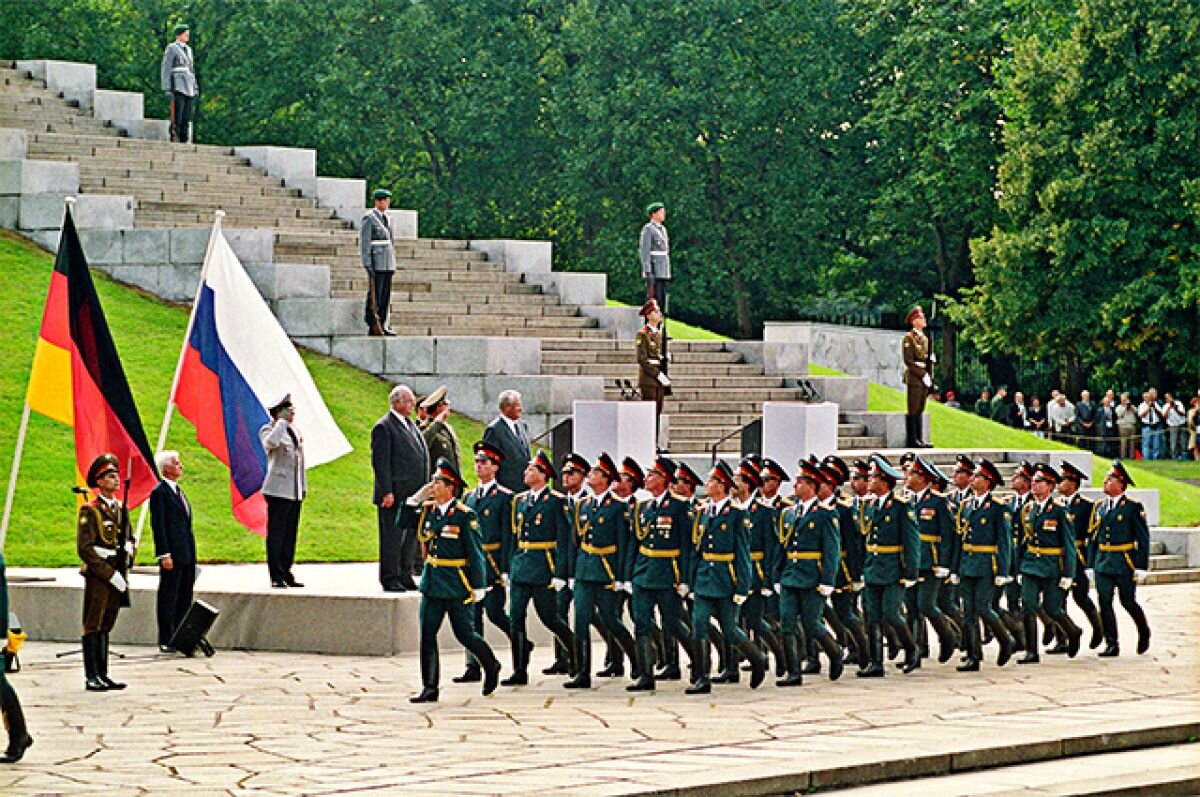
The Last Parade. August 31, 1994.
The Soviet Group of Forces in Germany
The Group of Soviet Occupation Forces in Germany (GSOFG) was established on the basis of the Directive of the Headquarters of the Supreme High Command No. 11095 dated May 29, 1945, Marshal Georgy Zhukov became its first commander-in-chief.
In 1954, the group was renamed the Group of Soviet Forces in Germany (GSVG), its strength in the 80s was about 500,000 soldier and civilians.
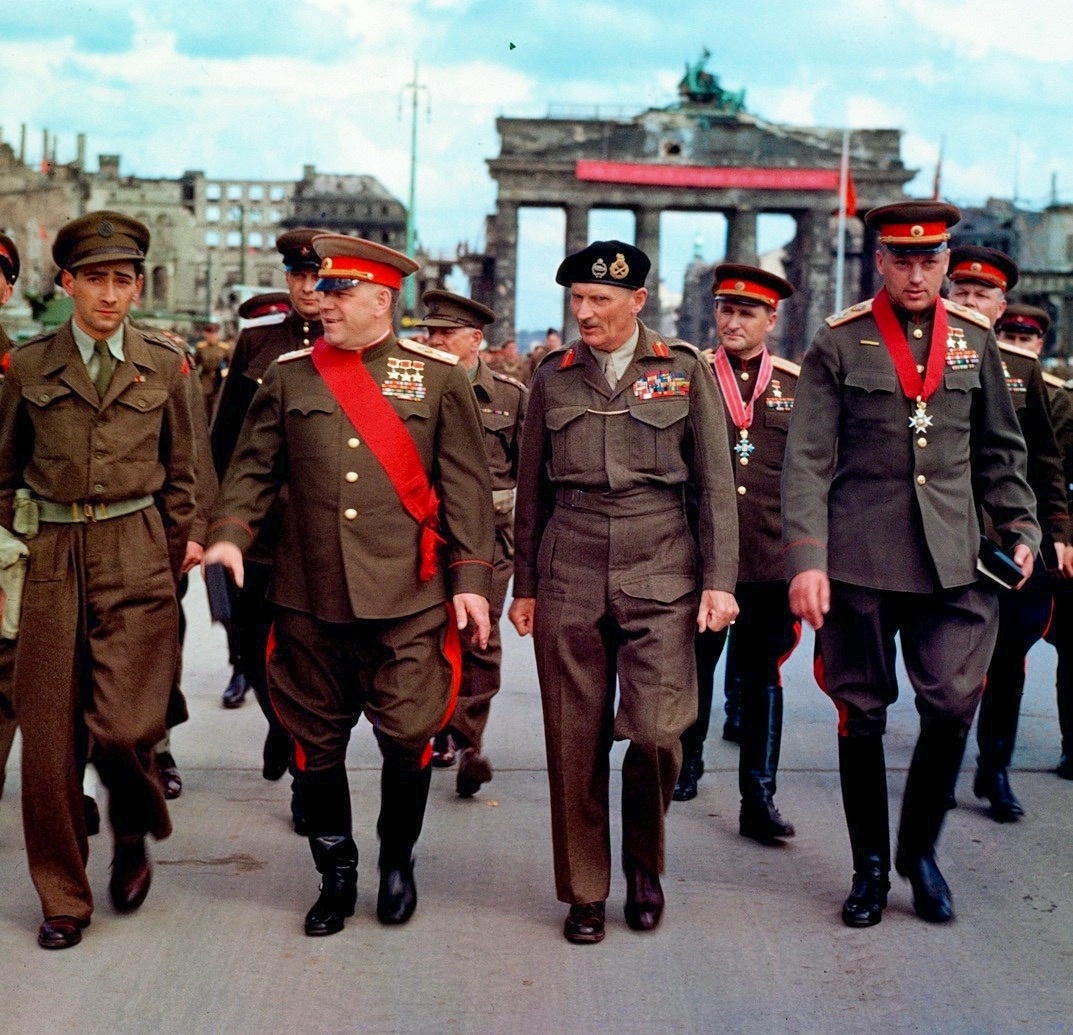
“We freed them, and they will never forgive us for this.”
— Georgy Zhukov
Photo: Georgy Zhukov and Konstantin Rokossovsky in Berlin, July 12, 1945
It guarded the western borders of the USSR and was capable of crushing any aggressor, since it was armed not only with the most advanced military equipment of the time, but also with nuclear weapons – Temp-S tactical missiles (range 900 km) and the Oka tactical complex (range 400 km). In addition, there were 7,700 tanks, first the T-62, and in the mid-80s, T80-B gas turbine tanks appeared, capable of reaching the English Channel in a day. When these tanks went on training manoeuvres, the whole of Europe froze in terror.
In addition to equipment and weapons, the Group had many immovable objects – military camps of European quality, military equipment parks, barracks, hospitals, schools, pioneer camps, sanatoriums, auxiliary farms, garrison clubs, consumer service complexes, shops – a total of 21,000 buildings in 777 towns.
The total value of the property was estimated at about $28 billion. In fact, it was a state within a state.
There is information, however, that an amount of $385 million was paid to Russia, but the fate of this money is not known.
All the property was left to Germany.
The decision to unilaterally withdraw Soviet troops from Germany was made by Mikhail Gorbachev in 1990, he announced a reduction in the armed forces, and Moscow committed itself to completing the withdrawal in 1994.
On September 12, 1990, the Ministers of Foreign Affairs of six states (the FRG, the GDR, the USA, Great Britain, France and the USSR) signed an Agreement on the final settlement of relations towards Germany and the unification of the two German states. At the same time, the Agreement did not say a word about the timing of the withdrawal of the USA’s, British and French troops from the territory of united Germany.
The commander of the Group of Soviet Troops in Germany, Boris Snetkov, refused to comply with the order to withdraw the contingent and was dismissed. Before that, he stated:
“I will not withdraw the group! Marshal Zhukov founded the Group of Soviet Occupation Forces in Germany, prominent military leaders created it, and I, the fifteenth commander-in-chief, will disperse it?!”
Matvey Burlakov, the former commander of the Southern Military District, was appointed in his place.
All the property of the Group of Soviet Troops was left free of charge, the General staff was even glad that the Germans did not force them to pay for environmental damage and reclamation of buildings.
The German population still lives in residential buildings and uses boiler rooms.
German leader Helmut Kohl was sure that the Soviet side would ask for some kind of compensation for the withdrawal of troops and the unification of Germany, but Gorbachev gave everything away for free, from which Kohl concluded that “we got the GDR for the price of a sandwich!”.
Marshal of the USSR Dmitry Yazov called the actions of the General Secretary of the Central Committee of the CPSU a betrayal.
A difficult task
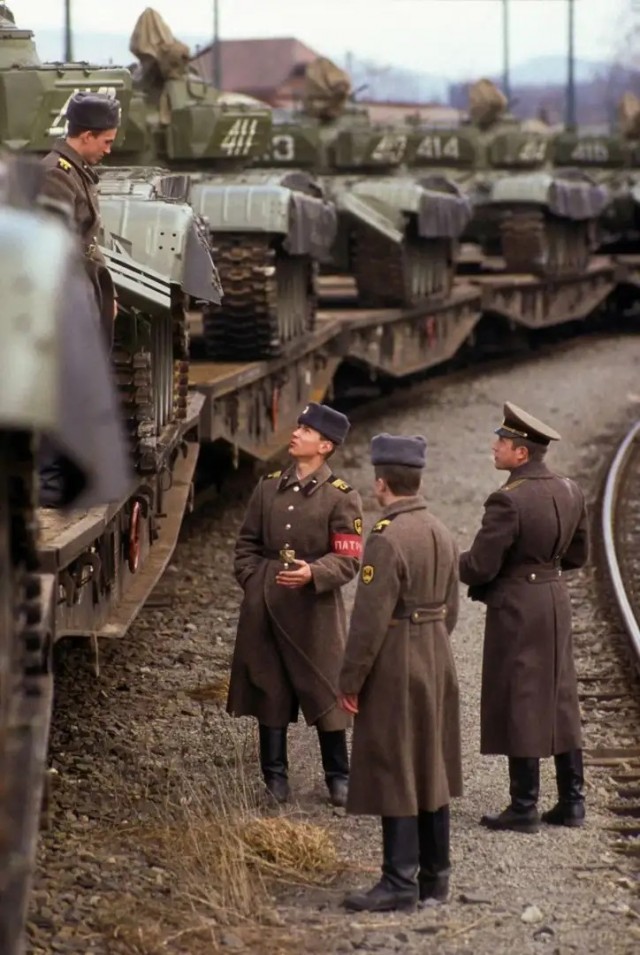
Withdrawal of Soviet troops and the GDR.
It was necessary to transport more than five thousand tanks, 10 thousand armoured vehicles, about 500 helicopters and various property to the territory of Russia. All this happened during the period of the already collapsed Soviet Union, when ties between the republics were severed, chaos reigned on the railways, and valuables were squandered. Some were starting businesses, others were falling into the abyss of poverty, and no one cared about the Army returning from Eastern Europe.
The equipment was difficult to transport in such conditions, so it was often cut and scrapped.
No one expected the Army in Russia
For six months, the military was not paid salaries, severance pay for the retired personnel, and subsequently pensions.
The army was returning not only from Germany, but also from Poland, Czechoslovakia, Hungary, and in Russia it was not expected, more than 350,000 officer families were left without a roof over their heads.
As of August 31, 1993, of the 22 military camps that began to be built, only two were put into operation.
There was nowhere to place the newly arrived regiments and divisions with equipment and people, sometimes they settled in dilapidated towns and rebuilt them, and often they were placed in an open field.
Families settled in tents or metal barrels, where it was cold in winter and hot and stuffy in summer. It wasn’t until some time later that new military camps were built, by which time many families had simply broken up.
In connection with the current situation, the German government promised to allocate 15 million marks for housing for the military withdrawn from Germany, but allocated only 8.
The banners of the legendary regiments and divisions, along with their orders, were sent to army depots and forgotten that their fathers and grandfathers went into battle under these banners, defended Moscow, liberated Kiev, Minsk, Warsaw, and finally the whole of Europe and took Berlin.
The Europeans regarded the withdrawal of our army as a “revision of the results of the Second World War”. And, if earlier Soviet soldiers were liberators, then after this public self-abasement and voluntary withdrawal they began to be called “rapists and robbers” and broadcast this image in books, films and TV shows.
This is exactly what the new generation of Germans thinks, which demands to send equipment and weapons to the Ukrainian Nazis.
Afterword
The unilateral withdrawal of troops in 1994 from Germany, and from Europe, can only be seen as a colossal geopolitical defeat and a political crime. The country that crushed fascism turned into a laughing stock, and an insignificant drunk clown was the first to laugh at it.
And in Europe, that we left in the 90s, there are now NATO troops with cruise missiles. They are located near our borders and regularly conduct exercises, although the US Secretary of State once promised Gorbachev that not a single NATO soldier would cross to the right bank of the Oder. We were just tricked then.
The next two materials are first-hand accounts, written by Nikolai Uteshev, a veteran of the Group of Soviet Forces in Germany on the moment of its withdrawal.
GSVG. Withdrawal of Soviet troops from Germany. How it was. Part 1.
On March 11, 1985, our country was led by a young and energetic politician, Mikhail Sergeevich Gorbachev.
With his arrival, we learned what Perestroika, Democracy and Glasnost are. We also learned about the Crisis, Unemployment, and Deficit.
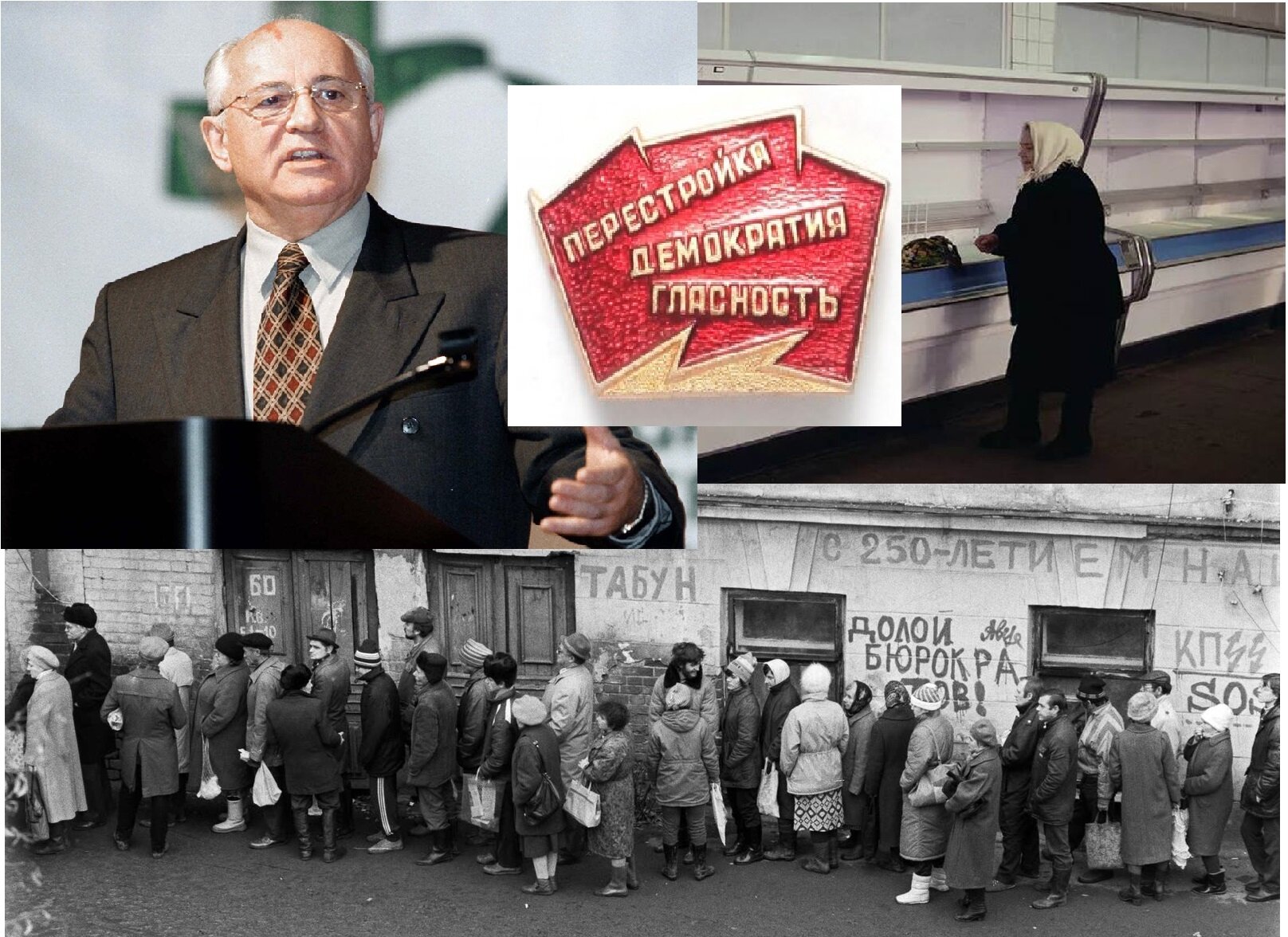
GORBACHEV AND PERESTROIKA
Food shortages were particularly painful for people. The country was already approaching the point where there would be nothing left to feed the Army with. And it was decided to get rid of the unnecessary mouths – to reduce the Armed Forces.
On March 21, 1989, a decree was issued by the Presidium of the Supreme Soviet of the USSR “On the reduction of the Armed Forces of the USSR and defence spending during 1989-1990.” The size of the army was being decreased by 500 thousand people, and defence spending by 14.2%.
This was the background to the withdrawal of the Western Group of Forces (WGF) from Germany, which until 1989 was called the GSFG (Group of Soviet Forces in Germany). And that’s how it happened.
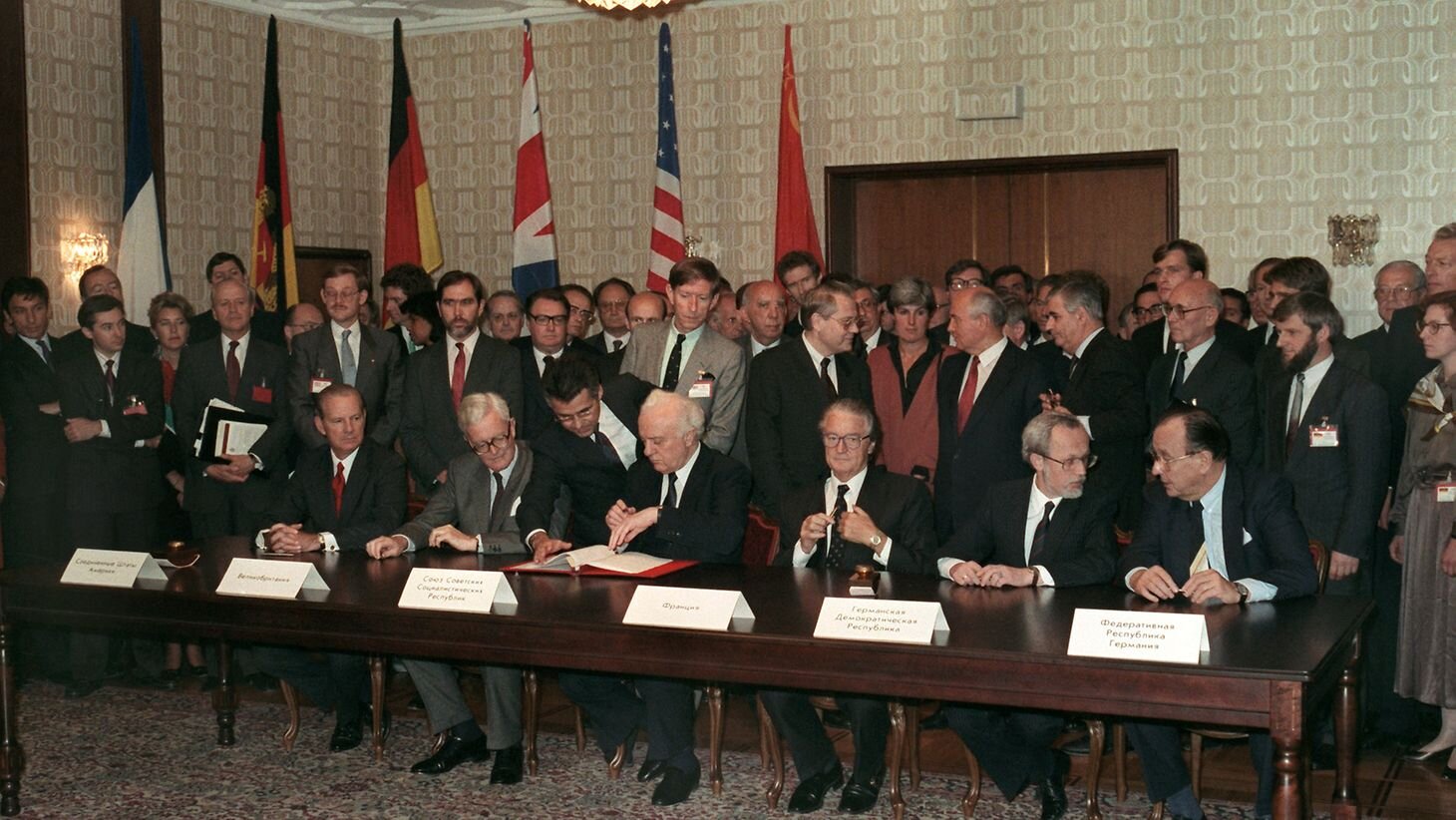
SEPTEMBER 12, 1990. THE SIGNING OF THE TREATY ON THE UNIFICATION OF GERMANY. Photo source orientalreview.org
On September 12, 1990, the foreign ministers of six countries (the FRG, the GDR, the USA, France, Great Britain and the USSR) signed an agreement on the unification of the two German republics. Simply put, the FRG absorbed the GDR. In this document, the stay of Soviet troops in East Germany was described as temporary. Moscow committed to withdraw them completely by the end of 1994.
After receiving the order to withdraw troops to the Union, the commander of the Group, General Boris Snetkov, refused to comply with it: “I will not withdraw the Group! Marshal Zhukov founded a Group of Soviet occupation forces in Germany, it was created by prominent military leaders, and I, the fifteenth commander-in-chief, will disperse?! I won’t do it!”
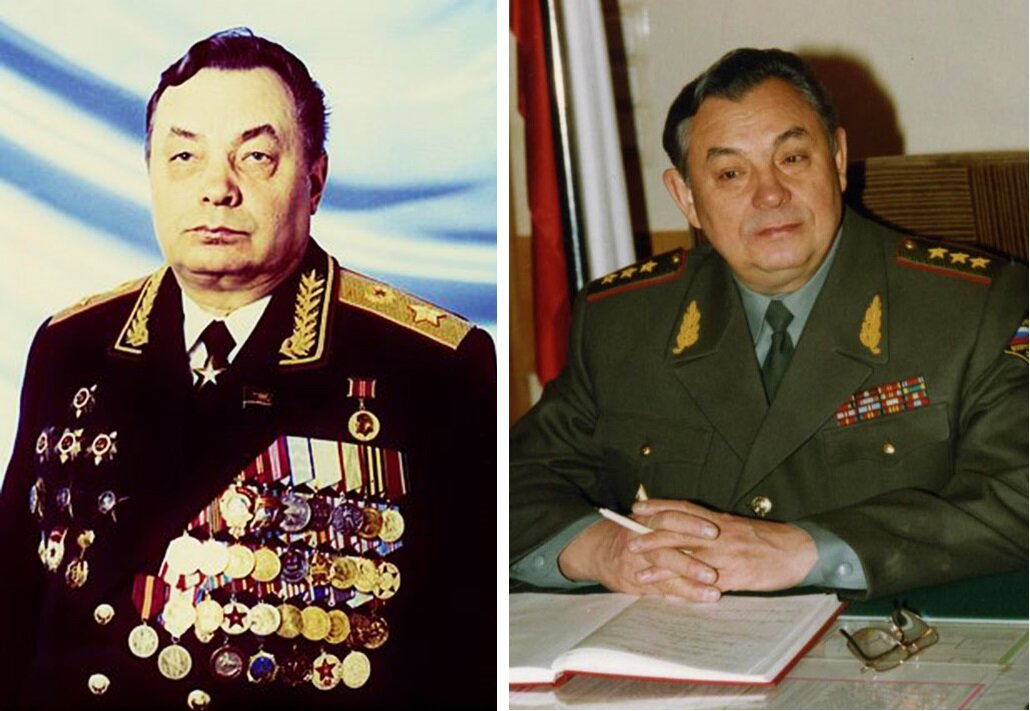
THE COMMANDERS-IN-CHIEF OF THE WGF – GENERAL OF THE ARMY SNETKOV B.V. and COLONEL GENERAL BURLAKOV M.P.
For this refusal, he was removed from office. He was replaced as commander-in-chief by Matvey Burlakov, who had previously headed the Southern Group of Forces (Hungary).
The new commander faced a difficult task. The largest group was located in the GDR, which, in the event of war, was supposed to cover the border during the mobilisation of the Armed Forces of the USSR and other participants in the Warsaw Pact. The WGF consisted of three combined armies, two tank armies, and one air army.
The total number of personnel exceeded 330,000. And taking into account their family members, more than half a million people had to be sent home.
In addition, there was a huge amount of state-of-the-art military equipment and 2.6 million tons of logistical reserves in the ZGV. The ammunition alone weighed over 650,000 tons.
It was planned to transport all this mass of people, equipment and cargo by rail and sea in just four years. From 1991 to 1994 inclusive.
But they almost had to abandon rail transportation. Poland set as a condition repair of all bridges along the route of military trains. In addition, the Poles estimated the passage of each axle of the wagon through the territory of the country at four thousand West German marks.
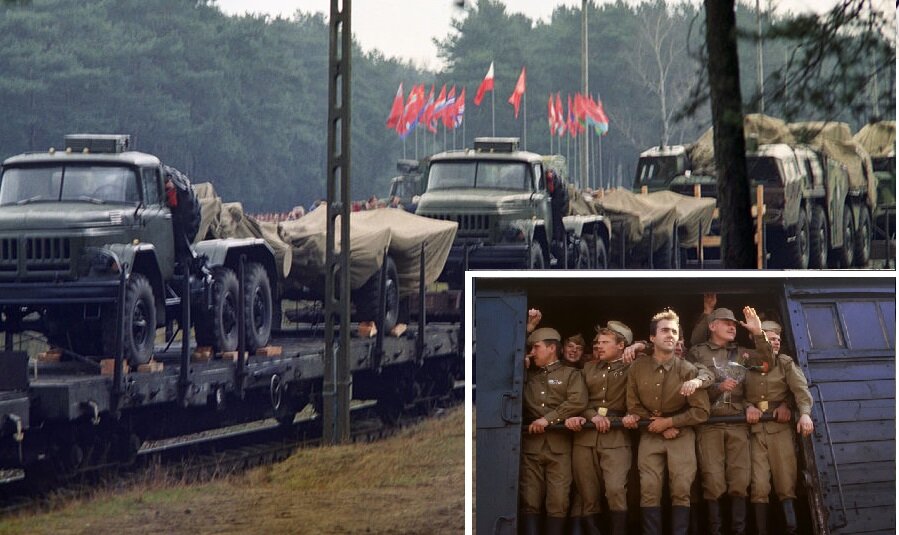
The amount was absolutely unrealistic. Germany allocated only 1 billion marks to cover all transportation costs.
The German leadership managed to convince Poland to moderate its mercantile appetites. And on September 30, 1994, the last of 15,000 military trains was solemnly dispatched from Berlin’s Lichtenberg train station.
But the main burden fell on sea transport through the ports of Rostock and Rügen. Moreover, there was a mixed land-sea method of transporting troops – by ferry from the German port of Mukran to Klaipeda and then by self-propelled boat through Lithuania.
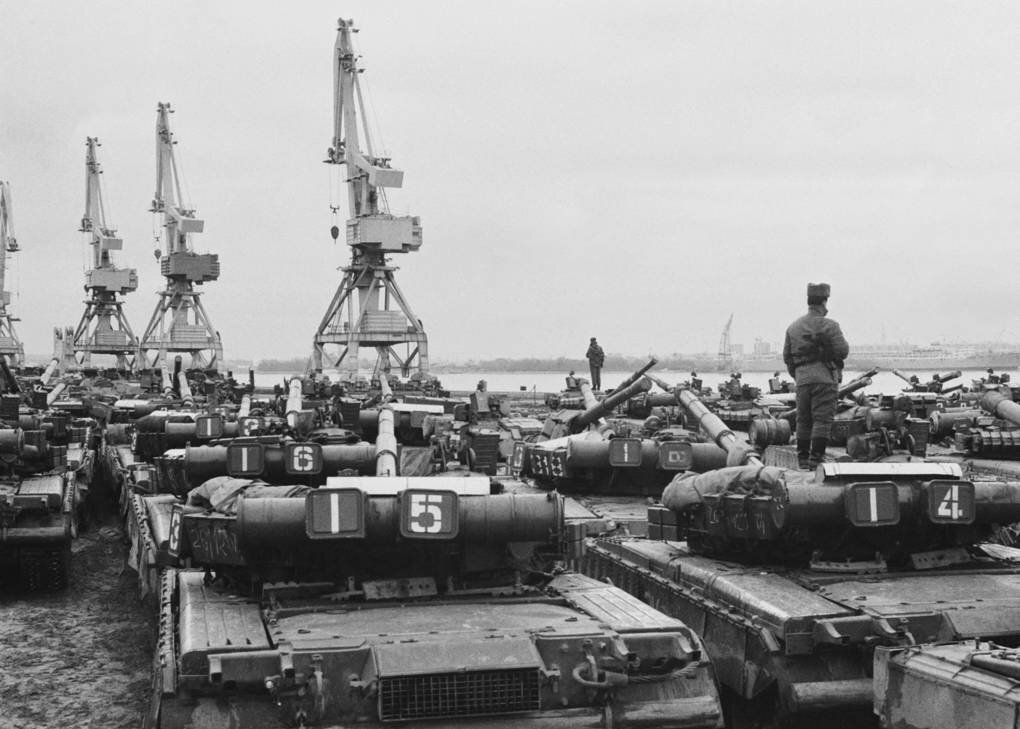
LOADING OF EQUIPMENT ON SEA VESSELS. Photo source newsae.ru
Logistics problems were far from the only ones in carrying out such a large-scale operation. People had to be provided with housing in their homeland. Initially, it was planned to withdraw the troops as houses were built for them.
But of the 15 million marks promised by the German government for this purpose, our country received only 8 million. Only 45,000 houses were built on them. And more than 170,000 families of officers were left homeless.
It should also be taken into account that, in addition to the Western Group of Forces, troops were simultaneously being withdrawn from Poland, Czechoslovakia, Hungary and even Mongolia. It was impossible to provide housing for everyone. Often, military units were simply led out into the open field: MOTHERLAND, MEET US!
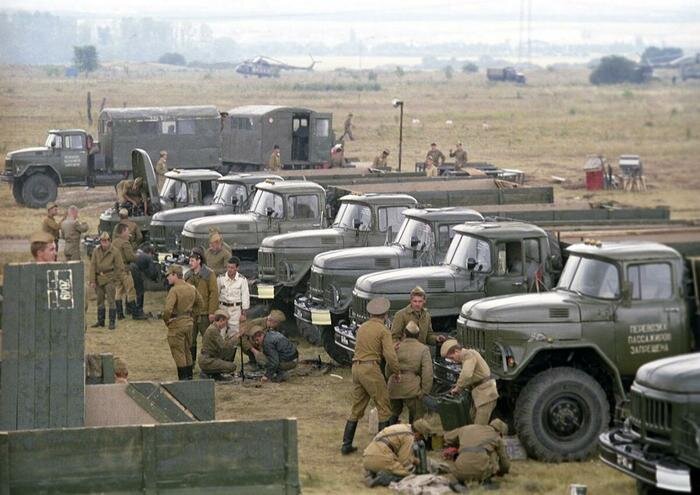
Who can count how many family dramas and tragedies took place at that time? And how many officer families broke up then, which then never reunited.
The housing problem was compounded by the fact that the redeployment of troops coincided with the collapse of the Soviet Union. Construction began in the western regions of the then united country. And it was completed when the Baltic republics, Ukraine and Belarus became independent states. And who to settle in the built houses was then decided by the leadership of these republics. Providing housing for former Soviet officers was not at all part of the Baltic states’ plans.
Such a collapse occurred not only in the army, but throughout the country. Factories and manufactures were shut down everywhere, and their workers were thrown on the street. But the largest category among the unemployed were former military personnel.
If such an attitude was directed towards the officers, then the situation of the soldiers was many times worse. Upon arrival in the Union and before their demobilisation, they survived as best they could.
This is how the withdrawal of our troops from Germany took place. But in order to please the West, they concluded it even four months earlier than planned.
The completion of this operation is considered to be a ceremony held on August 31, 1994.
The Last Parade. August 31, 1994.
Russian President Boris Yeltsin arrived in Germany to participate in it. This is how the Russian media described the event:
“The historic event was marked by a farewell parade in front of the monument to the Soviet soldier-liberator in Treptow Park in Berlin, attended by Russian President Boris Yeltsin and German Chancellor Helmut Kohl. In the evening, a festive concert of Russian and German artists was held in Lustgardem Park.”
In conclusion, I must say that most of the military units and formations that became famous in battles were disbanded immediately after arriving at their homeland. Such is a bitter page in the history of our Army.
GSVG. Withdrawal of Soviet troops from Germany. How it was. Part 2.
This operation was completed in 1994. But East Germany still had a well-developed infrastructure, which the Soviet Union had invested in for 45 years. The troops were stationed in 777 military towns, which housed more than 36,000 buildings and structures. Barracks, parks for military equipment, warehouses and arsenals, auxiliary farms, boiler houses and hospitals with the most advanced equipment at that time.
The WFG also had airfields, factories, schools, pioneer camps, sanatoriums, a retail chain, officer houses, television centers, consumer service complexes and clubs.
No one calculated the value of all this property. Offhand, they called the amount at $28 billion. But this is a very rough estimate. In the end, Russia received only DM550 million in compensation, or about $385 million. Why did this happen?
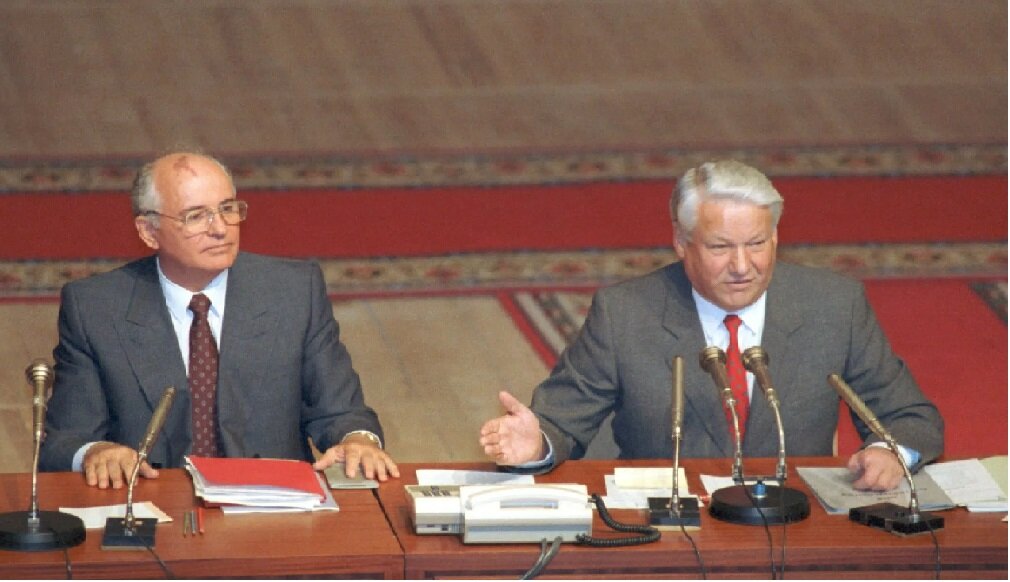
TWO FACES FROM THE SAME BOX
First of all, neither Gorbachev nor Yeltsin tried to extract maximum profit from this sale. It was as if the property of the Group of Forces prevented them from living and distracted them from some more important state affairs. And they wanted to get rid of it as soon as possible, even if for a nominal price. And they didn’t care much about the well-being of their citizens in a dilapidated country.
Another reason was that the financing of units and formations at that time was unstable and often completely interrupted. This forced their commanders to engage in commerce on their own, which also did not add revenue to the treasury.
In the end, all that remained of the decentralised sales, was transferred to the German Ministry of Finance for distribution. It is clear that Germany was interested in selling real estate at the lowest price. In addition, this product was not in high demand. After the fall of the Berlin Wall, many Germans moved from East Germany to West Germany in search of good jobs.
All this led to the fact that the residual value of the property decreased to DM10.5 billion (about $7.35 billion). At the same time, Germany filed a counterclaim against Russia for environmental damage.
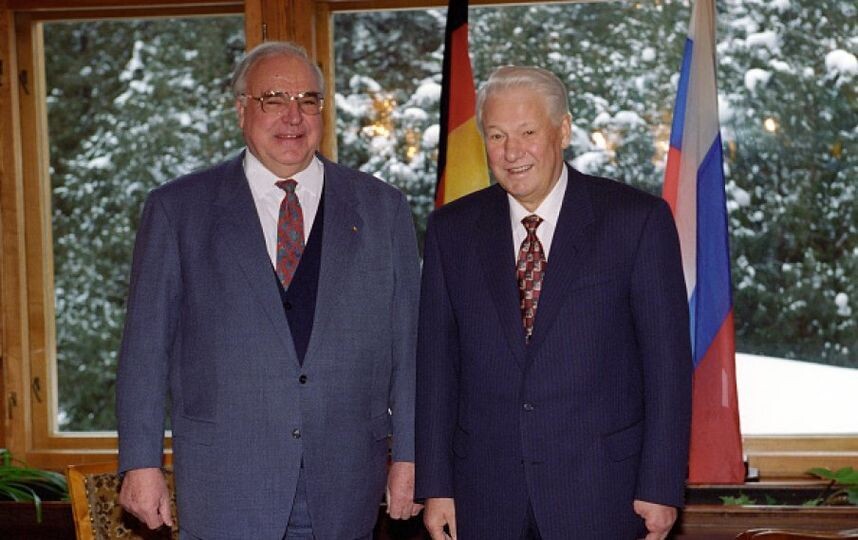
HELMUT KOHL AND BORIS YELTSIN
In May 1992, Russian President Boris Yeltsin sent the following proposal to German Chancellor Helmut Kohl. Of the total value of the property, Russia receives DM6 billion ($4.2 billion), and the rest was supposed to cover Germany’s counterclaims. But during the negotiations, the Russian side did not show perseverance and received only DM550 million (about $385 million) in compensation.
That’s it – 385 million instead of 28 billion. So the entire infrastructure of the GSFG-WFG was transferred to Germany for free. Corruption scandals broke out in Russia regarding illicit enrichment during the sale of WFG property. Even the then Minister of Defence Pavel Grachev and the commander-in-chief of the WFG Matvey Burlakov became defendants. But scandals flared up and died down. And even criminal cases against senior officers of the Ministry of Defence were dropped for lack of evidence of a crime.
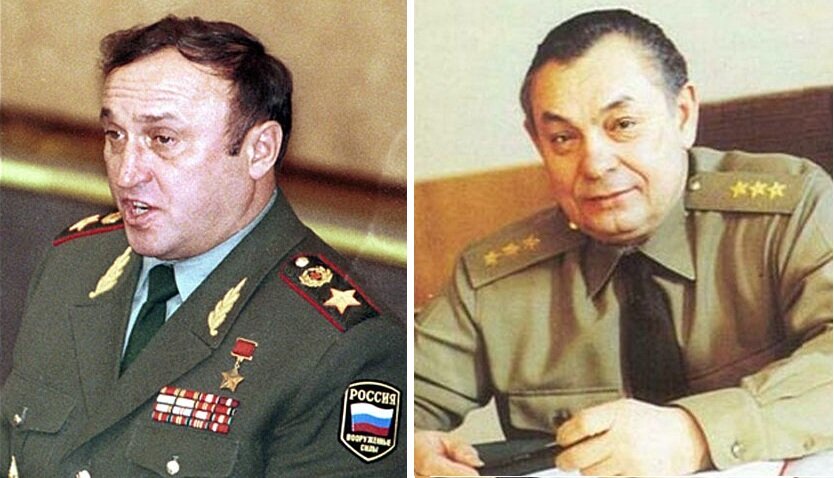
PAVEL GRACHEV AND MATVEY BURLAKOV
Some of what we left in Germany, is still used by the Germans. Many of the barracks were useful for housing refugees from Africa and the Middle East. Other military units turned into ruins and were simply demolished.
In conclusion, I would like to quote the words of German Chancellor Helmut Kohl:
“If Gorbachev had said, give me 100 billion and you will get the GDR, then we would have given him these 100 billion. After all, East Germany’s annual budget was 500 billion.”
But Mikhail Sergeevich exchanged the GDR and its military infrastructure for the title of “THE BEST GERMAN,” as he is called in Germany. And Boris Yeltsin continued his work.
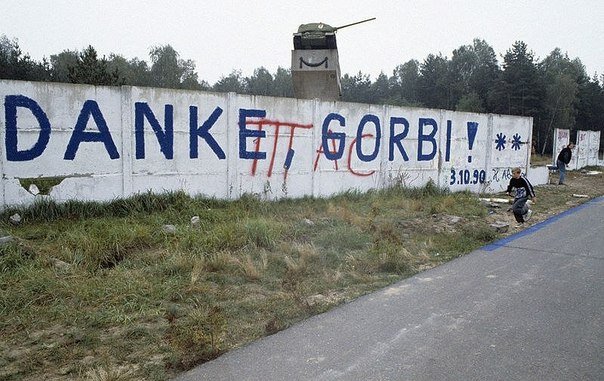
Thanks, Gorbi!
In part 3, the author tells about his home base and how it was sold at an auction. We decided not to include it here.
The hasty withdrawal of Soviet troops from Europe: mistake or betrayal?
By Dmitry Rodionov, July 28, 2021
On July 1, 1991, the Protocol on the Complete Termination of the Warsaw Pact was signed in Prague. This decision was already a simple statement of historical fact – the organisation had lost its meaning of existence. Two years earlier, the communist regimes were overthrown by “velvet” (Poland, East Germany, Czechoslovakia, Bulgaria) and not so much (Romania) revolutions as a response to perestroika in the USSR. At the same time, the Berlin Wall fell, symbolising the end of the Cold War.
In fact, this was consolidated at the Maltese summit of Mikhail Gorbachev and Donald Reagan in the same 1989. During this meeting, agreements in principle were reached on the non-interference of the USSR in the affairs of Eastern European countries, agreement on the unification of Germany and concessions by the central authorities of the USSR in relation to the Baltic republics were recorded.
Already in 1990, the unification of Germany took place. In the same year, Soviet troops began to leave Czechoslovakia, Hungary and Poland. Germany had the largest group, and its withdrawal stretched all the way to 1994, when the army of a completely different state, Russia, was being withdrawn.
The withdrawal of our troops was accompanied by dramatic events: entire garrisons were literally led out into an open field, destinies were broken, a lot of property was simply abandoned, equipment was cut to scrap metal, and on the way to Russia, military personnel were often attacked by home-grown robbers, a typical product of the era of that time.
But perhaps the most dramatic thing was the realisation of our geopolitical defeat. The euphoria from the end of the cold war (if anyone had it at all) passed quickly, the defenders of the motherland returned to a new and largely unfamiliar country, and it was clear that their profession was not in high esteem. And the very phrase “national interests” provoked only a derisive grin.
It should be noted that the shock of the ridiculous and unexpected historical cataclysm happening before their eyes was felt not only by the citizens of the USSR. The shock was also felt in the West – they managed to win the cold war, which lasted for decades and seemed to be a constant of world politics, without firing a single shot.
“I remember the NATO generals saying: you cannot be defeated in open battles, but you are unlucky with your rulers,” the then chief of Intelligence of the 20th Guards Combined Arms Army, Vasily Samoilov, quotes in the article dedicated to the 30th anniversary of those events.
However, without at all absolving our traitors of responsibility (and this was, of course, not one or two people, but a whole political class), it is worth noting that there was also an openly fraudulent game on the part of the West. Of course, as they say in Russia, life is bad without a sucker, so the actions of our opponents are also quite understandable. It was a long-term effort on both sides, which eventually resulted in success for them and defeat for us.
Nevertheless, whenever they talk about the events of those years, it is customary to remind Americans of the broken promises about the non-expansion of NATO to the east, the existence of which has not been proven in reality due to the lack of any documentary evidence (BATS. This article is from 2021. Since then, numerous documentary evidence was found by Western historians. See the article The “Not an inch Eastward” NATO abomination is turning 76). It is believed that such promises were given verbally to Gorbachev.
It’s hard to say what would have happened if they had been given in writing – we know that NATO members easily violate any obligations. Most likely, they were still so stunned by how we strangle ourselves with our own hands, at first they probably didn’t even know how to react, but they quickly pulled themselves together and took advantage of the situation. It is worth recalling that Reagan considered the meeting in Malta premature, fearing that Gorbachev would set conditions for him, but the US president was persuaded by F. Mitterrand, M. Thatcher and their own congressmen.
The other day, former Reagan adviser Suzanne Massey surfaced in the media again, talking about the situation in 1990. “Of course, it was an element of great betrayal, but not by Gorbachev, but by NATO. It was the representatives of the alliance who said that since no documents were signed, there was no agreement. But I see no reason not to believe Gorbachev: he was simply deceived, having been promising such an agreement and not keeping their word,” Massey said, adding that the president of the USSR was a victim of the atmosphere of trust that arose during the Reagan years.
“But the story of NATO and the agreement is George H.W. Bush, not Reagan, another administration and, unfortunately, other people. I am very ashamed of this story,” says Massey.
However, it looks like she’s lying. It is not known how Bush would have behaved if his predecessor had given written guarantees, but it is also unknown how Reagan would have behaved if he had remained president for another term. Now it is easy for his colleagues to pretend to be “holy innocence”, they say, history does not know the subjunctive mood.
However, history knows well the reasons and sequence of the policy that the United States has pursued towards Russia since the beginning of the Cold War (and in fact since the Russian Revolution, when the young Soviet republic became a bone in the throat of the entire world imperialism). And it is naive to think that any of the American leaders seriously thought that after the eradication of socialism, our country would become a free and equal member of the Western family.
“I think the complete withdrawal of troops was a geopolitical mistake, not only by our leadership, but also by the West. They were thinking of standing on a pedestal there, commanding the world against Russia. In the end, the West hurt itself,” Chief of Staff and First Deputy Commander of the Western Group of Forces (1993-94) Anton Terentyev says in an interview.
According to him, Helmut Kohl (who was obviously also shocked by the ease with which Moscow agreed to surrender absolutely all positions) suggested leaving at least one of our divisions in Germany. “We could build European security together. But James Baker – the then US Secretary of State, said: withdraw every last soldier. As a result, the West received an offended and embittered Russia, which began to concentrate its forces,” the general said.
An interesting thought, not devoid of rational grain.
Today, experts in the West are puzzling over what went wrong. Why did Russia, which freed itself from the “dictatorship” in 1991 and claimed to be a full-fledged partner of the West (it was even included in the “big eight”), enter the clinch of a new confrontation with it 20 years later?
The answer is simple: The West has never seen Russia as its equal, perceiving it as a gas station country, a semi-colony whose elites can be controlled through their capital at home. Of course, they also did not see the representatives of our elites, who became such through dubious “deals” from any point of view, as their equals.
This is exactly what gave rise to the desire to continue attacking the geopolitical interests of the seemingly defeated enemy, finally depriving him of even the hypothetical possibility of ever being reborn, especially since the enemy, even after being defeated, remained the only country in the world capable of destroying the United States. In nature, this is called a natural enemy. Of course, any predator always seeks to destroy a natural enemy on its territory just to protect itself.
The other day, Russian Ambassador to the United States Anatoly Antonov said in an interview with RT that Russia and the United States began to feud even before the start of the Ukrainian crisis. “I’m trying to find a day when Russia became an enemy or an opponent for the United States. It seems like ten years ago,” he commented on the journalist’s suggestion that the crisis in Russian–American relations began during the events in Ukraine in 2014.
And here the ambassador is obviously wrong. After all, even earlier, with the advent of Barack Obama, there were attempts to “reset” our relations, which means that even then something was wrong in them. It was in 2009. Two years earlier, Vladimir Putin delivered his famous Munich speech, in which he accused the United States of trying to create a unipolar world.
However, the fact that the United States is building a unipolar world with itself as the winner was clear back in the 1990s, when they broke international law over their knees, staging barbaric bombardments of dissenters, expanding NATO, contrary to their own promises, destroying the established international security system, withdrawing from the ABM treaty, which again made reality the threat of global war. It’s just that before that, Russia thought that Washington’s line was “remnants of block thinking” and that we could find a compromise.
But after 2008, and especially after 2014, it became clear that we would not be able to. Washington will be satisfied only with Russia of the model of the 90s, when we did not even declare any national interests, and American advisers sat in every government office. And perhaps it would have continued like this if the Americans had not started to overdo it, starting to threaten the existence of our state and rejecting all the claims of our elites to get out of a subordinate position.
Vladimir Putin once recalled an episode with a rat that resisted to the end when it was cornered. That’s exactly what happened. It would seem that Russia, brought to its knees, began to struggle simply for survival. And in this sense, General Terentyev is right.
…