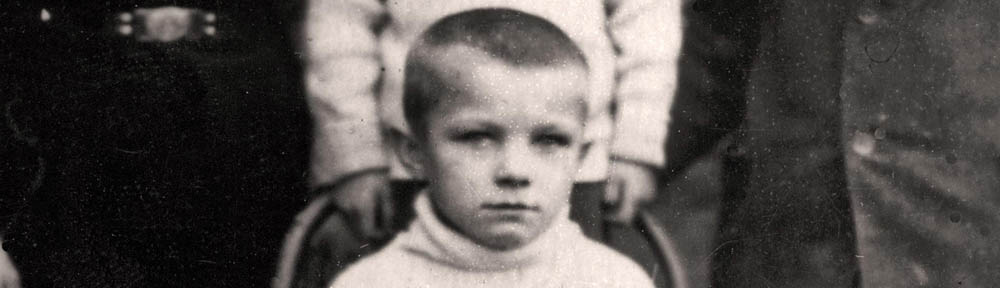
On the 65th anniversary of humanity’s first Space flight, we publish our translation of the first chapter of Yuri Gagarin’s book “The Road to Space”, where he tells about his younger years and the War time.
The original text of the book can be found here as an HTML or downloaded as a PDF from our blog. We also embedded the PDF at the bottom of this article.
Today, on April 19 – the Day of Remembrance of the Victims of the Genocide of the Soviet People – this fragment of Yuri Gagarin’s book serves as a sombre reminder of tragedy that befell the Soviet Union before it could lay the road to the Space.
SMOLENSK REGION IS MY NATIVE LAND
…The family in which I was born is the most ordinary one, it is no different from the millions of working families of our socialist Motherland. My parents are simple Russian people, for whom the Great October Socialist Revolution, like for all our people, opened a wide and direct path in life.
My father, Alexei Ivanovich Gagarin, is the son of a poor peasant from Smolensk. He had only two classes of parish school education. But he is an inquisitive man and has achieved a lot through self-education; in our village of Klushino, near Gzhatsk, he was known as a jack of all trades. He knew how to do everything in a peasant household, but most of all he did carpentry. I still remember the yellowish foam of the shavings, as if washing over his large working hands, and by the smells I can distinguish the types of wood — sweet maple, bitter oak, astringent taste of pine, from which my father made useful things for people.
In short, I have the same respect for wood as I do for metal. My mother, Anna Timofeevna, told me a lot about metal. Her father, and my grandfather, Timofey Matveyevich Matveyev, worked as a drill biter at the Putilov plant in Petrograd. According to my mother, he was a tough man, a master of his craft — a highly skilled worker, one of those who could, as they say, shoe a flea and forge a flower out of a piece of iron. I did not get to see Grandfather Timofey, but our family keeps the memory of him, of the revolutionary traditions of the Putilovites workers.
Our mother, like our father, was unable to get an education in her youth. But she’s read a lot and knows a lot. She could correctly answer any question the children asked. And there were four of us in the family: the elder brother Valentin, who was born in the year of Lenin’s death; sister Zoya, three years younger; and finally, me and our younger brother Boris.
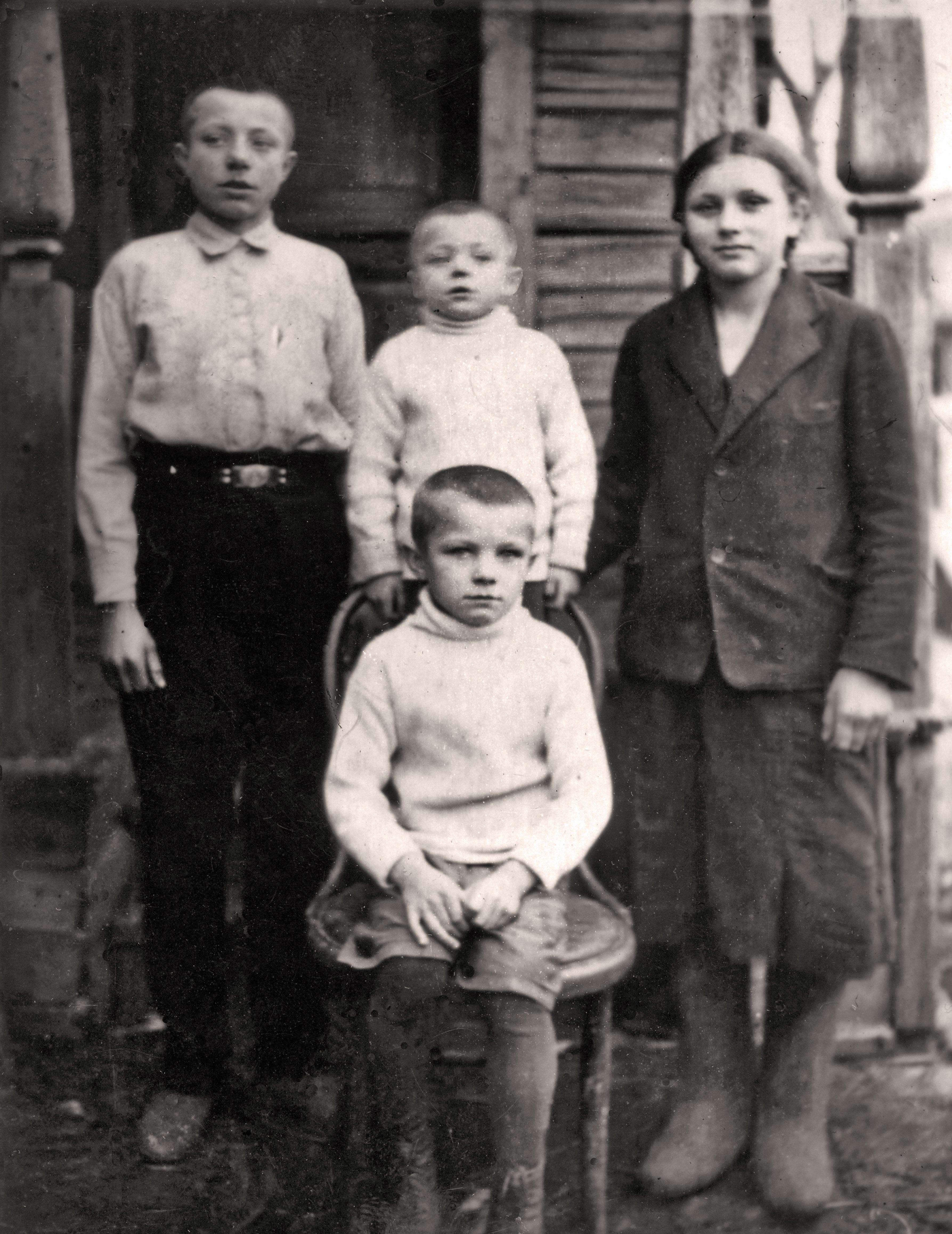
Childhood years. Yuri Gagarin (sitting in the center), his older brother Valentin, younger brother Boris and sister Zoya.
I was born on March 9, 1934. My parents worked on a collective farm, my father was a carpenter, and my mother was a milkmaid. For her good work, she was appointed head of the dairy farm of the collective farm. She worked there from morning until late at night. She had a lot to do: either the cows were calving, then to worry about the young ones, then she was worried about the feed.
Our village was beautiful. Everything is green in summer, deep snowdrifts in winter. And the collective farm was good. People lived in prosperity. Our house was the second on the outskirts, by the road to Gzhatsk. There were apple and cherry trees, gooseberries, and currants in the small garden. There was a flowery meadow behind the house, where barefoot children were playing “Lapta” (traditional Russian folk team sport, similar to “baseball” and “cricket”) and “Gorelki” (an old Russian folk gane of Spring, similar to “Tag”). I still remember being a three-year-old boy. My sister Zoya took me to school on May Day. I was reading poetry from a chair there:
The cat sat on the window sill,
She purred in her sleep…
The schoolchildren applauded. And I was very proud: after all, the first applause in my life.
I have good memory. And I remember a lot of things. Sometimes you’d sneak up on the roof, and in front of you were collective farm fields, endless as the sea, and the warm wind was driving golden waves through the rye. You lift your head, and pure blue is up there… It ‘s as if you plunge into this beauty, and float to the horizon, where the earth and sky converge. And what birches we had! And the gardens! And the river where we went swimming, where we fished minnows! Sometimes, you’d rush with the guys to mom’s farm, and she’d pour each of us a mug of fresh milk and cut off a slice of fresh rye bread. It’s so delicious!
Mom used to look at us, at her own and the neighbourhood kids, and say:
— You have a happy childhood, urchins, not like your father and I had.
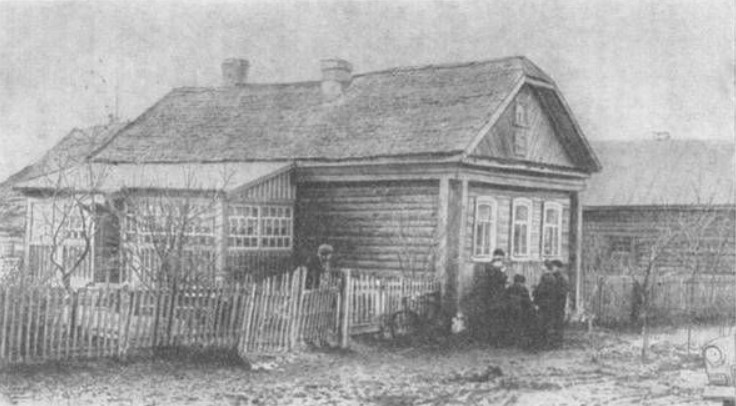
The house in Gzhatsk where Yuri Gagarin lived.
And she’ll get pensive and become sad. And her face is so sweet, so sweet, like in a good picture. I love my mom very much, and I owe everything I’ve achieved to her.
My father has a brother, Pavel Ivanovich. He served as a veterinary medic. We loved it very much when Uncle Pasha came to us and stayed the night. They’ll make a bed for us in a row on the hay, and we children will lie down with our uncle, and there will be conversations. We are lying on our backs with our eyes open, and above us are the constellations – one more beautiful than the next. Valentin, my older brother, kept asking questions:
— Do people live there?
Uncle Pasha will grin and say thoughtfully:
— Who knows… But I think there is life in the stars… It cannot be that out of millions of planets, only one Earth got lucky…
I was always drawn to school. I wanted to do my homework in the evenings, just like my brother and sister, and have my own pencil case, my own slate, and my notebooks. I often, together with my peers, enviously peeked through the school window, watching how the pupils put words out of letters and wrote numbers at the blackboard. Like all the guys, I wanted to grow up as soon as possible. When I was seven years old, my father said:
— Well, Yura, you’re going to school this fall…
In our family, my father’s authority was indisputable. Strict but fair, he taught us, his children, the first lessons of discipline, respect for elders, and love of work. He never used threats, abuse, or slaps, never cajoled or caressed for no reason. He didn’t spoil us, but he was attentive to our desires. The neighbours loved and respected him; the collective farm board respected his opinion. My father’s whole life was connected with the collective farm. The collective farm was his second home.
One Sunday, my father came running from the village council. We have never seen him so agitated and confused. And he spoke, like firing from a shotgun, exhaling the single word:
— War!
Mother sank into the bench, as if she had been knocked down, covered her face with her apron and began to cry silently. Everything suddenly dimmed. Clouds covered the horizon. The wind blew the dust down the street. The songs stopped in the village. And we boys became quiet and stopped our games. On the same day, recruits, the finest of the collective farm: tractor drivers, combine harvesters, livestock breeders and field breeders, left the village for Gzhatsk on carts and on a collective farm truck with plywood suitcases. The whole collective farm saw off the guys going to the front. Many parting words were said, and many bitter tears were shed.
Like water in a flood, the war rolled closer and closer to our Smolensk region. Refugees passed through the village in silence, like shadows, the wounded passed by, everything was moving somewhere far, to the rear, to the distant lands. They said that the fascists had wiped Minsk off the face of the earth, and that bloody battles were taking place near Yelnya and Smolensk. But everyone believed that the Fascists would not go further.
September came, and I went to school with my peers. It was a long-awaited, solemn, and yet marred by the War, day. As soon as we got to know the class, we started writing the first letter-“A” and setting the sticks in patterns, as we hear:
— The fascists are very close, somewhere near Vyazma…
And just on that day, two airplanes with red stars on their wings flew over our village. The first planes that I had ever to see. I didn’t know what they were called then, but now I remember, one of them was “Yak” and the other “LaGG”. The LaGG was shot down in an air battle, and the pilot pulled it with his last strength into a swamp, overgrown with water lilies and reeds. The plane crashed and broke, and the pilot, a young guy, successfully jumped off right above the ground.
Next to the swamp, a second plane, a Yak, landed on a meadow. The pilot did not leave his friend in trouble. All of us boys immediately ran there. And everyone wanted to at least touch the pilots, climb into the cockpit of the plane. We greedily inhaled the unfamiliar smell of gasoline, examined the ragged holes on the wings of the planes. The pilots were excited and angry. Gesturing with their hands, they said that the Germans had paid dearly for the mangled “LaGG”. They unbuttoned their leather jackets, and the medals flashed on their tunics. These were the first orders that I saw. And we boys understood at what cost these military awards are acquired.
Everyone in the village wanted the pilots to spend the night at his house. But they spent the night at their Yak. We didn’t sleep either, and, shivering from the cold, we stayed with them and, overcoming sleepiness of youth, did not take our eyes off their faces. In the morning, the pilots flew away, leaving bright memories of themselves. Each of us wanted to fly, to be as brave and handsome as them. We were experiencing some strange, unknown feeling.
Events unfolded quickly. Convoys of trucks hurriedly passed through the village, hastily carrying the wounded. Everyone started talking about evacuation. There was no time to delay. Uncle Pasha was the first to leave with the collective farm herd. My mother and father were preparing for the road, but they didn’t make it in time. The thunder of artillery cannonade roared, the sky was painted with a bloody glow of fires, and suddenly German scooters burst into the village on bicycles. And there was an incredible commotion. Mass searches began: the fascists were persistently looking for partisans, but they took away good items under this guise, they did not disdain taking clothes, shoes, and grub.
Our family was kicked out of the house, which was occupied by German soldiers. They had to dig a dugout, and huddled in it. It was creepy at night, when the engines of fascist planes heading towards Moscow hummed mournfully in the sky. Father and mother walked darker than clouds. They were worried not only about the fate of their family, but also about the fate of the collective farm and our entire people. My father did not sleep at night, he kept listening for the sound of Soviet guns, for our troops advancing, he whispered anxiously with his mother about the Belorussian partisans who appeared nearby, worried about Valentina and Zoya — they were almost adults now, and in neighbouring villages the Gestapo and policemen were abducting young people into slavery.
We received no radio, no newspapers, no letters, and no news about what was happening in the country. But soon our people felt that the Germans had their hides beaten badly. Wounded and frostbitten Nazi soldiers were taken through the village. And more and more with each day. I remember how my father ignited the fire one night, went upstairs from the dugout, stood there and, returning, said to my mother:
— They’re shooting…
— Maybe the partisans? — Mom asked.
— No, the regular army. It’s thundering all over the place…
In the morning, German cars with soldiers, tanks and cannons began to flow through the village. It was no longer the same army that had recently moved east. As we later learned, the remnants of the SS division that had been defeated near Moscow were retreating past us. All our villagers were waiting for the imminent hour of liberation. But the fascists managed to hold on to the defensive line, and our village remained in their immediate rear.
Our house has now been chosen by a seasoned fascist from Bavaria. His name was Albert, I think. He was charging car batteries and couldn’t stand us kids. I remember once when younger brother Borya came up to his workshop out of curiosity, and he grabbed him by the scarf that he had around his neck and hung him by that scarf on an apple tree branch. He hung him up and laugh-neighed like a stallion. Well, my mother, of course, rushed to Borya, but the Bavarian wouldn’t let her close. What was I supposed to do? I feel sorry for my brother, and I feel sorry for my mother. I want to call people, but I can’t: my throat got all tight, as if they had hanged me instead of Borka. If I were an adult, I’d show him, that damned fascist…
It’s a good thing that some boss called the Bavarian, and my mother and I saved our Boris. We took him to the dugout and barely brought him back to life.
Imitating our elders, we boys slowly harmed the Germans as best we could. Sharp nails and broken bottles were scattered along the road, puncturing the tires of German cars, while for this Albert, who bossed around in our house, we stuffed rags and garbage into the exhaust pipe of his engine. He hated me and wouldn’t let me near the dugout for several days. I had to spend the night with my neighbours, and all they talked about was how to annoy the fascists.
The front was slowly approaching the village. Even we children could feel it from the growing roar of artillery fire. Soon the front line was very close — only eight kilometres from our house. The village was packed with German troops. Our troops fired cannons at it and bombed it from airplanes. The fascists were particularly annoyed by our “night flyers” – “Po-2”. All night long they chirp like grasshoppers, and pour out and pour out “goodies”. That’s how we lived, in fire and smoke. Day and night, something burned nearby.
Nothing passed by the children’s attentive eyes. We guys saw everything, noticed everything. I remember once, six of our planes flew over the village. Then came the rumble of bombing. We’re looking, they’re coming back. But one thing is missing. There were six planes, and now there are five. And then we could only count up to ten, and we hadn’t gone through the subtractions yet, but we realised that one was missing. An we began to think: where did he go? And here he is. Burning, but it flies over the very street, packed with troops, and hits them from all the guns. Fascists run in all directions. Noise. Screaming. Panic.
We began to wonder: will he reach his own people or will he not? But the pilot turned around and again aligned on the column. Now he’s dropping bombs. And then he rammed into the thick of the Germans himself.
— Like Gastello! Like Gastello! — we shouted, who knew from adults about the feat of a man with this surname.
Both the plane and the pilot burned down. So no one in the village knew who he was, where he came from. But everyone knew that he was a real Soviet man. Until his very last breath, he beat the enemies. All day long the boys talked about the nameless hero. No one said it out loud, but everyone would like to live and die for their Motherland in the same way.
“Who will avenge the death of the hero? — We thought with sadness — Who’s going to tell his comrades how he died?”
We soon learned that the plane had been shot down by German anti-aircraft gunners entrenched on a hill behind the village. Retribution came immediately. In the morning, five of the same planes descended — now I know that they were attack aircraft “Il” — and mixed up both the anti—aircraft battery and its servants with the earth. Not a single fascist survived. Great job!
Klushino was cut off from the whole world at that time. Nobody knew what was happening at the fronts. But once a plane arrived, dropped a pack of leaflets. Like a flock of white pigeons, they circled in the sky for a long time and finally landed outside the village, on a snow-covered meadow. I grabbed one, took a quick look, and saw a drawing: a pile of skulls, with a raven sitting on top with Hitler’s face. And Russian letters. But I can’t read them. I glanced around to see if there were any fascists nearby, because they were punishing by death for the leaflets, I put it on my bosom and ran into the dugout. Zoya read it there and laughed happily:
— Yurka, you know, what a victory!
The leaflet told about the defeat of the Nazis at Stalingrad. There was no end to the joy. All the dugouts were talking about the defeat of the Fascists.
Soon there was a rumble on our front. The offensive of the Soviet troops began. It was then that the SS took our Valentine and Zoya and, in a convoy, along with other girls and boys, drove them west to Germany. Our mother, along with other women, ran behind the column for a long time, wringing their hands, and they were driven away with rifle butts, dogs were set on them.
A great grief has befallen us. And not only us, but the whole village was awash with tears, because in every family the fascists had driven someone into captivity.
But grief is never endless, joy has come, and what a joy! At midnight, two men in white sheepskin coats, earflaps, and machine guns covered with frost peeked into our dugout. They gave my father a cigarette and started asking questions. It was intelligence from ours. The first one of all time. We didn’t have anything to eat ourselves, but my mother made a fuss to feed them, cooked potatoes, though there was no salt.
The scouts disappeared as quietly as they had appeared. It’s like being in a dream. I even asked my father about them at dawn. And he looked at me slyly, grinned and said:
— It’s like I’m in a dream myself…
A day later, the Germans left our village. My father came out to meet ours and showed them where the Nazis had mined the road. All night long, he had secretly watched the work of the German sappers. Our colonel, in a tall bushy cap and green shoulder straps on his greatcoat, expressed gratitude to our father in front of all the people and kissed him like a soldier.
My father joined the army, and the three of us were left — Mom, me, and Boriska. Everything at the collective farm was now run by women and teenagers.
After a two-year break, I went back to school. We had one teacher for four classes, Ksenia Gerasimovna Filippova. The first and third grades studied in the same room at once. And when our lessons ended, the second and fourth grades came in our place. There was no ink, no pencils, no notebooks. The blackboard was found some place, but not the chalk. We learned to write on old newspapers. If we could get some wrapping paper or a piece of old wallpaper, then everyone was happy. In arithmetic lessons, we no longer stacked sticks, but cartridge cases. We boys had our pockets full of them.
There was no news from the older brother and sister for a long time. But the neighbours who escaped from captivity and returned to the village said that Valentin and Zoya also escaped from the Nazis and remained to serve in the Soviet Army. Soon a triangular letter with a field post stamp arrived, and I read syllable by syllable to my mother what Zoya had written to us. She wrote that she was a veterinary officer in a cavalry unit. Then came a letter from Valentine. He fought the Nazis in a tank, was a turret gunner. I was glad that my brother and sister were alive, and I was also proud that they were bashing the Nazis, from whom we had suffered so much.
My father didn’t go far with the army. Since his youth, he had been ill, and under the Germans, he also had a stomach ulcer due to starvation. He ended up in a military hospital in Gzhatsk, and remained there to serve as a non-combatant. He served and was treated at the same time.
The war lasted for a long time — it seemed like forever, everyone’s soul ached: after all, everyone’s loved ones were at the front.
The postman was the most welcome guest in every dugout. Every day he brought either joyful or sad news. One was awarded an order, the other was killed.
We had an old map of Europe in our classroom, and after class we rearranged the red flags on it, marking the victorious march of our troops.
— Soviet soldiers have liberated Bucharest!
— Sofia!
— They broke into Belgrade — the capital of Yugoslavia!
— Soviet troops have started fighting on German soil!
— They’re already in Austria, — Ksenia Gerasimovna told us with tears of joy in her eyes.
— Under the influence of the victories of the Soviet Army, the Resistance movement is spreading in European countries, the guerrilla struggle is flaring up, and the rear of Fascist Germany is cracking.
We spent hours standing by the map, studying geography according to the military reports of the Soviet Information Bureau.
There were no textbooks, and many boys learned to read using the “Infantry Combat Regulations”, forgotten by the soldiers in the village council.
And although a lot of things were unclear in the charter, the children liked the book, it required order and discipline from everyone.
Everyone was waiting for the end of the war, and one day my mother came running from the village council, smelling of ploughed land, hugged me, kissed me:
— Hitler Kaput, our troops have taken Berlin!
I ran outside and suddenly saw that the weather had turned for the better, spring was in the air, the gardens were blooming, the sky was blue and larks were singing in it. There were so many unexplored, joyful feelings and thoughts that even made my head spin. I was waiting for my sister and brother to return soon.
From now on, a new, undisturbed life full of sunshine began. I’ve loved the sun since I was a kid!
The war ended, and my father was left in Gzhatsk to rebuild the city destroyed by the invaders. He moved our old wooden house there from the village and put it back together. But I couldn’t forget our old house in Klushino, surrounded by lilac, currant and birch bushes, burdocks and chernobyl, blue bear ears — everything that connected me with childhood. Now we began to live in Gzhatsk, on Leningradskaya Street. And my school was different now. I was accepted into the third grade of the Gzhat basic school at the pedagogical college. This school trained primary school teachers. Future teachers had internships at our four-grade school.