
Continuing the topic of Romania and Moldavia, we present a translation of an article by Maxim Kemerrer, which was published in RuBaltic on July 17, 2022.
The atrocities of the Romanians shocked even the Germans: what was the Nazi occupation of Moldavia like
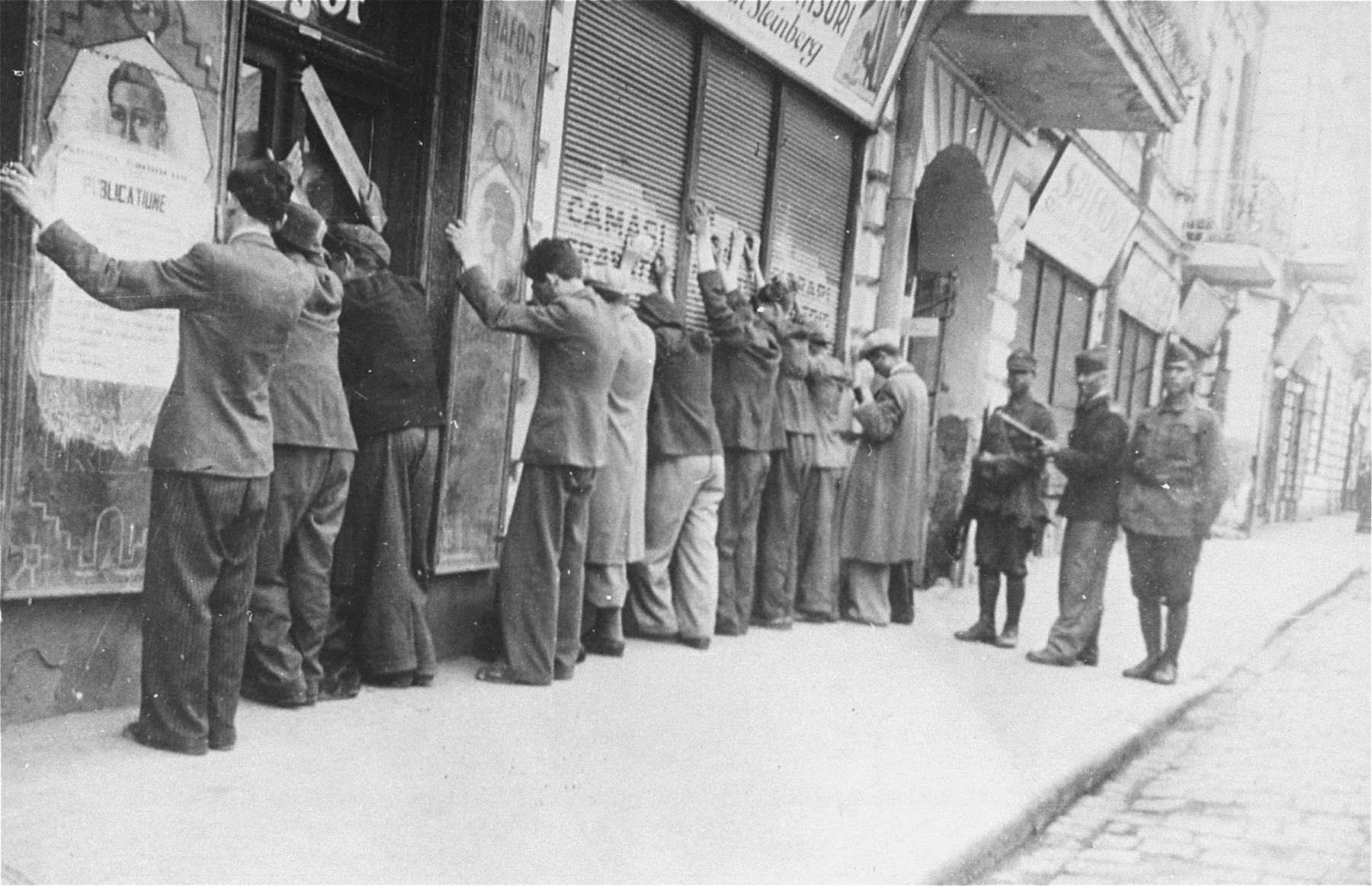
81 years have passed since the entry of Romanian troops into the capital of the Moldavian SSR, Chisinau. Today’s leaders in Chisinau and Bucharest call the events of the initial stage of the Great Patriotic War for another reunification of Romania and Moldavia. In fact, it was another occupation of Moldavia by Romania, which resulted in the terror of the civilian population and the destruction of the peoples of the multinational Moldavian SSR by the Romanian occupiers.
The state of Romania arose largely due to the support of Britain and France, who sought to create their own vassal near the southern borders of the Russian Empire, which could be used against Russia. (BATS note: yet, as we saw from the publication How Russia created Romania, it was done at the expense of Russia, and with Russian arms.) From the very beginning of its existence, Romania began to fulfil precisely this task, making territorial claims to Bessarabia.
However, it never wanted to go to war with Russia, and therefore, at that time, limited itself to cultural and ideological expansion, declaring that one people lived on the two banks of the Prut.
At the same time, the fact that the population of Bessarabia has always been multinational, with a certain dominance of Moldavians, was completely ignored.
Besides them, Malorossians lived compactly in the north and east of this territory, a significant part of the south of Bessarabia was compactly populated by Gagauz and Bulgarians, and the introduction of the pale of settlement in the Russian Empire led to a large number of Jews coming to Bessarabia. Thus, according to the census results of the late 19th century, Jews made up up to a third of the population of Chisinau, and many county centers of the country were simply large Jewish townships.
Romania’s desire to seise Bessarabia came true only in 1918, when the Moldavian People’s Republic was established after the Great October Socialist Revolution. On December 7, 1917, under the pretext of purchasing food, two regiments of the Romanian army crossed the Prut River, occupied Leovo and several border villages. Soon, on March 27, 1918, the parliament, called the Sfatul Tserii (Council of the Country), surrounded by Romanian soldiers with machine guns, voted for the “annexation” of Bessarabia to Romania; representatives of the Romanian military command were also present in the voting hall. After that, the parliament was dispersed by the Romanian military.
A commentary
A commentary from Moldavian parliament deputy from Beltsy, Alexander Nesterovsky, published in Bloknot Moldova. The commentary was made in 2018 with regard to the initiative from the Moladvian “Party of National Unity” to organise the so-caleld “Day of unity” in Beltsy:
“In the very first days after the Romanian troops entered the territory of the Moldavian Democratic Republic, the punishers shot 45 peasant delegates of the 3rd Bessarabian Provincial Peasant Congress, held in Chisinau. Then 58 members of the Sfatul Tserii, who opposed the annexation of Bessarabia to Romania, were arrested. Some of them were shot. Their place in the hall was taken by supporters of the Romanian authorities. The decision of Sfatul Tserii to join Romania on April 9, 1918, was made at gunpoint, but even after that, almost half of the delegates – 47% – voted against joining.”
As a result, Bessarabia was under Romanian occupation until June 28, 1940; throughout this period, the territory between the Dniester and the Prut remained in fact in the status of a colony and was the region of Romania with the lowest standard of living.
During the 22 years of the Romanian occupation, Bessarabia took the first place in Europe in terms of population mortality, over 500,000 people left it, tens of thousands of local residents who opposed the occupation were shot, and about 200,000 died of starvation.
The Romanian occupation ended in 1940, when Soviet troops occupied Bessarabia. By this time, the Moldavian Autonomous Republic (MASSR) had already existed in the USSR for 16 years, established on the lands of the Ukrainian SSR and the Left Bank of the Dniester (modern Transnistria).
Unfortunately, the period after the liberation of Bessarabia was short — less than a year later, on June 22, 1941, the Great Patriotic War began, in which Romania became an ally of Hitler, and on July 16, Romanian occupation forces again entered the territory of Bessarabia.
Continue reading