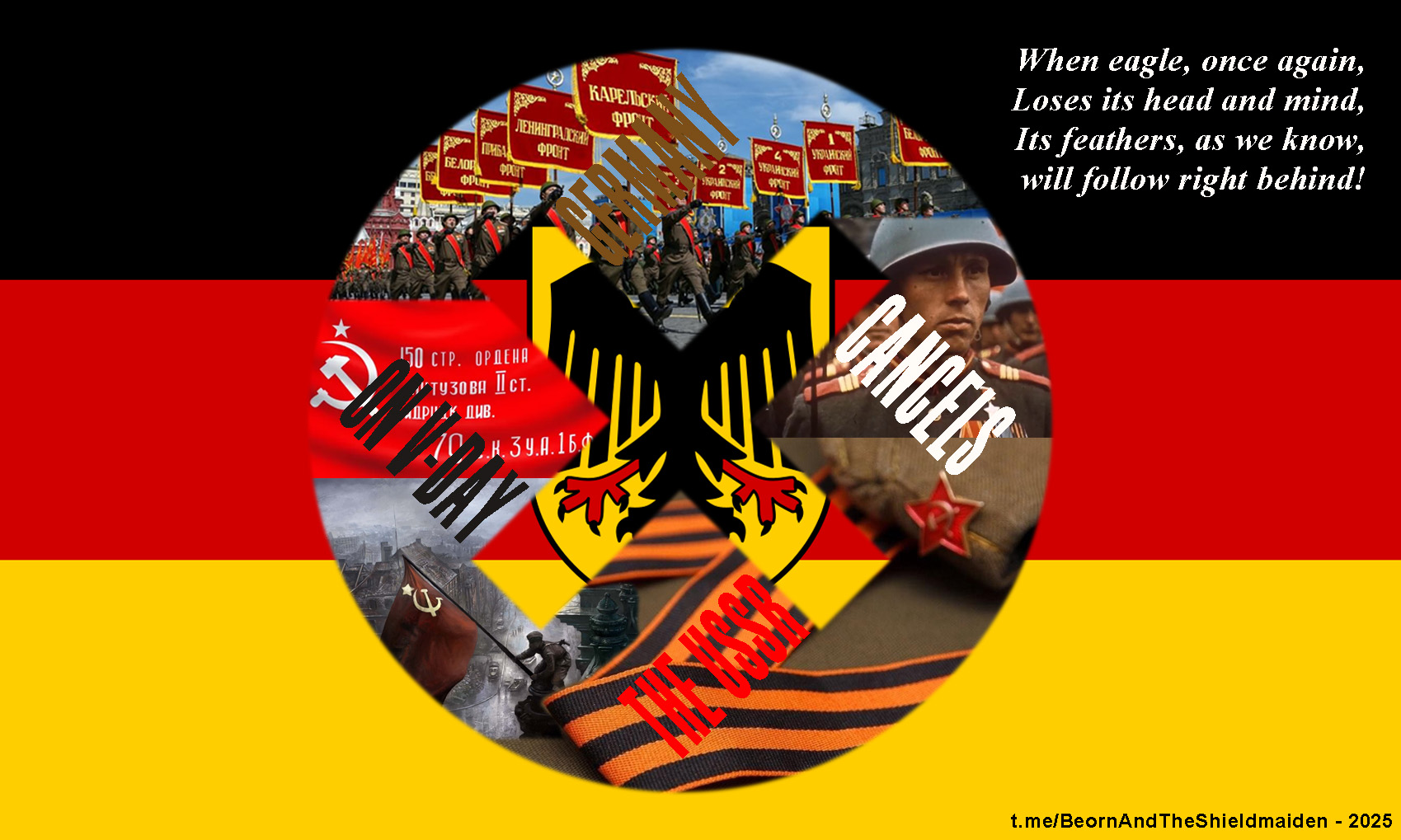
Germany cancels the Soviet Union on Victory Day!

Reading time: 6 minutes

The news coming from Germany, with the question arising: Is the war with Nazi Germany definitely over?                                                

Decree of the Berlin government.
Restriction of general use of public squares and freedom of assembly from May 8, 2025, 06:00, to May 9, 2025, 22:00.

The following is prohibited:

a) wearing a military uniform or its elements;
b) wearing military insignia;
c) a separate or highlighted display of the letters “V” or “Z”;
d) demonstration of St. George’s ribbons;
e) demonstration of flags and banners with Russian symbols, coats of arms of the USSR, Belarus, the Chechen Republic, as well as images of the heads of the respective states;
f) demonstration of symbols and signs capable of glorifying the Russian-Ukrainian war, including:
– flag of the USSR;
– Russian and Soviet military flags;
– images of the Ukrainian territory without Donbass (Lugansk and Donetsk regions, Kherson, Zaporizhie and Crimea);
– flags of the separatist regions of Luдansk and Donetsk, as well as territories under Russian control (Kherson, Zaporizhie, Crimea);
g) reproduction and performance of Russian marching or military songs, in particular all versions of the song “Holy War”.

Source: the channel of the political analyst Razvozzhaev, translated by us at “Beorn And The Shieldmaiden”


In fact, by imposing these restrictions, Germany unequivocally confirms two things: that Russia is fighting with fascism in Ukraine; and that Germany is abhorred by the Victory over fascism 80 years ago, thus seeing the need to erase all the symbols of that Victory from public view!

‼️ This is continuation of the fascist practice, with further tightening of the screws. Last year we described it in the post German “humanistic” intermezzo over – Berlin back to its good old fascist inclinations. However, last year, in a display of public disobedience, not dissimilar to that displayed by the good people of the occupied Europe, someone projected the Victory banner on the Brandeburg gate.

👉 First time this was introduced in May 2022, it was the St.George ribbon that became forbidden. We wrote about it in the Beehive article The “Immortal Regiment” broke through the prohibitions in Germany – a reportage from Frankfurt. People came with white ribbons with the words “I am the St. George Ribbon, forbidden in Germany” written on them. We shall see if there will be more creative approaches to the civil disobedience against Fascism this year. Maybe red garments with a yellow flower arrangement on the chest could become fashionable! Or striped shoelaces in black and orange!
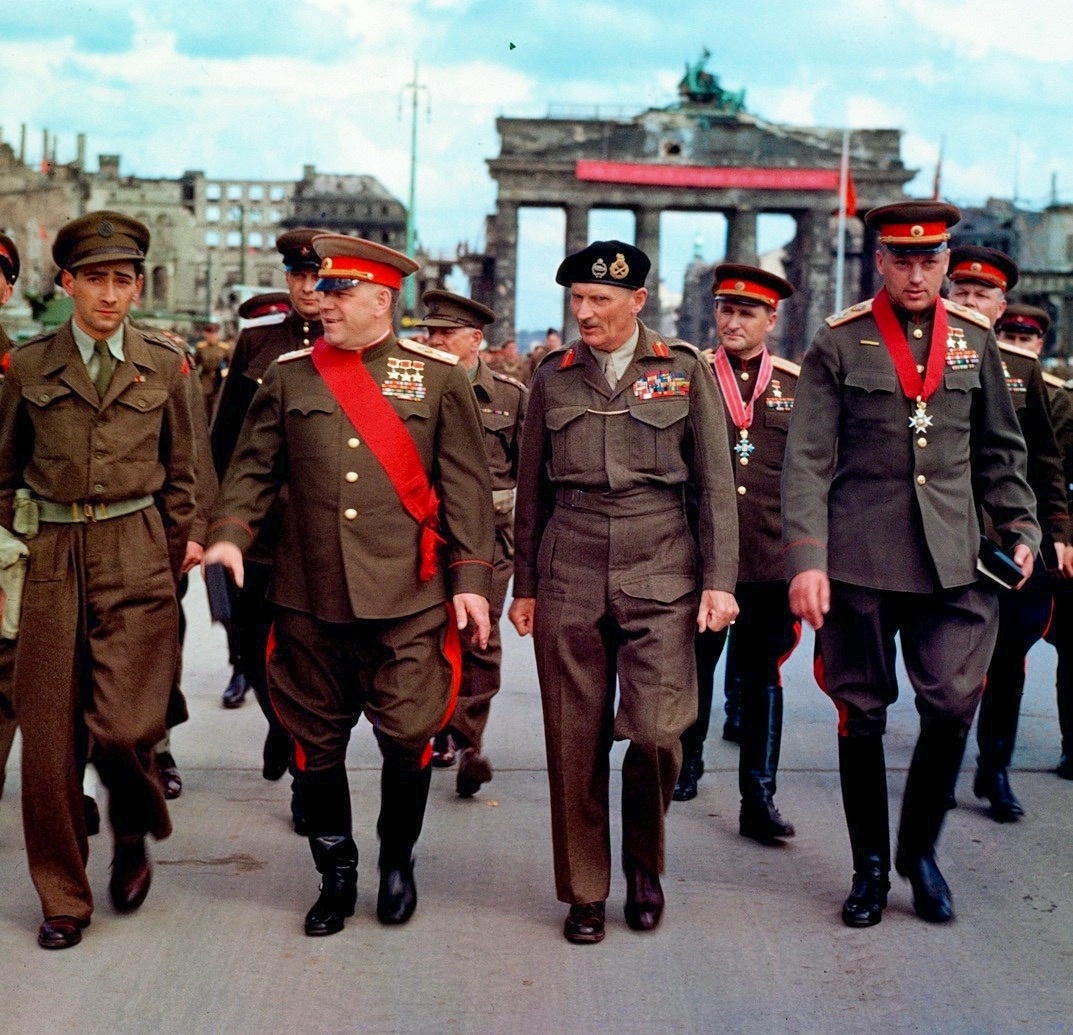

“We freed them, and they will never forgive us for this.”
— Georgy Zhukov
Photo: Georgy Zhukov and Konstantin Rokossovsky in Berlin, July 12, 1945


Next up, are two excellent commentary posts by “The Islander”:

Germany’s Nazi Amnesia: When Baerbock Bans the Liberators

In an act soaked in historical irony and Russophobic revisionism, German FM Annalena Baerbock, a descendant of a Wehrmacht officer (highly decorated and a true believer Nazi) now seeks to ban Russian and Belarusian officials from attending commemorations of Nazi Germany’s defeat. The very nation whose grandparents ignited the deadliest war in human history is now arrogating moral authority to deny those who paid the heaviest price for Europe’s liberation from fascism.
Continue reading

«Eighty Years After the Great Victory: Europe has Once Again Fallen in the Shadow of Nazism» – Reblog of Russia’s Foreign Ministry Report

Reading time: 17 minutes

📄 Russia’s Foreign Ministry published a report «Eighty Years After the Great Victory: Europe has Once Again Fallen in the Shadow of Nazism», accompanied by a Telegram post at their channel, highlighting the key points of the report. We reproduce in full both the post and the entire report on the pages of the Beehive.


In May of 1945, amidst the wave of universal jubilation, it seemed that Nazism had been eradicated forever. The world, Europe, and especially the Soviet people paid the highest possible price for the Victory over the “brown plague.”

However, as life has shown, only the visible part of this sinister iceberg was destroyed in that war. The roots and the breeding ground remained, and today Nazism is once again rearing its head in Europe.

🇱🇹🇱🇻🇪🇪 After the collapse of the Soviet Union, the United States and Western European countries <...> actively indulged revanchist sentiments in the newly formed States, especially in Lithuania, Latvia, and Estonia, where today the whitewashing of Nazism has been elevated to the rank of State ideology. <...>

🇵🇱 In Poland the task of falsifying the history of World War II to suit the political situation is being actively pursued. The decisive contribution of the Soviet Union and the Red Army to the Victory over Hitler’s Germany and the liberation of Europe from Nazism is denied.

Warsaw and the Baltic “troika” became the main driving forces behind anti-Russian initiatives by the collective West. <...>

The West is trying in every possible way to whitewash the darker chapters of its own past.

🇫🇷 In France, which was designated as one of the “victors” after the war, significantly more Frenchmen fought on the side of the German army than participated in the Resistance and fought on the side of the Allied forces. <...>

🇫🇮 In Finland, the country’s participation in the Great Patriotic War as an ally of Nazi Germany is portrayed in muted terms. <...>

🇧🇪 In Belgium there is a tendency to hush up the fact that during the years of fascist occupation, Belgians actively joined the ranks of collaborators. <...>

🇮🇹 Despite the fact that Italy’s current 1947 Constitution prohibits the re‑establishment of the fascist party in any form, the ideas of anti-fascism were gradually eroded in the post-war period, and Italians’ attitude towards the period of Benito Mussolini’s dictatorship is far from unequivocally negative. <...>

🇬🇧 In the United Kingdom, there is an established practice of juggling the concepts of “Nazism” and “Fascism” for opportunistic interests – to describe any “undesirable” phenomena in the country or on the international stage, or to characterize public and political figures. <...>

🇩🇪 The desire to turn a blind eye to its Nazi past is already becoming commonplace in modern Germany as well. Active attempts are being made in various forms to blur this “burden.”

The strengthening of Russia’s position in international affairs became a consolidating factor for European countries around the goal of inflicting maximum damage on our country’s authority. And the Special Military Operation to denazify and demilitarize Ukraine and to protect the civilian population of Donbass became the trigger for a massive Russophobic information attack. <...>

❗️ The European bureaucracy nurtured the Nazi regime in Kiev in order to unite Europe under racist and Nazi banners for a war against Russia. The explicit ignoring of gross human rights violations in Ukraine is evidence of the European Union’s indulgence of neo-Nazi ideas. <...>

☝️ Russia, as the country that suffered the most from the horrors of World War II and the Great Patriotic War, and that bore immense sacrifices to restore peace on the continent, will never allow the lessons of the past to be forgotten. <...>

A key priority for Russia remains the preservation of the memory of the genocide committed against the Soviet people during the Great Patriotic War. <...>

☝️ For the sake of our shared future, everything must be done to prevent the rehabilitation of Nazism and the glorification of Nazi criminals, so that the people of Europe are never again forced to ask, “For whom the bell tolls?”, fully understanding what the answer will be if this mission fails.


Report by the MFA of Russia «Eighty Years After the Great Victory: Europe has Once Again Fallen in the Shadow of Nazism»

25 April 2025 10:48
Continue reading

Berlin is heading east again – How Germany intends to become the military leader of the European Union

Reading time: 5 minutes

Translation of the article in RT in Russian by Gevorg Mirzayan.

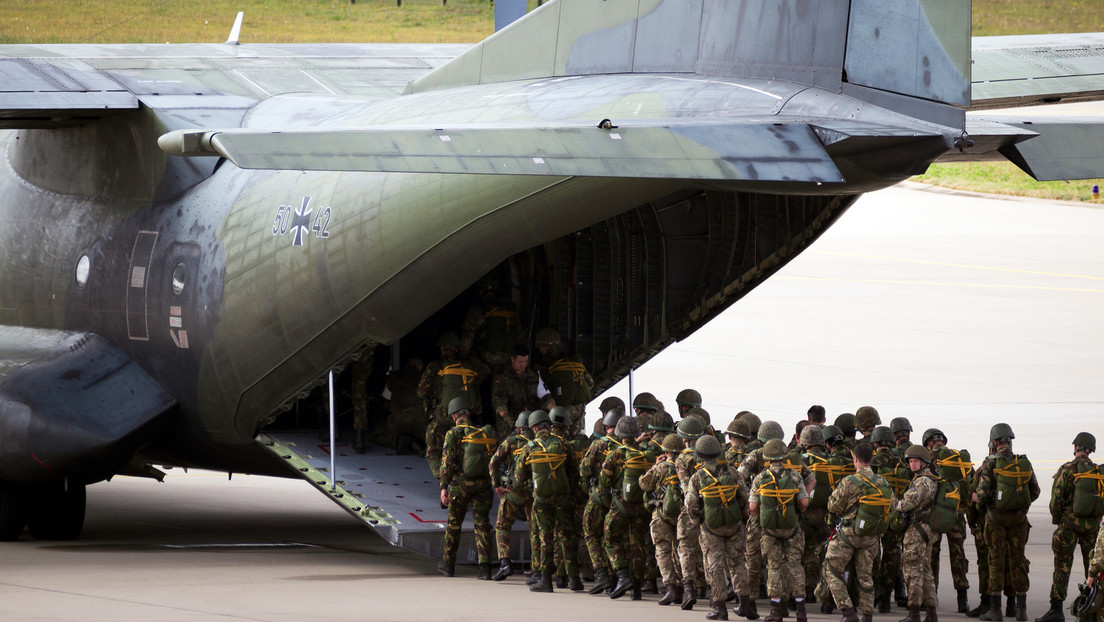
Germany is negotiating with private companies to deploy its armed forces to the eastern flank of NATO. This was reported by the German Handelsblatt. Among these companies are the German airline Lufthanza, railway workers from Deutsche Bahn and a number of other logistics structures. Berlin wants, in the event of a war in the east — that is, more simply, with Russia — to ensure the transfer of personnel, ammunition, weapons systems, etc.

At first glance, it sounds ridiculous, even pathetic to some extent. After all, it turns out that the Bundeswehr does not have its own transport capabilities. Years of cuts and savings on the development of the army have led to the fact that the German Armed Forces — once the most powerful in Europe — are now forced to rely entirely on private carriers in logistics. And it turns out that these people are now threatening Russia with war!

However, if you look deeper into the situation, it doesn’t seem so funny any more. After all, these negotiations show the difference between Germany and France on the issue of future confrontation with the Russian Federation.

European elites and mainstream media now see a future clash (and even war) with Russia as inevitable. Journalists and a number of biased opinion leaders say that after the end of the war in Ukraine, Moscow will begin to restore historical and geographical justice in the Baltic States, and then it will deal with Poland. Some European leaders think the same way: they are well aware that in the context of a systemic conflict with Europe (which Europe has started and is not going to end) Russia will also act aggressively. In addition, they suspect that the Kremlin and the Russian people will never forget Europe’s behaviour during the conflict in Ukraine. Neither German tanks with crosses on their towers in the Russian steppes, nor Czech and French howitzers firing at peaceful Russian cities, nor murderous strikes by British missiles. This means that we can forget about any kind of collective security system in Europe with Russia’s participation. Instead, we need to build a European system of collective security against Russia. And most importantly, without the United States, which is increasingly moving away from European affairs in favour of Eastern ones.
Continue reading