Finally, the honeymoon with the liberal democracy is drawing to a close in Russia, and a more pragmatic, reality-based approach is prevailing! This article was published in the Russian economics newspaper RBC on January 12, 2026.
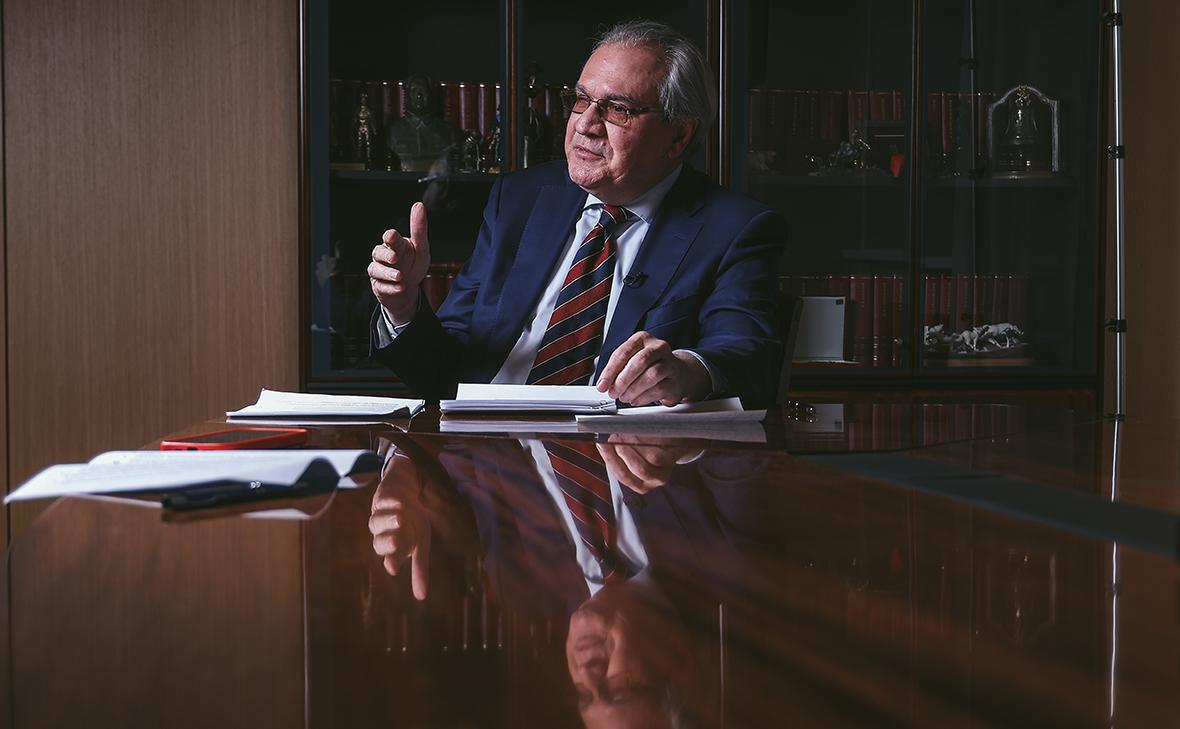
Valery Fadeev became the editor of the textbook on economics for universities “without excessive mathematisation”. He says that there will not be a lot of formulas, myths about free-trading, but Glazyev and Stalin will be there.
The proposal to lead the work of a group of authors and become the editor of a new textbook on economics for higher education institutions was received by the head of the Human Rights Council (HRC) from the Ministry of Science and Higher Education in the spring of 2025, Chairman of the Presidential Human Rights Council, former editor-in-chief of Expert magazine Valery Fadeev told RBC. The textbook will be intended for students of non-core universities, primarily for sociologists, political scientists and historians.
The new 350-400-page textbook will be called “Essays on Economics and Economic Science.” “This is the first time, we need to find the teaching methodology, so we decided that it would be wrong to call this the final textbook. Essays are a more free genre, they do not require completeness,” says Fadeev.
Two teams are working on the textbook — from the University of Finance and St. Petersburg State University. According to Fadeev, the work is in its final stages, and teaching according to the new textbook may begin as early as next academic year.
The main task is to show students the overall picture of the complexities of the economic system, Fadeev told RBC: “The economy cannot exist separately from social and political systems. Our task is not to refute anything, not to expose liberalism. Liberalism is just too narrow. Our task is to show to the students the fullness and complexity of life.”
Fadeev explains his choice as an editor by saying that in this work “elements of audacity are needed.” “Education is a very conservative field. And in order to seriously move something there, you need some kind of arrogance, in the good sense of the word. It’s more difficult to do this from the inside, so it just so happens that I’m doing this,” he told RBC.
RBC sent a request to the Ministry of Science and Higher Education.
A textbook without unnecessary mathematics and myths about democracy
The new textbook, its editor is sure, should solve several problems. One of them is “excessive mathematisation”. There are more formulas in modern economics textbooks, especially in the most advanced ones, than in textbooks of theoretical physics. It is generally assumed that economics is becoming or has already become an exact science, says the head of the HRC.
“These complex differential equations have nothing to do with the real world. It’s just a mind game,” Fadeev is convinced. “Even astrology,” he continues, “has more to do with science than some modern mathematised branches of economics. At least astrology relies on the movement of the planets, while these models rely on nothing. Naturally, they are unproductive. It is impossible to describe the real economy in accordance with these models, it is impossible to make forecasts and predict crises. It’s an imitation. We must admit this,” urges Fadeev.
The second problem is the numerous myths that are found in textbooks. For example, he says, if you look at the section on international trade of many of them, the presentation is based on the theory of David Ricardo. She suggests that England should trade in metal products, and Portugal should supply wine to the market. But the fact is that hardware products with a higher degree of processing give more added value, and wine has less added value. Simple considerations, calculations and world experience show that a strong country will always beat a weak country economically, says Fadeev. Ricardo’s theory suggests that it is necessary to minimise various kinds of protectionist measures, but this, in his opinion, is a false approach. According to the editor of the new textbook, there is not a single example in history of a country’s rapid economic development without strict customs restrictions. In the United States of the 19th century, tariffs on British steel reached 100%, and in Japan at the beginning of the 20th century there were severe restrictions and actual bans on the import of various goods, the same thing happened in South Korea and China. After a country has become stronger, it usually begins to advocate, on the contrary, for the removal of customs duties, as China is doing now, for example, so Ricardo’s theory is correct in a special case — in the case of interaction between countries of approximately equal economic strength, says Fadeev. There is no explanation of this in textbooks right now.
Another myth that needs to be debunked is that economic growth and prosperity are achieved only in democratic countries, Fadeev continues. “That’s not true. If we look at economic history, it is described in textbooks, including Western ones. Economic growth has always occurred in countries with more or less strict regimes. This was the case in the British Empire, in Bismarck’s Germany, post—war Japan and South Korea, which is a phenomenal example of an oligarchy for any textbook,” the head of the HRC notes.
He argues that current textbooks do not talk about this, but tell the myth of combining democracy and economic growth. “This does not mean that I am against democracy. It’s just that the development of our country took place under Soviet rule under a strict regime. About the same, well, maybe a little stricter than the one that was in Germany, in England, in South Korea, in the USA, in Japan, China, and so on, and so on. This is a reality, and students need to understand these realities of economic life,” he insists. In his opinion, the collapse of the authoritarian regimes of Egypt, Tunisia and Libya during the “Arab Spring” is mainly due to external interference.
Economics through history and statistics
In studying economics, Fadeev suggests “proceeding from the postulates of two great men” — the historian of economic thought Joseph Schumpeter (author of the three-volume book The History of Economic Analysis) and the French historian Fernand Braudel.
Schumpeter proposed studying economics through theory, history, and statistics, while Braudel assumed that the economic system has three floors. The first floor, gumus, is a small business, the second floor is, relatively speaking, a medium—sized business, and the third floor is actually capitalism, lists Fadeev. There is no competition on the third floor, where billions and trillions are spinning, and for example, they are unleashing opium wars in China and blowing up the Nord Streams.
“The first idea is to outline all the basic economic theories. And not to label, this theory is right and this one is wrong, to show the sides of a strong theory, to show the connection of this theory with the time when it was created, and at the same time to explain the sides of the negative, the failures of these theories,” says Fadeev.
It is necessary to study economics through history, since economic theories were created in the context of their time — Karl Marx wrote during the rapid development of capitalism in England and Europe and the emergence of a new class, the proletariat, and the development of John Maynard Keynes’ thought about state participation in economic management was impossible until the twentieth century, until the share of state participation began to increase. In the essays being created, the authors want to show all the key theories: mercantilism, Adam Smith, Karl Marx, Keynes, marginalism, financial theories, and cycle theories in relation to the time in which they appeared.
Economics according to Stalin and Glazyev
Among Russian economists, the textbook will consider the work of Nikolai Kondratiev, Alexander Chayanov, Mikhail Tugan-Baranovsky, and of modern economists, Academician of the Russian Academy of Sciences Sergey Glazyev, said Fadeev. There are no plans to mention the works of Nobel laureates in economics in recent years, such as Daron Ajemoglu. “They are weak. Economics has withered, we need to go back to the basics,” says the editor.
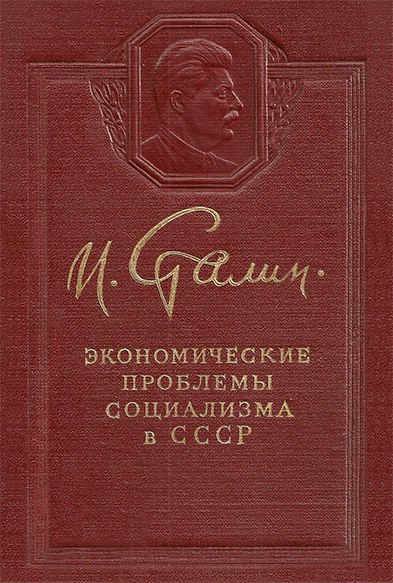 The Soviet experience, says Fadeev, has a big chapter in the textbook. It is dedicated to the huge industrial breakthrough that took place in the 1930s and 1960s. The contribution of prisoners’ labour to this breakthrough, according to Fadeev, is “another myth”, it was not significant, it amounted to about 2%. The head of the Soviet state, Iosif Stalin, will also be mentioned, including as an economist. Soviet economists tried to create a theory of socialist economics, they failed, Stalin personally engaged in this work, it lasted for many years, but it did not work out, says Fadeev about Stalin’s 1952 book “Economic Problems of Socialism in the USSR”.
Fadeev urges the co-authors of the textbook to write about the causes of the collapse of the Soviet economy. So far, no clear explanation has been given for what happened, he notes. “What happened is unique. To destroy own economy in a few years! I ask all economists to give a more or less clear, intelligible explanation of why the Soviet economy collapsed,” he says.
Another chapter will be devoted to the description of the modern Russian economy, which will include “the dynamics from the collapse of the 1990s through the recovery of the 2000s to the current state.” The authors will not propose any special name for the current Russian economic system. “Why put any labels here?” — explains Fadeev.