
While we recall the manifestations of Nazism – past and present – let us not forget those, who fought against the Nazis, both at the front and behind enemy lines. The recounting of their feat makes for an inspiring reading!
Below, is our translation of an article by Alexander Neukropny at TopCor.ru. The article was published in 2020 for the 75th anniversary of the Victory over Nazism.
If you imagine the history of the Great Patriotic War in the form of a book, then it will probably be a huge folio in a luxurious cover, gilded and intricately decorated. Inside, anyone who opens it will find not only smooth lines and beautifully designed illustrations, but also huge gaps, mercilessly retouched and rewritten many times, or even “torn out with to the core” pages and entire chapters.
Alas, despite the titanic work of entire generations of both professional historians and amateur searchers (often much more efficient, and, most importantly, impartial and objective in their work), despite the truly reverent and caring attitude of most of our fellow citizens towards the Great Patriotic War, its chronicle still gapes with “white spots”. Forgotten exploits, unrecognised heroes, battles and skirmishes that remained unknown, each of which should serve as an example of the highest courage and steadfastness of the defenders of our Motherland… Sometimes even the brightest episodes of a great epic find themselves in a completely undeserved “shadow”, which some immediately begin to try to fill up with their own vile fabrications. We will recall one of these episodes today.
Odessa resident from Gorlovka
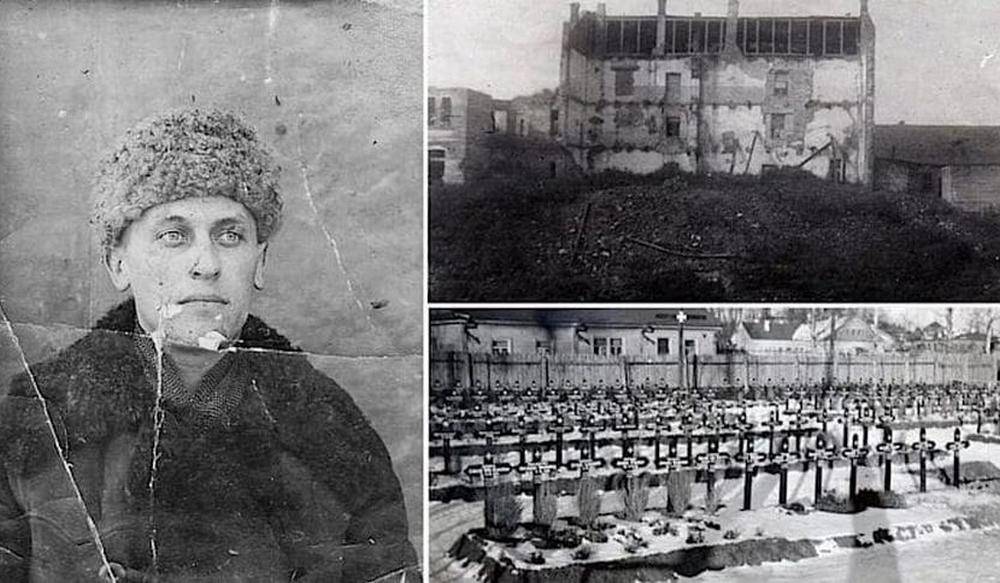
Meet Konstantin Alexandrovich Chekhovich. A Soviet partisan who could rightfully have been awarded the title of “The most efficient saboteur of the Great Patriotic War”. It is no joke to send to hell in one fell swoop, at the very least, a battalion of Nazi scum, or even one and a half (according to various estimates, this Wehrmacht combat unit could number from 500 to 600 units of personnel), and in addition, several dozen representatives of senior and senior commanders, who belonged not only to ordinary army personnel, but also to Nazi intelligence and counterintelligence!
However, let’s not get ahead of ourselves, but start, as it should be, from the beginning. Our hero was born in 1919 in the city, deservedly called the “pearl by the sea”. Kostya showed a technical streak and talent in handling a variety of mechanisms quite early, and therefore there were no special problems with choosing a future life path – he entered the Odessa Industrial Institute, from which he graduated with success. Young specialists in the Soviet Union, which turned into one grandiose construction site in the 30s of the twentieth century, were, as they say, in great demand. Fate brought the young Odessa resident to the Donbass – to Gorlovka, where he quickly became deputy head of the department of the local coke plant. However, cadres with education were desperately needed by the Red Army, into whose ranks Chekhov was drafted in 1939. He met the Great Patriotic War not just as a career soldier, but as an officer. By that time, Senior Lieutenant Chekhovich was already the commander of the sapper platoon of the 62nd Infantry Regiment of the 10th Infantry Division of the Red Army, stationed in Lithuania. Note that he is not some “cool” special forces soldier, but just a strong professional in his field.
Perhaps this is what allowed Chekhov to avoid death or captivity in the most terrible and difficult first months of the war. Or maybe it was his absolutely amazing composure and self-control. Or maybe it’s crazy luck that will make itself felt more than once? Although it is unlikely – rather, it is worth talking about the military professionalism and the cold fury with which Chekhov beat the enemy, regardless of danger and risk. And how can the order received by the senior lieutenant in August 1941 be considered lucky: as part of a sabotage group, cross the front line in the Leningrad area, get in touch with local partisans and organise, literally, explosive subversive activities in the enemy’s rear? A specialist in mine-blasting at Chekhov’s level, of course, would be a real gift for any squad of national avengers.
The desire to inflict maximum harm on the enemy was not enough – it required skills that yesterday’s collective farmers, construction workers and people from other purely peaceful professions, who had become partisans, did not have. However, the campaign that began quite successfully behind enemy lines ended tragically. It certainly didn’t seem like a happy coincidence that Chekhov’s group, alas, was completely destroyed before it had even managed to pass the front line. No one will ever be able to establish whether this was an accident or whether betrayal happened and our soldiers ran into a well–prepared ambush waiting for the “guests” from the opposite side of the front. To be absolutely sure, the Red Army soldiers were hit with a targeted mortar salvo, which killed four out of five on the spot. Chekhov “got off” with only a severe concussion, as the Nazis, who came up to finish off the destroyed saboteurs, found out.
Lucky again? How can one say… the Fascists did not kill Chekhov, as they often did to our wounded soldiers. He ended up in a concentration camp, one of the two located in the vicinity of the ancient town of Porkhova, which is more than 80 kilometers from Pskov. What were his chances of survival? Judge for yourself, taking into account the fact that 85,000 of our prisoners of war were tortured to death in one of the Dulag-110 transit concentration camps during the occupation (from 1941 to early 1944). The other camp, Zapolyanye, into which Chekhovich ended up, was a real conveyor belt of death – partisans and their “accomplices” who fell into the clutches of the Nazis, as well as civilians, mostly Jews and Gypsies, who were taken there for a “final solution” from all over the area and even from Riga.
It is clear that Chekhov, who was “caught red–handed” while crossing the front line, would not have been able to survive in this hell – the local counterintelligence did not take him seriously only because, after a concussion, he was completely unsuitable for a thorough interrogation. Our hero did not wait for him to be considered recovered – after a dozen days he was out of the concentration camp. Moreover, having made a daring escape, Chekhovich did not even think to use his newfound freedom to hide or even make his way back to his own people. He had a combat mission and he had to complete it. Note that there are no barrier detachments nearby, special forces with revolvers. Only his own conscience and the upbringing of a Soviet man, whose land is being trampled by the enemy… A few days later, an unstoppable resident of Odessa contacted the command of the 7th Leningrad partisan brigade. And he received a new order.
A diligent watchmaker
I don’t know what Konstantin Chekhovich felt when he was assigned another combat mission, because in simple words it could have been reduced to the phrase: “Stomp where you came from!” No, not behind the front line, but into the very Porkhov from where he had just escaped with such difficulty. Settle into the town, legalise yourself and wait for new instructions – they will contact you when the time comes. Orders, as you know, are not discussed, but carried out, and Chekhovich coped with this brilliantly – a month later he had not only a job and shelter in the city, but also… a legitimate spouse! Operational cover? No – it’s just that love at first sight, which, contrary to the claims of cynics, still exists. The couple’s first child was born in 1942. Subsequently, Evdokia Vasilyeva, a young girl who offered a handsome stranger to live in her house, went through all the hardships, tribulations and joys of their life together with him. However, all this happened later. In the meantime, Chekhovich needed to make the most of all the benefits and advantages of his new position.
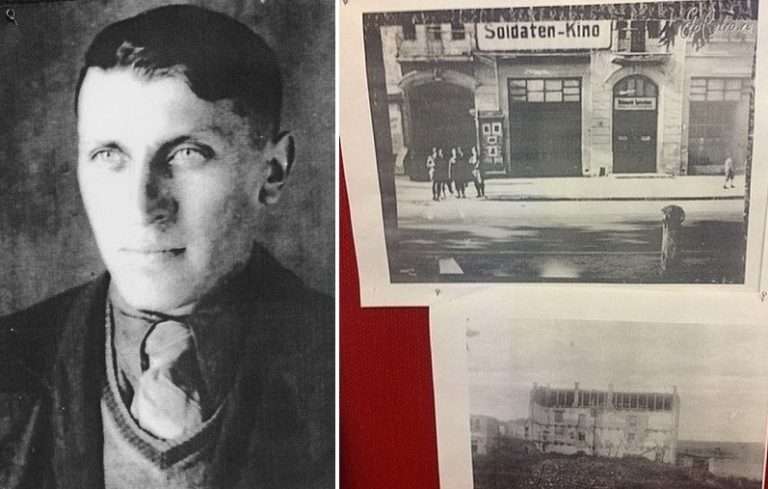
He got a job at a local power plant, at which the partisans had been “sharpening their teeth” for a long time and immediately began to thoughtfully look for places to lay the charges necessary to destroy this important facility to the ground. As an employee employed in a responsible area, the occupiers gave him a “night pass” that allowed him to move around the city even during curfew, which the underground worker used – it is clear that for the deeds that the Fritzes would not have been happy about at all. Moreover, Chekhovich turned out to be an excellent watchmaker, and a string of people who wanted to fix their chronometers reached out to him. There were Germans among them in considerable numbers. The partisan, bending over the springs and gears, diligently portrayed a hardworking but dim-witted artisan who did not understand the language of the “Aryan gentlemen”. They chatted enthusiastically, waiting for the repair to be completed, while Chekhovich listened end remembered. So the partisans were warned about several sudden punitive raids and received many other important information.
However, it wasn’t the most important thing. After all, Chekhovich was not a scout by training, capable of hiding for years in order to obtain secret information, but a saboteur. His soul demanded action, and he had less and less restraint left to look at the Fritzes freely wandering around the city. The command of the 7th brigade was running around with a plan to blow up a power plant or at least a bridge over the Shelon River, but everything went wrong with that: the policemen who were initially guarding them were replaced by German soldiers, and the security regime at the facilities was strengthened many times. By that time, Chekhovich himself had made a truly dizzying career: he was hired at a local cinema, first as a projectionist, and then as an administrator.
The extent of the level of trust with the Nazis needed for this is evidenced by the fact that the building of the “cultural center”, the former mansion of the merchant Zatsky, also housed the headquarters of the Abwehr-Nord unit, which oversaw all intelligence and sabotage activities of the Nazis in the region, as well as the headquarters of the SD. It was after gaining access to such a truly unique place that Chekhovich began to form a plan – extremely daring, but really brilliant. One must say that the cinema operated in a special mode: on Mondays, Wednesdays and Fridays it was publicly accessible to all residents of the city, and on Tuesdays, Thursdays and Saturdays only the “pure public” – German soldiers and officers – were allowed there. Therefore, it was possible to strike so that none of the Porkhov residents would be injured. Initially, Chekhovich wanted to arrange a “festive surprise for the Germans on the 26th anniversary of October” and planned the action for November 6, 1943, which fell on a Saturday. However, the occupiers, who were by no means fools, simply banned any “mass events” for the period from 5 to 10 November. He had to wait patiently.
Chekhovich was a bomber “from God” – if such an expression is acceptable. With his higher technical education and combat experience, he understood perfectly well: in order to guarantee the death of all the Fritzes who would gather in the building, it was necessary either to stuff it with TNT on all three floors, or to make such a finely executed explosion that would force a solid, tsarist-time, three-story brick mansion to “fold” inwards. Anyone who has an idea of the strength of buildings from that period will say: “An impossible task!” Nevertheless, our hero (despite the fact that architecture did not seem to be one of the sciences he mastered) found a way out. He came to the conclusion that the charges should be placed in the gallery surrounding the auditorium, where there was a fair amount of empty space for the audience under the wooden floor of the balcony. Then the supporting structures of the house will be destroyed for sure. It’s easy to solve, but how to do it?!
For the operation, the partisans allocated 64 kilograms of TNT to Chekhovich. Their delivery from the forest to Porkhov is a separate odyssey, in which the whole family of the bomber participated. The apartment where he lived with his wife and young son temporarily turned into a deadly warehouse, but it was no big deal – after all, all the explosives had to be brought to the cinema! If they get caught, a noose or a bullet awaited all relatives. According to his own recollections, Chekhovich dragged two checkers of 400 grams each to the place of sabotage. Imagine how many extremely risky “runs” these are? However, at the final stage, his wife’s sister, Zhenya Mikhailova, whom he attached to the cinema as a cleaner, helped him with transportation. She was 15 years old at the time… The future death of the Nazis was carried into the auditorium in buckets of dirty water.
A clock with a chime. To the death…
It is clear that using the traditional Bickford cord was out of the question for the partisans in such a situation (the hall was packed with Nazis). Electric detonators were needed. As it turned out, they could not be found anywhere in the 7th partisan brigade, nor in other detachments with which it had a connection. What can one do, Chekhovich made them himself – as many as five pieces. The last thing left was the trigger mechanism. Well, there was no problem for an experienced watchmaker. The last hours and minutes of the Nazis were counted off by simple chime clocks, launched by him in advance – at 10 a.m. on a fateful day for the occupiers. The auditorium of the cinema had about 600 “seats”, another hundred were in the sides and standing. On that evening, November 13, 1943, there was, as they say, it was packed in the hall – after all, the newest film “Circus Artists” was being shown! The circus was a great success…
At 20:00, the weights of the chime clock, which Chekhovich had covered with a blanket to muffle the sound, came down to the end – and the building was shaken by an explosion. Two German generals, forty officers (including the Abwehr and SD), seven hundred soldiers of the Wehrmacht and SS! By the way, the commandant of the Zaholmye concentration camp was also present there – Chekhovich sincerely “thanked” him for his “hospitality”. 764 “superhumans”, those who came to our land with fire and sword, went to hell! It was an unprecedented success, unsurpassed for the partisans. Subsequently, the Nazis, in order to hide from the local population the scale of the losses they suffered, would be forced to bury the dead two or three at a time in one grave. Information about the unheard-of scandal would reach Hitler himself and drive the Fuhrer into a complete frenzy. Spluttering with saliva, he will shout: “A Jew did it! Must be a Jew!” The idiot would never understand the essence of the concept of “Soviet people” until May 1945.…
And what about Chekhovich? By the time fragments of the Aryan conquerors of the world, mixed with broken bricks, flew merrily into the night sky, he was already approaching the partisan base. His wife and son went there in advance. Zhenya Mikhailova, along with Sergei Shelkovnikov, a projectionist, who had been warned by Chekhovich about the explosion, also went into the forest. The risk of disruption of the action? Of course, however, Chekhovich could not allow innocent people to die in the explosion. Not a single civilian was injured… The Fritzes, who came to their senses, of course, rushed to his house. There was a “bonus” waiting for them – in the form of a bunch of grenades bolted to the door handle and the remaining couple of kilograms of TNT. Chekhovich later regretted very much that belatedly, but realising who they were dealing with, the Nazis did not stick their heads into the door – they climbed in through the window. The cinema wasn’t enough for him, you see…
Our hero still had plenty of opportunities to prove himself. After such a “resounding” case, planned and carried out almost alone, he took his rightful place in the 7th partisan brigade as the chief of staff of one of the detachments. This, of course, was reflected in the effectiveness of the people’s avengers – over the next few months they derailed fifty German trains, blew up more than a dozen bridges, eliminated dozens of kilometers of military communications lines and destroyed three and a half thousand Nazis. Konstantin Chekhovich and his family successfully survived the Great Patriotic War – everyone remained alive. The problems started later… Then, when someone denounced the hero, accusing him of aiding the invaders and questioning his feat. Instead of a well-deserved reward, the genius of sabotage received a tub of mud.
We must pay tribute to the staff of the State Security Committee, which received the vile slander – they figured out everything quickly enough and with the utmost expertise. Nevertheless, “revealing” articles began to appear in the press, which put forward truly insane versions of what happened in Porkhov on November 13, 1943. Someone tried to claim that everything happened because of the “careless handling of explosives by the Germans”. Nonsense that does not stand up to criticism. Some added that the Nazis… themselves staged the explosion in order to “provide cover for their agent infiltrating the partisans”! Yeah, and they blew up a couple of their own generals, not to mention seven hundred lower–ranking compatriots… This is a completely clinical case! How could you invent such a thing with living witnesses and participants – the very same Shelkovnikov and Mikhailova? But someone did start this, and their tongue had the audaciousness… Nobody dragged Konstantin Chekhovich around for interrogations, and, moreover, they did not arrest him. But his exceptional feat, even for that unprecedented war, did not receive more deserved recognition. His only awards were the medals “To the Partisan of the Patriotic War”, “For the Defence of Leningrad” and “For the Victory over Germany in the Great Patriotic War”. The Order of the Patriotic War was awarded to him in the jubilee year of 1985, as it was to many other veterans. At the same time, it is known for certain that an application for the title of “Hero of the Soviet Union” was submitted for Chekhovich, but it was never granted. Why? It is unlikely that we will ever find out…
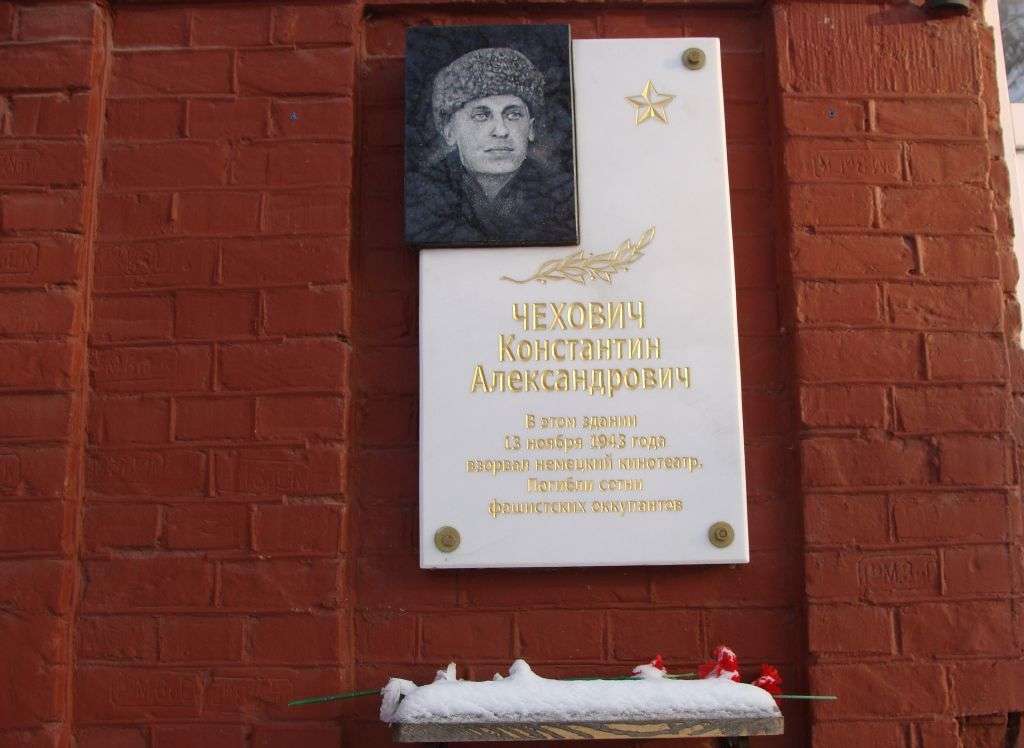
Anyway, this mistake can still be fixed. Konstantin Alexandrovich may not have been with us for more than twenty years, but his children and grandchildren are still alive. We are all alive, the heirs of the great country for which he fought. Discussions about awarding Chekhov the title of “Hero of Russia” have been conducted repeatedly, both by politicians and representatives of the local government of Porkhov, where at least a memorial plaque was unveiled to him in 2013. But why not a monument? Why not commemorate the feat of one of its most worthy makers on the 75th anniversary of the Great Victory and reward him as he should have been? Quentin Tarantino, in his film about the “inglourious basterds” defeating Hitler, actually stole Chekhovich’s feat, attributing it to “heroes” who did not exist in the West. This is how our memory, pride, and victory are stolen from us… And we watch shoddy movie productions, both foreign and, alas, domestic, forgetting those thanks to whom we live in this world.