The Slow Flow of the Special Military Operation Explained

Reading time: 9 minutes

Some time ago Lada Ray made an excellent audio report on the reason of the slow flow of the military operation:

https://www.youtube.com/watch?v=gdWcE6Tv-ZM

And a couple of days ago I saw that Russel Bentley posted a series of posts on his Telegram channel that explain well the reason for the slow progress of the Special Military Operation in Ukraine (and also why it is a SMO, and not a War). By the looks of it, the English text is a translation from Russian. I am reposting the text here in full and unaltered.

WORDS OF WISDOM READ UNDERSTAND SHARE

Why so slow?

The liberation of Donbass is not going as fast as we would like. And probably it seems especially slow to those who are waiting for it the most. Unbearably slow.

One of the reasons for the low speed of advance is the numerical superiority of the enemy and the well-fortified positions of the Armed Forces of Ukraine, which were built over 8 years.

Continue reading

Hunter Biden’s Investment Fund and other updates on the American biolabs in Ukraine

Reading time: 5 minutes

UPDATE 25.03.2022: added link to RT and infographics. For other articles, related to the American biolabs in Ukraine, follow the Bioweapons tag.

Sputnik News has just published a length article on the topic. Sputnik News is blocked in the west, and is only possible to read through VPN. Either set up a VPN or use Tor browser to get access to the information that the West does not want you to know.

After a few excerpts, I will present a translation from Russian of an article from RIA News.

Hunter Biden’s Investment Fund Connected to Financing of Pentagon-Funded Biolabs in Ukraine: MoD

And a machine-translated version (by Yandex Translate):

In recent weeks, the Russian Defence Ministry has peeled back layers of information about 30+ Pentagon-funded biolabs feared to be engaged in dangerous and illegal research into deadly pathogens in Ukraine. US officials and media initially denied that the labs existed, but a senior Biden administration official later confirmed their presence.
An investment firm connected to US President Joe Biden’s son Hunter Biden has been implicated in the financing of the Pentagon’s military biological programme in Ukraine, the head of Russia’s Radiation, Chemical and Biological Defence Troops has announced, citing fresh documents.

“Incoming materials have allowed us to trace the scheme of interaction between US government bodies and Ukraine’s biolabs. The involvement in the financing of these activities by structures close to the current US leadership, in particular the Rosemont Seneca investment fund managed by Hunter Biden, draws attention to itself,” RCBD Troops chief Igor Kirillov said in a briefing Thursday.

Continue reading

Newsflash!! Yes! Finally a chance for Peace – DNR and LNR are recognised!

Reading time: < 1 minute

I happened to watch the President’s address to the people live broadcast on TV, followed by the ceremony of signing of the documents recognising DNR and LNR, as well as establishing a security pact with them.

Putin signs ‘immediate’ recognition of Donbass regions

The address held an in-depth history lesson on the early history of the USSR, the constitutional norms left over from those days, when the national republics – including Ukraine – were formed.

This is History in the making!

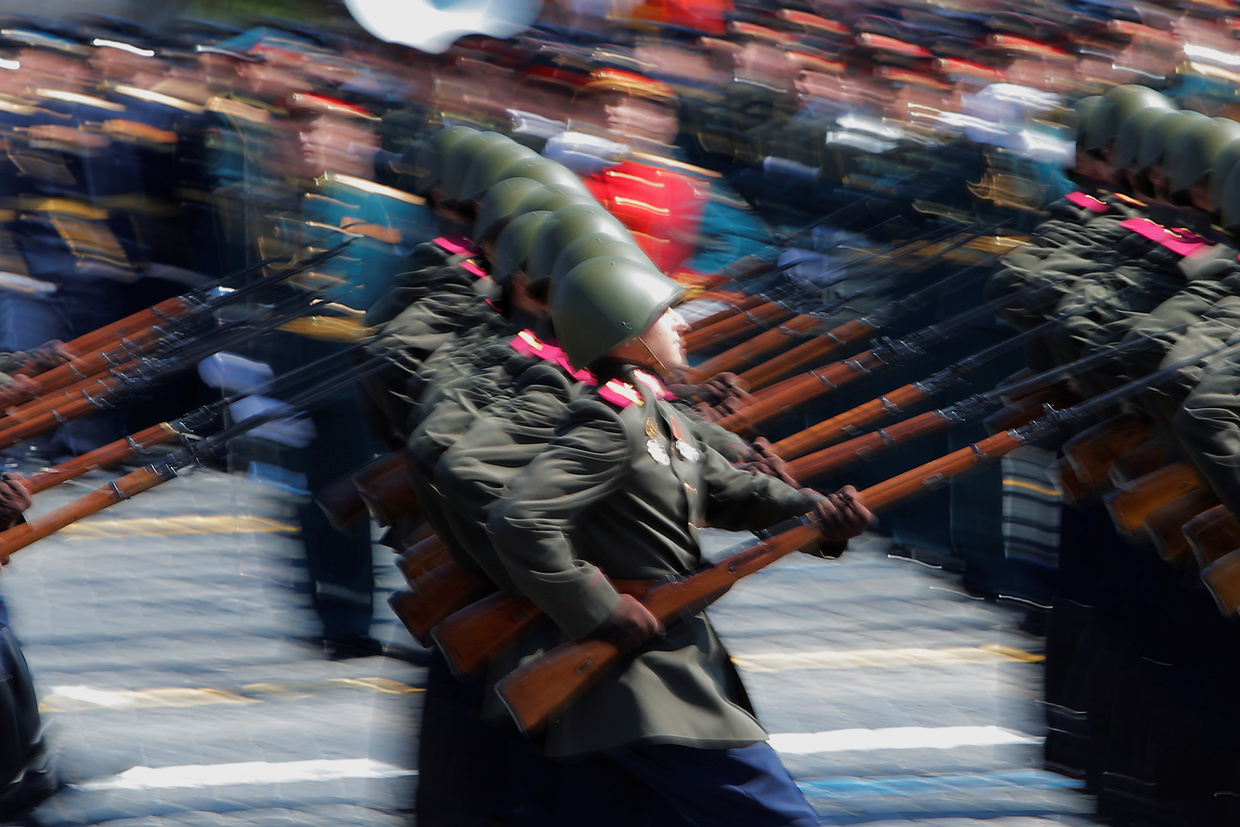
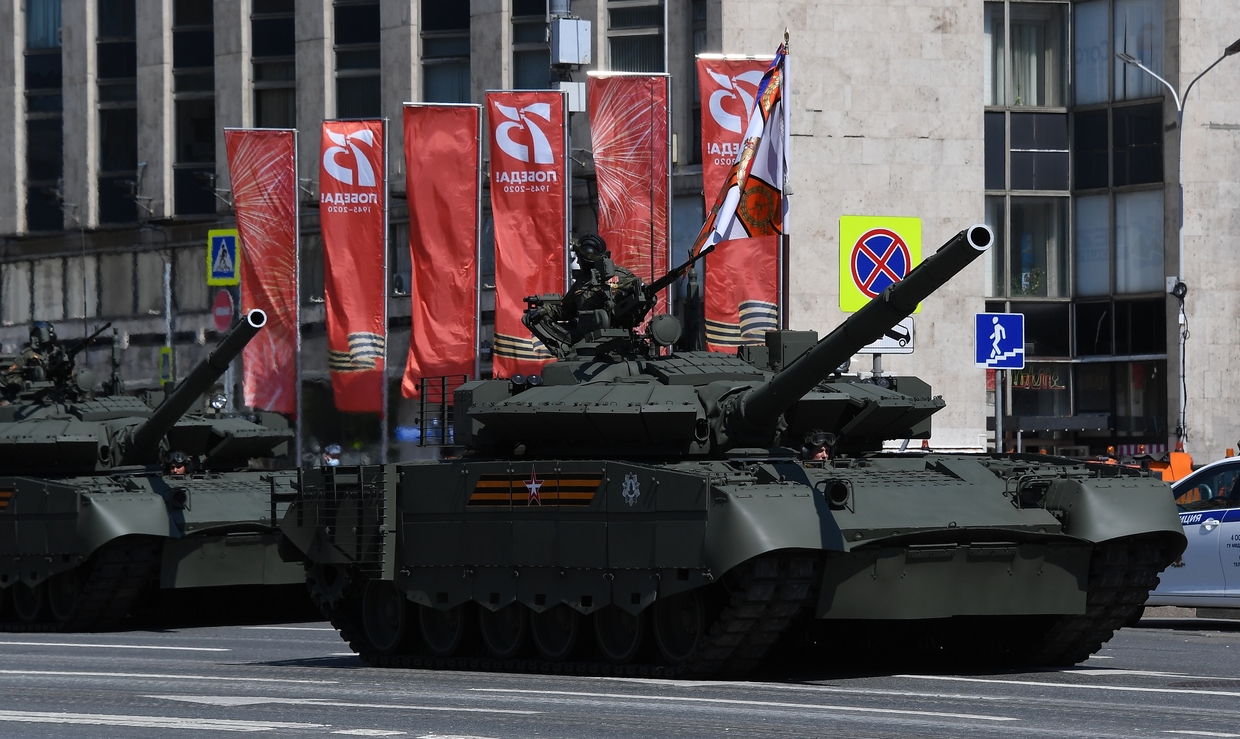
Parade in Moscow Commemorating the 75th Anniversary of Victory over Nazism

Reading time: 2 minutes

This year marks the 75th Anniversary of victory over the Western-neutered Nazism in Germany. But more than that, it marks the full reawakening of Russia when it finally says, enough of the history rewriting, enough of painting white as black, enough of selective amnesia in the West, enough of trying to spare the feeling of the Eastern-European “brothers” when uncomfortable for them truths were swept under the rug.

No one’s forgotten. Nothing’s forgotten.

The suspiciously-timely COVID-19 pandemic was seemingly going to falter this reassertion and stop the Parade. But the events unfurled in an unfathomable way and allowed to push the day of the Parade further in time, to the 24th of June, the day, when the very first Victory Parade was held on the Red Square. The dark forces tried to demolish memory by demolishing the memorial, like it was done in Prague in May, but all they did was to awaken the sacred wrath.

And so it commenced…

This is a parade, where memories and history are reaffirmed with a detachment of the legendary T-34 tanks and soldiers in WWII uniforms


and the present-day Russias commitment to the defence of peace is reasserted

These images are from the following two RT reportages:

Moscow marks 75 years since victory over Nazis with traditional parade on Red Square (FULL VIDEO)
New additions & battle-proven hardware on display as Russia marks 75th anniversary of Nazi defeat with military parade (PHOTOS)

More at Lada Ray’s Futurist Trendcast: Full Red Square Parade Dedicated to 75th Anniversary of Great Victory in WWII, June 24, 2020, Moscow

Celebrations of the 75th Anniversary of the Victory – Magnificent Fireworks and the Air Parade

Reading time: < 1 minute

Yesterday’s celebrations of the 57th Anniversary of the Victory over the Nazi Germany stated with President Putin laying flowers at the memorial to the Unknown Soldier and the memorial to hero-cities of the USSR – The Brest Fortress, Stalingrad, Leningrad, Moscow, Kiev, Sevastopol, Minsk, Odessa, Tula, Kerch, Novorossiysk, Murmansk, Smolensk…

proceeded with a grand air parade over Moscow (the main parade being postponed because of the COVID-19 pandemic)…

Russia’s mightiest military aircraft buzz over Moscow to mark 75th anniversary of Nazi defeat (PHOTO, VIDEO)

…and culminated with a magnificent fireworks display, painting the sky over Moscow in multitude of colours, including those of the Russian flag!

Related articles from Lada Ray:

Donbass in the Line of Fire: Givi

Reading time: 2 minutes

Mihail Sergeevich Tolstyh – better known under the call sign of Givi – was one of the commanders of the Donetsk People’s Republican army, and he was the second commander, after Motorola, to have been murdered by Kiev in a terrorist attack.

So far, the West was in an almost total information black-out, when news from the civil war in Ukraine and the general disastrous state of affairs in that former country were concerned. A few European journalists would try to give a picture of the events, but their message would largely remain unheard. The best sources of information so far were Lada Ray’s Futurist Trendcast, The Saker, reports from the ground by the freelance crowdfunded journalist Graham Philips, who was there since the day of the referendum of 2014, which Kiev suppressed with artillery. Of the larger news agencies I can mention RT, crowdfunded Russia Insider, and some reports on EuroNews.

NewsFront and Inessa S published newly an English translated documentary about Givi, those soldiers he was responsible and their motivation to defend their land.

UPDATE from September 2022: seeing as YouTube removed this documentary, I re-uploaded my archived version to Odysee and Rumble.

Graham Philips has published his own tribute to Givi:

https://www.youtube.com/watch?v=RnPtxltOFlg

One of the YouTube commenters nails it:

Nate Sinadinovic
Reminder for Western viewers that just might have drank the Cool Aid of MSM Here is information detailed by somebody whom has taken a interest and information is realistic. Givi wasnt just some bum off the street, Givi served in the Ukraine army for 2-3 years and rose to the rank of Sargent and commander he finished his service and then returned to life as a civilian. When the Coup d’etat happened in Kiev in 2014 Givi was the one of the 1st to take up Arms when the New Regime announced the ATO operation in the East which Kiev said ‘Would take 72 hours’ 25,000 hours later and that ATO operation is still going on.
What Givi did is exactly what I would have done.

The old YT video as here:
https://www.youtube.com/watch?v=p_SNvKzRCeo

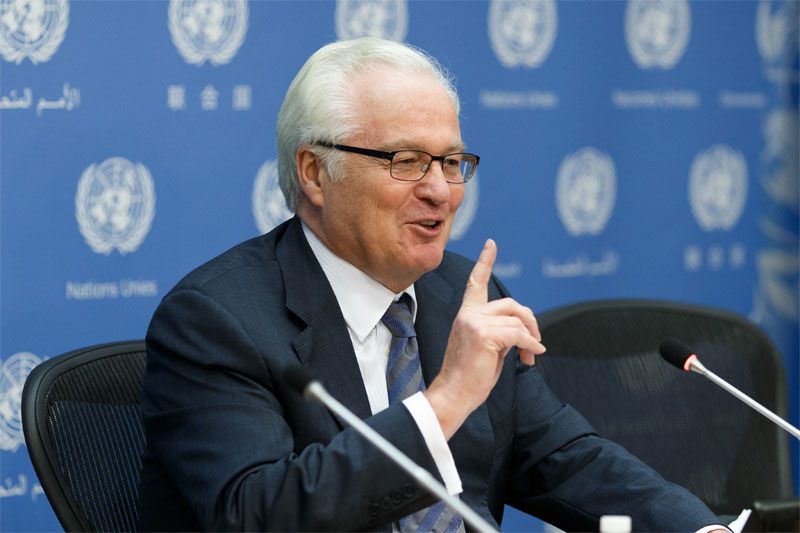
In Memory of Vitaly Churkin

Reading time: 2 minutes

There is a Russian saying – one person alone is not a warrior in a field.

Vitaly Chrukin, the Russian Federation’s ambassador to the UN, was proving that saying wrong.

Direct, forceful, honest, real, witty – he spoke at the UN not only on behalf of Russia, but also on behalf of the nations looking for equality and justice.

He was a true warrior standing alone in a hostile field, and holding his ground.

And he passed away on his post, suddenly, unexpectedly, only a day before his 65th birthday.

He will be deeply missed. Both by his family, Russia, and the world that lost a great defender.

Russian ambassador to UN Vitaly Churkin dies day before turning 65

He gave an interview, his last interview, to the RT journalist Alexey Yaroshevsk only 2 weeks ago. The journalist remembers him as being in perfect health, joking, being open, letting the journalist take his time, and answering all the questions that got thrown at him – he answered over 20 questions, whereas only 6 were agreed upon before the interview…

Interviewed Churkin just 2 weeks ago. He looked in good health and was very energetic during the interview. Shocked https://t.co/SAcWVZ1wEJ
— Alexey Yaroshevsky (@Yaro_RT) February 20, 2017

And let us hope that he passed away from natural causes. Because if he hasn’t, the future of the possible perpetrators would look utterly bleak. As many commenters on the internet, both Russian and foreign, noted – there has been far too many deaths of the Russian foreign diplomats and public figures as of late…

Why does NATO scare Moscow with “paper tigers”?

Reading time: 8 minutes

This is a speed translation of an analytical article by Rostislav Ishchenko from the 7th of July 2016, published at his channel on Kont.


The NATO summit will begin in Warsaw on Friday. For two days (8 and 9 July), senior officials and generals will discuss a lot of technical and political issues. We are, however, interested in only one item on the agenda of the event. In Poland, the Alliance is going to once again discuss relief measures to the “Russian threat”.

As is the custom in the recent years, the “threat” is felt particularly acutely by the Balts and Poles, who demand the deployment on their territories of additional contingents of Western European and American allies.

Washington and London pretend to be impressed by the fears of the limitrophes, and agitate for meeting requests for strengthening NATO forces on the Russian border. We are talking about dislocation of four battalions.

In terms of the real military strengthening of the block’s abilities on the north-western borders of Russia, this gain is negligible. The American military analysts argue that even a dislocation in the region of four additional full brigades will not allow NATO to hold out much longer in the case of a real military conflict.

In fact, we are only talking about whether it will take the Russian troops one or two weeks to reach the Oder line. Or more precisely, how many US troops will need to be hastily evacuated from Poland and the Baltic states, if suddenly something goes wrong and, contrary to common sense, a military conflict in this area happens.


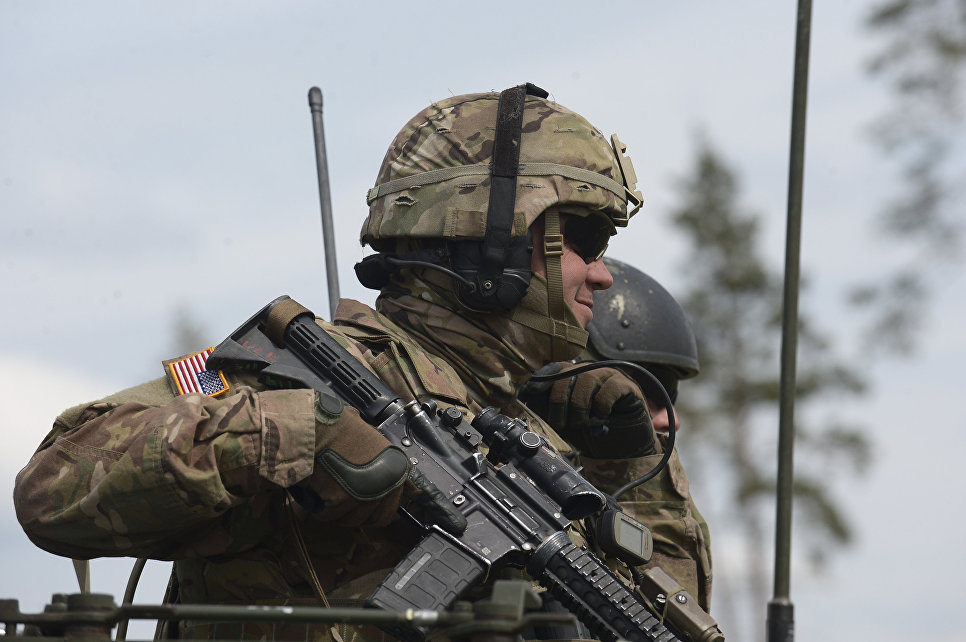
A US soldier during the 2016 Saber Strike exercises in Estonia.

Protection Poles and the Baltic states as a diversionary tactics

So, the United States believes that the Russian group on the Baltic borders now has absolute superiority, which it is impossible to stop by unfolding of either four or sixteen battalions. At the same time, as a result of NATO’s war hysteria of NATO, Russia decided to deploy in the western direction three new high-grade divisions, and another army corps in Kaliningrad.

Continue reading

Crimea Celebrates the 2nd Anniversary of Reunification – Legendary Sevastopol

Reading time: 3 minutes

On the 18th of March 2016 Crimea and Sevastopol celebrated the second anniversary of the joyous event of their reunification with Russia, after a 60-year long separation.

Lada Ray published a very much needed recap of the events that lead to the reunification in:

#Sevastopol #Krim #Rossia: 2nd Anniversary of Crimea’s Reunification with Russia

Following the February Ukraine coup, on March 16th, 2014, Crimeans voted overwhelmingly to secede from Ukraine and reunite with Russia. 95% to 97% voted for reunification, depending on the area. Simultaneously, a referendum whether to accept Crimea and Sevastopol as two new subjects of the Russian Federation took place in Russia. 95% of Russians said ‘yes.’

On March 18-19, Crimea and Sevastopol joined the Russian Federation as two newest subjects. The transition went smoothly and peacefully, not a single shot was fired and only two casualties were registered on both sides, shot by a provocateur Ukrainian sniper sent there to attempt inciting violence (by the old CIA playbook).

At the time, 16,000 Russian troops were stationed in Crimea, based on the Black Sea Fleet Sevastopol base lease agreement with Ukraine. Simultaneously, 20,000 Ukrainian troops were stationed on the peninsula as well. Out of these 20,000, about 18,000 Ukraine troops pledged allegiance to Russia, while only 2,000 chose to leave back to Ukraine. They were allowed to leave peacefully and with dignity.

Continue reading

Andrey Karaulov: “Those, who laughed at us yesterday, are no longer laughing today”

Reading time: 7 minutes

Below is my translation of an interview with Andrei Karaulov, published in “Argumenty i Fakty” on the 30th of January 2016. The information in this interview underlines and strengthens what I previously wrote in the articles, pertaining to the Wild 90s: The ”Wild 90s” in Russia, as reflected in people’s memory and another of Karaulov’s articles that I translated, For Russia 90’s Were Worse Than WWII.

One highlight from the article below:

Liberal historian Boris Sokolov counted how many people died over the course of only two years – 1992 and 1993 – during the so-called “reforms” of Gaidar and Chubais. 150.000 more than during the executions of 1937-1938.

Andrey Karaulov was born in 1958 in town Korolev. Journalist and writer, winner of TEFI, Author of TV programmes “The Moment of Truth”, “Russian century”. Author of the documentary films “Unknown Putin”, “Khodorkovskij. Pipes(dead bodies)” (translator note: the inserted character creates the pun), “A Common Fascism”. Author of the books “Around Kremlin”, Russian hell”, and other.


Olga Shablinsky, “AIF”: “It looks as if a new war is coming! We’ve quarreled with almost the whole world,” – it’s a conversation that I recently overheard, expressing the mood of so many… And at the same timet Karaulov writes on his page on the social networks: “Why is Putin not afraid of isolation?” Andrey, are you not worried with these feeling of a coming war?

Continue reading

The “Wild ’90s” in Russia, as reflected in people’s memory

Reading time: 5 minutes

I previously published a translation of an article For Russia 90’s Were Worse Than WWII, which tells the extent of the destruction caused to Russian industry and science in the course of the 90’s.

That was the time, when the West’s darling Yeltsin was in power, and when every parliamentary, every minister had an American “advisor” attached to him or her.

Let us remember that in October-November 1993, the Russian Parliament tried to pass an impeachment of Yeltsin, trying to save the country in a democratic way. The response back then, authorised by Clinton, was to bring tanks into the streets of Moscow, open fire at the Parliament building and kill almost 2000 people, who came to defend the young democracy from APC machine guns. That was effectively a coup d’etat, which kept Yeltsin in power and descended Russia into a dark stretch of destruction of the country and its people, which lasted until 2000, when Yeltsin released his American-backed grip, and Putin started slowly, but surely, save the county.

In this post I want to translate an echo from that time. There is a Russian site, which publishes jokes, real life stories (both fun and sad) and aphorisms, and people get to vote on them. One story collected a large number of votes, for it resonates strongly with the Russian population which survived through the war-like conditions of the 1993-1999.

Continue reading

Victory Day – 70 Years’ Anniversary of the defeat of Nazism in Germany.

Reading time: 2 minutes


No one’s Forgotten
Nothing’s Forgotten

Today marks the 70th Anniversary of the Victory in WWII and Great Patriotic War.
Much can be said commemorating the sacrifice of the 27 million Soviet citizens, who lost their lives on the way to victory. But the best tribute to it is in the words and the imagery of the following immortal song of Lev Leshenko – Victory Day – performed by Iosif Kobzon (who is, incidentally, under the EU and US sanctions for his courageous and outspoken defence democracy, human rights and the right of peoples for self-determination).


Victory Day!

Victory Day how far away it was from us,
As a smouldering piece of coal in an extinguished fire.
There were miles, burnt and dusty, –
We hastened this day however we could.

This Victory Day
Has become permeated with the smell of gunpowder,
It is a celebration
With greying hair on one’s temples.
It is a joy
With the tears in one’s eyes.
Victory Day!
Victory Day!
Victory Day!

Days and nights in front of the hearth furnaces
Our Motherland didn’t shut her eyes.
Days and nights conducting a difficult battle –
We hastened this day however we could.

This Victory Day
Has become permeated with the smell of gunpowder,
It is a celebration
With greying hair on one’s temples.
It is a joy
With the tears in one’s eyes.
Victory Day!
Victory Day!
Victory Day!

Hello, mama, not all of us returned…
Would be nice to run barefoot on dew!
Half of Europe have we walked, half the Earth –
We hastened this day however we could.

This Victory Day
Has become permeated with the smell of gunpowder,
It is a celebration
With greying hair on one’s temples.
It is a joy
With the tears in one’s eyes.
Victory Day!
Victory Day!
Victory Day!


It is a slap in the face of those 27 million perished Soviet citizens, that some of the Western “leaders” decided to boycott the memorial parade in Moscow on May the 9th 2015. This especially shames Angela Merkel of Germany. This denial to commemorate the defeat of Nazism unpleasantly signals that the ugly head of Nazism is again rearing over Europe and USA. I just hope that this attitude is not representative for the people that those “leaders” are representing.

“Sophie” against Canaris.
She fought for USSR, but became Hero of Russia

Reading time: 6 minutes

This is my translation of WWII documentary article, published in “Argumenty i Fakty” on the 27th of March 2014.


Last year, 70 years later, the title of Hero of Russia (posthumously) was awarded to a resident of Soviet intelligence in Crimea, Alime Abdenanova.


Alime Abdenanova was a simple Crimean girl.

I leaf through a copy of the personal dossier of the Soviet intelligence resident in the Crimea, “Sofie”. These 15 sheets of Soviet military intelligence were long guarded, and got declassifying only in January 2008. The chiefs did not make a mistake in selecting her call sign, “Sofie”, which, in translation from the Tatar, means “pure, faithful”… And so was a Crimean Tatar Alime.

The individual case contains dry, standard words: was born in a suburb of Kerch on January 4, 1924, Tatar, finished seven years. Here is her receipt of observance of military secrecy, Komsomol card, presentation to the Order of the Red Banner, it even mentions her civilian salary – 375 roubles.

It would seem that’s a common characteristic of one of the thousands of Soviet military intelligence agents, who became a cog in a vast mechanism of Victory. Only one detail: thousands of Red Army soldiers who fought for the liberation of Crimea owe their lives to her. In her radiograms the girl passed on information about the transfer of German and Romanian troops through the station Sem’ Kolodezjej (Seven Wells). It is by her intelligence that our pilots bombed in Kerch fascist trains with soldiers and equipment. She held out in the German rear for six months. All in all, the fate measured out to Alime 20 years and 3 months of life.

So whose was Crimea?

On the eve of the war, Nazi historians gave Hitler some food for thought, saying that in ancient times Crimea was first settled by Goth tribes. And the Führer decided to ascend the peninsula to Germany, turning it into the country of the Goths – Gotenland, and making Crimea, after the war’s end, a resort area for the tops of the Third Reich.

Our troops – the 4th Ukrainian Front and the Special Coastal Army – reached the peninsular on autumn of 1943. But they could not overcome the German defence. They went almost blindly: there was no intelligence about the number and disposition of the German troops, and only the single line of defence of Kerch stretches for 70 km.

The groups of Soviet intelligence sent to the Crimea disappeared one after another. They were opposed by powerful groups of Abwehr (military intelligence and counterintelligence. – Ed.) – more than 30 groups whose activities were supervised personally by the head of the Abwehr, Wilhelm Canaris.

The decision of the Soviet intelligence was unexpected – they decided to send to Crimea a female spy group from among the Crimean Tatar. But such candidates were not in reserves of the intelligence. Searches were conducted across the country. In the Krasnodar hospital there worked a nurse Alime – Crimean Tatar, Komsomol member, athlete, blue-eyed girl with brown hair, who came from those parts.

They told at the hospital that before she went to the front, the beauty went to a dance at the local club – to dance, as it turned out, the last waltz in her life…

For two weeks Alime participated in the special training program for intelligence: skydiving, studied ciphers, methods of agent recruitment. Natural courage and quick-wittedness helped Alima to become a commander of a scout group, consisting of two people – the second was a radio operator, a merry Larissa Gulyachenko with the call sign “Proud”. Command intelligence gave Larissa the following description: “Truthfully, not afraid of difficulties, resourceful, dreamy.” Who could have known that everything in fact would turn out to be the opposite.

In early October, a small “plywood” plane, punching Crimean rainy night, dropped the group in the steppe. On landing Alime injured her leg and, leaning on the radio operator, reached with difficulty her birth-village of Germai-Kachik.

Seeing her granddaughter, grandmother Revide just threw up her hands, while a younger sister Azife was happy. Grandmother, of course, guessed that Alime’s girlfriend Taisia ​​(the name that was given to the radio operator) appeared in the village not only in order to visit relatives. Later it will be recorded in the personal file of the resident, that she was able to organize an extensive intelligence network from her relatives and co-villagers, which promptly supplied the front with information on the nature and system of fortifications, deployment of troops, headquarters, clustering of manpower and equipment of the enemy. When the radio sessions were held, her little sister went out into the yard and upon noticing strangers, she would laugh loudly and sweep the streets so that the dust was raising as a pillar – a danger sign for the radio operators.

Radiograms to the Center went almost every day. Using data from only one such transmission, our bombers punched into the dust 42 cars with enemy manpower. Alime and her radio operator were awarded the Order of the Red Banner.

Betrayed by her own

They weren’t sitting idly in the Abwehr either. The Germans began to realize that Soviet intelligence is working under their noses. Team “Hercules” distinguished itself, the head of which soon proved to Canaris that a Russian “radio-mole” works in Kerch. A radio finder was summoned from Simferopol, and spotted a station near the village of Germai-Kachik. There were only a dozen of houses there, and it was easy to deduce in which one the radio operator was working. Together with the Germans, there came to grandmother Revide’s house… the radio operator “Proud.” That very same “Proud” Larissa Gulyachenko, who having seen how the partisans were tortured, betrayed the whole group.

Gulyachenko attacked the younger girl, demanding to be shown where she re-hid the station. Azife, protecting her sister, tried to keep quiet, but when the Germans threatened to shoot her grandmother and burn the house, she showed the hiding place in the barn.

Alime was taken to the town of Stary Krym, and thrown into solitary confinement. She was not allowed to sleep, starved, the nails were pulled from her fingers, her arms were broken. An underground fighter, Tamara Stroganova, inmate of the same prison, recalls: “I knew Alime well. My brother loved to dance with the lithe mobile girl. Large blue eyes. And then I hardly recognized her: in the bloody dress, with broken arms, bruised, once splendid hair were almost completely torn out. Seeing me, Alime put a finger to her lips as if to say: You do not know me… I’ve never seen her after that.”

According to some sources, spies were shot on the outskirts of Simferopol, in the vicinity of the farm “Krasnaja”. There the fascists threw about 300 Crimeans, including those still alive, into a concrete pit.

Alime’s niece Dzhevar Assanova tells:

– One of our elders told me that the soul Alime is flying over the village and can not find the rest. At first we did not believe, and then began to collect money for the monument to Alime. And we set it – near the road Kerch-Simferopol. Praised be Allah, the soul of Alime is in peace.


Money for the monument to Alime were collected by family and friends. Photo: From the family archive
WWII Veteran Stanislav Lapin: “I had my own score with Hitler”

Reading time: 5 minutes

The article below is my translation from Russian of an account of one of the participants of the Victory Parade of 1945, as published in “Argumenty i Fakty” on the 6th of March 2015.


As we locate the still-living participants of the Parade, “AIF” will print their memories. The first word to Stanislav Vasilyevich Lapin – a simple but heroic soldier of the 3rd Belorussian Front.

If not for the war

– I am a kid from Moscow. Year of birth: 1923. At 16 I went to the factory. Got the fourth grade (proficiency). Everything would have been fine if it were not for the war… The factory produced military products. Therefore, for my grade I was given a reservation and was to be to sent, along with the machine, to the Urals. When the equipment was loaded onto the platform, I said, I’ll go for a walk. I left and never returned. Simply put, ran to the front. I could not be worse than all the rest! The very next day I got myself right to fight! Took the oath on November 4, 1941 – and strait to the battle of Volokolamsk. I also took part in the Battle of Moscow. I needed it, because in addition to the general, I had a personal score with Hitler. Before the war I had a girl. I called her “my Sonia”. Her and I loved to go for a walk around Moscow on warm evenings. But we were young and… never kissed. Just sat there and sometimes gently pressed against each other. And then came the war.

I went to the front, and my Sonia went to nursing courses. Then, to the front as well. And once, after a battle I was sitting on a halt. I see a supply cart, and on it – my Sonia. As she saw me, she ran up to me and started kissing me as never before. Our soldiers were looking at us in both envy and joy. And suddenly… a shot – my Sonia shuddered and began to sag in my arms. I cried in fright, and the boys rushed into the forest, where the shot came from. And there they saw a German in Russian boots and fur coat. He tried to escape. One of ours caught up with him and stabbed him with a bayonet. Other Germans who were there, did not have time to react – they too were finished off. Such was the hatred of our guys. Only I just sat there and held my Sonia. And still felt the ghost of her kisses.

After the war I met her mother, who ran up to me and started kissing me as my Sonia back then… But I could not find the strength to tell her how it all happened. And she did not know – she kissed and cried that Sonia was killed. So during the Battler for Moscow I had a personal score with Hitler!

And one more thing… looking for water in a deserted village, we found… a well, jammed with children. Around them lay dead mothers. A child was nailed to the house door with a bayonet… How could have we treated Germans after all that we’ve seen?!

The main medal

I was first wounded near Rzhev in February 42nd. There were heavy battles, neither we could take the Germans, nor they us. It lasted for a long time, until ours prevailed.

In 1943 I was in the Orel-Kursk battle. Here again I was wounded, but lightly, so I quickly returned to the front. That’s infantry for you: to fight, heal the wounds and fight again. My first medal is for the Battle of Kursk. I fought in the infantry from 41st until to 43rd and know first-hand what it means to raise into the attack. When the command is issued, you have to get up and go forward under machine-gun fire, explosions and mortar shells. Next to you your comrades fall, but all the same you go ahead. Forward! It’s simple when told, but it is impossible to get used to. Each attack is a shock and an effort. Artillery helped, the Germans fled. And only then, when catching up with them, you feel you have won this battle, and there is an unexplainable feeling of victory!

Advancements usually occurred during the nights, while the Germans were asleep. We came out of the blue. We were killed, we killed, but we won! That’s the infantry for you. In the 43rd I was retrained and for the battles at Orel I became a mortar oprative. Although I was only a sergeant, I was entrusted to command the mortar platoon. We chose a place near some village, and took up a position, adjusted the mortars in advance, placed guards, and went to sleep. Well… By nature I used to get up early. And here I woke up even earlier, at about five o’clock – wanted to wash my head. Nearby there was a crane-well. It was summer. I pulled out some water, poured it into the helmet and only started to wash, when I heard the hum. Looked at the road, and there down the hill… a whole column of German cars! I threw down my helmet and to the mortars. Fired… And hit from the first shot! Straight into the hood of the front car.

It was correct that we adjusted the aim the previous evening, and did not put off until morning. The Germans did not expect us here. Panic. My guys woke up from my shot. And started firing from all mortars – no one was left! Many did not even have time get out of their cars. That’s where I got the first medal “For Courage”.

The third time I was wounded near Vitebsk in 1944 and until autumn… suffered in the hospital, because whatever you say, but it’s easier to wait for the end of the war at the front! There, at least ,something depends on you. Near Vitebsk the soldiers of the 3rd Belorussian Front did not spare themselves. Despite all German shooting, they still went forward, because as sometimes it happens, that there is no other way! Germans did not take it into account, so we drove them out of Vitebsk. That’s the second medal. I also have an Order, but I would not exchange the medal “For Courage” for any Order.

For my two medals “For Courage” I was awarded the right to participate in the first Victory Parade. My place in the parade is different from most other places. My companions and I were sitting in the back of the car ZIS-5. We were warned that, passing Mausoleum, we should not turn our heads. But how could we not turn them when there were Stalin and Zhukov?!