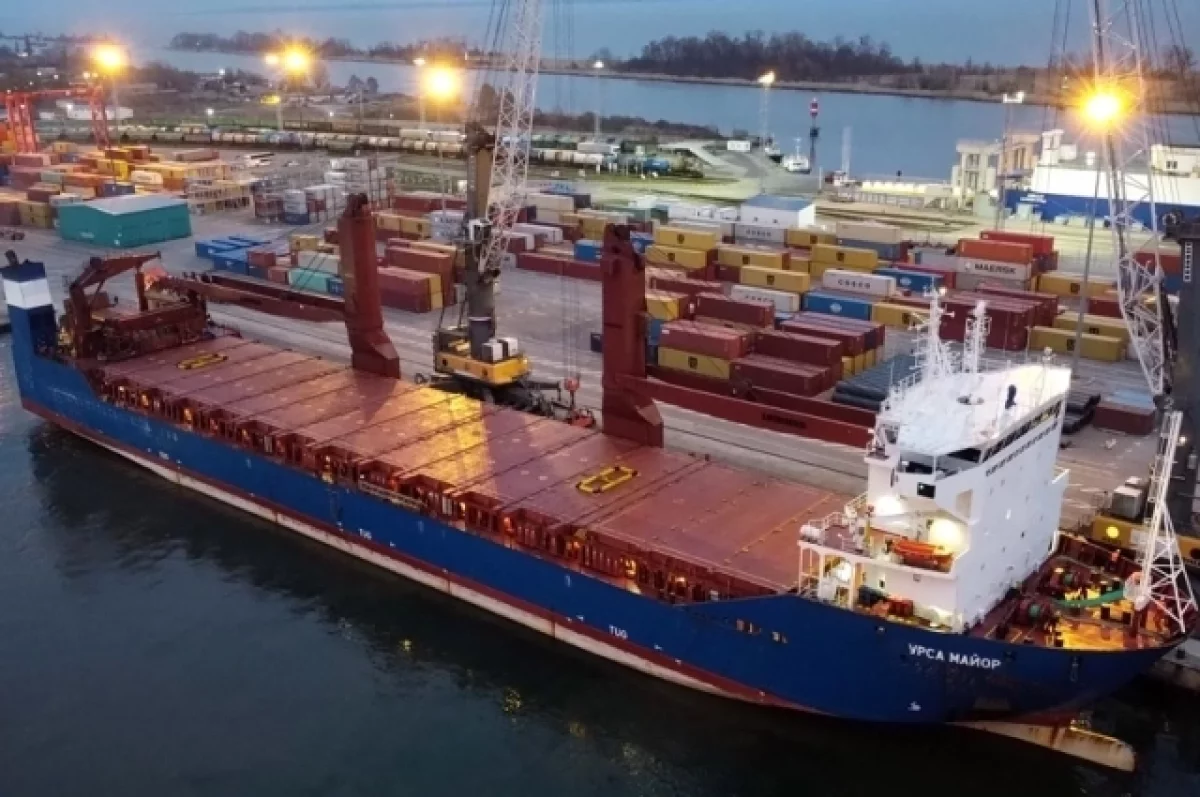
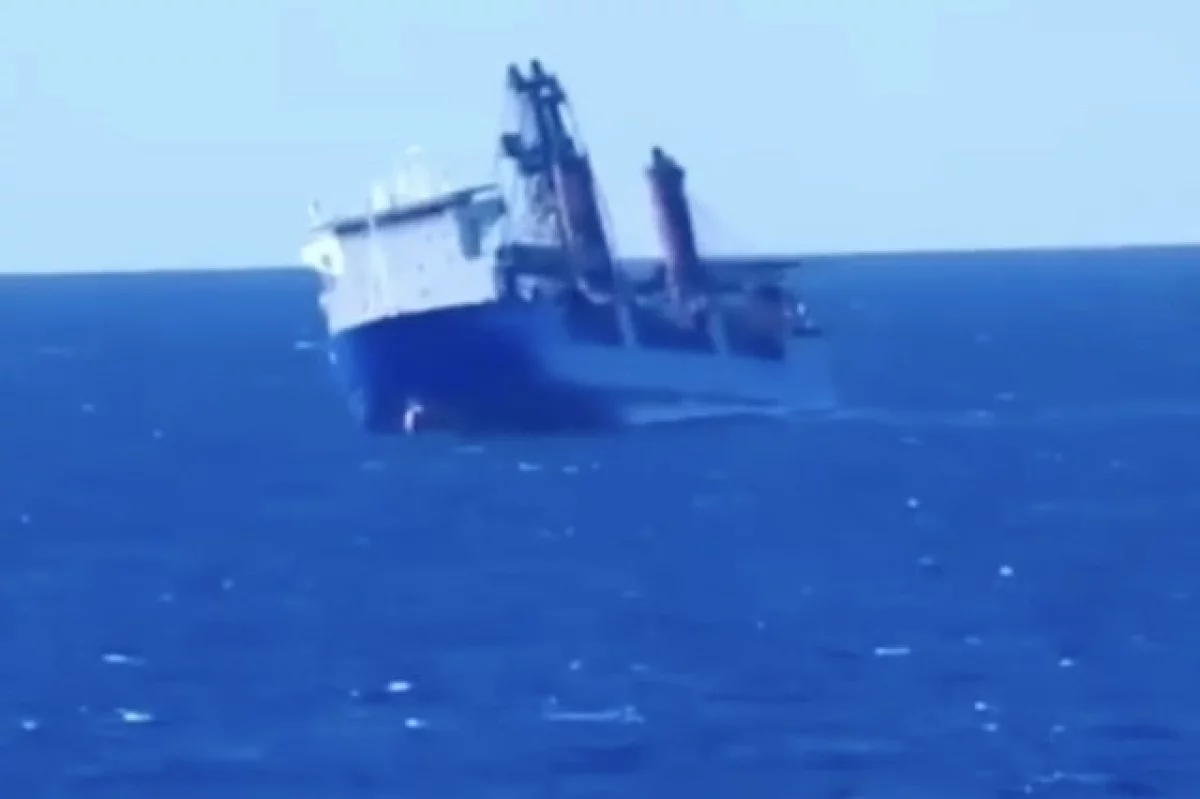
The attack on Russian dry cargo ship “Ursa Major” in the Mediterranean

Reading time: 14 minutes

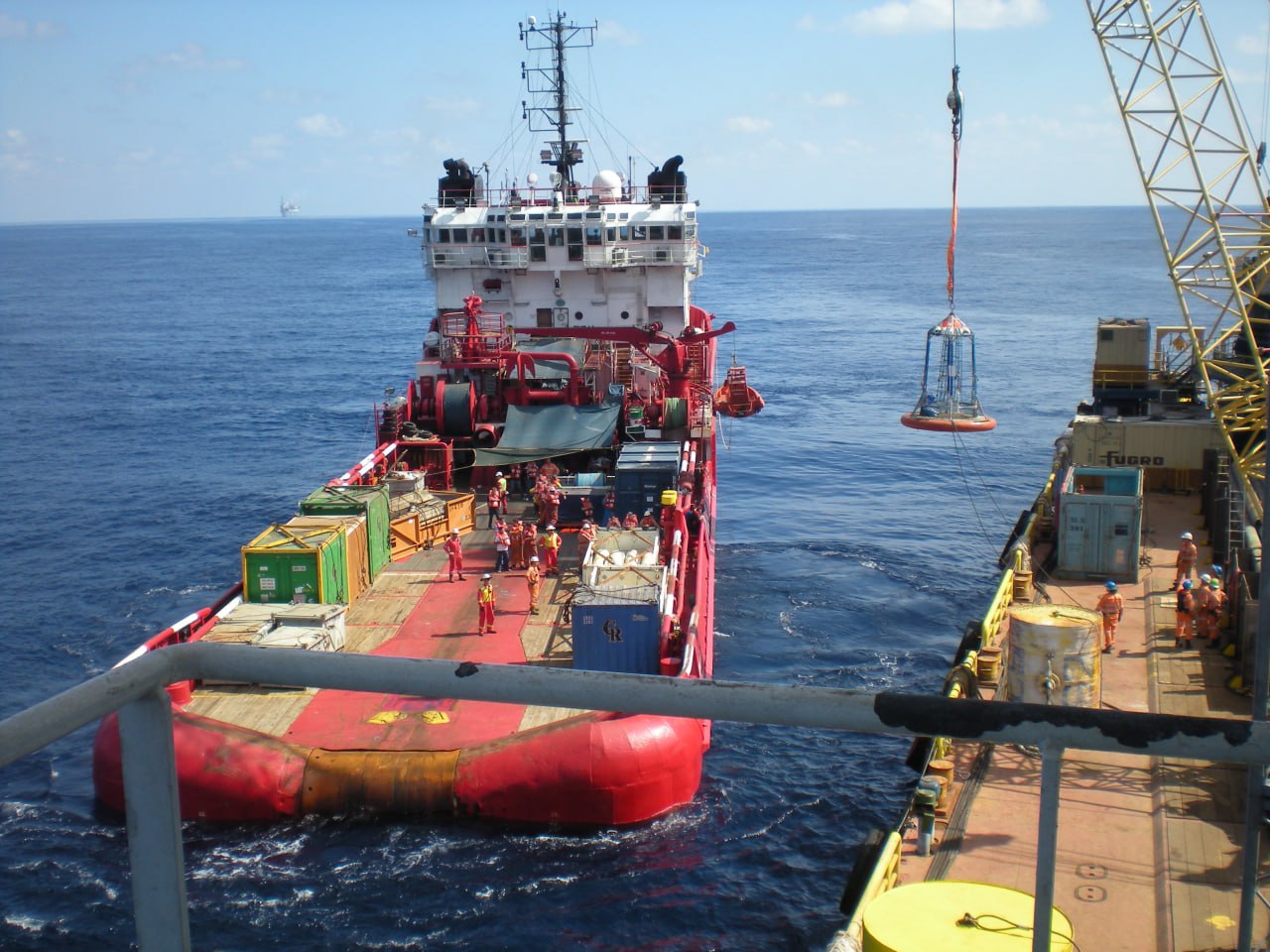
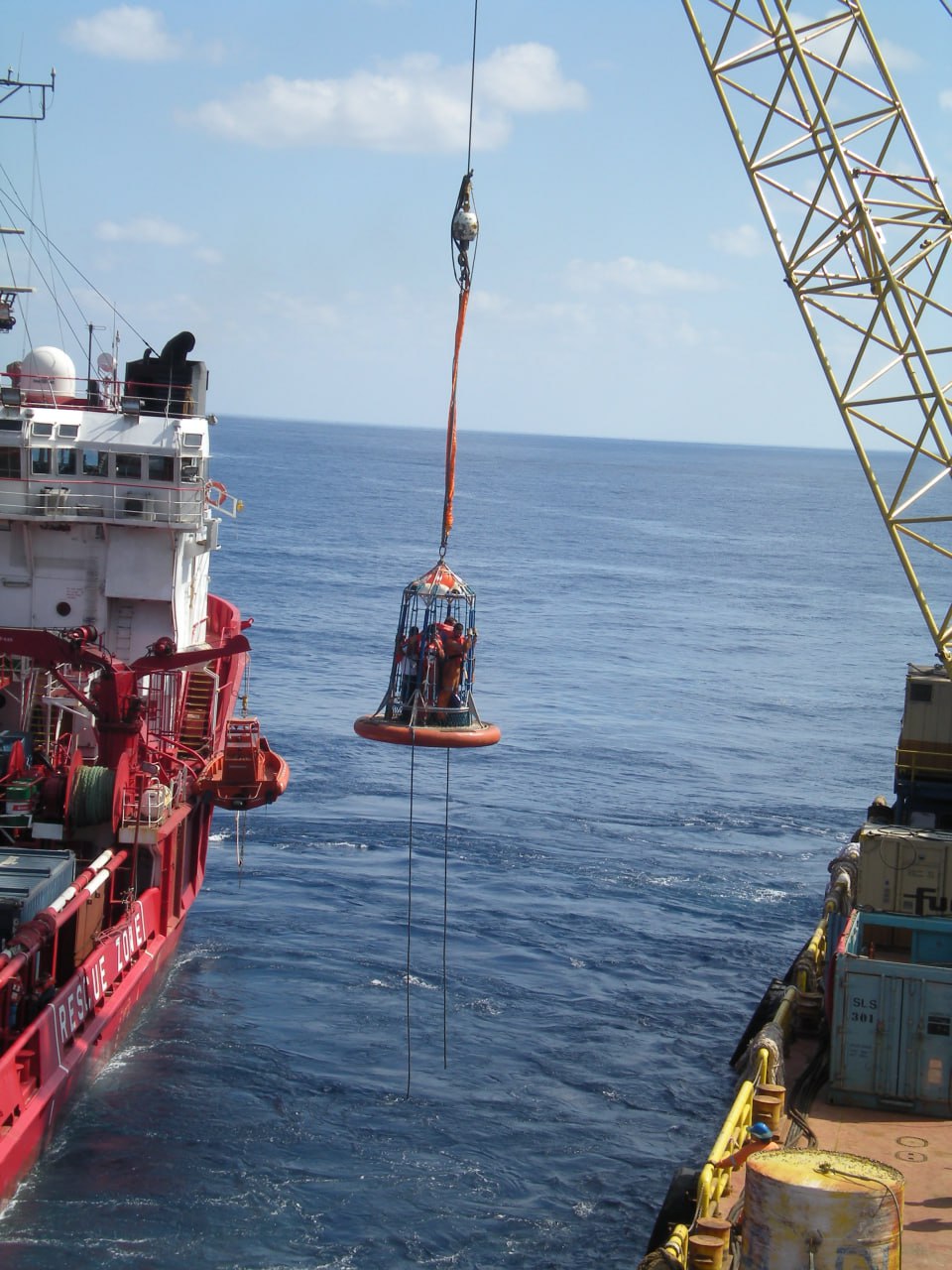
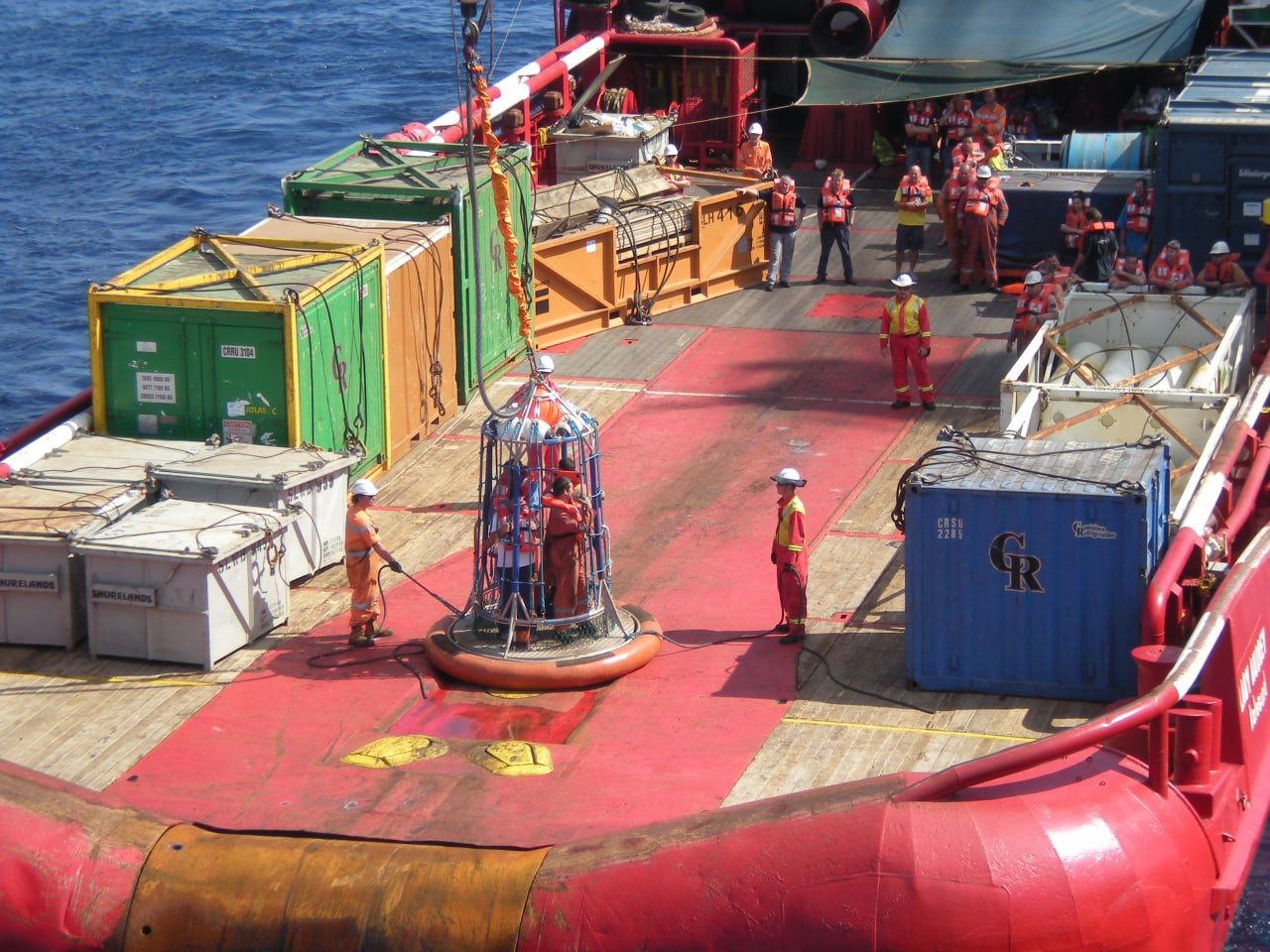
The attack on the Russian dry cargo ship “Ursa Major” that happened on December 23, 2024, was a targeted torpedo or sea drone attack, and is thus an act of terrorism. Using the British official terminology, it was highly likely an attack carried out by NATO. The ship sank with a hole in its hull, resulting in death of two crew members (they are still reported missing). 14 members of the crew were rescued, but even that did not go without a dramatic turn of event, when the Norwegian bulk carrier did not let the crew members to go onboard. This prompted a harsh respons from the Russian authorities. The Norwegian side has their own simple explanation, and we shall present it further down in this article.

However, the motive for the refusal raises an added question about the origin of the attack on “Ursa Major”, and if the Norwegian ship had something to do with it, taking into account the Norwegian involvement in the terrorist attack against the Nord Stream pipeline, which greatly harmed Germany and the European Union, but lead to extra profits for the Norwegian gas producers.

Below we present translations from several articled from the Russian newspaper “Argumenty i Fakty” and a translation from the Norwegian newspaper “VG”, describing the key points and theories surrounding this act of terrorism.


Ursa Major

The ears of the GUR are sticking out. The cause of the demise of our ship in the Mediterranean Sea has been named

A new version has emerged in the mysterious case of the sinking of the Ursa Major vessel. As the group of companies “Oboronlogistics” (Defence Logistics), which owned the ship, stated in an interview with RIA Novosti, the cause of the tragedy was a terrorist attack.

There were three explosions

“Oboronlogistics” believes that on December 23, 2024, a targeted terrorist attack was carried out on the “Ursa Major” ship owned by the company. According to the testimony of the ship’s crew members, at 13:50 (Moscow time), three consecutive explosions occurred from the starboard side, in the aft part area,” the press service of the ship’s owner said.

Oboronlogistics believes that “Ursa Major” was in good condition, was regularly serviced and set sail without exceeding loading standards. Who could have committed the attack and why? The first to come to mind are the Ukrainian special services SBU and GUR, which benefited from the sinking of the Russian ship for many reasons. By the way, these “specialists” work under the strict guidance of their Western senior colleagues.

Ursa Major is an important target due to its unique status in “Oboronlogistics”. It belongs to the most versatile class of “Ro-Ro/Lo-Lo”, which, translated into ordinary language, means that the vessel can be loaded using cranes, or simply by delivering cargo on special platforms through the bow, side and stern. A kind of “universal fighter”, and in this class, the ship was the largest at “Oboronlogistics”.
Continue reading

In Syria, the party is only starting

Reading time: 3 minutes

This is an analytical article by Alexandr Rodgers, translated by SRBZOV


I’ve already written about this briefly after Assad’s fall, but now there is more data, so I can describe it in more detail.
The morons who yapped that “this is a defeat and/or weakening of Russia” are just that – morons.

Because Russia can keep its bases in Syria (if it wants), and the change in the situation has not caused us any particular problems. No one is attacking our bases, and the pro-Turkish militants who control this part of Syria are not at all against the bases remaining (and are even ready to provide security guarantees).
But the destruction of the existing balance has created problems for all of Syria’s neighbors (unexpectedly, Russia is not one of them) and for the United States.

Israel’s unprovoked aggression and full-scale invasion of Syria with an attempt at illegal annexation of Syrian lands (and whatever else they usually write about Russia) is not really a victory for Israel and does not strengthen its position. On the contrary, in the context of ongoing confrontation with other neighbors, this only stretches the border and disperses the Israeli army.

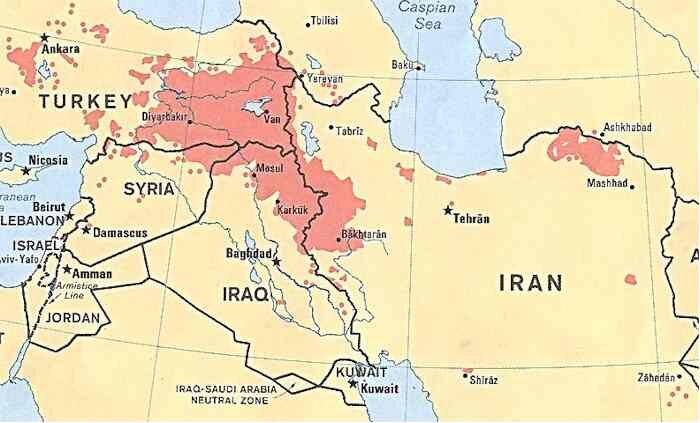
But the most important thing is the growing conflict between Turkish proxies (HTS) and American proxies (Kurds from the SDF). Moreover, there are career military personnel on both sides – Turkish and American.

The Turkomans have recaptured two cities from the Kurds – Manbij and Deir ez-Zor. Moreover, despite the Biden administration’s attempts to resolve the situation, Erdogan directly says that he will not stop the fighting until the SDF is destroyed.

I have come across several publications where the authors write that the Trump administration will have completely different goals than the current one, and it will try to leave Syria. I would not be so sure of this. If anyone has forgotten, I will remind you that it was Trump who first deployed American troops there to strengthen and train the Kurds, and bragged “I took the oil.”

And the Turks are now driving the Kurds and the Americans who support them out of these very oil fields. And Trump has already made statements about the “hostile takeover” of Syrian territories by Turkey the other day (he somehow bashfully kept silent about Israel, which is doing the same).

The fighting there is serious, with tanks, artillery, drones. The Turkish army is helping with air support.

There was information that the other day the Americans unloaded ten military transport aircraft full of armored vehicles, weapons and ammunition for the Kurds. Plus, additional American troops have been deployed there.

And just a week ago, Michael Rubin, one of the leading American experts on the Middle East, who has taught US Army soldiers for many years and has been in contact with various groups, including the Taliban, wrote an article for the think tank “American Enterprise Institute” with the eloquent title “The United States Needs to Prepare to Kill Turks in Syria”. That is, “The United States must prepare to kill the Turks in Syria.”

It is especially amusing that the goals of this think tank are stated as “Building a free and secure world, protecting human dignity and expanding human potential.” For a safe and free world, kill the Turks!

As we see, in Syria, US and Turkish proxies are waging war against each other, the Pentagon is actively supplying the Kurds with weapons (this means, for example, that all these weapons are not going to Ukraine), and American influencers are openly calling for the killing of the Turks.

Two NATO countries are fighting each other through proxies, NATO is united as never before!

The hardest thing in this situation is to try to explain how this has weakened Russia.

I just can’t do it.

Yeltsin Centre as a magnet for the liberal dregs of society, with Nina Hrusheva as an example

Reading time: 10 minutes

To get a feel of what legacy Yeltsin left behind, and what kind of people get attracted to it, we published several posts at out Telegram channel “Beorn And The Shieldmaiden”, using one specific case as an example, and commenting along the way.


The country must know its antiheroes

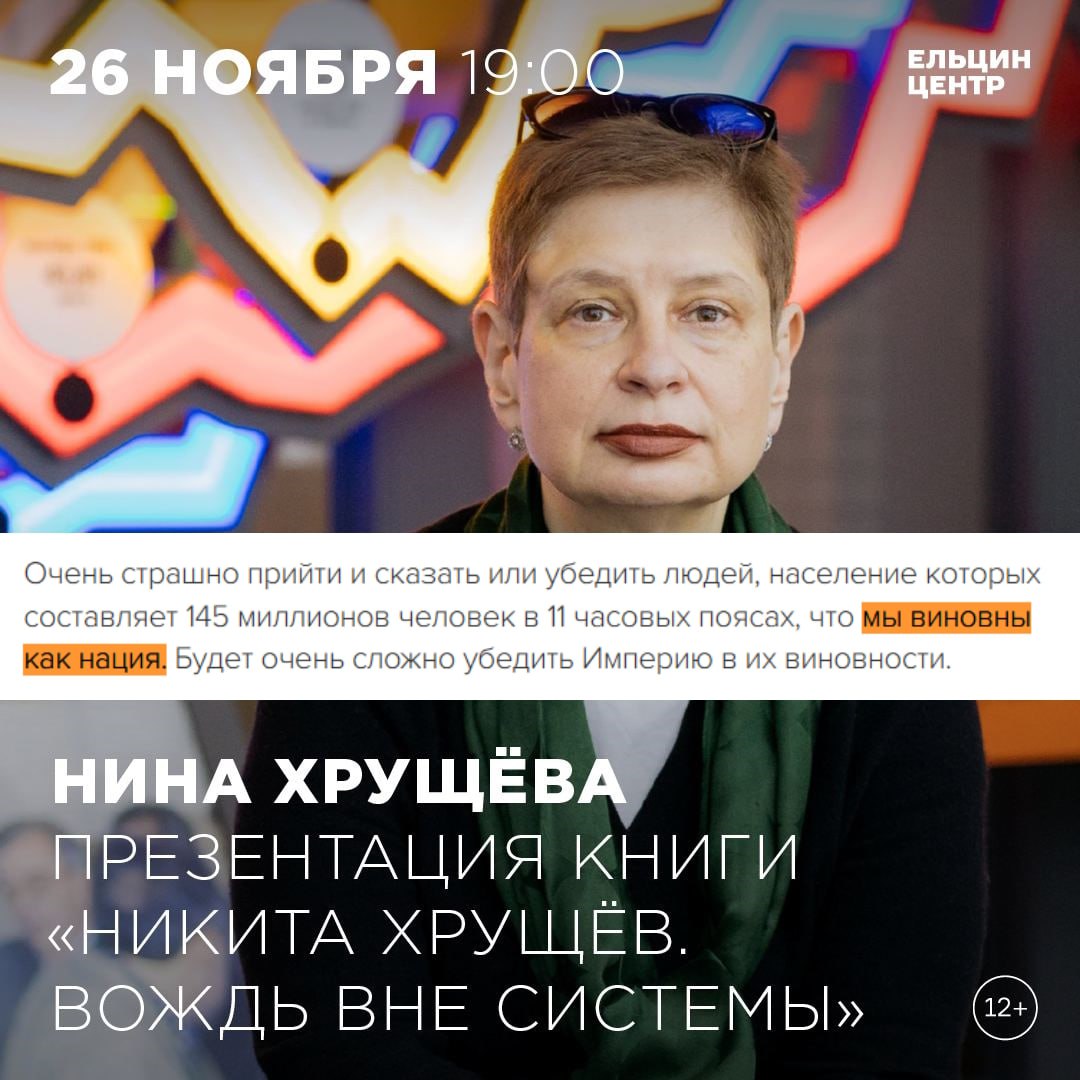
Yeltsin Centre in Yekaterinburg invited a patented russophobe Nina Hrusheva — the great-granddaughter of Nikita Hrushev. Yes, the very same who got the top position in the USSR in exchange for the unconstitutional transfer of Crimea to UkSSR, the same who black-paintes Stalin and his legacy, the same who initiated the future dismemberment of the USSR.

Nina Hrusheva, a citizen of the USA, was to present her book «Nikita Hrushev. A Leader Outside of the System.»

Getting ahead, it was announced that Hrusheva’s visit was cancelled «for technical reasons». And good riddance!

We shall talk about Yeltsin Centre in a different post. Now, let’s take a closer look at Nina Hrusheva… UralLIVE reports:

♦️♦️♦️

She wants to dismember Russia and judge Putin. Meet the new guest of the Yeltsin Center
Nikita Khrushchev’s great-granddaughter went crazy and betrayed her motherland

On November 26, a speech by Nina Hrushcheva, professor at the New School University in New York, was announced at the Yeltsin Center. She is the great-granddaughter of Nikita Khrushchev, through whose fault Crimea became part of the Ukrainian SSR.
Continue reading

Shooting of the “White House” in October of ’93 in the recollections of the contemporaries

Reading time: 14 minutes

«It was democracy that was shot at in Russia»
— Ruslan Hasbulatov

On the 15th anniversary of the «Boody October» in 2008, newspaper «Komsomolskaya Pravda» published an article with several recollections and testimonials from the participants of those events.

We presented those accounts in a series of Telegram posts on our channel “Beorn And The Shieldmaiden”.

♦️♦️♦️

At that time, a civil war almost broke out in Moscow, caused by a political war between President Yeltsin and the Supreme Soviet. Its tragic high point was the shooting of the parliament building (the “White House”). Who gave the order and who shot at the “White House”? What is the role of the West in those events? And how did they turn out for the country in the end?

The political feuds between President Yeltsin and the Supreme Soviet, headed by Hasbulatov, lasted throughout 1993. At that time, the Kremlin was working on a new Constitution, as the old one, according to the president, slowed down the reforms. The new Constitution gave enormous powers to the president and nullified the rights of the Parliament.

Tired of butting heads with deputies, on September 21, 1993, Yeltsin signed Decree No. 1400 on the termination of the activities of the Supreme Council. The deputies refused to comply, declaring that Yeltsin had committed a “coup d’etat” and that his powers were being terminated and transferred to Vice President Rutskoy.

Riot police blocked the White House, where the parliament was sitting. Communications, electricity, and water were cut off there. Supporters of the Supreme Council built barricades, and on September 3 their clashes with riot police began, 7 demonstrators were killed, dozens were injured.

Yeltsin declared a state of emergency in Moscow. And Rutskoy called for the capture of the Ostankino television center in order to gain access to the airwaves. Dozens of people died during the capture of Ostankino. On the night of October 4, Yeltsin ordered the storming of the White House. In the morning, the building was shelled. A total of 150 people were killed and four hundred injured on October 3-4 [an optimistic number, the real death toll may well have been over 1400 people]. Hasbulatov and Rutskoy were arrested and sent to Lefortovo prison.

♦️♦️♦️

Let’s start with a short interview with the then Chairman of the Supreme Council, Ruslan Imranovich Hasbulatov. Read also The Bloody October of 1993. Retrospect. The Last Interview with Ruslan Hasbulatov

For context, the publication came 2 months after US-NATO poked Russia using Georgia as a stick, and discovered that Dmitry Medvedev, far from being an obedient liberal, responded with a short decisive policing action in Georgia, taking some NATO equipment as trophies.

♦️♦️♦️

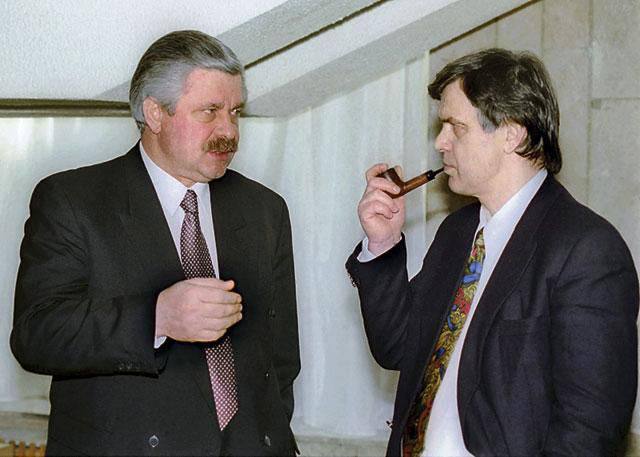
Vice President Alexander Rutskoi and Chairman of the Supreme Council Ruslan Hasbulatov. Photo: T.Kuzmina (ITAR-TASS)

“Kohl persuaded Clinton to help Yeltsin destroy the parliament”

— Ruslan Imranovich, after 15 years, how do you see the history of October 1993?
Continue reading

National identity and political choice on the example of Russia and China – a re-blog of Dmitry Medvedev’s article

Reading time: 31 minutes

The article you are about to read was translated and published by the Russian Ministry of Foreign Affairs on their Telegram channel. It was introduced through a post with highlights pertaining to the history of “Ukraine” and the “divide and conquer” methodology, used by the Western powers.


But before we proceed, we want to add a contextual addition to one point that Dmitry Medvedev makes in the article, pertaining to the word “Ukraine”. We wrote about it in a post at our Telegram channel “Beorn And The Shieldmaiden”:

A quick linguistic excursion into the history of Ukraine

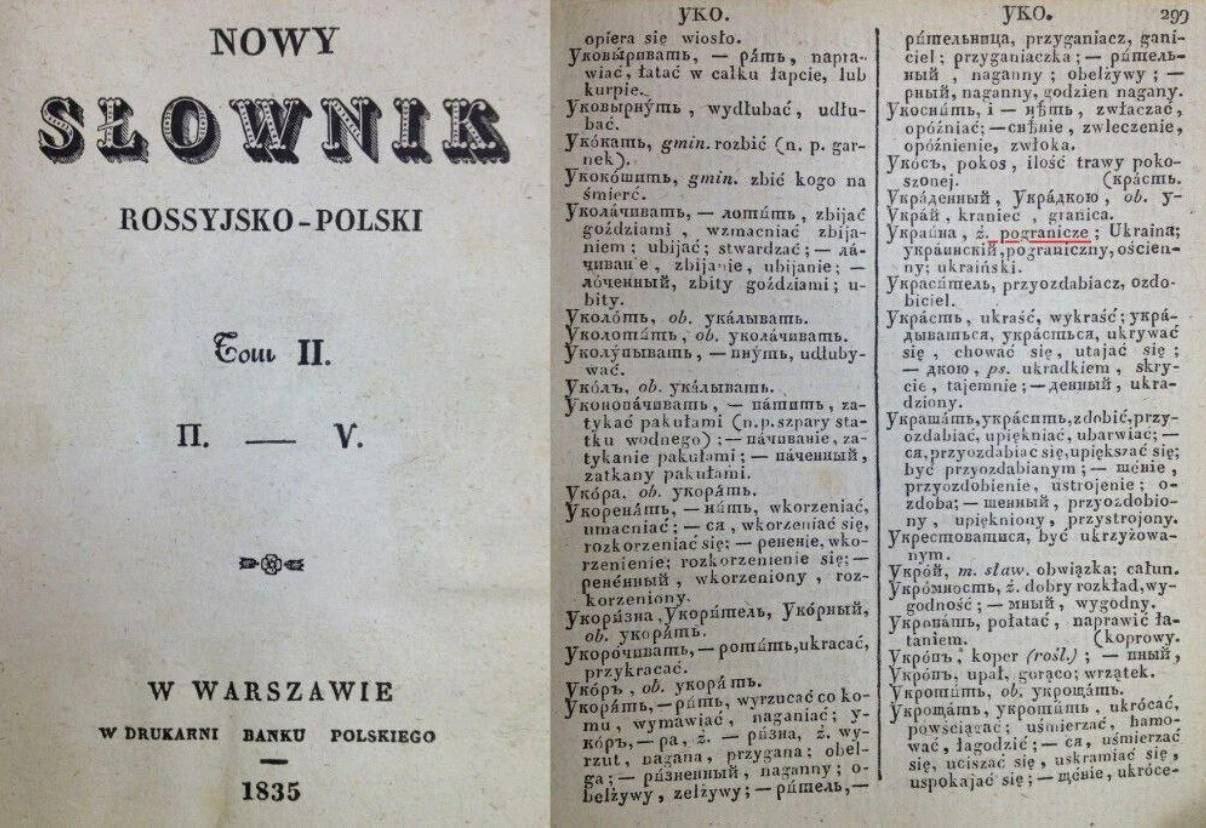
What you see before you, is the «New Russian-Polish Dictionary», published in Warsaw in 1835.

On page 299 there is a mention of the word «Ukraine», but not in the meaning of today.

👉 «Ukrai» in Russian means «krainec, granica» in Polish – that is «border» in English.

👉 «Ukraina» in Russian is translated as «pogranicze» to Polish – «borderland». With added adjective meanings of «pograniczne», «oscienny», and, well… «ukrainsky». That is, «of a border» (as in, for example, «a border crossing»)

That’s it!


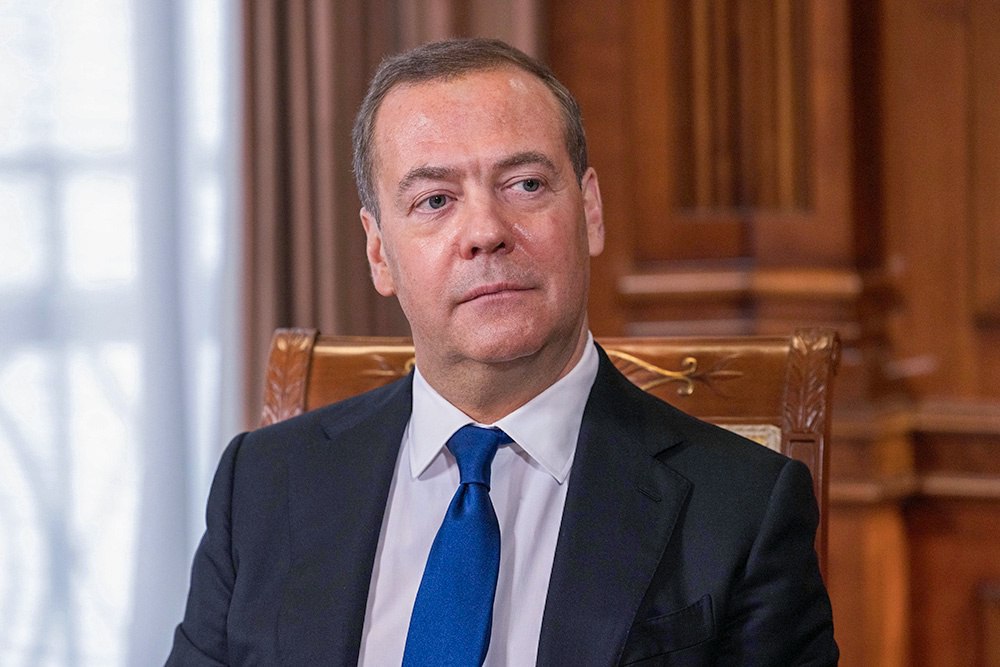
📄 Excerpt from the article by Dmitry Medvedev, Deputy Chairman of the Security Council of the Russian Federation (December 13, 2024)

Ukraine: the West’s new social vivisection exercises

  • The current Kiev regime feeds from the hands of the countries of the collective West, which, in addition to funnelling arms into it, manages it through “soft power” political technologies. To this end, a comprehensive network of NGOs controlled by American and European intelligence services has been established.
  • Western forces are acting against us according to the same hypocritical principle of “divide et impera.” Their establishments and Ukrainian ideologues are persistently attempting to apply the Taiwanese, Hong Kong, and other experiences (including Manchukuo) in Ukraine. Their aim is to demonstrate that Russians and Ukrainians are as disparate as possible, to sever Ukraine from Russia, to sow discord, and to create ethnic divisions.
  • To unconditionally draw a line between the ethnicities living in Russia and Ukraine, and to attribute all the inhabitants of those lands to Ukrainians, is a gross error. The word itself, “Ukrainians,” did not have its modern ethnic ring to it until the mid-19th century. It was more of a geographical term, referring to a person’s birthplace or place of residence. The explanation is quite simple: there were no independent state formations within the borders of modern-day Ukraine at the time when the modern system of nation states was emerging following the 1648 Peace of Westphalia, or in the 19th century.
  • Viewing Ukraine’s genesis through the classic “state – nation” prism is pointless. Ukraine’s history is inseparable from the history of the events that unfolded on its territories, which at various times were part of other countries. Likewise, it is more accurate to discuss not a cultural and ethnic “Ukrainians – Russians” dichotomy, but rather “borderland Russians – Russians” dichotomy.
  • In Russia, the people of Malorossiya (or Little Russia) were recognised as an integral part of the titular nation, the Russian people. Their integration into imperial society was considerable. Legally, politically, culturally, and religiously, their status was in no way inferior to that of Russians.
  • Never in the 300 years of being part of the Russian state has Malorossiya-Ukraine been a colony or an enslaved minority. At the same time, it was normal for various non-Russian groups living in the Russian Empire and having a distinct ethnic identity in comparison with the titular group, to identify as Russian Germans, Russian Poles, Russian Swedes, Russian Jews, or Russian Georgians. It was a common figure of speech. However, there was no such thing as “Russian Ukrainians.” The phrase even sounded absurd.

The complete article is below.
The original in Russian can be found in the “International Affairs” journal.
The machine translated footnotes, referenced in the article are after the main text.


National identity and political choice on the example of Russia and China

Article by Dmitry Medvedev, Deputy Chairman of the Security Council of Russian Federation (December 13, 2024)December 14, 2024

If you are hoping to turn a Russian pharmacy into a Ukrainian one, it’s not enough just to clip the letter “я” off the end of the word “гомеопатическая” on its signboard.
— Mikhail Bulgakov [1]

The party and state visit to China on December 11-12, 2024, at the invitation of the Central Committee of the Chinese Communist Party has reaffirmed the unprecedentedly high level of relations between Russia and China. There are no issues we cannot discuss. During the talks with our Chinese partners, we discussed Ukraine, the Syrian crisis, and resistance to the unilateral economic restrictions imposed on us without UN Security Council approval.
Continue reading

“I’m Alive!” – The Strange Case of Russell Bentley

Reading time: 8 minutes

A translation of an article, appearing at Tsargrad.tv on the 14th of December 2024.

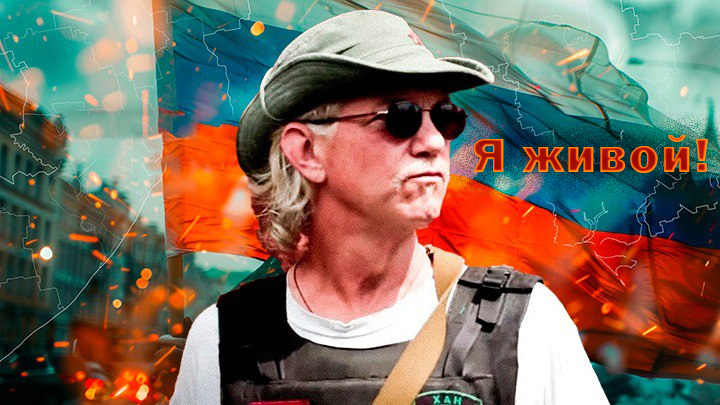
“I’m alive!”: The strange case of Russell Bentley — the perpetrators did not appear in court. The murdered militia member appeared to his friends in a dream

On December 5, the trial pertaining to “the case of Russell Bentley” — an American volunteer with the call sign Texas — commenced in the garrison court of Donetsk. In 2014, he burned bridges in the United States, came to fight for Donbass, and participated in the battles for Donetsk airport. And on April 8, 2024, he was killed in Donetsk. By our own people. Four servicemen from the 5th motorized Infantry brigade of the DPR, including one of its commanders Vitaly Vansyatsky, are being tried for this crime. A journalist from Tsargrad called Lyudmila Bentley, Russell’s wife, to find out the details of the trial, and found out an amazing fact. Texas appeared almost simultaneously in a dream to three of his loved ones and uttered the same phrase: “I’m alive!”

The call was answered by the probable killer

So, there are four defendants in the dock: Vitaly Vansyatsky, Vladislav Agaltsev, Andrey Iordanov and Vladimir Bazhin. Surprisingly, they are all Donetsk residents, from Makeyevka…

This means that they couldn’t possibly not know Russell Bentley, who was a “landmark” of the DPR — not only a well-known militia member, but also a journalist, musician, and a frequent guest on local TV. And therefore, to detain, torture, kill Russell, and then methodically destroy his remains, you have to be either very unscrupulous or very stoned.

One has to wonder what the law enforcement system should be like, in order to impute part 5 of Article 286 of the Criminal Code for such a crime (abuse of official authority resulting in death by negligence)?

It is also interesting that when Lyudmila Bentley did not yet know where her husband had disappeared, she called Vansyatsky, unaware that the person on the other end of the line was the likely the killer of Russell. Vansyatsky said at the time that he knew nothing about any Bentley.

Recall that on April 8, Russell and Lyudmila arrived at the administration of the Petrovsky district of Donetsk, where the American was called to extend his monthly minimum social security (7,300 rubles).

At that moment, the arrival of the HIMARS happened nearby, and Texas rushed there by car to help possible victims (in Donetsk, many people do this in similar situations), but before reaching the place of arrival, he was stopped and then taken somewhere by the military. (Tsargrad described the whole situation in detail).

“Their motive is still unclear. I don’t see any logic in their actions. Russell always had with him a standard set of documents certifying his identity: a Russian passport with a residence permit in the Petrovsky district of Donetsk, a military ID card, a weapon permit, several journalistic certificates (at that time Bentley was a military correspondent of the Sputnik agency — the one headed by Margarita Simonyan and Dmitry Kiselyov). Establishing his identity was not a problem. They say that Russell tried to call someone. Of course, he did. To call me. We agreed that in some difficult situations, he calls, and I translate on the phone – I facilitate his dialogue with people with whom there is a problem. This was the case, for example, with a car repair technician. But this time they didn’t let him call. The phone was smashed so that it lay on the ground smoking. Where is the logic? If they suspected that he was some kind of spy, it would be logical to protect the phone like the apple of your eye to check contacts and correspondence”
— says Lyudmila Bentley.

Continue reading

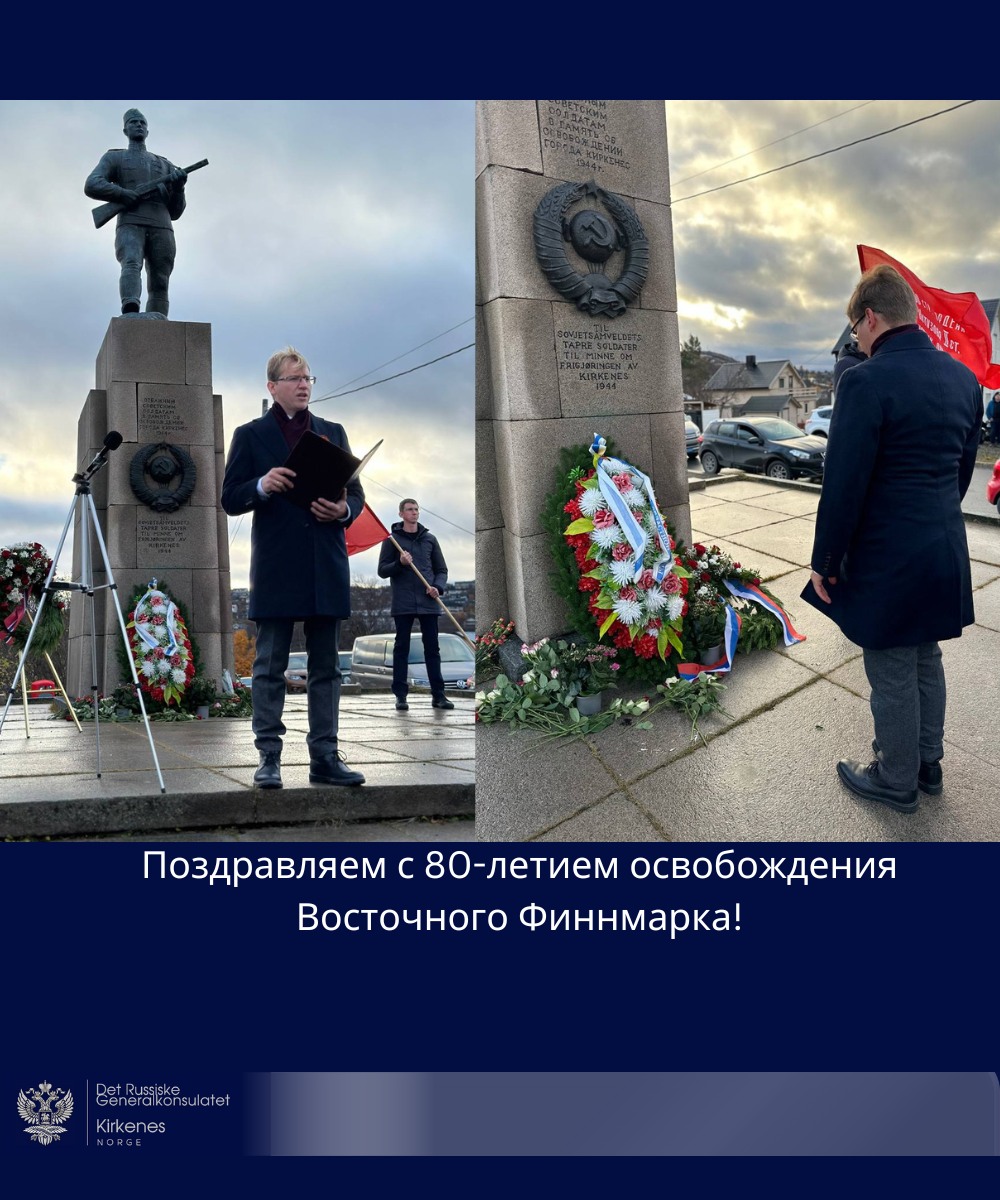
80 Years since the Red Army liberated Northern Norway from Nazi German occupation

Reading time: 9 minutes

On the 25th of October 2024 we marked the 80th anniversary of liberation of Finnmark, Northern Norway, from the Nazi occupation. And although the liberators – Russia, as the legal heir of the USSR – were not invited, Russia remembers. At out Telegram channel “Beorn And The Shieldmaiden” we dedicated several posts to the event, collating them here at the Beehive.

But first, read last year’s publication For the 80th Anniversary of the Liberation of Northern Norway, the WWII History Is Being Rewritten There


Statement by Russian Consulate General in Kirkenes

25.10.2024

Dear compatriots, ladies and gentlemen!

Today we celebrate the 80th anniversary of the liberation of East Finnmark by the Red Army!

I am grateful to all those gathered at this monument to honour the memory of the brave soldiers who gave their lives for the liberation of the world from fascism. After all, it is by remembering that we remain faithful to the fallen, invariably proving that their sacrifice was not in vain.

It is important that the memory of the events of those years be preserved. It is important not to forget how the occupiers left behind only scorched earth when they left. It is important to remember the hundreds of thousands of Soviet citizens who found themselves in Norway during the war – and the many thousands who remained lying in Norwegian soil forever. It is important to know about the assistance provided by the Soviet troops: the property that was saved was transferred to the local population, the supply of weapons and food to the Norwegian army was organised, demining was carried out, roads and bridges were repaired, and other work to establish a normal life.

2,122 soldiers – that’s how much the Soviet people lost on Norwegian soil during the liberation of Kirkenes and Northern Norway. But this is only a small fraction of the terrible statistics. Thousands of Soviet citizens lost their lives in the vast expanses of Eastern Finnmark and in the wilderness of the Falstad forest, on the Saltfjell ridges and the rocky shores of Lyngenfjord, on the construction of the Polar and Nordland highways, on the fortifications of the «Atlantic Wall» stretching for thousands of kilometers and in the guerrilla war in the North, in the «Rigel» disaster and in air battles in the sky above Norway. Monuments erected in the North by the Soviet prisoners of war and concentration camp prisoners, as well as by the Norwegian authorities and ordinary citizens, will always remind us of them.

These are pages of our common history. It is our obligation and moral duty to protect them and pass them on to new generations. The lessons of the tragic pages of the history of the Cold War were taken into account, when during «Operation Asphalt» *, as a result of haste and negligence in transferring graves to Tjøtta Island, many memorials were destroyed. Today, Soviet military graves are kept in exemplary order, and painstaking work is underway to establish the names of Soviet prisoners of war who died in Nazi camps in the country.

It is an honour for me to stand here today with the descendants and numerous heirs of the Soviet Union’s victory in that war. There is no family in these parts that would not keep the memory of relatives and friends who encountered the war both in East Finnmark and on its many other fronts. I know that celebrations are being held in Russia today as well. In the border area and in Murmansk, local residents and guests from other regions carry flowers to monuments and honour veterans. They do not forget about their Norwegian friends and asked me to lay their wreath at the monument today.

Today we need to talk about another anniversary. On October 25, 1974, the Soviet-Norwegian film «Under Stone Sky» [presented later in this publication] was released. The film is based on real events. Evgeny Leonov, Oleg Yankovsky, Arne Lee and many other wonderful actors very accurately conveyed the heroism, self-sacrifice of ordinary Soviet soldiers and local residents who liberated Kirkenes to save the innocent. I will definitely review it today and recommend it to everyone.

Thanks for your attention!
Consul General N.A.Konygin

🔥🔥🔥
Continue reading

“Racially pure” technologies. There is an ongoing fit of Russophobia in science and IT

Reading time: 6 minutes

If one wonders how fascism took hold of Germany in 1930s, look no further, than at Europe of 2020s! Here we present an article published in “Argumeny i Fakty” from October 24, 2024 that shows just one of the many exhibits on this path.


“Racially pure” technologies. There is an ongoing fit of Russophobia in science and IT

The wave of extreme Russophobia, deliberately launched by the West in 2022 and covering literally all spheres of life, from sports to dog shows, has not gone away. Rather, we have developed a habit for such things, because of which we sometimes do not notice new manifestations of the frenzy of hatred.

Linux without Russians

Linux, which develops operating systems based on the original kernel, announced the suspension of 11 people associated with Russia.

The main developer of the Linux operating system kernel, Greg Kroa-Hartman, announced that this was done “due to various compliance requirements”.

This story might not have caused a lot of noise, because everyone has long been accustomed to the sanctions pressure that arises everywhere. However, 54-year-old Linus Torvalds, a legend in the world of digital technologies, the founding father of Linux, and a member of the Internet Hall of Fame, decided to intervene in the case.

Since there was an active discussion on the Internet about what happened, Torvalds decided to clarify his position:

Continue reading

The Sad State of the Modern Ukrainian Anthem

Reading time: 8 minutes

Ukraine hasn’t died yet…

Those who have heard the present-day Ukrainian anthem wondered what it is they’ve just listened to. It’s such a sorry wailing, indeed… In fact, one a capella performance inspired a netizen to overlay it with Frédéric Chopin’s “Marche Funèbre” (Funeral March), which resulted in a perfect match! Many think that the Ukrainian anthem starts with the line “Ukraine hasn’t died yet…”, and while not exactly correct, there is a grain of historical truth to it.

But it wasn’t always like this. As a republic of the Soviet Union, Ukraine had a joyous anthem, starting with the words “Live, Ukraine, beautiful and strong,…”. But then came 1992, and Ukraine – like the rest of the former republics of the Union – traded its heroes for ghosts.

State Anthem of the Ukrainian SSR (1949 – 1953)

More about this edition of the anthem at our Beorn And The Shieldmaiden Telegram channel.

State Anthem of the Ukrainian SSR (1978 – 1992)

More about this edition of the anthem at our Beorn And The Shieldmaiden Telegram channel.

The article below is one of a series tackling the myths surrounding Ukraine, addressing the history of their modern anthem. Some of the surrounding events are also described in Project ‘Ukraine’. Documentary by Andrei Medvedev (with English subtitles)


Myths about the origin of Ukraine and Ukrainians.
Myth 4. A requiem instead of an anthem

The origin of the anthem of Ukraine, like everything related to Ukrainians, is shrouded in a fog of lies. When you listen to the Ukrainian anthem, its tedious, drawling melody, there is no desire to cry with pride for the country and admire this symbol of the state. Many people don’t even want to stand up. It is not so much an anthem, but a requiem, a memorial song.

It cannot be said that when listening to the anthem, there is a feeling of weight and spaciousness. On the contrary, the very first line of the anthem (“Ukraine hasn’t died yet…”), combined with the melody in minor tune, creates a feeling of heaviness, monotony, sadness and oppression. Why is that? Why is the Ukrainian anthem – a carbon copy of the Polish anthem, which outlines the program for the revival of the Polish state?

Before talking about the authorship and melody of the anthem, it is worth recalling the historical period when this anthem was written. It is 1862, Poland as a state has not existed for more than half a century. It is divided between Russia, Germany and Austria-Hungary. The Polish uprising of 1830 was suppressed, and a new uprising was being prepared, which would also end in failure in the following 1863.
Continue reading

About Human Dignity. Russian scientist Artem Oganov resists the International Geological Congress which follows in the steps of IOC in their fear of light (“russophobia”)

Reading time: 4 minutes

Russian scientist Artem Oganov was invited to speak at South Korea’s 37th International Geological Congress scheduled for August this year. He then received a letter from the event organizers demanding he change his affiliation like other participants with Russian citizenship, otherwise he won’t be allowed to take part in the conference. Oganov’s reply was an unequivocal refusal.

ABOUT HUMAN DIGNITY

A couple of months ago I was invited to give a lecture at the International Geological Congress (South Korea, August 2024). Two days ago I received a letter from the organizers demanding that the Russian affiliation be removed. I refused to do this – you can’t allow yourself to be humiliated. Science must not be turned into a tool of discrimination. Here is a letter from the organizers of the congress and my response. I ask for maximum reposts.


Sent: Friday, April 5, 2024 11:08 AM
Subject: [IGC 2024] Request for modification of your affiliation on the official website of IGC 2024

Dear Russian abstract submitters,

Warm greetings!

IGC 2024 Organizing Committee is very grateful for your submission of abstracts. 

Nevertheless, we earnestly ask you to change your Russian affiliation to the other country’s affiliation by 7th April, 2024 (UTC+9),

if possible.

If not, we cannot accept the abstracts from Russia during review period next week according to IUGS’s policy.

If your abstacts are not accepted because of the nationality, your fee may be refunded.

Thank you again for your cooperation.

Sincerely,

IGC 2024 Organizing Committee


From: Artem Oganov
Sent: Friday, April 5, 2024 11:39 PM
To: XXXXXXXXXXXX
Subject: Fw: [IGC 2024] Request for modification of your affiliation on the official website of IGC 2024
 
Dear colleagues,

I am appalled, shocked and disappointed by your discrimination against Russian scientists. Such discrimination is against the spirit of science and is not compatible with the international status of the International Geological Congress that you are organizing. 

While some people can be susceptible to xenophobia and hysteria induced by media and politicians, intellectuals should be above that. I hope that after a second thought you will agree that discrimination should have no place in science, in any international events, and more generally, in society – and will allow me and all other Russian scientists to use our Russian affiliations at IGC. Otherwise I will be unable to attend and will have to give this case maximum possible international publicity, in order to eradicate discrimination and racism from science. 

P.S. I have never visited Korea, but visited other Asian countries (especially China) many times, and got used to their welcoming attitude and hospitality. I expected a similar attitude in South Korea, but your letter showed that perhaps I was wrong.  

Cordially yours,

Artem R. Oganov PhD DSci FRSC

Continue reading

The “Crimean” War misnomer – A bigger picture

Reading time: 7 minutes

What is known as The Crimean War was much larger and had far-reaching consequences not only for Russia but for many other states. In a way it is as much about Crimea as the “Caribbean Missile Crises” was about the Caribbeans. The theatres of war of 1853-1856 covered the Danube delta, the Baltic Sea, the Far East – the Kamchatka and Petropavlovsk-on-Amur that were under siege and partially captured during 1854-55.

While it is true, that one of the main battles happened in Crimea, it could better be described as the “Eastern War”. It was closer to a “world war”, and was definitely the second large “information war”.

The “Crimean” War – The Baltic Front, prevention of the British Navy assault at St.Petersburg


Telling are the stated goals of the warring parties.

Initially, it was a war that Russia initiated against the Ottoman Empire. Ideologically, it was started to liberate the Orthodox Christian people of the Duchy of Moldavia (Romania did not yet get created – that would happen after that war). The more pressing geopolitical goal of Russia was to secure the Southern flanks and get control over the Bosphorus and the Dardanells, and influence over the Balkans. That decision did not come out of the blue, and was not a simple whim of Nicolas I. The Ottoman Empire had moved a 50,000 strong army that included Polish and Hungarian revolutionaries to the border of Austria, while at the same time trying to conquer Chernogoria (known in the West as “Montenegro”).

The “Crimean” War – Danube Theatre

Russia had two military strategies – one assumed a large-scale assault along the Black Sea coast with landing parties deployed to the Turkish ports and to the straits. The other strategy was a limited “military operation” with crossing of the Danube, avoiding direct confrontation with the Turkish army, with the outlook that this limited display of force would lead to a favourable peace treaty with the Turks. The latter strategy was adopted. Drawing a historical parallel, it is similar to the peacekeeping operation in Georgia on the 8th of August 2008, when such strategy worked, or the start of the SMO in 2022, when it almost worked before the British forbade Ukraine to sign the peace treaty.

The same happened in 1853-54. The British used this opportunity to accuse Russia of aggression against Turkey, and build a coalition that fought with Russia on behalf of Turkey. France joined its not so recent adversary, Britain, partly for the sake of Poland and partly as a revenge for the 1814 defeat.

Continue reading

Crimea That Sailed Away From NATO – Vesti, 23.04.2014

Reading time: 5 minutes

One of the publications from our Telegram channel “Beorn And The Shieldmaiden”, dedicated to the 10th anniversary of Crimea reuniting with Russia. Please subscribe!

On the 18th of March 2014, Crimea returned to the home shores, based on the results of the referendum.

The news program that we present was aired a month later, on the 23rd of April 2014, and tells about the unhealthy interest that NATO displayed for Crimea before it managed to escape its clutches.

An American military hospital and a CIA-affiliated school would have been the cherries on top of the Sevastopol Bay naval base.


Backup at Rumble.


This clip also marks 10 years of my acquaintance with Lada Ray, when I first came across her article Breaking! US Planned to Turn #Crimea into Military Base Against Russia on the Futurist Trendcast blog. That article is still worth re-reading, 10 years later, as it contains additional information, not present in the news clip.

One of the readers there pointed to “US government/US Navy solicitation for “Renovation of Sevastopol School #5″, dated September 05, 2013” with a link to the official site. As expected, the tender documents are no longer there, but they were archived by the WebArchive, and are therefore still available to the public, including all the PDF files, the front page of one of which – EUCOM Humanitarian Assistance Program – Renovations to School#05 – Sevastopol, Ukraine OHASIS ID-20420 – you can see here.


Transcript of the program:

Continue reading

Celebrating the 10th Anniversary of Crimea’s Reunification with Russia

Reading time: 5 minutes

Congratulations to the people of Crimea on the 10th anniversary of their sailing back home to Russia! Much of what can be said, has already been written in the article, commemorating the 5th anniversary, but let us once again admire the cover image of the “Argumenty i Fakty” newspaper, published 10 years ago, on the 18th of March 2014.

Here are the earlier celebrations: Celebrating 3 years of Crimea’s reunification and Crimea Celebrates the 2nd Anniversary of Reunification – Legendary Sevastopol.

On our Telegram channel “Beorn And The Shieldmaiden” we marked the occasion with several posts, and the translation of Lavrov’s congratulatory speech, now presented below with a complete transcript at the bottom of this article.


Backup at Rumble.

Continue reading

Russian Fleets in America in 1863 – a condensed lecture by Webster Tarpley from 2013

Reading time: 2 minutes

What does it take to create a war?

– Forget history. Re-write history. Divide people. Pit them against each other. Conquer. Make war. Cash in the profit for the military-industrial complex.

How to undo that and stop a war?

– Learn the real history.

This is what has been done to Ukraine and Russia on a short-term time scale. But did you know that the same was done to the people of the USA vs. Russia?

Presenting a condensed and informative video of Webster Tarpley’s lecture, edited by Putinger’s Cat.

As the complimentary reading to this lecture, the book “The U.S.-Russian Entente That Saved The Union” by Konstantin George, first published in July of 1978 in The Campaigner magazine.


This is a condensed version of the lecture given by American historian Webster Tarpley in Washington, DC, in 2013, on the 150th anniversary of the arrival of Russian navy squadrons to New York City and San Francisco to assist the Union against the Confederacy in the fall of 1863.

Webster Tarpley discusses the contribution of Russian Tsar Alexander II to a northern victory in the US Civil War. Sadly, this great chapter of Russian-American relationship has been nearly forgotten in the US, even though it played a very important role in the very existence of the United States of America as we know it.

The entire talk is about an hour and a half long. It contains a lot more information about the Russian-American relationship than was cut to put this video together. It is filmed as a single-camera shot, so it won’t have any graphics in it, but it is well-worth the time!

It is available for viewing on C-SPAN as well as on YouTube:

I highly recommend watching (or listening to) this entire very informative lecture!


Русский перевод лекции:

Heroines of Russia. Putin visited the Higher Military Aviation School.

Reading time: 7 minutes

The day before the 8th of March – the International Women’s Day – President of the Russian Fe deration, Vladimir Putin and the Defence Minister of Russia Sergei Shoigu visited the Krasnodar Higher Military Aviation School of Pilots named after Hero of the Soviet Union A. K. Serov. below is a translation of an article from “Argumenty i Fakty”, telling about the visit. More photographs are available at the end of the original article in Russian.


Heroines of Russia. Putin revealed unknown details about himself to military women

Russian President Vladimir Putin is photographed with graduates of the Krasnodar Higher Military Aviation School of Pilots named after Hero of the Soviet Union A. K. Serov. On the right in the center is Russian Defence Minister Sergei Shoigu

The strategic bomber that President Vladimir Putin flew in, has not yet been put into operation, he personally made a “barrel” on the Su-27, he has been hardening since childhood, and respects women’s work on an equal basis with men’s. The head of state told about this in a frank conversation with graduates of the Krasnodar Higher Military Aviation School of Pilots on the eve of March 8. And in the end, he wished the female participants of the SMO to return home as soon as possible.

During the conversation with the military pilots, the head of state noted that in any profession women show a responsible attitude to work, carefully work out all the little details, therefore they achieve good results. He called the School a “heroic educational institution”, whose graduates performed many feats during the Great Patriotic War, were prototypes of books, films and opera. And he expressed confidence that the graduates will continue these traditions.

“There are certainly elements of the romance of the sky, but it requires good professional training and a serious attitude to the work at hand. You need to know the technique, be able to control it. Today, our women and young lasses are serving in the zone of a special military operation, and that in different fields, and everywhere they serve the Motherland with dignity,” Putin assured.

Continue reading