“When Russians Are Coming”. Scandinavian satire.

Reading time: 4 minutes

There was a time when the Scandinavians were not yet completely subjected to the russophobic fear-mongering, and could take the whole narrative with a wry smile. We have translated two skits – a Swedish and a Norwegian one – ponderingwhat they would be doing when the “Russians are coming”. The materials were published at our “Beorn And The Shieldmaiden” channels on Telegram, Odysee and Rumble, but never made it to the Beehive!

It is something that we are going to rectify now.


The Norwegian Response Plan


Backup at Rumble.

This satirical skit from “Martin and Mikkelsen” was first shown on the NRK 1 state TV on the 23rd of March 2017 and later published on the Facebook of NRK Underholdning (NRK Entertainment) on the 25th of May 2020. It’s quite similar to the Swedish skit, in which the Swedes intend to run to Norway fast as hell.

It is not explained why the Russians would suddenly decide to come, but at least the planned reception is more sensible, than what is heard nowadays from the talking heads of NATO.

Out Russian translation of the skit can be found on Telegram, Odysee and Rumble.

First published on out Telegram channel here.

♦️♦️♦️

We could not find a similar satirical skit from the Danish TV, however, the Danes were ahead of things as actual politics present something just as hilarious: The real thing!

In 1972, right wing liberalist politician Mogens Glistrup founded The Progress Party and presented quite an unconventional party programme.

Among other things, the income tax was to be abolished; the public sector had to be greatly reduced (abolition of “papirnusseriet”, ‘the paper-pushing’).

There were to be monthly elections for a greatly reduced Parliament, and, the Danish Defence was to be abolished all together and replaced by an answering machine repeating “We Surrender!” in Russian.

At the 1973 elections, the Progress Party became second largest with 15,9% of the votes and 28 members of parliament (out of 179).


Sweden’s Readiness for Russian Invasion – Satire, 2014


Backup at Rumble.

A satirical SNN news program from Spring 2014, Sweden’s military readiness was debated during the National Conference “People and Defence”. Mikael Tornving interviews Lieutenant Colonel Erik Liljestål. Original video on YouTube.

Of special note is the implied attitude of the Swedes to the Finnish (military).

Out Russian translation of the skit can be found on Odysee and Rumble.

First published at our Telegram channel here on the occasion of Sweden joining NATO. Here is the text of that post:
Continue reading

“Blooming Youth” – the All-Union Sports parades on the Red Square in 1938 and 1939

Reading time: 4 minutes

We present the All-Union Sports parades held on the Red Square in 1938 and 1939, with our translation of the 1938 event. The materials were initially published at our Telegram channel “Beorn And The Shieldmaiden”.

Blooming Youth (1938)

A newsreel depicting the All-Union Sports parade on the Red Square, dedicated to the 20th anniversary of the Lenin-Stalin Communist Union of Youth (Komsomol), which took place on July 24, 1938. It showed readiness to defend the Motherland. Many iconic marches and songs were performed, including “If Tomorrow Comes War” (see below).

Columns of athletes from Belarus, Ukraine, Uzbekistan, Tajikistan, Kazakhstan, Georgia, Turkmenistan, Armenia, Azerbaijan, athletes from Voluntary sports societies pass in front of the audience.

On the podium of the Lenin Mausoleum, I. V. Stalin, K. E. Voroshilov, V. M. Molotov, S. M. Budyonny, M. I. Kalinin, A. A. Andreev, A. I. Mikoyan, L. M. Kaganovich, N. A. Bulganin, Hero of the Soviet Union pilot M. M. Gromov. This is one of the first Soviet colour films.


Backup at Rumble.

Trivia:

The film, directed by Nikolai Solovyov, is originally in colour. According to the information on the Internet, the film was shot using the three-colour method. However, according to Wikipedia, the first film shot with a three-film camera “CKS-1” of domestic make, was “Blooming Youth” created in 1939, presented below. That is a different film with a similar title, also about the Red Square parade, but held a year later, it has been preserved in decent quality.

The method of shooting the 1938 film “Blooming Youth” requires further clarification.

This film was shown in the 90s on the “Kultura” TV channel. An incomplete recording was wide-spread on the Internet, ending at the 20th minute. Thanks to the newly digitised VHS recording, which was made at the same time, it was possible to restore the full version of the film. Source.


If Tomorrow Comes War

This is the theme song from the 1938 film of the same title. The film celebrates Soviet military power and shows the Soviet people what the war will be like when the imperialists attack the USSR – fast, victorious, almost bloodless. The film is based on documentary footage shot during real manoeuvrers of the Red Army, and play episodes with actors.
Continue reading

Plasticine Crow and more – Soviet Animation, 1981

Reading time: < 1 minute

As children, we all played with plasticine, creating figures or pictures, or just having fun. But what would happen if grown-ups stated playing with plasticine, like children?

On the New Year Eve of 2024, we presented a translation of “Last Year’s Snow Was Falling”, a plasticine animated film from 1983, directed by Alexander Tatarsky. That was, however not the first of his films using such animation technique.

In 1981, a series of three short animation films under the common title “Plasticine Crow”, came out to the delight of kids — both small and big.


Backup at Rumble.

Trivia!

👉 “Or maybe… or maybe…” is very (and we mean, very) loosely based on Ivan Krylov’s fable “The Crow and the Fox”.
👉 At 4:10, right at the start of “Or maybe… or maybe…”, a box of plasticine sold in the USSR can be seen in all its glory. Similar “stock” plasticine was used in the production of the animated film, though the creators had to mix in colour pigments to make the material more vibrant.
👉 The short film “About Paintings” uses drawings by children from the animation studio of the Central Republican Pioneers’ Palace of Kiev.

From our Telegram channel “Beorn And The Shieldmaiden”

«17 Moments of Spring» (1973) – Fragment about the future of the Third Reich

Reading time: 3 minutes

In this fragment from episode 11 of the legendary Soviet film, «17 Moments of Spring», the truth is heard through the mouth of the brilliant Soviet actor Leonid Bronevoy, playing Gestapo chief, SS Gruppenfuhrer Heinrich Müller, in his monologue addressed to Stirlitz, played by Vyacheslav Tihonov.


Backup at Rumble.

👉 The complete series with English and Spanish subtitles can be watched at this YouTube palylist.

«17 Moments of Spring» is a novel by Julian Semyonov, the plot of which is based on the real events of the Second World War, when German representatives tried to negotiate a separate peace (BATS note: see our earlier publication The SVR has published new declassified documents on the Nazis’ ties with the West in 1945) with representatives of Western intelligence services (the so-called “Operation Sunrise”) in the spring of 1945. The novel was first published in the “Moscow” magazine in issues 11-12, 1969.

Prior books about the Soviet intelligence officer turned out to be so successful that even the chairman of the KGB, Yuri Andropov, liked them, and personally contacted Semyonov praising his work. The gratitude turned out to be not only verbal: Andropov gave the writer permission to visit the KGB archives, and also initiated the film adaptation of the novels.

The events described in the novel are based on the memoirs of Brigadefuhrer Walter Schellenberg. This man held the position of chief of intelligence of the Third Reich. According to the verdict of the Nuremberg trials, he received a rather short sentence, given his position. He later wrote a memoir, which was published in Europe after Schellenberg’s death. The book ended up in the Soviet Union and was kept in a closed KGB archive until Semyonov managed to read it. So the writer had a ready-made plot with real characters in his hands, which only needed to be finalised and add the sharpness of a political detective story.

Julian Semyonov did a tremendous job writing the book. In addition to working for hours with archives, he personally interviewed several SS leaders — among them, Paul Blum, an employee of the Bern residency of A. Dulles — and representatives of the Third Reich as a correspondent, and also participated in the search for Hitler’s henchmen.

In 1973, a 12-episode film adaptation of the novel directed by Tatiana Lioznova premiered.
Continue reading

Soviet film about a Nazi-German false flag operation – A fragment of a 1985 film “Confrontation”

Reading time: 2 minutes
You are about to watch a fragment of the 1985 film Confrontation, based on the novel by Julian Semyonov of the same name, written in 1979.

The film is a drama-documentary, intertwining documentary footage with a dramatised plot of the novel.


Backup at Rumble.

Julian Semoynov is known for the usage of archival materials in the research for his novels, and the episode you are about to watch could very well have a real-life prototype.

The antagonist of the story, Krotov, defects to the Germans in 1941 and serves them. In 1945, through murder, he manages to assume a different identity, and only another murder that he commits in the 1970s leads the investigators onto his trail.

The German false flag operation, detailed in the episode, is situated subsequent to the liberation of Krasnodar from the fascists, which happened on 13th of February 1943, resulting in the order by Hitler, issued the next day, on the evacuation and the driving westwards of the population.

The operation must have taken place within a time frame from Hitler’s order until the first time Soviet troops crossed into Eastern Prussia on the 17th of August 1944.

The parallell between the film episode and the events in Bucha was so striking that the following was posted by us on the 5th of April 2022 in the article Bucha massacre – the script from the German Nazi false flags of 1945; Killing of the Russian POWs by UkroNazis

The UkroNazis are nowhere as thorough as their German Nazi “colleagues” were, so today we see a lot of plot holes in the UkroReich narrative. Back in 1945, the Germans used converted, now collaborating, Russian POWs, dressed in Soviet uniforms to do the killing (promising those POWs freedom), but then executing them on the spot to make a picture of a battle, where the Soviets would have seemingly killed the civilians, only to be killed by the Germans. And then the “indignant civilised West” in the face of the Red Cross observers would be invited to witness and document the false flag, thinking it was for real.

The not so peaceful “Peaceful Germans”

Reading time: 2 minutes

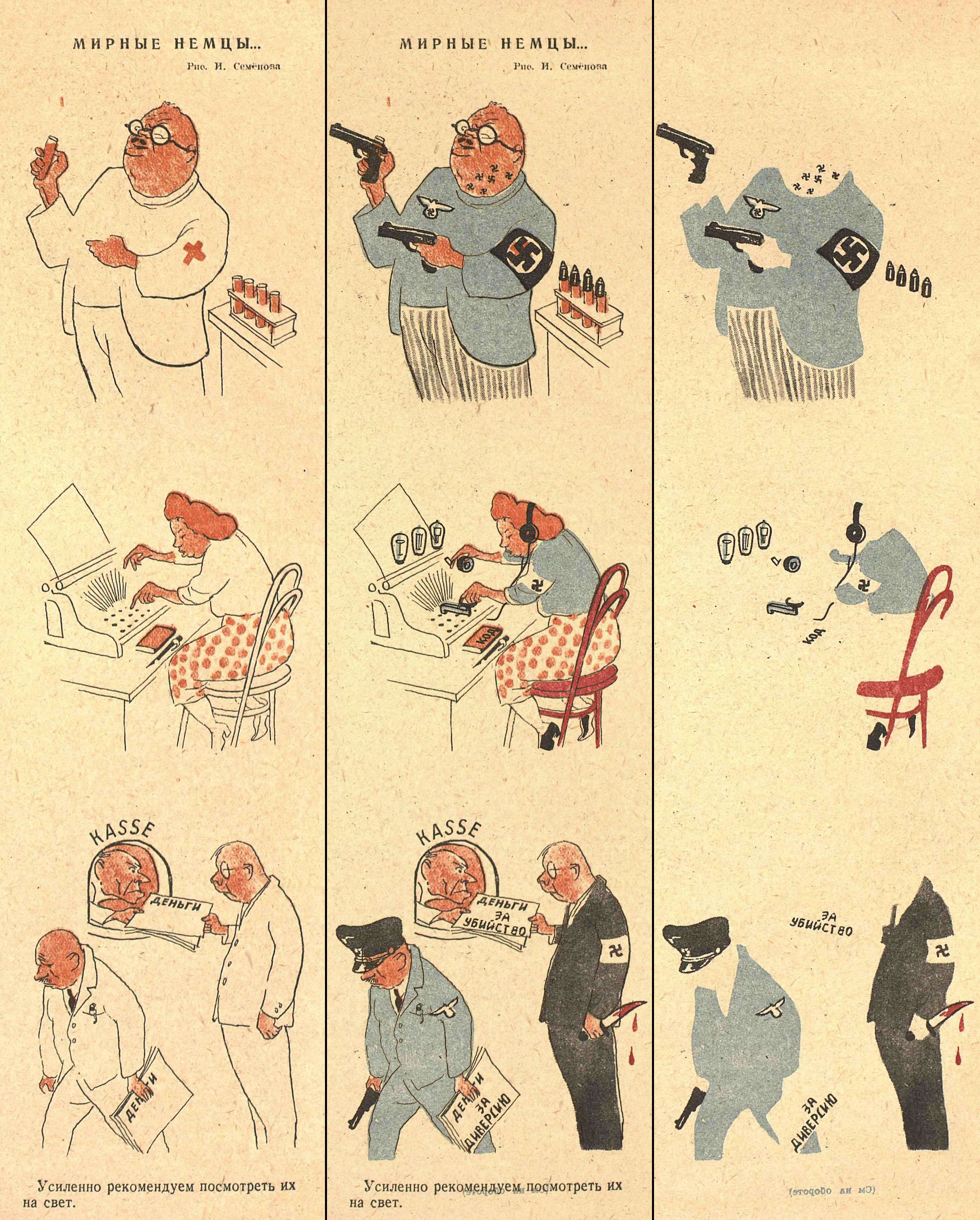
Exactly 80 years ago, the Soviet satirical magazine “Krokodil” had a special drawing by I.Semyonov in issue №9 from March 24, 1945.

On one page we observe “Peaceful Germans”: a doctor, a typist, two clerks getting their money… and a text at the bottom:

“We forcefully recommend to look at them against the light.”

🤔 What can that be?

On the reverse side of the page we are met with several mirror-image amendments!

The video simulates how that caricature would look once you shone the torchlight of truth at the deceptive images! Watch it in full screen.


Backup at Rumble.

The peaceful doctor is not so peaceful any more, the peaceful typist turns into a radio operator with a “code book”, the peaceful clerks are now seen getting money “for sabotage” and “for murder”!

‼️ There is a bit of context one has to keep in mind, when looking at the caricature. In the final months of the war, culminating in May 1945. the West started to present Germans as poor victims of the big bad Russian bear, with Goebbelsian propaganda myth about the misconduct of the Soviet troop, finding fertile ground in the Anglo-sphere. This caricature, as well as a number of others that we will present in time, aim to highlight this, puzzling to the USSR, change in attitude.

Here is a combined image, showing both the components and the combined result.

The materials are from our Telegram channel “Beorn And The Shieldmaiden”, where the individual images can be downloaded in the comments section.

Oscar-winning film lies about the Red Army. A re-blog of MFA statement

Reading time: 7 minutes

The re-writing of history is happening in two planes – the erasure of the actual history through the destruction of the monuments, and the implanting of a “new” narrative in the minds of the people. We told about the destruction of the monuments through a video clip from the film “Warsaw ’21” in the article “Warsaw ‘21” – a political thriller with a fragment on the essence of the Polish destruction of the Soviet memorials, while the alteration of the history with the “new narrative” is happening though the films, like the one criticised below.

For an additional story about the liberation of Poland, and how that event gets malformed in the minds of the Poles, see our 2015 article The Sorrow of a Warsaw Woman. Why Poland is not happy to be liberated from fascism?

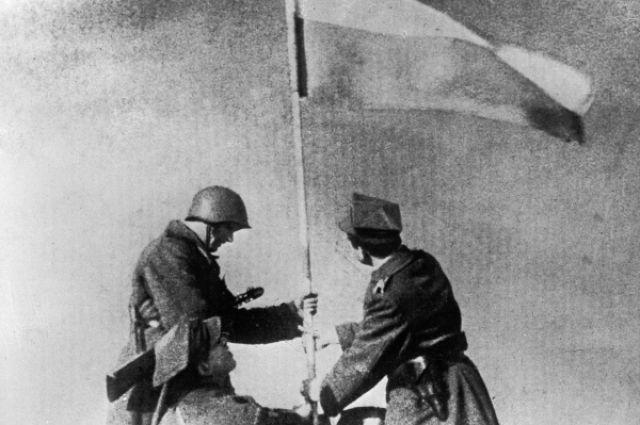
Soviet and Polish soldiers plant the victory banner. Warsaw, January 1945. The Great Patriotic War of 1941-1945.


Oscar-winning film lies about the Red Army

Nikolai LAKHONIN, Chief Counselor, Foreign Ministry Information and Press Department
March 17, 2025

The annual Oscars Academy Award ceremony attracts attention of the whole world. Recently, another such show took place. We would like to talk not about the American film Anora (rated R) with Russian actors (we congratulate them on their great success), but about the drama A Real Pain (rated R) directed by Jesse Eisenberg.

It is also an American film, made by Americans primarily for Americans and about Americans. This is important. The picture is about historical memory in the perception of American descendants who survived the Holocaust. The genre is a road film: the main characters travel to memorial sites, get acquainted with monuments in the Polish capital and go to the Majdanek concentration camp museum. The picture has already been seen by millions, and after it received the Oscar for Best Supporting Actor, even more people will see it. The screenwriters of such films lay down powerful narratives. And since they contain a distorted view of the most important events related to our country, we cannot remain silent.

The myth of the Red Army

Continue reading

Iosif Stalin, A Leader and A Poet

Reading time: 2 minutes

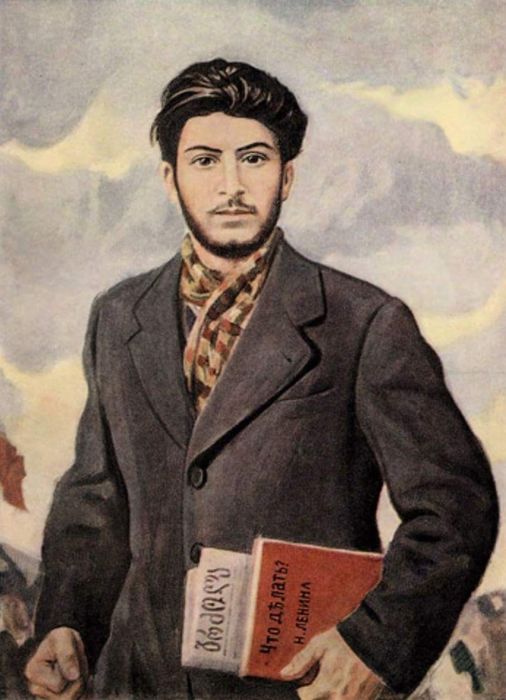
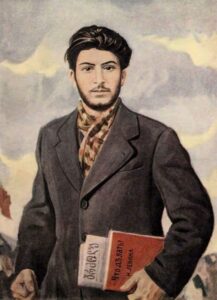
It is a little-known fact that Iosif Dzhugashvili, future Stalin, had a passion for writing poetry in his student years, between 1893 and 1896. In the painting above, a young seminarist Iosif Dzhugashvili is depicted with a volume of Lenin’s work “What Is To Be Done?”

Only six poems by Stalin, published in 1895-96, in his native Georgian, survived until present day. Here is one of the poems, translated, preserving rhyme and rhythm, by Putinger’s Cat, from a Russian translation, providing us with a glimpse of who Stalin was as a young man.

The Russian translation from Georgian, used as the basis of the English translation, is provided below the English version.

💢💢💢

From a home to a home, he went,
Knocking on other folks’ doors,
With him, his oaken string instrument
And his unpretentious old song.

And in his song, and in his song,
As pure as sunlight’s shining gleam,
A profound truth was resounding,
A transcendental daydream.

Hearts that had turned into rock
He managed to make beat again;
Numerous minds he awoke
That, in deep darkness, had napped.

But people who’d forgotten God,
Their hearts holding darkness within,
A poison cup, filled to the top,
Offered him for a drink.

They said to him, “You, the cursed,
Here, bottoms up, empty this!
To us, that song of yours is foreign,
And we don’t want that truth of yours!”

💢💢💢

Ходил он от дома к дому,
Стучась у чужих дверей,
Со старым дубовым пандури,
С нехитрою песней своей.

А в песне его, а в песне –
Как солнечный блеск чиста,
Звучала великая правда,
Возвышенная мечта.

Сердца, превращённые в камень,
Заставить биться сумел,
У многих будил он разум,
Дремавший в глубокой тьме.

Но люди, забывшие Бога,
Хранящие в сердце тьму,
Полную чашу отравы
Преподнесли ему.

Сказали ему: „Проклятый,
Пей, осуши до дна…
И песня твоя чужда нам,
И правда твоя не нужна!»

💢💢💢

Credits for finding this poem and inspiring this translation go to Beorn and the Shieldmaiden.

Poem source.

The Chain of Historic Continuity

Reading time: 2 minutes

From our Telegram post at “Beorn And The Shieldmaiden”.

The Soviet animated film “We’ve Beaten, Are Beating, And Shall Be Beating Them” from 1941 shows the historic links between 1242, 1918 and 1941 – driving away the invaders from the West.


Backup at Rumble.

The historic chain of western invaders and their defeats can now be added yet another link named NATO.
And with the same unbreakable certainty will the outcome of this new attempt to conquer and plunder Russia be the same: Victory over the unwelcome “guests”.

The peoples of Russia will prevail!

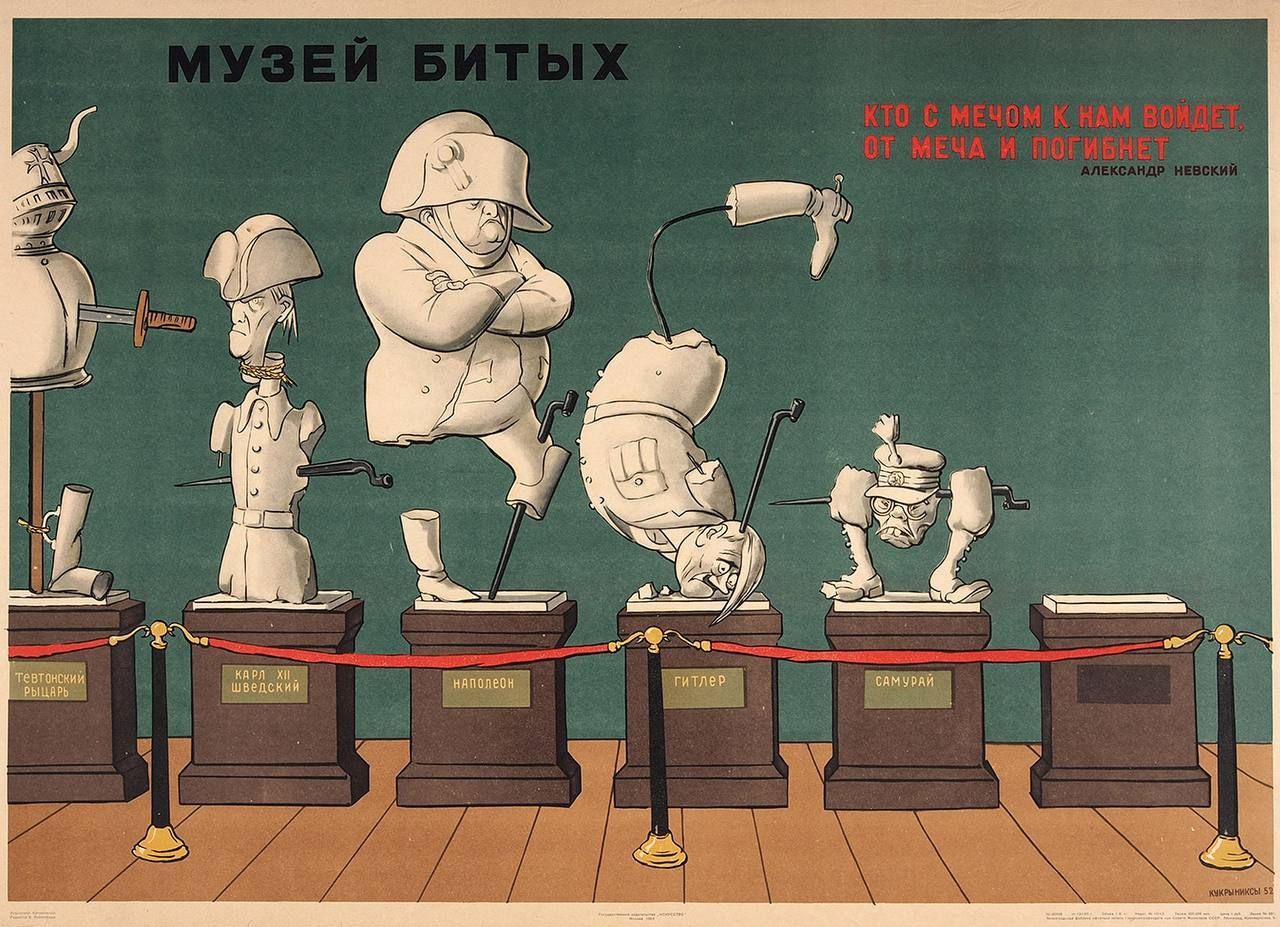
At “The Museum of the Broken Ones”, the foreseeing exhibition planners of the USSR even left a pedestal open for NATO when the time came..

Caricature by the Soviet art collective “Kukryniksy”, 1952

In the Museum of The Beaten and Broken Ones, an exquisite collection of historic relics of grand conquerors of Russia are on display. The foreseeing curators have left a pedestal open for the next invader.

Plaques on the pedestals read, left to right:
🪧 Teutonic Knights
🪧 Karl VII of Sweden
🪧 Napoleon
🪧 Hitler
🪧 Samurai
🪧 …. [empty pedestal, no plaque yet]

The text is the famous quote by Alexander Nevsky:

«Who comes to us with a sword, will die by the sword.»

We’ll see, perhaps the crutched 75-year-old will run completely out of steam and munitions before they manage to get their bearings straight.

The power of monuments of the past. Part 1. Ivan Krylov’s “The Wolf in the Kennel”

Reading time: 3 minutes

The material originally posted at our Telegram channel “Beorn An dThe Shieldmaiden”.

One of the reasons why NATO and the Ukro-Nazis, among others, are so panic-stricken in the face of the Soviet and Russian monuments that they seek to destroy them is of course that the monuments represent the power of the collective past of the nation, giving strength and guidance to the present generation.

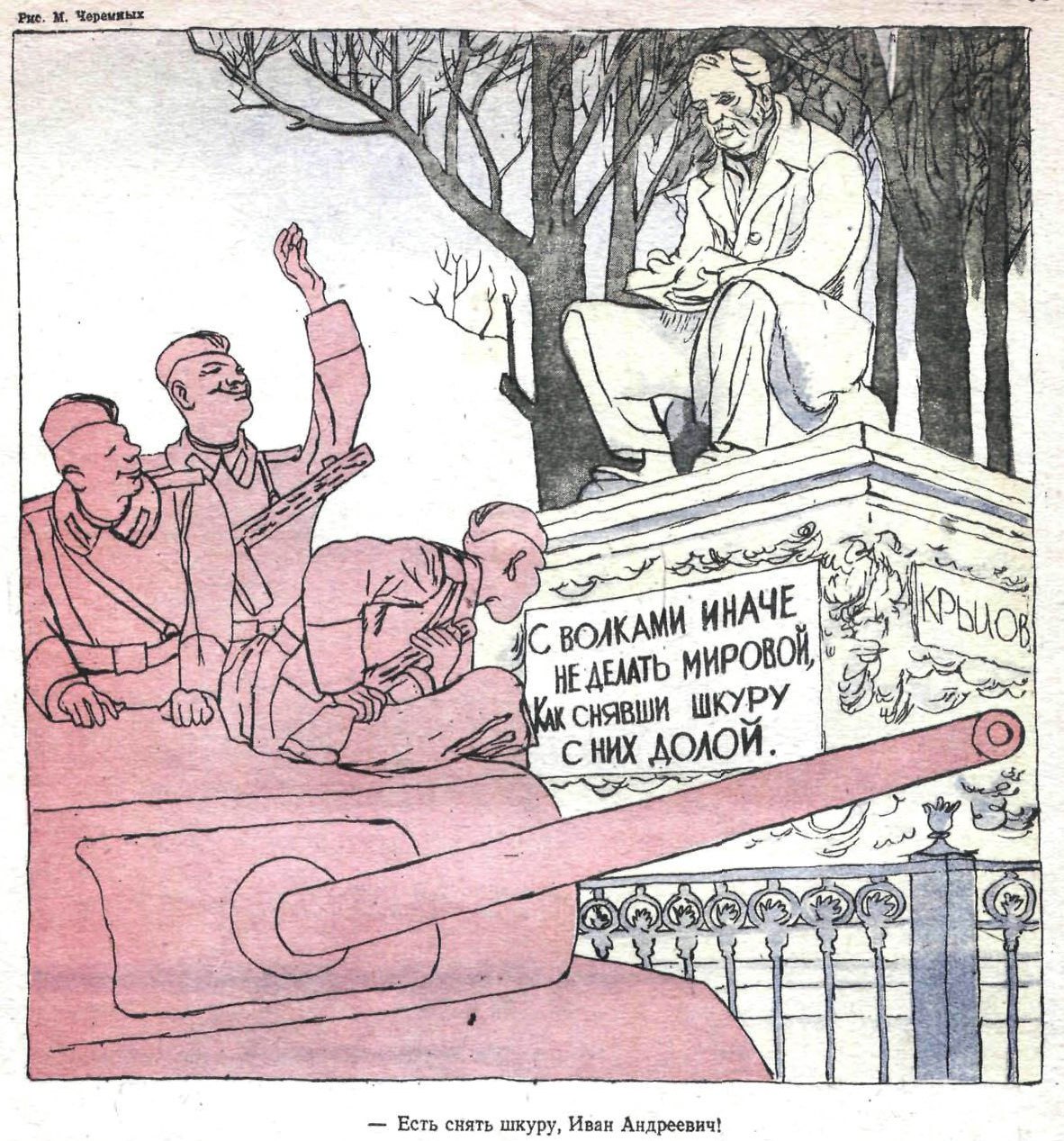
In the autumn of 1944 issue № 41 of “Krokodil” we can admire such a guidance in a drawing on page 8.

Here the Soviet soldiers are driving on the armour of a tank past the monument to Ivan Andreevich Krylov, the famous Russian poet, fable-writer and translator. On the pedestal they read the words from one of his works, “The Wolf in the Kennel”, written in the fateful year of 1812:

You shan’t make peace with wolves in any other way,
Than flogging their skins away.

To which they salute, exclaiming:

— The task to flog the skin is understood, Ivan Andreevich!

Artist: M.Cheremnyh

📖📖📖

“The Wolf in the Kennel”

by the Russian poet Ivan Krylov, written in 1812.

A wolf at night, thinking to get into the sheepfold,
Got to the kennel in its stead.
Suddenly the whole kennel yard rose up –
Sensing the Gray bully oh so close,
The dogs are barking in the stables and wishing for a fight;
The dog-keepers shout: “Oh, guys, there’s a thief!”
And instantly the gate is locked;
In a minute, the kennel became hell.
They’re bustling: one with a club,
Another with a gun.
“Fire! – they are shouting, – fire!” They came with fire.
My Wolf is sitting with his back pressed into the corner.
Teeth snapping and fur bristling,
With his eyes, it seems, he would like to eat everyone;
But seeing that he’s not in front of a herd here
And that the time of reckoning, at last,
comes to Him for all the sheep, –
My cunning man started
With negotiations
And he began like this: “Friends! What’s all the fuss about?
I, your old matchmaker and godfather,
I came to make peace with you, not at all for the sake of a quarrel;
Let’s forget the past, let’s set up a common mood!
And not only will I not touch the local herds in time to come
But I’m happy to fight for them with others
And I affirm it with a wolf’s oath,
that I…” – “Listen, neighbour,”
Here the hunter interrupted in response, ”
“You are Gray, and I am, buddy, gray haired with my age,
And I’ve known your wolf nature for a long time;
Therefore, the custom of mine is:
You shan’t make peace with wolves in any other way,
Than flogging their skins away.”
And immediately released on the Wolf a pack of hounds.

📖📖📖

Here is the original text of the fable in Russian, taken from Russian poetry
Continue reading

Soviet New Year Toys – A Fragile Nostalgia

Reading time: 3 minutes

Happy Old New Year to all of you from us at Beorn And The Shieldmaiden!

A short documentary film from NTV which, in the course of just 10 minutes, manages to tell the story of the Soviet Union, seen through the colourful New Year tree decorations.

The feeling of nostalgia, so accurately conveyed by the film, is very much familiar to all of us who either had such New Year toys, or is still keeping them on the upper shelf, in a wooden box…


Backup at Rumble

🎄🚩☃️

The documentary mentions several classic Soviet films. Here they are:

🎦 “Grunya Kornakova”, 1936 — a film about the riot of the workers of a large porcelain factory. The events in the film take place in pre-revolutionary Russia. The first Soviet full-length colour film created using a rolling method.

🎦 “Circus”, 1936 — A musical film based on the comedy of I. Ilf, E. Petrov “Under the Dome of the Circus”. In the mid-1930s, an American Marion Dixon fled the US with a small black son. Knowing the facts of her personal life, the circus actor von Kneitschitz blackmailing her, forces her to work with him. Arriving with an original attraction in the USSR, Marion finds here friends, a loved one and decides to stay here forever.

🎦 “The Siberians”, 1940 — This film is filled with mystery and the expectation of a miracle. Two boys (6th grade students Seryozha and Petya), having heard from an old resident of their village a story about the distant events of the pre-revolutionary period, set out to find one very important thing… If it were the Holy Grail, a treasure trove, or a meteorite, at the very least, it would be fine, but the peculiarity of this touching story is that the boys are enthralled by the search of Comrade Stalin’s pipe.

🎦 “Carnival Night”, 1956 (with English subtitles) — A new chief of a “Culture House” is planning to hold a terribly boring New Year concert. A group of young amateur actors are doing their best to liven up the concert. Obviously, no one wants to change the program with only a few hours before the show, much less to replace it with something so boring. So everyone teams up in order to prevent Ogurtsov from getting to the stage. They manage to trap Ogurtsov by any means necessary so that the acts can perform their scheduled pieces, and celebrate New Year’s Eve as originally planned.

🎦 “Chuk and Gek”, 1953 — A touching story about how young Muscovites – seven-year-old Chuk and six-year-old Gek – went with their mom to their dad, who was on a distant geological expedition, and how they struggled with a harsh winter and all sorts of difficulties because their dad, having set out on an urgent expedition, did not meet them, but sent a telegram, which the children threw out the window without letting their mom read it… Based on the story of the same name by Arkady Gaidar.

“The Winter Fairytale” and “When New Year Trees Light Up” – Soviet New Year animation films to all of you!

Reading time: 2 minutes

Our warmest congratulations and presents from the New Year eve on our Telegram channel “Beorn And The Shieldmaiden”!

Happy New Year of 2025!

We wish our dear BATS readers a very happy New Year!

Let the coming year bring happiness and good fortune, let there be peaceful skies above our heads and normalcy in our world!

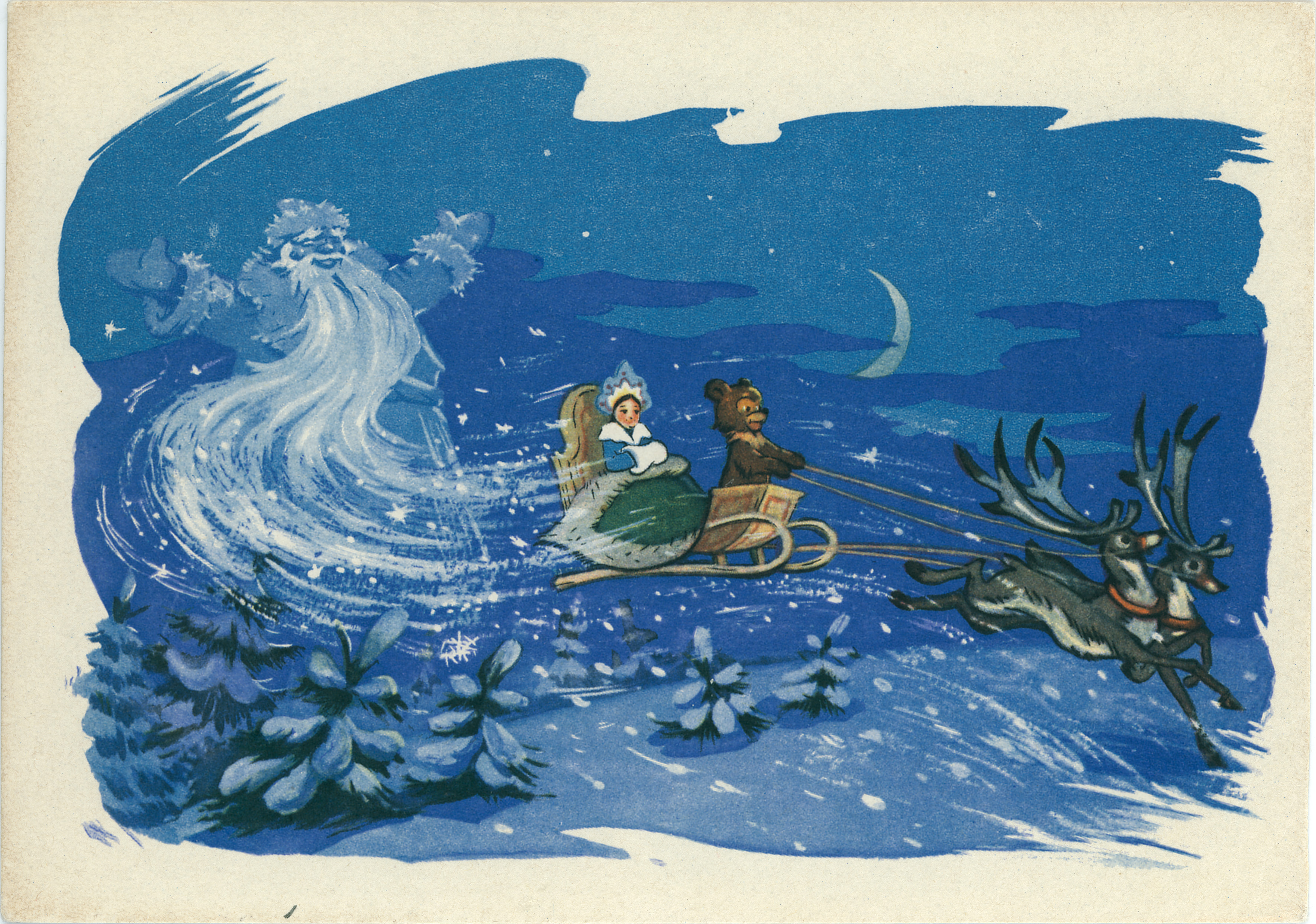
🎄Postcard from the New Year of 1962 – 1963 with the scene from the animated film “When New Year Trees Light Up” — from Beorn’s family album.


The Winter Fairytale

A 1945 magically musical New Year animated film from the USSR.

A cold winter has arrived, and the New Year is coming soon. The forest animals gathered to meet him. Ded Moroz (Grandfather Frost), Snegurochka (the Snow Maiden) and the Snowman help them in this. A New Year’s tale with musical scenes around the New Year tree.

Directed by the legendary Ivan Ivanov-Vano, and set to the music of Pyotr Ilyich Chaikovskij. This is the last Soviet colour film that was created using the tri-colour method.


Backup on Rumble


When New Year Trees Light Up

The cartoon about the magic of the New Year season — when all the dreams manifest themselves, but also about the importance of being true to your word!

The film was created by the animation studio “Soyuzmultfilm” and appeared on the Soviet TV screens on the 31st of December 1950.

Backup on Rumble

Happy New Year of the 80th Anniversary of the Great Victory!

Reading time: 7 minutes

We present a selection of posts with drawings and caricatures from a very special edition of the Soviet satirical magazine, “Krokodil”. More can be found at our Telegram channel “Beorn And The Shieldmaiden”!

Greetings on the coming Year of the 80th Anniversary of the Victory!

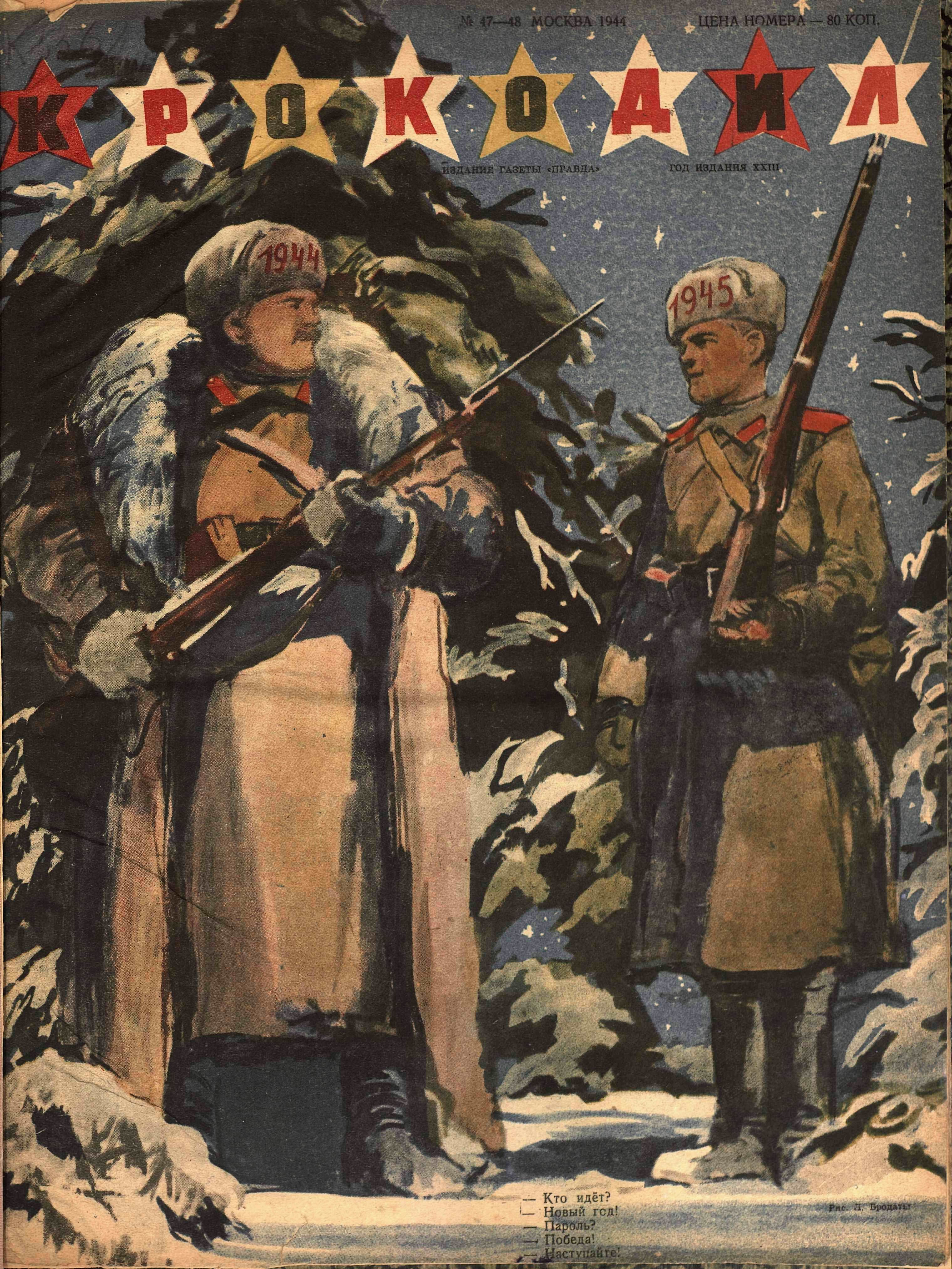
No doubt was left: the New Year of 1945 would finally bring Victory! As attested by the painting by L.Brodat on the cover of the combined issue №47-48 of “Krokodil” from December 1944.

🎄🎄🎄

— Who is coming?
— New Year!
— Password?
— Victory!
— Advance! *

🎄🎄🎄

* The final command — Advance! — is a play on the double meaning of the phrase “Coming New Year”, which translates literally as “Advancing New Year”, when at the same time, in the military context, the first word would also carry the meaning of “to attack” or “to charge”.

In the posts leading up to the New Year, we bring some of the drawings and caricatures from that issue of “Krokodil”. Some of them, as you will see, are surprisingly relevant now, in December of 2024!


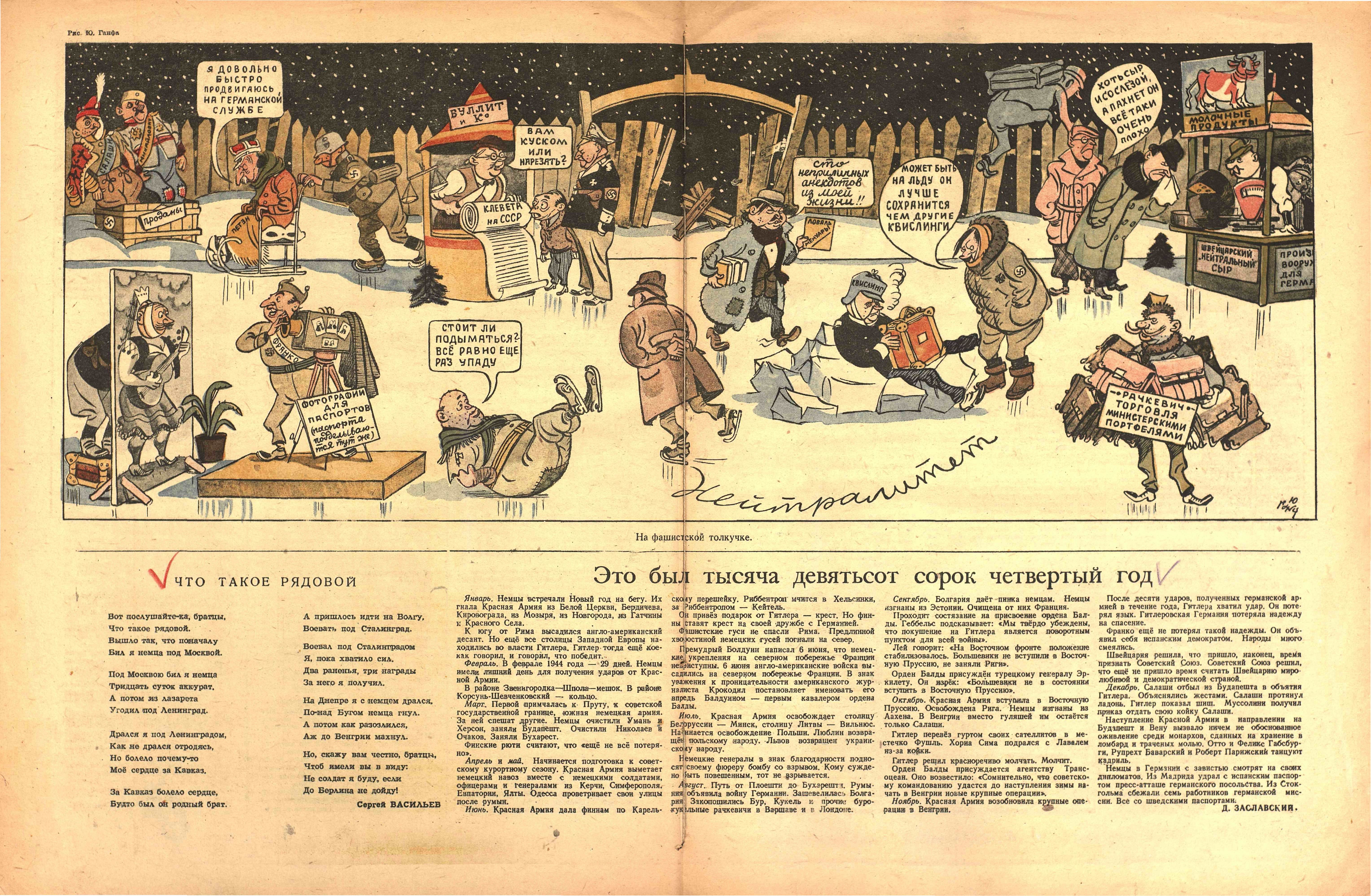
At the Fascist Flee(ce) Market

The caricature by Yu.Ganf from the combined issue №47-48 of “Krokodil” from December 1944. It sums up the departing year in humorous detail, accompanied by a longer text with a month-by-month blow, which are translated below!

Let us admire the caricature in all its Bruegelesque detail, starting with the upper left corner.
Continue reading

100 Year Anniversary of the Soviet Art Collective “Kukryniksy”

Reading time: 12 minutes

KUKRYNIKSY is 100 Years!

We present the material from the series of posts at our Telegram channel “Beorn And The Shieldmaiden”, celebrating the centenary of this illustrious art collective!

2024 marks the 100th anniversary of the day when the first cartoon of Mihail Vasilyevich Kupriyanov, Porfiry Nikitich Krylov and Nikolai Alexandrovich Sokolov was printed in the magazine “Komsomolia” with their common signature “Kukryniksy”.

👉 Mihail Vasilyevich Kupriyanov [October 8 (21), 1903 – November 11, 1991]
👉 Porfiry Nikitich Krylov [August 9 (22), 1902 – May 15, 1990]
👉 Nikolai Alexandrovich Sokolov [July 8 (21), 1903 – April 17, 2000]

The “y” at the end is the Russian plural form — that is, “Kukrynikses” — preserved for the authenticity of the collective’s name.

Mihail Kupriyanov was born in the city of Tetyushi, Kazan province of the Russian Empire, Porfiry Krylov — in Tula, Nikolai Sokolov — in the village of Tsaritsyno, Moscow province, and his entire childhood and youth were spent in Rybinsk.

Young talented artists would hardly have had the opportunity to meet if it were not for the “Higher Art and Technical Workshops” (VHUTEMAS). In 1922, Kupriyanov and Krylov began working together in the wall newspaper of VHUTEMAS under the signature of Kukry and Krykup.

At the same time, Sokolov, while still living in Rybinsk, put the signature “Niks” on his drawings. In 1924, he joined Kupriyanov and Krylov, and the three of them worked in the wall newspaper of VHUTEMAS as Kukryniksy.

Our team, to tell the truth, consists of four artists: Kupriyanov, Krylov, Sokolov and Kukryniksy. All three of us treat the latter with great trepidation and care. What was created by the team could not have been mastered by any of us individually.
— Kukryniksy


The Exhibition in honour of KUKRYNIKSY

I do not know if there ever existed — and I do not think that in the field of caricature there could exist — such a “consubstantial and indivisible trinity” as our Kukryniksy.
— Maxim Gorky

Continue reading

The gas pipeline in the American side, anno 1982

Reading time: 6 minutes

The Gas Wars, of which we translated a documentary “The Great Gas Game” – An Excellent Documentary from Vesti and published a number of articles, like The Third Gas War: EU and US must pay for their “successes” in Ukraine, the saga with Navalny, and the ultimate blowing up of the Nord Stream pipeline by the USA in order to freeze Germany out of competition, are just the recent manifistations. Lets us look at the events of 1982, and see how USA was opposing the gas pipeline from the USSR to the Western Europe.

We illustrate it through a series of caricatures and posts, which we originally published on out Telegram channel “Beorn And The Shieldmaiden”.


Piped Piper of a Pipeline

Bill Mauldin’s caricature, published in the Chicago Sun-Times in 1982, shoes an issue that remains relevant for decades. It was drawn when the United States and Europe were at odds over the construction of the world’s first transcontinental gas pipeline Urengoy – Pomary – Uzhgorod.

The construction was colossal, the whole of the USSR contributing to it, with other interested countries taking part in it – Poland, Yugoslavia, Czechoslovakia, and the GDR. At first, it was planned to pull the gas pipeline from Yamburg, but later the Urengoyskoye field was chosen.

The United States, as always, tried to prevent the implementation of a project beneficial to Europe. But back then Germany, France, Great Britain and Italy still had a voice and teeth. And the sanctions imposed by the United States were quickly lifted.

Yuzhniigiprogaz Design Institute from Donetsk became the general designer of the gas pipeline. It had previously performed brilliantly in similar, albeit more modest projects.

The construction was completed ahead of schedule. On July 9, 1983, labour collectives reported on the commissioning of the integrated gas treatment plant No. 9.

👉 4,451 kilometers of steel pipe had been stretched to solve the ambitious task of supplying natural gas from Siberian fields to consumers in the USSR and European countries.

👉 2.7 million tons of pipes were laid during the construction of the gas pipeline.

👉 120 kilometers were laid through permafrost, 360 kilometers through swamps.

Gas went to Europe on January 13, 1984, making the USSR the leader in its production and sale.

A lot of cartoons appeared on the topic, no less biting on the Soviet side.

The facility built by the whole country later became the basis of political speculation of the state education called “Ukraine”.

Source: Our Donbass – edited


«The unfeasible dream of the overseas pirate»

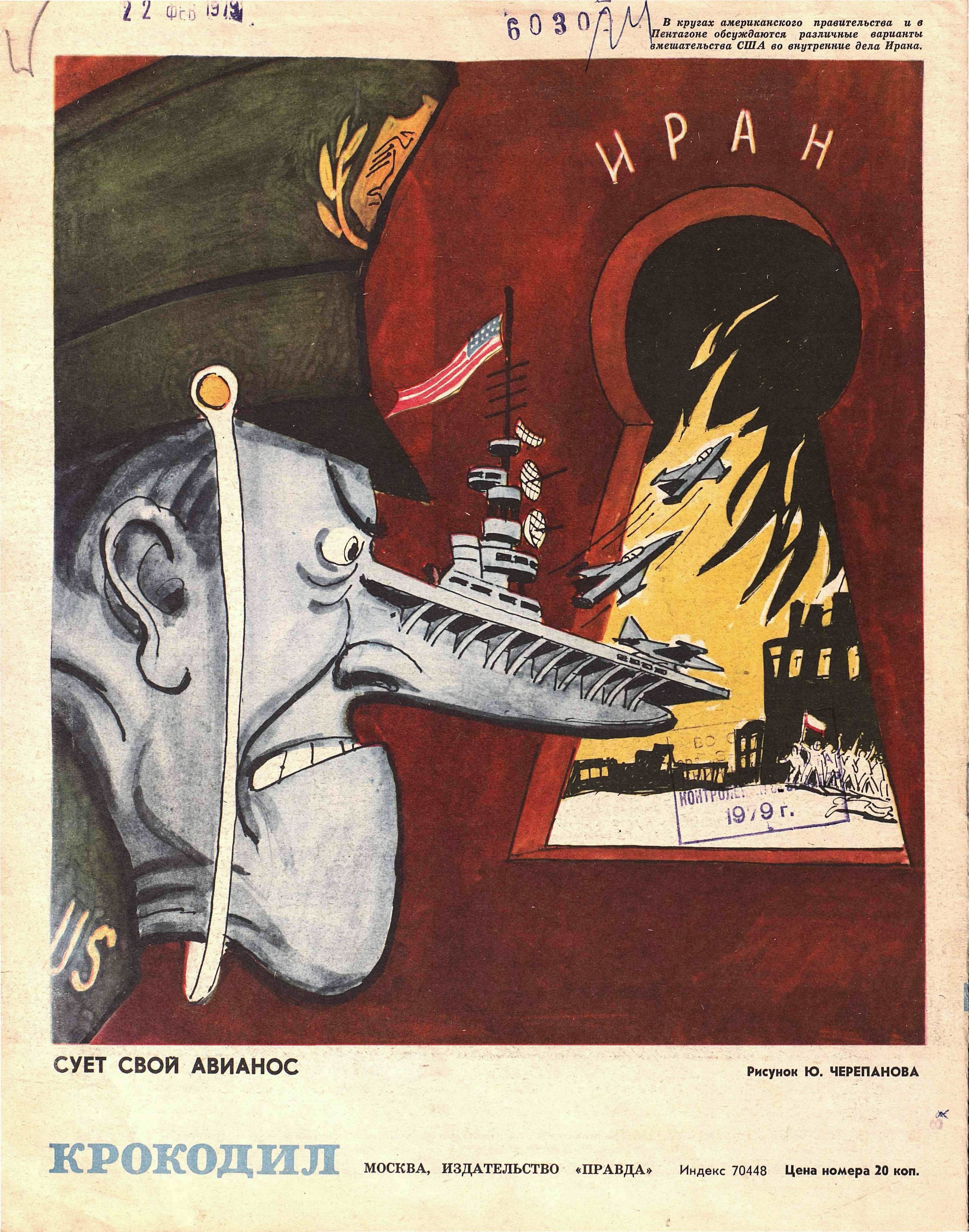
This is the title of the caricature by Yuri Cherepanov, published in the November issue №31 of the Soviet satirical magazine «Krokodil» in 1982.

The pirate in question, sailing under the US flag, has «Threats» and «Sanctions» written on his sails.

40 years ago, Western Europe managed to stand up for its own intetrests. Now… the USA simply blew up the completed Nord Stream.
Continue reading