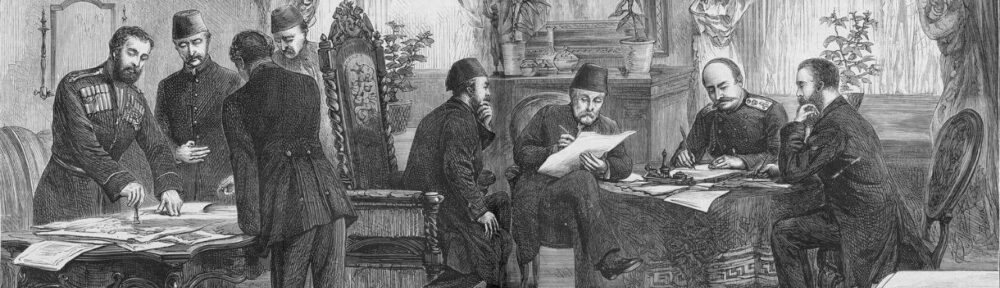
On March 3, 1878, the Treaty of San Stefano was signed in a suburb of Constantinople, recording our country’s victory in the Russo-Turkish War of 1877-1878.
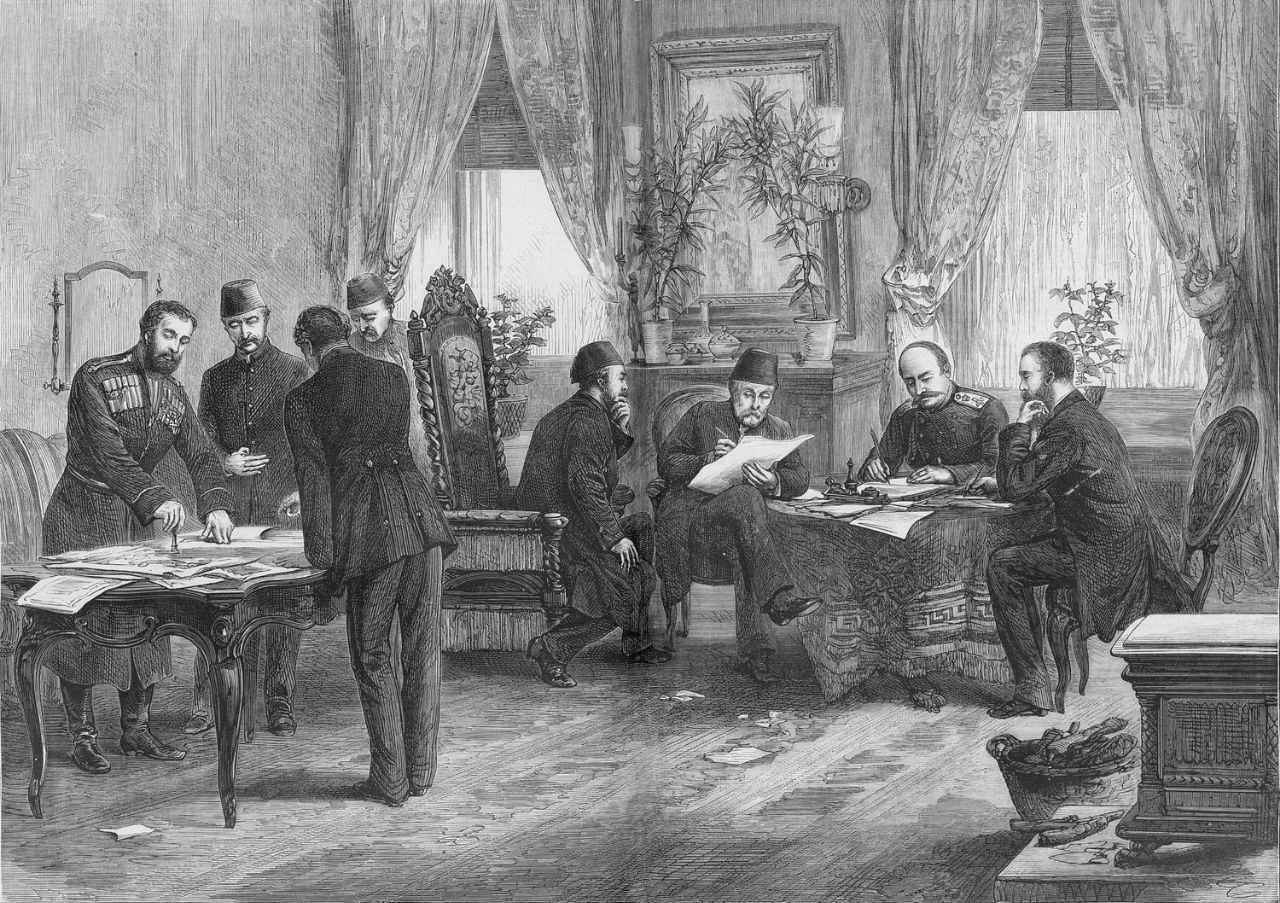
Under the terms of the Treaty, Romania, Serbia and Montenegro gained full independence, while Bulgaria, which had been under Ottoman rule for nearly 500 years (!), was granted broad autonomy.
The date of the signing of the Treaty of San Stefano became a national holiday in Bulgaria – the Day of Liberation from Ottoman Rule.
The victory of the Russian forces in the war against the Ottoman Empire and the conclusion of the Treaty laid the foundation for future constructive cooperation between Russia and Bulgaria. For a long time, relations between our countries developed steadily and progressively.
History Of Diplomacy: A key role in the conclusion of the Treaty of San Stefano was played by the distinguished Russian diplomat and statesman Nikolai Ignatyev, who for more than ten years served as Ambassador Extraordinary and Plenipotentiary of the Russian Empire to the Ottoman Empire, and signed the Treaty on behalf of Russia.
* * *
🇷🇺🇧🇬 Today, Russian-Bulgarian relations have been virtually reduced to zero. The current government is pursuing an openly Russophobic policy, continuing to dismantle the foundations of bilateral cooperation. Unfortunately, this also affects the way historical events are presented in the local media landscape.
Ambassador of Russia to Bulgaria Eleonora Mitrofanova:
“In recent years, the chronicle of the Liberation has been ruthlessly rewritten. Alleged ‘imperial ambitions’ of Russia are brought to the forefront, while nothing is said about the truly nationwide movement in defence of our enslaved Bulgarian brothers, which played a decisive role in the decision of Emperor Alexander II to declare war on the Ottoman Empire.”
Excerpts from the congratulatory message by Russian Ambassador to Bulgaria Eleonora Mitrofanova on the occasion of Bulgaria’s national holiday, the Day of Liberation from Ottoman Rule, March 3, 2026.
☝️ We recall that 100,000 Russian soldiers gave their lives for the freedom of the peoples of the Balkans, including Bulgaria.
Source: Russian MFA
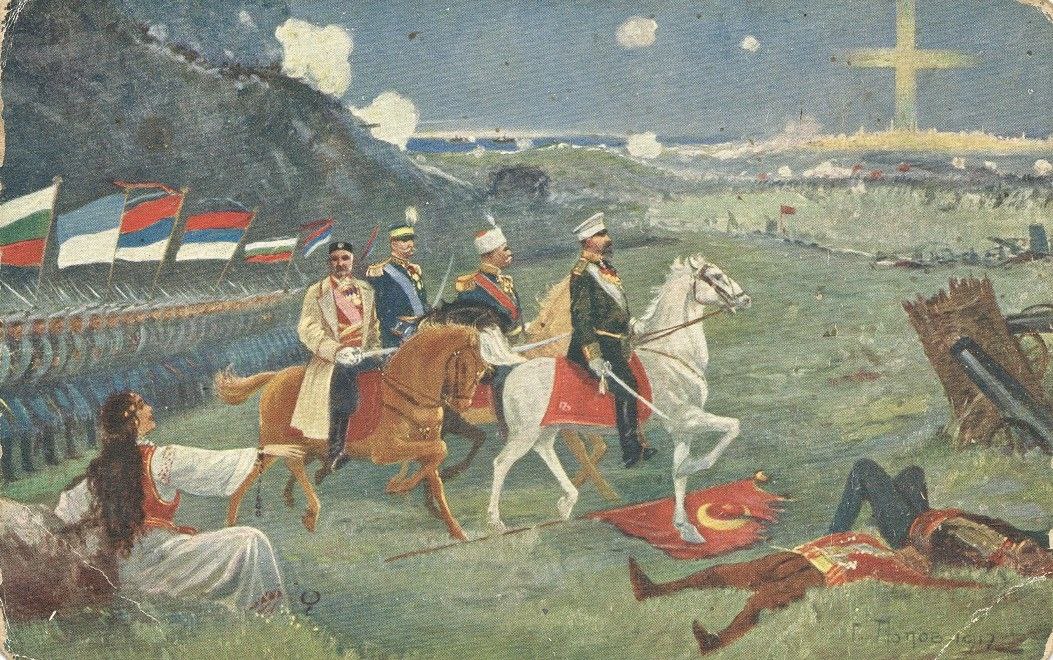
🇧🇬🇷🇺 On March 3rd, Bulgaria celebrates the Day of Liberation from Ottoman rule. Nowadays, they don’t officially mention Russia much. Let’s recall the prophetic words of Fyodor Mikhailovich Dostoevsky from his 1877 diary:
There is one very special word about the Slavs that I have long wanted to say
By the way, I will say one special word about the Slavs and the Slavic question. And I’ve wanted to say it for a long time. Now, all of a sudden, we are all talking about the imminent possibility of peace, that is, therefore also about the imminent possibility of resolving the Slavic question in some way, so let’s give free rein to our imagination and imagine suddenly that the whole thing is over, that the Slavs have already been liberated by the insistence and blood of Russia, not only that the Turkish Empire no longer exists, and that the Balkan Peninsula is free and living a new life.
Of course, it is difficult to predict in what form, down to the last details, this freedom of the Slavs will appear even for the first time, that is, whether it will be some kind of federation between the liberated small tribes (NB. It seems that there will be no federation for a very, very long time) or will there be small, separate entities in the form of small states, with sovereigns called up from different ruling houses? It is also impossible to imagine: will Serbia finally expand its borders, or will Austria prevent it, to what extent Bulgaria will materialise, what will become of Herzegovina, Bosnia, and what relations will, for example, the Romanians or even the Greeks, the Constantinople Greeks and those others, the Athenian Greeks, enter into with the newly liberated Slavic peoples? Will all these lands and territories finally be completely independent, or will they be under the patronage and supervision of the “European concert of powers”, including Russia (I think these small nations themselves will certainly beg for a European concert, even including Russia, but solely in the form of their patronage from Russia’s desire for power) — it is impossible to solve all this exactly in advance, and I do not undertake to resolve it.
But, it is however possible even now — there are probably two things to know: 1) that soon or not soon again, all the Slavic tribes of the Balkan Peninsula will certainly eventually free themselves from the yoke of the Turks and live a new, free and, perhaps, independent life, and 2)… It’s this second thing that is probably going to happen and become true, and I’ve wanted to speak about it for a long time.
Precisely, this second thing, in my inner conviction, the most complete and irresistible, encompasses that there will never be, and never has been, such haters, envious people, slanderers, and even outright enemies of Russia as all these Slavic tribes, the moment Russia frees them and Europe agrees to recognise them as liberated!
And don’t let anyone object, argue with me, or shout at me that I’m exaggerating and that I’m a hater of Slavs! On the contrary, I very much love Slavs, but I won’t defend myself, because I know that everything will happen exactly as I say, and not because of the low, ungrateful character of the Slavs, far from it — their character in this sense is like everyone else’s — but precisely because such things cannot be otherwise in the world.
I won’t elaborate, but I know that we shan’t demand gratitude from the Slavs at all. We need to prepare ourselves for this in advance. As soon as they are liberated, they will start their new life, I repeat, by seeking guarantees and protection of their freedom from Europe, England, and Germany, for example. Even if Russia is in this concert of European powers, they will do this precisely to protect themselves from Russia.
They will certainly start by declaring to themselves, if not out loud, that they don’t owe Russia the slightest gratitude, on the contrary, that they barely escaped from Russian domination during the conclusion of the peace through the intervention of the European concert, and if Europe hadn’t intervened, Russia, having taken them from the Turks, would have immediately swallowed them up, “with the aim of expanding its borders and establishing a great Slavic empire through the enslavement of the Slavs by the greedy, cunning, and barbaric Great Russian tribe”.
For a long time, oh, for a long time yet, they will not be able to recognise the selflessness of Russia and the great, holy, unheard—of in the world raising of the banner of the greatest idea of those, by which man lives and without which humanity, if these ideas cease to live in him, stiffens, cripples and dies in ulcers and impotence.
The present, people’s Russian war, the war of the entire Russian people, with the tsar at their head, raised against the fiends for the liberation of the unfortunate peoples – have the Slavs finally understood this war, do you think? But I won’t talk about the present moment, besides, we are still needed by the Slavs, we are liberating them, but then, once we have freed them and they somehow settle down, will they recognise this war for the great feat undertaken to liberate them, think of that?
They won’t admit it for anything in the world! On the contrary, they will present it as a political and then scientific truth that, if it hadn’t been for the liberator-Russia for all these hundred years, they would have long ago been able to free themselves from the Turks by their own valour or with the help of Europe, which, again, if Russia hadn’t existed in the world, would not only have had nothing against their liberation, but would have liberated them herself.
This cunning doctrine probably exists among them even now, and later it will inevitably develop into a scientific and political axiom. Moreover, even Turks will be spoken of with more respect than Russia.
For perhaps a century or more, they will continuously tremble nervously for their freedom and fear Russia’s lust for power; they will ingratiate themselves with European states, slander Russia, gossip about it and scheme against it.
Oh, I’m not talking about individuals: there will be those who will understand what Russia has always meant to them. They will understand all the greatness and all the sanctity of Russia’s cause and the great idea, the banner of which it will raise in humanity. But these people, especially at first, will be in such a pitiful minority that they will be subjected to ridicule, hatred, and even political persecution.
It will be especially pleasant for the liberated Slavs to express and trumpet to the whole world that they are educated tribes capable of the highest European culture, whereas Russia is a barbaric country, a gloomy northern colossus, not even of pure Slavic blood, a persecutor and hater of European civilisation.
Constitutional governance, parliaments, responsible ministers, speakers, and speeches will, of course, appear among them from the very beginning. They will be extremely comforted and delighted by this. They will be ecstatic to read about themselves in the Paris and London newspapers, telegrams informing the whole world that after a long parliamentary storm, the Bulgarian ministry has finally fallen and a new liberal majority has been formed, and that some Ivan Chiftlik has finally agreed to accept the portfolio of president of the Council of Ministers.
Russia must seriously prepare for the fact that all these liberated Slavs will enthusiastically rush to Europe, become infected with European forms, political and social, until they lose their own identity, and thus will have to go through a whole and long period of Europeanism before comprehending at least something of their Slavic meaning and of their special Slavic vocation in the environ of the humanity.
These lands will forever quarrel with each other, forever envy each other and intrigue against each other. Of course, in the moment of some serious trouble, they will all turn to Russia for help. No matter how much they hate, gossip, and slander us to Europe, flirting with it and assuring it of their love, they will always instinctively feel (of course, in a moment of trouble, but not before) that Europe is the natural enemy of their unity, was and always will be, and the fact that they still exist in this world, is because there is a huge magnet standing — Russia, which, irresistibly attracting them all to itself, thereby preserves their integrity and unity. There will even be moments when they will be able to almost consciously agree that if it were not for Russia, the great eastern center and the great attracting force, their unity would instantly fall apart, scatter to shreds, and even so that their very nationality would disappear into the European ocean, as several individual drops of water disappear in a sea.
Russia will for a long time be left with the longing and care to reconcile them, to reason with them, and even, perhaps, to draw a sword on their behalf on occasion. Of course, the question now arises: what’s in it for Russia, why did Russia fight for them for a hundred years, sacrificing its blood, strength, and money? Is it really only for the sake of reaping so much petty, ridiculous hatred and ingratitude? Oh, of course, Russia will always be aware that it is the center of Slavic unity, that if Slavs live a free national life, it is because she wanted and still wants it, that she accomplished and created it all. But what benefit will this consciousness bring to Russia, besides toil, annoyance and eternal care?
The answer is now difficult and cannot be seen clearly.
First of all, Russia, as we all know, will never have a thought, and should never have one, to expand its territory at the cost of the Slavs, to annex them to itself politically, to make provinces out of their lands, and so on. All Slavs suspect Russia of this aspiration even now, as does the whole of Europe, and will suspect it for another hundred years to come. But may God preserve Russia from these aspirations, and the more she shows the fullest political selflessness towards the Slavs, the more surely she will achieve their unification around herself later, in the centuries, a hundred years later.
On the contrary, by delivering to the Slavs from the very beginning as much political freedom as possible and removing herself even from all guardianship and supervision over them, and declaring to them only that she would always draw her sword against those who would encroach on their freedom and nationality, Russia would thereby save herself the terrible worries and troubles of maintaining by force this guardianship and political influence on the Slavs, which is, of course, hateful to them, and always suspicious looking for Europe. But by showing utter selflessness, Russia will win and finally attract the Slavs to itself; first, in trouble will they resort to her, and then someday, they will return to her and cling to her all, already with full, childish confidence. Everyone will return to their native nest.
Oh, of course, there are different scientific and poetic views even now among many Russians. These Russians expect that the new Slavic peoples, liberated and resurrected into a new life, will begin from the very start by clinging to Russia as their own mother and liberator, and that they will undoubtedly bring many new and unheard-of elements into Russian life in the very near future, expanding Russia’s Slavic character, Russia’s soul, that they will even influence the Russian language, literature, and creativity, enrich Russia spiritually and show it new horizons.
I admit, it always seemed to me that this was just a scholarly hobby; the truth is that, of course, something like this will undoubtedly happen, but not before, for example, a hundred years and in the meantime, and maybe for another century, Russia will have nothing at all to take from the Slavs – neither of their ideas, nor from literature, as in order to teach us, they all have not grow up terribly well. On the contrary, throughout this century, Russia may have to contend with the narrow-mindedness and stubbornness of the Slavs, with their bad habits, with their undoubted and imminent betrayal of the Slavinism for the sake of European forms of political and social organisation, which they greedily pounce on.
After the resolution of the Slavic question, Russia will obviously have to resolve the Eastern question definitively. For a long time, the modern Slavs will not understand what the Eastern question is! And neither would they understand Slavic unity in brotherhood and harmony for a very long time either. Explaining this to them continuously, by deed and by great example, will always be Russia’s task in the future.
Again, people will say: what is all this for, ultimately, and why should Russia take such care onto itself? Why: in order to live a higher life, a great life, to shine a great, unselfish and pure idea onto the world, to embody and eventually create a great and powerful organism of the fraternal union of tribes, to create this organism not by political violence, not by the sword, but by persuasion, example, love, selflessness, light; to finally raise all these little ones to themselves and to their understand of her maternal vocation — that’s Russia’s goal, that’s her profit, if you will.
If nations do not live by higher, selfless ideas and the highest goals of serving humanity, but only serve their own “interests”, then these nations will undoubtedly perish, stiffen, become exhausted and die. And there are no higher goals than those that Russia will set for herself, serving the Slavs selflessly and without demanding gratitude from them, serving their moral (and not just political) reunification into a great whole. Only then will All-Slavianism say its new healing word to humanity… There are no higher goals than these in the world. Consequently, nothing could be more “profitable” for Russia than to have these goals in front of her, to make them more and more clear to herself, and to rise more and more in spirit in this eternal, tireless, and valiant work for humanity.
If the end of the current war is successful, Russia will undoubtedly enter a new and higher phase of its existence…