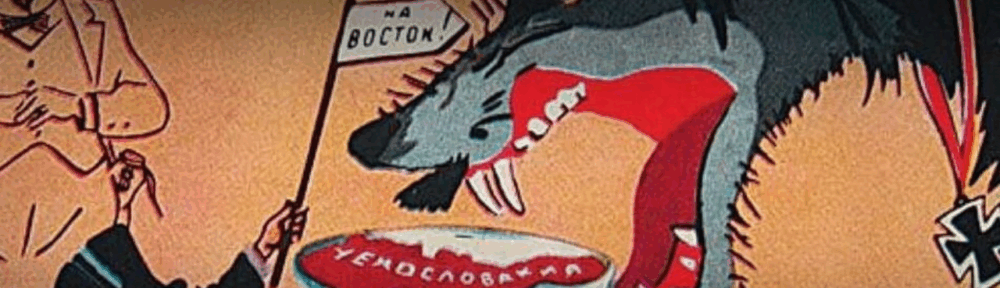
The material is from Russian MFA Telegram channel, where one can also watch a short facta newsreel.
After a short fact-list from the Telegram post, we re-blog the in-depth version from the MFA’s Telegraph blog.
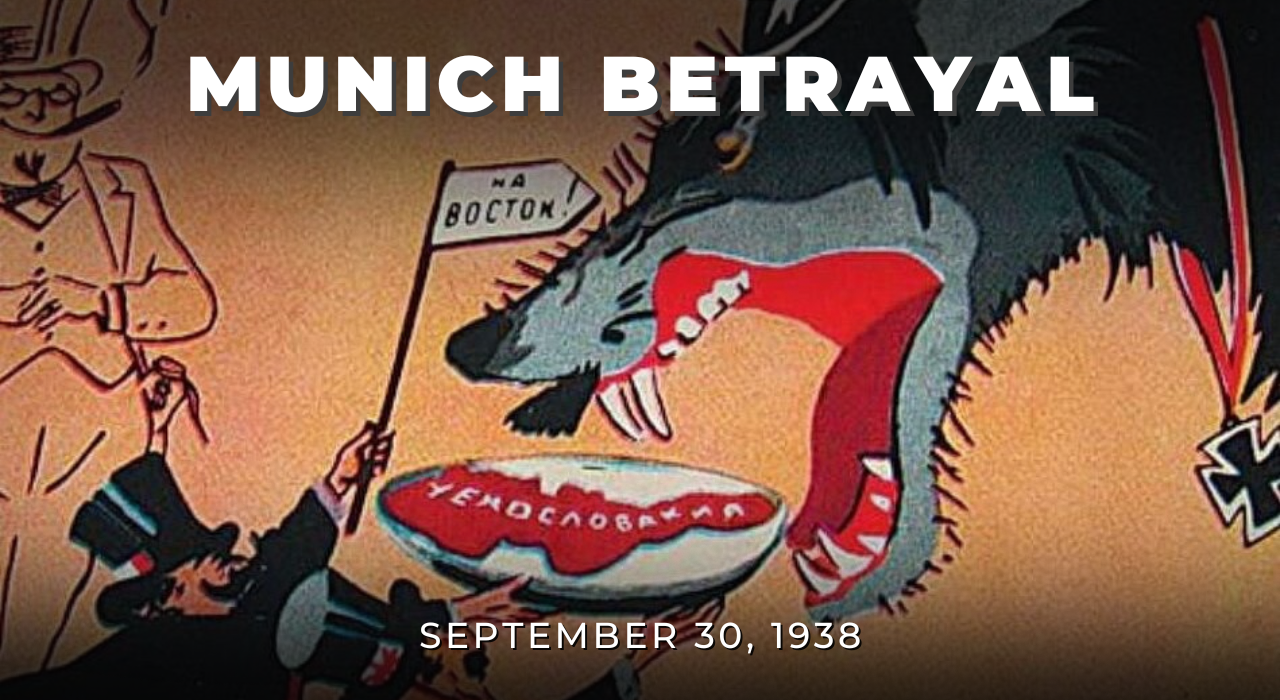
On September 30, 1938, the leaders of Germany, Italy, the United Kingdom and France signed an agreement in Munich on the German annexation of the Sudetenland, an industrial region of Czechoslovakia where ethnic Germans made up 90 percent of the population. Czechoslovakia had not been invited to the talks; it was presented with the fact that its sovereign territory must be ceded to Nazi Germany as a fait accompli.
This disgraceful pact between the Western powers and Nazi Germany went down in history as the “Munich Conspiracy” or the “Munich Betrayal”.
FACTS:
▪️ Following the signing of the agreement between the United Kingdom, France, Germany and Italy in Munich, German troops crossed Czechoslovakia’s border on October 1 and occupied the entire area of the Sudetenland by October 10.
▪️ The Soviet Union was ready to defend Czechoslovakia, but the Soviet Army had to obtain permission to pass through Poland or Romania. Warsaw, which was interested in getting part of Czechoslovakia’s territory for itself, adamantly refused to support Prague against Germany and prohibited possible flights of Soviet aircraft to render aid to the Czechoslovak army. Romania made every effort to slow down the process as much as possible.
▪️ The Munich Betrayal crowned the Western powers’ policy of appeasing the aggressor. Hoping to avoid a conflict with the Third Reich, they tried to satisfy its growing territorial claims at the expense of Eastern and Central European countries.
▪️ As the world witnessed the collapse of the Versailles-Washington system of international relations that existed at the time, many countries began to cooperate with the Third Reich and fell into its sphere of influence.
▪️The Czechoslovakia crisis became a prologue to the bloodiest conflict in the history of humanity, demonstrating what underhanded plotting and reliance on countries’ selfish interests can lead to, i.e. paved the way to World War II.
The Munich Betrayal
On September 30, 1938, the leaders of the United Kingdom (Neville Chamberlain), France (Edouard Daladier), Germany (Adolf Hitler) and Italy (Benito Mussolini) signed an agreement in Munich sanctioning the beginning of annexation of Czechoslovakia by Nazi Germany. This crowned the appeasement policy which made a big war inevitable.
The Treaty of Versailles of June 28, 1919, ended the First World War and put Germany in a very difficult position. Pursuant to the document, Germany lost part of its traditional lands, its army was substantially reduced, and its defence industry was in effect eradicated. The document also contained a separate requirement on the demilitarisation of the Rhineland. The terms of the Versailles peace treaty were extremely harsh, which had a catastrophic effect on the German economy. The direct consequences included the total collapse of Germany’s industry, overwhelming impoverishment of the population and disastrous hyperinflation.
These difficult conditions contributed to the growth of revanchist and far-right ideas in society, which led to the emergence of the Nazi party and its rise to power in Germany in 1933. On October 14, 1933, Germany demonstratively left the Geneva Conference for the Reduction and Limitation of Armaments and announced its withdrawal from the League of Nations shortly afterwards. Its army, which at the time consisted of 100,000 personnel, was transformed into a million-strong Wehrmacht. Germany officially announced the creation of an air force on Match 9, 1935. Troops were deployed in the demilitarised Rhineland on March 7, 1936. On January 30, 1937, the anniversary of his coming to power, Adolf Hitler revoked Germany’s signature under the Treaty of Versailles. No protests from the United Kingdom or France with regard to any of these demarches ensued.
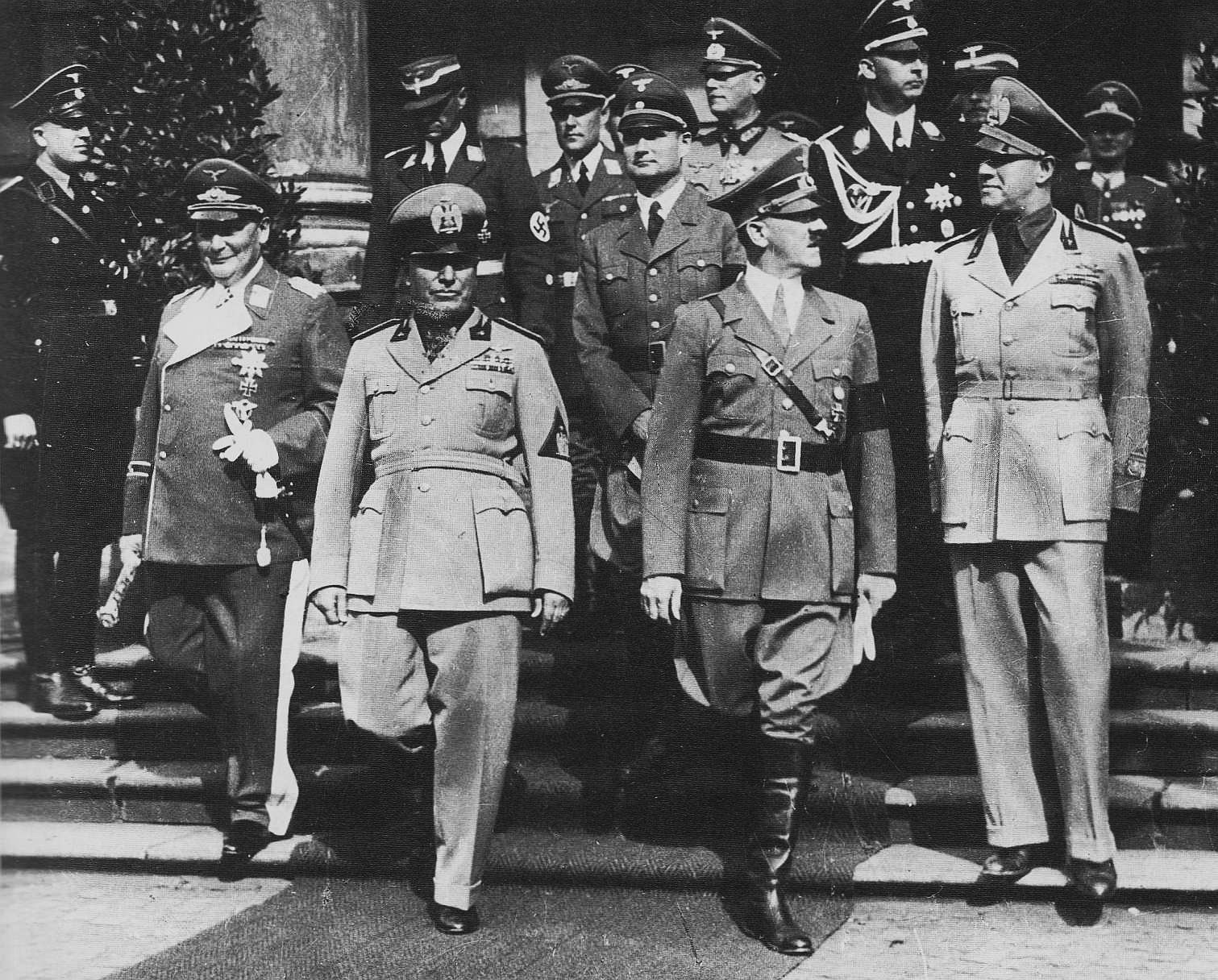
The high command of Germany and Italy during the Munich Betrayal
After securing London’s consent on November 17, 1937, Germany annexed Austria in March 1938. The country’s population grew by almost 7 million people; it obtained new sources of raw materials and defence production facilities, and six new divisions joined the Wehrmacht. It is worth mentioning that prior to the Anschluss of Austria, Hermann Göring paid a visit to Warsaw, where he and Polish Foreign Minister Jozef Beck reached an agreement that it would be reasonable to coordinate the policies of Germany and Poland in relation to Czechoslovakia. Moreover, Jozef Beck stressed that Poland was interested in a specific area of Czechoslovakia and a way to resolve the Czech issue.
Czechoslovakia found itself surrounded by Nazi Germany and its allies. Hitler was mostly interested in the Sudetenland, an industrially developed region inhabited primarily by Germans, which Czechoslovakia had obtained following the dissolution of Austria-Hungary.
Leader of the Sudeten German Party of Czechoslovakia Konrad Henlein met with Adolf Hitler in March 1938. Following the meeting, the party’s policy was adjusted to align itself with the National Socialists and came out in support of the region’s accession to the Third Reich.
The United Kingdom and France put political pressure on Czechoslovakia and insisted that it comply with Germany’s demands. They convinced the President of Czechoslovakia Edvard Beneš to put up no resistance despite the available opportunities. Czechoslovakia was well-armed at the time. For example, after the annexation, the German army received hundreds of Czech armoured cars, tankettes and light tanks, considered to be among the world’s best. As of June 22, 1941, the number of Czech armoured vehicles made up 25% of the German first echelon tank divisions’ fleet. Nevertheless, thanks to the efforts of the Western “allies,” Czechoslovakia’s fate was sealed.
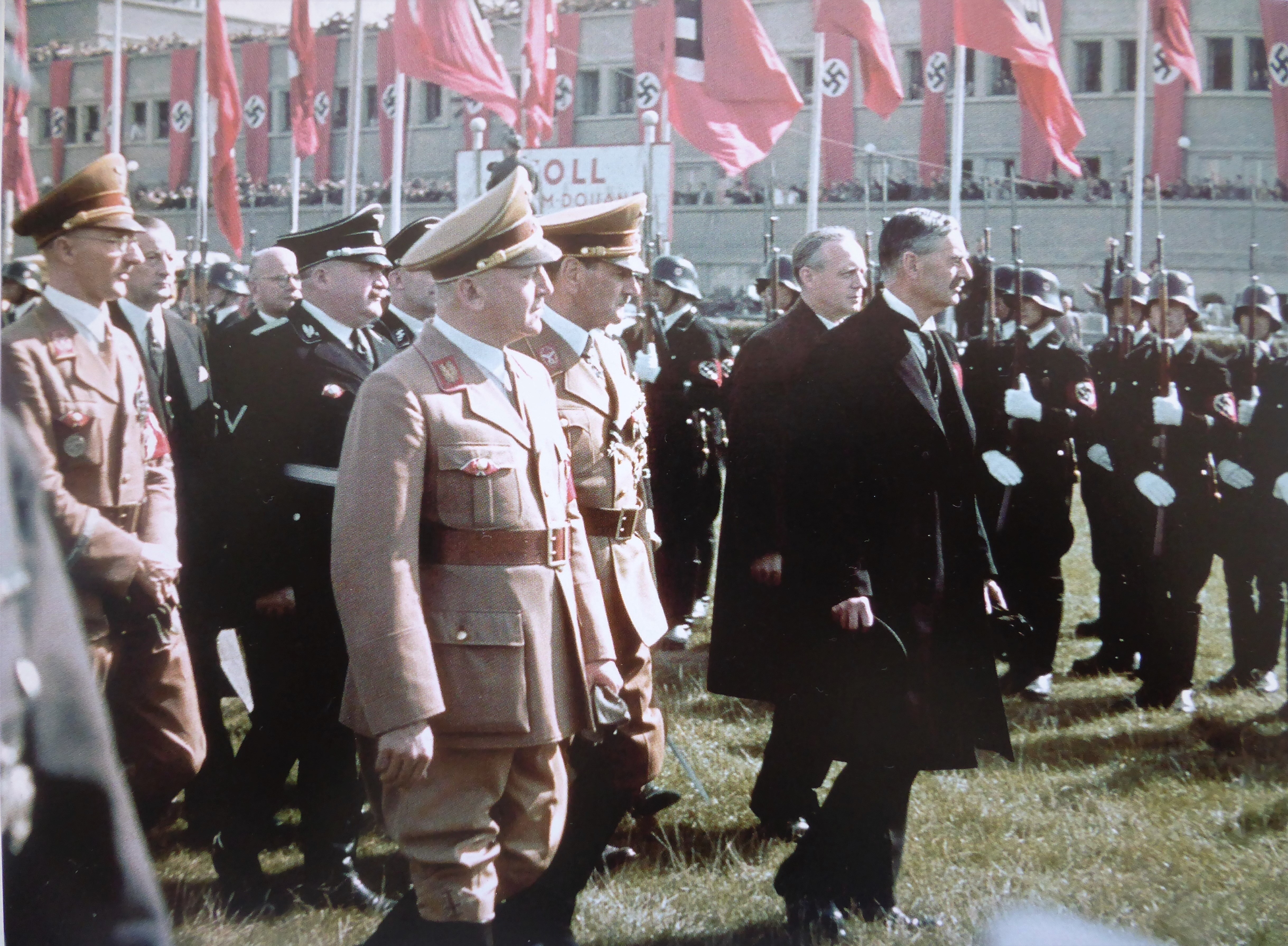
Neville Chamberlain is welcomed at Munich airport
Poland did not stand aside, either. On July 11, 1938, Polish Ambassador to France Juliusz Lukasiewicz sent a telegram to Polish Foreign Minister Jozef Beck, which read as follows:
💬 B. (Foreign Minister of France Georges-Etienne Bonnet) asked me to tell the Minister the following: the French government fully shares the position of the Polish government with regard to the Polish minority in Czechoslovakia. On the following day after our conversation, B. instructed his ambassador in Prague to announce to their government that the Polish minority was to obtain the same rights as the Sudeten Germans, and this was to be done simultaneously.
This is how professor Stanisław Zerko, a Polish historian, described the events:
💬 Some expressed the opinion that Poland was behaving like a hyena attacking the victim which had been defeated in Munich.
Winston Churchill’s words addressed to David Lloyd George on August 13, 1938, once again show that what ensued had been planned in advance:
💬 Munich: between war and shame. I think we shall have to choose in the next few weeks between war and shame, and I have very little doubt what the decision will be.
The Soviet leadership was aware that appeasing the growing appetites of the Nazis will only make the situation worse and will destroy the world order. Maxim Litvinov, the People’s Commissar for Foreign Affairs, said the following in his address at the plenary meeting of the League of Nations on September 21, 1938:
💬 To avoid a problematic war today and receive in return a certain and large-scale war tomorrow – moreover, at the price of assuaging the appetites of insatiable aggressors and the destruction or mutilation of sovereign States – is not to act in the spirit of the Covenant of the League of Nations. To grant bonuses for sabre-rattling and recourse to arms for the solution of international problems, in other words, to reward and encourage aggressive super-imperialism, is not to act in the spirit of the Briand-Kellogg Pact.
In addition, from 1934 onwards, the Soviet Union made several unsuccessful attempts to create the Eastern Pact to contain Germany and consolidate the Versailles territorial status quo.
According to the terms of the Czechoslovak–Soviet Treaty of Alliance of 1935, mutual aid obligations came into force if aid to the victim of aggression was rendered by France. Since France eventually became a participant in the Munich Betrayal, this was out of the question.
Edouard Daladier was well-aware of the consequences his actions would have. An entry in his memoirs about the crowd greeting the delegation after the signing of the Munich Agreement testifies eloquently to this:
💬 I was expecting people to throw rotten tomatoes at me but I got flowers instead.
The Soviet Union was ready to defend Czechoslovakia, but the Soviet Army had to obtain permission to pass through Poland or Romania. Warsaw, which was interested in getting part of Czechoslovakia’s territory for itself, adamantly refused to support Prague against Germany and prohibited possible flights of Soviet aircraft to render aid to the Czechoslovak army. Romania made every effort to slow down the process as much as possible.
Neville Chamberlain arrives in Germany to sign the Munich Agreement:
Following the conclusion of the agreement between the United Kingdom, France, Germany and Italy in Munich, the German forces crossed Czechoslovakia’s border on October 1 and occupied the entire territory of the Sudetenland by October 10. On the same day Czechoslovakia accepted Poland’s ultimatum on ceding the Tešin District to Poland; the territory was occupied by Polish troops on October 2. The First Vienna Award was signed on November 2, 1938; pursuant to it, Hungary obtained areas in southern Slovakia and Sub-Carpathian Ruthenia, while Poland got a number of areas in the north. The First Slovak Republic was officially proclaimed in March 1939; Carpathian Ukraine, which later passed to Hungary, was also established at the time. After the establishment of the Protectorate of Bohemia and Moravia, Germany took full control over the remaining areas of Czechoslovakia.
An excerpt from Neville Chamberlain’s speech upon his arrival in London:
After signing the Munich Agreement on the transfer of the Sudetenland to Germany, Neville Chamberlain happily declared as he came out of his plane at London airport, waving the agreement in front of all those who gathered there:
💬 Peace for our time.
Hans Bernd Gisevius, a German police and Abwehr officer who was an undercover US intelligence agent and an active participant in a plot against Adolf Hitler, wrote in his book, To the Bitter End: An Insider’s Account of the Plot to Kill Hitler:
💬 “Let us put it a bit more realistically. Chamberlain saved Hitler.”
German troops entered the remaining territories of Czechoslovakia on March 15, 1939, and the country actually ceased to exist. Four days later, Moscow announced to Berlin that it did not recognise the occupation of the country.
As the world witnessed the collapse of the Versailles-Washington system of international relations that existed at the time, many countries began to cooperate with the Third Reich and fell into its sphere of influence.
The Soviet Union realised that the war was inevitable and concentrated its efforts on forming the Triple Alliance with the United Kingdom and France, but the Western partners drew out the process, hoping that they will be able to use Germany as a tool in fighting communism.
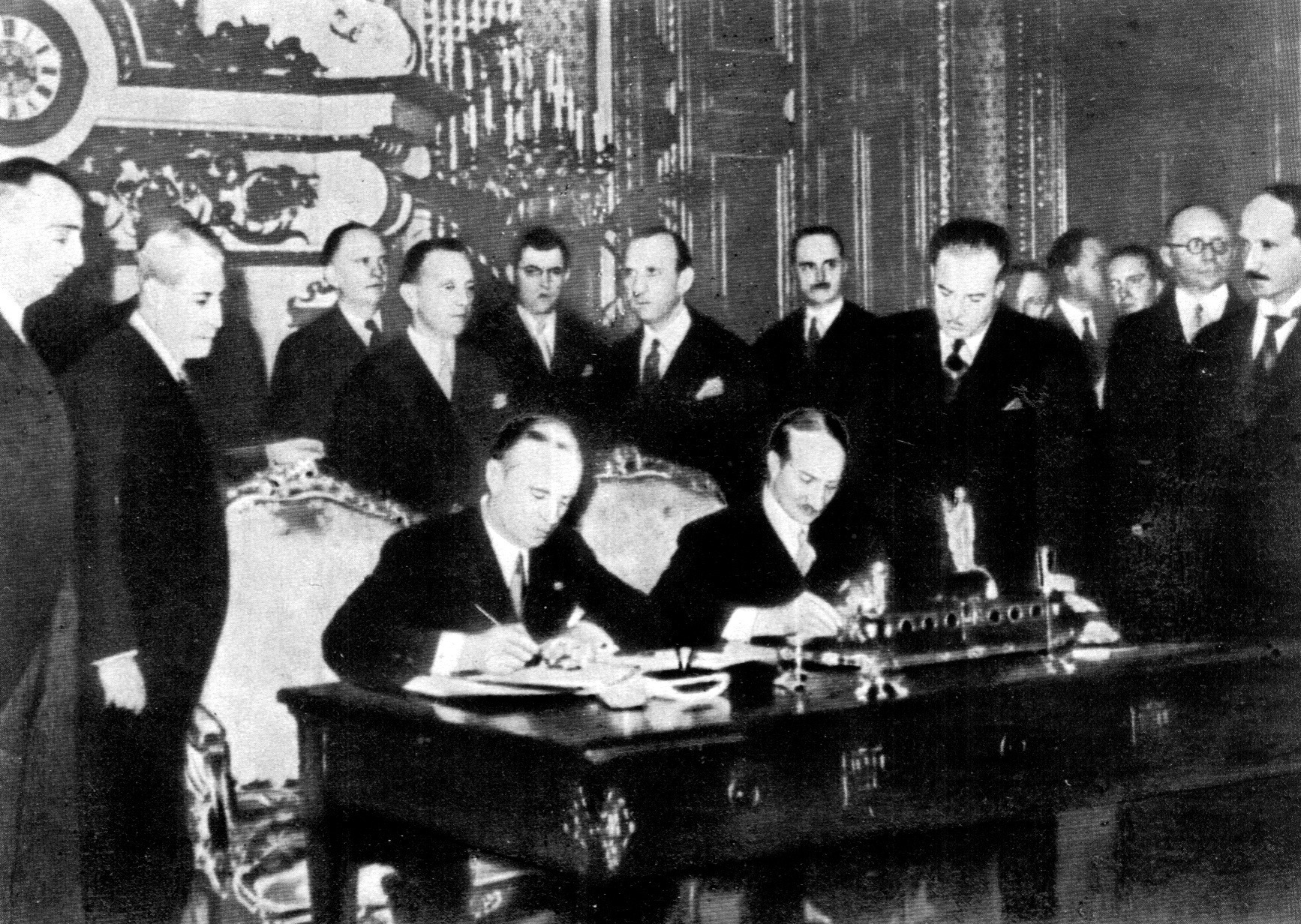
Signing of the Franco-German Declaration of Friendship by Foreign Ministers of France and Germany Georges Bonnet, right, and Joachim von Ribbentrop, left.
By the end of summer 1939, the following countries had non-aggression agreements with Germany: Poland, the United Kingdom, Italy, Denmark, France, Lithuania and Estonia. The Soviet Union was one of the last to sign such a document. According to historical materials, the Soviet leadership had no illusions regarding the prospects of the signed agreement with Germany and realised that the war was inevitable. The main goal was to gain time.
European politicians’ expectations that Hitler will continue to move to the east and enter into conflict with the Soviet Union in the near future did not materialise. The first countries to be attacked by Germany were those that played a significant role in the Munich Betrayal.
An excerpt from the interview of President of the Russian Federation Vladimir Putin for Andrey Kondrashov’s film, War for the Memory:
💬 The Soviet Union undertook colossal efforts to create an anti-Hitler coalition. No one [in the West] supported it. Moreover, the leading Western countries, including the United Kingdom and France, met with Hitler and Mussolini in Munich in 1938 and signed a document which we have always referred to as the Munich Betrayal. And they gave Czechoslovakia up to be torn to pieces.
Pingback: Forgotten History – The Moscow Negotiations of 1939 | Beorn's Beehive